
Founder & Editor · Last reviewed 2026-04-06
For three days every April, Aintree becomes the epicentre of the jump racing world. The Grand National Festival is British racing at its most theatrical: a rollercoaster of emotion, spectacle and genuine sporting drama that no other meeting can match. It draws over 150,000 people across the three days, yet somehow retains the atmosphere of a genuine sporting occasion rather than a glorified party.
The Festival builds like a proper story. Thursday's Randox Day sets the tone with Grade One championship races for some of the season's best novices and hurdlers. Friday's Ladies Day turns the volume up: fashion, fanfare and exceptional racing in equal measure. Then Saturday arrives and the world stops. The Grand National itself needs no introduction: four miles, two furlongs, 30 fences and a cast of 40 runners chasing immortality.
What makes Aintree's Festival special beyond the National is the quality of the undercard. This is not a one-race meeting padded out with fillers. The Aintree Hurdle, the Maghull Novices' Chase, the Melling Chase, the Bowl. These are championship-calibre contests that would headline any other programme in the country. Champions come here to prove themselves on the sport's biggest stage.
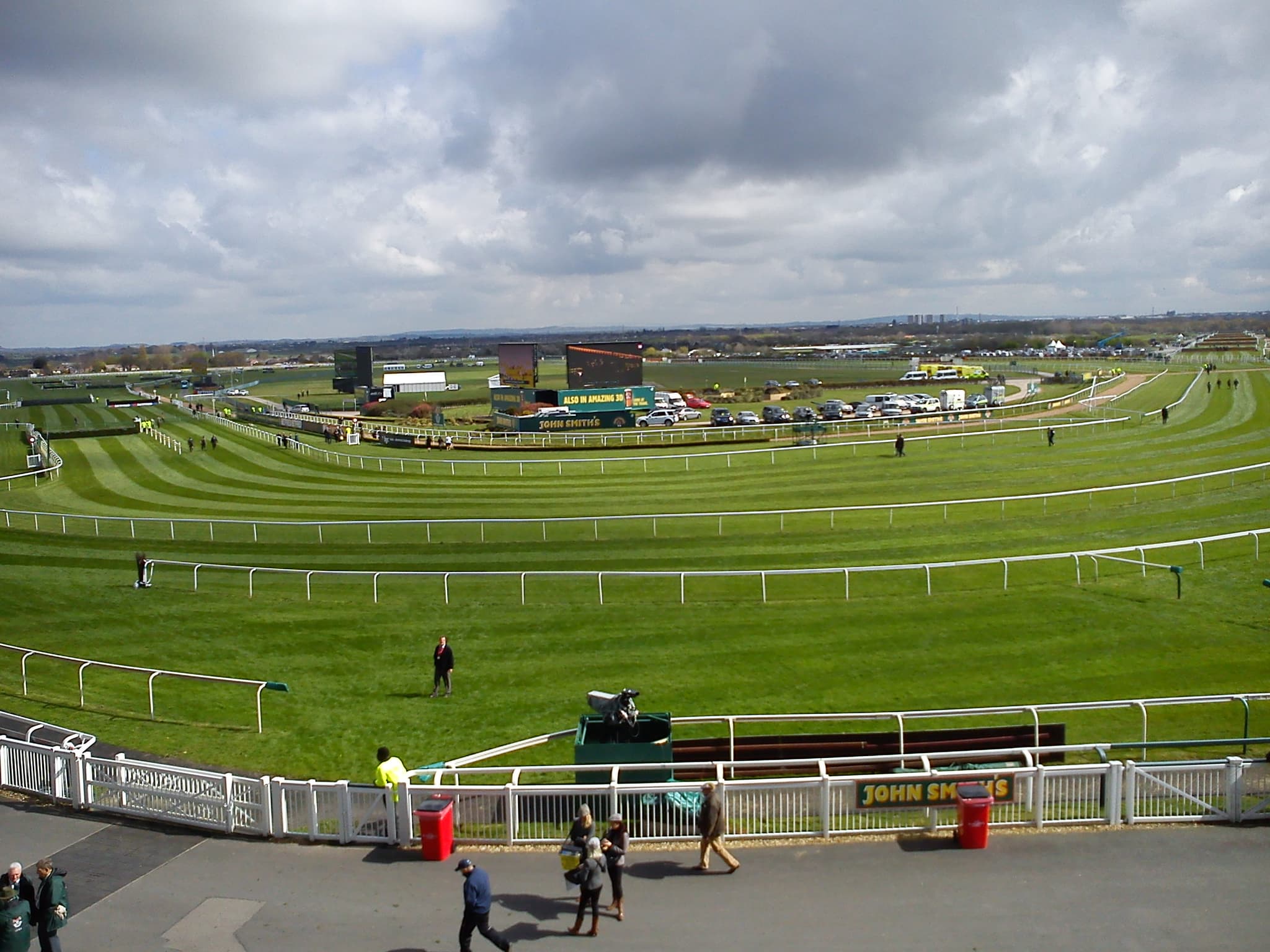
The racecourse itself rewards understanding. The Grand National course with its unique fences (Becher's Brook, The Chair, Canal Turn) is unlike anything else in racing. The Mildmay Course, used for the majority of the Festival programme, is a sharp, galloping track that puts a premium on jumping fluency and tactical racing. Knowing the difference between the two is half the battle as a punter.
This guide covers all three days in detail. What's on, what to watch, where to be and how to approach the betting markets with your eyes open.
Day-by-Day Guide
Thursday: Randox Day
The opening day of the Grand National Festival is the one the professionals love. Crowds are smaller, queues are shorter and the racing card is packed with Grade One novice contests that shape the following season's landscape. If you're serious about jump racing, Thursday is your day.
The Manifesto Novices' Chase (Grade One, 2m1f) is the headline novice chasing contest and routinely attracts the Arkle Trophy winner or runner-up from Cheltenham. Novice chasers that handle Aintree's Mildmay fences well tend to make up into top-class handicappers by the autumn. The Top Novices' Hurdle (Grade One, 2m½f) fills a similar role for the hurdling division, Supreme Novices' Hurdle horses back up here with alarming frequency.
The Aintree Bowl (Grade Two, 3m1f) gives established chasers a run before the summer, and the Formby Novices' Hurdle often throws up a smart recruit who bypassed Cheltenham. Thursday also features the Maghull Novices' Chase (Grade One, 1m7½f). A speed test on the National course fences that separates genuine two-mile champions from one-pace plodders.
Practically speaking, Thursday is the most relaxed day to visit. Prices in the bars are the same, parking is easier and you'll actually be able to see the races without craning round three rows of hats. It's the connoisseur's choice.
Friday: Ladies Day
Ladies Day is Aintree's most social occasion and the most watched televised racing card of the three days outside the National itself. Fashion is front and centre (the Best Dressed competition draws genuine effort from racegoers) but the racing is absolutely world-class.
The centrepiece is the Melling Chase (Grade One, 2m4f), which has hosted some of the finest two-and-a-half-mile chasers of recent decades. Queen Mother Champion Chase winners have often backed up here, and the race regularly produces one of the Festival's defining moments. Alongside it, the Liverpool Hurdle (Grade One, 3m½f) is the hurdling equivalent, a thorough test of stamina that sorts out Stayers' Hurdle horses from stayers who stayed.
The Sefton Novices' Hurdle (Grade One, 3m½f) is one of the most significant long-term viewing races of the three days. Winners here have a habit of going on to Stayers' Hurdle glory and beyond. The Old Roan Chase equivalent at this meeting, the Betway Bowl, gives experienced chasers a genuine championship test.
Friday also stages the Foxhunters' Chase over the Grand National course. The amateur riders' race is farcical in a thoroughly enjoyable way, with horses and riders of wildly varying quality taking on Becher's and The Chair. It draws a big crowd and huge affection.
The atmosphere on Friday is electric but manageable. Go early, dress well and stake your position on the Parade Ring rail before the serious racing begins. The fashion show runs on the trackside lawn from mid-morning and is worth ten minutes of anyone's time.
Saturday: Grand National Day
There is no sporting experience in Britain quite like Grand National Day. The build-up begins hours before the first race, the atmosphere crescendos through the afternoon and then, at around 5:15pm, 40 horses jump the first fence at Aintree and the whole country holds its breath.
The undercard on Saturday is strong: the Topham Chase over the National fences at shorter distance is a genuine betting cavalry charge, and the Randox Grand National Handicap Hurdle is a competitive 24-runner heat. But let's be honest: everyone is here for one race.
The Grand National (Handicap Chase, 4m2½f, 30 fences) starts in the far corner of the course and covers terrain unlike anything else in racing. The unique fences (packed with spruce and not dressing groom-neat like Cheltenham's) demand a particular jumping technique. Becher's Brook has a significant drop on the landing side that catches horses and jockeys out every year. The Canal Turn requires a near-90-degree turn immediately after landing. The Chair is the tallest fence on the course at 5ft 2in, placed on the flat in front of the stands.
Forty runners set off, and anything between three and twelve typically complete the course without incident. The winner tends to be a front-runner or prominent racer; horses that get buried in the back half of a 40-runner field rarely win. Weight is the great leveller. The top weight gives away significant handicap pounds to lower-ranked rivals, and the race's history is full of unfancied victors.
After the National, the atmosphere in the car park and surrounding streets is genuinely unlike anything else in sport. Win or lose, everyone shares the experience.
Key Races to Watch
The Grand National (Saturday, Grade 3 Handicap Chase, 4m2½f)
The race that defines the Festival and, for many, defines British sport. Forty runners, thirty fences, four miles and two and a half furlongs. The National is simultaneously the most anticipated and least predictable race of the year. Any horse rated between 125 and 175 is theoretically eligible, and the handicapper works hard to give every runner a genuine chance.
Key factors: jumping ability matters more than raw ability. Horses that are slick over fences and can travel fluidly in a big field cope best. Front-runners and prominent racers have a strong statistical record. The middle of the handicap (marks around 145-155) tends to produce winners more often than the extreme top or bottom weights.
The race has been won by horses priced from 100/1 (Foinavon in 1967, Mon Mome in 2009) to 7/2 favourites, so approach the market with appropriate humility. The race is genuinely unpredictable, and that's half the appeal.
The Melling Chase (Friday, Grade One, 2m4f)
Aintree's premier two-and-a-half-mile chase is contested over the Mildmay course and attracts horses that have already proved themselves at Grade One level. Queen Mother Champion Chase runners and winners frequently take this route, though the extra distance and different track character create a genuine test.
The Melling is a good race to assess horses stepping up in trip. A Champion Chaser that handles the half-mile extra can become a genuine Gold Cup contender.
The Aintree Hurdle (Friday, Grade One, 2m4f)
The hurdling equivalent of the Melling, a championship contest over two and a half miles that bridges the gap between Champion Hurdle horses and stayers. Recent years have seen the Aintree Hurdle serve as a vindication for horses beaten at Cheltenham: the sharper Champion Hurdle track sometimes wrong-foots horses that prove brilliant around Aintree's more galloping Mildmay course.
The Sefton Novices' Hurdle (Friday, Grade One, 3m½f)
Over three miles on the Mildmay course, the Sefton is the most significant long-trip novice hurdle of the season. It regularly uncovers future World Hurdle and Stayers' Hurdle champions, horses who were perhaps too raw for the Albert Bartlett at Cheltenham but have grown into their ability by April. Give the winner of this race a mark in your notebook.
The Manifesto Novices' Chase (Thursday, Grade One, 2m1f)
Named after Manifesto, who ran in eight Grand Nationals between 1895 and 1904, this novice chase is the last chance to assess the season's best two-mile novice chasers before summer. Arkle Trophy runners-up frequently come here to beat Cheltenham's winner on different terms. The Mildmay course's sharp turns and quick fences reward accuracy over brute power.
The Topham Chase (Saturday, Grade 3 Handicap, 2m5f)
Contested over the Grand National fences at half the distance, the Topham is a ferocious test of jumping over unique obstacles. Horses trained specifically for this race (those suited to the drop fences and unusual geometry of the National course) have a major advantage over conventional chasers trying it for the first time. It's one of the most open handicaps of the Festival, and the market is often worth opposing at the top.
Betting Preview
How to Approach the Grand National Market
The National is the most wagered-on race in British racing, and the market reflects that. Ante-post trading begins in the autumn and the odds compress dramatically in the final week. The key principle: the market is often wrong about individual horses but structurally rational about the overall distribution of chance.
Ante-post strategy: The biggest value in ante-post National betting comes from horses with a confirmed entry, a clean injury history and a trainer who targets the race. Gordon Elliott, Henry de Bromhead, Willie Mullins and Dan Skelton have excellent National records. Horses that run in the Ultima at Cheltenham and go close (without winning) often represent solid National profiles.
Handicap marks to target: Horses rated 148-158 have won the National disproportionately often. Below 140, the horse typically lacks the raw ability to compete over four miles of Grade 3 fences. Above 165, the weight burden becomes prohibitive unless the horse is genuinely exceptional.
On the day: The first fence is the graveyard of short-priced fancies. Horses that race prominently from the off (in the first ten or fifteen) have a significantly better strike rate than hold-up horses. The Canal Turn on the second circuit separates horses that understand the unique requirements of the National from those that are simply getting round.
Betting the Rest of the Card
The Festival's Grade One races are genuinely hard to beat. The horses are well-known, well-backed and accurately assessed by the market. The best approach is to look for:
- Horses that underperformed at Cheltenham for a track-specific reason (likely not suited to the Cheltenham hill, or got into trouble in traffic)
- Course form: Aintree's Mildmay course has its own character, and horses with winning form here should be upgraded
- Trainers with Festival records: Willie Mullins, Gordon Elliott and Henry de Bromhead dominate the Grade Ones; opposing them blindly is expensive
The handicaps (particularly the Topham on Saturday and the National itself) are where the market can be beaten with course knowledge and form reading. Focus your ante-post energy here rather than trying to outsmart the market in the championship races.
Practical Betting Notes
Aintree offers a Tote pool for the National that attracts massive liquidity. The Tote board often pays better than the bookmakers for placed horses in big fields. The each-way terms on the National are typically five places at one-quarter odds, making each-way betting extremely viable for horses priced above 14/1.
Visitor Information
Tickets and Enclosures
The Grand National Festival sells out across all three days, typically before Christmas. Book through the official Aintree website as early as possible, late availability from touts carries a significant premium and is not always legitimate.
County Stand: The premium enclosure, offering covered grandstand seating, access to the County Stand bars and restaurants, and the best views of the finish. Dress code enforced: suits and morning dress for gentlemen, smart attire for ladies. Book well in advance.
Queen Mother Stand: The main public enclosure with standing and some reserved seating. Good views of the finishing straight, access to all main facilities. Smart casual dress code.
Princess Royal Stand: Adjacent to the National fences, this enclosure gives close-up views of horses jumping Becher's Brook and the Canal Turn on both circuits. Unique vantage point that nowhere else can replicate. Dress code is smart casual.
The Village: The festival area behind the stands, with live music, food stalls and big screens. Popular on Ladies Day particularly. Smart casual dress code applies.
Getting There
By train: Aintree station (Merseyrail Northern Line from Liverpool Central) is a five-minute walk from the racecourse entrance. Direct services from Liverpool Central every few minutes. From London Euston, change at Liverpool Lime Street and connect to Liverpool Central, journey time approximately two and a half hours.
By coach: National Express and local operators run dedicated raceday coaches from major cities. Book in advance for Saturday; midweek services are more available.
By car: Parking is available on-site but must be pre-booked through the racecourse. Traffic on National Day is severe. Allow extra time and consider park-and-ride options from central Liverpool.
Essential Tips
- Arrive early on Saturday. Gates open from 10am and the best viewing spots fill quickly. The National isn't until late afternoon but the build-up starts at lunchtime.
- Wear comfortable shoes. The site is large and you will walk further than expected, particularly between the Mildmay and National course areas.
- Check the going. April weather in Merseyside is unpredictable. Waterproofs are sensible for all three days regardless of forecast.
- Bring cash. Some on-site traders and bookmakers prefer cash, particularly in busy betting rings.
- Ladies Day dress code is enforced but interpreted liberally: aim for smart and you'll be fine.
Share this article
More about this racecourse
All Aintree guides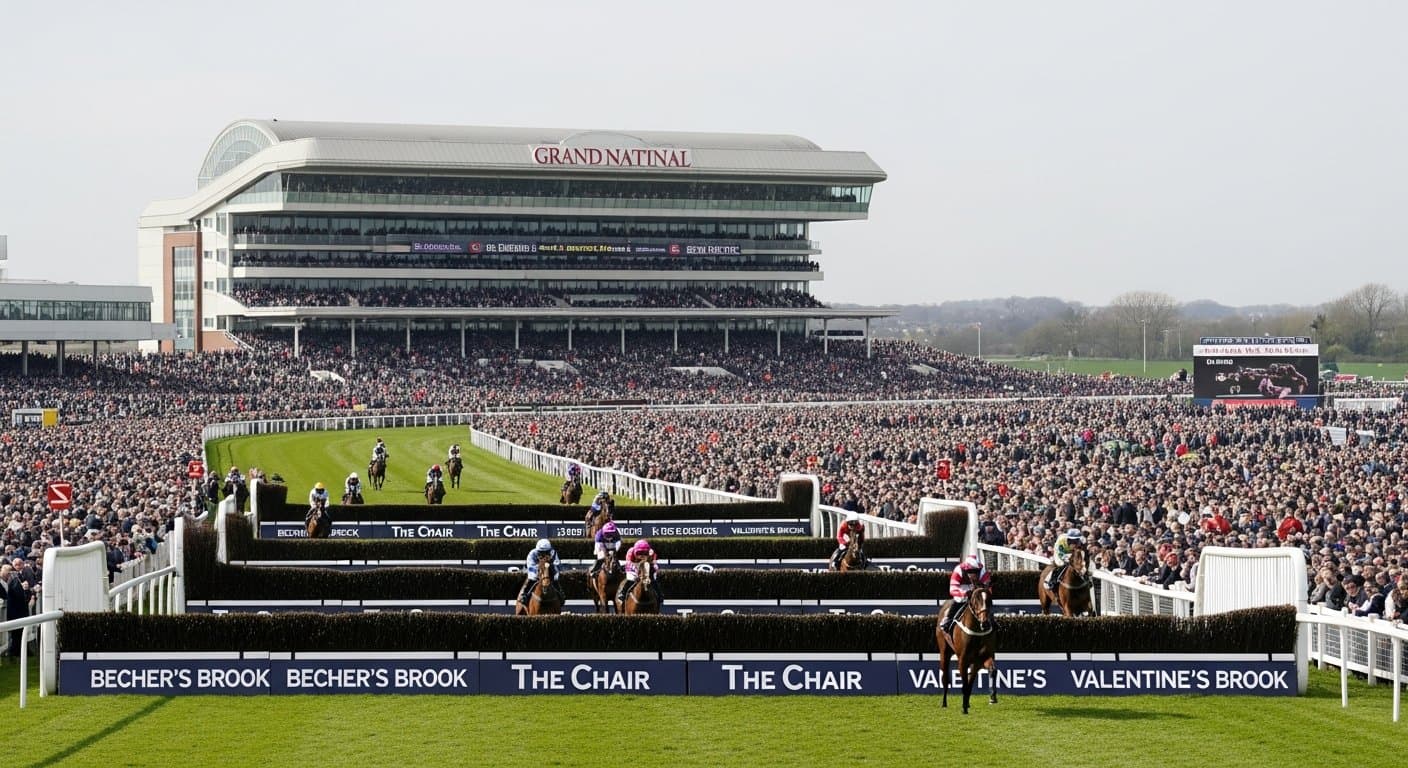
Grand National Day at Aintree: The Complete Guide
Grand National Day is the biggest race day in the British calendar. Here's everything you need to know about attending and following the world's most famous race.
Read more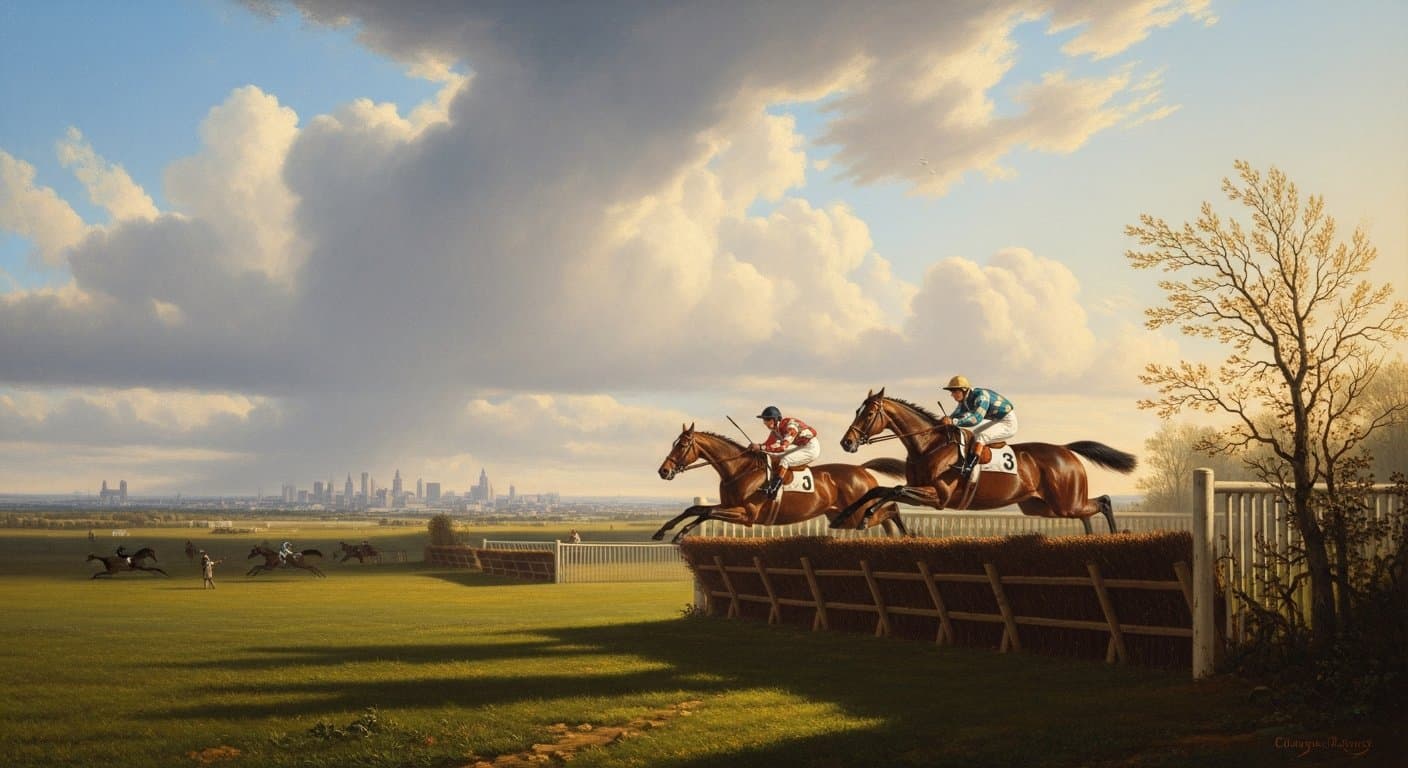
Grand National Winners: The Full Roll of Honour (1970-2026)
Every Grand National winner since 1970 - horse, age, starting price, jockey and trainer - with the age, market and trainer trends that emerge across 55 runnings. Source-verified.
Read more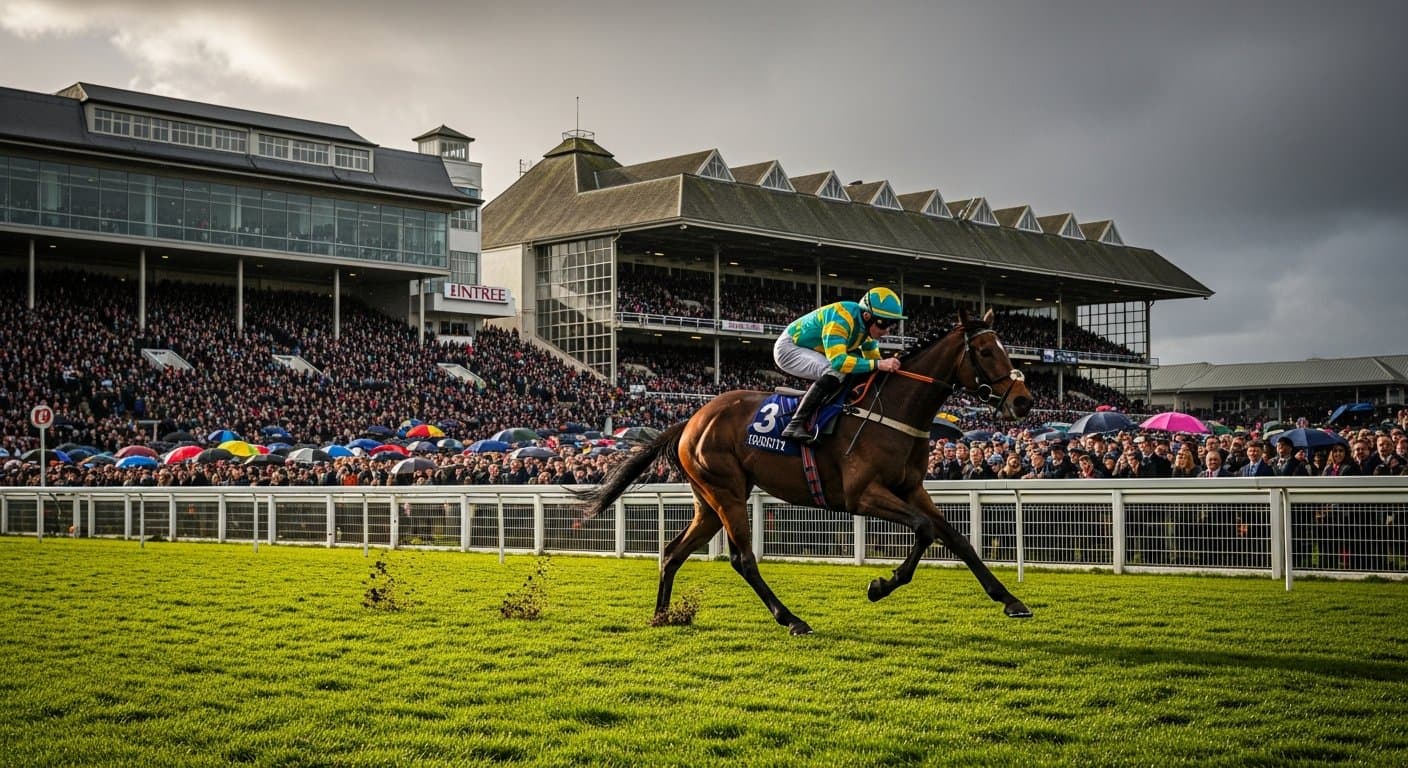
Red Rum at Aintree: The Legend of the Grand National
Red Rum won the Grand National three times and is the most famous racehorse in history. Here's the full story of his extraordinary career at Aintree.
Read moreBetting offers for Aintree
Gamble Responsibly
Gambling should be entertaining and not seen as a way to make money. Never bet more than you can afford to lose. If you or someone you know has a gambling problem, help and support is available.