
Founder & Editor · Last reviewed 2026-04-06
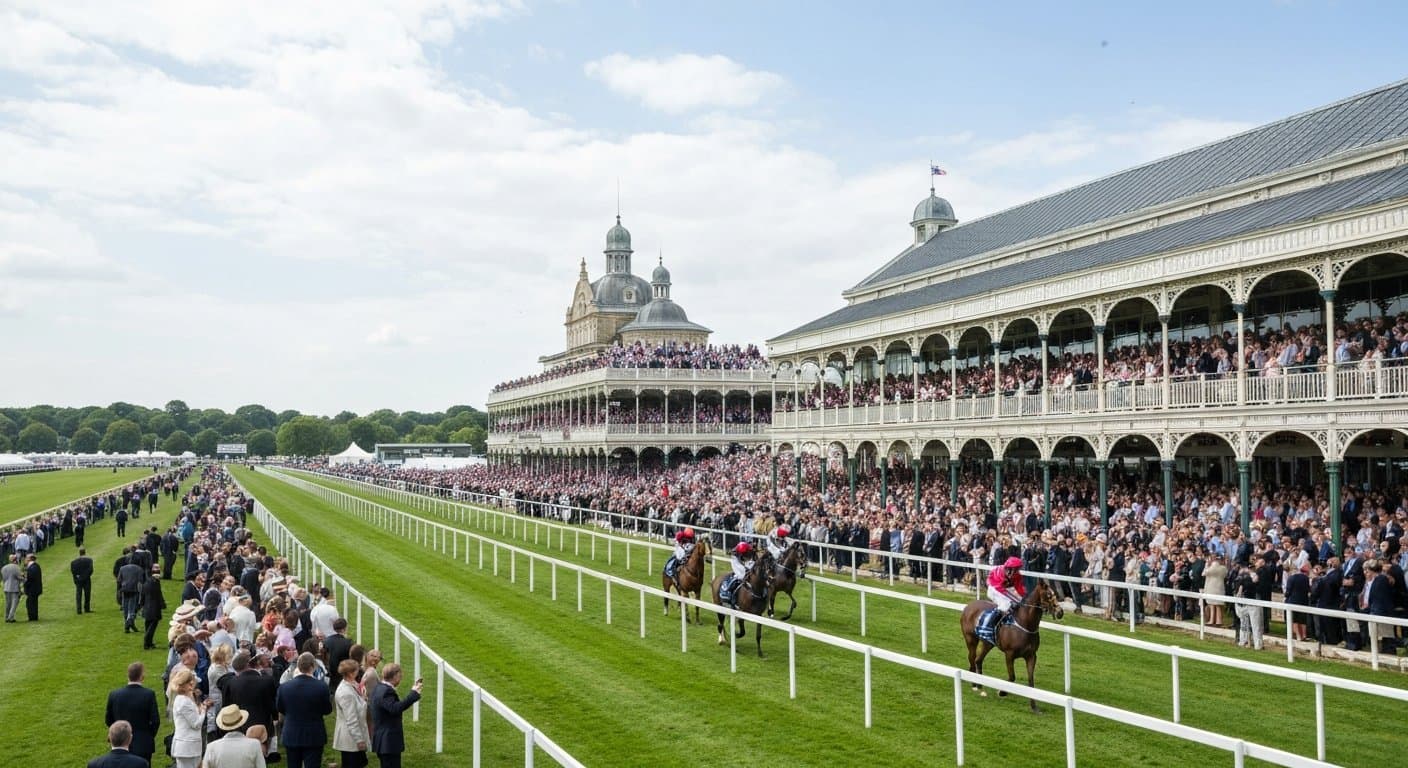
Royal Ascot is not simply a race meeting. It is five days in June when British flat racing performs on a global stage, when the best horses from Europe, North America and beyond converge on a straight mile of Berkshire turf, and when the sport's oldest traditions — the Royal Procession, the top hats, the enclosure etiquette — coexist with genuinely world-class competition. There is nothing else quite like it.
The meeting was founded by Queen Anne in 1711 and has been attended by the reigning monarch every year since George II made it a fixture of the royal calendar. That continuity gives Royal Ascot something no other festival possesses: a sense that what happens here actually matters, beyond the sport itself. When Enable or Frankel won here, it felt like a moment of national significance. That is not an accident.
Over five days, Ascot stages 35 races worth over £10 million in total prize money. Eight of those races are Group Ones — a concentration of elite flat racing unmatched anywhere in the British season. The card covers sprints, mile races, middle-distance contests and the Gold Cup's two-and-a-half-mile test of pure stamina. There is something for every racing taste.
Beyond the racing, Royal Ascot is a social phenomenon. The Royal Enclosure's strict dress code, the daily arrival of the Royal Family by horse-drawn carriage down the straight mile, the vast parade of fashion, colour and occasion — these things attract people who might not otherwise follow racing but find themselves entranced by the whole spectacle. First-timers are often surprised by how much of the racing they end up watching.
This guide covers all five days, the biggest races and how to navigate both the course and the betting markets with confidence.
Bet on Ascot
Place your bets on Ascot races with a trusted bookmaker.

Promo code BETFRED50. New customers only. Register, deposit with a Debit Card, and place a first bet of £10+ at Evens (2.0)+ on Sports, to be settled within 7 days, to get £30 in Sports Free Bets and £20 in Bet Builder Free Bets within 24 hours of settlement. 7-day expiry. Eligibility & payment exclusions apply. Full T&Cs apply. Take Time to Think. BeGambleAware.org. 18+. Full T&Cs.

Promo code R30. New UK customers only, 18+. Register, deposit £10 or more, then place a £10 single cash bet at odds of 1/2 (1.5) or greater on any sports market (excluding Virtuals). Once the qualifying bet settles you get £30 in Free Bets (3 x £10) — the qualifying bet can win or lose. Free Bets are valid on any sports market excluding Virtuals, expire in 7 days, are non-withdrawable and must be used in full. Excluded deposit methods apply (including PayPal, Apple Pay, Skrill and NETELLER). Named bets such as Lucky 15 do not qualify. If you cash out the qualifying bet, or it is voided, you are no longer eligible for the offer. Ends 31.12.26. Full T&Cs apply. Please gamble responsibly. BeGambleAware.org. 18+. Full T&Cs.

Promo code BET40GET20. New UK customers, 18+. Register with the code and place a first bet of £40 or more at Evens (2.0) or greater. Receive 2 × £10 free bets: the first credited automatically once the qualifying bet settles, the second 24 hours later. Free bets must be placed at minimum odds of 4/1 (5.0), expire 24 hours after credit, and the free-bet stake is not returned with winnings. Debit card deposits only. Take Time to Think. BeGambleAware.org. 18+. T&Cs apply. Full T&Cs.

50% of your first-day net losses refunded as a free bet, capped at £25. New UK customers aged 18+ only. To qualify, deposit and place a first bet of £10 or more on any sport at minimum odds of evens (2.00), then place at least two further bets on different events, each worth at least 50% of your largest bet, all at evens (2.00) or greater. Losses are counted from your first settled bet until 23:59 the same day. Place a qualifying £10+ bet and you are guaranteed at least a £5 free bet. Bets placed at SP, void bets, cashed-out bets and bets struck with free bets do not count towards the offer. The free bet is credited the day after your qualifying bets settle and must be used within 7 days, after which it expires. It can be used at odds from 1/4 (1.25) up to 250/1 on singles and straight accumulators, but not on Trixie, Patent or Yankee style multiples. Free-bet stake is not returned with winnings. One offer per person, household, address, IP address and device. E-wallet deposits may not qualify, so check the cashier before depositing. Customers registered with GAMSTOP cannot claim. KYC identity verification must be completed before the free bet is credited. Take Time to Think. BeGambleAware.org. 18+. T&Cs apply. Full T&Cs.

New customers, 18+. Choose the sports bonus at sign-up, make a first deposit and receive a 100% bonus up to £50 in your Sports Bonus balance. To convert the bonus to cash, wager it 10x within 30 days. Single bets below Evens (2.00) do not qualify; accumulators do not qualify if any selection is below 1/2 (1.50). Virtual Sports, voided, cancelled, drawn, cashed-out and free-bet wagers do not count towards wagering. Only the first settled bet per event counts. Withdrawing before the wagering requirement is met forfeits the bonus balance including bonus winnings. Real-money funds are used before bonus funds. Deposits via Skrill or Neteller are not eligible. Not valid in conjunction with other promotions. Odds, bet and payment limits apply. 10bet general and promotion T&Cs apply. BeGambleAware.org. 18+. Full T&Cs.

New customers in Great Britain and Republic of Ireland, 18+. Place a £10 fixed-odds qualifying bet at minimum odds of 1/2 (1.50) — single or each-way (only the win part counts), pre-event or in-play, not cashed out early, within 28 days of opening the account. Receive up to £60 in bonuses credited over three days: 3 × £10 fixed-odds free bets (the first on settlement, then 24 and 48 hours later) plus 3 × £5 Total Goals FOOTBALL spread bets, 3 × £5 racing Winning Favourites spread bets and a £1 racing Race Index spread bet (the spread bets need a full spread-betting account). Free-bet stakes not returned with winnings; free bets valid 28 days from issue. IMPORTANT: the £5 credits are SPREAD bets — sports spread betting carries the risk that losses can exceed your stake. Sports spread-betting customers do not have Financial Ombudsman or FSCS recourse. Take Time to Think. BeGambleAware.org. 18+. T&Cs apply. Full T&Cs.

Promo code WELCOME15, entered under My Bonuses after registering. New UK customers, 18+. Place a first qualifying bet of at least £10 from your cash balance at odds of evens (2.0) or greater within 7 days of opening the account. Once the qualifying bet fully settles you receive £15 in free bets, credited as 3 x £5 tokens with set uses: one £5 accumulator free bet (minimum 4 legs, each leg at 2/5 or bigger), one £5 sports free bet (any market at evens or bigger) and one £5 Sub Cover free bet (selected football player markets at evens or bigger). Free-bet stakes are not returned with winnings. Free bets expire 7 days after they are credited. Void, cashed-out and partially cashed-out bets do not qualify. One offer per customer. Confirm the current terms on BetGoodwin's own welcome-offer page before claiming. Take Time to Think. BeGambleAware.org. 18+. T&Cs apply. Full T&Cs.

New UK customers, 18+. Minimum deposit £10. Place a £10 qualifying single at minimum odds of 1/2 (1.50), settled within 14 days. Receive £30 in free bets (stake not returned), split £20 for sportsbook use (2 x £10) and £10 for Bet Builder only (2 x £5); Bet Builder does not cover horse racing. Free bets must be accepted within 7 days and expire 7 days after acceptance. No promo code required. Best Odds Guaranteed on UK & Irish racing, subject to having staked over £25 in the previous seven days. Operated by LiveScore Betting and Gaming (Gibraltar) Ltd, UKGC 56859. Confirm the current terms on LiveScore Bet's own promotions page before claiming. Take Time to Think. BeGambleAware.org. 18+. T&Cs apply. Full T&Cs.
18+. BeGambleAware.org
Day-by-Day Guide
Tuesday: Opening Day
The first day of Royal Ascot sets the tone and features two of the week's most significant Group One contests. The Queen Anne Stakes (Group One, 1m) opens the week with a championship sprint-mile for older horses — the race that established Frankel's reputation as something extraordinary when he won it in 2012. It is routinely contested by the top milers in training.
The King's Stand Stakes (Group One, 5f) provides the sprinting fireworks that Tuesday's crowd demands. The five-furlong minimum distance and Ascot's stiff track favour powerful, experienced sprinters over raw speed. International runners from France, Ireland and occasionally further afield are regular threats.
The Coventry Stakes (Group Two, 6f) for two-year-olds is the week's first significant juvenile contest, and winners here have a fine record of training on to Classic success. Tuesday also features the St James's Palace Stakes (Group One, 1m) — one of the premier mile races for three-year-old colts, directly following the Guineas.
Arrive for the Royal Procession at 2pm regardless of what else is planned. Four to five carriages process down the straight mile from the top of the course — it is a genuinely impressive spectacle and the crowd's reaction is part of what makes Ascot Ascot.
Wednesday: Ladies Day
Wednesday is the most photographed day of the meeting, when the fashion competition reaches its peak and the crowds are at their most exuberant. The racing is exceptional in spite — or perhaps because — of the spectacle.
The Prince of Wales's Stakes (Group One, 1m2f) is the most valuable race of the week and regularly attracts the best middle-distance horses in Europe. Dual Arc winners, Derby heroes and international champions have contested this race. It is Ascot's signature Group One by prize money and prestige.
The Royal Hunt Cup (Heritage Handicap, 1m) is the week's great betting cavalry charge — 30 runners, tight weights, enormous prize money and the straight mile. It is one of the hardest races in the calendar to solve from a betting perspective, and all the better for it.
The Gold Cup (Group One, 2m4f) actually runs on Thursday, but Wednesday's card includes the Ribblesdale Stakes (Group Two, 1m4f) for three-year-old fillies and the Ascot Stakes (Handicap, 2m4f), which often contains Gold Cup horses having an educational run.
Thursday: Gold Cup Day
Thursday is arguably the racing purist's favourite day, anchored by the Gold Cup (Group One, 2m4f) — the oldest race in the Royal Ascot programme and one of the oldest in Britain. The race was first run in 1807 and has been dominated over the decades by legendary stayers: Yeats (four wins), Le Moss, Sagaro, Ardross and more recently Stradivarius, who won four consecutive editions between 2018 and 2021.
The Gold Cup draws a unique crowd — those who love the art of staying races, who understand what it means to maintain a gallop for two miles and four furlongs, and who appreciate the tactical chess match between jockeys that unfolds over the extended trip. The atmosphere at the finish is electric in a way that faster, shorter races sometimes don't generate.
Thursday also features the Coronation Stakes (Group One, 1m) for three-year-old fillies — the mares' equivalent of the St James's Palace Stakes — and the Commonwealth Cup (Group One, 6f) for three-year-old sprinters.
Friday: Closing Day
Friday wraps up the week with the Diamond Jubilee Stakes (Group One, 6f) — the sprint championship for older horses that often produces the week's most dramatic finish. It is the natural conclusion to a week in which sprinting has appeared every day, with horses that may have run in the King's Stand on Tuesday returning for a second crack.
The Hardwicke Stakes (Group Two, 1m4f) gives middle-distance horses from the earlier days a chance to run again and often features the Prince of Wales's Stakes runner-up looking for redemption. The Wokingham Stakes (Heritage Handicap, 6f) is the sprint equivalent of the Royal Hunt Cup — a 30-runner cavalry charge that produces carnage and great entertainment in equal measure.
Friday has a slightly more relaxed atmosphere than the earlier days — the week is nearly done, and there's a sense of the crowd easing off having spent four days in various states of excitement.
Key Races to Watch
Prince of Wales's Stakes (Wednesday, Group One, 1m2f)
The week's most valuable race and the contest that defines the middle-distance division for the summer. Horses that win the Coronation Cup at Epsom, the Tattersalls Gold Cup in Ireland or the Prix Ganay in France arrive here to face each other in what amounts to a mid-season championship. The race regularly attracts international raiders — French and Irish-trained horses have won it multiple times in recent seasons — and the prize fund ensures connections have every reason to enter their best.
At a mile and two furlongs, the race suits horses that have either classic-winning form at a mile and a quarter or those stepping back from a mile and a half. The Ascot straight's stiff uphill finish sorts out stamina from mere pace, rewarding genuine middle-distance athletes.
Gold Cup (Thursday, Group One, 2m4f)
The staying race that matters most in British racing. Two miles and four furlongs on Ascot's round course, with the final climb to the finish the longest sustained test in the championship calendar. Stradivarius, who won four consecutive Gold Cups, demonstrated what an exceptional stayer looks like — able to quicken off any pace and sustain a gallop that breaks rivals' hearts.
Horses from the Flat and jumps worlds have occasionally crossed over — this is a pure-bred stayers' race and training for it requires patience and a horse with the right physique. The betting market is typically tight at the top, as the strongest stayers in Europe tend to be well-known.
Royal Hunt Cup (Wednesday, Heritage Handicap, 1m)
Thirty runners over the straight mile, with the handicapper working overtime to compress the weights into a genuinely open heat. The Royal Hunt Cup is one of the hardest races to bet in the year — the market has 30 potential winners and the race is routinely won by something at 20/1 or bigger.
The draw matters enormously. High-numbered stalls on the stands side have traditionally had an advantage in large fields on the straight course, though track preparation has varied this in recent years. Always check the going and where the draw bias sits before committing.
St James's Palace Stakes (Tuesday, Group One, 1m)
The race that defines the three-year-old male miler at the start of the summer. 2,000 Guineas winners frequently appear here, and it is common to see the Guineas runner-up beat the winner when the spring Classic was run on unsuitably soft ground. This is a race that rewards horses with a clean action and the ability to sustain pace up Ascot's straight final furlong.
Coronation Stakes (Thursday, Group One, 1m)
The female equivalent of the St James's Palace — three-year-old fillies over a mile. 1,000 Guineas winners are regular contenders and the Irish 1,000 Guineas often provides a rival of genuine top-class quality. The race has been dominated in recent years by Aidan O'Brien's Ballydoyle stable, who can run multiple fillies and create tactical complications for rivals.
Diamond Jubilee Stakes (Friday, Group One, 6f)
The week's sprint finale. Older sprinters that may have run in the King's Stand earlier in the week often return for this, and the race regularly produces one of the week's most exciting finishes as six or seven horses converge on the line. International raiders from Australia, the USA and Hong Kong have contested this race, attracted by the prize money and the prestige of a Royal Ascot Group One.
Betting Preview
The Market Reality at Royal Ascot
Royal Ascot is the most liquid betting market in British flat racing. The Group One races attract global attention and the ante-post markets are some of the deepest in the sport. That liquidity makes it harder to find genuine value — the market is well-informed. The approach that works is not fighting the market on championship favourites but identifying structural opportunities.
Horses to follow ante-post: Target horses that have run well in recognised prep races — the Lockinge at Newbury (for milers), the Tattersalls Gold Cup at the Curragh (for middle-distance horses), the Temple Stakes at Haydock (for sprinters). Trainers Aidan O'Brien, John and Thady Gosden, and Charlie Appleby have exceptional Royal Ascot records. Willie Mullins has become a major force in recent seasons.
The draw on the straight course: Ascot's straight six-furlong and one-mile tracks have historically favoured high-numbered stalls (stands side) in large fields. This tendency varies with going and track maintenance but has been consistent enough to check before betting on the Royal Hunt Cup, Wokingham and sprint handicaps.
Which Races Offer Value?
The handicaps are where value lives. The Royal Hunt Cup, Wokingham and Ascot Stakes are all open enough that a well-handicapped horse can win at 16/1 or bigger. Study the weights carefully — the top weight is often over-bet while the horse just below the maximum mark has the same chance with less pressure.
The two-year-old races (Coventry, Windsor Castle, Queen Mary) reward homework on juvenile form from Newmarket's Craven meeting and Chester. First-season sires can be undervalued when their offspring hit Royal Ascot for the first time.
The Group One races are hardest to beat the market on, but look for: horses that ran well at the Guineas meetings on ground that didn't suit them; French-trained horses that the British market undervalues; and horses whose form figures look worse than the performances actually were.
Practical Betting Approach
Use ante-post to take early prices on progressive horses in the handicaps — these markets move significantly in the final days as the weights are published and the draw revealed. On-course, the Tote pools at Royal Ascot are among the largest in British racing and often produce better returns on placed horses than starting price bookmakers.
Each-way betting is viable in the handicaps (typically four places at a quarter odds) but often poor value in Group Ones where short prices compress the return.
Visitor Information
Enclosures and Dress Codes
Royal Ascot has four enclosures, each with distinct character and dress requirements. The dress code is enforced and has been tightened in recent years — take it seriously.
Royal Enclosure: By application only, with membership controlled and new applicants requiring a sponsor who has been a member for four years. The most formal dress code: morning dress (top hat, tail coat) for gentlemen; formal day dress with a hat or substantial fascinator for ladies. Trouser suits are not permitted for ladies.
Queen Anne Enclosure: The general public enclosure adjacent to the Royal Enclosure. Smart day dress for ladies (hats or substantial fascinators required); jacket and tie or morning dress for gentlemen. No jeans, trainers or sportswear.
Village Enclosure: The most relaxed of the formal enclosures. Ladies should wear smart occasion wear; gentlemen need a collared shirt at minimum. Fascinators permitted without hats. Good food and bar options, and a lively atmosphere.
Windsor Enclosure: The most accessible, with a smart casual dress code. Good views from the course rail and big screens throughout. Ideal for those who want the Royal Ascot experience at a lower price point.
Getting There
By train: Ascot station is a 10-minute walk from the racecourse entrance. Direct services from London Waterloo (approximately 55 minutes) and Reading (approximately 25 minutes). Extra services run throughout the week — check South Western Railway and Great Western Railway timetables. Trains are extremely busy on Ladies Day; allow extra time.
By coach: Regular coach services from London Victoria and other major cities. Book through the racecourse or major coach operators.
By car: On-site parking is available but must be pre-booked. Traffic approaching Ascot on the A329, A330 and A332 is severe on all five days. Leave significantly more time than you think necessary.
Essential Tips
- Book as early as possible. Royal Ascot tickets — particularly for Royal Enclosure and Queen Anne — sell months in advance.
- Ladies Day is Wednesday, not a separate day. The fashion competition runs all week but peaks dramatically on Wednesday.
- Check the going. June in Berkshire is variable. The straight mile drains well but the round course can get soft in a wet spell.
- Take a racecard. The programme is complex across five days; a physical racecard helps navigate between courses and paddock timings.
- Afternoon gates. The Royal Procession begins at 2pm sharp — be inside the course before this or you'll miss it.
Share this article
More about this racecourse
All Ascot guides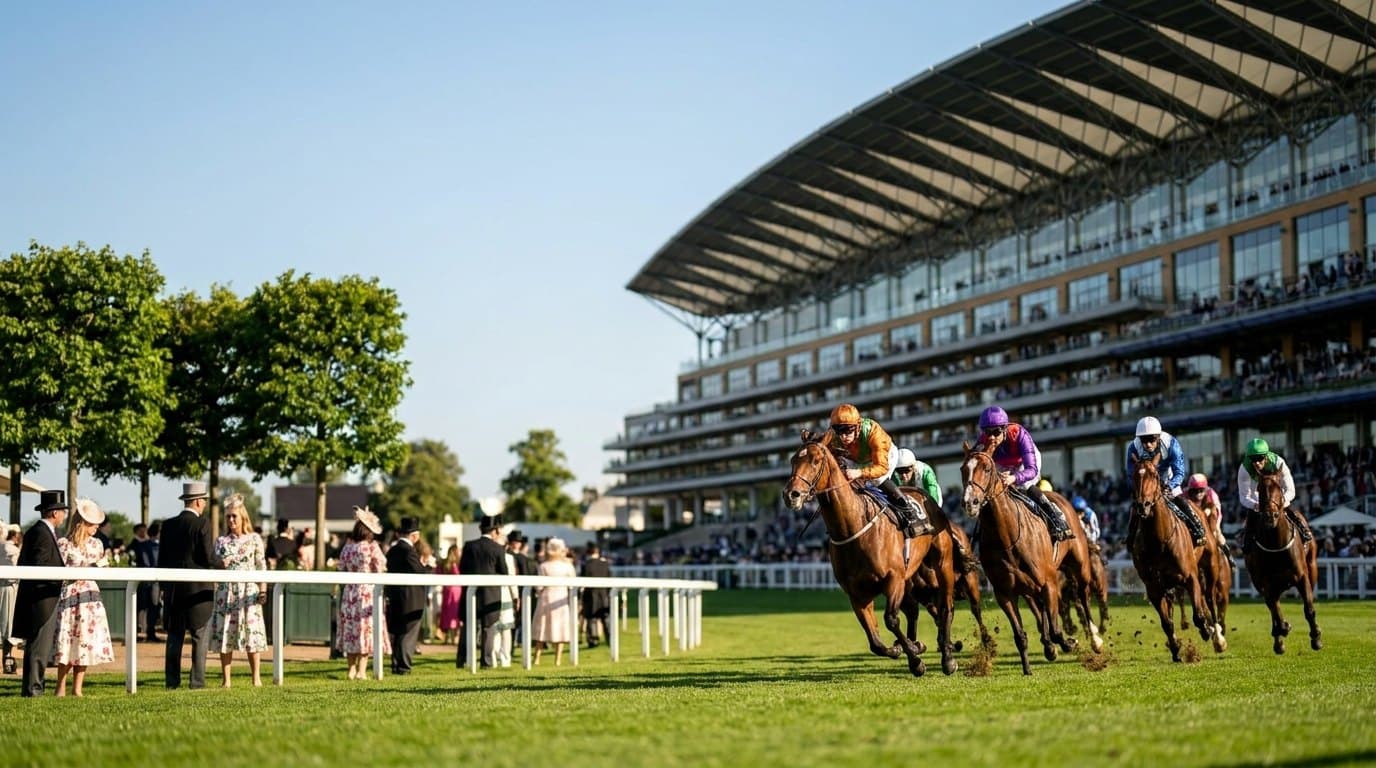
Ascot Gold Cup Winners: The Full Roll of Honour (1970-2026)
Every Ascot Gold Cup winner since 1970 - horse, age, starting price, jockey and trainer - with the trends that emerge across the full roll of honour. Source-verified.
Read more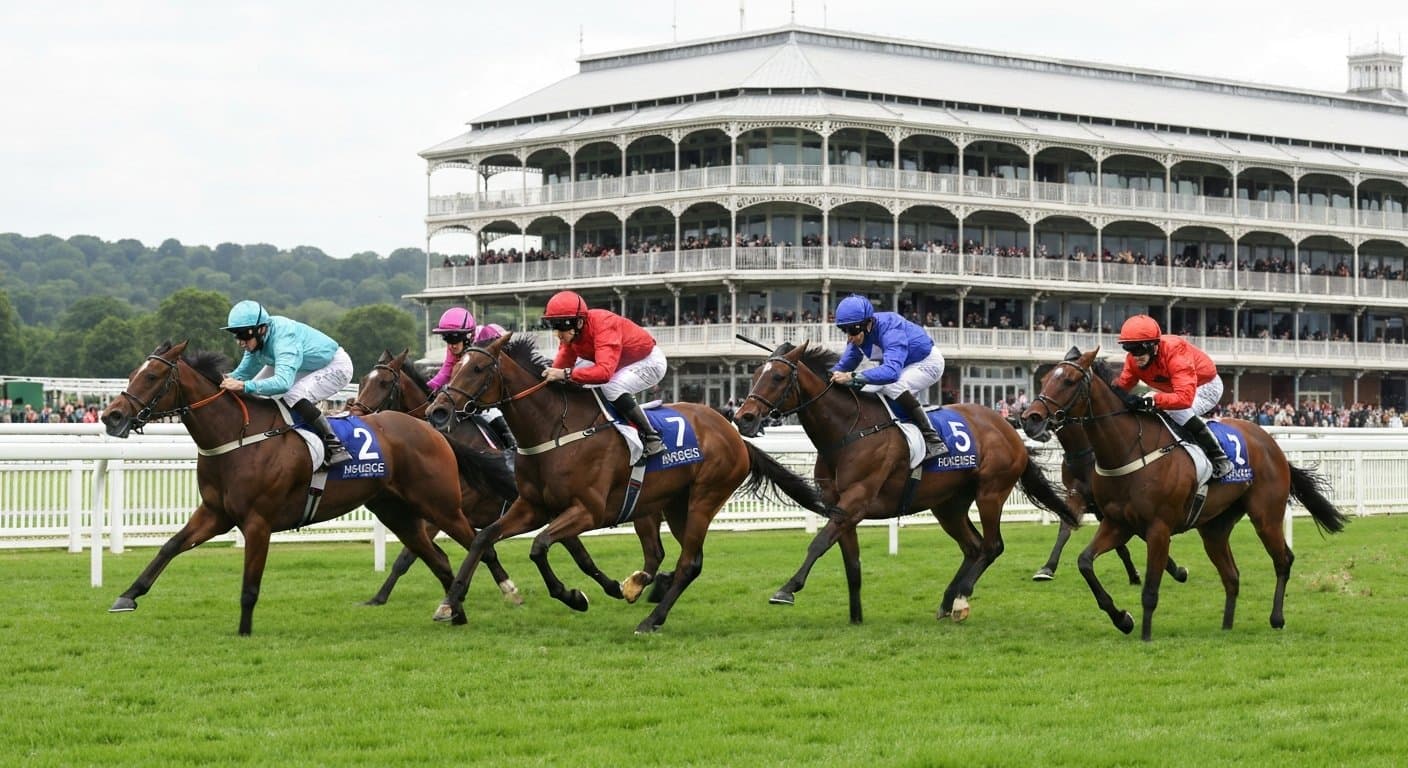
Frankel at Ascot: The Greatest Horse of His Generation
Frankel was unbeaten in 14 races. The full story of his career at Ascot, from the St James's Palace Stakes to the eleven-length Queen Anne Stakes rout.
Read moreGold Cup Day at Royal Ascot: Ladies Day Complete Guide
Gold Cup Day is the Thursday of Royal Ascot — the most spectacular day of the week. Here's your complete guide to the Gold Cup, Ladies Day, and everything in between.
Read moreResearch the field with the AI Race Predictor
Our model publishes calibrated win-probability estimates for UK races — a second opinion to understand a race, not tips. It's open about its record: it doesn't beat the market, and we show exactly how it does.
Betting offers for Ascot
Work it out & learn the basics
Gamble Responsibly
Gambling should be entertaining and not seen as a way to make money. Never bet more than you can afford to lose. If you or someone you know has a gambling problem, help and support is available.