
Founder & Editor · Last reviewed 2026-04-05
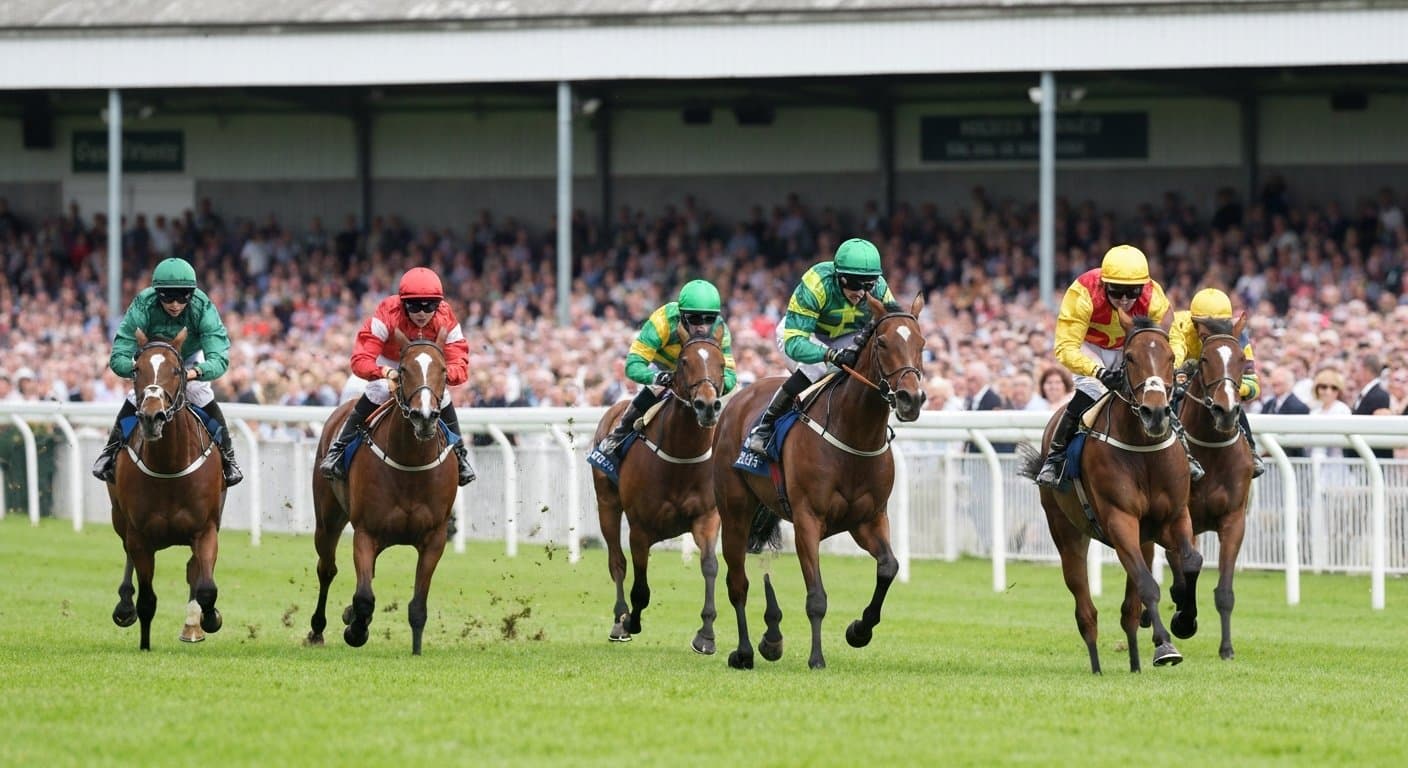
Beverley sits on Westwood Pasture, a stretch of ancient common land on the edge of East Riding of Yorkshire that has hosted racing since the late seventeenth century. For bettors, the setting matters less than what the track does to horses. The stiff uphill finish — climbing for roughly a furlong to the winning post — separates those that merely look the part from those that can sustain an effort under pressure. Sprint form earned at flat, fast venues often falls apart here. Staying form earned at similar undulating tracks often holds up better than the ratings suggest.
The Beverley Bullet, run on August Bank Holiday over five furlongs, is the event that draws the best sprint talent to Yorkshire between the Nunthorpe and the sprint handicap programme at York. Richard Fahey, Kevin Ryan, and Tim Easterby regularly hold the first three positions in the trainer standings at this meeting; their Malton and Hambleton yards are each within 45 miles of the course, and they treat Beverley as a home fixture. For a bettor, that trainer concentration creates repeatable patterns.
The course runs right-handed over a circuit of approximately 1m3f. The five-furlong course is a straight on the Westwood itself and is noticeably slower than the equivalent distance at Thirsk or Catterick — the uphill gradient removes any pace advantage horses carry from flat tracks. From 1m upwards, the full circuit comes into play and the undulating terrain tests horses through the bends and into the home straight.
Key facts for Beverley bettors:
- Flat racing only, April to September; operated by Beverley Race Company (independent ownership)
- Right-handed, 1m3f circuit; the five-furlong course runs straight on the Westwood
- The finishing straight climbs from the 2f pole to the winning post — effective stamina test in every race
- High draws (stall 8+) have a consistent edge in 5f races; the draw effect softens at 1m and beyond
- Richard Fahey (Musley Bank, Malton) is the dominant trainer; his sprinters account for a disproportionate share of winners
- The Hilary Needler Trophy (Listed, 5f fillies, June) and the Beverley Bullet (Listed, 5f, August Bank Holiday) anchor the quality end of the card
- Form from Hamilton Park and Chester — both tracks with stiff finishes — transfers to Beverley more reliably than form from Newmarket or Yarmouth
Beverley's season runs from late April to mid-September, with the programme weighted toward Saturdays and Bank Holidays. The course is independently owned by Beverley Race Company, which keeps the fixture list tighter than BHA-run courses tend to be; the result is that individual meetings carry more significance and fields tend to be competitive across the card rather than diluted across too many fixtures.
The sections that follow work through the track layout, going patterns, draw analysis, trainer and jockey records, and the specific strategies that tend to find value at Beverley across the season.
Bet on Beverley
Place your bets on Beverley races with a trusted bookmaker.

Promo code BETFRED50. New customers only. Register, deposit with a Debit Card, and place a first bet of £10+ at Evens (2.0)+ on Sports, to be settled within 7 days, to get £30 in Sports Free Bets and £20 in Bet Builder Free Bets within 24 hours of settlement. 7-day expiry. Eligibility & payment exclusions apply. Full T&Cs apply. Take Time to Think. BeGambleAware.org. 18+. Full T&Cs.

Promo code R30. New UK customers only, 18+. Register, deposit £10 or more, then place a £10 single cash bet at odds of 1/2 (1.5) or greater on any sports market (excluding Virtuals). Once the qualifying bet settles you get £30 in Free Bets (3 x £10) — the qualifying bet can win or lose. Free Bets are valid on any sports market excluding Virtuals, expire in 7 days, are non-withdrawable and must be used in full. Excluded deposit methods apply (including PayPal, Apple Pay, Skrill and NETELLER). Named bets such as Lucky 15 do not qualify. If you cash out the qualifying bet, or it is voided, you are no longer eligible for the offer. Ends 31.12.26. Full T&Cs apply. Please gamble responsibly. BeGambleAware.org. 18+. Full T&Cs.

Promo code BET40GET20. New UK customers, 18+. Register with the code and place a first bet of £40 or more at Evens (2.0) or greater. Receive 2 × £10 free bets: the first credited automatically once the qualifying bet settles, the second 24 hours later. Free bets must be placed at minimum odds of 4/1 (5.0), expire 24 hours after credit, and the free-bet stake is not returned with winnings. Debit card deposits only. Take Time to Think. BeGambleAware.org. 18+. T&Cs apply. Full T&Cs.

50% of your first-day net losses refunded as a free bet, capped at £25. New UK customers aged 18+ only. To qualify, deposit and place a first bet of £10 or more on any sport at minimum odds of evens (2.00), then place at least two further bets on different events, each worth at least 50% of your largest bet, all at evens (2.00) or greater. Losses are counted from your first settled bet until 23:59 the same day. Place a qualifying £10+ bet and you are guaranteed at least a £5 free bet. Bets placed at SP, void bets, cashed-out bets and bets struck with free bets do not count towards the offer. The free bet is credited the day after your qualifying bets settle and must be used within 7 days, after which it expires. It can be used at odds from 1/4 (1.25) up to 250/1 on singles and straight accumulators, but not on Trixie, Patent or Yankee style multiples. Free-bet stake is not returned with winnings. One offer per person, household, address, IP address and device. E-wallet deposits may not qualify, so check the cashier before depositing. Customers registered with GAMSTOP cannot claim. KYC identity verification must be completed before the free bet is credited. Take Time to Think. BeGambleAware.org. 18+. T&Cs apply. Full T&Cs.

New customers, 18+. Choose the sports bonus at sign-up, make a first deposit and receive a 100% bonus up to £50 in your Sports Bonus balance. To convert the bonus to cash, wager it 10x within 30 days. Single bets below Evens (2.00) do not qualify; accumulators do not qualify if any selection is below 1/2 (1.50). Virtual Sports, voided, cancelled, drawn, cashed-out and free-bet wagers do not count towards wagering. Only the first settled bet per event counts. Withdrawing before the wagering requirement is met forfeits the bonus balance including bonus winnings. Real-money funds are used before bonus funds. Deposits via Skrill or Neteller are not eligible. Not valid in conjunction with other promotions. Odds, bet and payment limits apply. 10bet general and promotion T&Cs apply. BeGambleAware.org. 18+. Full T&Cs.

New customers in Great Britain and Republic of Ireland, 18+. Place a £10 fixed-odds qualifying bet at minimum odds of 1/2 (1.50) — single or each-way (only the win part counts), pre-event or in-play, not cashed out early, within 28 days of opening the account. Receive up to £60 in bonuses credited over three days: 3 × £10 fixed-odds free bets (the first on settlement, then 24 and 48 hours later) plus 3 × £5 Total Goals FOOTBALL spread bets and 3 × £5 racing Winning Favourites spread bets, with a £1 racing Race Index spread bet as an extra on top. The spread bets need a full spread-betting account, opened within 28 days of the fixed-odds account and subject to Spreadex's eligibility and appropriateness checks. Free-bet stakes not returned with winnings; free bets valid 28 days from issue. IMPORTANT: the £5 credits are SPREAD bets — sports spread betting carries the risk that losses can exceed your stake. Sports spread-betting customers do not have Financial Ombudsman or FSCS recourse. Take Time to Think. BeGambleAware.org. 18+. T&Cs apply. Full T&Cs.

Promo code WELCOME15, entered under My Bonuses after registering. New UK customers, 18+. Place a first qualifying bet of at least £10 from your cash balance at odds of evens (2.0) or greater within 7 days of opening the account. Once the qualifying bet fully settles you receive £15 in free bets, credited as 3 x £5 tokens with set uses: one £5 accumulator free bet (minimum 4 legs, each leg at 2/5 or bigger), one £5 sports free bet (any market at evens or bigger) and one £5 Sub Cover free bet (selected football player markets at evens or bigger). Free-bet stakes are not returned with winnings. Free bets expire 7 days after they are credited. Void, cashed-out and partially cashed-out bets do not qualify. One offer per customer. Confirm the current terms on BetGoodwin's own welcome-offer page before claiming. Take Time to Think. BeGambleAware.org. 18+. T&Cs apply. Full T&Cs.

New UK customers, 18+. Minimum deposit £10. Place a £10 qualifying single on sports (excluding virtuals) at minimum odds of 1/2 (1.50), settled within 14 days. Deposit-method exclusions apply. Receive £30 in free bets (stake not returned), split £20 for sportsbook use (2 x £10) and £10 for Bet Builder only (2 x £5); Bet Builder does not cover horse racing. Free bets must be accepted within 7 days and expire 7 days after acceptance. No promo code required. Best Odds Guaranteed on UK & Irish racing, subject to having staked over £25 in the previous seven days. Operated by LiveScore Betting and Gaming (Gibraltar) Ltd, UKGC 56859. Confirm the current terms on LiveScore Bet's own promotions page before claiming. Take Time to Think. BeGambleAware.org. 18+. T&Cs apply. Full T&Cs.
18+. BeGambleAware.org
Track Characteristics
Beverley's circuit measures approximately 1m3f and runs right-handed on Westwood Pasture. The back straight descends; the home straight climbs. From the 2f pole to the finishing post the gradient rises continuously, and that uphill run defines what horse types can win here. Unlike the wide, galloping layouts at York or Newmarket, Beverley punishes horses that are strong early but fade under pressure. A horse that wins easily on a flat track with a turn of foot can be beaten on the run-in here by a rival that simply keeps grinding.
The Five-Furlong Course
The five-furlong sprint course runs straight along the Westwood. It is separate from the round circuit and rises throughout — there is no flat section to offer relief. Horses break from the stalls and face an immediate test of pace-and-stamina. Beverley's five-furlong times are measurably slower than those at Thirsk or Catterick over the same distance. That is not because Beverley attracts slower horses; it is because the gradient costs every runner time. Any speed merchant that relies on covering ground quickly on a flat track will find Beverley's 5f a different proposition.
The stalls are positioned on the far side, and the camber across the track slopes slightly toward the stand rail. In typical conditions that creates a positional advantage for horses drawn towards the high numbers (outside draw). The exact effect varies by field size and going, but high draws in the 8+ range consistently perform above expectation at 5f — this is covered in detail in the going and draw section.
The Round Course: 7f to 2m4f
From seven furlongs upwards, runners use the round circuit. The bends at Beverley are tighter than at York, and horses need to be handy enough to maintain their position through the turns. The camber on the home bend slopes toward the stand rail, which can unsettle horses that race wide. Prominent racers and those that travel smoothly through the turns have a structural advantage here compared to horses that require a straight course to show their best.
At 1m and beyond, the stiff finish is still the decisive factor, but the draw effect loosens. A large field over 1m2f or further will generally sort itself out by the home turn, and stamina from that point matters more than stall position. Horses that have finished strongly up similar climbs — at Hamilton Park, Chester, or Epsom — are worth elevating in the assessment. Horses from flat-track backgrounds that have not been tested late in a race are worth treating with caution.
How Beverley Compares to Other Yorkshire Flat Tracks
Yorkshire's flat tracks split into two types: galloping and testing. York and Pontefract lean galloping; Beverley, Catterick, and Ripon are the tighter, more demanding end.
| Track | Layout | Finish Type | Draw Effect |
|---|---|---|---|
| York | Wide, galloping, left-handed | Flat, long | Minimal |
| Beverley | Undulating, right-handed | Stiff uphill | Strong at 5f |
| Catterick | Tight, undulating, left-handed | Downhill then flat | Moderate |
| Thirsk | Flat, left-handed | Flat run-in | Minimal |
| Ripon | Undulating, right-handed | Moderate climb | Low-draw 5f |
The key comparison for form study is Catterick and Hamilton Park. Both are right-handed and undulating, and both finish with enough of a climb that horses need late stamina. A horse that has run well at Catterick — particularly one that finished strongly rather than idling — is a reasonable fit for Beverley. York form, by contrast, flatters horses with a high cruising speed and a turn of foot; that profile does not always hold at Beverley.
Horse Types That Perform Well
The consistent profile of a Beverley winner across distances looks like this: proven form on an undulating track, able to travel prominently without over-racing, and a finishing effort that continues to the line rather than arriving early and fading. At 5f, pace off the stalls still matters — but the horse must sustain that pace uphill. At 7f and beyond, staying power and course-handling count for more than raw speed ratings from galloping tracks.
Horses that race left-handed at York can take time to adapt to the right-handed layout at Beverley. It is not a disqualifying factor, but a horse that has only raced left-handed and then appears at Beverley on debut at the track deserves a slight discount unless the trainer has a history of placing that type successfully here.
Going & Draw Bias
Beverley's racing season runs April to September, and the going follows a broadly predictable Yorkshire pattern. Spring meetings in late April and May often catch the ground at good to firm after dry spells; June and early July tend to be the firmest part of the season. August can bring variability — a week of rain ahead of the Bank Holiday meeting is not unusual, and the going on Bullet day ranges from good to firm in some years to good or even good to soft in others. September can soften quickly if rain follows the summer peak.
The Westwood Pasture drains reasonably well in dry conditions. After a week or more of rain, however, the going can deteriorate toward soft faster than tracks with more prepared drainage infrastructure. When the Met Office forecast shows sustained rain in East Yorkshire in the ten days before a Beverley meeting, it is worth monitoring the going reports closely rather than assuming the ground will hold.
Seasonal Going Pattern
April–May: Good to firm is most likely. Horses that have wintered well and carry form from the all-weather or from southern grass tracks in early season need to prove they handle the firm conditions Beverley regularly serves up in this window.
June–July: The most reliably fast period. Good to firm or firm in a dry summer. Draw bias in sprint races is at its sharpest here, and horses with heavy-ground form from the previous autumn are not a straightforward fit.
August: Variable. The Bank Holiday meeting — the most important fixture of the year — can be run on any going from good to firm to good to soft. Check the going as late as possible before betting on the Bullet and the Bank Holiday card.
September: Increasingly unpredictable. Good through soft is the range. Horses that stay well and handle cut in the ground come into their own in the final weeks of the season.
Draw Bias at Five Furlongs
The draw at Beverley's 5f course is the most consistently debated topic among northern racing bettors, and the debate is not simple. The old understanding — that low draws dominate on good ground — needs updating. The stalls on the straight 5f course sit on the far side. The track cambers slightly, and high-drawn horses (stall 8 upwards) avoid the steepest part of that camber as the field breaks.
In recent seasons the evidence points toward high draws (8+) having a consistent edge in 5f races, particularly in fields of ten or more runners. Low-drawn horses are not disadvantaged in every race, but in large fields on good to firm ground, high draws have repeatedly outperformed. The mechanism is partly positional — high-drawn horses can find the better ground on the stand side — and partly physical: they avoid the initial camber disruption from the stalls.
Practical rule: In any 5f race at Beverley with ten or more runners, note the draw of your selection before finalising a bet. A horse drawn in stalls 1–4 in a fourteen-runner race faces a structural challenge that a horse drawn 10–14 does not. This does not mean low draws never win — they do — but the edge runs against them often enough to price into your assessment.
Draw at One Mile and Beyond
At 1m and further the draw effect softens materially. Horses have time to find their position before the first bend, and by the home turn the race has usually sorted itself out by merit. A slight middle-to-high draw preference exists in large fields over 1m — high-drawn horses can track across to a better position without being trapped on the rail — but the effect is nowhere near the 5f magnitude. Over 1m2f and further, do not weight the draw heavily in your analysis.
At six furlongs the picture is intermediate. In large fields (twelve or more), a moderate high-draw advantage is detectable. In smaller fields of eight or fewer, the draw effect at 6f is not reliably significant.
Going and Stamina Interaction
The stiff uphill finish interacts with going in a way that catches out horses from flat tracks. On good to firm ground at Beverley, the finish is physically demanding — fast ground does not offset the gradient. A horse that gallops freely on good to firm at Yarmouth or Kempton and wins easily there has not been tested by anything comparable to Beverley's final furlong. When that horse steps up to a Beverley sprint on fast ground, its stamina at the top of the hill is unknown.
The reverse is also true: a horse with significant soft-ground form may not be comfortable on the firm conditions that Beverley regularly serves up in June and July. Ground specialists are best bet on ground they know. A horse that has shown consistent form across multiple ground types — or has won on fast ground on an undulating track — is lower risk at Beverley than a horse with a single ground preference.
Useful Form Tracks by Going
When looking for horses with transferable form to Beverley:
- Good to firm, uphill finish: Hamilton Park, Chester, Epsom (Polytrack form less relevant)
- Testing ground, undulating: Catterick, Ripon, Musselburgh
- Avoid assuming: Newmarket, Yarmouth, Lingfield (flat or easy finishes do not replicate Beverley conditions)
Key Trainers & Jockeys
Beverley draws heavily from the concentration of northern flat yards based within 50 miles of the course. The proximity of the Malton training centre — home to Richard Fahey and a cluster of other northern handlers — gives local trainers a structural edge over southern stables who must travel horses five or more hours for a Saturday feature. That geography shapes the market and the results.
Richard Fahey — Musley Bank, Malton (~30 miles)
Fahey is the dominant presence at Beverley. His Musley Bank yard in Malton sits approximately 30 miles south-west of the course, and he treats the Beverley programme — particularly the sprint card — as a home fixture. His strike rate at Beverley across recent seasons is among the highest of any trainer at any single track in the north of England. He runs sprinters at the track throughout the season, not just on the Bank Holiday card, and his juveniles appear early at Beverley maidens in May and June.
For a bettor, the Fahey angle works best when he runs a well-regarded sprint juvenile on a debut or second start at Beverley. His two-year-old form here has a history of producing horses that go on to pattern-race level. His sprinters also target the five-furlong handicap programme at Beverley regularly — when Fahey runs a horse that has been placed at the track before, the combination of course form and trainer record is worth marking up.
Paul Hanagan is Fahey's retained jockey and rides the majority of the yard's Beverley runners. Hanagan has significant course knowledge and understands how to place a horse from a favourable draw.
Tim Easterby — Great Habton, Malton area (~35 miles)
Tim Easterby operates from Great Habton near Malton, approximately 35 miles from Beverley. His record at the course is particularly strong with two-year-olds; Beverley's juvenile maiden programme is one of his regular targets in May and June. Easterby's juveniles tend to be early types — physical, forward-going horses that handle the uphill finish — and his strike rate with first and second-season two-year-olds at Beverley is consistently above the course average.
David Allan is the jockey most associated with the Easterby yard. Allan is a course specialist at several Yorkshire tracks and rides Beverley with regularity across the season.
Kevin Ryan — Hambleton Lodge (~40 miles)
Kevin Ryan trains from Hambleton Lodge, roughly 40 miles south-west of Beverley. His operation targets quality sprint races, and he regularly runs horses at the Beverley Bullet and the Hilary Needler Trophy. Ryan's sprinters are generally better class than the typical Beverley handicapper — he uses the course's Listed sprint programme to place horses between the bigger northern sprint features at York and Haydock. When Ryan declares for the Bullet or the Needler, the runner warrants market attention regardless of the draw, as he rarely sends horses to Listed races without confidence they are ready to run well.
Charlie Johnston — Kingsley Park, Middleham (~50 miles)
The yard previously operated by Mark Johnston and now run by Charlie Johnston out of Kingsley Park, Middleham, is approximately 50 miles west of Beverley. The Johnston operation's juvenile record at northern tracks is well documented, and Beverley is part of the programme for quality juveniles from the yard. Their two-year-old handicap runners at Beverley are worth attention when they arrive with recent winning or placed form at a comparable track.
David O'Meara — Upper Helmsley (~45 miles)
O'Meara's Upper Helmsley yard, around 45 miles south-west of Beverley, produces handicap specialists rather than pattern horses. His runners at Beverley tend to appear in the 0-85 and 0-90 handicaps, often in trips of 7f to 1m2f. O'Meara's horses are well-placed for northern handicaps; when one arrives at Beverley with a small weight and a positive recent run, the combination of trainer form and course suitability is worth including in the assessment.
Key Jockeys
Paul Hanagan (Fahey retained): Course record at Beverley is strong across all distances and types. His ability to manage draws and position in sprint races is relevant to any analysis of Fahey's runners.
Oisin Murphy: Rides for multiple northern yards when available; has a strong record at Beverley in Listed race company.
Ben Curtis: A leading northern jockey who rides widely across the Yorkshire circuit and has above-average course form at Beverley in both maiden and handicap company.
David Allan (Easterby-associated): Strong juvenile record at the course; worth noting when aboard a two-year-old on debut or second start.
Betting Strategies
Beverley rewards bettors who apply a short list of repeatable filters rather than those who rely on speed figures or form at unrelated tracks. The course has enough structural features — the draw, the uphill finish, the trainer concentration — that a disciplined approach to those factors alone will identify value more consistently than a generic handicap-by-handicap analysis.
The Fahey Home Advantage Play
Richard Fahey's Musley Bank yard is 30 miles from Beverley. His strike rate at the course is among the highest of any trainer-track combination in northern flat racing. The play is straightforward: when Fahey runs a horse in a five-furlong sprint — particularly a juvenile maiden or a sprint handicap — that has course form or has run well at a comparable northern track, it is a bet that deserves serious consideration regardless of the market price.
The angle is strongest when Fahey's horse is not the favourite. Because his record is well known, the market often shortens his runners. The value tends to sit in his less-fancied second or third runners in the same race, or in his juvenile maidens where the market is thinner. A Fahey juvenile making a second start at Beverley, with a respectable debut run behind it, has a history of running well above market expectation.
Paul Hanagan's presence in the saddle is a useful confirmation: when Fahey books his retained rider for a Beverley run, that signals a yard with intent.
The Draw Angle in 5f Races
The draw analysis for 5f races is covered in detail in the going and draw section, but the betting application works as follows. In fields of ten or more runners over five furlongs, high draws (stall 8+) have a consistent edge. Use this to:
- Discount a short-priced favourite drawn in stalls 1–4 when a ten-plus field is declared. The draw works against it regardless of class.
- Promote an each-way selection drawn in stalls 8–14 if it holds any positive form qualifier. A 12/1 shot well drawn at Beverley over 5f is often better value than the same price at a track where the draw is neutral.
- Check the going before applying the draw angle. On soft ground the effect is less clear; on good to firm in June or July, the high-draw edge is at its strongest.
Do not apply the draw angle at 7f or beyond. It is 5f-specific and softens materially at six furlongs in average-sized fields.
The Stiff Finish Premium
Beverley's uphill finish is comparable in profile to Hamilton Park, Chester, and Epsom in the demands it makes on horses in the closing furlong. Form from those tracks transfers reliably to Beverley; form from Newmarket, Yarmouth, or Kempton does not.
The practical approach: before backing a horse at Beverley, check its form at tracks with stiff finishes. If it has already proven it can grind out the final furlong uphill — particularly if it won going away rather than holding on — it earns a small premium in your assessment. If its best form is from flat tracks with easy run-ins, apply a discount.
Avoid horses that have posted big speed figures on fast, flat tracks but have never been tested on a gradient. Beverley will expose that limitation quickly.
The Juvenile Form Guide Angle
Beverley is one of the more reliable juvenile form tracks in Yorkshire. Two-year-old maidens run here in May and June often feature horses that go on to win at Group or Listed level before the season ends. Fahey, Easterby, and Charlie Johnston regularly aim their better juveniles at Beverley for first or second starts, using the track's competitive maiden programme as a real test.
The betting angle: track Beverley juvenile maiden winners and placed horses through the season. A horse that finishes second in a Beverley 5f maiden in June behind a subsequent Listed winner has a solid form line. When that horse reappears — particularly at a track with a similar profile — the Beverley second-start form is worth more than it might appear in the bare ratings.
What to Avoid
Flat-track imports: A horse arriving at Beverley from Yarmouth, Lingfield flat, or the all-weather having never faced an uphill finish is a risk. The form may be strong, but Beverley's final furlong is an unknown for that horse, and the unknown tends to resolve against you.
Heavy-ground specialists in June: The June programme at Beverley often runs on good to firm. A horse whose best form is on soft or heavy ground is not a fit for the mid-season Beverley card. Check the ground requirements before backing.
High-profile southern stables in sprint handicaps: Southern trainers sometimes send horses to the Beverley sprint handicap programme for the Bank Holiday card. Without course form and with a long travel day behind the horse, the record of these runners is below average unless the trainer has a specific history of winning at the course.
To compare place terms and each-way promotions across the major bookmakers, see our best bookmakers for horse racing guide.
Key Races to Bet On
Beverley's programme peaks in late summer, with the August Bank Holiday card the centrepiece of the season. Listed races anchor the quality end; a strong handicap card runs alongside them. The four races and fixtures below are the ones that reward detailed preparation.
Beverley Bullet (Listed, 5f, August Bank Holiday)
The Beverley Bullet is a Listed sprint for three-year-olds and upwards, run on August Bank Holiday Monday. It attracts the best sprint talent from the northern yards and occasional raiders from the south. Fahey, Ryan, and Easterby dominate the trainer standings for this race. Past winners include Take Cover, Tis Marvellous, and Borderlescott — horses with the pace to lead and the stamina to hold on uphill.
How to approach the Bullet:
- Check the draw first. High stalls (8+) have a consistent edge; a well-drawn outsider at 12/1 can represent clear value against a short-priced favourite drawn in the low numbers.
- Check the going on the day. The Bullet has been run on going ranging from good to firm to good to soft depending on the Yorkshire summer. On faster ground the draw effect is sharper; on soft ground the advantage shifts toward the stand rail and the draw picture is less clear.
- Trainer form: if Fahey or Ryan runs a horse that has already won a 5f sprint in the north that season, that is the default profile to anchor your analysis around. Both trainers have strong Bullet records when they arrive with a horse in form.
- The supporting 5f handicap on the same card often runs under similar conditions; the draw analysis applies equally.
Hilary Needler Trophy (Listed, 5f fillies, June)
The Hilary Needler Trophy is a Listed race for two-year-old fillies over five furlongs, typically run in June. It is one of the most important early-season sprint tests for fillies in the north of England, and its form has a reasonable record of pointing toward the better fillies who go on to contest the Nunthorpe, the July Cup, or the Flying Childers later in the season.
The race is a juveniles-only field, which makes the draw and trainer angles sharper than in open-aged races. Fahey and the Johnston operation regularly target this race with quality fillies. A Hilary Needler winner or placed filly that goes on to finish in the first two in a subsequent Group or Listed race adds a useful form line to the Beverley record for the rest of the season. Track the Needler field through July and August.
The August Bank Holiday Card
The Bank Holiday card at Beverley is the busiest and most competitive fixture of the season. The Bullet anchors the programme, but the supporting card typically includes four or five competitive handicaps across a range of distances. The 5f sprint handicaps carry the same draw analysis as the Bullet; the 7f and 1m handicaps reward the stamina-and-course-form approach.
For volume bettors, the Bank Holiday card is worth treating as a structured session rather than a series of individual races. Set a going check, note the draw in every sprint, identify the Fahey and Easterby runners, and work through the card systematically. The volume of competitive racing on that one day makes it a higher-information session than most northern Saturday cards.
Juvenile Maidens (May–June)
Beverley's two-year-old maiden programme, concentrated in May and June, is one of the better form references for early-season juvenile flat racing in Yorkshire. The fields often include nicely-bred, well-regarded horses from Fahey, Easterby, and the Johnston yard on debut or second starts. The uphill finish is a real test for juveniles — a horse that wins a Beverley 5f maiden in June by two lengths while green has done something harder than winning an equivalent maiden at a flat, easy track.
When a Beverley juvenile maiden winner reappears in a higher-grade race at a similar track in July or August, the form is worth taking seriously. The race is often dismissed in ratings because the opposition is unproven; the track profile means the form is more reliable than the raw numbers suggest.
Share this article
More about this racecourse
All Beverley guides
Beverley Bullet Day at Beverley: The Complete Guide
Your complete guide to Beverley Bullet Day — East Yorkshire's premier flat racing occasion. The Beverley Bullet Listed Sprint in September draws the north's fastest sprinters to one of Britain's most historic racecourses, with a stiff uphill finish that makes it unlike any other 5-furlong test.
Read more
Beverley Bullet: Complete Guide
Your complete guide to the Beverley Bullet — history, great winners, the course, and betting angles for Beverley's signature flat race.
Read more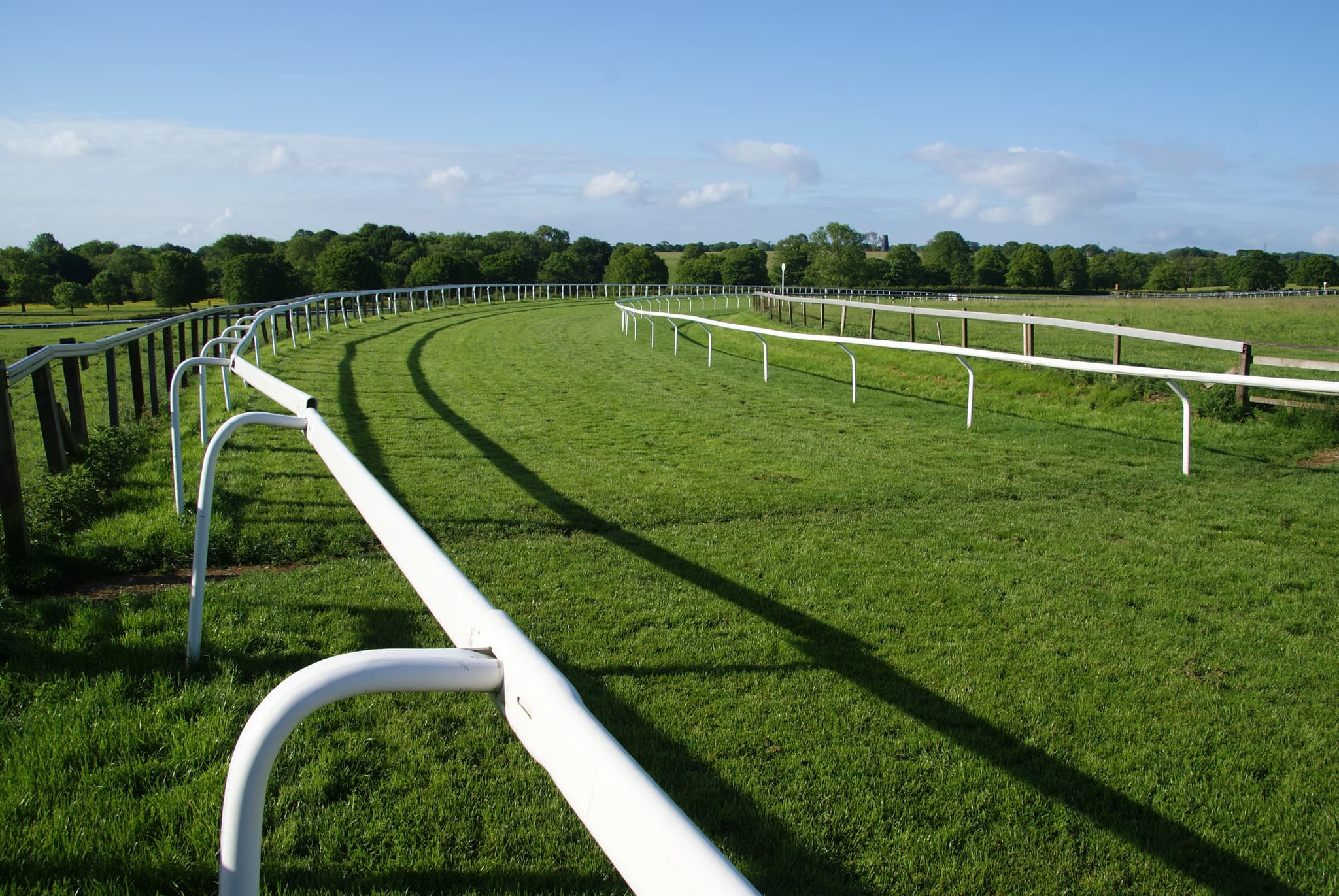
Beverley Racecourse: Complete Guide
Everything you need to know about Beverley Racecourse — Yorkshire's historic flat course, the Beverley Bullet, and racing at Westwood.
Read morePhotos on this page are used under Creative Commons licences. Titles, sources and licence links for each one are on our image credits page.
Research the field with the AI Race Predictor
Our model publishes calibrated win-probability estimates for UK races — a second opinion to understand a race, not tips. It's open about its record: it doesn't beat the market, and we show exactly how it does.
Work it out & learn the basics
Gamble Responsibly
Gambling should be entertaining and not seen as a way to make money. Never bet more than you can afford to lose. If you or someone you know has a gambling problem, help and support is available.