
Founder & Editor · Last reviewed 2026-03-02
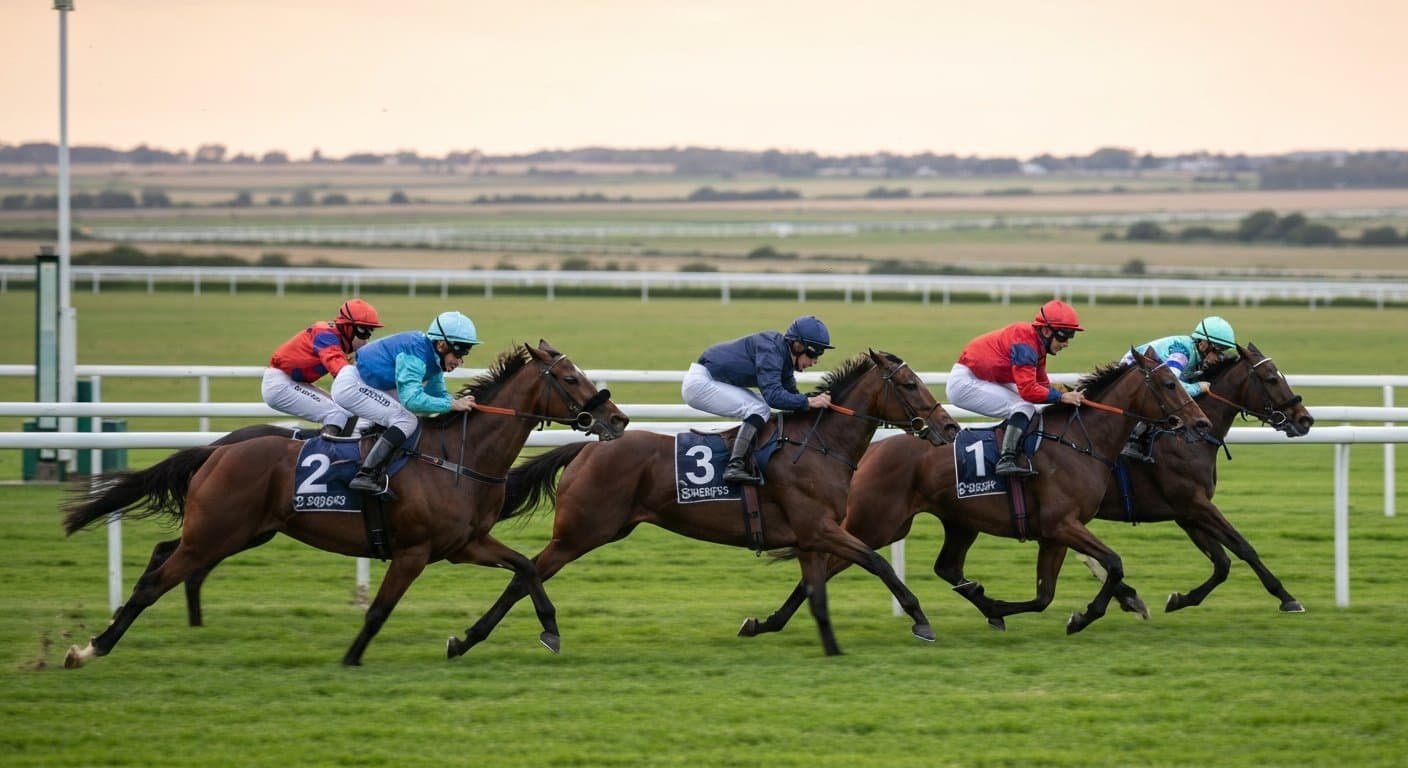
Great Yarmouth sits on the Norfolk coast, two miles from the North Sea and fifty miles east of Newmarket. It is a flat-racing-only course, open from April to October, and it operates in the shadow of Britain's racing capital — geographically close enough that Newmarket trainers treat it as a regular outlet for horses of every grade, from unraced two-year-olds to seasoned handicappers. This proximity to Newmarket is the dominant fact of Great Yarmouth's betting environment: the trainers, the horses, and the form lines that run through the course are shaped almost entirely by what happens fifty miles to the west.
The course is right-handed with a separate straight mile, and it presents a fair galloping test that consistently rewards the better horse on the day. There are no severe quirks — no notorious draw bias, no gradient that dramatically reshapes the race, no tight bends requiring specialist handling. What makes Great Yarmouth a productive betting venue is the combination of its fair nature (form holds up), its proximity to Newmarket (major yards run horses here with clear intent), and the quality concentration of the Eastern Festival in September.
Quick Betting Reference
- Course type: Right-handed galloping oval; separate straight mile
- Distance range: 5f to 1m6f
- Going: Good to Firm typical in summer; Good or Good to Soft in spring and autumn; rarely Heavy
- Flagship meeting: Eastern Festival (3 days, September; Listed and Class 2 races)
- Primary advantage: Newmarket yard intent — proximity makes deliberate targeting easier to read
- Form transfer: Newmarket (both courses), Sandown, Leicester all transfer directly
- Trainer to watch: Charlie Appleby (Godolphin); Thady/John Gosden; Roger Varian
Why the Newmarket Connection Matters
At most British racecourses, the leading national trainers represent one component of a mixed field. At Great Yarmouth, Newmarket yards account for a disproportionate share of runners and winners across every race type. Charlie Appleby (Godolphin), the Gosden operation, Roger Varian, William Haggas, and James Fanshawe between them supply the majority of the winners from the better-class races. These yards run horses at Great Yarmouth with specific intent — either to win a race as part of a campaign plan, to provide a run for a horse being prepared for something bigger, or to give an unraced youngster its racecourse debut in a familiar training environment.
Reading that intent — distinguishing a horse being sent to win from one being sent for experience — is the primary skill at Great Yarmouth. When Charlie Appleby sends a horse to Yarmouth with William Buick booked, the intent is typically to win. When the same horse runs with a stable apprentice up, the intent may be educational. This distinction does not appear in the price but is consistently present in the results.
The Eastern Festival
The Eastern Festival in September is Great Yarmouth's betting highlight — three days of racing that includes Listed contests, Class 2 handicaps, and the highest-quality fields the course sees all season. Form from the festival is reliable enough to be used as a Cheltenham and Ascot pointer for horses at the peak of their late-season campaigns. The festival attracts runners from beyond the usual Newmarket circle — yards from the Midlands, the North, and occasionally Ireland travel for the Listed events.
For the rest of the season — May through August — Great Yarmouth stages competent Class 3 to Class 5 programme races and handicaps that provide steady betting opportunities. The fair course means the better horse usually wins; the presence of Newmarket's major yards means form from the course transfers reliably to other galloping venues.
Bet on Great Yarmouth
Place your bets on Great Yarmouth races with a trusted bookmaker.

Promo code BETFRED50. New customers only. Register, deposit with a Debit Card, and place a first bet of £10+ at Evens (2.0)+ on Sports, to be settled within 7 days, to get £30 in Sports Free Bets and £20 in Bet Builder Free Bets within 24 hours of settlement. 7-day expiry. Eligibility & payment exclusions apply. Full T&Cs apply. Take Time to Think. BeGambleAware.org. 18+. Full T&Cs.

Promo code R30. New UK customers only, 18+. Register, deposit £10 or more, then place a £10 single cash bet at odds of 1/2 (1.5) or greater on any sports market (excluding Virtuals). Once the qualifying bet settles you get £30 in Free Bets (3 x £10) — the qualifying bet can win or lose. Free Bets are valid on any sports market excluding Virtuals, expire in 7 days, are non-withdrawable and must be used in full. Excluded deposit methods apply (including PayPal, Apple Pay, Skrill and NETELLER). Named bets such as Lucky 15 do not qualify. If you cash out the qualifying bet, or it is voided, you are no longer eligible for the offer. Ends 31.12.26. Full T&Cs apply. Please gamble responsibly. BeGambleAware.org. 18+. Full T&Cs.

Promo code BET40GET20. New UK customers, 18+. Register with the code and place a first bet of £40 or more at Evens (2.0) or greater. Receive 2 × £10 free bets: the first credited automatically once the qualifying bet settles, the second 24 hours later. Free bets must be placed at minimum odds of 4/1 (5.0), expire 24 hours after credit, and the free-bet stake is not returned with winnings. Debit card deposits only. Take Time to Think. BeGambleAware.org. 18+. T&Cs apply. Full T&Cs.

50% of your first-day net losses refunded as a free bet, capped at £25. New UK customers aged 18+ only. To qualify, deposit and place a first bet of £10 or more on any sport at minimum odds of evens (2.00), then place at least two further bets on different events, each worth at least 50% of your largest bet, all at evens (2.00) or greater. Losses are counted from your first settled bet until 23:59 the same day. Place a qualifying £10+ bet and you are guaranteed at least a £5 free bet. Bets placed at SP, void bets, cashed-out bets and bets struck with free bets do not count towards the offer. The free bet is credited the day after your qualifying bets settle and must be used within 7 days, after which it expires. It can be used at odds from 1/4 (1.25) up to 250/1 on singles and straight accumulators, but not on Trixie, Patent or Yankee style multiples. Free-bet stake is not returned with winnings. One offer per person, household, address, IP address and device. E-wallet deposits may not qualify, so check the cashier before depositing. Customers registered with GAMSTOP cannot claim. KYC identity verification must be completed before the free bet is credited. Take Time to Think. BeGambleAware.org. 18+. T&Cs apply. Full T&Cs.

New customers, 18+. Choose the sports bonus at sign-up, make a first deposit and receive a 100% bonus up to £50 in your Sports Bonus balance. To convert the bonus to cash, wager it 10x within 30 days. Single bets below Evens (2.00) do not qualify; accumulators do not qualify if any selection is below 1/2 (1.50). Virtual Sports, voided, cancelled, drawn, cashed-out and free-bet wagers do not count towards wagering. Only the first settled bet per event counts. Withdrawing before the wagering requirement is met forfeits the bonus balance including bonus winnings. Real-money funds are used before bonus funds. Deposits via Skrill or Neteller are not eligible. Not valid in conjunction with other promotions. Odds, bet and payment limits apply. 10bet general and promotion T&Cs apply. BeGambleAware.org. 18+. Full T&Cs.

New customers in Great Britain and Republic of Ireland, 18+. Place a £10 fixed-odds qualifying bet at minimum odds of 1/2 (1.50) — single or each-way (only the win part counts), pre-event or in-play, not cashed out early, within 28 days of opening the account. Receive up to £60 in bonuses credited over three days: 3 × £10 fixed-odds free bets (the first on settlement, then 24 and 48 hours later) plus 3 × £5 Total Goals FOOTBALL spread bets and 3 × £5 racing Winning Favourites spread bets, with a £1 racing Race Index spread bet as an extra on top. The spread bets need a full spread-betting account, opened within 28 days of the fixed-odds account and subject to Spreadex's eligibility and appropriateness checks. Free-bet stakes not returned with winnings; free bets valid 28 days from issue. IMPORTANT: the £5 credits are SPREAD bets — sports spread betting carries the risk that losses can exceed your stake. Sports spread-betting customers do not have Financial Ombudsman or FSCS recourse. Take Time to Think. BeGambleAware.org. 18+. T&Cs apply. Full T&Cs.

Promo code WELCOME15, entered under My Bonuses after registering. New UK customers, 18+. Place a first qualifying bet of at least £10 from your cash balance at odds of evens (2.0) or greater within 7 days of opening the account. Once the qualifying bet fully settles you receive £15 in free bets, credited as 3 x £5 tokens with set uses: one £5 accumulator free bet (minimum 4 legs, each leg at 2/5 or bigger), one £5 sports free bet (any market at evens or bigger) and one £5 Sub Cover free bet (selected football player markets at evens or bigger). Free-bet stakes are not returned with winnings. Free bets expire 7 days after they are credited. Void, cashed-out and partially cashed-out bets do not qualify. One offer per customer. Confirm the current terms on BetGoodwin's own welcome-offer page before claiming. Take Time to Think. BeGambleAware.org. 18+. T&Cs apply. Full T&Cs.

New UK customers, 18+. Minimum deposit £10. Place a £10 qualifying single on sports (excluding virtuals) at minimum odds of 1/2 (1.50), settled within 14 days. Deposit-method exclusions apply. Receive £30 in free bets (stake not returned), split £20 for sportsbook use (2 x £10) and £10 for Bet Builder only (2 x £5); Bet Builder does not cover horse racing. Free bets must be accepted within 7 days and expire 7 days after acceptance. No promo code required. Best Odds Guaranteed on UK & Irish racing, subject to having staked over £25 in the previous seven days. Operated by LiveScore Betting and Gaming (Gibraltar) Ltd, UKGC 56859. Confirm the current terms on LiveScore Bet's own promotions page before claiming. Take Time to Think. BeGambleAware.org. 18+. T&Cs apply. Full T&Cs.
18+. BeGambleAware.org
Track Characteristics
Great Yarmouth's track consists of two distinct racing surfaces that share the same infield but present different tests. The round course is a right-handed oval approximately twelve furlongs around. The straight course runs separately for sprint and mile races, offering one of the longest straights in British flat racing at approximately one mile in length. Understanding which course is in use for a given race — and what that means for the competitive dynamics — is the first step in any Great Yarmouth assessment.
The Round Course
Races from one mile and two furlongs through to one mile and six furlongs use the round course, starting at various points around the oval and finishing at the winning post in front of the stands. The course is right-handed with bends that are wider and more sweeping than at compact courses like Chester or Epsom. The flat profile — no significant gradient in either direction — means horses run at an even energy expenditure throughout. There are no downhill sections generating early pace, and no uphill climbs in the closing stages testing stamina beyond the horse's normal distance capacity.
The home straight on the round course runs for approximately three furlongs, giving horses a proper run to the line after the final bend. This is long enough for hold-up horses to mount a finishing run, but not so extended that a front-runner who has jumped the bend in good order faces a prolonged chase from behind. Races on the round course at Great Yarmouth have a broadly neutral pace character: front-runners, hold-up horses, and prominent racers all win with approximately equal frequency, and the result is determined primarily by ability and going suitability rather than tactical position.
The Straight Course
The straight course at Great Yarmouth is used for races from five furlongs through to one mile. It is one of the longest straights in British racing — the full one-mile races are run entirely on the straight, without a bend — and this length fundamentally changes the race character compared to bent-course miles. On the straight mile, there is nowhere to hide: pace judgement is determined by the jockey alone, without the deceleration that a bend imposes. Horses that stride freely and can maintain a strong gallop across the full distance hold a significant advantage.
For sprint races of five and six furlongs, the straight is wide enough that the entire field has approximately equal room. Horses are not funnelled toward the stands rail or the far rail by any physical configuration of the course. The course rides even across its full width, without a significant camber rewarding one side over the other.
Stayer Premium
The combination of the flat profile and the long straight mile creates a course that truly rewards stamina. Horses that stay strongly — those that maintain their galloping rhythm through the final two furlongs without shortening their stride — carry a consistent advantage over one-paced horses that have technically run the right distances but lack the endurance the course's honest test exposes. Form from Newmarket's July Course and Rowley Mile (both left-handed, flat, with long straights) transfers most directly. Sandown, Leicester, and Haydock are secondary comparators.
Form from tight, turning tracks — Chester, Epsom, Goodwood — requires significant discounting at Great Yarmouth. The specific attributes those courses reward — the ability to accelerate sharply around a tight bend, the coordination required on a severe camber, the positional discipline needed in a narrow field — are not tested at Yarmouth. A horse that wins at Chester because its quick acceleration through tight bends allows it to take the lead at the most critical point will not automatically translate those qualities to a straight, flat, galloping mile at Yarmouth.
The Long Run-In and Late Challenges
The three-furlong home straight on the round course, combined with the extended straight-mile course, creates conditions where horses dropped to the rear of the field have enough distance to run on and close gaps. In practice, this means Great Yarmouth produces a higher proportion of late-running winners than tighter tracks with compressed straights. Bettors who are considering each-way options should note that horses in the back half of the field at the two-furlong marker in round-course races routinely finish to take place money, even when they cannot win outright.
Going & Draw Bias
Great Yarmouth's sandy, coastal soil drains efficiently and dries quickly, producing going that is typically Good to Firm or Good across most of the summer flat season. The track sits just inland from the Norfolk coast on a subsoil that retains less moisture than the clay-based courses that dominate the Midlands and South. Good to Firm is the most common description for July and August meetings; Good to Soft appears most often in May, June, and late September; Soft is possible but not frequent; Heavy is rare.
Seasonal Going Profile
April to May: Spring meetings at Great Yarmouth often run on Good or Good to Soft as the ground recovers from winter. The sandy drainage means the course dries faster than might be expected after spring rain, and a wet April can give way to Good by early May. Form from Newmarket on Good to Soft transfers directly.
June to July: The core summer period typically produces Good to Firm or Good. Sustained dry weather in east Norfolk — the county has one of the lowest average rainfall levels in England — means Good to Firm is the default for peak-season meetings. At this going, the course produces its fastest races and the straightforward form reading is most reliable.
August to September (including the Eastern Festival): Ground remains Good to Firm or Good through August. The Eastern Festival in September typically runs on Good or Good to Soft as autumn moisture begins to arrive. This is ideal going for quality racing — manageable for a range of horse types and close enough to summer form that comparisons are straightforward.
Late September to October: Autumn rain pushes the going toward Good to Soft or Soft in the closing weeks of the season. October cards can run on testing ground if the preceding weeks have been wet, though the sandy soil continues to drain better than inland courses.
Going and Race Type Interaction
On Good to Firm, pace is higher throughout any race, and horses with real speed — those that can sustain a quick gallop without fading — hold a stronger advantage than on softer ground. Front-runners on Good to Firm at Great Yarmouth with a clear lead can produce untouchable times; hold-up horses need to start their run earlier than on softer ground because there is less physical give in the surface to slow the pace.
On Good to Soft, the pace slows slightly and the stayer's premium increases. Horses that stay strongly in the final two furlongs win at a higher rate relative to sprinters at this going. Assessments made on Good to Firm form require a small upward adjustment for stamina when the going is Good to Soft.
Draw Analysis
Straight course (5f-1m): The straight is wide enough that no pronounced draw bias has emerged consistently. There is a very mild low-draw advantage in races with large fields of fourteen or more runners, because a low draw allows a horse to take an early position in the middle or stands-side rail without being shuffled back in the early stages. This advantage is small — approximately one to two lengths' positional value — and only relevant in the largest fields. In standard fields of eight to twelve runners, draw is not a productive betting filter on the straight course.
Round course (1m2f+): Draw is essentially neutral on the round course. The right-handed bends mean low-drawn horses have a theoretical positional advantage at the first bend, but the wide, sweeping nature of the turns reduces this to a negligible level. No documented consistent draw bias exists on the round course at Great Yarmouth.
The Coastal Wind Factor
Great Yarmouth's exposed position on the Norfolk coast means that wind is a more significant factor than at inland venues. A strong south-westerly wind blowing off the North Sea can affect the straight course particularly — creating a headwind in one direction or a tailwind depending on the race's starting position. The course's long straights amplify any sustained wind effect. Race times on days with strong headwinds are significantly slower than on still days, which matters for speed figure comparisons across meetings.
Check the wind forecast alongside the going report when assessing Great Yarmouth straight-course form. A time that looks slow on a headwind day may represent an outstanding performance; a fast time on a tailwind day may require discounting.
Key Trainers & Jockeys
The trainer landscape at Great Yarmouth is shaped entirely by geography. Newmarket is fifty miles to the west, and the majority of the winners at every Great Yarmouth meeting come from Newmarket stables. This concentration is not incidental — the course is within easy travelling distance for Newmarket horses, provides consistently good going that suits horses trained on the Newmarket gallops, and offers a range of races from maiden-level up to Listed that maps onto the typical Newmarket training programme.
Charlie Appleby (Godolphin)
Charlie Appleby, training the Godolphin string at Moulton Paddocks in Newmarket, is the dominant force at Great Yarmouth. Godolphin's volume of runners at the course across all grades — from unraced two-year-old maidens to Listed-race contenders — generates a win rate that reflects both the quality of the operation and its deliberate use of Great Yarmouth as a racing school for improving horses. Appleby's Yarmouth runners can broadly be divided into two categories: horses sent to win (typically with William Buick booked) and horses gaining experience ahead of bigger targets (often with a stable apprentice or a junior jockey up).
When Appleby books Buick for a Yarmouth runner, the intent is to win. These horses — whether first-time runners or handicappers with race fitness — represent the most reliable intent signal in the Great Yarmouth market. At prices of 5/2 or above with Buick in the saddle, Godolphin Yarmouth runners have consistently outperformed market expectations because national punters often under-rate minor meetings.
John and Thady Gosden
The Gosden operation at Clarehaven Stables in Newmarket is the second major force at Great Yarmouth. The Gosdens use Yarmouth primarily for middle-distance horses — one-mile, one-and-a-quarter-mile, and one-and-a-half-mile races — where the course's flat profile and honest test suit horses being prepared for Group or Listed company later in their campaigns. Robert Havlin is the stable's regular Yarmouth jockey; a Havlin booking on a Gosden horse signals serious intent in the same way a Buick booking signals intent for Godolphin.
Gosden horses at Great Yarmouth frequently represent the next stage of a promising campaign: a win here confirms a horse is ready for a step up in class, and many subsequent Pattern race participants have started their campaign at Yarmouth. When a Gosden runner has shown promise in a previous run at a comparable track — Newmarket, Sandown, Leicester — and is stepping up slightly in distance at Yarmouth, the form continuation case is often straightforward.
Roger Varian and William Haggas
Roger Varian (Kremlin House Stables) and William Haggas (Somerville Lodge) are the third and fourth significant Newmarket operations at Great Yarmouth. Both use the course regularly for horses across all grades, and both have built track records that reflect consistent targeting rather than incidental use. Varian's middle-distance and staying horses are well suited to Great Yarmouth's flat test; Haggas's operation sends a broader range of horse types.
When either trainer has a horse with previous Yarmouth form at a price of 4/1 or above in a competitive Class 3 or Class 4 handicap, the trainer-course combination warrants support.
James Fanshawe
James Fanshawe at Pegasus Stables in Newmarket has a productive Yarmouth record built around middle-distance and staying horses. Fanshawe is a trainer whose horses often appear in the market at 5/1 to 8/1 without the name recognition of Appleby or Gosden, creating a reliable each-way value angle when his runners have course form and appropriate going.
Jockeys
William Buick's association with Godolphin makes him the most significant Great Yarmouth jockey in terms of winners per season. His rides for Appleby and occasionally for other yards carry a premium signal regardless of the race grade. Robert Havlin is the most productive jockey for the Gosden yard at the course.
Beyond the Newmarket-yard regulars, the jockeys worth noting at Great Yarmouth are those who ride frequently at the course — the East Anglian circuit jockeys who also ride at Nottingham, Leicester, and Yarmouth year-round. These jockeys understand the wind factor on the straight and the pace dynamics of a course where the long run-in makes late challenges viable. When an East Anglian circuit jockey rides a horse from a smaller regional yard at prices of 6/1 or above with previous Yarmouth form, the combination of course knowledge and local trainer intent is worth noting.
Betting Strategies
Great Yarmouth's betting strategies are built on two foundations: the course's fairness (form holds up because there are no structural quirks to distort results) and the Newmarket connection (the trainers who dominate the course are readable, and their intent can be assessed from jockey bookings). These two foundations create a productive betting environment for bettors who apply them systematically.
Strategy One: Read Newmarket Intent Through Jockey Bookings
The most reliable primary filter at Great Yarmouth is identifying which Newmarket runners are sent to win versus which are sent for experience. The signal is the jockey booking. Apply this rule consistently:
- Godolphin (Appleby) + William Buick = intent to win. Support at prices up to 2/1, and strongly at prices of 5/2 or above.
- Gosden + Robert Havlin = intent to win, particularly for horses in the one-mile-to-one-and-a-half-mile range where Gosden's operation is strongest.
- Varian or Haggas + their regular first jockeys = intent to win.
- Any leading Newmarket yard + apprentice or junior jockey = experience run. The horse may still win on ability, but the intent signal is weaker and the price premium should be reduced accordingly.
This filter does not require insider knowledge — it simply requires checking the jockey name in the overnight declarations against the stable's known booking hierarchy.
Strategy Two: Discount Form from Tight, Turning Tracks
At a fair, flat, galloping course like Great Yarmouth, form from Chester, Epsom, and Goodwood requires material discounting. The specific attributes those courses reward — sharp acceleration through tight bends, handling of severe cambers, the positional discipline of a narrow field entering a tight turn — are not replicated at Great Yarmouth. A horse that wins at Chester by tracking the pace through the tight turns and accelerating in a compact straight may face a substantially longer straight at Yarmouth than its form implies it can sustain.
When assessing any horse from a tight-track background for its first Great Yarmouth appearance, apply a conservative rating reduction and consider whether the horse's profile truly fits the galloping-track profile. Round-course miles at Great Yarmouth, in particular, demand the ability to sustain a gallop for three furlongs down the straight after the final bend — a test that Chester's compressed straight does not impose.
Strategy Three: Stayer Bias in One-Mile-Plus Races
The flat profile and long finishing straight at Great Yarmouth consistently favour horses with real stamina reserves. In one-mile and one-mile-two-furlong races, prioritise horses whose form evidence indicates they stay the trip rather than merely achieve it. Horses that have won by shortening their stride in the final furlong at Newmarket — suggesting they were at the limit of their stamina — are at heightened risk of not staying at Yarmouth when the pace is strong.
Conversely, horses that have won over one mile by pulling away from their rivals in the final furlong — suggesting they had stamina in hand — are worth backing at Great Yarmouth when the going is Good to Firm and the pace is likely to be strong.
Strategy Four: Eastern Festival as the Quality Concentration Point
The Eastern Festival in September is the most productive three-day betting window of the Great Yarmouth season. The Listed races and Class 2 handicaps attract the strongest fields of the calendar, and the form from those races is reliable enough to serve as pointers for Ascot, Newmarket, and Cheltenham autumn meetings.
For betting within the festival: the Listed races are best assessed on straightforward form grounds, with particular attention to horses from the Godolphin, Gosden, and Varian yards at prices of 5/1 or above who have run well at comparable galloping tracks (Newmarket, Sandown, Leicester). The Class 2 handicaps — typically run over one mile to one and a half miles — are where each-way value at 8/1 or above is most accessible, particularly for horses from East Anglian stables whose local knowledge of the going is a modest edge.
Strategy Five: Wind Adjustment for Straight-Course Times
Form analysis using race times at Great Yarmouth should account for wind direction. The exposed coastal position means that headwinds on the straight course can slow winning times by several seconds relative to still-day benchmarks. A horse that ran a slow time at Great Yarmouth in a strong headwind and is now returning on a still day faces conditions approximately one second per furlong quicker — equivalent to a significant improvement in pace.
The practical application: when a horse's previous Yarmouth form looks below its rating, check whether the card was run in heavy coastal wind before dismissing the form. A horse that has run below its level in a headwind meeting and is now meeting similar opposition on a still day in Good to Firm is worth a closer look at prices of 5/1 or above.
To compare place terms and each-way promotions across the major bookmakers, see our best bookmakers for horse racing guide.
Key Races to Bet On
Great Yarmouth stages approximately fifteen to eighteen meetings per season, running from April through October. The programme includes maiden and novice races for young horses, Class 3 to Class 5 handicaps across the summer, and the season peak in September — the Eastern Festival — which contains the most competitive and best-quality races of the year.
The Eastern Festival
The Eastern Festival is a three-day meeting held in September and is by some distance the most important betting event on the Great Yarmouth calendar. The programme includes at least two or three Listed contests, several Class 2 handicaps, and a full supporting programme of Class 3 and Class 4 races that attract horses from yards across England.
The Listed races at the Eastern Festival — typically run over distances ranging from six furlongs to one mile and six furlongs — attract horses at the peak of their late-season campaigns. Godolphin, Gosden, and Varian send representatives expecting to win rather than simply participate. Form from these races transfers reliably to subsequent autumn Pattern races at Ascot, Newmarket, and Doncaster.
For betting at the Eastern Festival: the Listed races are best assessed on form from comparable galloping tracks, with the stayer premium applied to any distance above one mile. The Class 2 handicaps are where each-way value is most accessible — fields of twelve to twenty runners, competitive on ratings, with Newmarket yards' runners often at prices that understate their intent because the market is distributing support across several credentialled stables.
Summer Class 3 Handicaps
From May through August, Great Yarmouth's competitive Class 3 handicaps over one mile to one and a half miles provide the primary betting programme outside the festival. These races — typically eight to fourteen runners from Newmarket and East Anglian yards — are the bread-and-butter of the Great Yarmouth betting calendar. The form from these races is reliable and transfers directly to similar-grade handicaps at Leicester, Nottingham, and Newmarket.
The most productive betting strategy for summer Class 3 handicaps is the Newmarket intent filter: Godolphin runners with Buick, Gosden runners with Havlin, and Varian runners at 4/1 or above represent the primary selection starting points. Horses from smaller East Anglian yards with previous Yarmouth form at comparable prices are the secondary value angle.
Two-Year-Old Maidens
Great Yarmouth is extensively used by Newmarket trainers for unraced two-year-old debuts. The course's proximity to Newmarket, its good going, and its straight course — which provides a clean galloping test without bends — make it a natural venue for first racecourse appearances. Godolphin in particular debutantes several horses per season at Yarmouth, using the straight course for juveniles that are expected to improve significantly with the run.
For betting purposes, two-year-old maidens at Great Yarmouth are primarily of interest for the form they produce rather than as direct betting propositions. A two-year-old that wins a Yarmouth maiden convincingly before stepping up in class carries reliable form — the fair course does not distort juvenile form in the way that quirky tracks or unusual going can.
The July and August Programme
The mid-summer programme in July and August contains the most consistent betting conditions of the season. Good to Firm or Good ground, standard field sizes of eight to twelve runners, and a mix of Class 3 handicaps and conditions races run on a tight schedule of fixtures. Newmarket yards are sending horses at their summer-campaign peak, and the form from July and August meetings at Great Yarmouth predicts subsequent results at September and October meetings reliably.
The most productive meeting in the mid-summer programme is typically in late July when field sizes and form quality are at their summer peak. Class 3 mile-to-one-and-a-quarter handicaps at this point in the season, with Gosden or Varian runners at prices of 4/1 or above and previous Yarmouth form, are the best individual race target outside the Eastern Festival.
Share this article
More about this racecourse
All Great Yarmouth guides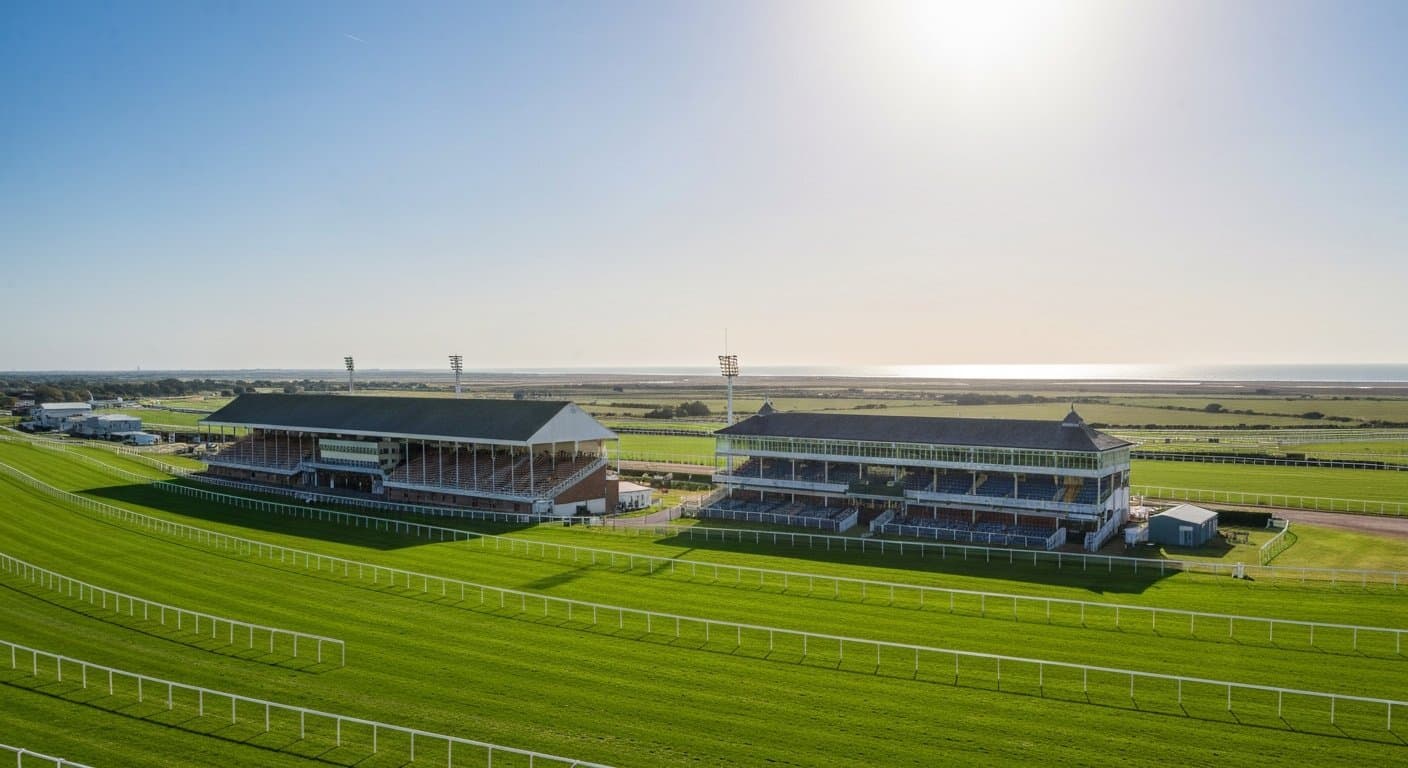
Great Yarmouth Racecourse: Complete Guide
Everything you need to know about Great Yarmouth Racecourse — East Anglia's seaside flat course, the Eastern Festival, and over 300 years of racing.
Read more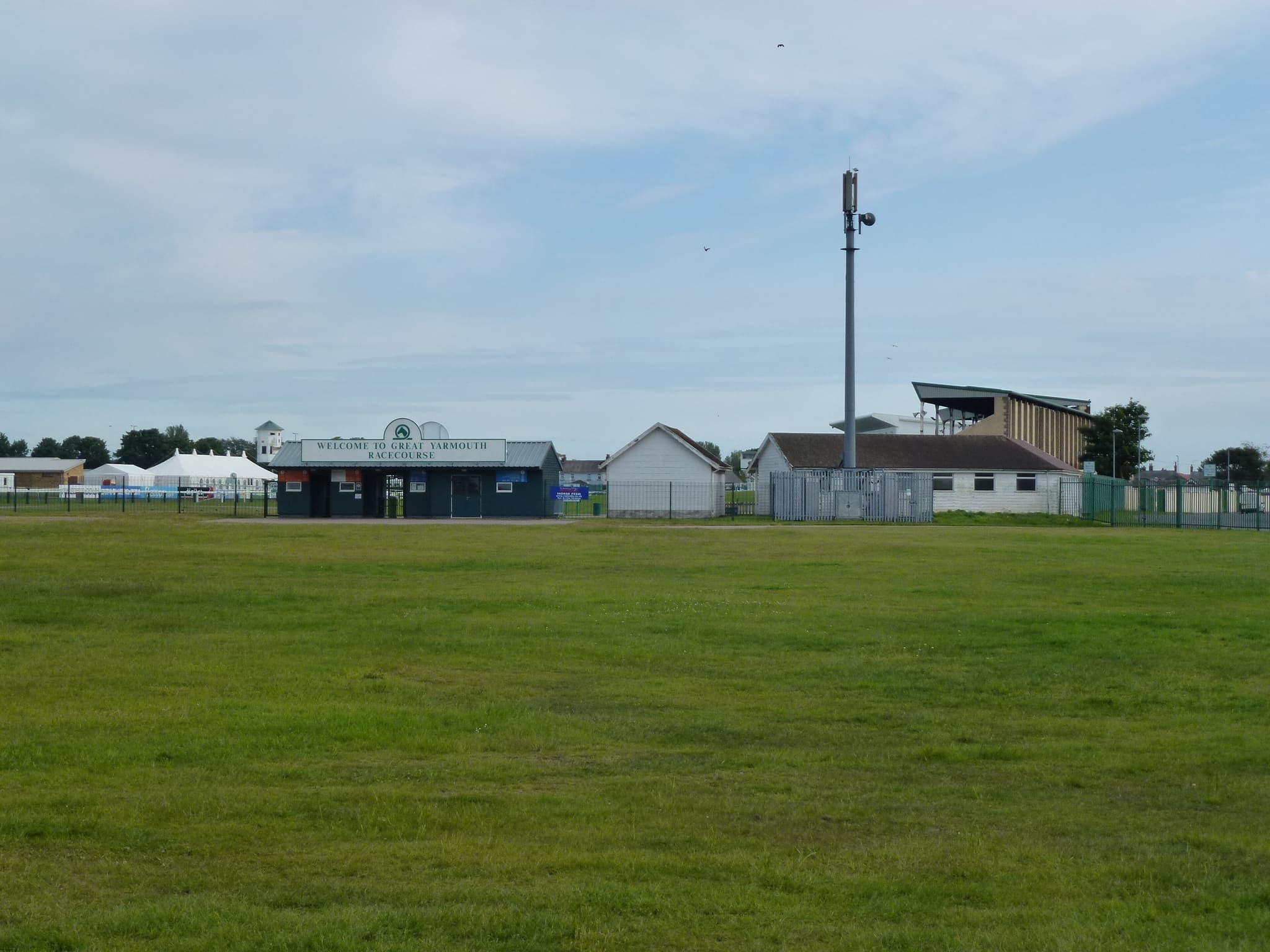
A Day Out at Great Yarmouth Racecourse
A day at Great Yarmouth — getting there, what to wear, enclosures, food and drink, and insider tips for East Anglia's seaside flat course.
Read more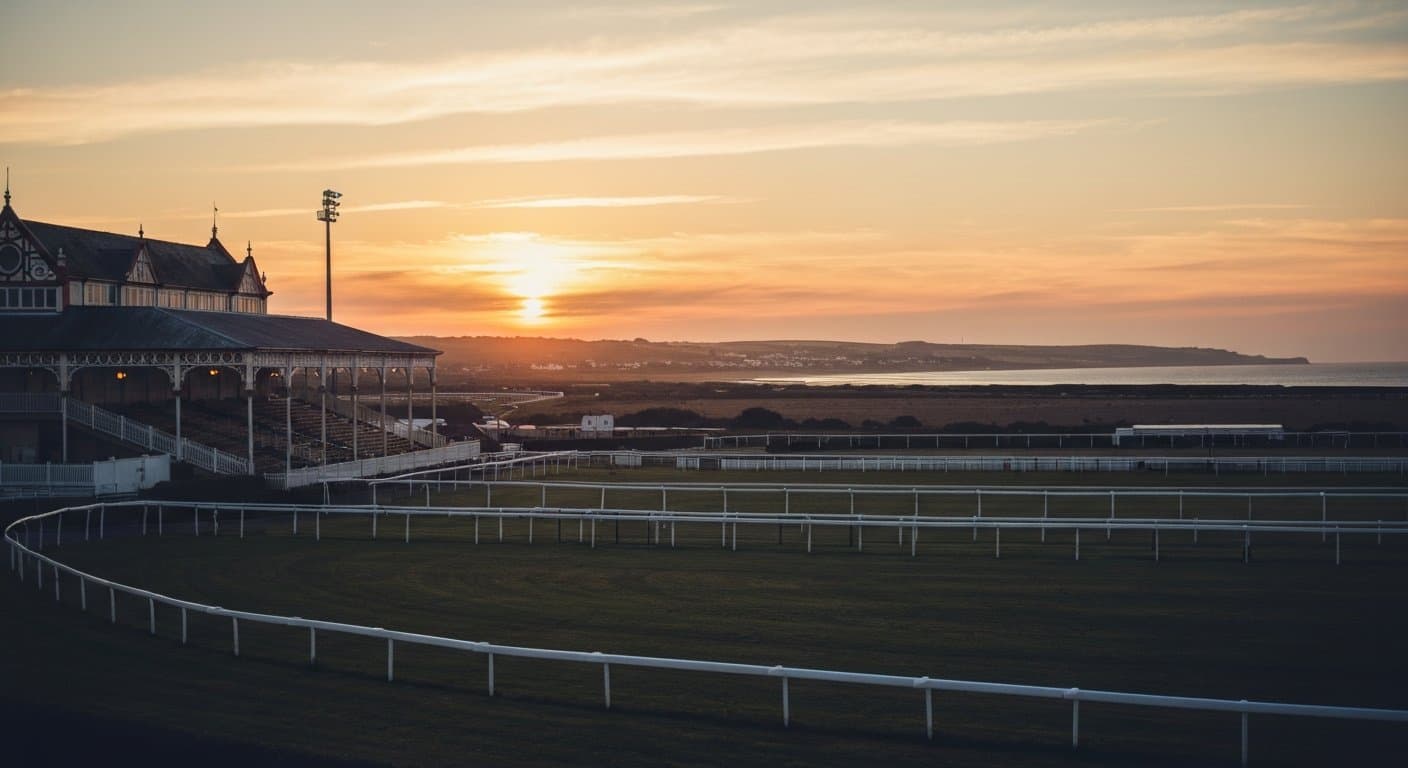
The History of Great Yarmouth Racecourse
Over 300 years of racing at Great Yarmouth — from its origins in 1715 to East Anglia's seaside flat course and the Eastern Festival.
Read morePhotos on this page are used under Creative Commons licences. Titles, sources and licence links for each one are on our image credits page.
Research the field with the AI Race Predictor
Our model publishes calibrated win-probability estimates for UK races — a second opinion to understand a race, not tips. It's open about its record: it doesn't beat the market, and we show exactly how it does.
Work it out & learn the basics
Gamble Responsibly
Gambling should be entertaining and not seen as a way to make money. Never bet more than you can afford to lose. If you or someone you know has a gambling problem, help and support is available.