

Founder & Editor · Last reviewed 2026-04-07
Salisbury Racecourse — known locally as the Cathedral Course — is one of the oldest and most atmospheric flat venues in England. Racing has been staged here since 1585, making it among the earliest established courses in Britain, and the combination of a beautifully set hillside location, proximity to one of the country's finest cathedral cities, and a distinguished racing programme gives it a character that newer tracks simply cannot replicate. The summer festival season, built around the Bibury Cup in June and the Sovereign Stakes in July, represents the very best of what Salisbury offers.
The Bibury Cup (Heritage Handicap, 1m6f) is a staying handicap with genuine historical pedigree — named after the Bibury Club, one of the oldest racing societies in England — and it attracts a competitive field of stayers who find the Wiltshire track's undulating, testing circuit a fair but demanding examination of stamina. The race is run in June, when the Salisbury ground is typically on the fast side, and that combination of quick going and a stiff finish rewards horses with a proper staying action rather than heavy-ground grinders.
The Salisbury Sovereign Stakes (Group 3, 6f) is a different proposition entirely — a juvenile sprint that has become one of the most important early-season form references for two-year-olds. The proximity of Richard Hannon's powerful Marlborough operation gives Salisbury a natural pipeline of well-prepared juveniles, and the Sovereign Stakes regularly produces horses that go on to win at Royal Ascot and Glorious Goodwood. For the form student, this is a race worth following forensically through the rest of the season.
The course itself is right-handed and undulating, with a run-in of around three furlongs from the last bend. Horses need to handle the camber and the uphill sections — it is not a track where every horse will show their true form, and course experience counts.
Bet on Salisbury
Place your bets on Salisbury races with a trusted bookmaker.

Promo code BETFRED50. New customers only. Register, deposit with a Debit Card, and place a first bet of £10+ at Evens (2.0)+ on Sports, to be settled within 7 days, to get £30 in Sports Free Bets and £20 in Bet Builder Free Bets within 24 hours of settlement. 7-day expiry. Eligibility & payment exclusions apply. Full T&Cs apply. Take Time to Think. BeGambleAware.org. 18+. Full T&Cs.

Promo code R30. New UK customers only, 18+. Register, deposit £10 or more, then place a £10 single cash bet at odds of 1/2 (1.5) or greater on any sports market (excluding Virtuals). Once the qualifying bet settles you get £30 in Free Bets (3 x £10) — the qualifying bet can win or lose. Free Bets are valid on any sports market excluding Virtuals, expire in 7 days, are non-withdrawable and must be used in full. Excluded deposit methods apply (including PayPal, Apple Pay, Skrill and NETELLER). Named bets such as Lucky 15 do not qualify. If you cash out the qualifying bet, or it is voided, you are no longer eligible for the offer. Ends 31.12.26. Full T&Cs apply. Please gamble responsibly. BeGambleAware.org. 18+. Full T&Cs.

Promo code BET40GET20. New UK customers, 18+. Register with the code and place a first bet of £40 or more at Evens (2.0) or greater. Receive 2 × £10 free bets: the first credited automatically once the qualifying bet settles, the second 24 hours later. Free bets must be placed at minimum odds of 4/1 (5.0), expire 24 hours after credit, and the free-bet stake is not returned with winnings. Debit card deposits only. Take Time to Think. BeGambleAware.org. 18+. T&Cs apply. Full T&Cs.

50% of your first-day net losses refunded as a free bet, capped at £25. New UK customers aged 18+ only. To qualify, deposit and place a first bet of £10 or more on any sport at minimum odds of evens (2.00), then place at least two further bets on different events, each worth at least 50% of your largest bet, all at evens (2.00) or greater. Losses are counted from your first settled bet until 23:59 the same day. Place a qualifying £10+ bet and you are guaranteed at least a £5 free bet. Bets placed at SP, void bets, cashed-out bets and bets struck with free bets do not count towards the offer. The free bet is credited the day after your qualifying bets settle and must be used within 7 days, after which it expires. It can be used at odds from 1/4 (1.25) up to 250/1 on singles and straight accumulators, but not on Trixie, Patent or Yankee style multiples. Free-bet stake is not returned with winnings. One offer per person, household, address, IP address and device. E-wallet deposits may not qualify, so check the cashier before depositing. Customers registered with GAMSTOP cannot claim. KYC identity verification must be completed before the free bet is credited. Take Time to Think. BeGambleAware.org. 18+. T&Cs apply. Full T&Cs.

New customers, 18+. Choose the sports bonus at sign-up, make a first deposit and receive a 100% bonus up to £50 in your Sports Bonus balance. To convert the bonus to cash, wager it 10x within 30 days. Single bets below Evens (2.00) do not qualify; accumulators do not qualify if any selection is below 1/2 (1.50). Virtual Sports, voided, cancelled, drawn, cashed-out and free-bet wagers do not count towards wagering. Only the first settled bet per event counts. Withdrawing before the wagering requirement is met forfeits the bonus balance including bonus winnings. Real-money funds are used before bonus funds. Deposits via Skrill or Neteller are not eligible. Not valid in conjunction with other promotions. Odds, bet and payment limits apply. 10bet general and promotion T&Cs apply. BeGambleAware.org. 18+. Full T&Cs.

New customers in Great Britain and Republic of Ireland, 18+. Place a £10 fixed-odds qualifying bet at minimum odds of 1/2 (1.50) — single or each-way (only the win part counts), pre-event or in-play, not cashed out early, within 28 days of opening the account. Receive up to £60 in bonuses credited over three days: 3 × £10 fixed-odds free bets (the first on settlement, then 24 and 48 hours later) plus 3 × £5 Total Goals FOOTBALL spread bets, 3 × £5 racing Winning Favourites spread bets and a £1 racing Race Index spread bet (the spread bets need a full spread-betting account). Free-bet stakes not returned with winnings; free bets valid 28 days from issue. IMPORTANT: the £5 credits are SPREAD bets — sports spread betting carries the risk that losses can exceed your stake. Sports spread-betting customers do not have Financial Ombudsman or FSCS recourse. Take Time to Think. BeGambleAware.org. 18+. T&Cs apply. Full T&Cs.

Promo code WELCOME15, entered under My Bonuses after registering. New UK customers, 18+. Place a first qualifying bet of at least £10 from your cash balance at odds of evens (2.0) or greater within 7 days of opening the account. Once the qualifying bet fully settles you receive £15 in free bets, credited as 3 x £5 tokens with set uses: one £5 accumulator free bet (minimum 4 legs, each leg at 2/5 or bigger), one £5 sports free bet (any market at evens or bigger) and one £5 Sub Cover free bet (selected football player markets at evens or bigger). Free-bet stakes are not returned with winnings. Free bets expire 7 days after they are credited. Void, cashed-out and partially cashed-out bets do not qualify. One offer per customer. Confirm the current terms on BetGoodwin's own welcome-offer page before claiming. Take Time to Think. BeGambleAware.org. 18+. T&Cs apply. Full T&Cs.

New UK customers, 18+. Minimum deposit £10. Place a £10 qualifying single at minimum odds of 1/2 (1.50), settled within 14 days. Receive £30 in free bets (stake not returned), split £20 for sportsbook use (2 x £10) and £10 for Bet Builder only (2 x £5); Bet Builder does not cover horse racing. Free bets must be accepted within 7 days and expire 7 days after acceptance. No promo code required. Best Odds Guaranteed on UK & Irish racing, subject to having staked over £25 in the previous seven days. Operated by LiveScore Betting and Gaming (Gibraltar) Ltd, UKGC 56859. Confirm the current terms on LiveScore Bet's own promotions page before claiming. Take Time to Think. BeGambleAware.org. 18+. T&Cs apply. Full T&Cs.
18+. BeGambleAware.org
The Summer Festival Season
Bibury Cup Day (June)
The oldest and most prestigious day of the Salisbury racing year. The Bibury Cup (Heritage Handicap, 1m6f) runs in late June on a card that combines the signature staying handicap with some of the most competitive middle-distance racing in the south outside the major track meetings. The Bibury Club, founded in the 17th century, lends the race a historical resonance that few provincial handicaps can match — this is a race with genuine heritage running at a course with genuine heritage, and the combination produces a day that feels different from the standard summer programme.
The card around the Bibury Cup typically includes four or five competitive handicaps ranging from sprint to staying distances, giving the racegoer a full afternoon of proper racing that requires genuine form study to navigate. Richard Hannon's proximity — his Marlborough stable is among the closest major operations to any British racecourse — means Bibury Cup day always features a strong Hannon team, and identifying which of his runners is specifically targeted is one of the key puzzles of the day.
Arrive early enough to watch the horses in the paddock before the Cup itself. Bibury Cup runners tend to be well-presented staying types that are worth examining closely — the race attracts horses from both southern and northern yards, and the paddock gives you an opportunity to see them all together before they are committed to the track.
Sovereign Stakes Day (July)
The Sovereign Stakes (Group 3, 6f) transforms Salisbury from a provincial flat track into a Group race venue for one afternoon in midsummer. Run in late July, it attracts genuinely high-quality two-year-olds at the most important developmental stage of their juvenile season — old enough to have form, young enough to be progressing rapidly. Winners of the Sovereign Stakes consistently go on to compete at Royal Ascot, Glorious Goodwood and beyond.
The day around the Sovereign Stakes is one of the best racing occasions in the south outside the big festivals. The track is typically fast, the fields competitive, and the atmosphere energised by the presence of top-quality juvenile horses that the serious racing public has been following since their debut runs in May and June. It is an excellent opportunity to see potentially serious Classic horses in a more intimate and accessible setting than Newmarket or Goodwood.
The form ripple: Sovereign Stakes form spreads outwards through the season like ripples. Keep the race card and check where the runners go next — the top three or four regularly reappear in Group 1 and Group 2 company in August and September, and their Salisbury form serves as a useful benchmark.
August Ladies Day
Salisbury's Ladies Day in August is the social highlight of the summer programme — a well-attended event that combines smart dress, a festive atmosphere and competitive racing in the Wiltshire sunshine. The card is built around accessible racing formats that combine entertainment with genuine betting interest: sprint and mile handicaps dominate, with at least one novice or maiden that gives the track's excellent pipeline of Hannon juveniles a run.
The crowd on Ladies Day is Salisbury at its most diverse — local racegoers, visitors from across the south, and a significant contingent from the Wiltshire and Hampshire farming communities that have supported the racecourse for generations. The social element is part of the day's identity, and the relaxed, summery atmosphere differentiates it from the more intensely racing-focused Bibury Cup and Sovereign Stakes meetings.
Evening Fixtures (June–August)
Salisbury stages evening meetings on weekday evenings through the summer — a format that works particularly well at a course with good road connections and a loyal local following from Salisbury city and the surrounding area. The evening fixtures are lighter in competitive terms than the Saturday and Sunday meetings, but they are well-attended, well-organised and consistently produce usable form.
The Wiltshire summer evenings are among the most pleasant race-going experiences in the south. The Cathedral spire is visible from parts of the course, the light is excellent in the hours before sunset, and the informal atmosphere of evening racing at a quality course is genuinely enjoyable. Hannon regularly uses evening fixtures to give well-regarded first or second starters their initial experience, making them worth attending for the form student as much as the casual racegoer.
Key Races to Watch
Bibury Cup (Heritage Handicap, 1m6f — June)
The oldest and most historically significant race at Salisbury — a staying handicap named after the Bibury Club that has been staging racing at this course for centuries. The Bibury Cup is a genuine test of the staying thoroughbred: a mile and six furlongs on Salisbury's undulating, right-handed circuit, concluding with an uphill run that exposes any horse whose stamina has been flattered by easier conditions elsewhere.
The race attracts horses from both southern and occasionally northern yards, with connections who understand that winning the Bibury Cup says something credible about a horse's staying credentials. The prize money is respectable, the field competitive, and the undulating nature of the track means that the result tells you something true about the horse's ability to handle varied terrain — useful information if the horse subsequently targets the Goodwood Cup, the Lonsdale at York or another prestigious staying race.
Form translation: Bibury Cup form translates well to Goodwood's longer staying handicaps. The undulating nature of both tracks means that horses who perform well at Salisbury in June often reproduce that form at Goodwood in the late summer. Mark it on your form notes.
Salisbury Sovereign Stakes (Group 3, 6f — July)
The most significant race staged at Salisbury — a Group Three for two-year-olds over six furlongs that has developed into one of the most important juvenile form references of the British season. Run in late July when well-regarded juveniles are hitting their best form, the Sovereign Stakes attracts horses from across the country who are building towards an autumn juvenile campaign at the major festivals.
Richard Hannon's dominance of this race — his Marlborough stable is among the most productive suppliers of high-quality two-year-olds in Britain, and Salisbury is effectively his home track — means that his Sovereign Stakes runners deserve automatic respect. But the race is genuinely competitive: horses from Newmarket, Lambourn and occasionally the north arrive with credentials that make the Hannon dominance a tendency rather than a certainty.
The Sovereign Stakes as a season long reference: Check where Sovereign Stakes runners go after Salisbury. The top four or five from this race regularly appear in Group 1 and Group 2 company by September and October — the Cheveley Park, the Dewhurst, the Middle Park — and their Sovereign Stakes form provides a useful baseline for assessing their chances at a higher level.
August Festival Handicap Series
Salisbury's August meeting — which includes Ladies Day — features a series of competitive sprint and middle-distance handicaps that serve as the backbone of the southern summer programme. These races attract horses that are peaking at the right time of year, properly prepared by yards that understand the Salisbury track, and running at marks that have been calibrated over a full season of racing.
Richard Hannon's record in Salisbury's August handicaps is extraordinary. Trains nearby, understands the track intimately, and consistently produces horses that run to their marks and beyond. When Hannon sends a horse to Salisbury's August handicap series that has run once or twice at a similar distance, treat it as a meaningful betting proposition.
Betting Preview
Betting on the Sovereign Stakes
The Sovereign Stakes (Group 3, 6f) is Salisbury's most significant betting race — and the one most likely to produce a winner at a price. Group Three juvenile races in midsummer are notoriously difficult to assess accurately because the horses are still developing, the form is produced over a limited number of runs, and the gap between a lightly-raced horse with significant potential and one that has simply been placed in weak company is not always clear from the bare form.
The Hannon factor: Richard Hannon has an exceptional Salisbury record — trains nearby, understands the track intimately, and sends horses here that are specifically prepared. His Sovereign Stakes runners are not warm-up acts; they are properly targeted and ready to run competitively. When Hannon enters a two-year-old in the Sovereign Stakes that has won its maiden impressively, take the price seriously even if it looks short.
Looking beyond the obvious: The Sovereign Stakes is not always won by the most obvious horse. Lightly-raced two-year-olds from Newmarket and Lambourn yards that have run once impressively and come to Salisbury on the back of strong piece-work reports can find the market underestimates them. A juvenile that has won a maiden by three lengths at Newbury but is priced at 5/1 for the Sovereign behind an unbeaten Hannon horse may represent genuine value if the maiden form is strong.
Betting the Bibury Cup
The Bibury Cup is a genuinely competitive staying handicap that rewards thorough form study rather than reputational betting. The combination of an undulating track, a stiff finish and a mile and six furlong trip means that horses whose form has been produced on flat, straightforward tracks may not reproduce it here — and the market does not always account for this adequately.
The track premium: Horses with previous Salisbury form at a similar distance deserve an upgrade in your assessment. The track's undulating nature and the uphill run to the finish catch horses out — experience of the specific demands matters.
Practical notes: Salisbury's betting ring is well-organised, and the on-course prices are competitive on the major races. Bibury Cup day is well-attended, so arrive early for the best position. The best ante-post prices are available in the week before declarations — take the price once the field is known rather than waiting for the day.
Visitor Information
Getting There
By train: Salisbury station (South Western Railway from London Waterloo, approximately 1 hour 25 minutes) is approximately 2 miles from the racecourse. Taxis are available from the station forecourt; alternatively, a bus service runs to the racecourse on major race days. The train from Waterloo is excellent for London visitors — direct, reliable, and well-timed for afternoon racing.
By car: Salisbury is accessible from the A354 (from Blandford Forum) and the A36 (from Bath and Southampton). The racecourse is on the western edge of the city, signposted from all main approaches. Pre-booked parking is available on-site. Bibury Cup day and Sovereign Stakes day fill the car park — arrive by midday.
From London: The M3 to Basingstoke, then the A303 west to Amesbury and the A345 south to Salisbury. Allow approximately 1 hour 45 minutes from central London.
Enclosures and Facilities
Premier Enclosure: The top tier with covered grandstand views, restaurant facilities, and the best views of the undulating finish straight. Smart attire required. Book in advance for the Sovereign Stakes and Bibury Cup days.
Grandstand Enclosure: The main public area with grandstand access, full bar and catering, and betting ring access. Smart casual. The standard choice for summer festival days.
Course Enclosure: Informal access to the running rail along the home straight. Popular for watching the uphill run to the finish at close quarters.
Essential Tips
- Salisbury Cathedral is walking distance from the city centre. If you are making a day of it, the morning offers one of England's great cathedral visits before racing starts in the afternoon.
- Book Sovereign Stakes and Bibury Cup days early. Both meetings sell significantly in advance. Tickets through the Salisbury website.
- The Richard Hannon connection is part of the experience. Hannon's yard is less than 20 miles from Salisbury, and his horses dominate the summer programme — watching a well-regarded Hannon two-year-old win a maiden impressively on Salisbury's testing track is a genuine racing experience.
- Smart attire is welcomed throughout the summer festival season. Salisbury has a dress code sensibility that reflects its location and history — smart casual is the minimum; smarter is always appreciated.
- The course is set on a hill. Comfortable footwear is more important than it might appear from the photographs. The undulating nature of the course and the enclosures means there is more walking and gradient than a flat track.
Share this article
More about this racecourse
All Salisbury guides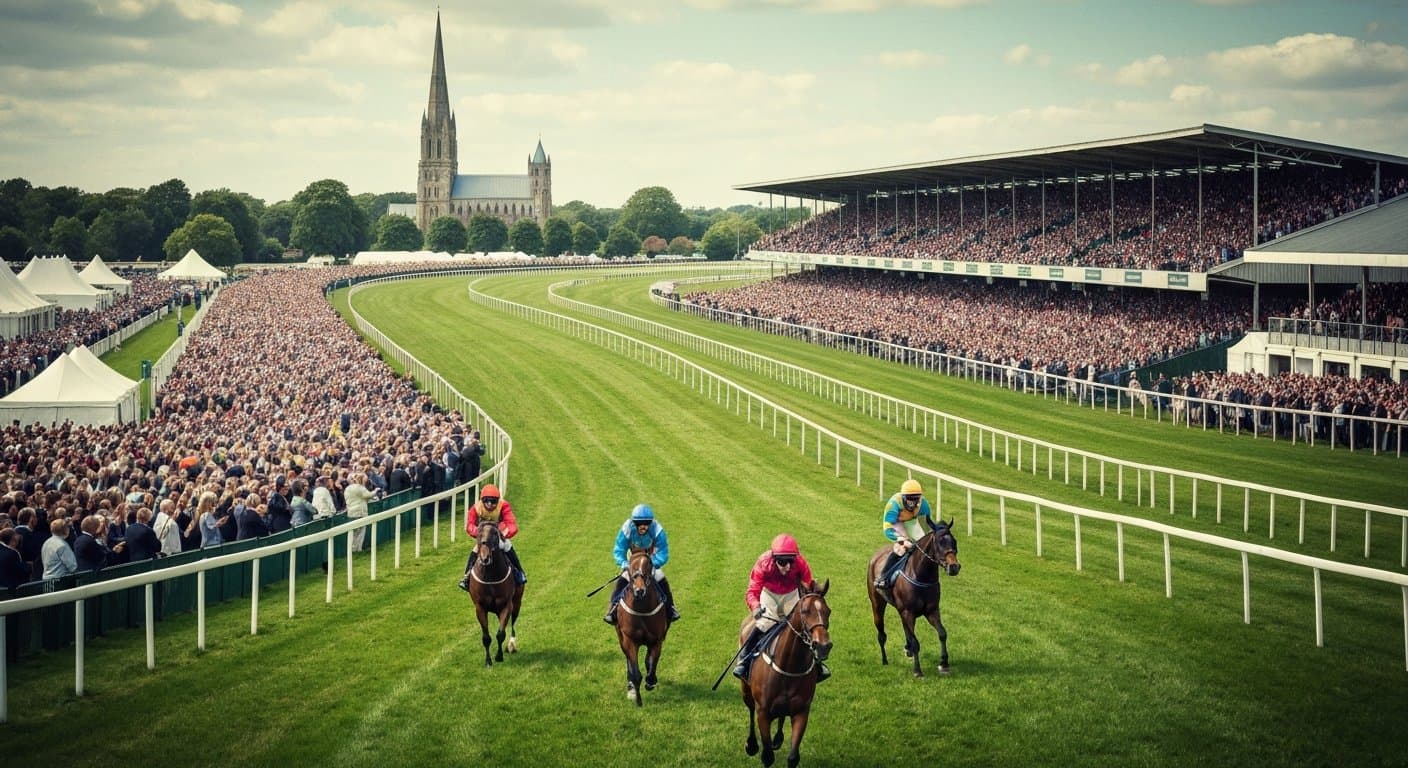
There Is No Salisbury Gold Cup
We published a guide to a Salisbury Gold Cup and the race does not exist. Here are the course's real feature races, including the historic Bibury Cup.
Read more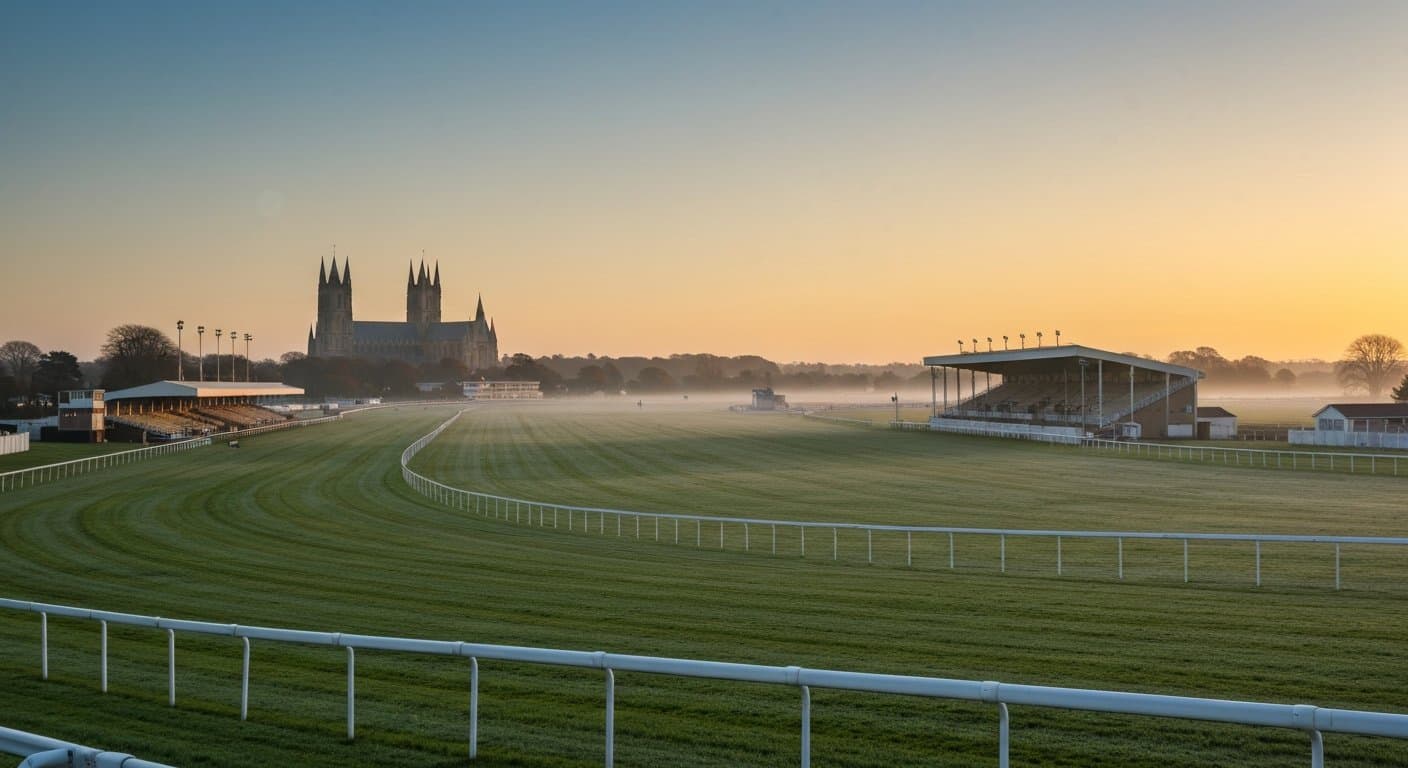
The History of Salisbury Racecourse
Over 440 years of racing at Salisbury — from Elizabethan times to the historic straight course with the cathedral backdrop.
Read more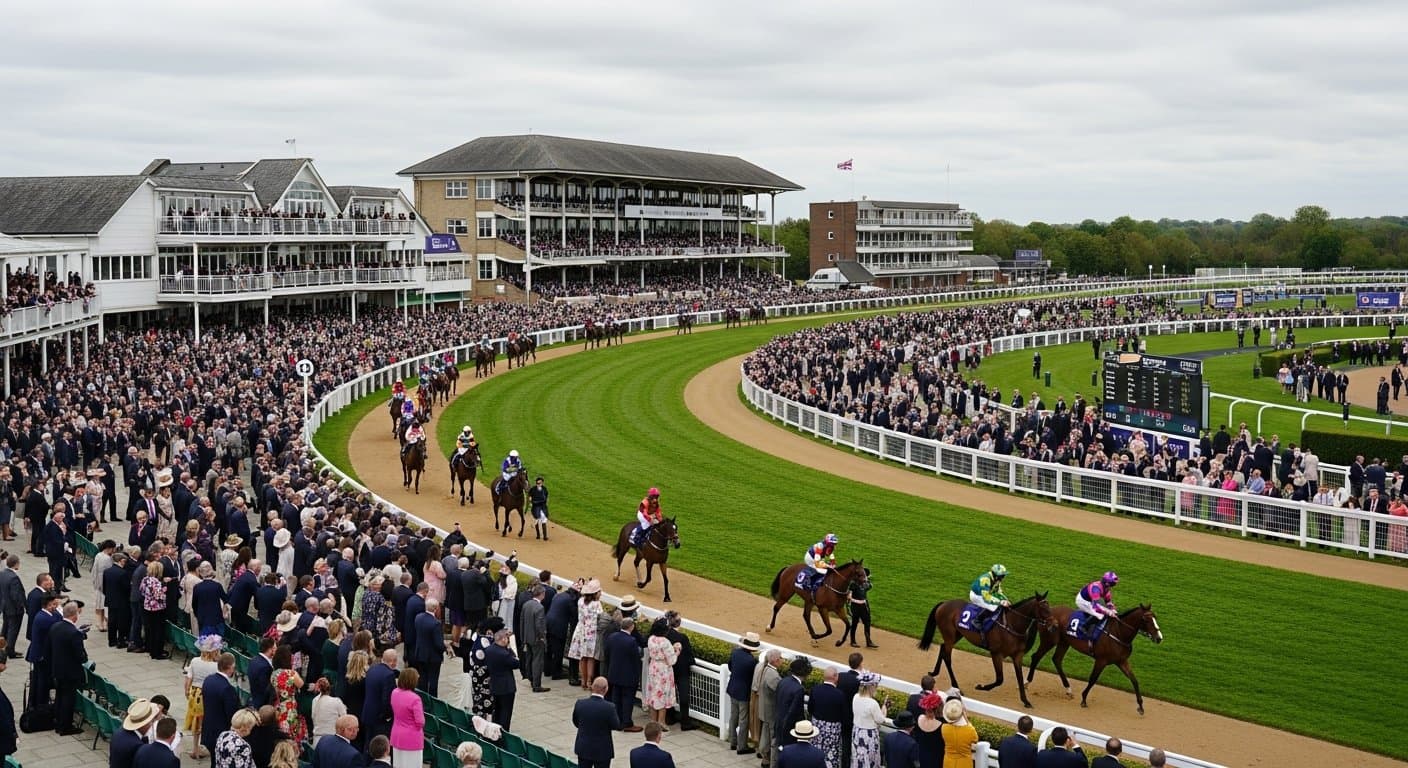
Bibury Cup Day at Salisbury: The Complete Guide
Bibury Cup Day is Salisbury's grandest race day — steeped in flat racing tradition, with the historic Bibury Cup at its heart.
Read moreResearch the field with the AI Race Predictor
Our model publishes calibrated win-probability estimates for UK races — a second opinion to understand a race, not tips. It's open about its record: it doesn't beat the market, and we show exactly how it does.
Work it out & learn the basics
Gamble Responsibly
Gambling should be entertaining and not seen as a way to make money. Never bet more than you can afford to lose. If you or someone you know has a gambling problem, help and support is available.