
Founder & Editor · Last reviewed 2026-04-07
Introduction to Stratford-on-Avon Racecourse
Stratford-on-Avon Racecourse is one of the genuine pleasures of the British racing calendar — a pretty, undulating course set beside the River Avon, barely a mile from the centre of one of England's most famous towns. While most jump tracks spend the summer months shuttered and silent, Stratford runs competitive National Hunt racing from May through September, making it one of a small handful of courses that keep the jumping game alive through the warmest months of the year. It is a combination without obvious parallel in British sport: steeplechases on a summer afternoon, with the spire of Holy Trinity Church visible across the water meadows and Stratford's restaurants and theatre open for business in both directions.
A Summer Jump Course Unlike Any Other
The vast majority of jump racing in Britain takes place on cold, wet ground between October and April. Stratford does things differently. Its summer programme runs on proper racing ground — good to firm is common, occasionally firm — and the horses that contest it are a different breed from the mud-splashing, soft-ground specialists who dominate the winter game. Summer jump racing demands horses that are athletic and sound, able to jump accurately at speed on ground that offers little margin for error. The style of racing is correspondingly more fluid and often more thrilling to watch than the relentless attrition of heavy-ground winter chasing.
The Track's Character
Stratford is left-handed, oval-shaped and meaningfully undulating — the rises and falls are not dramatic, but they are consistent enough to impose a genuine stamina test on horses racing over staying distances. The undulations make it harder than it might appear from the stands: a horse that looks to be going easily in the back straight may be carrying a reserve of fatigue as it climbs into the home turn. Flat jump tracks like Huntingdon and Kempton reward speed; Stratford rewards genuine staying ability, particularly over two and a half miles and beyond.
The course's fences are well-presented and jump at a reasonable pace. Accurate jumpers cope well; sloppy ones lose ground at each obstacle in a way that is very hard to recover from on a tight, turning circuit.
Shakespeare Country as a Racing Destination
The setting amplifies everything. Stratford-upon-Avon exists as a major tourist destination — its Shakespeare heritage draws visitors from across the world — and this gives the town an infrastructure of hotels, restaurants and pubs that most racecourse towns of comparable size cannot match. Racegoers arriving for an evening meeting can eat at any number of excellent restaurants, explore the Bancroft Gardens or take in a Royal Shakespeare Company production in the same day. Racing and culture rarely intersect so naturally in England, and Stratford makes the most of it.
Who Comes to Stratford
The crowd at Stratford is pleasantly mixed: serious racing followers who value the quality of summer jump form; tourists from the town who stumble upon a race meeting and find it utterly charming; locals who regard summer evening racing by the Avon as one of the great seasonal pleasures. The atmosphere is relaxed, warm and unpretentious — evening meetings especially carry a holiday lightness that is rarely found at the more prestigious winter tracks. You do not need to dress up, you do not need to navigate a vast and intimidating venue, and you do not need to spend a fortune. Stratford is, in the best sense, an accessible and joyful place to watch horses race.
Bet on Stratford-on-Avon
Place your bets on Stratford-on-Avon races with a trusted bookmaker.

Promo code BETFRED50. New customers only. Register, deposit with a Debit Card, and place a first bet of £10+ at Evens (2.0)+ on Sports, to be settled within 7 days, to get £30 in Sports Free Bets and £20 in Bet Builder Free Bets within 24 hours of settlement. 7-day expiry. Eligibility & payment exclusions apply. Full T&Cs apply. Take Time to Think. BeGambleAware.org. 18+. Full T&Cs.

Promo code R30. New UK customers only, 18+. Register, deposit £10 or more, then place a £10 single cash bet at odds of 1/2 (1.5) or greater on any sports market (excluding Virtuals). Once the qualifying bet settles you get £30 in Free Bets (3 x £10) — the qualifying bet can win or lose. Free Bets are valid on any sports market excluding Virtuals, expire in 7 days, are non-withdrawable and must be used in full. Excluded deposit methods apply (including PayPal, Apple Pay, Skrill and NETELLER). Named bets such as Lucky 15 do not qualify. If you cash out the qualifying bet, or it is voided, you are no longer eligible for the offer. Ends 31.12.26. Full T&Cs apply. Please gamble responsibly. BeGambleAware.org. 18+. Full T&Cs.

Promo code BET40GET20. New UK customers, 18+. Register with the code and place a first bet of £40 or more at Evens (2.0) or greater. Receive 2 × £10 free bets: the first credited automatically once the qualifying bet settles, the second 24 hours later. Free bets must be placed at minimum odds of 4/1 (5.0), expire 24 hours after credit, and the free-bet stake is not returned with winnings. Debit card deposits only. Take Time to Think. BeGambleAware.org. 18+. T&Cs apply. Full T&Cs.

50% of your first-day net losses refunded as a free bet, capped at £25. New UK customers aged 18+ only. To qualify, deposit and place a first bet of £10 or more on any sport at minimum odds of evens (2.00), then place at least two further bets on different events, each worth at least 50% of your largest bet, all at evens (2.00) or greater. Losses are counted from your first settled bet until 23:59 the same day. Place a qualifying £10+ bet and you are guaranteed at least a £5 free bet. Bets placed at SP, void bets, cashed-out bets and bets struck with free bets do not count towards the offer. The free bet is credited the day after your qualifying bets settle and must be used within 7 days, after which it expires. It can be used at odds from 1/4 (1.25) up to 250/1 on singles and straight accumulators, but not on Trixie, Patent or Yankee style multiples. Free-bet stake is not returned with winnings. One offer per person, household, address, IP address and device. E-wallet deposits may not qualify, so check the cashier before depositing. Customers registered with GAMSTOP cannot claim. KYC identity verification must be completed before the free bet is credited. Take Time to Think. BeGambleAware.org. 18+. T&Cs apply. Full T&Cs.

New customers, 18+. Choose the sports bonus at sign-up, make a first deposit and receive a 100% bonus up to £50 in your Sports Bonus balance. To convert the bonus to cash, wager it 10x within 30 days. Single bets below Evens (2.00) do not qualify; accumulators do not qualify if any selection is below 1/2 (1.50). Virtual Sports, voided, cancelled, drawn, cashed-out and free-bet wagers do not count towards wagering. Only the first settled bet per event counts. Withdrawing before the wagering requirement is met forfeits the bonus balance including bonus winnings. Real-money funds are used before bonus funds. Deposits via Skrill or Neteller are not eligible. Not valid in conjunction with other promotions. Odds, bet and payment limits apply. 10bet general and promotion T&Cs apply. BeGambleAware.org. 18+. Full T&Cs.

New customers in Great Britain and Republic of Ireland, 18+. Place a £10 fixed-odds qualifying bet at minimum odds of 1/2 (1.50) — single or each-way (only the win part counts), pre-event or in-play, not cashed out early, within 28 days of opening the account. Receive up to £60 in bonuses credited over three days: 3 × £10 fixed-odds free bets (the first on settlement, then 24 and 48 hours later) plus 3 × £5 Total Goals FOOTBALL spread bets, 3 × £5 racing Winning Favourites spread bets and a £1 racing Race Index spread bet (the spread bets need a full spread-betting account). Free-bet stakes not returned with winnings; free bets valid 28 days from issue. IMPORTANT: the £5 credits are SPREAD bets — sports spread betting carries the risk that losses can exceed your stake. Sports spread-betting customers do not have Financial Ombudsman or FSCS recourse. Take Time to Think. BeGambleAware.org. 18+. T&Cs apply. Full T&Cs.

Promo code WELCOME15, entered under My Bonuses after registering. New UK customers, 18+. Place a first qualifying bet of at least £10 from your cash balance at odds of evens (2.0) or greater within 7 days of opening the account. Once the qualifying bet fully settles you receive £15 in free bets, credited as 3 x £5 tokens with set uses: one £5 accumulator free bet (minimum 4 legs, each leg at 2/5 or bigger), one £5 sports free bet (any market at evens or bigger) and one £5 Sub Cover free bet (selected football player markets at evens or bigger). Free-bet stakes are not returned with winnings. Free bets expire 7 days after they are credited. Void, cashed-out and partially cashed-out bets do not qualify. One offer per customer. Confirm the current terms on BetGoodwin's own welcome-offer page before claiming. Take Time to Think. BeGambleAware.org. 18+. T&Cs apply. Full T&Cs.

New UK customers, 18+. Minimum deposit £10. Place a £10 qualifying single at minimum odds of 1/2 (1.50), settled within 14 days. Receive £30 in free bets (stake not returned), split £20 for sportsbook use (2 x £10) and £10 for Bet Builder only (2 x £5); Bet Builder does not cover horse racing. Free bets must be accepted within 7 days and expire 7 days after acceptance. No promo code required. Best Odds Guaranteed on UK & Irish racing, subject to having staked over £25 in the previous seven days. Operated by LiveScore Betting and Gaming (Gibraltar) Ltd, UKGC 56859. Confirm the current terms on LiveScore Bet's own promotions page before claiming. Take Time to Think. BeGambleAware.org. 18+. T&Cs apply. Full T&Cs.
18+. BeGambleAware.org
Day-by-Day Guide
Day-by-Day Guide to Stratford-on-Avon Racing
Stratford's racing year runs from May through September, a concentrated summer programme that operates in the period when most other jump tracks are silent. The course typically stages eight to twelve meetings across those five months, with the schedule shaped around bank holidays, school holidays and the broader national racing calendar. Each phase of the summer has its own character.
May Opening Meeting: The Summer Jump Season Begins
The first meeting of the Stratford season typically falls in early to mid-May, shortly after the Punchestown Festival marks the formal end of the Irish National Hunt season and most British jump courses have gone quiet. Stratford's opening card arrives as a genuine novelty: proper steeplechases on good-to-firm or good ground, with horses that have often run their final spring fixture just weeks earlier at Cheltenham, Aintree or Sandown.
The nature of the fields at the May opener reflects this transition. Some horses are running for the last time before a summer break, their trainers taking advantage of the guaranteed prize money at a summer track; others are beginning a summer jumping campaign in earnest. The mix makes May form at Stratford slightly complex to read — you need to separate the horses that are genuinely fit and targeted here from those that are simply running out their season.
What you reliably find in May are horses from the major yards who have been placed specifically for the summer ground conditions: athletes that their trainers know to be sharper and sounder on faster going than on the winter mud. These horses are often well-prepared and well-handicapped for what they are doing.
June Bank Holiday Festival: The Year's Biggest Occasion
Stratford's largest crowd of the season typically assembles for the June Bank Holiday fixture — a two-day or single-day festival that draws horses from across the jumping world and provides the course's most competitive cards of the year. The Bank Holiday atmosphere transforms the course: families make a day of it, casual racegoers combine racing with a trip to Stratford town, and the paddock fills with runners from the better summer jump stables.
The quality of racing at this meeting is genuinely good. Summer specialist trainers who have been building their Stratford horses towards this point arrive with fit, purposeful runners. Handicapper chasers who have been campaigning since May are at their peak fitness. Prize money is enhanced and the fields are full. This is Stratford at its best as a betting venue: competitive races with genuine pace, on accurate form that has been building across the early summer.
July and August Evening Meetings: Summer Racing at Its Most Atmospheric
The evening meetings at Stratford across July and August represent one of the most distinctive experiences in British racing. Tables are set on the lawn beside the river; the light lasts until after nine o'clock; the temperature — on a good evening — is as close to Mediterranean as England gets. Watching steeplechases in these conditions, with the sounds of the river and the warm smell of a summer evening, is something genuinely unlike any other racing experience the calendar offers.
The racing itself is honest and competitive. Evening fields tend to be slightly smaller than the big Bank Holiday fixtures — six or seven runners rather than twelve — but the competition is genuine. Horses that have been specifically pointed at summer jumping are at full fitness by July, and the racing they produce is often cleaner and more athletically impressive than the heavy-ground winter chasing that dominates the off-season conversation.
For the punter, smaller summer fields have a specific benefit: the field size reduces the role of luck and positional disruption, making it slightly easier to identify horses with genuine form advantages and see those advantages translate into results.
September Finale: End-of-Summer Preparations
The final meeting of the Stratford summer season, typically held in late September, carries a distinctive transitional quality. By this point, the summer jump campaign is ending and trainers are beginning to look towards the autumn. Some horses at the September finale are running specifically to get a pre-season run under their belts before the new National Hunt year begins properly at Chepstow, Cheltenham and Kempton in October.
These horses may not be fully tuned — they are building fitness rather than peaking for this specific day. Identifying them is part of the challenge. But within the same field you will often find horses whose entire season has been built around summer jumping and who arrive at the final fixture in the best form of their careers, motivated trainers trying to extract one last win from a summer campaign. The tension between these two types makes September at Stratford a particularly interesting betting exercise.
Key Races to Watch
Key Races at Stratford-on-Avon
Stratford's race programme is concentrated into five summer months, and within that compact window it has developed a set of signature contests that attract the best summer jump horses in training. The course does not stage Grade One racing, but its prize money for the flagship summer meetings is competitive, and the quality of field in the key races reflects genuine ambition from trainers who take summer jumping seriously.
The Stratford Cup (Handicap Chase, ~3m)
The Stratford Cup is the course's flagship race — a staying handicap chase run over approximately three miles, typically staged in June or July when the season has found its rhythm and the best-prepared summer horses are at their peak. The race consistently attracts competitive fields from southern and Midlands yards who target it specifically, and the prize money makes it genuinely worthwhile.
The undulating nature of the Stratford circuit is most apparent at this distance. Over three miles, the rises and falls accumulate significantly — horses feel the climbs more profoundly with each circuit, and those that have been trained specifically for the physical demands of the course cope far better than those simply transferred from flat, galloping tracks. Course form is meaningful here: horses that have run competitively at Stratford before, handling the combination of fast summer ground and the undulating profile, tend to recur in the prize money.
Front-runners have an edge. The undulations create natural rhythm breaks that are harder for horses tracking the pace to exploit, whereas front-runners can set their own rhythm through the climbs and descents. Horses that like to lead and that stay well on faster ground are the model Stratford Cup horse.
Summer Novice Chase Series
The summer novice chase programme at Stratford serves a specific purpose in the training calendar: giving young, inexperienced chasers their first or second runs over fences in a less pressurised environment than the big autumn and winter novice meetings. Trainers from both the top-of-the-range yards and the solid provincial stables use Stratford specifically to introduce novice chasers to undulating ground before the autumn programme begins in earnest.
The value of these races from a form perspective lies in what they reveal about the technical quality of individual jumpers. Stratford's fences are well-built and honest, and the combination of fast ground and undulating terrain produces an acid test of jumping technique. Novices that jump well and travel easily here — particularly those that handle the climbs and descents without losing their rhythm — are ones to note for the autumn novice campaign, when they step up into more competitive Grade Two and Grade One company.
Several Stratford summer novice chase winners have gone on to compete at the Cheltenham Festival and beyond. The pipeline from summer at Stratford to autumn at Chepstow or Wetherby is a genuine route for talented young chasers.
Handicap Hurdle Summer Series
Stratford runs a competitive series of summer handicap hurdles across its May-to-September programme, providing consistent prize money for horses campaigning specifically at this level of the sport. Summer handicap hurdlers are a distinct type: horses that run well on faster, firmer ground without needing the softening effect of autumn and winter to show their form.
The Stratford hurdle circuit is forgiving enough in summer conditions — hurdles are relatively straightforward obstacles on good or good-to-firm going — and the undulations that matter enormously over fences are less significant over hurdles. The handicap series rewards horses that handle the track's rhythm and cope well with the faster pace that summer ground generates.
The Midsummer Trophy (Summer Conditions Chase)
The Midsummer Trophy is Stratford's most prestigious conditions race — a summer contest open to older horses carrying weight for age or sex allowances rather than competing off handicap marks. As conditions chases go it represents a decent prize for a summer jumping venue, and trainers who have horses suited to the summer programme target it specifically.
The conditions format means that the form lines into this race are from higher-class winter chase form — horses with graded or listed chase credentials stepping back to conditions level in summer for what are essentially easy targets. Identifying the horse that has been specifically prepared for this race rather than simply taking a summer run is the key analytical challenge. Trainers who win the Midsummer Trophy tend to arrive with a purpose.
Betting Preview
Betting at Stratford-on-Avon: Summer Jump Analysis
Summer jump racing at Stratford-on-Avon requires a specific and somewhat different analytical framework from the winter jumping programme that occupies most National Hunt punters for the majority of the year. The surface, the going, the type of horses, the size of fields and the nature of the competition are all different enough from Cheltenham in November or Kempton in February that approaching Stratford with a winter mindset tends to produce poor results.
The Going Factor Is Paramount
Going is the single most important variable in summer jump racing, and it matters more at Stratford than at most venues because the range of conditions the course can produce is wide. Good to firm is common through June and July in normal summers; genuine firm going appears in dry years and is relatively unusual in British jump racing; good to soft can occur in wet summers and changes the character of the racing entirely.
Many horses are specifically prepared for one end of this spectrum or the other. A trainer that specifically campaigns horses over summer jumps knows that their horse either relishes fast summer ground or prefers it to ease off slightly. Identifying the going preference of each runner — and whether the forecast conditions match it — is more consequential at Stratford than it would be at a winter track where soft or heavy is the norm for everyone.
The mistake that most casual summer jump punters make is to overlook going entirely, treating it as a given that summer ground suits all summer horses. It does not. A horse trained on winter jumping that appears at Stratford for a summer run on firm ground may be at a significant disadvantage despite its higher class.
Stamina on Undulating Ground
Stratford's undulating circuit tests stamina differently from flat jump tracks. The rises and falls — gradual but consistent — impose a sustained physical cost on horses racing over two miles and beyond. The critical insight is that the stamina test here is not delivered in a single steep climb (as at Cheltenham or Exeter) but in a series of smaller drains on energy spread across the race.
This means that horses with genuine stamina reserves, rather than horses that merely have a deceptively easy cruising speed in front, tend to have the best record here. A horse that looks comfortable sitting third on the home turn at Stratford and then finds nothing in the straight is usually a horse that is deceiving the eye — it has been draining its energy across the undulations and has nothing left for the climactic effort.
When analysing stayers at Stratford, look for horses that have shown they can sustain their effort after an undulating circuit rather than those that produce a single powerful finish after a flat gallop. Huntingdon and Kempton form needs reinterpreting; Exeter and Uttoxeter form is more directly applicable.
Course Specialists: A Genuine Phenomenon
Stratford summer specialists exist, and they exist more explicitly than at most courses, because the combination of fast summer ground, undulating terrain and tight turning course creates a very specific skill set. Horses that have won at Stratford before — particularly those that have won more than once in summer conditions — represent a reliable category to prioritise in your analysis.
When a course specialist reappears at Stratford, the market sometimes undervalues the track record because the form looks modest by winter standards. A horse with three Stratford wins and mediocre results at Cheltenham in November is a better Stratford bet than one that has run well at Cheltenham but never contested a summer jumping race. This seems obvious stated plainly, but it is consistently underpriced in the market.
Northern Trainer Sorties
Occasional runners from northern yards targeting summer Stratford prize money can be well-prepared and represent value. Northern jump trainers, whose horses typically run on testing winter ground across the season, sometimes identify the summer jumping circuit as an opportunity to target prize money with a horse that they know handles faster conditions. These runners arrive with specific preparation behind them, and they can be overlooked by a market that focuses predominantly on the southern summer jump stables.
The signal to watch for is a northern trainer who rarely runs at Stratford sending a runner to the course — particularly if the horse's form on going shows consistent performances on good or faster ground. The effort of travelling from Yorkshire or the north for a summer jump meeting is a clear sign of deliberate targeting.
The Unknown Factor: Small Field Advantages
Summer jump racing at Stratford produces smaller average fields than the big winter festivals, and this creates a specific betting opportunity. In fields of five or six runners, the influence of luck — positioning, interference, losing ground at a fence — is reduced compared to fourteen-runner winter handicap fields. A horse with a genuine form advantage over a small summer field can exploit it more reliably.
The implication: class from spring festival form often transfers directly to smaller summer fields. A horse that has run competitively at Cheltenham or Aintree in the spring and is now targeting the summer for a specific reason (going preference, distance suitability, target race) may find small-field Stratford comparatively easy. Spring form horses arriving at Stratford with a purpose tend to be well bet — but they are often well bet for good reason.
Visitor Information
Visitor Information: Stratford-on-Avon Racecourse
Getting There
By Train
Stratford-upon-Avon station is served by regular trains from Birmingham Moor Street (approximately 45 minutes), Leamington Spa (approximately 20 minutes) and Solihull. The station sits in the centre of town, approximately one mile from the racecourse — a pleasant walk along the river path on a summer day, or a quick taxi ride if the weather or timing calls for it.
From Birmingham, the direct service to Stratford-upon-Avon is one of the most convenient race-day journeys in the Midlands: a short, direct train into one of England's most attractive towns, followed by a riverside walk to the course. The combination works perfectly for an evening meeting — arrive early, have dinner in town, walk to the course for the first race.
By Car
The course is well-signposted from the main road network into Stratford-upon-Avon. The A422 (from Banbury and the south), the A46 (from Cheltenham and the south-west) and the A439 (from Warwick and the north) all lead into the town, from where racecourse signs direct you to the site. Ample free on-site parking is available and the car park is adjacent to the course entrance.
For racegoers travelling from the south or west, the M40 to Junction 15 followed by the A46 is the most direct approach. From the north or east, the M40 to Junction 12 followed by the A429 and then the A439 is a reasonable alternative.
Enclosures and Facilities
Main Grandstand: Stratford's main stand sits along the home straight and provides covered viewing across the finishing line and into the home turn. Given that Stratford operates entirely in summer, the stand's covered facilities are useful as shelter from occasional showers rather than cold — but summer racegoers should still carry a layer for evening meetings when the temperature drops after sunset.
Lawn Areas by the River: One of Stratford's great pleasures is the lawn area adjacent to the River Avon, which runs along one side of the course. Tables and chairs are set out on the lawn for summer meetings, and racegoers who choose this area for evening meetings find themselves watching steeplechases with the river visible beyond, the evening light softening over the water. This is the quintessential Stratford experience and it is worth planning to spend at least part of the day on the lawn rather than confined to the grandstand.
Parade Ring: Accessible with standard admission, the parade ring is compact and friendly — a good place to assess horses before placing bets.
Practical Tips
Evening meetings are the highlight: The July and August evening cards at Stratford are the most atmospherically rewarding racing events in the summer calendar. Arrive at the course by the second race at the latest, find a spot on the lawn, and make an evening of it. The light at Stratford on a July evening — the river, the willow trees, the old town visible across the meadows — is genuinely beautiful.
Bring a picnic or eat in town first: The racecourse catering is standard; the town's restaurants are exceptional by any provincial standard. Stratford's position as a major tourist destination means it has a dense concentration of good restaurants, cafes and pubs within the town centre that few comparable-sized English towns can match. Consider eating in town before the evening meeting, or bringing a picnic for the lawn.
Smart casual dress: Summer attire is entirely appropriate. There is no formal dress requirement at Stratford, and the warm-weather, relaxed atmosphere of a summer evening meeting makes formality feel odd. Outdoor garden party dress for the nicer occasions; simple smart casual for regular weekday cards.
Food, Drink and the Town
Stratford-upon-Avon's infrastructure for eating and drinking is one of the best of any British racecourse town. The restaurant range is extensive: everything from smart riverside dining to traditional pubs, pizza restaurants and casual cafes. The town centre is walkable from the station and easily accessible from the course.
The Royal Shakespeare Company's theatres on the Bancroft are within easy range for a theatre evening combined with afternoon racing — one of the more civilised sporting and cultural combinations available anywhere in England.
Share this article
More about this racecourse
All Stratford-on-Avon guides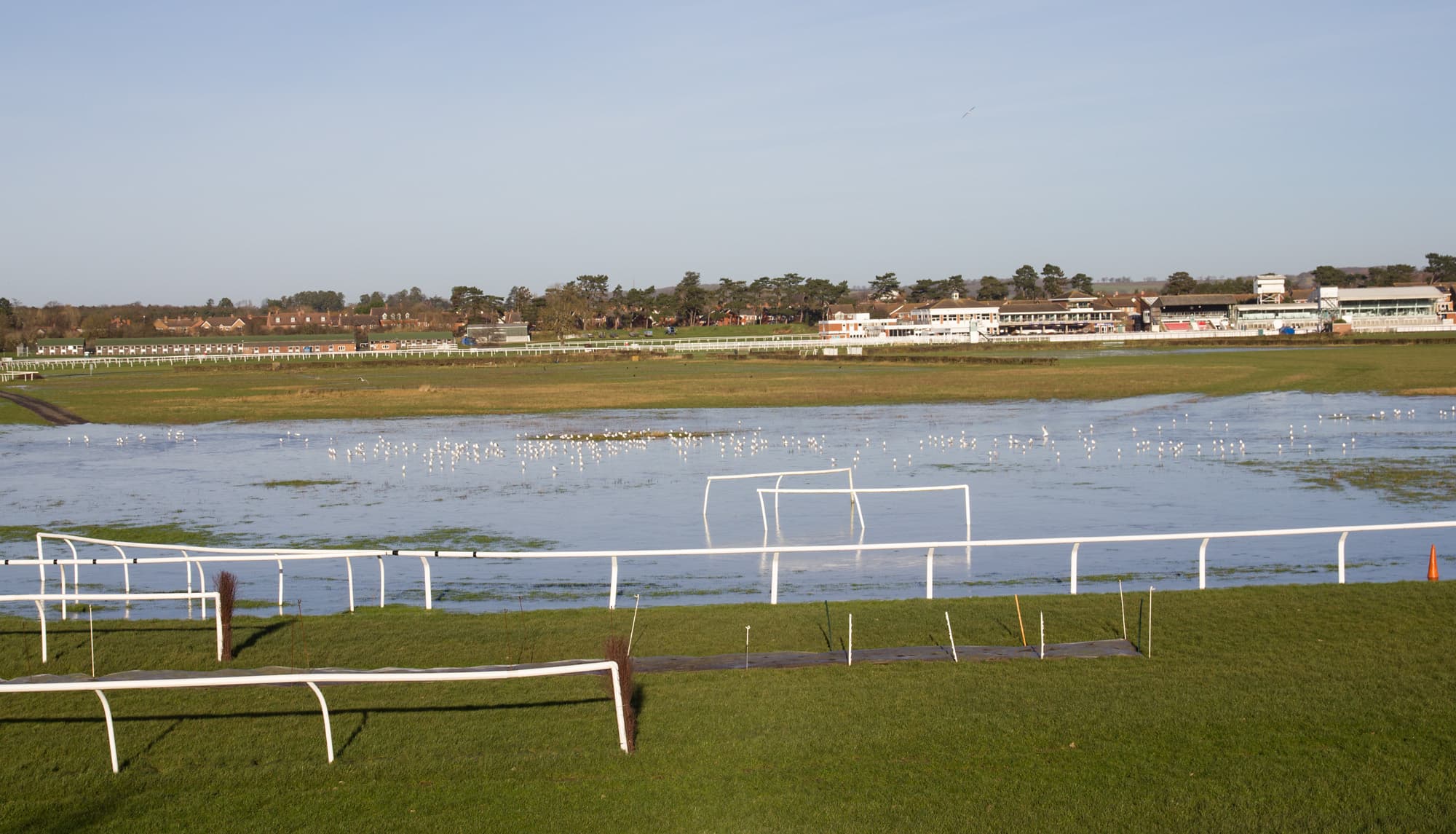
The History of Stratford-on-Avon Racecourse
Over 265 years of racing at Stratford-on-Avon — from its origins in 1755 to Warwickshire's historic jumps venue and the Horse & Hound Cup.
Read more
Summer Jumping at Stratford: Complete Guide
Your complete guide to summer jumping at Stratford-on-Avon — the Horse & Hound Cup, key meetings, and jumps racing in the sunshine in Warwickshire.
Read more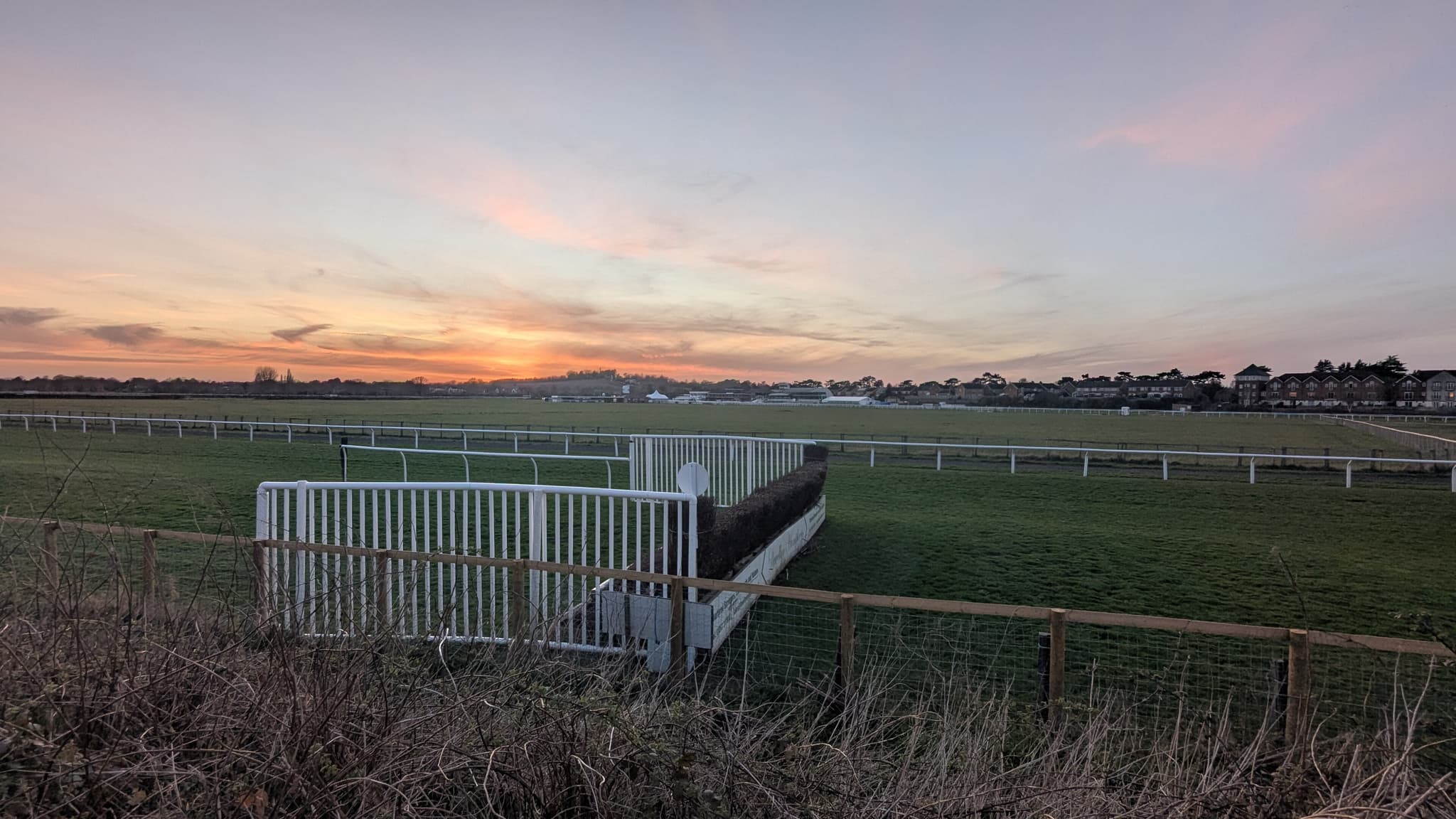
August Bank Holiday Jump Day at Stratford-on-Avon: The Complete Guide
The complete guide to Stratford-on-Avon's August Bank Holiday Monday jump racing day — competitive summer handicaps beside the River Avon, Shakespeare country, and one of the best summer sporting occasions in England.
Read morePhotos on this page are used under Creative Commons licences. Titles, sources and licence links for each one are on our image credits page.
Research the field with the AI Race Predictor
Our model publishes calibrated win-probability estimates for UK races — a second opinion to understand a race, not tips. It's open about its record: it doesn't beat the market, and we show exactly how it does.
Work it out & learn the basics
Gamble Responsibly
Gambling should be entertaining and not seen as a way to make money. Never bet more than you can afford to lose. If you or someone you know has a gambling problem, help and support is available.