
Founder & Editor · Last reviewed 2026-04-07
Introduction to Warwick Racecourse
Warwick Racecourse occupies one of the most atmospheric settings in British racing — a sharp, left-handed circuit laid out within clear sight of Warwick Castle, one of the best-preserved medieval fortresses in England. From the top of the grandstand, the view across the racecourse to the castle's towers and battlements is genuinely spectacular, a reminder that this is a course embedded in centuries of English history rather than a modern facility assembled on greenfield land. Racing has been recorded here since the seventeenth century, placing Warwick among the oldest continuously operating racecourses in Britain.
A Uniquely Demanding Circuit
What distinguishes Warwick from almost every other British track is the near-circular shape of the course. Horses complete four tight turns in rapid succession over a circuit of approximately one mile and five furlongs — a configuration that is categorically different from the sweeping ovals of York or Newmarket, the steady bends of Haydock, or even the relatively manageable turns at Cheltenham. At Warwick, positioning through corners is not merely a tactical consideration; it is the race itself. Horses that break cleanly, travel well through turns and handle the constant arc of the circuit dominate here. Those that prefer to race in straight lines, building momentum through long sustained gallops, find Warwick perplexing and uncomfortable.
This creates a phenomenon that is more pronounced at Warwick than anywhere else in British racing: course specialists. Certain horses return to this track year after year, winning with a consistency that defies their level of ability on paper. They have simply learned to handle what Warwick asks of them, and the circular track rewards that specific skill set so emphatically that form here is genuinely difficult to transfer elsewhere.
Dual Purpose: Jumps and Flat
Warwick operates as a dual-purpose course, staging both National Hunt and flat racing. The winter jump programme is centred around January, when a competitive chase festival draws horses from the major yards targeting early-season prize money on typically soft or heavy Midlands ground. The flat season runs from April through August, with the course's most prestigious flat race — the Warwick Oaks — providing a late-season highlight for three-year-old fillies. The Kingmaker Novices' Chase in February has developed a strong reputation as a Cheltenham Festival preparation race, regularly producing horses that go on to perform at the Festival.
The Midlands Hub
Warwick sits at the geographical heart of the English Midlands — the M40 corridor connects it directly to Birmingham to the north and London to the south, while Leamington Spa, Coventry and Stratford-upon-Avon are all within twenty minutes. This central positioning gives the course a broad and loyal catchment: Birmingham racing fans making a short journey south, Londoners for whom a 90-minute journey from Marylebone is entirely manageable, and the dense population of the West Midlands and South Warwickshire who regard Warwick as their home course.
The town of Warwick itself adds to the occasion. It is a genuinely attractive historic market town — not overwhelmed by tourism in the way that nearby Stratford can be — with good independent restaurants, a fine selection of pubs and the castle itself as a half-day attraction before or after racing. Post-racing, Leamington Spa a mile down the road offers one of the best restaurant scenes in the Midlands for a town of its size. Warwick Racecourse sits in a part of England that rewards the full day out.
Bet on Warwick
Place your bets on Warwick races with a trusted bookmaker.

Promo code BETFRED50. New customers only. Register, deposit with a Debit Card, and place a first bet of £10+ at Evens (2.0)+ on Sports, to be settled within 7 days, to get £30 in Sports Free Bets and £20 in Bet Builder Free Bets within 24 hours of settlement. 7-day expiry. Eligibility & payment exclusions apply. Full T&Cs apply. Take Time to Think. BeGambleAware.org. 18+. Full T&Cs.

Promo code R30. New UK customers only, 18+. Register, deposit £10 or more, then place a £10 single cash bet at odds of 1/2 (1.5) or greater on any sports market (excluding Virtuals). Once the qualifying bet settles you get £30 in Free Bets (3 x £10) — the qualifying bet can win or lose. Free Bets are valid on any sports market excluding Virtuals, expire in 7 days, are non-withdrawable and must be used in full. Excluded deposit methods apply (including PayPal, Apple Pay, Skrill and NETELLER). Named bets such as Lucky 15 do not qualify. If you cash out the qualifying bet, or it is voided, you are no longer eligible for the offer. Ends 31.12.26. Full T&Cs apply. Please gamble responsibly. BeGambleAware.org. 18+. Full T&Cs.

Promo code BET40GET20. New UK customers, 18+. Register with the code and place a first bet of £40 or more at Evens (2.0) or greater. Receive 2 × £10 free bets: the first credited automatically once the qualifying bet settles, the second 24 hours later. Free bets must be placed at minimum odds of 4/1 (5.0), expire 24 hours after credit, and the free-bet stake is not returned with winnings. Debit card deposits only. Take Time to Think. BeGambleAware.org. 18+. T&Cs apply. Full T&Cs.

50% of your first-day net losses refunded as a free bet, capped at £25. New UK customers aged 18+ only. To qualify, deposit and place a first bet of £10 or more on any sport at minimum odds of evens (2.00), then place at least two further bets on different events, each worth at least 50% of your largest bet, all at evens (2.00) or greater. Losses are counted from your first settled bet until 23:59 the same day. Place a qualifying £10+ bet and you are guaranteed at least a £5 free bet. Bets placed at SP, void bets, cashed-out bets and bets struck with free bets do not count towards the offer. The free bet is credited the day after your qualifying bets settle and must be used within 7 days, after which it expires. It can be used at odds from 1/4 (1.25) up to 250/1 on singles and straight accumulators, but not on Trixie, Patent or Yankee style multiples. Free-bet stake is not returned with winnings. One offer per person, household, address, IP address and device. E-wallet deposits may not qualify, so check the cashier before depositing. Customers registered with GAMSTOP cannot claim. KYC identity verification must be completed before the free bet is credited. Take Time to Think. BeGambleAware.org. 18+. T&Cs apply. Full T&Cs.

New customers, 18+. Choose the sports bonus at sign-up, make a first deposit and receive a 100% bonus up to £50 in your Sports Bonus balance. To convert the bonus to cash, wager it 10x within 30 days. Single bets below Evens (2.00) do not qualify; accumulators do not qualify if any selection is below 1/2 (1.50). Virtual Sports, voided, cancelled, drawn, cashed-out and free-bet wagers do not count towards wagering. Only the first settled bet per event counts. Withdrawing before the wagering requirement is met forfeits the bonus balance including bonus winnings. Real-money funds are used before bonus funds. Deposits via Skrill or Neteller are not eligible. Not valid in conjunction with other promotions. Odds, bet and payment limits apply. 10bet general and promotion T&Cs apply. BeGambleAware.org. 18+. Full T&Cs.

New customers in Great Britain and Republic of Ireland, 18+. Place a £10 fixed-odds qualifying bet at minimum odds of 1/2 (1.50) — single or each-way (only the win part counts), pre-event or in-play, not cashed out early, within 28 days of opening the account. Receive up to £60 in bonuses credited over three days: 3 × £10 fixed-odds free bets (the first on settlement, then 24 and 48 hours later) plus 3 × £5 Total Goals FOOTBALL spread bets, 3 × £5 racing Winning Favourites spread bets and a £1 racing Race Index spread bet (the spread bets need a full spread-betting account). Free-bet stakes not returned with winnings; free bets valid 28 days from issue. IMPORTANT: the £5 credits are SPREAD bets — sports spread betting carries the risk that losses can exceed your stake. Sports spread-betting customers do not have Financial Ombudsman or FSCS recourse. Take Time to Think. BeGambleAware.org. 18+. T&Cs apply. Full T&Cs.

Promo code WELCOME15, entered under My Bonuses after registering. New UK customers, 18+. Place a first qualifying bet of at least £10 from your cash balance at odds of evens (2.0) or greater within 7 days of opening the account. Once the qualifying bet fully settles you receive £15 in free bets, credited as 3 x £5 tokens with set uses: one £5 accumulator free bet (minimum 4 legs, each leg at 2/5 or bigger), one £5 sports free bet (any market at evens or bigger) and one £5 Sub Cover free bet (selected football player markets at evens or bigger). Free-bet stakes are not returned with winnings. Free bets expire 7 days after they are credited. Void, cashed-out and partially cashed-out bets do not qualify. One offer per customer. Confirm the current terms on BetGoodwin's own welcome-offer page before claiming. Take Time to Think. BeGambleAware.org. 18+. T&Cs apply. Full T&Cs.

New UK customers, 18+. Minimum deposit £10. Place a £10 qualifying single at minimum odds of 1/2 (1.50), settled within 14 days. Receive £30 in free bets (stake not returned), split £20 for sportsbook use (2 x £10) and £10 for Bet Builder only (2 x £5); Bet Builder does not cover horse racing. Free bets must be accepted within 7 days and expire 7 days after acceptance. No promo code required. Best Odds Guaranteed on UK & Irish racing, subject to having staked over £25 in the previous seven days. Operated by LiveScore Betting and Gaming (Gibraltar) Ltd, UKGC 56859. Confirm the current terms on LiveScore Bet's own promotions page before claiming. Take Time to Think. BeGambleAware.org. 18+. T&Cs apply. Full T&Cs.
18+. BeGambleAware.org
Day-by-Day Guide
Day-by-Day Guide to Warwick Racing
Warwick operates across two distinct seasons — a winter jump programme concentrated in January and February, and a spring and summer flat season running from April through August — with an autumn jump opening in October and November connecting the two. The January Chase Festival is the course's most prestigious occasion, but each phase of the year at Warwick has its own value and character.
January Chase Festival: Warwick's Highlight
The January Chase Festival — typically one or two days in early-to-mid January — is Warwick's most important fixture and one of the most attractive early-January opportunities in the jump calendar. January racing in England is rarely glamorous in weather terms: cold, often wet, with soft or heavy going. Warwick's festival leans into this rather than apologising for it. The cards are built around competitive handicap chases on holding ground, exactly the conditions that draw proven soft-ground chasers and the trainers who specialise in them.
January is a specific strategic moment in the jump season. Cheltenham Festival preparations are underway but the Festival itself is still eight weeks away; trainers who have been waiting for the ground to come right are getting their horses out. Warwick in January captures this moment precisely: horses fit, the ground right, trainers willing to take on competitive fields before the Festival season reaches its intensity.
The Warwick Castle Chase, the flagship Listed handicap of the January festival, attracts horses from major southern and Midlands jump yards. The sharp, circular track means that it is not simply an exercise in running the best horse — course suitability is a genuine factor, and horses that have won here before are always worth elevated attention in the pre-race analysis.
Spring Jump Meetings: February and March
Warwick typically stages one or two further jump cards in February and March, completing the winter programme before the flat season begins in April. The most significant of these is the Kingmaker Novices' Chase, a Listed contest for novice chasers that has established itself as one of the more meaningful Cheltenham preparation races on the Midlands and southern circuit.
Novice chasers that handle Warwick's tight turns and jump accurately on the circular track tend to be horses with natural ability and good jumping technique — precisely the attributes that matter at Cheltenham's demanding Festival fences. The Kingmaker has produced horses that have gone on to feature at the Festival, and the race deserves genuine attention as a pointer.
Flat Opening: April and May
Warwick's flat season opens in April with a card that typically includes its most significant flat race of the year — a moment where the dual-purpose character of the course is most apparent. The transition from winter jump cards to spring flat meetings on the same track is one of the more interesting things about Warwick: the oval remains the same, and the course specialists from the jumping world are replaced by flat specialists who know how to use the circular layout to their positional advantage.
May's flat card typically features the most competitive supporting cast of the flat season at Warwick: trainers from Lambourn, Newmarket and the Midlands yards targeting the spring prize money.
Summer Flat Programme: June Through August
Warwick's summer flat cards run on Saturdays and occasional Fridays through June, July and August. The quality is consistent rather than spectacular — regional flat racing at the level immediately below the big meetings at York, Ascot and Goodwood — but the cards are genuinely competitive and produce reliable form.
Summer flat racing at Warwick draws from a different crowd than the winter jumping faithful: flat racing fans from Birmingham and Coventry for whom Warwick is the nearest home fixture, casual summer racegoers attracted by the castle backdrop and the warm-weather atmosphere. The combination of competitive racing and a genuinely spectacular setting makes these cards some of the most pleasant summer afternoons on the Midlands racing circuit.
Autumn Jump Launch: October and November
The jump season returns to Warwick in October with novice hurdle and early handicap chase cards that launch the new National Hunt year. These early-season cards carry the excitement of novelty — new horses, new form to establish, the first tentative evidence of which novice hurdlers might develop into something special. Autumn at Warwick is the start of the cycle that culminates, eight months later, in the January Chase Festival.
Key Races to Watch
Key Races at Warwick
Warwick's dual-purpose programme across flat and jump racing produces four races that carry genuine significance — two from the National Hunt programme, one from the flat, and one that has established itself as a meaningful Cheltenham Festival preparation race.
Warwick Castle Chase (Listed Handicap Chase, January)
The Warwick Castle Chase is the course's flagship winter race — a Listed handicap contest for experienced chasers, typically run in January as the centrepiece of the Chase Festival programme. It attracts the best horses that specifically suit Warwick's sharp, circular circuit: horses with proven ability to handle four tight left-handed turns in rapid succession and maintain their jumping accuracy at each fence through the corner.
The analytical edge in the Warwick Castle Chase is course suitability, more explicitly than in almost any other race in the British calendar. The near-circular track is so unlike other circuits that previous Warwick form is an unusually reliable guide. Horses that have won at Warwick — particularly over fences on this track — have demonstrated something very specific: an ability to maintain balanced, accurate jumping through continuous turns, and a racing style that allows them to use the inside rail effectively without losing their rhythm.
Horses coming from galloping tracks — Kempton's flat oval, Sandown's steady bends, Cheltenham's sweeping right-hand course — do not automatically transfer to Warwick's demands. Trainers who win this race tend to be those who know the course well and have deliberately identified a Warwick specialist within their string.
The January timing adds another layer. Horses running here are typically fit from their autumn campaign but not yet in the final preparation stage for Cheltenham. They are competing on soft or heavy Midlands winter ground that rewards proven stamina on testing terrain. The Warwick Castle Chase is not for fragile horses with going reservations.
Kingmaker Novices' Chase (Listed, February)
The Kingmaker Novices' Chase has become one of the most respected Cheltenham Festival preparation races in the British calendar — a Listed contest for novice chasers, typically run in February, that has produced a remarkable number of horses who went on to perform at the Festival.
The statistical connection is partly explained by the skills the race tests. Novice chasers that win at Warwick have demonstrated technical jumping quality, positional awareness through tight turns, and the physical strength to maintain form on testing February ground. These are precisely the qualities required at the Cheltenham Festival, where the fences are demanding and the undulating circuit tests horses differently from flat tracks.
The Kingmaker is worth treating as a Cheltenham ante-post pointer. A convincing winner — particularly one that wins with any kind of authority rather than grinding out a narrow result — deserves genuine consideration for Festival novice chase markets. The race's track record in producing Festival performers is too consistent to dismiss.
Warwick Oaks (Listed, Flat, Summer)
The Warwick Oaks is the course's most prestigious flat race — a Listed contest for three-year-old fillies, run in the summer programme and modelled on the Classic distance tradition. It attracts fillies from southern yards who see Warwick's summer flat card as a quality opportunity for horses not quite at the level of the Classics or the major summer Classics trials.
The sharp, circular Warwick track adds interest to a race that on a conventional oval might produce straightforward results. Fillies that handle the tight turns — compact, balanced types rather than big, striding gallopers — hold an inherent advantage. Form from Chester, Windsor and Catterick transfers better here than form from Newbury or Sandown.
Warwick Sprint Series (Flat Handicaps, Summer)
The summer sprint handicaps at Warwick are an underrated betting vehicle — races where the circular track's specific demands create a consistent advantage for front-running, inside-rail specialists that is visible in the data but not always priced accordingly.
Six-furlong handicaps at Warwick on fast summer ground produce positional races: horses that break cleanly and get the inside position through the first bend are extremely hard to beat from behind. The pace bias here is as reliable as anywhere in British flat racing, and it is worth incorporating as a standing piece of analysis whenever Warwick sprint handicaps appear on the card.
Betting Preview
Betting at Warwick: The Course Specialist Advantage
Warwick's near-circular track creates one of the most extreme course-specialist phenomena in British racing. Understanding why — and how to exploit it — is the foundation of consistent success at this course, whether you are betting on the January Chase Festival, the Kingmaker Novices' Chase or the summer flat programme.
Course Specialists: The Warwick Phenomenon
At most British racecourses, previous winning form at the track is a useful but moderate indicator — it tells you the horse handles the surface, the turns and the going, but the specific skill advantage is limited. At Warwick, previous winning form at the track is an unusually powerful signal, because the near-circular shape demands such a specific skill set that horses which have mastered it hold a genuine technical advantage over those encountering it for the first time.
The four tight left-handed turns that horses must navigate on every circuit at Warwick require them to maintain balanced jumping (in chase racing) or sustained momentum (on the flat) through continuous directional change. Horses that have learned to do this — that have developed the physical coordination and racing pattern to handle the circular track — are essentially operating in a different mode from debutants.
In practice, this means: when Warwick form produces a course winner returning to the track, take it seriously regardless of the overall record elsewhere. A horse with three Warwick wins and undistinguished form at Cheltenham or Kempton is very often a better Warwick bet than its overall rating suggests. The market sometimes prices this correctly; often it does not, particularly when the horse's form away from Warwick has been poor.
Front-Running Bias: The Track's Most Reliable Pattern
The tight turns at Warwick create a positional bias that is among the most consistent in British racing: horses that break cleanly, establish an early lead and control the pace through the first bend are very hard to beat from behind. This is true on the flat and — to an even greater degree — over jumps, where accurate front-runners can dictate the jumping rhythm of the entire field.
On the flat, the six-furlong and seven-furlong races at Warwick are where this bias is most pronounced. A horse drawn in stalls one or two on the inside rail, with a front-running profile, on good or good-to-firm summer ground has a statistically significant advantage over horses drawn high that must lose ground getting to the rail or horses with hold-up styles that must navigate around the field through tight bends.
Over jumps, front-running chasers that jump accurately and can dictate their own pace through each fence regularly produce performances at Warwick that look surprisingly dominant given their form elsewhere. The tight track neutralises the ability of hold-up horses to build momentum from behind, because there is simply not enough room on the circular arc to produce the kind of sweeping late run that wins races at Cheltenham or Sandown.
Kingmaker as a Cheltenham Pointer: The Key Angle
The Kingmaker Novices' Chase in February deserves specific ante-post treatment for the Cheltenham Festival, because its track record as a Festival pointer is genuinely strong. The race's ability to identify Festival performers rests on what it tests: jumping accuracy on a demanding, tight circuit, the ability to maintain technique on testing late-winter ground, and the physical strength to handle a competitive field from a major stable.
Novice chasers that win the Kingmaker convincingly — particularly those that do so while jumping with authority rather than grinding out a narrow result — are often horses at the top of the novice chase division who have been saved from the hype of Cheltenham trials specifically to run here. Trainers from the major yards (Willie Mullins when running in Britain, Paul Nicholls, Dan Skelton) bring their quality novice chasers to the Kingmaker when they want to give them a competitive tune-up before the Festival.
The bet is simple: identify the Kingmaker winner, assess whether the victory was convincing, and consider ante-post positions in the Cheltenham novice chase markets. The historical connection between this race and the Festival has been strong enough to justify a systematic approach.
Going at Warwick: The January Extremes
Warwick's January Chase Festival consistently takes place on soft or heavy ground — the Midlands winter does not produce quick conditions in January, and the near-circular track holds moisture in the bends. This creates a consistent filter for the Winter Chase analysis: horses that need good ground to show their form are irrelevant for January at Warwick.
The ground at Warwick in January can be exceptionally holding — genuinely heavy conditions that test horses' stamina as much as their jumping. Proven heavy-ground stayers who have won in the mud at Uttoxeter, Haydock or Newbury in December or January are the template Warwick Chase Festival runners.
The flat programme in summer sits at the opposite extreme: good to firm is common in July and August, and the fast summer conditions suit the sharp flat types that handle Warwick's tight turns. Going transitions sharply between the January winter programme and the summer flat season — always confirm the going before betting on a Warwick flat card, as the same track produces very different racing on good-to-firm versus good-to-soft.
Flat Track Types: Chester and Windsor Form Transfers Best
For Warwick flat racing, the most direct form pointers come from Chester and Windsor — both left-handed, both with tight turns that reward similar horse profiles. Horses with winning form at Chester's left-handed, near-circular track find Warwick's demands immediately recognisable. Windsor's figure-of-eight configuration also produces horses adept at tight turning that handle Warwick effectively.
Catterick form is useful for sprint trips specifically. Sandown and Newbury form — galloping right-handed tracks — is the least reliable pointer to Warwick success and deserves a discount when the only form in a horse's record comes from those venues.
Visitor Information
Visitor Information: Warwick Racecourse
Getting There
By Train
Warwick station is served by trains from London Marylebone (approximately 90 minutes, Chiltern Railways service), Birmingham New Street (approximately 25 minutes) and Leamington Spa (approximately 5 minutes). The station is approximately 15 minutes' walk from the racecourse, or a short taxi ride — a comfortable distance on a dry day, less appealing in January rain.
The most convenient services are from Birmingham New Street, which run frequently throughout the day and connect seamlessly with the wider West Midlands rail network. Racegoers from Coventry, Solihull and the Birmingham conurbation can reach Warwick easily without a car. From London, the Marylebone service makes Warwick accessible as a day trip — the 90-minute journey each way is straightforward for an afternoon or evening card.
Leamington Spa is also a useful interchange point for those travelling from further afield: it sits on the CrossCountry network and offers connections from Bristol, Cardiff, the south-west and the north, with a five-minute connecting service to Warwick.
By Car
Warwick is directly accessible from the M40 at Junction 15 (Warwick/Leamington), which connects via the A429 and A46 to the town centre and the racecourse. The junction is well-signposted from both northbound and southbound carriageways, and the approach from the motorway to the course takes approximately 10 minutes in normal traffic.
Ample parking is available on-site, and the course's location near the M40 makes it particularly convenient for racegoers from the Thames Valley, Oxfordshire and west London as well as the West Midlands.
Enclosures and Facilities
Main Grandstand: Warwick's grandstand runs along the home straight and — crucially — its upper tiers provide one of the most spectacular views in British racing: across the compact circular course and beyond to Warwick Castle, whose battlements and towers create a medieval skyline that is impossible to take for granted no matter how many times you have seen it. Arriving early to find a good vantage point in the upper grandstand is strongly recommended, particularly for those visiting for the first time.
Parade Ring: Located in the centre of the course, the parade ring is accessible from the main enclosure and provides clear close-up views of horses before each race. On January Chase Festival day, when quality chasers fill the parade ring, this is one of the best places to observe the physical condition and behaviour of runners before committing to a bet.
Beer Gardens and Lawns: In summer, Warwick's lawns are a pleasant outdoor viewing option. The course's enclosed, near-circular shape means that the racing is visible from a wide range of positions around the track, and summer flat racegoers often spread out across the lawn areas.
The Castle View
The view of Warwick Castle from the grandstand is one of the defining experiences of attending racing in the Midlands. The castle — largely 14th-century in its present form, with towers and walls that have stood for over six hundred years — sits directly in the sightline from the upper grandstand, providing a backdrop that few sporting venues anywhere in England can match. Whether you are primarily a racing person or not, taking a moment to appreciate this view is part of what makes a day at Warwick more than just another provincial race meeting.
Warwick Castle itself is a major visitor attraction, managed by Merlin Entertainments, and is open daily for tours and activities. Arriving the night before a race meeting or the morning of a morning card to explore the castle first makes for an outstanding full day in Warwickshire.
Practical Tips
January Chase Festival: Dress for cold and wet. January in the English Midlands rarely produces comfortable outdoor conditions, and the Warwick site is exposed. Waterproof outer layers and warm boots are essential for the winter chase programme. The covered grandstand provides shelter, but between races the outdoor areas can be very cold.
Summer flat meetings: Smart casual attire is appropriate. The warm-weather summer crowd is relaxed, and garden party dress is entirely fitting for the July and August flat cards.
Food, Drink and the Surrounding Area
On-course catering at Warwick covers the standard racecourse range — bars, hot food, snacks across multiple locations.
Warwick town centre (a 15-minute walk or short taxi) has good independent restaurants, cafes and pubs concentrated around the market square and Church Street. The town is pleasant, compact and distinctly less tourist-overwhelmed than nearby Stratford, making it a good option for post-racing dinner.
Leamington Spa — five minutes by train from Warwick station, or a 10-minute drive — is the standout post-racing destination in the area. Leamington's Regent Street and the Parade have one of the best concentrations of independent restaurants, wine bars and gastro-pubs in the Midlands for a town of its size. After a day at the January Chase Festival, a dinner in Leamington Spa makes for an excellent end to the day.
Share this article
More about this racecourse
All Warwick guides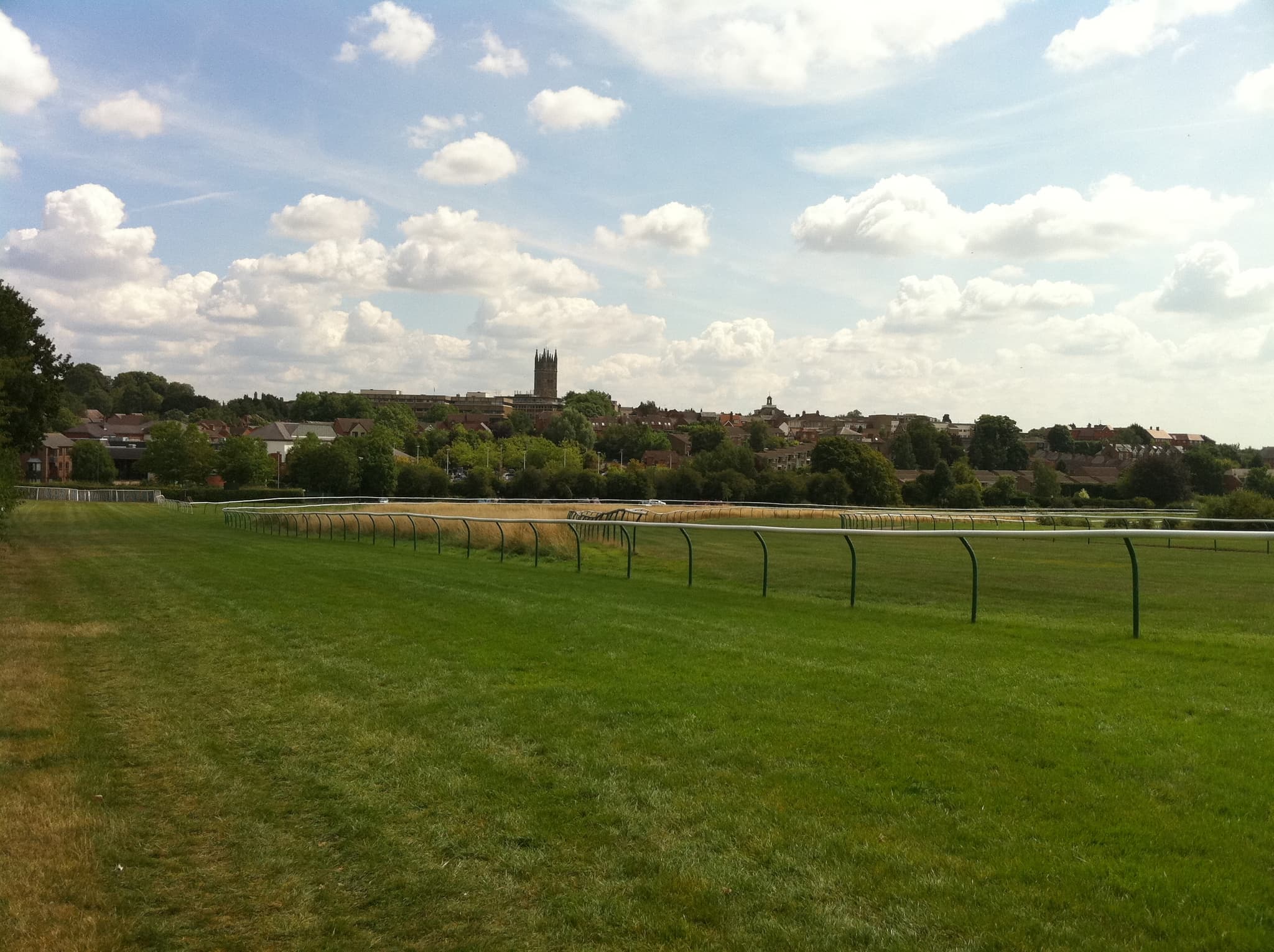
The History of Warwick Racecourse
Over 300 years of racing at Warwick — from Georgian origins to a modern National Hunt venue.
Read more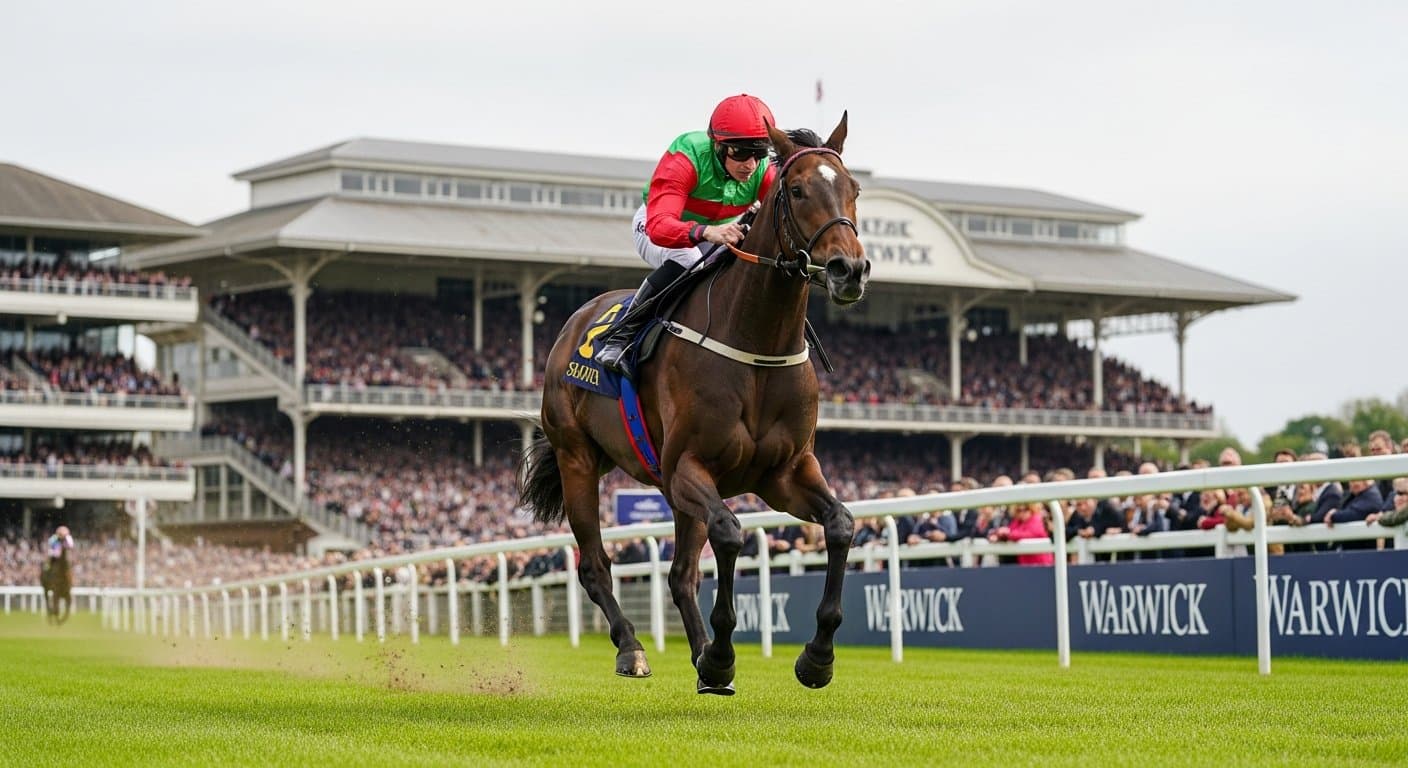
Edwardstone Horse: Warwick Win Before Arkle Glory
How Edwardstone's Kingmaker Chase victory at Warwick launched his path to Cheltenham Arkle triumph. The story behind the champion.
Read more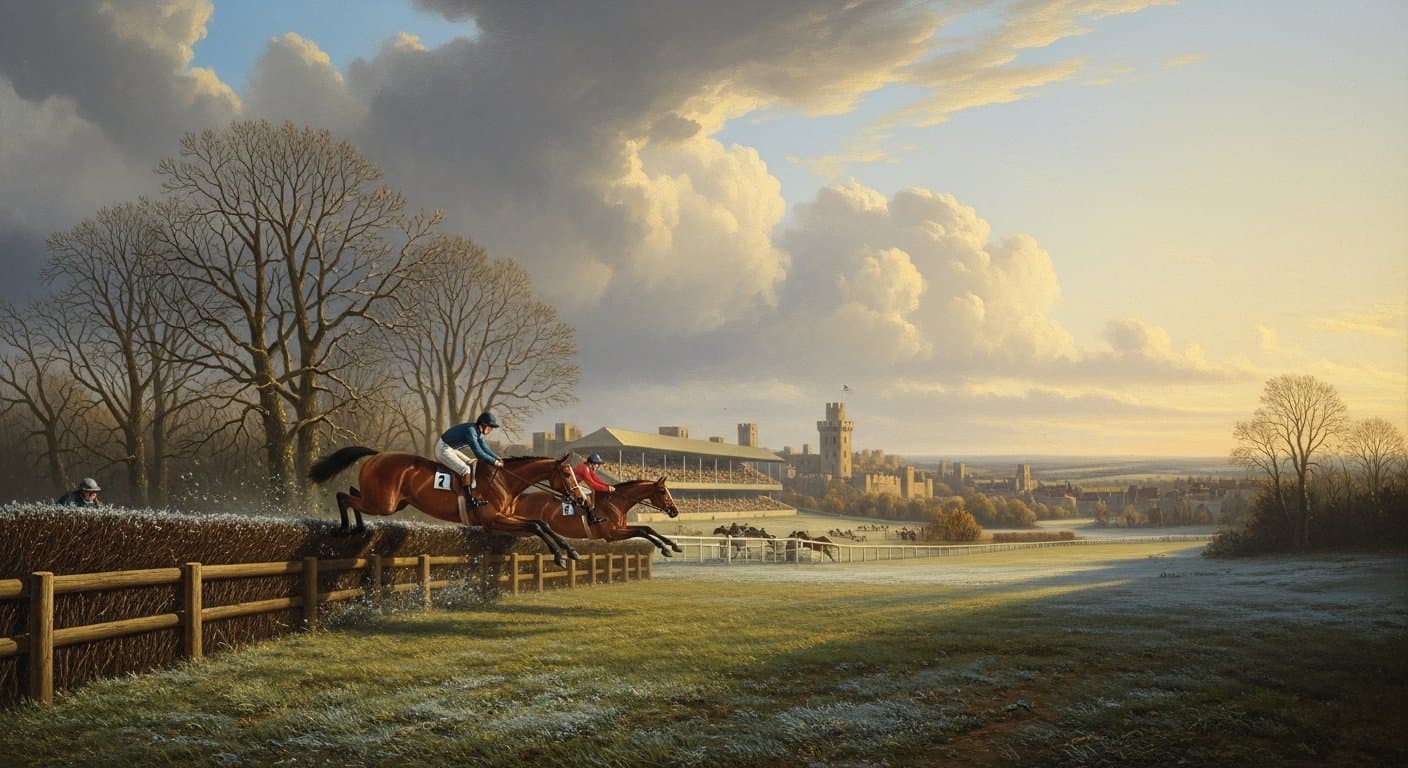
Kingmaker Chase Day at Warwick: The Complete Guide
The complete guide to Kingmaker Chase Day at Warwick — the Kingmaker Novices' Chase, the Classic Chase, and one of February's most important Cheltenham Festival pointers, set against the backdrop of Warwick Castle.
Read morePhotos on this page are used under Creative Commons licences. Titles, sources and licence links for each one are on our image credits page.
Research the field with the AI Race Predictor
Our model publishes calibrated win-probability estimates for UK races — a second opinion to understand a race, not tips. It's open about its record: it doesn't beat the market, and we show exactly how it does.
Work it out & learn the basics
Gamble Responsibly
Gambling should be entertaining and not seen as a way to make money. Never bet more than you can afford to lose. If you or someone you know has a gambling problem, help and support is available.