
Founder & Editor · Last reviewed 2026-04-07
Wincanton Racecourse is the primary jump racing venue for the south-west of England — a right-handed, undulating track set in the Somerset countryside that stages competitive National Hunt racing from October through to the spring. It occupies a singular and important position in the regional jump calendar: halfway between London and the deeper West Country, drawing loyal crowds from Dorset, Wiltshire, Hampshire and Somerset who would otherwise have limited access to jump racing of genuine quality.
Wincanton's most important race was the Elite Hurdle, a Grade 2 contest run in early November. From 2026 it moved to Aintree and was renamed the Molyneux Hurdle, so the course now stages a strong regional jumps programme without a graded feature of its own. Grade 1 races are rare; there are fewer than forty in the entire British National Hunt calendar, and Wincanton's ownership of one places it alongside Kempton, Haydock and Sandown as a venue where the very best horses in training compete. Champion Hurdle contenders use the Elite Hurdle as a serious early-season target, and the race has been won by horses that went on to win at Cheltenham's Festival.
The course itself is right-handed and undulating, which is a less common combination in British jump racing. The right-handed direction immediately distinguishes it from the sport's most famous tracks — Cheltenham, Kempton and Newbury are all left-handed — and horses that race more fluently in a clockwise direction, handling rising and dipping ground between fences and hurdles, have a natural advantage. Trainers based in the region know these contours intimately.
One trainer above all others knows Wincanton better than anyone: Paul Nicholls. His Ditcheat yard, one of the most successful training operations in the history of National Hunt racing, is less than ten miles from the racecourse. Wincanton is, in the most practical sense, Paul Nicholls's home track. He has won the Elite Hurdle multiple times with some of his best horses, and his runners at Wincanton across the entire fixture list carry the advantage of a trainer who has watched his horses work on these specific undulations throughout their development.
The Somerset countryside setting, the compact and sociable atmosphere of the course, and the loyal regional crowd make Wincanton one of the most characterful racing venues in the south-west — a track that combines genuine graded racing quality with an unpretentious, genuinely hospitable character.
Bet on Wincanton
Place your bets on Wincanton races with a trusted bookmaker.

Promo code BETFRED50. New customers only. Register, deposit with a Debit Card, and place a first bet of £10+ at Evens (2.0)+ on Sports, to be settled within 7 days, to get £30 in Sports Free Bets and £20 in Bet Builder Free Bets within 24 hours of settlement. 7-day expiry. Eligibility & payment exclusions apply. Full T&Cs apply. Take Time to Think. BeGambleAware.org. 18+. Full T&Cs.

Promo code R30. New UK customers only, 18+. Register, deposit £10 or more, then place a £10 single cash bet at odds of 1/2 (1.5) or greater on any sports market (excluding Virtuals). Once the qualifying bet settles you get £30 in Free Bets (3 x £10) — the qualifying bet can win or lose. Free Bets are valid on any sports market excluding Virtuals, expire in 7 days, are non-withdrawable and must be used in full. Excluded deposit methods apply (including PayPal, Apple Pay, Skrill and NETELLER). Named bets such as Lucky 15 do not qualify. If you cash out the qualifying bet, or it is voided, you are no longer eligible for the offer. Ends 31.12.26. Full T&Cs apply. Please gamble responsibly. BeGambleAware.org. 18+. Full T&Cs.

Promo code BET40GET20. New UK customers, 18+. Register with the code and place a first bet of £40 or more at Evens (2.0) or greater. Receive 2 × £10 free bets: the first credited automatically once the qualifying bet settles, the second 24 hours later. Free bets must be placed at minimum odds of 4/1 (5.0), expire 24 hours after credit, and the free-bet stake is not returned with winnings. Debit card deposits only. Take Time to Think. BeGambleAware.org. 18+. T&Cs apply. Full T&Cs.

50% of your first-day net losses refunded as a free bet, capped at £25. New UK customers aged 18+ only. To qualify, deposit and place a first bet of £10 or more on any sport at minimum odds of evens (2.00), then place at least two further bets on different events, each worth at least 50% of your largest bet, all at evens (2.00) or greater. Losses are counted from your first settled bet until 23:59 the same day. Place a qualifying £10+ bet and you are guaranteed at least a £5 free bet. Bets placed at SP, void bets, cashed-out bets and bets struck with free bets do not count towards the offer. The free bet is credited the day after your qualifying bets settle and must be used within 7 days, after which it expires. It can be used at odds from 1/4 (1.25) up to 250/1 on singles and straight accumulators, but not on Trixie, Patent or Yankee style multiples. Free-bet stake is not returned with winnings. One offer per person, household, address, IP address and device. E-wallet deposits may not qualify, so check the cashier before depositing. Customers registered with GAMSTOP cannot claim. KYC identity verification must be completed before the free bet is credited. Take Time to Think. BeGambleAware.org. 18+. T&Cs apply. Full T&Cs.

New customers, 18+. Choose the sports bonus at sign-up, make a first deposit and receive a 100% bonus up to £50 in your Sports Bonus balance. To convert the bonus to cash, wager it 10x within 30 days. Single bets below Evens (2.00) do not qualify; accumulators do not qualify if any selection is below 1/2 (1.50). Virtual Sports, voided, cancelled, drawn, cashed-out and free-bet wagers do not count towards wagering. Only the first settled bet per event counts. Withdrawing before the wagering requirement is met forfeits the bonus balance including bonus winnings. Real-money funds are used before bonus funds. Deposits via Skrill or Neteller are not eligible. Not valid in conjunction with other promotions. Odds, bet and payment limits apply. 10bet general and promotion T&Cs apply. BeGambleAware.org. 18+. Full T&Cs.

New customers in Great Britain and Republic of Ireland, 18+. Place a £10 fixed-odds qualifying bet at minimum odds of 1/2 (1.50) — single or each-way (only the win part counts), pre-event or in-play, not cashed out early, within 28 days of opening the account. Receive up to £60 in bonuses credited over three days: 3 × £10 fixed-odds free bets (the first on settlement, then 24 and 48 hours later) plus 3 × £5 Total Goals FOOTBALL spread bets, 3 × £5 racing Winning Favourites spread bets and a £1 racing Race Index spread bet (the spread bets need a full spread-betting account). Free-bet stakes not returned with winnings; free bets valid 28 days from issue. IMPORTANT: the £5 credits are SPREAD bets — sports spread betting carries the risk that losses can exceed your stake. Sports spread-betting customers do not have Financial Ombudsman or FSCS recourse. Take Time to Think. BeGambleAware.org. 18+. T&Cs apply. Full T&Cs.

Promo code WELCOME15, entered under My Bonuses after registering. New UK customers, 18+. Place a first qualifying bet of at least £10 from your cash balance at odds of evens (2.0) or greater within 7 days of opening the account. Once the qualifying bet fully settles you receive £15 in free bets, credited as 3 x £5 tokens with set uses: one £5 accumulator free bet (minimum 4 legs, each leg at 2/5 or bigger), one £5 sports free bet (any market at evens or bigger) and one £5 Sub Cover free bet (selected football player markets at evens or bigger). Free-bet stakes are not returned with winnings. Free bets expire 7 days after they are credited. Void, cashed-out and partially cashed-out bets do not qualify. One offer per customer. Confirm the current terms on BetGoodwin's own welcome-offer page before claiming. Take Time to Think. BeGambleAware.org. 18+. T&Cs apply. Full T&Cs.

New UK customers, 18+. Minimum deposit £10. Place a £10 qualifying single at minimum odds of 1/2 (1.50), settled within 14 days. Receive £30 in free bets (stake not returned), split £20 for sportsbook use (2 x £10) and £10 for Bet Builder only (2 x £5); Bet Builder does not cover horse racing. Free bets must be accepted within 7 days and expire 7 days after acceptance. No promo code required. Best Odds Guaranteed on UK & Irish racing, subject to having staked over £25 in the previous seven days. Operated by LiveScore Betting and Gaming (Gibraltar) Ltd, UKGC 56859. Confirm the current terms on LiveScore Bet's own promotions page before claiming. Take Time to Think. BeGambleAware.org. 18+. T&Cs apply. Full T&Cs.
18+. BeGambleAware.org
Day-by-Day Guide
Elite Hurdle Day (November, Grade 2)
The Elite Hurdle day is Wincanton's flagship occasion — the day that elevates this Somerset track to national significance. The Grade 1 hurdle race, run over two miles, attracts the best juvenile and second-season hurdlers in training alongside proven Champion Hurdle contenders making their seasonal debuts.
The supporting card on Elite Hurdle day reflects the occasion's status. Handicap chasers, novice hurdles and mid-distance chases fill out a card that, in a good year, offers five or six genuinely competitive races alongside the flagship Grade 1. Paul Nicholls typically fields multiple runners across the card, and his team's familiarity with the track gives the day a sense of his stable opening its winter campaign in earnest.
The atmosphere at Wincanton on Elite Hurdle day is animated without being overwhelming — a proper racing crowd rather than a social occasion, drawn from across the south-west and from the wider racing community. This is not a day-out meeting: the people here have come to watch Grade 1 racing.
Jim Ford Gold Cup Day (February, Grade 2)
The Jim Ford Gold Cup is Wincanton's flagship chase — a Grade 2 race run over approximately two miles and five furlongs in February, functioning as a key spring preparation race for the Cheltenham Festival. Horses aiming at the Ryanair Chase, the Gold Cup and the intermediate staying chase distances use the Jim Ford as a final tune-up before Cheltenham in March.
February ground at Wincanton is typically soft or heavy after the winter months, providing a stamina test that suits proven winter-ground performers. The Jim Ford meeting includes competitive handicap chases and hurdles across the card that draw competitive fields from the south-west's strong training community.
Christmas and New Year Programme (December/January)
Wincanton's festive programme provides competitive jump racing in the Christmas week and around New Year, filling the calendar between the autumn Grade 1 day and the spring preparation races. These fixtures are locally popular and well-attended — the compact Somerset course is an ideal venue for a winter's day out, with its covered viewing facilities providing shelter when the weather turns.
Kingwell Hurdle Day (February, Grade 2)
The Kingwell Hurdle, a Grade 2 race over two miles, is one of the most important Champion Hurdle trials on the entire calendar. Run in February, it provides a final major opportunity for hurdlers to state their Cheltenham case. The race has a record of identifying genuine Champion Hurdle contenders — horses that run well here at this stage of the season with winning form already behind them are serious Cheltenham Festival players.
Autumn Opening Meeting (October)
The season opener draws novice hurdlers and chasers making their first appearances, alongside returning handicap horses. The October meeting is the first chance to assess Wincanton's ground conditions and the form of horses that have spent the summer out of training.
Key Races to Watch
Elite Hurdle (Grade 2, November, ~2m)
The Elite Hurdle is Wincanton's most important race and one of the most significant two-mile hurdles staged anywhere in Britain in the first half of the jump season. Grade 1 status places it in a small and select company — fewer than forty British National Hunt races carry the Grade 1 classification — and the roll of honour reflects that prestige.
The race has been won by top-class Champion Hurdle contenders and by horses that confirmed their form at Cheltenham's Festival the following March. Running in November, before the graded hurdle programme fully crystallises, the Elite Hurdle catches horses at an interesting competitive moment: the very best two-mile hurdlers early in their campaigns, when the market has limited information to work with. Paul Nicholls has won this race multiple times from his nearby Ditcheat stable, and his nominees for the race are invariably among the market leaders.
The two-mile distance over Wincanton's right-handed, undulating circuit tests jumping precision and pace — a horse that jumps the hurdles fluently and travels well on undulating ground holds a structural advantage over the more one-dimensional speedsters.
Jim Ford Gold Cup (Grade 2, February, ~2m5f)
Wincanton's flagship chase is the Jim Ford Gold Cup, a Grade 2 race over approximately two miles and five furlongs that serves as a spring preparation race for the Cheltenham Festival. The intermediate distance makes it ideal for horses aiming at the Ryanair Chase (two miles and five furlongs) — the Jim Ford is, essentially, a race at the Festival distance in February ground conditions.
The race has produced subsequent Cheltenham Festival winners and has been won by some of the most talented staying and intermediate chasers of recent decades. February ground conditions — typically soft or heavy — ensure that the result is a thorough form test rather than a flat-out speed contest.
Kingwell Hurdle (Grade 2, February, ~2m)
The Kingwell Hurdle is one of the most important Champion Hurdle trials in the British racing calendar. Run in February, it provides the last major opportunity before Cheltenham for hurdlers to assert their Festival credentials. The race's record of identifying or confirming Champion Hurdle contenders is strong: horses that win the Kingwell in convincing fashion, or run excellent races in defeat, frequently translate their form at the Cheltenham Festival a month later.
Badger Beer Handicap Chase (November)
Run on Elite Hurdle day, the Badger Beer Handicap Chase is Wincanton's most popular handicap chase — a fiercely competitive race that draws quality chasers from across the south-west and provides excellent value for punters willing to dig into the weights. The race's long history at the course gives it a loyal local following, and the Grade 1 day context ensures strong fields throughout the meeting.
Betting Preview
Elite Hurdle — Betting Angles
Paul Nicholls home advantage is not a cliché. His Ditcheat yard is under ten miles from the racecourse. His horses have worked on hills and undulations throughout their careers, and his knowledge of how a Wincanton two-miler should be ridden is specific and proven. When Nicholls has a genuinely high-class hurdler aimed at the Elite Hurdle as a priority target — rather than a second string making up numbers — that horse's starting price frequently underestimates the local advantage it carries. His record in this race is not a coincidence.
The right-handed track sorts out left-handed specialists. Many of the horses in the Elite Hurdle field will have done most of their competitive racing at left-handed tracks: Cheltenham, Kempton, Newbury. Wincanton's right-handed, undulating circuit genuinely tests whether a horse's fluency and coordination extend beyond one direction of travel. Look at the track records: a horse that has raced right-handed before and shown no difficulty with the direction is preferable to a horse for which Wincanton represents an unknown variable.
November form is thin — price accordingly. In November, with limited seasonal form to go on, the betting market for the Elite Hurdle is largely theoretical. Prices are built on trainer reports, stable confidence and ante-post positioning rather than race form. This creates opportunities for horses at longer prices whose previous form — assessed carefully — suggests they are genuinely competitive at this level.
Kingwell Hurdle — Cheltenham Trail
The Kingwell Hurdle is best approached as a Cheltenham predictor rather than a race in isolation. Look for horses whose profile fits the Champion Hurdle: genuine two-mile speed, fluent hurdle jumping and the ability to travel comfortably at racing pace. The key distinguishing factor at this point of the season is whether a horse has maintained its form and sharpness through the winter — horses that finished strongly in their most recent run, ideally in a Grade 2 or Grade 1, and arrive at the Kingwell trained to peak condition have an excellent Cheltenham record.
Jim Ford Chase — Betting Angles
The Jim Ford is a specialist race for intermediate-distance chasers: horses that travel and jump comfortably at pace over two miles but have the stamina to stay the extra distance to two miles five furlongs in February ground. Focus on:
- Proven soft-ground performers — February at Wincanton is not the place for horses that need top of the ground
- Horses that have run at the two-miles-five-furlong trip competitively at this point of the season or the previous season
- Yard form: trainers whose horses are in peak fitness in February (Nicholls, Henderson, Mullins all use this race productively) tend to target it with intent rather than habit
Visitor Information
Getting There
By rail: Castle Cary station, approximately ten miles from the racecourse, is the nearest railway station. It sits on the London Waterloo to Exeter line, with services from London Waterloo taking around one hour and 45 minutes, from Bristol Temple Meads approximately 30 minutes, and from Yeovil around 15 minutes. Race-day taxis and occasional bus services operate between Castle Cary and the course on the major fixture days, including Elite Hurdle day; pre-booking a taxi is strongly advisable on the busier meetings.
By car: The course is accessed via the A303 westbound and then the A371 through Wincanton town. It is well-signposted from the A303, and the main car park is ample. Journey times: London is approximately two hours via the A303, Bristol around 40 minutes, Southampton around 50 minutes. The A303 can become congested in summer, but the November and February jump fixtures avoid the worst of the holiday traffic.
Enclosures and Facilities
Wincanton is a compact, sociable course where the enclosures are relatively open and the atmosphere is less formally segregated than at the larger metropolitan tracks. The main grandstand provides adequate covered viewing, and the parade ring area gives spectators a genuinely close look at horses in the pre-race preparation. The course's modest scale means that distances between facilities — betting ring, parade ring, grandstand, bars — are manageable, and negotiating the course does not require significant effort.
Catering on Elite Hurdle day and Jim Ford day is boosted to match the crowds, and there are adequate bars and food concessions distributed around the course.
Practical Tips
Respect Paul Nicholls's runners throughout the card. At any Wincanton meeting, Nicholls-trained horses from Ditcheat deserve serious consideration. His local knowledge extends beyond the flagship races to the supporting card, and he rarely brings horses to his home track unprepared.
November and February weather in Somerset: Cold, potentially wet and occasionally windy. The covered viewing areas help but are not cavernous — bring a waterproof and warm layers for an outdoor day at the rails.
Dress code: Smart casual is standard. This is a farming county jump racing crowd — practically dressed, knowledgeable and hospitable. There is no expectation of formal attire outside of the premium hospitality areas.
Post-Racing
The Somerset countryside immediately surrounding Wincanton offers excellent country pubs and restaurants. Bruton, approximately five miles north, has several highly-regarded restaurants and is a charming small town. Shepton Mallet is also nearby. For those making a longer trip, Wells (20 minutes) and Bath (40 minutes) provide full post-racing options including hotels.
Share this article
More about this racecourse
All Wincanton guides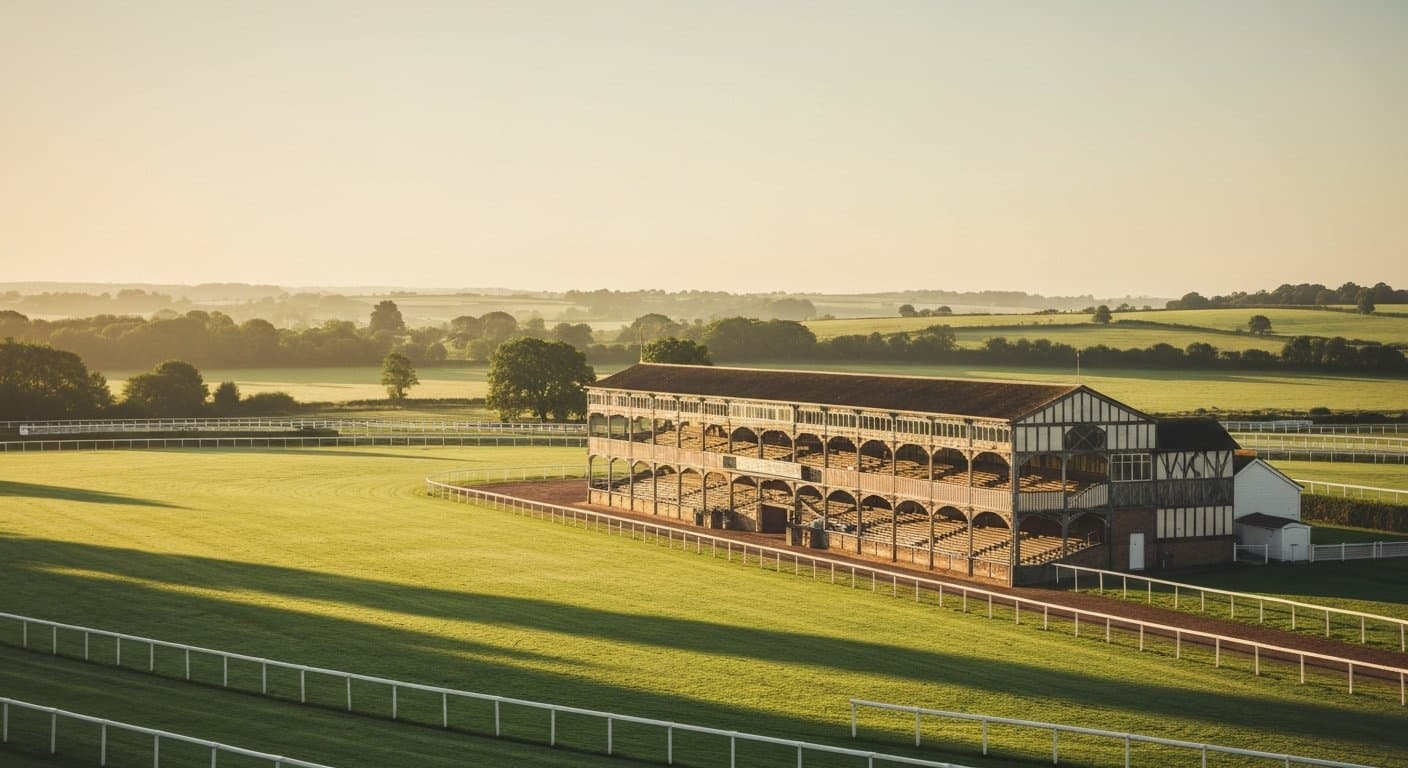
The History of Wincanton Racecourse
From a 1920s beginning to a thriving Somerset jumps venue — the story of Wincanton Racecourse.
Read more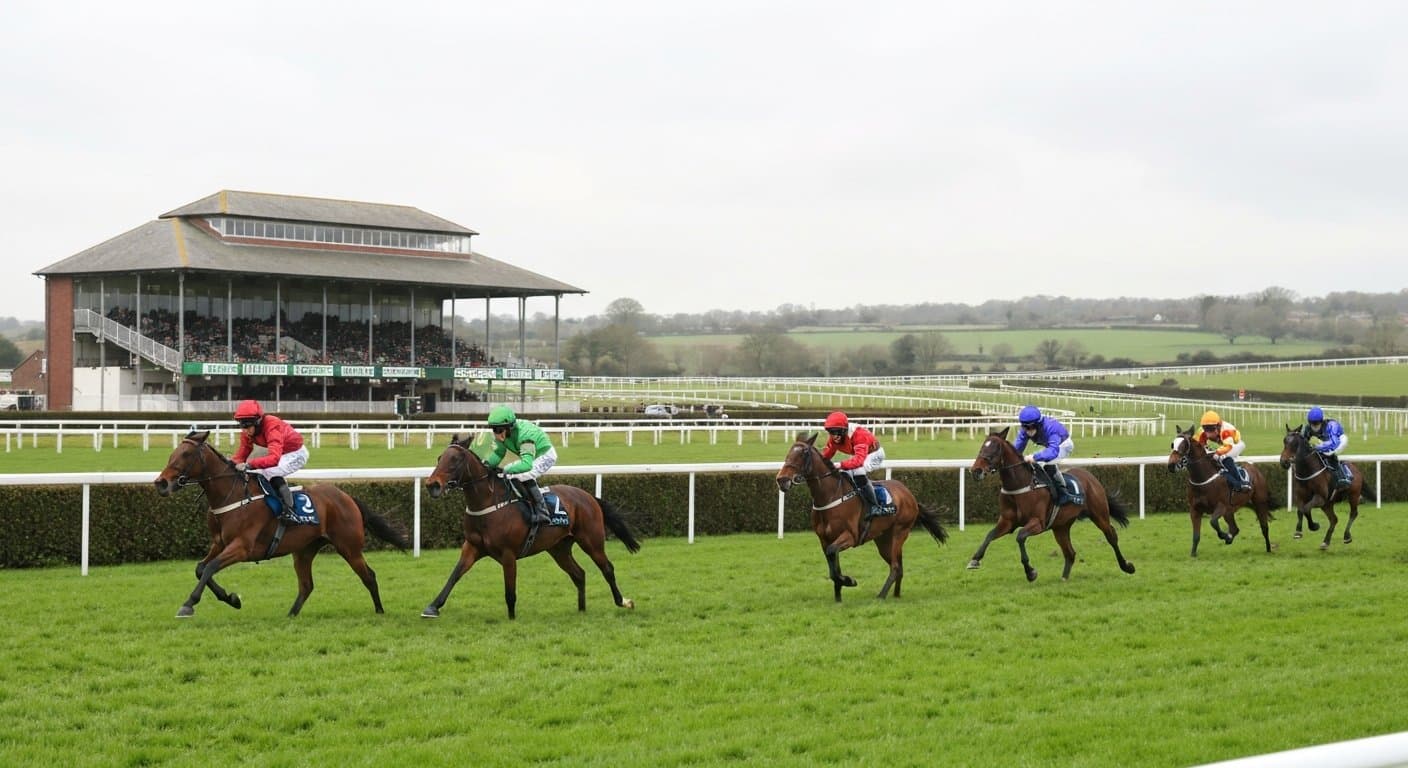
Desert Orchid at Wincanton
The story of Desert Orchid's love affair with Wincanton — where the grey legend won five times and captured hearts.
Read more
Elite Hurdle Day at Wincanton: The Complete Guide
The complete guide to Elite Hurdle Day at Wincanton — the Elite Hurdle Grade 2, the Jim Ford Gold Cup, and the biggest November jump racing day in the south-west of England.
Read moreResearch the field with the AI Race Predictor
Our model publishes calibrated win-probability estimates for UK races — a second opinion to understand a race, not tips. It's open about its record: it doesn't beat the market, and we show exactly how it does.
Work it out & learn the basics
Gamble Responsibly
Gambling should be entertaining and not seen as a way to make money. Never bet more than you can afford to lose. If you or someone you know has a gambling problem, help and support is available.