
Founder & Editor · Last reviewed 2026-04-07
Wolverhampton Racecourse is Britain's busiest racecourse — staging more race days per year than any other track in the country, regularly exceeding one hundred fixtures across twelve months. The left-handed Polytrack oval at Dunstall Park hosts all-weather flat racing throughout the year, and the course's floodlit evening meetings through autumn and winter represent one of the genuinely distinctive products in British sport: professional flat racing under floodlights, available on Monday and Tuesday evenings when virtually no other track in the country can operate.
For punters, Wolverhampton is one of the most important betting venues in Britain. The consistency of the Polytrack surface — predictable, well-maintained, behaving similarly from week to week regardless of the weather — creates a form database that is unusually reliable. All-weather specialists emerge clearly at this track. Horses that have won at Wolverhampton before are, by definition, proven on the specific surface, and that fact alone gives their form a reliability that turf form rarely achieves.
The Polytrack surface at Dunstall Park is faster and more surface-consistent than the old Fibresand circuits, and it rewards a specific kind of horse: one that handles the oval configuration, travels comfortably on the synthetic underfoot surface, and has the racing intelligence to settle and quicken within the tight confines of a left-handed oval. Horses that have raced exclusively on turf and arrive at Wolverhampton for the first time are often worse bets than their official ratings suggest, because the surface requires adjustment.
The Dunstall Park complex is more than a racecourse. The site includes a hotel, a casino and conference facilities, making it one of the most self-contained racing destinations in the Midlands and placing it at the centre of Wolverhampton's leisure economy. The catchment area — Birmingham, Staffordshire, Shropshire, the Black Country — is enormous, and the evening meetings attract a post-work crowd with a markedly different character from the traditional afternoon racing audience.
In the broader context of British racing, Wolverhampton's year-round operation is essential to the economic functioning of the sport. Racing's prize money, media rights and betting levy depend heavily on consistent fixture volume, and no course contributes more fixture days to that total than Wolverhampton. Its role in the sport is less glamorous than Cheltenham's or Ascot's, but it is arguably more structurally important.
Bet on Wolverhampton
Place your bets on Wolverhampton races with a trusted bookmaker.

Promo code BETFRED50. New customers only. Register, deposit with a Debit Card, and place a first bet of £10+ at Evens (2.0)+ on Sports, to be settled within 7 days, to get £30 in Sports Free Bets and £20 in Bet Builder Free Bets within 24 hours of settlement. 7-day expiry. Eligibility & payment exclusions apply. Full T&Cs apply. Take Time to Think. BeGambleAware.org. 18+. Full T&Cs.

Promo code R30. New UK customers only, 18+. Register, deposit £10 or more, then place a £10 single cash bet at odds of 1/2 (1.5) or greater on any sports market (excluding Virtuals). Once the qualifying bet settles you get £30 in Free Bets (3 x £10) — the qualifying bet can win or lose. Free Bets are valid on any sports market excluding Virtuals, expire in 7 days, are non-withdrawable and must be used in full. Excluded deposit methods apply (including PayPal, Apple Pay, Skrill and NETELLER). Named bets such as Lucky 15 do not qualify. If you cash out the qualifying bet, or it is voided, you are no longer eligible for the offer. Ends 31.12.26. Full T&Cs apply. Please gamble responsibly. BeGambleAware.org. 18+. Full T&Cs.

Promo code BET40GET20. New UK customers, 18+. Register with the code and place a first bet of £40 or more at Evens (2.0) or greater. Receive 2 × £10 free bets: the first credited automatically once the qualifying bet settles, the second 24 hours later. Free bets must be placed at minimum odds of 4/1 (5.0), expire 24 hours after credit, and the free-bet stake is not returned with winnings. Debit card deposits only. Take Time to Think. BeGambleAware.org. 18+. T&Cs apply. Full T&Cs.

50% of your first-day net losses refunded as a free bet, capped at £25. New UK customers aged 18+ only. To qualify, deposit and place a first bet of £10 or more on any sport at minimum odds of evens (2.00), then place at least two further bets on different events, each worth at least 50% of your largest bet, all at evens (2.00) or greater. Losses are counted from your first settled bet until 23:59 the same day. Place a qualifying £10+ bet and you are guaranteed at least a £5 free bet. Bets placed at SP, void bets, cashed-out bets and bets struck with free bets do not count towards the offer. The free bet is credited the day after your qualifying bets settle and must be used within 7 days, after which it expires. It can be used at odds from 1/4 (1.25) up to 250/1 on singles and straight accumulators, but not on Trixie, Patent or Yankee style multiples. Free-bet stake is not returned with winnings. One offer per person, household, address, IP address and device. E-wallet deposits may not qualify, so check the cashier before depositing. Customers registered with GAMSTOP cannot claim. KYC identity verification must be completed before the free bet is credited. Take Time to Think. BeGambleAware.org. 18+. T&Cs apply. Full T&Cs.

New customers, 18+. Choose the sports bonus at sign-up, make a first deposit and receive a 100% bonus up to £50 in your Sports Bonus balance. To convert the bonus to cash, wager it 10x within 30 days. Single bets below Evens (2.00) do not qualify; accumulators do not qualify if any selection is below 1/2 (1.50). Virtual Sports, voided, cancelled, drawn, cashed-out and free-bet wagers do not count towards wagering. Only the first settled bet per event counts. Withdrawing before the wagering requirement is met forfeits the bonus balance including bonus winnings. Real-money funds are used before bonus funds. Deposits via Skrill or Neteller are not eligible. Not valid in conjunction with other promotions. Odds, bet and payment limits apply. 10bet general and promotion T&Cs apply. BeGambleAware.org. 18+. Full T&Cs.

New customers in Great Britain and Republic of Ireland, 18+. Place a £10 fixed-odds qualifying bet at minimum odds of 1/2 (1.50) — single or each-way (only the win part counts), pre-event or in-play, not cashed out early, within 28 days of opening the account. Receive up to £60 in bonuses credited over three days: 3 × £10 fixed-odds free bets (the first on settlement, then 24 and 48 hours later) plus 3 × £5 Total Goals FOOTBALL spread bets, 3 × £5 racing Winning Favourites spread bets and a £1 racing Race Index spread bet (the spread bets need a full spread-betting account). Free-bet stakes not returned with winnings; free bets valid 28 days from issue. IMPORTANT: the £5 credits are SPREAD bets — sports spread betting carries the risk that losses can exceed your stake. Sports spread-betting customers do not have Financial Ombudsman or FSCS recourse. Take Time to Think. BeGambleAware.org. 18+. T&Cs apply. Full T&Cs.

Promo code WELCOME15, entered under My Bonuses after registering. New UK customers, 18+. Place a first qualifying bet of at least £10 from your cash balance at odds of evens (2.0) or greater within 7 days of opening the account. Once the qualifying bet fully settles you receive £15 in free bets, credited as 3 x £5 tokens with set uses: one £5 accumulator free bet (minimum 4 legs, each leg at 2/5 or bigger), one £5 sports free bet (any market at evens or bigger) and one £5 Sub Cover free bet (selected football player markets at evens or bigger). Free-bet stakes are not returned with winnings. Free bets expire 7 days after they are credited. Void, cashed-out and partially cashed-out bets do not qualify. One offer per customer. Confirm the current terms on BetGoodwin's own welcome-offer page before claiming. Take Time to Think. BeGambleAware.org. 18+. T&Cs apply. Full T&Cs.

New UK customers, 18+. Minimum deposit £10. Place a £10 qualifying single at minimum odds of 1/2 (1.50), settled within 14 days. Receive £30 in free bets (stake not returned), split £20 for sportsbook use (2 x £10) and £10 for Bet Builder only (2 x £5); Bet Builder does not cover horse racing. Free bets must be accepted within 7 days and expire 7 days after acceptance. No promo code required. Best Odds Guaranteed on UK & Irish racing, subject to having staked over £25 in the previous seven days. Operated by LiveScore Betting and Gaming (Gibraltar) Ltd, UKGC 56859. Confirm the current terms on LiveScore Bet's own promotions page before claiming. Take Time to Think. BeGambleAware.org. 18+. T&Cs apply. Full T&Cs.
18+. BeGambleAware.org
Day-by-Day Guide
Floodlit Evening Season (October–February)
The floodlit evening programme at Wolverhampton is the course's signature product and one of the most consistent racing fixtures in the entire British calendar. Monday and Tuesday evenings through autumn and winter are the core of this programme, and on many of these dates Wolverhampton is the only track staging live racing anywhere in Britain. The absence of alternatives concentrates betting market attention and produces some of the most intensively followed form cards of the year.
Under the floodlights, the Dunstall Park oval looks genuinely atmospheric — the Polytrack illuminated, the stands busy with post-work racegoers, the racing sharp and competitive. Fields are typically smaller than on summer turf cards, which means each horse's form is under closer scrutiny and the competitive dynamics of individual races are easier to assess. All-weather specialists who have built track records here are the dominant force, and the punter who takes time to understand which horses genuinely handle this circuit has a structural edge over those bringing turf form naively to the analysis.
All-Weather Championships Qualifier Cards
Through the winter season, Wolverhampton stages multiple races that serve as qualifiers for the All-Weather Championship Finals at Lingfield Park in spring. The Finals — the domestic all-weather racing season's defining day — distribute significant prize money across the best all-weather performers of the year. Qualifier races at Wolverhampton draw horses specifically targeting that Finals prize money: horses in the form of their lives, trained specifically for the all-weather surface, with connections who have a clear seasonal strategy.
The quality of racing in the qualifier races significantly exceeds that of a standard evening card, and the horses that perform well in them are the most reliable form reference for Finals predictions.
Christmas and New Year Programme
Wolverhampton stages racing every day of the Christmas and New Year period — including Boxing Day and New Year's Day, when large audiences are actively seeking sporting entertainment. These fixtures are the busiest of the entire Wolverhampton calendar, drawing bigger crowds than the midweek evening meetings and generating the course's most significant seasonal atmosphere.
The quality of racing across the Christmas programme varies, but competitive handicaps and conditions races are scattered throughout, and the festive audience brings an energy to the paddock and stands that distinguishes these days from the workmanlike midweek evenings.
Spring All-Weather Series (March–May)
As the turf season begins to open across Britain in March and April, Wolverhampton's all-weather programme continues alongside it. The spring cards are frequently used by trainers bringing horses back from winter breaks and preparing them for summer turf campaigns — a useful source of form for those following specific horses across surface transitions.
Summer Evening Programme
Through summer, Wolverhampton's floodlit evenings continue — competing now with turf meetings at other tracks, which reduces the concentration of betting market attention but maintains the consistent flow of racing that makes Dunstall Park's calendar unique.
Key Races to Watch
Wolverhampton Christmas Classic (Listed, December, ~1m1f)
The Wolverhampton Christmas Classic is the course's flagship race — a Listed prize run in December over approximately one mile and one furlong on the Polytrack. As a Listed race on the all-weather, it attracts the best all-weather specialists in training at this point of the season, horses whose form has been built specifically on synthetic surfaces and who arrive at Dunstall Park with detailed track records to interrogate.
The Christmas Classic consistently rewards course specialists. The horses that win this race are invariably among the most experienced and proven all-weather performers in the country, and the race's Listed status provides the prize money to attract them from across the discipline. For punters, the wealth of Polytrack course form available makes the Classic one of the most form-researchable races in the winter calendar.
All-Weather Intermediate Championships Qualifier (~1m)
The Championships qualifier race at one mile is the most significant of the Wolverhampton series, drawing horses that have been specifically targeted at the Lingfield All-Weather Finals from the start of the season. These races function as auditions: the horses entered have been placed here by connections with a clear Finals strategy, and their performances carry additional significance as predictors of spring form.
The quality bar in these qualifiers is noticeably higher than in a standard handicap — horses running here are near the peak of their winter form, prepared to run well rather than simply to accumulate a qualifier run.
Floodlit Sprint Series (~5f–6f)
The sprint series run through Wolverhampton's evening programme is one of the most popular all-weather sprint competitions in British racing. Five and six furlong sprints on the Polytrack produce fast, sharp racing with clear pace dynamics — the draw and starting position matter significantly, and front-runners on sprint trips at this course have a well-documented advantage.
The series builds competitive fields of northern and Midlands sprint horses over the winter months, providing consistent sprint form and creating a ranking of the best all-weather sprinters in training.
Polytrack Stayers Series (~1m4f–1m6f)
For staying flat horses, the Wolverhampton stayers series provides a competitive winter campaign at distances of one mile four furlongs and one mile six furlongs. Staying all-weather horses are a specialist breed — they need the stamina to get the distance on a flat oval circuit without the variation in terrain that helps horses settle and organise their efforts on turf. The horses that dominate this series tend to be consistent, reliable performers who race professionally on every occasion.
Betting Preview
Surface Form is the Foundation
The single most important principle in Wolverhampton betting is that Polytrack form from this specific course is the most reliable predictor available. Horses that have won at Wolverhampton before have demonstrated they handle the oval configuration, the synthetic underfoot surface and the left-handed track. That combination is not guaranteed to transfer from turf form, from other all-weather surfaces, or even from all-weather form at Lingfield or Kempton — which are differently configured.
When a horse with multiple Wolverhampton wins steps back up to a class level similar to its previous wins here, its form is more reliable than any other form in the race. Weighting that history appropriately — rather than dismissing it as merely "all-weather form" — is the first correction a punter should make when approaching a Wolverhampton card.
Draw and Pace Bias — Check Before You Bet
Wolverhampton's left-handed oval produces measurable draw biases that vary by trip and, to some extent, by track condition. The sprint distances — five furlongs and six furlongs — have historically favoured lower draw numbers and front-running horses that can establish position immediately from the stalls. The bias is not absolute and changes over time as the Polytrack is maintained and replaced, but checking current draw data before betting on a sprint race is essential.
At longer distances — one mile and beyond — the draw bias diminishes because horses have time to find their positions after the start, but pace still matters: horses that can travel comfortably at the front or pressing position tend to win more often than horses that race from well off the pace at Wolverhampton's oval.
All-Weather Championship Qualifiers — Treat Like Graded Races
On a standard evening card at Wolverhampton, the field quality is broadly consistent with a mid-level handicap. In a Championship qualifier race, the quality is significantly higher. Horses that have been targeted at the Finals by connections with a specific strategy tend to arrive fit, focused and at the peak of their current form. Do not apply the same market scepticism to a qualifier race that you might apply to a typical all-weather handicap.
Evening Meetings — Small Fields Favour Accuracy
Floodlit evening meetings at Wolverhampton regularly produce races of six, seven or eight runners — significantly smaller than a typical turf handicap. In small fields, the range of outcomes is narrower, which means prices are tighter and overlay opportunities rarer. The compensating advantage is that form assessment is more tractable: with fewer horses, the race shapes and pace scenarios are cleaner and the form book analysis is less cluttered.
Visitor Information
Getting There
By rail: Wolverhampton station is approximately one mile from Dunstall Park, making it one of the most easily rail-accessible racecourses in the Midlands. Free shuttle buses operate between the station and the track on most race days — the service is reliable and frequently used by racegoers from Birmingham and beyond. Services from Birmingham New Street take approximately 15 minutes; from London Euston the journey is around 80 minutes on a fast West Midlands train. For those travelling from Manchester, the journey is around 90 minutes.
By car: The M54 motorway provides the most direct route, with Junction 2 linking to the A449 northbound towards Dunstall Park. The course is also accessible from the M6 via the A454. Signposting to Dunstall Park is clear from the main motorway approaches. Free on-site parking is available at the racecourse, with ample space for the evening meeting volumes.
The Dunstall Park Complex
Wolverhampton Racecourse sits within the Dunstall Park complex, which includes the racecourse itself alongside a hotel, a casino, and conference and banqueting facilities. This self-contained leisure campus means that a visit to Wolverhampton can extend well beyond the racing card — dinner at the hotel, an evening at the casino, or an overnight stay are all options that other racecourses simply cannot offer in the same integrated way.
The main grandstand provides a full view of the left-handed oval, with screens displaying race footage, form information and market prices throughout the evening. The betting ring and paddock are compact and accessible, and the covered viewing areas make the floodlit evening experience genuinely comfortable even in winter.
Practical Tips
Evening meetings have a different character from afternoon racing. The post-work crowd at a Tuesday evening meeting at Wolverhampton is urban and mixed — some committed racegoers, some people who have come for a night out that happens to involve racing. The atmosphere is livelier and less technically focused than a major Saturday fixture, and the facilities — bars, food concessions, the casino — are geared towards a social as well as a sporting experience.
Smart casual dress is the standard and only real expectation on evening cards. The course does not enforce a strict dress code outside of premium hospitality areas.
The casino provides a post-racing option that is genuinely unusual for a racecourse venue — for those who enjoy it, the Dunstall Park casino extends the evening naturally beyond the last race.
Practical Notes
Racing at Wolverhampton takes place year-round, including Christmas and New Year fixtures. On Boxing Day and New Year's Day, the course is a major entertainment destination for Midlands families and racing fans — book parking in advance and arrive early on those dates.
Share this article
More about this racecourse
All Wolverhampton guides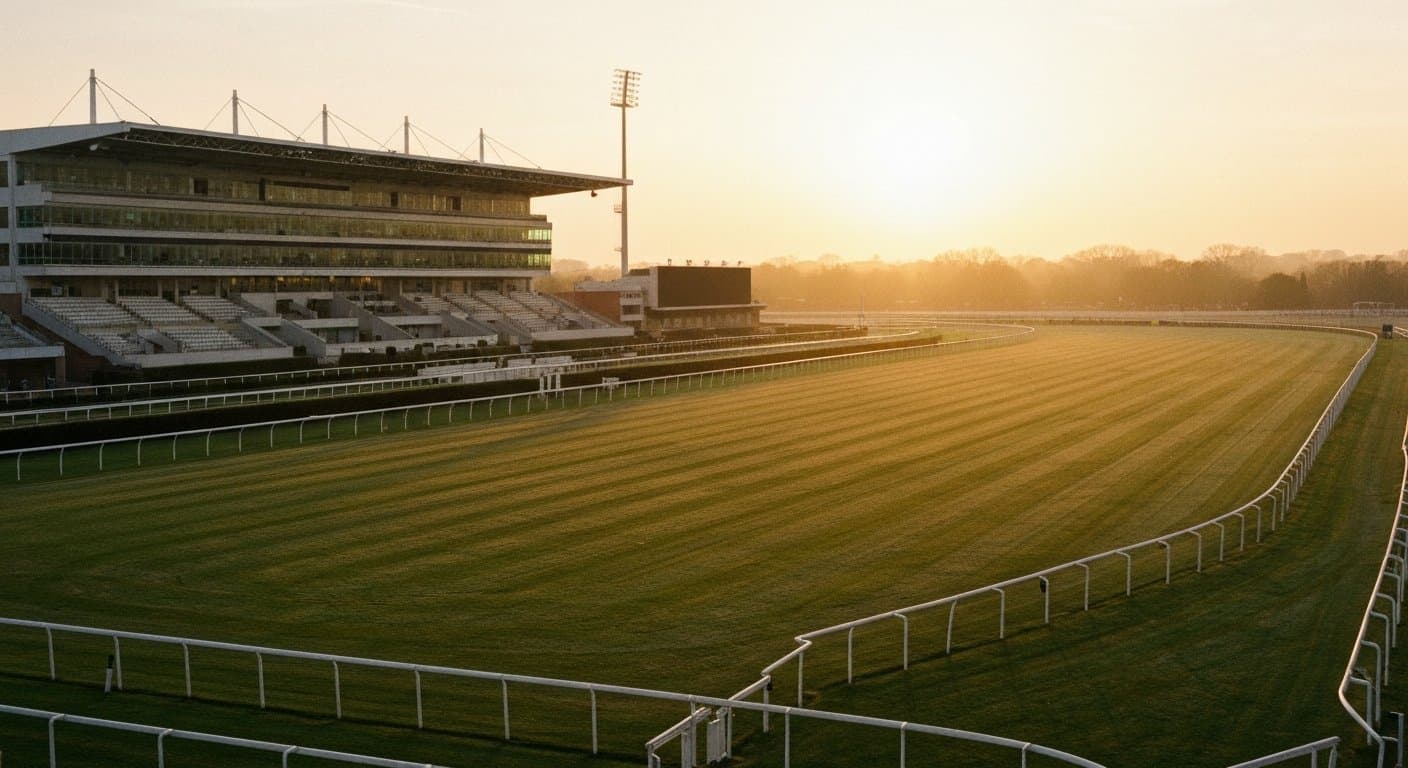
The History of Wolverhampton Racecourse
From Victorian turf racing to a modern all-weather venue — the story of Wolverhampton's Dunstall Park.
Read more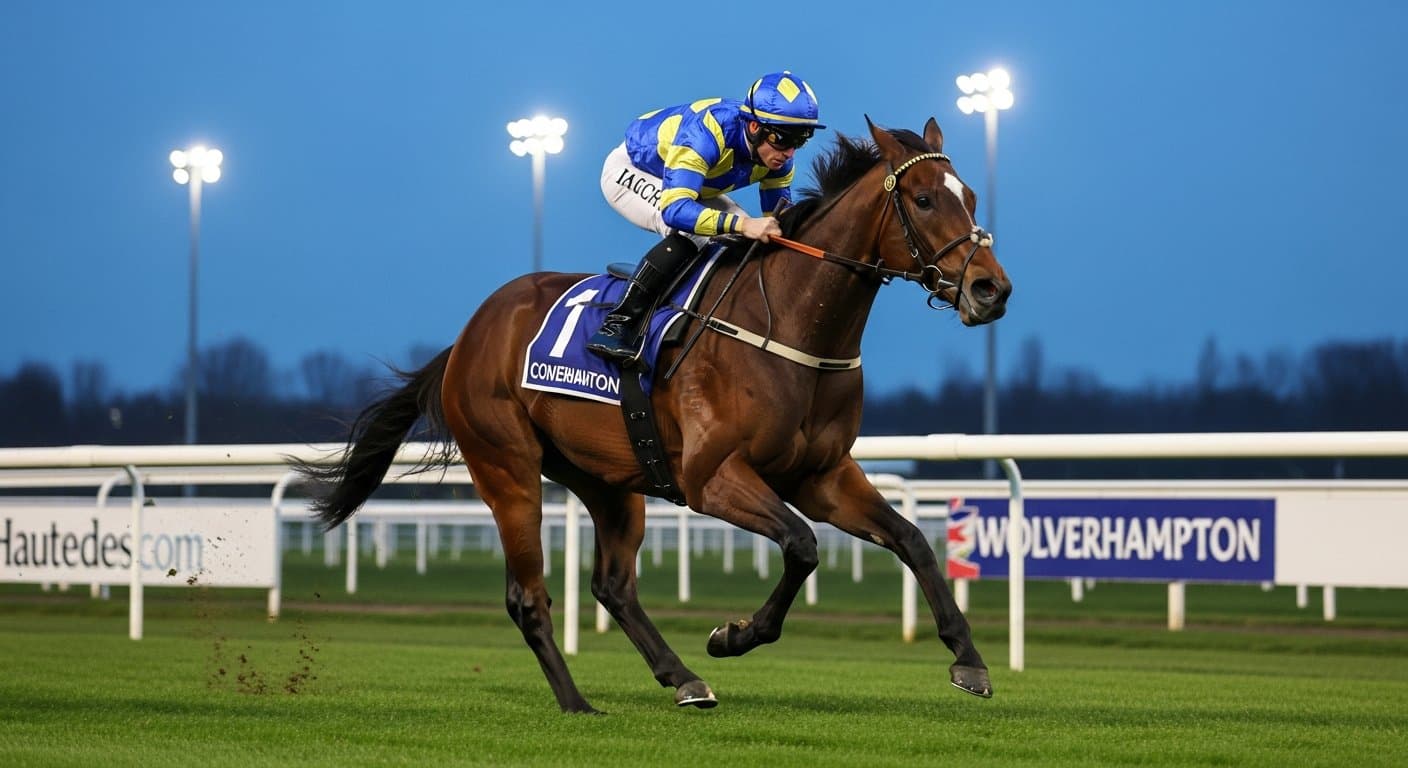
Conduit at Wolverhampton: The Complete Story
Conduit won his first race at Wolverhampton's all-weather track in 2007, then went on to win the Breeders' Cup Turf twice. The story of a champion who started here.
Read more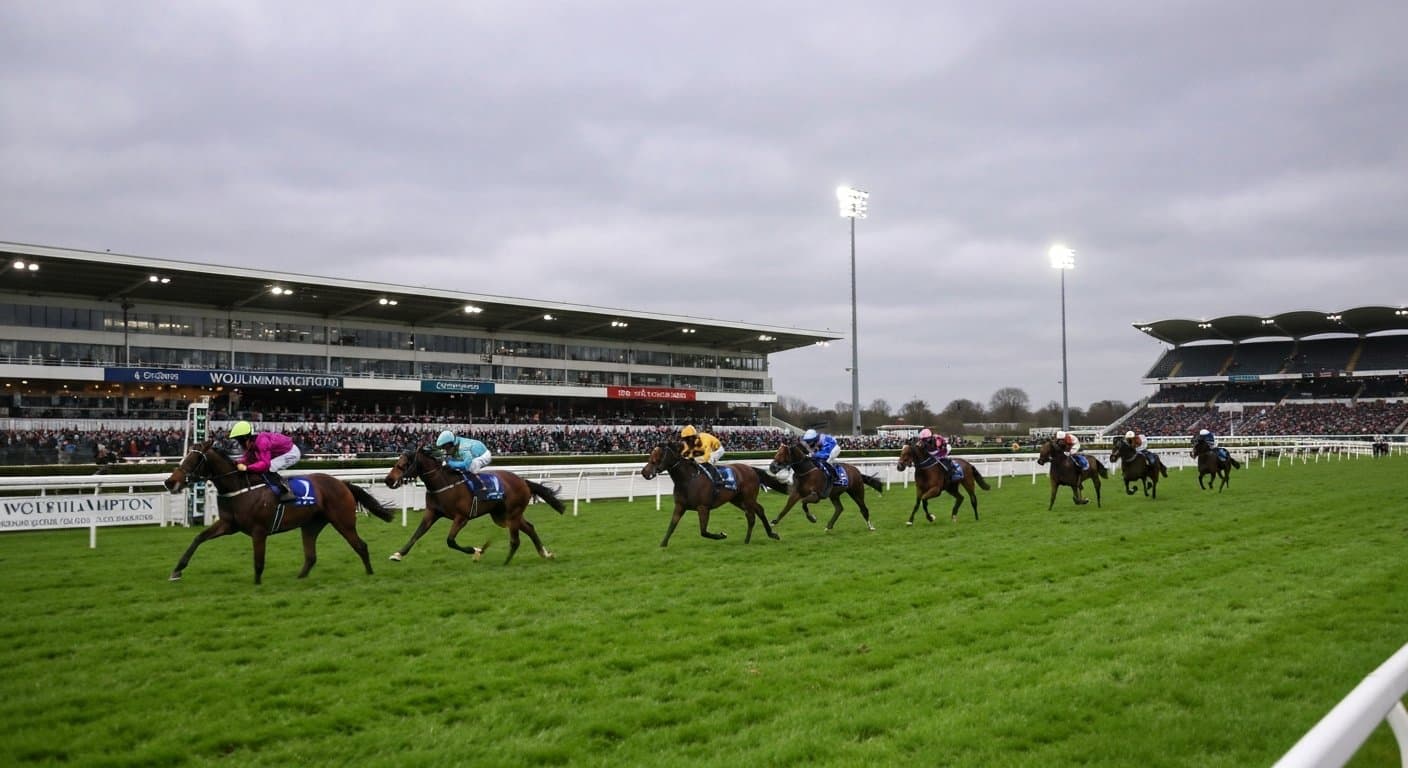
Tapeta Racing at Wolverhampton: What You Need to Know
Everything about racing on Tapeta at Wolverhampton — how the surface works, form analysis and betting strategies.
Read moreResearch the field with the AI Race Predictor
Our model publishes calibrated win-probability estimates for UK races — a second opinion to understand a race, not tips. It's open about its record: it doesn't beat the market, and we show exactly how it does.
Work it out & learn the basics
Gamble Responsibly
Gambling should be entertaining and not seen as a way to make money. Never bet more than you can afford to lose. If you or someone you know has a gambling problem, help and support is available.