
Founder & Editor · Last reviewed 2026-04-07
Introduction to Bangor-on-Dee Racecourse
Bangor-on-Dee is one of the most distinctive racecourses in Britain — a flat, left-handed oval in the Dee Valley of North Wales, staging jump racing through both summer and winter on a circuit that rewards athletic jumping and honest galloping. The course is in Wales but draws heavily from the north-west English racing community — Cheshire, Merseyside, Shropshire — making it a genuinely cross-border venue with a loyal and geographically diverse following that reflects the ambiguous, culturally rich border country it occupies.
The setting alone sets Bangor-on-Dee apart. The River Dee flows nearby; the fields of the Dee Valley stretch around the course on most sides; and the village of Bangor-on-Dee itself is a quiet, attractive settlement that transforms on race days into something altogether more animated. There is no urban sprawl here, no development pressing against the track's edges. This is genuine countryside racing, and the atmosphere reflects it — intimate, knowledgeable, with a crowd that has often come specifically because the setting is what it is, rather than in spite of it.
The flat, left-handed character of the course is worth understanding from the outset. This is not the mountainous undulation of Chepstow or the sharp hills of Ludlow; Bangor-on-Dee is a relatively level oval where the demands are about jumping technique and class rather than stamina tested by severe gradients. Fences are well-presented and the track drains well, making it one of the few jump courses that can race on genuinely good summer ground without the going becoming dangerous. That characteristic is precisely what makes the summer jump programme possible and valuable.
The summer jump programme — running from May through October — is perhaps Bangor-on-Dee's most distinctive and valued characteristic. National Hunt racing in Britain is overwhelmingly a winter sport; the Cheltenham Festival, the Grand National, the major Grade One races all fall between November and April. The summer jump programme at Bangor, alongside Worcester, Stratford, Cartmel and Newton Abbot, keeps the sport alive during the months when most people assume it has gone away. For horses too good for a summer rest but not campaigning towards the autumn Grade Ones, for trainers wanting to give novices experience on good ground, and for racegoers who want jump racing on a warm evening in June, Bangor-on-Dee provides something that relatively few courses can.
Winter racing at Bangor-on-Dee operates at a different level of intensity. February and March bring competitive handicap chase cards that attract runners from across the north-west and Welsh yard communities, and the course has hosted Listed and conditions races that draw occasional visitors from the major English jump yards. The winter programme is smaller but punchy, and the relative intimacy of the track — the parade ring and the viewing areas keep you genuinely close to the horses throughout — makes even a midweek winter card feel like a special occasion.
That intimacy is one of Bangor-on-Dee's most consistent virtues. Whether you're watching from the main stand or standing by the paddock rail, you are never far from the action. This is not a course where the horses are distant specks on a large landscape. The oval is compact enough that the whole circuit is effectively visible, and the fences are close enough that you can hear the thud of hooves on turf and the crack of a jumped fence in real time. For anyone who takes the sport seriously, that proximity to the racing itself is worth a great deal.
Bet on Bangor-on-Dee
Place your bets on Bangor-on-Dee races with a trusted bookmaker.

Promo code BETFRED50. New customers only. Register, deposit with a Debit Card, and place a first bet of £10+ at Evens (2.0)+ on Sports, to be settled within 7 days, to get £30 in Sports Free Bets and £20 in Bet Builder Free Bets within 24 hours of settlement. 7-day expiry. Eligibility & payment exclusions apply. Full T&Cs apply. Take Time to Think. BeGambleAware.org. 18+. Full T&Cs.

Promo code R30. New UK customers only, 18+. Register, deposit £10 or more, then place a £10 single cash bet at odds of 1/2 (1.5) or greater on any sports market (excluding Virtuals). Once the qualifying bet settles you get £30 in Free Bets (3 x £10) — the qualifying bet can win or lose. Free Bets are valid on any sports market excluding Virtuals, expire in 7 days, are non-withdrawable and must be used in full. Excluded deposit methods apply (including PayPal, Apple Pay, Skrill and NETELLER). Named bets such as Lucky 15 do not qualify. If you cash out the qualifying bet, or it is voided, you are no longer eligible for the offer. Ends 31.12.26. Full T&Cs apply. Please gamble responsibly. BeGambleAware.org. 18+. Full T&Cs.

Promo code BET40GET20. New UK customers, 18+. Register with the code and place a first bet of £40 or more at Evens (2.0) or greater. Receive 2 × £10 free bets: the first credited automatically once the qualifying bet settles, the second 24 hours later. Free bets must be placed at minimum odds of 4/1 (5.0), expire 24 hours after credit, and the free-bet stake is not returned with winnings. Debit card deposits only. Take Time to Think. BeGambleAware.org. 18+. T&Cs apply. Full T&Cs.

50% of your first-day net losses refunded as a free bet, capped at £25. New UK customers aged 18+ only. To qualify, deposit and place a first bet of £10 or more on any sport at minimum odds of evens (2.00), then place at least two further bets on different events, each worth at least 50% of your largest bet, all at evens (2.00) or greater. Losses are counted from your first settled bet until 23:59 the same day. Place a qualifying £10+ bet and you are guaranteed at least a £5 free bet. Bets placed at SP, void bets, cashed-out bets and bets struck with free bets do not count towards the offer. The free bet is credited the day after your qualifying bets settle and must be used within 7 days, after which it expires. It can be used at odds from 1/4 (1.25) up to 250/1 on singles and straight accumulators, but not on Trixie, Patent or Yankee style multiples. Free-bet stake is not returned with winnings. One offer per person, household, address, IP address and device. E-wallet deposits may not qualify, so check the cashier before depositing. Customers registered with GAMSTOP cannot claim. KYC identity verification must be completed before the free bet is credited. Take Time to Think. BeGambleAware.org. 18+. T&Cs apply. Full T&Cs.

New customers, 18+. Choose the sports bonus at sign-up, make a first deposit and receive a 100% bonus up to £50 in your Sports Bonus balance. To convert the bonus to cash, wager it 10x within 30 days. Single bets below Evens (2.00) do not qualify; accumulators do not qualify if any selection is below 1/2 (1.50). Virtual Sports, voided, cancelled, drawn, cashed-out and free-bet wagers do not count towards wagering. Only the first settled bet per event counts. Withdrawing before the wagering requirement is met forfeits the bonus balance including bonus winnings. Real-money funds are used before bonus funds. Deposits via Skrill or Neteller are not eligible. Not valid in conjunction with other promotions. Odds, bet and payment limits apply. 10bet general and promotion T&Cs apply. BeGambleAware.org. 18+. Full T&Cs.

New customers in Great Britain and Republic of Ireland, 18+. Place a £10 fixed-odds qualifying bet at minimum odds of 1/2 (1.50) — single or each-way (only the win part counts), pre-event or in-play, not cashed out early, within 28 days of opening the account. Receive up to £60 in bonuses credited over three days: 3 × £10 fixed-odds free bets (the first on settlement, then 24 and 48 hours later) plus 3 × £5 Total Goals FOOTBALL spread bets, 3 × £5 racing Winning Favourites spread bets and a £1 racing Race Index spread bet (the spread bets need a full spread-betting account). Free-bet stakes not returned with winnings; free bets valid 28 days from issue. IMPORTANT: the £5 credits are SPREAD bets — sports spread betting carries the risk that losses can exceed your stake. Sports spread-betting customers do not have Financial Ombudsman or FSCS recourse. Take Time to Think. BeGambleAware.org. 18+. T&Cs apply. Full T&Cs.

Promo code WELCOME15, entered under My Bonuses after registering. New UK customers, 18+. Place a first qualifying bet of at least £10 from your cash balance at odds of evens (2.0) or greater within 7 days of opening the account. Once the qualifying bet fully settles you receive £15 in free bets, credited as 3 x £5 tokens with set uses: one £5 accumulator free bet (minimum 4 legs, each leg at 2/5 or bigger), one £5 sports free bet (any market at evens or bigger) and one £5 Sub Cover free bet (selected football player markets at evens or bigger). Free-bet stakes are not returned with winnings. Free bets expire 7 days after they are credited. Void, cashed-out and partially cashed-out bets do not qualify. One offer per customer. Confirm the current terms on BetGoodwin's own welcome-offer page before claiming. Take Time to Think. BeGambleAware.org. 18+. T&Cs apply. Full T&Cs.

New UK customers, 18+. Minimum deposit £10. Place a £10 qualifying single at minimum odds of 1/2 (1.50), settled within 14 days. Receive £30 in free bets (stake not returned), split £20 for sportsbook use (2 x £10) and £10 for Bet Builder only (2 x £5); Bet Builder does not cover horse racing. Free bets must be accepted within 7 days and expire 7 days after acceptance. No promo code required. Best Odds Guaranteed on UK & Irish racing, subject to having staked over £25 in the previous seven days. Operated by LiveScore Betting and Gaming (Gibraltar) Ltd, UKGC 56859. Confirm the current terms on LiveScore Bet's own promotions page before claiming. Take Time to Think. BeGambleAware.org. 18+. T&Cs apply. Full T&Cs.
18+. BeGambleAware.org
Day-by-Day Guide
Bangor-on-Dee Festival Calendar: Day by Day
Bangor-on-Dee's racing year spans both summer and winter, with the summer jump programme the more distinctive and valued of the two. The five phases of the Bangor calendar each carry their own character, reflecting the course's unusual dual-season identity and its cross-border community of racegoers from North Wales and north-west England.
May Opening: Summer Jumping Begins
The opening Bangor card in May is one of the earliest summer jump fixtures in Britain, and for trainers who have been pushing horses through the winter and spring circuit, it marks the moment when the summer campaign becomes a real option. Horses that have been running well in April but are not being aimed at a major spring festival will often find their way to Bangor for the opening May card — they are fit, in form, and ready for the lighter competition that a summer card often provides.
For racegoers, the May opening has a genuine freshness. The Dee Valley is at its most attractive in late spring — the fields are green, the river runs clear, and the course takes on a light quality quite unlike the muddy December atmosphere of the winter programme. Attendance is typically good for an early-summer fixture; there is a sense of novelty in the first jump card of summer that draws casual racegoers alongside the form students.
The racing itself tends to be competitive at a handicap and conditions level — this is not a meeting for Grade One contenders, but the horses running here are real, live competitors rather than summer cast-offs. Trainers like Peter Bowen and Christian Williams, whose Welsh-based yards are well-suited to the summer jump programme, use the May opener to start horses on summer campaigns that will run through Bangor, Worcester and Stratford over the coming months.
June and July Summer Series: The Main Season
June and July represent the height of the Bangor-on-Dee summer. The course stages regular jump cards through this period, with competitive handicap chases and hurdles on ground that is typically good to firm — the flat, well-draining Dee Valley turf dries quickly once June arrives, and the going at Bangor in July is frequently as quick as anywhere on the summer jump circuit.
That firm summer ground creates a specific competitive environment. Horses that handle quick conditions — lighter, more athletic, bred more for speed than raw stamina — thrive here in a way that the heavy-ground winter specialists cannot. The summer series attracts horses from across the north-west and Midlands yards, with occasional Irish visitors who have targeted specific summer English prizes.
The June and July atmosphere is distinctly summer. Racegoers dress lightly, the racing finishes in bright evening sunshine, and the Dee Valley countryside surrounding the course creates a backdrop that is genuinely pleasant. Evening meetings in this period, where they appear on the programme, have proven popular with the Wrexham and Chester catchment.
August Bank Holiday: The Showpiece Meeting
The August Bank Holiday meeting is Bangor-on-Dee's biggest day of the year. Attendance rises significantly for the Bank Holiday card, drawing families and casual racegoers who are using the long weekend for leisure, alongside the regular form students who follow the summer jump circuit. The atmosphere is lighter and more festive than the winter cards — children, picnics, the holiday mood of August — but the racing is competitive.
The August Bank Holiday card typically features the most valuable summer prize at Bangor. It has no standing name: earlier versions of this page called it the Bangor-on-Dee Summer Chase. There is no Bangor-on-Dee Summer Chase; no such race exists. Bangor's summer races carry generic or sponsor titles that change from year to year. Trainers are aware of the increased prize money and the bigger crowd; this is the meeting to which the strongest runners are aimed, and the competition level rises accordingly. The late-summer going — still good but occasionally beginning to ease as August progresses — can suit a slightly wider range of horses than the pure summer firm.
October Transition: Summer to Autumn
October at Bangor-on-Dee is a transitional month — the summer jump programme is wrapping up, the ground is easing, and the character of the horses in training begins to shift from summer sprint types towards the heavier, more stamina-based animals that will dominate from November onwards.
The October cards have a quality that is specific to seasonal transitions. Some horses are running their last summer race; others are making their first autumn appearance. The going, typically good to soft or soft in October, suits a broad range of horses and often produces fields that are more competitively mixed than the pure summer or pure winter extremes.
February and March Winter Cards: The Cold Season
The winter programme at Bangor-on-Dee is smaller than the summer, but its quality should not be underestimated. February and March bring competitive handicap chase cards that attract fields from across the north-west and Welsh jumping community, and the occasional significant conditions or Listed race draws runners from beyond the local circuit.
Winter at the Dee Valley is cold and damp; the going is typically soft to heavy, and the conditions suit the heavy-stamina horses that the summer programme leaves behind. Trainers like Donald McCain, whose Cheshire yard is well-placed for Bangor, use these winter cards strategically, running horses that have been building form through the autumn for their peak winter appearances.
Key Races to Watch
Key Races at Bangor-on-Dee
Bangor-on-Dee has no named feature race. That is unusual enough to be worth stating plainly, and it is the honest starting point for this section, because an earlier version of it named four races that do not exist. There is no Bangor-on-Dee Summer Chase, no Welsh Champion Novice Hurdle, no Dee Valley Chase and no Summer Handicap Hurdle Series. Each came with distances, months, grades and trainer angles. None of them is real.
The course's Wikipedia article carries no notable-races table and no notable-races field at all. Its own fixture list names themed racedays rather than races. What follows is what can actually be evidenced.
The one Class 1 race: a Listed mares' novices' chase in November
Bangor-on-Dee stages a single Class 1 contest: a mares' novices' chase run for the Richard Aston Memorial Trophy over 2 miles 1 furlong 77 yards in November. It is a conditions race, not a handicap.
Its title changes with its sponsor. A Sky Sports result gives it as the Yorton Stallions Mares' Novices' Chase; a later Sporting Life racecard gives the Yorton Mares' Novices' Chase. That is why this guide uses the unsponsored stem, and why the course itself sells the occasion as a day rather than a race.
The day it sits on
The course's fixture list bills a Wednesday in November as Listed Mares' Trophy Day. Great British Racing describes the same occasion as the Anne Duchess of Westminster Charity day in November, "featuring the listed race", and likewise does not name it. This is the biggest day of the Bangor-on-Dee year, and it is a November fixture rather than a spring or summer one.
Summer Saturday
The course runs a fixture it calls Summer Saturday. Again, the name belongs to the day. Its feature has carried a sponsor's name, and a recent Bangor chase returned by search is titled simply the Bangor-On-Dee Handicap Chase, a generic conditions title.
If you are looking for a summer target at Bangor, look for the day and read the card, because the races on it are not stable enough to follow by name from one season to the next.
What Bangor-on-Dee is
A left-handed National Hunt course on the banks of the River Dee with around fourteen jump fixtures a year, and famously no grandstand. It is jumps only, so a Flat race attributed to it would be impossible. The absence of a permanent feature race is not a gap in our research. It is the programme.
Betting Preview
Betting at Bangor-on-Dee: A Strategic Guide
Bangor-on-Dee is a course where specific, structured knowledge creates consistent advantages. The summer ground characteristics, the dominance of a handful of Welsh and north-west trainers, and the reliable course-specialist pattern all provide betting edges that persist across seasons and are well worth building into a systematic approach.
Summer Ground Specialists: The Core Insight
The single most important factor in betting at Bangor-on-Dee in summer is ground suitability. The flat Dee Valley turf drains extremely well, and from June through August the going is typically good to firm — genuinely fast conditions for a jump course. Many National Hunt horses do most or all of their racing on soft or heavy ground; they are physically and technically unsuited to the demands of fast-ground jumping and will not perform at anything like their true level on firm turf.
The horses that win at Bangor-on-Dee in summer are specific types. They tend to be lighter and more athletic than the typical winter chaser; they jump flat and quick rather than high and slow; and their race records show competitive performances on good or firm ground at summer venues like Worcester, Stratford, Cartmel and Newton Abbot. When you see a horse with a Bangor win or place on good to firm in its form book, that record is directly relevant to summer Bangor form assessment.
Conversely, be extremely wary of winter form specialists who are entered at summer Bangor on the strength of heavy-ground achievements. A horse that has won three times on heavy ground at Haydock or Wetherby and is entered for a Bangor summer handicap because it is well-handicapped represents a significant form-to-conditions mismatch. The price may look tempting; the actual probability of winning is substantially lower than the odds reflect.
Welsh Trainer Records
Peter Bowen and Christian Williams are the two most important trainers to track at Bangor-on-Dee. Both have yards in south-west Wales but campaign their horses extensively through the Welsh and Welsh-border circuit, and their combined record at Bangor — across both summer and winter programmes — is strong enough to justify systematic attention.
Peter Bowen's yard in Pembrokeshire is one of the most consistent Welsh jump operations, and his horses at Bangor often carry a subtle fitness advantage: they have been prepared specifically for the summer circuit rather than arriving as afterthoughts from a winter campaign. When Bowen sends a horse that ran well on its last start to Bangor, the combination of fitness, form and track affinity creates a compelling case.
Christian Williams, based in the Vale of Glamorgan, has a similar profile: a yard focused on the Welsh and south-west English jump circuit, with intimate knowledge of Bangor's demands and a consistent record of running horses in form. Any Williams runner at Bangor with two decent runs behind it deserves to be taken seriously regardless of its price.
Donald McCain, training in Cheshire, is the most important north-west trainer at Bangor. His proximity means short travel times and familiar conditions; his runners here tend to arrive well-prepared and his strike rate at the course is above average for his national profile.
Course Form: The Bangor Specialist Pattern
Bangor-on-Dee, like all flat jump circuits, creates specialists. The combination of flat ground, firm summer going and the specific fence positions on the left-handed oval means that horses that have learned to race here efficiently carry an advantage when they return. A horse that won a Bangor summer handicap chase by three lengths last July, runs in a similar race this July on similar going, and faces horses without Bangor form is in an extremely strong position.
The specialist pattern is most pronounced in summer handicap chases and hurdles at two to two and a half miles — the bread-and-butter summer Bangor races where the course's specific demands are most consistently relevant. In conditions races and lower-grade novice events, class tends to override course form; but in competitive handicaps on fast summer ground, the course specialist has a structural advantage that persists.
Northern Yard Visitors
Occasional runners from the major north-west yards — Evan Williams, Nigel Twiston-Davies and others who target specific Bangor prizes — deserve scrutiny rather than automatic respect. These yards' records at Bangor vary more than the local trainers', because their runners here are typically visiting for specific races rather than campaigning through the course's full programme.
The key question for any northern yard visitor at Bangor is specificity of preparation. A horse that has been specifically aimed at the Bangor summer chase series — that has perhaps run at Worcester or Stratford two weeks earlier as a preparatory race — is in a fundamentally different position from one simply taking advantage of a seemingly weak field without having been prepared for fast-ground summer jumping. The former is worth backing; the latter requires significantly more evidence.
Avoid Fresh Horses at Summer Bangor
One final note: Bangor-on-Dee in summer is not a venue for first-time-out horses with big reputations but no recent form. The combination of firm ground, a quick pace and the specific physical demands of summer jumping means that horses without a recent race behind them — particularly those trained through winter soft-ground programmes — are extremely unreliable. Recent form (a run within the last three weeks) is almost always preferable to strong but dated form at summer Bangor.
Visitor Information
Visiting Bangor-on-Dee Racecourse: Practical Guide
Getting There
Bangor-on-Dee is accessible but not urban — a rural North Wales venue that requires some planning, though the proximity to Wrexham and Chester makes it manageable from a wide catchment area.
By rail: Wrexham General station is the nearest railway station, approximately seven miles from the course. Trains to Wrexham General run from Chester (approximately 15 minutes), Shrewsbury (approximately 30 minutes), and via Chester from Liverpool and Manchester. From Wrexham General, a taxi to the course takes around 15-20 minutes — the journey is straightforward, and several taxi companies serve the station. Wrexham is also accessible from North Wales coastal stations via Rhyl and Wrexham.
By bus: Bus services from Wrexham to Bangor-on-Dee are available, though infrequent; the bus stop in the village is close to the course. Race-day bus services occasionally operate from Wrexham town centre for major meetings — check the course website in advance. The taxi option from Wrexham General is more reliable for specific race times.
By car: The A525 from Wrexham towards Whitchurch passes through Bangor-on-Dee village, and the course is immediately off the main road, well-signposted on race days. From Chester: A483 south to Wrexham, then A525 east (approximately 20 miles total). From Shrewsbury: A528 north-west through Ellesmere, then B5069 to Bangor-on-Dee (approximately 25 miles). On-site parking is available and well-managed. The majority of racegoers drive.
The Course
Bangor-on-Dee's defining physical characteristic as a venue is its intimacy. The course is compact, and the enclosures and viewing areas bring you genuinely close to the horses throughout the race day — this is one of the courses where the scale difference between what you see on television and what you experience in person is most marked. On television, the sweeping shots make most jump courses appear grand and spacious; at Bangor-on-Dee you feel as though you are standing inside the racing, rather than observing it from a distance.
The main stand and paddock are well-positioned; the parade ring is small enough that every horse can be observed in detail. The course rail is close throughout, and the jump fences — particularly the last two before the finish — are viewable from multiple positions that allow close observation of jumping technique.
The Dee Valley setting is best appreciated from the higher ground around the enclosures — fields stretching towards the river, the gentle North Wales countryside rolling away in all directions, and the village of Bangor-on-Dee itself visible from parts of the course.
What to Wear
Smart casual is the appropriate standard, interpreted practically given the time of year. Summer meetings (May through October) can be warm — genuine picnic conditions in July — and lighter attire is entirely appropriate. Bring a layer for evening meetings even in summer, as the Dee Valley can cool quickly after sunset. Winter meetings (February and March) require proper warm and waterproof clothing; the flat Dee Valley is exposed to wind, and a cold February day here requires the same preparation as any outdoor winter event in Wales.
The Summer Atmosphere: Bring a Picnic
One of the pleasures specific to Bangor-on-Dee is the summer meeting atmosphere. The intimate scale, the rural setting, the warm Dee Valley conditions in July and August, and the relatively relaxed atmosphere of a smaller summer jump meeting combine to make a Bangor summer race day genuinely enjoyable beyond the racing itself. Many racegoers bring picnics for the summer meetings, and the informal grassland areas around the course accommodate this well. The community of summer jump enthusiasts who follow the Bangor-Worcester-Stratford circuit is a genuine and knowledgeable one; conversations with fellow racegoers here tend to be more interesting than at larger, more casual venues.
Wrexham and Chester: Post-Racing Options
Wrexham town centre (seven miles) has pubs, restaurants and bars for post-racing; the town has improved significantly in recent years as a cultural destination. Chester (fifteen miles) offers the most extensive range of post-racing options — a genuinely excellent city for dinner, with a wide choice of restaurants across the city centre, the Rows and the Watergate area. Chester is also the most practical location for accommodation if you are combining a Bangor race day with an overnight stay.
Accommodation
Chester is the natural accommodation base, with hotels at all price points in the city centre and on the approach roads. Wrexham has more limited hotel options but adequate at the B&B and mid-range hotel level. For summer visits, the North Wales countryside around Llangollen and the Dee Valley itself has excellent B&B and cottage accommodation within easy range of the course.
Share this article
More about this racecourse
All Bangor-on-Dee guides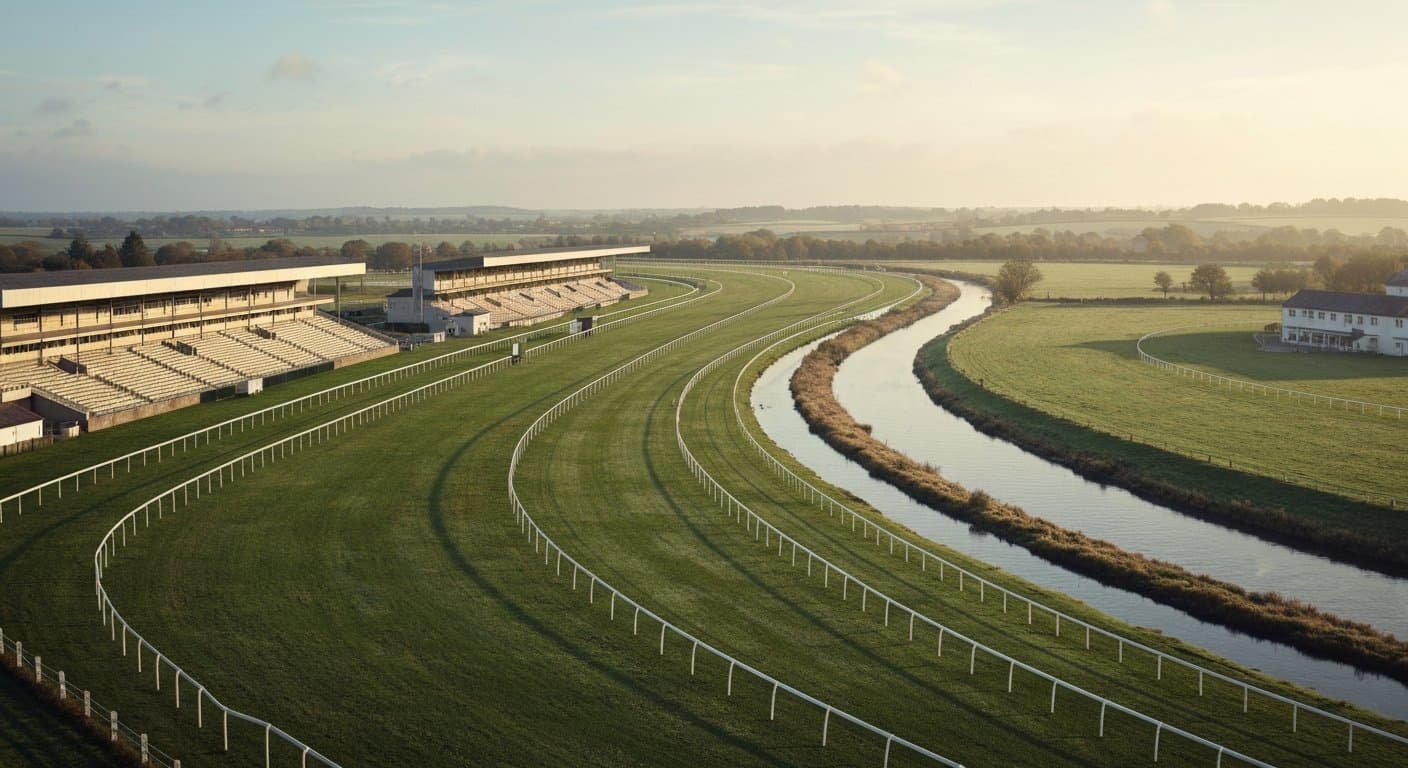
The History of Bangor-on-Dee Racecourse
Over 160 years of racing at Bangor-on-Dee — from the early days in North Wales to Wales's National Hunt venue and the Bangor-on-Dee Champion Chase.
Read more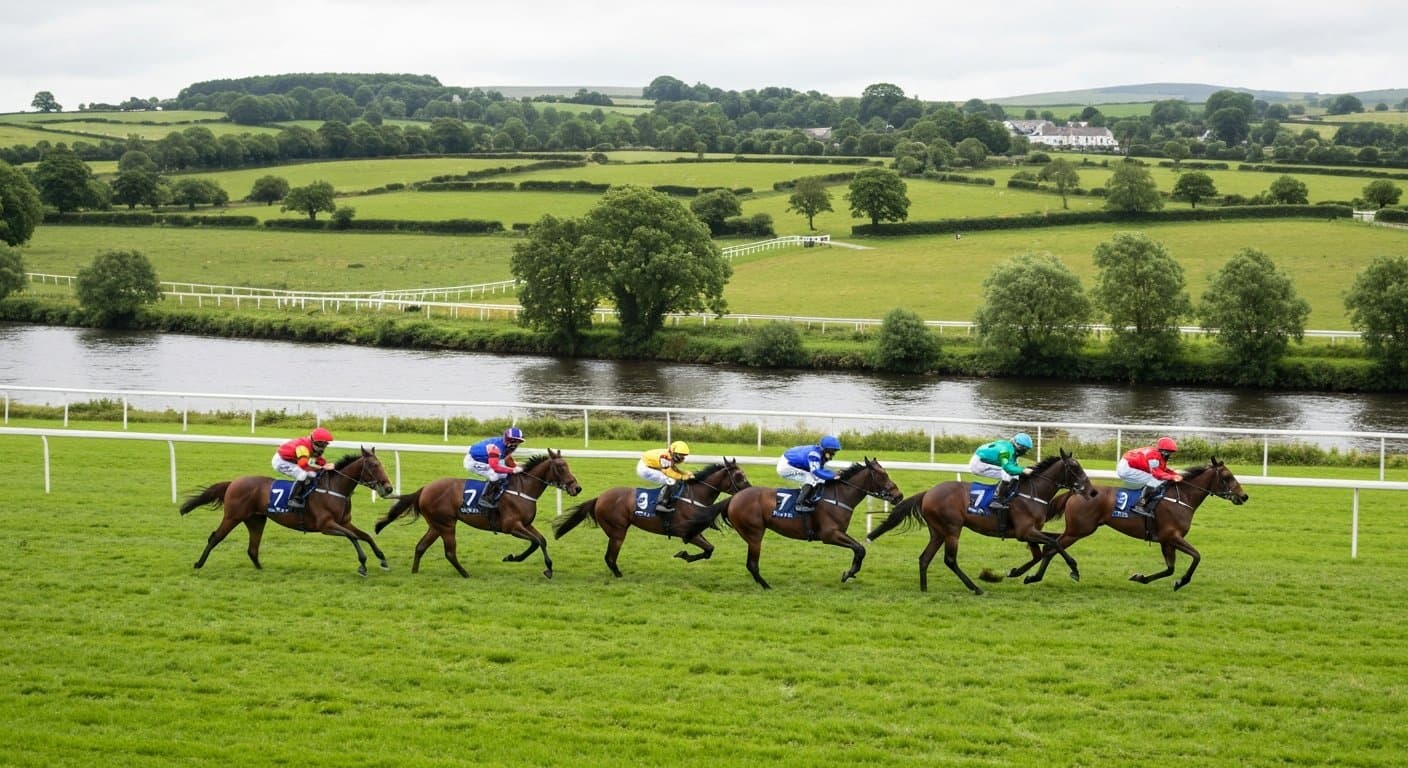
Welsh Racing at Bangor-on-Dee: Complete Guide
Welsh racing at Bangor-on-Dee — the Champion Chase, key meetings and National Hunt at Wales's only dedicated jumps venue.
Read more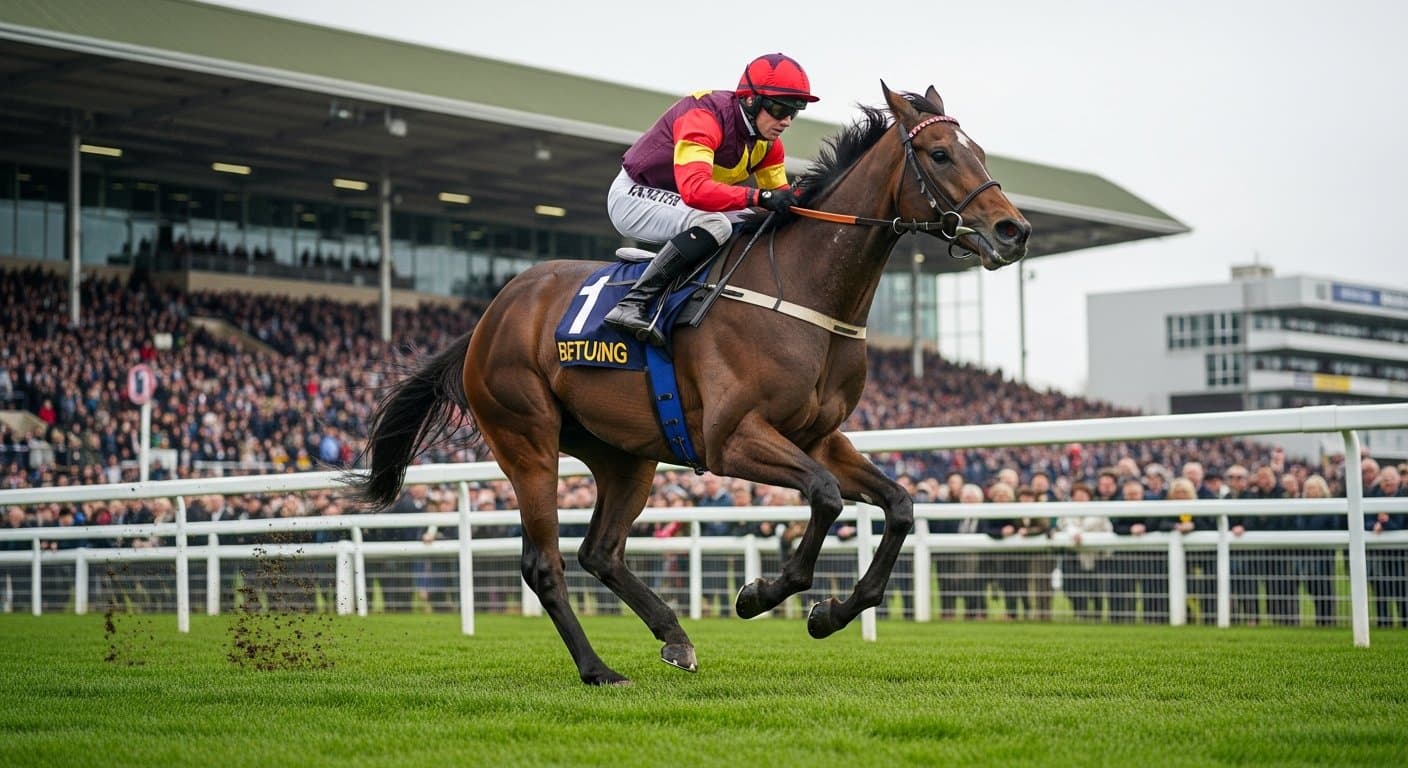
Denman at Bangor-on-Dee: The Complete Story
Denman, the 2008 Cheltenham Gold Cup winner, won a novice hurdle at Bangor-on-Dee in 2006. The story of how the Welsh course hosted a future champion.
Read moreResearch the field with the AI Race Predictor
Our model publishes calibrated win-probability estimates for UK races — a second opinion to understand a race, not tips. It's open about its record: it doesn't beat the market, and we show exactly how it does.
Work it out & learn the basics
Gamble Responsibly
Gambling should be entertaining and not seen as a way to make money. Never bet more than you can afford to lose. If you or someone you know has a gambling problem, help and support is available.