
Founder & Editor · Last reviewed 2026-03-02
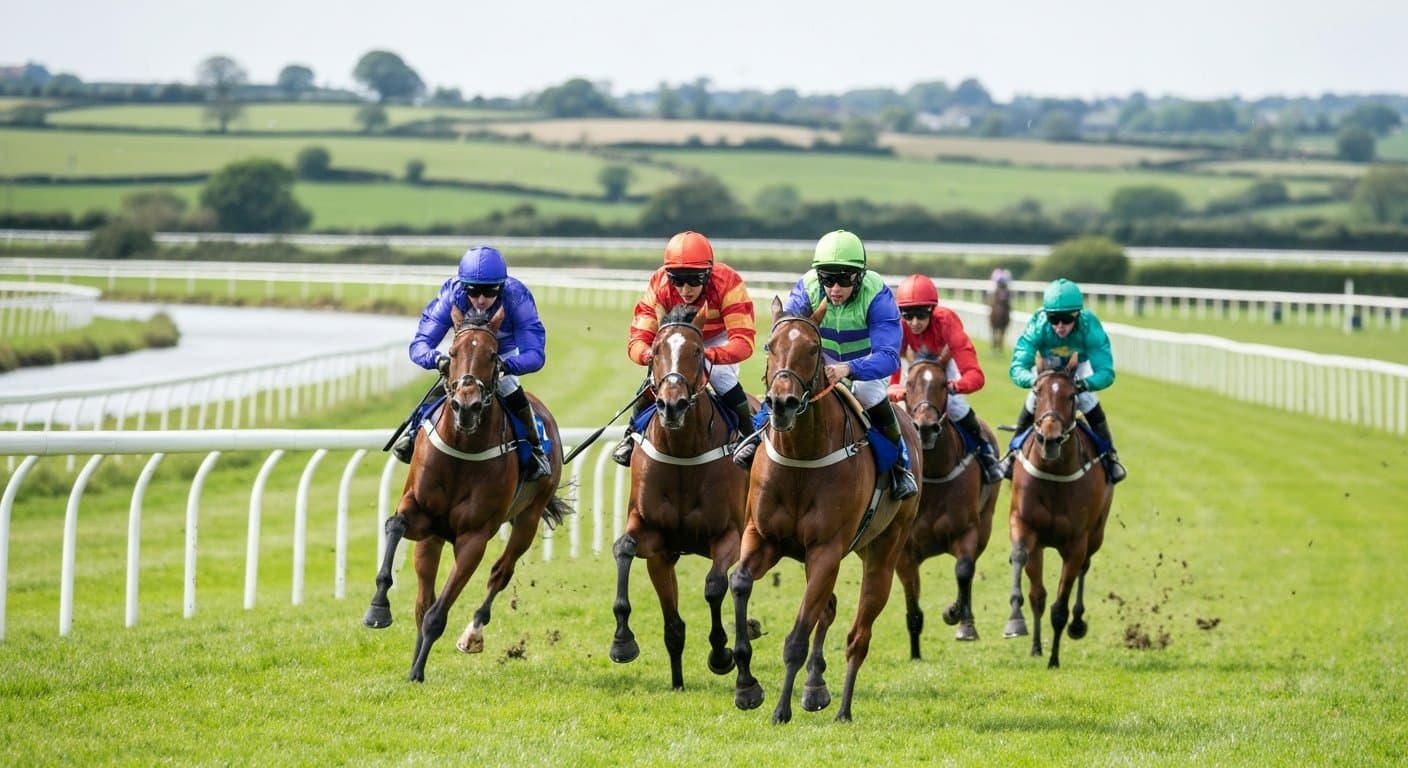
Bangor-on-Dee sits in the Dee Valley in North Wales, roughly two miles from the English border and fourteen miles south of Chester. It is the only National Hunt course in Wales operating outside of Chepstow, and its rural setting shapes everything about how races here play out. Fixtures run from October to April, the going is often soft or heavy, and fields rarely exceed twelve runners. For the bettor prepared to understand the specific demands of the track, Bangor-on-Dee is consistently rewarding.
The course is truly different from mainstream NH venues. The undulating oval rewards stayers and stamina-oriented horses in a way that flat or galloping tracks do not. Horses that lack the physical capacity to handle testing ground over an undulating circuit tend to be found out at Bangor-on-Dee regardless of what their form elsewhere suggests. The bettor's edge comes from identifying horses whose previous form underestimates their ability to handle this specific combination of conditions.
Key angles to keep in mind before betting at Bangor-on-Dee:
- Going is critical — most meetings in November through February are run on Soft or Heavy; horses without soft-ground form are risky selections regardless of class
- Course form transfers powerfully — horses that have won or placed at Bangor-on-Dee on similar ground are consistently better represented among the placed horses than market prices reflect
- Stayers dominate — in chases especially, the undulations and testing ground separate real stayers from speed-reliant horses by the final circuit
- Donald McCain is the trainer to follow — training approximately 25 miles away at Cholmondeley in Cheshire, his Bangor-on-Dee strike rate has exceeded 20% in multiple recent seasons
- Small fields create pricing inefficiencies — in fields of eight or fewer, form comparisons are limited and the market sometimes misprices horses with strong course-and-conditions profiles
- Evan Williams targets key Welsh meetings — the South Wales trainer sends specific horses to Bangor-on-Dee for its graded and listed races; his runners in those events warrant attention
- Listed Mares' Trophy Day in November is the fixture to prioritise: it carries the course's only Class 1 race, a mares' novices' chase over 2m 1f 77y. There is no Bangor-on-Dee Champion Chase and this list used to name one
The complete guide to Bangor-on-Dee covers the course's history and layout in full. The Listed race guide covers the course's one Class 1 contest, and explains why the course has no named feature race. The Welsh racing guide sets the course in the wider context of Welsh National Hunt racing. For a visitor's perspective, the day out guide covers the practical details.
This guide focuses on the betting angles — track characteristics, going and conditions, key trainers and jockeys, strategies, and the races that generate the most interest.
Bet on Bangor-on-Dee
Place your bets on Bangor-on-Dee races with a trusted bookmaker.

Promo code BETFRED50. New customers only. Register, deposit with a Debit Card, and place a first bet of £10+ at Evens (2.0)+ on Sports, to be settled within 7 days, to get £30 in Sports Free Bets and £20 in Bet Builder Free Bets within 24 hours of settlement. 7-day expiry. Eligibility & payment exclusions apply. Full T&Cs apply. Take Time to Think. BeGambleAware.org. 18+. Full T&Cs.

Promo code R30. New UK customers only, 18+. Register, deposit £10 or more, then place a £10 single cash bet at odds of 1/2 (1.5) or greater on any sports market (excluding Virtuals). Once the qualifying bet settles you get £30 in Free Bets (3 x £10) — the qualifying bet can win or lose. Free Bets are valid on any sports market excluding Virtuals, expire in 7 days, are non-withdrawable and must be used in full. Excluded deposit methods apply (including PayPal, Apple Pay, Skrill and NETELLER). Named bets such as Lucky 15 do not qualify. If you cash out the qualifying bet, or it is voided, you are no longer eligible for the offer. Ends 31.12.26. Full T&Cs apply. Please gamble responsibly. BeGambleAware.org. 18+. Full T&Cs.

Promo code BET40GET20. New UK customers, 18+. Register with the code and place a first bet of £40 or more at Evens (2.0) or greater. Receive 2 × £10 free bets: the first credited automatically once the qualifying bet settles, the second 24 hours later. Free bets must be placed at minimum odds of 4/1 (5.0), expire 24 hours after credit, and the free-bet stake is not returned with winnings. Debit card deposits only. Take Time to Think. BeGambleAware.org. 18+. T&Cs apply. Full T&Cs.

50% of your first-day net losses refunded as a free bet, capped at £25. New UK customers aged 18+ only. To qualify, deposit and place a first bet of £10 or more on any sport at minimum odds of evens (2.00), then place at least two further bets on different events, each worth at least 50% of your largest bet, all at evens (2.00) or greater. Losses are counted from your first settled bet until 23:59 the same day. Place a qualifying £10+ bet and you are guaranteed at least a £5 free bet. Bets placed at SP, void bets, cashed-out bets and bets struck with free bets do not count towards the offer. The free bet is credited the day after your qualifying bets settle and must be used within 7 days, after which it expires. It can be used at odds from 1/4 (1.25) up to 250/1 on singles and straight accumulators, but not on Trixie, Patent or Yankee style multiples. Free-bet stake is not returned with winnings. One offer per person, household, address, IP address and device. E-wallet deposits may not qualify, so check the cashier before depositing. Customers registered with GAMSTOP cannot claim. KYC identity verification must be completed before the free bet is credited. Take Time to Think. BeGambleAware.org. 18+. T&Cs apply. Full T&Cs.

New customers, 18+. Choose the sports bonus at sign-up, make a first deposit and receive a 100% bonus up to £50 in your Sports Bonus balance. To convert the bonus to cash, wager it 10x within 30 days. Single bets below Evens (2.00) do not qualify; accumulators do not qualify if any selection is below 1/2 (1.50). Virtual Sports, voided, cancelled, drawn, cashed-out and free-bet wagers do not count towards wagering. Only the first settled bet per event counts. Withdrawing before the wagering requirement is met forfeits the bonus balance including bonus winnings. Real-money funds are used before bonus funds. Deposits via Skrill or Neteller are not eligible. Not valid in conjunction with other promotions. Odds, bet and payment limits apply. 10bet general and promotion T&Cs apply. BeGambleAware.org. 18+. Full T&Cs.

New customers in Great Britain and Republic of Ireland, 18+. Place a £10 fixed-odds qualifying bet at minimum odds of 1/2 (1.50) — single or each-way (only the win part counts), pre-event or in-play, not cashed out early, within 28 days of opening the account. Receive up to £60 in bonuses credited over three days: 3 × £10 fixed-odds free bets (the first on settlement, then 24 and 48 hours later) plus 3 × £5 Total Goals FOOTBALL spread bets and 3 × £5 racing Winning Favourites spread bets, with a £1 racing Race Index spread bet as an extra on top. The spread bets need a full spread-betting account, opened within 28 days of the fixed-odds account and subject to Spreadex's eligibility and appropriateness checks. Free-bet stakes not returned with winnings; free bets valid 28 days from issue. IMPORTANT: the £5 credits are SPREAD bets — sports spread betting carries the risk that losses can exceed your stake. Sports spread-betting customers do not have Financial Ombudsman or FSCS recourse. Take Time to Think. BeGambleAware.org. 18+. T&Cs apply. Full T&Cs.

Promo code WELCOME15, entered under My Bonuses after registering. New UK customers, 18+. Place a first qualifying bet of at least £10 from your cash balance at odds of evens (2.0) or greater within 7 days of opening the account. Once the qualifying bet fully settles you receive £15 in free bets, credited as 3 x £5 tokens with set uses: one £5 accumulator free bet (minimum 4 legs, each leg at 2/5 or bigger), one £5 sports free bet (any market at evens or bigger) and one £5 Sub Cover free bet (selected football player markets at evens or bigger). Free-bet stakes are not returned with winnings. Free bets expire 7 days after they are credited. Void, cashed-out and partially cashed-out bets do not qualify. One offer per customer. Confirm the current terms on BetGoodwin's own welcome-offer page before claiming. Take Time to Think. BeGambleAware.org. 18+. T&Cs apply. Full T&Cs.

New UK customers, 18+. Minimum deposit £10. Place a £10 qualifying single on sports (excluding virtuals) at minimum odds of 1/2 (1.50), settled within 14 days. Deposit-method exclusions apply. Receive £30 in free bets (stake not returned), split £20 for sportsbook use (2 x £10) and £10 for Bet Builder only (2 x £5); Bet Builder does not cover horse racing. Free bets must be accepted within 7 days and expire 7 days after acceptance. No promo code required. Best Odds Guaranteed on UK & Irish racing, subject to having staked over £25 in the previous seven days. Operated by LiveScore Betting and Gaming (Gibraltar) Ltd, UKGC 56859. Confirm the current terms on LiveScore Bet's own promotions page before claiming. Take Time to Think. BeGambleAware.org. 18+. T&Cs apply. Full T&Cs.
18+. BeGambleAware.org
Track Characteristics
The Bangor-on-Dee circuit is left-handed, undulating, and measures approximately one mile and two furlongs around. The track sits alongside the River Dee on low-lying ground in the Cheshire border country. Unlike the steep gradients of Hexham or the dramatic undulations of Exeter, Bangor-on-Dee's changes in gradient are more subtle — but they accumulate over a race in a way that tests horses physically and makes the course measurably harder for tired animals than a flat circuit.
The Undulating Profile
The track rises and falls across its circuit in a series of gentle but persistent inclines. Horses on their third circuit of a staying chase are working against more gradient resistance than the official going description alone captures. The practical implication is that stamina plays a bigger role at Bangor-on-Dee than horse ratings built on performance at flat tracks suggest. A horse rated 120 on flat ground at a galloping circuit may perform as though it is 115 or lower at Bangor-on-Dee in testing conditions.
The undulations also affect how horses jump. Landing on a slight downslope after a fence is a different physical demand from landing on flat ground. Horses that are tidy and efficient jumpers — those that waste minimal energy on each fence — handle the circuit more smoothly than horses that jump big or lose their rhythm at individual obstacles. The fences at Bangor-on-Dee are well-maintained and not especially stiff; they do not punish horses severely for minor errors, but the cumulative effect of negotiating eight or nine fences over undulating ground does separate efficient jumpers from less athletic types across the full distance.
The Run-In and Home Straight
The run from the last fence to the winning post at Bangor-on-Dee is approximately two furlongs — a fair length by NH standards, though nothing like the four-furlong run-in at Cartmel. Horses in front at the last fence can and often do hold on, but they need enough left in the tank to maintain their momentum over the final climb to the line. Front-runners that have taken the field along at a strong pace through heavy ground sometimes tie up in the closing stages; horses held up for a late challenge can still get there if they have the stamina.
In practice, races at Bangor-on-Dee are most commonly won by horses that have raced prominently rather than from far back, because the tight nature of the circuit and the undulations leave hold-up horses little room to accelerate. The ideal racing position is in the first three at the second last fence with enough energy remaining to sustain the effort home.
Chase Course vs Hurdle Course
The hurdle circuit follows essentially the same route as the chase course. Over hurdles, the undulations matter somewhat less because the hurdle flights are lower and less physically demanding than fences. Pace is a more decisive factor in hurdle races at Bangor-on-Dee than in chases. A horse with a turn of foot and proven jumping ability can win a hurdle race here from a mid-field position more reliably than it could win a chase from the same starting point.
In chases, the combination of undulations, testing ground, and the energy cost of repeated fence jumping makes stamina the primary determinant. Chase form from undulating circuits like Hereford or Ffos Las transfers more reliably to Bangor-on-Dee than form from flat, galloping tracks like Kempton or Sandown.
How It Compares
Bangor-on-Dee is the nearest equivalent in England and Wales to Hexham in the north — another small, left-handed, undulating NH circuit that rewards stayers in testing ground. Form transfers between the two tracks more reliably than between Bangor-on-Dee and any flat or galloping course. Hereford, also left-handed with an undulating character, is the other close comparison.
Going & Conditions
Going is the single most important variable at Bangor-on-Dee. The course sits on low-lying clay ground in the Dee Valley, and clay retains moisture far more effectively than sand, gravel, or chalk substrates. From November through February, the going is rarely better than Good to Soft and is frequently Soft or Heavy. October and March meetings can produce Good to Soft, particularly in dry autumns. Good ground is unusual enough that, when it does occur in the spring, it represents a truly different racing surface from the majority of Bangor-on-Dee form in the record books.
The Default: Soft to Heavy
Bangor-on-Dee's winter programme — which constitutes the majority of its fixture list — takes place on ground that is more often than not soft to heavy. The course sits in a rain shadow that funnels Atlantic weather systems from the west across North Wales, and the low elevation of the Dee Valley means drainage is slow even after the rain stops. A meeting that is officially given as Soft on the morning of racing may be Soft to Heavy by the third race if further rain falls during the card.
In soft ground, the undulations become more testing. Each rise on the circuit costs significantly more energy when the going is holding rather than springy. Horses that appeared to stay two miles four furlongs at a flat course on Good to Firm may find that the same trip in the mud at Bangor-on-Dee exhausts them two fences from home. When assessing a horse's stamina credentials, always apply a multiplier for the going: a horse that barely stays on fast ground almost certainly does not stay at Bangor-on-Dee in winter.
Heavy ground at Bangor-on-Dee turns races into grinding tests. Fields at this level — predominantly Class 3, 4, and 5 handicaps — often include horses whose flat-track form has been assessed under conditions that barely resemble what they face here in February. The horses that win on Heavy at Bangor-on-Dee have a specific profile: sound jumpers, real stayers, and horses that have previously demonstrated they do not lose their action in deep mud.
Heavy-Ground Form Hierarchy
When assessing form for Bangor-on-Dee meetings in January and February, the most valuable evidence, in order, is:
- A previous win or close placed effort at Bangor-on-Dee on Soft or Heavy
- A win on Heavy at a similar undulating NH course (Hereford, Hexham, Ffos Las)
- A win on Heavy at any NH course over the same or greater distance
- A close placed effort on Soft at a galloping NH course
- A close effort on Good to Soft, adjusted for the step up in stamina demands
Form in point one outweighs all others. Horses that have solved the specific combination of Bangor-on-Dee's undulations and deep winter ground have done something that cannot be fully replicated elsewhere. The market does not always price that advantage correctly, particularly for horses with modest official ratings whose best performances have all come at this course.
Spring Meetings
March and April meetings at Bangor-on-Dee can produce significantly better ground — Good to Soft or even Good in dry springs. When that happens, the racing character changes substantially. Speed and class reassert themselves relative to stamina. Horses that have run well only in soft conditions may find the going quicker than suits them. Spring meetings at Bangor-on-Dee are occasions to recalibrate: do not assume that a horse's heavy-ground Bangor-on-Dee form automatically transfers to a spring meeting if the going is firmer.
Within-Race Variability
The low-lying Dee Valley location means conditions on the track can vary across a card. Drainage is uneven across the course, and some sections retain moisture longer than others. Check the official going update on raceday rather than relying on the pre-meeting forecast. A shift from Good to Soft to Soft between early races and the feature race is enough to change the likely winner.
Key Trainers & Jockeys
The trainer landscape at Bangor-on-Dee is shaped by geography and by the specific demands of a winter NH course that rewards horses suited to testing ground and undulating circuits. Yards within easy travelling distance dominate the winner's list, and two trainers in particular account for a disproportionate share of success.
Donald McCain
Donald McCain trains at Cholmondeley in Cheshire, approximately 25 miles from Bangor-on-Dee racecourse. That proximity gives him a clear logistical advantage over yards in the south or east who face long journeys to reach the course. More importantly, McCain has built his reputation on the type of horse that suits Bangor-on-Dee: workmanlike, jumping-oriented National Hunt horses that handle soft and heavy ground without issue.
McCain's strike rate at Bangor-on-Dee has exceeded 20% in several recent seasons. His runners here span the full range from novice hurdlers having their early runs through to experienced handicap chasers returning to a course they have won at before. When McCain sends a horse to Bangor-on-Dee with course form, the combination is one of the most reliable bet triggers at the track. His horses at 4/1 and above on course form represent the most consistently profitable approach to a straightforward win bet.
He also tends to under-exploit horses at this course relative to the prices they attract. Bangor-on-Dee's modest profile means some of his horses are priced as though they are running at a peripheral fixture; when form and trainer intent are aligned, those prices represent real value.
Evan Williams
Evan Williams trains at Llancarfan in the Vale of Glamorgan, approximately 80 miles from Bangor-on-Dee. The distance means he does not send horses here routinely, but he targets the course's graded and listed events specifically. His runners in the November Listed race, and in other higher-grade races at the course, arrive with deliberate preparation. Williams is one of Wales's most successful NH trainers, and his strike rate in Class 2 and Class 1 races at Bangor-on-Dee reflects careful targeting rather than routine use of the course.
When Williams runs a horse at Bangor-on-Dee in an important race, treat it as a serious contender. His horses tend to be well-schooled jumpers that handle testing ground — the profile matches the course's demands precisely.
Other Trainers Worth Monitoring
Nigel Twiston-Davies, who trains at Naunton in Gloucestershire, sends horses to Bangor-on-Dee throughout the winter. His horses in Class 3 handicap chases are worth noting: Twiston-Davies produces robust jumpers that handle mud, and his targeting of the course is consistent across seasons. Tim Vaughan, training near Cowbridge in South Wales, has a steady record at Bangor-on-Dee in novice and maiden hurdles.
Brian Hughes
Brian Hughes rides as retained jockey for Donald McCain and is the most frequently successful jockey at Bangor-on-Dee. His understanding of the undulating circuit — where to conserve energy in the back straight and when to ask horses for their effort on the final circuit — is reflected in his results. When Hughes rides a McCain horse at Bangor-on-Dee with recent course form, the combination is as strong a selection signal as the course offers.
Tom Scudamore
Tom Scudamore rides regularly at Bangor-on-Dee for Evan Williams and other yards. His familiarity with the demanding winter NH circuit and his record in staying chases here make him a jockey worth tracking when he rides for in-form stables. Scudamore's patient, accurate style suits the circuit's requirement for efficient jumping over the undulations.
Betting Strategies
Bangor-on-Dee's specific character — undulating circuit, winter going, small northern and Welsh fields — creates a set of repeatable betting angles that hold across seasons. The strategies below are based on the structural properties of the course and the patterns those properties create in the race results.
Strategy One: Course Form on Matching Ground
The most reliable single angle at Bangor-on-Dee is a horse with a previous win or placed effort at the course on ground that matches or is similar to today's conditions. The undulations and the clay soil create a combination that not all horses handle well on first acquaintance. Horses that have already proven they can negotiate the circuit, handle the going, and get home in testing conditions have demonstrated something that form from other courses cannot fully replicate.
In practical terms: if a horse has won or finished within three lengths at Bangor-on-Dee on Soft or Heavy, and today's ground is Soft or Heavy, that course form is the most directly transferable evidence available. If that horse is also from a yard with a good record at the course, the combination becomes one of the strongest selection signals at any NH track.
Strategy Two: Donald McCain Runners at 4/1 or Above
McCain's Bangor-on-Dee strike rate is well documented, but his horses do not always attract the market support their record warrants. When McCain sends a horse to Bangor-on-Dee at 4/1 or above — particularly in Class 3 and Class 4 handicap chases — the value case is often present alongside the selection case. The most productive angle within this strategy is a horse with previous Bangor-on-Dee form ridden by Brian Hughes at a price between 4/1 and 8/1.
Avoid applying this strategy blindly to all McCain runners. Novice hurdlers having their first or second outing, and horses clearly stepping up dramatically in class, require additional validation. The strategy works best for handicap chasers returning to the course.
Strategy Three: Stayer Backing on Heavy
When the going is given as Heavy before the first race, shift your selection process toward stayers above all else. In Class 3 and Class 4 chases at Bangor-on-Dee on Heavy ground, horses whose best previous form has come over three miles or more have a structural advantage over shorter-trip horses dropped back in distance or running at the upper end of their stamina range.
This does not mean blindly backing every long-distance horse. It means that, when two horses are otherwise comparable on class and form, the proven three-mile stayer on Heavy ground at Bangor-on-Dee should be preferred to the two-mile specialist. The market sometimes underweights this distinction, particularly when the shorter-trip horse has a more recent race and a cleaner public form line.
Strategy Four: Small Field Value in Winter
Bangor-on-Dee's winter handicaps frequently run with six to ten runners. Small fields reduce the statistical accuracy of market prices. In a field of seven or fewer, a single horse with a specific form angle — course form, proven mud, or a trainer pattern — can be backed at prices that would not be available in a larger field where the market pools more information.
In fields of six or fewer runners, each-way betting at standard terms (quarter odds for two places) covers the case efficiently. In a six-runner field with quarter odds, placing the each-way bet means backing the top two places at a full quarter of the win odds, which compares favourably to backing only the winner.
Strategy Five: Avoid Unexposed Horses in Testing Ground
Bangor-on-Dee in January and February is not the right place to speculate on unexposed horses that have only run in Good or Good to Soft conditions. Their form gives no information about how they handle the specific demands of this course. Without at least one run in Soft or Heavy ground — and ideally one such run at Bangor-on-Dee — there is real uncertainty about whether the horse can handle the test. In winter fields where experienced, proven mud-lovers are available at fair prices, backing the unexposed horse is lower value than the market price implies.
To compare place terms and each-way promotions across the major bookmakers, see our best bookmakers for horse racing guide.
Key Races to Bet On
Bangor-on-Dee's racing calendar does not include Grade 1 or Grade 2 races. The course operates at Class 2 to Class 5 level, and its key races are competitive handicaps and listed events that generate consistent betting interest because of their competitive fields and the specific demands the track places on the runners.
The November Listed race
There is no Bangor-on-Dee Champion Chase, and this section used to describe one as a Listed or Grade 2 handicap chase over two miles four furlongs, with betting advice attached. No race of that name exists here, and the paragraph also contradicted the opening line of this page.
The course does stage exactly one Class 1 race: a mares' novices' chase over 2m 1f 77y in November, run for the Richard Aston Memorial Trophy. It is not a handicap, so it is a class test rather than a weights puzzle, and the field is made up of mares at an early stage over fences. Its sponsor prefix changes from year to year, which is why the course markets the occasion as Listed Mares' Trophy Day rather than by the race name.
We hold no verified roll of honour for it, so this page offers no trends for it.
January and February Handicap Chases
The fixture list from late November through February includes a sequence of Class 3 and Class 4 handicap chases that form the productive core of Bangor-on-Dee's betting calendar. These races — run over two miles to three miles — attract consistent participation from Donald McCain's yard and from a range of northern and Welsh trainers who target the course throughout the winter.
Course form is the most reliable filter across this sequence. Horses that have won a previous Bangor-on-Dee handicap chase are consistently overrepresented in the placed horses at subsequent meetings, particularly when the going conditions are similar.
Novice Hurdles and Bumpers
Bangor-on-Dee stages novice hurdles and bumpers throughout the winter that serve as development races for horses being pointed toward spring festivals. These races attract horses from northern yards — particularly McCain's stable — that are building experience ahead of targets at Cheltenham or Aintree.
In bumpers, the undulations do not affect the race in the same way as over fences, but the soft ground tests horses that have not previously encountered those conditions. First-season bumper horses from in-form local yards at prices above 5/2 are worth assessing individually rather than dismissing.
The Spring Finale
Bangor-on-Dee's final meetings of the season in March and April close out on going that is typically Good to Soft. These meetings attract horses that have not shown their best through the winter mud and are suited to firmer conditions. March and April Bangor-on-Dee form is a distinct data set from the winter core: spring winners here often do not have the heavy-ground profile required to repeat the performance in January.
Share this article
More about this racecourse
All Bangor-on-Dee guides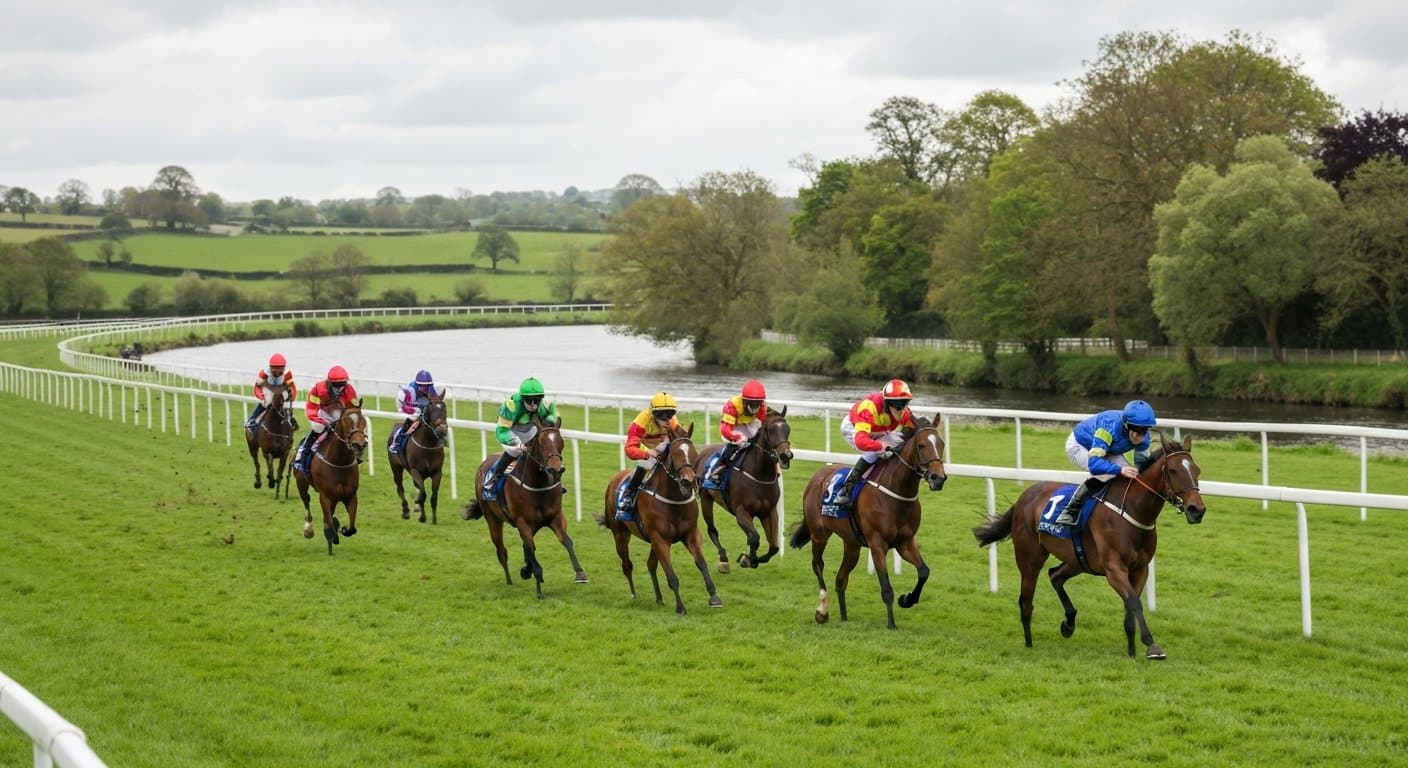
Bangor-on-Dee Champion Chase: Complete Guide
Your complete guide to the Bangor-on-Dee Champion Chase — Wales's signature handicap chase and a key contest at Bangor-on-Dee Racecourse.
Read more
Bangor-on-Dee Racecourse: Complete Guide
Everything you need to know about Bangor-on-Dee Racecourse — Wales's National Hunt venue, the Bangor-on-Dee Champion Chase, and over 160 years of jumps racing.
Read more
A Day Out at Bangor-on-Dee Racecourse
Everything you need for a day at Bangor-on-Dee — getting there, what to wear, enclosures, food and drink, and insider tips for Wales's National Hunt venue.
Read moreResearch the field with the AI Race Predictor
Our model publishes calibrated win-probability estimates for UK races — a second opinion to understand a race, not tips. It's open about its record: it doesn't beat the market, and we show exactly how it does.
Work it out & learn the basics
Gamble Responsibly
Gambling should be entertaining and not seen as a way to make money. Never bet more than you can afford to lose. If you or someone you know has a gambling problem, help and support is available.