
Founder & Editor · Last reviewed 2026-04-05
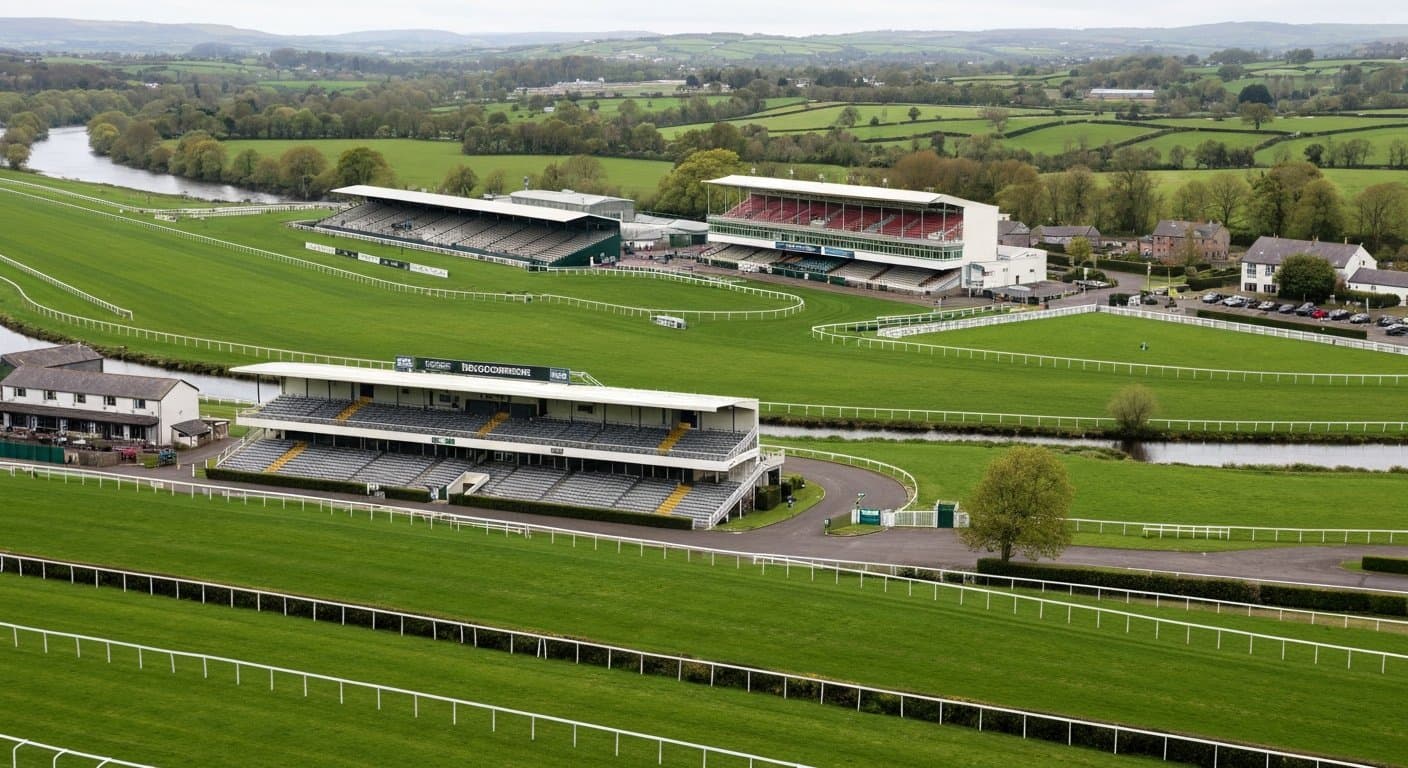
Bangor-on-Dee Racecourse has been staging National Hunt racing since 1859, making it one of the oldest active jumps venues in Wales. Set on the Dee Valley flood plain in the village of Bangor-on-Dee, approximately eight miles south of Wrexham and 12 miles south-west of Chester, the course occupies one of the most rural and distinctive settings in British racing. The River Dee runs along the back of the course, the medieval church of St Dunawd's is visible from the approach road, and the surrounding Dee Valley countryside gives racedays a character that city-centre venues simply cannot replicate.
The racecourse is the only dedicated National Hunt venue in North Wales, drawing racegoers from Wrexham, Chester, Shrewsbury, and across mid-Wales. Its left-handed circuit of approximately one mile and two furlongs sits essentially flat on the flood plain, a layout that places a premium on jumping accuracy and handiness over raw speed. There is no Bangor-on-Dee Champion Chase, which earlier versions of this page named as the signature event. The course has no named feature race: its calendar is built around themed racedays, and the biggest of them is Listed Mares' Trophy Day in November.
Who this guide is for
First-time visitors will find everything needed to plan a day at the course: the layout, enclosures, travel options, and what to expect from a winter raceday in rural north-east Wales.
Regular racegoers coming specifically for the jumps will find detail on the circuit's characteristics, the seasonal fixture programme, and how the Dee Valley going affects race outcomes.
History-focused readers can follow the course's story from its 1859 origins through to its present role as North Wales's only National Hunt venue — a record that spans 167 years of continuous racing.
Trip planners arriving from Chester, Birmingham, or Liverpool will find practical information on transport, nearby attractions, and how to combine a visit here with Chester Racecourse, 12 miles to the north-east.
At a glance
- Type: National Hunt only (hurdles and chases)
- Direction: Left-handed
- Circuit: Approximately one mile and two furlongs
- Opened: 1859
- Signature race: none. The only Class 1 race is a Listed mares' novices' chase in November
- Nearest station: Wrexham General (8 miles); taxis cost approximately £12
- By car: Postcode LL13 0BH; well signposted from the A525
- Best time to visit: Peak winter fixtures from November through March; Listed Mares' Trophy Day in November is the standout
- Going tendency: Soft to heavy through winter; the Dee flood plain clay holds moisture readily
- Key trainer to follow: Donald McCain, whose Cholmondeley yard sits 15 miles north-east and sends the highest volume of runners to this course
Bangor-on-Dee suits racegoers who value atmosphere and accessibility over scale. With a capacity of around 4,000, it is an intimate venue where the paddock, parade ring, and grandstand are close enough together that you can watch horses being saddled, walk to the rail, and then drift back for a drink without missing a race. The countryside setting, the proximity of the Dee, and the Welsh rural character make it a distinctive experience among North Wales's leisure options.
The village of Bangor-on-Dee itself has a population of approximately 1,200 — small even by Welsh village standards. The church of St Dunawd's, which dates to the medieval period, stands near the course entrance and has been watching racegoers arrive on fixture days for more than a century and a half. This continuity of place — the sense that racing at Bangor-on-Dee is woven into the landscape rather than imposed on it — is part of what distinguishes the course from more recently established or more commercially developed venues. For a racegoer making their first visit, that quality takes a few races to register, but it is the thing most regulars mention when asked why they keep coming back.
The course's North Wales location also means it sits within easy reach of Chester Racecourse (12 miles north-east), which stages flat racing from May through September. The two venues effectively provide year-round racing for racegoers in the Cheshire and north-east Wales region: Bangor-on-Dee through the National Hunt winter, Chester through the flat-racing summer. Few regions in Britain offer that combination within such a compact geographical area.
This guide covers the course layout and how it shapes results, the fixture calendar, facilities and enclosures, travel and parking, a full history of the course, notable moments from its past, betting angles specific to Bangor-on-Dee, and practical advice for planning your visit. A detailed FAQ section at the end addresses the questions racegoers most commonly ask before travelling to the course.
Bet on Bangor-on-Dee
Place your bets on Bangor-on-Dee races with a trusted bookmaker.

Promo code BETFRED50. New customers only. Register, deposit with a Debit Card, and place a first bet of £10+ at Evens (2.0)+ on Sports, to be settled within 7 days, to get £30 in Sports Free Bets and £20 in Bet Builder Free Bets within 24 hours of settlement. 7-day expiry. Eligibility & payment exclusions apply. Full T&Cs apply. Take Time to Think. BeGambleAware.org. 18+. Full T&Cs.

Promo code R30. New UK customers only, 18+. Register, deposit £10 or more, then place a £10 single cash bet at odds of 1/2 (1.5) or greater on any sports market (excluding Virtuals). Once the qualifying bet settles you get £30 in Free Bets (3 x £10) — the qualifying bet can win or lose. Free Bets are valid on any sports market excluding Virtuals, expire in 7 days, are non-withdrawable and must be used in full. Excluded deposit methods apply (including PayPal, Apple Pay, Skrill and NETELLER). Named bets such as Lucky 15 do not qualify. If you cash out the qualifying bet, or it is voided, you are no longer eligible for the offer. Ends 31.12.26. Full T&Cs apply. Please gamble responsibly. BeGambleAware.org. 18+. Full T&Cs.

Promo code BET40GET20. New UK customers, 18+. Register with the code and place a first bet of £40 or more at Evens (2.0) or greater. Receive 2 × £10 free bets: the first credited automatically once the qualifying bet settles, the second 24 hours later. Free bets must be placed at minimum odds of 4/1 (5.0), expire 24 hours after credit, and the free-bet stake is not returned with winnings. Debit card deposits only. Take Time to Think. BeGambleAware.org. 18+. T&Cs apply. Full T&Cs.

50% of your first-day net losses refunded as a free bet, capped at £25. New UK customers aged 18+ only. To qualify, deposit and place a first bet of £10 or more on any sport at minimum odds of evens (2.00), then place at least two further bets on different events, each worth at least 50% of your largest bet, all at evens (2.00) or greater. Losses are counted from your first settled bet until 23:59 the same day. Place a qualifying £10+ bet and you are guaranteed at least a £5 free bet. Bets placed at SP, void bets, cashed-out bets and bets struck with free bets do not count towards the offer. The free bet is credited the day after your qualifying bets settle and must be used within 7 days, after which it expires. It can be used at odds from 1/4 (1.25) up to 250/1 on singles and straight accumulators, but not on Trixie, Patent or Yankee style multiples. Free-bet stake is not returned with winnings. One offer per person, household, address, IP address and device. E-wallet deposits may not qualify, so check the cashier before depositing. Customers registered with GAMSTOP cannot claim. KYC identity verification must be completed before the free bet is credited. Take Time to Think. BeGambleAware.org. 18+. T&Cs apply. Full T&Cs.

New customers, 18+. Choose the sports bonus at sign-up, make a first deposit and receive a 100% bonus up to £50 in your Sports Bonus balance. To convert the bonus to cash, wager it 10x within 30 days. Single bets below Evens (2.00) do not qualify; accumulators do not qualify if any selection is below 1/2 (1.50). Virtual Sports, voided, cancelled, drawn, cashed-out and free-bet wagers do not count towards wagering. Only the first settled bet per event counts. Withdrawing before the wagering requirement is met forfeits the bonus balance including bonus winnings. Real-money funds are used before bonus funds. Deposits via Skrill or Neteller are not eligible. Not valid in conjunction with other promotions. Odds, bet and payment limits apply. 10bet general and promotion T&Cs apply. BeGambleAware.org. 18+. Full T&Cs.

New customers in Great Britain and Republic of Ireland, 18+. Place a £10 fixed-odds qualifying bet at minimum odds of 1/2 (1.50) — single or each-way (only the win part counts), pre-event or in-play, not cashed out early, within 28 days of opening the account. Receive up to £60 in bonuses credited over three days: 3 × £10 fixed-odds free bets (the first on settlement, then 24 and 48 hours later) plus 3 × £5 Total Goals FOOTBALL spread bets and 3 × £5 racing Winning Favourites spread bets, with a £1 racing Race Index spread bet as an extra on top. The spread bets need a full spread-betting account, opened within 28 days of the fixed-odds account and subject to Spreadex's eligibility and appropriateness checks. Free-bet stakes not returned with winnings; free bets valid 28 days from issue. IMPORTANT: the £5 credits are SPREAD bets — sports spread betting carries the risk that losses can exceed your stake. Sports spread-betting customers do not have Financial Ombudsman or FSCS recourse. Take Time to Think. BeGambleAware.org. 18+. T&Cs apply. Full T&Cs.

Promo code WELCOME15, entered under My Bonuses after registering. New UK customers, 18+. Place a first qualifying bet of at least £10 from your cash balance at odds of evens (2.0) or greater within 7 days of opening the account. Once the qualifying bet fully settles you receive £15 in free bets, credited as 3 x £5 tokens with set uses: one £5 accumulator free bet (minimum 4 legs, each leg at 2/5 or bigger), one £5 sports free bet (any market at evens or bigger) and one £5 Sub Cover free bet (selected football player markets at evens or bigger). Free-bet stakes are not returned with winnings. Free bets expire 7 days after they are credited. Void, cashed-out and partially cashed-out bets do not qualify. One offer per customer. Confirm the current terms on BetGoodwin's own welcome-offer page before claiming. Take Time to Think. BeGambleAware.org. 18+. T&Cs apply. Full T&Cs.

New UK customers, 18+. Minimum deposit £10. Place a £10 qualifying single on sports (excluding virtuals) at minimum odds of 1/2 (1.50), settled within 14 days. Deposit-method exclusions apply. Receive £30 in free bets (stake not returned), split £20 for sportsbook use (2 x £10) and £10 for Bet Builder only (2 x £5); Bet Builder does not cover horse racing. Free bets must be accepted within 7 days and expire 7 days after acceptance. No promo code required. Best Odds Guaranteed on UK & Irish racing, subject to having staked over £25 in the previous seven days. Operated by LiveScore Betting and Gaming (Gibraltar) Ltd, UKGC 56859. Confirm the current terms on LiveScore Bet's own promotions page before claiming. Take Time to Think. BeGambleAware.org. 18+. T&Cs apply. Full T&Cs.
18+. BeGambleAware.org
The Course
The Course
Bangor-on-Dee's track is unlike almost anything else in British National Hunt racing. The circuit sits on a flat alluvial plain beside the River Dee, which winds along the far side of the course and defines the back straight. The result is a left-handed oval of approximately one mile and two furlongs with almost no gradient to speak of — a fact that surprises many visitors expecting the undulating terrain typical of Welsh National Hunt venues such as Chepstow or Ffos Las.
Direction and Shape
The course runs left-handed throughout. The circuit is roughly oval, with two relatively long straights connected by turns at each end. The turns come quickly enough to demand that horses handle the bends well — those that pull hard against their jockeys tend to lose significant ground by racing wide through the turns and arrive at the final fence with less left than horses that settled and raced handy throughout. The tightness of the track is a recurring theme in betting analysis at Bangor-on-Dee: horses drawn towards the rail and ridden patiently have a statistical advantage over free-going types that race with the pace from the front but tire on the final bend.
The Fences and Hurdles
The fences at Bangor-on-Dee are considered standard National Hunt obstacles in terms of construction, but their positioning on a flat, tight circuit means any error is immediately costly. There is limited time to recover from a jumping mistake before the next obstacle arrives, which places a high premium on technique. Horses trained at yards that regularly school over similar compact layouts — Donald McCain's Cholmondeley operation, located 15 miles to the north-east, being the obvious example — tend to be well-prepared for what Bangor asks. Horses arriving from southern yards that operate over more galloping tracks sometimes find the transition less straightforward.
Hurdle races are staged over the same left-handed circuit. The hurdles are standard brush hurdles, and the spacing on the flat track means pace is relatively sustained throughout. A horse that can jump hurdles low and fast, saving fractions at each obstacle, benefits more here than at a track with a long run-in where any time saved at the flight is absorbed by the straight.
The Run-In
The distance from the final fence or hurdle to the winning post is approximately 200 yards, which is on the shorter side by National Hunt standards. This is significant for betting purposes: a horse that leads over the last and is jumping well is harder to peg back here than at a course with a longer run-in such as Chepstow's extended straight. Horses that idle in front — a common trait among young or inexperienced chasers — are not punished as heavily at Bangor as they would be where the run-in demands sustained effort over 300 or 400 yards.
Section takeaway: The flat, tight, left-handed circuit rewards jumping accuracy and settling ability above raw speed. Horses that jump fluently and race handily, particularly those familiar with compact National Hunt tracks, hold a structural advantage.
Going Conditions
Bangor-on-Dee sits on Dee Valley clay, and this soil type is the primary driver of going conditions throughout the season. Clay retains moisture more than chalk or sand-based soils, which means the going shifts readily from good through to soft and, in a wet North Wales winter, to heavy. truly firm conditions are rare on the flood plain — even in dry periods the clay retains sufficient moisture to prevent the ground hardening significantly. Racegoers and punters should treat any going description between good and heavy as the realistic range for winter fixtures.
The river itself introduces an additional variable. The Dee can rise quickly after heavy rainfall over the Welsh hills upstream, and when the flood plain floods the course is unraceable. Abandonments due to waterlogging are a known occurrence at Bangor-on-Dee, more so than at most other National Hunt venues in England and Wales. The course website publishes going updates and any precautionary inspections; checking these before travelling is strongly advised during November, December, and January when the risk is highest.
Soft and heavy ground tends to favour horses with strong stamina and clean jumping technique over those relying on a turn of foot. At distances of two miles and upwards on heavy going, the ability to jump economically and maintain rhythm throughout becomes a decisive factor, and this explains why Donald McCain's more workmanlike horses, trained for exactly these conditions on clay-heavy Cheshire ground, record a consistently high strike rate here.
Race Distances and Types
Bangor-on-Dee stages hurdle races from two miles through to approximately three miles, and chase races at similar distances with the addition of occasional staying chases at around three miles and three furlongs. The course does not stage flat racing; it is exclusively a National Hunt venue, and the annual fixture list typically includes 12 to 15 meetings between September and May.
Two-mile hurdles and chases at Bangor-on-Dee are technically distance of two miles but feel longer than the same distance at a more galloping course, because the energy expenditure through the tight turns is greater than on a sweeping oval. Horses running here for the first time after building their form at Wincanton or Exeter can find the extra physical effort of the Bangor turns catches them in the final stages, even when the stopwatch shows similar times to their previous outings. This is one reason why course form is weighted more heavily in Bangor-on-Dee analysis than at most other tracks.
There is no Bangor-on-Dee Champion Chase, which this paragraph used to call the prestige event and give a distance of around two miles and four furlongs. The course's one Class 1 race is a Listed mares' novices' chase over 2m 1f 77y in November, and it is not a handicap. The dedicated race guide covers it.
Comparing Bangor-on-Dee to Other Courses
Racegoers familiar with Chepstow or Ffos Las will find Bangor-on-Dee markedly different in character. Chepstow is a galloping, undulating course where long-striding horses have a natural advantage and the uphill finish rewards stamina and raw power. Ffos Las is a flat, sharp oval not unlike Bangor in geometry but located in west Wales and with a somewhat different soil profile. Bangor-on-Dee's distinctiveness lies in the combination of its riverside location, clay going, and compact left-handed configuration — a combination that, after 167 years of racing, has produced a clear form profile: handy, accurate, well-settled horses, trained by handlers who understand the track, win races here at a significantly higher rate than their market price might suggest.
Among English comparators, Huntingdon in Cambridgeshire offers a similar flat, left-handed layout with clay-influenced going, and horses that have won at Huntingdon on soft ground translate reasonably well to Bangor-on-Dee form assessments. Cartmel in Cumbria is another tight left-handed course where course form carries strong predictive value. Understanding these analogues helps when a horse appears at Bangor without a previous visit to the course: look for form at circuits that share the same left-handed tightness and the same moisture-retaining going profile.
The Narrative of Racing Here
There is a useful mental picture for understanding what a race at Bangor-on-Dee looks like from the stands. The horses leave the gate, travel along the home straight in front of the grandstand, turn left into the back straight where the Dee is visible beyond the far rail, travel along the back toward the far turn, swing left again, and come back along the home straight to the winning post approximately 200 yards after the last fence or hurdle. The flat terrain means the horses are visible throughout, with no dip or hill to obscure the action. A race at two miles at Bangor involves roughly one and three-quarter circuits of this layout, meaning the horses pass the grandstand twice before reaching the finish. This visibility is one of the practical pleasures of the course — you rarely lose the race.
Section takeaway: Understanding the going and the flat, tight circuit is the starting point for any analysis of Bangor-on-Dee form. Check going reports before travelling and before placing any bet — the Dee Valley clay can shift going rapidly in winter.
Key Fixtures & Calendar
Fixtures and Race Calendar
Bangor-on-Dee typically stages between 12 and 15 National Hunt fixtures per season, with the programme running from early September through to May. The calendar is weighted heavily toward the winter months, reflecting the course's character as a jumps venue that comes alive when the going softens and the frost-free Dee Valley clay gives horses the footing that National Hunt racing demands. The majority of fixtures are midweek meetings, though the most significant days — including Listed Mares' Trophy Day — often fall on Saturdays to maximise attendance.
Listed Mares' Trophy Day
Listed Mares' Trophy Day in November is the highlight of the annual calendar, and the one day when the course fills to something close to its 4,000 capacity. The race it is named for is a mares' novices' chase over 2m 1f 77y, run for the Richard Aston Memorial Trophy, and it is the course's only Class 1 contest. It is a conditions race rather than a handicap. Earlier versions of this page named a "Champion Chase" here and made it a handicap over two miles and four furlongs; there is no such race. The race guide covers what the course does and does not stage.
The meeting typically also includes two or three supporting races across hurdles and chases, making it a full afternoon of National Hunt racing. The going on Listed Mares' Trophy Day has historically been soft or heavy — the Dee flood plain in midwinter rarely produces anything faster.
Early Season Fixtures (September–October)
The opening fixtures of the season at Bangor-on-Dee take place in September and October, when the going tends to be at its best — good or good to soft in most years, depending on autumn rainfall over the Welsh hills. These early meetings attract horses coming back from their summer break and are often used by trainers including Donald McCain as a pipe-opener for horses with bigger targets later in the season. The quality of racing in September and October is typically lower than at the Christmas and New Year fixtures, but the lighter crowds and the lingering warmth of autumn make these days worth attending for the atmosphere alone.
Trainers from across North West England and the Midlands use these early Bangor fixtures to give their horses a first run of the campaign over a course that is forgiving in good going. Horses appearing for the first time since April or May often show enough improvement between first and second runs to make the early fixtures interesting from a betting perspective — a pattern explored in the betting guide.
Winter Core (November–February)
The November-to-February period is the heart of the Bangor-on-Dee season. This is when the going reliably reaches soft and heavy, when the field sizes tend to be largest, and when the course's status as the North Wales jumps track is most evident. Racegoers from Wrexham (8 miles north), Chester (12 miles north-east), and Shrewsbury (25 miles east) head to Bangor for midweek meetings that offer an affordable and accessible winter afternoon out.
Several fixtures during this period are competitive enough to attract runners from yards outside the immediate region. The proximity of the course to the motorway network — the A483 from Wrexham links rapidly to the A55 and M53 — means trainers from Cheshire and Lancashire can transport horses here without significant logistical overhead. Donald McCain's Cholmondeley yard in particular uses the course frequently through the winter months, and his runners at Bangor-on-Dee carry a higher win rate than his runners at any other track in the country.
Waterlogging is a real risk from November onward, and the course holds precautionary inspections when the Dee rises or prolonged rain is forecast. Checking the going and any inspection news before travelling is advisable for all winter fixtures.
Spring Fixtures (March–May)
The final phase of the season at Bangor-on-Dee runs through March and into April, with occasional May fixtures rounding off the campaign. Spring racedays often attract horses that have already had a busy winter programme and are running with the season winding down — the going tends to ease back toward good to soft as the drainage improves and temperatures rise. Attendance at spring fixtures is typically lower than at the core winter meetings, but the lighter crowds mean easier parking, shorter queues at the bars, and a more relaxed atmosphere that suits families and first-time visitors.
Some of the spring fixtures overlap with the National Hunt Festival at Cheltenham in March, which means a proportion of trainers' attention is diverted, and field sizes can be smaller. Bangor-on-Dee's April fixtures sometimes attract horses recovering from a busy Cheltenham build-up or stepping down in class after a difficult season, patterns that experienced punters track closely.
Welsh Racing Context
As the only National Hunt venue in North Wales, Bangor-on-Dee plays a role in the Welsh racing calendar that extends beyond its fixture count. Chepstow Racecourse in south-east Wales and Ffos Las in Carmarthenshire cater to south and west Wales, but for racegoers north of the Brecon Beacons, Bangor-on-Dee is the nearest dedicated jumps track. This catchment area of approximately 500,000 people — including the populations of Wrexham, Chester, and the wider north-east Wales region — ensures a reliable attendance base even at midweek fixtures.
The Welsh racing calendar is covered in full in the Welsh racing at Bangor-on-Dee guide, which looks at how Bangor fits into the national picture and what distinguishes racing in Wales from the broader British programme.
Section takeaway: The winter core from November to February is the best time to experience Bangor-on-Dee at its most competitive. For the biggest day of the year, target Listed Mares' Trophy Day — but check going and inspection news before travelling.
Facilities & Hospitality
Facilities and Hospitality
Bangor-on-Dee is a small racecourse and it presents itself as one. With a capacity of approximately 4,000, the facilities are scaled for intimacy rather than spectacle — a deliberate character that its regular racegoers value. The layout means you are rarely more than a short walk from the parade ring, the betting ring, the grandstand, and the bar. For racegoers accustomed to larger venues such as Chester or Haydock, the compact scale can take some adjustment, but most find it an advantage within an hour of arriving.
Enclosures and Viewing Areas
The course offers a grandstand enclosure and a course enclosure, with ticket prices varying between the two. The grandstand provides covered seating and elevated views of the home straight and the finishing line — a worthwhile upgrade on the colder midweek winter fixtures when standing on the rail for five races becomes less appealing after the first couple of hours. The course enclosure gives access to the rail along much of the circuit and is the option for racegoers who prefer to move around and watch from multiple vantage points.
Given the flat terrain and the tight circuit, sightlines are good throughout the course. The back straight, which runs closest to the River Dee, is visible from most of the grandstand, and the turns at each end are accessible on foot without a long walk. Racegoers who enjoy watching the early part of a race — the jumping over the first two or three fences — find Bangor particularly accessible compared to courses where the far side of the circuit is invisible from the main enclosures.
Hospitality and Private Dining
Bangor-on-Dee offers hospitality packages for the main fixtures, particularly around Listed Mares' Trophy Day when demand is at its peak. Corporate hospitality boxes and private dining rooms are available for groups, with packages typically including a meal, a racecard, and grandstand access. Booking well in advance is recommended for Listed Mares' Trophy Day; for midweek fixtures outside the peak winter period, hospitality is generally available closer to raceday.
The racecourse management has traditionally positioned Bangor-on-Dee as a venue that suits smaller groups and private celebrations — birthday parties, team days, and similar events — where the intimacy of the setting adds to the occasion. The Welsh Dee Valley backdrop and the rural surroundings make it a different proposition from the more corporate hospitality experience at Chester Racecourse, 12 miles to the north-east.
Bars, Food, and Refreshments
Multiple bar outlets operate around the course, concentrated near the grandstand and the parade ring. The food offering is standard racecourse fare — hot pies and burgers are the staple, with some fixtures providing upgraded catering depending on the day's attendance. Racegoers attending in the depths of winter are advised to treat hot food as a priority on arrival rather than an afterthought after the third race, when queues can lengthen.
The bar trade at Bangor-on-Dee reflects its North Wales audience: the crowd tends to be knowledgeable, friendly, and largely local. Conversations about form and trainers in the bar are a feature of the day rather than an oddity, and first-time visitors often find the atmosphere more relaxed than at larger, more tourist-oriented venues.
Parade Ring and Winners' Enclosure
The parade ring at Bangor-on-Dee is one of the most accessible in National Hunt racing. Its compact size means spectators can stand close to the horses during the pre-race parade, close enough to assess condition, demeanour, and coat without the jostle for position that characterises the parade rings at Cheltenham or Newbury. This is a practical advantage for anyone applying the betting angles specific to Bangor-on-Dee — a sweating horse or a horse that is fractious in the ring is easier to spot here than at a track where the crowd puts 15 rows of people between the observer and the runner.
The winners' enclosure is similarly intimate. The space between the unsaddling area and the grandstand means the post-race routines — the jockey speaking to the trainer, the connections being photographed — happen within earshot and eyeline of the public. For racegoers with a real interest in the horses and the people around them, this accessibility is one of the course's defining attractions.
Getting Around the Course
Bangor-on-Dee's compact footprint means the walk from the car park to any part of the course is short — typically five to ten minutes at most. The grandstand, parade ring, and betting ring form a cluster near the entrance, and the rail alongside the home straight is within easy reach of all of them. For racegoers who prefer to watch from multiple positions — the back straight, the home bend, and the run-in — the size of the course makes this possible between races without missing any of the action. Winter fixtures on short December and January afternoons mean the light can be poor by the fourth race, and the course's flat profile means some artificial lighting is desirable near the finish. Racegoers attending evening fixtures should check the course website for any specific information on twilight or floodlit arrangements.
Section takeaway: Bangor-on-Dee's compact facilities suit racegoers who value access and atmosphere over scale. The parade ring in particular gives an unusually close view of runners before the race — worth factoring into any pre-race assessment of the field.
Getting There
Getting There
Bangor-on-Dee Racecourse sits at the edge of the village of Bangor-on-Dee, postcode LL13 0BH. The village is approximately eight miles south of Wrexham and 12 miles south-west of Chester — positioned in a rural corner of north-east Wales that is accessible from several directions but not served by direct public transport to the course gate. Planning travel in advance is worth the effort, particularly for winter fixtures when darkness falls before racing finishes.
By Train
Wrexham General is the nearest railway station, at approximately eight miles from the course. Direct services run from Chester (journey time approximately 15 minutes) and Birmingham New Street (journey time approximately one hour 20 minutes). From Wrexham General, the only practical option is a taxi to the course — journey time is around 15 to 20 minutes depending on traffic, and the typical fare is approximately £12 each way. There is no scheduled bus service between Wrexham and Bangor-on-Dee village on racedays.
Pre-booking a taxi for both the outward and return journeys is strongly advisable, particularly for winter fixtures when several hundred racegoers may be seeking cabs simultaneously at the end of racing. The local taxi firms covering the Wrexham-to-Bangor-on-Dee route are familiar with raceday patterns and typically increase their availability on fixture days.
By Car
The majority of racegoers travel to Bangor-on-Dee by car. From Chester, the most direct route runs south on the A483 toward Wrexham and then picks up the A525 toward Bangor-on-Dee — a journey of approximately 25 to 30 minutes in normal traffic. From Wrexham town centre, the A525 runs directly south to the village in around 15 minutes. From Shrewsbury (approximately 25 miles to the east), the A5 west through Oswestry connects to local roads toward Bangor-on-Dee, with the journey taking around 40 to 50 minutes.
Sat-nav postcode LL13 0BH will route correctly to the course. The course is signposted from the A525. On-site car parking is available and is included in most ticket packages, though arriving early on Listed Mares' Trophy Day is advisable as the field fills more quickly than at midweek fixtures.
From Major Cities and Regions
From Liverpool and Merseyside: Head south on the M56 toward Chester, then follow the A483 south toward Wrexham and the A525 to Bangor-on-Dee. Total journey time is approximately one hour to one hour 15 minutes from central Liverpool.
From Manchester: Take the M56 or A34 south toward Chester, then as above. Journey time is around one hour 20 minutes from central Manchester.
From Birmingham and the Midlands: The M6 north to junction 13, then A5 west toward Shrewsbury and north to Oswestry, or alternatively A49/A41 north through Whitchurch. Journey time from central Birmingham is approximately one hour 40 minutes.
From mid-Wales and the west: The A470 or A458 east to Welshpool, then north on the A483 toward Wrexham, branching onto the A525. Journey time from Aberystwyth is approximately two hours.
Nearby Attractions and Combining Visits
Chester Racecourse, 12 miles to the north-east, is the nearest major racing venue and stages flat racing from May through September — the complementary season to Bangor-on-Dee's National Hunt programme. Racegoers who follow both codes can effectively maintain a year-round racing diary within a 20-mile radius by attending Bangor-on-Dee through the winter and Chester through the summer.
The village of Bangor-on-Dee itself offers limited facilities — a pub, the medieval church of St Dunawd's, and the river — but the town of Wrexham (8 miles north) has a full range of hotels, restaurants, and amenities. Chester, 12 miles north-east, is a full tourist destination with Roman walls, the Rows shopping streets, and a wide range of accommodation for racegoers staying overnight.
Section takeaway: Car is by far the easiest way to reach Bangor-on-Dee. If travelling by train, book a Wrexham taxi in both directions before raceday — do not rely on finding one at the course after the last race in winter darkness.
Frequently Asked Questions
History of Bangor-on-Dee Racecourse
History of Bangor-on-Dee Racecourse
Bangor-on-Dee has been staging horse racing since 1859 — a date that places the course's origins firmly in the Victorian era, when the expansion of the railway network made rural racecourses commercially viable and local agricultural communities saw racing as a natural extension of their relationship with horses. The village of Bangor-on-Dee, sitting on the banks of the Dee in the borderlands between Wales and Cheshire, was an unremarkable agricultural settlement of a few hundred people when its racecourse opened, and it has remained a village of modest size — approximately 1,200 residents today — while the racing it hosts has continued uninterrupted for 167 years.
Victorian Origins and the Railway Age
The establishment of racecourses across rural Britain in the mid-nineteenth century followed a consistent pattern: the arrival of the railway made travel to a rural venue possible for spectators from the nearest towns, and local landowners and agricultural interests provided the land and the organisational infrastructure. Bangor-on-Dee in 1859 sat within reach of Wrexham (a growing industrial and market town) and Chester (already home to one of England's oldest racecourses, dating to the sixteenth century), and the new course offered racegoers in the region a National Hunt alternative to Chester's established flat programme.
The choice of location was not incidental. The Dee flood plain provided flat, consistent ground that was well-suited to the layout of a racing circuit, and the river's proximity gave the course a natural boundary on its far side. The same geographical logic that attracted the original course founders in 1859 — a flat, open plain with the Dee providing a natural border — still defines the course's character today.
Development Through the Twentieth Century
Bangor-on-Dee's history through the first half of the twentieth century followed the fluctuating fortunes of rural National Hunt racing generally. The two world wars disrupted racing across Britain, and the course — like many smaller rural venues — operated intermittently during wartime periods when horses, labour, and resources were diverted to other purposes. The post-war revival of National Hunt racing from the late 1940s brought renewed investment to the jumps programme nationally, and Bangor-on-Dee re-established itself as a fixture in the North Wales and North West England racing calendar.
By the 1960s and 1970s, the course's position as the primary National Hunt venue in North Wales was secure. Chepstow Racecourse had expanded significantly in south-east Wales and established the Welsh Grand National as a major event in the jumps calendar, but Chepstow's distance from north-east Wales — approximately 150 miles by road — made Bangor-on-Dee the only practical local option for the jumps-following population of Wrexham, Chester, and the surrounding region.
The Course in the Modern Era
The modern development of Bangor-on-Dee has been shaped by two competing pressures: the general contraction of smaller British racecourses under commercial and regulatory pressure from the 1990s onward, and the loyalty of a local audience that continued to attend. Several comparable rural National Hunt tracks across England and Wales closed during this period, unable to sustain the investment required to meet new safety and spectator standards. Bangor-on-Dee survived, in part because of its unique position as the only North Wales jumps venue — there was no replacement available had the course closed.
Investment in grandstand and track infrastructure has continued into the twenty-first century, and the course now meets current racecourse safety and spectator standards while retaining the intimate rural character that defines its appeal. The relationship between the course and its surrounding community remains close: the village of Bangor-on-Dee is small enough that the racecourse is a significant local institution, and the church of St Dunawd's — a medieval building visible from the approach road — stands as a reminder of how long human settlement has existed at this bend in the Dee.
Donald McCain and the Modern Training Landscape
No discussion of Bangor-on-Dee's modern history is complete without reference to Donald McCain. The trainer, whose yard is based at Cholmondeley in Cheshire approximately 15 miles north-east of the course, has maintained the kind of dominance at Bangor-on-Dee that his father Ginger McCain — trainer of four Grand National winners with Red Rum, most famously — established at Haydock Park and Aintree. For Donald McCain, Bangor-on-Dee functions as a home course in the truest sense: horses from Cholmondeley are trained on similar clay-based ground, schooled over compact layouts, and arrive at Bangor knowing the track. His strike rate at the course is consistently among the highest of any trainer in Britain at their home venue.
The McCain family's connection to north-east Wales and Cheshire racing is itself part of the course's modern history. Ginger McCain trained from Southport in Lancashire, closer to Aintree than to Bangor, but Donald's move to Cholmondeley brought the family's operation directly into the Bangor-on-Dee catchment. The result has been a sustained period of McCain dominance at Bangor that has extended over two decades and shows no sign of diminishing as the yard continues to develop horses specifically suited to this type of National Hunt track.
The Course's Community Role
For 167 years, Bangor-on-Dee Racecourse has been a fixture in the social life of its immediate community. In a village of 1,200 people, the racecourse is the largest recurring public event by a considerable margin, and racedays have historically been social occasions that the village and its surrounding farms have organised around. The church of St Dunawd's — visible from the approach road and dating to the medieval period — has stood beside this stretch of the Dee through all of those racedays, a structural anchor that connects the racecourse to the much longer history of human settlement at this bend in the river. Racing came here in 1859 and found a community that already had centuries of continuity behind it. That depth of place is part of what makes Bangor-on-Dee feel different from newer venues.
This trainer-track relationship is part of what makes Bangor-on-Dee's history distinctive. It is not a course defined by a single great race or a famous moment — it is defined by continuity: 167 years of National Hunt racing in a Welsh village, maintained by local loyalty and the proximity of trainers who know what the course requires.
Section takeaway: Bangor-on-Dee's 1859 foundation gives it a history spanning nearly two centuries of Welsh National Hunt racing. Understanding that continuity helps explain why the course's character — compact, rural, clay-heavy — has remained so consistent, and why trainers who know it well continue to dominate its results.
Famous Moments
Famous Moments at Bangor-on-Dee
Bangor-on-Dee is not a course that appears in the major race roll of honour — the Grade 1 chases and championship hurdles that define the careers of the sport's top horses are run elsewhere. Its famous moments are defined differently: by dominant performances from locally-trained horses, by big-priced winners on soft ground that vindicated a betting argument, by horses that used a Bangor victory as a launchpad for something larger, and by the annual renewal of the Champion Chase that brings the course's season to its peak.
The November Listed race
There is no Bangor-on-Dee Champion Chase. This section used to credit one with a roll of honour and call it a handicap chase over two miles and four furlongs. The course's one Class 1 race is a Listed mares' novices' chase over 2m 1f 77y in November, and it is not a handicap. The rest of this paragraph described a card that typically produces the most closely contested finish. The form of Champion Chase winners tends to hold up well: horses that win here off a competitive mark on winter ground have usually demonstrated the combination of accuracy over fences, stamina, and the ability to settle on a tight track that the course demands.
Earlier versions of this page credited several winners of that non-existent race to Donald McCain's Cholmondeley yard and had them progressing into Listed and Grade 2 company. We hold no verified roll of honour for any race at Bangor-on-Dee, so no winners are named here.
Donald McCain's Dominant Record
Among the defining narratives at Bangor-on-Dee in the twenty-first century is the accumulated record of Donald McCain's runners. Training from Cholmondeley in Cheshire, McCain has sent horses to Bangor that have won across all distances and class levels the course offers. Several of his horses have won multiple times at the course — a pattern that reflects both the trainer's understanding of what Bangor requires and his ability to place horses at the right level in the right conditions.
The significance of this record extends beyond statistics. When a McCain runner appears at Bangor-on-Dee on soft ground in winter, carrying a weight that leaves it competitive in the handicap, the past record of the trainer-track relationship is a material fact for anyone studying the race. Moments defined by his horses winning here have accumulated over two decades into one of the most consistent trainer-course relationships in British National Hunt racing.
Horses That Used Bangor as a Launchpad
One of the pleasures of following a smaller course over many years is observing horses whose careers developed from promising beginnings at that venue. Bangor-on-Dee has periodically introduced horses that went on to reach Grade 1 and Grade 2 level after early wins on the Dee Valley circuit. Trainers from further afield — Dan Skelton at Alcester and Venetia Williams at Aramstone in Herefordshire — have occasionally used Bangor fixtures to introduce horses to the course in early season before pointing them toward more prestigious targets later in the campaign.
This pattern of using Bangor-on-Dee as a preparation ground rather than a destination reflects the course's place in the National Hunt hierarchy: competitive enough to test a horse properly, regional enough that winning here is not the end goal for a horse with real talent. Horses with form figures that include a Bangor win on soft or heavy ground have a significant benchmark for stamina and jumping accuracy.
High-Priced Winners and Punting Lore
Like all compact regional courses, Bangor-on-Dee has produced its share of big-priced winners that became part of the local betting folklore. A 20/1 winner in January mud, ridden out from the front by a jockey who knew the track from multiple previous visits, becoming a story that circulates in the Wrexham-area racing community for years afterward — this is the kind of famous moment that smaller courses accumulate through their history. The betting guide explores the structural reasons why these outcomes happen at Bangor more frequently than at larger, better-analysed courses.
The Atmosphere at Key Fixtures
The atmosphere on the biggest days at Bangor-on-Dee, and Listed Mares' Trophy Day in November above all, constitutes its own kind of famous moment, repeated annually rather than uniquely. A January or February afternoon on the Dee flood plain, the river visible beyond the back straight, the grandstand at something close to capacity with a crowd drawn from across north-east Wales and the Cheshire borderlands: this is what the course offers at its best. The setting has been the backdrop to 167 years of these days, and the continuity itself is part of what makes each renewal distinctive for the racegoers who make the journey from Wrexham, Chester, and beyond.
Section takeaway: Bangor-on-Dee has no named feature race and no roll of honour we can verify. Its record is one of accumulated competitive history rather than single iconic occasions: Donald McCain's trainer record at the course, and the horses that used it as a career stepping stone.
Betting Guide
Betting Guide
Bangor-on-Dee produces a clearer set of structural betting patterns than most National Hunt courses of comparable size, and those patterns are worth understanding before placing a bet here. The combination of a flat, tight left-handed circuit, Dee Valley clay going, and a concentrated trainer dominance creates conditions where past form at the specific course is a more reliable guide than it would be at a more neutral track. The dedicated Bangor-on-Dee betting guide covers all angles in full; this section outlines the key principles.
Please gamble responsibly. If you feel you may have a problem with gambling, visit BeGambleAware.org or call the National Gambling Helpline on 0808 8020 133.
The Trainer Angle
The most consistent single variable in Bangor-on-Dee betting is the trainer. Donald McCain's runners from the Cholmondeley yard record a strike rate at this course that is materially higher than his national average and higher than any other trainer operating regularly at the course. His horses are trained on clay-based Cheshire ground that mirrors the Dee Valley going; they are schooled over compact layouts; and his jockeys ride the course regularly and know the turns. When a McCain runner has been placed appropriately in the handicap and is declared on suitable going, the market price frequently underestimates its probability of winning.
This is not a complex angle — it is, in fact, well known within the local racing community — but it remains exploitable because the market at smaller National Hunt courses does not always reflect trainer-track relationships as efficiently as it does at Cheltenham or Kempton. Checking McCain's record over the past three seasons at Bangor-on-Dee before each fixture is a straightforward starting point.
Dan Skelton and Venetia Williams, both of whom travel runners regularly to Bangor, also show consistent returns worth tracking. Williams in particular favours soft and heavy ground, and her runners at Bangor in the depths of winter — often staying chasers at three miles or beyond — carry a strong strike rate that reflects the match between her training style and the course's winter conditions.
Going as a Primary Filter
The going at Bangor-on-Dee is the second major filter for any betting analysis. With the course sitting on Dee Valley clay, the going shifts significantly across the season and sometimes within a single week. Horses that have won on soft or heavy ground elsewhere — particularly at comparable tight, clay-based tracks — have a structural advantage here over horses that have only shown their form on faster ground.
Applying going as a filter works in two directions. On the positive side, horses with proven soft-ground form from tracks such as Huntingdon, Hereford, or Musselburgh (all compact, clay-influenced National Hunt venues) deserve to be assessed upward in Bangor-on-Dee calculations. On the negative side, horses that have won on good or firm ground at galloping courses such as Newbury or Sandown have a less certain case at Bangor when the going is soft, regardless of how their form looks on paper.
The Racing Post going indicator and the official going report from the course on the morning of racing are the key data points. Do not assume the going will be as described on the card if the Dee has been running high — check for updates on the day.
Course Experience and the Short Run-In
Horses that have won at Bangor-on-Dee previously carry a significant form line. The tight circuit with its quick turns and the short run-in of approximately 200 yards from the last fence is not a track that all horses adapt to on first acquaintance. Horses that have won here — particularly those that have won by jumping the last fence in front and holding on — have demonstrated the precise combination of turning ability, fence technique, and finishing efficiency that the course requires.
Course form at Bangor is worth more than course form at a more generic track. A horse that has won four times at Newbury has demonstrated ability; a horse that has won three times at Bangor-on-Dee has demonstrated ability on a track where the specific circuit configuration is a significant factor. The distinction matters when assessing the likely outcome of a new race.
Horses to Oppose at Bangor-on-Dee
As important as identifying likely winners is understanding which types of horse to oppose here. Free-going horses that race with the pace and pull their jockeys along through the early stages lose significant ground through the turns and tend to tire on the final bend in a way that would not happen at a galloping course with longer straights. Handicap chasers rated in the 130s and above that have compiled their form at galloping tracks such as Exeter or Cheltenham are sometimes sent to Bangor-on-Dee for a race where their rating makes them technically competitive, but the course configuration works against them.
Big yards sending horses long distances to Bangor for a midweek fixture outside the peak period deserve close inspection. Trainers from the south or far north of England occasionally target Bangor handicaps where the prize money-to-opposition ratio looks attractive on paper, but if the horse has no relevant going or course form, that targeting may be less well-considered than it appears.
Section takeaway: The three-part filter for Bangor-on-Dee betting — Donald McCain's trainer record, going verification on the day, and previous course form — covers the majority of profitable angles at this course. The full betting guide applies these filters race by race with statistical backing. Always bet within your means and treat racing as entertainment.
Atmosphere & Planning Your Visit
Atmosphere and Planning Your Visit
Bangor-on-Dee offers a specific type of racecourse day that not everyone immediately expects. The setting is rural Wales — a village of 1,200 people, the medieval church of St Dunawd's visible as you approach along the lane from the A525, the River Dee running quietly behind the back straight. There are no corporate plazas, no arrival concourses, no retail outlets. You park in a field, walk through a gate, and you are at the races.
What the Atmosphere Is Actually Like
On a midweek winter fixture, Bangor-on-Dee feels like the sport at its most unmediated. The crowd is predominantly local — Wrexham racegoers who have been coming here for years, farming families from the Dee Valley, Chester punters who know the track, occasional visitors from Shrewsbury or the Midlands who have discovered the course and made the journey. The conversations in the bar and at the rail are about form, about going, about whose horses look well and whose look like they need the run. The paddock is close enough that you hear what the trainers say to their jockeys.
On Listed Mares' Trophy Day, the character shifts perceptibly. The course fills toward its 4,000 capacity, a broader crowd arrives from further afield, and the day has the energy of an occasion rather than a fixture. But even on the busiest day, Bangor-on-Dee does not become anonymous — the scale prevents it. You are still in a small Welsh village beside a river, watching horses jump fences on a flat clay plain, surrounded by people who are truly interested in the outcome.
Planning Your Day
Arrive before the first race if possible — the parade ring at Bangor-on-Dee is one of the best viewing spots in British National Hunt racing for assessing horses before they run, and the first race of the day is often the one where the form is most opaque and where a close look at the runners can be the deciding factor. Allow 20 minutes at the parade ring for each race you are particularly interested in.
Dress for winter if attending between November and March: waterproof outer layer, warm base layer, hat, and flat shoes or boots that can handle wet ground between the car park and the enclosures. The course sits on the flood plain and the ground underfoot reflects that on soft days.
The nearest accommodation in any volume is in Wrexham (8 miles north) or Chester (12 miles north-east). Chester in particular has a full range of hotels across all price points and makes a natural overnight base for racegoers travelling from further afield. An overnight stay in Chester with a day at Bangor-on-Dee combines North Wales's two most distinctive racecourses — flat racing at Chester in summer, National Hunt at Bangor-on-Dee in winter — into a natural racing itinerary for visitors to the region.
Check the official Bangor-on-Dee website for the current fixture list, ticket prices, and going reports. The day out guide covers the full practical detail of what to expect from arrival to the last race.
Section takeaway: Bangor-on-Dee rewards racegoers who engage with it on its own terms — a rural, intimate, winter National Hunt track where the surroundings and the atmosphere are as much the attraction as the racing itself. Plan for cold weather, book a Wrexham taxi in advance if travelling by train, and arrive before the first race.
More guides for this course
Share this article
More about this racecourse
All Bangor-on-Dee guides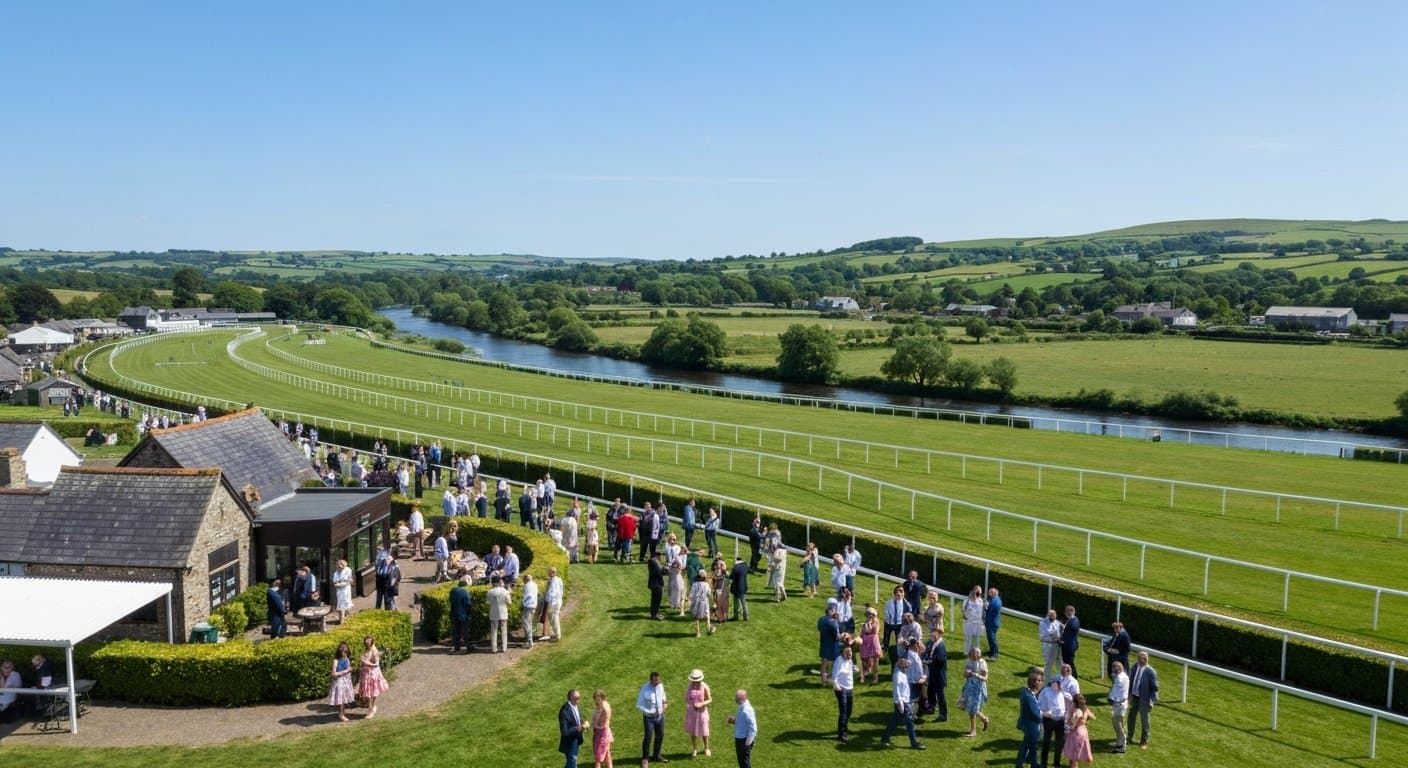
A Day Out at Bangor-on-Dee Racecourse
Everything you need for a day at Bangor-on-Dee — getting there, what to wear, enclosures, food and drink, and insider tips for Wales's National Hunt venue.
Read moreBangor-on-Dee Festival Guide
Your complete guide to Bangor-on-Dee Racecourse — the Welsh jump festivals, the summer programme and what makes this North Wales track one of the most characterful in Britain.
Read more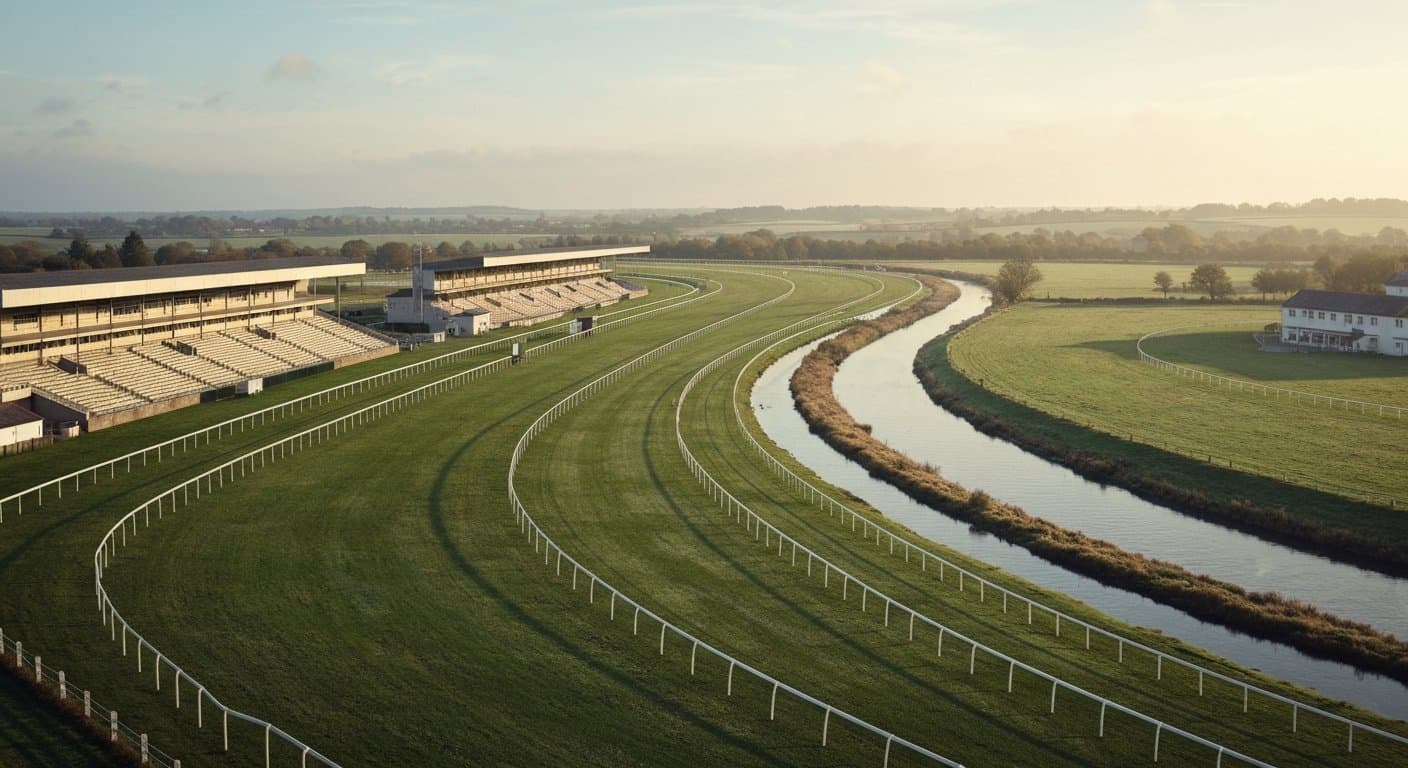
The History of Bangor-on-Dee Racecourse
Over 160 years of racing at Bangor-on-Dee — from the early days in North Wales to Wales's National Hunt venue and the Bangor-on-Dee Champion Chase.
Read moreResearch the field with the AI Race Predictor
Our model publishes calibrated win-probability estimates for UK races — a second opinion to understand a race, not tips. It's open about its record: it doesn't beat the market, and we show exactly how it does.
Work it out & learn the basics
Gamble Responsibly
Gambling should be entertaining and not seen as a way to make money. Never bet more than you can afford to lose. If you or someone you know has a gambling problem, help and support is available.