
Founder & Editor · Last reviewed 2026-04-05
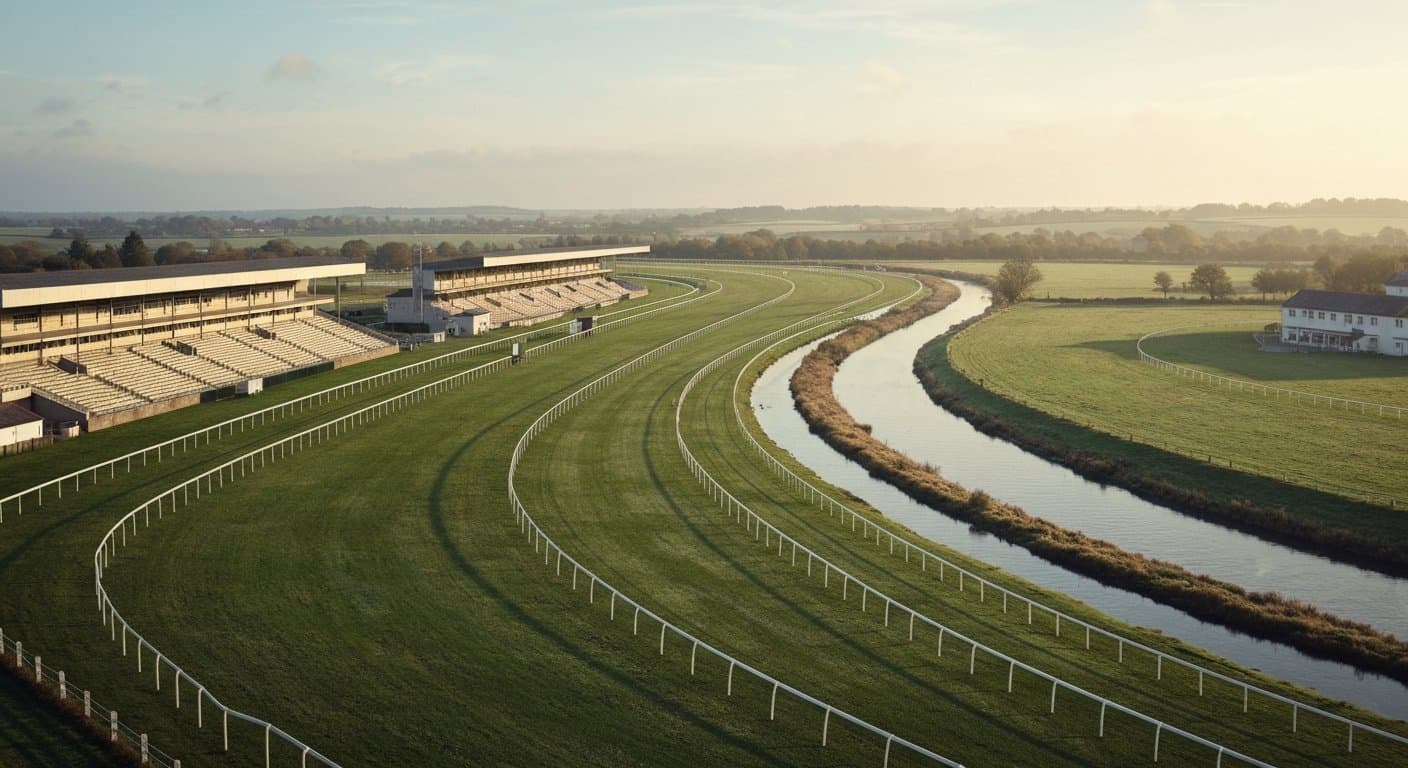
Stand at the rails on a bright March afternoon at Bangor-on-Dee and the view is unlike anything else in British racing. The River Dee bends in a wide arc to the south, silver-grey under a Welsh winter sky, and Pont Bangor — a medieval stone bridge that has stood at this crossing since the thirteenth century — frames the back straight with a calm authority. It is a setting that has changed very little since the first recorded meeting was staged here in 1859, and that continuity is part of what makes this small course so worth understanding.
Bangor-on-Dee Racecourse sits in the village of Bangor-on-Dee in Wrexham county borough, north-east Wales, roughly five miles south-east of Wrexham town itself. The course is entirely National Hunt: hurdles, steeplechases, and National Hunt flat races (bumpers), with no flat programme and no intention of adding one. The circuit is left-handed, essentially flat, and runs to approximately one mile and two furlongs. It is not a track that suits every horse — the tight turns and the fast, level ground reward agility and jumping fluency over raw galloping power — and that specificity has shaped a distinctive local form book that punters have studied for generations.
The River Dee is the defining presence. The Afon Dyfrdwy, as it is known in Welsh, rises high in the Cambrian Mountains near Bala, flows east through Corwen and Llangollen, then bends north-east through Bangor-on-Dee before widening towards Chester and its tidal estuary. At Bangor-on-Dee the river runs through a flat agricultural meander and it is on this meander — productive alluvial land that also floods with some regularity — that the racecourse was laid out. The Dee has shaped the ground conditions at this course in ways that no amount of modern drainage can entirely prevent. When the river rises after heavy rain on the Welsh hills, the course can go under water within hours. Meetings have been abandoned at short notice, sometimes on the morning of race day, and the possibility of flooding is something every trainer, owner, and racegoer accounts for when planning a trip to Bangor.
That vulnerability is not a weakness. It is part of what keeps Bangor-on-Dee honest. The course cannot pretend to be something it is not. It stages around twelve to fourteen fixtures a year across a season that runs from late February or March through to October, with the spring and early autumn months carrying the bulk of the programme. Crowds average around 3,000 to 5,000 on a typical fixture day. The venue has a capacity of approximately 5,000 and on a popular afternoon the enclosures fill with a mix of local racegoers, farming families from across Wrexham and the Dee Valley, and visitors who have made the journey from Chester or Shrewsbury.
The trainer who has defined the modern course above all others is Donald McCain, based at his Bankhouse stables at Cholmondeley in Cheshire, approximately ten miles to the north-east. Bangor-on-Dee is effectively his local track, and his strike rate here has at various points in his career been the highest of any trainer operating at this venue. McCain's father, Ginger McCain, trained Red Rum — winner of the Grand National in 1973, 1974, and 1977 — and while Ginger operated from Southport on the Lancashire coast, the family's deep roots in north-west and north-east Wales racing have made the McCains the human thread running through this course's story.
There is no Bangor-on-Dee Champion Chase, which this page used to name as the signature event. The course has no named feature race; its biggest day is Listed Mares' Trophy Day in November. For the current fixtures and track layout, the complete guide covers everything in detail. What follows is the longer story — from the Victorian Dee Valley to the course as it stands today.
Origins
Origins and Early History
The year 1859 is recorded as the formal establishment of Bangor-on-Dee Racecourse, though racing in the Dee Valley almost certainly predates that date. The mid-nineteenth century was a period of rapid institution-building across British sport: county cricket clubs, football associations, and formal racing companies were all being organised at roughly the same time, and the establishment of a permanent fixture at Bangor-on-Dee fits squarely into that broader pattern. What made this particular location suitable was a combination of factors that had nothing to do with racing — the topography of the river bend, the accessibility of the village, and the social structure of the landed gentry who governed North Wales's agricultural life.
The River Dee has been the central fact of this landscape for thousands of years. The Afon Dyfrdwy — the name translates roughly as the river of the divine water — rises near Bala Lake in Gwynedd and flows for 110 miles before reaching its estuary at Dee Estuary near Chester. Along that course it passes through Corwen, then bends into the Llangollen valley where it runs fast and narrow between limestone cliffs, before broadening out as it turns north-east through Bangor-on-Dee. By the time the Dee reaches Bangor it has lost its mountain character and settled into a wide, slow meander across flat alluvial ground. It was this flat meander — a natural flood plain of well-draining river soil — that the Victorian founders of the racecourse recognised as ideal for a left-handed circuit.
The Dee was not merely a geographical backdrop in 1859. It was the economic spine of the region. For centuries, drovers had used the river crossings at Bangor-on-Dee and the wider Dee valley to move cattle from the Welsh hills to the markets at Chester and beyond. Bangor-on-Dee itself sat at a critical ford and later a bridge crossing: Pont Bangor, the medieval stone bridge that still stands adjacent to the racecourse, was for centuries one of the few reliable crossing points on the Dee between Llangollen and Chester. The cattle trade along the Dee valley made the village a node of agricultural commerce, and it was the gentry who profited from that trade — the landowners, the auctioneers, the solicitors of Wrexham — who provided the social and financial foundation for organised racing.
The village's medieval character was already well established by the time the racecourse was founded. The Church of St Dunawd, which stands at the heart of Bangor-on-Dee, dates from the twelfth century and takes its name from a sixth-century Welsh saint associated with the monastery of Bangor-is-y-coed, thought to be one of the earliest Christian communities in Britain. The monastery itself — sacked by the Northumbrian king Aethelfrith in 616 AD, according to the Venerable Bede — is believed by some historians to have been located near this bend of the Dee. By the Victorian era the village was small but historically layered in the way that Welsh border settlements so often are: the fabric of the buildings, the church, the bridge, and the farmsteads told a story that stretched back to early medieval Wales.
That border character is important to understanding why Bangor-on-Dee developed in the way it did. The course sits in the debated borderlands between England and Wales, roughly five miles east of Offa's Dyke — the earthwork constructed by King Offa of Mercia between approximately 757 and 796 AD to formalise the boundary between his kingdom and the Welsh princedoms to the west. The Dyke runs north-south through this part of north-east Wales, and Bangor-on-Dee lies just inside what was historically a contested zone: neither wholly Welsh nor wholly English, but shaped by centuries of movement, settlement, and cultural exchange across the border. In the nineteenth century this meant the racecourse drew from two distinct communities: the Welsh-speaking farming families of the Dee Valley and the English-speaking gentry of Cheshire and Shropshire who had long held estates in the region.
The arrival of the railway in the 1840s transformed what was possible for a rural racecourse in north-east Wales. Ruabon station, approximately three miles to the west of Bangor-on-Dee, opened in 1846 as part of the Great Western Railway's Shrewsbury to Chester main line. The line connected Shrewsbury to the south with Chester to the north, with Wrexham as the principal intermediate station. Ruabon's position on this line made it an important junction: in 1862 the Llangollen and Corwen Railway opened from Ruabon westward along the Dee valley towards Llangollen and eventually Corwen, following the river through some of the most dramatic countryside in Wales. For the racecourse, the Shrewsbury to Chester line was the key: it brought racegoers from Shrewsbury and from Chester within reasonable reach of Bangor-on-Dee, and it allowed horses to be transported by rail to Ruabon and walked the short distance to the course. Wrexham General station, about five miles north-west of the course, also offered connections from the north and from Liverpool via the Chester route.
The railway context explains why Bangor-on-Dee's early meetings attracted horses from a wider catchment area than the local district alone. Trainers from Cheshire, from the Shropshire hills, and from the training centres around Shrewsbury would have found Ruabon a feasible destination for a runner. The early programme included both flat and jumping races — as was common at smaller Victorian venues — before the course settled definitively on National Hunt racing in the early decades of the twentieth century.
Flooding was a presence from the very beginning. The Dee's tendency to rise quickly during periods of prolonged rain on the Welsh mountains was well understood by everyone who lived in the valley. A river that has its headwaters in the Berwyn Mountains and the uplands near Bala will respond fast to Atlantic weather systems moving in from the west, and the flat meander at Bangor-on-Dee gives the water nowhere to go except across the course. Victorian race committees would have known this and built their fixture schedule accordingly, concentrating meetings in the drier months and accepting the risk that a wet autumn or an unseasonably warm spring melt could put paid to a planned meeting. The threat of flooding is not a modern problem; it is as old as the course itself, and it has always been part of the character that distinguishes Bangor-on-Dee from every other National Hunt venue in Britain.
By the close of the nineteenth century the course had established its core identity: a small, rural, left-handed track on the Welsh border, drawing from the farming and landowning communities of north-east Wales and the Cheshire plain, with the River Dee as both its greatest asset and its most persistent challenge.
The Golden Era
The Golden Era
The Victorian and Edwardian decades at Bangor-on-Dee were characterised less by glamour than by steady institutional growth. There were no great grandstands built in the manner of Epsom or Ascot, no royal patronage, and no particular ambition to compete with the major National Hunt festivals at Cheltenham or Liverpool. What the course had instead was a dependable position in the regional calendar, a loyal following among the farming and landowning families of north-east Wales, and a track that provided an honest test of jumping ability on ground that could change dramatically from one meeting to the next.
The early programme, as recorded in contemporary Welsh and Cheshire newspaper reports, mixed flat events with jumping races in the manner typical of smaller Victorian courses. The flat programme faded as the twentieth century approached and the National Hunt emphasis became absolute. This shift reflected a broader trend in British racing: smaller provincial tracks found it increasingly difficult to compete with the better-resourced flat venues and instead carved out identities as jumping specialists. At Bangor-on-Dee the transition suited the terrain and the local community. The agricultural families of the Dee Valley were more naturally drawn to jumping — the sport of the hunting field — than to flat racing, and the course's patron base increasingly reflected that preference.
Gentry households from across north-east Wales and the border counties provided horses, patronage, and prize money throughout the Edwardian era. The estates of Denbighshire, Flintshire, and Cheshire produced a steady stream of point-to-point horses that graduated to the racecourse, and Bangor-on-Dee was the natural venue for that transition. The course served a function in the regional equestrian economy that went beyond entertainment: it was a market-place for jumping ability, a place where a horse's potential could be tested in a competitive environment before decisions were made about entering it for more prestigious events.
The First World War interrupted racing at Bangor-on-Dee as it did at almost every British track, with the Jockey Club suspending National Hunt meetings for much of the conflict. The course resumed after the armistice of 1918 and by the early 1920s had re-established its place in the NH calendar. The inter-war period brought gradual improvements to the facilities and a firmer commitment to a defined racing programme. The North Wales training community that had always fed runners into the Bangor-on-Dee programme was joined increasingly by trainers from Cheshire and Shropshire who recognised that the course offered opportunities that the larger tracks did not.
The character of the North Wales NH training scene in this period deserves emphasis. The uplands of Denbighshire and the Clwydian range offered excellent galloping ground, and several small yards operated in the area surrounding Wrexham. The proximity of the Cheshire plain — with its tradition of hunting across the Cheshire Hunt country — meant that horses schooled over the Cheshire fences were natural candidates for a jumping track just across the border. The cross-pollination between Welsh farming stock and Cheshire hunting horses produced runners that suited Bangor-on-Dee's particular demands: tough, adaptable, and at home on fast ground.
The Second World War again halted the programme, and racing at Bangor-on-Dee did not resume until the post-war settlement had been reached and civilian life could be rebuilt. When fixtures returned in the late 1940s the course found a landscape that had changed considerably. Prize money was meagre, the prize fund drawn from a gate income that was itself constrained by petrol rationing and the general austerity of post-war Britain. Yet the course survived, as smaller tracks often do, because the local community had no alternative venue for National Hunt racing within reasonable distance. Chester offered flat racing at its own historic course, but for jumps fans in Wrexham and the Dee Valley, Bangor-on-Dee was the only option.
Through the 1950s and 1960s the course gradually modernised. The parade ring, the weighing room, and the enclosure facilities were improved incrementally, with investment drawn from gate receipts and private subscription. This passage used to say that a Bangor-on-Dee Champion Chase was established as the centrepiece of the calendar in this period. There is no such race and there never was. What the course did eventually acquire, in 2016, was its first and only Listed race, a mares' novices' chase run in November. The rest of the sentence described a steeplechase meant to attract the best horses the regional training community could produce. The race built a reputation for competitive renewals, partly because the track truly tests a horse's jumping and partly because the flat surface gives no great advantage to a particular running style, meaning fields were often closely matched.
The trainer who came to define this period of consolidation at Bangor-on-Dee was not based in Wales at all. Ginger McCain — properly Arthur Stephen McCain — operated from a yard behind a used car lot on Upper Aughton Road in Southport, Lancashire, approximately fifty miles north of the course. Ginger is remembered above all for Red Rum, the greatest Grand National horse of the twentieth century: Red Rum won at Aintree in 1973, 1974, and 1977, and finished second in 1975 and 1976. But before Red Rum became a national institution, he was a racehorse who had been running since he was a two-year-old in 1967 and had accumulated a substantial race record across the North of England and North Wales circuit. The possibility that Red Rum visited Bangor-on-Dee during his long career before the Aintree successes is real: he ran on numerous smaller tracks in the region and the Bangor-on-Dee programme was precisely the type of engagement Ginger McCain would have considered for a horse working his way through the grades.
Ginger McCain's presence in the North West/North Wales racing community set an important precedent for the course. The area between Liverpool, Chester, and the North Wales border was, and remains, a distinct micro-climate of British NH racing: yards on the Cheshire plain, horses drawn from the Welsh mountains and the Irish point-to-point circuit, and a loyal regional audience that followed the same names from Aintree down to the smaller tracks like Bangor-on-Dee. When Ginger's son Donald McCain took over the family training operation and relocated to Bankhouse at Cholmondeley in Cheshire in 2006, he inherited not just his father's horses and staff but also this regional identity. Donald's yard at Cholmondeley is approximately ten miles north-east of Bangor-on-Dee — close enough that Bangor is effectively his home track, the place where he brings younger horses to gain experience and where his established runners often appear early in a campaign.
The Welsh identity of the course was never purely linguistic, though the Welsh-speaking character of the surrounding community always gave it a particular flavour. North-east Wales is bilingual territory: Welsh and English have coexisted here since at least the Tudor period, when the Acts of Union brought the two countries under a single legal framework while leaving Welsh cultural and linguistic identity intact. At Bangor-on-Dee the bilingualism was most visible in the farming community: Welsh-speaking hill farmers from the Berwyn foothills and the Dee Valley uplands would mix in the enclosures with English-speaking landowners from Cheshire and the Wrexham suburbs. The course never made a point of its Welsh identity in the way that a festival like the Royal Welsh might, but it embodied it simply by being where it was and drawing the community it drew.
By the end of the 1970s Bangor-on-Dee had settled into a rhythm that would carry it through to the modern era: a focused National Hunt programme, a loyal regional audience, independent ownership, and a spring and autumn calendar shaped as much by the River Dee's behaviour as by any administrative decision.
Famous Moments
Famous Moments
Bangor-on-Dee is not a course that makes the national racing headlines in the manner of Cheltenham or Aintree. Its famous moments tend to be local in scale — a horse winning with a performance that would be quietly noted in the Sporting Life or the Racing Post, a Donald McCain winner that opened his account for a new season, a meeting called off at dawn because the Dee had risen three feet overnight. That modesty of scale does not diminish the significance of these moments. For the horses, trainers, and racegoers who experienced them, they are as vivid as any Grade One.
The flooding of the course is, in its way, the most dramatic recurring event in Bangor-on-Dee's history. No other racecourse in Britain is as directly governed by a river system as this one, and the meetings that have been abandoned because of the Dee's behaviour carry a particular character. A typical pattern runs as follows: heavy rain falls in the uplands of Snowdonia or on the Berwyn Mountains over a forty-eight to seventy-two hour period; the Dee rises at Corwen and Llangollen; by the time the flood pulse reaches Bangor-on-Dee the racecourse groundstaff are already watching the river bank and the clerk of the course is on the telephone to the British Horseracing Authority. In December 2015, Storm Desmond brought exceptional rainfall across Wales and north-west England; the Dee burst its banks at multiple points along its length and the racecourse was submerged to a depth that made any inspection pointless. The meeting planned for that week was abandoned, and the course did not race again until conditions had fully recovered. This was not an isolated event. The course also lost meetings to flooding in 2012 and in several earlier years during the 2000s, and the prospect of abandonment is factored into the betting market whenever Bangor-on-Dee stages a fixture after prolonged wet weather.
Donald McCain's record at Bangor-on-Dee stands as one of the defining statistical facts of the modern course. Over the period from his first runners as a licenced trainer in 2006 through to the mid-2020s, McCain has at various points recorded a strike rate at Bangor-on-Dee of between 25 and 35 per cent — figures that place him comfortably ahead of every other trainer at this venue. The proximity of Cholmondeley is one explanation: a short ten-mile journey to the racecourse means horses arrive relaxed, trainers can attend easily, and the local knowledge built up over hundreds of runners at this track gives an edge in race planning. But the margin also reflects something more: McCain has consistently targeted Bangor-on-Dee with horses that suit the flat, left-handed circuit, and he has used the course as a place to introduce horses to competitive racing before pointing them at more prestigious engagements.
Among the horses McCain has sent out at Bangor-on-Dee, several went on to careers of real distinction at the higher level. Peddlers Cross, trained by McCain and ridden by Jason Maguire, won the Supreme Novices' Hurdle at the Cheltenham Festival in March 2011. His earlier career included engagements at smaller courses in the North West, and Bangor-on-Dee was part of the education that brought him to Festival readiness. The trajectory from a winter bumper or novice hurdle at Bangor-on-Dee to a Festival target in March is a standard one for the McCain operation, and racegoers who attended the course in the early months of the year were sometimes watching the first chapter of a career that would be completed at Cheltenham or Aintree.
Jason Maguire was for many years the jockey most closely associated with McCain's Bangor-on-Dee winners. Maguire's partnership with McCain produced winners across the full range of the NH programme, and his understanding of the track — the tight turns, the importance of settling a horse early on the flat circuit, the way the going can ride differently close to the river bank — made him a formidable operator here. Brian Hughes, who has been champion jockey in the North, also accumulated winners for McCain at Bangor-on-Dee, and his association with the course reflects the broader pattern of northern NH jockeyship being tested and honed at this kind of smaller, demanding venue.
There is no Bangor-on-Dee Champion Chase, and this paragraph used to recall several memorable renewals of it. The course's one Class 1 race is a Listed mares' novices' chase over 2m 1f 77y in November, first staged in 2016, and we hold no verified winners for it. What follows described the seasons when the going was good or good to soft, allowing a larger field to run on level terms. In years when the ground has come up soft or heavy — after wet weather has made the Dee plain saturated — the race has sometimes fallen to a horse with exceptional stamina that could grind through the going while others flagged.
The medieval backdrop of the course has occasionally asserted itself in ways that go beyond mere aesthetics. In the spring of 2010, when the course was experiencing a run of good weather and the Dee was running low and clear, a meeting was staged on a Saturday afternoon that brought nearly 5,000 racegoers through the gates — effectively filling the course to capacity. The view from the grandstand on that day, with Pont Bangor standing in the middle distance and the Dee reflecting the late afternoon sun, was described by one racing journalist as the finest setting for a day's jumping racing in Britain. The claim is subjective, but it captures something real about what the course offers on its best days: a combination of competitive NH racing and a physical landscape that connects the sport to something much older than the Racing Post or the BHA.
The question of whether Red Rum himself raced at Bangor-on-Dee is one that racing historians have not conclusively resolved. Red Rum began racing as a two-year-old in 1967 and was extensively campaigned over the next six years before his Grand National victories in 1973 and 1974. He was raced on the flat and over hurdles before being switched to fences, and his early career included appearances at a large number of smaller tracks across the North of England and North Wales. The course at Bangor-on-Dee fits the profile of a venue he could plausibly have visited: it was within range of Ginger McCain's Southport base, it staged NH fixtures at the appropriate level for a horse working his way up the ladder, and the Dee Valley was well within the geographical circuit that Red Rum covered in his pre-Aintree years. No confirmed record of a Red Rum start at Bangor-on-Dee has been published, but the possibility remains a point of interest for anyone researching the great horse's extraordinary racing career.
The course has also served as a finishing line for careers as much as a starting point. Several horses whose Festival campaigns had come to an end have run out their seasons at Bangor-on-Dee, winning modest prizes in front of modest crowds — and there is a particular quality to a winner's enclosure moment at a small course that the big festivals, for all their atmosphere, cannot replicate. The trainer who leads in a horse here is often someone who knows the horse intimately, has backed it through a difficult period, and takes as much satisfaction from a win at Bangor-on-Dee as from anything on a grander stage.
Taken together, these moments — the abandoned meetings, the McCain winners, the Maguire partnerships, and the spring afternoons beside the Dee — constitute a history that is local in the best sense: specific, continuous, and belonging to a particular place.
The Modern Era
The Modern Era
Bangor-on-Dee Racecourse entered the twenty-first century in the ownership of Bangor-on-Dee Races Ltd, an independent company that has operated the venue without the backing of a major racecourse group throughout its modern history. That independence matters. The course has not been absorbed into the Arena Racing Company network or the Jockey Club Racecourses portfolio, and the implications of that status are visible in everything from how the fixtures list is constructed to the nature of the raceday experience. Independent racecourses tend to reflect their communities more directly than group-owned venues, and Bangor-on-Dee is no exception. The course's priorities — maintaining a spring, summer, and early autumn National Hunt programme suitable for north-east Wales and the Cheshire border — are shaped by the needs of the regional community rather than by corporate strategy.
The modern fixture programme runs to approximately twelve to fourteen race days per year. The season opens in late February or March, depending on ground conditions and the Dee's behaviour after the winter, and runs through to October. The spring fixtures in March and April carry particular importance: the ground is usually at its best after the winter rains have drained away and before the summer dryness firms it up, and the fields for NH hurdles and chases at this stage of the season are well-populated with horses that have been building their programmes through the winter months. The autumn fixtures in September and October bring a different quality to the meeting: the new season's novice hurdles are beginning to take shape, and trainers use Bangor-on-Dee to give their bumper winners from the previous spring their first taste of competitive jumping.
Prize money at Bangor-on-Dee reflects its position in the British NH hierarchy. The course is not competing with Cheltenham or Ascot for the biggest prizes, and it does not attempt to. There is no Bangor-on-Dee Champion Chase, whatever this page used to say about its prize fund. The biggest purse of the year goes to the Listed mares' novices' chase in November. On a typical fixture day the individual race values sit well below that — consistent with a grassroots NH venue serving a regional audience. This level of prize money attracts horses from the Cheshire, Shropshire, and North Wales training establishments that form the core of the course's supply base, and it keeps the programme accessible to owner-trainers and small yards that could not afford to target better-funded races elsewhere.
Donald McCain's dominance of the modern programme cannot be overstated. Since relocating from Southport — where his father Ginger had operated — to Bankhouse Farm at Cholmondeley in 2006, Donald McCain has built one of the most successful National Hunt yards in the North of England. His runners appear at every track from Carlisle to Chepstow, but Bangor-on-Dee is where his percentage figures are most consistently impressive. The short journey from Cholmondeley to the course, the familiarity built over hundreds of runners, and the care with which he targets the programme here have made him the dominant presence in the winner's enclosure. In several seasons he has provided more than a quarter of all winners at the course — a figure that shapes the betting market decisively.
The jockeys most associated with McCain's Bangor-on-Dee runners have changed as the years have passed. Jason Maguire rode prominently for the yard through the late 2000s and early 2010s, combining his work for McCain with rides for other leading northern trainers. Leighton Aspell, before his retirement from the saddle in 2017, was another who appeared regularly on McCain horses at smaller northern tracks. Brian Hughes, who has been crowned champion jump jockey and is firmly established as the leading rider in the North, has been a significant part of the McCain operation at Bangor-on-Dee in recent seasons. The relationship between Hughes and the course is characteristic of northern NH racing: the champion jockey will take rides at Bangor-on-Dee without hesitation because the course is a real part of the northern circuit, not a second-rank engagement to be avoided in favour of busier venues.
Bangor-on-Dee sits within a Welsh racing context that has changed significantly since the opening of Ffos Las in Carmarthenshire in 2009. Before Ffos Las opened, Bangor-on-Dee was effectively the only dedicated National Hunt venue in Wales — Chepstow offers a mixed programme but its NH fixtures represent only part of a broader card. The arrival of Ffos Las as a purpose-built NH track gave Welsh racing fans a second option in the south of the country, and the two Welsh NH venues now serve geographically distinct audiences. Bangor-on-Dee draws from north-east Wales, Wrexham, Chester, and the Cheshire border; Ffos Las serves south-west Wales and the valleys. Chepstow, straddling the England-Wales border in the south-east, sits between them. For anyone based in Wrexham or the Dee Valley, Bangor-on-Dee is the local course in a way that neither Ffos Las nor Chepstow can replicate.
The wider region has grown in profile during the 2020s in ways that have benefited the racecourse indirectly. Wrexham, the largest town in North Wales with a population of approximately 67,000, was previously best known beyond Wales as an industrial town with a strong football tradition. In February 2021 the Hollywood actors Ryan Reynolds and Rob McElhenney completed their takeover of Wrexham AFC, which had been playing in the National League — the fifth tier of English football — since their relegation from the Football League in 2008. The takeover attracted global media attention and the documentary series Welcome to Wrexham brought the town's story to an international audience. Wrexham AFC were promoted back to the Football League as National League champions in the 2022-23 season and then to League One in 2023-24. The raised profile of Wrexham as a town — and the surge in tourism and interest that the football club's story generated — has put north-east Wales on a wider map for visitors who might previously have had no reason to consider the region.
Eight miles to the west of Bangor-on-Dee, the Pontcysyllte Aqueduct carries the Llangollen Canal across the River Dee on a cast-iron trough supported by eighteen stone piers. Built between 1795 and 1805 by the engineer Thomas Telford, it is 307 metres long and at its highest point stands 38 metres above the Dee. The aqueduct was awarded UNESCO World Heritage Site status in 2009, recognising it as a masterpiece of civil engineering. It draws a substantial number of visitors to the Dee Valley each year, and racegoers who combine a day at Bangor-on-Dee with a walk on the aqueduct towpath or a trip to Llangollen are experiencing a concentration of history, landscape, and racing that is available nowhere else in Britain.
The modern course continues to invest modestly in its physical facilities. The parade ring and winners' enclosure serve their functions, the viewing from the main enclosure is good across the flat circuit, and the catering and hospitality offer is adequate for a course of this size. The independent ownership model means that capital investment is constrained, but it also means that decisions about the course's future are made by people with a direct stake in its community role, not by a remote management board balancing against other assets in a portfolio.
Bangor-on-Dee's Legacy
Legacy and Enduring Identity
More than 165 years after the first formal meeting, Bangor-on-Dee Racecourse retains an identity that is instantly legible to anyone who has spent time at smaller British National Hunt venues: rural, specific, shaped by its landscape, and entirely without pretension. The River Dee is the course's oldest story and its most persistent one. Every season the same calculation must be made — whether the Dee will allow the fixture to go ahead, whether the alluvial plain on which the track sits will drain in time, whether the groundstaff will be walking the course at 6am looking at a submerged home straight or a firm green surface ready for a day's racing. No other British racecourse is as directly governed by a river system, and that relationship with the natural world is not a curiosity but a structural feature of the course's identity.
The left-handed, flat, one-mile-two-furlong circuit beside the medieval Pont Bangor bridge is a demanding track for horses and a telling one for trainers. The tight turns, the fast ground, and the requirement for clean jumping over the steeplechase fences all reward horses with agility and precision over those with straightforward galloping ability. The form book at Bangor-on-Dee does not translate automatically to any other track, and that specificity — the way the course produces its own logic, its own patterns, its own recurrent winners — is one of the clearest marks of a venue with real character.
Donald McCain's presence at Cholmondeley, ten miles to the north-east, is the most important single fact in the modern course's story. His dominance of the regional NH programme, his use of Bangor-on-Dee as a development track for younger horses, and his contribution of a large proportion of the winner's enclosure occupants each season have made him the human embodiment of the course's north-of-Wales, border-country identity. That identity extends to the Welsh-speaking community of the Dee Valley, to the agricultural families from Wrexham and Denbighshire who fill the enclosures on a busy spring Saturday, and to the wider North Wales cultural landscape — the Llangollen Eisteddfod, the Pontcysyllte Aqueduct, the medieval church of St Dunawd — that gives this small corner of the Welsh borders its distinctive texture.
Bangor-on-Dee is one of three venues that constitute Welsh National Hunt racing: alongside Ffos Las in Carmarthenshire and Chepstow on the English border in Monmouthshire, it provides the northern anchor of the Welsh NH circuit. The three courses serve different communities and carry different characters, but they share a function: they keep National Hunt racing alive in Wales and give the Welsh racing community somewhere to follow its sport without crossing entirely into England. At Bangor-on-Dee that function has been continuous since 1859, and the course's survival — through two world wars, multiple floods, changing prize money structures, and the competitive pressures of the modern racing industry — is itself a form of legacy worth acknowledging.
Frequently Asked Questions
When was Bangor-on-Dee Racecourse founded?
Bangor-on-Dee Racecourse was formally established in 1859, making it one of the oldest National Hunt venues in Wales. Informal racing in the Dee Valley is believed to predate the formal foundation, though 1859 is the date recorded for the first organised meetings on the current site.
What is distinctive about Bangor-on-Dee's setting?
The course runs directly beside the River Dee (the Afon Dyfrdwy in Welsh) on a flat alluvial meander in the village of Bangor-on-Dee, Wrexham. The medieval Pont Bangor bridge — a stone crossing that dates from the thirteenth century — stands as a landmark backdrop to the back straight. The course is prone to flooding when the Dee rises after heavy rain on the Welsh mountains, and meetings have been abandoned at short notice on multiple occasions. It is one of the most picturesque settings in British National Hunt racing.
Who owns Bangor-on-Dee Racecourse?
The course is owned and operated by Bangor-on-Dee Races Ltd, an independent company. It is not part of any major racecourse group such as Arena Racing Company or Jockey Club Racecourses. This independent status means the course's decisions are made with the regional community in mind rather than as part of a wider corporate portfolio.
How do I get to Bangor-on-Dee Racecourse?
By rail, the nearest stations are Ruabon (approximately 3 miles west) and Wrexham General (approximately 5 miles north-west), both served by the Shrewsbury to Chester line operated by Transport for Wales. Taxis and shuttle buses are available from both stations on race days. By road, the course is accessed via the A525 from Wrexham or from the A5 at Ruabon; there is on-site parking. The postcode for the racecourse is LL13 0BH.
What type of racing does Bangor-on-Dee stage?
Bangor-on-Dee is a National Hunt-only venue. The programme covers hurdle races, steeplechases, and National Hunt flat races (bumpers). There is no flat racing programme. The season runs from late February or March through to October, with fixtures concentrated in the spring and early autumn. The course stages approximately twelve to fourteen fixture days per year.
Which trainer dominates at Bangor-on-Dee?
Donald McCain, who trains at Bankhouse Farm at Cholmondeley in Cheshire, approximately ten miles north-east of the course, has been the dominant trainer at Bangor-on-Dee throughout the modern era. His proximity to the course, his detailed knowledge of the track, and his practice of targeting the programme with horses that suit the flat, left-handed circuit have produced strike rates of 25 to 35 per cent at various points in his career. McCain's father, Ginger McCain, was the trainer of Red Rum — three-time Grand National winner (1973, 1974, 1977) — and the family's deep roots in North West and North Wales racing made Donald's connection to Bangor-on-Dee a natural continuation of that regional tradition.
Share this article
More about this racecourse
All Bangor-on-Dee guides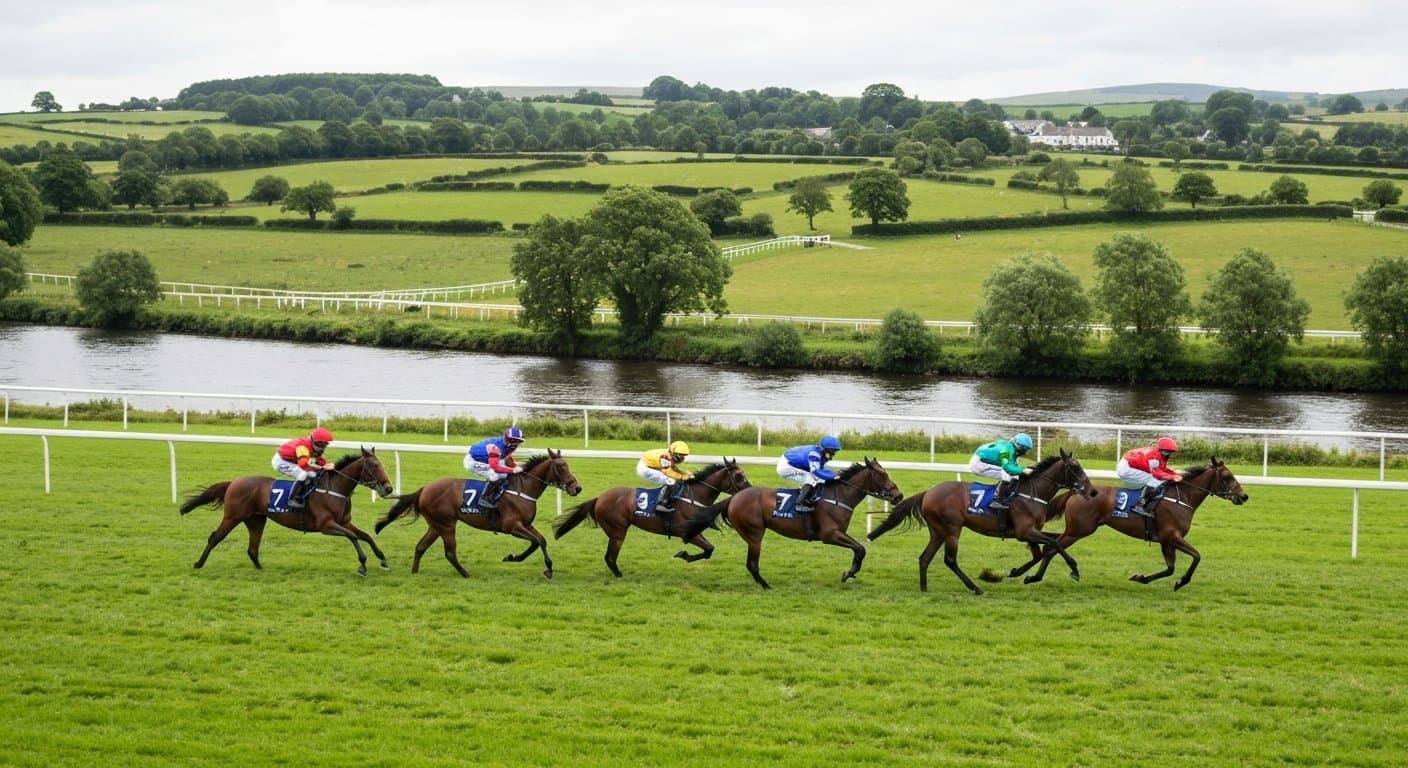
Welsh Racing at Bangor-on-Dee: Complete Guide
Welsh racing at Bangor-on-Dee — the Champion Chase, key meetings and National Hunt at Wales's only dedicated jumps venue.
Read more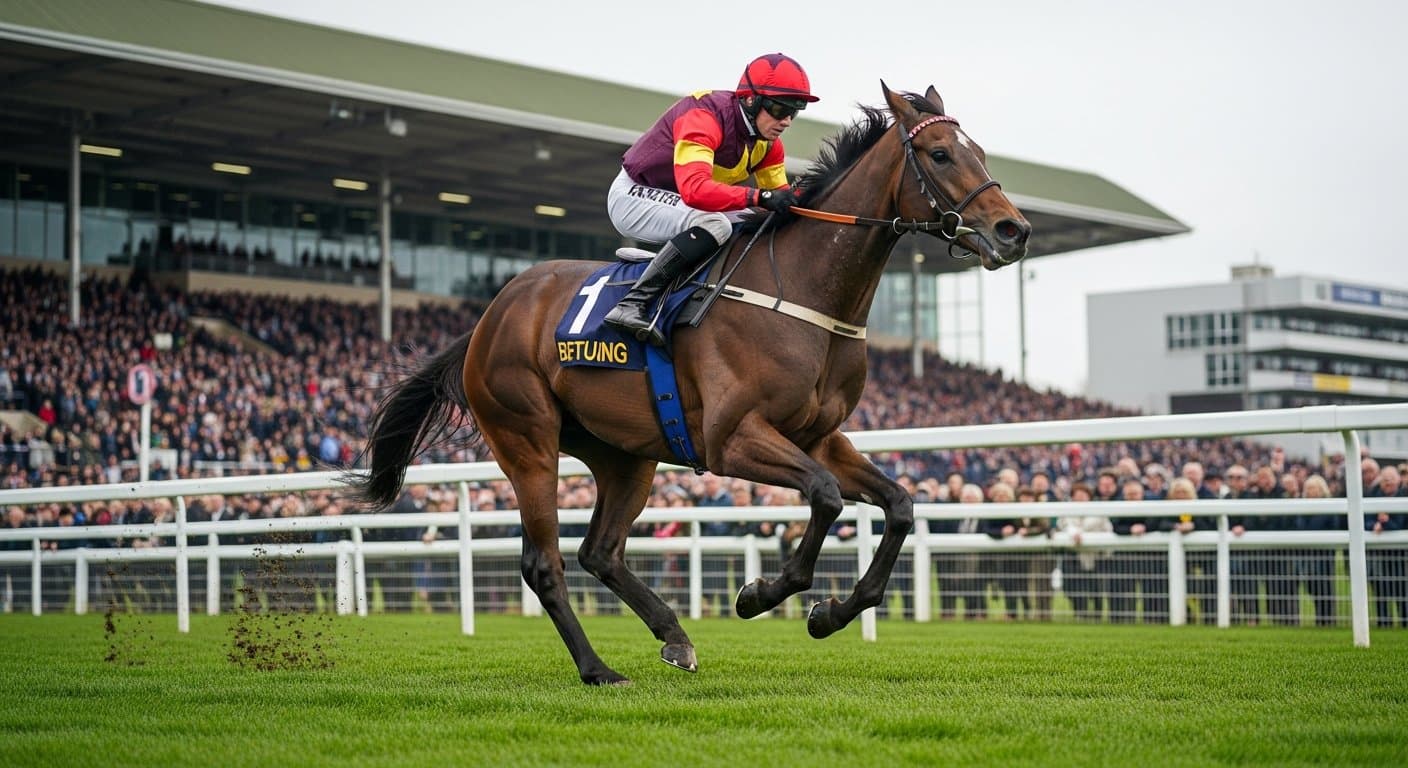
Denman at Bangor-on-Dee: The Complete Story
Denman, the 2008 Cheltenham Gold Cup winner, won a novice hurdle at Bangor-on-Dee in 2006. The story of how the Welsh course hosted a future champion.
Read more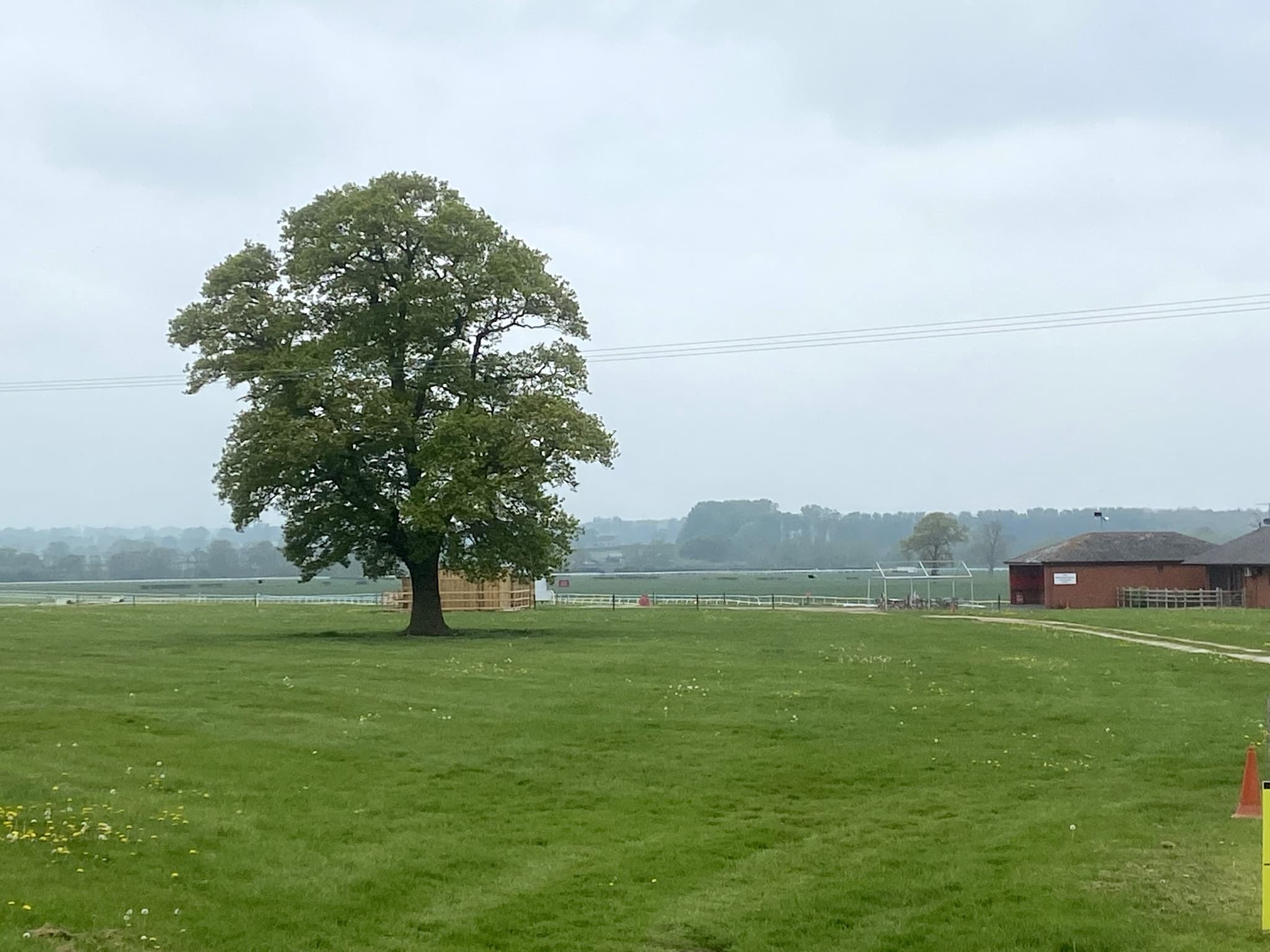
August Bank Holiday Jump Day at Bangor-on-Dee: The Complete Guide
Your complete guide to Bangor-on-Dee's August Bank Holiday Monday — one of Britain's most pleasant summer jump days, set along the River Dee in North Wales, drawing 5,000+ from across the Welsh Marches and North West England.
Read morePhotos on this page are used under Creative Commons licences. Titles, sources and licence links for each one are on our image credits page.
Gamble Responsibly
Gambling should be entertaining and not seen as a way to make money. Never bet more than you can afford to lose. If you or someone you know has a gambling problem, help and support is available.