
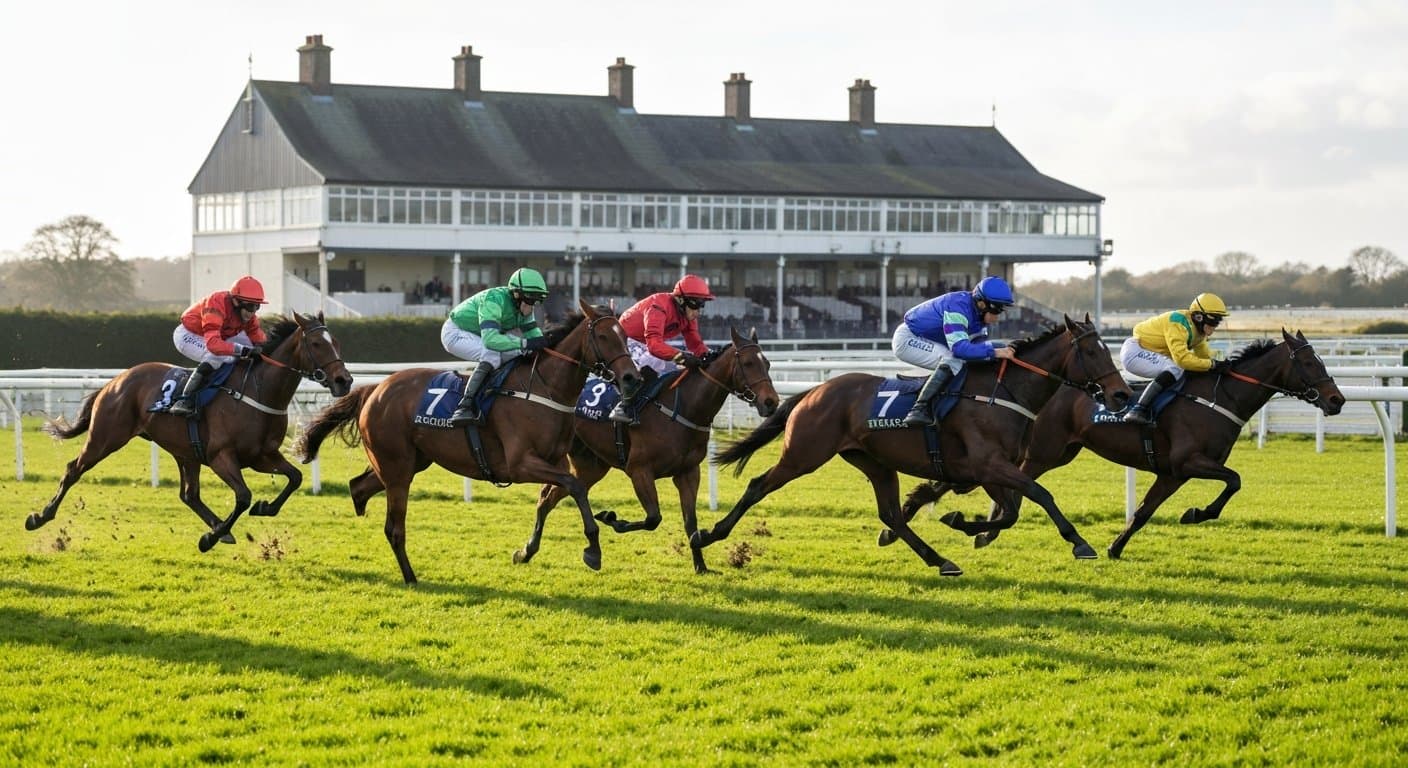
Founder & Editor · Last reviewed 2026-03-02
Down Royal sits six miles south of Belfast in County Down, making it the northernmost major racecourse on the island of Ireland. The course stages both flat racing in summer and National Hunt racing from autumn through spring. It is right-handed, broadly galloping, and fundamentally fair — no extreme quirks of layout that systematically distort results. What defines Down Royal as a betting venue is not its track geometry but the November festival meeting, which draws Grade 1 fields that few courses outside the major venues can match.
The Ladbrokes Champion Chase — a Grade 1 steeplechase over three miles — is one of the most important early-season Grade 1 chases in the Irish National Hunt calendar. It consistently attracts the top staying chasers from Willie Mullins, Gordon Elliott, and Henry de Bromhead, and winners have then contested Gold Cups at Cheltenham and Punchestown. For bettors with interests in ante-post markets, Down Royal form in November is among the most directly applicable pre-Cheltenham evidence available anywhere.
Key angles before betting at Down Royal:
- The November festival is the only premium betting event — the Champion Chase and Ladbrokes Hurdle draw Grade 1 quality; the rest of the calendar is NH handicap and conditions racing of a significantly lower profile
- The biggest Irish stables target the festival specifically — Mullins and Elliott typically account for half or more of the festival's winners; when either sends a horse with a clear preparation target, it is a serious contender
- Going in November is consistently Good to Soft — County Down autumn rainfall is reliable; horses without Good to Soft NH form arrive with a going uncertainty the market does not always price adequately
- Grade 1 form here feeds directly into Cheltenham ante-post markets — Down Royal Champion Chase winners are standard candidates for Gold Cup and Ryanair Chase betting; using November Down Royal form for March planning is the most productive long-term use of this course
- Course form on the galloping circuit is significant — Down Royal's track creates a repeating profile of winners; previous course performers return with real advantage
- Northern Irish local yards have an edge in lesser races — in spring and summer NH handicaps, trainers based in Northern Ireland and the southern counties of Ireland understand the course and going better than mainland British visitors
- The flat programme is modest — summer flat meetings at Down Royal are not a priority for quality betting; the field sizes and competitive depth are lower than at the equivalent class of meeting on the Irish flat circuit
The complete guide to Down Royal covers the course history and layout. The Ladbrokes Champion Chase guide provides specific race analysis. The Northern Ireland Festival guide covers the full November meeting. The day out guide addresses visitor logistics for those travelling to County Down.
Bet on Down Royal
Place your bets on Down Royal races with a trusted bookmaker.

Promo code BETFRED50. New customers only. Register, deposit with a Debit Card, and place a first bet of £10+ at Evens (2.0)+ on Sports, to be settled within 7 days, to get £30 in Sports Free Bets and £20 in Bet Builder Free Bets within 24 hours of settlement. 7-day expiry. Eligibility & payment exclusions apply. Full T&Cs apply. Take Time to Think. BeGambleAware.org. 18+. Full T&Cs.

Promo code R30. New UK customers only, 18+. Register, deposit £10 or more, then place a £10 single cash bet at odds of 1/2 (1.5) or greater on any sports market (excluding Virtuals). Once the qualifying bet settles you get £30 in Free Bets (3 x £10) — the qualifying bet can win or lose. Free Bets are valid on any sports market excluding Virtuals, expire in 7 days, are non-withdrawable and must be used in full. Excluded deposit methods apply (including PayPal, Apple Pay, Skrill and NETELLER). Named bets such as Lucky 15 do not qualify. If you cash out the qualifying bet, or it is voided, you are no longer eligible for the offer. Ends 31.12.26. Full T&Cs apply. Please gamble responsibly. BeGambleAware.org. 18+. Full T&Cs.

Promo code BET40GET20. New UK customers, 18+. Register with the code and place a first bet of £40 or more at Evens (2.0) or greater. Receive 2 × £10 free bets: the first credited automatically once the qualifying bet settles, the second 24 hours later. Free bets must be placed at minimum odds of 4/1 (5.0), expire 24 hours after credit, and the free-bet stake is not returned with winnings. Debit card deposits only. Take Time to Think. BeGambleAware.org. 18+. T&Cs apply. Full T&Cs.

50% of your first-day net losses refunded as a free bet, capped at £25. New UK customers aged 18+ only. To qualify, deposit and place a first bet of £10 or more on any sport at minimum odds of evens (2.00), then place at least two further bets on different events, each worth at least 50% of your largest bet, all at evens (2.00) or greater. Losses are counted from your first settled bet until 23:59 the same day. Place a qualifying £10+ bet and you are guaranteed at least a £5 free bet. Bets placed at SP, void bets, cashed-out bets and bets struck with free bets do not count towards the offer. The free bet is credited the day after your qualifying bets settle and must be used within 7 days, after which it expires. It can be used at odds from 1/4 (1.25) up to 250/1 on singles and straight accumulators, but not on Trixie, Patent or Yankee style multiples. Free-bet stake is not returned with winnings. One offer per person, household, address, IP address and device. E-wallet deposits may not qualify, so check the cashier before depositing. Customers registered with GAMSTOP cannot claim. KYC identity verification must be completed before the free bet is credited. Take Time to Think. BeGambleAware.org. 18+. T&Cs apply. Full T&Cs.

New customers, 18+. Choose the sports bonus at sign-up, make a first deposit and receive a 100% bonus up to £50 in your Sports Bonus balance. To convert the bonus to cash, wager it 10x within 30 days. Single bets below Evens (2.00) do not qualify; accumulators do not qualify if any selection is below 1/2 (1.50). Virtual Sports, voided, cancelled, drawn, cashed-out and free-bet wagers do not count towards wagering. Only the first settled bet per event counts. Withdrawing before the wagering requirement is met forfeits the bonus balance including bonus winnings. Real-money funds are used before bonus funds. Deposits via Skrill or Neteller are not eligible. Not valid in conjunction with other promotions. Odds, bet and payment limits apply. 10bet general and promotion T&Cs apply. BeGambleAware.org. 18+. Full T&Cs.

New customers in Great Britain and Republic of Ireland, 18+. Place a £10 fixed-odds qualifying bet at minimum odds of 1/2 (1.50) — single or each-way (only the win part counts), pre-event or in-play, not cashed out early, within 28 days of opening the account. Receive up to £60 in bonuses credited over three days: 3 × £10 fixed-odds free bets (the first on settlement, then 24 and 48 hours later) plus 3 × £5 Total Goals FOOTBALL spread bets and 3 × £5 racing Winning Favourites spread bets, with a £1 racing Race Index spread bet as an extra on top. The spread bets need a full spread-betting account, opened within 28 days of the fixed-odds account and subject to Spreadex's eligibility and appropriateness checks. Free-bet stakes not returned with winnings; free bets valid 28 days from issue. IMPORTANT: the £5 credits are SPREAD bets — sports spread betting carries the risk that losses can exceed your stake. Sports spread-betting customers do not have Financial Ombudsman or FSCS recourse. Take Time to Think. BeGambleAware.org. 18+. T&Cs apply. Full T&Cs.

Promo code WELCOME15, entered under My Bonuses after registering. New UK customers, 18+. Place a first qualifying bet of at least £10 from your cash balance at odds of evens (2.0) or greater within 7 days of opening the account. Once the qualifying bet fully settles you receive £15 in free bets, credited as 3 x £5 tokens with set uses: one £5 accumulator free bet (minimum 4 legs, each leg at 2/5 or bigger), one £5 sports free bet (any market at evens or bigger) and one £5 Sub Cover free bet (selected football player markets at evens or bigger). Free-bet stakes are not returned with winnings. Free bets expire 7 days after they are credited. Void, cashed-out and partially cashed-out bets do not qualify. One offer per customer. Confirm the current terms on BetGoodwin's own welcome-offer page before claiming. Take Time to Think. BeGambleAware.org. 18+. T&Cs apply. Full T&Cs.

New UK customers, 18+. Minimum deposit £10. Place a £10 qualifying single on sports (excluding virtuals) at minimum odds of 1/2 (1.50), settled within 14 days. Deposit-method exclusions apply. Receive £30 in free bets (stake not returned), split £20 for sportsbook use (2 x £10) and £10 for Bet Builder only (2 x £5); Bet Builder does not cover horse racing. Free bets must be accepted within 7 days and expire 7 days after acceptance. No promo code required. Best Odds Guaranteed on UK & Irish racing, subject to having staked over £25 in the previous seven days. Operated by LiveScore Betting and Gaming (Gibraltar) Ltd, UKGC 56859. Confirm the current terms on LiveScore Bet's own promotions page before claiming. Take Time to Think. BeGambleAware.org. 18+. T&Cs apply. Full T&Cs.
18+. BeGambleAware.org
Track Characteristics
Down Royal's circuit is right-handed and measures approximately one mile and three furlongs around. The track runs on relatively flat, well-drained ground with some undulation through the back straight. There are no extreme gradients, no particularly tight bends, and no structural features that create the kind of pronounced track bias seen at Cartmel or Fontwell. Down Royal is, in the standard sense, a fair galloping course — one where the best horse in the field typically wins if the going suits it.
The Galloping Character
The circuit's galloping character means that horses with a long, economical stride and good jumping technique are consistently well-suited. The fences are well-maintained and positioned on ground that gives a consistent take-off, which rewards horses that can jump in rhythm without needing to fiddle or correct their stride at each obstacle. Fluent, accurate jumpers have a structural advantage at Down Royal that is more pronounced than at courses where the fence positioning is more awkward.
Over three miles on this circuit — the Ladbrokes Champion Chase distance — horses complete approximately two full circuits. The galloping nature of the track means that races are run at a real pace from the start. A horse that is a moderate jumper in terms of efficiency, costing small amounts of time and energy at each fence over two laps, can be significantly disadvantaged against a horse that clears fences with minimal interruption to its galloping rhythm. This is why the down Royal winner profile consistently favours horses described as slick or quick jumpers rather than horses that rely on foot speed between obstacles.
The November Festival Configuration
During the November festival, the course uses its standard right-handed configuration for the Grade 1 contests. The Champion Chase over three miles uses the full circuit with all fences in play. The straight section along the back of the course is where early pace is established; the final bend and home straight represent the last significant tactical choice point in the race.
The home straight at Down Royal is long enough that a horse with a turn of foot can get to the front on the run-in after the final fence, but it is not so extended that a front-runner is easily caught once leading. In Grade 1 company, races here are typically run at a strong enough pace that hold-up horses get their opportunity, and the results are not dominated by front-runners to the exclusion of other running styles.
The Flat Course
The flat course at Down Royal uses the same right-handed circuit. Summer flat meetings attract horses from Irish flat yards rather than the major Newmarket or York-based operations, and the programme is primarily domestic Irish racing. The flat course has no significant draw bias in longer races; in sprint races over the flat straight, low draws can have a marginal advantage. The flat programme is secondary to the NH programme at Down Royal, and form assessment for summer meetings should be made with the understanding that the fields are typically of lower quality than the November NH fixture.
Form Transfer From Other Courses
For NH racing, Down Royal's galloping character most closely resembles Naas and Navan in Ireland — both right-handed, galloping NH courses where the same profile of horse tends to win. Form from Naas and Navan on similar going transfers reliably to Down Royal. In the British context, Haydock and Newbury — both galloping NH courses on level or near-level ground — are the closest comparisons. Form from those tracks on matching going is more applicable than form from sharp, tight circuits.
Going & Conditions
Down Royal's going is defined by its County Down location and the time of year at which its most important meetings are staged. County Down has a maritime climate — mild, relatively wet, and subject to Atlantic rainfall patterns that produce consistent moisture from September onward. The November festival, which stages the course's Grade 1 races, almost invariably takes place on Good to Soft ground. Departures from that norm — either toward Good or toward Soft — are notable and worth specifically accounting for in betting assessments.
The November Festival Going
The two days of the November festival typically run on Good to Soft or Soft ground. Genuinely good ground in November at Down Royal requires an unusually dry autumn; heavy ground is less common but does occur after sustained wet weather in October and November. The going description for the festival is usually settled within twenty-four hours of racing, and the official track report on the morning of the meeting is reliable.
For the Ladbrokes Champion Chase, Good to Soft is effectively the default going assumption. Betting assessments that do not specifically account for going preference in this race are incomplete. Horses whose best form has been achieved on Good to Firm or Firm ground, and who have no substantive Good to Soft or Soft form, face a real uncertainty that the market sometimes underweights when the horse's class credentials are strong.
The practical going assessment for Down Royal in November: establish whether each horse in the Champion Chase field has form on Good to Soft or Soft. Horses without that form should be assessed with a going question mark that reduces their probability relative to their class-based position in the market. Horses with multiple wins on Good to Soft — especially at similar galloping Grade 1 courses — should be weighted more heavily than their price suggests when the going matches.
Autumn and Winter Going
Down Royal's autumn and early winter meetings — from October through December — run on ground that ranges from Good to Soft to Soft. Heavy ground can occur in December when sustained wet weather precedes a meeting. The course has good drainage for a County Down location, so the going rarely becomes as testing as at courses built on heavier clay substrates, but Soft ground is a regular feature of the winter programme.
Spring meetings in March and April can encounter Good to Soft or Good as the weather improves. These meetings are less significant for betting purposes than the November festival, but the firmer going changes the competitive profile: horses that have run below their best through the winter mud may improve sharply when spring conditions arrive.
Summer Flat Going
Down Royal's summer flat meetings run on going that ranges from Good to Firm to Good. The track is exposed enough to benefit from dry summer conditions, and truly soft summer ground is unusual. Flat racing form on Good to Firm at Down Royal is the most consistently encountered summer going description, and horses assessed for flat meetings here can be benchmarked against that expectation.
Going and Form Transfer
The most reliable going-based form transfer for Down Royal November is from Naas and Navan on Good to Soft — both Irish galloping NH courses that regularly race on similar autumn conditions. Cheltenham November meeting form on Good to Soft is also relevant, though the Cheltenham circuit's undulations make it a slightly different physical test. Haydock Park form on Good to Soft from autumn meetings transfers well to the Down Royal Champion Chase going profile.
Key Trainers & Jockeys
Down Royal's trainer landscape is dominated by a small number of Irish training powerhouses at festival time, while its non-festival meetings attract a broader range of Irish and Northern Irish yards. Understanding which tier of training operation targets which meeting is the foundation of effective Down Royal betting.
Willie Mullins
Willie Mullins at Closutton in County Carlow is the dominant training force at Down Royal's November festival. His yard has won the Ladbrokes Champion Chase multiple times and regularly runs multiple festival runners in both the Grade 1 races and the Grade 2 support contests. Mullins targets Down Royal with horses that are being prepared for serious mid-season or spring targets — the festival serves as a competitive educational or form-establishing run for horses that will then contest Grade 1s at Leopardstown, Cheltenham, or Punchestown.
When Mullins declares for the Champion Chase, the horse is almost always a serious candidate. His yards preparation for this specific race is careful, and his horses arrive with fitness levels appropriate to a Grade 1 performance. The complicating factor is that Mullins frequently runs multiple horses in Grade races at the same meeting, and identifying which horse is the primary target requires reading his pre-race comments and the market moves on the morning of the race.
Gordon Elliott
Gordon Elliott at Cullentra House in County Meath is the second major power at the Down Royal festival. His yard produces a high volume of quality staying chasers, and he targets Down Royal in a similar way to Mullins — using the November festival as a competitive run for horses with more significant targets ahead. Elliott's horses at Down Royal in Grade 1 races are consistently competitive and have won the Champion Chase in multiple seasons.
Elliott's non-festival Down Royal runners — in NH handicaps through the autumn and winter — are worth noting when the horse has course form. He sends a stream of horses to Down Royal's monthly meetings, and his runners in Class 2 and Class 3 handicap chases at the course have a solid record at prices above 4/1.
Henry de Bromhead
Henry de Bromhead at Knockeen in County Waterford has trained Champion Chase winners at Down Royal. His yard specialises in horses that handle galloping, testing-ground courses, and Down Royal's November going suits his typical profile well. De Bromhead runners at the festival deserve the same level of consideration as Mullins and Elliott entries.
Northern Irish Trainers
For non-festival meetings, Northern Irish trainers hold a real edge. Noel Meade, while based in County Meath, has a strong Down Royal record. Dermot McLoughlin, whose small yard is based in County Offaly, has targeted the course productively. Local trainers who travel short distances to Down Royal for its midweek meetings understand the going variations on the specific patches of the course that can differ from the official description.
Paul Townend and Leading Irish Jockeys
Paul Townend, retained by Mullins, is the most successful jockey at the Down Royal festival in terms of winners per ride when riding for the stable. His understanding of the galloping circuit and his positioning through the final bend of the Champion Chase is reflected in his record. Rachael Blackmore, associated with Elliott and de Bromhead, has multiple Down Royal Grade 1 wins and is the other primary jockey to watch at festival time.
Betting Strategies
Down Royal's betting strategies divide cleanly into two categories: the November festival and everything else. The two categories require different approaches because the quality of the fields and the depth of information available are fundamentally different.
Strategy One: Champion Chase as a Cheltenham Form Reference
The most productive use of Down Royal as a betting resource is treating the Ladbrokes Champion Chase as a Cheltenham Gold Cup or Ryanair Chase form reference. The race is run on Good to Soft in November over three miles on a galloping right-handed circuit — conditions that resemble the Cheltenham Gold Cup significantly more closely than the alternative early-season Grade 1 options at smaller or sharper courses.
Apply this strategy by watching the Champion Chase field carefully in November and noting which horses performed below their form line. A horse that ran two or three lengths below its recent Naas or Leopardstown form at Down Royal may be worth opposing in the Champion Chase but can still be worth supporting in ante-post markets at a price that reflects the Down Royal run as a negative when it should be treated as a neutral. Horses that produce personal bests at Down Royal in November, particularly if doing so on their first run of the season, should be backed ante-post for Cheltenham immediately at the available price.
Strategy Two: Going Filter for the Festival
For on-the-day festival betting, apply the going filter described in the going and conditions section as a first pass. In any field where several horses have strong Good to Soft form and one or two prominent market participants have not previously run on Good to Soft, the going-proven horses deserve to be weighted above their market prices.
In the Champion Chase specifically, the going filter combined with course form — horses that have already run well at Down Royal on similar going — produces the tightest selection pool. A horse with both credentials (Good to Soft form + Down Royal course form) is the optimal short-list profile.
Strategy Three: Gordon Elliott in November Festival Handicaps
Elliott's runners in the Grade B and Grade C handicap races that support the festival represent a consistent value angle. These races attract fields of eight to twelve runners, and Elliott's horses in this grade — particularly those priced between 4/1 and 8/1 — win at a rate above what the market implies when they arrive with course form at the relevant distance on matching going.
Apply this strategy most aggressively in Class 2 and Listed handicap chases at the festival. Elliott's volume of runners across the November meeting means he has real options in these races, and his stable is at a productivity peak through November as horses build toward the serious mid-winter campaign.
Strategy Four: Oppose First-Time Down Royal Visitors at Short Prices in Grade 1s
At Down Royal Grade 1 races, horses making their first appearance at the course at short prices — particularly those trained outside Ireland and travelling from Britain — deserve a modest form discount. Not because Down Royal is a complex track, but because the competition at this level is intense and any uncertainty about how a horse responds to a new environment is compounded at Grade 1 level where margins between horses are small. A horse that is 7/4 based purely on form without Down Royal experience faces a more uncertain situation than its price implies when rival horses have run here before.
This is a modest rather than a dominant strategy — it does not override strong form. But when two horses appear comparable on form and price, the Down Royal-experienced horse should be preferred.
To compare place terms and each-way promotions across the major bookmakers, see our best bookmakers for horse racing guide.
Key Races to Bet On
Down Royal's racing calendar peaks at a single point: the two-day November festival that stages the Ladbrokes Champion Chase and a card of supporting Grade races. Outside the festival, the course stages a programme of NH handicaps and conditions races that are worth knowing but represent a substantially lower-profile betting environment.
The Ladbrokes Champion Chase
The Ladbrokes Champion Chase is a Grade 1 steeplechase run over three miles in November, with prize money that attracts the top staying chasers in training. It is one of the first significant Grade 1 chases of the Irish National Hunt season and therefore carries a particular importance as a form reference for the rest of the campaign.
Winners of the race have a strong subsequent record at Cheltenham, Leopardstown, and Punchestown. The race is run early enough in the season that horses appearing here are typically at the beginning of a campaign built toward a spring target. A strong performance in the Champion Chase in November does not guarantee a Cheltenham outcome, but it is among the most directly applicable early-season Grade 1 form lines available.
For betting purposes, the Champion Chase rewards systematic application of the going and course form filters described in this guide. In a field of six to ten runners in Grade 1 company, the competitive margins are small enough that going preference and course experience are significant differentiators at the prices available. The full race analysis is in the Ladbrokes Champion Chase guide.
The Ladbrokes Hurdle
The November festival's second Grade race is the Ladbrokes Hurdle, a Grade 2 over two miles or two miles and a half. This race attracts quality hurdlers being prepared for the Champion Hurdle trial circuit or the Stayers' Hurdle programme. Mullins and Elliott typically run horses here alongside the Champion Chase, making it a companion race to the Grade 1 in terms of the quality of analysis it rewards.
The Northern Ireland Festival Day One Card
The first day of the November festival includes a range of Class 2 and Class 3 NH races supporting the Grade races. These handicaps — typically over two miles to three miles over fences — attract competitive fields and represent the productive mid-grade betting opportunities at Down Royal. Gordon Elliott's runners in these supporting handicaps, particularly horses priced between 4/1 and 8/1, are the primary selection target in this grade.
Non-Festival NH Meetings
Down Royal stages NH meetings through autumn, winter, and spring outside the November festival. These meetings — typically Class 3, Class 4, and Class 5 — attract horses from Irish yards who use Down Royal as a development and fitness venue. Course form from previous visits is the most reliable filter in these races. The fields are competitive within their class but do not attract the analytical attention of the festival, meaning that systematic use of the track characteristic and going filters described in this guide can generate value in a market that is formed with less information.
Share this article
More about this racecourse
All Down Royal guides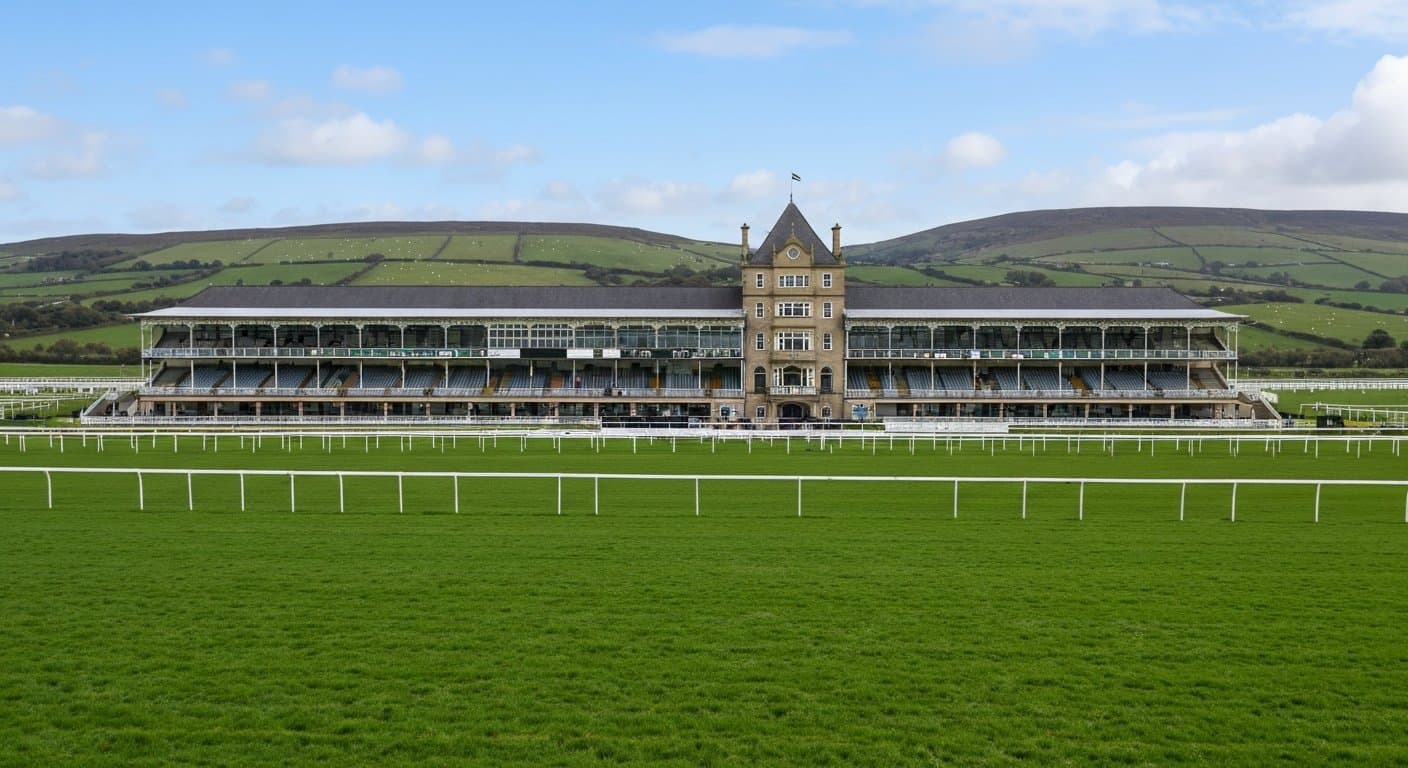
Down Royal Racecourse: Complete Guide
Everything you need to know about Down Royal — Northern Ireland's premier racecourse, the Ladbrokes Champion Chase, and over 300 years of racing history.
Read more
A Day Out at Down Royal Racecourse
A day at Down Royal — getting there, what to wear, enclosures, food and drink, and insider tips for Northern Ireland's premier racecourse.
Read more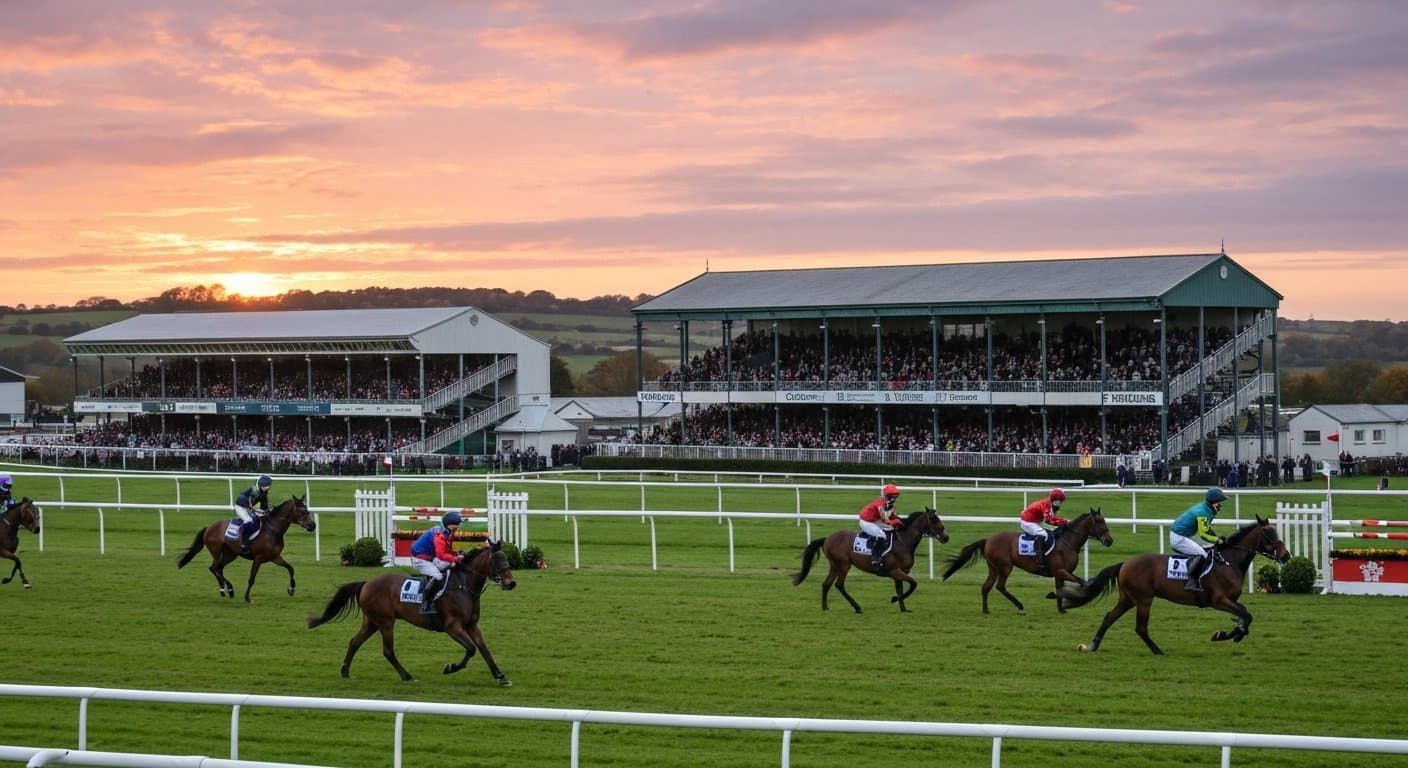
Northern Ireland Festival of Racing: Complete Guide
Your complete guide to the Northern Ireland Festival of Racing at Down Royal — the Ladbrokes Champion Chase, key races, and the biggest meeting of the year.
Read moreResearch the field with the AI Race Predictor
Our model publishes calibrated win-probability estimates for UK races — a second opinion to understand a race, not tips. It's open about its record: it doesn't beat the market, and we show exactly how it does.
Work it out & learn the basics
Gamble Responsibly
Gambling should be entertaining and not seen as a way to make money. Never bet more than you can afford to lose. If you or someone you know has a gambling problem, help and support is available.