
Founder & Editor · Last reviewed 2026-04-05
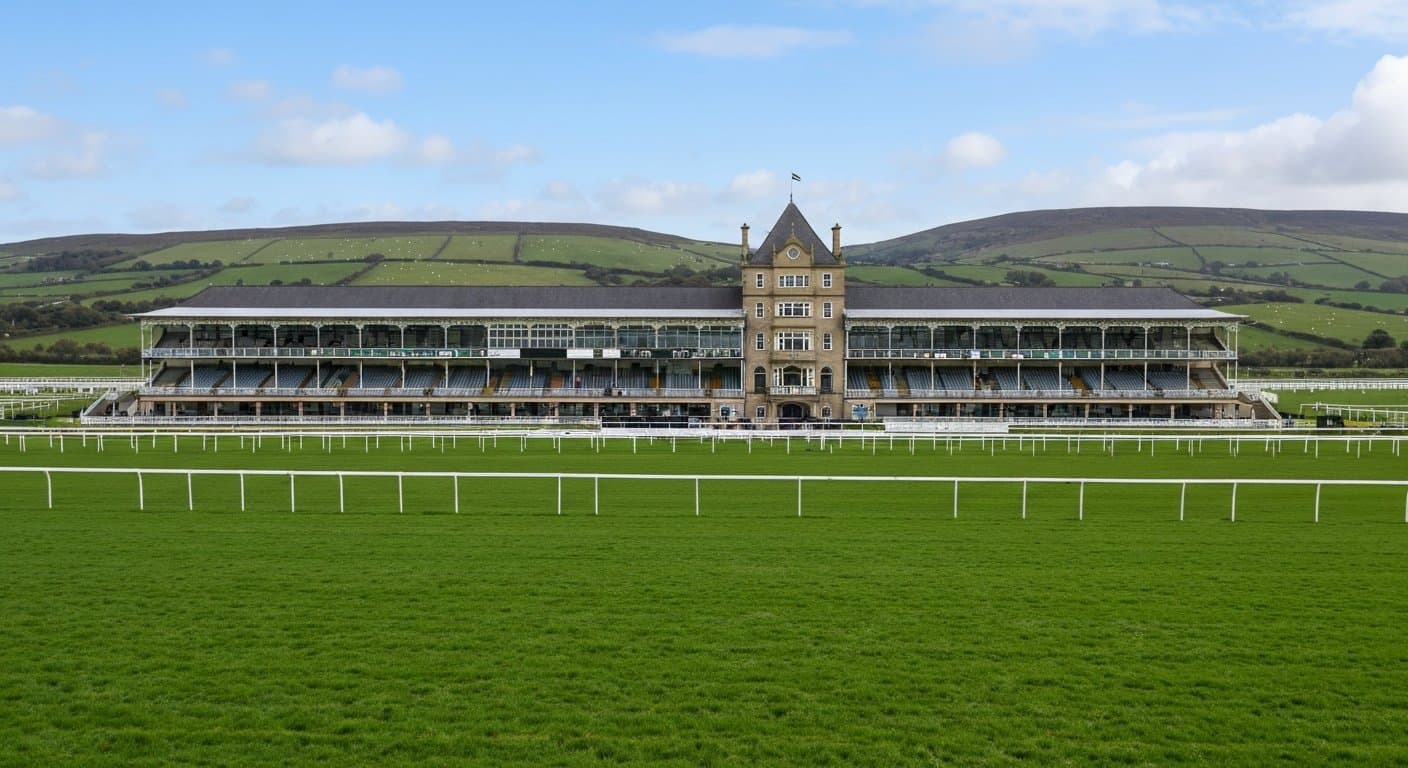
Down Royal Racecourse has been staging organised racing since 1685, when King James II granted a Royal Charter for the sport at this County Down site. That Royal Charter is the reason the word "Royal" appears in the name — one of very few racecourses anywhere in these islands to carry that designation. The course sits at Maze Road, Lisburn, BT27 5RW, approximately 12 miles south of Belfast city centre, and stages both flat racing and National Hunt throughout the year under the jurisdiction of Horse Racing Ireland.
The signature race is the Ladbrokes Champion Chase, a Grade 1 National Hunt steeplechase run over approximately three miles at the Down Royal November Festival, held in late October or early November each year. The November Festival is the most significant two-day fixture on the Northern Irish racing calendar, attracting Grade 1 and Grade 2 horses trained by Willie Mullins, Gordon Elliott, and Henry de Bromhead. For racegoers in Northern Ireland and those travelling from the Republic, it is the autumn meeting of choice before the Cheltenham and Leopardstown Christmas programmes begin.
Down Royal is the only racecourse in Northern Ireland offering a regular fixture list across both codes. Racing here falls under Horse Racing Ireland rather than the British Horseracing Authority, reflecting the sport's traditional all-Ireland organisation. That means Down Royal races are counted within the Irish prize-money structure, and horses trained in County Carlow or County Meath compete here on the same terms as locally trained runners.
Who this guide is for
First-time visitors — The course layout, enclosures, parking, and travel options are covered in the course and getting there sections. If you are attending the November Festival, read the fixtures section for scheduling and the facilities section for hospitality options.
Regular racegoers — The course characteristics, going patterns, and fixture calendar sections give you the information you need for race-day decisions. The betting guide covers course-specific angles in more depth.
History-focused readers — Down Royal's 340-year history is summarised in the history section of this guide, with the full story in the dedicated history article.
Festival and trip planners — The fixtures section covers the November Festival in detail, and the atmosphere and planning section covers accommodation, Belfast day-trip options, and what to expect on the day.
Quick decision guide
- Best day to visit: Day one of the November Festival (late October/early November) — the Ladbrokes Champion Chase is run on day two, but day one often carries strong supporting Grade races
- Best place to stand: The main grandstand gives a clear view of the home straight and the final fence; the rail between the last fence and the line is a favourite for watching National Hunt racing
- Best for first-timers: A flat fixture in the summer offers a relaxed introduction to the course; parking is easier and the crowds are smaller
- Travel tip: Lisburn station (Belfast–Dublin Enterprise line) is approximately three miles from the course; taxis meet most trains on festival days, but pre-booking is worth doing
- Hospitality: Private boxes and restaurant packages sell out early for the November Festival; standard grandstand admission is straightforward without advance purchase for most fixtures
- Going watch: Down Royal's going in the autumn National Hunt season ranges from good to soft to heavy; the course team publishes daily going reports via the Down Royal website and Horse Racing Ireland's going service
- Arrival time: Aim to arrive at least 45 minutes before the first race; parking on festival days fills from 90 minutes before the off
Down Royal is a racecourse with depth — a long history, a serious autumn NH fixture, and enough character to reward more than one visit. The sections below give you everything you need, whether this is your first trip or your twentieth.
Bet on Down Royal
Place your bets on Down Royal races with a trusted bookmaker.

Promo code BETFRED50. New customers only. Register, deposit with a Debit Card, and place a first bet of £10+ at Evens (2.0)+ on Sports, to be settled within 7 days, to get £30 in Sports Free Bets and £20 in Bet Builder Free Bets within 24 hours of settlement. 7-day expiry. Eligibility & payment exclusions apply. Full T&Cs apply. Take Time to Think. BeGambleAware.org. 18+. Full T&Cs.

Promo code R30. New UK customers only, 18+. Register, deposit £10 or more, then place a £10 single cash bet at odds of 1/2 (1.5) or greater on any sports market (excluding Virtuals). Once the qualifying bet settles you get £30 in Free Bets (3 x £10) — the qualifying bet can win or lose. Free Bets are valid on any sports market excluding Virtuals, expire in 7 days, are non-withdrawable and must be used in full. Excluded deposit methods apply (including PayPal, Apple Pay, Skrill and NETELLER). Named bets such as Lucky 15 do not qualify. If you cash out the qualifying bet, or it is voided, you are no longer eligible for the offer. Ends 31.12.26. Full T&Cs apply. Please gamble responsibly. BeGambleAware.org. 18+. Full T&Cs.

Promo code BET40GET20. New UK customers, 18+. Register with the code and place a first bet of £40 or more at Evens (2.0) or greater. Receive 2 × £10 free bets: the first credited automatically once the qualifying bet settles, the second 24 hours later. Free bets must be placed at minimum odds of 4/1 (5.0), expire 24 hours after credit, and the free-bet stake is not returned with winnings. Debit card deposits only. Take Time to Think. BeGambleAware.org. 18+. T&Cs apply. Full T&Cs.

50% of your first-day net losses refunded as a free bet, capped at £25. New UK customers aged 18+ only. To qualify, deposit and place a first bet of £10 or more on any sport at minimum odds of evens (2.00), then place at least two further bets on different events, each worth at least 50% of your largest bet, all at evens (2.00) or greater. Losses are counted from your first settled bet until 23:59 the same day. Place a qualifying £10+ bet and you are guaranteed at least a £5 free bet. Bets placed at SP, void bets, cashed-out bets and bets struck with free bets do not count towards the offer. The free bet is credited the day after your qualifying bets settle and must be used within 7 days, after which it expires. It can be used at odds from 1/4 (1.25) up to 250/1 on singles and straight accumulators, but not on Trixie, Patent or Yankee style multiples. Free-bet stake is not returned with winnings. One offer per person, household, address, IP address and device. E-wallet deposits may not qualify, so check the cashier before depositing. Customers registered with GAMSTOP cannot claim. KYC identity verification must be completed before the free bet is credited. Take Time to Think. BeGambleAware.org. 18+. T&Cs apply. Full T&Cs.

New customers, 18+. Choose the sports bonus at sign-up, make a first deposit and receive a 100% bonus up to £50 in your Sports Bonus balance. To convert the bonus to cash, wager it 10x within 30 days. Single bets below Evens (2.00) do not qualify; accumulators do not qualify if any selection is below 1/2 (1.50). Virtual Sports, voided, cancelled, drawn, cashed-out and free-bet wagers do not count towards wagering. Only the first settled bet per event counts. Withdrawing before the wagering requirement is met forfeits the bonus balance including bonus winnings. Real-money funds are used before bonus funds. Deposits via Skrill or Neteller are not eligible. Not valid in conjunction with other promotions. Odds, bet and payment limits apply. 10bet general and promotion T&Cs apply. BeGambleAware.org. 18+. Full T&Cs.

New customers in Great Britain and Republic of Ireland, 18+. Place a £10 fixed-odds qualifying bet at minimum odds of 1/2 (1.50) — single or each-way (only the win part counts), pre-event or in-play, not cashed out early, within 28 days of opening the account. Receive up to £60 in bonuses credited over three days: 3 × £10 fixed-odds free bets (the first on settlement, then 24 and 48 hours later) plus 3 × £5 Total Goals FOOTBALL spread bets and 3 × £5 racing Winning Favourites spread bets, with a £1 racing Race Index spread bet as an extra on top. The spread bets need a full spread-betting account, opened within 28 days of the fixed-odds account and subject to Spreadex's eligibility and appropriateness checks. Free-bet stakes not returned with winnings; free bets valid 28 days from issue. IMPORTANT: the £5 credits are SPREAD bets — sports spread betting carries the risk that losses can exceed your stake. Sports spread-betting customers do not have Financial Ombudsman or FSCS recourse. Take Time to Think. BeGambleAware.org. 18+. T&Cs apply. Full T&Cs.

Promo code WELCOME15, entered under My Bonuses after registering. New UK customers, 18+. Place a first qualifying bet of at least £10 from your cash balance at odds of evens (2.0) or greater within 7 days of opening the account. Once the qualifying bet fully settles you receive £15 in free bets, credited as 3 x £5 tokens with set uses: one £5 accumulator free bet (minimum 4 legs, each leg at 2/5 or bigger), one £5 sports free bet (any market at evens or bigger) and one £5 Sub Cover free bet (selected football player markets at evens or bigger). Free-bet stakes are not returned with winnings. Free bets expire 7 days after they are credited. Void, cashed-out and partially cashed-out bets do not qualify. One offer per customer. Confirm the current terms on BetGoodwin's own welcome-offer page before claiming. Take Time to Think. BeGambleAware.org. 18+. T&Cs apply. Full T&Cs.

New UK customers, 18+. Minimum deposit £10. Place a £10 qualifying single on sports (excluding virtuals) at minimum odds of 1/2 (1.50), settled within 14 days. Deposit-method exclusions apply. Receive £30 in free bets (stake not returned), split £20 for sportsbook use (2 x £10) and £10 for Bet Builder only (2 x £5); Bet Builder does not cover horse racing. Free bets must be accepted within 7 days and expire 7 days after acceptance. No promo code required. Best Odds Guaranteed on UK & Irish racing, subject to having staked over £25 in the previous seven days. Operated by LiveScore Betting and Gaming (Gibraltar) Ltd, UKGC 56859. Confirm the current terms on LiveScore Bet's own promotions page before claiming. Take Time to Think. BeGambleAware.org. 18+. T&Cs apply. Full T&Cs.
18+. BeGambleAware.org
The Course
The Course
Down Royal is a right-handed, dual-purpose course set on undulating ground at Maze Road, Lisburn. The circuit is approximately one mile and three furlongs in circumference, which makes it a medium-sized track by Irish standards — larger than Downpatrick but smaller than Leopardstown. The track has been on or near this ground since the 18th century, though the modern layout reflects decades of gradual reshaping to meet the demands of both flat and National Hunt racing.
Direction and Shape
The right-handed configuration at Down Royal is one of the first things a racegoer or bettor should note. On the flat, right-handed tracks tend to suit horses that carry their heads and run to the right, but at this level the effect is minor. For National Hunt racing, the right-handed direction matters more: horses accustomed to left-handed tracks like Cheltenham or Punchestown can find the change in direction an adjustment, and this is worth bearing in mind when assessing runners who have run well at left-handed venues but are appearing at Down Royal for the first time.
The circuit is undulating rather than flat. There is a rise out of the back straight, and the run down to the home straight involves a slight descent before the track levels off for the final run to the line. This undulation favours horses with stamina and a good stride — flat-track specialists who rely on fast ground and a level surface sometimes find Down Royal a more demanding test than their form suggests.
Flat Track Characteristics
The flat track uses the full circumference of the circuit. Sprint distances are uncommon; the majority of flat fixtures at Down Royal are run over one mile and upward, which suits the course's shape. The straight at Down Royal is not long enough to favour pure speed horses, and the run from the home turn to the line rewards horses that can maintain rhythm off a bend. Handicap form from Dundalk (a flat artificial-surface track) does not automatically transfer, as the surface and profile are entirely different.
Going on the flat at Down Royal during the summer months is typically good to firm to good, though the course sits in an area that receives Atlantic weather systems pushing up from the Irish Sea. A wet spell in late June or July can turn the ground soft quickly, and the course management team publishes going updates regularly. Checking the going on the morning of the race is sensible for any fixture, but particularly so when a weather system is passing through.
The flat season at Down Royal runs from May into September. Prize money is competitive for the region, and the course attracts a good mix of horses from Northern Irish and Republic of Ireland trainers. Trainers with strong flat strings — including those based in County Kildare — target the better flat fixtures when the opportunity suits their horses.
National Hunt Track
The National Hunt configuration at Down Royal uses the same basic circuit but adds fences and hurdles positioned around the track. The fences are well constructed — they meet Horse Racing Ireland specifications — and the course has a reputation for producing fair jumping tests. There are no artificial quirks or traps: horses that jump well and stay the distance are likely to be rewarded.
The final fence at Down Royal is positioned to give horses a clear run to the line, and the run-in after the last obstacle is long enough that a horse that jumps it well and is travelling will usually hold on. Horses that make a significant mistake at the last fence on a right-handed track tend to drift left towards the stands rail; it is worth watching early races on the card to see how any track bias is developing.
The Champion Chase is run over approximately three miles. Over that distance, Down Royal tests both jumping ability and stamina in roughly equal measure. Horses trained for the longer Cheltenham Gold Cup distance — three miles two furlongs and four fences — have tended to find three miles at Down Royal within their comfort zone, which is one reason the Champion Chase attracts high-class staying chasers from the Mullins and Elliott yards.
Going Patterns
Down Royal's autumn National Hunt season — October through to the end of the year — produces going that typically ranges from good to soft through to soft and occasionally heavy. The course sits just inland from Belfast Lough and receives weather off the Irish Sea. October and November are the wettest months in the Lisburn area on average, and the course rarely races on truly firm ground during the NH season.
Historically, soft-ground specialists have a strong record at the Down Royal November Festival. Horses who have struggled on quicker ground earlier in the season and come alive when conditions ease are worth noting in the autumn programme. Conversely, runners who have won on good ground in the summer and have not encountered real soft should be assessed with care when the autumn going descriptions appear.
Dual-Purpose Design
Running both codes on the same circuit requires careful management. Down Royal's groundstaff manage the transition between flat and jumps seasons, and the course's record of producing a reliable racing surface is consistent. The irrigation and drainage systems have been upgraded at various points since the early 2000s, and the track rarely produces race-day conditions that are worse than the posted going report suggests.
One practical consequence of the dual-purpose layout is that the flat track is kept in reasonable condition even during the NH season. When the course stages flat fixtures in the summer, the removal and replacement of jumping equipment requires careful management of the ground, and Down Royal has a good record of managing this transition without producing ground that deteriorates through the summer programme.
What the Course Rewards
Across both codes, Down Royal rewards horses with:
- real stamina at distances of one mile and beyond (flat) and two miles and beyond (NH)
- Reliable jumping ability in the NH programme — the track does not forgive poor jumpers at Grade 2 level
- Adaptability to testing going conditions in the autumn and winter
- Good balance on a right-handed, undulating circuit
Horses with high cruising speeds who need flat, left-handed tracks to show their best form are generally at a disadvantage. For the betting guide on how to apply this in practice, the dedicated guide covers the specific angles in detail.
Comparing Down Royal with Other Irish NH Courses
Down Royal occupies a specific niche within Irish National Hunt racing. It is the only course in Northern Ireland offering NH racing of Grade 2 standard or above. The nearest equivalent in the Republic is Navan in County Meath, which is also right-handed and undulating, though Navan's circuit is larger at approximately one mile four furlongs. Thurles in County Tipperary, another right-handed course, is sometimes compared to Down Royal in terms of the testing nature of the track, though the two courses have different profiles and going characteristics.
Leopardstown, the dominant Dublin NH track, is left-handed and much larger — around one mile six furlongs round — and the going at Leopardstown's Christmas Festival is often less testing than at Down Royal's November Festival. Cheltenham, the aspirational target for most horses that run at Down Royal's November meeting, is left-handed and climbs significantly from the bottom of the hill to the finish, which is a very different physical demand from Down Royal's flatter circuit with its subtler undulations.
These comparisons matter for racegoers and punters trying to assess form. A horse that ran well at Navan or Thurles is more likely to handle Down Royal's demands than one whose form is exclusively from Leopardstown or Punchestown (left-handed). Understanding where Down Royal sits within the menu of Irish NH courses helps contextualise the performances seen there.
The 1m3f Circuit in Practice
The one mile and three furlongs circumference at Down Royal means that a three-mile race over the NH track covers the circuit slightly over twice. This is relevant to understanding how a race is run: the field completes a full lap-and-a-bit before reaching the finish, which means horses pass the same crowd twice and the race unfolds in a way that is easy for racegoers to follow.
In a three-mile chase on the NH track, there are typically eight fences (the exact layout varies by the race configuration). The positioning of the fences relative to the bends and the straight affects how jockeys ride the race: horses jumping the last fence in the back straight on the second circuit need to maintain rhythm through the following bend before the home turn, and races at Down Royal can be tactically complex as a result. Watching two or three races before the main event gives a useful picture of where the pace tends to develop and which part of the track produces the most decisive moments.
The course characteristics at Down Royal are worth understanding before you watch or bet. The combination of right-handed direction, undulating ground, and a testing autumn going description means that form from flat tracks or left-handed circuits is not a reliable guide without adjustment.
Key Fixtures & Calendar
Key Fixtures and Calendar
Down Royal races throughout the year, with the annual programme divided between flat fixtures from May to September and National Hunt fixtures from October through to the winter. The November Festival is the prestige meeting, but the course stages a full calendar across both codes. The complete fixture list is published annually on the Down Royal website and via Horse Racing Ireland's fixture planning service.
The November Festival
The Down Royal November Festival is the most significant fixture in Northern Irish racing. The meeting takes place over two days in late October or early November each year, and attracts a quality of horse that distinguishes it from any other fixture at the course. Grade 1 and Grade 2 horses from across Ireland — trained predominantly by Willie Mullins at Closutton in County Carlow, Gordon Elliott at Cullentra House in County Meath, and Henry de Bromhead at Knockeen in County Waterford — are targeted at the November Festival by yards that use the early-autumn NH programme to prepare horses for Leopardstown and Cheltenham.
The November Festival works as a staging post in the National Hunt season. Horses who ran at the Galway Festival in late July, or on the flat through August and September, may return to NH action at Down Royal. The Festival also attracts horses who have been given a summer break and are appearing for the first time in the new NH season. Either way, the quality of the field in Grade 1 and Grade 2 races at the November Festival is consistently high.
The Ladbrokes Champion Chase
The Ladbrokes Champion Chase is the centrepiece of the November Festival and the signature race of the Down Royal calendar. It is currently graded at Grade 2 and run over approximately three miles on the second day of the festival. The race is a serious early-season target for staying chasers that will go on to target the Ryanair Chase or Cheltenham Gold Cup at the Cheltenham Festival in March.
Prize money for the Champion Chase is substantial by Irish NH standards — in recent seasons it has been staged with a total prize fund in excess of €100,000, with the winner's share making it one of the most valuable NH chases run in October or November in Ireland. Willie Mullins has dominated the race in the modern era, though Gordon Elliott's yard has also provided multiple winners. Horses that have won the Champion Chase have Then finished on the podium at the Cheltenham Gold Cup, underlining the quality of the race.
For racegoers attending the November Festival, the Champion Chase card on day two is the day to prioritise. The card typically contains three or four Grade races in addition to the Champion Chase, and the quality of horse on view represents the best NH racing available in Northern Ireland in any year.
Flat Season Fixtures
The flat programme at Down Royal runs from May into September. Fixtures in this period are less high-profile than the November Festival but provide a solid programme of racing for the region. The course stages conditions races, listed races on occasion, and a series of handicaps that attract trainers from both sides of the border.
The National Hunt yards that dominate the autumn programme largely step back during the flat season, and the flat fixtures at Down Royal give opportunities to trainers based in County Kildare, Dublin, and Belfast who have horses suited to the course profile. The atmosphere at summer flat fixtures is relaxed; crowds are smaller than the November Festival, parking is straightforward, and the racing — while not the flagship events of the Irish flat calendar — is real sport on well-maintained ground.
Autumn Jump Season
From October onwards, National Hunt racing begins and the frequency of fixtures increases ahead of the November Festival. October fixtures include maiden hurdles, beginners' chases, and novice hurdles that attract horses beginning their jumping careers. For the racing public, these fixtures are worth attending because they often feature horses that will become well-known names over the following two or three seasons.
After the November Festival, Down Royal continues to stage NH fixtures through December and into the new year. These post-festival fixtures attract a different kind of horse — less often the Grade 1 calibre of the November meeting, but competitive handicaps and novice races that provide good racing for local yards and those targeting prize money in the Northern Irish programme.
Going and Scheduling
Down Royal's fixture dates are confirmed annually by Horse Racing Ireland and are subject to revision if weather conditions make racing unsafe or impractical. The course has a good record of running its scheduled fixtures, though in particularly wet winters the ground management team occasionally needs to rebook races. The going report on the morning of each fixture is published via the Horse Racing Ireland going service, and the Down Royal Twitter account and website publish updates through the day.
For travel planning, the November Festival dates are announced several months in advance. Racegoers planning to travel from the Republic of Ireland or from further afield should check the fixture date early in the year, as demand for accommodation in Lisburn and Belfast increases sharply in the days around the festival.
The November Festival is the fixture that defines Down Royal's year. The Ladbrokes Champion Chase attracts horses of a quality that places it among the best NH races run in October or November in either Ireland or Great Britain, and the two-day programme as a whole represents the best of Irish autumn jumping.
Facilities & Hospitality
Facilities and Hospitality
Down Royal has developed its facilities substantially since the early 2000s, with the result that the venue now offers a range of options suited to different budgets and preferences. The capacity is approximately 5,000, which gives the course a welcoming scale — large enough to offer proper facilities, small enough that queues at bars, tote windows, and food outlets are rarely a serious problem on most fixtures. The November Festival is the exception: the course fills closer to capacity and visitors should plan accordingly.
Grandstand and Viewing Areas
The main grandstand at Down Royal gives tiered viewing of the home straight and the final fence or final flight, depending on the code. The sightlines are good, and the layout of the track means that the back straight is visible from the stands on a clear day. For National Hunt racing, the grandstand view of the final fence and run-in is one of the better vantage points in Irish NH racing — the proximity to the action without being behind barriers makes for a real atmosphere on big-race days.
The rail between the last obstacle and the winning post is the preferred standing position for racegoers who want to be close to the horses as they pass. On NH fixtures, standing at the rail gives a clear view of how jockeys are riding and how horses are travelling in the final furlong. This area can become crowded on the day of the Champion Chase, so arriving early to claim a position is worthwhile.
The parade ring is adjacent to the main enclosure, and the winner's enclosure is close to the grandstand. Access to the parade ring area is included in standard enclosure admission, and watching the horses before the race — assessing coat condition, temperament, and how each horse is moving — is one of the most practical preparations for both informed watching and betting.
Hospitality and Private Boxes
Down Royal offers corporate hospitality packages and private boxes, particularly for the November Festival. These range from shared restaurant tables with a view of the track to fully private boxes with catering and dedicated service. The course publishes its hospitality options annually, and for the November Festival the better packages sell out well in advance — sometimes by the August before the event.
Group bookings for the November Festival require early contact with the Down Royal hospitality team. The course website carries current hospitality options and pricing, and it is worth contacting the venue directly if you are organising a group of ten or more, as specific arrangements for large parties are best handled through the dedicated events team.
For racegoers who are not in a corporate package, the standard facilities include bars, food outlets, and a self-service restaurant. The food at Down Royal has improved in line with broader upgrades to Irish racecourse catering: the on-course options include hot food, sandwiches, and the usual race-day staples. On festival day, food outlets can have queues during the interval between races, so buying before or after the main rush is a practical approach.
Betting Facilities
Down Royal has on-course Tote facilities and space for on-course bookmakers on the betting ring. The Tote windows are positioned conveniently relative to the main grandstand, and the betting ring is the traditional place to compare prices and find the best odds available. For racegoers who prefer to use a smartphone app to place bets, the course has phone signal across most of the site, though the Wi-Fi provision varies.
On-course prices from bookmakers are worth checking before backing through a phone app, particularly for well-fancied favourites where on-course prices can be shorter than those offered at SP by some bookmakers. For the betting guide covering specific Down Royal angles and when to use the Tote versus fixed-odds bookmakers, the dedicated guide has the detail.
Accessibility
Down Royal has facilities for racegoers with mobility requirements, including accessible viewing areas and toilet facilities. The course's terrain — set on undulating ground — means that some areas involve slopes. The Down Royal website publishes accessibility information, and the course can be contacted directly to discuss specific requirements before attending.
On-Course Atmosphere
The atmosphere at Down Royal on festival day draws comparisons with smaller Irish tracks where the racing, rather than the social event, is the primary draw. The crowd at the November Festival is knowledgeable — many are there specifically for the Grade races rather than for a general day out — and the noise around the winner's enclosure after the Champion Chase is real rather than politely enthusiastic.
Down Royal's facilities are well matched to the scale of the course. The November Festival requires advance planning for hospitality and parking, but for standard fixtures the venue is straightforward to navigate and the facilities are sufficient for a comfortable day's racing.
Getting There
Getting There
Down Royal Racecourse is located at Maze Road, Lisburn, County Down, postcode BT27 5RW. The course sits approximately 12 miles south of Belfast city centre and around three miles south-east of Lisburn town centre. The majority of visitors travel by car, but train and taxi options are available for those coming from Belfast or using public transport from further afield.
By Car from Belfast
From Belfast city centre, take the M1 motorway south towards Lisburn and the Republic of Ireland. Leave the M1 at junction 7 (Sprucefield/Lisburn) and follow the A1 and local signage to Maze Road, BT27 5RW. The journey from the city centre takes approximately 20 to 25 minutes in normal traffic. On festival days — particularly the November Festival — traffic builds on the M1 from around two hours before the first race, and the approach roads to the course can be slow. Arriving 90 minutes before the first race is the safest approach.
The course has on-site car parking, which is free for most fixtures. Parking fills up on the day of the Ladbrokes Champion Chase, and late arrivals on festival day risk being directed to overflow parking further from the entrance. The car park is grass-surfaced in parts and can be soft after wet weather — footwear appropriate for uneven ground is a practical choice.
By Train and Taxi
Lisburn station is on the Belfast–Dublin Enterprise line, operated jointly by Translink NI Railways and Iarnród Éireann. Trains from Belfast Grand Central (formerly known as Belfast Central and rebranded in 2023) reach Lisburn in approximately 12 minutes. From Dublin Connolly, the Enterprise service takes around two hours to Lisburn.
From Lisburn station, the course is approximately three miles by road. Taxis are available from the station rank, and on festival days several taxi operators run shuttle services between the station and the course. Pre-booking a taxi for the return journey is advisable on November Festival days, as availability after the last race can be limited. Translink's Journey Planner at journeyplanner.translink.co.uk is the standard tool for checking train times and booking.
By Air
Belfast International Airport is approximately 15 miles north of Down Royal, and George Best Belfast City Airport is around 14 miles north. Both airports have regular services from London (Heathrow, Gatwick, Stansted, and City), Manchester, Edinburgh, and other UK and European destinations. From either airport, hiring a car or taking a taxi to the course is the practical option; there is no direct public transport between either airport and the course.
For visitors from the Republic of Ireland travelling by air, Dublin Airport is approximately 100 miles south. The most practical approach is to hire a car or join an organised racing trip from Dublin, as public transport from Dublin to Down Royal involves a train to Lisburn and then a taxi.
Accommodation
Lisburn town centre has a range of hotels and guesthouses within a short distance of the course. Belfast city centre, 12 miles north, offers a wider choice of accommodation across all price ranges and is convenient for those who want to combine a day's racing with an evening in the city. The Titanic Quarter in Belfast, which includes the Titanic Belfast museum and a cluster of hotels, is well connected to the M1 for the return journey to Down Royal.
For the November Festival specifically, accommodation in Lisburn and south Belfast fills quickly once dates are confirmed. Booking as soon as festival dates are announced — typically in spring or early summer — is strongly recommended.
Getting to Down Royal is straightforward by car from Belfast, and the train-and-taxi option from Lisburn station works well with advance planning. The November Festival requires earlier arrival and pre-booked transport; standard fixtures are easier to navigate.
Frequently Asked Questions
History of Down Royal Racecourse
History of Down Royal Racecourse
Down Royal's origins are more firmly documented than almost any other racecourse in Ireland or Great Britain. On 21 March 1685, King James II granted a Royal Charter establishing organised horse racing at this site in County Down. The charter gave the course its Royal designation — a title it has held for more than 340 years. At the time of the charter, racing was already a popular pursuit among the Anglo-Irish gentry, but Down Royal's formal recognition placed it among the earliest chartered racecourses in these islands.
The Royal Charter of 1685
The 1685 charter was granted during the brief reign of James II, the last Catholic king of England, Scotland, and Ireland. James II's patronage of Down Royal reflected broader patterns of Crown engagement with horse racing in this period: the monarch was a significant figure in promoting racing as a sport. The charter formalised what had likely been informal racing activity in the area and gave the Down Royal meeting a regulated, publicly recognised status.
The choice of the County Down site was practical as much as ceremonial. The ground around Lisburn was open, undulating, and well suited to horse trials. The site was accessible from Belfast — then a much smaller settlement than today — and from the network of roads connecting the gentry estates of County Down and County Antrim. Racing at Down Royal in the late 17th century would have been a significant social occasion for the Protestant Ascendancy and the local population alike.
18th and 19th Century Development
Through the 18th century, Down Royal grew steadily as a racing venue. The course attracted horses from across Ireland, and the fixture calendar expanded to include multiple days of racing rather than a single annual meeting. By the mid-18th century, Down Royal was among the better-known racing venues in the north of Ireland, competing for attention with meetings in County Kildare and at the Curragh.
The 19th century brought further development. The establishment of formal handicapping systems, weight-for-age scales, and more standardised race conditions across Irish racing in the Victorian era raised the quality of competition at Down Royal. The course was patronised by the landowners and gentry of County Down and County Antrim, and the annual racing meetings remained a significant date in the social calendar of the Belfast region throughout the 1800s.
Horse Racing Ireland's predecessor bodies — including the Turf Club, which was formally established in 1790 — brought greater regulation to Irish racing over the course of the 19th century. Down Royal fell under this expanding regulatory umbrella, and the course's races were catalogued, graded, and standardised in line with national policy.
The 20th Century and the Troubles
Down Royal's 20th century history was shaped, in part, by the partition of Ireland in 1921 and the emergence of Northern Ireland as a distinct jurisdiction. Racing in Northern Ireland continued to fall under all-Ireland regulation rather than being transferred to the British Horseracing Authority, a decision that reflected the sport's cross-border character and the existing relationships between Northern Irish and Republic of Ireland racecourses and trainers.
The Troubles — the conflict in Northern Ireland from approximately 1968 to 1998 — affected life across the region, including horse racing. Down Royal continued to stage fixtures through this period, but attendance and investment were both constrained by the broader economic and social pressures of the time. The course's proximity to the Maze Prison (also known as Long Kesh), located adjacent to the Maze Road site, gave the area a particular historical significance during this period. The prison was the site of the 1981 hunger strikes and held significant numbers of paramilitary prisoners. The prison was decommissioned in 2000 following the Belfast Agreement and largely demolished between 2006 and 2009.
Post-Good Friday Agreement Investment
The years following the Belfast Agreement of 10 April 1998 brought renewed investment in Northern Ireland's infrastructure, economy, and cultural institutions. Down Royal benefited from this improved climate. Facility upgrades in the 2000s improved the grandstand, the catering provision, and the betting and track facilities. The course's capacity and visitor experience were raised to a level more consistent with modern Irish racecourses.
The Ladbrokes Champion Chase, as it is now known, grew in prestige during this period. The race's prize money increased, its Grade status was formalised, and the attraction of the course to major NH trainers from the Republic — particularly Willie Mullins, who began his extraordinary run of dominance in Irish NH racing — gave the November Festival a quality that drew wider attention within Irish racing.
Down Royal Today
Down Royal today is run as a professional commercial racecourse under Horse Racing Ireland's governance. The course employs a full-time staff team, supports a range of community and corporate events beyond race days, and acts as one of the significant employers in the Lisburn area. Its role within Irish racing is clear: it is the primary racing venue for Northern Ireland, the host of the only Grade 2 NH chase run in October or November in the north of Ireland, and a cultural institution that connects three centuries of racing history to the modern sport.
The adjacent Maze/Long Kesh site — the former prison grounds — has been the subject of various regeneration proposals since the early 2000s. Whatever the eventual development of that land, Down Royal operates as a distinct and independent entity, and the racing at Maze Road continues on the same ground where King James II's charter placed it in 1685.
Down Royal's history from 1685 to the present is not a simple arc of uninterrupted progress — it runs through political upheaval, conflict, and recovery. The course endures as a functioning, high-quality racecourse because those who ran it through difficult decades maintained the fixture list. That continuity is the foundation for everything the course offers today.
Famous Moments
Famous Moments at Down Royal
Down Royal's long history means that memorable racing moments have accumulated across three centuries. The most celebrated in the modern era tend to cluster around the November Festival and the Champion Chase, but the course has also produced significant moments in the flat programme and in the development of individual horses who went on to achieve wider fame.
Champion Chase Performances of Note
The Ladbrokes Champion Chase has, in recent decades, functioned as an early-season form guide for the Cheltenham Gold Cup. Several horses who won at Down Royal in October or November Then ran prominently at Cheltenham in March. The pattern has strengthened the race's reputation among trainers and punters: a Down Royal Champion Chase win on good form over a testing three-mile NH course is a credible indicator of Gold Cup potential.
Willie Mullins has dominated the race since the 2000s. His yard has provided multiple winners, and the standard of performance in the race under Mullins-trained favourites has raised the benchmark for what a Champion Chase performance means. The race is frequently run on soft or heavy going, and performances posted by Mullins horses in these conditions have been used to set seasonal ante-post markets ahead of Cheltenham.
Gordon Elliott's yard has also featured prominently in recent Champion Chase history. Elliott's horses, trained at Cullentra House in County Meath, travel the 80 miles north to Lisburn with a regularity that speaks to the race's status as a serious autumn target rather than a soft option. When both the Mullins and Elliott yards field runners in the same Champion Chase, the race takes on the character of a head-to-head between the two dominant forces in Irish NH training.
Willie Mullins at Down Royal
No individual has shaped the modern era of racing at Down Royal more than Willie Mullins. His stable, based at Closutton in Bagenalstown, County Carlow, is the largest and most successful NH operation in Ireland and among the most successful in the world. Mullins has used Down Royal's November Festival as a launching pad for Cheltenham-bound horses, and the parade of his horses through the winner's enclosure at Maze Road has become one of the familiar images of the Irish NH autumn.
Mullins's record at Down Royal also includes winners in maiden hurdles and novice chases that went on to significant careers. Horses that begin their novice campaigns at Down Royal in October or November — when the yard is firing through the early part of the season — sometimes provide early clues to the horses that will dominate the Cheltenham novice divisions in March.
Significant Flat Moments
Down Royal's flat history includes moments of significance within the context of the Northern Irish programme, though the course does not stage Group 1 flat races and its flat highlights are typically conditional and listed race victories rather than the major Group events of the Irish flat season. Horses who performed well at Down Royal flat fixtures and Then progressed to the major Irish flat meetings represent some of the course's more satisfying flat storylines.
The dual-purpose character of the course means that summer flat fixtures occasionally attract horses who will return in the autumn for NH racing. A horse that races on the flat at Down Royal in July and then lines up in a maiden hurdle in October has a particular interest for racegoers who follow horses from early in their careers.
The Course in the Context of Irish NH Racing
Down Royal occupies a specific role in the Irish NH calendar as the first serious test of the season for staying chasers. Leopardstown's Christmas Festival in late December, and the Cheltenham Festival in March, are the peaks of the Irish NH year, but Down Royal in late October or early November is the first point at which top-class horses in the Gold Cup division are tested under full race conditions in the new season. Performances at Down Royal are therefore scrutinised with greater attention than their Grade status alone might suggest.
The fact that multiple horses have posted Champion Chase wins at Down Royal before going on to reach the Cheltenham Gold Cup podium is not a coincidence. The race attracts the right horses, in the right conditions, at the right time of year. That is the story of Down Royal's most famous moments in the modern era — not isolated incidents, but a consistent pattern of high-quality racing that has earned the course its place in the Irish NH calendar.
The November Festival is where Down Royal makes its mark on Irish racing history year after year. The Champion Chase has produced some of the most informative form lines of the autumn NH programme, and following its winners through to Cheltenham has been among the more reliable seasonal exercises for those who study the sport carefully.
Betting Guide
Betting Guide
Down Royal offers specific angles for punters who are prepared to study the course characteristics and the seasonal patterns that shape its results. This section sets out the main considerations. For a full analysis of race-by-race patterns and trainer/jockey statistics, the dedicated Down Royal betting guide covers the detail.
Please gamble responsibly. If you feel you may have a problem with gambling, visit BeGambleAware.org or call the National Gambling Helpline on 0808 8020 133.
Course Characteristics and Betting Angles
The right-handed, undulating circuit at Down Royal creates specific form considerations. Horses proven on right-handed tracks — particularly those with a record at right-handed Irish courses such as Naas, Thurles, or Navan — have a structural advantage over horses whose only NH form is from left-handed venues. This is not a guarantee of anything; a superior horse will overcome the directional preference. But when comparing two horses of similar ability, track direction can be a useful differentiator.
The undulating nature of the course means that horses who stay well relative to their speed are more likely to dominate. Down Royal is not a track where a horse can free-wheel on the flat and then produce a finishing burst; the rises in the back straight sap energy from horses who are not real stayers. Horses with flat form at shorter distances who are trying NH racing for the first time should be assessed with caution at Down Royal, particularly at distances of two miles and beyond.
The final fence and run-in at Down Royal rewards bold jumping. Horses that tend to make cautious jumps — losing momentum at each obstacle — often find that they cannot make up the lost ground on the run to the line. Conversely, horses that jump fluently and land running are well suited to the track.
Going and Its Impact on Results
Down Royal's autumn programme almost always takes place on going that ranges from good to soft through to heavy. Looking at seasonal going descriptions for the November Festival over the past decade, soft or heavy ground has been present in the majority of years. This is a practical betting consideration: horses who have performed well on truly testing ground in previous seasons are significantly more likely to handle Down Royal's autumn conditions than horses whose form is on good or good to firm.
When assessing Champion Chase runners, a horse's soft-ground form is more informative than its overall form record. A horse with a form figure of 1-2-1-3 on good ground and a separate record of 1-1 on soft is strongly placed for Down Royal's autumn conditions. Conversely, a horse with an impressive-looking record on good ground only should be treated with more caution if the November Festival goes on soft or heavy.
The going can change during a race day. November weather in County Down is unpredictable, and a morning going description of good to soft can become soft by the time the Champion Chase card is run in the afternoon. Monitoring the going reports published by the Down Royal team on race day — available via the course website and the Horse Racing Ireland going service — is worth doing if going conditions matter to your selections.
Trainer Patterns
Willie Mullins (Closutton, County Carlow) has a dominant record at Down Royal's November Festival, particularly in the Grade races. His horses travel the 110 miles north with a specific purpose, and when Mullins fields a runner in the Champion Chase it carries the weight of a yard that has prepared its horse carefully for the occasion. Mullins's strike rate at the Festival is among the highest of any trainer at any Irish NH meeting.
Gordon Elliott (Cullentra House, County Meath) is the principal competition for Mullins at Down Royal. Elliott's yard is approximately 80 miles south of the course, and his runners at the November Festival are generally well prepared and fit. When Elliott fields a runner that has shown strong early-season form, it is worth taking seriously.
Henry de Bromhead (Knockeen, County Waterford, approximately 130 miles south) is a less frequent visitor but has fielded notable runners at the Festival, particularly in chases. De Bromhead horses that travel to Down Royal — a longer journey than most stable yards take to a non-festival meeting — are almost always seriously targeted at the race.
Local Northern Irish trainers are more active at standard fixtures throughout the year. For non-festival NH and flat meetings, the local training population at yards around Lisburn, Antrim, and Down have horses suited to the course conditions and worth respecting at their respective odds.
The Tote and On-Course Bookmakers
On-course prices at Down Royal's November Festival are worth comparing against phone-app prices before placing bets. For favourites in Grade races, on-course bookmakers sometimes frame shorter prices than the starting price, particularly when stable money arrives for a Mullins or Elliott runner. For longer-priced runners in handicaps, the on-course market can be more generous than SP.
The Tote at Down Royal is operated under the Horse Racing Ireland Tote structure. For races with large fields — such as handicap hurdles on festival day — the Tote pool can produce a better return than fixed odds on a horse at 10/1 or longer, particularly on races where the betting market has focused heavily on two or three horses.
Key Principles for Down Royal Betting
- Prioritise soft-ground form when assessing autumn NH runners
- Right-handed course experience is a useful secondary factor in close assessments
- Mullins and Elliott are the primary yards to follow in Grade races
- Fluent jumpers outperform those with jumping deficiencies on this track
- Monitor the going on race morning; November conditions can shift quickly
- Compare on-course prices for handicaps before defaulting to phone-app prices
Betting at Down Royal is most productive when approached with a clear understanding of the course's physical demands and the seasonal going patterns. Soft-ground form, right-handed track experience, and trainer intent are the three factors that produce the most consistent results at the November Festival.
Atmosphere and Planning Your Visit
Atmosphere and Planning Your Visit
Down Royal on November Festival day has a particular quality that regular racegoers recognise. The crowd is a mix of Northern Irish racing regulars who have attended for decades, visitors from Belfast and the surrounding area, and a contingent from the Republic of Ireland who have travelled north specifically for the Grade racing. The November going — soft or heavy in most years, cold, often grey — gives the day an atmosphere that contrasts with the summer flat meeting, and the NH crowd responds to jumping action differently from a flat-racing audience: the noise as the field approaches the final fence in the Champion Chase is one of the more authentic sounds in Irish racing.
What to Expect on Race Day
Gates open well before the first race, and the programme typically runs from early afternoon with five or six races across the two festival days. Enclosures are accessible from the main entrance, and the parade ring is open to standard admission holders before each race. The winner's enclosure — where the Champion Chase winner is led in — is close to the main grandstand, and the crowd presses in after big races.
Food and drink outlets operate throughout the day, and the Tote windows near the main stands are the quickest option for placing bets between races. The betting ring is positioned to the side of the grandstand and is active with on-course bookmakers from before the first race.
For a first-time visitor, arriving 45 to 60 minutes before the first race allows enough time to park, collect or check tickets, look at the parade ring for the first race, and settle into the atmosphere before the off. On November Festival days, arriving 90 minutes before gives more flexibility.
Combining with Belfast
Belfast city centre is 12 miles north of the course and worth visiting if you are making a full day or weekend trip. The Titanic Belfast museum, opened in April 2012 in the former shipyard where RMS Titanic was built, is Northern Ireland's most-visited tourist attraction and is open daily. The Cathedral Quarter — centred on Cathedral Quarter around St Anne's Cathedral — has a strong selection of bars and restaurants and is the most accessible area of the city for an evening after a day's racing.
Lisburn itself, three miles from the course, has the Irish Linen Centre and Museum in the town's Market Square, which provides context for the linen industry that shaped much of County Down's economic history. Lisburn is accessible from the course by taxi in under ten minutes.
Practical Planning Checklist
- Dates: Check the Down Royal website in spring for the current year's fixture list; November Festival dates are announced several months in advance
- Tickets: Standard admission is available at the gate for most fixtures; November Festival tickets, particularly grandstand or hospitality packages, benefit from advance purchase
- Accommodation: Book Lisburn or south Belfast hotels as soon as festival dates are announced; availability tightens from late summer onward
- Travel: If driving, allow extra journey time on festival days; if using public transport, book a return taxi from Lisburn station before you leave home
- Clothing: Layer appropriately for November County Down weather; waterproof outerwear and footwear suitable for grass underfoot are practical choices
- Going: Check the Horse Racing Ireland going service on the morning of your visit; going descriptions affect the racing and are worth knowing before you arrive
Down Royal on November Festival day offers a quality of racing that is difficult to find elsewhere in the autumn NH calendar. With a small amount of advance planning — tickets, accommodation, and travel — the visit comes together as one of the better days out in Irish racing.
More guides for this course
Share this article
More about this racecourse
All Down Royal guides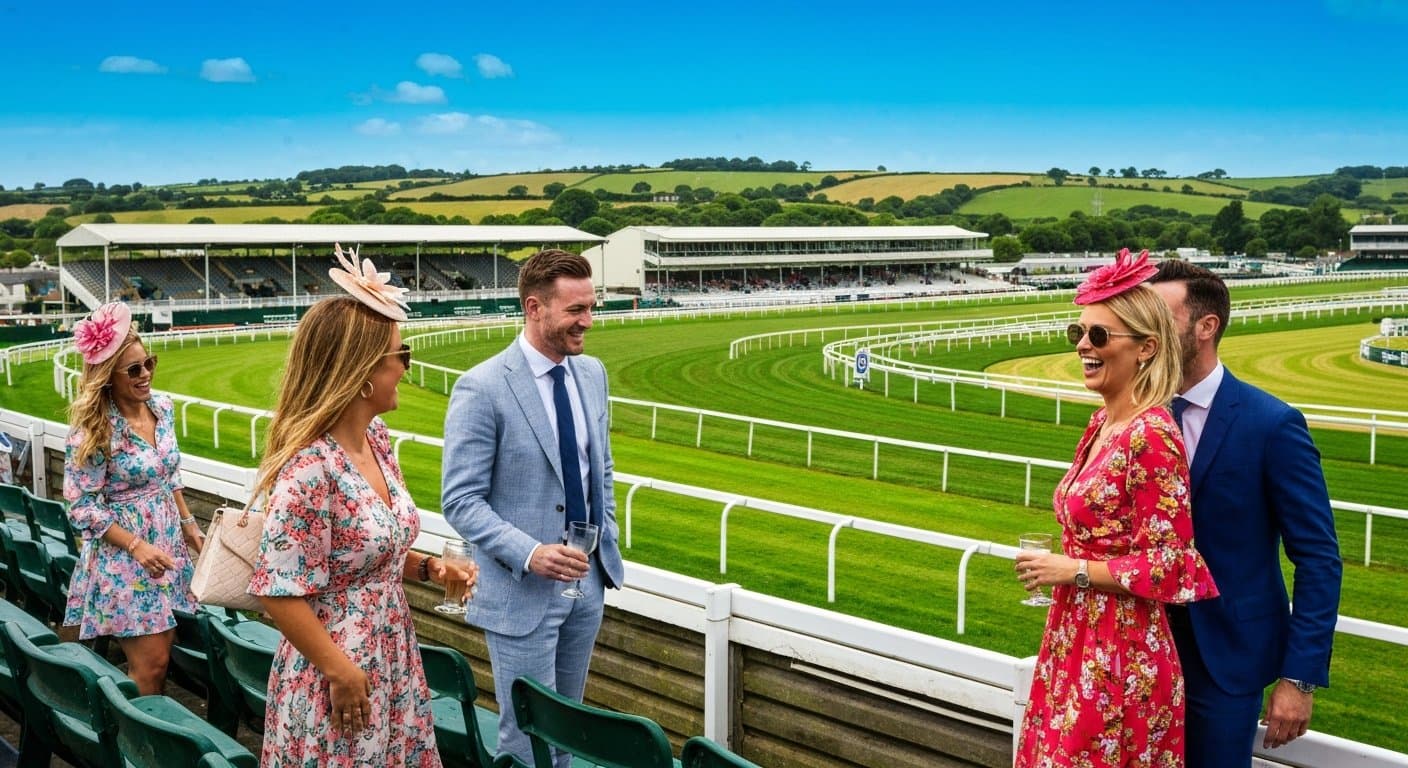
A Day Out at Down Royal Racecourse
A day at Down Royal — getting there, what to wear, enclosures, food and drink, and insider tips for Northern Ireland's premier racecourse.
Read more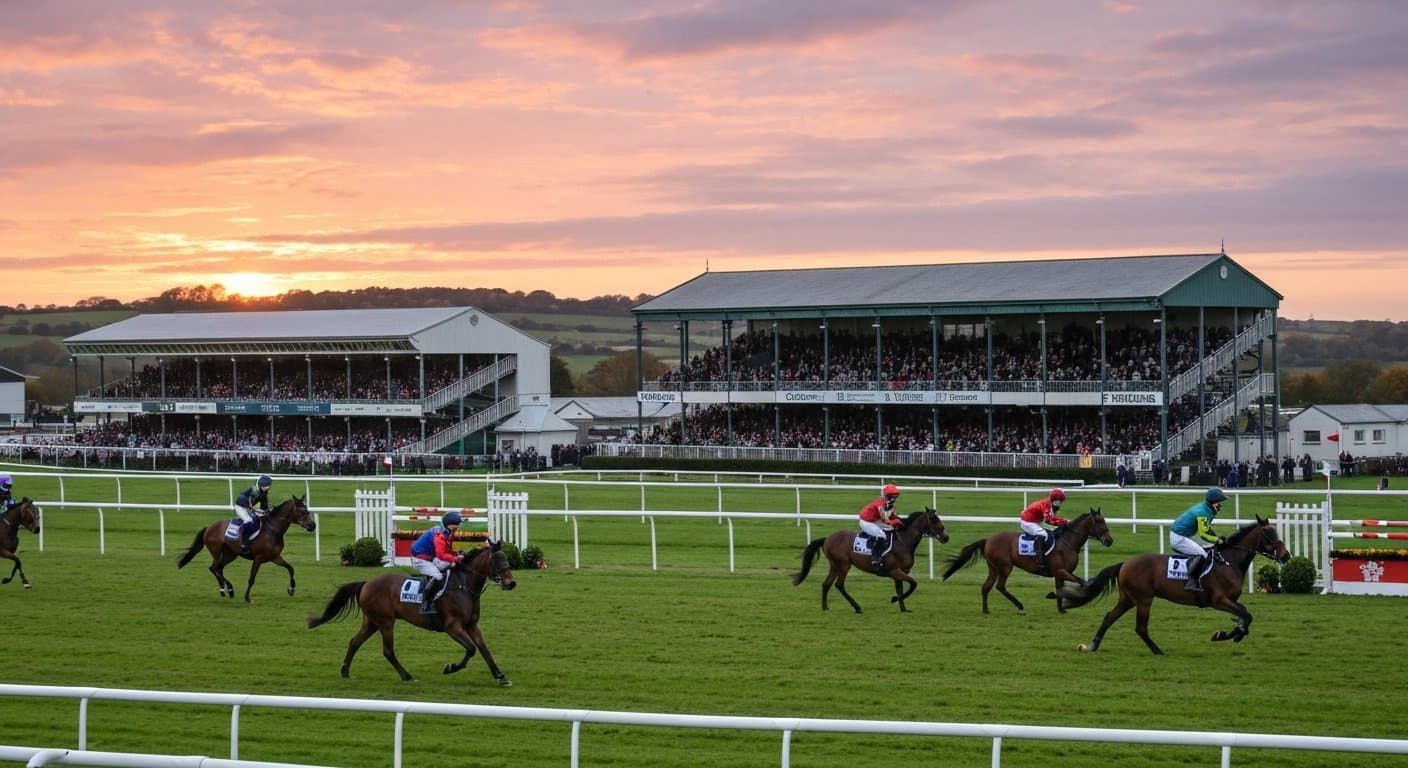
Northern Ireland Festival of Racing: Complete Guide
Your complete guide to the Northern Ireland Festival of Racing at Down Royal — the Ladbrokes Champion Chase, key races, and the biggest meeting of the year.
Read more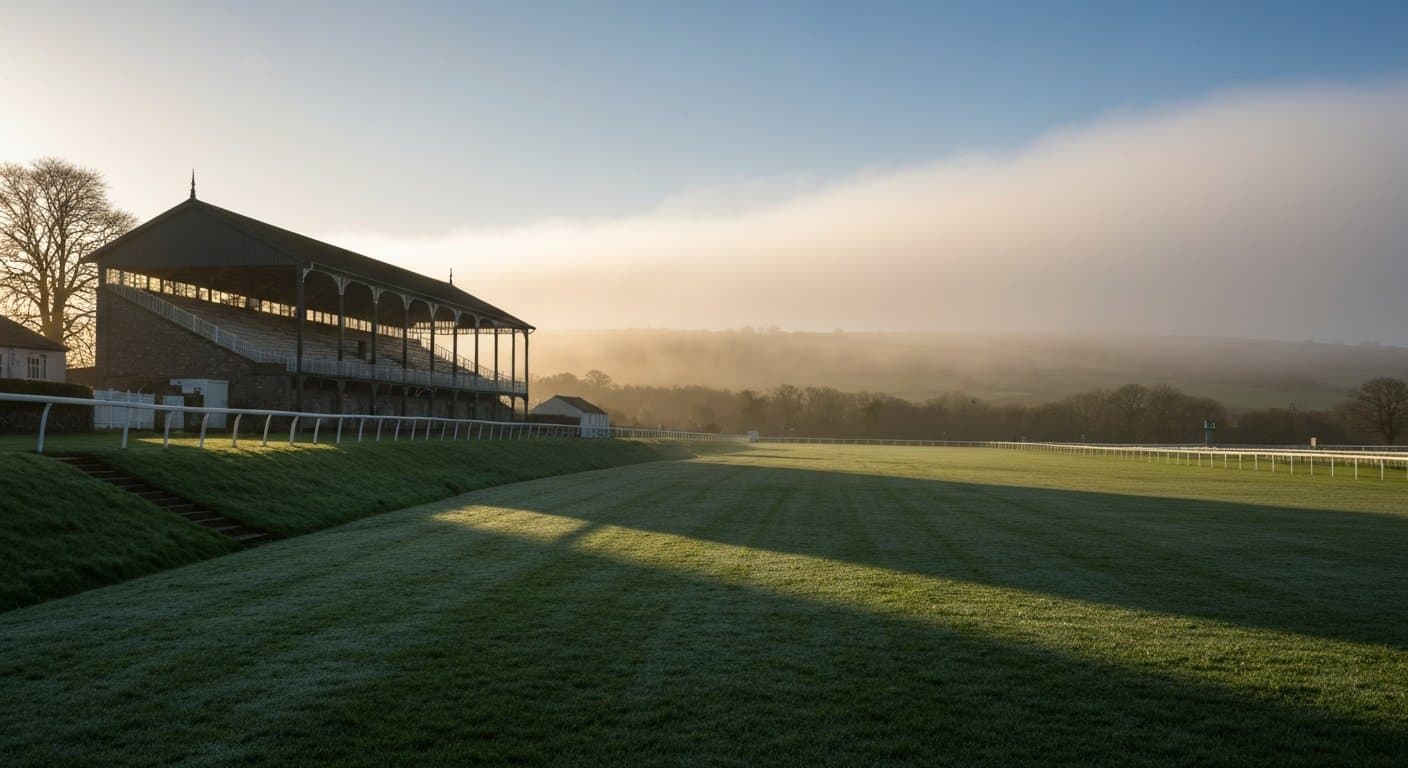
The History of Down Royal Racecourse
Over 300 years of racing at Down Royal — from the Royal Charter of 1685 to Northern Ireland's premier venue and the Ladbrokes Champion Chase.
Read moreResearch the field with the AI Race Predictor
Our model publishes calibrated win-probability estimates for UK races — a second opinion to understand a race, not tips. It's open about its record: it doesn't beat the market, and we show exactly how it does.
Work it out & learn the basics
Gamble Responsibly
Gambling should be entertaining and not seen as a way to make money. Never bet more than you can afford to lose. If you or someone you know has a gambling problem, help and support is available.