
Founder & Editor · Last reviewed 2026-03-02
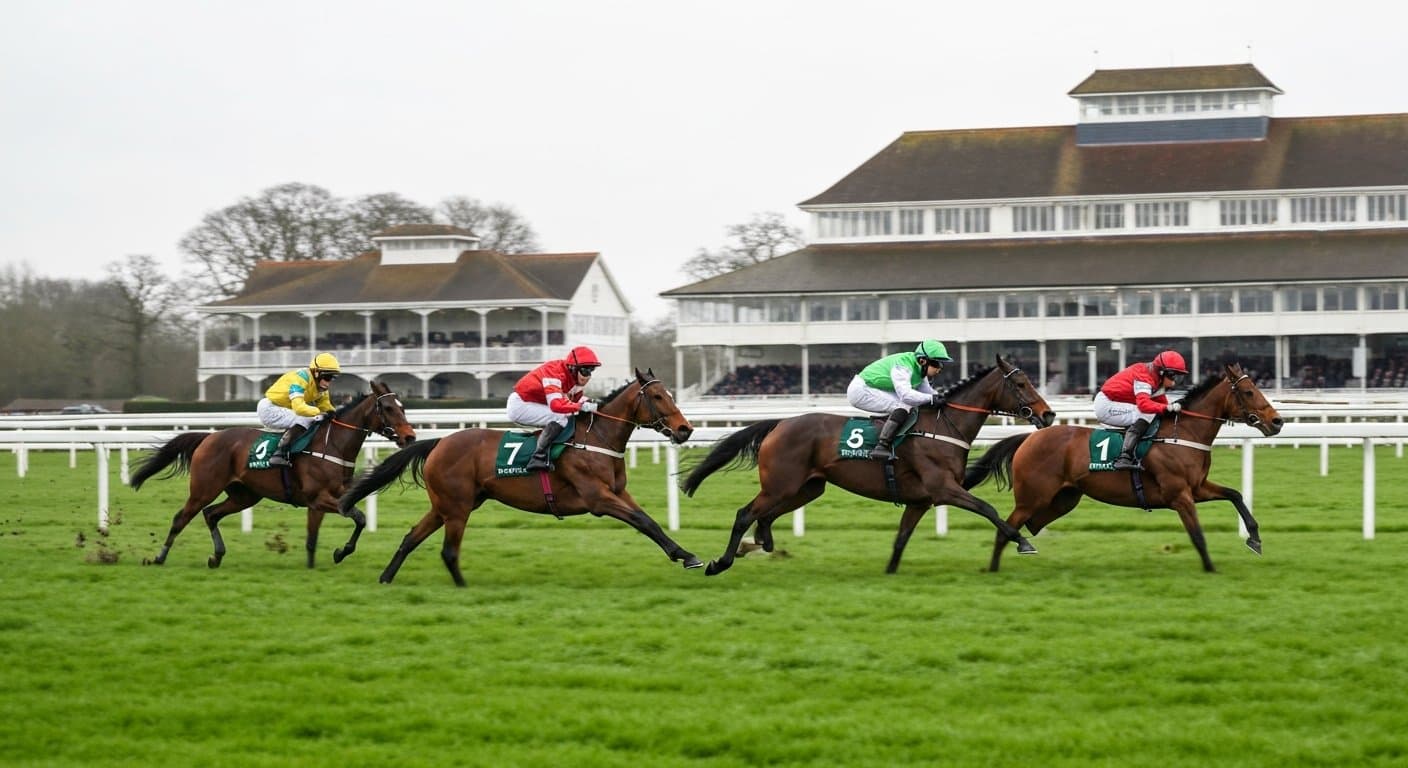
Fontwell Park sits in West Sussex between Arundel and Chichester, twelve miles from the coast and forty from London. It is a National Hunt only course — no flat racing — and its defining feature is a chase circuit found nowhere else in Britain: a figure-of-eight layout in which two loops cross at the centre of the infield. This unique design makes Fontwell one of the most course-form-sensitive venues in English racing. A horse that has navigated the figure-of-eight successfully before carries demonstrable evidence that the layout suits it. A first-time visitor, regardless of how impressive its form from conventional courses, faces a truly novel task.
For bettors, Fontwell requires treating the chase course and the hurdles course as two separate venues. The strategies, form transfer rules, and trainer patterns that apply to figure-of-eight chases do not transfer directly to the left-handed hurdles oval, and vice versa. This dual-circuit nature is the most important orientation before any Fontwell card is assessed.
Quick Betting Reference
- Course type: NH only; figure-of-eight chase course + left-handed hurdle oval (~1m)
- Distance range: 2m to 3m (chases); 2m to 2m4f (hurdles)
- Going: Good to Soft typical; Soft to Heavy in hard winters (West Sussex clay)
- Flagship races: National Spirit Hurdle (Grade 2 hurdle, late February or early March); Southern National (Class 3 handicap chase, November)
- Primary advantage: Figure-of-eight course form — the most specific course-form edge in English NH racing
- Form transfer (chases): No direct comparison; Plumpton and Stratford are closest but still substantially different
- Form transfer (hurdles): Plumpton, Lingfield, Wincanton transfer directly
- Trainer to watch: Gary Moore (Surrey-based, 15mi); Paul Nicholls visits for key races
The Figure-of-Eight Explained
Most racecourses are ovals: the horses travel in one consistent direction, leaning into bends from the same side throughout. At Fontwell's chase course, the two loops of the figure-of-eight require horses to turn left in the first loop and then cross a central junction before turning right in the second. Or, depending on where in the race a horse is, right first and then left. The direction alternates with every loop completed.
This constant change of direction demands a specific type of horse — one that is agile enough to adjust its balance through bends, fluent enough at its fences to maintain rhythm while turning, and experienced enough not to be surprised by the change of direction at the central crossing point. Horses that rely on one-paced galloping power, those that are stiff and one-dimensional in their jumping, and those that struggle to adjust their stride in tight spaces all face disadvantages at Fontwell that they would not face on a conventional course.
The stiff finish — the home straight has a slight uphill gradient — means that despite the twisty nature of the circuit, hold-up horses with a turn of foot can win Fontwell chases when the pace is truly strong throughout. The closing stages favour stamina over tactical speed, which partly compensates for the aggressive advantage that prominent, front-running types would otherwise hold on such a tight track.
The Hurdles Course
The hurdles oval at Fontwell is left-handed and approximately one mile around, with a short home straight and tight bends. It does not share the figure-of-eight design — it is a conventional sharp circuit. Handy types and prominent racers who have won at Plumpton, Lingfield, or Wincanton carry their form directly. The hurdles oval tests the same attributes as other compact southern NH venues.
Bet on Fontwell Park
Place your bets on Fontwell Park races with a trusted bookmaker.

Promo code BETFRED50. New customers only. Register, deposit with a Debit Card, and place a first bet of £10+ at Evens (2.0)+ on Sports, to be settled within 7 days, to get £30 in Sports Free Bets and £20 in Bet Builder Free Bets within 24 hours of settlement. 7-day expiry. Eligibility & payment exclusions apply. Full T&Cs apply. Take Time to Think. BeGambleAware.org. 18+. Full T&Cs.

Promo code R30. New UK customers only, 18+. Register, deposit £10 or more, then place a £10 single cash bet at odds of 1/2 (1.5) or greater on any sports market (excluding Virtuals). Once the qualifying bet settles you get £30 in Free Bets (3 x £10) — the qualifying bet can win or lose. Free Bets are valid on any sports market excluding Virtuals, expire in 7 days, are non-withdrawable and must be used in full. Excluded deposit methods apply (including PayPal, Apple Pay, Skrill and NETELLER). Named bets such as Lucky 15 do not qualify. If you cash out the qualifying bet, or it is voided, you are no longer eligible for the offer. Ends 31.12.26. Full T&Cs apply. Please gamble responsibly. BeGambleAware.org. 18+. Full T&Cs.

Promo code BET40GET20. New UK customers, 18+. Register with the code and place a first bet of £40 or more at Evens (2.0) or greater. Receive 2 × £10 free bets: the first credited automatically once the qualifying bet settles, the second 24 hours later. Free bets must be placed at minimum odds of 4/1 (5.0), expire 24 hours after credit, and the free-bet stake is not returned with winnings. Debit card deposits only. Take Time to Think. BeGambleAware.org. 18+. T&Cs apply. Full T&Cs.

50% of your first-day net losses refunded as a free bet, capped at £25. New UK customers aged 18+ only. To qualify, deposit and place a first bet of £10 or more on any sport at minimum odds of evens (2.00), then place at least two further bets on different events, each worth at least 50% of your largest bet, all at evens (2.00) or greater. Losses are counted from your first settled bet until 23:59 the same day. Place a qualifying £10+ bet and you are guaranteed at least a £5 free bet. Bets placed at SP, void bets, cashed-out bets and bets struck with free bets do not count towards the offer. The free bet is credited the day after your qualifying bets settle and must be used within 7 days, after which it expires. It can be used at odds from 1/4 (1.25) up to 250/1 on singles and straight accumulators, but not on Trixie, Patent or Yankee style multiples. Free-bet stake is not returned with winnings. One offer per person, household, address, IP address and device. E-wallet deposits may not qualify, so check the cashier before depositing. Customers registered with GAMSTOP cannot claim. KYC identity verification must be completed before the free bet is credited. Take Time to Think. BeGambleAware.org. 18+. T&Cs apply. Full T&Cs.

New customers, 18+. Choose the sports bonus at sign-up, make a first deposit and receive a 100% bonus up to £50 in your Sports Bonus balance. To convert the bonus to cash, wager it 10x within 30 days. Single bets below Evens (2.00) do not qualify; accumulators do not qualify if any selection is below 1/2 (1.50). Virtual Sports, voided, cancelled, drawn, cashed-out and free-bet wagers do not count towards wagering. Only the first settled bet per event counts. Withdrawing before the wagering requirement is met forfeits the bonus balance including bonus winnings. Real-money funds are used before bonus funds. Deposits via Skrill or Neteller are not eligible. Not valid in conjunction with other promotions. Odds, bet and payment limits apply. 10bet general and promotion T&Cs apply. BeGambleAware.org. 18+. Full T&Cs.

New customers in Great Britain and Republic of Ireland, 18+. Place a £10 fixed-odds qualifying bet at minimum odds of 1/2 (1.50) — single or each-way (only the win part counts), pre-event or in-play, not cashed out early, within 28 days of opening the account. Receive up to £60 in bonuses credited over three days: 3 × £10 fixed-odds free bets (the first on settlement, then 24 and 48 hours later) plus 3 × £5 Total Goals FOOTBALL spread bets and 3 × £5 racing Winning Favourites spread bets, with a £1 racing Race Index spread bet as an extra on top. The spread bets need a full spread-betting account, opened within 28 days of the fixed-odds account and subject to Spreadex's eligibility and appropriateness checks. Free-bet stakes not returned with winnings; free bets valid 28 days from issue. IMPORTANT: the £5 credits are SPREAD bets — sports spread betting carries the risk that losses can exceed your stake. Sports spread-betting customers do not have Financial Ombudsman or FSCS recourse. Take Time to Think. BeGambleAware.org. 18+. T&Cs apply. Full T&Cs.

Promo code WELCOME15, entered under My Bonuses after registering. New UK customers, 18+. Place a first qualifying bet of at least £10 from your cash balance at odds of evens (2.0) or greater within 7 days of opening the account. Once the qualifying bet fully settles you receive £15 in free bets, credited as 3 x £5 tokens with set uses: one £5 accumulator free bet (minimum 4 legs, each leg at 2/5 or bigger), one £5 sports free bet (any market at evens or bigger) and one £5 Sub Cover free bet (selected football player markets at evens or bigger). Free-bet stakes are not returned with winnings. Free bets expire 7 days after they are credited. Void, cashed-out and partially cashed-out bets do not qualify. One offer per customer. Confirm the current terms on BetGoodwin's own welcome-offer page before claiming. Take Time to Think. BeGambleAware.org. 18+. T&Cs apply. Full T&Cs.

New UK customers, 18+. Minimum deposit £10. Place a £10 qualifying single on sports (excluding virtuals) at minimum odds of 1/2 (1.50), settled within 14 days. Deposit-method exclusions apply. Receive £30 in free bets (stake not returned), split £20 for sportsbook use (2 x £10) and £10 for Bet Builder only (2 x £5); Bet Builder does not cover horse racing. Free bets must be accepted within 7 days and expire 7 days after acceptance. No promo code required. Best Odds Guaranteed on UK & Irish racing, subject to having staked over £25 in the previous seven days. Operated by LiveScore Betting and Gaming (Gibraltar) Ltd, UKGC 56859. Confirm the current terms on LiveScore Bet's own promotions page before claiming. Take Time to Think. BeGambleAware.org. 18+. T&Cs apply. Full T&Cs.
18+. BeGambleAware.org
Track Characteristics
Fontwell's two circuits occupy the same geographical space but present fundamentally different racing environments. Understanding each separately is the precondition for betting intelligently at the course.
The Figure-of-Eight Chase Course
The chase course at Fontwell measures approximately two miles around one complete circuit, though the exact distance depends on where the start is positioned relative to the figure-of-eight's crossing point. Chase distances run from two miles to three miles, with longer races completing multiple loops of the figure-of-eight layout.
Seven fences are positioned across the two loops. The arrangement means that in a two-mile chase, each fence is jumped once; in a longer race, some fences are jumped twice. This creates a course where the fence positions relative to the bends change depending on where a horse is in the race — a fence that is met mid-straight in the early stages of a longer chase may be met closer to a bend in the later stages, when the horse is tiring and the approach angle is different.
The central crossing point is where the two loops intersect. Horses must pass through this junction on every circuit, crossing from one loop into the other. On the approach to the crossing, a horse is committed to a right-hand bend; after crossing, it enters a left-hand bend, or vice versa. This direction change happens at racing pace and requires the horse to adjust its balance quickly. A horse that cannot do this — one that leans into bends consistently in one direction — loses ground at the crossing on every circuit. Over a two-mile race, the accumulated loss from even minor inefficiencies at the crossing point is measurable.
The home straight at Fontwell has a modest uphill gradient. After the final fence, horses face a finishing run that tests stamina rather than pure speed. This counterbalances the advantage that nimble, front-running types hold through the tight loops: the uphill finish gives hold-up horses the opportunity to run on past tiring front-runners in the closing stages when the pace has been truly strong throughout.
Jumping accuracy on the figure-of-eight is tested differently than at conventional courses. Fences are approached from angles that change depending on the horse's position in the race and the length of the race. A horse that jumps fluently and can read its take-off point from varying angles maintains its rhythm through the twisty course. A horse that requires a straight approach and disrupts its stride before each fence — adding extra strides to square itself up — loses both time and energy at every obstacle.
The Hurdles Oval
The hurdles course runs inside the chase track on a roughly circular loop of approximately one mile. It is left-handed and conventional in layout — no crossing point, no direction changes. The bends are tighter than at galloping courses but not as tight as at the smallest compact NH venues. The straight is short, giving horses limited time to mount a finishing run after the final hurdle.
Hurdle flights at Fontwell are positioned at regular intervals and not unusually angled. The test is accuracy, consistency, and the ability to quicken off the final bend. The same horse types that thrive at Plumpton, Lingfield, and Wincanton — nimble, handy, accurate jumpers — carry their form directly to the Fontwell hurdles oval.
Form Transfer
Chase course: Fontwell's figure-of-eight has no direct British equivalent. The closest comparisons are Plumpton (tight, sharp, compact, demands accuracy) and Stratford (left-handed, sharp), but neither prepares a horse for the direction changes of the figure-of-eight. Form from any conventional course must be discounted for a first Fontwell chase appearance. Form from galloping tracks — Cheltenham, Newbury, Haydock — requires the heaviest discounting: horses from those courses face a circuit structurally opposite to their form experience.
Hurdles oval: Plumpton, Lingfield, Wincanton, and Brighton all transfer well. Form from galloping hurdle courses — Cheltenham, Haydock — requires modest discounting because the tighter Fontwell bends reward a different type of horse. The discount needed is smaller than for chases, because hurdle flights are lower obstacles and the direction-change problem does not apply.
Going & Conditions
Fontwell Park stages National Hunt racing only, so there is no draw bias in the flat-racing sense. Starting position at Fontwell is relevant only insofar as it determines how quickly a horse can establish its preferred running position before the first obstacle — and at a figure-of-eight chase course with tight loops, position through the early bends carries more tactical weight than at galloping courses with long straights.
West Sussex Going Patterns
West Sussex receives moderate rainfall throughout the year. The soil at Fontwell has clay content that retains moisture, and the course can become Soft or Heavy in sustained winter wet. Good to Soft is the most common description across autumn and winter meetings; Good is achievable in dry late-autumn and early-spring periods; Soft or Heavy occurs when prolonged winter rain saturates the ground.
The going at Fontwell affects the two circuits differently. The chase figure-of-eight, with its constant direction changes, is more demanding on horses in soft conditions because each loop requires additional balance adjustment as the ground yields underfoot. A horse that can negotiate the tight bends and crossing point on Good to Soft may make a more obvious error at the junction when the ground is Soft to Heavy, because its footfall is less secure. Soft conditions amplify the figure-of-eight's technical demands.
The hurdles oval is affected by going in a more conventional way: Soft ground slows the pace, extends the race time, and favours stamina-orientated horses with proven form on testing conditions.
Going and Race Type Interaction
Chase course, Good to Soft: The most productive going description for form analysis. On Good to Soft, horses with real pace can front-run effectively through the loops, and hold-up horses can mount finishing runs up the straight when the pace has been strong. The race-type spectrum is broadest — front-runners, hold-up horses, and prominent racers all have winning profiles. Course form on Good to Soft is the most reliable evidence for future selections at the same going.
Chase course, Soft: Pace slows. Front-runners who jump cleanly can dictate an artificial rhythm that tires hold-up horses before the finish. Stamina becomes the primary attribute. Horses whose best form is on Soft or Heavy at other courses may find Fontwell's figure-of-eight more energy-demanding than their form implies — each balance adjustment through the loops costs more energy in soft ground. Jumping errors at the crossing junction are more costly.
Chase course, Heavy: At its most testing, the figure-of-eight becomes a severe stamina examination. Short-priced favourites with form from Good to Soft at conventional courses should be treated with caution when facing their first Fontwell chase in Heavy. The unique demands of the layout, combined with testing conditions, create a risk profile that straightforward ratings assessment does not capture.
Hurdles oval, any going: More conventional. Going form from directly comparable sharp NH venues (Plumpton, Lingfield, Wincanton) translates reliably. The going assessment for Fontwell hurdles is similar to the going assessment at any compact southern NH course.
Tactical Position at the Start
The first bend on the figure-of-eight chase arrives quickly after the start, and horses that have established a prominent position before the first fence carry a significant advantage through the first loop. Jockeys who know the figure-of-eight understand this and typically aim to settle their horse close to the pace from the outset. A horse that is slowly away or loses several lengths to the first bend faces the task of recovering ground through tight bends — each bend costs more energy when a horse is pulling wider to pass slower horses.
In practice, the tactical positioning advantage of a prominent early start is highest in fields of eight or fewer runners, where the pace is likely to be moderate and a front-runner can control the early tempo. In larger fields of twelve or more, pace is typically higher, and hold-up horses are better positioned to mount the finishing runs the uphill straight allows.
Going Checks
Fontwell's going is updated regularly in the seventy-two hours before each meeting. West Sussex weather is influenced by Channel weather systems that can bring rain quickly in autumn and winter. A Tuesday going declaration for a Saturday card at Fontwell is likely to be accurate if the forecast is settled but should be verified on raceday morning if rain is forecast in the intervening period.
Key Trainers & Jockeys
Fontwell draws its trainer population primarily from the South East and South. West Sussex, Surrey, Kent, and Hampshire yards provide the backbone of most cards, with occasional runners from further afield when a specific race justifies the travel. The National Spirit Hurdle in February brings higher-quality entries from leading national yards — Nicholls, Henderson, Mullins — but the regular winter programme is dominated by southern regional stables.
Gary Moore
Gary Moore trains at Lower Beeding in Surrey, fifteen miles from Fontwell. He is the most productive trainer at the course by winners per season and maintains a high strike rate from a steady volume of runners. Moore's operation produces horses suited to compact southern NH venues — adaptable, accurate jumpers that handle tight bends and varied going conditions without difficulty. The figure-of-eight requires precisely those attributes, and Moore's understanding of the layout's specific demands — the crossing junction, the uphill finish — is built on years of regular use.
Moore's Fontwell runners across all race types are worth taking seriously. In Class 3 and Class 4 chases and hurdles, his horses at prices of 5/1 or above with course form represent the most consistent value angle at Fontwell. Even without course form, a Moore runner in a chase where the horse has demonstrated agility at comparable compact venues (Plumpton, Wincanton) should be given credit the market may not fully extend.
Jamie Moore
Jamie Moore, Gary's son, is the jockey most associated with the Moore yard and rides regularly at Fontwell. His knowledge of the figure-of-eight — accumulated across years of both wins and defeats — is as deep as that of any jockey in the country at this specific course. When Gary Moore puts Jamie up on a horse in a chase at Fontwell, the combination of yard knowledge, jockey course knowledge, and horse suitability creates one of the most reliable trainer-jockey-course signals in NH racing.
Paul Nicholls
Paul Nicholls at Ditcheat in Somerset, approximately sixty-five miles from Fontwell, makes targeted appearances at the course. His National Spirit Hurdle entries are the most prominent — Nicholls regularly targets the Grade 2 with horses he is preparing for the Cheltenham Festival. A Nicholls runner in the National Spirit Hurdle is typically priced accurately or slightly short of true value and should be assessed on straightforward form grounds relative to the other runners in the field.
For regular winter chases and handicaps, Nicholls sends horses to Fontwell when he has a specific opportunity — a horse dropping in class, returning from a break, or being given a confidence run on a track where his horses have performed. These runners are worth watching but are typically well supported in the market.
Oliver Sherwood
Oliver Sherwood trains at Upper Lambourn in Berkshire, approximately sixty miles from Fontwell. He has a productive course record built over several seasons, particularly in staying chases where his horses' stamina is suited by the uphill finish. Sherwood runners in staying chases at Fontwell with previous course form are a secondary value angle behind Gary Moore — they carry trainer course knowledge that the market does not always price fully.
Other Southern Yards
Many smaller southern NH stables — operations based in Kent, Hampshire, and Sussex itself — maintain occasional Fontwell records through regular use rather than deliberate targeting. When a small regional yard sends a horse with two or three previous Fontwell runs and course form, the combination of local knowledge and horse experience at the course is worth noting, particularly at prices of 7/1 or above in competitive handicaps where larger yards have priced down the market.
Jockey Pattern
The jockeys with the best Fontwell records by wins per ride are typically Moore-family riders and southern-circuit regulars rather than nationally prominent names. Jockeys who ride at Fontwell, Plumpton, Lingfield, and Sandown regularly develop an instinct for the figure-of-eight's most demanding moment — the crossing junction — and time their pace adjustments correctly. When a trainer puts up an experienced Fontwell jockey on a horse in a competitive chase, that booking is a positive signal. When a nationally prominent jockey is having their first ride over the figure-of-eight in a competitive race, the unfamiliarity with the crossing point is a quantifiable risk.
Betting Strategies
Fontwell's betting strategies diverge more sharply between the two circuits than at any other British racecourse. The figure-of-eight chase course and the left-handed hurdles oval create distinct environments that require different approaches. Applying chase strategies to hurdle races, or hurdle strategies to chase races, at Fontwell is the most common systematic error made by bettors who treat the course as a single entity.
Strategy One: Figure-of-Eight Course Form as an Absolute Filter
On the chase course, previous Fontwell experience is more predictive than at any other British NH venue. The figure-of-eight is structurally unlike any other circuit in Britain, and the demands it places on a horse — balance through constant direction changes, accuracy at fences approached from varying angles, confidence at the central crossing point — cannot be adequately assessed from form at conventional courses.
Apply course form as the first filter before any other assessment in chases. Any horse with a win or place at Fontwell on the figure-of-eight in the last two seasons is the selection starting point. Horses without Fontwell chase experience should only be preferred over course-experienced horses when their form credentials are substantially stronger — not marginally stronger. The instinct to follow a horse from a major yard on the basis of impressive form from Cheltenham or Haydock, versus a course specialist from a smaller yard, should be resisted at Fontwell chases. The structural demands of the figure-of-eight generate errors that ratings cannot account for.
Strategy Two: Fade Short-Priced Galloping-Track Form in Chases
The most consistently exploitable market error at Fontwell chases is the overvaluation of horses whose form has been produced at galloping courses — Cheltenham, Haydock, Newbury — when they appear at Fontwell for the first time. These horses are often priced on the basis of their ratings and recent form without adequate adjustment for the figure-of-eight's structural demands.
When a galloping-track form horse is priced at 5/4, 6/4, or 2/1 for its first figure-of-eight chase, and a Fontwell course specialist is available at 4/1 or above with solid if less impressive form, the course specialist represents value. The market has applied insufficient discount to the galloping-track horse's form, and insufficient premium to the course specialist's evidence.
Strategy Three: Gary Moore and Jamie Moore as a Two-Stage Signal
The combination of Gary Moore as trainer and Jamie Moore as jockey for a Fontwell chase is one of the strongest trainer-jockey-course signals in English NH racing. When this combination occurs at prices of 5/1 or above, the case for support is established. Even at odds-on in competitive fields, a Gary/Jamie Moore combination at Fontwell for a chase carries more positive evidence than the price alone suggests — the structural edge is rarely fully priced by the national market.
Strategy Four: Hurdles — Follow Sharp-Track Form, Discount Galloping-Track Form
On the hurdles oval, apply a direct form transfer from Plumpton, Lingfield, Wincanton, and Brighton. These courses produce horses with the quick-bend agility and compact jumping style that Fontwell's oval rewards. Form from galloping hurdle courses — Cheltenham, Haydock, Newbury — does transfer, but the compact nature of Fontwell's oval penalises horses that prefer a long, sweeping bend and an extended final straight. A horse used to building momentum through a wide Cheltenham bend and finishing off a long straight faces a noticeably tighter finish at Fontwell.
Strategy Five: Pace Assessment in Figure-of-Eight Chases
The uphill finish at Fontwell gives hold-up horses a recovery mechanism that tighter compact courses do not provide. In fields where the pace is likely to be real — where at least two or three horses with front-running form are in the field — hold-up horses that have the stamina to grind up the hill in the final stages carry a finishing threat that the short-priced front-runners may not survive.
Before backing any Fontwell chase at short odds, assess whether the pace scenario is appropriate for that horse's running style. A hold-up horse at 7/2 in a race likely to be run at a strong pace, with four previous Fontwell appearances demonstrating this finishing style is effective at the course, is a better bet than a front-runner at 11/8 that has only run on galloping tracks. Pace assessment at Fontwell chases is directly productive in a way it is not at many other courses.
To compare place terms and each-way promotions across the major bookmakers, see our best bookmakers for horse racing guide.
Key Races to Bet On
Fontwell stages approximately twenty meetings per season, running from October through to May. The calendar is weighted toward winter, with January and February providing the most competitive NH cards. Two races stand above the rest in terms of field quality and betting interest: the National Spirit Hurdle in late February or early March and the Southern National in November.
The National Spirit Hurdle
The National Spirit Hurdle is a Grade 2 contest run over two miles and four furlongs on the conventional hurdles oval, staged in February. It is the most prestigious race at Fontwell and functions as a recognised trial for the Cheltenham Festival — specifically a pointer toward the Stayers' Hurdle and the Coral Cup for horses at the longer end of the hurdle distance spectrum.
The race draws runners from leading yards across England and Ireland. Paul Nicholls, Nicky Henderson, and occasionally Willie Mullins target the race with horses who are peaking at this point in the mid-winter campaign. For form purposes, the National Spirit Hurdle is run on the conventional hurdles oval rather than the figure-of-eight chase course, which means the figure-of-eight course form strategy does not apply. Assessment is straightforward: going form, trip suitability, and trainer intent are the primary factors.
Each-way betting at 5/1 or above in the National Spirit Hurdle has historically provided value among English-trained runners from non-dominant yards, where the horse's Cheltenham preparation form is strong but the market attention is focused on the shorter-priced Irish contenders.
The Southern National
The Southern National is the course's biggest chase, a Class 3 handicap run over the figure-of-eight in November at about three miles and three and a half furlongs. It is Fontwell's staying test of the season, and the course builds a raceday around it.
The Southern National is where the figure-of-eight course-form angle applies most strongly, because a staying handicap chase gives a horse the most opportunities to gain or lose ground at the crossing point. We do not publish a strike rate or a price threshold for the race. The claim that stood here was measured against a race that does not exist, and we will not restate it until we hold results for the real one.
Winter Handicap Chases
From October through February, Fontwell stages Class 3, 4, and 5 handicap chases over the figure-of-eight at distances from two miles to three miles. These are the bread-and-butter betting opportunity at the course. In competitive Class 3 handicap chases, eight to fourteen runners typically include a mix of course regulars and occasional visitors from other southern venues.
November and December chases — run when the going is most often Good to Soft — produce the most consistent results for the course form strategy. Gary Moore typically accounts for two to four runners per winter card, and his representatives with previous figure-of-eight experience are the selection starting points.
Novice Chases and Hurdles
Fontwell's novice programme produces useful form. First-time figure-of-eight visitors in novice chases face the layout's demands without previous experience, making errors at the crossing point statistically more common than among course veterans. Novice chasers that have previously run at Fontwell over hurdles — having at least one run on the compact oval before attempting the figure-of-eight — adapt more readily than complete first-timers.
The novice hurdle programme at Fontwell is more straightforward: the conventional oval produces form that reads directly at comparable sharp southern venues. Novice hurdle winners at Fontwell who then run at Plumpton or Wincanton carry their evidence directly; those stepping up to galloping course novice events require positive reasons.
Supporting Cards at the National Spirit Hurdle Meeting
The National Spirit Hurdle card includes five to seven supporting races. These races — typically Class 3 and Class 4 handicaps across both codes — receive less market attention than the Grade 2 and are often priced with less precision. Competitive supporting handicap chases on the figure-of-eight on this card, where a Gary Moore runner at 6/1 or above has course form, represent the best each-way opportunity of the Fontwell calendar.
Share this article
More about this racecourse
All Fontwell Park guides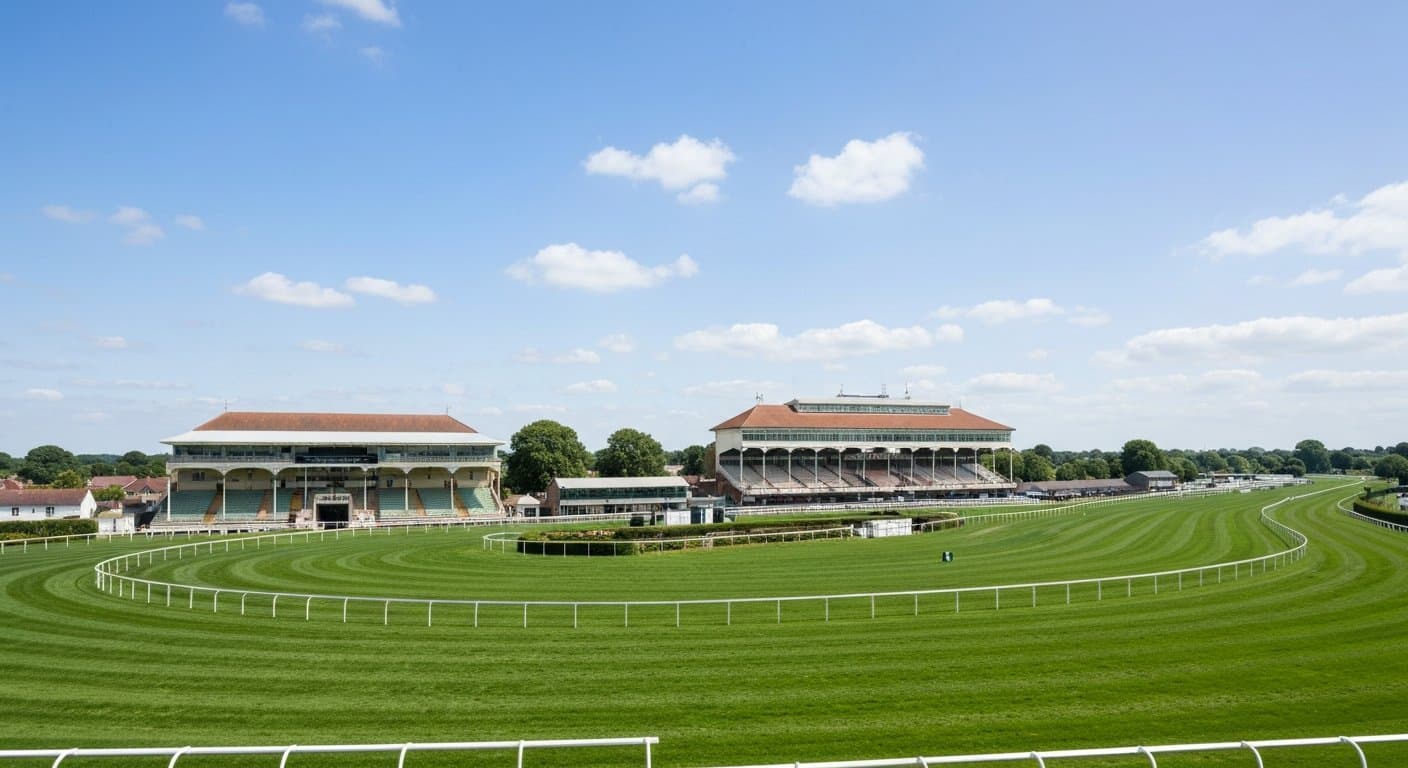
Fontwell Park Racecourse: Complete Guide
Everything you need to know about Fontwell Park — Britain's only figure-of-eight chase course, the Fontwell Gold Cup, and jump racing in West Sussex.
Read more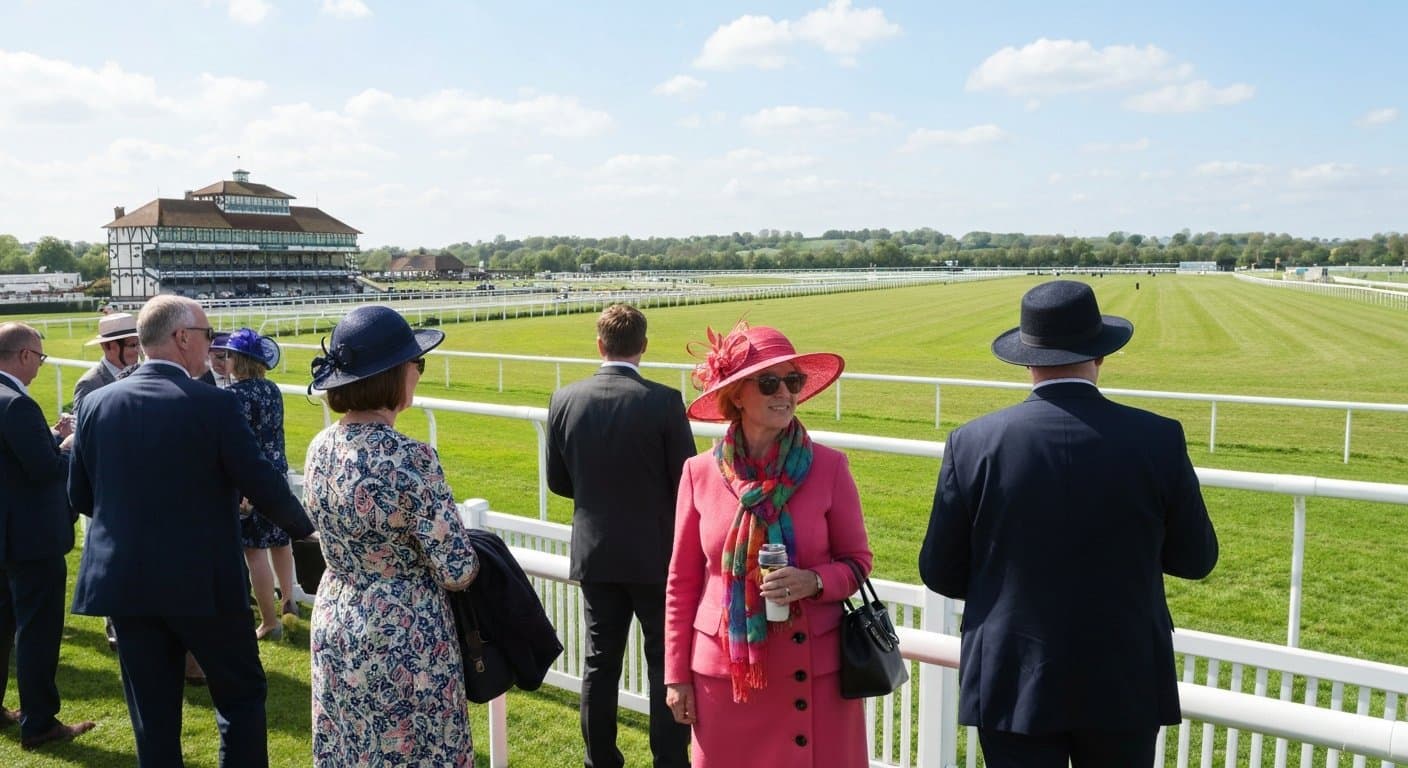
A Day Out at Fontwell Park Racecourse
A day at Fontwell Park — getting there, what to wear, enclosures, food and drink, and insider tips for Britain's only figure-of-eight chase course.
Read more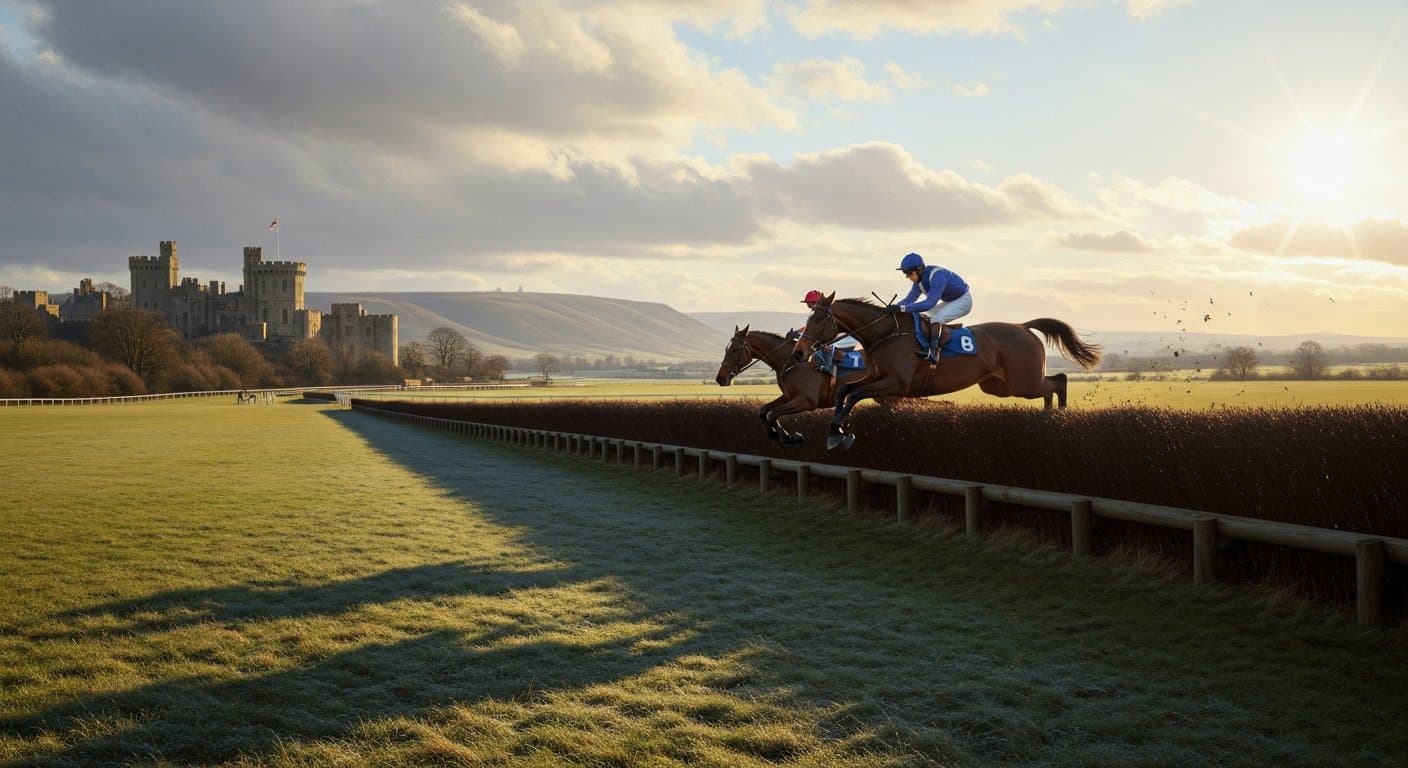
Fontwell Park Jump Festival: Your Complete Guide
Fontwell Park's unique figure-of-eight jump course stages some of the most competitive south-east racing of the season. Here's your complete festival guide.
Read moreResearch the field with the AI Race Predictor
Our model publishes calibrated win-probability estimates for UK races — a second opinion to understand a race, not tips. It's open about its record: it doesn't beat the market, and we show exactly how it does.
Work it out & learn the basics
Gamble Responsibly
Gambling should be entertaining and not seen as a way to make money. Never bet more than you can afford to lose. If you or someone you know has a gambling problem, help and support is available.