
Founder & Editor · Last reviewed 2026-04-05
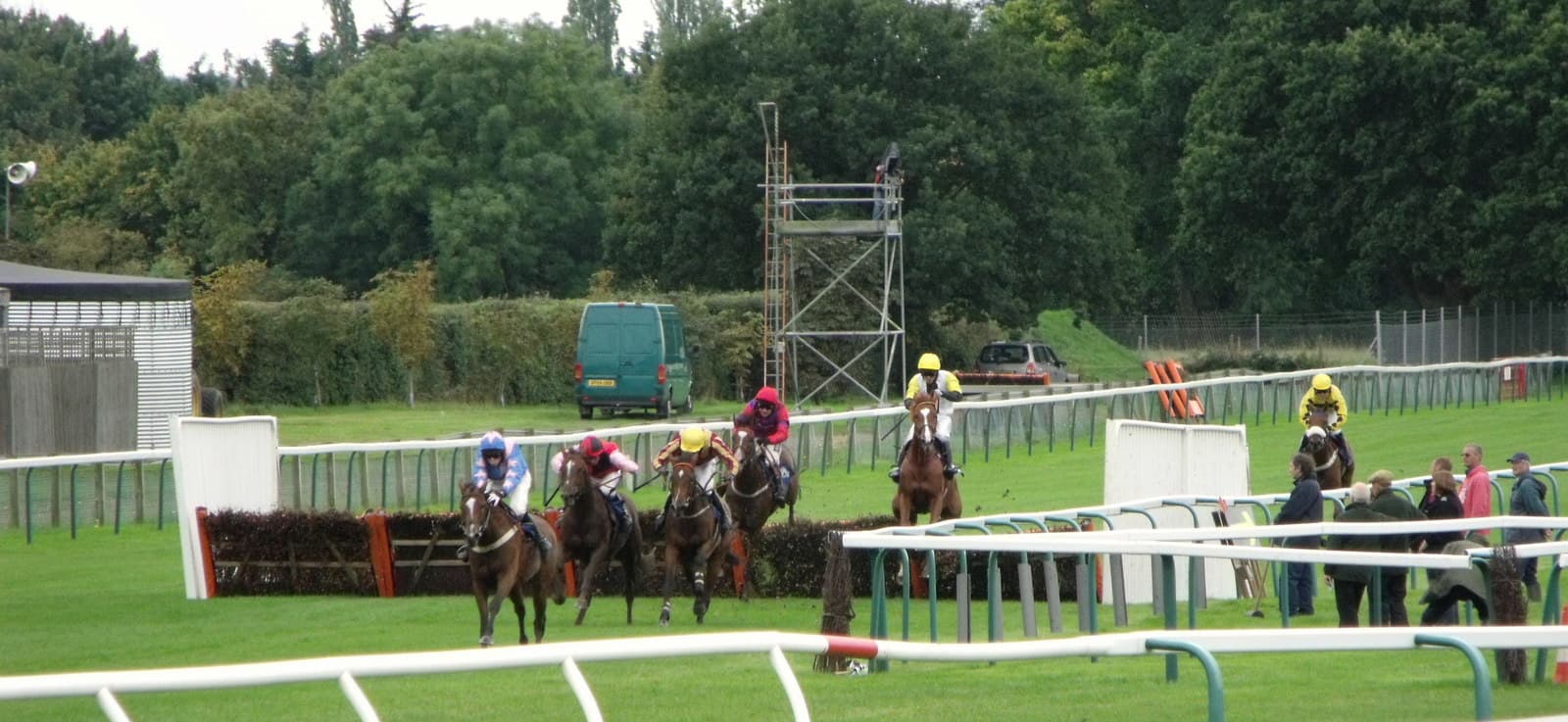
Picture a chaser mid-race at Fontwell Park, heading into the crossing point of the figure-of-eight. The horse has already completed one loop, jumping left-handed fences on the outer circuit, and now swings right to begin the inner loop — changing direction entirely without breaking stride. It is a moment that exists nowhere else in British racing. No other chase course on these islands asks a horse to jump in two different directions within the same race. That singular demand is what separates Fontwell Park from every other National Hunt venue in the country, and it has done so since the first meeting was staged here on 21 May 1924.
Fontwell Park sits in the coastal plain of West Sussex, between the chalk ridge of the South Downs to the north and the English Channel to the south. The village of Fontwell lies just off the A27, the main road that threads along the Sussex coast between Brighton to the east and Chichester and Southampton to the west. Arundel, three miles to the east, is one of the most historically layered towns in southern England — its medieval castle, the seat of the Howard family and the Dukes of Norfolk, rises above the River Arun in a manner that has barely changed since the Norman period. On a clear day, racegoers at Fontwell can see Arundel Castle's towers from the track. The setting is not incidental to the story of the course. A place this deeply embedded in the English landscape tends to produce institutions of equal character.
The racecourse was founded by Alfred Day, a local horse trainer who saw potential in the land at Fontwell and designed a chase circuit that would make the most efficient use of the available space. His solution was the figure-of-eight. Two loops of different sizes, linked at a crossing point where horses pass one another heading in opposite directions. The hurdles track is a conventional left-handed oval of approximately one mile, but the chase circuit — that is the invention. Horses complete the outer loop first, then sweep through the crossing point and take the inner loop, jumping fences that face the other way. No two circuits are the same direction. It is as close to an architectural puzzle as racing gets.
A century after Day laid out his course, the figure-of-eight remains untouched in its essential form. Fontwell Park is now owned by Arena Racing Company, which operates it alongside a portfolio of British tracks, but the thing that makes the course worth visiting has never changed. Approximately 22 to 24 race days are staged here each season, running from October through to May with occasional summer National Hunt fixtures. The capacity is around 5,000, which keeps the atmosphere immediate — there are no cavernous grandstands, no feeling of being lost in a crowd. Fontwell works precisely because of its scale.
This history traces the story from the 1924 founding through the post-war consolidation of the figure-of-eight's reputation, the moments that have defined the course's character, and its position today as one of the most distinctive National Hunt venues in England. The setting is West Sussex. The circuit is one of a kind. The history is worth knowing.
Alfred Day & the Founding
Alfred Day and the 1924 Founding
The year 1924 was a particular moment in English horse racing. The sport had resumed after the Great War, which suspended much of normal life between 1914 and 1918, and the 1920s brought a fresh appetite for National Hunt racing. Jumps racing was expanding beyond its traditional northern and midlands strongholds, and the south-east of England remained underserved. The county of West Sussex had a strong hunting tradition and an agricultural character that made it natural territory for jumps racing, but no dedicated National Hunt course existed in the region. Into that gap stepped Alfred Day.
Day was a horse trainer who had been working in the area and who understood both the landscape and the local appetite for racing. He identified land at Fontwell, a small settlement just off the A27 between Arundel and Chichester, as a viable site. The A27 was already the main road along the Sussex coast, linking Brighton in the east to Chichester and Portsmouth in the west, and the road's proximity meant racegoers from both towns could reach the course without difficulty. Chichester lay seven miles to the west, Arundel three miles to the east. Brighton was thirty miles to the east along the coast road. The catchment was substantial for 1924.
The land Day acquired was not large enough to accommodate a conventional oval chase course — at least not one of adequate dimensions. A standard right-handed or left-handed chase circuit requires a considerable acreage to provide significant straight sections and properly banked bends. Day's plot in the Fontwell village area did not offer that space. His solution was the figure-of-eight. By designing two loops of unequal size that crossed in the middle, he could fit a full chase circuit into a smaller footprint than any conventional layout would allow. Horses would complete the larger outer loop first, then pass through the crossing point and take the smaller inner loop before coming back to the finish. The design was not a compromise — it was an engineering response to the available land, and it produced something that no other course in Britain would replicate.
The first meeting at Fontwell Park took place on 21 May 1924. Day had chosen the name Fontwell from the locality's history, and the course opened to a West Sussex public that had been waiting for a local National Hunt venue. The hurdles track was laid out as a conventional left-handed oval, which gave the course two distinct tests from the start. Horses that ran over hurdles at Fontwell faced a straightforward oval circuit. Chasers faced something else entirely.
The Wider West Sussex Context
The location at Fontwell was not accidental in a broader sense. The county of West Sussex had deep roots in English equestrian culture. Goodwood, four miles north of Fontwell, had been staging flat racing on the Goodwood Estate since 1801. The Dukes of Richmond had developed a course on the downland above Chichester that would eventually become one of the most celebrated flat tracks in the country. By 1924, the Goodwood Festival in late July was already established as one of the highlights of the flat racing calendar. Fontwell did not compete with Goodwood — the flat and jumps programmes were entirely separate — but the proximity gave the region a racing infrastructure that helped the new National Hunt course find its feet.
Arundel, three miles to the east, provided another layer of context. The Howard family — Dukes of Norfolk and England's leading Catholic peers — had held Arundel Castle since the sixteenth century, when it passed to them through marriage. The castle itself had been begun by Roger de Montgomery, one of William the Conqueror's closest associates, in 1067, making it one of the oldest continuously occupied fortified sites in southern England. The Howards were not directly involved in the establishment of Fontwell Park, but the Duke of Norfolk's position as the dominant landowner in the district meant that any new institution in the area existed within a social framework that the Howards shaped. The Duke of Norfolk has historically served as the hereditary Earl Marshal of England, responsible for organising state ceremonies, and the family's presence in the area gave West Sussex a particular social character that extended into racing circles.
The South Downs, the chalk hills that form a spine running along the southern coast of England, provided the physical backdrop. Fontwell sits in the coastal plain below the Downs, in the flat country between the hills and the sea. The downland itself rises to the north — Chanctonbury Ring, Ditchling Beacon, and the long escarpment above the Weald — and on clear days the chalk hills are visible from the track. In 2010 the South Downs was designated a National Park, recognising the landscape's national importance, but in 1924 the hills formed a working agricultural backdrop that gave the course a pastoral quality that many urban-facing tracks have never possessed.
The First Decades
Through the late 1920s and into the 1930s, Fontwell Park established itself as a popular winter venue for the south-east. The interwar programme was modest in scope — a small number of fixtures each season, concentrated in the autumn and winter months when the National Hunt calendar was at its busiest. The figure-of-eight chase circuit attracted attention from the start. Racegoers who had seen only conventional courses found the layout baffling on first encounter, then mesmerising once they understood the design. Horses approaching the crossing point from one direction while others came from the other produced a viewing experience without parallel.
Fontwell's feature races took shape around the figure-of-eight. The chase circuit drew the better chasers from southern yards and gave the course racing that racegoers could build a visit around. The West Sussex agricultural community that had provided Day's original audience grew alongside the racecourse, and the mix of serious racegoers and family parties that Fontwell attracted in its early decades has remained a constant of the course's character ever since.
By the time racing was again suspended, this time by the Second World War in September 1939, Fontwell Park had been operating for fifteen years and had established a secure identity. Day's figure-of-eight had not been modified in any substantial way — the design had proved its worth on its own terms, and there was no reason to alter it. The course that resumed after the war in 1945 was essentially the same course that had opened in 1924. That continuity was itself a kind of achievement.
The Figure-of-Eight Takes Shape
Post-War Consolidation and the Figure-of-Eight's Reputation
National Hunt racing returned after the Second World War with considerable momentum. The post-war years brought crowds back to racecourses across Britain, and the south-east — a region that had experienced the war's pressures acutely, given its proximity to the Channel — was ready for the return of normal sporting life. Fontwell Park reopened and quickly resumed the position it had built before the war: the only dedicated National Hunt venue in West Sussex, drawing racegoers from Brighton to the east, Chichester and Portsmouth to the west, and increasingly from London, sixty miles to the north.
The figure-of-eight chase circuit, which had been a curiosity in 1924, was now the course's defining credential. Trainers who had sent horses to Fontwell before the war knew what to expect. Those who were new to the track had to learn. The figure-of-eight demands a particular type of horse — one that is balanced enough to jump efficiently in both directions, agile enough to handle tight bends, and mentally adaptable enough not to be unsettled by approaching the crossing point, where horses heading in opposite directions pass in close proximity. A horse that meets those requirements consistently runs well at Fontwell. One that does not, however talented, often struggles.
The October 1949 Landmark
In October 1949, Princess Elizabeth attended Fontwell Park and watched a horse called Monaveen win the Chichester Handicap Chase. The horse was owned jointly by Princess Elizabeth and the Queen Mother, and the victory was recorded as Princess Elizabeth's first as an owner. It was the kind of moment that small courses rarely experience — a truly historic occasion that planted Fontwell in the wider narrative of British racing. The royal family's connection to National Hunt racing was long established, but having a royal owner take their first winner at a figure-of-eight course in West Sussex rather than at Cheltenham or Sandown gave Fontwell a distinction that money cannot buy. The story has been told at the course ever since, and Monaveen's name remains in Fontwell's institutional memory.
The Figure-of-Eight in Training Thinking
Through the 1950s and 1960s, the figure-of-eight circuit began to shape how southern trainers approached Fontwell. Handlers based in the south-east understood that course form mattered here more than at almost any other venue in England. A horse that had won over the figure-of-eight once would often handle the track well on its return, because the mental and physical adjustment required to jump in two directions in a single race is something horses either take to or they do not. Trainers who ran at Fontwell regularly could identify which horses in their yard were built for the track — compact, well-balanced types that bent through turns easily — and which were better suited to conventional layouts.
This tactical awareness created a small but real edge for the south-east's established handlers. Fontwell was not a track where a trainer could simply send their best available horse and expect a smooth performance. The figure-of-eight imposed a selection process. Horses coming to Fontwell for the first time from unfamiliar yards occasionally produced performances well below their form at conventional tracks — not through lack of ability, but because the circuit had found them out.
Fontwell's Position on the South East Circuit
By the 1960s, Fontwell Park occupied a clear position in the south-east's National Hunt geography. Plumpton, forty miles to the east in the East Sussex Downs above Lewes, was the other NH venue serving the south coast. The two courses were close enough to compete for the same racegoers but different enough in character that they complemented rather than undermined each other. Plumpton staged a left-handed oval circuit — conventional, testing in its own way, popular with local trainers. Fontwell had the figure-of-eight. The distinction was not subtle.
Trainers in the south-east learned to manage their horses across both courses. A horse that had run poorly at Plumpton's conventional oval might find the figure-of-eight at Fontwell a different proposition. The reverse was also true. The two courses together created a south-east circuit that gave National Hunt trainers in the region a viable programme without having to travel regularly to the Midlands or North.
The National Spirit Hurdle
The National Spirit Hurdle, a Grade 2 contest over about two miles and three furlongs on the conventional hurdles oval, was established at Fontwell as a trial for the Cheltenham Festival. Run in February, the race attracted quality hurdlers from leading yards and provided Fontwell with a race of real prestige, and the course now describes it as the most valuable and prestigious race in its calendar. The National Spirit gave Fontwell a connection to the broader championship narrative of National Hunt racing — horses that ran well here were sometimes heading to Cheltenham five or six weeks later — and it raised the profile of a winter meeting that might otherwise have been a straightforward handicap day.
Proximity to London and the South-East Catchment
One of Fontwell's underappreciated assets has always been its distance from London. At roughly sixty miles south of the capital, via the A24 through Dorking and Horsham or the A3 to Guildford and then the A283, the course sits within two hours of central London by road under normal conditions. The direct train service from London Victoria to Barnham — the nearest station, approximately 1.5 miles from the course — takes around 85 minutes, making Fontwell truly accessible to London racegoers who might otherwise have no regular National Hunt option within the south-east. Most NH tracks with real quality are in the Midlands or North, several hours from London. Fontwell is an exception.
That proximity to London has shaped the course's audience. Through the post-war decades, Fontwell drew racegoers from Brighton, Chichester, Portsmouth, and the surrounding West Sussex villages, but also from London and the commuter belt of Surrey and Kent. The mix gave meetings a breadth that purely local venues could not achieve.
Gary Moore and the Modern South-East NH Training Community
The trainer who most clearly embodies the post-war consolidation of Fontwell's NH circuit is Gary Moore, based at Lower Beeding in West Sussex, approximately twenty miles east of the racecourse. Moore has built one of the most successful south-east jumping operations in recent decades, targeting Fontwell with a frequency and strike rate that reflects his thorough understanding of the figure-of-eight. His sons Jamie and Josh have ridden many winners at the track — Jamie as a long-serving stable jockey before his retirement from the saddle, Josh continuing in that role. The Moore family's dominance at Fontwell is the most visible expression of what the figure-of-eight demands: trainers who know the track, and horses selected specifically for its requirements, consistently outperform those who arrive without that preparation.
The post-war decades set the terms on which Fontwell Park would be understood. The figure-of-eight was not a quirk to be explained away but the course's primary identity — the thing that justified its existence and gave it a story worth telling. By the time the modern era arrived, that identity was secure.
Famous Moments
The Moments That Defined the Course
A century of racing at Fontwell Park has produced moments that belong to the wider story of National Hunt racing in Britain as well as to the course's own history. Some are famous beyond the south-east. Others are the kind of memories that local racegoers carry quietly, known to those who were there but not widely written about. Together they form a portrait of a course that has always produced racing of real character.
Monaveen: October 1949
The single most celebrated moment in Fontwell's history took place on 10 October 1949, when a horse called Monaveen won the Chichester Handicap Chase under jockey Tony Grantham. Monaveen was owned jointly by Princess Elizabeth and the Queen Mother — and the victory was recorded in racing's official accounts as Princess Elizabeth's first win as an owner. Princess Elizabeth was twenty-three years old. She would become Queen Elizabeth II three years later.
The significance of the occasion was not lost at the time. Fontwell Park was a modest West Sussex course with a loyal local following, and the arrival of a royal owner-winner gave it a moment of national attention that small NH venues almost never receive. Racing journalists from London papers travelled down to cover the story, and Fontwell found itself in the national press for reasons that had nothing to do with handicap weights or form lines. Monaveen Then ran well at higher levels — he was placed in the Grand National at Aintree in 1950 — but his Fontwell victory remains the race most closely associated with him in the wider public memory.
The Figure-of-Eight at Full Stretch
Fontwell's staying chases have produced the course's most dramatic finishes, and the ones that linger tend to involve the figure-of-eight working exactly as Alfred Day intended. A well-balanced chaser, jumping cleanly in both directions, building momentum through the outer loop and then attacking the inner fences with the crowd gathered at the crossing point, is the image Fontwell produces at its best.
The crossing point, where spectators standing in the infield can see horses approaching from two directions at once, gives a viewing angle available at no other racecourse in Britain. A staying chaser rounding it for the second time with two fences left, still holding enough in reserve to repel a challenger coming from further back, is the shape of finish the layout produces. We have removed the named renewal that illustrated this, because it was attached to a race that does not exist.
National Spirit Hurdle Contenders Who Went On
The National Spirit Hurdle, run at Fontwell in February, has served as a staging post for horses heading to the Cheltenham Festival. Several horses who have run well in the National Spirit have Then gone on to perform at Cheltenham or Aintree. The race's position in the calendar — six to seven weeks before the Festival — makes it a natural choice for trainers wanting a prep run on decent ground without the pressure of a championship meeting.
In a notable edition of the National Spirit run on the conventional hurdles oval at Fontwell, a horse trained at a southern yard finished strongly after travelling well for the majority of the race. The horse's connections used the run as a confidence-builder ahead of the Champion Hurdle at Cheltenham. The pattern — Fontwell as the last significant race before the Festival for a horse that needs a run rather than a serious test — has been repeated across the National Spirit's history.
Gary Moore's Record and the Family Operation
Gary Moore's strike rate at Fontwell is, by any measure, exceptional. Based at his yard in Lower Beeding, twenty miles east of the course, Moore has trained winners at Fontwell in consistent volume over multiple decades. His sons Jamie and Josh have ridden the bulk of those winners, creating a family operation that makes Fontwell feel, on many race days, like a Moore family fixture. Jamie Moore retired from the saddle in 2021 after a career that brought him more than 700 winners, a significant number of them at Fontwell. Josh Moore has continued in the jockey's role, maintaining the family's dominance on the figure-of-eight circuit.
The scale of Moore's Fontwell record reflects what the figure-of-eight rewards. His yard consistently produces horses that suit the track's particular demands — compact, well-balanced chasers and hurdlers that handle tight turns without losing their jumping rhythm. Moore's ability to identify which horses in his yard will perform on the circuit, and to bring them to the course in the right condition at the right time, has produced a record that other south-east trainers have found almost impossible to match on a consistent basis.
Course Specialists and the Figure-of-Eight Effect
Fontwell has produced more real course specialists than almost any other track in Britain, and the reason is the figure-of-eight. A horse that handles the circuit well tends to handle it well repeatedly, because the qualities required — balance, agility, mental adaptability — are largely innate rather than developed through experience alone. Punters who identify a horse with a strong Fontwell record and back it to perform again over the figure-of-eight have often found value, precisely because general form guides do not always capture the specificity of what the track demands.
Several horses over the course's history have returned to Fontwell three, four, or five times and produced their best performances there, regardless of their performances at conventional tracks. These are horses that trainers could set specific targets at Fontwell knowing the track suited them, and the betting market has periodically undervalued them because outside observers did not give sufficient weight to the figure-of-eight advantage.
The Crossing Point as Drama
The viewing experience at Fontwell is unlike anything else in National Hunt racing. Spectators standing near the crossing point — where the two loops of the figure-of-eight intersect — can watch horses approaching from their left heading one way, and horses approaching from their right heading the other. In a chase with a large field, the busiest phases of the race can feel almost cinematic from this vantage point. Two groups of horses, moving in opposite directions, occupying the same piece of ground within seconds of one another.
This crossing point drama has been a selling point of the course for a century. Broadcasters covering Fontwell meetings on television have regularly used the crossing point as a camera position precisely because it offers an angle available nowhere else in British racing. When a field of chasers sweeps through the figure-of-eight with the lead changing at the crossing point on the final circuit, the effect for those watching from the infield is one that no conventional course can replicate.
Fontwell's famous moments are not all of the headline variety — not all Grand National connections and royal winners. Many of them are the accumulation of afternoons when the figure-of-eight circuit produced racing that a conventional layout simply could not have delivered. That accumulation, over a hundred years, is itself the course's most enduring achievement.
The Modern Era
Arena Racing Company and the Contemporary Course
Fontwell Park entered the modern era of British racing through the structural changes that reshaped the industry from the 1990s onward. The consolidation of racecourse ownership — as smaller venues moved from independent operation into the portfolios of larger companies — brought Arena Racing Company to Fontwell. ARC now operates the course alongside a portfolio that includes Lingfield Park in Surrey, Wolverhampton in the West Midlands, Chepstow in Wales, and a dozen other venues. The company's ownership has brought investment in facilities and the management discipline of a professional racing group, while leaving the figure-of-eight circuit exactly as Alfred Day designed it in 1924.
Under ARC, Fontwell stages approximately 22 to 24 race days per season. The programme runs primarily from October through to May, covering the core National Hunt months, with occasional summer NH fixtures taking advantage of the course's ability to stage jumping at times of year when most of the jumps calendar is dark. The fixture list positions Fontwell firmly as a mid-tier south-east NH venue — above Plumpton in terms of prize money and profile, below Sandown Park in Surrey, which hosts Listed and Graded races of national importance. Fontwell's niche is the quality handicap and novice programme that provides a stepping stone for horses moving up the ranks.
Facilities and the Intimate Scale
The capacity of around 5,000 has not changed dramatically in the modern era, and that relatively small scale is a feature rather than a limitation. Fontwell is not trying to be a destination course on the scale of Goodwood four miles north, which stages major flat racing events attracting tens of thousands. It is a tight, compact, well-organised NH venue where a racegoer can walk from the grandstand to the paddock to the parade ring in under two minutes, where the betting ring is accessible, and where the figure-of-eight circuit can be watched from multiple vantage points around the track without a significant journey between them.
The grandstand and public areas have been updated under ARC ownership, with catering facilities improved and the overall presentation of the course brought in line with the standards that modern racegoers expect. The paddock, positioned so that horses can be seen clearly before racing, is well suited to the intimate scale of the venue. Connections and racegoers mix without the separation that larger courses sometimes impose.
Gary Moore's Ongoing Dominance
The trainer whose name is most consistently associated with Fontwell in the modern era is Gary Moore of Lower Beeding, West Sussex, approximately twenty miles east of the course. Moore's record at Fontwell across the past two decades is exceptional by any measure of NH training performance. His strike rate — the proportion of runners that win — has regularly exceeded twenty per cent at the track, a figure that reflects not just the quality of his yard but the precision with which he targets races appropriate to his horses on the figure-of-eight circuit.
Moore's son Josh now rides as a jockey for the yard, continuing the family operation that his older brother Jamie built at Fontwell before his retirement in 2021. The Moore family has won at Fontwell with chasers and hurdlers, across distances ranging from two miles to three miles and beyond, in maiden bumpers and competitive handicaps. The consistency across disciplines and conditions suggests something more systematic than a run of form: Moore understands the figure-of-eight at a level that gives his horses a structural advantage over rivals whose trainers are less familiar with the track's demands.
Chris Gordon and the South-East NH Training Group
Chris Gordon, based at Morestead in Hampshire approximately thirty miles west of Fontwell, is another trainer who has built a strong record at the course in recent years. Gordon's yard has grown considerably since he took out a licence, and Fontwell represents one of his primary targets in the south-east NH programme. His horses tend to be well prepared for the specific challenge of the figure-of-eight, and his strike rate at the course compares favourably with his overall NH record elsewhere.
The south-east training community that targets Fontwell has the coherence of a regional circuit. Trainers who understand the figure-of-eight — who select horses appropriate to the track, who time their runners to arrive at the course in the right condition — consistently outperform those who treat Fontwell as simply another race meeting. This creates a local knowledge premium that has been a consistent feature of the betting market at Fontwell for decades.
The Figure-of-Eight as a Media and Marketing Asset
Broadcasters have always found Fontwell's figure-of-eight useful. Television coverage of NH racing requires commentary that explains the course to viewers who may be watching for the first time, and the figure-of-eight provides a narrative hook that no conventional circuit can offer. Commentators explaining that horses are jumping in two different directions in the same race, that the crossing point requires horses to swing from one direction to another mid-circuit, generate a degree of viewer engagement that a standard oval simply does not produce.
Racing journalists writing about Fontwell meetings have a built-in angle that requires no invention. The figure-of-eight is the story. How will a horse handle the crossing point for the first time? Will a course specialist extend its record at the track? Is the field properly assembled by trainers who understand the circuit's demands? These questions do not arise at any other racecourse in Britain, and they give Fontwell a distinctive editorial position in racing coverage throughout the National Hunt season.
The South Downs Setting and the Tourism Economy
Fontwell's position below the South Downs National Park — designated in 2010 — gives it a setting that plays well in an era when racing venues compete partly as leisure destinations. The chalk hills to the north, the proximity of Arundel Castle three miles to the east, the Roman heritage of Chichester seven miles to the west, and the coastal plain landscape that stretches toward the sea to the south: these provide a backdrop that makes a day at Fontwell Park feel embedded in the wider West Sussex experience.
Goodwood four miles north — home to both the flat racing festival and the Goodwood motor circuit — draws international visitors to the region. Fontwell operates on a different scale and with different ambitions, but the regional tourism infrastructure that Goodwood helps sustain benefits the wider area including Fontwell's catchment. Racegoers who visit West Sussex for a flat meeting at Goodwood in the summer sometimes return in the autumn or winter for National Hunt racing at Fontwell, following the equestrian trail that runs through this particular corner of southern England.
The London catchment remains vital. The train from London Victoria to Barnham takes approximately 85 minutes direct, placing Fontwell within comfortable day-trip range of central London. The Brighton and Portsmouth populations to east and west provide additional audiences. Fontwell in the modern era is well served by its location, drawing from a catchment of several million people within two hours by road or rail. The figure-of-eight circuit is the reason to come. The setting is the reason to stay.
Fontwell's Legacy
Fontwell's Enduring Identity
A racecourse that has been staging National Hunt racing since 1924 with the same fundamental layout has earned a kind of institutional confidence that cannot be manufactured. Fontwell Park's figure-of-eight chase circuit was unusual in 1924 and it remains unusual now — not because no one has tried to improve upon it, but because no one has found a reason to change it. Alfred Day's design solved a specific problem posed by the available land at Fontwell, and in solving it he created something with no equivalent anywhere else in British racing. A century later, that remains true.
The figure-of-eight defines the course in ways that go beyond the layout itself. It defines which horses run well here and which do not. It defines the tactical approach that experienced south-east trainers bring to their Fontwell runners. It defines the viewing experience that racegoers get at the crossing point, watching horses approach from two directions in the space of a single circuit. And it defines the way the course is covered and discussed — giving journalists and broadcasters a story that requires no invention because the track itself provides one.
Fontwell's position in the National Hunt landscape of southern England is also secure. The south-east is not rich in NH venues. Plumpton forty miles east, Sandown Park in Surrey, and Fontwell itself form the core of the south-east jumps circuit for the bulk of the year. Of those three, Fontwell is the only one with a truly unique layout. Sandown has its celebrated railway fences and its undulating downland course. Plumpton has the tight turns of the East Sussex Downs track. Fontwell has the figure-of-eight, and with it a claim on the attention of any racegoer who cares about what makes a course distinctive rather than simply convenient.
The West Sussex setting below the South Downs National Park, the proximity of Arundel Castle three miles to the east, the accessibility from London Victoria in 85 minutes direct by train to Barnham, the 5,000-capacity venue that keeps racing immediate and visible — all of these are assets that the course has possessed for most of its history. They have not diminished in value. If anything, the combination of a distinctive circuit, an accessible location, and a pastoral setting has increased in appeal as British racing has become more focused on the experience of a day at the races rather than simply the result.
Fontwell Park has never claimed to be among the great championship venues of National Hunt racing. It has not hosted the Gold Cup at Cheltenham or the Champion Hurdle, and it makes no pretence to that category of event. What it has done, consistently and across a century, is provide a specific kind of racing that no other course in Britain can replicate. That specificity is its legacy and, for those who understand what the figure-of-eight demands, its enduring appeal.
Frequently Asked Questions
When was Fontwell Park Racecourse opened?
Fontwell Park held its first race meeting on 21 May 1924. The course was founded by Alfred Day, a local horse trainer who designed the figure-of-eight chase circuit to make efficient use of the land available at Fontwell in West Sussex.
What is unique about Fontwell's chase circuit?
The chase circuit at Fontwell Park is a figure-of-eight — the only figure-of-eight chase circuit in Britain. Two loops of different sizes are linked at a crossing point where horses pass one another heading in opposite directions. This means horses jump fences in two different directions during a single race, a demand that exists at no other National Hunt venue in the country. The hurdles course is a conventional left-handed oval, but the chase circuit is the feature that defines the course.
Who owns Fontwell Park?
Fontwell Park is owned and operated by Arena Racing Company, known as ARC. ARC operates a portfolio of British racecourses including Lingfield Park, Wolverhampton, Chepstow, and several others. The company has been responsible for investment in the course's facilities while leaving the historic figure-of-eight chase circuit unchanged.
How do I get to Fontwell Park?
By rail, Barnham station is approximately 1.5 miles from the racecourse. Barnham is on the London Victoria to Portsmouth Harbour line, and direct trains from London Victoria take approximately 85 minutes. By road, Fontwell sits just off the A27, the main Sussex coast road that runs between Brighton to the east and Chichester and Southampton to the west. Chichester is seven miles west; Arundel is three miles east.
What type of racing does Fontwell stage?
Fontwell Park stages National Hunt racing only — hurdles, steeplechases, and National Hunt flat races (bumpers). There is no flat racing programme at the course. The season runs primarily from October through to May, covering the core winter National Hunt months, with occasional summer NH fixtures. The course stages approximately 22 to 24 race days per year.
Which trainer dominates at Fontwell?
Gary Moore, based at Lower Beeding in West Sussex approximately twenty miles east of the racecourse, has an exceptional record at Fontwell accumulated over multiple decades. His strike rate at the course — the proportion of runners that win — has regularly exceeded twenty per cent, reflecting both the quality of his yard and his thorough understanding of the figure-of-eight circuit. His son Josh Moore rides as a jockey for the yard and has continued the family's strong record at the track. Chris Gordon, based at Morestead in Hampshire around thirty miles west, is another south-east trainer who targets Fontwell with consistent success.
Share this article
More about this racecourse
All Fontwell Park guides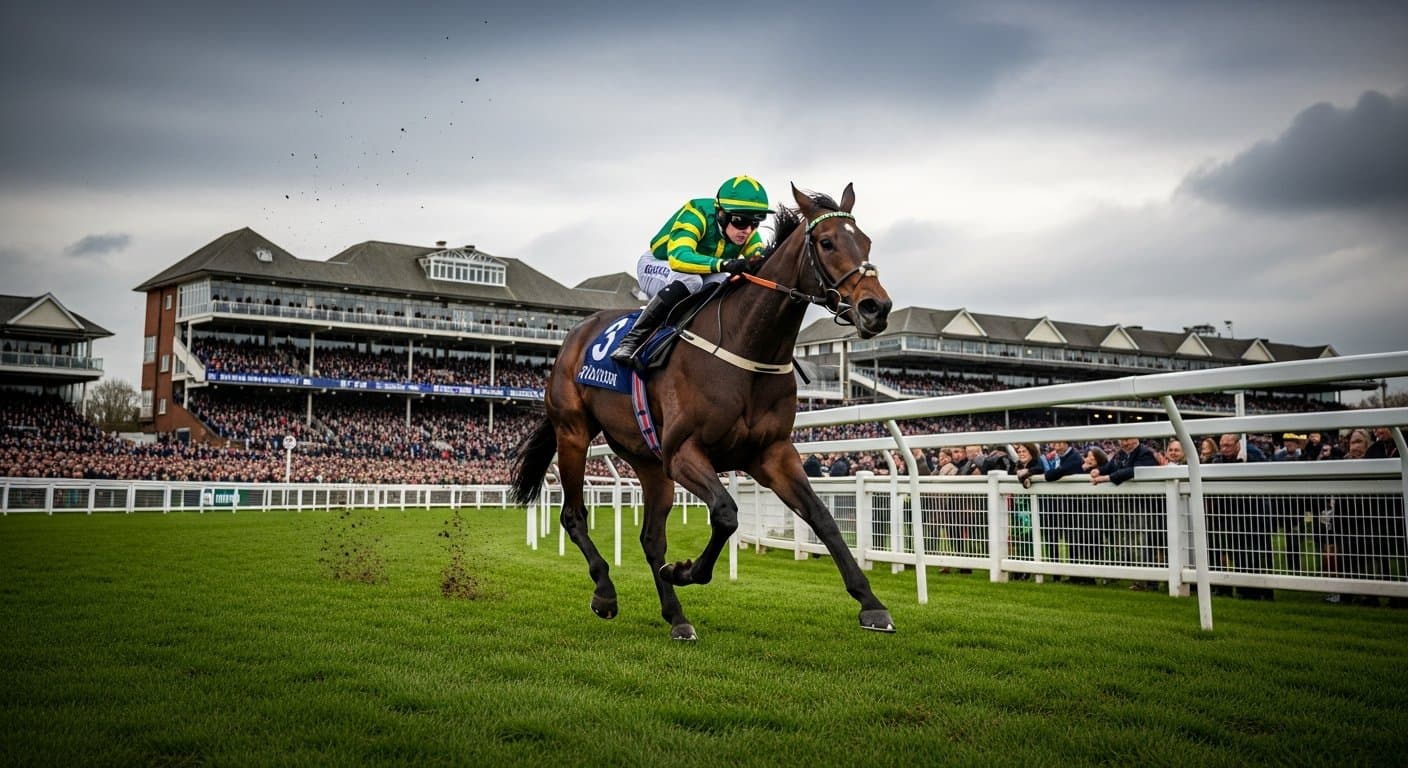
Monaveen at Fontwell Park: The Horse That Started a Royal Racing Dynasty
On 10 October 1949, Monaveen won at Fontwell Park to give Princess Elizabeth her first winner as an owner — the race that ignited a lifelong royal passion for jump racing.
Read more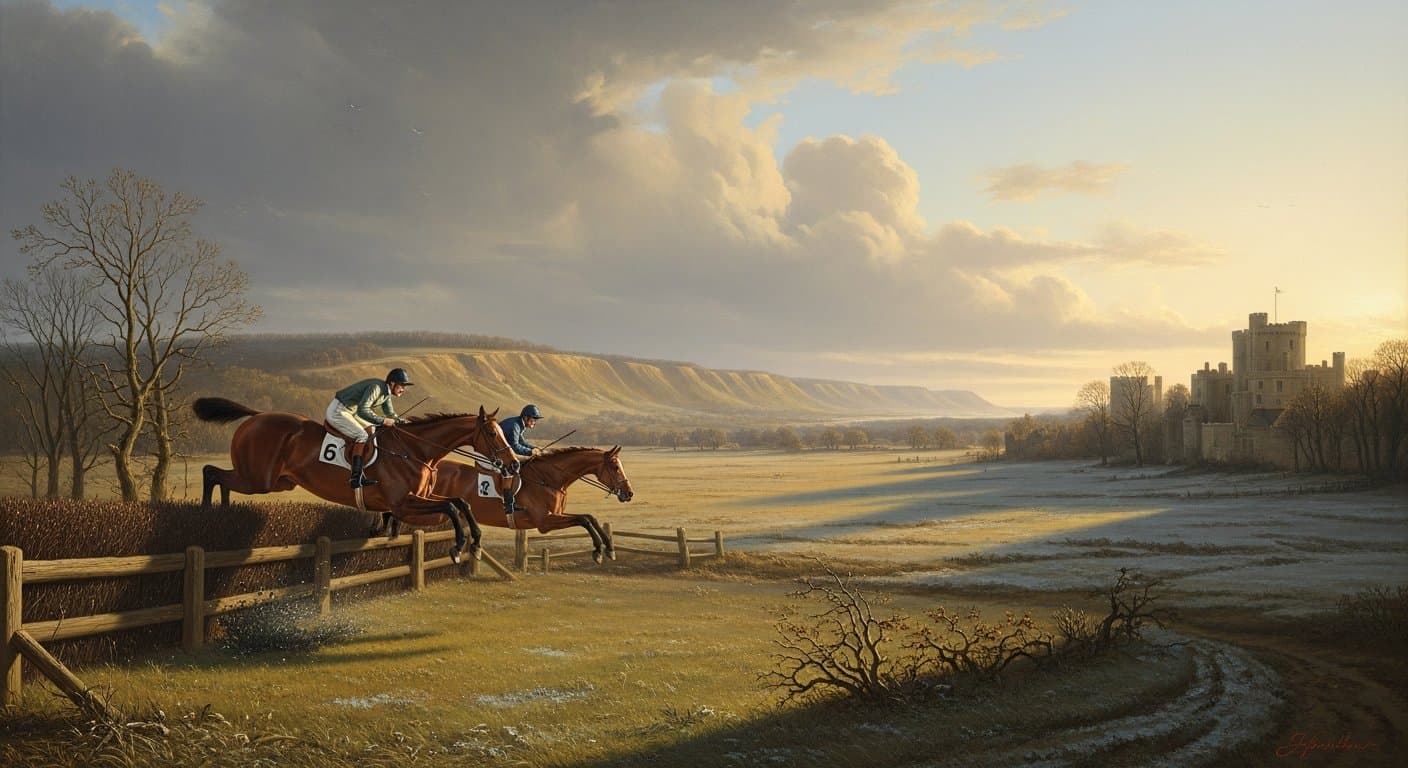
Bank Holiday Jump Day at Fontwell Park: The Complete Guide
Your complete guide to Fontwell Park's Easter Bank Holiday Monday jump meeting — Britain's only figure-of-eight circuit at its most festive, with competitive handicap chases and hurdles drawing 6,000+ from across Sussex and the South East.
Read more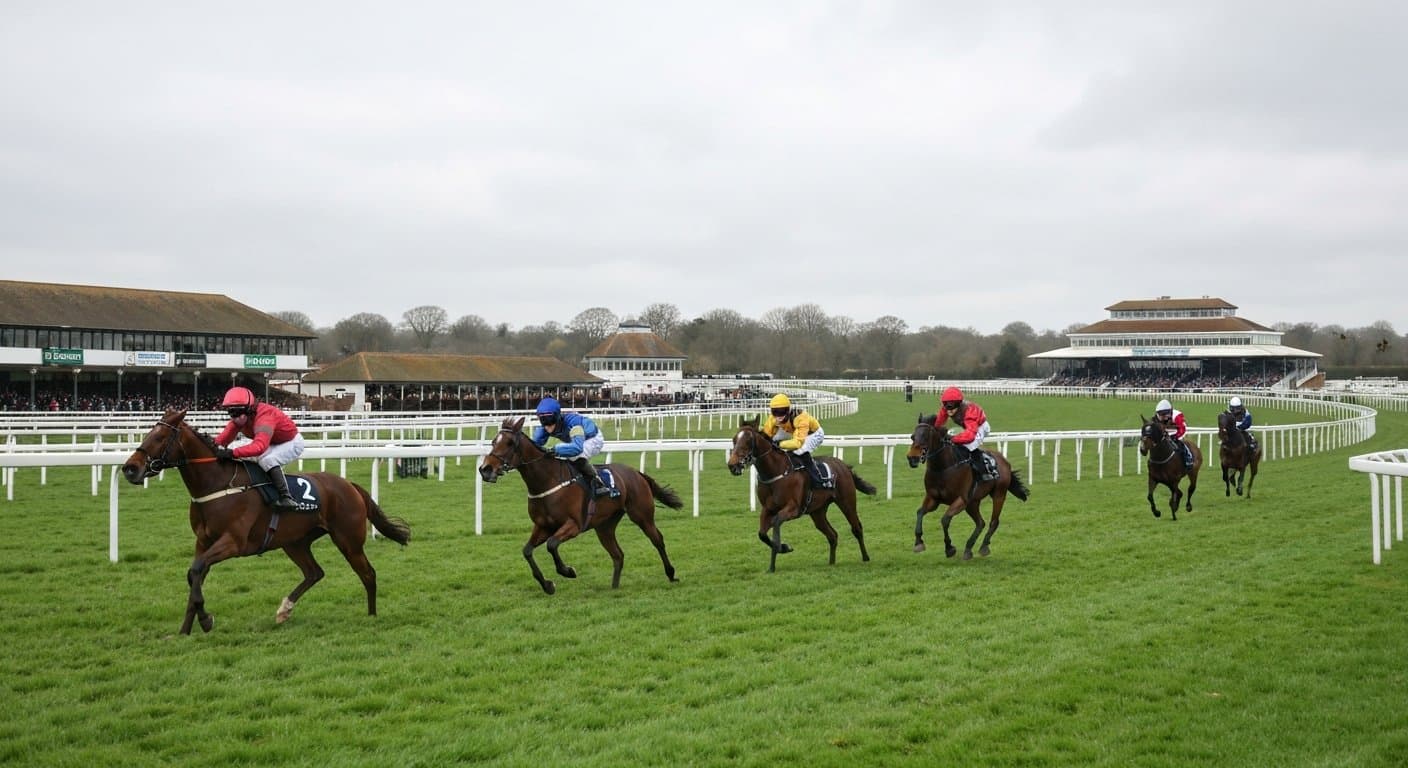
Fontwell Figure-of-Eight: Britain's Only Unique Chase Track
Discover how Fontwell's one-of-a-kind figure-of-eight chase course works and why it creates unique betting opportunities other tracks can't offer.
Read moreGamble Responsibly
Gambling should be entertaining and not seen as a way to make money. Never bet more than you can afford to lose. If you or someone you know has a gambling problem, help and support is available.