
Founder & Editor · Last reviewed 2026-10-14
Great Yarmouth Racecourse has been staging flat racing since 1715, placing it among the oldest active venues in Britain. Only a handful of courses can trace their origins to the early 18th century; Newmarket is the most obvious comparison, and the proximity — just 25 miles west along the A47 — has shaped almost everything about what Great Yarmouth has become. For three centuries, the two venues have operated in a quiet partnership, with Newmarket providing the horses and the training expertise, and Yarmouth providing the track, the seaside air, and the crowds.
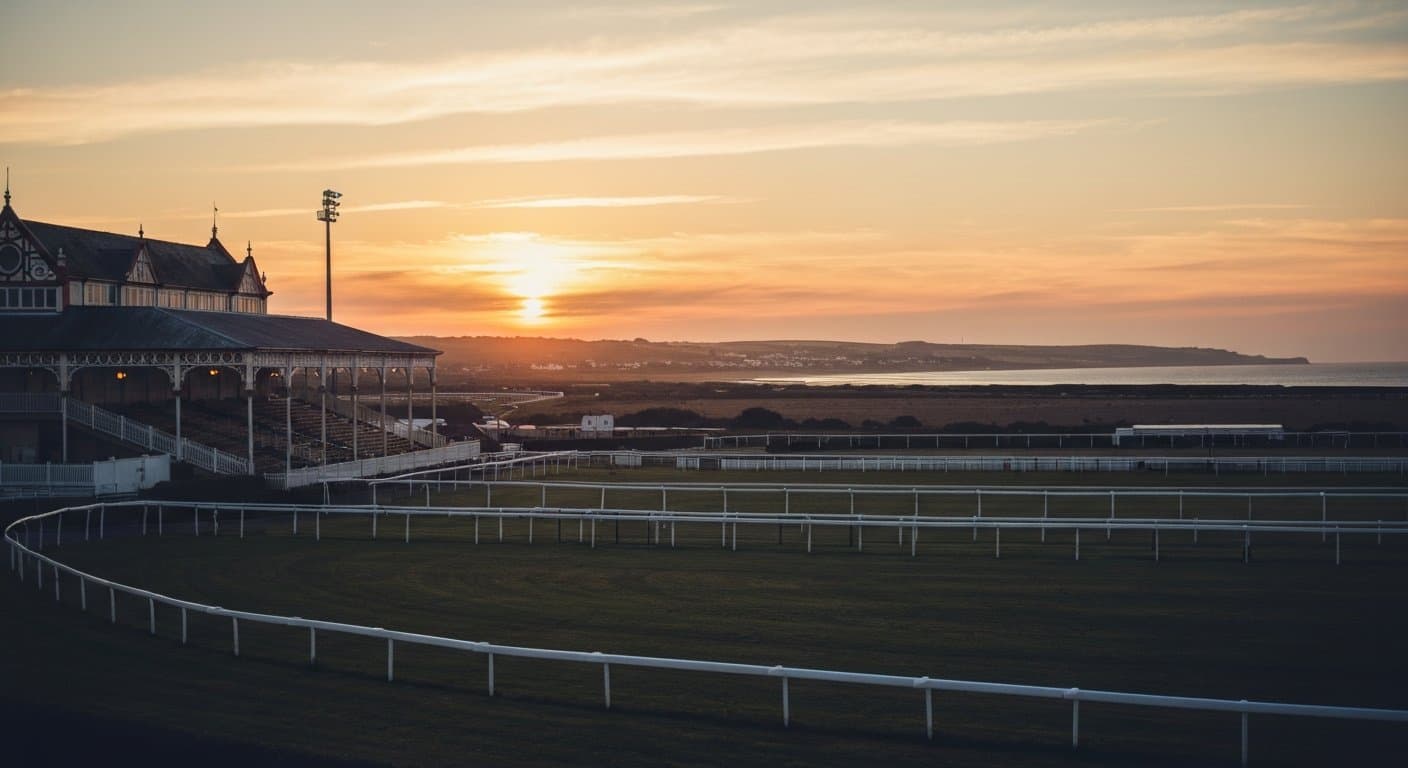
The course sits at Jellicoe Road, Great Yarmouth, Norfolk, NR30 4AU, a left-handed flat circuit of approximately one mile two furlongs. It is built close to sea level and lies just 400 metres from the North Sea shoreline. On clear days, the water is visible from parts of the course. That coastal geography is not simply a marketing detail. The North Sea wind — often brisk, sometimes severe — plays a measurable role in race times and tactics, and the sandy, free-draining soil beneath the turf is a direct product of the course's coastal position.
Great Yarmouth's identity has been defined by two things above all others. The first is that Newmarket connection: the course functions as the local track for Britain's most important training centre, which means that two-year-old maiden races at Yarmouth in August and September carry a form significance that their classification does not fully reflect. A Class 4 maiden at Yarmouth in late summer will often contain horses from the yards of John Gosden, Charlie Appleby, or Sir Michael Stoute — horses whose eventual destinations include Doncaster's Racing Post Trophy, Newmarket's Dewhurst Stakes, and the following year's Classics. The second is the course's September fixture, the Eastern Festival, a three-day meeting whose middle day is built around the John Musker Fillies' Stakes, the course's only Listed race, for fillies and mares aged three and over. It acts as a final assessment point before the season's major autumn targets.
The course layout itself is worth understanding before the history begins. Great Yarmouth is a left-handed, essentially flat oval of approximately one mile two furlongs, with a separate straight course used for sprint distances of five and six furlongs. The straight course carries a mild draw bias — higher-numbered stalls, towards the stands rail, tend to confer a small advantage in sprint races. The round course is considered fair, with no pronounced bias. Going is typically good to firm in the summer months, shading towards good or good to soft in September. The sandy subsoil drains quickly after rain, meaning the going rarely drops as far as heavy. These physical characteristics, largely unchanged since the early 20th century, have made Yarmouth a predictable and trusted surface for trainers building precise seasonal programmes.
This history traces the full arc from those first recorded races on the Norfolk Denes in the early 18th century to the present-day venue managed by the Arena Racing Company. It covers the course's physical evolution, the trainers and horses that have made it significant, the races that have mattered most, and the role it continues to play in flat racing's annual cycle.
Origins
Origins
The Town That Needed Racing
In 1715, Great Yarmouth was one of England's busiest ports. The herring trade was at its height — the town processed and exported vast quantities of cured fish each autumn, and the harbour was a central point for maritime commerce between England and the Low Countries. A population that worked hard in seasonal trades had both the money and the appetite for organised entertainment, and racing on horseback was among the most popular spectacles of the Georgian age.
The earliest meetings were not the structured events we associate with modern racing. They were informal matches: two or three horses, arranged between local landowners or merchants, raced over a set distance for a purse. The location was the Denes — the long strip of sandy common ground that ran between the town's buildings and the North Sea. This was not an unusual setting for early Georgian racing. Many courses that would later formalise into permanent venues began in exactly this way: open land, accessible to foot traffic, with the sea or a river providing one natural boundary. The Denes at Yarmouth offered all of this, and the sandy, level ground meant reasonable going for the horses.
What made Yarmouth different from the hundreds of small-town racing venues that briefly flourished in the 18th century was its staying power. The town's prosperity funded better organisation. By the mid-18th century, racing at Yarmouth was a recognised part of the county calendar, with meetings advertised in Norwich newspapers and attracting horses from across Norfolk and Suffolk. The social calendar of Georgian Norfolk — the gentry visiting their estates, the merchants entertaining clients — found racing a useful anchor, and Yarmouth's summer and autumn meetings became fixtures of that world.
The Course on the Denes
The original Denes course ran roughly parallel to the shoreline. The precise layout is no longer recoverable in detail, but contemporary accounts describe a straight track over which matches were held, with spectators lining both sides. The going was typically good to firm in summer — the sandy soil drained quickly and the coastal wind dried the surface after rain. That characteristic, still broadly true of the modern course today, was established by the geography of the site.
Horse racing on the Denes was not without its complications. The site was common land, meaning rights of access were shared with the townspeople, and the proximity to the sea created occasional logistical difficulties — tidal conditions, storm damage, and the simple fact that the course was used for other purposes throughout the year. As the town grew through the second half of the 18th century, these pressures increased. Great Yarmouth's population expanded steadily after 1750, and the seafront and Denes area became more built-up and congested.
The Move Inland
By the early 19th century, the case for a dedicated, permanent site was strong. Racing had grown more formal across England in the intervening decades: the Jockey Club, founded in Newmarket around 1750, had begun to impose structure on the sport, and courses that wanted to attract quality horses from major training centres needed to offer consistent, reliable facilities. A course on common land, subject to competing uses and subject to disruption, was increasingly inadequate.
The current site at Jellicoe Road was established in the 19th century as racing at Great Yarmouth made the transition to its permanent home. The new location offered the space needed for a proper oval circuit and a straight course. The soil remained coastal — sandy, free-draining — and the North Sea was still close enough to be seen from the track, but the course was now a dedicated racing facility rather than a shared public space.
The Railway and the Growth of the Fixture List
The arrival of the railway at Great Yarmouth in 1844 changed the scale of the sport here as it did at racecourses across England. Before the railway, transporting horses any distance meant road travel by van or horseback, which limited the catchment area for both runners and spectators. The railway put Great Yarmouth within reach of Newmarket in a couple of hours, and within reach of London in a morning. Trainers who might previously have sent horses only to local Norfolk meetings could now consider Yarmouth as part of a broader fixture programme.
For Great Yarmouth, this mattered most because of its Newmarket connection. The yards that clustered around the Heath in Newmarket — already, by the mid-19th century, the dominant force in British flat racing — now had a convenient local option. A horse could leave Newmarket in the morning, race at Yarmouth in the afternoon, and return the same day. That proximity made Yarmouth a natural first-start venue for lightly tried horses and a useful prep for those building towards more important engagements.
By the late 19th century, the course was running a regular summer and autumn programme, attracting horses from Norfolk, Suffolk, Cambridgeshire, and beyond. The seaside setting, the reliable going, and the convenience for Newmarket trainers had given the course a distinct identity. It was not Newmarket — it was never going to challenge the headquarters of British racing for prestige — but it had found its role: a fair, honest track on the Norfolk coast where good horses could be placed advantageously, and where a day at the races came with the added draw of sea air and a holiday atmosphere.
Why this period mattered: The founding and early development of Great Yarmouth established the two characteristics that would define it for the next 300 years. The coastal setting gave the course its atmosphere and its going characteristics. The proximity to Newmarket gave it a quality of horse that most provincial tracks could not match. Both would prove durable.
The Golden Era
The Golden Era
The Edwardian and Interwar Years
Great Yarmouth entered the 20th century with its reputation established and its fixture list growing. The Edwardian period was, by most measures, a prosperous time for British flat racing. Owners and breeders were investing heavily, the major Classics were attracting large international fields, and the holiday trade that supported seaside racecourses was at a Victorian-Edwardian high point. Great Yarmouth benefited from all three trends.
The town itself was thriving. Great Yarmouth had become one of England's most popular seaside resorts, drawing visitors from the industrial Midlands and the East End of London who came by excursion train for a day, a weekend, or a week. The racecourse sat within easy reach of the seafront and the holiday infrastructure: boarding houses, fish-and-chip shops, amusement stalls, and the long sandy beach. For many visitors, a summer fixture at Yarmouth was part of the holiday itinerary rather than a specialist racing trip. That casual, holiday-crowd attendance was a financial asset and gave the course an atmosphere distinct from purely sporting venues.
Racing standards kept pace. Newmarket trainers had long used Yarmouth, but the early decades of the 20th century saw the connection deepen. The flat racing calendar was becoming more structured, with trainers planning seasonal campaigns more carefully around key prep races and targets. A reliable, fair course within 25 miles of Newmarket, with the railway to move horses conveniently, was exactly what that structure required. Yarmouth developed a reputation as a course where Newmarket horses could be tested seriously without the pressure of a major stage.
The Course Layout Takes Shape
The physical characteristics of the course that punters and trainers recognise today were largely established during the early-to-mid 20th century. The left-handed oval of approximately one mile two furlongs had set the round-course distances. The straight course — roughly five furlongs on a separate straight track — provided the sprint option. The going characteristics were well understood: the sandy subsoil meant the course drained quickly and typically rode good to firm in summer, good in the autumn meetings. Rain could bring the going down to good to soft for the September meeting, which occasionally caught trainers who had expected firmer conditions.
The draw bias on the straight course became understood by local trainers and jockeys over these decades. In sprint races on the straight, horses drawn towards the stands rail — the higher-numbered stalls — tended to find better ground and a slight advantage from the positioning. This was not dramatic, but it was consistent enough to become part of the local knowledge that regular Yarmouth participants carried. The round course, run left-handed from various starting positions, was considered fair by the standards of the era.
The Interwar Meeting Calendar
Between 1918 and 1939, Great Yarmouth ran a summer programme that typically covered six to eight fixtures between June and October. The August and September meetings were the most important, timed to coincide with the peak of the holiday season and to catch horses being prepared for autumn Classics and Trials. The course attracted handicaps and conditions races at the upper end of the provincial flat calendar, drawing horses trained at Newmarket alongside runners from East Anglian stables at Newmarket, Middleham, and beyond.
Racing at Yarmouth during the interwar years had the flavour of a course operating at its natural level — not stretching to put on races that exceeded its appropriate class, but staging competitive, well-attended fixtures that served a real purpose in the racing calendar. Holidaymakers in the stands, trainers in the paddock, and bookmakers along the rails gave the course a functioning ecosystem that kept it financially viable through a period when many smaller courses struggled.
The Second World War Interruption
The Second World War suspended racing at Great Yarmouth as it did across most of Britain. The course was requisitioned for military purposes — a common fate for flat, open land near the coast. Yarmouth, as a port and coastal town, was heavily involved in the war effort, and the racecourse facilities were put to uses unrelated to horse racing from 1940 until the end of the conflict in 1945.
Racing resumed in 1945 and 1946 as the country began the slow process of returning to peacetime normality. The first post-war meetings drew strong crowds — there was considerable pent-up demand from racegoers who had been unable to attend during the war years — and the horses sent by Newmarket trainers to the early post-war Yarmouth meetings included some that had been lightly raced during the restricted wartime calendar.
Post-War Consolidation
The decade following the war saw Great Yarmouth settle back into its established rhythm. The fixture list rebuilt to its pre-war scale, the holiday crowds returned, and the Newmarket connection resumed its usual importance. The late 1940s and 1950s were not years of dramatic change for the course, but they were years of steady consolidation.
Facilities improved gradually. The stands were updated, the paddock arrangements were formalised, and the infrastructure around the course — car parking, public enclosures, catering — was brought up to the level expected by post-war racegoers. The course was not a showcase venue, and it did not aspire to be. Its purpose was a well-run, reliable programme of flat racing in a distinctive coastal setting, and that it continued to deliver.
The Newmarket yards that would become household names were active at Yarmouth throughout the 1950s and into the 1960s. Trainers based on Newmarket Heath sent horses to Yarmouth with regularity, using it as a prep track for horses being pointed at the major autumn races. The course's September meeting, in particular, became valued by trainers who wanted to give two-year-olds a race before the Dewhurst or the Racing Post Trophy. That use of September Yarmouth as a juvenile prep — now so well established as to be almost taken for granted — has its roots in the habits formed during this post-war era.
Why this period mattered: The golden era from the Edwardian period through to the post-war years established the course's identity as a serious prep venue for Newmarket trainers while sustaining the holiday crowd that kept it commercially viable. Those twin pillars — racing quality and seaside atmosphere — would carry it through the challenges ahead.
Famous Moments
Famous Moments
The September Juvenile Form Book
The most consistent thread running through Great Yarmouth's history of significant races is the September juvenile programme. The course's late-summer and early-autumn two-year-old races have, decade after decade, produced winners that went on to run in the season's most important closing events. This is not coincidence. It is a consequence of Yarmouth's geography: Newmarket trainers, whose horses make up the core of the British Classic crop each year, use Yarmouth as the natural local track for horses being prepared for major autumn engagements.
Understanding what this means in practice requires understanding the seasonal rhythm of Newmarket training. Horses that arrive at Newmarket as yearlings in the autumn typically begin serious work in the spring of their two-year-old season. Many have their first race in May or June. But a substantial proportion are held back until July or August, either because they need time to develop physically or because their trainers have identified a specific programme. For these horses, a race at Yarmouth in August or September is frequently the entry point into their first season. The opposition they face is not the modest-quality company that a Class 4 or Class 5 designation might imply — it is often other Newmarket horses being readied for exactly the same autumn targets.
Henry Cecil and the Yarmouth Maidens
Henry Cecil was among the most prolific users of Yarmouth as a juvenile prep track during his long tenure at Warren Place, Newmarket. Cecil, who trained Classic winners in five consecutive decades from the 1970s to the 2000s, routinely sent lightly raced two-year-olds to Yarmouth in late summer. Several of his horses who first appeared or first won at Yarmouth went on to feature in Group races later that season or as three-year-olds.
Cecil's use of the track reflected a broader Newmarket approach: find a course where you can give a horse a competitive race on reliable going, assess their attitude under pressure, and make a decision about autumn targets. The Yarmouth straight — with its mild bias towards the stands rail — suited horses that were learning their trade, providing a straightforward test that rarely produced misleading results.
John Gosden and the Godolphin Connection
The Yarmouth-to-Classics pipeline became even more visible from the late 1990s onwards. John Gosden, training in Newmarket from 1988, used Yarmouth extensively for early-career appearances by horses that would go on to major targets. Gosden's approach — patient, methodical, with horses often given just one or two races before the end of their two-year-old season — made Yarmouth an important data point. If a Gosden horse ran well at Yarmouth in September, the form book took note.
The Godolphin operation, Sheikh Mohammed's centralised racing and breeding programme based at Moulton Paddocks in Newmarket from 1994, added another dimension to the Yarmouth connection. Godolphin regularly used Yarmouth as a debut track for expensive yearlings. The logic was straightforward: Yarmouth was close, the going was usually predictable, and the competition was sufficiently serious to give a significant reading of a horse's ability. A horse that won well at Yarmouth on debut with a Godolphin blue silks was often next seen in a Group race.
Charlie Appleby, who took over as Godolphin's principal Newmarket trainer in 2013, continued this approach. The sight of Godolphin blue at Yarmouth in the September juvenile races became routine, and the form of those races — the margins, the style of winning, the way horses moved through the gears — was studied carefully by those trying to assess Classic prospects.
The John Musker Fillies' Stakes
The John Musker Fillies' Stakes is the course's most significant individual race and its only Listed race, one level below Group 3 in the British Flat Pattern. It is for fillies and mares aged three and over, run in September during the Eastern Festival. In 2026 the racecourse named the middle day of the festival after it.
Earlier versions of this page described a Listed two-year-old race at the course under another name, with a record of Pattern-race winners. That race does not exist, and the record attached to it has been removed. We do not yet hold a sourced roll of honour for the John Musker Fillies' Stakes, so we do not list past winners here.
Coastal Drama: the Sea Air Factor
Any account of memorable moments at Yarmouth has to acknowledge the role that the coastal environment plays in the character of racing here. The North Sea wind — northerly or north-easterly, most typically — can be sharp even in August and particularly so in the September meetings. Horses that race prominently and set a strong pace into a headwind have sometimes found themselves spent before the final furlong. Horses that settle and produce a finish from off the pace have often benefited.
One of the defining images of a September afternoon at Yarmouth is the sight of a field turning for home with the coastline visible beyond the stands, the wind ruffling silks and manes, the crowd — a mixture of racegoers and holidaymakers who wandered across from the seafront — leaning forward as the horses accelerate up the straight. It is a scene that has repeated itself across three centuries, and it captures something that no amount of analytical context quite replaces: racing at the seaside, with good horses, in autumn light.
The Eastern Festival Takes Form
The Eastern Festival — the three-day fixture in September that now represents the highlight of the Yarmouth calendar — has produced its own accumulation of memorable results over the decades since it emerged as a distinct, branded meeting. The three days are Gents Day, John Musker Fillies Stakes day and Ladies Day, which gives the festival a depth that a single-day fixture cannot match.
The festival's betting market has become one of the more closely followed autumn fixtures on the provincial flat racing circuit. Punters who track the Newmarket-Yarmouth pipeline — who follow which trainers are targeting the September meeting and which horses show up freshly or with one previous run — have found the festival a productive hunting ground. The form is reliable, the going is usually predictable, and the patterns established over many years give serious students of the form book a framework to work from. The full betting picture for the festival is covered in the Eastern Festival guide.
Sir Michael Stoute and the Patient Approach
Sir Michael Stoute, whose Freemason Lodge yard in Newmarket has produced Derby winners, Oaks winners, and Prix de l'Arc de Triomphe winners across five decades, has been another consistent user of Great Yarmouth as a prep track. Stoute's horses are rarely over-raced — he takes time with them, often giving them just two or three outings in their first season — and a race at Yarmouth in August or September fits naturally into that conserved approach.
Stoute's presence at Yarmouth, across the decades since he took out a training licence in 1972, has meant that the September meeting has regularly featured horses of the highest quality in what appear, on paper, to be modest contests. A Stoute-trained two-year-old appearing at Yarmouth for a second or third start, with a comfortable debut win behind it, has often been the best horse in the race by some distance, and the manner of its victory has shaped its entire autumn campaign.
A Course That Produces Honest Form
The broader claim that emerges from the accumulation of moments at Great Yarmouth across the decades is a straightforward one: the track produces honest form. The layout is fair. The going is predictable. The fields are typically well-contested. And the proximity to Newmarket means that the horses running are often better than their race classification suggests. Trainers, punters, and form analysts have relied on this for generations. It is perhaps the most important thing Great Yarmouth has contributed to British flat racing.
The Modern Era
The Modern Era
Arena Racing Company and the New Structure
Great Yarmouth entered the 21st century in reasonable health by the standards of the provincial flat racing circuit. The course's relationship with Newmarket had been sustained across successive decades, the Eastern Festival had established itself as the headline fixture, and the summer evening meetings continued to draw casual crowds from the Norfolk coast holiday trade. The structural question, as for many smaller courses, was ownership and long-term investment.
The Arena Racing Company (ARC) acquired Great Yarmouth as part of its expansion into British racecourse ownership in the 2010s. ARC, which by the mid-2010s had become the largest owner of racecourses in Britain by number of venues, brought Great Yarmouth into a portfolio that included Doncaster, Lingfield Park, Windsor, Epsom, and a dozen others. The scale of the group brought some advantages: shared marketing, centralised ticketing systems, and the ability to negotiate as a significant block within the racing industry's commercial structure.
For Yarmouth specifically, ARC ownership meant investment in the on-course experience. The stands were updated and the public enclosures improved. The paddock and pre-parade ring areas were upgraded to meet the expectations of modern racegoers. Catering facilities were expanded. None of these changes were dramatic — the course was not being rebuilt from scratch — but cumulatively they brought the facilities to a standard consistent with a well-maintained mid-tier flat course.
The Fixture List and the Racing Calendar
The modern Great Yarmouth fixture list runs from May to October, with the bulk of the programme falling in July, August, and September. The course stages approximately 22 to 25 fixtures per season, split between afternoon and evening meetings. Evening racing, which became increasingly popular at flat courses through the 1990s and 2000s, suits the Yarmouth model well. The long summer evenings on the Norfolk coast, the coastal light fading slowly over the North Sea, and the relaxed atmosphere of a mid-week evening fixture have made those meetings among the most popular with casual racegoers.
The September programme remains the most important for serious racing purposes. The Eastern Festival, covering three days in mid-September, draws the best horses and the most significant entries of the entire Yarmouth season. After the festival, the October fixtures tend to be lower-key — useful for providing opportunities for horses that need a late-season run, but not the stage for anything major.
The Newmarket Connection in the 21st Century
The Newmarket-Yarmouth pipeline has not weakened in the modern era; if anything, it has become more visible and more widely understood. The growth of racing media — television coverage, online form databases, social media commentary from racing journalists — has meant that the significance of Yarmouth's September juvenile races is better explained to a broader audience than ever before.
Charlie Appleby at Godolphin, William Haggas at Somerville Lodge in Newmarket, and the other major Newmarket yards continue to treat Yarmouth as a key prep track. The patterns are consistent from year to year. In August, the two-year-old maiden races at Yarmouth fill with first-time-out horses from Newmarket, some of them expensive yearling purchases whose ability is truly unknown until they step onto a track. In September, the horses with a debut run behind them come back for a second start, and the form from those races — the manner of winning, the winning margin, the time relative to the standard — feeds directly into the ante-post betting markets for the Dewhurst, the Champagne Stakes at Doncaster, and the early Classic ante-post lists.
Punters who follow this pipeline have found Yarmouth's September programme a productive source of information. When a Haggas or Appleby horse wins a seven-furlong maiden at Yarmouth in mid-September, the question is not whether it will run in a higher-class race — the question is which one, and when.
Draw Bias in the Modern Era
The draw bias on the straight course has been confirmed and quantified in the modern era by form analysts using detailed race records. In sprint races of five and six furlongs on the straight track, horses drawn in the higher-numbered stalls — towards the stands rail — have shown a measurable advantage when conditions are normal. The bias is not so extreme as to override class differences, but it is consistent enough to be a factor in sprint betting at the course.
The round course draw bias is less marked, as is the case at most oval tracks where the longer distances allow fields to even out. Trainers and jockeys who race regularly at Yarmouth factor the draw into their pre-race planning on sprint days, and the well-documented nature of the bias means it is now priced into the market by informed punters. The complete guide to the course layout covers the draw position implications in detail.
Great Yarmouth and the Fan Experience
The modern era has seen Great Yarmouth work to broaden its audience beyond traditional racegoers. Family racedays, themed evening meetings, and promotional partnerships with local tourism businesses have been part of the ARC playbook at Yarmouth as at other venues in their portfolio. The course's natural strength — a seaside setting that appeals to non-racing visitors — means these efforts are not forced. A family that comes to Yarmouth for the beach and ends up at the races is a natural audience, not a stretched one.
The combination of Norwich, 18 miles to the west, and the coastal resort of Great Yarmouth itself gives the course a catchment area of reasonable size for East Anglia. A combined Yarmouth racing day with a visit to Norwich is a practical day out by car — Norwich's city centre, with the cathedral and the castle, is less than half an hour's drive from Jellicoe Road. The course markets itself accordingly.
Technology and the Modern Race-Day Experience
The broader shift in British racing towards digital ticketing, in-running betting, and improved connectivity at racecourses has touched Great Yarmouth in the modern era as it has touched all ARC venues. Mobile betting is now the norm for most racegoers, and the course's infrastructure has been updated to support connectivity. The tote operation, TV coverage, and betting shop representation at the course are consistent with the standards expected at any established British flat course.
What has not changed, and shows no sign of changing, is the fundamental character of the place. A race day at Great Yarmouth in the 21st century retains the qualities that made it distinctive 100 years ago: the coastal wind, the sandy going, the field of Newmarket horses that knows exactly what it's doing, and the crowd that includes a mix of sharp-eyed professionals and families who wandered across from the seafront. That combination is not something that can be engineered. It is the product of three centuries of geography, training, and habit.
Why this period mattered: The modern era demonstrated that the course's appeal does not depend on expansion or reinvention. Managed investment in facilities, sustained relationships with the major Newmarket yards, and the reliable quality of the September fixture list have kept Great Yarmouth relevant in a racing landscape where smaller courses have sometimes struggled to make their case.
Great Yarmouth's Legacy
Great Yarmouth's Legacy
Three Centuries on the Same Ground
There are not many things in British life that have functioned continuously for more than 300 years in essentially the same place and for essentially the same purpose. Great Yarmouth Racecourse is one of them. Racing has taken place here — first on the Denes, then on the current site at Jellicoe Road — since 1715. The sport has changed almost beyond recognition in those three centuries: the horses are faster, the breeding is more scientific, the prize money is vastly larger, and the entire commercial structure around racing is unrecognisable from the Georgian age. But the fundamentals at Yarmouth remain what they have always been: a flat, left-handed track on the Norfolk coast, 25 miles east of Newmarket, staging competitive flat racing from May to October.
That continuity is the course's most significant legacy. It has survived two world wars, multiple changes of ownership, the rise and fall of the seaside holiday trade, and the contraction of the British racecourse network from over 100 venues at the start of the 20th century to around 60 today. The courses that have closed over that period often failed because they lost their sporting purpose — they no longer attracted horses good enough to justify their place in the calendar. Great Yarmouth has not had that problem, because the Newmarket proximity has consistently guaranteed a supply of quality horses to fill the September programme.
What Makes Yarmouth Distinctive
There are two other British racecourses sometimes compared to Great Yarmouth on the basis of their coastal settings. Brighton Racecourse, on the South Downs above the city, is the most obvious. Like Yarmouth, it has a holiday-town audience and an unconventional layout. Redcar, on the North Yorkshire coast, is a flat, left-handed course with a straight that shares certain characteristics with Yarmouth's. But neither has the precise Newmarket relationship that gives Yarmouth its particular standing in the form book.
The claim that Yarmouth juvenile form is a reliable guide to autumn Classic prospects is not based on sentiment. It is based on the observable fact that the horses running in the September two-year-old races at Yarmouth are typically trained by yards at Newmarket — the same yards that are also targeting the Dewhurst, the Racing Post Trophy, and the following year's 2,000 Guineas and 1,000 Guineas. When those yards send horses to Yarmouth, they are not filling a field. They are racing seriously, and the results carry corresponding weight.
The John Musker Fillies' Stakes and the Pattern
The course's sole Listed race is the John Musker Fillies' Stakes, for fillies and mares aged three and over, run in September during the Eastern Festival. Listed races sit below Group 3 in the British Flat Pattern, and the race gives the course a place in the autumn programme for older fillies and mares. We do not yet hold sourced records of how its winners have fared afterwards, so we make no claim about that here.
The Course's Place in East Anglian Racing
Within the East Anglian racing landscape, Great Yarmouth occupies a clear position. Newmarket is the dominant centre — the headquarters of British racing, home to the Jockey Club Rooms, two Group 1 tracks, and the vast majority of the region's training yards. Chelmsford City, the all-weather track in Essex, now handles a substantial volume of the region's winter and early-season flat racing. Fakenham, the National Hunt course in north Norfolk, occupies a separate niche entirely. And Yarmouth holds the seasonal, coastal, flat-racing end of the spectrum: a summer and autumn venue where the quality of horses is high but the atmosphere is decidedly holiday-flavoured.
Norwich, 18 miles to the west, is the regional population centre, and the course draws from the city's catchment area as well as from the coastal resort town itself. The A47 between Norwich and Yarmouth is a straightforward 30-minute drive that puts the course within easy reach for a large potential audience. That geographic positioning within East Anglia — close enough to Newmarket to benefit from its horses, close enough to Norwich to draw a regional crowd — has been central to the course's long-term sustainability.
The Challenges Ahead
Great Yarmouth faces the pressures shared by all mid-sized provincial flat courses in the 21st century. Prize money at the bottom of the racing pyramid has been a persistent concern: British racing's prize money levels, particularly in lower-class handicaps, have made it difficult for smaller courses to attract the best horses to their non-feature races. The Eastern Festival remains strong, but the bulk of the fixture list depends on races where prize money is modest and the margins of commercial viability are tight.
The balance between preservation and modernisation is a constant consideration. The course's character depends partly on things that cannot be manufactured: the coastal setting, the proximity to Newmarket, the accumulated trust of trainers who know the track well. Aggressive modernisation of the facility risks disrupting those characteristics even as it improves others. The course's management has generally taken a measured approach, upgrading where needed without attempting to turn Yarmouth into something it is not.
The Enduring Argument for Great Yarmouth
The case for Great Yarmouth Racecourse, made across 300 years of flat racing, is ultimately a simple one. The course is located where it is — 400 metres from the North Sea, 25 miles from the world's most important training centre — and nothing about that location is going to change. Trainers have built programmes around the September Yarmouth meeting for as long as there has been a September Yarmouth meeting. The form from those races has been worth studying for as long as form books have been kept. The crowds have come for the racing and stayed for the seaside, or come for the seaside and stayed for the racing, for as long as both have been available on the same afternoon.
For a full picture of what the course offers today — the races, the facilities, and what to expect from a visit — the complete guide covers the ground. For the betting case built on the patterns described in this history, the Eastern Festival guide sets out the angles in detail.
Great Yarmouth is not the most glamorous racecourse in Britain. It has never tried to be. What it offers instead is something that fewer courses can claim: a specific, well-defined role in the racing calendar, performed reliably over a very long time, in a setting that nothing else quite replicates.
Frequently Asked Questions
When did racing begin at Great Yarmouth?
Racing has been recorded at Great Yarmouth since 1715, making the course over 300 years old. The earliest meetings were held on the Denes — the stretch of common land between the town and the North Sea — before the course moved to its current permanent site at Jellicoe Road in the 19th century. The 1715 date is derived from the earliest traceable recorded meetings, though informal racing in the area may predate it.
Why does Yarmouth have such a strong connection with Newmarket?
Great Yarmouth sits 25 miles east of Newmarket along the A47, making it the closest racecourse to the world's most important flat training centre. No other racecourse is nearer. That proximity means Newmarket trainers — from Henry Cecil and Sir Michael Stoute in earlier decades to Charlie Appleby, John Gosden, and William Haggas today — have consistently used Yarmouth as a local prep track, particularly for two-year-olds being readied for the autumn programme.
What is Great Yarmouth's most important race?
The John Musker Fillies' Stakes, the course's only Listed race. It is for fillies and mares aged three and over and is run in September during the Eastern Festival. Earlier versions of this page named a Listed two-year-old race instead; there is no such race at the course.
Does the course have a draw bias?
Yes. On the straight course, sprint races of five and six furlongs show a consistent, moderate bias towards horses drawn in the higher-numbered stalls, which race towards the stands rail. The bias is not extreme enough to overcome large class differences but is a consistent factor on sprint days. The round course draw bias is less pronounced.
How close is the course to the sea?
The course at Jellicoe Road is approximately 400 metres from the North Sea shoreline. The water is visible from parts of the track on clear days. The coastal geography — sandy, free-draining soil and a regular sea wind — is a direct influence on going conditions and race dynamics throughout the season.
Is Yarmouth flat racing only?
Yes. Great Yarmouth is a flat racing-only course. It does not stage National Hunt racing. The course is left-handed, approximately one mile two furlongs round, and has a separate straight course used for sprint distances. The season runs from May to October.
Share this article
More about this racecourse
All Great Yarmouth guides
Seaside Racing at Great Yarmouth: Complete Guide
Your complete guide to seaside racing at Great Yarmouth — the Eastern Festival, summer meetings, and racing on the Norfolk coast.
Read more
Summer Racing at Great Yarmouth: Complete Guide
Your complete guide to summer racing at Great Yarmouth — fixtures, atmosphere, betting angles, and planning a visit to Norfolk's seaside flat course.
Read more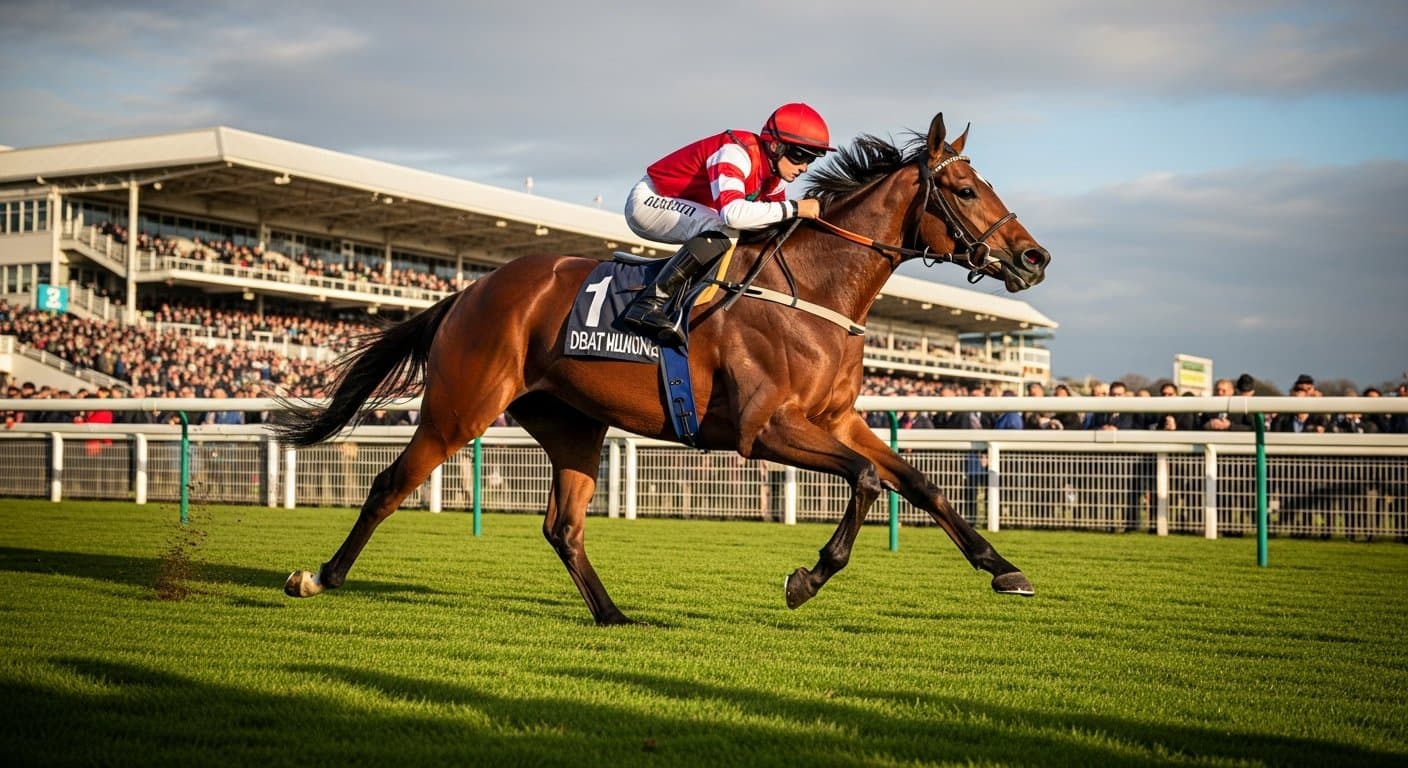
Dubai Millennium at Great Yarmouth: The Complete Story
Dubai Millennium made his debut at Great Yarmouth in October 1998, winning by five lengths. He went on to win nine of ten career starts, including the Dubai World Cup.
Read moreGamble Responsibly
Gambling should be entertaining and not seen as a way to make money. Never bet more than you can afford to lose. If you or someone you know has a gambling problem, help and support is available.