
Founder & Editor · Last reviewed 2026-03-02
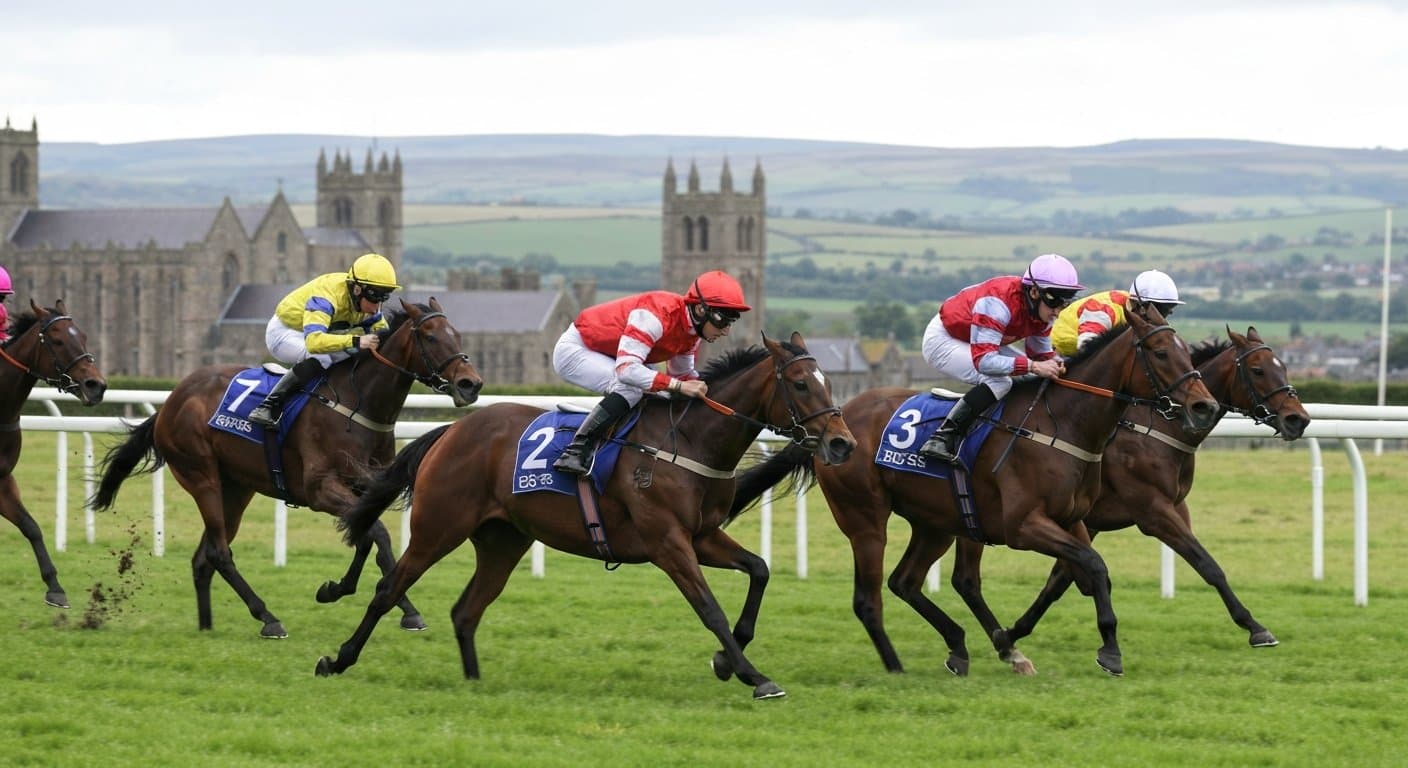
Hexham Racecourse sits high above the Tyne Valley on the Tyne Valley plateau in Northumberland, making it the highest NH course in Britain. The elevation is not a cosmetic distinction — it shapes everything about the betting environment. High up, Hexham is exposed to Pennine weather that other English NH courses rarely experience: wind that comes across open moorland without shelter, frost that arrives earlier and stays later than at lowland venues, and rainfall that accumulates without the drainage benefit of slopes or valley bottoms to carry water away. The ground at Hexham is testing more often than at any other English NH course outside the Cumbrian and Welsh Border circuits.
For bettors, this altitude creates a specific and learnable environment. Stamina is the primary attribute at Hexham in a way that applies at few other English NH courses. The exposed position means the going is more often Soft or Heavy than Good to Soft, and when it is truly testing, the steep uphill finish becomes the decisive factor in virtually every race. Horses that stay, jump, and handle wind-affected testing conditions win at Hexham at a higher rate than their market prices imply at the national level.
Quick Betting Reference
- Course type: Left-handed oval; NH only; steep uphill finish; high above the Tyne Valley
- Distance range: 2m to 3m4f
- Going: Soft to Heavy most common October to April; Good to Soft possible May-June
- Most historic race: Heart of All England Maiden Hunters' Chase (Class 4 maiden hunters' chase, early May, 3m 41y)
- Primary advantage: Stamina and going filter — altitude creates more testing conditions than ratings reflect
- Form transfer: Kelso, Sedgefield, Carlisle, Perth — northern exposed NH circuits transfer most directly
- Trainer to watch: Sue Smith (Bingley, 60mi); Brian Ellison (Malton, 65mi); James Ewart (Langholm, Scotland)
The Altitude Effect
The 800-foot elevation at Hexham creates going conditions that dry more slowly after rain and freeze more readily in cold weather than lowland NH courses. When Catterick or Wetherby reports Good to Soft, Hexham is typically Soft. When Wetherby reports Soft, Hexham may be Soft to Heavy. This systematic elevation of going by one to two grades is the most important fact for bettors approaching Hexham cards: form from lowland courses at nominally comparable going descriptions often underestimates the severity of what Hexham will actually provide.
The going report from Hexham is the authoritative source for raceday conditions, but bettors should apply the altitude adjustment mentally when comparing Hexham going to other courses' form. A horse that has won on Good to Soft at Doncaster has not been tested at what Hexham means by Good to Soft. A horse that has won on Soft at Kelso or Carlisle — northern exposed circuits at moderate elevation — has come much closer.
The Uphill Finish and Course Craft
Hexham's left-handed oval climbs steeply in the home straight, creating a finish that tests stamina reserves more severely than any lowland English NH course finish. Horses that have used too much energy through the back straight face the climb without reserves; horses that have been settled and ridden with pace judgement arrive at the foot of the hill in a better position to sustain an effort. Jockeys who understand this — who time their effort to preserve energy for the uphill push — consistently outperform those applying standard pace-judgement from flatter courses.
Bet on Hexham
Place your bets on Hexham races with a trusted bookmaker.

Promo code BETFRED50. New customers only. Register, deposit with a Debit Card, and place a first bet of £10+ at Evens (2.0)+ on Sports, to be settled within 7 days, to get £30 in Sports Free Bets and £20 in Bet Builder Free Bets within 24 hours of settlement. 7-day expiry. Eligibility & payment exclusions apply. Full T&Cs apply. Take Time to Think. BeGambleAware.org. 18+. Full T&Cs.

Promo code R30. New UK customers only, 18+. Register, deposit £10 or more, then place a £10 single cash bet at odds of 1/2 (1.5) or greater on any sports market (excluding Virtuals). Once the qualifying bet settles you get £30 in Free Bets (3 x £10) — the qualifying bet can win or lose. Free Bets are valid on any sports market excluding Virtuals, expire in 7 days, are non-withdrawable and must be used in full. Excluded deposit methods apply (including PayPal, Apple Pay, Skrill and NETELLER). Named bets such as Lucky 15 do not qualify. If you cash out the qualifying bet, or it is voided, you are no longer eligible for the offer. Ends 31.12.26. Full T&Cs apply. Please gamble responsibly. BeGambleAware.org. 18+. Full T&Cs.

Promo code BET40GET20. New UK customers, 18+. Register with the code and place a first bet of £40 or more at Evens (2.0) or greater. Receive 2 × £10 free bets: the first credited automatically once the qualifying bet settles, the second 24 hours later. Free bets must be placed at minimum odds of 4/1 (5.0), expire 24 hours after credit, and the free-bet stake is not returned with winnings. Debit card deposits only. Take Time to Think. BeGambleAware.org. 18+. T&Cs apply. Full T&Cs.

50% of your first-day net losses refunded as a free bet, capped at £25. New UK customers aged 18+ only. To qualify, deposit and place a first bet of £10 or more on any sport at minimum odds of evens (2.00), then place at least two further bets on different events, each worth at least 50% of your largest bet, all at evens (2.00) or greater. Losses are counted from your first settled bet until 23:59 the same day. Place a qualifying £10+ bet and you are guaranteed at least a £5 free bet. Bets placed at SP, void bets, cashed-out bets and bets struck with free bets do not count towards the offer. The free bet is credited the day after your qualifying bets settle and must be used within 7 days, after which it expires. It can be used at odds from 1/4 (1.25) up to 250/1 on singles and straight accumulators, but not on Trixie, Patent or Yankee style multiples. Free-bet stake is not returned with winnings. One offer per person, household, address, IP address and device. E-wallet deposits may not qualify, so check the cashier before depositing. Customers registered with GAMSTOP cannot claim. KYC identity verification must be completed before the free bet is credited. Take Time to Think. BeGambleAware.org. 18+. T&Cs apply. Full T&Cs.

New customers, 18+. Choose the sports bonus at sign-up, make a first deposit and receive a 100% bonus up to £50 in your Sports Bonus balance. To convert the bonus to cash, wager it 10x within 30 days. Single bets below Evens (2.00) do not qualify; accumulators do not qualify if any selection is below 1/2 (1.50). Virtual Sports, voided, cancelled, drawn, cashed-out and free-bet wagers do not count towards wagering. Only the first settled bet per event counts. Withdrawing before the wagering requirement is met forfeits the bonus balance including bonus winnings. Real-money funds are used before bonus funds. Deposits via Skrill or Neteller are not eligible. Not valid in conjunction with other promotions. Odds, bet and payment limits apply. 10bet general and promotion T&Cs apply. BeGambleAware.org. 18+. Full T&Cs.

New customers in Great Britain and Republic of Ireland, 18+. Place a £10 fixed-odds qualifying bet at minimum odds of 1/2 (1.50) — single or each-way (only the win part counts), pre-event or in-play, not cashed out early, within 28 days of opening the account. Receive up to £60 in bonuses credited over three days: 3 × £10 fixed-odds free bets (the first on settlement, then 24 and 48 hours later) plus 3 × £5 Total Goals FOOTBALL spread bets and 3 × £5 racing Winning Favourites spread bets, with a £1 racing Race Index spread bet as an extra on top. The spread bets need a full spread-betting account, opened within 28 days of the fixed-odds account and subject to Spreadex's eligibility and appropriateness checks. Free-bet stakes not returned with winnings; free bets valid 28 days from issue. IMPORTANT: the £5 credits are SPREAD bets — sports spread betting carries the risk that losses can exceed your stake. Sports spread-betting customers do not have Financial Ombudsman or FSCS recourse. Take Time to Think. BeGambleAware.org. 18+. T&Cs apply. Full T&Cs.

Promo code WELCOME15, entered under My Bonuses after registering. New UK customers, 18+. Place a first qualifying bet of at least £10 from your cash balance at odds of evens (2.0) or greater within 7 days of opening the account. Once the qualifying bet fully settles you receive £15 in free bets, credited as 3 x £5 tokens with set uses: one £5 accumulator free bet (minimum 4 legs, each leg at 2/5 or bigger), one £5 sports free bet (any market at evens or bigger) and one £5 Sub Cover free bet (selected football player markets at evens or bigger). Free-bet stakes are not returned with winnings. Free bets expire 7 days after they are credited. Void, cashed-out and partially cashed-out bets do not qualify. One offer per customer. Confirm the current terms on BetGoodwin's own welcome-offer page before claiming. Take Time to Think. BeGambleAware.org. 18+. T&Cs apply. Full T&Cs.

New UK customers, 18+. Minimum deposit £10. Place a £10 qualifying single on sports (excluding virtuals) at minimum odds of 1/2 (1.50), settled within 14 days. Deposit-method exclusions apply. Receive £30 in free bets (stake not returned), split £20 for sportsbook use (2 x £10) and £10 for Bet Builder only (2 x £5); Bet Builder does not cover horse racing. Free bets must be accepted within 7 days and expire 7 days after acceptance. No promo code required. Best Odds Guaranteed on UK & Irish racing, subject to having staked over £25 in the previous seven days. Operated by LiveScore Betting and Gaming (Gibraltar) Ltd, UKGC 56859. Confirm the current terms on LiveScore Bet's own promotions page before claiming. Take Time to Think. BeGambleAware.org. 18+. T&Cs apply. Full T&Cs.
18+. BeGambleAware.org
Track Characteristics
Hexham's circuit is left-handed and oval, measuring approximately one mile and four furlongs around. The course sits in a natural bowl in the Northumberland landscape — the grandstand end is at the highest point, the back straight runs along the valley side, and the home straight climbs steadily back up to the winning post. This bowl configuration creates an amphitheatre effect that concentrates wind across the back straight and channels it toward the uphill finish, amplifying the weather conditions that the 800-foot elevation already creates.
The Uphill Finish
The home straight at Hexham climbs more steeply than at any other English NH course finish. The gradient begins after the final bend and continues to the winning post, creating a test that measures stamina reserves directly. A horse that has used too much energy through the back straight and second-to-last bend arrives at the foot of the climb without the reserves to sustain an effort; a horse that has been ridden with restraint arrives with something left. The stayer's premium at Hexham is therefore double: the course rewards staying ability through the general length and going demands of the circuit, and then adds the uphill finish as a specific final examination.
Front-runners at Hexham can win — and do, particularly in small fields on heavy ground where the pace is modest — but front-runners that have raced aggressively through the back straight face the climb with less left than their rivals who have been waited on. The ideal Hexham front-runner or prominent racer is one that can set or sit close to a measured pace without accelerating early, preserving enough energy to maintain the gallop up the hill.
The Chase Course
The steeplechase circuit at Hexham contains ten fences per circuit. The fences are standard in construction but their positioning — several on uphill or downhill sections — creates approach conditions that differ from lowland courses. Horses meeting fences on a slight gradient must adjust their take-off timing to account for the slope; horses accustomed to meeting fences on flat ground may miscalculate the take-off point on their first Hexham visit. This is an additional reason why course form at Hexham carries greater predictive value than course form at flat, straightforward circuits.
The open ditch at Hexham is positioned in the back straight, where horses meet it with reasonable momentum and the gradient is not severely adverse. The most demanding fence placement is the last two plain fences in the home straight, where horses are climbing the hill and tiring — jumping errors at these fences are more costly in energy and momentum than errors at fences on flatter sections.
The Hurdle Course
The hurdle circuit follows a similar route to the chase course on an inside loop. The same uphill finish applies, and the same premium on stamina and accurate jumping under pressure. Hurdle flights positioned on the climbing sections in the home straight require precise take-off timing from tiring horses — horses that jump economically, lifting clear with minimum effort, outperform horses that require a more athletic jump that drains energy reserves.
Form Transfer
The most directly comparable courses to Hexham are Kelso (left-handed, undulating, exposed Scottish borders), Sedgefield (left-handed, undulating, County Durham), and Carlisle (right-handed, undulating, exposed northern circuit). Form from these courses transfers with the smallest going-adjustment discount. Perth (Scotland, right-handed, fair but exposed) is a secondary comparator. Form from soft-ground English lowland circuits — Haydock, Wetherby — requires a going-grade adjustment (one grade softer at Hexham than at these venues) before it can be directly compared.
Going & Conditions
Hexham's going is the defining variable in any betting assessment at the course. High above sea level on Northumberland moorland, the ground conditions are more severe, more variable, and more difficult to read from national form comparisons than at any other English NH course. The Pennine climate delivers more rain, more frost, and more wind than the lowland courses to which most horses' form applies. Understanding how Hexham's going relates to the going at other courses is the prerequisite for intelligent betting here.
The Altitude Adjustment
The core principle for Hexham going assessment: add one grade when comparing Hexham going to lowland courses. When Hexham reports Good to Soft, the conditions are equivalent to Soft at a lowland course. When Hexham reports Soft, the conditions are equivalent to Soft to Heavy elsewhere. This adjustment is approximate — elevation affects going through reduced drainage and lower temperatures that keep moisture in the ground rather than evaporating — but it is a reliable starting point for form comparisons.
The reverse adjustment applies when horses from Hexham go to lowland courses: a horse that has won on Heavy at Hexham has demonstrated the ability to handle severely testing conditions, and that performance may translate as good Soft-ground form at a lowland course rather than the equivalent Heavy-ground form.
Seasonal Going Profile
October to November: Hexham's season opens in autumn on going that is most commonly Good to Soft or Soft. The combination of autumn rainfall and the altitude means the going drops to Soft more quickly after the first sustained rain than at lowland venues. November is often the first truly testing month, with Soft to Heavy possible after sustained Pennine rainfall.
December to February: The harshest period. Hexham is one of the highest-risk courses in Britain for frost abandonment — the 800-foot elevation means frost arrives when lowland courses are still racing on soft ground. When the ground is not frozen, it is typically Soft to Heavy or Heavy. Sustained winter rain on already-saturated moorland soil produces some of the most testing conditions in English NH racing. Heavy at Hexham in January is a truly extreme stamina test.
March to April: Ground begins to recover as spring warming arrives, but slowly at this altitude. Soft or Good to Soft is typical in March; Good to Soft or occasionally Good in April as the season approaches its close.
May (Heart of All England Maiden Hunters' Chase): The flagship race in May is often run on the best going of the Hexham season. Good to Soft or Good is achievable by late May as the drainage catches up with spring drying. This going shift completely changes the horse-type profile relative to winter meetings — the Heart of All England in May can be won by horses whose form has been on reasonable ground, unlike the midwinter programme which demands proven mudlarks.
Wind Effects
The exposed 800-foot position means wind affects Hexham races more consistently than at any lowland English NH course. Strong south-westerly or northerly winds cross the moorland without shelter and create headwind or crosswind conditions in the back straight and home straight alternately. Into a strong headwind on the uphill finish, times are significantly slower than on still days; with a following wind, horses reach the summit more easily and late challenges from hold-up horses are more viable.
Check the wind forecast alongside the going report. When Hexham faces a strong headwind up the hill, the race becomes more attritional — prominent horses that have settled well benefit more than hold-up horses that need to accelerate from behind against the wind. When conditions are still, the natural stamina test of the gradient is the decisive factor without the wind complication.
Going Report Timing
Hexham's going report is the most important raceday document in the North-East NH calendar. Conditions high up, can change significantly overnight even when lowland forecasts show settled weather. A Thursday morning going report for a Saturday Hexham meeting should be verified on Friday evening and again on raceday morning — frost overnight Thursday into Friday can change racing possibilities entirely.
Key Trainers & Jockeys
Hexham's trainer landscape is northern and Scottish. The course's position in Northumberland — north of the Tyne valley, close to the Scottish border — means that Yorkshire, Durham, and Scottish stables provide the majority of runners across the season. English yards from the Midlands and South occasionally send horses north for the Heart of All England Maiden Hunters' Chase, but regular-season fixtures are dominated by operations within 100 miles of the course. Northern knowledge of what Hexham's altitude means for going conditions is a real edge that southern yards rarely possess.
Sue Smith
Sue Smith trains at Bingley in West Yorkshire, approximately sixty miles south of Hexham. She is the most productive trainer at the course in terms of winners per season across multiple recent years. Smith's yard produces durable northern NH horses — the kind that travel to exposed northern circuits, handle Soft to Heavy ground, and grind up steep finishes without fading. Her horses are not flashy; they are workmanlike, well-conditioned, and consistently fit when she sends them to Hexham.
Smith's Hexham runners in Class 3 and Class 4 handicap chases and hurdles are the primary selection starting point on any card. At prices of 4/1 or above with course form or going form from comparable northern circuits (Kelso, Sedgefield, Carlisle), her horses represent the most reliable value angle at Hexham. Her strike rate at the course reflects deliberate targeting rather than incidental use — she sends horses when she believes they can win.
Brian Ellison
Brian Ellison trains at Malton in North Yorkshire, sixty-five miles south-east of Hexham. He has a strong Hexham record built across both hurdles and chases, particularly in Class 3 competitive handicaps. Ellison's horses tend to be durable NH types with proven form on northern exposed circuits, and he targets Hexham meetings strategically — particularly in autumn and spring when the going suits specific horses in his string.
An Ellison runner at Hexham in a competitive handicap with Soft-ground form from Sedgefield or Carlisle, at prices of 5/1 or above, is a secondary value angle behind Smith. The two yards between them account for a disproportionate share of the winners from competitive Class 3 and Class 4 Hexham handicaps.
James Ewart
James Ewart trains at Langholm in Dumfriesshire, Scotland, approximately forty miles north-east of Hexham. He is the Scottish trainer with the most consistent Hexham presence, sending horses that have been conditioned on similar exposed terrain to what Hexham provides. Ewart's horses handle Hexham's altitude adjustment better than most because they are already conditioned to exposed Scottish circuit conditions at Kelso and Perth. When Ewart sends a runner to Hexham with Kelso or Perth form on Soft ground, the going comparison is direct rather than requiring a grade adjustment.
Northern NH Circuit Trainers
Several smaller operations based in County Durham, Northumberland, and the North Riding of Yorkshire maintain occasional Hexham records through volume and proximity. These trainers — running horses in Class 4 and Class 5 events throughout the season — understand the altitude adjustment instinctively from regular use of the course. A small northern yard with a horse that has won twice at Hexham in the current season at prices of 7/1 or above is the each-way value angle in lesser races.
Brian Hughes and Danny Cook
Brian Hughes and Danny Cook are the most productive NH jockeys on the northern circuit and ride regularly at Hexham for Smith, Ellison, and other northern yards. Hughes, who has won the champion jockey title, has extensive Hexham experience — his pace judgement for the uphill finish, specifically the timing of when to ask his horse for an effort on the climb, is refined through years of rides. When Smith or Ellison books Hughes or Cook for a Hexham handicap, the trainer-jockey combination is a strong positive signal.
Jockeys from the southern circuit on occasional Hexham visits face the altitude adjustment on top of the going adjustment — they are riding a course whose specific demands differ in kind from their regular circuits in ways that first-time Hexham rides rarely expose fully until the uphill finish.
Betting Strategies
Hexham's betting strategies are built on three layered filters: the altitude-going adjustment, the stamina requirement, and the northern circuit trainer advantage. Apply them in sequence on every Hexham card and the assessment becomes systematic rather than speculative.
Strategy One: Altitude-Going Adjustment as the First Filter
Before assessing any Hexham runner on its form, apply the altitude adjustment: Hexham's going is one grade more testing than the description implies relative to lowland courses. This creates a specific, repeatable market error. When Hexham reports Soft and the field includes horses from Good to Soft form at lowland courses, those horses are facing conditions one grade harder than their best performance. The market often does not apply this discount adequately because national market-makers price on stated going rather than adjusted going.
Apply this filter to every Hexham race in winter (October to April): identify each runner's optimal going, then ask whether Hexham will provide it. Horses whose form requires Good to Soft at a minimum but whose best performances are on Good are facing conditions that make their form unreliable at Hexham even when the going board says Good to Soft. In practical terms, this means backing horses with proven Soft or Heavy form from northern exposed circuits (Kelso, Sedgefield, Carlisle) over horses with Good to Soft form from lowland venues.
Strategy Two: Stamina Absolute — Back Proven Stayers
The uphill finish at Hexham tests stamina beyond what any lowland NH course finish imposes. In any Hexham race, the horse with the most proven stamina — demonstrated by wins at the trip or longer on Soft or Heavy going — holds a specific advantage that ratings from flatter, drier courses do not capture.
Apply the stamina filter before any other assessment of class or trainer. A horse rated 120 with wins on Good to Soft at Kempton over two miles is less suited to a Hexham two-mile chase on Heavy than a horse rated 112 with wins on Heavy at Kelso over two miles and two furlongs. The rating gap can be bridged by the going and uphill finish demands; the stamina gap in the other direction cannot be bridged by class.
Strategy Three: Sue Smith at Mid-Range Prices
Sue Smith's Hexham record makes her the most reliable trainer signal at the course. In Class 3 and Class 4 handicap chases and hurdles, Smith runners at prices of 4/1 to 10/1 with northern circuit Soft-ground form represent the best systematic value angle. The going-and-trainer combination creates an edge the market does not consistently price.
This strategy requires discipline: back Smith horses at 4/1 and above, not at shorter prices where the market has already priced the advantage. At 5/2 or shorter, Smith's Hexham advantage is fully reflected in the price and offers no structural edge.
Strategy Four: Oppose Lowland-Form Favourites on Soft or Heavy
When a horse from a lowland yard (Nicholls, Henderson, or any major southern operation) arrives at Hexham as the market leader on the basis of form from Cheltenham, Sandown, or similar courses, and the going is Soft or Heavy, the altitude adjustment makes the price misleading. These horses may win — class overcomes going differences at the extremes of quality differential — but at prices of 4/5 to 7/4, they carry more risk than the market suggests. Look for northern circuit runners at 4/1 or above as the opposing selection.
Strategy Five: The Heart of All England Maiden Hunters' Chase in May — Going Recalibration
The Heart of All England in May runs on the best going of the year — Good to Soft or Good rather than the Soft to Heavy of the winter season. This recalibrates the entire horse-type selection from the winter approach: horses that prefer better ground, and have been unavailable for Hexham in winter because the conditions were too soft, are now competitively placed. In the Heart of All England, the going filter reverses — horses with Soft-and-below form as their optimum going face conditions faster than they prefer, and horses from Good to Soft form at northern and midland NH circuits carry their form directly.
Each-way betting at 6/1 or above on the Heart of All England on a horse with Good to Soft form from Kelso, Perth, or comparable Scottish circuits — horses that run at the right standard but whose going requirement matches the May surface — is the most productive Heart of All England approach.
To compare place terms and each-way promotions across the major bookmakers, see our best bookmakers for horse racing guide.
Key Races to Bet On
Hexham stages approximately twelve to fifteen meetings per season, running from October to June. The calendar peaks twice: in autumn when the season opens and fields are at their largest, and in May when the Heart of All England Maiden Hunters' Chase brings the best chasers of the season to the course. The winter programme from December to February is subject to abandonment from frost — the 800-foot elevation means Hexham loses more meetings to cold weather than any other English NH course — and bettors should check for frost postponements before committing to winter plans.
The Heart of All England Maiden Hunters' Chase
The Heart of All England Maiden Hunters' Chase is a Class 4 maiden hunters' chase run over 3m 41y, staged in early May. It is not a handicap. It is the most competitive race at Hexham and the one that attracts horses from outside the immediate northern circuit — some Yorkshire and Midlands yards target it specifically when they have a staying chaser that has wintered well. The May timing means the going is significantly firmer than winter Hexham conditions, typically Good to Soft or Good, which changes the horse-type profile from the midwinter selection approach.
For betting at the Heart of All England: the going recalibration is the primary strategic shift. Horses that have been competitive on Good to Soft at comparable northern circuits (Kelso, Perth, Carlisle) in spring carry their form directly. Horses that have won exclusively on Heavy at Hexham during winter may find the May surface fractionally too quick. Each-way at 6/1 or above on a horse with established staying form on Good to Soft from the northern spring circuit — particularly from a Sue Smith or Brian Ellison yard — is the standard Heart of All England approach.
Autumn Handicap Programme
October and November at Hexham produce the largest fields and most competitive cards of the winter season. The early-season going — Good to Soft or Soft — is less extreme than midwinter conditions, and horses returning from a summer break or beginning their campaign for the season arrive without the accumulated fatigue of a winter campaign. November handicap chases in Class 3 at Hexham, with fields of ten to fourteen runners from northern stables, represent the best betting environment for the Sue Smith value strategy: her horses at this point in the season are fit, fresh, and competitively placed in the handicap.
Winter Handicap Chases (December to February)
The deepest winter programme at Hexham — December through February — produces the most testing conditions and the most attritional races. Class 3 and Class 4 handicap chases on Soft to Heavy ground at distances of two and a half to three miles test the core Hexham horse-type: experienced, durable northern NH horses with proven going form. These races produce the highest incidence of course specialists — horses that have won two or three times at Hexham in similar conditions — because the going filter eliminates most of the field automatically.
Fields in midwinter Hexham handicaps are often six to nine runners — the most extreme conditions reduce entry willingness — which makes the each-way terms more favourable than in larger-field autumn contests. A course specialist at 5/1 in a nine-runner midwinter handicap represents better value than the same odds in a fifteen-runner autumn field.
Novice Hurdles and Chases
Hexham's novice programme attracts horses from northern yards making their early steps in the NH game. First-time chasers at Hexham face the altitude, the exposed conditions, and the uphill finish simultaneously — a combination that exposes jumping frailties more rapidly than novice events at lowland courses. Novice chasers that have previously run over hurdles at Hexham — having one circuit of the course in their experience — handle the debut over fences with more confidence than complete track newcomers. When a Sue Smith or James Ewart novice chaser has a previous Hexham hurdle run, at prices of 4/1 or above, the layout familiarity at this demanding venue is worth crediting.
Share this article
More about this racecourse
All Hexham guides
Hexham Racecourse: Complete Guide
Everything you need to know about Hexham Racecourse — one of England's oldest NH venues, the Grand National Trial, and racing high up, above the Tyne Valley.
Read more
A Day Out at Hexham Racecourse
Everything you need for a day at Hexham — getting there, what to wear, enclosures, food and drink, and insider tips for Britain's highest racecourse.
Read more
Hexham Jump Festival: Your Complete Guide
Hexham is Britain's highest racecourse and one of the most dramatic jump racing settings in the country. Here's your guide to a Northumberland racing day.
Read morePhotos on this page are used under Creative Commons licences. Titles, sources and licence links for each one are on our image credits page.
Research the field with the AI Race Predictor
Our model publishes calibrated win-probability estimates for UK races — a second opinion to understand a race, not tips. It's open about its record: it doesn't beat the market, and we show exactly how it does.
Work it out & learn the basics
Gamble Responsibly
Gambling should be entertaining and not seen as a way to make money. Never bet more than you can afford to lose. If you or someone you know has a gambling problem, help and support is available.