
Founder & Editor · Last reviewed 2026-04-05
Introduction
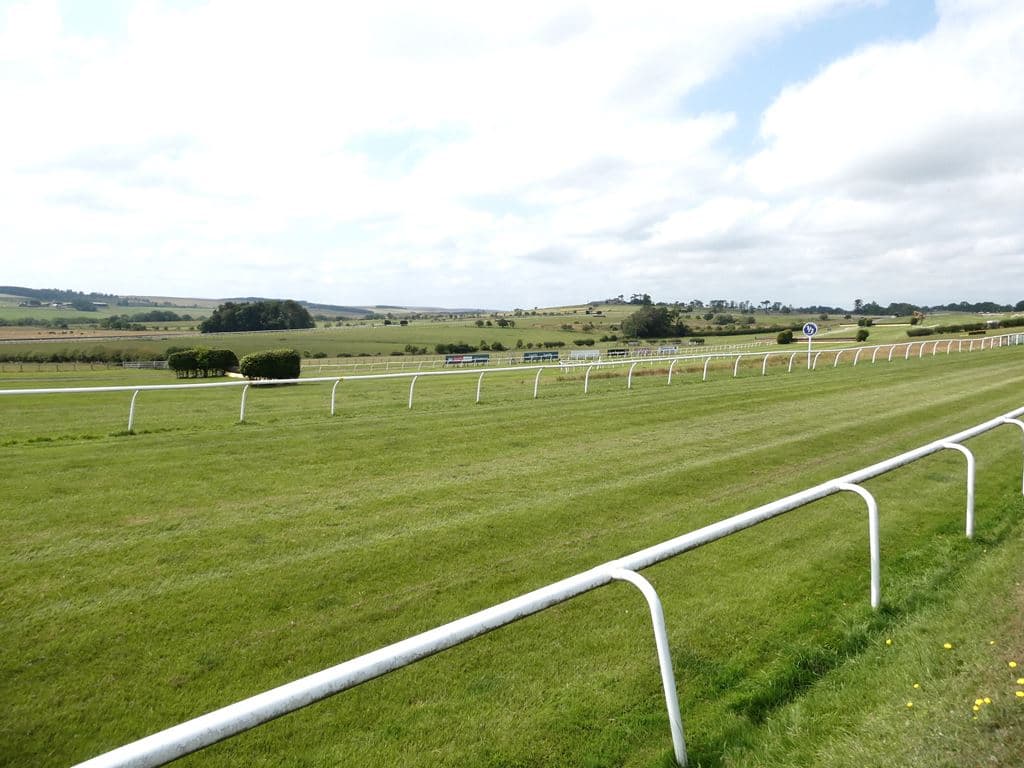
Hexham Racecourse stands on a hilltop above the Tyne Valley at roughly high above the Tyne Valley, making it one of the highest-altitude racecourses in Britain. The views on a clear afternoon stretch across Northumberland for 20 miles or more — a panorama of farmland, moorland, and the distant Pennines that no southern track can match. Racing has taken place here since the 1760s, and that longevity shows in the way the local community treats the course: not as a venue, but as an institution.
This is a working National Hunt course in the truest sense. No flat racing, no synthetic surfaces, no glamour sponsorship from banks or supermarkets. What Hexham offers instead is honest, demanding jump racing through an NH season that runs October to May. The fences are proper fences, the climbs are steep, and the horses that win here have earned it.
Who This Guide Is For
If you are travelling to Hexham for the first time, this guide gives you the full picture: the course layout and what it demands of horses, the fixture calendar, facilities, travel, and betting angles. If you are a regular racegoer researching the Grand National Trial meeting in April, the dedicated sections on the course and the betting guide will be particularly useful.
Experienced jumps fans from the South who have never visited a northern NH venue should read the course section carefully. Hexham is not Cheltenham, and it is not Kempton. The ground tends to be significantly softer than official descriptions suggest, the altitude means weather can shift abruptly within a single afternoon, and the uphill sections of the track ask physical questions of horses that flat-track chasers frequently cannot answer.
Quick Facts
| Detail | Information |
|---|---|
| Location | Hexham, Northumberland, NE46 2JP |
| Racing Type | National Hunt only |
| Racing Since | 1760s |
| Altitude | High, though we do not hold a verified figure |
| Track Shape | Left-handed oval, approximately 1 mile 5 furlongs round |
| Signature Race | Hexham Grand National Trial (3m4f110y, April) |
| Nearest Station | Hexham (Northern Rail, Newcastle–Carlisle line) |
| Distance from Newcastle | 20 miles west via A69 (approximately 30 minutes) |
| Distance from Carlisle | 35 miles east via A69 (approximately 45 minutes) |
| Typical Attendance | 3,000–5,000 on regular days; up to 7,000 for the Grand National Trial |
| Website | hexham-racecourse.co.uk |
What Makes Hexham Different
The altitude is the first thing to absorb. High up, Hexham sits considerably higher than most British racecourses — for comparison, Cheltenham's main track is at roughly 40 metres, and Newmarket's Rowley Mile is essentially at sea level. The consequence of this is not just scenery but weather. In October the temperature on the hilltop can be five or six degrees lower than in Newcastle below. In April, the month of the Grand National Trial, frost and even snow remain possible while racegoers in the South are in shirtsleeves. Dressing for the worst is not pessimism at Hexham — it is practical advice.
The second thing is the course's relationship with the town. Hexham itself is one of the most historically dense small towns in England: Hexham Abbey was founded in 674 AD and its crypt is the oldest complete Saxon structure in Britain. The medieval Moot Hall, the old Gaol — now a Border history museum — and a compact town centre with independent shops sit within ten minutes' walk of the railway station. Many racegoers combine a morning in the town with the afternoon meeting, a combination that rewards the effort it takes to get this far north.
The third is local loyalty. Racing families in Northumberland and the eastern Borders have attended Hexham across multiple generations. The course draws horses from a network of northern NH stables — trainers based within 50 miles of the course, operating out of yards in North Yorkshire, Cumbria, and the Scottish Borders — and the local knowledge among experienced racegoers is considerable. Hexham is not a course where southern form or London form books travel well. It rewards those who know it.
For the full course layout and going analysis, the fixture calendar, and betting angles, use the sections below. If you are planning a visit, the getting there and facilities sections will give you what you need before you leave.
Bet on Hexham
Place your bets on Hexham races with a trusted bookmaker.

Promo code BETFRED50. New customers only. Register, deposit with a Debit Card, and place a first bet of £10+ at Evens (2.0)+ on Sports, to be settled within 7 days, to get £30 in Sports Free Bets and £20 in Bet Builder Free Bets within 24 hours of settlement. 7-day expiry. Eligibility & payment exclusions apply. Full T&Cs apply. Take Time to Think. BeGambleAware.org. 18+. Full T&Cs.

Promo code R30. New UK customers only, 18+. Register, deposit £10 or more, then place a £10 single cash bet at odds of 1/2 (1.5) or greater on any sports market (excluding Virtuals). Once the qualifying bet settles you get £30 in Free Bets (3 x £10) — the qualifying bet can win or lose. Free Bets are valid on any sports market excluding Virtuals, expire in 7 days, are non-withdrawable and must be used in full. Excluded deposit methods apply (including PayPal, Apple Pay, Skrill and NETELLER). Named bets such as Lucky 15 do not qualify. If you cash out the qualifying bet, or it is voided, you are no longer eligible for the offer. Ends 31.12.26. Full T&Cs apply. Please gamble responsibly. BeGambleAware.org. 18+. Full T&Cs.

Promo code BET40GET20. New UK customers, 18+. Register with the code and place a first bet of £40 or more at Evens (2.0) or greater. Receive 2 × £10 free bets: the first credited automatically once the qualifying bet settles, the second 24 hours later. Free bets must be placed at minimum odds of 4/1 (5.0), expire 24 hours after credit, and the free-bet stake is not returned with winnings. Debit card deposits only. Take Time to Think. BeGambleAware.org. 18+. T&Cs apply. Full T&Cs.

50% of your first-day net losses refunded as a free bet, capped at £25. New UK customers aged 18+ only. To qualify, deposit and place a first bet of £10 or more on any sport at minimum odds of evens (2.00), then place at least two further bets on different events, each worth at least 50% of your largest bet, all at evens (2.00) or greater. Losses are counted from your first settled bet until 23:59 the same day. Place a qualifying £10+ bet and you are guaranteed at least a £5 free bet. Bets placed at SP, void bets, cashed-out bets and bets struck with free bets do not count towards the offer. The free bet is credited the day after your qualifying bets settle and must be used within 7 days, after which it expires. It can be used at odds from 1/4 (1.25) up to 250/1 on singles and straight accumulators, but not on Trixie, Patent or Yankee style multiples. Free-bet stake is not returned with winnings. One offer per person, household, address, IP address and device. E-wallet deposits may not qualify, so check the cashier before depositing. Customers registered with GAMSTOP cannot claim. KYC identity verification must be completed before the free bet is credited. Take Time to Think. BeGambleAware.org. 18+. T&Cs apply. Full T&Cs.

New customers, 18+. Choose the sports bonus at sign-up, make a first deposit and receive a 100% bonus up to £50 in your Sports Bonus balance. To convert the bonus to cash, wager it 10x within 30 days. Single bets below Evens (2.00) do not qualify; accumulators do not qualify if any selection is below 1/2 (1.50). Virtual Sports, voided, cancelled, drawn, cashed-out and free-bet wagers do not count towards wagering. Only the first settled bet per event counts. Withdrawing before the wagering requirement is met forfeits the bonus balance including bonus winnings. Real-money funds are used before bonus funds. Deposits via Skrill or Neteller are not eligible. Not valid in conjunction with other promotions. Odds, bet and payment limits apply. 10bet general and promotion T&Cs apply. BeGambleAware.org. 18+. Full T&Cs.

New customers in Great Britain and Republic of Ireland, 18+. Place a £10 fixed-odds qualifying bet at minimum odds of 1/2 (1.50) — single or each-way (only the win part counts), pre-event or in-play, not cashed out early, within 28 days of opening the account. Receive up to £60 in bonuses credited over three days: 3 × £10 fixed-odds free bets (the first on settlement, then 24 and 48 hours later) plus 3 × £5 Total Goals FOOTBALL spread bets and 3 × £5 racing Winning Favourites spread bets, with a £1 racing Race Index spread bet as an extra on top. The spread bets need a full spread-betting account, opened within 28 days of the fixed-odds account and subject to Spreadex's eligibility and appropriateness checks. Free-bet stakes not returned with winnings; free bets valid 28 days from issue. IMPORTANT: the £5 credits are SPREAD bets — sports spread betting carries the risk that losses can exceed your stake. Sports spread-betting customers do not have Financial Ombudsman or FSCS recourse. Take Time to Think. BeGambleAware.org. 18+. T&Cs apply. Full T&Cs.

Promo code WELCOME15, entered under My Bonuses after registering. New UK customers, 18+. Place a first qualifying bet of at least £10 from your cash balance at odds of evens (2.0) or greater within 7 days of opening the account. Once the qualifying bet fully settles you receive £15 in free bets, credited as 3 x £5 tokens with set uses: one £5 accumulator free bet (minimum 4 legs, each leg at 2/5 or bigger), one £5 sports free bet (any market at evens or bigger) and one £5 Sub Cover free bet (selected football player markets at evens or bigger). Free-bet stakes are not returned with winnings. Free bets expire 7 days after they are credited. Void, cashed-out and partially cashed-out bets do not qualify. One offer per customer. Confirm the current terms on BetGoodwin's own welcome-offer page before claiming. Take Time to Think. BeGambleAware.org. 18+. T&Cs apply. Full T&Cs.

New UK customers, 18+. Minimum deposit £10. Place a £10 qualifying single on sports (excluding virtuals) at minimum odds of 1/2 (1.50), settled within 14 days. Deposit-method exclusions apply. Receive £30 in free bets (stake not returned), split £20 for sportsbook use (2 x £10) and £10 for Bet Builder only (2 x £5); Bet Builder does not cover horse racing. Free bets must be accepted within 7 days and expire 7 days after acceptance. No promo code required. Best Odds Guaranteed on UK & Irish racing, subject to having staked over £25 in the previous seven days. Operated by LiveScore Betting and Gaming (Gibraltar) Ltd, UKGC 56859. Confirm the current terms on LiveScore Bet's own promotions page before claiming. Take Time to Think. BeGambleAware.org. 18+. T&Cs apply. Full T&Cs.
18+. BeGambleAware.org
The Course
Hexham's track is a left-handed oval of approximately 1 mile 5 furlongs round. That is not a large circuit — smaller, for example, than Carlisle (1m6f) — and the combination of a tight layout, significant undulation, and extreme altitude creates one of the most physically testing tracks in British National Hunt racing. Horses that have won here have demonstrated something that does not always show in a form book: the ability to maintain jumping accuracy while tired, on a hill, in conditions that can change between the first and last fence.
The Basic Layout
The track runs left-handed. The back straight climbs steeply from the lowest point of the course to the top of the hill, a sustained uphill section that begins to drain the stamina reserves of any horse that has not been settled and ridden conservatively in the early stages. From the top of the hill the track swings left and then descends, passing the stands side rail, before the home straight runs level to the winning post. The final climb from the back is the defining section — horses that have been hurried into the back straight often find nothing left when the real test arrives.
The turns are sharp by NH standards. Horses need to be balanced and well-schooled at Hexham; a horse that hangs or drifts in the turns loses lengths it cannot afford to give away on a 1m5f circuit. Jockeys who ride the course regularly — particularly those based at North Yorkshire and Northumberland stables — understand the importance of taking a good line through the top bend before the descent begins.
The Fence Layout
Hexham's steeplechase course has eight fences to a circuit. These include an open ditch situated on the uphill back straight, and a plain fence near the top of the hill where horses are already working hard against the gradient. The positioning of these fences is what makes Hexham truly demanding: when a horse makes a mistake at an uphill fence after already climbing for 400 metres, the energy cost is severe. Horses that are in the habit of hitting the top of fences — clipping rather than clearing — tend to accumulate errors at Hexham in a way that does not always manifest on flatter tracks.
The hurdle course follows a similar route. The hurdling at Hexham rewards accurate jumping more than it rewards sheer speed; a fluent hurdler that meets its hurdles on a good stride will cover the track's undulations more efficiently than a horse relying on pace to carry it through imprecision.
Race Distances
The distances run at Hexham across the NH season are:
- 2m — the minimum distance; run over hurdles and fences. On the tight circuit, 2m requires sharp jumping and good early positioning.
- 2m4f110y — the most common middle-distance chase trip; tests stamina without the extreme demands of the longer trips.
- 3m — a real stayers' test at this altitude. Horses that stay 3m on flat-ish tracks sometimes find Hexham's climb saps energy earlier than expected.
- 3m1f — used for selected handicap chases through the season.
- 3m4f110y — the Grand National Trial distance. At 3m4f on a hilly, exposed circuit high up, this is as tough a staying test as British NH racing produces outside the Grand National itself. Horses completing this distance at Hexham in April in testing ground have almost always proved their stamina credentials thoroughly.
Going Tendencies
The single most important piece of information about Hexham's going is this: the official going description is routinely one grade kinder than the reality experienced by horses on the track. The course sits on an exposed Northumberland hilltop high up, . Rainfall accumulates here faster than at lower-lying courses, and the ground dries slowly. The exposure and high altitude mean that soil temperature stays lower for longer into the spring, which retards natural drainage. A course reporting "soft" in the spring meeting may be presenting ground that a horse accustomed to "good to soft" will find unexpectedly testing.
Heavy ground at Hexham is common throughout the core winter months — November through February — and is possible in October and again in April. Racegoers and bettors who have not visited before consistently underestimate how testing Hexham's ground becomes. In the autumn opener, when horses are less race-hardened, a heavy track can produce very wide margins and results that seem extreme. This is not because horses are badly trained — it is because the course's going is unforgiving.
The implication for betting is direct: treat any horse described in form notes as "not at its best on soft or heavy" as a real risk at Hexham, and treat the official going as softer than stated when assessing horses' previous form. A horse rated 140 that has only run on good or good-to-soft ground is not a banker at Hexham in January, regardless of its rating.
Horse Types That Succeed
The horses that win races at Hexham across a full NH season share specific characteristics that differ meaningfully from those required at galloping or flat-terrain tracks.
Stayers with jumping ability are the core profile. A horse that can stay 3m+ on testing ground and jumps fluently — clearing fences rather than just getting over them — is immediately well-suited. The combination of altitude and undulation rewards real stamina over raw speed.
Previous winners at hilly NH courses translate well. Form from Carlisle (also elevated and undulating), Kelso (undulating left-hander in the Borders), and Ludlow (undulating right-hander) suggests a horse handles the physical demands of an uneven track. Form from Cheltenham — the most demanding hilly course in Britain — transfers to Hexham better than form from Kempton, Lingfield, or Sandown.
Experienced chasers with a proven jumping record over a sustained sequence of races outperform horses returning from long absences. A Hexham steeplechase, especially over 3m+, is not the place to restore confidence to a horse that has been off for six months.
Types to be cautious about: flat-track specialists — horses with multiple wins on the Flat or that have been converted to NH very recently; lightly raced young horses running over 3m+ for the first time; horses with a history of jumping errors at hilly or testing courses.
The Altitude Factor
High up, Hexham is one of the highest racecourses in Britain. The altitude itself does not meaningfully affect equine performance in the scientific sense — 320 metres is not high enough to create oxygen-partial-pressure differences that would alter VO2 capacity. What the altitude does create is a consistently more exposed environment. Wind speeds on the hilltop regularly exceed those in the Tyne Valley below. In late October the temperature differential between the bottom of the hill and the top of the course can be 4–6°C. Winter racing at Hexham means frost is possible even on days when Newcastle city centre is clear, and snow in April is not a novelty — it has disrupted meetings in living memory.
For racegoers planning a visit: a warm and waterproof outer layer is the correct preparation from October through to May, regardless of the forecast at sea level.
For more on the betting implications of Hexham's going and track profile, the dedicated betting guide covers trainer statistics, course specialists, and the specific angles that work across the NH season.
Key Fixtures & Calendar
Hexham stages approximately 14–16 National Hunt fixtures per year across a season running from October to May. The course is NH-only and holds no flat racing. Fixtures are spread across midweek days and selected Saturdays, with the most important meeting — the Grand National Trial card in April — typically attracting the season's largest attendance.
The October Opener
The first meeting of the NH season at Hexham usually falls in mid-to-late October. Horses are typically less fit than at mid-season, and the going is often heavy from early-autumn rainfall landing on ground that is still slow to drain high up, . Fields can be small — northern NH trainers tend to manage their horses carefully at this stage of the year, avoiding unnecessary exertions — but the October opener serves as a useful indicator of which horses from the region have come back from summer in good order.
Racegoers attending the October meeting should prepare for cold and potentially wet conditions. Temperatures on the hilltop can drop below 5°C by late afternoon in October, even on days that feel mild in Newcastle.
The Christmas and New Year Period
Hexham stages meetings in the period around Christmas and the New Year, typically in late December or early January. This is midwinter racing at its most uncompromising. Heavy ground is the norm, the short winter days mean afternoon light fades early, and the conditions on the hilltop are demanding for horses and spectators alike.
The Christmas-period meetings tend to attract local and regional trainers who know the course and can target specific races with horses that are well-suited to testing conditions. Nicky Richards from Greystoke in Cumbria, approximately 45 miles to the west, runs horses here regularly during this period. Micky Hammond's Middleham operation — around 30 miles south of Hexham — is consistently active in midwinter at the course.
The January and February Midwinter Meetings
The two or three fixtures in January and February represent Hexham at its most severe. Going in these months is almost always either soft or heavy; the course does not dry quickly even with a period of winter frost, because frost on the hilltop top keeps the ground sealed rather than draining it. These are typically midweek fixtures with modest attendance — regulars who know the course and conditions, a section of hardy North East racing fans, and occasional visitors from across the Borders.
Midwinter Hexham is not a spectator's paradise, but it is useful form-study territory. Horses that win here in January and February in bottomless conditions have demonstrated real stamina and jumping ability. That form translates directly to similar spring tests at Carlisle, Kelso, or — at a different level entirely — Cheltenham or the Grand National meeting.
The Grand National Trial — Hexham's Biggest Day
The Hexham Grand National Trial, run over 3 miles 4 furlongs 110 yards in April, is the course's signature event. It is one of the most serious staying chase tests in northern National Hunt racing: a horse completing this trip at Hexham in April, when the ground is typically soft from spring rainfall, has been subjected to an endurance examination that rivals anything outside the Grand National itself.
The race attracts horses from across the North of England and Scotland, and occasionally from further afield when prize money justifies the journey. Attendance on Grand National Trial day is significantly above the Hexham average — typically between 5,000 and 7,000 — and the atmosphere on the hilltop reflects the race's local importance. The Tyne Valley is National Hunt country, and a race named for the Grand National draws in racegoers who do not attend every meeting.
For bettors, Grand National Trial day at Hexham is worth studying carefully. A horse that wins this race at 3m4f in April, in soft or heavy ground, High above sea level, with the demanding uphill sections of the Hexham circuit to negotiate, has proven stamina credentials that the form book does not always fully credit. Horses that have performed well in the Hexham Grand National Trial have a reasonable record in subsequent staying chases at other northern and Scottish courses.
The meeting typically includes four to six other races on the card, including a novice hurdle, a handicap hurdle, and one or two chase contests that together provide a full afternoon's racing for the April crowd.
The May Bank Holiday Finale
Hexham's season typically closes in late April or early May, often around the May Bank Holiday weekend. This is the last of the NH fixtures before the summer break, and it tends to attract horses being prepared for the end-of-season prize money or being given a final run before summer grass.
The May fixture can produce better going than the midwinter meetings — if April has been dry, the hilltop ground may be soft rather than heavy — and horses that handle a slightly quicker surface alongside the course's demanding contours come into their own. Attendance at the May finale is typically 3,000–4,500.
Typical Fixture Summary
| Period | Meetings | Typical Going | Notes |
|---|---|---|---|
| October | 1–2 | Heavy / Soft | Season opener; horses returning from summer |
| November | 2–3 | Heavy / Soft | Core autumn NH period |
| December–January | 2–3 | Heavy | Christmas and New Year; midwinter at its harshest |
| February–March | 2 | Heavy / Soft | Cold; short fields; strong form guide for spring |
| April | 1–2 | Soft / Heavy | Grand National Trial; season highlight |
| May | 1 | Soft / Good to Soft | Season finale; better underfoot conditions possible |
Check the Hexham Racecourse website for confirmed dates — the fixture list is typically published six to eight weeks in advance. The Grand National Trial date is announced alongside the wider April NH fixture list and is the most sought-after date for hospitality bookings.
Facilities & Hospitality
Hexham's facilities are in keeping with the character of the course: practical, well-maintained, and without pretension. This is not Ascot or Cheltenham. The grandstand is modest in scale, the catering leans toward honest northern food rather than fine dining, and the overall atmosphere is that of a community racecourse that takes its racing seriously. For most visitors, the spectacle — the hilltop views, the demanding fences, the stretch of Northumberland countryside rolling away to the horizon — outweighs any limitation in the physical infrastructure.
The Main Grandstand
The grandstand at Hexham faces the home straight and the winning post. It is a covered structure that provides shelter from the wind and rain that characterise many winter meetings on the hilltop. Seating is tiered, with good sightlines to the course, and standing room on the front apron gives an unobstructed view of the uphill back straight where much of the race's character is determined. The grandstand was updated in the early 2000s to improve facilities while retaining the traditional feel of the course.
The view from the grandstand on a clear day is the finest of any racecourse in northern England. Looking out beyond the winning post on a good afternoon in April, you can see across the Tyne Valley to the Northumberland uplands, with the North Pennines visible to the south and the Cheviot Hills dimly outlined to the north-east. On a poor day in January, the grandstand shelter is well-used.
The Paddock
The parade ring at Hexham is adjacent to the main enclosure and positioned so that spectators can view the horses from the rail in reasonable comfort. On Grand National Trial day the paddock becomes Of note busy — racegoers study the horses with real intent in the 15 minutes before the main race, and the sense of anticipation around the parade ring is a different atmosphere from quieter midweek meetings. The weighing room and unsaddling enclosure are in close proximity, and jockeys returning from races are accessible to racegoers in a way that the larger southern courses cannot match.
The Tyne Suite
The Tyne Suite is Hexham's primary hospitality room. It is a first-floor facility with windows looking out over the track and the Northumberland countryside beyond. The Tyne Suite is used for private hospitality packages, corporate events, and group bookings throughout the season. On Grand National Trial day it is typically fully booked and operates as a formal dining and racing package from midday through to the last race. For smaller group bookings outside the major fixtures, the Tyne Suite can often be arranged with the racecourse directly — contact details are on the Hexham Racecourse website.
The Betting Ring
Hexham's betting ring is on the course apron, between the grandstand and the track. On-course bookmakers set up from approximately an hour before the first race. The number of rails bookmakers varies with the size of the meeting — Grand National Trial day attracts a fuller ring than a midweek January fixture — but the ring always provides basic market activity for racegoers who prefer to bet with a bookmaker rather than using the Tote windows.
The Tote is also present at Hexham meetings. Win, place, and combination pools operate, and on Grand National Trial day the Tote pools are reasonable in size given the course's attendance figures. The Bet365 and other major online operators allow account holders to take their prices remotely, but the on-course ring at Hexham often offers best-priced value on shorter-priced horses that attract heavy activity from racegoers who know the local form.
Food and Drink
Hexham's catering leans deliberately toward Northumberland produce and northern food traditions. The main concessions offer beef burgers made from local Northumberland cattle, game pies — venison and pheasant feature in season — and the kind of substantial hot food that makes sense at an exposed hilltop venue in October or February. The pies are Of note good by racecourse standards: proper pastry casing rather than foil-lidded industrial products.
Northern ales feature prominently at the course's bars. Northumberland and Tyneside breweries are well-represented — the Timothy Taylor's and regional northern ales that appear at Hexham are a deliberate nod to the course's Northumbrian identity. Coffee is available throughout the course for non-drinkers making the best of the afternoon cold.
The View and What It Means for Spectating
The practical spectating advantage at Hexham is significant and rarely replicated at other NH courses. Because the course sits in a natural amphitheatre on a hilltop, sightlines from almost every public area are clear. There is very little dead ground — the sections of track that are truly obscured from any viewing point are minimal. On the back straight, where the uphill climb begins, you can watch the field string out and see exactly which horses are being pushed and which are travelling comfortably. This is useful for racegoers studying form in real time.
On a clear day the visibility extends to approximately 20 miles in all directions. The Tyne Valley below the course, the upland farms of North Northumberland, and on exceptional days the Pennine ridge to the south are all visible. Binoculars are not necessary for following the race — the circuit is tight enough that the horses are never far away — but they add considerably to the experience of watching the view unfold between races.
Disabled Facilities
The course has designated disabled parking close to the main entrance. Wheelchair access is available across the main public enclosures, and the facilities have been improved to provide step-free routes to the grandstand viewing areas and the betting ring. Specific requirements — including access to the Tyne Suite for hospitality bookings — should be confirmed with the course office in advance of your visit, particularly for major fixtures where space is at a premium.
For full practical planning information, including travel options from Newcastle and Carlisle, see the getting there section.
Getting There
Hexham Racecourse is at the eastern edge of the town, postcode NE46 2JP. The course sits on a hilltop approximately 1.5 miles from Hexham town centre and railway station — close enough to walk if you choose, though the final section involves a steady uphill climb and should be factored into planning on a cold or wet day.
By Train
The most straightforward approach from Newcastle is Northern Rail's Newcastle–Carlisle service, one of the most scenic rail lines in northern England. The line runs through the South Tyne Valley, calling at Hexham approximately 30 minutes from Newcastle Central station. Services are regular throughout the week — typically two per hour at peak times on weekdays — though Sunday frequency reduces, and Sunday racegoers should check timetables in advance.
From Carlisle, Hexham is approximately 40 minutes east on the same line. From Carlisle you can also travel from Scotland — the West Coast Main Line feeds into Carlisle, making Hexham accessible from Glasgow (around 1 hour 50 minutes to Hexham in total via Carlisle) and Edinburgh (around 2 hours via Carlisle or Newcastle).
Hexham station is approximately 1.5 miles from the racecourse by road. Taxis are available at the station rank, and the journey to the course takes five to seven minutes. On Grand National Trial day the taxi rank can be busy after racing finishes, so booking a return taxi in advance with a local Hexham firm is advisable. Walking from the station to the course is possible but involves an uphill section in the final half-mile.
By Car
The A69 is the main road artery through this part of Northumberland, running east–west between Newcastle and Carlisle along the South Tyne Valley. Hexham is well-signposted from the A69 — follow signs for the town centre, then signs for the racecourse. The drive from Newcastle city centre is approximately 20 miles and takes around 30 minutes in normal conditions. From Carlisle the drive is approximately 35 miles east on the A69, taking around 45 minutes.
Coming from the north or the Scottish Borders, the A68 runs south from Edinburgh to the north of Hexham and connects with the A69 near Corbridge, 3 miles to the east of Hexham. From Newcastle International Airport, the A69 is accessible via the A696, and the journey to Hexham takes approximately 35 minutes.
The racecourse has a free car park with space for several hundred vehicles. On Grand National Trial day the car park fills steadily from 11:00 onwards; arriving by midday for a 1:15 or 1:30 first race gives comfortable time to park and walk to the enclosures. On midweek midwinter fixtures, parking is rarely a constraint.
By Bus
Local bus services connect Hexham with Newcastle and surrounding Northumberland towns. Arriva North East and Go North East routes serve the town, though buses do not go directly to the racecourse — a short taxi or walk is required from the town centre. For day visitors from Newcastle primarily interested in the racing rather than a pre-race exploration of the town, the train remains the more direct option.
Practical Notes for the Journey
The A69 between Newcastle and Hexham is well-maintained and rarely subject to major delays, but it is a single-carriageway road for much of its length west of the A1 junction. Factor in an extra 15 minutes on busy days — Grand National Trial day in April, or any Saturday fixture — compared with the standard 30-minute drive time.
The Newcastle–Carlisle railway passes through countryside that many visitors from the South have not seen before. The line was opened in 1838 as one of the first cross-country railways in England, and the section between Hexham and Carlisle runs through Hadrian's Wall country, with views across open moorland and the North Pennines. The train journey is worth taking simply for the scenery, independently of the racing.
For accommodation, Hexham town centre has several hotels and bed-and-breakfasts within walking distance of the station. Newcastle, 20 miles east, offers a full range of city hotels for those who prefer to base themselves there and travel out by train on race day.
Frequently Asked Questions
History of Hexham Racecourse
Racing at Hexham dates to the 1760s, placing it among the oldest continuously operating National Hunt venues in England. The town itself had been a significant centre of the Border region for a thousand years before the first horses ran on the hilltop above the Tyne Valley. Hexham Abbey, founded in 674 AD by Wilfrid, Bishop of York, was the ecclesiastical heart of Northumbria in the pre-Norman period, and the town that grew around it developed into a market centre for the surrounding farmland and moorland of Tynedale and North Northumberland.
Early History: Racing in the Tyne Valley
The first recorded racing at Hexham in the 1760s was informal by modern standards — match races between local horses, often run across open ground on the hilltop above the town. This was common practice in northern England during the mid-18th century. Yorkshire and the North Country had a racing culture that predated the formalisation of the sport in London, and small-scale meetings at market towns like Hexham, Carlisle, and Kelso were a routine feature of agricultural and social life in the Border region.
The elevated hilltop site above the Tyne Valley was a natural choice: the flat plateau at the top of the hill, with its views across the surrounding countryside, offered the uninterrupted space needed for racing without requiring the drainage engineering that lower-lying sites demanded. The altitude and exposure that make the course so demanding for horses and spectators in winter were less of a concern in the summer months when early racing took place.
Hexham was formally established as a racecourse in the early 19th century, with the infrastructure of a dedicated track, grandstand, and organised meetings coming together in the decades after the Napoleonic Wars. Racing in this period was a mixture of flat racing and jumping — the rigid separation of flat and National Hunt schedules did not yet exist — and meetings at Hexham combined both disciplines throughout the 19th century.
The Transition to National Hunt
As the rules of flat racing tightened during the later 19th century under the Jockey Club, and as the newly codified National Hunt Committee formalised jump racing's own rules from the 1860s onwards, provincial courses like Hexham settled into their identities. Hexham became primarily an NH course — not by formal decree but by the logic of its location. The terrain and altitude suited jumping horses. The local farming community had the horses, the hounds, and the tradition of jumping that made NH racing a natural fit.
By the late Victorian period Hexham was an established fixture in the northern NH calendar, with trainers from North Yorkshire, Northumberland, and across the Scottish Borders sending horses to meetings there. The Hexham card attracted horses from yards in Middleham, Carlisle, and the Borders that would go on to compete at Liverpool, Cheltenham, and the bigger southern tracks.
The 20th Century and Community Ownership
Hexham's survival through the 20th century — a period in which many small NH courses closed permanently — is a function of its community support. The course has never been owned by a large commercial racing group. It operates as a locally rooted entity, and the Hexham Racing Club and the broader community of Northumberland and Tyne Valley racing families have provided the organisational backbone that kept meetings running through difficult periods.
The two World Wars interrupted racing at Hexham as at every British course, but meetings resumed after both conflicts. The post-war NH boom, which saw courses across the North attract strong local support through the 1950s and 1960s, was good for Hexham. The expansion of television coverage in the 1970s and 1980s created pressure for smaller courses — the concentration of TV money at Cheltenham, Newbury, and the major Flat venues squeezed prize money elsewhere — but Hexham retained sufficient local attendance and Northern sponsor support to continue.
Trainers and the Hexham Record
The northern NH training tradition has been central to Hexham's story. Howard Johnson, who trained from his base at Bishop Auckland in County Durham before his licence was withdrawn in 2012, was among the most successful trainers at Hexham in the 1990s and 2000s, running horses at the course throughout the NH season with an acute understanding of the going and track requirements. Johnson's record at northern NH courses, including Hexham, was built on placing horses carefully on going that suited them, a practice that the Hexham track rewards decisively.
John Wade, the Northumberland-based trainer operating from Morpeth, maintained a consistent presence at Hexham across several decades, understanding the home-track advantages of a course close to his yard. Micky Hammond, whose operation at Middleham in North Yorkshire has been one of the most active in the North for the past two decades, has developed an exceptional record at Hexham by targeting specific horses for specific distances and conditions at the course — a strategy covered in more detail in the betting guide.
Nicky Richards, based at Greystoke in Cumbria approximately 45 miles west of Hexham, has brought horses to the course consistently and with a strong strike rate through the winter months, when his Cumbrian-trained horses, accustomed to testing ground and hilly terrain, are particularly well-suited.
The Hilltop and What It Preserves
What racing at Hexham has preserved, across more than 250 years, is a connection between a northern market town and a sporting tradition that reflects the character of the landscape. The course sits on the same hilltop above the Tyne Valley where match races were run in the 1760s, in a Border region that has been inhabited, farmed, and fought over since Roman legions built Hadrian's Wall three miles to the north in the 2nd century AD.
The longevity is not incidental. Small NH courses in exposed northern locations close when communities stop supporting them. Hexham has not closed because successive generations of Northumberland racing families have treated the hilltop course as part of their landscape — as natural and durable as the Abbey below it or the moorland above.
For more on specific memorable occasions at the course, see the famous moments section.
Famous Moments
A course with 250 years of history accumulates its share of stories. Hexham's most significant moments are tied to what the course actually does: test horses and jockeys over extreme terrain in often punishing northern conditions. The famous moments here are rarely about celebrities or television spectacle — they are about endurance, jumping ability, and the occasional extraordinary afternoon on a Northumberland hilltop.
The Grand National Trial and Its Aintree Graduates
The Hexham Grand National Trial has produced horses that Then ran creditably at Aintree. The logic is straightforward: a race run over 3 miles 4 furlongs 110 yards in April, on soft or heavy Northumberland ground, High above sea level, with the demanding uphill climbs of the Hexham circuit, is a real preparation for the demands of the Grand National. The distances are comparable — the Grand National is run over 4 miles 2.5 furlongs, 30 fences, but the Hexham trial offers a direct stamina test that flat preparation races cannot replicate.
Trainers targeting the Grand National have used the Hexham trial as a late-season test in a pattern that runs through the course's NH history. A horse that wins or finishes prominently in the Hexham trial, then completes the Grand National field a fortnight later, has usually entered the Aintree race with fitness and confidence from the northern prep. The Hexham–Aintree route is a minority pathway compared with the Cheltenham Gold Cup or other southern preparation races, but for northern-trained staying chasers it has a coherent logic.
Racing in Extreme Conditions
Hexham has staged racing in conditions that have defeated lower-lying courses. During periods of heavy frost in January and February — when tracks at lower altitudes are frozen solid — Hexham's elevated position can paradoxically mean the course is better drained than expected, if a light frost has prevented waterlogging rather than freezing an already wet track. More typically, Hexham's midwinter meetings go ahead in conditions that southern racegoers would describe as extreme: sustained heavy ground, low temperatures, and wind on the hilltop that can make it difficult to hold an umbrella.
The 1978–79 winter, one of the harshest of the 20th century in northern England, saw Hexham stage meetings that other northern courses could not. The course's community management, including racecourse staff and local volunteers who assisted with going preparation, kept the track playable when the fixture would otherwise have been lost. Similar winters — the early 1980s cold spells, the harsh January of 2010 — required comparable efforts. These are not dramatic moments that appear in headline form, but they represent the cumulative character of the course: a place that persists where others cannot.
The Development of Northern NH Horses
Hexham has served as a development track for northern-trained NH horses across its history. Young chasers from North Yorkshire, Northumberland, and Cumbrian yards have had their early races at the course before being stepped up in grade, and the demanding conditions — the undulation, the going, the altitude — have accelerated their physical development in a way that easier-terrain courses do not.
John Wade trained horses from his Morpeth yard that won multiple times at Hexham before graduating to races at Newcastle, Carlisle, and occasionally further south. Howard Johnson's operation at Bishop Auckland produced horses in the 1990s and early 2000s that came through Hexham on their way to successful careers at northern NH venues and, in some cases, the Cheltenham Festival. The course's role as a development track is as much a part of its significance as any single celebrated occasion.
Multi-Generational Families and Local Attendance
The famous moments at Hexham are not only about horses. The course's attendance across more than 250 years has included families from the Tyne Valley and Northumberland that have followed racing at the hilltop site across multiple generations. There are farming families in the county whose great-grandparents attended meetings at Hexham in the late 19th century, whose grandparents were racegoers during the interwar period, and whose children now arrive by train from Newcastle on Grand National Trial day.
This multi-generational continuity is what distinguishes Hexham from a course with merely a long history. A course can have existed since the 1760s and still not have the depth of community attachment that makes attendance feel like something worth preserving. At Hexham, the connection is live — the families, the trainers' yards within 30–50 miles, the Northumberland farming community that bred the horses and bred the enthusiasm for watching them jump. The Grand National Trial day in April, with up to 7,000 people on the hilltop, is not just a race meeting — it is an annual community event of the kind that has taken place on this site since the reigns of the later Georgian monarchs.
The Course in Contemporary NH Racing
In an era when NH racing is increasingly concentrated around the major meetings — Cheltenham, Aintree, Punchestown — and prize money continues to consolidate at the top of the sport, Hexham's continued survival and its staged revival in prize money are their own form of famous moment. The course's success in retaining the Grand National Trial as a significant race with real horses, and in maintaining attendance figures that justify its fixture allocation, is not something that was guaranteed twenty years ago.
For those who follow northern NH racing closely, Hexham's place in the circuit is secure — a course whose character, demands, and community are truly irreplaceable. No other venue in the North of England produces quite the same combination of physical test and atmosphere that the hilltop course above the Tyne Valley has offered since the 1760s.
Betting Guide
Betting at Hexham requires a different set of assumptions from most NH courses. The altitude, the going tendencies, the tight circuit, and the specific profile of horses that succeed here all diverge from what standard form-book analysis might suggest. The bettors who make consistent returns at Hexham are those who treat it as a specialist track — which it is.
The Going Is the Primary Variable
Start here: Hexham's official going description is routinely one grade kinder than the ground horses actually encounter. The 320-metre hilltop position, the Northumberland rainfall, and the slow-draining soil combine to produce going that is consistently testing. When the official going reads "soft", plan for something closer to "heavy" in your form assessment. When it reads "good to soft" in October or April, treat it as "soft".
The practical implication: any horse described in its past form as "doesn't handle soft or heavy ground" or "best on good or faster" is a risk at Hexham regardless of the official going description. This filters out a significant proportion of horses from most Hexham fields — particularly horses that have been running on good ground in the south or on all-weather surfaces — and the horses that remain after that filter are usually a significantly shorter list of real contenders.
In January and February the going at Hexham is almost always heavy. This is not an occasional event — it is the norm. Betting strategies that work in winter assume heavy ground until shown otherwise.
The Uphill Fences and Jumping Record
The positioning of Hexham's steeplechase fences on the uphill back straight is a specific risk factor. Horses that have a history of hitting the top of fences — clipping rather than clearing — accumulate errors at Hexham in a way that does not always show on flatter tracks. The energy cost of a mistake when climbing a hill is significantly higher than the equivalent mistake on level ground.
Check the Racing Post sectional comment data and jockeys' comments on horses' jumping in previous chases. A horse described as "novicey at the fences" or "made several jumping errors" at flat-terrain tracks like Kempton or Sandown is a material risk at Hexham. Conversely, a horse described as a "fluent jumper" or "slick at the fences" at hilly courses like Carlisle or Ludlow has demonstrated the technique required.
Horses that have won or run well at Cheltenham — the most demanding hilly NH course in Britain — translate well to Hexham. The skills required are similar in kind if not in scale: balance through undulation, jumping accuracy on a gradient, and the ability to maintain rhythm under sustained physical pressure.
Trainer Statistics: Who to Follow
Micky Hammond (Middleham, North Yorkshire) is the standout trainer to follow at Hexham. Hammond's yard at Middleham is approximately 30 miles south of the course, close enough for regular targeting, and his runners at Hexham have maintained a strong strike rate across the NH season for many years. Hammond understands the course's going requirements and places horses here with horses that have the jumping ability and stamina profile the track demands. When a Micky Hammond horse appears in a Hexham field, particularly over 2m4f or longer, it warrants close attention regardless of the starting price.
Nicky Richards (Greystoke, Cumbria) trains approximately 45 miles west of Hexham at Greystoke. His horses are typically prepared for the demanding ground conditions of northern NH racing and translate well to Hexham's terrain and altitude. Richards has a consistent record at the course across the winter months — his horses are built for the conditions that Hexham regularly presents.
Brian Ellison (Norton, North Yorkshire) also performs above his overall NH average at Hexham. Ellison's horses are typically solid stayers with sound jumping technique, and his targeting of Hexham fixtures, particularly in the second half of the season, rewards attention.
Southern-trained runners at Hexham warrant more caution than their ratings suggest. A horse rated 135 by a trainer based in Lambourn or Newmarket who has never sent a horse to Hexham before is an unknown quantity. The going, the altitude, and the tight circuit are all unfamiliar variables. The statistics generally support following the course-and-distance winners from northern yards over southern raiders at Hexham, unless the southern horse has a specific relevant form line at a comparable hilly or testing track.
Course-and-Distance Form
Course-and-distance winners are a reliable starting point at Hexham, more so than at many NH tracks. A horse that has won over the specific trip at Hexham has already answered the questions the track poses: it can handle the going, the undulation, the uphill fences, and the demands of the circuit. Re-opposing course-and-distance winners — particularly those that won at the same time of year in similar conditions — is a productive strategy.
Course winners without the specific distance are also worth noting. A horse that has won at Hexham over 2m4f has demonstrated the course's physical demands, and stepping up to 3m for the first time on the same track may not be the disadvantage it would appear at a flat-terrain course.
The Grand National Trial: Specific Betting Angles
The Grand National Trial over 3m4f110y in April demands a specific approach. The race is run late in the NH season, when horses have had several months of racing and trainers' intentions vary considerably: some run horses that are clearly fit and aimed at the race; others use it as a prep for the Aintree Grand National a fortnight later; a small number use it to bring a horse back to fitness after a mid-season break.
Form from Carlisle and Kelso over 3m+ translates better to the Hexham Grand National Trial than form from Cheltenham or Newbury. The terrain at Carlisle and Kelso — both undulating tracks with testing going — is closer to Hexham's demands than any southern course. A horse that has run well over 3m+ at Kelso in February or March, on soft or heavy ground, is well-qualified for the Hexham trial.
The going in April at Hexham is typically soft to heavy from spring rainfall. Horses that have only been seen on good or good-to-soft ground since October should be viewed sceptically for this race regardless of their formal racing record.
Horses with a poor record in races beyond 3m are, logically, a risk in a 3m4f race at altitude on heavy ground. Check that any selection you are considering has already proven it stays this trip — not at Hexham specifically, but at a similarly demanding course. A horse that has only run at 2m4f or 3m, however talented at those distances, is taking a significant step up here.
Jockey Statistics
Jockeys who ride at Hexham regularly — those based at northern yards with multiple rides per season — perform above the Hexham average compared with southern jockeys unfamiliar with the circuit. The tight turns and the specific positioning required for the uphill back straight reward course knowledge. Brian Hughes, the champion northern NH jockey and leading rider for many years at northern venues, has an exceptional record at Hexham. When Hughes is aboard a horse from a northern yard at Hexham, any shortening of the price is justified.
A Practical Checklist for Hexham Bettors
Before placing at any Hexham meeting, work through these questions:
- Has the horse handled real soft or heavy ground in its recent starts?
- Has the trainer previously run horses at Hexham with a positive record?
- Does the horse have a clean jumping record at hilly or undulating NH courses?
- For chases over 3m+: has the horse proven its stamina at this distance or longer?
- Is the horse from a northern yard within 50 miles, or a southern raider with no Hexham or comparable track form?
A horse that passes points 1–4 and is from a yard with a Hexham record is a real Hexham contender. A horse that fails two or more of these tests is a risk regardless of its Racing Post Rating.
For the full fixture calendar and details of the Grand National Trial meeting, see the fixtures section.
Atmosphere & Planning Your Visit
Hexham is in the heart of Hadrian's Wall country, and a race day at the course sits naturally within a broader visit to one of the most historically layered parts of northern England. The wall itself — built between 122 AD and approximately 128 AD on the orders of Emperor Hadrian, stretching 73 miles from Wallsend on the Tyne to Bowness-on-Solway — passes approximately 3 miles north of the town. Within 10 miles of Hexham are two of the most significant Roman sites in Britain.
Hadrian's Wall: The Sites Within Reach
Housesteads Roman Fort (Vercovicium) is 10 miles north of Hexham and is the best-preserved Roman fort on the wall. Run by English Heritage, it preserves the foundations of the barracks, granaries, headquarters building, and latrines of a garrison that held 800 soldiers during the 2nd and 3rd centuries AD. The site is on the ridgeline of the Whin Sill, one of the most dramatic stretches of the wall, and the views north into Northumberland and south over the Tyne Valley are outstanding. Housesteads opens from 10:00 and is accessible from the B6318 (the Military Road); allow 2 hours for a proper visit.
Vindolanda is 8 miles north of Hexham, just south of the wall at Chesterholm. The site is managed by the Vindolanda Trust and has been under continuous excavation since the 1970s. It is most celebrated for the Vindolanda Writing Tablets — thin wooden leaves inscribed with ink that were preserved in the anaerobic soil of the fort's rubbish tips. Discovered from 1973 onwards, the tablets are among the most intimate surviving documents from the Roman world: a birthday party invitation, a request for warm socks and underpants, a soldier's complaint about pay. The on-site museum holds many of the originals; the Vindolanda excavations are still active, and in the summer months you can watch archaeologists at work. Allow 2.5–3 hours for a thorough visit.
Both sites can be visited in a single morning if you are efficient, though the combination of Vindolanda and Hexham racing in the same day is more comfortable as a single-site morning followed by an early afternoon drive back to Hexham.
The Town of Hexham
Hexham town centre rewards a morning visit before racing. The town has approximately 12,000 residents and a high street that is unusually strong in independent shops for a market town of its size.
Hexham Abbey is the centrepiece. Founded in 674 AD by Wilfrid, who was Bishop of Northumbria, the Abbey's crypt is the oldest complete Saxon structure in Britain — built from Roman stones taken from the fort at Corbridge, 3 miles to the east. The choir stalls date to around 1425 and are among the finest medieval woodwork in northern England. The Abbey is open daily and free to enter, though donations are welcomed. Allow at least 45 minutes.
The old Gaol on Hallgate was built in 1332 — one of the first purpose-built prisons in England, predating the later post-medieval prison-building era by centuries. It now houses a museum covering the Border Reivers, the cattle-raiding families who destabilised the Anglo-Scottish border region from the late medieval period through to the early 17th century. The Reiver story is specific to this part of England and Scotland, and the museum provides a well-curated introduction.
The market place and surrounding streets have a Saturday market (Hexham is a traditional market town) and a selection of independent cafés for breakfast or coffee before racing.
A Practical Day Plan
From Newcastle (day trip):
- 09:30 — Depart Newcastle Central on Northern Rail (approx. 30 minutes)
- 10:00 — Arrive Hexham. Walk to town centre (10 minutes) for breakfast
- 10:30–12:30 — Hexham Abbey and old Gaol, or drive to Vindolanda (20 minutes north)
- 12:30 — Return to Hexham town centre for lunch
- 13:30 — Taxi or walk to the racecourse (allow 15 minutes by taxi, 30–40 minutes on foot)
- 14:00 — First race
- 17:00–17:30 — Final race; taxi back to Hexham station
- 18:00 — Northern Rail back to Newcastle Central
Overnight in the Tyne Valley: The Tyne Valley has a range of accommodation from town-centre hotels in Hexham to rural B&Bs in Corbridge (3 miles east) and Haltwhistle (12 miles west). Staying overnight allows a more relaxed visit to Hadrian's Wall the following morning — the wall is at its most atmospheric early in the day before coach parties arrive. Several hotels in Hexham town centre are within walking distance of the station for those arriving by train.
What Makes the Atmosphere Different
Hexham on Grand National Trial day in April — up to 7,000 people on the hilltop — has an atmosphere that no similar-sized southern NH course produces. This is not the glamour of Cheltenham or the television spectacle of Aintree. It is something older and more specific: a community of Northumberland farming families, North Yorkshire stable staff, professional racegoers from Newcastle and Carlisle, and a significant contingent of people for whom the Grand National Trial is the day on the racing calendar they have attended since childhood. The conversations in the betting ring and on the course rail reflect people who know the horses, know the trainers, and have opinions about the going that are more informed than most.
For a first-time visitor from the south, the most useful thing to know is that the knowledge in the crowd at Hexham is real. Listen to what people in the betting ring are saying about the going and the course. They have usually been right more often than the form book has.
For travel details and how to plan the journey from Newcastle or Carlisle, see the getting there section.
More guides for this course
Share this article
More about this racecourse
All Hexham guides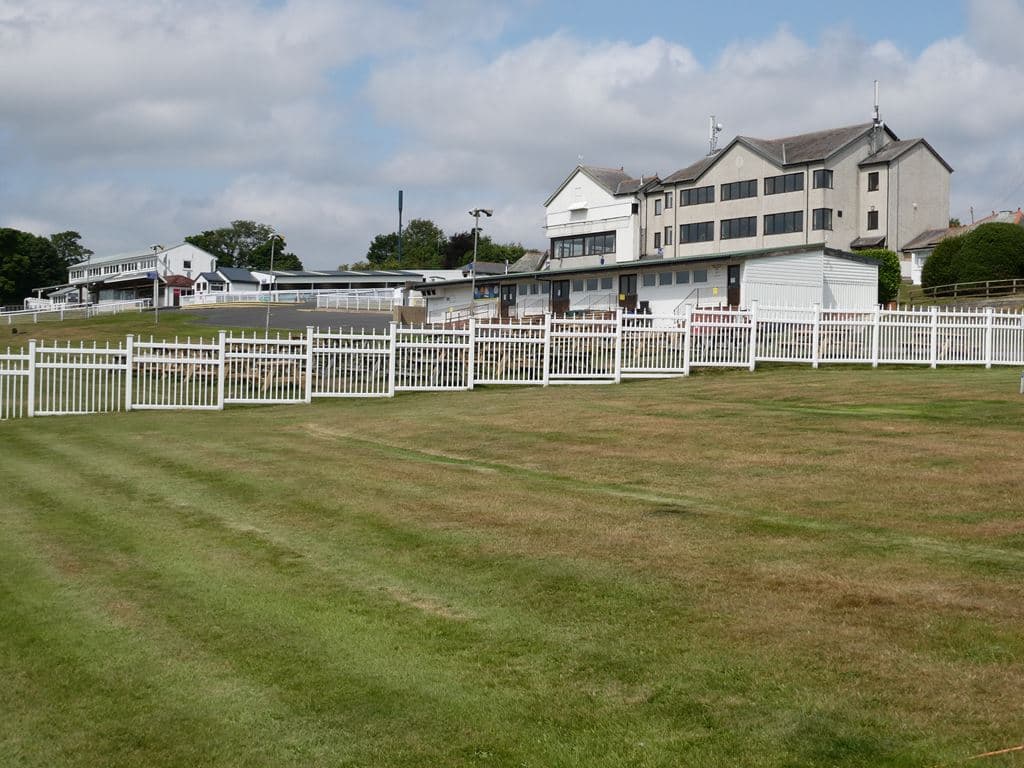
A Day Out at Hexham Racecourse
Everything you need for a day at Hexham — getting there, what to wear, enclosures, food and drink, and insider tips for Britain's highest racecourse.
Read more
Hexham Jump Festival: Your Complete Guide
Hexham is Britain's highest racecourse and one of the most dramatic jump racing settings in the country. Here's your guide to a Northumberland racing day.
Read more
Heart of All England Maiden Hunters' Chase: Hexham's Oldest Race
Hexham's most historic race, first run in 1907: a Class 4 maiden hunters' chase over 3m 41y at the early-May meeting. There is no Hexham Gold Cup.
Read morePhotos on this page are used under Creative Commons licences. Titles, sources and licence links for each one are on our image credits page.
Research the field with the AI Race Predictor
Our model publishes calibrated win-probability estimates for UK races — a second opinion to understand a race, not tips. It's open about its record: it doesn't beat the market, and we show exactly how it does.
Work it out & learn the basics
Gamble Responsibly
Gambling should be entertaining and not seen as a way to make money. Never bet more than you can afford to lose. If you or someone you know has a gambling problem, help and support is available.