

Founder & Editor · Last reviewed 2026-04-07
Hexham Racecourse sits high above sea level in the Northumberland hills — the highest racecourse in Britain — and the setting is nothing short of spectacular. On a clear day the views extend across the Tyne Valley and toward the North Pennines; on a wild autumn day, the wind comes straight across the exposed hilltop and tests horses and racegoers alike. Either way, there is nowhere quite like it.
Racing at Hexham since 1870 has produced a tradition of tough, honest jump racing that reflects the character of the region. The left-handed circuit is a stiff test of stamina — the undulations and exposed altitude create conditions that mirror the demands of a long cross-country season rather than a flat, fast circuit. Horses that win well at Hexham have earned it.
The Heart of All England Maiden Hunters' Chase meeting in early May is the course's most historic occasion, placing Hexham in an unusual position as a spring jump meeting when most National Hunt venues have closed for the summer. The Border Reiver Chase in autumn launches the Northumberland jump season with a competitive handicap chase that draws horses from the local northern yards and occasionally from Scottish operations seeking a southern raiding opportunity.
The Hexham racegoing community is the definition of loyal. A dedicated Northumberland following turns out whatever the weather — and at Hexham, whatever the weather can mean genuinely anything. The atmosphere is warm, self-reliant and absolutely genuine. If you have never been, make the effort.
Bet on Hexham
Place your bets on Hexham races with a trusted bookmaker.

Promo code BETFRED50. New customers only. Register, deposit with a Debit Card, and place a first bet of £10+ at Evens (2.0)+ on Sports, to be settled within 7 days, to get £30 in Sports Free Bets and £20 in Bet Builder Free Bets within 24 hours of settlement. 7-day expiry. Eligibility & payment exclusions apply. Full T&Cs apply. Take Time to Think. BeGambleAware.org. 18+. Full T&Cs.

Promo code R30. New UK customers only, 18+. Register, deposit £10 or more, then place a £10 single cash bet at odds of 1/2 (1.5) or greater on any sports market (excluding Virtuals). Once the qualifying bet settles you get £30 in Free Bets (3 x £10) — the qualifying bet can win or lose. Free Bets are valid on any sports market excluding Virtuals, expire in 7 days, are non-withdrawable and must be used in full. Excluded deposit methods apply (including PayPal, Apple Pay, Skrill and NETELLER). Named bets such as Lucky 15 do not qualify. If you cash out the qualifying bet, or it is voided, you are no longer eligible for the offer. Ends 31.12.26. Full T&Cs apply. Please gamble responsibly. BeGambleAware.org. 18+. Full T&Cs.

Promo code BET40GET20. New UK customers, 18+. Register with the code and place a first bet of £40 or more at Evens (2.0) or greater. Receive 2 × £10 free bets: the first credited automatically once the qualifying bet settles, the second 24 hours later. Free bets must be placed at minimum odds of 4/1 (5.0), expire 24 hours after credit, and the free-bet stake is not returned with winnings. Debit card deposits only. Take Time to Think. BeGambleAware.org. 18+. T&Cs apply. Full T&Cs.

50% of your first-day net losses refunded as a free bet, capped at £25. New UK customers aged 18+ only. To qualify, deposit and place a first bet of £10 or more on any sport at minimum odds of evens (2.00), then place at least two further bets on different events, each worth at least 50% of your largest bet, all at evens (2.00) or greater. Losses are counted from your first settled bet until 23:59 the same day. Place a qualifying £10+ bet and you are guaranteed at least a £5 free bet. Bets placed at SP, void bets, cashed-out bets and bets struck with free bets do not count towards the offer. The free bet is credited the day after your qualifying bets settle and must be used within 7 days, after which it expires. It can be used at odds from 1/4 (1.25) up to 250/1 on singles and straight accumulators, but not on Trixie, Patent or Yankee style multiples. Free-bet stake is not returned with winnings. One offer per person, household, address, IP address and device. E-wallet deposits may not qualify, so check the cashier before depositing. Customers registered with GAMSTOP cannot claim. KYC identity verification must be completed before the free bet is credited. Take Time to Think. BeGambleAware.org. 18+. T&Cs apply. Full T&Cs.

New customers, 18+. Choose the sports bonus at sign-up, make a first deposit and receive a 100% bonus up to £50 in your Sports Bonus balance. To convert the bonus to cash, wager it 10x within 30 days. Single bets below Evens (2.00) do not qualify; accumulators do not qualify if any selection is below 1/2 (1.50). Virtual Sports, voided, cancelled, drawn, cashed-out and free-bet wagers do not count towards wagering. Only the first settled bet per event counts. Withdrawing before the wagering requirement is met forfeits the bonus balance including bonus winnings. Real-money funds are used before bonus funds. Deposits via Skrill or Neteller are not eligible. Not valid in conjunction with other promotions. Odds, bet and payment limits apply. 10bet general and promotion T&Cs apply. BeGambleAware.org. 18+. Full T&Cs.

New customers in Great Britain and Republic of Ireland, 18+. Place a £10 fixed-odds qualifying bet at minimum odds of 1/2 (1.50) — single or each-way (only the win part counts), pre-event or in-play, not cashed out early, within 28 days of opening the account. Receive up to £60 in bonuses credited over three days: 3 × £10 fixed-odds free bets (the first on settlement, then 24 and 48 hours later) plus 3 × £5 Total Goals FOOTBALL spread bets, 3 × £5 racing Winning Favourites spread bets and a £1 racing Race Index spread bet (the spread bets need a full spread-betting account). Free-bet stakes not returned with winnings; free bets valid 28 days from issue. IMPORTANT: the £5 credits are SPREAD bets — sports spread betting carries the risk that losses can exceed your stake. Sports spread-betting customers do not have Financial Ombudsman or FSCS recourse. Take Time to Think. BeGambleAware.org. 18+. T&Cs apply. Full T&Cs.

Promo code WELCOME15, entered under My Bonuses after registering. New UK customers, 18+. Place a first qualifying bet of at least £10 from your cash balance at odds of evens (2.0) or greater within 7 days of opening the account. Once the qualifying bet fully settles you receive £15 in free bets, credited as 3 x £5 tokens with set uses: one £5 accumulator free bet (minimum 4 legs, each leg at 2/5 or bigger), one £5 sports free bet (any market at evens or bigger) and one £5 Sub Cover free bet (selected football player markets at evens or bigger). Free-bet stakes are not returned with winnings. Free bets expire 7 days after they are credited. Void, cashed-out and partially cashed-out bets do not qualify. One offer per customer. Confirm the current terms on BetGoodwin's own welcome-offer page before claiming. Take Time to Think. BeGambleAware.org. 18+. T&Cs apply. Full T&Cs.

New UK customers, 18+. Minimum deposit £10. Place a £10 qualifying single at minimum odds of 1/2 (1.50), settled within 14 days. Receive £30 in free bets (stake not returned), split £20 for sportsbook use (2 x £10) and £10 for Bet Builder only (2 x £5); Bet Builder does not cover horse racing. Free bets must be accepted within 7 days and expire 7 days after acceptance. No promo code required. Best Odds Guaranteed on UK & Irish racing, subject to having staked over £25 in the previous seven days. Operated by LiveScore Betting and Gaming (Gibraltar) Ltd, UKGC 56859. Confirm the current terms on LiveScore Bet's own promotions page before claiming. Take Time to Think. BeGambleAware.org. 18+. T&Cs apply. Full T&Cs.
18+. BeGambleAware.org
Day-by-Day Guide
The Hexham Calendar
Hexham's season follows an unusual arc for a National Hunt track. The course hosts autumn and spring meetings as standard, but its most prestigious fixture — the Heart of All England — comes in late spring rather than midwinter, giving it a genuinely distinctive place in the jump calendar. The season typically runs from October through June, with a series of Sunday and midweek meetings filling the programme.
Border Reiver Chase Day (Autumn, October–November)
The autumn opener for the Hexham season is one of the most anticipated jump days in the north east. The Border Reiver Chase is a competitive handicap chase that gives the meeting its identity and draws horses from Northumberland, County Durham and across the Scottish border. The name reflects the course's roots in the border country, and the race's field regularly includes horses from Scottish yards at Kelso and Carlisle who are comfortable with the trip north.
The autumn crowd at Hexham is enthusiastic and committed. This is not a casual raceday audience — the people here follow northern jump racing seriously and have opinions about form, trainers and jockeys. The betting ring is lively and competitive on Border Reiver day in a way that weekday winter meetings cannot match.
The support card on Border Reiver day typically includes a novice hurdle, a maiden hurdle and a staying handicap chase that give the full afternoon card a satisfying structure. It is a complete raceday rather than just a single headline race.
Autumn and Winter Programme (November–February)
Hexham's winter fixtures are the most weather-dependent of any course in England. High up, on an exposed hilltop, the racecourse faces conditions that lower-lying tracks never encounter — sustained frost, heavy snow and waterlogged ground are recurring challenges. Meetings are abandoned more frequently at Hexham than almost anywhere else in England, and planning a winter visit requires flexibility.
When the meetings do run, the fields draw on a pool of horses trained in Northumberland, County Durham, Yorkshire and the Scottish borders. These are horses accustomed to exposed, demanding conditions, and races at Hexham in winter are genuine examinations of stamina and jumping ability. The form from winter Hexham meetings has a specific regional character — it translates well to similar northern tracks but is not always reflected accurately in national form ratings.
The crowds at midwinter Hexham are small but the atmosphere is disproportionately warm. The course's facilities include a well-heated grandstand and a bar that offers genuine shelter, and the Northumberland racegoing community treats even a modest midweek meeting as a social occasion.
Spring Meetings (April–May)
As the main jump season elsewhere begins winding down, Hexham's spring programme gathers momentum. April and May meetings draw horses that have been running all winter and are now well-travelled and fit. The ground in spring at Hexham can still be testing after a wet northern winter, but it is generally more reliable than the December and January fixtures.
Spring meetings at Hexham attract an unusual profile of horse — animals that were competitive in better company through the winter but are now looking for a winnable race at a smaller venue. These horses tend to be generously handicapped relative to the modest opposition they face at Hexham, and they win more often than the market's implied prices suggest.
Heart of All England Maiden Hunters' Chase Day (early May)
The season's centrepiece. The Heart of All England Maiden Hunters' Chase falls when most National Hunt venues have already shut for the summer, making it one of a handful of significant jump race occasions in late spring. The course draws its biggest attendance of the year for Heart of All England day — around four to five thousand racegoers make the trip to the hilltop — and the atmosphere captures something of both the jump season and the beginning of summer.
Heart of All England day has a festive quality that the midwinter meetings cannot replicate. The days are long, the light is different, and the combination of competitive jump racing and an almost summery outdoor setting is unique in the racing calendar. The support card is the strongest of the Hexham year, with decent prize money across all races and fields that justify the status of the meeting.
Key Races to Watch
Heart of All England Maiden Hunters' Chase (Class 4 maiden hunters' chase, 3m 41y, early May)
The Heart of All England is the jewel of the Hexham season and one of the most distinctive chase races in British jumping — not because of its Grade level, but because of when it runs and where. A Graded or Listed chase in late May on Britain's highest racecourse is an unusual proposition, and the horses that make the journey to Hexham for this race have been specifically targeted at it.
The race is run at approximately three miles on the left-handed hilltop circuit. At altitude, in late spring conditions that can range from glorious sunshine to cold wind and rain, the stamina demands are significant. Horses that have been running all winter and are now fully race-fit have a significant advantage over those that have been freshened up too early. The form guide for late-season northern chasers is more important for the Heart of All England than any assessment based on autumn form.
Key trainer angle: Local Northumberland and border country trainers have a strong record in the Heart of All England because their horses are accustomed to the altitude, the weather and the left-handed circuit. Sue Smith, Sandy Thomson and Harriet Graham have excellent records at Hexham generally. When these trainers enter horses for the Heart of All England, the course-familiarity advantage is real and significant.
Watch for: Horses that have won at Hexham before, particularly those that have won over the Heart of All England trip or longer. The hilltop conditions and demanding circuit mean previous course experience translates more reliably here than at almost any other track.
Border Reiver Chase (Autumn, Handicap Chase, 2m4f–3m)
The season's autumn flagship and the race that launches the Hexham year. A competitive handicap chase drawn from the northern and border country horse pool, it rewards horses that handle the exposed conditions and the left-handed undulating circuit. The race is well-handicapped and regularly produces tight finishes.
Previous Hexham winners running in the Border Reiver Chase are the primary betting focus. The trainer statistics of the border country specialists are the secondary filter.
Novice Hurdle Programme
Hexham's novice hurdles through the season are a production line for northern jumpers. Horses educated over hurdles on the demanding Hexham circuit are often better prepared for the physical and mental demands of jump racing than animals whose novice education has been on easier tracks. When a Hexham novice hurdle winner subsequently moves to Carlisle or Kelso, upgrade their chances accordingly.
Betting Preview
Altitude and Stamina — the Core Betting Principle
Britain's highest racecourse imposes a specific physiological demand that no other track replicates. High above sea level, with an exposed hilltop circuit that offers no shelter from wind, the stamina requirements at Hexham are genuinely greater than they appear on paper. Horses that have run at Hexham before and won carry a meaningful edge — they have already demonstrated they handle the conditions. Horses coming from lower-lying, sheltered tracks for the first time deserve a measure of scepticism even if their form looks strong.
The simplest Hexham betting rule: horses that have previously won at Hexham should always be your starting point, regardless of what other form they have accumulated elsewhere.
Northern and Border Country Trainers
The pattern of trainer dominance at Hexham is as pronounced as at Fontwell. Sue Smith in Bingley, Sandy Thomson in Greenlaw and Harriet Graham — all based within an hour of the course — have exceptional records that national form databases undervalue. When these trainers enter a horse for the Heart of All England or the Border Reiver Chase, assume they have targeted the race and know the conditions suit their horse.
Conversely, big-name southern trainers sending raiders to Hexham for one-off appearances face a significant acclimatisation challenge. Their horses' form is genuinely meaningful but the unfamiliar conditions deserve a discount of perhaps 5-10% in your assessment.
Spring Form as Heart of All England Currency
The Heart of All England Maiden Hunters' Chase falls in late spring when horses have had a full winter's racing. A horse with eight or nine runs behind it, consistently competitive at northern tracks, is in fundamentally better shape for a late-season gold cup than a horse freshened since March. Weight form carefully by recency and race fitness rather than the quality of the best run in the season.
Practical Notes
Hexham's betting ring is modest in scale. For Heart of All England day and Border Reiver day the ring is competitive and worth using, but for midwinter weekday meetings the online bookmakers will give you better prices and more liquid markets. The Tote is well-represented at Hexham and the place pools are worth considering in races with eight or more runners.
Visitor Information
Getting There
By train: Hexham station is on the Newcastle–Carlisle line (Northern Rail), approximately 30 minutes from Newcastle Central and 40 minutes from Carlisle. Services are regular throughout the day. From Hexham station, the racecourse is approximately a 10–15 minute walk through the town — the walk is uphill to the hilltop but well-signposted and manageable. This makes Hexham one of the more easily walkable racecourses from its nearest station in the north of England.
By car: The A69 is the main east-west route between Newcastle and Carlisle, passing directly through Hexham. From Newcastle, the journey is approximately 20 miles and takes around 25 minutes in normal traffic. From the A69, the racecourse is signposted through the town. On-site parking is available and generally free; on Heart of All England day arrive early as the course fills more quickly than its modest size might suggest.
Enclosures and Facilities
Hexham is a friendly, unpretentious racecourse that has invested carefully in its facilities since a period of development in recent years.
The Grandstand covers the finishing straight with covered seating and a heated interior — essential in autumn and winter when the hilltop conditions demand refuge. The ground-level viewing areas are accessible from the grandstand enclosure and offer close-up views of horses jumping the fences on the run past the stands.
The Course Enclosure runs along the outer rail and is popular with racegoers who want a wide view of the whole left-handed circuit from the hilltop vantage point. On a clear spring day for the Heart of All England, the views from the course enclosure are among the most dramatic of any British racecourse.
Essential Tips
- Dress for the hilltop at all times of year. Even in May and June, the exposed hilltop at Hexham can be cold and windy. A layer and waterproof are sensible whatever the forecast. In autumn and winter, proper winter clothing is non-negotiable.
- The walk from the station is worth it. The uphill approach through Hexham town gives you time to absorb the character of this old market town before the racing. It is a pleasant 15-minute warm-up.
- Check the going carefully before winter visits. Hexham is the most weather-affected course in England. Always check the going report on race morning and be prepared for last-minute changes.
- Book Heart of All England day in advance. Despite its remote-feeling location, the Heart of All England attracts a strong crowd and popular enclosures sell ahead. Check the racecourse website for tickets as the date approaches.
- Newcastle is the ideal base. With its excellent rail link, Newcastle is the most practical overnight base for visiting Hexham. Thirty minutes on the train with no need for a car makes it a straightforward and enjoyable trip.
Share this article
More about this racecourse
All Hexham guides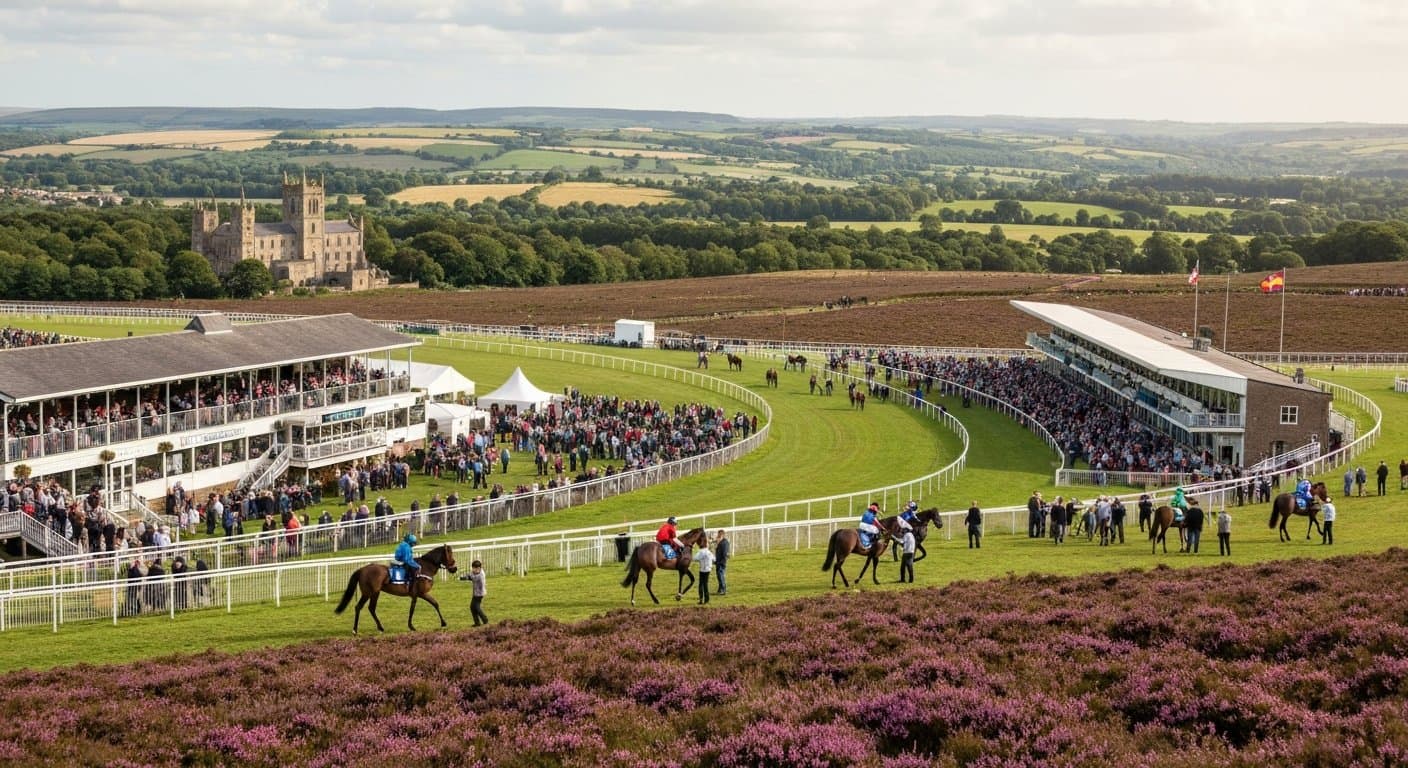
Heart of All England Maiden Hunters' Chase: Hexham's Oldest Race
Hexham's most historic race, first run in 1907: a Class 4 maiden hunters' chase over 3m 41y at the early-May meeting. There is no Hexham Gold Cup.
Read more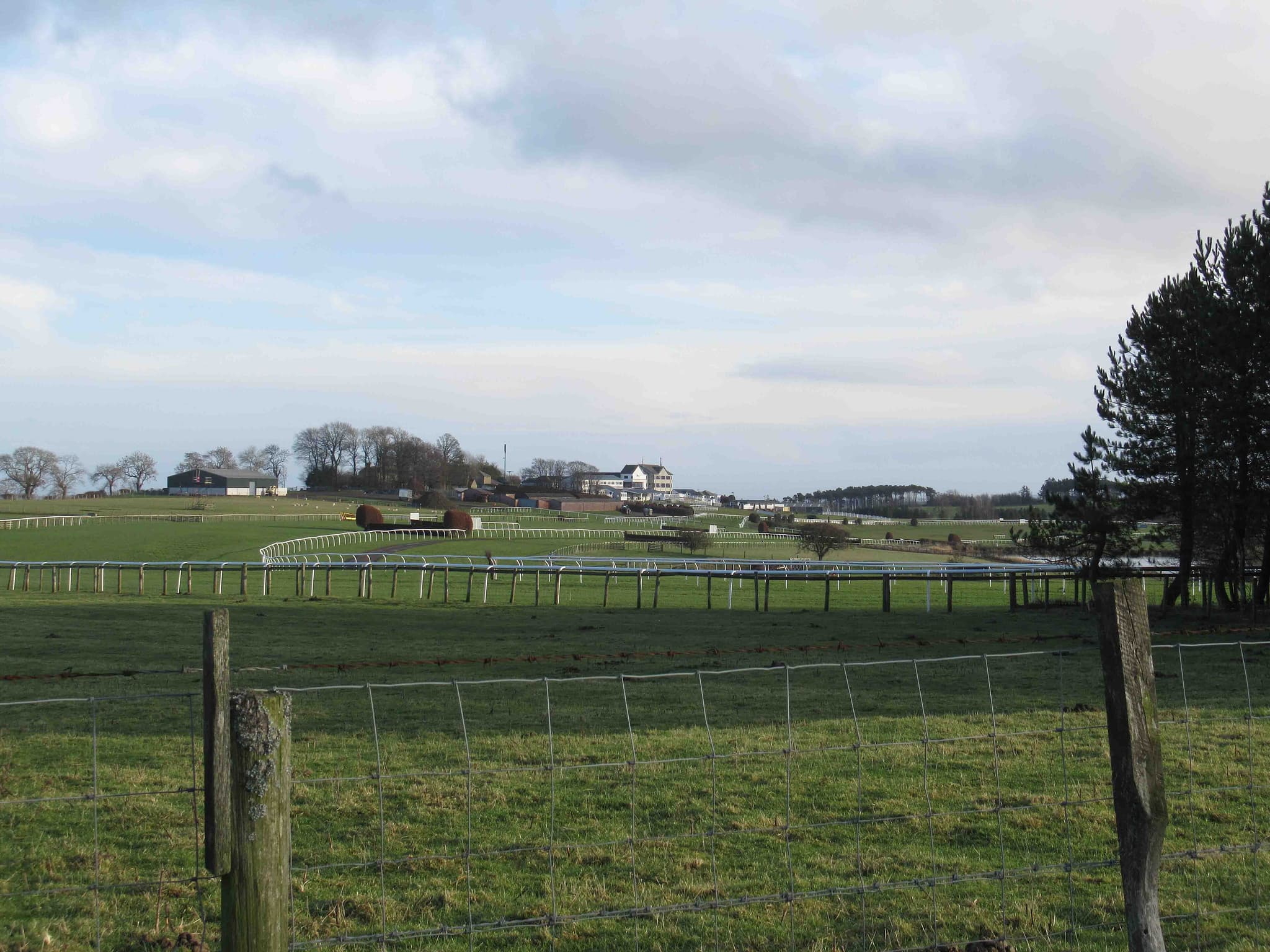
Hexham: Britain's Highest Racecourse
Your complete guide to racing at altitude — what makes Hexham unique High above sea level, and how it affects the racing and your visit.
Read more
The History of Hexham Racecourse
Over 220 years of racing at Hexham, from its origins in 1804 to the Northumberland course of today and its oldest race, the Heart of All England Chase.
Read morePhotos on this page are used under Creative Commons licences. Titles, sources and licence links for each one are on our image credits page.
Research the field with the AI Race Predictor
Our model publishes calibrated win-probability estimates for UK races — a second opinion to understand a race, not tips. It's open about its record: it doesn't beat the market, and we show exactly how it does.
Work it out & learn the basics
Gamble Responsibly
Gambling should be entertaining and not seen as a way to make money. Never bet more than you can afford to lose. If you or someone you know has a gambling problem, help and support is available.