
Founder & Editor · Last reviewed 2026-04-05
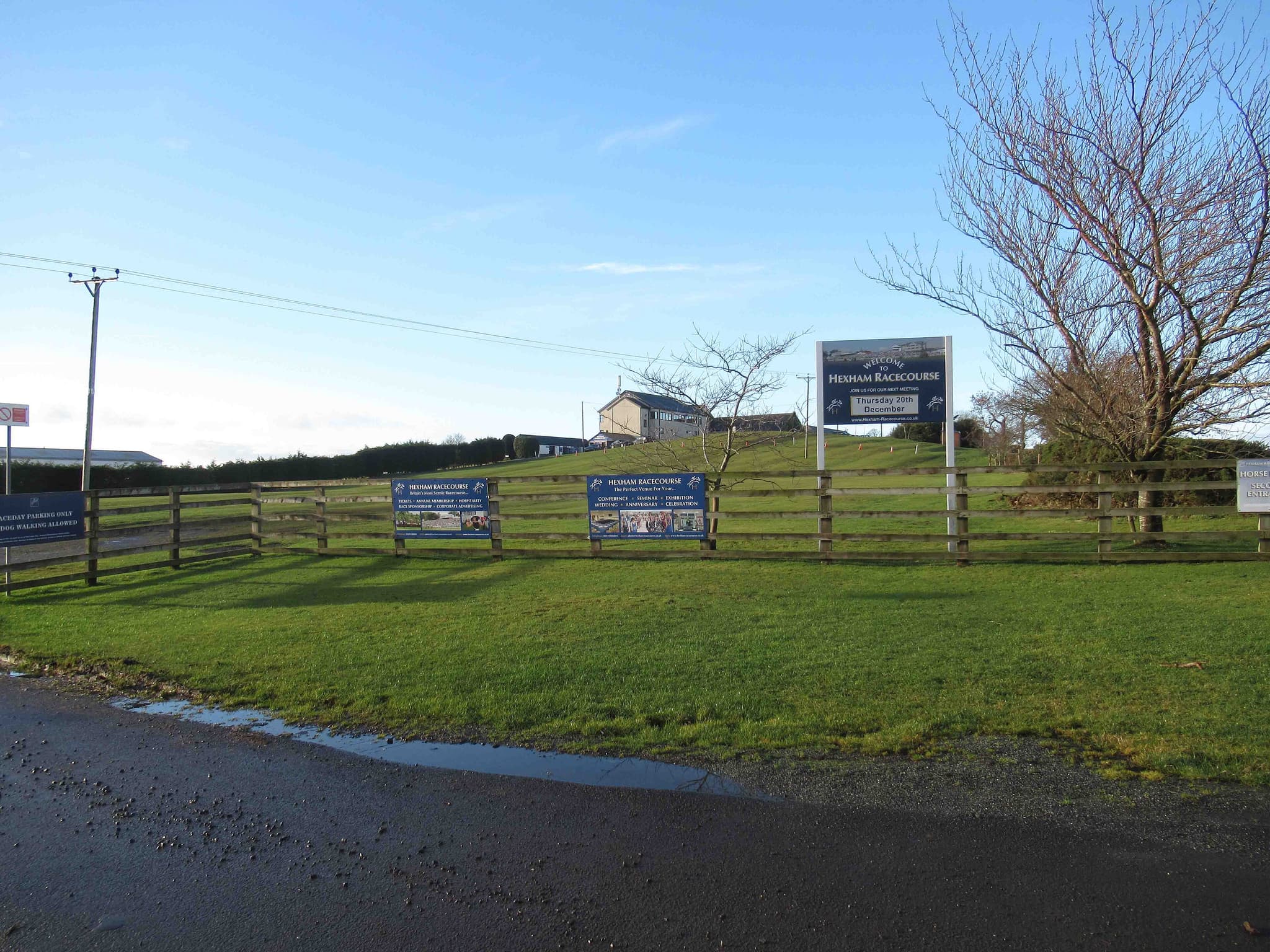
Hexham Racecourse stands on a hilltop above the market town of Hexham in Northumberland, 20 miles west of Newcastle upon Tyne, at a postcode of NE46 2JP. The view from the track takes in the Tyne Valley below and the high ground of the North Pennines to the west, and on a clear day the ridge where Hadrian's Wall runs is visible to the north. Racing has been staged at this site since 1804. That is more than 220 years of National Hunt jumping on one of the most physically demanding circuits in England, and the course looks much as it always has: windswept, steep, and honest.
The circuit is left-handed and runs approximately one mile and four furlongs in total. The gradient is the defining characteristic. From the top bend, the ground falls steeply before rising again over the final four furlongs, a climb of approximately 120 feet that begins where many horses expect relief and ends at the winning post. Any animal that has been competing on flat, forgiving tracks soon finds out what it lacks when it meets that run-in. The Hexham finish is not dramatic in the way of a Cheltenham hill; it is simply long, relentless, and utterly fair in its judgment of fitness and jumping efficiency.
The course has been National Hunt only throughout its recorded history. There has never been flat racing here. The fences on the steeplechase circuit and hurdles on the inner are set against a backdrop that includes Hexham Abbey, whose tower dates from the early medieval period, and the farming country of the Tyne Valley. The racecourse does not interrupt the countryside; it belongs to it.
The course sits within a landscape that pre-dates racing by at least 1,800 years. Hadrian's Wall runs immediately north of Hexham, and Chesters Roman Fort (known to the garrison as Cilurnum) stands four miles north of the town at the point where the Wall crosses the North Tyne. Hexham Abbey, founded in 674 AD by Saint Wilfrid, is visible from the racecourse to the south-east. The Saxon crypt beneath the Abbey, built from stone taken from the Roman structures at Corbridge, is one of the oldest intact Saxon buildings in England. A racecourse that looks out over this country is not simply a sporting venue; it is part of a landscape that has been in continuous use, for one purpose or another, since the legions of Rome.
The Heart of All England Maiden Hunters' Chase is the course's most historic race and the meeting that draws the best fields of the season each May. It is a handicap steeplechase run over the full circuit (approximately two miles and four furlongs) and has served as the annual test of the best northern chasers for well over a century. The race's May date, when the season is near its end and horses are at peak fitness, places it in the calendar as a serious target rather than an incidental fixture. For anyone attending for the first time, the complete guide to Hexham covers what to expect on raceday, and the day out guide covers the practical detail, including the train from Newcastle that takes 40 minutes and arrives a short walk from the course.
What follows is the account of how this course came to exist in 1804, how it evolved through two world wars, the Victorian era of formalisation, and the modern period of Jockey Club investment, and why the racing that takes place here today is as shaped by geography as it has ever been.
Origins
Hexham Before the Racecourse
To understand how racing came to Hexham, it helps to understand the ground it occupies. The town of Hexham sits in the Tyne Valley at a point where the river narrows and the land rises steeply to the north. The Abbey, founded in 674 AD by Saint Wilfrid of Hexham (the same Wilfrid commemorated in the name of the St Wilfrid Handicap at Ripon), dominates the town from its position above the market place. The Saxon crypt beneath the Abbey, built from stone salvaged from the Roman fort at Corbridge, is considered one of the oldest intact Saxon structures in England. Chesters Roman Fort (Cilurnum to the garrison that occupied it) lies four miles to the north, at the point where the North Tyne is crossed by Hadrian's Wall. Housesteads Fort (Vercovicium) is ten miles to the north-east, set into the dolerite crags of the Whin Sill. This is not incidental background. It is the landscape that shaped the town, the economy, and the type of people who lived here, and, in time, the type of racecourse they built.
By the early 19th century, Hexham was a market town of regional consequence. It sat on the main road between Newcastle and Carlisle, the two principal cities of the English north, and served as the commercial and administrative centre of the Tyne Valley. The leather and glove trades were active, the weekly cattle market drew farmers from Northumberland and the Scottish borders, and the surrounding estate country supported a substantial class of landowners and tenant farmers who kept horses as a matter of practical necessity. Horses were how goods moved, how land was farmed, and how gentlemen demonstrated relative standing.
Horse Racing in Northumberland Before 1804
Organised horse racing appeared in Northumberland well before the Hexham course was established. Informal matches between horses belonging to local landowners were being held across northern England from at least the 17th century. Newcastle Races, held on the Town Moor, had a recorded history stretching back to 1632. In the Tyne Valley specifically, the tradition of testing horses against each other, over improvised obstacles or on open ground, was well established before anyone formalised it into a fixture with admission charges and a published programme.
The horses bred in Northumberland and the border country were of a particular type: compact, strong-quarters animals capable of carrying weight across rough ground in variable weather. The North had no equivalent of the manicured Newmarket Heath, and the horses reflected this. They were bred to be useful first and fast second, a priority that suited National Hunt racing when it eventually arrived as a formal discipline.
The First Meetings: 1804
The first recorded racing at the present Hexham site dates to 1804, placing it among the earlier established National Hunt venues in England. Cheltenham, for comparison, did not stage racing under formal rules until 1815. The Hexham meetings of 1804 were modest in scale: small fields drawn primarily from local stables, modest prize money, and facilities that were improvised rather than built. The obstacles were natural or basic timber constructions, and the layout followed the natural contours of the hilltop rather than any designed specification.
What those first meetings established was the gradient. The hilltop site dictated that any course at Hexham would have to deal with serious changes in elevation. The decision to use this ground was probably driven by the same logic that governed most early NH venues: it was common land adjacent to the town, visible from the approaches, and inconvenient for no one of consequence. The result was a finishing circuit that climbs 120 feet over four furlongs. It was not chosen but accepted, and it has proved to be the making of the course.
The Tyne Valley Railway, 1835
The arrival of the Newcastle to Carlisle railway through Hexham in 1835 altered the course's possibilities fundamentally. Hexham station opened on the Tyne Valley line, sitting approximately one mile from the racecourse, close enough to walk uphill in under 20 minutes. The journey from Newcastle took around 40 minutes; from Carlisle, around 50. This was a transformation of access. Before the railway, attendance at Hexham races required either living within a reasonable radius or making a journey by road that many working people could not spare the time or expense for.
After 1835, the factory workers and miners of Newcastle's expanding industrial belt could reach Hexham on a race day. The valley towns of Corbridge, Prudhoe, and Stocksfield were all on the line. Trainers from further afield could box horses more easily. Hexham stopped being primarily a local fixture and became part of a connected northern NH circuit. Horses began arriving from stables in the Scottish Borders and from Malton and York to the south, as well as from the Carlisle area to the west.
The social composition of the raceday crowd changed alongside the transport links. The aristocratic and landed character of early racing at Hexham gave way to the mixed-class atmosphere that was typical of northern provincial meetings in the Victorian era. The crowd was opinionated, knowledgeable about local horses and local trainers, and closely connected to the farming, mining, and manufacturing communities of the Tyne Valley. That connection persists today.
Formalisation in the Victorian Era
Through the second half of the 19th century, the Jockey Club's regulatory authority extended further across National Hunt racing. Rules on weights, handicapping, and course standards became more uniform. Hexham kept pace with these changes. The course moved to its permanent configuration during this period, settling at The Racecourse, NE46 2JP, on the hillside above the town, and invested in the infrastructure required by a regulated venue: a grandstand, proper enclosures, standardised fences, and the administrative apparatus needed to stage fixtures under the rules.
By 1900, Hexham had the essential characteristics it retains today. The Heart of All England Maiden Hunters' Chase was still seven years away; it was first contested in 1907. The fixture list was set within the broader northern NH calendar. The course had a defined character: demanding, exposed, and testing. For the racegoers and local trainers who formed its core constituency, it was not one option among several but the natural home of jumping in the North East.
Era takeaway: The course's origins in 1804 are inseparable from its landscape. The hilltop site, the railway link, the farming and mining communities of the Tyne Valley, and the Roman and medieval history of the town all shaped what Hexham became. The testing gradient was not a design choice but a geographical fact, and it has been the defining characteristic of the course for more than two centuries.
The Golden Era
A Venue Comes of Age
By the opening decade of the 20th century, Hexham was a recognised and respected fixture on the northern National Hunt circuit. The course had its permanent layout, its rules, its grandstand, and its Heart of All England. What followed through the interwar years and into the 1950s and 1960s was a period of consolidation: not the glamour of expansion, but the accumulation of character that comes from decades of serious racing on a course with a strong identity.
The early 20th century NH calendar in the North was shaped by a handful of venues: Carlisle, Sedgefield, Newcastle, Kelso, and Hexham. Each had its own character. Carlisle was relatively flat by northern standards. Sedgefield mixed flat and undulating ground in a different configuration. Newcastle's jumping circuit was more galloping in nature. Kelso, 20 miles north of Hexham across the Scottish border, shared something of Hexham's demanding character. But none had quite the same combination of hilltop altitude, sustained climb to the finish, and exposed setting that made Hexham a real test of a horse's constitution.
The Heart of All England Maiden Hunters' Chase Takes Shape
The Heart of All England Maiden Hunters' Chase's standing as the course's most historic race rests on its unbroken run since 1907. A maiden hunters' chase over the full Hexham circuit, approximately two miles and four furlongs, the race placed the maximum demand on every quality a horse needed to succeed here. The jumping had to be efficient because the ground did not allow a horse to make up lost momentum easily after a mistake. The stamina had to be deep because the uphill finish, after a full circuit of undulating terrain, left no hiding place for a horse that was not thoroughly fit. The handicapper's assessment had to be respected, too, because the track levelled pretensions more reliably than a flat, easy course.
The race attracted northern trainers who understood these requirements. Trainers from Malton, 60 miles to the south, brought horses that had been prepared on the gallops of the Yorkshire training grounds and were capable of making the journey north and competing on the day. The Scottish Border trainers, operating from the country around Kelso and Jedburgh, contributed horses with the hardness that came from being prepared on unforgiving upland ground. Hexham, sitting between these two training constituencies, drew the best of both.
Racing Through Two World Wars
Hexham, like every other British racecourse, was affected severely by both world wars. Racing was suspended during 1915–18 and again during 1940–45. The course was used for other purposes during the Second World War, as were most English racecourses, before resuming fixtures after 1945. The post-war resumption of racing at Hexham was typical of what happened across provincial NH racing in England: a gradual return of fixtures, the rebuilding of connections between trainers and local owners, and the restoration of a racing calendar that the war years had interrupted without extinguishing.
What the war years did not change was the course itself. The terrain remained as it had always been. The fences were re-established. The Heart of All England Maiden Hunters' Chase was restored to the calendar. Racing recommenced on a track that was physically unchanged from what it had been in 1939, though some of the continuity of ownership and training that had built the pre-war fixture had been disrupted. The recovery took time, but the course's inherent qualities gave it a natural draw, particularly in a region where National Hunt racing had deep roots among the farming and working communities of Northumberland.
The Mid-Century North-East NH Circuit
The decades from the 1950s through the 1970s saw Hexham function as the anchor of North East NH racing at the most northern end of the circuit. The northern circuit in this era had a strongly regional character. Prize money at NH level was modest across England, and the economics of the sport meant that horses tended to run locally and regularly. Trainers with 10 or 15 horses in their yard were the norm at the provincial level. Owners were often local businessmen, farmers, or syndicates who wanted to see their horses run at familiar venues.
This meant that Hexham developed a core of horses and trainers who were regulars. Course specialists emerged, horses who had learned the track's particular demands and could be relied upon to run to a high level at Hexham even when they showed more modest form elsewhere. The course's demanding character was self-selecting in this way: only horses suited to undulating, testing ground competed at Hexham with any consistency, and those horses tended to show their best form at precisely this type of venue.
The raceday crowd reflected the regional character of the sport. Hexham in the mid-20th century drew heavily from Newcastle and the Tyne Valley towns, from the farming communities of Northumberland, and from the market town of Hexham itself. Raceday was a social occasion in a county with limited leisure options and a tradition of communal gathering around sport, and the course's setting, with its views across Northumberland, made it a natural destination.
Jumps Personalities of the Era
The names of individual horses from this period are less easy to retrieve than those from more recent decades, when records are better preserved and racing media coverage was more extensive. What the period produced, reliably, was a type rather than individual stars: the tough northern chaser, the horse that contested the Heart of All England Maiden Hunters' Chase year after year and became known to the regular crowd by temperament and tendency as much as by form figures. These were horses bought for modest sums from Irish point-to-point fields or from the Doncaster sales, trained on the Yorkshire Wolds or the Northumberland moors, and raced week after week on courses like Hexham and Kelso and Sedgefield until they had paid their way and more.
The jockeys of the era who rode regularly at Hexham were largely professionals of the northern circuit rather than headline names from the south. They knew the course: knew which fence demanded extra caution on heavy ground, knew where the race began in earnest on the climb to the line, knew which trainers sent horses that were fit to win first time out. That accumulated local knowledge was as much a part of the course's character as the gradient itself.
Era takeaway: The golden era at Hexham was not a period of individual celebrity but of institutional consolidation. The course built its identity through the consistency of its demands, the quality of its core race, and the loyalty of the northern racing community. By the 1970s, Hexham had been testing horses and riders for 170 years without altering the essential character of the challenge it set, and that consistency was, in itself, the achievement.
Famous Moments
The Heart of All England Maiden Hunters' Chase as a Register of the Course's History
The most reliable record of Hexham's famous moments runs through the Heart of All England Maiden Hunters' Chase. As the course's premier race, a handicap steeplechase that places every demand the circuit can make on a horse and rider, the Heart of All England has functioned as Hexham's annual examination. The results over the decades constitute a register of which horses, trainers, and jockeys have best understood what the course requires, and the names that recur in the Heart of All England roll of honour are those most closely associated with Hexham's history.
A handicap chase over the Hexham circuit is a particular kind of test. The race begins with all the formality of the standard NH format: the flag falls, the field jumps off. The course's gradient imposes its own logic almost immediately. The downhill stretch from the far turn encourages horses to run freely, and the best jockeys conserve their horses here while the eager animals on the outside expend energy they will need later. By the time the field turns for home and the long uphill run-in begins, the race has been reduced to those horses fit enough and brave enough to sustain the climb. On heavy ground, when the going takes its toll on every stride, the final two furlongs of the Hexham run-in have broken more confident expectations than any fence on the course.
The January Frosts and the February Abandonment
Part of Hexham's particular character is the weather. The hilltop sits exposed to winds from the North Pennines and, more particularly, to the cold air that comes off the high ground to the north. Hexham is among the most exposed racecourses in England. It has been abandoned for frost or snow on numerous occasions across its history, and racegoers who have attended in February or March know the particular quality of cold that the site can generate: horizontal rain from the west, ground frozen at 7am that softens to deep mud by 1pm, and a wind that makes the stands feel inadequate however well they are constructed.
These conditions have produced their own kind of famous moment. When a horse wins the Heart of All England Maiden Hunters' Chase on ground officially described as heavy, after a circuit that has exhausted most of the field before the final fence, the performance carries weight that a comfortable victory on good ground cannot match. Northern trainers and punters understand this, which is why the form book at Hexham, particularly for heavy-ground performances, is studied carefully when those same horses run at Kelso, Carlisle, or Sedgefield in similar conditions.
Sandy Thomson and the Scottish Border Connection
Sandy Thomson, who trains at Lambden in the Scottish Borders approximately 20 miles north of Hexham, has been one of the course's most successful modern trainers and embodies the connection between the Border country and this particular circuit. Thomson's horses are prepared on ground that closely resembles the terrain at Hexham: upland, testing, requiring horses that are thoroughly fit rather than merely race-ready in the basic sense. His strike rate at Hexham has been consistently above the national average for trainers, and his success at the course is not surprising to anyone who understands the relationship between how a horse is prepared and what kind of track suits it.
Thomson's runner Seeyouatmidnight, a Scottish-bred chaser who became one of the most popular jumps horses in the North during the 2010s, demonstrated the kind of performance that Hexham's demanding circuit can elicit from the right type of horse. Seeyouatmidnight's ability to sustain effort over undulating, testing courses made Hexham one of his natural venues, and his record there, including multiple wins and consistent placed efforts, captured what the course rewards in a horse.
Brian Ellison and the Malton Influence
Brian Ellison, who trains at Malton in North Yorkshire approximately 60 miles south of Hexham, has maintained a strong record at the course over many years. Ellison's operation is one of the largest in the North, handling both flat and National Hunt horses, and his runners at Hexham tend to be well prepared and correctly targeted. The Malton to Hexham pipeline, established over decades by various trainers operating from the Yorkshire training centre, is one of the defining features of the modern Hexham trainer map. The journey north is straightforward enough that it can be done on the day of the race, and trainers who know the course plan their Hexham runners specifically rather than treating the fixture as an afterthought.
Ellison's approach at Hexham reflects a broader principle that applies across the northern circuit: targeting. Hexham's demanding character means that a horse sent there unprepared or unsuitable will find out quickly. The trainers who succeed consistently at the course are those who identify which horses in their yard will benefit from the test rather than be found out by it. Strike rates at courses like Hexham, where the terrain is selective, correlate more tightly with trainer knowledge than at flatter, easier circuits.
Dianne Sayer and the Cumbrian Contribution
Dianne Sayer, who trains at Hackthorpe in Cumbria approximately 45 miles west of Hexham, represents another axis of the training geography that has shaped the course's history. The Cumbrian trainers, operating in country that is if anything even more testing than Northumberland, have always contributed to the Hexham runner pool. The journey east along the A69, which more or less follows the line of Hadrian's Wall for much of its length, connects the two training regions efficiently. Sayer's horses are prepared in hill country and tend to be athletic, well-schooled animals that handle the Hexham gradient without difficulty.
The Moments That Define a NH Course
Famous moments at NH courses like Hexham are rarely the stuff of headline sports coverage. There is no equivalent of a Cheltenham Gold Cup or a Champion Hurdle day, no single race of national significance that brings the cameras and the crowds in their thousands. What there are, at Hexham, are the accumulating moments that regular racegoers remember: the horse that led from flag to fall and still held on up the hill by a neck; the 20/1 shot from a Scottish Border yard that the locals had known about for a week; the day in March when the fog came in off the Pennines and the horses jumped the far fence into a white void that the spectators could only hear; the Gold Cup run in sunshine on ground that had been frost-cancelled three days before, producing one of the best northern chases of that season.
These moments are not written up in detail in the national racing press. They live in the racecard collections of Northumberland racegoers, in the conversations of Hexham's racing community, and in the form guides of punters who understand that the Heart of All England Maiden Hunters' Chase in heavy ground tells you more about a horse's character than three runs on easy tracks ever could. That is the nature of the NH course at this level: provincial, loyal, accumulating its history in the memory of the people who attend rather than the archive of the national media.
Section takeaway: Famous moments at Hexham are defined by what the course demands rather than what it provides for an audience. The gradient, the weather, and the compact northern community of trainers and owners create conditions where the truly memorable is earned rather than staged. The betting guide sets out the practical implications of this for modern race analysis.
The Modern Era
The Jockey Club Years
Hexham entered the modern era as part of the Jockey Club Racecourses portfolio. The Jockey Club, England's oldest racing authority, dating to the 1750s, expanded its commercial arm significantly in the late 20th and early 21st centuries, taking on a group of courses that ranged from the nationally pre-eminent (Cheltenham, Newmarket, Epsom) to the strongly regional (Hexham, Huntingdon, Market Rasen). The logic behind this consolidation was that the costs of maintaining a racecourse to modern safety and facilities standards were difficult to absorb for smaller venues operating independently. Group ownership allowed investment to flow across the portfolio and infrastructure expertise to be shared.
For Hexham, the practical effects have been visible in the gradual improvement of facilities over the past two decades. The grandstand and Premier Enclosure have been refurbished. Catering has been upgraded from the basic offerings that characterised smaller NH venues in the 1990s to a standard that competes with the broader leisure market. Car parking and access infrastructure have been improved. The racecourse website and raceday communications have been professionalised. None of this has changed the course itself — the gradient, the fences, the layout are untouched — but it has changed the experience of attending.
Capacity and Character
The capacity of approximately 4,000 racegoers is one of the features that defines the modern Hexham experience. This is not a course that feels half-empty on a normal fixture day, nor one that is overwhelmed even at peak demand. The Heart of All England Maiden Hunters' Chase day in May draws close to capacity, with a crowd that is loyal and knowing in equal measure. These are people who attend Hexham regularly, who understand the track, and who have their own form of expertise about which trainers target which races with which type of horse. The atmosphere on Heart of All England day is closer in character to a large point-to-point than to a metropolitan NH fixture: communal, informal, and strongly opinionated.
On a quiet autumn Tuesday fixture, the crowd may be a few hundred strong, gathered along the rail above the run-in to watch horses that are running for the experience as much as the prize. These fixtures are the backbone of the northern NH calendar and the reason the sport exists at this level. They provide racing experience for young horses, prize money for small yards, and the competitive foundation from which the better animals graduate to more prominent races. Hexham's modest fixtures do as much for northern jumps racing as the Heart of All England; they just attract less attention.
The Modern Fixture List
Hexham stages approximately 15 fixtures per year, concentrated in the autumn and spring but with races spread across the jumping season from late March to November. The course does not race in the depths of winter at the frequency of some NH venues because the hilltop position makes frost abandonment a real and recurring risk. The Met Office data for the Hexham area shows it to be among the more frost-prone locations in northern England during January and February, and the course management plans accordingly.
The fixture list is built around the Heart of All England meeting in May, which serves as the season's signature date and draws the strongest fields. Around this centrepiece are the autumn meetings (typically September and October), when the ground is often good to soft or soft and the horses returning from their summer breaks are fit enough to show their best form, and the spring fixtures in April, which close the season and include some competitive handicap chasing that tells useful form stories ahead of the summer break.
The complete guide has the current fixture calendar, but the seasonal pattern has been consistent for at least two decades.
Getting to Hexham in the Modern Era
One of the features of Hexham's modern identity that distinguishes it from many provincial NH venues is the quality of its public transport access. Hexham station, on the Newcastle to Carlisle Tyne Valley line, sits approximately one mile from the racecourse. Direct trains from Newcastle Central take around 40 minutes; from Carlisle, around 50 minutes. The Tyne Valley line runs frequently and reliably on racedays, and the racecourse runs a shuttle service or signposted walk from the station. For a course of Hexham's size and location, this is an unusual advantage: most courses of equivalent status require a car, and the rail link broadens the potential attending public significantly.
This is the same Tyne Valley line that opened in 1835 and first brought the Newcastle crowd to Hexham races. The 21st-century version carries commuters, students, tourists walking the Wall, and racegoers in much the same corridor. The journey from Newcastle's Central Station to Hexham on a raceday in October, through the autumn colour of the Tyne Valley, is one of the more pleasurable ways of reaching a racecourse in the north of England.
Sandy Thomson, Brian Ellison, and the Modern Trainer Map
The trainer geography at Hexham in the modern era is shaped by three principal constituencies. Sandy Thomson, based at Lambden in the Scottish Borders, 20 miles north, is the nearest trainer of significance and has a record at the course that reflects the straightforward geographical relationship. Brian Ellison at Malton in North Yorkshire, 60 miles south, sends horses regularly and has the scale of operation to target Hexham races specifically when the conditions and the weights suit. Dianne Sayer at Hackthorpe in Cumbria, 45 miles west, contributes from the training community that lies along the same broad east-west corridor as the old Roman road.
These three directions (north from the Scottish Borders, south from Yorkshire, west from Cumbria) define the modern training catchment. Outside these principal sources, horses come occasionally from further afield when the Heart of All England or a competitive handicap attracts a wider entry, but the bulk of the Hexham runner pool is northern. This is true of most provincial NH courses, but at Hexham the regional character is particularly pronounced because the course's demanding nature self-selects for horses prepared in similar terrain.
What the Modern Era Has Preserved
The essential character of Hexham has not changed in the modern era, and this is worth stating because it is not guaranteed at any course that changes ownership and investment structure. The gradient is exactly as steep as it was in 1804. The distance remains approximately one mile and four furlongs. The fences are NH standard. The views from the course (the Tyne Valley to the south, the Wall country to the north, Hexham Abbey visible to the south-east) are the same views that racegoers have had for 220 years.
What the modern era has changed is the standard of experience around the racing. Hexham is a cleaner, better-maintained, more comfortable venue than it was 30 years ago. The catering is better. The information flow is better. The raceday communication is better. But the race itself, the competition between horses on a demanding circuit in the Northumberland hills, is as uncompromised as it has ever been.
Era takeaway: The modern era at Hexham has delivered improved facilities without altering the racing product. That balance, investment in the experience and restraint in relation to the course itself, is the basis for the venue's continued relevance as northern NH racing's most demanding and most distinctive track. The day out guide has the practical information for modern visitors.
Hexham's Legacy
What Two Centuries of Racing Leaves Behind
A racecourse that has been operating continuously since 1804 accumulates a kind of legacy that is difficult to quantify but easy to feel. At Hexham, it is present in the geography first: the course is there because the hilltop was there, and the hilltop has not moved. The gradient that defined racing in 1804 is the gradient that defines racing today. This is not a course that has reinvented itself, relocated its fences, or redesigned its layout to suit changing fashions. It is a course that has endured by being itself, consistently, for more than 220 years.
The testing character of the circuit is the central fact of the legacy. Horses that win at Hexham, particularly over the full circuit in a chase and particularly in testing ground, have demonstrated something that softer tracks cannot elicit. The uphill run-in of approximately four furlongs, rising 120 feet from the turn to the post, is a filter of sorts. It removes horses that lack real fitness and real stamina. The form it produces is transferable and respected. Punters and trainers who have spent time with the Hexham form book understand that a good performance here, especially in heavy or soft ground, is a more reliable predictor of ability than a similar winning margin at a track that asks less.
Britain's Most Northerly Jumps Venue
Hexham occupies a specific and unreplicable position as Britain's most northerly National Hunt racecourse. This is not a marketing designation but a geographical fact, and it carries practical consequences. The course is the natural home of racing for a community that extends from Newcastle and the Tyne Valley through the farming and estate country of Northumberland and into the southern Scottish Borders. There is no other NH course north of Hexham in England. Kelso, 20 miles across the border in Scotland, serves a broadly similar community but from the Scottish side of the national boundary. Between them, the two courses cover a training and racegoing catchment that is large in area and sparse in alternative options.
This position also explains the particularly loyal character of the Hexham crowd. There is not another equivalent venue within easy reach. Racegoers who want to watch NH jumping in Northumberland come to Hexham, and many of them have been coming for decades. The course's identity is deeply embedded in the communities it serves, in a way that is less true of venues that exist within a competitive cluster of racecourses. When Hexham closes for the season in November, there is no alternative north of Newcastle until Kelso hosts its next Scottish meeting.
The Historical Landscape as Context
Hexham's location gives its racing a setting that is historically layered in ways that few other courses can match. Hadrian's Wall, the 73-mile Roman frontier built from around 122 AD on the orders of the Emperor Hadrian, runs immediately north of the town. Chesters Fort, four miles north, contains one of the best-preserved Roman bath houses in Britain. Housesteads Fort, ten miles further east, sits on the dolerite crags of the Whin Sill High above sea level. Hexham Abbey, founded in 674 AD by Saint Wilfrid, contains the Saxon crypt built from Roman stone: a physical continuity of material from the 2nd century to the 7th, present in the same structure.
Racing at Hexham takes place in a landscape that has been shaped by 2,000 years of organised human activity. This does not change the form of a horse or the going report for a Thursday fixture in October, but it is the context in which the course exists and the reason Hexham feels different from a racecourse in a featureless agricultural plain. The view from the stands, with the Abbey tower to the south-east, the Wall country to the north, and the river valley below, is one of the most historically layered views available from any NH course in England.
The FAQ
When did Hexham Racecourse open? The first recorded racing at the present Hexham site dates to 1804, making it one of the older established National Hunt venues in England. The course has been in continuous operation since then, with interruptions only during the two world wars. Over 220 years of jumping have taken place on the same hilltop above the town of Hexham in Northumberland.
Why is the Hexham finish so testing? The finishing straight at Hexham rises approximately 120 feet over the final four furlongs, from the point where horses turn for home to the winning post. This is one of the steepest uphill finishes in National Hunt racing in England. The climb begins where horses might expect to be coasting to the line, which exposes any horse that has been conserving energy through the preceding circuit. Good ground makes the climb manageable; soft or heavy going makes it thoroughly gruelling.
What is the Heart of All England Maiden Hunters' Chase? The Heart of All England Maiden Hunters' Chase is the course's most historic race, a Class 4 maiden hunters' chase staged in early May that draws the strongest fields of the Hexham season. It is run over the full steeplechase circuit, approximately two miles and four furlongs, and tests every quality the course demands: jumping accuracy, sustained stamina, and the ability to sustain effort up the long run-in. The race has accumulated a history of northern chasers who have used it as their seasonal target.
Which trainers are most successful at Hexham? The most consistent trainers at Hexham tend to be those based within 60 miles of the course whose horses are prepared in similarly demanding terrain. Sandy Thomson at Lambden in the Scottish Borders (20 miles north), Brian Ellison at Malton in North Yorkshire (60 miles south), and Dianne Sayer at Hackthorpe in Cumbria (45 miles west) have all built strong records at the course. Strike rates at Hexham reward trainers who identify which horses are suited to the gradient rather than sending runners speculatively.
How do I get to Hexham Racecourse by train? Hexham station sits approximately one mile from the course on the Newcastle to Carlisle Tyne Valley line, which has been running through Hexham since 1835. Direct services from Newcastle Central take around 40 minutes; from Carlisle, around 50 minutes. The walk from the station to the course is uphill and takes around 15 to 20 minutes. The day out guide has full transport details including shuttle services on race days.
Is Hexham the highest racecourse in England? Hexham sits high above sea level, which places it among the higher NH courses in England but not definitively the highest. Hexham's claim to distinction is less about altitude alone and more about the combination of altitude, gradient, and exposed position that creates the specific conditions the course is known for.
The Racing Continues
The practical legacy of Hexham's history is a betting market that reflects 220 years of course specificity. Horses that have form at Hexham, or at directly comparable courses such as Kelso, Carlisle, and Sedgefield, start from a position of proven suitability. Those that arrive from flat, easy tracks and have not demonstrated the ability to sustain effort up a steep hill are at a measurable disadvantage, regardless of their official rating. The betting guide sets out the practical implications of this in detail.
That the course continues to operate at all, 220 years after the first meetings on this hilltop in Northumberland, is the simplest statement of its legacy. Not every provincial NH course from the early 19th century has survived. Many were absorbed, relocated, or simply closed as the sport consolidated around fewer, larger venues. Hexham has held its position in the calendar by offering something that the larger venues do not: an honest test, in an irreplaceable setting, with a crowd that has been attending for generations and knows exactly what they are watching.
Share this article
More about this racecourse
All Hexham guides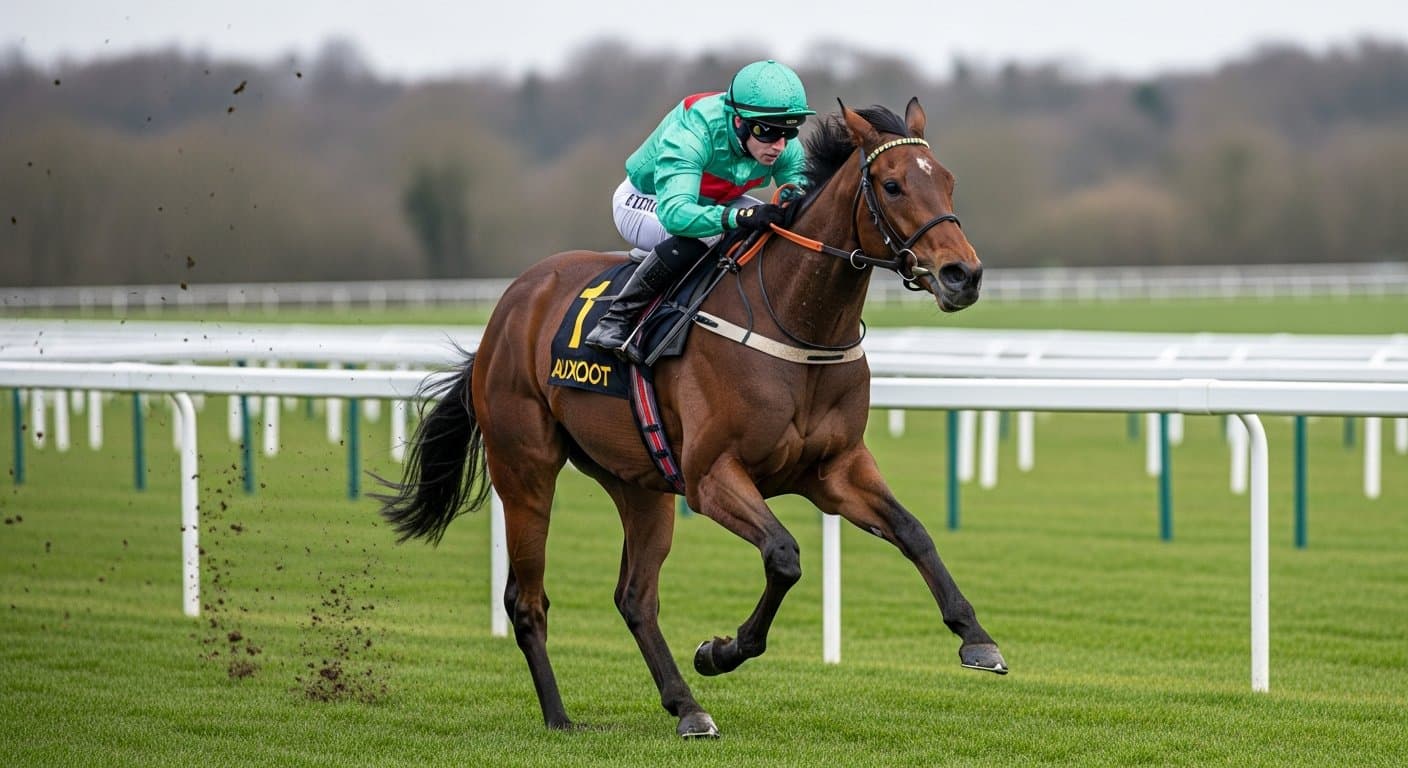
Auroras Encore at Hexham: The Grand National Winner's Northern Home
Auroras Encore won the 2013 Grand National at 66/1: and jockey Ryan Mania's connection to Hexham makes this Northumberland course central to one of racing's most dramatic stories.
Read more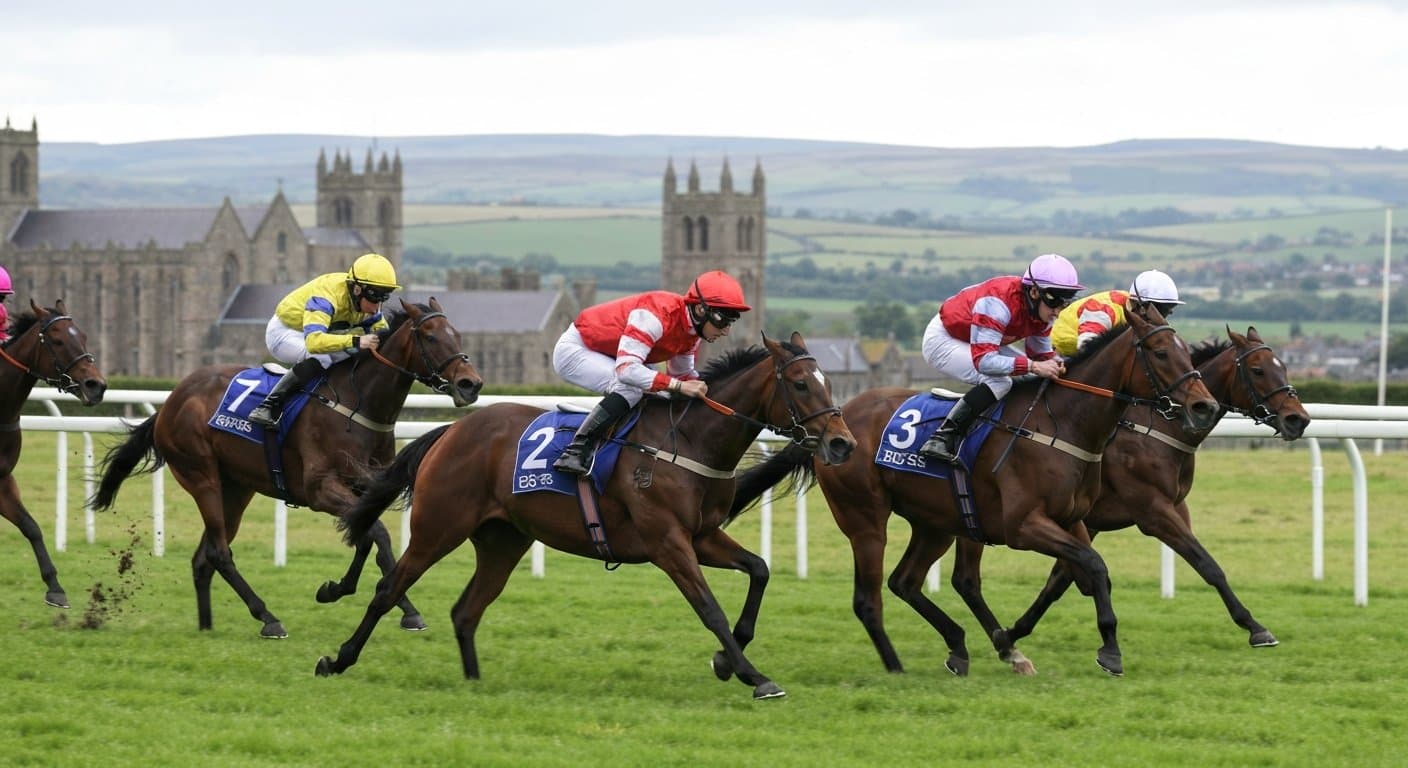
Hexham Betting Guide: Britain's Highest Racecourse Tips
Master betting at Britain's highest racecourse with Hexham's unique track insights, key trainers, and winning strategies for this challenging course.
Read more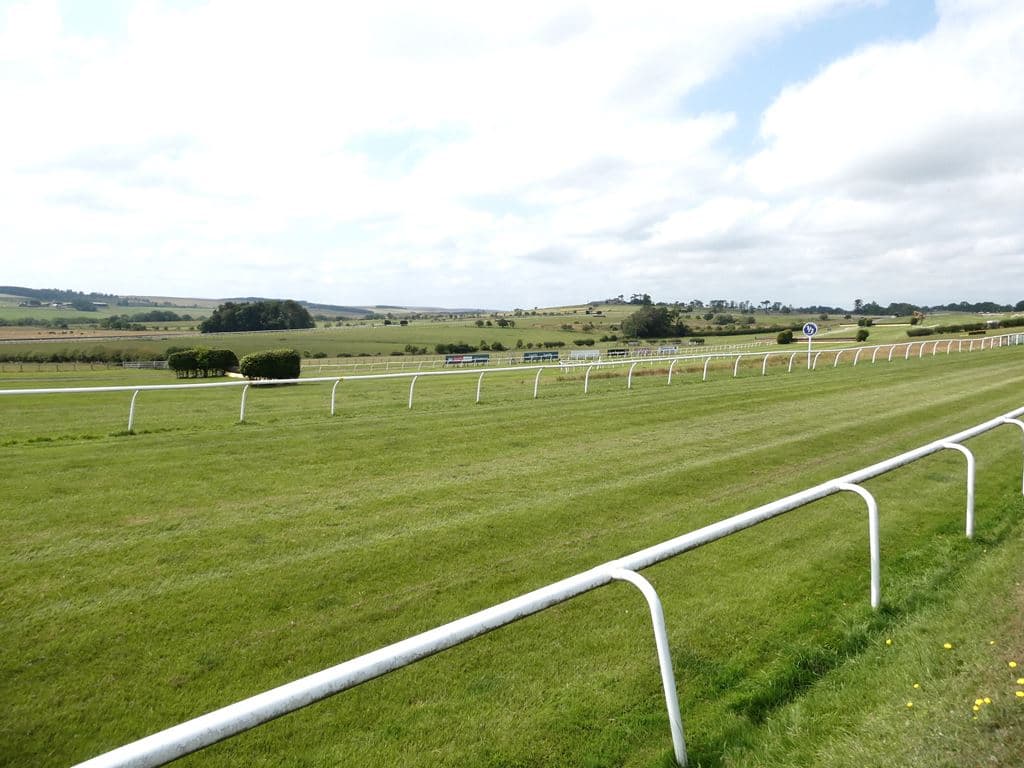
Hexham Racecourse: Complete Guide
Everything you need to know about Hexham Racecourse — one of England's oldest NH venues, the Grand National Trial, and racing high up, above the Tyne Valley.
Read morePhotos on this page are used under Creative Commons licences. Titles, sources and licence links for each one are on our image credits page.
Gamble Responsibly
Gambling should be entertaining and not seen as a way to make money. Never bet more than you can afford to lose. If you or someone you know has a gambling problem, help and support is available.