
Founder & Editor · Last reviewed 2026-04-05
Introduction
Racing has taken place in and around Leicester since at least 1603, making it one of the longest-running venues in English racing. The current course at Oadby has been in use since 1883, and in that time it has produced some history worth knowing: Gordon Richards rode his first winner here in 1921; Golden Miller won his debut race at Leicester before going on to win five consecutive Cheltenham Gold Cups between 1932 and 1936. The course stages around 25 fixtures a year across both flat and National Hunt, and the Leicester Gold Cup is the feature race of the flat season.
What defines racing at Leicester is the terrain. The track is right-handed and undulating, with a back straight that climbs and a home straight that falls away as it approaches the line. That combination sorts out horses in a way a flat oval never can. When the going softens — and it does often, given the clay soil beneath the course — it becomes a proper test of stamina and fitness. Leicester is not the most glamorous track in England, but it's an honest one.
Quick decision guide:
- Should I visit? Yes, if you want a relaxed, unpretentious race day with good dual-purpose racing in the East Midlands.
- Best time to go? The Leicester Gold Cup day in late April or May is the stand-out flat meeting. The autumn NH opener is worth catching for early-season novice form.
- Which enclosure? The Grandstand gives good views and access to the parade ring. The Course enclosure is more relaxed and well-suited to a first visit with a group.
- What race to target? The Leicester Gold Cup for flat; the novice hurdle programme for jumps form students.
- Getting there? Leicester station is on the Midland Main Line. Taxis from the station take around 12 minutes to Oadby. By car, Junction 21 off the M1, then follow the A6. Postcode LE2 4AL.
- Dress code? Smart casual throughout. The Premier enclosure on feature days may ask for slightly smarter attire; check the course website before you go.
- Family-friendly? The compact layout and reasonable pricing make it a workable day out with children. The Course enclosure has space to spread out.
Who this guide is for
If you've never been to Leicester before, this guide gives you everything you need to plan a first visit: the enclosures, the transport options, what to expect on a race day. If you know the course and want to sharpen your betting, the sections on course characteristics and the betting angles are where to go. The undulations and the clay soil create real patterns in the form that are worth understanding. History enthusiasts will find the history section covers 250 years of racing in the East Midlands, from the early years of the current site through to the present day. And if the novice programme is your interest, the fixtures and betting sections explain why Leicester has built its reputation in that area.
The guide covers the course layout and characteristics, the history, key fixtures, facilities, getting there, betting angles, and a full FAQ. Start where it's useful.
Bet on Leicester
Place your bets on Leicester races with a trusted bookmaker.

Promo code BETFRED50. New customers only. Register, deposit with a Debit Card, and place a first bet of £10+ at Evens (2.0)+ on Sports, to be settled within 7 days, to get £30 in Sports Free Bets and £20 in Bet Builder Free Bets within 24 hours of settlement. 7-day expiry. Eligibility & payment exclusions apply. Full T&Cs apply. Take Time to Think. BeGambleAware.org. 18+. Full T&Cs.

Promo code R30. New UK customers only, 18+. Register, deposit £10 or more, then place a £10 single cash bet at odds of 1/2 (1.5) or greater on any sports market (excluding Virtuals). Once the qualifying bet settles you get £30 in Free Bets (3 x £10) — the qualifying bet can win or lose. Free Bets are valid on any sports market excluding Virtuals, expire in 7 days, are non-withdrawable and must be used in full. Excluded deposit methods apply (including PayPal, Apple Pay, Skrill and NETELLER). Named bets such as Lucky 15 do not qualify. If you cash out the qualifying bet, or it is voided, you are no longer eligible for the offer. Ends 31.12.26. Full T&Cs apply. Please gamble responsibly. BeGambleAware.org. 18+. Full T&Cs.

Promo code BET40GET20. New UK customers, 18+. Register with the code and place a first bet of £40 or more at Evens (2.0) or greater. Receive 2 × £10 free bets: the first credited automatically once the qualifying bet settles, the second 24 hours later. Free bets must be placed at minimum odds of 4/1 (5.0), expire 24 hours after credit, and the free-bet stake is not returned with winnings. Debit card deposits only. Take Time to Think. BeGambleAware.org. 18+. T&Cs apply. Full T&Cs.

50% of your first-day net losses refunded as a free bet, capped at £25. New UK customers aged 18+ only. To qualify, deposit and place a first bet of £10 or more on any sport at minimum odds of evens (2.00), then place at least two further bets on different events, each worth at least 50% of your largest bet, all at evens (2.00) or greater. Losses are counted from your first settled bet until 23:59 the same day. Place a qualifying £10+ bet and you are guaranteed at least a £5 free bet. Bets placed at SP, void bets, cashed-out bets and bets struck with free bets do not count towards the offer. The free bet is credited the day after your qualifying bets settle and must be used within 7 days, after which it expires. It can be used at odds from 1/4 (1.25) up to 250/1 on singles and straight accumulators, but not on Trixie, Patent or Yankee style multiples. Free-bet stake is not returned with winnings. One offer per person, household, address, IP address and device. E-wallet deposits may not qualify, so check the cashier before depositing. Customers registered with GAMSTOP cannot claim. KYC identity verification must be completed before the free bet is credited. Take Time to Think. BeGambleAware.org. 18+. T&Cs apply. Full T&Cs.

New customers, 18+. Choose the sports bonus at sign-up, make a first deposit and receive a 100% bonus up to £50 in your Sports Bonus balance. To convert the bonus to cash, wager it 10x within 30 days. Single bets below Evens (2.00) do not qualify; accumulators do not qualify if any selection is below 1/2 (1.50). Virtual Sports, voided, cancelled, drawn, cashed-out and free-bet wagers do not count towards wagering. Only the first settled bet per event counts. Withdrawing before the wagering requirement is met forfeits the bonus balance including bonus winnings. Real-money funds are used before bonus funds. Deposits via Skrill or Neteller are not eligible. Not valid in conjunction with other promotions. Odds, bet and payment limits apply. 10bet general and promotion T&Cs apply. BeGambleAware.org. 18+. Full T&Cs.

New customers in Great Britain and Republic of Ireland, 18+. Place a £10 fixed-odds qualifying bet at minimum odds of 1/2 (1.50) — single or each-way (only the win part counts), pre-event or in-play, not cashed out early, within 28 days of opening the account. Receive up to £60 in bonuses credited over three days: 3 × £10 fixed-odds free bets (the first on settlement, then 24 and 48 hours later) plus 3 × £5 Total Goals FOOTBALL spread bets and 3 × £5 racing Winning Favourites spread bets, with a £1 racing Race Index spread bet as an extra on top. The spread bets need a full spread-betting account, opened within 28 days of the fixed-odds account and subject to Spreadex's eligibility and appropriateness checks. Free-bet stakes not returned with winnings; free bets valid 28 days from issue. IMPORTANT: the £5 credits are SPREAD bets — sports spread betting carries the risk that losses can exceed your stake. Sports spread-betting customers do not have Financial Ombudsman or FSCS recourse. Take Time to Think. BeGambleAware.org. 18+. T&Cs apply. Full T&Cs.

Promo code WELCOME15, entered under My Bonuses after registering. New UK customers, 18+. Place a first qualifying bet of at least £10 from your cash balance at odds of evens (2.0) or greater within 7 days of opening the account. Once the qualifying bet fully settles you receive £15 in free bets, credited as 3 x £5 tokens with set uses: one £5 accumulator free bet (minimum 4 legs, each leg at 2/5 or bigger), one £5 sports free bet (any market at evens or bigger) and one £5 Sub Cover free bet (selected football player markets at evens or bigger). Free-bet stakes are not returned with winnings. Free bets expire 7 days after they are credited. Void, cashed-out and partially cashed-out bets do not qualify. One offer per customer. Confirm the current terms on BetGoodwin's own welcome-offer page before claiming. Take Time to Think. BeGambleAware.org. 18+. T&Cs apply. Full T&Cs.

New UK customers, 18+. Minimum deposit £10. Place a £10 qualifying single on sports (excluding virtuals) at minimum odds of 1/2 (1.50), settled within 14 days. Deposit-method exclusions apply. Receive £30 in free bets (stake not returned), split £20 for sportsbook use (2 x £10) and £10 for Bet Builder only (2 x £5); Bet Builder does not cover horse racing. Free bets must be accepted within 7 days and expire 7 days after acceptance. No promo code required. Best Odds Guaranteed on UK & Irish racing, subject to having staked over £25 in the previous seven days. Operated by LiveScore Betting and Gaming (Gibraltar) Ltd, UKGC 56859. Confirm the current terms on LiveScore Bet's own promotions page before claiming. Take Time to Think. BeGambleAware.org. 18+. T&Cs apply. Full T&Cs.
18+. BeGambleAware.org
History of Leicester Racecourse
Origins: Racing in Leicestershire before 1800
Horse racing in Leicestershire has roots that stretch back further than most English courses. Records suggest organised racing around the city existed as early as 1603, though the format and venues in those early years were loose by modern standards. Racing was held on various sites over the following two centuries as the sport moved from informal contests on open ground towards something closer to organised fixtures with known rules and formal prize money.
The county was well suited to equestrian activity. Leicestershire was hunt country: the Quorn, the Belvoir, and the Cottesmore all operated here, and the horse was central to working and sporting life in a way that made racing a natural extension. The farming land to the south and east of the city, around what is now Oadby, provided open ground that horsemen already knew well. The horses bred and trained in this area were used to the undulating terrain, the clay-heavy soil that held water through the winter months, and the gradients that made conditioning a year-round concern.
By 1773, racing at Leicester was sufficiently established to warrant formal records. This is the year conventionally cited as the founding year of the current racecourse, though in practice racing under some form of organisation had been happening for decades before that date and the course itself has moved between sites. The Oadby site now used by Leicester Racecourse has been the home of racing since 1883, when the Victoria Park course was superseded by a venue better suited to the growing sport. The move gave Leicester a circuit with the space and infrastructure needed for a functioning dual-purpose track, and it's that configuration that has served the course for well over a century.
The city of Leicester itself was a significant factor in the course's development. By the mid-Victorian period, Leicester had grown into a major industrial centre on the back of hosiery, footwear, and engineering. A sizable working population with disposable income and an appetite for sport made the racecourse commercially viable in a way that sustained racing through periods when smaller venues elsewhere in the Midlands and North struggled. The Leicester public supported their racecourse, and the course was able to invest in improvements through the late Victorian and Edwardian periods that kept it competitive with other provincial venues.
The Victorian and Edwardian Period
The move to the Oadby site in 1883 set Leicester on a more stable footing. The new course had room for a proper grandstand, a straight course for sprint races, and the infrastructure to handle crowds in reasonable comfort. By the standards of the time, Leicester was a well-organised provincial track, not a Newmarket or an Ascot, but a venue that could put on a decent card and attract trainers and owners from across the Midlands.
The period between 1883 and the First World War was productive for Leicester racing. The flat programme was established along lines that would be recognisable today: a spring opening, a summer programme of handicaps and conditions races, and a fixture around the Leicester Gold Cup that served as the season highlight. National Hunt racing ran alongside the flat programme during the winter months, taking advantage of the same circuit and the going conditions that Leicester's clay soil reliably produced.
The Gold Cup itself has been run since 1807, making it one of the longer-running named races in English racing outside the Classics and the major handicaps. The exact conditions of the race have varied over the years as racing regulations developed, but the basic structure has remained consistent: a quality flat contest run over a stamina-testing trip at Leicester. In its early years, the race attracted horses from across the Midlands and the North, and the prize money was sufficient to draw competitive fields.
Leicester also developed a reputation during this period for the quality of its novice programme over jumps. The combination of an undulating circuit that tested jumping ability honestly, going conditions that tended towards the softer end, and prize money competitive enough to attract good horses from leading yards produced novice races with a reliable track record. Trainers who wanted to give a young chaser or hurdler a proper test without the circus atmosphere of Cheltenham found Leicester a useful option.
Golden Miller and the Course's Most Famous Debut
In December 1930, a four-year-old bay gelding trained by Basil Briscoe made his first appearance over fences at Leicester. The horse was Golden Miller. He won the race, announced himself as a jumper of considerable potential, and went on to win the Cheltenham Gold Cup five times consecutively between 1932 and 1936. He also won the Grand National in 1934, becoming the only horse to win both in the same season.
Golden Miller's debut at Leicester is the course's most celebrated historical connection. It did not make Leicester famous — nothing could have predicted from a single novice chase at Oadby that the horse would become one of the most successful chasers in history — but it gives the course a real link to one of racing's great stories. When punters and writers mention Leicester's contribution to racing history, the Golden Miller debut is the starting point.
The choice of Leicester for that debut was not accidental. Briscoe wanted a proper test over fences without putting his horse against the best novices in England too early in his career. Leicester's circuit provided an honest examination: the undulations, the uphill finish on the far side of the course, and the jumping that a proper chase track demanded. A horse that won here was a horse that could jump and stay. Golden Miller could do both.
Gordon Richards and the Course's Other Famous First
Almost a decade before Golden Miller appeared at Leicester, another figure closely associated with the course made his mark. In October 1921, Gordon Richards rode his first winner as a professional jockey at Leicester. Richards would go on to become the most successful flat jockey in British racing history, riding 4,870 winners and winning 26 Champion Jockey titles before his retirement in 1954. He was knighted in 1953, the only jockey to receive that honour.
Richards was 17 at the time of that first winner at Leicester, riding Gay Lord for trainer Martin Hartigan. The occasion was undistinguished in terms of the race itself, but it launched a career that reshaped British flat racing. Leicester's claim on that first winner is a modest one, as Richards would have had his first winner somewhere that autumn, but the course's place in his early career is noted.
The years when Richards was riding regularly, through the 1920s, 1930s, and 1940s, were a period when Leicester was an active and commercially sound provincial track. Midweek meetings drew good local crowds; Saturday fixtures attracted punters from across the East Midlands. The course was not staging Group races, but its flat programme was competitive enough to give trainers from Newmarket and the South a reason to travel, and the prize money structure held up reasonably well against comparable provincial venues.
The Inter-War and Post-War Decades
The First and Second World Wars both disrupted racing at Leicester as they did across the sport. During the First World War, racing was curtailed severely; during the Second World War, many fixtures moved to other venues or were suspended entirely as courses were requisitioned for military use. Leicester, like most provincial tracks, saw its programme stripped back to essential fixtures and then gradually rebuilt in the post-war years.
The post-war period was not straightforward for provincial racing in general. Television brought racing to a mass audience but also changed the relationship between punters and their local course. Prize money at the top end of the sport inflated while smaller venues struggled to keep up. Leicester navigated this period by maintaining a dual-purpose programme (the flat in summer, jumping in winter) that gave racegoers two distinct reasons to attend through the year.
The late 1950s and 1960s brought coverage of racing on television and radio, which raised the profile of the sport nationally but concentrated attention on a smaller number of major fixtures. Leicester's races were not among those regularly broadcast, but the course benefited from the general growth in racecourse attendance during this period and continued to invest modestly in its facilities.
The Modern Racecourse
By the 1980s and 1990s, Leicester was operating as a solid East Midlands provincial track with a clear identity: dual-purpose racing, an honest undulating circuit, a good novice programme over jumps, and a flat season anchored by the Gold Cup meeting. It was not trying to compete with the prestige fixtures at York, Newmarket, or Ascot, and it was the stronger for it.
Investment in facilities during the 1990s and 2000s improved the raceday experience without transforming the character of the place. The grandstand area was updated, the food and drink offering expanded, and disabled access improved substantially. The course remained compact by the standards of larger venues. The estimated capacity of around 7,000 to 8,000 for a busy day is lower than major circuit tracks, but that compactness is part of what makes a visit here work. Nothing is far from anything else.
The dual-purpose calendar has remained a strength. Leicester stages flat racing from April through November and National Hunt from late October into the spring. That breadth means the course is active for nine or ten months of the year, which sustains the operation commercially and gives racegoers a wider range of meetings to choose from. The flat programme continues to provide early-season opportunities for two-year-olds running for the first time — Leicester's maiden races in May have a track record of producing horses that go on to feature at better levels later in the season.
Over jumps, the course's reputation for fair, honest novice races has been maintained. The combination of the undulating circuit, the going that ranges from good to soft to occasionally heavy through the winter months, and a prize money structure that attracts competitive fields continues to produce jumping form that translates well to festivals and bigger occasions elsewhere.
The Course in Context: East Midlands Racing
Leicester's place in the regional racing picture is worth setting out. The East Midlands is reasonably well served by racecourses. Nottingham and Southwell are both within around 20 miles of Leicester, and Market Rasen is further to the north-east. Newmarket is a couple of hours by road. But Leicester is the only dual-purpose course with a large city-centre population nearby and good rail connections from several directions.
The City of Leicester is one of the larger cities in England outside London, with a population of around 350,000 in the city itself and well over 600,000 in the wider urban area. That population base supports the racecourse commercially, brings a local crowd to fixtures rather than relying entirely on racing tourists, and gives Leicester a character distinct from the more rurally-located East Midlands tracks.
The 250-plus year history of racing at Leicester, from those early informal contests through the Victorian formalisation at Oadby to the present dual-purpose programme, gives the course a depth of context that a newer venue can't manufacture. Gordon Richards and Golden Miller both passed through Oadby on their way to much bigger things. Racing at Leicester is racing with history behind it. Not the most famous history in English racing, but a solid, honest record that suits the place.
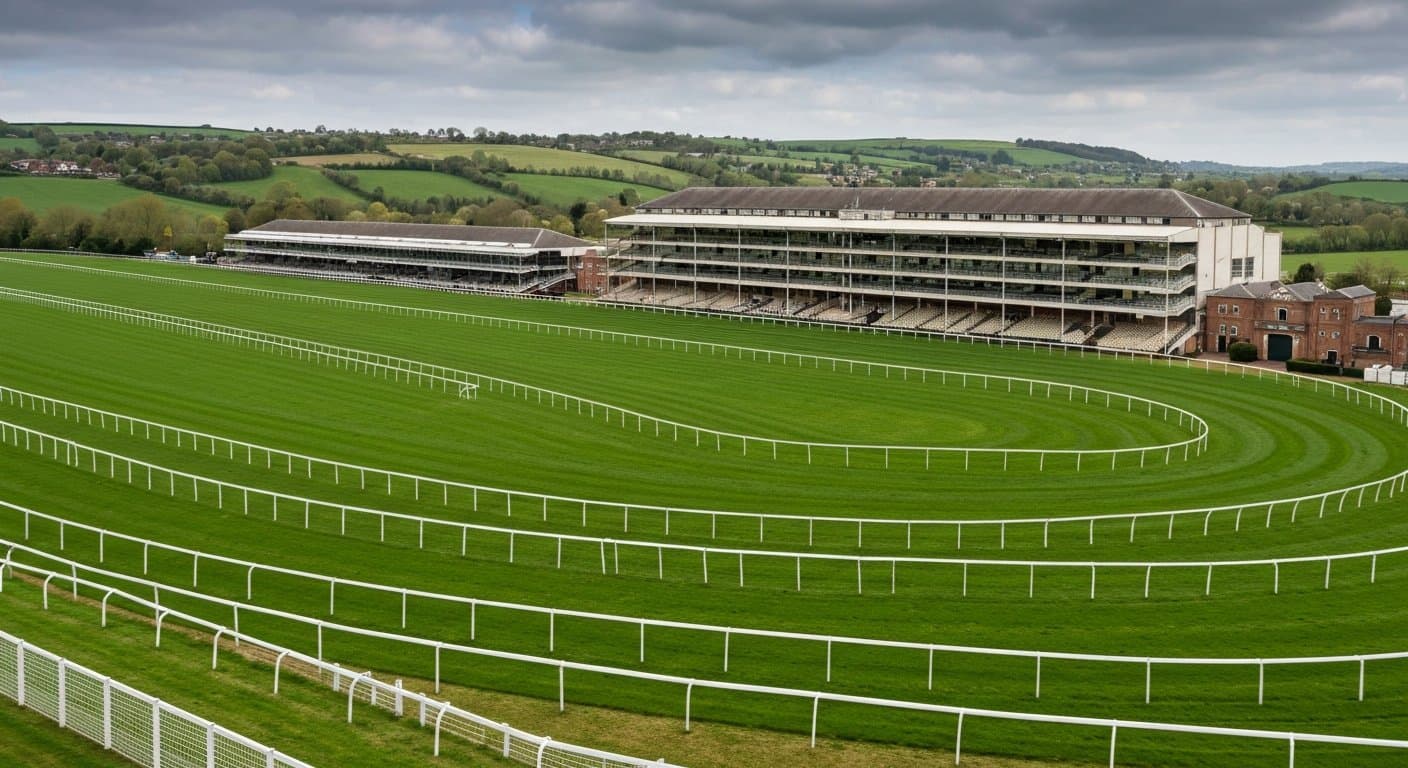
The Course
Leicester's track is a right-handed oval of approximately one mile seven furlongs, set at Oadby on the southern edge of the city. The layout itself is not unusual; right-handed ovals exist across England. But the topography makes this one different from most. The back straight climbs noticeably, the turn into the home straight requires balance and coordination, and the home straight falls away downhill as it approaches the finishing line. A horse that handles undulations well at Epsom, Brighton, or Goodwood will find Leicester familiar. A horse that wins only on flat, galloping tracks needs looking at more carefully before you back it here.
Track Shape and Direction
The circuit runs right-handed throughout, with a long back stretch before a fairly gradual bend into the home straight. The overall shape is an elongated oval without the tight turns of Chester or the pronounced camber of Epsom, but the gradient changes make up for what the bends don't provide in terms of filtering out horses.
The home straight is around four furlongs in length and runs downhill from the bend to the winning post. The descent is not as steep as the famous fall at Epsom, but it's pronounced enough to be a factor. A horse with a long stride that covers the ground efficiently will handle the descent better than one with a quick, choppy action. Tired horses, particularly front-runners who have led into the home straight after climbing the back straight, will find the last two furlongs more demanding than it looks on paper.
For flat racing, distances run from five furlongs up to around two miles. The five-furlong sprint track is a straight course, separate from the main circuit, which removes the right-handed factor for the shortest races. For races of seven furlongs and beyond, horses join the main oval and have to handle the bend, the terrain, and the finishing descent. This variety of distances within a single meeting means the card can test sprinters, milers, and stayers in different ways on the same afternoon.
Over National Hunt, the fences are set into the circuit and horses jump on the same undulating ground. The climb up the back straight takes something out of a jumper mid-race in a way that matters over trips of two miles and beyond. Horses jumping the last and then faced with a downhill run to the finishing post need to be well-balanced. A horse that jumps the final fence cleanly and picks up on the descent will gain lengths on one that lands awkwardly.
The Back Straight Climb: What It Means for Form
The uphill section of the back straight is the feature that matters most to punters studying Leicester form. It's not dramatic in the way that Epsom's roller-coaster is dramatic, but it's consistent: every race that goes around the full circuit includes this climb, and it has a measurable effect on how horses run out their races.
Horses that are bred or conditioned for stamina tend to find the climb plays to their strengths. They may not show their best at Lingfield all-weather or on the July course at Newmarket, but bring them to Leicester on soft ground and the extra demands of the terrain show up the difference between a real stayer and one that gets the trip on flat ground only.
Equally, a horse that has finished strongly at Leicester, closing from off the pace in the last two furlongs downhill, is worth noting when it runs again on a similar undulating course. The pattern of closing late is sometimes a product of the specific track shape rather than the horse's general running style. Check whether that late finish replicates on other undulating tracks before assuming it's a reliable pattern.
Front-runners at Leicester face a particular challenge. Leading through the climbing back straight costs energy, and the leader arrives at the top of the rise and into the home straight already having given more than a horse that was handy but not in front. In soft going, this compounds quickly. Horses that have shown a tendency to hit the front too early at Leicester and then get run down close home are not necessarily weak horses. They may simply be exposing the physical cost of pacemaking on an undulating circuit.
Going and Soil Conditions
Leicester sits on predominantly clay-heavy soil in the Oadby area. Clay soil does not drain as freely as the sandy loam found at Doncaster or Newmarket, and the consequence is that Leicester picks up going changes quickly when it rains and holds moisture for longer than a free-draining course. From October through to April, soft and heavy going is a regular occurrence rather than an exception.
The going in summer can be good to firm or firm, particularly during dry stretches in June and July. But Leicester is not a course that routinely produces fast ground. The soil beneath the turf limits how quickly it dries out, and the course management tends towards maintaining raceable ground rather than maximising pace. Good to soft is a common summer description after any sustained rainfall.
The practical consequence for punters is that going specialists become more relevant at Leicester than at a free-draining track. A horse that handles soft or heavy ground well, has been struggling to find suitable conditions elsewhere, and has course form on similar going is often available at a wider price than its form merits. Racegoers and odds compilers tend to focus on the most recent outings rather than the going at which the horse ran them. Leicester's clay soil creates opportunities for backing proven soft-ground horses at prices that don't fully reflect how much the conditions suit them.
This works in reverse, too. A horse that goes well on fast ground but has shown nothing on soft is a risk at Leicester in October or November regardless of its flat handicap mark or recent form. The course will find it out.
Draw Bias
Leicester's draw bias is moderate compared to courses with a strong stall effect. It does not have the pronounced high-draw dominance of Beverley or the extreme bias of Chester's tight left-handed bend. But it's not negligible either, particularly in sprint races.
In races of seven furlongs or more, the draw tends to matter less because the field has sufficient time and distance to find its position through the race. Horses in stalls one through six can work across and find a place on the rail if they're quick enough away; horses drawn wide can sit off the pace and come through as the race develops. The undulations and the trip play a bigger role than the starting position in these races.
In five-furlong and six-furlong sprint races on the round course, the draw becomes more relevant. Horses racing right-handed across undulating ground have less time to equalise starting position, and stalls towards the middle of the track tend to get cleaner ground and a more direct route to the bend. Extreme outside draws in a large field sprint can cost two or three lengths in the early stages on a tight circuit, and those lengths matter over short distances where races are often decided by small margins.
As a practical rule: in sprints at Leicester, treat a wide draw as a negative factor but not an automatic dismissal. If a horse has a big advantage in the form over its rivals, the draw won't necessarily overcome it. But in a competitive handicap sprint where the form is tight, a horse drawn 14 or 15 in a field of 16 has a real task.
Course vs Distance Comparisons
Leicester sits in a cluster of undulating English tracks that test horses in a similar way. Horses with good form at Brighton, Epsom, Goodwood, or Haydock (all courses with significant gradients or topographical challenges) tend to adapt well to Leicester. Form from Yarmouth, Kempton, or the flatter tracks at Newmarket's July course is less directly transferable.
For National Hunt racing, the comparison is with courses that test staying jumping ability honestly: Cheltenham is a step up in quality, but a horse that has handled Cheltenham's undulations and uphill finish will find Leicester familiar if not easier. Towcester, another demanding undulating circuit, produces form that carries reasonably well to Leicester.
The key question to ask of any horse new to Leicester is: has it shown it can handle terrain? If the form book shows it winning or running well only on flat, galloping tracks, the burden of proof is higher. If it has proven itself on a course with gradients, Leicester is unlikely to find it out.
Flat vs National Hunt: How the Course Differs
The physical circuit is the same for flat and jumps racing at Leicester, but the experience of racing over it changes considerably between disciplines. On the flat, the uphill back straight is a test of conditioning and pacing; in a jump race, it's also a test of jumping rhythm, because a horse breathing hard on a climb cannot afford to fiddle a fence or stand off at an awkward angle.
Leicester's National Hunt racing tends to produce form that rewards horses with a good jumping technique and the physical strength to maintain it through the undulations. Flashy, quick-jumping horses that dazzle at the flat parkland courses of the south sometimes find the physical demands here more taxing. Horses with a workmanlike jumping style but real fitness and stamina often outperform expectations.
The uphill finish for jumps races is the same finish that flat horses use. A horse jumping the last fence clear and then being asked for an uphill effort to the line is a different test from one that jumps the last and runs downhill home. Leicester's last fence comes before the turn into the home straight, which means horses face a brief uphill section followed by the descending run to the finish. Getting horses fit enough to handle that sequence is part of the training challenge.
Trainers who know the course well tend to send horses here at a stage of fitness that reflects the physical demands of the circuit rather than treating it as a warm-up for easier ground elsewhere. That pattern is worth following in the form book: horses running at Leicester for an experienced handler who targets the course regularly are often in better condition than their pre-race reports suggest.
Key Fixtures & Calendar
Leicester stages around 25 fixtures each year, split between flat and National Hunt. The calendar is built around the Leicester Gold Cup day in late April or May, a strong jumps programme through the winter, and an early-season flat programme that carries more significance than its modest prize money suggests.
Leicester Gold Cup Day
The Leicester Gold Cup has been run since 1807, making it one of the longer-standing named races in English provincial racing. The race is a flat handicap, typically run over one mile four furlongs in late April or early May, and it serves as the focal point of the flat season at Oadby. By the time Gold Cup day arrives, the course has usually had three or four flat meetings already, and the going is often good to soft or good. The clay soil drains slowly through the spring, and the course rarely presents fast ground before June.
The supporting card on Gold Cup day is typically strong by Leicester standards. Expect a mix of conditions races, handicaps, and potentially a Listed or Pattern race depending on the year's fixture allocation. The crowd for this day is considerably larger than a standard midweek meeting. If you're planning a first visit to Leicester, Gold Cup day is the most active the course gets on the flat.
The race itself has attracted competitive fields over the years. It's a handicap, so the official weights aim to level the field, and runners come from across the training centres of the Midlands, North, and South. Trainers occasionally use it as a target for a well-handicapped stayer with course form, and the market tends to reflect this: the favourite carries the weight of trainer intent as well as form.
The Flat Season: Early-Season Two-Year-Old Racing
One of Leicester's most practically useful aspects is its role in the early-season two-year-old programme. In May, Leicester stages maiden and novice races for first-season horses that are among the first opportunities for juveniles to run during the flat season. At this point in the year, trainers are looking for somewhere to give unexposed horses a racecourse education rather than a full-blown test, and Leicester fits the purpose.
The significance of these early races for punters is not the prize money or the prestige. It's the information they generate. A horse that wins a maiden at Leicester in May by three or four lengths is telling you something real about its ability, particularly if it's done so in a way that suggests it's not been fully extended. Conversely, a horse that struggles to handle the undulating circuit at this early stage, that runs green and loses its position on the downhill run to the finish, may simply need more experience rather than being written off.
Leicester's maiden form in May and early June has an intermittent but real track record of producing horses that go on to win at better levels. This isn't a course that routinely produces future Group winners (the competition for the top two-year-olds goes to Newmarket, Ascot, and York) but the form does give useful reference points for horses that then appear at Sandown, Haydock, or the northern tracks later in the season.
The Leicester Spring Festival
Leicester hosts a spring flat meeting in late April or early May that combines the Gold Cup race with a broader programme designed to attract a good card. The meeting usually spans one or two days and includes races across a range of distances and classes. It's the main set-piece of the Leicester flat season, and the entry fields tend to reflect trainer confidence in the course relative to the competition on the same dates.
For racegoers, the Spring Festival is the best time to visit for flat racing. The going is often reasonable rather than extreme, the crowds are larger than a typical midweek meeting, and the race quality is at its seasonal peak. Hospitality options are fuller, food and drink is better stocked, and the atmosphere reflects the start of a new racing season in a way that flat racegoers who have been waiting since November understand well.
National Hunt Season
The jumping programme at Leicester runs from late October through to the spring, typically ending in March or early April depending on the fixture calendar. The course hosts around 12 to 14 National Hunt meetings per season, with a concentration of fixtures in November, December, January, and February.
The early-season jumping fixtures in October and November carry particular significance for students of novice form. At this stage of the year, trainers are running horses that have been working well at home but have limited or no racecourse experience over fences or hurdles. Leicester's undulating circuit and testing going conditions mean that a winner at this stage has earned its result. Easy victories at Leicester in October over two miles on soft ground are worth more than the race conditions alone suggest.
The mid-winter programme (December through February) provides competitive handicap chasing and hurdling when the going often sits at soft or heavy. Leicester's clay soil is at its most pronounced in this period, and the form book repeatedly shows that horses suited to testing ground outperform their market position here. Trainers who target Leicester specifically in winter, rather than treating it as a second-choice meeting when their first option is abandoned, know the conditions and tend to have their horses ready.
November Highlight Meeting
Leicester's November meeting has in various years served as the scene of notable novice performances. The course's reputation for producing reliable novice jumping form is built partly on this fixture, when fields are often competitive and the going is usually in the soft range that Leicester specialises in. A horse that wins a novice hurdle or chase here in November by a clear margin is a horse worth following at the winter festivals.
Trainers from the major yards in Lambourn, the North, and the Midlands use Leicester's autumn and early winter programme as part of their planning for Cheltenham and Aintree. Not as a direct preparation run for those venues, but as part of a sequence that builds horses up to peak fitness in March and April. A Leicester win in November might be followed by a step up in class at a more prominent venue and then a Festival entry. Tracking these sequences gives punters a picture of stable intent.
Midweek vs Weekend
Leicester mixes midweek and Saturday fixtures across both flat and jumping. Saturday cards draw the largest crowds and typically carry the best prize money and race quality. Midweek meetings, by contrast, are quieter and often feature smaller fields, which creates a different set of betting conditions.
In smaller midweek fields, the market tends to be more accurately priced but also more volatile around non-runners and late changes. A six or seven-runner midweek handicap at Leicester in October is a different betting environment from a 14-runner Saturday card. The going and the draw matter just as much, but the reduced field size removes some of the positional complexity and puts more weight on straightforward form comparisons.
For racegoers rather than punters, midweek visits are often the better experience in terms of access, queue length, and the overall pace of the day. Parking is straightforward, getting a drink at the bar doesn't require planning, and you can walk around the course freely without the density that Gold Cup day or a busy Saturday brings.
Season Summary
| Month | Racing Type | Key Event |
|---|---|---|
| April | Flat | Season opener, early maidens |
| May | Flat | Gold Cup day, Spring Festival |
| June–August | Flat | Summer handicap programme |
| September–October | Flat (late) / NH (starts) | Season crossover |
| November | National Hunt | Early novice programme |
| December–February | National Hunt | Winter handicap programme |
| March | National Hunt | Late-season closers |
Check the course website for the exact fixture list each season, as dates move year to year based on the BHA fixture allocation.
Facilities & Hospitality
Leicester Racecourse is compact by the standards of the major circuits, with an estimated capacity of 7,000 to 8,000 on a busy day. That compact layout is one of its practical advantages. Nothing is particularly far from anything else. The walk from the car park to the grandstand takes a few minutes. The parade ring is easily accessible from the main enclosure. You're not spending twenty minutes navigating a large site before you've seen a horse.
The facilities have been updated progressively over the past two decades without the place losing its character as an accessible, unpretentious provincial track. Expect a clean, well-maintained environment with the basics done well rather than a showpiece venue designed to impress corporate clients.
Enclosures
Grandstand enclosure
The Grandstand is the main ticketed area and gives access to covered viewing, the parade ring, the winners' enclosure, and the main food and drink facilities. Views of the racing are good from the front of the Grandstand, looking across to the back straight and the run up the home straight. The finish line is close enough to read a tight photo finish result from the public viewing area.
This is the enclosure most visitors choose, and it covers most needs for a day's racing. On Leicester Gold Cup day and other major fixtures, the Grandstand tends to fill up in the hour before the first race, so arriving early is worthwhile if you want a good viewing position.
Course enclosure
The Course enclosure offers a more relaxed experience at a lower ticket price. It's well suited to racegoers who prefer to watch from different positions around the track rather than staying in one spot, and the space is generally less pressured than the Grandstand on busy days. Families with children often find the Course enclosure easier to manage, with more room to spread out and fewer queues at the food and drink outlets.
Views from the Course enclosure are good along sections of the back straight and the run into the home straight, though the finish line is further away than from the Grandstand.
Premier and hospitality areas
On feature days including the Leicester Gold Cup, the course operates a Premier enclosure or dedicated hospitality areas with better views, full waiter service, and access to the best food options. Pre-booking is required and availability can be limited well in advance of Gold Cup day. If you're planning a group event or a corporate day, the hospitality packages are the practical option: they include food, drink, and a defined experience that removes the logistics of managing a group around the wider course.
Food and Drink
Leicester's food offering covers the basics well. There are several bars across the course, including options in the Grandstand, the Course enclosure, and the hospitality areas. Bar queues on a typical midweek meeting are short; on Gold Cup day or a popular Saturday, queues can build around the busier bars in the half hour before each race.
Food outlets offer a range of standard racecourse options: hot food including pies, burgers, and fish and chips, alongside cold food, sandwiches, and snacks. The quality is consistently decent without being exceptional. The Course enclosure tends to have slightly shorter queues at the food counters than the main Grandstand outlets, which is worth knowing if you're planning to eat between races rather than before the card starts.
The restaurant and sit-down hospitality options are limited to the pre-booked packages on feature days. If you want a proper sit-down meal rather than food from an outlet, book in advance. Turning up on Gold Cup day and expecting a table in the restaurant without a reservation is optimistic.
Tote and bookmakers
The on-course betting ring is active on race days, with bookmakers pitching in the usual positions adjacent to the parade ring and along the Grandstand concourse. Tote windows operate throughout the course. On bigger days, the bookmaker presence is stronger and prices can be marginally more competitive in the ring than on-course betting apps. Worth checking if you're placing each-way bets on longer-priced horses.
Family Facilities
Leicester is a workable day out with children, largely because the compact layout means you're not managing long walks between facilities with younger visitors in tow. The Course enclosure in particular gives children space to move around without the confined environment that a more densely packed grandstand creates.
Children's tickets are available at reduced prices, and children under a certain age (check the course website for the current age limit) are admitted free with a paying adult. The course has a friendly attitude to family visits on non-feature days. The atmosphere is relaxed enough that children who aren't deeply invested in the racing can find things to look at without becoming a problem for the adults around them.
Baby-changing facilities are available in the main toilet blocks. Pushchairs and buggies can be used on the Course enclosure concourses without difficulty; the Grandstand area is more constrained. If you're bringing a buggy, the Course enclosure is the better choice.
There are no dedicated children's activity areas in the style of the larger festivals, but the parade ring itself is a natural attraction. Watching horses walk around in the paddock before a race is something children who have never seen horses up close tend to find engaging, and it costs nothing above the entry ticket.
Accessibility
The compact layout works in favour of racegoers with mobility difficulties. Flat access routes run between the main areas of the course, and the distances involved are shorter than at larger venues. Wheelchair users can access the main Grandstand viewing area and the parade ring without significant difficulty.
Disabled parking is available close to the main entrance. Arrive with sufficient time to secure a space on busy days, as these can fill early on Gold Cup day. Accessible toilets are distributed across the site.
The course should be contacted directly regarding specific requirements. Companion tickets, hearing loop provision, and viewing positions for wheelchair users are best confirmed in advance rather than managed on the day. The course website has accessibility contact details.
Practical Logistics
Dress code: Smart casual across the main enclosures. There is no formal dress code requirement in the Grandstand or Course enclosure on standard race days, though the usual common sense around racecourse dress applies. On Gold Cup day and other feature fixtures, the Premier enclosure may have slightly more specific requirements, so check before you go.
Cash and card: Both accepted at bars and food outlets. Card payments are quicker in practice, and the queue at the food counter on a busy day is shorter for people paying by contactless rather than cash.
Mobile network: Coverage is generally adequate at Oadby for placing bets on apps and checking racing data during the card. There can be congestion on the network during very busy moments, so if you want to place a bet immediately before a race, earlier is better.
Programmes: Available from staff at the entrance gates. A raceday programme is useful for checking the draw and the jockey bookings if you haven't downloaded the card in advance.
Getting There
Leicester Racecourse sits at Oadby, on the south-east edge of Leicester, with postcode LE2 4AL. The course is well placed for road and rail access from across the East Midlands, and is within reasonable distance of the M1 from the south and the A46 from the north.
By Train
Leicester station is on the Midland Main Line and has direct services to London St Pancras, Sheffield, Nottingham, and other East Midlands destinations. Journey times give you an idea of the catchment area:
- London St Pancras: approximately one hour ten minutes on a fast service
- Sheffield: approximately 50 minutes
- Nottingham: approximately 25 minutes
- Derby: approximately 30 minutes
- Birmingham New Street: approximately 50 minutes (via CrossCountry)
Services on race days are reasonably frequent throughout the afternoon, and the Midland Main Line is generally reliable. Check your return train before you go, particularly for evening meetings when later services can be less frequent and connections through Derby or Nottingham can be tight.
From Leicester station to the racecourse at Oadby is approximately three miles. The practical options are taxi or bus.
Taxi from the station: Around 10 to 15 minutes depending on traffic, with a typical fare in the range of £8 to £12. Pre-booking a taxi for the return journey is advisable for Gold Cup day and other busy fixtures, when post-race demand at the course exit creates queues for cabs. Several local taxi companies serve the route regularly on race days; the course website carries contact details.
Bus: Bus services to Oadby run from Leicester city centre on race days. The journey takes around 20 to 30 minutes depending on the route. Check with the course or the local operator (First Leicester and Arriva both serve the area) for the specific services operating on each race day.
Walking: The route from Leicester station to Oadby is not a practical walk for most visitors. Three miles each way, including a section through residential areas, is too long for a race day outing.
By Car
The racecourse is straightforward to reach by car from most directions, and the postcode LE2 4AL will take sat-nav users to within a few hundred yards of the entrance.
From the south (M1): Leave the motorway at Junction 21 and follow the A5460 into Leicester. From the city outskirts, follow signs for Oadby and the racecourse. The approach is well signposted on race days.
From the north (M1): Junction 21A or Junction 21 both work. Follow the A563 (Leicester Outer Ring Road) to Oadby. The ring road avoids the city centre and is usually quicker on race days.
From the east (A47): The A47 from Peterborough and the east connects to Leicester's outer ring road without needing to go through the city centre.
From the west (M69/A46): The M69 from Coventry joins the M1 at Junction 21. The A46 from Nottingham comes in from the north-east and connects to the ring road.
Parking: On-course parking is available and is included in or charged separately from the ticket price depending on the fixture. For standard midweek and weekend meetings, parking is straightforward. Arrive 30 minutes before the first race and you'll have no difficulty finding a space near the entrance.
For Gold Cup day and other major fixtures, arrive at least 45 minutes before the first race to secure a close parking space. The course operates additional parking areas for peak-capacity days. Disabled parking is signposted close to the main entrance; bring a valid Blue Badge.
Combining with an East Midlands Visit
Leicester is the obvious base for a race day in the East Midlands, with Nottingham around 26 miles to the north-east and Southwell around 30 miles. If you're planning a multi-course visit over a few days, Leicester makes a practical base, with a good range of hotels, strong train connections, and a course that is active across most of the year.
The city has attractions beyond the racecourse that are worth knowing: the King Richard III Visitor Centre, opened in 2014, explores the discovery and identification of the king's remains beneath a city centre car park in 2012, an event that attracted international attention. Leicester Cathedral, the National Space Centre, and the museums at New Walk provide further options for visitors who want to extend the day. The city centre is around three miles from Oadby and easily reached by taxi or bus.
For visitors coming from London specifically, the combination of a Leicester race day with a night in the city and a visit to one of the other local racecourses makes a reasonable two-day trip. Nottingham is a 30-minute train journey; Market Rasen is about an hour by road. The rail connections back to St Pancras in the evening are frequent enough to make a same-day London return practical.
Summary
| Method | Journey Time | Cost (approx) | Notes |
|---|---|---|---|
| Train to Leicester station + taxi | 10-15 min from station | £8-12 taxi | Pre-book return taxi on Gold Cup day |
| Train to Leicester station + bus | 20-30 min from city centre | £2-4 bus | Check race-day services in advance |
| Car from M1 J21 | 15-20 min from motorway | Parking on-site | Allow 45 min before first race on big days |
| Car from Nottingham | 30-40 min | Parking on-site | A46/A6 route |
| Car from Birmingham | 40-50 min | Parking on-site | M69 to M1 J21 |
Betting at Leicester
Leicester rewards form students who understand what the course asks of horses. The undulating circuit, the clay soil, the right-handed bends, and the uphill back straight all create patterns in the results that are consistent enough to inform betting decisions. None of these patterns is a guaranteed edge, and the market prices Leicester racing like any other course, but they narrow the field and focus attention on horses that suit the conditions rather than just the handicap mark.
The full betting guide is at Leicester Betting Guide. This section gives an overview of the main angles.
The Undulations: The Single Most Important Factor
The back straight climb at Leicester costs horses something. Over a full season of results, horses that have won or run prominently at other undulating courses (Brighton, Epsom, Goodwood, Haydock, Towcester) hold their form at Leicester better than those whose best performances have come on flat, galloping tracks.
This doesn't mean a flat-track specialist can't win at Leicester, but it does mean the form book is less directly transferable. A horse rated 90 on a flat track is not necessarily as effective as an 88-rated horse with established undulating course form. When you're comparing two horses of similar ability, course-type form is a useful tiebreaker.
The same logic applies in reverse when a Leicester winner runs next at a flat track. A horse that came from off the pace to finish strongly at Leicester, closing two or three lengths on the leaders down the home straight, may not replicate that finishing kick on a track without the gravity assist of the downhill run. Watch where horses run after Leicester before assuming the form carries automatically.
Going Watch: Clay Soil and Soft Ground Specialists
Leicester's clay-heavy soil creates consistently testing conditions through the winter months and into the spring and autumn. The going sits at good to soft or softer for a significant proportion of National Hunt meetings and many of the spring flat fixtures. This is predictable rather than surprising: the soil doesn't drain quickly, and a few days of rain in October will tip the going from good to soft to soft within a week.
The betting angle this creates is specific: horses that handle soft or heavy going well, but have been struggling to find suitable conditions elsewhere in the season, arrive at Leicester with a going edge that the market doesn't always fully price in. This is particularly true for horses that ran disappointingly on their last outing on good or good to firm ground and are now returning to conditions that suit them.
A practical approach for soft-ground specialists at Leicester:
- Check the going record before anything else. Soft-ground horses winning on faster ground are the exception; the form book normally shows a clear pattern.
- Look at Leicester-specific going form. A horse that has won at Leicester twice on soft but never won anywhere on good to firm is clearly a soft-ground specialist and should be treated as such.
- In the spring, the going at Leicester can catch people out — late April can produce soft ground after a wet March, even if the official description is "good to soft". Horses that have been running on summer ground and returning for the Gold Cup meeting without soft-ground form should be viewed with more caution than their bare handicap mark suggests.
Draw in Sprint Races
In sprint races at five and six furlongs on the round course, middle draws have historically produced slightly better results than extreme outside draws. The geometry of the right-handed bend combined with the relatively short trip means horses drawn widest have the most ground to cover and the least time to recover.
The practical application: in a 16-runner sprint handicap at Leicester, treat draws 13 to 16 as a negative factor. Not a disqualifying factor. If the horse is significantly better than the field on form, the draw won't overcome that advantage. But in a competitive handicap where three or four horses look evenly matched on form, the one drawn in stalls seven to ten has a structural advantage over the one drawn 15.
Over seven furlongs and beyond, draw matters much less. The field has enough distance to settle and the early position becomes less critical. In a one-mile handicap, focus your attention on the form and the going rather than the draw.
Trainer Patterns at Leicester
Leicester draws horses from across the training centres of England, but several yards have established a consistent presence at the course.
Northern trainers and NH racing: Leicester's National Hunt programme in November and December attracts a strong northern contingent. Yards from the Middleham area and North Yorkshire use Leicester as part of a winter schedule that keeps horses race-fit through the shorter days. Trainers with a consistent record at Leicester NH fixtures are worth noting when they send a horse at a price. They tend to know the conditions and don't travel horses without reason.
Midlands-based handlers: Trainers based in Staffordshire, Warwickshire, and Northamptonshire use Leicester as a local track and can be well-informed about current conditions. A horse travelling 20 miles to Leicester from a Midlands yard rather than 120 miles from Newmarket has a logistical advantage that compounds over a long season.
Repeat winners: Check trainers' records with specific horses at Leicester. Some trainers have an understanding of what the course requires and consistently send horses back once they've shown they can handle it. A horse returning to Leicester with a win or strong run on the course on its record is worth more than a debutant at the same track, even if the prices are similar.
Novice Jumping Form
Leicester has built a solid reputation for the quality of its novice jumping programme over many years. This isn't marketing. It reflects the track's ability to produce results that translate to better races. The combination of an honest undulating circuit, testing going, and fields that are competitive rather than token gives novice races at Leicester more predictive value than at a flat, easy-jumping course.
A horse that wins a novice hurdle or chase at Leicester in November by two or more lengths has done something concrete. That margin on an undulating circuit in soft going is different from the same margin on a flat parkland course in good ground. The market sometimes underestimates this, particularly when the horse hasn't been seen before and has no Racing Post Rating to guide the handicapper.
When looking at Leicester novice winners, the specific things to note are:
- Jumping accuracy: did it jump cleanly throughout, or did it make mistakes that cost it ground?
- Position in the race: did it travel easily or was it struggling to keep up before finishing?
- Margin: a clear winner is more informative than a narrow one in an early novice race.
- Going: a soft-ground win at Leicester in October is a more repeatable result than a win on good ground that produced artificially fast times.
Flat Racing: Two-Year-Old Maidens
Leicester's early-season maiden races for two-year-olds in May carry more information than the modest prize money implies. A first-time-out winner at Leicester in May has beaten horses in similar physical condition (lightly trained, race-fit but inexperienced) on a track that tests balance and handling as well as pure speed.
The horses that win these maidens convincingly, particularly if they do so while running green (wandering, hanging, or losing concentration in the closing stages) rather than purely, are worth tracking. The Racing Post publishes a Performance Rating for each run, and a horse that earns a figure of 85 or higher in a Leicester maiden in May has usually shown something above the average two-year-old performance.
When these horses appear at Sandown, Newmarket, or Haydock later in the season, check whether the Leicester result was accompanied by trainer quotes suggesting the horse needed the run or was left with work to do. Trainers are generally honest in their post-race comments at mid-level provincial meetings when there's no obvious reason to mislead.
Responsible Gambling
Please gamble responsibly. If you feel you may have a problem with gambling, visit BeGambleAware.org or call the National Gambling Helpline on 0808 8020 133.
The angles above are tools for making more informed decisions, not a system for beating the market. Leicester, like all courses, produces results that don't follow any pattern. The value in understanding the course is that it narrows down the field of credible contenders and identifies horses whose form is transferable. The race still has to be run.
Atmosphere & Experience
Leicester is not a course that tries to be something it isn't. It doesn't stage a festival that closes roads and fills the city. It doesn't have a race that stops the nation on a Saturday afternoon in March. What it has is a consistent, well-run programme of racing spread across most of the year, a local crowd that understands the sport, and a setting that is accessible without being sanitised.
The East Midlands Racing Crowd
The crowd at Leicester on a typical race day is a real mix: locals from the city and its suburbs, racegoers from Nottinghamshire and Northamptonshire who don't have a convenient course closer to home, day-trippers from further afield who've been drawn by a specific race or a group booking, and regular punters who have followed the course form through the season.
It's a knowledgeable crowd without being intimidating to new visitors. People are there because they like racing, not because they want to be seen at a prestigious event. Conversations in the bars around the parade ring tend to be about the horses and the going rather than social performance. That straightforwardness is part of the appeal of the place.
The atmosphere on Gold Cup day is the most animated version of Leicester. The crowd is larger and the energy is different. There's a reason to be there beyond a normal Saturday fixture, the parade ring is busier, and the bars have a different pace about them. But even on Gold Cup day, it doesn't tip over into the mayhem of a festival meeting at one of the big venues.
A Midweek Meeting at Leicester
The midweek Leicester meeting is where the course's character is clearest. A Wednesday or Thursday card in late October, say: a National Hunt programme, soft going, afternoon light fading by the fourth race, a crowd of perhaps 1,500 to 2,500 people spread comfortably across the enclosures. This is not the glamour end of the racing calendar, but it's racing with a proper atmosphere.
Racegoers who attend a midweek Leicester card in autumn are there for the racing. The queue at the bar is short. You can stand at the parade ring and be five feet from the horses as they walk around before the race. The bookmakers are active in the ring, calling prices, and there's a betting exchange of information between the ring and punters that doesn't happen at smaller or less active venues.
After the last race, the crowd disperses quickly. Cars are on the road within 20 minutes of the final result. There's none of the post-festival lingering that characterises a big occasion. It's a working race day at a working racecourse, and the efficiency of it is its own kind of satisfaction.
The Course Setting
The setting at Oadby is suburban rather than rural. Houses are visible beyond the back straight, and the urban edge of Leicester is not far away. This is not a course set in parkland with no sign of civilisation around it. The surroundings are practical, not picturesque.
What the setting does provide is ease. The car park is close. The entrance is a short walk from anywhere you might be coming from. The compact layout means the racing feels close rather than distant, and there's no sense of being at the wrong end of a large unfamiliar venue. For a first-time racegoer who isn't sure what to expect, the approachability of the site is an advantage. Nothing about it is intimidating.
The viewing from the main grandstand area across the track to the back straight is clear on most days, with the hill visible in the distance. Watching a race develop from there, seeing the field climb the back straight, bunch at the top of the rise, and then fan out on the descent into the home straight, gives you the whole tactical story of the race in a single sightline. Courses where much of the action is invisible add to the mystery of the race but remove some of its interest. Leicester lets you see the work.
Frequently Asked Questions
More guides for this course
Share this article
More about this racecourse
All Leicester guides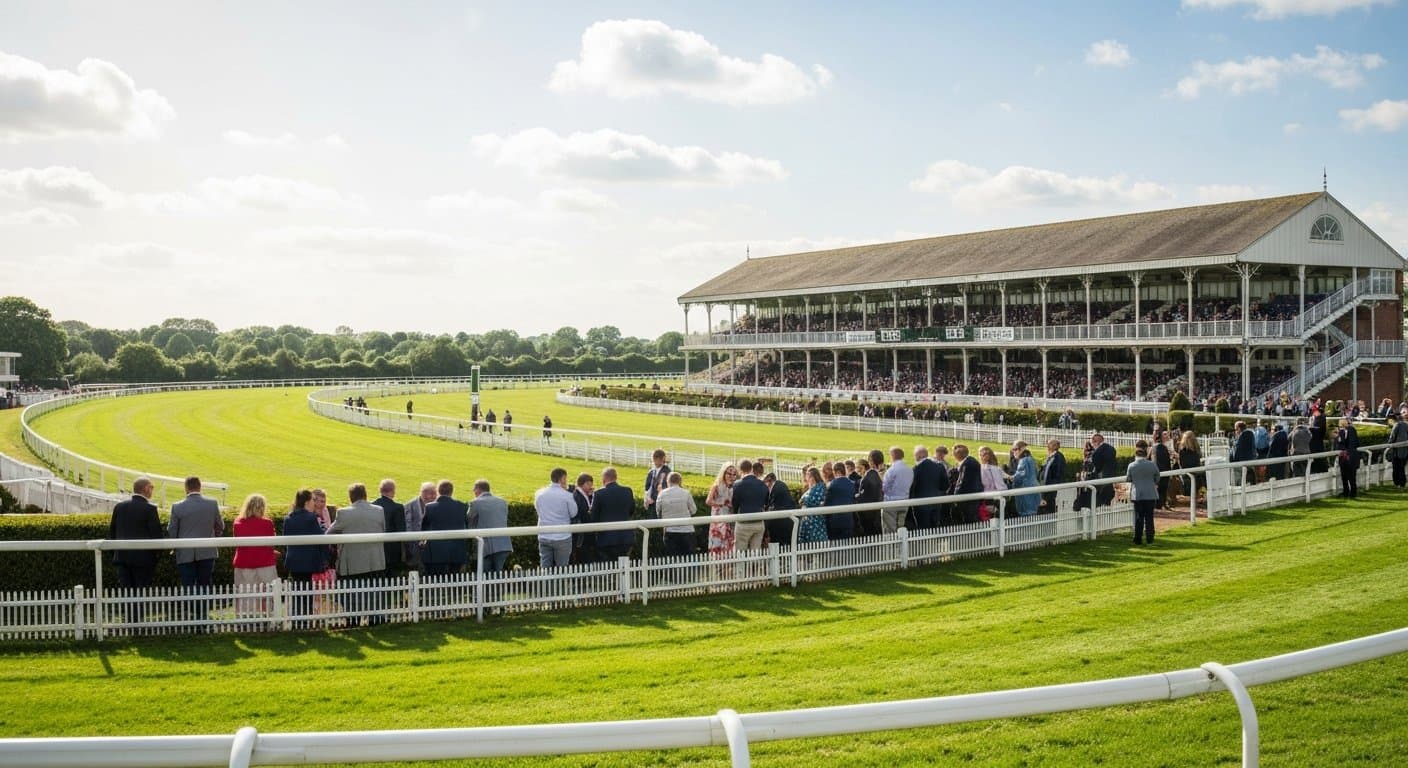
A Day Out at Leicester Racecourse
A day at Leicester — getting there, what to wear, enclosures, food and drink, and insider tips for one of Britain's oldest dual-purpose tracks.
Read more
Leicester Racing Festival: Your Complete Guide
Leicester Racecourse stages both flat and National Hunt racing on one of the Midlands' most testing circuits. Here's your guide to the festival season at Oadby.
Read more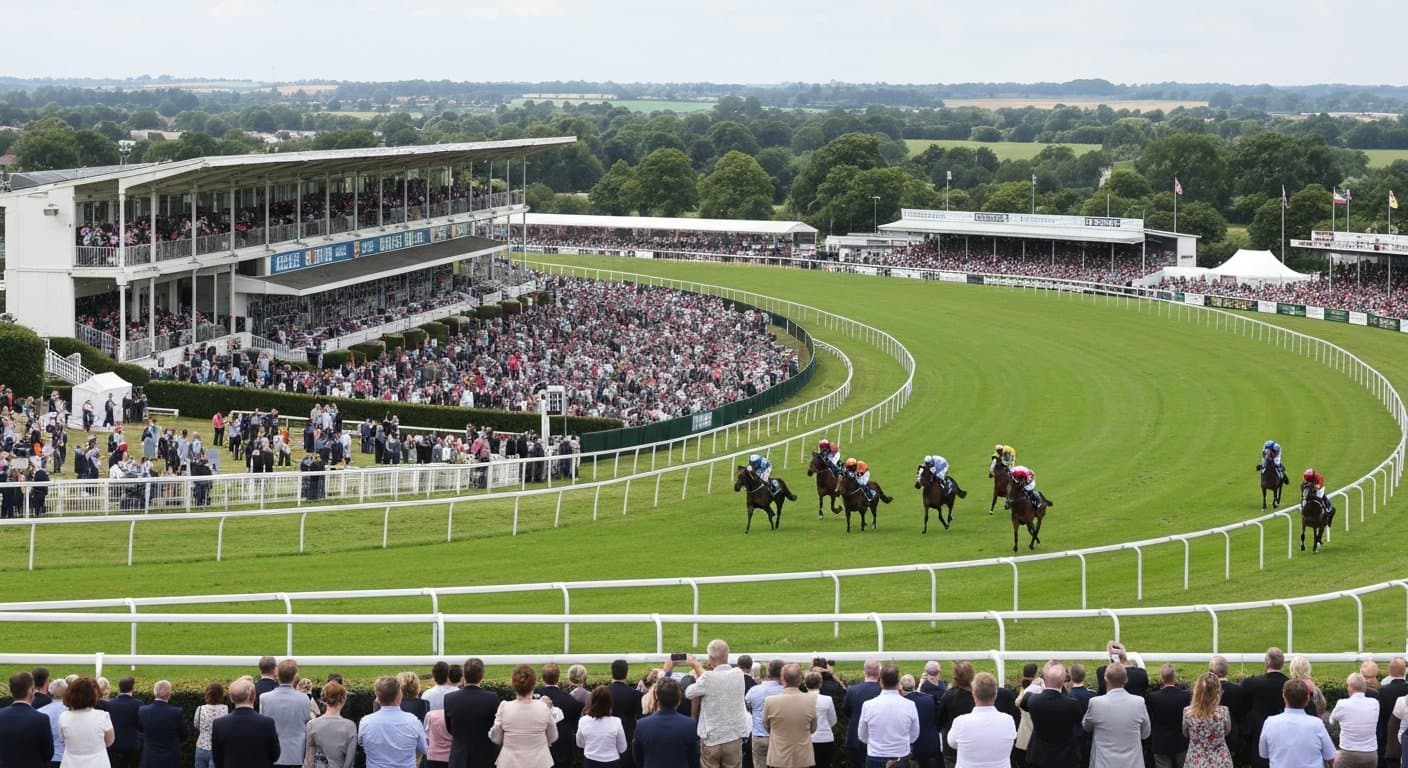
Leicester Gold Cup: Complete Guide
Your complete guide to the Leicester Gold Cup — one of Britain's oldest flat races, run at Leicester Racecourse since 1807.
Read moreResearch the field with the AI Race Predictor
Our model publishes calibrated win-probability estimates for UK races — a second opinion to understand a race, not tips. It's open about its record: it doesn't beat the market, and we show exactly how it does.
Work it out & learn the basics
Gamble Responsibly
Gambling should be entertaining and not seen as a way to make money. Never bet more than you can afford to lose. If you or someone you know has a gambling problem, help and support is available.