
Founder & Editor · Last reviewed 2026-03-02
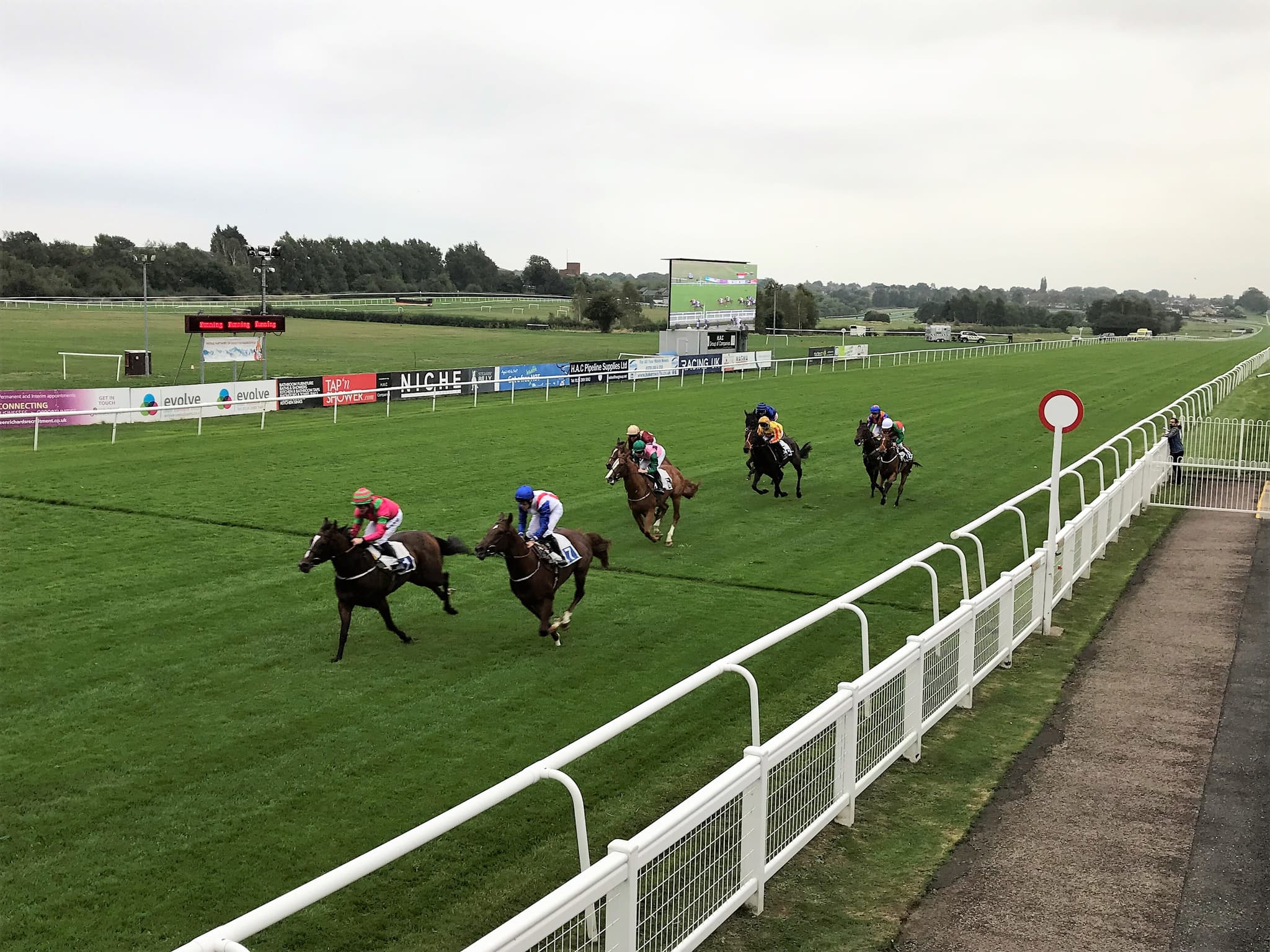
Leicester Racecourse carries one of the longest unbroken histories in British racing. The city has hosted horses since 1603 — the year before Queen Elizabeth I died — when crowds gathered at Abbey Meadow on the banks of the River Soar. That makes Leicester one of a small group of English racecourses with a recorded history stretching back more than four centuries. The present track at Oadby, two miles south of the city centre, has been in continuous operation since 1883. More than 420 years of racing in one city. The course has not hosted a Classic, has never staged a Group 1 on turf, and does not attract the national spotlight in the way that Newmarket or Cheltenham does. But its history is a running thread through some of the most important moments in the sport.
Gordon Richards rode his first winner here on 31 March 1921 — Gay Lord in the hands of the apprentice who would go on to become the most decorated jockey Britain has ever produced. Golden Miller won his debut race at Leicester in January 1931, the Gopsall Maiden Hurdle at Oadby, before going on to win five consecutive Cheltenham Gold Cups and an Aintree Grand National. The Leicester Gold Cup was first run in 1807, making it one of the older surviving named races in the British calendar.
None of those facts tend to appear in the headline histories of the sport. Leicester is not a famous course in the way that some of its contemporaries are. It is a working racecourse, dual-purpose, right-handed, with a stiff uphill finish that has sorted good horses from ordinary ones since the Victorians laid it out. Trainers know it for its fair test. Breeders follow its early-season maiden results because the form holds up. The course has a reputation for novices that stretches back decades and is backed by results.
This guide traces that story. From the earliest recorded racing at Abbey Meadow in 1603, through the Victorian founding of the present track, the famous moments that made Leicester part of the broader narrative, the wartime years, and the modern era at Oadby. For anyone who wants to understand the course before visiting, the day out guide and betting guide are the natural companions to this one.
Origins & Abbey Meadow
Racing in Leicester dates back to 1603. The first recorded meetings were held at Abbey Meadow, a stretch of open ground on the north side of the city beside the River Soar, on land that had previously served as the precinct of Leicester Abbey. The Abbey itself had been dissolved under Henry VIII in 1538, and the meadow that remained was open common ground in the early 17th century. Local records confirm that racing took place there in the final year of Elizabeth I's reign.
Those early meetings were informal by any modern measure. No grandstand, no fixed course, no professional organisation. Horses ran for wagers set between gentlemen, with local crowds watching and the bookmaking done by word of mouth. The terrain at Abbey Meadow was flat enough for racing and accessible from the town centre on foot. Leicester's position at the centre of the Midlands road network meant that horses and their connections could travel from a radius of several counties within a day. The meetings attracted trainers and owners from Leicestershire, Nottinghamshire, and Derbyshire.
The 17th and 18th Centuries
Racing in Leicester continued through the 17th century with no single permanent home. The records from this period are incomplete, as was standard for provincial racing before the formation of the Jockey Club in 1750 and the publication of the Racing Calendar from 1727. What is clear is that racing maintained a foothold in the city. Leicester was prosperous, with a strong textile trade and a growing merchant class who had the means and inclination to keep horses and bet on them. The county of Leicestershire was good hunting country, and the culture of horsemanship that sustained hunting also produced racing.
By the mid-18th century, Leicester's meetings were sufficiently established that they appear in the early issues of the Racing Calendar. The meetings were typically staged in the spring and autumn, fitting around the agricultural calendar and the main fixture list of the better-known southern courses. Horses would travel from surrounding counties to compete, and the prize money — modest by the standards of Newmarket or York — was enough to attract competitive fields.
The year 1773 is sometimes cited as the official founding of Leicester Racecourse, marking the point at which the meetings became more formally organised and the course acquired something resembling a permanent identity. The exact location of the 1773 course is not entirely clear from surviving records, but it is generally understood to have been in the area of Victoria Park, closer to the city centre than the Abbey Meadow site, and better suited to the expanding urban population.
Victoria Park
By the early 19th century, racing had established itself firmly at Victoria Park, a site that offered more space and easier access than Abbey Meadow. The park stood on the southern side of the city, bounded by the London Road, and its flat terrain made it a reasonable racing venue. The Leicester Gold Cup was first run there in 1807, worth 100 sovereigns. The race was an immediate success. Leicester needed a feature event to give the meetings a focal point, and the Gold Cup provided it.
The Victoria Park course served Leicester racing for much of the 19th century. The meetings grew in scale and organisation. A grandstand was built. The prize money increased. Trainers from the Midlands and beyond began to target the Gold Cup, and the race developed a reputation as a proper test for the better stayers of the day. The Gold Cup name has continued at every Leicester venue since, and it remains the feature flat race at Oadby today.
There were limitations at Victoria Park. The site was hemmed in by the city's expansion, and as Leicester grew through the Industrial Revolution, the racecourse found itself increasingly surrounded by urban development. The park was eventually absorbed into the city's leisure provision, becoming the cricket ground it remains today. Long before that happened, the racing establishment in Leicester had recognised that the city needed a new, purpose-built venue.
The Move to Oadby
By the 1870s, the arguments for a new racecourse were clear. Victoria Park was congested, the facilities were inadequate for the size of the meetings, and the future of racing on that site was uncertain. The solution was to move to open ground on the southern edge of the city, outside the built-up area, where there was space to build a proper course with room for grandstands, stabling, and all the infrastructure of a modern racing venue.
The new course at Oadby opened on 24 July 1883. The site chosen was to the south-east of Oadby village, on a ridge of slightly elevated ground that would prove to shape the character of the racing. The designers laid out a right-handed oval of approximately one mile two furlongs, with a loop that allowed races of different distances to start at different points around the circuit. The finishing straight runs uphill to the line, a detail that has defined the racing at Oadby ever since. Horses that lack stamina get found out by the hill. Horses that can gallop through the final two furlongs on rising ground tend to win races at Leicester regardless of what else is in the field.
The first meeting at Oadby attracted a strong local crowd and a competitive card of racing. The Gold Cup made the journey from Victoria Park. Leicester had a new home, and it has been there for over 140 years.
The Soil and the Setting
The ground at Oadby is clay-based in places, which has always given the course a tendency to hold moisture. When it rains heavily, the going at Leicester softens quickly and can remain heavy for extended periods. This is not, as it might appear, a disadvantage. It is part of the course's character. Horses that handle soft ground and possess stamina have always been favoured at Leicester, and the form that emerges from the course in winter and early spring has a recognisable reliability: the winners are proper stayers, properly tested.
The setting itself is pleasant without being picturesque in the way of Cheltenham or Goodwood. The course sits at the edge of the city's suburbs, bordered by residential streets to one side and open farmland to the other. The views from the grandstand take in the gently rolling Leicestershire countryside beyond the course boundary. It is not glamorous, but it is honest, and after 140 years of racing at Oadby, the ground has a lived-in familiarity that newer venues lack.
Victoria Park & the Leicester Gold Cup
The Leicester Gold Cup moved to Oadby in 1883 and quickly established itself at the new course. The Oadby venue offered something Victoria Park could not: space. The grandstand could hold a proper crowd. The paddock and pre-parade ring were laid out to give racegoers a view of the horses before they went to post. The stabling was modern for its day. The Gold Cup, already the premier race on the Leicester calendar, now had a setting worthy of it.
The Oadby Course in Its Early Years
The track laid out at Oadby in 1883 was dual-purpose from the start. The same circuit that hosted flat racing in summer and autumn was used for National Hunt racing through the winter and spring. This was common at provincial courses in the late Victorian period. The uphill finish that defines the flat racing at Leicester is equally demanding over jumps, perhaps more so. Horses jumping the final fence at Oadby and then grinding up the hill to the line are being asked to prove their stamina in the most direct way possible. The course was, from its opening, designed to sort good horses from ordinary ones rather than to flatter speed alone.
The flat programme in the early years of Oadby centred on the Gold Cup and a series of handicaps and conditions races that drew trainers from the East Midlands and beyond. The course was well placed for stables in Leicestershire, Nottinghamshire, and Derbyshire. Training centres at Newmarket and Lambourn could reach the course comfortably for the bigger events. The Gold Cup attracted competitive fields, and the race developed a following in the East Midlands that made it a real regional occasion.
Gordon Richards
On 31 March 1921, a sixteen-year-old apprentice named Gordon Richards rode his first winner as a professional jockey at Leicester. The horse was Gay Lord, trained by Martin Hartigan, and the race was a modest maiden. Richards had been working in the yard at Foxhill in Wiltshire and was sent north for the Leicester card. The winner passed the post to little fanfare. Nobody watching could have anticipated what was to follow.
Richards went on to become the most successful jockey in the history of British flat racing. He rode 4,870 winners over a career spanning more than three decades, won 14 flat racing championships, was champion jockey every year from 1925 to 1954 except for two interrupted by injury and illness, and was knighted in the Coronation Honours of 1953 — the day before he finally won the Epsom Derby on Pinza, the most elusive victory of his career. That first winner at Leicester was the starting point for all of it.
Leicester's claim on Richards is real. The course hosted his debut, and he rode many more winners at Oadby through his career. The modest card at Leicester on an ordinary spring afternoon in 1921 was, in retrospect, one of the more significant days in the history of British racing. For anyone who follows the sport's history, walking the enclosures at Oadby carries an extra charge from that fact.
The Early 20th Century
Between the founding of Oadby in 1883 and the First World War, Leicester consolidated its place in the racing calendar. The course attracted a loyal local following, and the fixture list expanded. The flat programme ran from spring through autumn; the jumps programme through winter and spring. The annual pattern suited trainers who could plan their season around a reliable venue with a fair track and reasonable prize money.
The First World War interrupted proceedings. Racing was drastically curtailed in 1915 and suspended entirely from 1917 to 1919. Leicester, like most provincial courses, was used for other purposes during the conflict. The facilities were requisitioned, the racing staff dispersed, and the course went dark. When racing returned in 1919, Leicester picked up where it had left off, re-establishing its programme and rebuilding the fixture list.
The interwar period was productive. The Gold Cup continued as the feature flat race, and the course developed a stronger jumps programme. The novice hurdles and chases began to attract horses from the big yards as trainers recognised that Oadby was a fair test for a horse at the beginning of its career over obstacles. The uphill finish and the undulating terrain produced form that translated well to the better spring festivals, and trainers began to use Leicester as a preparation course for horses targeting Cheltenham.
The Interwar Reputation for Two-Year-Olds
On the flat, the course developed a secondary reputation as a useful venue for early-season two-year-old races in spring and autumn. The straight course at Oadby provides a fair test for horses running over five and six furlongs. Leicester has no pronounced camber, no quirky features that give one type an automatic advantage, and the going in autumn can be good to soft — ground that sorts out horses with a preference for a cut in the going from those that need it fast. Form from the Leicester maiden races in spring and autumn began to attract the attention of form students looking for horses to follow through the season.
This reputation grew steadily through the 1920s and 1930s. Trainers from Newmarket and Lambourn would send two-year-olds to Leicester for early-season races, knowing that the course would give them a proper examination without the pressure of a more prestigious venue. The form from those maiden races — particularly the autumn races on good to soft ground — regularly held up at York and Newmarket later in the season. By the time of the Second World War, Leicester had established its dual identity: a fair test for novices over jumps, and a reliable form guide for two-year-olds on the flat.
Famous Moments
Leicester has not hosted the Derby or any of the five British Classics. It has never staged a Royal Ascot race or an Arc de Triomphe trial. Its famous moments are of a different kind: the beginning of careers, the first steps of legends, the small events that proved significant only in retrospect. That is not a lesser form of history. Some of the most important moments in sport are the ones nobody notices at the time.
Gordon Richards's First Winner
On 31 March 1921, Gordon Richards rode Gay Lord to victory at Leicester. The race was a maiden plate, the opposition modest, the occasion unmarked. Richards was a teenage apprentice, small and quiet, working for trainer Martin Hartigan at Foxhill in Wiltshire. He had arrived at Leicester for the afternoon card and gone about his business. Gay Lord won. Richards noted it in his record.
What followed was one of the most extraordinary careers in the history of British sport. Richards rode 4,870 winners — a record that stood for decades and which the modern generation of jockeys, racing on a far larger fixture list, has only recently approached. He won the flat racing championship 14 times. He was beaten by Pinza's owner's horse into second in the Derby one year and then won it the next, on the same horse, in the year of the Coronation, on the day before he was to receive his knighthood from the new Queen. He became Sir Gordon Richards, the only jockey so honoured in his lifetime.
None of that could be seen on 31 March 1921. But the fact remains: it all started at Leicester. The course's place in the biography of the most celebrated jockey in British racing history is not incidental. It is the opening line.
Golden Miller's Debut
In January 1931, Golden Miller ran for the first time at Leicester racecourse, in the Gopsall Maiden Hurdle. He won. The crowd watching would have had no way of knowing what they were looking at: a horse that would go on to win five consecutive Cheltenham Gold Cups from 1932 to 1936, and the Grand National in 1934. Golden Miller's record at Cheltenham remains unmatched. No horse has won five Gold Cups. No horse before or since has won the Gold Cup and the Grand National in the same season.
The Gopsall Maiden Hurdle at Leicester was how it began. The performance that afternoon was enough to suggest promise; nothing more. Golden Miller had been purchased by Dorothy Paget, the eccentric and wealthy owner whose involvement in the sport was as unpredictable as it was lavish, and he was trained by Basil Briscoe in Cambridgeshire. His career after Leicester moved quickly upward. Within 14 months of his debut at Oadby he was standing in the Cheltenham winner's enclosure after the Gold Cup.
Leicester's reputation as a venue where novice careers begin is not merely a marketing line. Golden Miller's debut here is the historical anchor for a claim that the course has reinforced with subsequent generations of novices. When top trainers send their promising young jumpers to Leicester for an early run, they are following a practice that has a long history.
The Leicester Gold Cup Tradition
The Leicester Gold Cup has been run since 1807. That makes it one of the older surviving named races in Britain, predating the Cheltenham Gold Cup by over a century. The race has evolved considerably over its history — the distance, conditions, and prize money have all changed — but the name and the prestige it carries within the regional racing community have remained constant. It is the day that Leicester's flat season builds towards, the occasion that draws the biggest crowd of the turf campaign and offers the most prize money to the best stayer at the course.
The Gold Cup's long history means it has its list of notable winners and near-misses that form students can trace through the record books. The race has been competitive in most of its recent renewals, attracting the better handicappers from Midlands and northern yards who recognise it as an achievable target for a stayer with the right profile. For the betting angles the race offers, the form from it tends to hold up — winners usually go on to place in better company, and placed horses often win handicaps of similar class.
The Course as a Form Guide
One of Leicester's less celebrated but more practically important contributions to the history of the sport is its reliability as a form guide. The undulating track, the uphill finish, and the variable going conditions create a test that sorts horses on merit rather than track-specific quirks. Horses that win or run well at Leicester — whether over jumps or on the flat — tend to do so because they are truly good, not because they have found a favourable layout or benefited from unusually soft or unusually fast ground.
This matters for the broader history of the sport because it means that Leicester form travels. The two-year-olds that win maiden races at Oadby in April and May often reappear at Royal Ascot, York, and Goodwood and run to similar form. The novice jumpers that win at Leicester in November and December go to Cheltenham and Newbury and compete on the same terms. The course has contributed, quietly and consistently, to the form book across a century and more of British racing. That contribution is not written up in the histories, but it is real.
Wartime and the Course's Survival
Both world wars tested Leicester Racecourse, as they tested all British sport. In the First World War, racing was reduced dramatically from 1915 and suspended entirely from 1917 to 1919. The course was requisitioned, the facilities used for military purposes, and the staff dispersed. When racing returned in 1919, Leicester was among the first provincial courses to re-establish its programme.
The Second World War saw a longer interruption. Racing at Leicester was suspended in 1940 and did not resume until 1945. The course was used by the military, and the facilities suffered from wartime maintenance neglect. The post-war restoration took several years. Prize money was reduced, horse populations had declined, and the broader infrastructure of the sport needed rebuilding. Leicester, like most provincial courses, managed the recovery steadily rather than spectacularly. By the early 1950s, the fixture list was restored and the Gold Cup was back as the feature race of the flat calendar.
The survival of the course through two conflicts and the economic difficulties of the interwar period is itself part of the history. Racecourses that could not make the case for their continued existence closed. Leicester made the case. The local support, the fair track, and the tradition of the Gold Cup kept it viable when other provincial venues did not survive.
The Modern Era at Oadby
The post-war decades at Leicester were a period of steady consolidation. Racing resumed in 1945 and the fixture list rebuilt year by year through the late 1940s and 1950s. Prize money recovered slowly — the economic conditions of post-war Britain were difficult for leisure spending — but the course maintained its programme and the Gold Cup continued as the centrepiece of the flat calendar.
The 1960s and 1970s: Investment and Development
By the 1960s, the pressure on provincial racecourses was increasing. Television had made the big meetings — Cheltenham, Epsom, Royal Ascot — accessible to millions of people who had never set foot on a racecourse, and those meetings captured attention in a way that a midweek flat card at a regional venue could not easily compete with. Crowd numbers at Leicester, as at most provincial courses, did not recover to their pre-war levels.
The response was investment. The Oadby facilities were upgraded through the 1960s and 1970s. The grandstand was modernised, the viewing areas improved, and the car parking expanded to accommodate the car-owning generation that was the new sporting public. The course's capacity grew to around 5,000, which remained appropriate for its scale and catchment area. Leicester was never trying to be Epsom. It was trying to be the best version of itself: a fair, accessible, well-run provincial course that gave the East Midlands a quality racing programme.
The dual-purpose format remained the core of the offer. Flat racing from April through November, National Hunt from late October through April. The overlap periods — spring and autumn — when both codes were running gave the course a particular energy. Trainers who had horses running on both surfaces could bring both to Leicester and plan around the same fixture. The racecourse diary was useful for yards in the Midlands and the North precisely because Leicester offered this flexibility.
The Two-Year-Old Maiden Reputation Develops
Through the 1970s and 1980s, Leicester's reputation as a reliable indicator of two-year-old ability grew more firmly established. The spring maiden races in April and May attracted horses from the major training centres, and the form from those races regularly translated to the summer season. Trainers from Newmarket began to target Leicester for the debut runs of horses they wanted to season before the better-quality summer races.
The autumn maiden programme reinforced this. October and November meetings at Leicester, on ground that had usually softened after the summer, provided a test for two-year-olds that was more searching than a fast-ground maiden at a summer venue. Horses that won Leicester's autumn maidens in good style tended to be real. The form students noticed. The pattern became self-reinforcing: because the form held up, trainers with good horses began to target the races, which meant the form was more reliable, which brought more interest from form students, which encouraged more trainers to use it.
By the 1990s, this was an established part of how the racing world thought about Leicester. Not a glamorous track, not a destination for the big festivals, but a course where a maiden winner was worth following and where the betting guide advice to follow course form was grounded in a century of evidence.
National Hunt Strengthening
The jumps programme at Leicester grew in quality and quantity through the 1980s and 1990s. The course became a regular port of call for the top National Hunt yards. Henderson, Nicholson, and later Jonjo O'Neill recognised that a good novice could be given a proper race at Leicester without the risk of meeting a star at a higher-profile venue. The uphill finish was testing enough to expose weakness; the quality of the opposition was competitive enough to mean that a comfortable win signified something real.
The novice programme over hurdles and fences at Leicester developed a particular identity through this period. It was not Newbury or Haydock — those courses drew bigger fields and better prize money for the feature novice events — but Leicester offered something those courses could not always provide: a fair test early in the season, when a trainer needed to know whether a horse could handle an uphill finish and variable ground before committing to a Cheltenham target.
Facilities Investment in the Modern Period
The modern era at Leicester has involved significant investment in the physical plant of the racecourse. The grandstand has been updated, the public areas improved, and the infrastructure brought up to standards that match what racegoers expect from a day out in the 21st century. The capacity has been maintained at around 5,000, which suits the scale of the venue — large enough to generate atmosphere on busy days, small enough to retain the compact, accessible character that distinguishes Leicester from the bigger regional venues.
The betting shop and digital infrastructure at the course has been updated. The parade ring and winners' enclosure provide good viewing. The car parking arrangements, essential for a course that draws the majority of its attendance by car, have been improved and formalised. These changes are unglamorous, but they matter. A course that cannot provide the basic modern experience will lose racegoers to those that can.
The Racing Calendar Today
Leicester currently stages around 25 fixtures per year, divided between flat and National Hunt. The flat season runs from April to November, the jumps season from late October to April. The Gold Cup remains the feature of the flat programme, usually run in late spring. The principal National Hunt events are the staying chases and the novice hurdles that have given the course its reputation for launching careers.
The course's position in the East Midlands racing circuit, alongside Nottingham and Doncaster, means it serves a catchment area of several million people. The M1 and M69 make it accessible from a wide area. Leicester city itself, with its large and diverse population, provides a consistent local audience. The Gold Cup day draws the biggest single crowd of the year; the midweek meetings attract a smaller but regular attendance of racing followers who use the course as their local.
Leicester's Legacy
Leicester Racecourse's legacy is built on longevity and consistency rather than a single defining moment. No Classic winner has crossed the line here, no horse has gone from Oadby to national fame on the back of a single performance. What the course has accumulated over four centuries of racing in the city is something harder to quantify but equally valuable: a reputation for providing a proper, honest test, and a track record as a reliable guide to form.
The Fair Track
The central legacy claim that Leicester's supporters make — and it is a claim backed by evidence — is that the course produces results that hold up. Horses that win at Leicester tend to be truly good. The uphill finish, the undulating terrain, and the variable going conditions filter out those that benefit from unusually favourable circumstances. When a horse wins at Oadby in good style, it has earned it.
This reputation translates directly into the course's usefulness as a form reference point. Trainers who use Leicester for early-season maidens do so because they know the form will be taken seriously by the broader racing world. Punters who follow Leicester form through the summer are rewarded more consistently than those who follow form from tracks with pronounced biases or unusual characteristics. The fair-track reputation is the legacy that matters most to the people who interact with the course on a regular basis.
The Two-Year-Old Spring Nursery
One specific aspect of that legacy deserves particular note. Leicester's spring maiden programme has, over many decades, established itself as one of the more reliable indicators of two-year-old ability in the early part of the flat season. Horses that win the April and May maidens at Oadby, particularly in conditions that involve cut in the ground, go on to compete creditably at Royal Ascot, York, and Goodwood in disproportionate numbers relative to the overall strength of the fields they beat at Leicester.
The explanation for this is the track itself. A five-furlong maiden on soft ground at Oadby, running uphill to the line, is more searching than a comparable maiden at a flat venue. Horses have to demonstrate both speed and a degree of stamina to win. Those qualities tend to travel. The spring form at Leicester has served as a reliable talent filter, and that service is part of the course's contribution to British racing.
Gordon Richards and Golden Miller
The two individuals most closely associated with Leicester's history in the public mind are Gordon Richards and Golden Miller. Both started careers here that became legendary elsewhere. Neither stayed at Leicester; neither needed to. The course's role was to be the starting point, and it fulfilled that role at two moments that the history books have preserved.
Richards is the most decorated jockey in British racing history. His connection to Leicester — the first winner, in 1921 — is a fact of the record. Golden Miller is the greatest steeplechaser the sport has produced on the evidence of his Gold Cup record. His debut at Leicester in 1931 is the opening line of a story that ended with five consecutive Gold Cups and a Grand National. The course did not make either of them. It was simply where they began, and the coincidence of two such careers starting at the same provincial racecourse is extraordinary.
A Regional Anchor
Leicester functions as the premier dual-purpose track of the East Midlands. The region's racing provision — Leicester for the flat and jumps, Nottingham for the flat, Doncaster for the flat and a limited jumps programme — covers the area adequately for the racing public. Leicester is the only course in the East Midlands that runs a full dual-purpose programme, and that makes it indispensable to the regional infrastructure. Trainers based in Leicestershire and the surrounding counties have a reliable local venue. Racegoers from Leicester, Nottingham, Derby, and Coventry can reach Oadby without a long journey.
That regional anchor role is not glamorous, but it is important. Provincial racecourses that lose their position in the regional network find it difficult to recover. Leicester has maintained its position by providing reliable racing at a fair venue with enough history and character to retain a loyal audience. The Gold Cup day is the peak of the year; the midweek meetings are the bread-and-butter that keep the course running and the fixture list alive.
The Experience Over Time
For the visitor, Leicester offers something that newer or more heavily marketed venues cannot easily replicate: the sense that racing has been here for a very long time. The grandstand at Oadby looks out over a track that has been in use since 1883, on land that is two miles from a city where racing has been documented since 1603. The Gold Cup has been run since 1807. Gordon Richards started here. Golden Miller started here.
None of that is visible in the fabric of the modern course. The facilities have been updated, the old infrastructure replaced. But the knowledge that the course carries this history is present for anyone who looks. The complete guide and the day out guide cover the practical details of a visit. The history is the context that gives those details meaning.
Share this article
More about this racecourse
All Leicester guides
Ladies Day Leicester 2026: Dress Code, Tickets & Tips
Plan the perfect day at Leicester's premier summer social. Get dress code advice, ticket prices and insider tips for Ladies Day 2026.
Read more
Leicester: The Novice-Spotting Track
Why Leicester is one of Britain's best tracks for spotting novice talent — Golden Miller's debut, the track characteristics, and how to use it.
Read more
Golden Miller's Leicester Win: Before 5 Gold Cups & 1934 National
Discover how Golden Miller's first victory at Leicester in 1931 launched the greatest jumping career ever—5 Cheltenham Gold Cups plus the Grand National.
Read moreGamble Responsibly
Gambling should be entertaining and not seen as a way to make money. Never bet more than you can afford to lose. If you or someone you know has a gambling problem, help and support is available.