
Founder & Editor · Last reviewed 2026-04-07
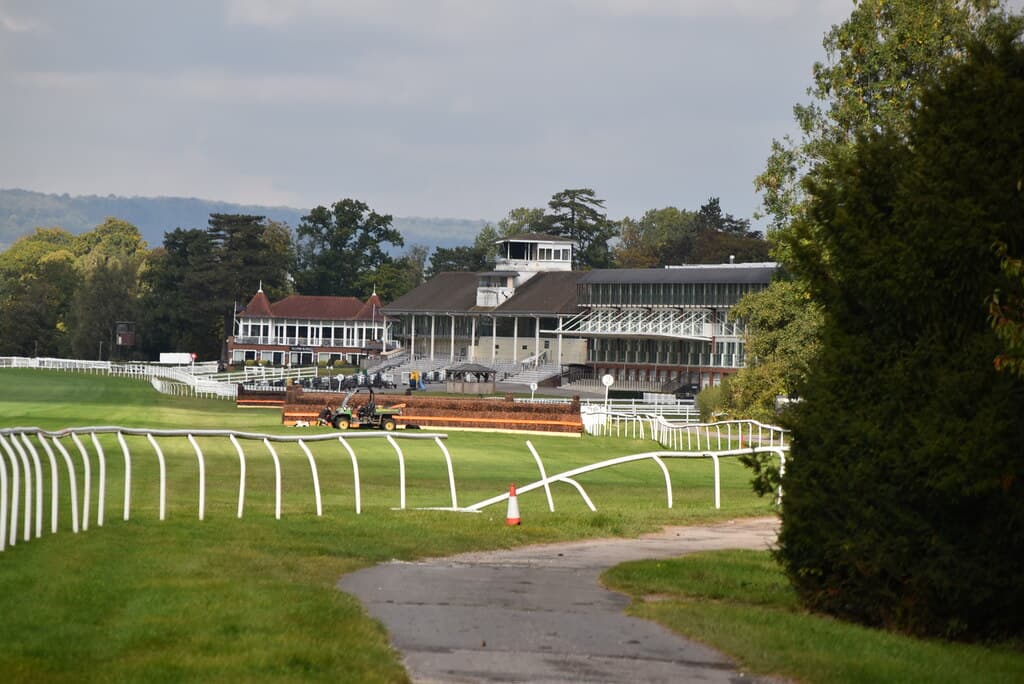
Lingfield Park in Surrey is one of British racing's most versatile venues — a course that runs on Polytrack all-weather through the winter months and then switches to a turf flat track for the summer season, meaning the racecourse effectively operates two distinct circuits for two distinct racing cultures. The setting in the Surrey Hills is genuinely attractive, with the course surrounded by woodland that makes winter afternoons here feel less grim than the all-weather experience elsewhere.
The Winter Derby is Lingfield's flagship occasion. Run over a mile and two furlongs on the Polytrack surface in late February or early March, it is the all-weather season's most prestigious race — a Group or Listed contest that closes out the winter all-weather programme with genuine quality. The field typically includes horses that have been campaigning on all-weather surfaces throughout the winter and are peaking for this specific occasion, alongside turf horses using the Winter Derby as their first run of the new season.
Lingfield's role in the All-Weather Championships gives the winter programme additional significance. Several qualifying races for the Finals Day at Newcastle are run here across January and February, meaning the winter cards carry point-to-point stakes beyond their individual prize money. Trainers who target the All-Weather Championships seriously monitor Lingfield's qualifying programme carefully, and the fields for the qualifier races are often stronger than their class suggests.
The summer turf season at Lingfield is quieter in prestige terms but consistently competitive — a series of flat-season fixtures on the left-handed turf course that sits inside the Polytrack oval. The track is used regularly by the major southern yards for horses that need a confident run or a stepping-stone race, and the quality of the summer cards is reliably above average for a non-Group venue.
Bet on Lingfield Park
Place your bets on Lingfield Park races with a trusted bookmaker.

Promo code BETFRED50. New customers only. Register, deposit with a Debit Card, and place a first bet of £10+ at Evens (2.0)+ on Sports, to be settled within 7 days, to get £30 in Sports Free Bets and £20 in Bet Builder Free Bets within 24 hours of settlement. 7-day expiry. Eligibility & payment exclusions apply. Full T&Cs apply. Take Time to Think. BeGambleAware.org. 18+. Full T&Cs.

Promo code R30. New UK customers only, 18+. Register, deposit £10 or more, then place a £10 single cash bet at odds of 1/2 (1.5) or greater on any sports market (excluding Virtuals). Once the qualifying bet settles you get £30 in Free Bets (3 x £10) — the qualifying bet can win or lose. Free Bets are valid on any sports market excluding Virtuals, expire in 7 days, are non-withdrawable and must be used in full. Excluded deposit methods apply (including PayPal, Apple Pay, Skrill and NETELLER). Named bets such as Lucky 15 do not qualify. If you cash out the qualifying bet, or it is voided, you are no longer eligible for the offer. Ends 31.12.26. Full T&Cs apply. Please gamble responsibly. BeGambleAware.org. 18+. Full T&Cs.

Promo code BET40GET20. New UK customers, 18+. Register with the code and place a first bet of £40 or more at Evens (2.0) or greater. Receive 2 × £10 free bets: the first credited automatically once the qualifying bet settles, the second 24 hours later. Free bets must be placed at minimum odds of 4/1 (5.0), expire 24 hours after credit, and the free-bet stake is not returned with winnings. Debit card deposits only. Take Time to Think. BeGambleAware.org. 18+. T&Cs apply. Full T&Cs.

50% of your first-day net losses refunded as a free bet, capped at £25. New UK customers aged 18+ only. To qualify, deposit and place a first bet of £10 or more on any sport at minimum odds of evens (2.00), then place at least two further bets on different events, each worth at least 50% of your largest bet, all at evens (2.00) or greater. Losses are counted from your first settled bet until 23:59 the same day. Place a qualifying £10+ bet and you are guaranteed at least a £5 free bet. Bets placed at SP, void bets, cashed-out bets and bets struck with free bets do not count towards the offer. The free bet is credited the day after your qualifying bets settle and must be used within 7 days, after which it expires. It can be used at odds from 1/4 (1.25) up to 250/1 on singles and straight accumulators, but not on Trixie, Patent or Yankee style multiples. Free-bet stake is not returned with winnings. One offer per person, household, address, IP address and device. E-wallet deposits may not qualify, so check the cashier before depositing. Customers registered with GAMSTOP cannot claim. KYC identity verification must be completed before the free bet is credited. Take Time to Think. BeGambleAware.org. 18+. T&Cs apply. Full T&Cs.

New customers, 18+. Choose the sports bonus at sign-up, make a first deposit and receive a 100% bonus up to £50 in your Sports Bonus balance. To convert the bonus to cash, wager it 10x within 30 days. Single bets below Evens (2.00) do not qualify; accumulators do not qualify if any selection is below 1/2 (1.50). Virtual Sports, voided, cancelled, drawn, cashed-out and free-bet wagers do not count towards wagering. Only the first settled bet per event counts. Withdrawing before the wagering requirement is met forfeits the bonus balance including bonus winnings. Real-money funds are used before bonus funds. Deposits via Skrill or Neteller are not eligible. Not valid in conjunction with other promotions. Odds, bet and payment limits apply. 10bet general and promotion T&Cs apply. BeGambleAware.org. 18+. Full T&Cs.

New customers in Great Britain and Republic of Ireland, 18+. Place a £10 fixed-odds qualifying bet at minimum odds of 1/2 (1.50) — single or each-way (only the win part counts), pre-event or in-play, not cashed out early, within 28 days of opening the account. Receive up to £60 in bonuses credited over three days: 3 × £10 fixed-odds free bets (the first on settlement, then 24 and 48 hours later) plus 3 × £5 Total Goals FOOTBALL spread bets, 3 × £5 racing Winning Favourites spread bets and a £1 racing Race Index spread bet (the spread bets need a full spread-betting account). Free-bet stakes not returned with winnings; free bets valid 28 days from issue. IMPORTANT: the £5 credits are SPREAD bets — sports spread betting carries the risk that losses can exceed your stake. Sports spread-betting customers do not have Financial Ombudsman or FSCS recourse. Take Time to Think. BeGambleAware.org. 18+. T&Cs apply. Full T&Cs.

Promo code WELCOME15, entered under My Bonuses after registering. New UK customers, 18+. Place a first qualifying bet of at least £10 from your cash balance at odds of evens (2.0) or greater within 7 days of opening the account. Once the qualifying bet fully settles you receive £15 in free bets, credited as 3 x £5 tokens with set uses: one £5 accumulator free bet (minimum 4 legs, each leg at 2/5 or bigger), one £5 sports free bet (any market at evens or bigger) and one £5 Sub Cover free bet (selected football player markets at evens or bigger). Free-bet stakes are not returned with winnings. Free bets expire 7 days after they are credited. Void, cashed-out and partially cashed-out bets do not qualify. One offer per customer. Confirm the current terms on BetGoodwin's own welcome-offer page before claiming. Take Time to Think. BeGambleAware.org. 18+. T&Cs apply. Full T&Cs.

New UK customers, 18+. Minimum deposit £10. Place a £10 qualifying single at minimum odds of 1/2 (1.50), settled within 14 days. Receive £30 in free bets (stake not returned), split £20 for sportsbook use (2 x £10) and £10 for Bet Builder only (2 x £5); Bet Builder does not cover horse racing. Free bets must be accepted within 7 days and expire 7 days after acceptance. No promo code required. Best Odds Guaranteed on UK & Irish racing, subject to having staked over £25 in the previous seven days. Operated by LiveScore Betting and Gaming (Gibraltar) Ltd, UKGC 56859. Confirm the current terms on LiveScore Bet's own promotions page before claiming. Take Time to Think. BeGambleAware.org. 18+. T&Cs apply. Full T&Cs.
18+. BeGambleAware.org
The Festival Programme
Winter Derby Day (Late February/Early March)
The pinnacle of the Lingfield all-weather season. The Winter Derby day brings together the best all-weather performers of the winter campaign in a prestige Group or Listed contest over a mile and two furlongs on Polytrack. The supporting card — which typically includes All-Weather Championships qualifier races — is built to make the day a genuine occasion rather than a premium fixture tacked onto a routine card.
The day's shape: Racing usually begins around noon with the Winter Derby scheduled in mid-afternoon, typically as the fifth of seven or eight races. Arrive early to see the all-weather campaigners in the parade ring before the supporting races — horses that have been racing on synthetic surfaces through January and February develop a distinctive physical sharpness that is visible in the paddock, and your eye can be well-used here.
The atmosphere on Winter Derby day is different from a turf festival — more focused, more professional, less social. The crowd is disproportionately composed of trainers, owners, bloodstock professionals and serious punters. The betting ring is active and efficient, and exchange markets move quickly as stable money comes in from the major southern operations. This is an excellent day to be on-course for the market intelligence alone.
All-Weather Championships Qualifying Programme (January–March)
Lingfield runs a sequence of qualifying races for the All-Weather Championships Finals Day across the winter. These races span handicap, conditions and Listed class, and they matter because they determine which horses will compete at Newcastle for the season's climax. The qualifying races attract sharp, fit horses at the peak of their all-weather form, and they are informationally rich from a form perspective.
Key qualifier races: The mile-and-a-quarter and mile-and-a-half qualifiers in January and February attract the staying and middle-distance all-weather specialists that will dominate the Newcastle Finals Day programme. Watch these races carefully — the horses that accumulate qualifier points here tend to be in the form of their lives and should be followed through the spring turf season too.
Wednesday and Friday meetings: The majority of Lingfield's winter all-weather qualifying programme runs mid-week. These are not glamorous occasions but they are important ones for form students. Recordings and replays are worth watching even if attendance is not possible.
Spring Turf Season (April–June)
Lingfield's turf course comes into play from April. The spring card sequence — typically Saturday fixtures through April, May and June — attracts horses that are building towards the summer programme at Epsom, Goodwood and Ascot. Several horses that subsequently run well at Epsom have had Lingfield spring runs on their form cards.
The Epsom link: The Lingfield turf course, like Epsom, is left-handed and undulating in character. Trainers preparing Derby and Oaks horses often use Lingfield in April or May as a dress rehearsal for Epsom — the tracks share enough characteristics that a positive Lingfield run provides genuine evidence of suitability for the Surrey Downs. Any horse that handles Lingfield's turf course well should be given a point in its favour for Epsom entries.
Summer Flat Programme (June–September)
The summer flat cards at Lingfield on both turf and all-weather run from June through September. The all-weather Friday evening fixtures are popular with a local Surrey crowd and attract competitive sprint and mile handicaps from the Newmarket and Lambourn yards. Evening racing at Lingfield in summer is a pleasant experience — the woodland setting keeps the temperature reasonable and the light holds well into the evening.
The summer turf Saturday cards are the most competitive of the season outside of the all-weather winter programme. John Gosden and William Haggas both have strong Lingfield summer records — track their runners on the turf course specifically during this period.
Key Races to Watch
Winter Derby (February/March, Group/Listed, 1m2f Polytrack)
The headline race of the British all-weather season — a mile-and-a-quarter contest on Lingfield's Polytrack surface that carries Group or Listed status and attracts the best winter all-weather performers in training. The race closes out the all-weather season before the turf programme begins in earnest and regularly attracts horses that subsequently perform well on the turf in spring and summer.
The Winter Derby rewards horses with genuine stamina on a synthetic surface. Polytrack over a mile and a quarter at Lingfield is a different test from the same distance on turf — the surface places a premium on rhythm, balance and sustained galloping ability rather than the burst of speed that can win a shorter all-weather race. Horses that win the Winter Derby tend to be the real thing: fit, well-prepared and suited to a strongly-run mile-and-a-quarter on a left-handed circuit.
John Gosden and William Haggas have historically excellent records in this race. Both trainers understand the demands of all-weather racing at the highest level and target the Winter Derby as a genuine race rather than a warm-weather prep. A Gosden or Haggas runner at the top of the market for the Winter Derby deserves serious respect.
All-Weather Championships Qualifiers (January–March, Various Classes)
The qualifier races for the All-Weather Championships Finals Day at Newcastle span multiple distances and classes at Lingfield through the winter. The most important from a form perspective are the mile-and-a-quarter and mile-and-a-half handicap qualifiers, which attract horses that have accumulated significant all-weather form through January and February.
These races carry genuine competitive significance — horses racing for qualifier points rather than simply prize money tend to be at their keenest, and the fields are typically sharp and fit. Form from the Lingfield qualifiers transfers well to Newcastle Finals Day and to the spring turf programme.
Epsom Spring Trials (April/May, Turf Stakes)
Lingfield's April and May turf stakes races have established themselves as informal Epsom trials. The left-handed, undulating turf course shares characteristics with Epsom's unique circuit, and trainers use Lingfield deliberately as a preview for their Derby and Oaks candidates.
Any horse that handles Lingfield's turf course with authority in a spring stakes race — particularly over a mile or more — should be immediately placed on the watchlist for Epsom and Sandown entries. The correlation between positive Lingfield turf form in spring and subsequent Epsom performance is well established in the training community.
Summer Turf Handicap Series (June–September)
Lingfield's summer Saturday handicaps over the turf course are among the most competitive handicap races in the south-east outside of the major Group meeting tracks. Trainers from Newmarket and Lambourn target these races specifically, and the quality of the field relative to the official rating bands is regularly above average. Course form on the turf circuit is worth tracking — previous Lingfield turf winners returning at the same trip are always worth noting.
Betting Preview
Polytrack Specialists: The Synthetic Surface Edge
Lingfield's Polytrack is a specific and learnable surface. Horses that perform well on Lingfield's all-weather oval are not simply fast horses — they are horses with a particular gait and balance suited to the synthetic surface, the left-handed bend through the back straight, and the gradual descent into the home straight. Identifying these horses is the core skill for all-weather Lingfield betting.
The bloodline angle: Polytrack performance has a genetic component. Certain sires produce offspring that consistently perform well on synthetic surfaces — Dubawi, Galileo, Frankel and their offspring have excellent all-weather records when the trips and distances suit. Check the sire statistics for Lingfield specifically before committing to horses that have not raced on synthetic surfaces before.
Draw Bias: Check Recent Races
Lingfield Polytrack has a variable draw bias that changes depending on the trip and, to some extent, the time of year. There is no single rule that applies across all distances — the bias in a sprint race is different from the bias over a mile or a mile and a quarter. Check the results from the most recent three or four meetings before any significant Lingfield card and assess which stalls positions have been winning. The course itself publishes draw analysis — use it.
General tendency: In shorter races (five to seven furlongs), low draws have historically performed well because horses can hold a rail position through the first bend. Over a mile and beyond, the advantage tends to flatten out as the field has time to settle into racing positions. But always verify with recent evidence rather than general rules — the pattern can shift.
Gosden and Haggas: Follow the Big Yards
John Gosden (now Gosden and Gosden) and William Haggas have outstanding records at Lingfield across both the all-weather and turf programmes. Both trainers understand the course's demands and target it with appropriate horses at the right time of year. Their strike rates at Lingfield are significantly above the national average, and their runners here — particularly in higher-class races — carry genuine confidence.
For the Winter Derby specifically, either yard's runner at single-figure odds should be treated as a genuine market leader rather than a short-priced favourite to oppose. The betting margin on Winter Derby day is tight, and the layers know these horses — short prices here reflect real quality, not overconfidence from the public.
Market Movements on All-Weather Cards
All-weather racing receives slightly less media attention than the turf programme, which means stable intelligence matters more. Significant market moves at Lingfield — horses that open at double figures and trade through to single figures by the off — are almost always informed money rather than public fancy. The all-weather community is smaller and more connected than the turf community, and information travels quickly.
Visitor Information
Getting There
By train: Lingfield station is served by Thameslink services from London Victoria (approximately 45 minutes) and Guildford (approximately 25 minutes). The station is a ten-minute walk from the racecourse — follow the well-signposted path through the village. This is genuinely one of the easiest racecourses in southern England to reach by train, and leaving by train after racing avoids the car-park queues entirely.
By car: Lingfield is accessed from the M25 at Junction 6 — take the A22 south towards East Grinstead, then follow the B2029 to Lingfield. The course is well signposted from the A22. On-site parking is ample for most meetings, with pre-booking recommended for the Winter Derby weekend when the car parks fill. Beware traffic on the M25 on a Saturday afternoon — allow extra time.
By bus: Local bus services connect Lingfield with East Grinstead (20 minutes) and Oxted (20 minutes). Train remains the most reliable option for race day. Taxis from East Grinstead are straightforward if you are arriving from the south.
Enclosures and Facilities
Premier Enclosure: The main grandstand with covered seating and views down the home straight. Full restaurant, bar and food court facilities. Smart casual dress — collared shirts and no sportswear requested.
Paddock Enclosure: Parade ring access and a close view of the betting ring. The parade ring at Lingfield is compact and excellent for assessing all-weather horses before each race — horses that have been campaigning through the winter are visibly well-conditioned, and the paddock assessment is more informative than you might expect for an all-weather meeting.
Essential Tips
- Trains are the best option. Lingfield station is genuinely walkable from the course, and the Thameslink service from Victoria is fast and frequent. If you live anywhere near London or the M23 corridor, there is almost no reason to drive.
- Winter evenings can be cold. Lingfield's wooded setting keeps the wind down, but February and early March evening meetings are still cold. Bring a proper coat regardless of how mild it seems at home.
- The hotel and spa on-site. Lingfield Park has a hotel, spa and resort complex attached to the racecourse — packages combining racing, accommodation and dining are available for the Winter Derby weekend and are popular with groups. Book early if interested.
- East Grinstead and Oxted. Both towns nearby have good pubs and restaurants for a post-racing meal. The Hedgehog pub in Lingfield village itself is a reliable choice for something straightforward after the racing.
Share this article
More about this racecourse
All Lingfield Park guides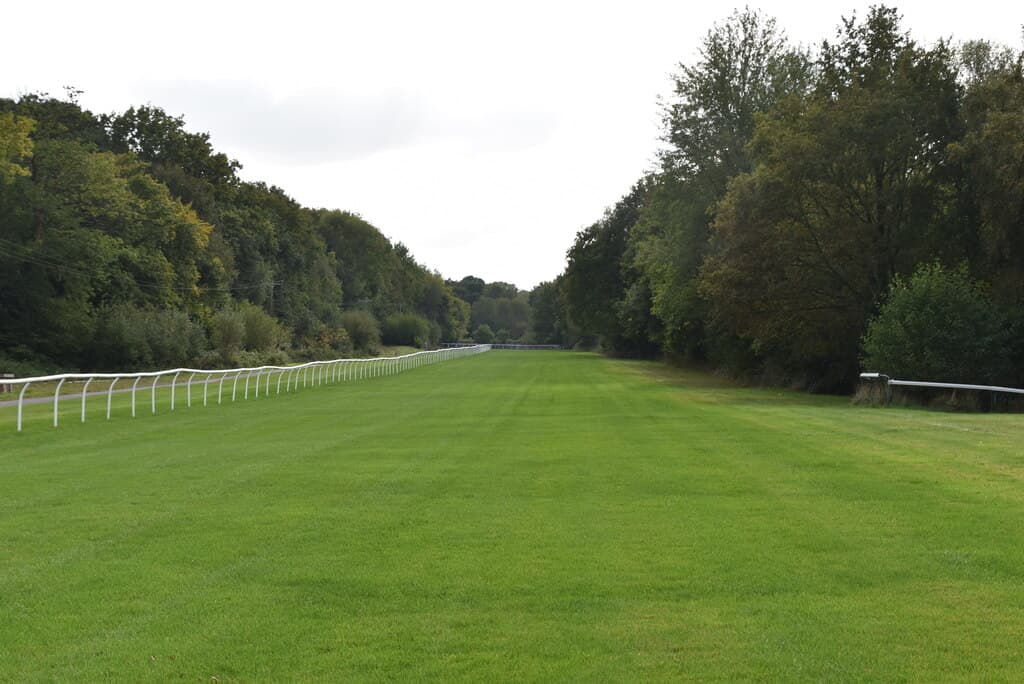
The History of Lingfield Park Racecourse
From a Victorian turf venue to an all-weather pioneer — the fascinating story of Lingfield Park.
Read more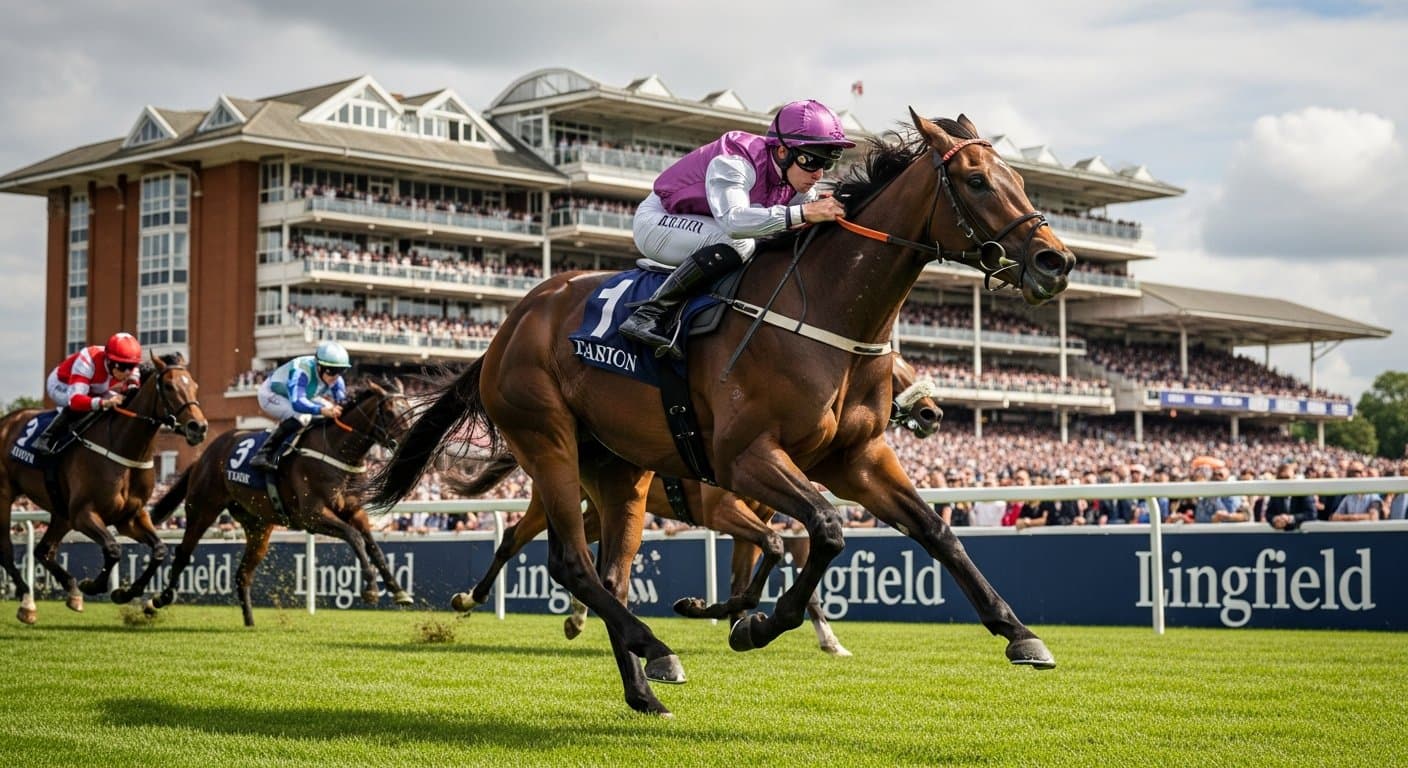
Lord North at Lingfield Park: The Complete Story
Lord North dominated the Winter Derby at Lingfield Park and went on to win the Prince of Wales's Stakes at Royal Ascot — one of the finest all-weather horses of the modern era.
Read more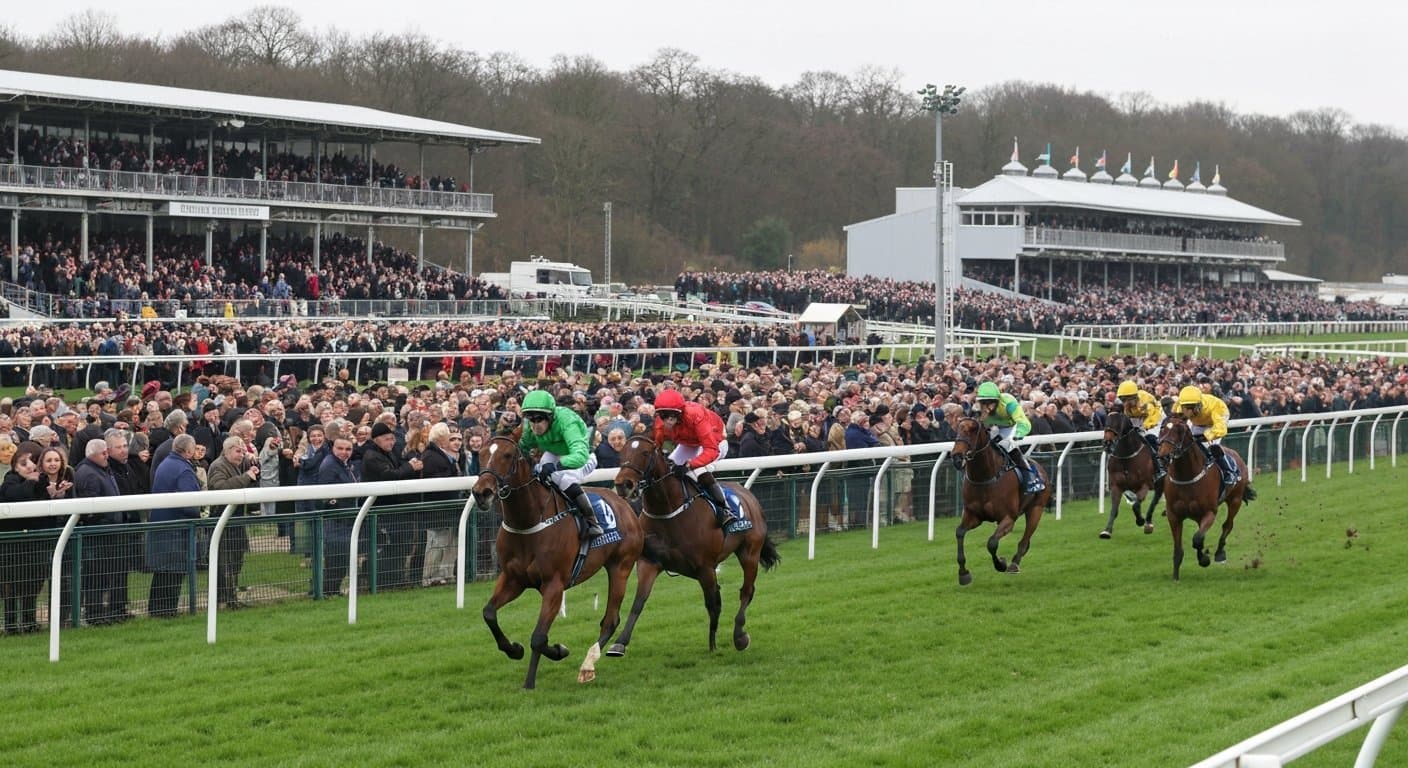
The Winter Derby at Lingfield: Complete Guide
Everything you need to know about the Winter Derby — Lingfield's flagship all-weather race and one of Europe's richest.
Read morePhotos on this page are used under Creative Commons licences. Titles, sources and licence links for each one are on our image credits page.
Research the field with the AI Race Predictor
Our model publishes calibrated win-probability estimates for UK races — a second opinion to understand a race, not tips. It's open about its record: it doesn't beat the market, and we show exactly how it does.
Work it out & learn the basics
Gamble Responsibly
Gambling should be entertaining and not seen as a way to make money. Never bet more than you can afford to lose. If you or someone you know has a gambling problem, help and support is available.