
Founder & Editor · Last reviewed 2026-04-07
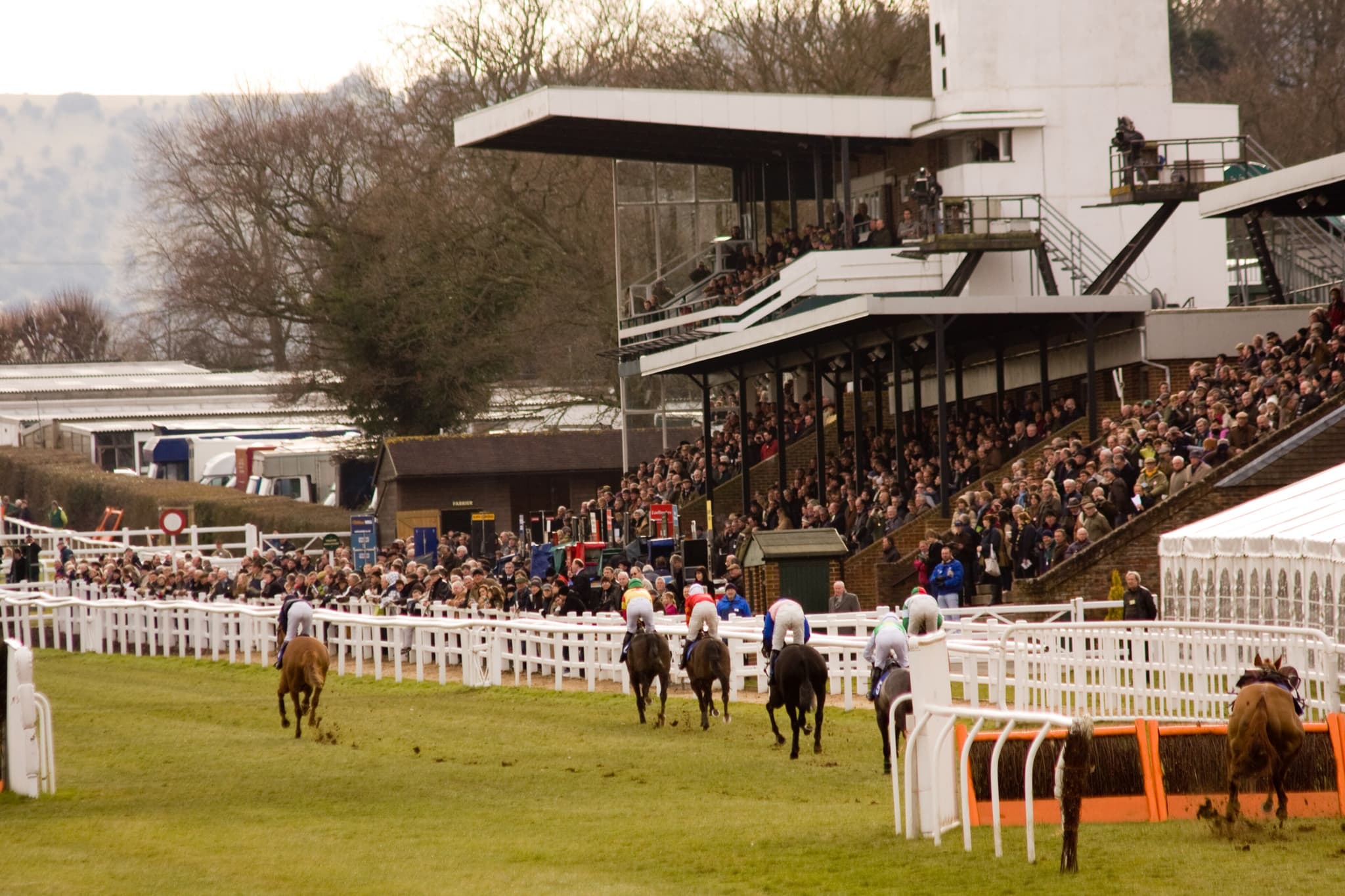
Plumpton Racecourse nestles at the foot of the South Downs in East Sussex — one of those rare British racecourses where the natural setting is so distinctive it becomes part of the race itself. The Downs rise steeply behind the back straight, the village of Plumpton sits just beyond the far wing of the course, and the whole circuit unfolds across undulating, left-handed ground that is unlike anything else in British jump racing.
The circuit is tight, sharp and technically demanding. Plumpton's left-handed oval with its pronounced undulations, sharp bends and the gradient changes through the back straight and home turn creates a horse-and-rider test that specialists master and novices find bewildering. Falls happen at Plumpton that simply would not happen at a more conventional track — jumping errors that a horse might get away with on a flat, wide circuit become serious problems on Plumpton's sharp, forgiving-of-nothing layout.
The Sussex National is the course's signature occasion. A Class 2 handicap chase over 3m 4f 104y, it is run in early January and serves as the centrepiece of the south-east's jump season — a proper chase on a proper jumping circuit that draws a loyal, knowledgeable Sussex crowd. The Sussex National (a staying handicap chase) is the other great occasion, providing the region with its own version of the famous National format over a distance that tests the circuit's gradient demands to their limit.
What Plumpton offers above all else is genuineness. This is grassroots British jump racing — a small, atmospheric course where you are close to the horses, close to the trainers and close to the sport's raw heart. The regulars here are passionate, the atmosphere is warm and the racing, at its best, is as good as anything you will find at a course ten times its capacity.
Bet on Plumpton
Place your bets on Plumpton races with a trusted bookmaker.

Promo code BETFRED50. New customers only. Register, deposit with a Debit Card, and place a first bet of £10+ at Evens (2.0)+ on Sports, to be settled within 7 days, to get £30 in Sports Free Bets and £20 in Bet Builder Free Bets within 24 hours of settlement. 7-day expiry. Eligibility & payment exclusions apply. Full T&Cs apply. Take Time to Think. BeGambleAware.org. 18+. Full T&Cs.

Promo code R30. New UK customers only, 18+. Register, deposit £10 or more, then place a £10 single cash bet at odds of 1/2 (1.5) or greater on any sports market (excluding Virtuals). Once the qualifying bet settles you get £30 in Free Bets (3 x £10) — the qualifying bet can win or lose. Free Bets are valid on any sports market excluding Virtuals, expire in 7 days, are non-withdrawable and must be used in full. Excluded deposit methods apply (including PayPal, Apple Pay, Skrill and NETELLER). Named bets such as Lucky 15 do not qualify. If you cash out the qualifying bet, or it is voided, you are no longer eligible for the offer. Ends 31.12.26. Full T&Cs apply. Please gamble responsibly. BeGambleAware.org. 18+. Full T&Cs.

Promo code BET40GET20. New UK customers, 18+. Register with the code and place a first bet of £40 or more at Evens (2.0) or greater. Receive 2 × £10 free bets: the first credited automatically once the qualifying bet settles, the second 24 hours later. Free bets must be placed at minimum odds of 4/1 (5.0), expire 24 hours after credit, and the free-bet stake is not returned with winnings. Debit card deposits only. Take Time to Think. BeGambleAware.org. 18+. T&Cs apply. Full T&Cs.

50% of your first-day net losses refunded as a free bet, capped at £25. New UK customers aged 18+ only. To qualify, deposit and place a first bet of £10 or more on any sport at minimum odds of evens (2.00), then place at least two further bets on different events, each worth at least 50% of your largest bet, all at evens (2.00) or greater. Losses are counted from your first settled bet until 23:59 the same day. Place a qualifying £10+ bet and you are guaranteed at least a £5 free bet. Bets placed at SP, void bets, cashed-out bets and bets struck with free bets do not count towards the offer. The free bet is credited the day after your qualifying bets settle and must be used within 7 days, after which it expires. It can be used at odds from 1/4 (1.25) up to 250/1 on singles and straight accumulators, but not on Trixie, Patent or Yankee style multiples. Free-bet stake is not returned with winnings. One offer per person, household, address, IP address and device. E-wallet deposits may not qualify, so check the cashier before depositing. Customers registered with GAMSTOP cannot claim. KYC identity verification must be completed before the free bet is credited. Take Time to Think. BeGambleAware.org. 18+. T&Cs apply. Full T&Cs.

New customers, 18+. Choose the sports bonus at sign-up, make a first deposit and receive a 100% bonus up to £50 in your Sports Bonus balance. To convert the bonus to cash, wager it 10x within 30 days. Single bets below Evens (2.00) do not qualify; accumulators do not qualify if any selection is below 1/2 (1.50). Virtual Sports, voided, cancelled, drawn, cashed-out and free-bet wagers do not count towards wagering. Only the first settled bet per event counts. Withdrawing before the wagering requirement is met forfeits the bonus balance including bonus winnings. Real-money funds are used before bonus funds. Deposits via Skrill or Neteller are not eligible. Not valid in conjunction with other promotions. Odds, bet and payment limits apply. 10bet general and promotion T&Cs apply. BeGambleAware.org. 18+. Full T&Cs.

New customers in Great Britain and Republic of Ireland, 18+. Place a £10 fixed-odds qualifying bet at minimum odds of 1/2 (1.50) — single or each-way (only the win part counts), pre-event or in-play, not cashed out early, within 28 days of opening the account. Receive up to £60 in bonuses credited over three days: 3 × £10 fixed-odds free bets (the first on settlement, then 24 and 48 hours later) plus 3 × £5 Total Goals FOOTBALL spread bets, 3 × £5 racing Winning Favourites spread bets and a £1 racing Race Index spread bet (the spread bets need a full spread-betting account). Free-bet stakes not returned with winnings; free bets valid 28 days from issue. IMPORTANT: the £5 credits are SPREAD bets — sports spread betting carries the risk that losses can exceed your stake. Sports spread-betting customers do not have Financial Ombudsman or FSCS recourse. Take Time to Think. BeGambleAware.org. 18+. T&Cs apply. Full T&Cs.

Promo code WELCOME15, entered under My Bonuses after registering. New UK customers, 18+. Place a first qualifying bet of at least £10 from your cash balance at odds of evens (2.0) or greater within 7 days of opening the account. Once the qualifying bet fully settles you receive £15 in free bets, credited as 3 x £5 tokens with set uses: one £5 accumulator free bet (minimum 4 legs, each leg at 2/5 or bigger), one £5 sports free bet (any market at evens or bigger) and one £5 Sub Cover free bet (selected football player markets at evens or bigger). Free-bet stakes are not returned with winnings. Free bets expire 7 days after they are credited. Void, cashed-out and partially cashed-out bets do not qualify. One offer per customer. Confirm the current terms on BetGoodwin's own welcome-offer page before claiming. Take Time to Think. BeGambleAware.org. 18+. T&Cs apply. Full T&Cs.

New UK customers, 18+. Minimum deposit £10. Place a £10 qualifying single at minimum odds of 1/2 (1.50), settled within 14 days. Receive £30 in free bets (stake not returned), split £20 for sportsbook use (2 x £10) and £10 for Bet Builder only (2 x £5); Bet Builder does not cover horse racing. Free bets must be accepted within 7 days and expire 7 days after acceptance. No promo code required. Best Odds Guaranteed on UK & Irish racing, subject to having staked over £25 in the previous seven days. Operated by LiveScore Betting and Gaming (Gibraltar) Ltd, UKGC 56859. Confirm the current terms on LiveScore Bet's own promotions page before claiming. Take Time to Think. BeGambleAware.org. 18+. T&Cs apply. Full T&Cs.
18+. BeGambleAware.org
The Festival Programme
Sussex National Day (early January)
The Sussex National is Plumpton's great staying handicap chase — a race that tests the course's gradient demands and jumping requirements across a trip that exposes horses whose jumping is anything less than accurate. The National format at Plumpton's tight circuit means that horses lose ground at almost every fence if their jumping is imperfect, and the gap between a clean jumper and an imperfect one is measured in significant lengths over the full distance.
Horses that target the Sussex National tend to be experienced staying chasers with previous Plumpton form. Course experience is even more important for a staying chase than for shorter races — the accumulative effect of Plumpton's undulations and sharp bends over a long distance requires horses that know exactly where to place their feet and how to adjust their stride through the back-straight undulations.
The crowd on Sussex National day is slightly smaller than Sussex National day but no less knowledgeable. The staying chase community is a specific group — they have come to watch a proper test of jumping ability and stamina, and they know exactly what they are looking for.
Novice Hurdle and Chase Programme (October–March)
Plumpton runs a consistent novice programme through the autumn and winter that is one of the south-east's most important jumping form guides. The tight, sharp circuit exposes poor jumping technique immediately — a novice that cannot handle the pressure of Plumpton's bends and gradient changes will be exposed within the first two fences or flights.
October and November novice hurdles: The early-season novice hurdle cards at Plumpton attract horses from the Anthony Honeyball, Seamus Mullins and local Sussex yards who are beginning their careers on a circuit that suits sharp, technically accurate horses. Watch these early meetings carefully — a horse that handles Plumpton's novice hurdle circuit impressively in October tends to develop quickly through the winter.
January and February novice chases: The novice chase programme at Plumpton in January and February is the most informationally rich of the winter calendar here. Horses that jump Plumpton's fences cleanly across the full circuit are genuinely accomplished jumpers, and their form deserves to be taken seriously for the spring festival novice chase programme.
Spring Bank Holiday Meeting (May)
Plumpton closes its jump season with a spring bank holiday card that provides a final opportunity for the course's seasonal specialists before the summer break. These late-spring meetings are quieter affairs but consistently competitive — trainers who have managed their horses through the winter sometimes target the spring card as a final confidence-building run before resting for the summer.
Key Races to Watch
Sussex National (early January, Class 2 handicap chase, 3m 4f 104y)
Plumpton's great staying handicap chase — a test of jumping accuracy and stamina over the full extent of the course's demanding circuit. The Sussex National format over an extended distance at Plumpton is genuinely gruelling, and horses without previous experience of the course are at a significant disadvantage.
Course experience is the single most important factor in the Sussex National. Any horse with a previous win at Plumpton — particularly over a staying trip — should be given heavy weighting in your assessment. Horses that are technically accomplished jumpers on other tracks but have never raced at Plumpton deserve cautious assessment; the combination of sharp bends and gradient changes catches out horses that jump accurately in a straight line but struggle to maintain rhythm through turns.
Novice Hurdle Programme (October–March)
Plumpton's novice hurdle cards are the most useful form guide in south-east jump racing. The tight circuit immediately distinguishes between horses that can handle the technical demands and those that cannot, making Plumpton novice hurdle form a more reliable guide to subsequent performance than novice hurdle form at many easier, flatter tracks.
Novice Chase Programme (November–March)
The novice chase programme at Plumpton provides a genuine test of jumping technique. Horses that win novice chases at Plumpton cleanly — without jumping errors, without hanging wide on the bends, maintaining their stride through the undulations — are technically excellent chasers. Their form is worth significantly more than the race class suggests. Watch for Honeyball, Mitchell and Mullins novice chasers in particular — all three trainers understand what is required to win at this circuit and prepare their horses accordingly.
Betting Preview
Extreme Course Specialists: The Plumpton Rule
Plumpton is the British racecourse where course form matters most. The combination of left-handed bends, pronounced undulations and the specific gradient challenges through the back straight and home turn creates a set of demands so particular that horses either handle them or they do not — and those that handle them tend to handle them repeatedly.
Before betting at any Plumpton meeting, compile a list of every horse in each race that has previously won at the course. This is not a general course-form angle — it is a near-mandatory starting point. A horse with two or more Plumpton wins on its form card should be treated as a course specialist in the true sense: an animal that has physically learned how to race at this circuit and carries a persistent, significant advantage over those that have not.
Horses visiting Plumpton for the first time should be treated with explicit caution. Even a horse that has won at other tight, sharp left-handed circuits — Windsor, Fontwell — is not automatically equipped for Plumpton's specific demands. Caution is the correct default for first-time Plumpton visitors.
Nick Mitchell and Anthony Honeyball: Know Their Records
Nick Mitchell trains locally and has an exceptional Plumpton record — his strike rate at the course is among the highest of any trainer at any single British racecourse. He knows exactly which horses suit the circuit, how to prepare them for its demands and when they are at their best. Any Mitchell runner at Plumpton, in any class of race, deserves serious consideration.
Anthony Honeyball's Plumpton record is similarly strong. His Dorset yard produces staying chasers and novice hurdlers that suit Plumpton's technical demands, and his runners in the Sussex National and Sussex National are among the most reliable market guides available. Check both trainers' form at the course on a rolling basis — a Mitchell or Honeyball horse returning to Plumpton within eight weeks of a win here is one of the more reliable betting angles in south-east jump racing.
Market Inefficiencies
Plumpton's smaller profile means that course form analysis is less thorough in the mainstream racing media than at bigger tracks. This creates genuine value opportunities for the form student who has done the work. Horses whose Plumpton form is strong but whose recent form at other courses has been mixed are frequently underpriced — the market weights the recent non-Plumpton form too heavily.
The Jumping Test
In every Plumpton race, horse welfare and jumping accuracy are the primary concerns. Falls at Plumpton — particularly at the fences on the sharp bends — are more frequent than at most other circuits. Any horse with recent jumping errors at other tracks should be treated as a significant risk here. Prioritise horses with clean, accurate jumping records above any other form consideration.
Visitor Information
Getting There
By train: Plumpton station is served by Southern Rail from London Victoria — a journey of approximately one hour with a change at either Haywards Heath or Lewes on most services. Check your specific journey on National Rail as some services are direct from Brighton or Lewes without a further change. The station is a two-minute walk from the racecourse entrance — this is one of the most train-friendly racecourses in Britain, with the station platform effectively adjacent to the course boundary. There is genuinely no reason to drive.
By car: The B2116 through the village of Plumpton Green provides access from Lewes in the east (approximately five miles) and Hurstpierpoint in the west. The course is signposted from the A275 at Chailey. Car parking is available on-site but the roads approaching the course through the village are narrow — be patient, follow the instructions of the parking stewards and do not attempt to park on the verges of the B2116. If possible, take the train.
From Brighton: Brighton is approximately 12 miles south. Train from Brighton station (change at Lewes) takes approximately 30 minutes and is significantly more convenient than driving.
Enclosures and Facilities
Members' Enclosure: The main enclosed area with grandstand access and views of the finishing straight. Full bar and food facilities. Smart casual dress preferred.
Course Enclosure: The general admission area, which at Plumpton provides excellent views of the jumps on the far side of the course. The course's compact layout means you can see the full circuit from the course enclosure — an unusual advantage at a racecourse.
Essential Tips
- The train is the correct choice. Plumpton station two minutes from the gate is one of British racing's great logistical gifts. Use it. The train back to Lewes and onwards to Brighton or London is fast and frequent.
- Bring warm, waterproof clothing. Plumpton sits below the South Downs and is exposed to south-westerly weather systems that roll in from the sea. Even on a clear morning, the weather at the course can change quickly. Waterproofs are always advisable from October through March.
- The parade ring is very close. Plumpton's compact scale means the parade ring, the grandstand and the betting ring are all within 50 metres of each other. You can assess the horses in the ring, place a bet on-course and be back in your seat before the horses are at the start — a real pleasure compared to the logistics of a larger course.
- Lewes is excellent. The county town of East Sussex is six miles away and has outstanding food, drink and culture — the Lewes Arms and the John Harvey Tavern are both exceptional pubs, and the town's independent restaurant scene is one of the best in Sussex. An afternoon at Plumpton followed by an evening in Lewes is a genuinely excellent day out.
Share this article
More about this racecourse
All Plumpton guides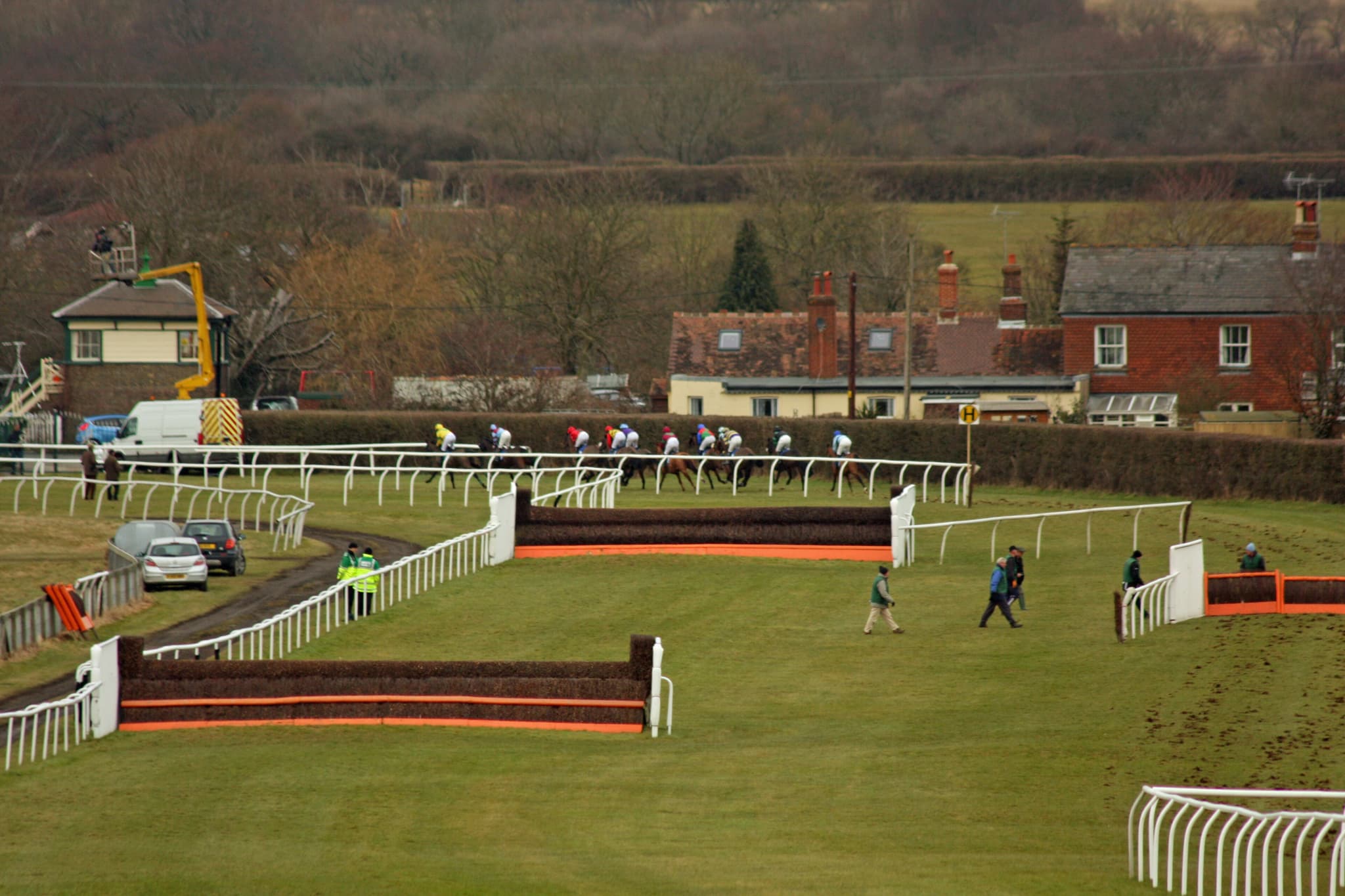
Sussex National: Complete Guide
Your complete guide to the Sussex National — East Sussex's signature chase, the best jumping at Plumpton Racecourse.
Read more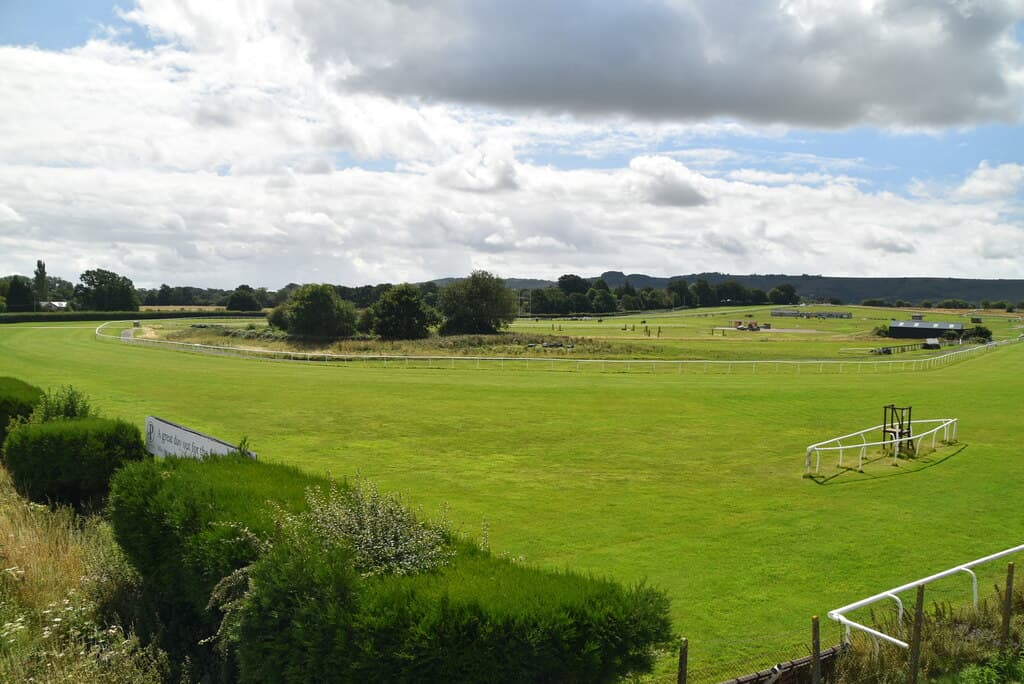
The History of Plumpton Racecourse
Over 140 years of racing at Plumpton — from its origins in 1884 to East Sussex's intimate jumps venue and the Sussex National.
Read more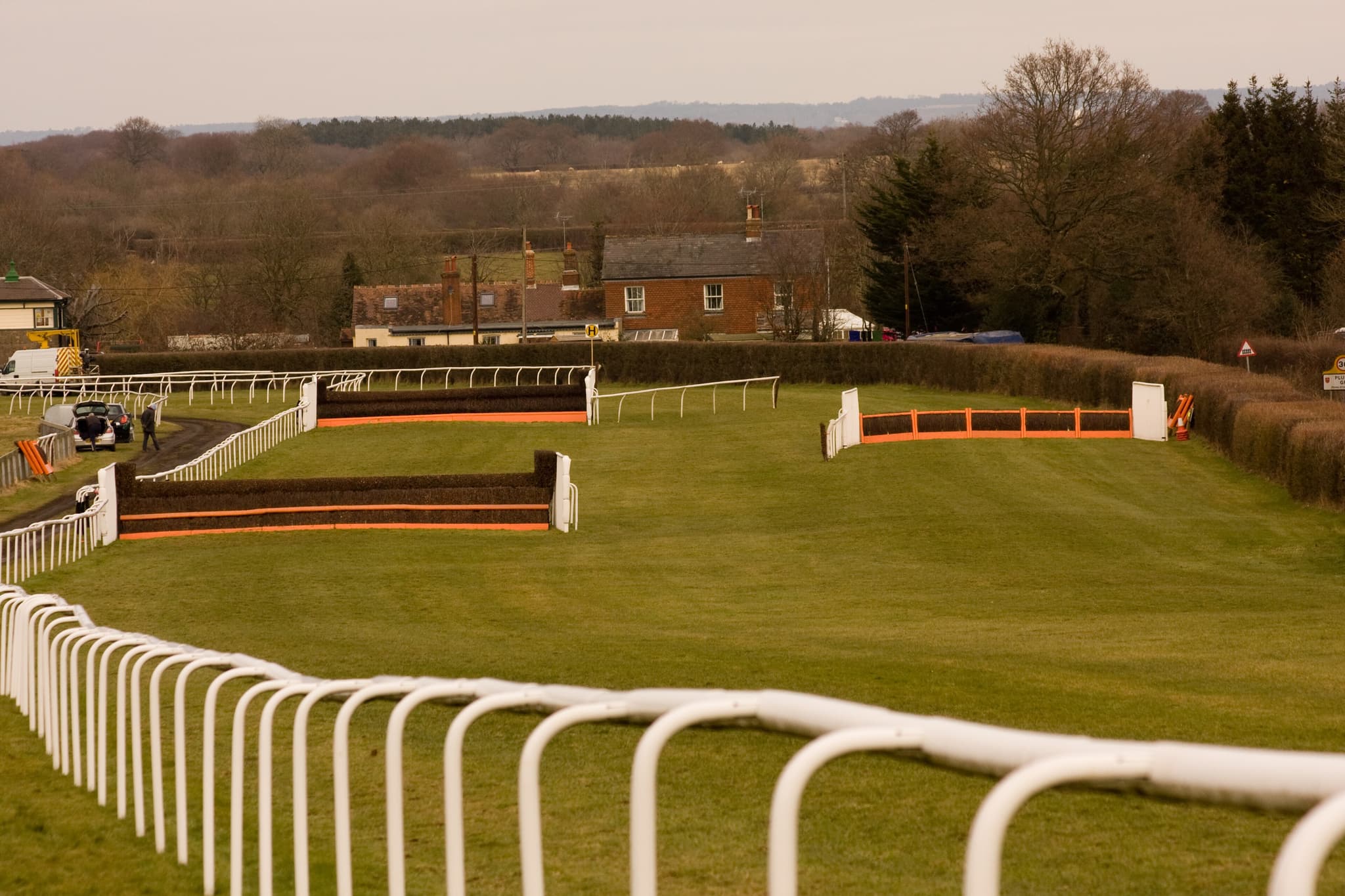
Monday Racing at Plumpton: Complete Guide
Your complete guide to Monday racing at Plumpton — the Sussex National, key meetings, and midweek jumping in East Sussex.
Read morePhotos on this page are used under Creative Commons licences. Titles, sources and licence links for each one are on our image credits page.
Research the field with the AI Race Predictor
Our model publishes calibrated win-probability estimates for UK races — a second opinion to understand a race, not tips. It's open about its record: it doesn't beat the market, and we show exactly how it does.
Work it out & learn the basics
Gamble Responsibly
Gambling should be entertaining and not seen as a way to make money. Never bet more than you can afford to lose. If you or someone you know has a gambling problem, help and support is available.