
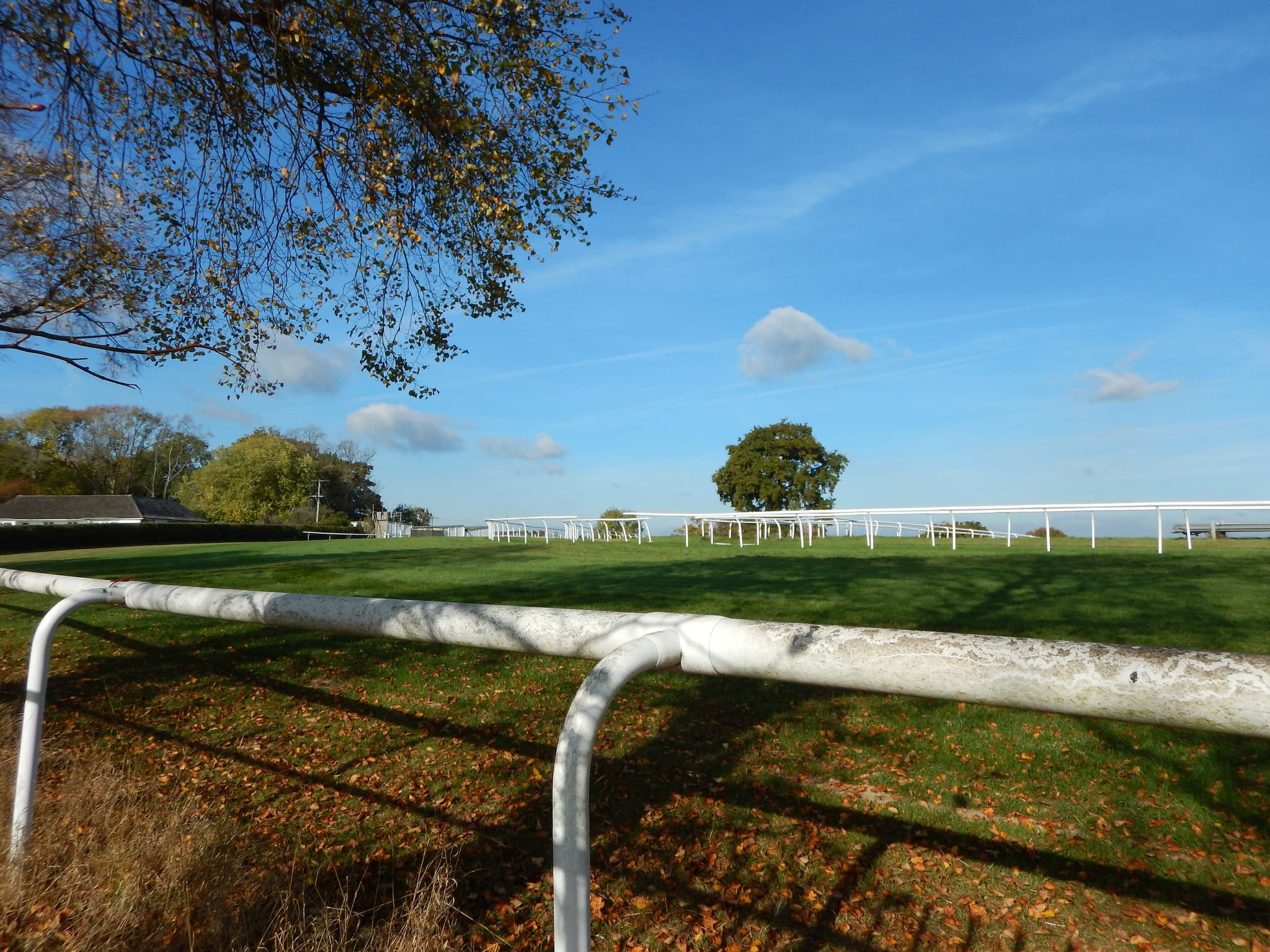
Founder & Editor · Last reviewed 2026-04-05
Plumpton Racecourse sits 50 miles south of central London, tucked against the northern face of the South Downs escarpment in East Sussex. For National Hunt fans based in the capital who do not want to travel to Cheltenham or Newbury, Plumpton is the closest jumps track of real substance — a proper racing venue with a history stretching back to 1884 rather than a token satellite fixture.
The setting alone makes a visit worthwhile. The chalk downland rises steeply behind the back straight, the fields below are deep Sussex green, and on a clear February afternoon you can see the coastal haze above Brighton eight miles to the south. It is not Cheltenham in any respect, but it is not trying to be.
Who This Guide Is For
This guide is aimed at three types of reader. First, London-based racing fans who are looking for an accessible jumps day out that does not require an early-morning start or overnight accommodation — Plumpton is reachable from London Bridge in under 60 minutes by Southern Railway. Second, Sussex residents who have driven past the racecourse sign on the B2116 and never stopped. Third, form students who want to understand the Plumpton betting market: the course has specific trainer and track-type patterns that are worth understanding before you put money down.
If you are looking for the prestige of the Cheltenham Festival or the grandeur of Ascot, Plumpton is not that. What it offers is something different: a small, loyal crowd, very close-up views of the horses in the paddock, and racing that actually counts — the form from Plumpton is taken seriously in the market, and a horse that wins convincingly here will not be allowed to start at a generous price next time.
Quick Facts
| Location | Plumpton, East Sussex, BN7 3AL |
| Racing type | National Hunt only (hurdles and chases) |
| Opened | 1884 |
| Track shape | Left-handed oval, approximately 1 mile 2 furlongs round |
| Signature race | Sussex National |
| Season | October to June |
| Capacity | Approximately 4,000 |
| Nearest station | Plumpton (2-minute walk from the platform) |
| Distance from London | 50 miles; approximately 55–65 minutes by Southern Railway |
| Distance from Brighton | 8 miles; approximately 20 minutes by train |
| Website | plumptonracecourse.co.uk |
What Makes Plumpton Different
The intimacy is the defining feature. With a capacity of around 4,000 and a typical Monday attendance of 1,500–2,500, this is a course where you stand within a few metres of the horses in the paddock, hear the jockeys' conversations, and watch the action without pressing through crowds. There are no giant screens obscuring your view. The tote queue moves in two minutes. The car park attendant knows half the crowd by name.
The South Downs location gives the course a specific physical character. The track is not flat — there is a notable uphill climb on the back straight and a descent into the home straight, which creates a real stamina test and makes the form distinctly different from flat NH circuits like Kempton or Newbury. A horse that hacks up at Kempton on good ground can find Plumpton a very different proposition.
Plumpton is also the southern gateway for National Hunt racing in the region. Fontwell Park, 30 miles west in West Sussex, is the only other dedicated NH venue close by. Between them, these two courses carry the weight of jumps racing for the entire South East. The history of Plumpton covers how that regional role developed through the 20th century.
For visitors arriving by train from London, the journey ends at one of the most convenient racecourse stations in Britain. The platform at Plumpton station sits on the eastern edge of the course. You step off the train and are through the gate in minutes.
Bet on Plumpton
Place your bets on Plumpton races with a trusted bookmaker.

Promo code BETFRED50. New customers only. Register, deposit with a Debit Card, and place a first bet of £10+ at Evens (2.0)+ on Sports, to be settled within 7 days, to get £30 in Sports Free Bets and £20 in Bet Builder Free Bets within 24 hours of settlement. 7-day expiry. Eligibility & payment exclusions apply. Full T&Cs apply. Take Time to Think. BeGambleAware.org. 18+. Full T&Cs.

Promo code R30. New UK customers only, 18+. Register, deposit £10 or more, then place a £10 single cash bet at odds of 1/2 (1.5) or greater on any sports market (excluding Virtuals). Once the qualifying bet settles you get £30 in Free Bets (3 x £10) — the qualifying bet can win or lose. Free Bets are valid on any sports market excluding Virtuals, expire in 7 days, are non-withdrawable and must be used in full. Excluded deposit methods apply (including PayPal, Apple Pay, Skrill and NETELLER). Named bets such as Lucky 15 do not qualify. If you cash out the qualifying bet, or it is voided, you are no longer eligible for the offer. Ends 31.12.26. Full T&Cs apply. Please gamble responsibly. BeGambleAware.org. 18+. Full T&Cs.

Promo code BET40GET20. New UK customers, 18+. Register with the code and place a first bet of £40 or more at Evens (2.0) or greater. Receive 2 × £10 free bets: the first credited automatically once the qualifying bet settles, the second 24 hours later. Free bets must be placed at minimum odds of 4/1 (5.0), expire 24 hours after credit, and the free-bet stake is not returned with winnings. Debit card deposits only. Take Time to Think. BeGambleAware.org. 18+. T&Cs apply. Full T&Cs.

50% of your first-day net losses refunded as a free bet, capped at £25. New UK customers aged 18+ only. To qualify, deposit and place a first bet of £10 or more on any sport at minimum odds of evens (2.00), then place at least two further bets on different events, each worth at least 50% of your largest bet, all at evens (2.00) or greater. Losses are counted from your first settled bet until 23:59 the same day. Place a qualifying £10+ bet and you are guaranteed at least a £5 free bet. Bets placed at SP, void bets, cashed-out bets and bets struck with free bets do not count towards the offer. The free bet is credited the day after your qualifying bets settle and must be used within 7 days, after which it expires. It can be used at odds from 1/4 (1.25) up to 250/1 on singles and straight accumulators, but not on Trixie, Patent or Yankee style multiples. Free-bet stake is not returned with winnings. One offer per person, household, address, IP address and device. E-wallet deposits may not qualify, so check the cashier before depositing. Customers registered with GAMSTOP cannot claim. KYC identity verification must be completed before the free bet is credited. Take Time to Think. BeGambleAware.org. 18+. T&Cs apply. Full T&Cs.

New customers, 18+. Choose the sports bonus at sign-up, make a first deposit and receive a 100% bonus up to £50 in your Sports Bonus balance. To convert the bonus to cash, wager it 10x within 30 days. Single bets below Evens (2.00) do not qualify; accumulators do not qualify if any selection is below 1/2 (1.50). Virtual Sports, voided, cancelled, drawn, cashed-out and free-bet wagers do not count towards wagering. Only the first settled bet per event counts. Withdrawing before the wagering requirement is met forfeits the bonus balance including bonus winnings. Real-money funds are used before bonus funds. Deposits via Skrill or Neteller are not eligible. Not valid in conjunction with other promotions. Odds, bet and payment limits apply. 10bet general and promotion T&Cs apply. BeGambleAware.org. 18+. Full T&Cs.

New customers in Great Britain and Republic of Ireland, 18+. Place a £10 fixed-odds qualifying bet at minimum odds of 1/2 (1.50) — single or each-way (only the win part counts), pre-event or in-play, not cashed out early, within 28 days of opening the account. Receive up to £60 in bonuses credited over three days: 3 × £10 fixed-odds free bets (the first on settlement, then 24 and 48 hours later) plus 3 × £5 Total Goals FOOTBALL spread bets and 3 × £5 racing Winning Favourites spread bets, with a £1 racing Race Index spread bet as an extra on top. The spread bets need a full spread-betting account, opened within 28 days of the fixed-odds account and subject to Spreadex's eligibility and appropriateness checks. Free-bet stakes not returned with winnings; free bets valid 28 days from issue. IMPORTANT: the £5 credits are SPREAD bets — sports spread betting carries the risk that losses can exceed your stake. Sports spread-betting customers do not have Financial Ombudsman or FSCS recourse. Take Time to Think. BeGambleAware.org. 18+. T&Cs apply. Full T&Cs.

Promo code WELCOME15, entered under My Bonuses after registering. New UK customers, 18+. Place a first qualifying bet of at least £10 from your cash balance at odds of evens (2.0) or greater within 7 days of opening the account. Once the qualifying bet fully settles you receive £15 in free bets, credited as 3 x £5 tokens with set uses: one £5 accumulator free bet (minimum 4 legs, each leg at 2/5 or bigger), one £5 sports free bet (any market at evens or bigger) and one £5 Sub Cover free bet (selected football player markets at evens or bigger). Free-bet stakes are not returned with winnings. Free bets expire 7 days after they are credited. Void, cashed-out and partially cashed-out bets do not qualify. One offer per customer. Confirm the current terms on BetGoodwin's own welcome-offer page before claiming. Take Time to Think. BeGambleAware.org. 18+. T&Cs apply. Full T&Cs.

New UK customers, 18+. Minimum deposit £10. Place a £10 qualifying single on sports (excluding virtuals) at minimum odds of 1/2 (1.50), settled within 14 days. Deposit-method exclusions apply. Receive £30 in free bets (stake not returned), split £20 for sportsbook use (2 x £10) and £10 for Bet Builder only (2 x £5); Bet Builder does not cover horse racing. Free bets must be accepted within 7 days and expire 7 days after acceptance. No promo code required. Best Odds Guaranteed on UK & Irish racing, subject to having staked over £25 in the previous seven days. Operated by LiveScore Betting and Gaming (Gibraltar) Ltd, UKGC 56859. Confirm the current terms on LiveScore Bet's own promotions page before claiming. Take Time to Think. BeGambleAware.org. 18+. T&Cs apply. Full T&Cs.
18+. BeGambleAware.org
The Course
Plumpton is a left-handed oval of approximately 1 mile 2 furlongs round — one of the smaller NH circuits in Britain, but not one of the easiest. The shape is broadly egg-like rather than a clean circle, with tighter bends at the top of the track and a longer sweeping turn into the home straight. The key characteristic that distinguishes Plumpton from most southern NH tracks is its undulation: this is emphatically not a flat course, and horses that need a flat surface to show their best form will find Plumpton unforgiving.
Topography and Gradient
The ground rises steadily from the back of the home straight through the first part of the back straight, climbing for approximately five furlongs before the track levels briefly at the top of the course. It then drops back down as runners approach the final bend and turn into the home straight. The descent before the home straight is where the track creates its most significant test of jumping: there is a fence positioned on that downhill section that catches out horses jumping at anything less than their best.
From the last fence in the home straight to the winning post, the run-in is short — under 200 metres — which means a horse that clears that final fence with momentum and a settled head carries a significant advantage. Horses that fiddle the last fence and lose their hind leg thrust can be collared in the final 50 yards even from a commanding position.
The uphill section on the back straight is a stamina sieve. In a 2-mile chase run at real pace, horses that do not truly stay 2 miles will begin to feel the gradient between the third and fifth fences on the back straight. By the time the field reaches the top turn, those that are not truly fit or truly stout will have begun to blow.
Race Distances
Plumpton stages races at four principal distances:
- 2 miles (2m) — hurdle and chase, the shortest trip on the card
- 2 miles 1 furlong 164 yards (2m1f164y) — the most common hurdle distance
- 2 miles 3 furlongs 164 yards (2m3f164y) — the mid-distance option, frequently used for novice and handicap chases
- 3 miles 1 furlong 152 yards (3m1f152y) — the staying trip; this is a real stamina test on this terrain
The 3m1f152y trip in particular makes significant demands. A horse that stays on well at Fontwell over 2m6f will not automatically handle the additional distance and sharper undulation of a 3-mile-plus trip at Plumpton. Cross-referencing staying form from Exeter — another undulating track with a long-distance card — is a more reliable guide.
Fences and Hurdles
The fences at Plumpton are well-constructed and fairly standard in their build, but the undulating approach to several of them means jumping rhythm is harder to maintain here than on a flat track. On a flat course like Kempton, a horse can find a comfortable galloping rhythm and meet each fence on the same stride pattern. At Plumpton, the gradient changes the stride, the approach angle shifts, and horses that rely on a metronome rhythm rather than real jumping instinct will find the track exposing.
The most talked-about fence on the circuit is the one positioned on the downhill section before runners swing into the home straight. Approaching this fence on a slightly downhill gradient, with horses often in a tight group and jockeys beginning to make their moves, is a test of confidence for both horse and rider. A horse that fiddles this fence — putting in a short one or hitting the top rail — will lose ground at the worst possible moment. Horses with a clean jumping record at Exeter and Fontwell, where gradients similarly disrupt stride patterns, consistently handle this fence better than those arriving from Kempton or Newbury.
There is also a ditch fence on the back straight that riders respect. In novice chases, this fence produces its share of mistakes as younger horses encounter the combination of uphill gradient and the open ditch for the first time.
Going Tendencies
The South Downs chalk subsoil is Plumpton's insurance policy against extreme conditions. Chalk drains rapidly, and even after sustained rainfall Plumpton rarely reaches the very heavy going that can shut down tracks on clay-based soil. The going at Plumpton tends to sit between Good to Soft and Soft for most of the winter season, occasionally dropping to Heavy in December and January after prolonged wet weather, but rarely staying there for long.
The spring meetings — April, May, and June — typically see the ground return to Good to Soft or Good. The June fixtures can produce Good or even Good to Firm conditions in a dry spring, which is relatively unusual for a National Hunt course running into early summer.
Checking the going report before travelling is always worthwhile, but racegoers who cancel a Plumpton trip purely because of a rain forecast will often find the ground is more manageable than feared.
What Type of Horse Wins at Plumpton
The track profile rewards a specific type:
Bold, accurate jumpers. The fences punish horses that are careless or that have an inconsistent jumping technique. A horse with 12 clean rounds at Exeter or Fontwell, where the same jumping discipline is required, is a far more reliable bet than one that has been jumping sloppily at Kempton and getting away with it on flat ground.
Horses with a proven stamina base. Even at the minimum 2-mile trip, the uphill grind on the back straight means real stayers outperform horses that are really sprint types stretching to 2 miles on a flat track.
Fit, sharp horses. The compact circuit and tight turns reward a horse that is on its toes and quick through the corners, rather than a long-striding galloper that needs time to unfurl. A big, long-striding type that flourishes on the Newbury straight or the long Kempton back straight can be entirely unsuited to the quick bend-bend-bend rhythm of Plumpton.
Course winners and course-track types. Form from undulating NH tracks — Exeter, Fontwell, and Cheltenham's Old Course — transfers well to Plumpton. Form from flat NH circuits — Kempton, Newbury, Lingfield — transfers poorly.
The single most powerful filter when assessing a Plumpton card is the trainer. Gary Moore, based 12 miles north-west at Horsham, has a documented record of targeting Plumpton specifically with horses that are fit and course-suited. His strike rate at Plumpton is materially above his overall national average, and his horses at the track should be respected even at short prices. The betting guide covers the Moore angle and other course patterns in detail.
Viewing the Racing
The compact size of the course means spectators can follow virtually the entire race from the grandstand area. The far side of the back straight is at most 200–250 metres from the grandstand rail, and because the ground rises on the back straight, horses on the far side are visible above the level of the fence tops. This gives Plumpton a surprising degree of visibility for its size — you can follow a 3-mile chase from start to finish without craning your neck or losing the field behind a hill.
The paddock is directly adjacent to the winning enclosure and the main viewing area, with a rail that brings racegoers within two or three metres of the horses during the pre-parade. This proximity is one of the real pleasures of Plumpton — you can assess a horse's condition, coat, and demeanour at very close range, without the distance and barriers that separate racegoers from the paddock at larger venues.
Key Fixtures & Calendar
Plumpton stages approximately 20 fixtures per season. The racing year begins in October and runs through to June — Of note later than many National Hunt tracks, which typically close their season in May. That extended spring calendar gives Plumpton a distinctive feel in its final weeks: April and May meetings take place against the backdrop of chalk downland in full spring growth, with the escarpment behind the back straight already bright with new vegetation.
The Season Structure
October opener. The season typically starts in mid-October, around a fortnight after many NH tracks have resumed. The ground at this stage is often Good to Soft after a summer break, and the opening meetings see trainers from across the South East — particularly the Gary Moore yard at Horsham — introducing horses that have summered on grass and need their first run of the campaign.
November and December. The busiest months in terms of fixture concentration. Plumpton typically stages four or five meetings across these two months, with the majority on Mondays. The going begins to ease in November and is frequently Soft by December. These meetings attract competitive fields across hurdle and chase divisions, and the Monday slot means the field of racegoers includes a higher proportion of serious punters and form students than you would see at a weekend.
January and February. Plumpton continues racing through midwinter, which is unusual for a course of its size. The February meetings include what is often treated as the course's informal Bank Holiday fixture, with slightly larger-than-average crowds taking advantage of the long weekend. Going in February is frequently Soft to Heavy, and fields can shrink as trainers protect horses. But the course retains its ability to attract reasonable fields even in the depths of the season.
March and April. Spring racing continues through this window — typically in February or March depending on the year's fixture list. It is the one meeting that regularly sells out its premium areas. The Gold Cup itself is a handicap chase of around 3 miles, attracting southern-trained chasers that may not be good enough for Cheltenham Grade 1s but are highly competitive at Listed and quality handicap level.
May and June. The spring closing fixtures are Plumpton at its most pleasant. Crowd sizes of 1,500–2,500 are typical, the atmosphere is relaxed, and the racing card often includes staying hurdles and spring novice chases. The June meeting is a rarity in NH racing — very few jumps tracks run this late — and it gives trainers a final opportunity to run horses before the summer break. Brighton-based racegoers in particular use the June fixture as a season closer, arriving by the 20-minute train connection.
The Sussex National Meeting
The Sussex National is the course's signature race and the meeting that draws the highest quality field across the season. The race has been run since the early 20th century and attracts licensed trainers from across southern England, with occasional raiders from Lambourn and the Midlands. The Sussex National is a handicap, which means the field tends to be competitive from top to bottom rather than dominated by a single high-class horse.
Bookmakers typically offer ante-post markets on the Sussex National from six to eight weeks before the meeting. The Gary Moore yard at Horsham has won the race multiple times and should always be checked when entries are published.
Monday as Plumpton's Natural Day
More than any other fixture pattern, Plumpton is defined by its Monday racing. The Monday slot in the NH calendar was not designed specifically for Plumpton — it emerged from the national racing programme — but Plumpton has made it its own over decades. Monday meetings at Plumpton attract a loyal midweek crowd of several hundred regulars: retired professionals, local farmers and landowners, and a consistent core of form students who treat the Monday card as a working session.
The advantage of Monday racing from a betting perspective is discussed in the betting guide, but the short version is that Monday fields at Plumpton are often composed of horses from a small cluster of southern yards who know each other's runners well. The stable intelligence that circulates at these meetings — who has schooled well, which horse has improved at home — is not always reflected in the market at the start of the day.
Crowd Sizes and Atmosphere
Typical Monday attendance at Plumpton is 1,500–2,500. The Sussex National meeting might draw 3,000–4,000. Occasional themed evenings or special fixtures can push towards capacity, and these are marketed to London groups and social racegoing parties rather than the regular Monday crowd.
The atmosphere at a standard Monday is best described as settled and purposeful. The crowd knows racing. Conversations around the paddock are about form, not fashion. The bookmakers' boards are studied seriously. It is a day at the races rather than a racing-themed social event, which is either a virtue or a limitation depending on what you are looking for.
For those combining racing with a day in the South Downs, the atmosphere and planning guide covers how to structure the day around Lewes, Brighton, and the Downs themselves.
Facilities & Hospitality
Plumpton's facilities are functional and well-suited to a course of its size, without the corporate gloss of larger venues. The grandstand is small by Newbury or Sandown standards — a two-storey structure that seats perhaps 400 in the covered area — but the open terracing beside it and the course-side lawn mean that the compact circuit is visible from almost any position. There are no obstructed views and no need to arrive early to claim a good spot.
Enclosures and Viewing Areas
The course is divided into two principal public areas: the Premier Enclosure and the Course Enclosure. The Premier Enclosure gives access to the members' area of the grandstand, the paddock rail, and the winning enclosure. The Course Enclosure is the cheaper option and provides access to most of the lawn and the course-side viewing area along the home straight.
For most visitors, the difference between the two enclosures is minor. The best viewing positions — along the home straight rail between the last fence and the winning post — are accessible from both. The paddock is where the enclosure distinction matters most: Premier Enclosure holders get closer to the rail, which at Plumpton means you are within arm's length of horses being led around in the pre-parade ring.
The open lawn between the grandstand and the course rail is the social centre of the course. On a dry day in April or May, racegoers spread across the grass with programmes and race cards, watching the horses warm up while keeping an eye on the boards. In winter, the covered sections of the grandstand are the natural refuge.
The Paddock
The Plumpton paddock is truly one of the best places on the course to observe horses before a race. The rail that separates racegoers from the horses in the pre-parade ring is close — two to three metres — and because the paddock is compact, every horse in a 12-runner field can be assessed in detail during the few minutes of pre-parade walking. At larger courses, you often end up watching half the field from 20 metres as they move behind other racegoers' heads. At Plumpton, the scale eliminates that problem.
Trainers and owners use the inner paddock area, and at this level of racing — local NH, Monday cards, modest stakes — the conversations between trainer and jockey before the race are frequently audible from the rail. This is not a course where private briefings happen at the back of a large paddock out of earshot.
Owners and Trainers Facilities
There is a designated owners and trainers area adjacent to the parade ring, with a bar and viewing terrace. The scale is appropriate for a course that sees fields predominantly from southern yards. Trainers from the Gary Moore operation at Horsham, from the Nick Williams yard, and from other East Sussex and Surrey handlers are the regular faces in this area.
Food and Drink
Plumpton's catering is straightforward and honest. The dominant offer is traditional racecourse food — pies, pasties, sausage rolls, hot drinks — served from several outlets positioned under the grandstand and along the course rail. The quality is consistent rather than exceptional: the beef pie is reliable, the hot drinks are adequate, and the portions are generous enough for a winter afternoon.
There is a bar in the grandstand and a separate course-side bar near the home straight rail. The beers on offer include Sussex ales from local breweries — Harvey's of Lewes, which brews 7 miles east in the county town, appears regularly on the bar list. For a Monday afternoon in February, a Harvey's Best Bitter while watching the form unfold from the grandstand rail is a very reasonable proposition.
The Tote operation runs from a building on the course-side, with the main betting ring for bookmakers positioned between the grandstand and the paddock. The ring is small — 10 to 15 layers on a typical Monday — but active, and the boards are easily read from the paddock rail.
Family Facilities
Children under 18 are typically admitted free to Plumpton when accompanied by a paying adult, though the current policy should be confirmed on the racecourse website before travelling. The course-side lawn is spacious enough for children to move without obstruction. There are no formal play facilities, but the open space and the proximity of horses — particularly in the paddock — make Plumpton a practical first racecourse for children who are curious about horses.
The paddock rail at Plumpton may be the closest legal access to racehorses in preparation that is available to the general public at any British course. A 10-year-old standing at that rail can study a 500-kilogram National Hunt chaser at close quarters. That experience is worth more than any formal family attraction.
Disabled Access and Facilities
Plumpton has level access from the car park to the main enclosure areas and the course-side lawn. The grandstand has accessible viewing positions, and there are accessible toilet facilities on site. Racegoers with specific access requirements should contact the racecourse directly before travelling, as conditions can vary between winter mud and dry summer ground. The station at Plumpton has a platform-level connection to the street and is manageable for most mobility needs, though it is unstaffed — Southern Railway assistance should be arranged in advance for those who need it.
Getting There
Plumpton Racecourse is one of the most straightforwardly accessible NH venues in Britain for those arriving by public transport. The station is immediately adjacent to the course — the platform at Plumpton station sits within the racecourse boundary, and the walk from the final carriage to the turnstiles is approximately two minutes. On racedays, Southern Railway services are met by course staff directing arrivals straight through.
By Train from London
Southern Railway runs services to Plumpton from London Bridge and London Victoria. The journey time is approximately 55–65 minutes depending on the service and whether a change is required. The most common route is London Bridge or Victoria to Haywards Heath (direct, around 45–50 minutes), then Haywards Heath to Plumpton (12 minutes, one stop). On busier racedays or promotional Mondays, some services run directly to Plumpton without changing.
From a practical standpoint, train is the clearly better option for London-based racegoers. There is no parking stress, no concern about the return journey if the afternoon goes well at the Tote window, and the journey from the concourse at London Bridge to the paddock rail at Plumpton runs to under 70 minutes door-to-gate in most scenarios.
Check Southern Railway's journey planner before travelling: timetables on the Plumpton branch vary between weekdays and Sundays, and Monday race schedules (first race typically 1:00 or 1:15 PM) align well with mid-morning departures from London.
By Train from Brighton
The connection from Brighton is fast and very convenient. Trains from Brighton to Plumpton take approximately 20 minutes, with services running via Lewes (a 7-minute hop from Brighton) and then north to Plumpton. Brighton to Plumpton runs at regular intervals throughout the day. For those using Brighton as a base — overnight or day visit — this is the most natural approach: train to Brighton, morning on the seafront or in the North Laine, then hop to Plumpton for the afternoon card.
By Train from Lewes
Lewes station is 7 miles east of Plumpton and is a frequent stop on the Brighton–Haywards Heath line. The journey from Lewes to Plumpton takes under 10 minutes. Lewes is worth combining with a Plumpton visit — it is the county town of East Sussex, with a Norman castle, an excellent independent high street on the main street below the castle, and Harveys Brewery, which has been on the same site near the River Ouse since 1790.
By Car
Plumpton is accessible by car from several directions:
From Lewes (east): The B2116 from Lewes runs directly to Plumpton village, a distance of approximately 7 miles. Allow 15 minutes in normal traffic. Lewes itself is reached from the A27 (eastbound from Brighton) or the A26 (northbound from Newhaven).
From Haywards Heath (north): The A273 southbound connects to the Plumpton area via Ditchling, approximately 7 miles. Allow 15–20 minutes.
From Brighton (south): The A23 northbound to the A273 or B2112 and then east towards Plumpton, approximately 10–12 miles depending on the exact route. Allow 25–30 minutes.
From the M23/M25 (north-west): Exit the M23 at junction 10 (Crawley) and follow the A264 and A273 south towards Haywards Heath, then continue as above. Total journey from the M25 junction 8 (Reigate) is typically 45–55 minutes in reasonable traffic.
Parking at Plumpton is free. The main car park is a field car park adjacent to the course, managed by course staff on racedays. On standard Monday meetings, the car park fills to perhaps half capacity. The Sussex National meeting sees the car park fill more completely, and arriving 45 minutes before the first race is advisable.
Local Practical Notes
Plumpton village itself is a small settlement with a pub (the Half Moon) and a church. There is no pre-race entertainment infrastructure in the village, so racegoers arriving early by car typically go straight to the course, which opens approximately 90 minutes before the first race.
The B2116 road that passes the course entrance can back up briefly after racing finishes and the car park empties, but Plumpton's crowd size means this is measured in minutes rather than the half-hour queues seen at larger venues. For those returning to Brighton by car, the Falmer route via the A27 is often the quickest option.
Frequently Asked Questions
History of Plumpton Racecourse
Racing at Plumpton dates to 1884, when the course was established on farmland at the foot of the South Downs escarpment in East Sussex. The site was chosen for its natural amphitheatre quality — the chalk downland rising steeply to the south providing a natural backdrop — and for its proximity to the Southern Railway's Brighton line, which had opened the Plumpton station connection in 1863. From the outset, the course was designed to be reached by train rather than by carriage, which gave it a different audience from the hunt-meeting courses of the Midlands and the West Country.
A National Hunt Course from the Start
Plumpton has been exclusively National Hunt since its opening. It never staged flat racing and did not pursue the mixed programme that characterised many southern tracks in the late Victorian period. This single-code identity — jumps only, always — gave the course a specific character that it has maintained for more than 140 years. The decision to focus purely on NH racing placed Plumpton in the company of Fontwell (which opened in 1924) as the two dedicated jumping venues for the South East region.
In the early decades, the course was managed by the local racing community rather than a commercial body. The Plumpton Race Club, a members' organisation of local landowners, farmers, and racing enthusiasts, maintained the course and managed the fixture list through the late 19th and early 20th centuries. This model of local ownership gave Plumpton a distinctly regional identity: it was East Sussex's racing venue, serving an area that stretched from the county town of Lewes to the farming communities of the Weald.
The Role of the South Downs Setting
The physical character of the course reflects its setting. The South Downs chalk subsoil that gives Plumpton its natural drainage — preventing the extreme mud conditions that afflict clay-based courses — also defines the aesthetic of the place. The downland pasture that surrounds the track, the white chalk exposed on the steep escarpment above the back straight, and the long views south towards the coastal strip above Brighton give Plumpton a visual distinctiveness that larger, more commercial venues cannot replicate.
The course's position at the foot of the escarpment also created its defining topographical feature: the uphill grind on the back straight, where the track climbs the gentle gradient of the lower chalk slopes before the descent back into the home straight. This gradient, a natural consequence of the terrain rather than any deliberate design, has shaped the type of racing that Plumpton produces for over a century.
The 20th Century: Plumpton as the Southern NH Gateway
Through the first half of the 20th century, Plumpton was the primary National Hunt venue for the South East. London racegoers who wanted to see jumps racing without travelling to Sandown, Kempton, or the Midlands circuits came to Plumpton. The Southern Railway connection from Victoria and London Bridge was direct and regular, and the course's proximity to Brighton meant that a Plumpton fixture day could anchor a longer trip to the Sussex coast.
The course operated through the Second World War with a reduced programme, like most British tracks, and resumed its full fixture schedule after 1945. In the post-war decades, the course began to develop its reputation for producing horses that Then achieved distinction at higher levels. The form at Plumpton, taken from undulating chalk downland at modest handicap level, translated with enough regularity to higher-grade NH racing to give Plumpton a credible form rating in the Racing Post data.
The Gary Moore Era
The modern history of Plumpton cannot be written without Gary Moore, the trainer based at his Cisswood House Stables at Lower Beeding, near Horsham, approximately 12 miles north-west of the course. Moore has been the most successful trainer at Plumpton for more than two decades. His proximity to the course, combined with his detailed knowledge of its specific requirements — the undulation, the jumping demands, the stamina test — has produced a record that stands well above any other handler in the modern era.
Moore has sent out multiple winners on single Plumpton afternoons on numerous occasions, and his yard's strike rate at the course is substantially above its national average. Horses that have been specifically prepared for Plumpton's demands leave the Moore yard in better condition for the track than rivals arriving from further afield. The family racing operation — Gary's sons Jamie and Joshua are both involved in the operation — has made Plumpton a home meeting in practical terms.
Beyond Moore, trainers based across the South East have historically formed the backbone of Plumpton's fields. Nick Williams, based in Barnstaple, Devon, sends horses east for specific targets. Paul Henderson, who trained in the region for many years, produced Plumpton winners at a consistent rate. The cluster of smaller NH yards in Surrey, Hampshire, and Kent that supply Plumpton's fields gives the course a distinct regional character that distinguishes it from tracks that draw purely from the Lambourn and Newmarket training centres.
Ownership and Management
The Plumpton Race Club model of local management has evolved over the decades, and the course now operates within the modern British racing industry framework while retaining a strong local governance character. Unlike courses within the large commercial groups — Arena Racing Company, Jockey Club Racecourses — Plumpton has maintained an independent identity that reflects its community roots.
The course's relationship with the British Horseracing Authority follows standard licensing and regulation, and Plumpton holds its annual fixture allocation through the standard BHA programme-building process. Its 20-fixture allocation places it in the mid-tier of NH courses by volume, above the very small venues but well below the major fixtures like Sandown, Kempton, or Newbury.
The physical infrastructure of the course has been gradually improved over the years — new drainage, improved fencing, the current grandstand — while preserving the compact, approachable character that is its primary selling point. Plumpton in 2026 is recognisably the same place that racing fans visited in 1954, which is either a charming continuity or a failure of ambition, depending on your perspective. The loyal crowd that returns Monday after Monday across the season has made its view clear.
Famous Moments
Plumpton does not stage Grade 1 racing and does not appear on the shortlist of courses where history is made at the highest level. What it provides instead is a different kind of significance: the course where careers begin. A number of horses that went on to win at the Cheltenham Festival had their first or second starts over jumps at Plumpton, and the course's form book contains enough subsequent Grade 1 winners to be taken seriously as a developmental stage for NH horses in southern training.
Plumpton as a Form Guide
The most consistent theme in Plumpton's notable racing history is the relationship between a win at the course and subsequent progression. A horse that wins convincingly at Plumpton — clearing the fences cleanly, handling the undulation, staying on well up the final straight — has usually demonstrated something more than the bare margin of victory suggests. The track's demands are specific enough that a facile winner here tends to be truly better than its rating.
This pattern has been recognised by bookmakers and form analysts for decades. When a horse wins a novice hurdle or novice chase at Plumpton in a manner that suggests the track presented no difficulty, the market at its next start — often at a higher class of track — will frequently price it as if the Plumpton win is more credible than a win at a flatter, easier circuit.
Several horses that Then won at the Cheltenham Festival at Grade 1 level had their early career starts at Plumpton. The specifics vary by year and generation, but the pattern is consistent enough to note. NH trainers in the South East use Plumpton as an educational venue for young horses specifically because the track demands real jumping ability and stamina at an early stage.
Gary Moore's Dominant Afternoons
The record of Gary Moore at Plumpton contains multiple occasions when the Horsham trainer has sent out three or four winners in a single afternoon. In a card of five or six races, winning three or four is a feat that requires not just well-prepared horses but a sustained quality of targeting — the right horse for the right race, fit and ready on the day.
The significance of these multi-winner afternoons is not only statistical. When Moore sends out several horses on the same Plumpton card, the later winners in the sequence often start at shorter prices as racegoers update their assessment of the yard's form mid-afternoon. A Moore horse at 3/1 in the opener may have a stable companion at 5/4 in the penultimate race, with the compression partly driven by the earlier performance. Understanding this market active in real time is part of the practical skill of betting at Plumpton.
Moore's record at the course includes wins in the Sussex National itself and in several other feature races across the season. His ability to identify which horses in his yard are suited to Plumpton's specific demands — undulation, sharp bends, jumping test — and to have them at their peak for the course rather than for a subsequent target elsewhere, is the central fact of modern Plumpton form.
Competitive Fields Against the Grade 1 Backdrop
Some of the most memorable Plumpton moments involve not individual horses but the competitive quality of the fields assembled on a January or February Monday when the southern NH circuit is at its most active. Fields of 12–15 runners in novice chases, with trainers from across Sussex, Kent, Hampshire, and Surrey all targeting the same race — the level of competition concentrated into a modest prize fund is often higher than the prize money suggests.
The Sussex National, run in early January over 3m 4f 104y, has produced several renewals where the winner went on to run creditably at the Cheltenham Festival within weeks. The Gold Cup is classified as a handicap, which means its winner will carry a mark into future engagements, but trainers have used the race as a springboard for horses heading towards the Festival's handicap events.
The Course's Jumping Record
The downhill fence before the home straight has produced its share of incidents that are remembered by those who witnessed them. In novice chases in particular, a horse that falls or unseats at this fence is often the race favourite, which concentrates the attention of the crowd. The fence has a higher incident rate than the equivalent position on flat NH circuits, which is a product of the gradient and the point in the race when it is reached rather than any fault in the fence's construction.
Jockeys who ride at Plumpton regularly develop a specific approach to this fence — they tend to steady their mounts two strides earlier than instinct suggests, allowing the horse to shorten its stride and find a comfortable take-off point despite the gradient. Jockeys from yards that rarely visit the course — brought in as a booking for a raiding trainer or as replacements for an injured regular — are disproportionately represented in the unseated-rider statistics at this fence.
The Spring Tradition
The late-season meetings in May and June have their own micro-history. Plumpton's June fixtures represent the last NH racing before the summer break for many southern horses, and trainers occasionally target these meetings with horses that have been lightly raced through the winter and are peaking in the spring. The going is typically Good or Good to Soft, which brings out horses that are unsuited to the heavy ground of midwinter and have been waiting for better conditions.
This spring active creates its own form puzzles: a horse that has run twice on heavy ground in January and February, both times without distinction, can reappear at a May Plumpton meeting in truly better conditions and produce a performance that bear no relation to what the form book suggests. Monitoring southern NH trainers' comments about going preferences through the winter is useful preparation for the spring Plumpton cards.
Betting Guide
Plumpton has a specific and learnable set of betting patterns. The course is small enough that the key variables — trainer form, track-type suitability, jumping record — can be assessed quickly, and the Monday fields are concentrated enough that researching six or seven races does not require an unreasonable amount of preparation. This guide identifies the patterns that have proven durable over time.
The Gary Moore Principle
Gary Moore, training from Cisswood House Stables at Lower Beeding near Horsham, is the single most important variable in any Plumpton betting analysis. His stable is 12 miles from the course. He targets Plumpton specifically and consistently. His horses arrive fit and course-prepared rather than using the track as a schooling exercise for a subsequent target.
The practical consequence is a strike rate at Plumpton that is materially above his national average. Over a sustained period, Moore's horses at Plumpton have won at a frequency that would generate a long-term profit if backed to level stakes — which is unusual at any track. This is not because Moore is a superior trainer in absolute terms, but because his proximity to the course, his detailed knowledge of what Plumpton requires, and his habit of targeting the course with specific horses gives him a structural advantage over handlers travelling from further away.
When Moore has two or more runners on the same Plumpton card, both should be considered. When he is sending out a horse at an apparently short price — 6/4 or shorter — the price is frequently justified rather than a market overreaction. If you take one rule into a Plumpton meeting, take this one.
The Moore family involvement at the yard means that intelligence about which horses are ready to run well tends to be concentrated within a small group. By the time the card is released, Moore horses are typically priced accurately or slightly short, but they win at a higher rate than their prices imply.
Track-Type Form Transfer
Plumpton form transfers differently depending on where a horse has been running. The key distinction is between flat NH circuits and undulating ones.
Form from flat NH tracks (transfers poorly):
- Kempton Park — the all-weather and turf circuits are flat and galloping; horses that thrive there are often long-striding types unsuited to Plumpton's tight bends and gradient
- Newbury — the NH circuit at Newbury is wide, flat, and galloping; a Newbury winner on good ground may have no reference point for what Plumpton's downhill fence demands
- Lingfield — similar profile, flat and relatively straightforward
Form from undulating NH tracks (transfers well):
- Exeter — the Devon track climbs and descends across its circuit, demands accurate jumping on gradient, and produces horses that handle Plumpton's demands with less difficulty
- Fontwell — the figure-of-eight circuit at Fontwell is unusual but undulating, and horses that jump fluently around Fontwell tend to handle Plumpton's fence layout
- Cheltenham (Old Course) — the NH specialist track at Cheltenham is the gold standard of undulating jumping tracks; a horse that has run creditably at Cheltenham over an undulating circuit has generally proven what Plumpton needs to see
The form filter to apply: if a horse has its best recent form from Kempton or Newbury and is now facing Plumpton for the first time, apply a penalty. If its best form is from Exeter or Fontwell, apply a credit.
Jumping Record as a Selection Filter
The downhill fence before the home straight catches out horses with imprecise jumping. Before backing any horse in a Plumpton chase, run through its jumping record at previous starts. A horse that has made multiple jumping errors at flat NH tracks — but escaped serious consequence because it could gallop out of trouble — will not have the same margin for error at Plumpton.
Look specifically for:
- Horses that have jumped cleanly at Exeter, Fontwell, or undulating point-to-point tracks
- Horses that have unseated or fallen at Plumpton before — the fence catches some horses more than once
- Horses with a below-average jumping record that are stepping up into a chase for the first time at Plumpton — novice chasers making their debut over fences at a track with a truly testing fence layout are a category to approach carefully unless the trainer record compensates
Favourites and Market Reliability
Plumpton is not a course where the market is consistently efficient. The Monday meeting in particular sees fields drawn from a relatively small pool of southern trainers, and the market at the start of the day reflects the information that has flowed into the betting exchanges and bookmakers' rings from a relatively concentrated group.
Favourites at Plumpton perform at approximately average rate by NH standards — which is to say they win roughly 30–35% of the time. This means roughly two in three favourites are beaten, which is consistent with the general NH picture but confirms that Plumpton is not a course where backing the market leader is a sustainable strategy.
The more productive approach is to use the Gary Moore and track-type filters to identify horses that are structurally advantaged, then look at the market as a reference rather than a verdict. If a Moore horse is 7/2 in a five-runner field where two of the other runners are flat-track types with no Plumpton or undulation experience, the 7/2 is likely the correct selection rather than a value overlay.
Distance and Stamina Considerations
At the staying distances — 2m3f164y and 3m1f152y — the stamina filter becomes critical. Plumpton's uphill section on the back straight eliminates horses that are nominally classified as stayers but do not truly stay on any gradient. Cross-reference stamina by looking at how a horse has finished in its previous races, not just whether it has stayed the trip on flat ground.
Horses finishing strongly over 2m4f at Exeter are more convincing staying evidence than horses that barely lasted 2m4f at Kempton on a flat circuit with a run-in that rewards a horse's last galloping effort rather than its stamina base.
Trainer Statistics Beyond Moore
After Moore, the trainers to monitor at Plumpton in terms of strike rate and course familiarity include those with southern NH yards: trainers in West Sussex, East Sussex, Surrey, and Hampshire who target the course as a local fixture rather than a supplementary target. When a trainer based in Dorset or Devon sends a horse to Plumpton, the journey is long enough that the horse is likely a specific target — which is worth noting. When a Lambourn trainer sends a one-off runner without a clear course-track form connection, treat it as uncertain.
The Plumpton betting guide standalone article expands these principles with specific trainer statistics and seasonal pattern data.
Atmosphere & Planning Your Visit
Plumpton sits within the South Downs National Park. The escarpment behind the back straight is a steep face of chalk downland, bright white at the surface in places, with the characteristic short-cropped turf of the chalk ridge above. On a clear day in March or April, the coastal haze above Brighton is visible to the south from the grandstand, and the flat plain of the Weald stretches north. It is, by any reasonable assessment, one of the better natural settings for a racecourse in southern England.
The South Downs in the Background
The course opens approximately 90 minutes before the first race. If the first race is at 1:00 PM, the gates open at 11:30 AM, which is early enough to walk the course rail, study the ground near the fences, and watch the early-arriving horses come through. In spring, the downland above the course is at its best in this window — larks are audible from the back straight, and the escarpment catches the morning light before cloud moves in from the west.
The physical experience of Plumpton is specific to the outdoor, informal NH experience. There is no glass-fronted hospitality suite that insulates you from the afternoon. You are standing on turf, in variable weather, close to the horses. This is what a day at Plumpton is: a proper outdoor racing afternoon in the chalk country of East Sussex.
Brighton as Your Base
For those arriving from outside the county, Brighton is the natural base. The city is 8 miles south of Plumpton and 20 minutes by train. Brighton offers every tier of accommodation from budget hotel chains to boutique seafront hotels in the Regency terraces above the beach. The choice of restaurants is extensive, and the evening after a Plumpton Monday can be spent at leisure in a city with a real food culture.
The practical day structure for a London visitor:
- Depart London Bridge or Victoria at 9:30–10:00 AM
- Arrive Brighton by 10:30–11:00 AM
- Morning in the North Laine (Brighton's independent shopping and café district, north of the Lanes, approximately 10 minutes' walk from the station) or on the beach below the i360 tower
- Train from Brighton to Lewes (7 minutes), connection to Plumpton (10 minutes from Lewes) for arrival at the course by 12:30–1:00 PM
- Racing until approximately 4:30–5:00 PM
- Train back to Brighton for the evening
- Return to London: Brighton to London Bridge approximately 55 minutes, with regular evening services
This structure requires no car, no accommodation outside of what you already have in London or Brighton, and delivers a full day in two attractive locations with the racing as the central activity.
Lewes as a Pre-Race Stop
For those who want a more specific South East experience rather than Brighton's broader offer, Lewes is 7 miles east of Plumpton by train. The county town of East Sussex is a compact, walkable settlement with several distinct attractions within easy reach of the station:
Lewes Castle stands above the high street — a Norman motte-and-bailey structure with views across the town and down the Ouse valley. Entry is approximately £10 per adult and takes 45 minutes to an hour.
The high street and Cliffe High Street below the castle have a concentration of independent shops and cafes that is unusual for a town of Lewes's size (approximately 17,000 residents). The town has a reputation for independent retail over chain stores.
Harvey's Brewery at the foot of Cliffe Hill has been on its site beside the River Ouse since 1790. The brewery shop sells Harvey's Sussex Best Bitter and their seasonal ales. The Best Bitter is the same beer served on the bar at Plumpton's grandstand.
A morning in Lewes followed by the 10-minute train to Plumpton for afternoon racing is a natural pairing for those who find Brighton too large and busy for a relaxed pre-race hour.
What to Bring
The South Downs are exposed to weather coming in from the Channel, and Plumpton's open position at the foot of the escarpment means wind and rain are regular visitors even in months when the forecast looks benign. A waterproof jacket is the non-negotiable item for any winter or spring Plumpton visit. In January and February, layering is important — the grandstand has covered sections, but the paddock rail and the course-side viewing area are exposed.
For footwear: the car park and the course-side lawn at Plumpton are grass and can be very soft after rain. Boots — Wellington or similar — are practical and entirely accepted at this course. Smart shoes are fine in dry April conditions but impractical after any sustained rain on a winter Monday.
The course opens 90 minutes before the first race, which is the right time to arrive rather than 15 minutes before. The paddock viewing in the pre-parade period, the time to study the going near the fences, and the relative calm before the crowd fills the betting ring are all worth the earlier arrival.
More guides for this course
Share this article
More about this racecourse
All Plumpton guides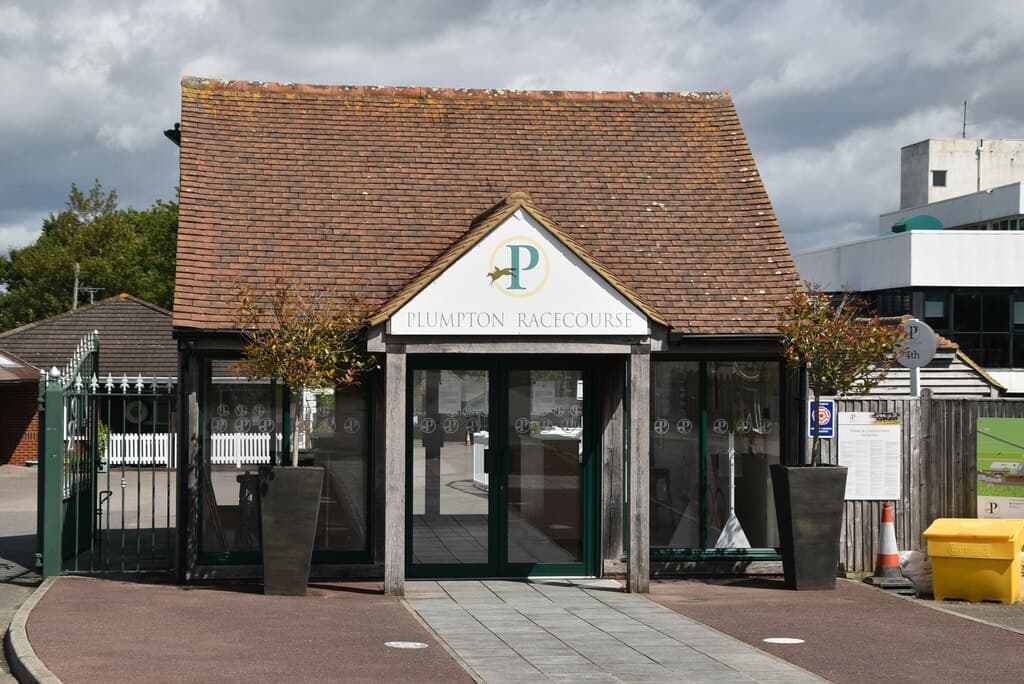
A Day Out at Plumpton Racecourse
Everything you need for a day at Plumpton — getting there, what to wear, enclosures, food and drink, and insider tips for East Sussex's intimate jumps venue.
Read more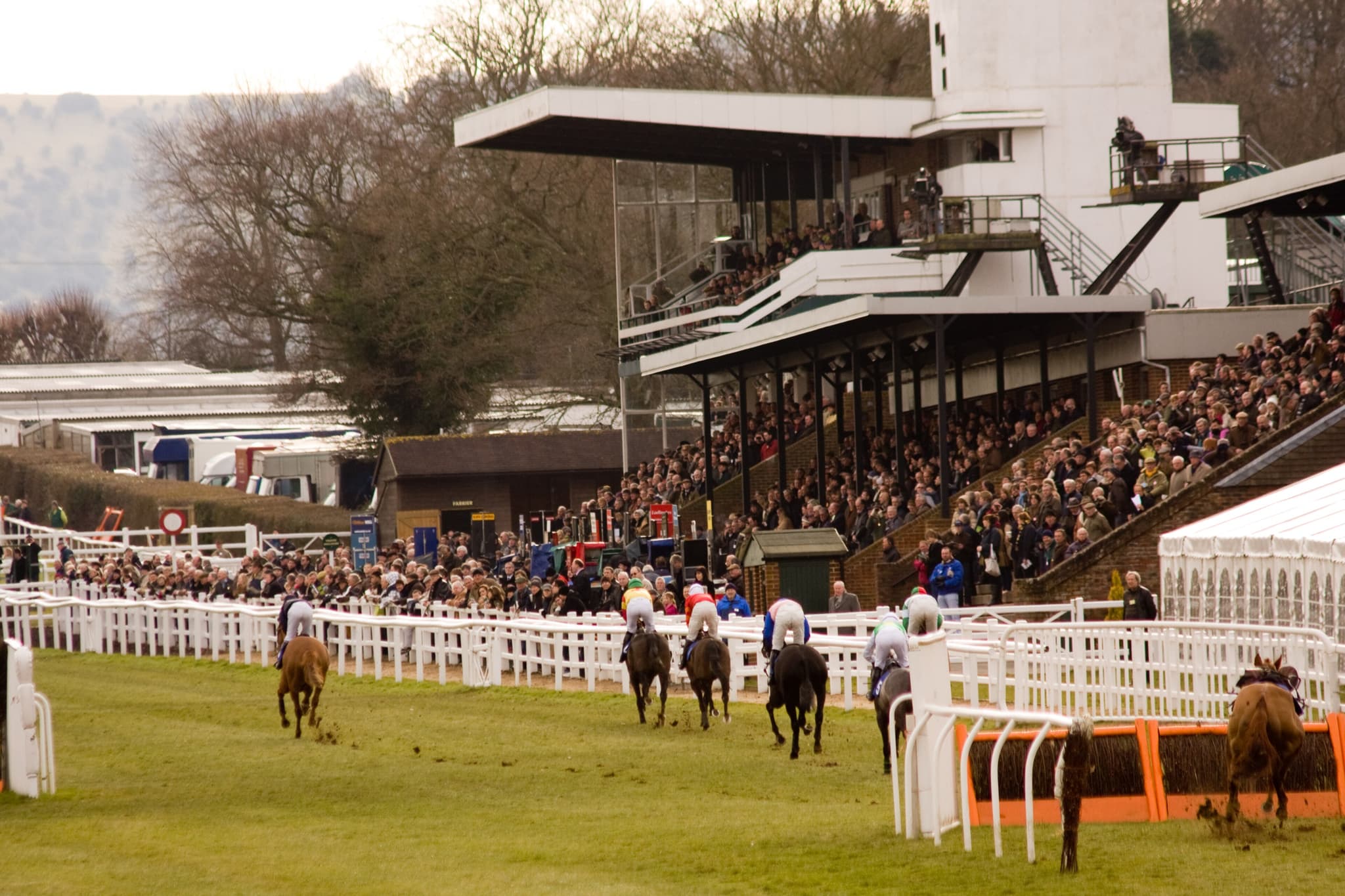
Plumpton Jump Festival: Your Complete Guide
Plumpton is Sussex's beloved National Hunt course — tight, sharp and unforgiving of jumping errors. Here's your guide to the Sussex National and the south-east's grassroots jump season.
Read more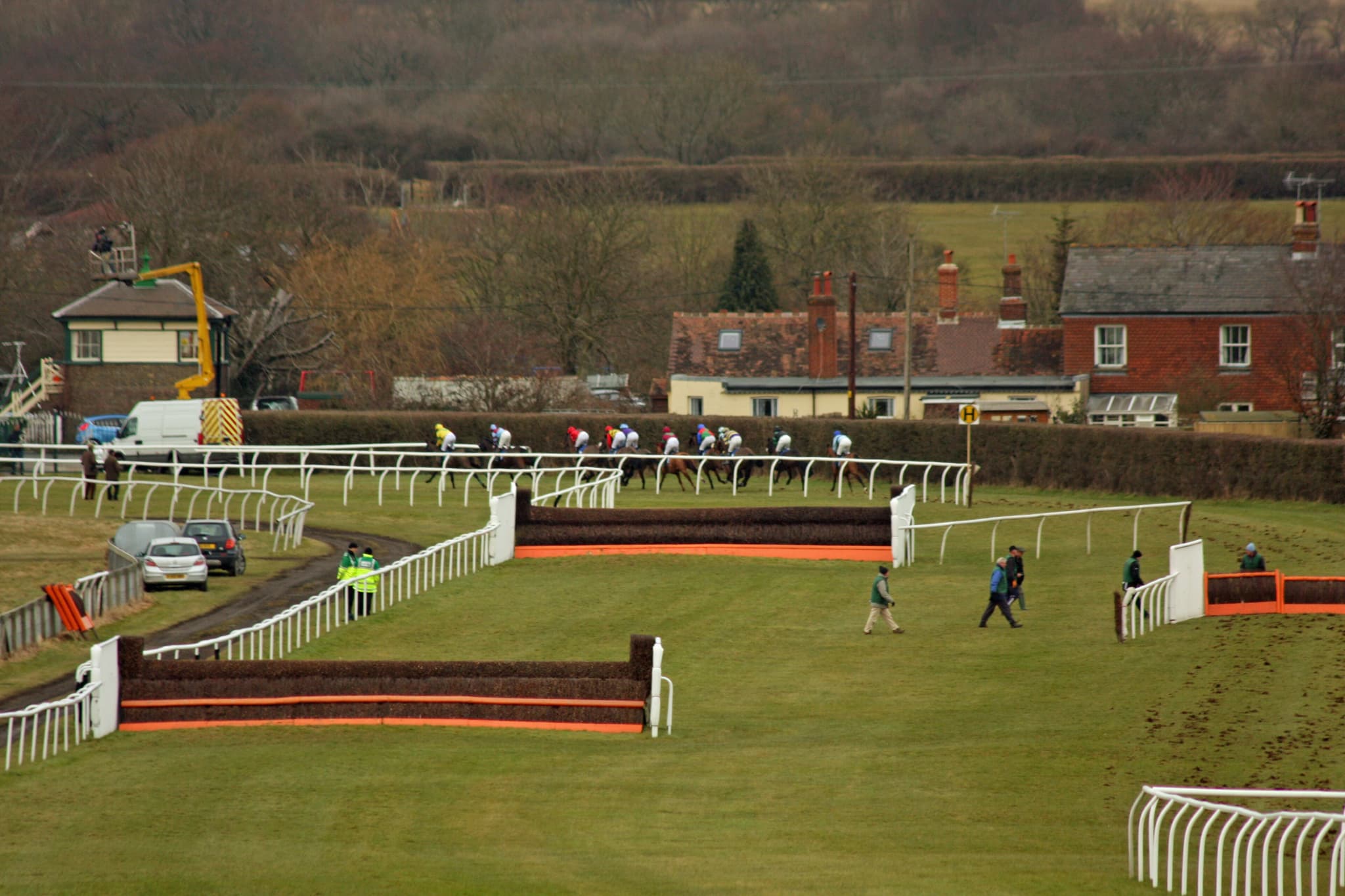
Sussex National: Complete Guide
Your complete guide to the Sussex National — East Sussex's signature chase, the best jumping at Plumpton Racecourse.
Read morePhotos on this page are used under Creative Commons licences. Titles, sources and licence links for each one are on our image credits page.
Research the field with the AI Race Predictor
Our model publishes calibrated win-probability estimates for UK races — a second opinion to understand a race, not tips. It's open about its record: it doesn't beat the market, and we show exactly how it does.
Work it out & learn the basics
Gamble Responsibly
Gambling should be entertaining and not seen as a way to make money. Never bet more than you can afford to lose. If you or someone you know has a gambling problem, help and support is available.