
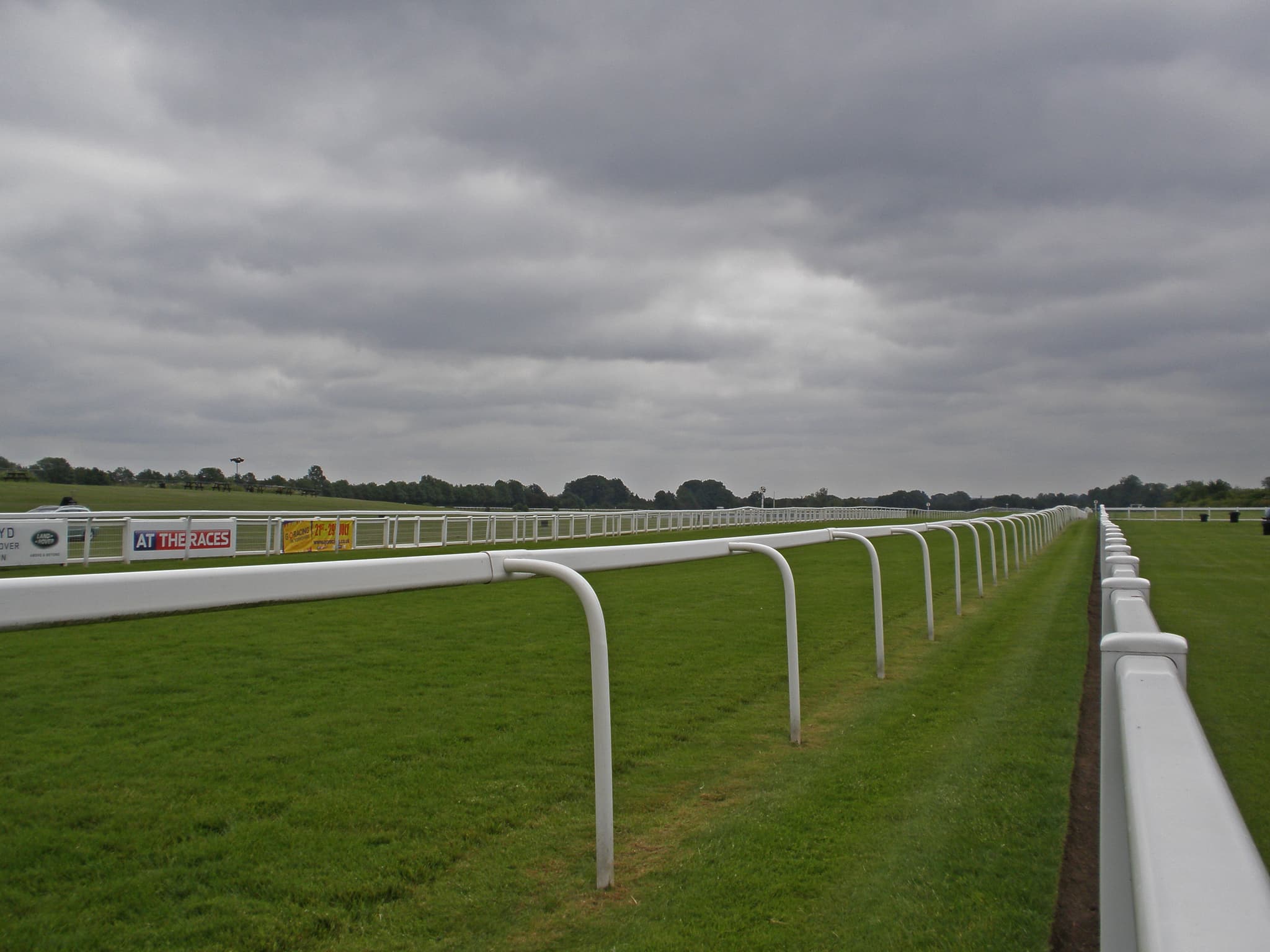
Founder & Editor · Last reviewed 2026-04-05
Introduction
Who This Guide Is For
Ripon Racecourse sits in the Vale of York, a mile from the medieval centre of Ripon and about 12 miles north of Harrogate. Racing has taken place here in some form since 1714, when Parliament granted a charter for race meetings in Queen Anne's reign, making Ripon one of the oldest continuously active racecourses in Britain. If you are planning your first visit, this guide tells you what to expect from the track, the facilities, the key races, and the logistical reality that Ripon has no railway station. If you are a regular racegoer interested in the betting angles, the draw bias section and the betting guide are where to start.
Ripon is a flat-only course with around 16 fixtures between April and August. It is not a Grade 1 venue. What it is, reliably, is a well-run summer card at a beautiful setting — the course earned the nickname Yorkshire's Garden Racecourse for its maintained grounds and floral displays, and it has won the Racegoers' Club Best Small Racecourse in the North award more than once. The racing is largely handicap and conditions class, with one headline event: the Ripon Champion Two Yrs Old Trophy in August, a Listed race over six furlongs that has become one of the north's key juvenile sprint pointers.
This guide covers everything from the track's unusual draw bias to combining a raceday with a visit to Fountains Abbey, 4 miles south. It is written for racegoers, bettors, and anyone thinking about a day out in North Yorkshire who wants to understand what Ripon offers before they book.
Quick Facts
| Location | Boroughbridge Road, Ripon, North Yorkshire, HG4 1UG |
| Racing type | Flat only |
| Season | April to August (approximately 16 fixtures) |
| Track shape | Right-handed oval, approximately 1 mile 3 furlongs round |
| Home straight | Approximately 5 furlongs |
| Distances | 5f, 6f, 1m, 1m1f, 1m2f, 1m4f, 2m |
| Signature race | Ripon Champion Two Yrs Old Trophy (Listed, August) |
| Year founded | 1714 (parliamentary charter) |
| Nearest city | Harrogate, 12 miles south via A61 |
| Nearest station | Harrogate (no railway station at Ripon) |
| Typical attendance | 4,000–6,000; up to 8,000 on Trophy day |
| Website | ripon-races.co.uk |
What Makes Ripon Worth Visiting
The racecourse sits alongside the River Ure, with the tower of Ripon Cathedral visible from the course about a mile to the south-east. The setting alone puts Ripon in a different bracket from many northern tracks: you are watching flat racing in a river valley surrounded by the North Yorkshire countryside, with one of England's oldest medieval cathedrals on the horizon.
The racing calendar is concentrated in summer, which means the course is reliably busy when it does operate. The spring fixtures in April and May bring smaller fields but competitive racing; the summer programme builds through June and July; and August contains the two flagship meetings — the Great St Wilfrid Day and the Champion Two Yrs Old Trophy meeting. That Trophy race, run since the 1980s and elevated to Listed status, draws runners from powerful southern yards as well as the dominant northern operations based in Malton and Thirsk. Form from the race translates to Doncaster's St Leger meeting in September and, in a good year, to Newmarket's Dewhurst Stakes in October.
For bettors, Ripon has one defining characteristic: the sprint draw bias. In 5f races with 10 or more runners, low draws (stalls 1–5) win at significantly above-expected rates. This is one of the most pronounced sprint draw biases on any British track and is worth understanding before you place a pound. The course section and betting guide explain it in detail.
For everyone else, Ripon delivers a relaxed Yorkshire day out at a course that has been putting on racing for more than 300 years. The atmosphere and planning section covers the cathedral, Fountains Abbey, the Theakston and Black Sheep breweries at Masham, and why Harrogate makes the best overnight base.
Bet on Ripon
Place your bets on Ripon races with a trusted bookmaker.

Promo code BETFRED50. New customers only. Register, deposit with a Debit Card, and place a first bet of £10+ at Evens (2.0)+ on Sports, to be settled within 7 days, to get £30 in Sports Free Bets and £20 in Bet Builder Free Bets within 24 hours of settlement. 7-day expiry. Eligibility & payment exclusions apply. Full T&Cs apply. Take Time to Think. BeGambleAware.org. 18+. Full T&Cs.

Promo code R30. New UK customers only, 18+. Register, deposit £10 or more, then place a £10 single cash bet at odds of 1/2 (1.5) or greater on any sports market (excluding Virtuals). Once the qualifying bet settles you get £30 in Free Bets (3 x £10) — the qualifying bet can win or lose. Free Bets are valid on any sports market excluding Virtuals, expire in 7 days, are non-withdrawable and must be used in full. Excluded deposit methods apply (including PayPal, Apple Pay, Skrill and NETELLER). Named bets such as Lucky 15 do not qualify. If you cash out the qualifying bet, or it is voided, you are no longer eligible for the offer. Ends 31.12.26. Full T&Cs apply. Please gamble responsibly. BeGambleAware.org. 18+. Full T&Cs.

Promo code BET40GET20. New UK customers, 18+. Register with the code and place a first bet of £40 or more at Evens (2.0) or greater. Receive 2 × £10 free bets: the first credited automatically once the qualifying bet settles, the second 24 hours later. Free bets must be placed at minimum odds of 4/1 (5.0), expire 24 hours after credit, and the free-bet stake is not returned with winnings. Debit card deposits only. Take Time to Think. BeGambleAware.org. 18+. T&Cs apply. Full T&Cs.

50% of your first-day net losses refunded as a free bet, capped at £25. New UK customers aged 18+ only. To qualify, deposit and place a first bet of £10 or more on any sport at minimum odds of evens (2.00), then place at least two further bets on different events, each worth at least 50% of your largest bet, all at evens (2.00) or greater. Losses are counted from your first settled bet until 23:59 the same day. Place a qualifying £10+ bet and you are guaranteed at least a £5 free bet. Bets placed at SP, void bets, cashed-out bets and bets struck with free bets do not count towards the offer. The free bet is credited the day after your qualifying bets settle and must be used within 7 days, after which it expires. It can be used at odds from 1/4 (1.25) up to 250/1 on singles and straight accumulators, but not on Trixie, Patent or Yankee style multiples. Free-bet stake is not returned with winnings. One offer per person, household, address, IP address and device. E-wallet deposits may not qualify, so check the cashier before depositing. Customers registered with GAMSTOP cannot claim. KYC identity verification must be completed before the free bet is credited. Take Time to Think. BeGambleAware.org. 18+. T&Cs apply. Full T&Cs.

New customers, 18+. Choose the sports bonus at sign-up, make a first deposit and receive a 100% bonus up to £50 in your Sports Bonus balance. To convert the bonus to cash, wager it 10x within 30 days. Single bets below Evens (2.00) do not qualify; accumulators do not qualify if any selection is below 1/2 (1.50). Virtual Sports, voided, cancelled, drawn, cashed-out and free-bet wagers do not count towards wagering. Only the first settled bet per event counts. Withdrawing before the wagering requirement is met forfeits the bonus balance including bonus winnings. Real-money funds are used before bonus funds. Deposits via Skrill or Neteller are not eligible. Not valid in conjunction with other promotions. Odds, bet and payment limits apply. 10bet general and promotion T&Cs apply. BeGambleAware.org. 18+. Full T&Cs.

New customers in Great Britain and Republic of Ireland, 18+. Place a £10 fixed-odds qualifying bet at minimum odds of 1/2 (1.50) — single or each-way (only the win part counts), pre-event or in-play, not cashed out early, within 28 days of opening the account. Receive up to £60 in bonuses credited over three days: 3 × £10 fixed-odds free bets (the first on settlement, then 24 and 48 hours later) plus 3 × £5 Total Goals FOOTBALL spread bets and 3 × £5 racing Winning Favourites spread bets, with a £1 racing Race Index spread bet as an extra on top. The spread bets need a full spread-betting account, opened within 28 days of the fixed-odds account and subject to Spreadex's eligibility and appropriateness checks. Free-bet stakes not returned with winnings; free bets valid 28 days from issue. IMPORTANT: the £5 credits are SPREAD bets — sports spread betting carries the risk that losses can exceed your stake. Sports spread-betting customers do not have Financial Ombudsman or FSCS recourse. Take Time to Think. BeGambleAware.org. 18+. T&Cs apply. Full T&Cs.

Promo code WELCOME15, entered under My Bonuses after registering. New UK customers, 18+. Place a first qualifying bet of at least £10 from your cash balance at odds of evens (2.0) or greater within 7 days of opening the account. Once the qualifying bet fully settles you receive £15 in free bets, credited as 3 x £5 tokens with set uses: one £5 accumulator free bet (minimum 4 legs, each leg at 2/5 or bigger), one £5 sports free bet (any market at evens or bigger) and one £5 Sub Cover free bet (selected football player markets at evens or bigger). Free-bet stakes are not returned with winnings. Free bets expire 7 days after they are credited. Void, cashed-out and partially cashed-out bets do not qualify. One offer per customer. Confirm the current terms on BetGoodwin's own welcome-offer page before claiming. Take Time to Think. BeGambleAware.org. 18+. T&Cs apply. Full T&Cs.

New UK customers, 18+. Minimum deposit £10. Place a £10 qualifying single on sports (excluding virtuals) at minimum odds of 1/2 (1.50), settled within 14 days. Deposit-method exclusions apply. Receive £30 in free bets (stake not returned), split £20 for sportsbook use (2 x £10) and £10 for Bet Builder only (2 x £5); Bet Builder does not cover horse racing. Free bets must be accepted within 7 days and expire 7 days after acceptance. No promo code required. Best Odds Guaranteed on UK & Irish racing, subject to having staked over £25 in the previous seven days. Operated by LiveScore Betting and Gaming (Gibraltar) Ltd, UKGC 56859. Confirm the current terms on LiveScore Bet's own promotions page before claiming. Take Time to Think. BeGambleAware.org. 18+. T&Cs apply. Full T&Cs.
18+. BeGambleAware.org
The Course & Layout
Track Dimensions and Shape
Ripon is a right-handed oval approximately 1 mile 3 furlongs in circumference. The home straight is about 5 furlongs long, which is unusually long relative to the overall circuit length. That extended run-in is important: it means races are not decided purely on the final bend, and horses with stamina to sustain their effort through the straight have a real advantage over one-paced types who find the flat.
The bends at Ripon are tighter than at York and noticeably sharper than at Newmarket or Doncaster. The course requires horses to be balanced and responsive rather than simply powerful. This characteristic favours handy, adaptable horses in races over a mile and beyond, and it is one reason northern trainers with sharp-track specialists — Of note Richard Fahey at Musley Bank, Tim Easterby at Great Habton, and Karl Burke at Middleham — have strong records here relative to their overall win percentages.
The Sprint Course: 5 Furlongs
The 5f course at Ripon starts from a chute off the back straight and runs into the home straight, joining the main oval before the final bend. The key feature of the 5f configuration is that the track curves right in the early stages, pushing horses drawn in high stalls (wide on the course) outward and forcing them to cover extra ground. Horses in low stalls (1–5) have an inside line into the bend and maintain a shorter, more direct route to the finish.
This geometry produces one of the most pronounced draw biases in British sprint racing. In 5f races at Ripon with 10 or more runners, stalls 1–5 win at rates meaningfully above what their proportion of runners would predict. Over a multi-year sample, the top-five stalls account for a disproportionate share of winners in double-figure fields. The bias is most extreme when the going is good to firm or firmer, when the rail is positioned on the inside, and when the field is large enough for the wide draw to cost horses significant ground.
importantly, the rail position matters. Ripon's groundstaff move the running rail to protect different sections of the track, and when the rail sits closer to the inside, the draw bias strengthens. When the rail is moved out and a strip of fresh ground is added to the inside, the effect is modified. Always check the course's going and rail position update on raceday morning before finalising any sprint selection.
The 6 Furlong Course
The 6f course is slightly less affected by the draw bias than the 5f, because horses have a longer distance to establish their position before the turning section. That said, low draws still hold an advantage in larger fields. In 6f races with 12 or more runners, stalls 1–8 outperform relative to their numbers on the draw sheet. High-drawn horses can overcome the disadvantage in races where the pace collapses early and allows wide-drawn types to cross to a better position, but this is the exception rather than the rule.
The 6f trip is well-served at Ripon. It suits horses with speed who can handle the straight's slight uphill gradient in the final furlong.
Round Course: 1 Mile to 2 Miles
Races from 1m to 2m use the full oval with a start on the back straight. The key topographical feature for these distances is a slight rise in the home straight beginning roughly 2 furlongs out and reaching its peak about 1 furlong from the line. The rise is not steep by the standards of Epsom or Goodwood, but it is consistent enough to sort out horses who have been asked for their effort too early.
Races at 1m and 1m1f start on the far side of the course. There is a sweeping bend into the straight, which rewards handy horses who can sit close to the pace without expending energy in a wide position. In large fields at 1m, horses drawn in the middle to high stalls often find themselves wide on the first bend and need to drop back to find cover, burning energy. Low draws in 1m races, particularly in fields above 12 runners, offer a similar structural advantage to the sprint draw bias, though the effect is less extreme because horses have more time to adjust their position.
At 1m2f and 1m4f, draw effects largely wash out. The race settles into a rhythm over the longer trip and positional tactics matter more than the starting gate. These trips reward horses with an honest cruising speed who can produce a sustained run up the slight home straight incline.
The 2m trip is the longest Ripon stages. Fields are typically small — rarely above eight runners — and the draw is irrelevant. The pace tends to be steady early and quickens approaching the home turn. Stayers who handle right-handed tracks and have a reliable finishing kick up the home straight are the type to back.
Going Tendencies
Ripon's location in the Vale of York beside the River Ure has a direct influence on the going. The underlying soil is a clay-heavy mixture that retains moisture. After rain, the ground takes longer to recover than at free-draining venues built on chalk or sand, such as Newmarket or Ascot. From late July onwards, it is routine for Ripon to be racing on good to soft or soft ground while southern tracks on the same day are good or good to firm.
The Ure valley microclimate adds another variable. Morning mist is common from August onwards, particularly in the meadows immediately adjacent to the course. On a morning when radar shows no rain, the going at Ripon may still soften slightly from overnight moisture that settles in the valley and does not lift until mid-morning. This effect is most pronounced after a dry spell followed by humid conditions — the ground can be firmer than forecast in mid-afternoon after an apparently soft morning.
For bettors, the practical implication is to treat Ripon's going as one grade softer than at a comparable southern track after similar rainfall totals. A horse running on good to firm at Sandown the previous weekend may encounter good to soft at Ripon two weeks later despite apparently similar weather patterns. Checking the official going description on the BHA website on the morning of racing, rather than relying on the going forecast from earlier in the week, is worthwhile at this particular course.
Which Horse Types Succeed at Ripon
Sprint races (5f, 6f): Low-drawn, front-running or prominent types with clean jumping abilities from the stalls. Horses who can travel sharply into the first bend and hold a direct line to the rail gain a measurable physical advantage. Horses with a history of running wide early on right-handed tracks are at a structural disadvantage.
Mile races (1m, 1m1f): Handy, adaptable horses who can settle within the first three or four in the home straight. Horses who need to be covered up and delivered late tend to find Ripon's fairly short bend limits their opportunity; the strong pace set in most 1m handicaps means there is no shortage of forward bias.
Middle-distance (1m2f, 1m4f): Honest, consistent types with a sound cruising speed. The slight home straight rise catches out horses who front-run without the stamina to see it out.
Staying races (2m): Stayers with a reliable finishing kick in the final furlong of the home straight. Front runners can be vulnerable to a horse produced wide and late, but the relatively short straight (5 furlongs) constrains how late a challenge can arrive.
Comparison with Yorkshire Tracks
Ripon is sharper and tighter than York, where the sweeping bends reward long-striding gallopers. It is more undulating than Thirsk and carries more pronounced draw effects in sprints than any other Yorkshire flat track. Catterick is similarly sharp but runs left-handed and has a severe downhill stretch that Ripon lacks. Form translates well between Ripon and tracks of a similar character: Chester (tight and right-handed), Carlisle (undulating), and Hamilton Park (sharp).
Key Fixtures & Calendar
The Season at a Glance
Ripon stages flat racing only, with the season running from April through to August — approximately 16 fixtures in total. The calendar is designed to sit alongside rather than compete with the bigger meetings at York and Doncaster. When York stages the Dante meeting in May or the Ebor Festival in August, Ripon is quiet. When those York dates are clear, Ripon steps forward with its own card. The result is a season that rarely clashes with the major Yorkshire meetings and draws a loyal local crowd throughout.
Typical crowd figures run between 4,000 and 6,000 for a standard Saturday or evening card. The two August flagship meetings — Great St Wilfrid Day and the Champion Two Yrs Old Trophy meeting — regularly push attendance to 7,000 or 8,000, the largest numbers Ripon sees in the year.
April and May: Opening the Season
Ripon's first fixture of the year typically falls in mid to late April. Early-season cards at Ripon tend to feature maiden races and novice conditions events that suit horses coming off their winter break. The going in April can be testing — the Vale of York retains winter moisture into spring, and soft or heavy ground is common in the opening fixtures.
By May, the cards fill out with handicaps and conditions races across all distances. The May programme includes an evening meeting format that has become popular for corporate and group bookings. The relaxed atmosphere of an evening fixture at Ripon — racing from approximately 6pm, with the long summer light lasting past 9pm — suits visitors who want a social occasion as much as a sporting one. The Big Night Out meeting in May is an evening card built specifically around entertainment and attractions alongside the racing.
Family Day in May offers free or discounted admission for children and typically includes activities aimed at younger visitors, making it one of the better introductory events on the Yorkshire racing calendar for families attending for the first time.
June and July: The Summer Sequence
June and July see Ripon at its most consistent. The grounds are at their best — hence the Garden Racecourse reputation — and the programme fills with competitive handicaps across sprint and middle-distance trips. The going in June is typically good to firm, the optimal surface for Ripon's sprint draw bias to operate at its most extreme. Bettors tracking low-draw sprint performance should pay closest attention to the June and July cards.
Ladies Day, usually held in June, is one of the best-attended fixtures outside the August meetings. A fashion competition element attracts visitors for whom racing is the backdrop to a social occasion, and the racing card on Ladies Day is traditionally strong. The Ripon prize fund is modest compared to York or Doncaster, but the standard of horses travelling up from Newmarket and Lambourn yards to contest the better-class conditions races is higher than Ripon's grade might suggest.
August: The Flagship Meetings
Great St Wilfrid Day
The Great St Wilfrid Stakes is a six-furlong heritage handicap run on a Saturday in mid-August. It is Ripon's longest-established feature race and was named after the seventh-century Bishop of Ripon whose foundation lies at the root of Ripon Cathedral. The race carries Listed class status and consistently attracts runners from the leading sprint yards — John Quinn, Richard Fahey, Kevin Ryan, and Tim Easterby are all regular representatives, but the race also draws southern handlers including trainers from the Newmarket and Lambourn yards who send horses north specifically for this card.
The supporting card on Great St Wilfrid Day typically includes conditions races and competitive handicaps, making it a truly full afternoon of racing. Attendance on this day regularly reaches 7,000 to 8,000, the largest crowd of the Ripon season. Hospitality packages sell out earlier for this meeting than any other in the calendar.
Ripon Champion Two Yrs Old Trophy Meeting
The Ripon Champion Two Yrs Old Trophy is run on the Bank Holiday Monday in August, the meeting that follows Great St Wilfrid Day by a few weeks. The race is a Listed six-furlong sprint for two-year-olds and has developed since the 1980s into one of the most significant juvenile sprint pointers in the north of England.
The Trophy attracts runners from powerful southern yards — trainers based at Newmarket and Lambourn send horses to Ripon in August specifically because the form from this race travels well. Previous Trophy runners have appeared at the Group 1 Dewhurst Stakes at Newmarket in October and at Doncaster's prestigious two-year-old races in September. Placed horses from the Trophy at Ripon are worth following through the autumn.
The meeting itself is also notable for the quality of the supporting card. Conditions races for older horses and strong handicaps are scheduled alongside the Trophy, making the Bank Holiday Monday one of the best-value days on the entire north of England calendar.
Ripon Grand Cup Day
The Ripon Grand Cup is a heritage flat handicap over 2m, run as part of the August programme. It is one of the oldest staying races in the region. The race draws a small but competitive field of stayers and has a loyal following among fans of the staying distances. The Grand Cup represents a tradition that stretches back to the early nineteenth century and adds a different dimension to a sprint-dominated August programme.
Children's Days and Family Programming
Ripon schedules at least one dedicated Children's Day in August, often timed around the Great St Wilfrid meeting. Free or reduced-price entry for children under 16 is standard, and the course provides activities alongside the racing. For families using Ripon as an introduction to racing, the August family fixtures are the best entry point — the weather is most reliable, the crowds are big enough to create a real atmosphere, and the racing is at its best quality.
Evening Meetings
Ripon stages three or four evening fixtures between May and July. These typically start at 6pm and run until around 9pm. Evening meetings at Ripon attract a younger crowd and a more social mix of racegoers, with a higher proportion of corporate parties and groups. The racing quality on evening cards is generally lower than Saturday afternoon fixtures, but for atmosphere and accessibility they offer excellent value — ticket prices for evening meetings are typically below the standard Saturday rate.
Check the Ripon Racecourse website for the full fixture list, exact dates, and ticket prices, which are confirmed each year in late autumn for the following season.
Facilities & Hospitality
The Grandstand
The Ripon Grandstand was rebuilt in 2005, replacing the previous Victorian structure that had served the course for over a century. The 2005 building is a modern two-storey structure that provides covered seating in the upper tier and standing room along the front rail on the lower level. It faces the home straight directly, giving an unobstructed view from the final 2 furlongs all the way to the finish line. The sightlines from the grandstand are among the best at any small northern track.
The rebuild included new bar and catering facilities on both floors, a betting hall integrated into the ground floor, and a terrace area on the upper level that is open in dry weather. The 2005 investment also upgraded the electrical infrastructure, which supports the large screens and public address system that are now standard at modern tracks.
The Enclosures
Ripon divides into three enclosures, each with a different ticket price and character.
The Club Enclosure (also referred to as the Members' or Club Stand) sits in the grandstand and the area directly in front of it. This is the premier enclosure, with access to the restaurant, the main bars, and the covered grandstand seating. The dress code for the Club Enclosure is smart casual: collared shirts for men, no shorts, no sportswear. On Great St Wilfrid Day and the Trophy meeting, the Club Enclosure fills early and hospitality packages take up a significant share of the covered seating.
The Paddock Enclosure provides access to the pre-parade ring and the main paddock, where horses are saddled and walked before each race. This is where most experienced racegoers spend the bulk of their time. The paddock at Ripon is compact — the course's overall size means that the distance from the paddock rail to the horses is shorter than at larger tracks — which gives a real close-up view of the runners. The Paddock Enclosure has its own bar and food outlets and covers the section of the viewing bank between the grandstand and the winning post.
The Course Enclosure is the most affordable option and provides access to the infield and the grass banks on the far side of the straight. The view of the finish from the Course Enclosure is angled, which suits some racegoers but means you are watching the race from a side-on perspective in the straight rather than head-on from the grandstand. Families with young children often prefer the Course Enclosure because there is open space for children to move around without disrupting other spectators.
The Paddock Area
The paddock at Ripon is one of the course's best features. It is tree-lined, which creates a sheltered atmosphere even on cooler August days, and the circular walking ring is close enough to the rail that you can assess horses' coats, movement, and demeanour in real detail. Trainers and owners use the paddock in the 20 minutes before each race, and on the bigger days it is common to see recognisable figures from the main northern and southern stables.
Food and Drink
Ripon sources from Yorkshire suppliers across its catering operation. The restaurant in the Club Enclosure serves a two-course or three-course lunch on Saturday cards and on the flagship August meeting days. The menu reflects the region: Yorkshire beef, locally sourced fish, and seasonal vegetables from suppliers in the Vale of York and the Dales.
The trackside food operation includes the Yorkshire fish and chip van that has become one of Ripon's fixtures on raceday. This van — or its equivalent, which has appeared at Ripon under various operators for many years — parks near the Paddock Enclosure entrance and serves throughout the afternoon. On a summer Saturday at Ripon, the fish and chip queue is worth joining early.
Bar facilities in the Paddock and Course Enclosures serve a standard range of draught and bottled options, with a Champagne Terrace area offering prosecco and sparkling wine for groups and hospitality parties. The Champagne Terrace is positioned with a view of the paddock and the grandstand, making it one of the better social spots on the course for a summer afternoon.
Betting Facilities
The betting ring at Ripon is active on Saturday and holiday cards. On a standard midweek or evening fixture, the on-course book is smaller, with fewer rails bookmakers pitching up. On Great St Wilfrid Day and the Trophy meeting, the ring fills out and the atmosphere is comparable to a mid-ranking Saturday at a course like Pontefract or Thirsk. Tote facilities are available throughout the course, and there are self-service betting terminals in the grandstand and in the Paddock Enclosure.
Children's Facilities
Ripon has invested in child-friendly infrastructure as part of a strategy to grow family attendance. A dedicated children's area — with fairground-style activities on the major fixture days — is set up near the Course Enclosure. On Children's Day fixtures (typically in August), additional entertainment is programmed and admission for under-16s is free or significantly reduced.
Disabled Access
The 2005 grandstand rebuild incorporated level access from the car park to the main viewing areas. There is step-free access to the lower grandstand tier, the Paddock Enclosure, and the betting hall. Disabled parking bays are positioned close to the main entrance gate. The course website provides specific accessibility information for each enclosure, and the racecourse office can arrange additional assistance if contacted in advance.
Large Screen and Technology
A large television screen positioned on the far side of the track provides live coverage of races in progress (for the section of the straight away from the stands) and shows away racing from other British meetings throughout the afternoon. This is standard at most tracks of Ripon's size. A public address system covers the entire course including the Course Enclosure infield.
Getting to Ripon
The Key Logistical Fact
Ripon has no railway station. The Ripon to Harrogate line — which for much of the nineteenth and early twentieth century connected the city to the national rail network — closed in 1967, a casualty of the Beeching cuts. There is no proposal to reopen it. Anyone travelling to Ripon races without a car needs to plan around this in advance.
By Car
Ripon Racecourse is on the A61 (Boroughbridge Road), approximately 1 mile north of Ripon town centre. The postcode HG4 1UG takes you directly to the course entrance. The course is well signposted from all main approach roads on raceday.
From Harrogate (12 miles): Take the A61 north directly to Ripon. Allow 20–25 minutes in normal traffic; 35 minutes on a busy Saturday.
From York (24 miles): The most direct route is the A59 west to Knaresborough, then the A6055 north to join the A61 into Ripon. Allow 40 minutes. On Great St Wilfrid Day, the A59 can back up at the Knaresborough junction — leave extra time.
From Leeds (30 miles): Take the A61 north through Harrogate and continue to Ripon. The full A61 run from Leeds city centre to the racecourse takes approximately 55 minutes in light traffic. The A658 from Bradford to Harrogate and then the A61 is an alternative if the southern A61 approach is congested.
From the A1(M): Leave at Junction 48 (Boroughbridge interchange). Take the B6265 west towards Ripon; the course is approximately 6 miles from the junction. This is the fastest approach for visitors travelling from the south on the motorway network.
Parking: The course provides a large free car park adjacent to the main entrance. On standard fixtures, parking is straightforward and there is rarely a significant wait on arrival or departure. On Great St Wilfrid Day and the Trophy meeting, the car park fills up quickly. Arriving 45 minutes before the first race is sufficient for most Saturday cards; arriving 75 minutes early is advisable for the two major August meetings.
By Bus: The Raceday Service
On selected fixtures — typically the Saturday cards and the two August flagship meetings — a raceday bus service operates from Harrogate bus station (adjacent to Harrogate train station). The service runs on a timed schedule before and after racing, with buses departing approximately 60–90 minutes before the first race and returning after the last. Journey time from Harrogate bus station to the racecourse is approximately 25 minutes.
This bus service is the practical option for visitors arriving by train at Harrogate. It is the only direct raceday transport from a rail-connected town. Check the Ripon Racecourse website for the fixture-specific timetable before travelling, as the service does not run on every card.
Standard local bus service 36 (Harrogate to Ripon) also runs throughout the day. It stops approximately 0.4 miles from the racecourse entrance, which is walkable in fine weather. Journey time from Harrogate bus station on the regular service is around 45 minutes depending on stops.
By Taxi
From Harrogate train station to Ripon Racecourse is a 20–25 minute taxi journey. Harrogate has a good supply of taxis; pre-booking for the return journey is advisable on major raceday afternoons when demand is high.
From York, the taxi journey to Ripon is approximately 40–45 minutes and the fare will be substantial. York visitors are better served by the train to Harrogate (22 minutes from York) and then the raceday bus or taxi onwards to Ripon.
Getting from Ripon Town Centre
The racecourse is 1 mile north of Ripon town centre via Boroughbridge Road. This is walkable in approximately 20 minutes in dry weather. The walk takes you along the A61 through a suburban section of the city, passing a short stretch of riverside path. Taxis from Ripon town centre to the course are readily available and inexpensive.
Accommodation
Harrogate is the most practical base for a Ripon racing trip. It is 12 miles south, has a mainline train connection to Leeds (25 minutes) and York (22 minutes), and offers a range of accommodation from budget hotels to spa hotels. The town's centre has a strong restaurant scene. Pre-booking is advisable for August weekend stays, when Ripon racing and general North Yorkshire tourism together push demand up.
Ripon town centre has several hotels and B&Bs within walking distance of the market square, including options on North Street and by the cathedral. Staying in Ripon itself removes the logistics of the A61 on raceday and allows a morning visit to the cathedral or Fountains Abbey before racing.
For a longer North Yorkshire break, accommodation in Masham (10 miles west, home of the Theakston and Black Sheep breweries) or in the Dales market towns of Leyburn or Middleham combines well with a Ripon raceday.
Frequently Asked Questions
History of Ripon Racecourse
The Parliamentary Charter and Queen Anne's Reign
Racing at Ripon dates to 1714, when Parliament granted a charter for the staging of race meetings during the reign of Queen Anne. That date places Ripon among the oldest continuously active racecourses in Britain, pre-dating the establishment of the Jockey Club (formally constituted around 1750) and the founding of Epsom's Derby (first run 1780). The original races were held on Bondgate Green, a stretch of common land to the north of the city. The charter was a formal recognition of racing that had almost certainly been taking place informally in the area for decades, as the vale's flat land beside the River Ure made it a natural venue.
The eighteenth century saw Ripon operating as one of several northern county racecourses whose meetings formed part of the summer social calendar for the Yorkshire gentry. Prize money came from local subscription, and horses were owned by landowners from across the Vale of York and the Dales. The proximity of Ripon to the great estates of North Yorkshire — Studley Royal (adjacent to Fountains Abbey), Markenfield Hall, and Newby Hall — meant the course had access to well-bred horses and wealthy patrons from its earliest years.
The Move to Boroughbridge Road
By the nineteenth century, the original Bondgate Green site had become impractical as the city expanded around it. The current racecourse on Boroughbridge Road has been in use since 1900. The move created a permanent, purpose-built facility alongside the River Ure in the meadows north of the city. The Ure valley setting that gives Ripon its distinctive character — the soft going, the morning mist, and the cathedral visible on the skyline — is a product of this location choice made at the turn of the twentieth century.
The Victorian period, even before the move, had seen Ripon develop as a more organised racing institution. The establishment of the Jockey Club's authority over British racing in the nineteenth century brought standardised race conditions and improved record-keeping to courses like Ripon. Prize money became more formal and the card structure more predictable. Ripon began attracting horses from the emerging training centres in Malton, Middleham, and Newmarket.
Ripon Cathedral and the Course
Ripon Cathedral sits approximately 1 mile south-east of the racecourse. Its relationship with the racecourse is less a formal one than a geographical and cultural proximity that has shaped the character of the venue for centuries. The city of Ripon grew around the cathedral, and the racecourse grew alongside the city.
The Great St Wilfrid Stakes, Ripon's longest-established feature race, takes its name from Wilfrid of Ripon, the seventh-century bishop who, according to the Venerable Bede's Ecclesiastical History of the English People, built the original church at Ripon around 672 AD. The Saxon crypt that Wilfrid constructed beneath that church survives below the current cathedral nave and is one of the oldest intact man-made structures in England. The naming of the race in his honour — a six-furlong sprint connecting to a seventh-century ecclesiastical figure — is the kind of layering of history that Ripon does without apparent effort.
The Grandstand Development
The original grandstand at Boroughbridge Road was a Victorian timber structure typical of northern racecourses built or expanded in the period from 1880 to 1910. It survived largely unchanged for most of the twentieth century, becoming a listed building concern in later decades as its maintenance costs grew. In 2005, Ripon invested in a full grandstand rebuild: the new two-storey structure replaced the Victorian building and brought the course up to contemporary standards for covered viewing, catering, and accessibility. The 2005 rebuild is the physical facility visitors see today.
The Northern Training Establishment Connection
Ripon has always been deeply embedded in the northern training community. The yards based in Malton (40 miles south-east), Middleham (22 miles west), and Thirsk (20 miles south-west) have used Ripon as a preparation track for generations. The logic is straightforward: Ripon offers a sharp right-handed circuit with competitive but not graded prize money, making it an ideal venue to run horses that need a race rather than a high-stakes test.
Richard Fahey, based at Musley Bank near Malton, has consistently been among the leading trainers at Ripon over the past two decades, with a strike rate at the course that exceeds his overall national average. Tim Easterby at Great Habton, and Karl Burke at Middleham, show the same pattern. These trainers understand the draw bias, know how to prepare horses for the sharp circuit, and consistently bring horses to Ripon who are well-suited to the track. The result is that Ripon cards, particularly in sprint handicaps, are often dominated by a handful of northern yards with track-specific knowledge.
The Two-Year-Old Programme
The development of Ripon's two-year-old racing programme is among the most significant contributions the course has made to British racing over the past four decades. The Champion Two Yrs Old Trophy, elevated to Listed status, has become a recognised pointer for northern juvenile sprinters. The race's reputation attracts runners from Newmarket and Lambourn — trainers who would not ordinarily contemplate a journey to a small northern track are prepared to travel to Ripon in August because the race carries weight in the assessment of juvenile form ahead of the autumn Group racing programme.
This reputation did not exist at Ripon's foundation in 1714 and was not established at the 1900 Boroughbridge Road opening. It has been built gradually over the second half of the twentieth century, through the consistency of good juvenile fields and the subsequent performance of Trophy runners at Doncaster, Newmarket, and Sandown. The course's ability to develop and sustain this reputation — to turn a local summer race into a nationally relevant pointer — reflects a careful approach to race programming that gives Ripon significance beyond what its prize fund alone would suggest.
Famous Moments
The Champion Two Yrs Old Trophy as a Classic Pointer
The Ripon Champion Two Yrs Old Trophy's status as a juvenile pointer is built on the record of its graduates at the highest level. The race has produced runners who Then appeared in the Group 1 Dewhurst Stakes at Newmarket, the most important two-year-old race of the British autumn. Previous Trophy participants have also lined up in the 2,000 Guineas at Newmarket the following May — a measure of how well the six-furlong Listed contest at Ripon in August assesses the underlying quality of a juvenile's sprint ability and constitution.
The form guide for Doncaster's St Leger meeting in September consistently features horses that ran — and in several cases finished placed rather than winning — in the Ripon Trophy a few weeks earlier. This pattern of placed-horse progression is significant for bettors: a horse who finishes second or third in the Trophy, then runs at Doncaster, often arrives with improved form and an undervalued price. The fact that the Trophy attracts southern-trained horses from powerful Newmarket yards means the form is tested against the best available juvenile sprinters rather than a provincial field.
The Great St Wilfrid: Competitive History
The Great St Wilfrid Stakes, as a competitive six-furlong handicap, has produced its share of dramatic finishes over the decades. The nature of the race — a large field of sprint handicappers, a draw bias that makes stall position a live factor, and the slight home straight rise that catches out horses who have been asked for their effort too soon — creates conditions for tight finishes and occasional upset results.
There have been editions of the Great St Wilfrid where a high-drawn horse has overcome the structural bias to win, typically because the pace collapsed in the early stages and allowed a wide-drawn front runner to cross to the rail unchallenged. These reversals of the expected draw bias outcome are among the more striking results in Ripon's record. When a horse in stall 16 or stall 18 wins the Great St Wilfrid after crossing the entire field to reach the inside rail, it produces the kind of result that bettors who had backed the draw-favoured low numbers discuss for several seasons.
The race has been won by horses trained across the spectrum of the sprint establishment — Fahey, Ryan, Easterby, and Quinn from the north; trainers from Newmarket and Lambourn from the south. The cross-regional character of the race is part of what has made it notable. It is one of the few northern handicap sprints that southern yards regard as worth the journey.
Sprint Races Against the Draw Bias
The Ripon draw bias in 5f races is well documented among professional bettors, and it has produced notable results in both directions. When the bias functions as expected, it simply reinforces the favourite or the well-drawn top-rated horse. The more historically interesting moments are when the bias is overcome.
In large-field 5f handicaps at Ripon, there have been occasions where a horse drawn in the highest stalls — stall 14 or above in a field of 16 — has won despite the structural disadvantage. These outcomes typically require a combination of early speed to cross to the inside rail before the bend, a moderate pace that keeps the field together longer than usual, and a horse with exceptional ability that can absorb the extra ground covered. When these wins occur, they tend to involve horses that trainers have specifically targeted at the race with the knowledge that the draw is workable if the pace scenario falls right.
Conversely, Ripon's history includes examples of well-drawn, well-backed sprint favourites who have failed to win despite their positional advantage, undone by a fast early pace that stretched the field across the track and allowed a handy horse from a mid draw to slot into a better position than its stall suggested. Racing rarely reduces cleanly to a single variable, and the draw bias at Ripon is a strong tendency rather than a guarantee.
Heritage Handicap Results
The Ripon Grand Cup, run over 2m, is one of the older heritage flat handicaps in the north of England. Its field sizes are typically small — staying handicappers at the Listed level rarely assemble in large numbers at a small track in August — but the race has produced its share of close finishes. The 2m trip at Ripon, with its right-handed oval, two full circuits, and the slight home straight rise, is a real test of stamina. Front runners in the Grand Cup are vulnerable to horses held up and produced late, because the home straight is long enough (5 furlongs) to allow a well-timed challenge.
Three Centuries of Continuity
Ripon's deepest contribution to British racing is structural rather than episodic. The course has staged racing continuously since 1714 — through two world wars (during which racing was suspended nationally at various points), through the post-war rationalisation of the racecourse programme, through the closures that ended racing at several comparable northern venues in the twentieth century. Courses of similar scale and vintage elsewhere in England did not all survive. Doncaster (1614), Chester (1539), and Carlisle (1595) survived; many smaller county courses did not.
That Ripon is still staging racing at Boroughbridge Road, having operated on the same stretch of North Yorkshire land for over a century and with a charter dating to 1714, places it in a narrow group of British racecourses that can claim real historical continuity rather than a heritage narrative. The course's role in the Yorkshire racing calendar — as a reliable summer flat track that develops juvenile talent, gives northern trainers a prep venue, and provides a consistent programme alongside the larger meetings at York and Doncaster — has been sustained across more than 300 years of British racing history.
Betting Guide
The Draw Bias: Ripon's Defining Betting Characteristic
No single factor shapes betting at Ripon more than the sprint draw bias. In 5f races with 10 or more runners, horses drawn in stalls 1–5 win at rates substantially above their proportional share of the field. This is one of the most consistent and well-documented draw biases at any British flat course.
The mechanism is the track geometry. The 5f course at Ripon starts from a chute that joins the oval at a right-hand bend. Horses drawn in high stalls (wide on the track) face that bend from a position several metres to the outside of horses in low stalls. They must cover extra ground to reach the inside rail, and the energy cost of doing so in the early stages of a 5f sprint — where the race is essentially decided by which horses can maintain speed across the first 2 furlongs before the field spreads out — is measurable. A horse in stall 1 travels a shorter distance from start to finish than a horse in stall 16 in a straight-line equivalent sense. At sprint distances, where margins of a neck or a head separate winners from losers, that geometric advantage is real.
When the Bias Is Strongest
The draw bias is most extreme under the following conditions:
Field size: With 10–14 runners, the effect is significant. With 15 or more runners, it is at its most extreme — a horse in stall 18 in a large field faces a near-impossible task unless pace and position allow crossing early to the rail.
Rail position: Ripon's groundstaff move the running rail between fixtures to protect different areas of the turf. When the rail sits close to the inside (maximum rail, minimum fresh ground on the inside), the low-draw advantage is at its peak. When the rail is moved out (adding fresh ground on the inside), the track widens and the bias is moderated. The course publishes a going and rail update on the morning of racing — this is the most important piece of pre-race information for a Ripon sprint bettor.
Going: In good to firm or firm conditions, pace is fast and the field tends to spread out early. Low-drawn horses can hold their position. In soft going, pace is slower, horses settle for longer, and the bias weakens — high-drawn horses have more time to cross to a better position before the bend arrives.
Race type: Open handicaps with large fields produce the clearest bias effects. Conditions races with small fields (six or seven runners) show less pronounced patterns.
The 6 Furlong Draw Bias
The 6f draw bias is real but less extreme than at 5f. With 12 or more runners, stalls 1–8 outperform relative to their share of the draw. The extra furlong of racing before the bend gives high-drawn horses more time to establish a better position, but the same right-hand turning geometry still applies. In practical terms: in a 6f handicap with 14 runners, a horse drawn in stall 14 or above requires a more convincing case on form to back than a similar horse in stall 6.
Round Course Races: From 1m Upwards
Draw effects diminish rapidly from 1m upwards. In 1m races with large fields (12+), low draws have a modest advantage because the first bend arrives relatively early and wide-drawn horses lose ground. However, the extra race distance allows jockeys to compensate positionally, and form and ability dominate over draw from 1m2f onwards.
From 1m2f to 2m, back the horse, not the stall.
Going Assessment: The Ure Valley Effect
Ripon's going management requires careful tracking. The course's clay-based soil and Ure valley location mean it retains moisture longer than free-draining southern tracks. A horse that ran on good to firm at Sandown or Newmarket two weeks before arriving at Ripon in late July may face ground that is one full grade softer — good to soft, or soft.
From late July onwards, apply a practical rule: unless the official going description is firm or good to firm and has been that way for at least a week, treat Ripon as one grade softer than a comparable southern course after similar rainfall. The morning mist effect — overnight moisture settling in the valley without rainfall showing on radar — is a real phenomenon at this course that can soften the ground by half a grade between the going description issued the previous evening and raceday morning. Always check the official BHA going description on raceday morning before finalising selections.
Trainer Patterns
Certain trainers have consistently above-average win percentages at Ripon relative to their national strike rates:
Richard Fahey (Musley Bank, Malton) is the dominant force in northern sprints and particularly at Ripon. Fahey's runners in 5f and 6f handicaps at the course win at a rate that exceeds his national average across all distances and courses. When Fahey sends a well-drawn sprinter to Ripon for a competitive handicap, the combination of trainer form and draw advantage is worth taking seriously.
Tim Easterby (Great Habton, Malton) similarly outperforms at Ripon. Easterby's operation specialises in tough, consistent handicappers that handle a variety of going conditions — exactly the type who benefits from Ripon's draw advantages in sprints.
Karl Burke (Spigot Lodge, Middleham) shows a strong Ripon record in both sprint and middle-distance races. Burke is particularly effective with two-year-olds at the course.
Kevin Ryan (Hambleton, near Thirsk) has a strong record in sprint conditions races at Ripon. Ryan's horses tend to be well-prepared for sharp, right-handed circuits and handle the draw pressures well.
When any of these four trainers sends a runner in a sprint at Ripon with a low draw, the case for backing is based on three converging factors: trainer track record, draw advantage, and course familiarity.
The Champion Two Yrs Old Trophy: Form Translation
For followers of juvenile racing, the Trophy provides one of the most reliable pieces of pre-Doncaster form available. The race is run in August, approximately four to five weeks before Doncaster's St Leger meeting in September. Horses who run well in the Trophy — finishing in the top three in a competitive field that includes southern runners — have a documented pattern of performing at or above their Ripon level at Doncaster.
The specific opportunity is with placed horses from the Trophy running next at Doncaster. A horse who finishes second or third at Ripon in a quality Trophy field often carries a market price at Doncaster that undervalues its August form. This is partly because Ripon does not attract the same level of form-study attention as Group 1 juvenile races at Newmarket, and partly because placed horses at Listed level are systematically underestimated in the market relative to winners.
Pace Scenarios and the Home Straight
Ripon's 5-furlong home straight is long relative to the overall circuit. This creates opportunities for pace-making horses to be caught. In 1m and longer races with a strong early pace, horses ridden prominently and asked for effort at the 2f pole often find the final furlong's slight uphill gradient too much. Horses held up and produced in the last quarter of the race — if the pace has been real — can close strongly in the final furlong. Identifying races where the pace is likely to be strong, and backing late runners with proven stamina at the trip, is a sound approach in Ripon's round-course handicaps.
Atmosphere & Day Planning
Ripon Cathedral: The Morning Half of the Day
Ripon Cathedral stands less than a mile south-east of the racecourse, and it is the single best addition to any Ripon racing visit. The building is largely medieval — work on the current structure began in the twelfth century — and its exterior, with twin west towers dating from around 1220, is among the most complete early Gothic facades in northern England.
The centrepiece for the historically curious is the Saxon crypt below the nave. This was built by Wilfrid, Bishop of Ripon, in 672 AD, making it one of the oldest intact man-made structures in England. The crypt is small — roughly the size of a large room — and accessed by narrow stone stairs. It predates the Norman Conquest by nearly 400 years and survived the subsequent rebuilding of the entire cathedral structure above it. Walking through it takes five minutes; appreciating what you are standing in takes longer. Entry to the cathedral is free, though donations are requested.
A morning visit to the cathedral, combined with an hour in Ripon's market square (the square has a 1,000-year history as a market, and the central obelisk dates from 1781) and lunch at one of the North Street or market-area restaurants, makes for a full morning before afternoon racing. The walk from the cathedral to the racecourse is about 20 minutes along Boroughbridge Road.
Fountains Abbey: Four Miles South
Fountains Abbey, 4 miles south of Ripon, is one of the most significant historical sites in the north of England. The Cistercian monastery was founded in 1132 and dissolved by Henry VIII in 1539. The ruins — which include the nave, tower, and cellarium of the original abbey — are among the best-preserved monastic remains in Britain. The National Trust manages both the abbey ruins and the adjoining Studley Royal Water Garden, an eighteenth-century landscape garden that is a UNESCO World Heritage Site in combination with the abbey.
Allow two to three hours for a proper visit. The combined abbey and garden site is open from 9am. On a Ripon raceday that starts at 2pm, arriving at Fountains at 9am and leaving by 12 noon leaves time for lunch in Ripon before the first race. Pre-book National Trust entry online if possible, particularly on summer Saturdays.
Masham: Breweries in the Dales
Masham is 10 miles west of Ripon on the B6267, a 20-minute drive through Nidderdale on the edge of the Yorkshire Dales. The town is home to two breweries of national standing.
Theakston Brewery (founded 1827) has been producing Old Peculier, its flagship dark ale, for generations. The brewery is open for tours from Monday to Saturday and the visitor centre serves samples. Black Sheep Brewery, founded in 1992 by Paul Theakston after a split from the family firm, sits at the other end of the town square and similarly offers tours and a bar. Visiting both in a morning is entirely feasible: the town square is small enough that you can walk between them in under five minutes.
Masham itself is a traditional Yorkshire market town with a weekly market on Wednesdays. The combination of the town, the two breweries, and the Dales scenery on the approach from Ripon makes it a straightforward half-day addition to a racing trip.
Harrogate: The Best Base
For overnight stays, Harrogate 12 miles south is the natural choice. The town has the deepest concentration of accommodation — spa hotels, boutique options, and budget chain hotels — within comfortable striking distance of the racecourse. The A61 between Harrogate and Ripon is a straightforward 20–25 minute drive.
Betty's Café Tea Rooms at 1 Parliament Street, Harrogate, is one of the most well-known tearooms in Britain. It has been in operation since 1919 and the afternoon tea is worth booking in advance. The town's Valley Gardens and Stray parkland make it a pleasant stop for an evening after racing.
Harrogate train station connects to Leeds (25 minutes) and York (22 minutes), making it the arrival point for visitors travelling by rail who then use the raceday bus or taxi onwards to Ripon.
Planning the Day
A full Ripon day, combining the cultural and the sporting, works best structured as follows:
9:00–11:30 — Fountains Abbey or Ripon Cathedral and the Saxon crypt 12:00–13:30 — Lunch in Ripon market square or North Street 14:00 — First race at Ripon 17:30–18:00 — Last race; return to Harrogate or continue west to Masham for a brewery visit and evening meal
For those who want the brewery element but are not driving, Masham is impractical on raceday (no public transport link). Saving Masham for the morning after racing and staying overnight in Harrogate or Ripon is the more practical approach.
The Yorkshire Dales proper — Wharfedale, Wensleydale, Swaledale — begin within 15 miles of Ripon to the west. A two-night itinerary that adds a Dales walk or drive on the day after racing turns a Ripon raceday into one of the best-value long weekends in the north of England.
More guides for this course
Share this article
More about this racecourse
All Ripon guides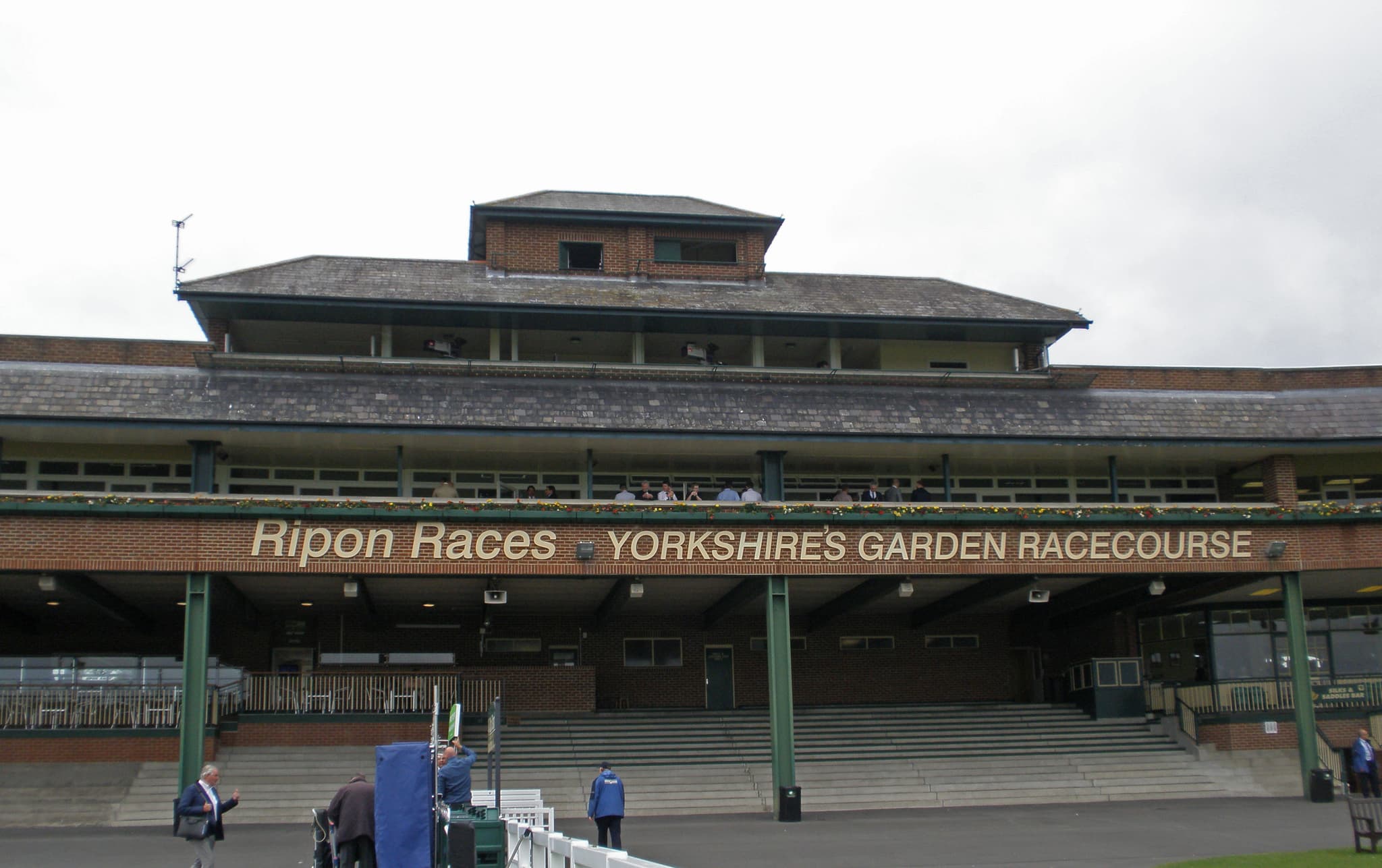
A Day Out at Ripon Racecourse
Everything you need for a day at Ripon — getting there, what to wear, enclosures, food and drink, and tips.
Read more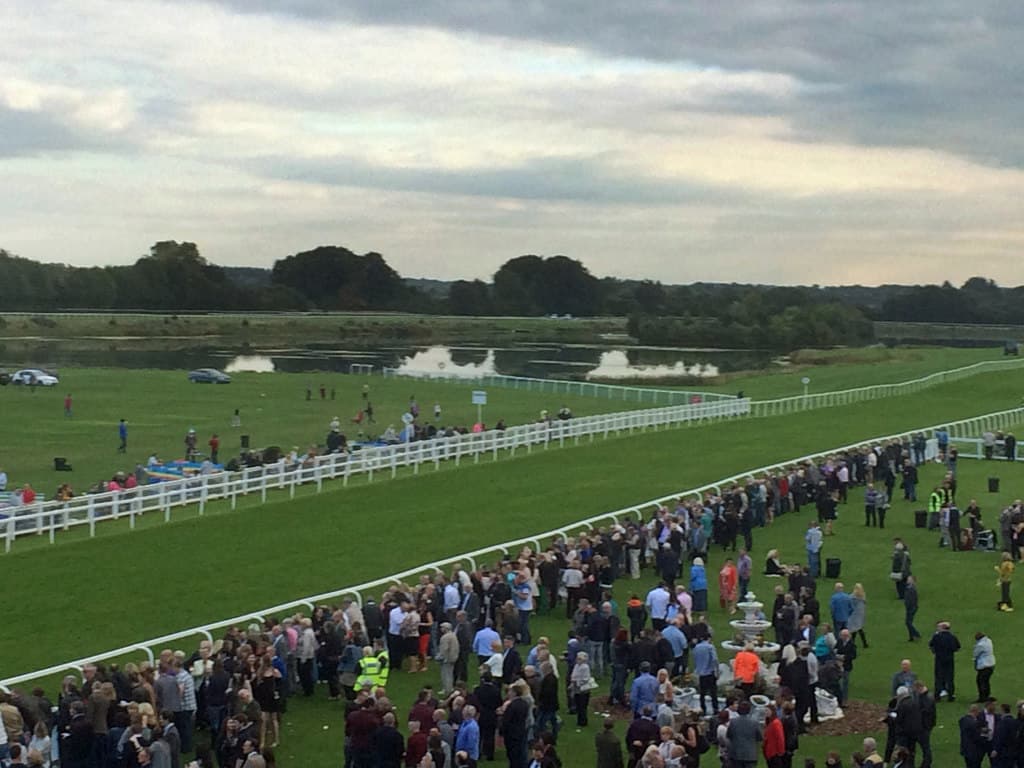
Ripon Garden Racecourse Festival: Your Complete Guide
Ripon is Yorkshire's garden racecourse — beautifully maintained, knowledgeably attended and home to the Great St Wilfrid Stakes sprint. Here's your complete festival guide.
Read more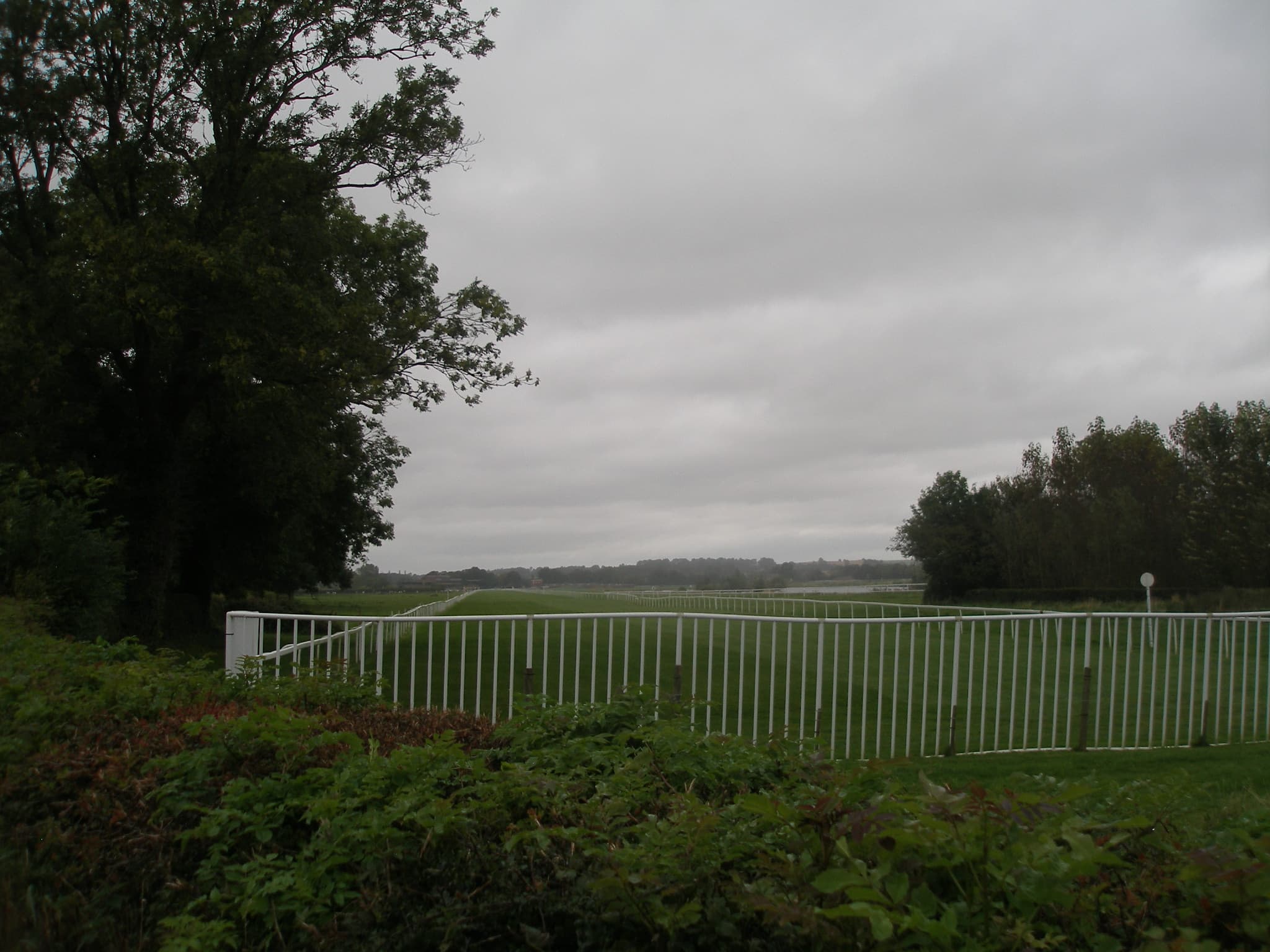
Why Ripon is Yorkshire's Garden Racecourse
Discover why Ripon earns the nickname Yorkshire's Garden Racecourse — grounds, atmosphere and the story behind the title.
Read morePhotos on this page are used under Creative Commons licences. Titles, sources and licence links for each one are on our image credits page.
Research the field with the AI Race Predictor
Our model publishes calibrated win-probability estimates for UK races — a second opinion to understand a race, not tips. It's open about its record: it doesn't beat the market, and we show exactly how it does.
Work it out & learn the basics
Gamble Responsibly
Gambling should be entertaining and not seen as a way to make money. Never bet more than you can afford to lose. If you or someone you know has a gambling problem, help and support is available.