
Founder & Editor · Last reviewed 2026-04-05
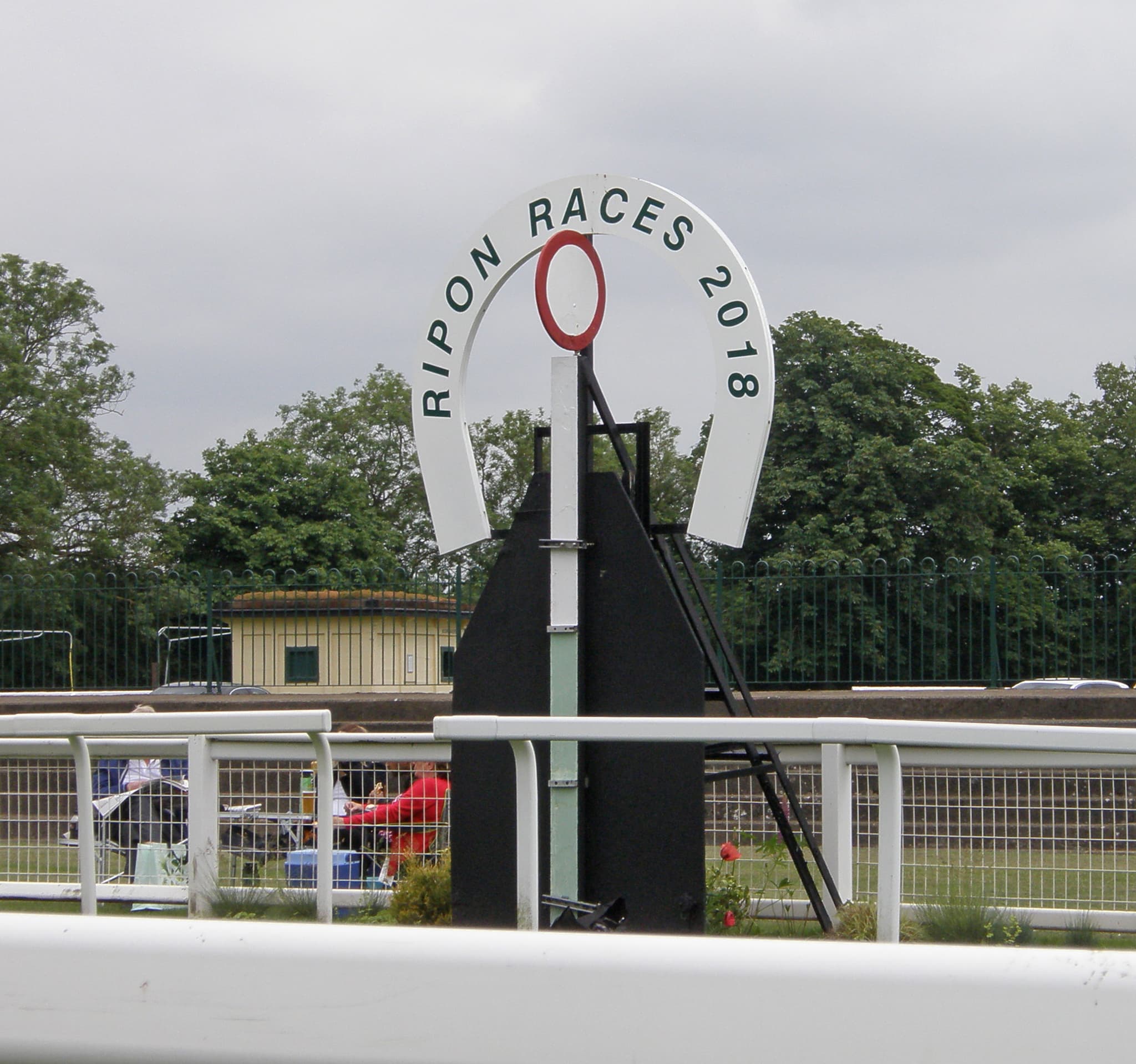
Ripon Racecourse stands on Boroughbridge Road on the southern edge of a cathedral city that most English towns could only envy. The population hovers around 16,000. The cathedral dates from 1154, with foundations that go back to a Saxon church built in 672 AD. Every evening at 9pm, a hornblower sounds his instrument at the market-place obelisk, a civic ritual that has been performed without interruption since 886 AD. And the racecourse, by the standards of this ancient town, is almost a newcomer — first recorded meetings on Bondgate Green in 1664, a move to the River Ure in the mid-19th century, and the current Boroughbridge Road site opening on 6 August 1900.
That long thread of history is what separates Ripon from the dozens of other northern flat venues that came and went over the past three and a half centuries. Ripon kept going. The course survived the Royal Flying Corps taking over its southern half during the First World War, outlasted venues that had more money and better infrastructure, and arrived in the 21st century in better shape than at any point in its history — staging around 16 fixtures a year, earning a reputation for impeccably maintained grounds, and running two Listed races that attract horses from the best northern yards.
The Great St Wilfrid Stakes — named after the seventh-century bishop who founded the original church on the site of Ripon Cathedral — is the course's signature race, a six-furlong handicap run in August that regularly draws fields of 20-plus runners and produces winners who go on to Group-level success. The Ripon Champion Two-Year-Old Trophy in late April or early May is equally important to the juvenile programme, feeding northern form lines into the wider season. Between them, these two races define what Ripon is: a course that produces fast, competitive racing on a track that rewards horse and trainer knowledge as much as raw class.
This article traces the full arc of that history — from the Restoration-era meetings on Bondgate Green, through Victorian expansion and Edwardian consolidation, to the wartime interruptions and the post-war revival that set up the modern course. It examines the races and moments that have given Ripon its character, and asks what 360-plus years of continuous racing in one small North Yorkshire city actually tells us about how British racing has evolved. The complete racecourse guide covers the current course in full; this is the story behind it.
Origins & Foundation
Bondgate Green: 1664 and the earliest meetings
The first recorded race meeting at Ripon took place in 1664 on Bondgate Green, a public space in the heart of the town. Placing it in context: Charles II had been restored to the throne only four years earlier, in 1660, and his patronage of horse racing at Newmarket was already reshaping the sport nationally. Ripon's merchants and landowners, drawing on a market town that had been trading since the Anglo-Saxon period, were quick to establish their own meetings. Bondgate Green was a practical choice — a flat, open area accessible from the main routes into town.
What the racing looked like in 1664 is difficult to reconstruct precisely. Match racing — two horses, one heat, an agreed stake — was the dominant format across England in this period. The structured card of multiple races with published weights and conditions was a later development. Ripon's early meetings were almost certainly a mixture of town matches and the small subscription races that were beginning to appear across the north. The fact that any record survives at all is significant; many courses from this era left no documentary trace.
The town itself was an appropriate setting. Ripon had been a place of political and religious importance since the seventh century, when Saint Wilfrid — bishop, scholar and builder — established a church on the site that would eventually become the cathedral. By 1664, the cathedral church (its current Gothic fabric begun in 1154) dominated the skyline. The city's market had operated continuously since the medieval period, and race days would have fitted naturally into the rhythm of market week, drawing buyers, sellers and spectators from across the North Riding.
1723: a race for female jockeys
In 1723, Ripon hosted what is recorded as Britain's first horse race for female jockeys. The event was reported in contemporary accounts and brought national attention to the town. The details of the race — distance, prize, number of participants — are not fully documented, but its occurrence is established. It would be more than two centuries before women riders became a regular presence in British racing under Rules, and nearly 250 years before women were permitted to hold jockey licences on the flat (from 1972). That Ripon staged such a race in 1723 says something about the town's willingness to run an event that was, at the time, a real novelty.
The 18th century: continuity on Bondgate Green
Through the 1700s, Ripon continued to hold meetings on Bondgate Green. The period saw horse racing professionalise steadily across England — the Jockey Club was founded around 1750, the first classic races were established between 1776 and 1814, and Newmarket, York and Doncaster emerged as the sport's organisational centres. Ripon was not in that first rank, but it maintained its fixture in the northern calendar. The course drew horses from the local farming and breeding community and from the improving studs of the North Riding. By the late 18th century, racing at Ripon was a well-established fixture of the local sporting year.
The proximity to Harrogate — a spa town roughly ten miles to the south that was growing rapidly in the 18th century as wealthy visitors arrived to take the mineral waters — gave Ripon meetings a broader social reach than the size of the town alone would suggest. Visitors to Harrogate's spa could travel north for a day's racing without great difficulty. That pairing of spa town and racecourse was a common pattern across England; it brought money, fashion and attention to courses that might otherwise have remained purely local.
The move to the River Ure
By the mid-19th century, the Bondgate Green era had ended and racing had moved to a new site on the north bank of the River Ure. An Ordnance Survey map from 1856 shows a racecourse in this location, to the north of the town centre and adjacent to the railway line. The timing matters: Ripon's railway station opened in the 1840s, connecting the town to Leeds, York and the wider network. A racecourse accessible by rail could draw racegoers from a far wider catchment than one dependent on horse-drawn travel.
The Ure site brought with it new challenges — riverside locations can be prone to flooding, and the ground conditions on the flood plain were likely variable. But it represented a step up in ambition: a dedicated site, presumably with some permanent structures, rather than the shared public space of Bondgate Green. The exact duration of racing at the Ure site is not fully documented, but it served the town for several decades through the second half of the 19th century.
Boroughbridge Road: 6 August 1900
The current course on Boroughbridge Road opened on 6 August 1900. The Ripon Race Company was incorporated to manage the new venue, and the course was laid out on what would become its permanent configuration: a right-handed oval of approximately one mile and three furlongs, undulating, with a six-furlong straight that runs away from the home turn. The opening in 1900 coincided with a period when northern racing was expanding — York had already established the Ebor and the Yorkshire Oaks, Doncaster was running the St Leger, and smaller courses across the region were finding their role within an increasingly organised sport.
The right-handed configuration distinguished Ripon from the majority of Yorkshire's other flat venues. The undulating track — rising and falling across the circuit — placed a premium on horses that could handle changing gradients rather than simply galloping in a straight line. From the outset, Ripon rewarded horses that were handy, adaptable and ridden by jockeys who understood the course's quirks. Those characteristics have defined form at Ripon for 125 years.
The Boroughbridge Road site gave Ripon something the earlier venues could not: permanence. The Race Company could invest in stands, stabling, and infrastructure. Racegoers could plan their visits in the knowledge that the course would be there year after year. And the ground — despite being described as undulating — was maintained to a standard that earned the course its later reputation as one of the best-presented venues in the north.
Why this period matters: The opening of the Boroughbridge Road course in 1900 was not just a change of address. It turned three centuries of intermittent racing history into an institution with fixed infrastructure, a company structure, and a permanent place in the racing calendar. Everything Ripon has achieved since — the Listed races, the garden reputation, the modern fixture list — is built on the foundation laid on that August day in 1900.
The Golden Era
The Edwardian decade: finding a place in the northern calendar
The first decade after the Boroughbridge Road opening — from 1900 to the outbreak of the First World War — was when Ripon established its character as a northern flat venue. The Ripon Race Company set about building a programme that complemented, rather than competed with, the bigger meetings at York and Doncaster. Ripon staged fixtures in the summer months, concentrating on sprint and middle-distance handicaps that drew horses from the improving training establishments around Middleham and Malton. By 1910, the course had a settled identity: a sharp, fair track, well-managed by a local company, offering competitive racing without the overheads or pretensions of the premier venues.
The Edwardian period was a good time to be a northern racing venue. The sport was growing nationally — prize money was rising, bloodstock breeding was becoming more systematic, and the railways made attendance at multiple courses in a season practicable for both horses and racegoers. Ripon benefited from being positioned at the centre of a remarkably dense racing geography. Within 25 miles of Boroughbridge Road lay York, Thirsk, Wetherby, Catterick and Beverley — collectively the heartland of Yorkshire flat racing. Trainers could run their horses at Ripon as part of a planned northern campaign without travelling horses long distances or disrupting their preparation.
RFC Ripon: 1916 to 1919
The First World War brought racing across Britain to a near halt. Newmarket continued under special dispensation, but most provincial courses either closed or were requisitioned. Ripon's experience was specific: from 1916, the southern portion of the racecourse was taken over by No. 76 Squadron of the Royal Flying Corps, which used the flat ground as an airfield. RFC Ripon, as it was designated, was both a training base and an operational station. The RFC became the Royal Air Force in April 1918, and RAF Ripon continued to use the site until around 1919. Civilian aircraft used the airfield sporadically into the 1920s.
The interruption was significant but not fatal. The Ripon Race Company survived the requisition, the course infrastructure remained broadly intact, and racing resumed once the military had vacated. What the wartime use demonstrated — almost accidentally — was that Ripon's flat, well-drained ground was versatile enough to serve functions beyond racing. The airfield years also gave the course a minor place in military aviation history: No. 76 Squadron flew Royal Aircraft Factory BE2s and later Royal Aircraft Factory FE2bs from the site.
The interwar years: consolidation
Racing resumed at Ripon after 1919 and the interwar period — from the early 1920s to the outbreak of the Second World War — was one of steady consolidation. The fixture list expanded gradually, and the quality of the racing field improved. Ripon's track profile suited sprinters and horses with good tactical speed, and trainers with that type of animal in their string made the course a regular target. The community around Middleham, fifteen miles to the north-west in Wensleydale, was developing into one of the most concentrated training centres in England, and Ripon was the nearest flat course to many of those yards.
The 1920s and 1930s also saw improvements to the physical course. The stands were developed, the paddock was improved, and the grounds were maintained to an increasingly high standard. The garden character that would later define the course's public image was not yet formalised as a marketing concept, but the practical commitment to presentation was already there. Race days at Ripon in this period were described by contemporaries as well-run, well-attended affairs — smaller in scale than the big Ebor meeting at York or the St Leger fixture at Doncaster, but offering good value for local racegoers and a decent day's sport.
The Great St Wilfrid Stakes: origins and early history
The Great St Wilfrid Stakes takes its name from Saint Wilfrid of Ripon (634–709 AD), the Anglo-Saxon bishop who built the original church on the site of what is now Ripon Cathedral. Wilfrid was one of the most consequential figures in early English Christianity — he was present at the Synod of Whitby in 664 AD, which settled the question of whether the English church would follow Roman or Celtic practice, and he was a significant political figure in Northumbrian affairs for four decades. His connection to Ripon is direct and lasting: the cathedral crypt, dating from around 672 AD, is one of the oldest intact Saxon structures in England.
The sprint handicap that bears his name was established as Ripon's prestige race and, over the post-war decades, grew in status to become a Listed contest. Run over six furlongs in August, the race draws large fields — 20 or more runners is routine — of handicap sprinters from across Britain. The competitive nature of the Great St Wilfrid is well established: it regularly produces winners carrying ratings in the high 90s, and a number of former winners have gone on to compete at Group level. The race has become the focal point of Ripon's summer calendar, drawing its biggest crowds of the year and providing a betting heat that is discussed across the industry in the days before the off.
Post-war revival: 1945 to 1970
After the Second World War, racing at Ripon recovered in line with the sport nationally. Prize money improved steadily through the 1950s and 1960s as the Horserace Betting Levy Board (established 1961) began channelling betting shop revenue back into the sport. For smaller courses like Ripon, the levy income was material: it funded improvements to prize money, facilities and ground maintenance that would have been difficult to finance from gate receipts alone.
The 1950s and 1960s saw Ripon grow its fixture list and improve the overall standard of racing. Trainers from the Middleham and Malton communities — Malton lying roughly 25 miles to the south-east — became regular figures in Ripon winners' enclosures. The course's reputation for fair, competitive racing attracted horses of improving quality, and by the end of the 1960s, Ripon had established itself as one of the stronger provincial flat venues in the north. The foundation for what would become the modern Ripon — with its Listed races, its garden reputation and its committed racegoer base — was in place by the time the 1970s arrived.
Why this period matters: The decades from 1900 to 1970 turned Ripon from a newly opened provincial course into an institution with a distinctive character and a recognised place in the northern racing hierarchy. The survival of the First World War requisition, the steady improvement through the interwar years, and the post-war investment in prize money and facilities produced a course that entered the modern era with both deep roots and real momentum.
Famous Races & Moments
1723: the original landmark
Before Ripon's modern race programme took shape, the course had already produced one of the most widely cited moments in racing history. The 1723 race for female jockeys on Bondgate Green was not a planned statement about gender equality — it was almost certainly staged as a novelty, a crowd-drawer, a break from the usual match-race card. But its effect was lasting. The race was reported in national publications, and Ripon's name was attached to it permanently. Nearly 300 years later, when the history of women in British racing is traced, Ripon in 1723 appears at the start of the line.
The fact that women were not permitted to hold professional jockey licences on the flat until 1972, and on the jumps until 1975, gives the 1723 race a particular retrospective significance. Ripon did not start a trend — it would be generations before women rode in sanctioned races under the Jockey Club's jurisdiction — but it demonstrated that the appetite for such contests existed and that audiences would respond to them. For the town of Ripon, the race is a point of historical pride that requires no embellishment.
The Great St Wilfrid Stakes: building a race
The Great St Wilfrid Stakes has been the defining race of Ripon's modern era. Run over six furlongs at the August fixture, it is one of the most competitive sprint handicaps in the British racing calendar. The race typically attracts fields of 20 or more, running off ratings that span from the low 80s to horses rated close to 100. That spread — and the sheer number of runners — makes the Great St Wilfrid a notoriously difficult race to solve, and its profile within the racing and betting community reflects that difficulty.
The race's Listed status places it in the second tier of British racing's classification system, below Group races but above the standard handicap structure. For a sprint handicap to achieve Listed status is unusual — most Listed races are conditions events where weight is carried on merit rather than assigned by the handicapper. The Great St Wilfrid's promotion to Listed reflects the consistent quality of the field and the race's established place in the sprint programme. Horses that run in it are not making up numbers; many are in peak summer form, targeting what is frequently the biggest prize of their handicap season.
The atmosphere at Ripon on Great St Wilfrid day is the most intense of the course's year. The course fills to something approaching its 5,000 capacity, the betting activity in the weeks before the race is extensive, and the post-race analysis generates discussion that runs through the sport. Whether the winner goes on to Group success or drops back into handicap company, the Great St Wilfrid tends to produce form that holds up when tested at other courses.
The Ripon Champion Two-Year-Old Trophy
Where the Great St Wilfrid is a race for experienced handicappers, the Ripon Champion Two-Year-Old Trophy is about potential. The Listed race over six furlongs, run in late April or early May, is one of the earliest tests of the season for two-year-old horses, and it attracts juveniles from the Middleham and Malton yards who have been prepared specifically for an early northern debut. Trainers like Mark Johnston — and now his son Charlie Johnston, who took over the licence at Middleham's Kingsley House stable — have long targeted early-season two-year-old races, and the Ripon trophy has featured in many of their campaigns.
The race matters because it provides form data at a time of year when very little else is known about a juvenile's quality. A winner at Ripon in April or May can go into the form books as a benchmark for every other two-year-old that follows over the next few months. Some winners have gone directly to Group races; others have served as pace-setters against which subsequent classics hopefuls were measured. The race's early timing — combined with Ripon's reputation for fair racing — gives it a credibility that more flashy juvenile contests at bigger courses sometimes lack.
Richard Fahey and the modern winners' enclosure
Any account of famous moments at Ripon in the modern era has to acknowledge Richard Fahey's record at the course. Fahey, based at Musley Bank in Malton roughly 25 miles east of Ripon, has been among the most prolific trainers at the course for more than a decade. His operation handles large strings of horses across a wide range of handicap and conditions races, and the Ripon programme suits his approach — competitive handicaps at fair distances, on a track that rewards tactical awareness.
Fahey's success at Ripon is not a matter of one or two high-profile winners. It is a consistent presence across the fixture list, year after year, from two-year-olds in the spring through to sprinters and handicappers in the autumn. That kind of sustained record is what shapes a course's form book and gives bettors and form students a reliable angle. At Ripon, knowing that Fahey-trained horses run well, knowing which distances and going conditions suit his typical runners, is part of the intelligence that makes the course's races tractable.
Tim Easterby and the Sheriff Hutton connection
Tim Easterby, based at Sheriff Hutton roughly 20 miles to the south-east of Ripon, has a similarly strong record at the course. Easterby's horses tend to be tough, consistent handicap types — the kind of horses that improve with racing and handle varying ground conditions. Ripon's undulating track and its programme of sprint and seven-furlong handicaps suits this profile well. Easterby's winners at Ripon span the types: sprinters, juveniles, older handicappers, fillies' races.
The combination of Fahey and Easterby dominating the winners' enclosure at Ripon over many seasons has given the course a clear form identity. When both yards have in-form runners in the same race, the result is often unpredictable but the pattern of outcomes — horses from these stables running well at this course — is well established. For anyone studying Ripon form, the trainer records are the starting point.
2003: Best Small Racecourse in the North
In 2003, the Racegoers' Club — a national organisation that represents attending racegoers rather than the racing industry — voted Ripon the Best Small Racecourse in the North. The award was based on criteria including viewing quality, atmosphere, hospitality, and overall raceday experience. For Ripon, it was a recognition that the course's commitment to presentation and racegoer welcome had been noticed at the national level.
The Racegoers' Club vote mattered because it came from the audience rather than from the industry. Trainers, owners and officials have their own views about courses; what the 2003 award said was that the people who actually paid to attend rated Ripon highly. The garden racecourse reputation — the emphasis on floral displays, immaculate grounds and a setting that feels more like a well-maintained country park than a commercial venue — was by 2003 sufficiently established that it formed a core part of how Ripon presented itself to the public.
Moments that define the course
What the famous moments at Ripon have in common is that they are not borrowed from elsewhere. Ripon has not hosted a Derby or a Champion Stakes; it has not been the finishing post for a Triple Crown. What it has produced is a series of events and races that belong specifically to Ripon — the 1723 female jockeys' race, the Great St Wilfrid building its reputation over decades, the Two-Year-Old Trophy providing early form benchmarks, and the Racegoers' Club endorsement confirming what regular visitors already knew. A course's history is not only a matter of which famous horses passed through. It is also about what the course made possible and what it made reliable. On both counts, Ripon has a record worth examining.
The Modern Era
The fixture list in the 21st century
Ripon's modern programme covers roughly 16 fixtures per year, concentrated between April and September. The course stages no jumps racing — it is a flat-only venue, as it has been since the Boroughbridge Road site opened in 1900. The April opening, timed around the Ripon Champion Two-Year-Old Trophy on a Bank Holiday Monday, sets the tone: this is a course that takes its racing seriously and uses its early-season fixture to generate form data that matters to the wider sport. The season runs through to late September, with the August programme — headlined by Great St Wilfrid day — being the period of highest attendance and prize money.
The fixture list is built around a core of competitive sprint and middle-distance handicaps supplemented by two Listed races. That combination — a strong handicap programme as the backbone, with Listed events providing quality anchors at either end of the season — is the model for a well-run provincial flat course. It means there is always something for the form student: reliable handicap form at one end, high-quality conditions racing at the other.
Social fixtures and the modern raceday
Since the early 2000s, Ripon has developed a calendar of themed social days alongside the straightforward racing card. Big Night Out in May draws a younger crowd interested in racing as an evening out rather than purely as a betting medium. Ladies Day in June has become a fixture of the summer social calendar in North Yorkshire. Family Day and Children's Day offer subsidised or free entry for families and are part of a deliberate strategy to attract audiences who might not yet think of themselves as racing fans.
These events are not unique to Ripon — most British racecourses now run equivalent themed days — but Ripon's execution of them has been well regarded within the industry. The course's intimate setting (capacity around 5,000) means that social events do not feel lost in an oversized venue, and the garden presentation of the grounds gives the days a character that works for a broader audience than the traditional racegoer. The Go Racing in Yorkshire initiative, which promotes racing attendance across the region's ten racecourses, has used Ripon as one of its key venues, and the course appears regularly in the initiative's marketing.
The three-enclosure structure
Ripon's current layout has three enclosures: Club Stand, Paddock Enclosure and Course Enclosure. The Club Stand offers the best facilities and views and is positioned at the home straight end of the course. The Paddock Enclosure provides access to the parade ring and the winners' enclosure, which are central to the raceday experience for anyone wanting to study horses before placing a bet. The Course Enclosure offers the most affordable entry and covers the far rail.
The giant screen installed in recent years — capable of showing live coverage of away racing as well as the races at Ripon — has improved the experience for Course Enclosure racegoers significantly. It is now standard at most British venues but was a specific investment decision by the Ripon Race Company. The screen matters because it keeps the Course Enclosure engaged during the intervals between races: racegoers can follow their bets on other meetings rather than losing interest and leaving.
The training community connection
One of the factors that sustains Ripon's modern programme is the density of the training community within a short driving radius. Richard Fahey's yard at Musley Bank, Malton, is approximately 25 miles to the east. Charlie Johnston's Kingsley House stable at Middleham — where Mark Johnston trained for decades before handing over the licence — sits around 15 miles to the north-west. Tim Easterby's yard at Sheriff Hutton is 20 miles to the south-east. Karl Burke, another significant northern trainer, operates from Spigot Lodge at Leyburn, also within 20 miles to the north-west.
This cluster of major northern yards means that Ripon's declarations consistently include horses prepared by trainers who know the course well and run horses there regularly. The intelligence embedded in those declarations is useful: when a trainer with a strong Ripon record sends a horse whose profile suits the track, the market tends to take notice. The Ripon betting guide examines those trainer statistics in detail; from a historical perspective, the point is that the geography of northern training has always suited Ripon's position.
Course characteristics and how they've shaped history
The right-handed oval of approximately one mile and three furlongs, with its undulating profile, has shaped the racing that Ripon produces across every era of the modern course's existence. The six-furlong straight — running away from the main home bend — is one of the longer sprint straights in the north. Horses that race prominently tend to do well, particularly when the ground is on the faster side of good, because the combination of the downhill run into the straight and the relatively even surface rewards horses that can find an early position and sustain their effort.
The undulations across the rest of the circuit create a test that catches out horses without any previous experience of the course. Horses making their debut at Ripon — whether juveniles or newcomers to the course — often improve markedly on a second visit once they have learned where to conserve energy on the climb and where to let down on the descent. That learning curve is part of why trainer course statistics at Ripon are so reliable: trainers who run their horses there regularly understand the track's demands in a way that occasional visitors do not.
The Ripon Race Company: continuity of governance
The Ripon Race Company, which was incorporated to manage the Boroughbridge Road course when it opened in 1900, has maintained continuous governance of the venue. This is unusual in the modern British racing landscape, where many courses are now owned by larger groups — Arena Racing Company runs 21 venues, Jockey Club Racecourses runs 15. Ripon remains independent, which gives the course's management a degree of flexibility and local accountability that larger groups cannot easily replicate.
The independent structure means that decisions about the course — fixture scheduling, prize money levels, facility investment — are made by people whose primary concern is Ripon rather than a portfolio of venues. That focus has been broadly positive: the course has maintained its presentation standards, its prize money has grown, and its relationship with the local community in Ripon and across North Yorkshire has remained strong. Whether independence is always the right model for a venue with Ripon's revenue base is a fair question, but the results in the modern era suggest that it has worked.
Ripon's Legacy
What 360 years of racing actually means
Longevity in racing is not self-evidently a virtue. A course that has been running for 360 years but stages mediocre racing on a poorly maintained track has not achieved anything worth celebrating. What Ripon's history demonstrates is something more specific: not merely survival, but consistent relevance. The course has occupied a defined and useful role in northern flat racing across multiple eras — Restoration England, Georgian expansion, Victorian professionalisation, Edwardian consolidation, the interwar years, post-war revival, and the modern era of commercial racing. Each period has tested the course differently, and in each, Ripon has remained a functioning, respected part of the sport.
The 1664 starting point on Bondgate Green is the foundation, but it is not the whole story. Courses that trace their origins to the 17th century without any subsequent achievement are historical curiosities. Ripon's claim on the present is based on what it does now: 16 fixtures a year of competitive flat racing, two Listed races, a training community that targets it consistently, and a reputation for presentation and racegoer welcome that has been independently assessed and found to be real.
The city and the course: a relationship across centuries
Ripon is one of the smallest cathedral cities in England, with a population of around 16,000. The racecourse is therefore not one feature among many in a large metropolitan area — it is a significant institution within a small city. Race days at Ripon draw visitors from across North Yorkshire and beyond, and the economic effect on the local hospitality economy — hotels, restaurants, the pubs around the market square — is material.
The cultural connection runs deeper than economics. The Great St Wilfrid Stakes is named after a man who shaped the religious and political life of northern England in the seventh century. The evening hornblowing ceremony in the market place, unbroken since 886 AD, is part of the same thread of continuity that runs through the racecourse's history. Ripon is a place where the past is not merely referenced but actively maintained. The racecourse fits that ethos: an institution that respects its origins while running a modern operation.
The natural pairings that Ripon offers — the cathedral, the canal, the market square — give a race day here a character that larger venues cannot replicate. Visitors combining a day at Ripon races with an evening in Harrogate (ten miles south, with the 1897 Turkish Baths and Betty's Tea Rooms at its commercial centre) or a morning at the cathedral are doing something that has been available to northern racegoers in various forms for two and a half centuries. That combination of racing and place is not accidental; it is part of why Ripon has kept its audience.
Yorkshire's racing density and Ripon's position
Yorkshire's flat racing geography is unusual by any international comparison. Within a 25-mile radius of Ripon sit five other flat racecourses: York (approximately 20 miles south), Thirsk (approximately 15 miles north-west), Catterick (approximately 20 miles north-west), Wetherby (approximately 15 miles south) and Beverley (approximately 25 miles east). Each of these courses has its own character and serves a different part of the regional audience. Ripon's position within this cluster is settled: a summer flat course, right-handed, suited to sprinters and handy types, with two quality Listed races and a consistent programme of competitive handicaps.
The density of the Yorkshire circuit is what makes each individual course's identity important. When racegoers have six or more courses within easy reach, they develop preferences. They have their favourite venues, their familiar enclosures, their established routines. Ripon has built a loyal following among northern racegoers who appreciate the scale and intimacy of the course — the sense that this is racing at a human size, where the parade ring is never far from the grandstand and the winners' enclosure is always within view.
The garden racecourse identity
The nickname Yorkshire's Garden Racecourse was not a marketing invention. It evolved from the course's consistent emphasis on ground maintenance and floral presentation, which pre-dates the formal marketing of the concept. Ripon's grounds have been kept to a high standard since the early decades of the Boroughbridge Road site, and by the time the phrase entered common use, it reflected a real quality rather than an aspiration.
The garden identity matters because it signals something specific about the course's priorities. Ripon has chosen to differentiate itself on presentation and atmosphere rather than on prize money or the fame of its races. That is a sustainable strategy for a small, independent venue: the grounds can be maintained to a high standard without the budget required to compete with York or Doncaster for the biggest horses in training. The approach has worked — the Racegoers' Club Best Small Racecourse in the North award in 2003 was a direct consequence of it.
The future
The Ripon Race Company enters the mid-2020s with a fixture list in good health, two Listed races as anchors, and a training community that values the course. The challenges facing smaller independent venues — rising costs, competition for the leisure pound, changes in betting behaviour — are not unique to Ripon, and the course has navigated them without losing its core identity. The Great St Wilfrid Stakes continues to attract competitive fields, and the Ripon Champion Two-Year-Old Trophy remains a credible early-season juvenile marker. For anyone planning a visit, the complete racecourse guide covers what the modern course has to offer.
Ripon's legacy, in the end, is straightforward: a racecourse that has been worth attending for 360 years, in a city that has been worth visiting for over 1,300. That combination is not common. It is not something a course can manufacture; it has to be built across generations. Ripon has built it.
Frequently asked questions
When did racing first take place at Ripon?
The first recorded race meeting at Ripon was held in 1664 on Bondgate Green, in the centre of the town. That makes Ripon one of the oldest flat racecourses in England by documented history. Racing moved to a site near the River Ure in the mid-19th century, and the current Boroughbridge Road course opened on 6 August 1900. The Ripon Race Company has managed the venue continuously since that date.
When did the Great St Wilfrid Stakes begin, and why is it named after Saint Wilfrid?
The Great St Wilfrid Stakes is named after Saint Wilfrid (634–709 AD), the Anglo-Saxon bishop who built the original church on the site of Ripon Cathedral around 672 AD. Wilfrid was a central figure in early English Christianity and is closely associated with the city of Ripon. The race is run as a six-furlong Listed handicap in August and has grown to become one of the most competitive sprint handicaps in the north of England, regularly drawing fields of 20 or more runners.
What is the Ripon Champion Two-Year-Old Trophy and why does it matter?
The Ripon Champion Two-Year-Old Trophy is a Listed race for two-year-old horses run over six furlongs in late April or early May. It is one of the earliest opportunities in the British season for juvenile horses to establish form credentials, and it attracts runners from the major northern yards at Middleham and Malton. Because it is run early in the year when very little other two-year-old form exists, the race provides form benchmarks that are referenced throughout the following months.
Why was Ripon Racecourse used during the First World War?
Between 1916 and 1919, the southern half of Ripon Racecourse was requisitioned by No. 76 Squadron of the Royal Flying Corps, later the Royal Air Force. The flat, well-drained ground was used as an airfield for training and operational purposes. Racing was suspended during this period but resumed after the military vacated the site. The course infrastructure survived the requisition broadly intact, allowing the Race Company to recommence the fixture list without major reconstruction.
Is Ripon Racecourse independently owned?
Yes. The Ripon Race Company has managed the Boroughbridge Road course since it opened in 1900 and continues to operate it independently. Ripon is not part of the Arena Racing Company group (21 venues) or the Jockey Club Racecourses group (15 venues). Independent ownership gives Ripon's management a direct accountability to the local racing community and allows decisions about fixtures, prize money and investment to be made specifically for the Ripon venue rather than as part of a wider portfolio strategy.
How does Ripon fit into the Yorkshire racing circuit?
Ripon sits at the centre of the densest racing geography in England. Within 25 miles lie York, Thirsk, Wetherby, Catterick and Beverley — five other flat racecourses, each with its own programme and character. Ripon's role within that circuit is as a summer flat venue suited to sprinters and competitive handicappers, with two Listed races providing quality anchors at either end of the season. The course complements rather than duplicates its neighbours, and its right-handed, undulating track produces a different racing test from the galloping tracks at York and the sharp circuits at Catterick.
Share this article
More about this racecourse
All Ripon guides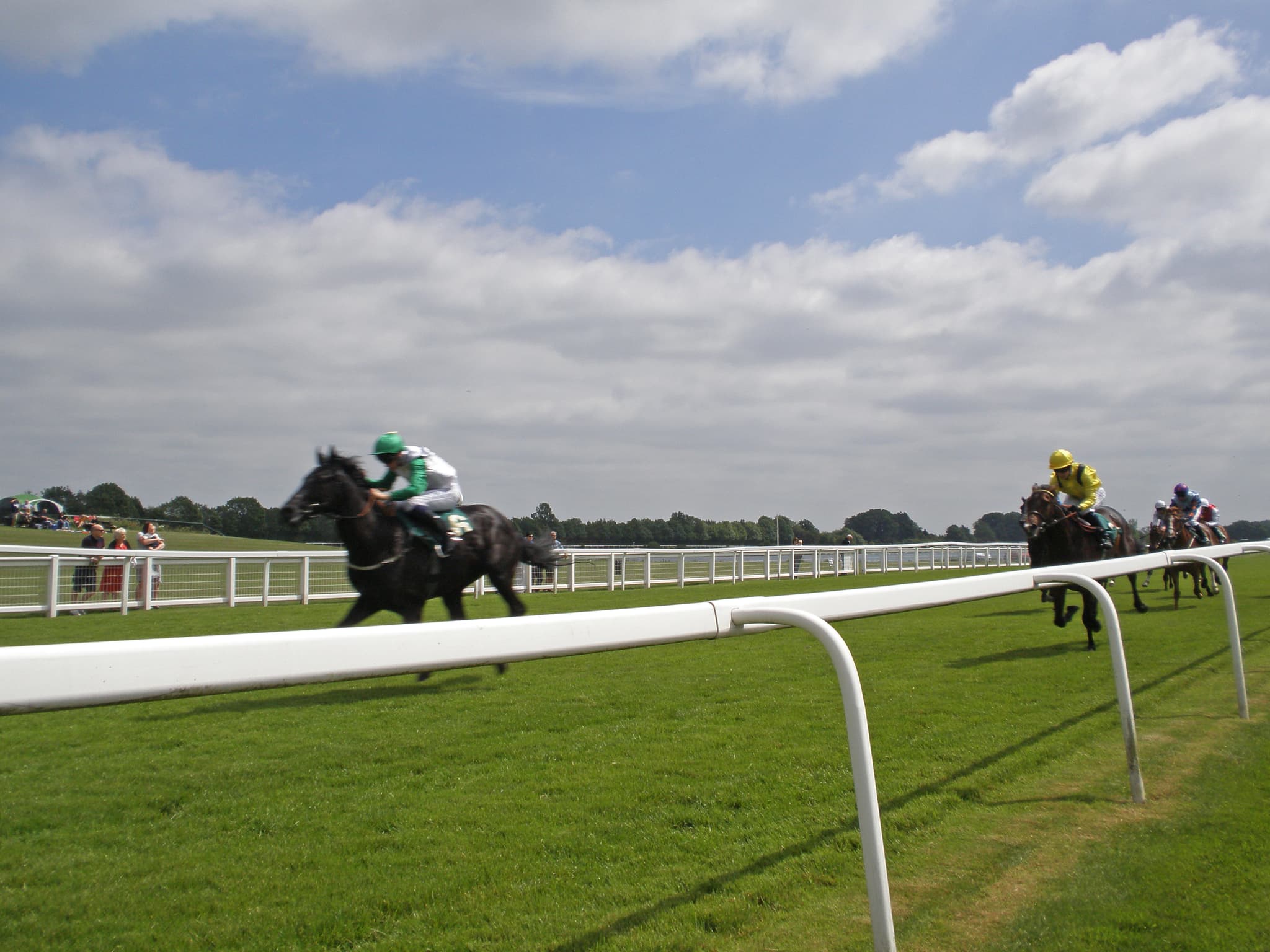
The Great St Wilfrid Stakes: Complete Guide
Everything you need to know about the Great St Wilfrid Stakes — Ripon's signature six-furlong handicap sprint.
Read more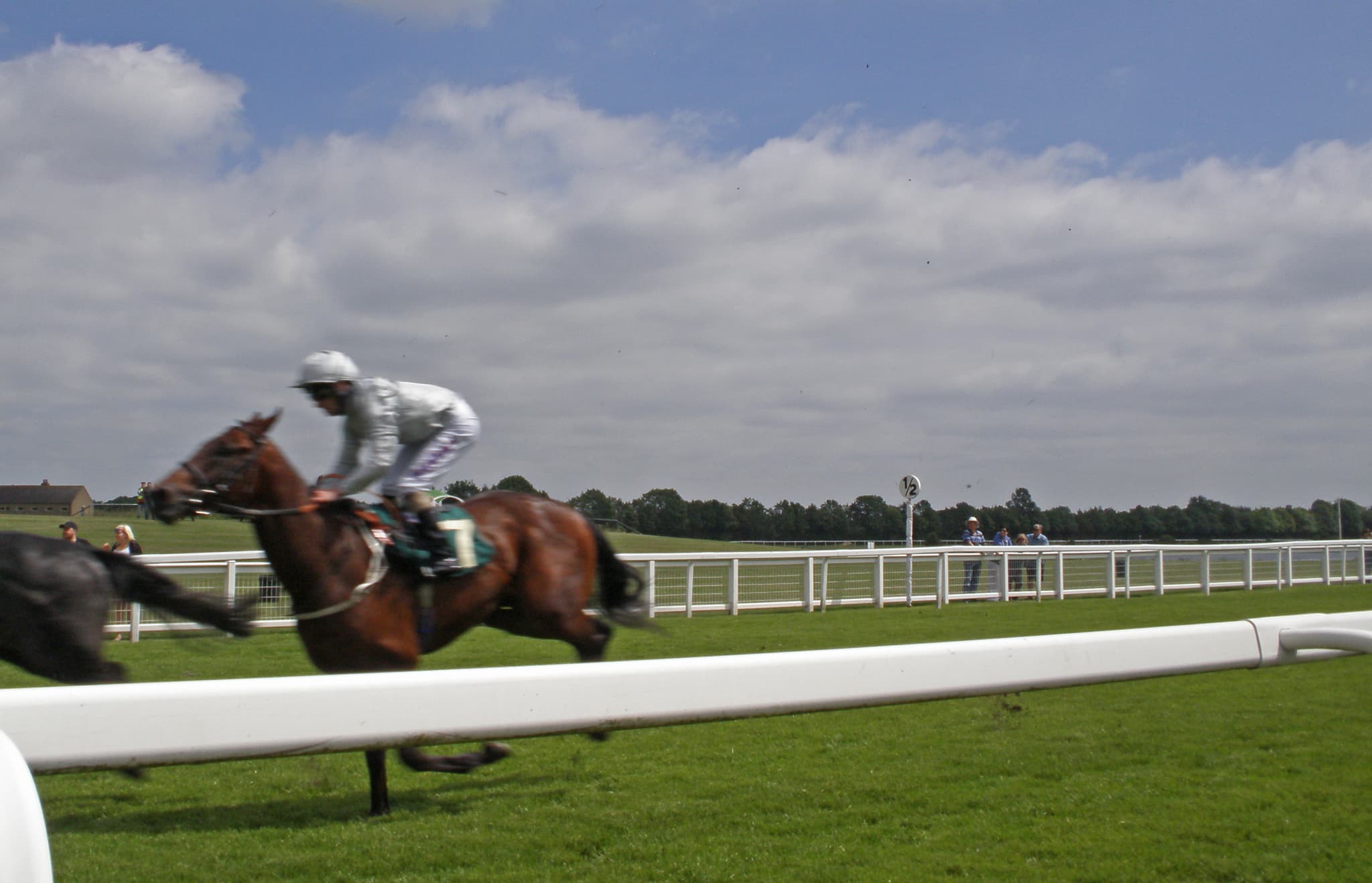
Great St Wilfrid's Day at Ripon: The Complete Guide
Your complete guide to Great St Wilfrid's Day at Ripon — Yorkshire's most chaotic and exciting sprint handicap occasion. The Great St Wilfrid Handicap attracts up to 30 runners for a heritage handicap over 6 furlongs where draw bias dominates betting strategy.
Read more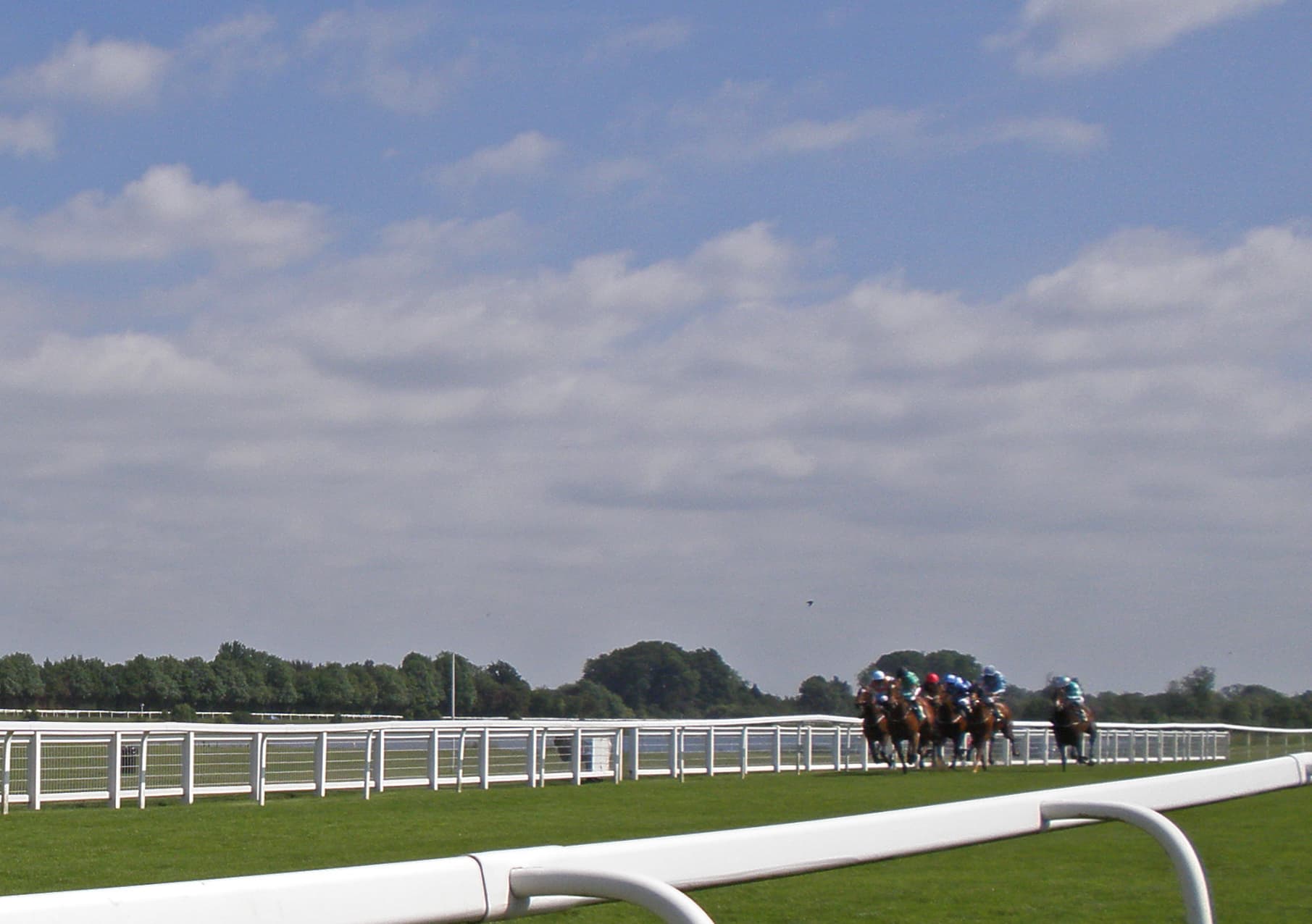
Pipalong at Ripon: From the Great St Wilfrid to Group One Glory
Pipalong won the Great St Wilfrid Stakes at Ripon and went on to claim three Group One victories including the Sprint Cup. Here is her full story.
Read morePhotos on this page are used under Creative Commons licences. Titles, sources and licence links for each one are on our image credits page.
Gamble Responsibly
Gambling should be entertaining and not seen as a way to make money. Never bet more than you can afford to lose. If you or someone you know has a gambling problem, help and support is available.