
Founder & Editor · Last reviewed 2026-04-07
Introduction to Southwell Racecourse
Southwell Racecourse holds a distinction shared by no other track in British racing: it is the only course in the country surfaced with Fibresand, a dense, compacted synthetic material that produces a style of racing entirely its own. Set in the gently rolling Nottinghamshire countryside near Newark-on-Trent, Southwell operates every month of the year, making it one of the most constant presences in the British racing calendar — a workhorse track that keeps the game running through the coldest, bleakest stretches of winter when turf courses lie dormant under frost or flood.
The Fibresand Difference
Punters who treat Southwell like any other all-weather track are making an expensive mistake. Fibresand is categorically different from the Polytrack and Tapeta surfaces used at Wolverhampton, Chelmsford, Lingfield and Kempton. Where Polytrack is springy and relatively fast, rewarding acceleration and sharp horses, Fibresand is slower, deeper and considerably more stamina-testing. The surface imposes a grinding quality on races: horses must work harder through each furlong, and the emphasis shifts unmistakably towards stamina and tenacity rather than pure speed. A horse with a brilliant turn of foot on Polytrack may find Fibresand completely unrewarding; a relentless galloper who stays all day and handles soft-going turf tends to find the surface very much to its liking.
This surface specificity is the defining feature of Southwell as a betting venue. Once you understand that Fibresand form is essentially its own code — largely self-contained, resistant to form imported from other all-weather tracks — the course becomes considerably more tractable.
The Jumps Course
Inside the all-weather oval sits a separate turf jumps course, used from October through to April. This is Southwell's other face: a compact, left-handed jump circuit that stages novice hurdles, handicap chases and occasionally veterans' contests through the winter months. The jumps track is tight and demands accuracy at fences — horses that bash their way through obstacles tend to come unstuck here. It is a track that rewards competent, nimble jumpers over those that rely on raw size or power to get them through fences.
Rolleston Station: The Platform on the Track
One of the most unusual features of any British racecourse is the railway halt that sits literally within the Southwell perimeter. Rolleston station, on the line between Newark Castle and Nottingham, provides a direct connection to the course — trains stop here on racedays, depositing racegoers within yards of the entrance. It is a genuinely charming throwback to the era when racing and the railways were inseparable, and it remains one of the most unusual arrival experiences in British sport. The direct service from Nottingham takes around 25 minutes; from Newark Castle, just ten.
The Southwell Community
The crowd at Southwell reflects the track's character: knowledgeable Midlands punters who attend regularly, understand Fibresand intimately and approach racing as a serious craft rather than an occasional flutter. There is nothing fashionable about Southwell in the way that Cheltenham or Ascot command glamour — but there is a loyalty and authenticity here that gives the course a genuine identity. It delivers value-for-money racing in an unpretentious setting, and the punters who have learned to decode Fibresand form find it a highly rewarding track to follow. For those willing to put in the work, Southwell rewards expertise more reliably than almost any other course in Britain.
Bet on Southwell
Place your bets on Southwell races with a trusted bookmaker.

Promo code BETFRED50. New customers only. Register, deposit with a Debit Card, and place a first bet of £10+ at Evens (2.0)+ on Sports, to be settled within 7 days, to get £30 in Sports Free Bets and £20 in Bet Builder Free Bets within 24 hours of settlement. 7-day expiry. Eligibility & payment exclusions apply. Full T&Cs apply. Take Time to Think. BeGambleAware.org. 18+. Full T&Cs.

Promo code R30. New UK customers only, 18+. Register, deposit £10 or more, then place a £10 single cash bet at odds of 1/2 (1.5) or greater on any sports market (excluding Virtuals). Once the qualifying bet settles you get £30 in Free Bets (3 x £10) — the qualifying bet can win or lose. Free Bets are valid on any sports market excluding Virtuals, expire in 7 days, are non-withdrawable and must be used in full. Excluded deposit methods apply (including PayPal, Apple Pay, Skrill and NETELLER). Named bets such as Lucky 15 do not qualify. If you cash out the qualifying bet, or it is voided, you are no longer eligible for the offer. Ends 31.12.26. Full T&Cs apply. Please gamble responsibly. BeGambleAware.org. 18+. Full T&Cs.

Promo code BET40GET20. New UK customers, 18+. Register with the code and place a first bet of £40 or more at Evens (2.0) or greater. Receive 2 × £10 free bets: the first credited automatically once the qualifying bet settles, the second 24 hours later. Free bets must be placed at minimum odds of 4/1 (5.0), expire 24 hours after credit, and the free-bet stake is not returned with winnings. Debit card deposits only. Take Time to Think. BeGambleAware.org. 18+. T&Cs apply. Full T&Cs.

50% of your first-day net losses refunded as a free bet, capped at £25. New UK customers aged 18+ only. To qualify, deposit and place a first bet of £10 or more on any sport at minimum odds of evens (2.00), then place at least two further bets on different events, each worth at least 50% of your largest bet, all at evens (2.00) or greater. Losses are counted from your first settled bet until 23:59 the same day. Place a qualifying £10+ bet and you are guaranteed at least a £5 free bet. Bets placed at SP, void bets, cashed-out bets and bets struck with free bets do not count towards the offer. The free bet is credited the day after your qualifying bets settle and must be used within 7 days, after which it expires. It can be used at odds from 1/4 (1.25) up to 250/1 on singles and straight accumulators, but not on Trixie, Patent or Yankee style multiples. Free-bet stake is not returned with winnings. One offer per person, household, address, IP address and device. E-wallet deposits may not qualify, so check the cashier before depositing. Customers registered with GAMSTOP cannot claim. KYC identity verification must be completed before the free bet is credited. Take Time to Think. BeGambleAware.org. 18+. T&Cs apply. Full T&Cs.

New customers, 18+. Choose the sports bonus at sign-up, make a first deposit and receive a 100% bonus up to £50 in your Sports Bonus balance. To convert the bonus to cash, wager it 10x within 30 days. Single bets below Evens (2.00) do not qualify; accumulators do not qualify if any selection is below 1/2 (1.50). Virtual Sports, voided, cancelled, drawn, cashed-out and free-bet wagers do not count towards wagering. Only the first settled bet per event counts. Withdrawing before the wagering requirement is met forfeits the bonus balance including bonus winnings. Real-money funds are used before bonus funds. Deposits via Skrill or Neteller are not eligible. Not valid in conjunction with other promotions. Odds, bet and payment limits apply. 10bet general and promotion T&Cs apply. BeGambleAware.org. 18+. Full T&Cs.

New customers in Great Britain and Republic of Ireland, 18+. Place a £10 fixed-odds qualifying bet at minimum odds of 1/2 (1.50) — single or each-way (only the win part counts), pre-event or in-play, not cashed out early, within 28 days of opening the account. Receive up to £60 in bonuses credited over three days: 3 × £10 fixed-odds free bets (the first on settlement, then 24 and 48 hours later) plus 3 × £5 Total Goals FOOTBALL spread bets, 3 × £5 racing Winning Favourites spread bets and a £1 racing Race Index spread bet (the spread bets need a full spread-betting account). Free-bet stakes not returned with winnings; free bets valid 28 days from issue. IMPORTANT: the £5 credits are SPREAD bets — sports spread betting carries the risk that losses can exceed your stake. Sports spread-betting customers do not have Financial Ombudsman or FSCS recourse. Take Time to Think. BeGambleAware.org. 18+. T&Cs apply. Full T&Cs.

Promo code WELCOME15, entered under My Bonuses after registering. New UK customers, 18+. Place a first qualifying bet of at least £10 from your cash balance at odds of evens (2.0) or greater within 7 days of opening the account. Once the qualifying bet fully settles you receive £15 in free bets, credited as 3 x £5 tokens with set uses: one £5 accumulator free bet (minimum 4 legs, each leg at 2/5 or bigger), one £5 sports free bet (any market at evens or bigger) and one £5 Sub Cover free bet (selected football player markets at evens or bigger). Free-bet stakes are not returned with winnings. Free bets expire 7 days after they are credited. Void, cashed-out and partially cashed-out bets do not qualify. One offer per customer. Confirm the current terms on BetGoodwin's own welcome-offer page before claiming. Take Time to Think. BeGambleAware.org. 18+. T&Cs apply. Full T&Cs.

New UK customers, 18+. Minimum deposit £10. Place a £10 qualifying single at minimum odds of 1/2 (1.50), settled within 14 days. Receive £30 in free bets (stake not returned), split £20 for sportsbook use (2 x £10) and £10 for Bet Builder only (2 x £5); Bet Builder does not cover horse racing. Free bets must be accepted within 7 days and expire 7 days after acceptance. No promo code required. Best Odds Guaranteed on UK & Irish racing, subject to having staked over £25 in the previous seven days. Operated by LiveScore Betting and Gaming (Gibraltar) Ltd, UKGC 56859. Confirm the current terms on LiveScore Bet's own promotions page before claiming. Take Time to Think. BeGambleAware.org. 18+. T&Cs apply. Full T&Cs.
18+. BeGambleAware.org
Day-by-Day Guide
Day-by-Day Guide to Southwell Racing
Southwell's calendar is structured differently from most British racecourses. Rather than building towards one or two peak festival weeks, the course provides a continuous stream of racing across twelve months — a rhythm determined more by the national fixture list than by any single landmark occasion. Understanding how the year divides helps you identify the meetings that offer the best racing and the most informative form.
The All-Weather Winter Series: November Through March
The backbone of Southwell's year is the winter all-weather programme: a sequence of Fibresand cards running from November through to March that serves as the core betting diet for northern Midlands punters when the turf tracks are either dark or unraceable. Monday and Friday fixtures are typical, slotting Southwell into a national schedule that also uses Wolverhampton, Kempton and Chelmsford on other days of the week.
These cards are not glamorous — fields are often modest in size and the prize money is at the lower end of the professional scale — but they are consistent and well-attended by horses with genuine Fibresand form. The winter all-weather series is where the specialist Southwell horses come into their own: proven performers who return meeting after meeting, reliably running to their established level on a surface they understand intimately. For punters who have done the homework on Fibresand form, these cards represent some of the most tractable betting in the British calendar.
The Monday morning market for Southwell fixtures is particularly interesting. Sharp punters who have identified Fibresand specialists often move prices early in the week, and the early price picture can be informative about where the significant money is landing.
Easter Jump Meeting: Good Friday and the Bank Holiday Weekend
One of the more distinctive fixtures in the jump calendar is the Easter programme at Southwell — a series of jump cards spread across Good Friday and the Bank Holiday weekend that provides competitive National Hunt racing at an unusual point in the season. By Easter, the major jump festivals at Cheltenham and Aintree have concluded; the Punchestown Festival in Ireland is still a fortnight away; and the jump calendar enters a brief interregnum.
Southwell fills this gap with a genuine jump programme on the turf course. The fields tend to be a mixture of horses that have run through the spring festivals and are rounding out their season, and summer jumpers beginning their campaign early. The form is not always deep by Championship standards, but the racing is competitive and the betting is interesting: ground conditions by Easter can vary considerably, adding an extra variable to a card already featuring horses from diverse backgrounds.
Summer All-Weather Cards: April Through October
Southwell keeps the Fibresand running long after turf tracks have resumed for the summer. This is the period of the year when Southwell's uniqueness is most apparent — there is no comparable product anywhere else in Britain. While most punters follow horses onto the grass, Southwell continues running its specialist all-weather programme, attracting the same core of Fibresand horses who simply prefer the surface regardless of the season.
Summer all-weather form at Southwell is generally slightly less informative than winter form because summer Fibresand racing attracts a higher proportion of horses trialling the surface for the first time, pulled off turf campaigns that are not going as planned. The core specialists remain reliable; the periphery is less predictable.
Racing for Change and Community Days
Southwell has periodically hosted themed community racing events designed to broaden the sport's appeal — family-focused fixtures with entertainment beyond the racing itself, designed to introduce new audiences to the course. These days typically occupy bank holidays or school holiday periods when a leisure-seeking crowd supplements the core racing attendance.
The racing on these cards is genuine and competitive, but the atmosphere is different from the regular working week. For the punter, the form is no less reliable — but the grandstand mood is considerably livelier.
The Rolleston Halt Experience
No description of a day at Southwell is complete without covering the journey itself. Rolleston station sits literally within the racecourse boundary — the platform is part of the venue, and racegoers stepping off the train from Nottingham or Newark find themselves already inside the course. This is not a metaphor: there is no road crossing, no taxi queue, no walk from the station to the entrance. You step off the train and you are at the races.
The service runs from Nottingham (approximately 25 minutes) and Newark Castle (approximately 10 minutes) on racedays, with trains timed to coincide with the card. Arriving this way — stepping off a regional train directly onto a racecourse in the Nottinghamshire countryside — is one of the small pleasures that British racing still offers and that no other sport in this country can replicate.
Key Races to Watch
Key Races at Southwell
Southwell's race programme is built primarily around its unique Fibresand all-weather surface, with a separate jumps card running on the turf circuit through the winter months. The course does not stage Grade One racing and its prize money sits at the lower end of the professional scale — but within this framework it has developed a set of signature races that attract genuine specialists and produce informative, reliable form.
Fibresand Champion Stakes (Listed, All-Weather Flat)
The course's flagship flat race is the Fibresand Champion Stakes, a Listed contest typically run in December or January that sits at the top of Southwell's prize money hierarchy and draws the best Fibresand specialists in training. As a Listed race, it attracts horses with black-type credentials who specifically thrive on the surface — it is not merely a handicap dressed up with a title.
The key angle for the Fibresand Champion Stakes is, unsurprisingly, Fibresand form. Horses that have won Listed or Pattern races on other all-weather surfaces — Polytrack at Lingfield or Chelmsford, Tapeta at Wolverhampton — do not automatically translate to Fibresand. The surface is different enough that proven Fibresand form outweighs class from other synthetic tracks. Look for horses with multiple Southwell wins who are proven at the slow, grinding pace that Fibresand imposes, rather than horses that are simply well-regarded on the broader all-weather circuit.
The race consistently produces dramatic renewals because the quality gap between the genuine Fibresand specialists and horses trialling the surface for the first time can be wide but is not always apparent in the pre-race market.
The Southwell Chase (Handicap Chase, Turf)
The Southwell Chase is the standout race in the course's winter jump programme — a competitive handicap contest on the tight turf circuit that rewards the qualities this specific track demands. Contested by horses typically running over two miles to two-and-a-half miles, the Southwell Chase tests jumping accuracy above all else. The tight circuit does not allow for recovery from mistakes: a horse that stands off a fence and clips the top loses three or four lengths immediately, and on a compact oval there is rarely time to claw that back.
The form points toward horses with a track record of accurate, fluent jumping on tight circuits — Catterick and Market Rasen types, rather than the big-framed, thundering chasers that dominate at Haydock or Cheltenham. Smaller, nippy chasers who find their rhythm on the corner and maintain their jumping technique throughout tend to account for the majority of the prize money here.
All-Weather Handicap Series
The bread-and-butter of Southwell's flat programme is the year-round stream of sprint and mile handicaps on Fibresand — races run over five and six furlongs at the sprint end, up to a mile and a half at the staying end, all on the distinctive orange-brown surface that gives the course its identity. These handicaps are the races that most punters who follow Southwell will encounter most regularly.
Within this series, the sprint handicaps over five and six furlongs are the most consistent betting vehicle. Southwell's tight circuit and tiring surface mean that front-runners over sprint trips have a pronounced advantage: horses that break cleanly and establish a position on the inside rail in the first two furlongs are very hard to run down from behind as the field enters the home straight. This pace bias is reliable enough to incorporate as a standard element of pre-race analysis.
The staying handicaps — mile and a quarter and upwards — produce more variable results because the tiring Fibresand imposes so much physical stress over longer distances. The best stayers on the surface are genuinely exceptional athletes; but the form can be volatile when horses are finding the distance at the limit of their stamina.
Winter Hurdle Series (Turf Jumps)
Southwell's winter hurdle programme provides a competitive novice and handicap series on the turf circuit through November, December and January. The novice hurdle races here attract horses from the Midlands and northern training centres that are building experience before tackling more prestigious spring targets. Southwell's winter hurdles are not glamorous — they are working form, races contested by horses that are learning their trade.
But for the form student, this is precisely their value. Novices that win convincingly at Southwell's tight turf circuit, handling the compact track and jumping with sufficient accuracy to make forward positions count, are often horses with the necessary tools for more competitive novice races later in the season. The winners of Southwell's winter hurdle series should be noted and followed, particularly when they step up to face better opposition at bigger tracks in February and March.
Betting Preview
Betting at Southwell: The Fibresand Edge
Southwell rewards preparation more explicitly than almost any other course in British racing. The Fibresand surface creates a self-contained form code, and the punter who masters it — who understands what the surface demands and how to identify horses that genuinely handle it — gains a durable analytical edge that plays out meeting after meeting, month after month, across the entire year.
Rule One: Fibresand Form Is Its Own Universe
The single most important principle for betting at Southwell is to treat Fibresand form as entirely distinct from form on other surfaces. This sounds obvious but it is routinely violated by casual bettors and even experienced punters who see "all-weather" form from Kempton, Lingfield or Chelmsford and assume it applies to Southwell.
It does not. Polytrack — used at Kempton and Lingfield — is a synthetic surface designed to produce fast, consistent times with a surface texture that rewards acceleration and quick-finishing horses. Tapeta, used at Wolverhampton and Chelmsford, sits somewhere between Polytrack and Fibresand in terms of pace. Fibresand is different from both. It is denser, slower and significantly more tiring. The pace of races at Southwell is genuinely slower than comparable distances at Kempton, and the physical effort required from horses is considerably greater.
A sprinter that wins six furlongs at Kempton in 1:12 may find six furlongs at Southwell a fundamentally different challenge. The key is to restrict your Southwell form analysis almost entirely to Southwell form: look for horses that have won or placed at the track before, identify the distance and going that produced those performances, and be sceptical of horses whose credentials rest entirely on form at other all-weather venues.
Pace Bias: Front-Runners at Sprint Trips
Southwell's tight left-handed circuit creates a consistent and exploitable pace bias at sprint distances — five and six furlongs. Horses that break quickly, establish a position near the inside rail in the first two furlongs and then maintain their effort through the bends are very hard to catch from behind. The combination of the tight oval shape and the tiring Fibresand surface means that horses chasing from off the pace at sprint trips must not only sustain their run but do so through turns that cost them ground and effort.
The bias is most reliable on good or standard Fibresand — the standard going condition for the all-weather oval. On slow going, when the surface becomes even more tiring, pace bias can tip further towards front-runners. On fast going, the advantage moderates slightly.
In practical terms: always check the pace of a Southwell sprint field before betting. If a race has multiple horses with strong front-running profiles, the bias is likely to result in a messy pace scenario where none of them get an easy lead, which can neutralise the advantage. The most reliable pace bias plays are when a single dominant front-runner faces a field of hold-up horses — the free lead is worth several lengths on Fibresand.
Weight Carrying and the Tiring Surface
The weight a horse carries is amplified by the Fibresand surface in a way that is measurable and consistent. The standard wisdom in flat racing — that a pound in weight costs roughly one length over ten furlongs — tends to underestimate the effect at Southwell. The tiring surface means that horses carrying penalty weights late in a race feel them more acutely than on conventional turf or faster all-weather tracks.
This has a direct bearing on how to assess horses stepping up in weight after a win. A horse returning off a five-pound penalty for a Fibresand success is carrying a heavier effective burden than the number suggests. Weight-carriers that handle Fibresand well do exist, but they tend to be physically powerful, strong-staying types rather than lightweight speedsters.
Trainer Patterns: Who Knows Fibresand
Certain trainers have developed specific expertise in placing horses on Fibresand at Southwell, and their strike rates here are materially higher than the national average. Marco Botti, based in Newmarket, has a well-documented history of placing horses effectively on all-weather tracks including Southwell, and his Fibresand runners consistently represent value in the early market. David O'Meara from North Yorkshire is another trainer whose Southwell runners warrant elevated attention — his horses tend to handle the northern Midlands circuit naturally, and his all-weather preparation methods clearly suit the surface.
Local Midlands trainers with smaller strings but specific knowledge of the track — particularly those based in Nottinghamshire and Derbyshire — represent another category worth tracking. Their horses are often overlooked in the market because they are not household names, but their intimate knowledge of Fibresand conditions and the track's specific demands can produce consistent results.
Jumps Betting at Southwell
The jumps programme on the turf circuit requires a different approach. The key angle is jumping accuracy: Southwell's tight course does not forgive horses that are careless at fences. When assessing form for the Southwell Chase and the winter handicap chase programme, look for horses that have shown clean, accurate jumping records at similarly tight circuits — Catterick, Market Rasen and Leicester are the most obvious comparators. Horses with a record of jumping well in tight spots, maintaining their accuracy through turns and not losing ground at fences, consistently perform here better than their bare form ratings suggest.
On the jumps, going is less of a differentiating factor at Southwell than at more traditional turf courses — the inner turf circuit is usually maintained at a reasonable standard — but in very wet winters, soft or heavy inner ground can dramatically change the character of the races, strongly favouring proven soft-ground staying types.
Visitor Information
Visitor Information: Southwell Racecourse
Getting There
By Train — The Rolleston Halt Experience
The definitive way to arrive at Southwell is by train. Rolleston station sits directly within the racecourse boundary — it is not a station near the course but a railway platform that is physically part of the venue. On racedays, trains stop here to deposit racegoers who step off directly into the course without crossing a road or navigating a car park.
The service runs on the Nottingham to Newark Castle line. From Nottingham, the journey takes approximately 25 minutes; from Newark Castle, approximately 10 minutes. A regular service operates on most racedays, with departure times designed to coincide with the meeting. Check the raceday timetable in advance to plan your return — the final train back to Nottingham typically runs after the last race.
This experience is unique in British racing. No other racecourse in the country has an active railway halt within its perimeter that serves a regular passenger service on racedays. If you are travelling to Southwell for the first time, arriving by train is strongly recommended: the experience of stepping off a train directly onto a racecourse in the Nottinghamshire countryside is one of the small pleasures that British racing offers that nothing else can replicate.
By Car
Southwell is easily accessed by car via the A617 from Newark, which is the most direct approach from the main road network. From the A1, take the Newark exit and follow the A617 westward; the course is clearly signposted on the approach from Newark. From Nottingham, the A612 leads to Newark, connecting to the A617.
Free on-site parking is available for all racegoers — a significant practical advantage over courses that charge parking fees. The site is well-organised and can accommodate large race day attendances without the traffic bottlenecks that affect some provincial courses.
Enclosures and Facilities
Grandstand Enclosure: The main covered grandstand runs along the home straight and provides a full-length view of the Fibresand circuit. The grandstand is enclosed and reasonably well-heated for winter racedays — essential when attending November-through-March all-weather cards, when temperatures on the exposed Nottinghamshire site can be genuinely cold. The grandstand contains the main bar and catering facilities.
Paddock Enclosure: Paddock access allows racegoers to walk in the parade ring and observe horses being saddled. For regular punters who like to assess horses before placing bets, the parade ring at Southwell is compact and offers clear views of the runners.
Practical Tips
Dress warmly for winter cards: Southwell sits in open countryside near Newark and the site is exposed to east and north-east winds, which can make it uncomfortably cold in December, January and February. Warm layers and windproof outer garments are essential for the winter all-weather programme. The Fibresand races run regardless of temperature — there is no frost cancellation risk, one of the practical advantages of all-weather racing — but the racegoing experience in midwinter is considerably more pleasant if you are properly dressed for it.
Summer all-weather cards: By contrast, Southwell in summer is a pleasant evening venue. The long days of June and July allow evening cards to run in good light, and the Nottinghamshire countryside around the track is attractive in warm weather.
Booking ahead: Most Southwell meetings do not require advance ticket booking — the course's regular weekday all-weather cards attract working-week attendances that rarely strain capacity. The Easter jump meetings and any themed community days are busier and may benefit from advance booking.
Food and Drink
On-course catering covers the standard racecourse range — hot food, snacks and bars. The facilities are functional rather than exceptional.
Newark town centre (approximately 10 minutes by car or a short train ride) has a good selection of cafes, pubs and restaurants that can be used for pre-or-post-racing refreshment. The town is worth visiting in its own right — Newark Castle and the market square are genuine attractions.
Rolleston village itself is tiny, but the rural Nottinghamshire villages to the west of Newark have several traditional pubs within a short drive for post-racing food.
Share this article
More about this racecourse
All Southwell guides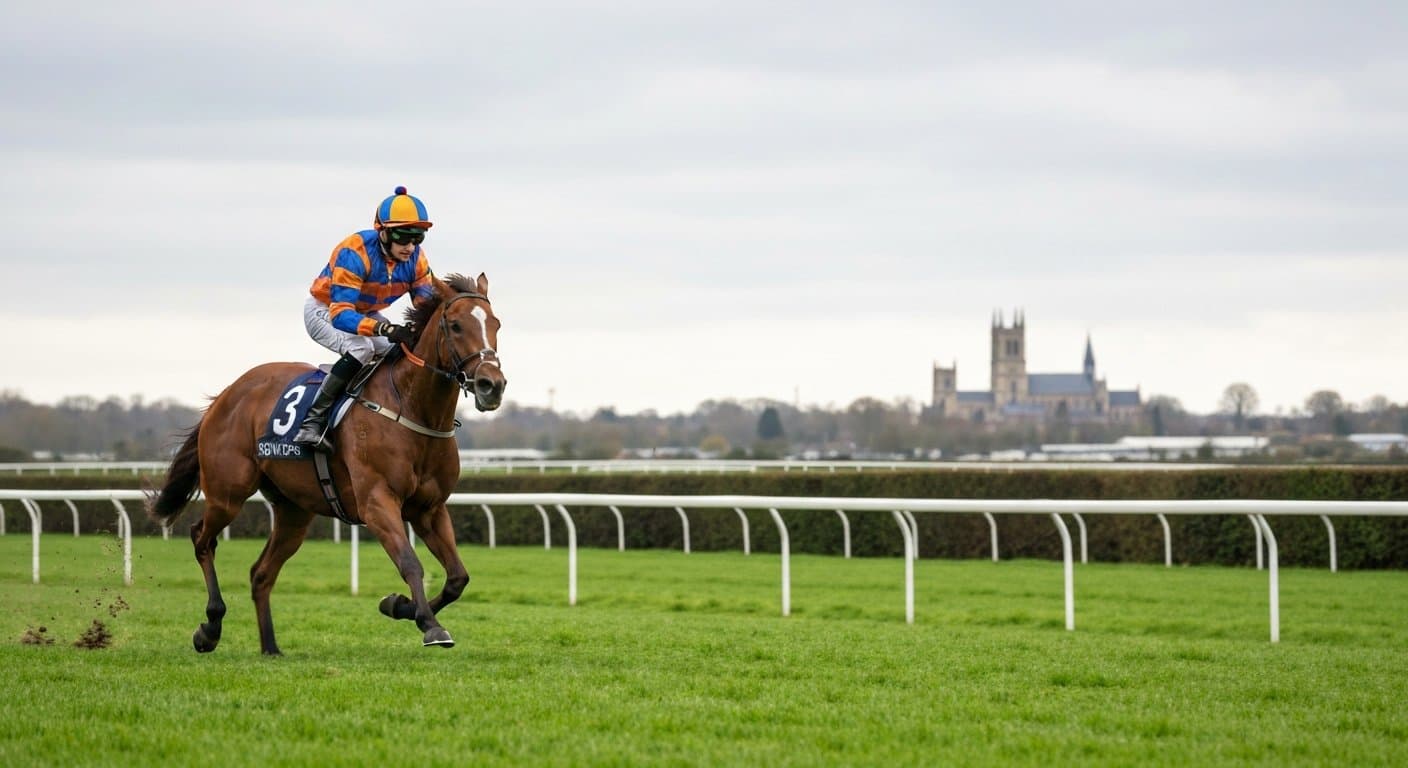
Southwell Fibresand: How It Affects Form & Betting Tips
Discover how Britain's unique sand surface changes horse form and betting odds. Essential insights for punters tackling Southwell's Fibresand track.
Read more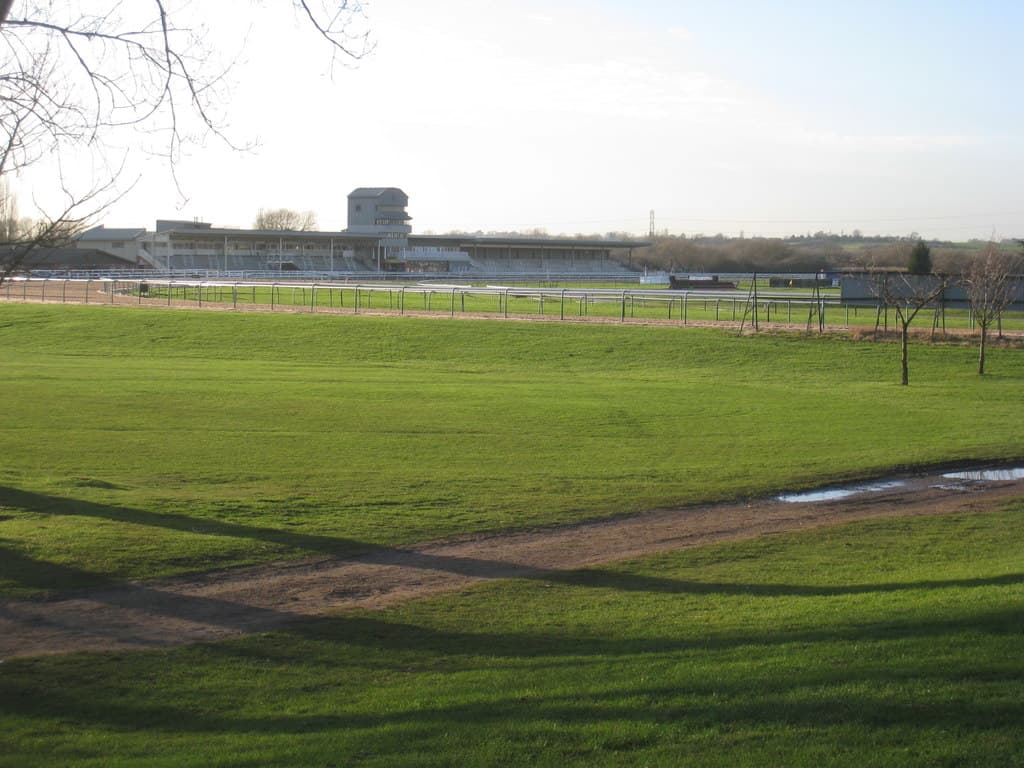
The History of Southwell Racecourse
Over 125 years of racing at Southwell — from Victorian origins to Britain's only Fibresand track and dual-purpose venue in Nottinghamshire.
Read more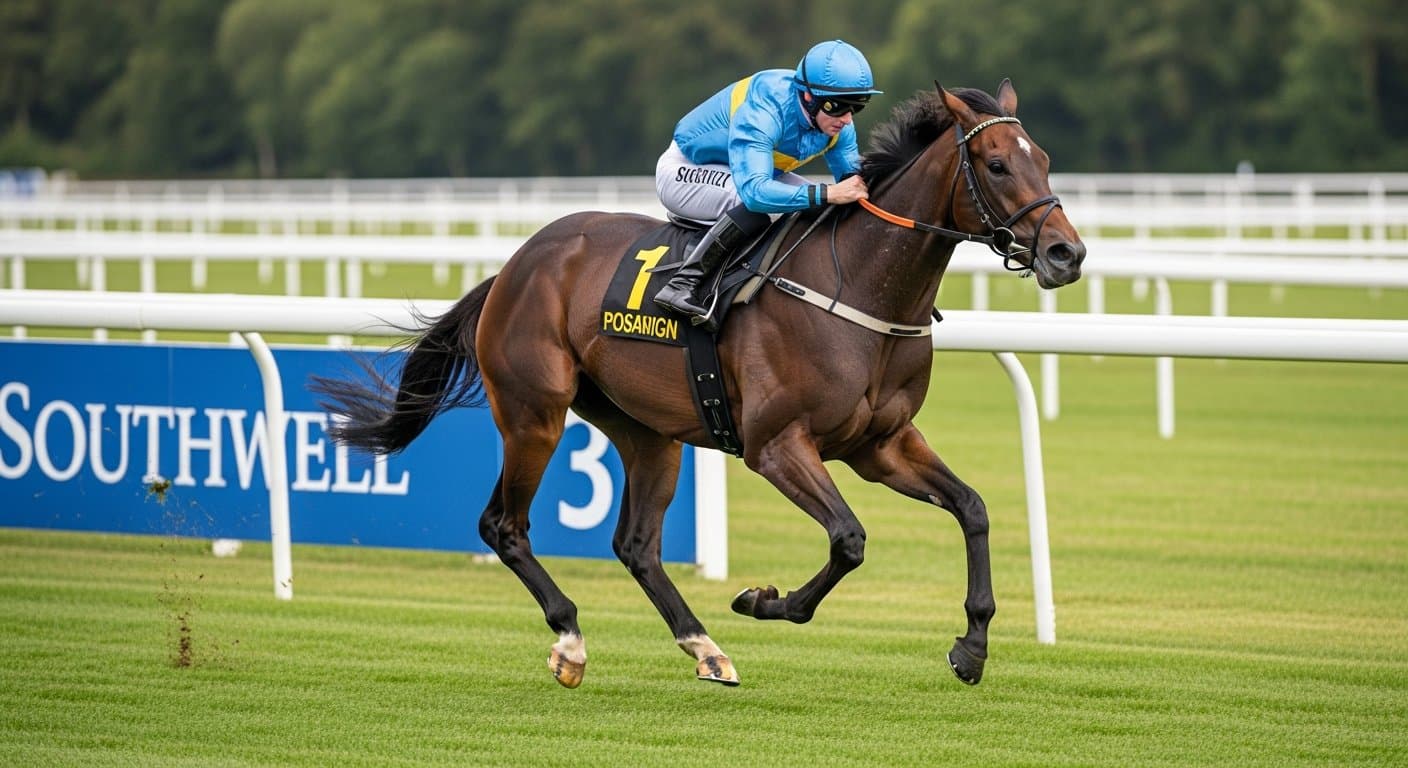
Tempering at Southwell: The Complete Story
Tempering won 22 races on Southwell's Fibresand between 1990 and 1996, trained by David Chapman — a record haul on Britain's most specialist all-weather surface.
Read morePhotos on this page are used under Creative Commons licences. Titles, sources and licence links for each one are on our image credits page.
Research the field with the AI Race Predictor
Our model publishes calibrated win-probability estimates for UK races — a second opinion to understand a race, not tips. It's open about its record: it doesn't beat the market, and we show exactly how it does.
Work it out & learn the basics
Gamble Responsibly
Gambling should be entertaining and not seen as a way to make money. Never bet more than you can afford to lose. If you or someone you know has a gambling problem, help and support is available.