
Founder & Editor · Last reviewed 2026-03-02
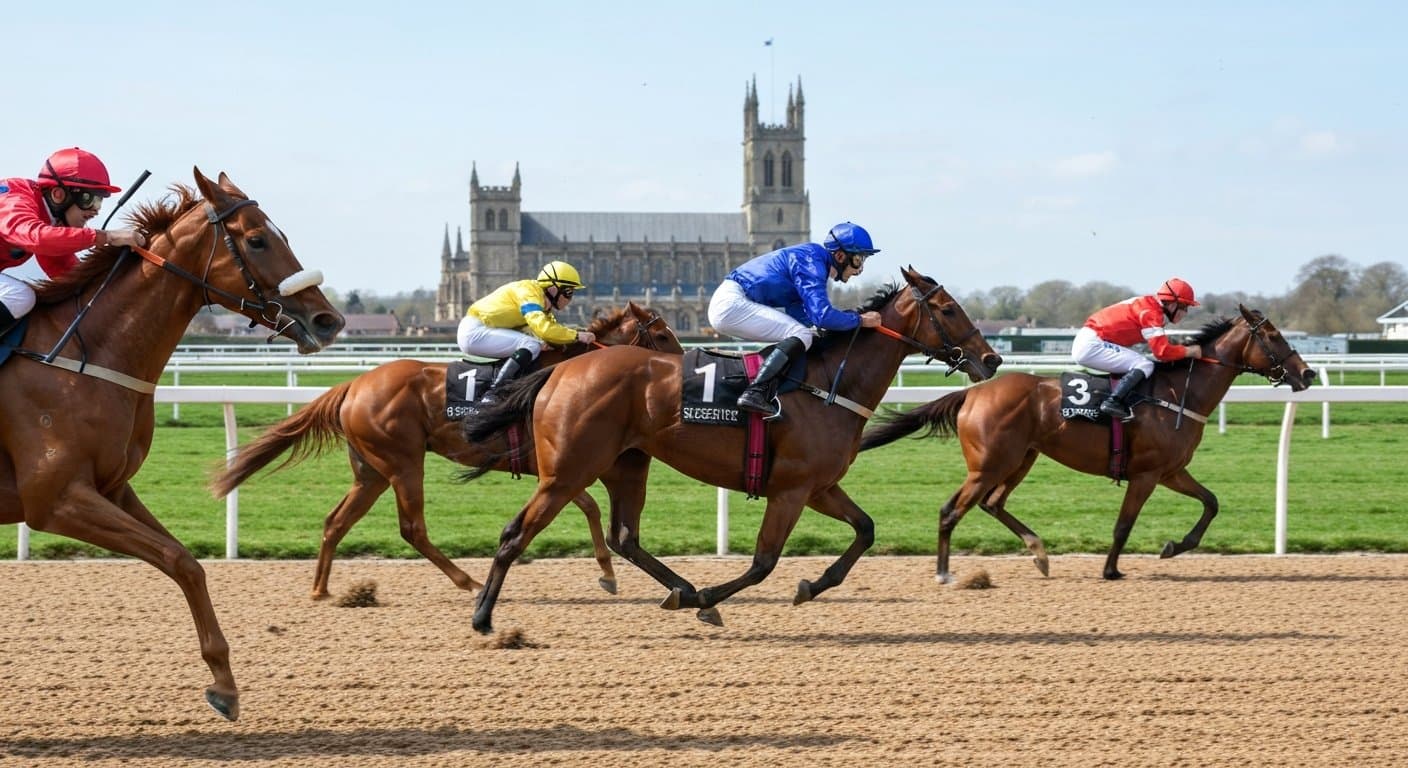
Southwell is British racing's odd one out. Every other all-weather track in the country runs on Polytrack or Tapeta — synthetic surfaces derived from sand and rubber compounds. Southwell runs on Fibresand: a deep, grinding sand-based surface that absorbs energy in a way that neither turf nor Polytrack replicates. Form from Fibresand simply does not transfer reliably to other surfaces, and form from other surfaces frequently falls apart here. That basic fact is the foundation of every productive betting approach to Southwell.
The course is left-handed, nearly circular, and measures approximately one mile round on the Flat oval. The NH circuit is slightly longer and runs right-handed on a separate track. The Flat programme is where most of Southwell's betting interest sits — year-round all-weather fixtures, predominantly Class 4 to Class 6, run through every month of the year. Midweek Monday-to-Wednesday cards are the norm, and the fields are often made up of horses that have run multiple times in the past fortnight.
Michael Appleby dominates Southwell Fibresand to an extent that is unusual even by the standards of trainer-track relationships. He trains near Langham in Rutland and repeatedly runs horses here that have proven they can handle the surface. His strike rate at Southwell in recent seasons has been above 20%, and his horses at bigger prices — 5/1 or above — have consistently outperformed their market odds.
This guide focuses on what matters for betting: the Fibresand surface itself, the draw bias that has long defined sprint races here, the trainers who exploit the track, and the strategies that produce a long-term edge. Understanding Southwell's quirks is not complicated, but it requires a different mental framework from turf handicaps at Newmarket or Ascot. Read this guide, apply the principles consistently, and Southwell becomes one of the more predictable venues in the British racing calendar.
Bet on Southwell
Place your bets on Southwell races with a trusted bookmaker.

Promo code BETFRED50. New customers only. Register, deposit with a Debit Card, and place a first bet of £10+ at Evens (2.0)+ on Sports, to be settled within 7 days, to get £30 in Sports Free Bets and £20 in Bet Builder Free Bets within 24 hours of settlement. 7-day expiry. Eligibility & payment exclusions apply. Full T&Cs apply. Take Time to Think. BeGambleAware.org. 18+. Full T&Cs.

Promo code R30. New UK customers only, 18+. Register, deposit £10 or more, then place a £10 single cash bet at odds of 1/2 (1.5) or greater on any sports market (excluding Virtuals). Once the qualifying bet settles you get £30 in Free Bets (3 x £10) — the qualifying bet can win or lose. Free Bets are valid on any sports market excluding Virtuals, expire in 7 days, are non-withdrawable and must be used in full. Excluded deposit methods apply (including PayPal, Apple Pay, Skrill and NETELLER). Named bets such as Lucky 15 do not qualify. If you cash out the qualifying bet, or it is voided, you are no longer eligible for the offer. Ends 31.12.26. Full T&Cs apply. Please gamble responsibly. BeGambleAware.org. 18+. Full T&Cs.

Promo code BET40GET20. New UK customers, 18+. Register with the code and place a first bet of £40 or more at Evens (2.0) or greater. Receive 2 × £10 free bets: the first credited automatically once the qualifying bet settles, the second 24 hours later. Free bets must be placed at minimum odds of 4/1 (5.0), expire 24 hours after credit, and the free-bet stake is not returned with winnings. Debit card deposits only. Take Time to Think. BeGambleAware.org. 18+. T&Cs apply. Full T&Cs.

50% of your first-day net losses refunded as a free bet, capped at £25. New UK customers aged 18+ only. To qualify, deposit and place a first bet of £10 or more on any sport at minimum odds of evens (2.00), then place at least two further bets on different events, each worth at least 50% of your largest bet, all at evens (2.00) or greater. Losses are counted from your first settled bet until 23:59 the same day. Place a qualifying £10+ bet and you are guaranteed at least a £5 free bet. Bets placed at SP, void bets, cashed-out bets and bets struck with free bets do not count towards the offer. The free bet is credited the day after your qualifying bets settle and must be used within 7 days, after which it expires. It can be used at odds from 1/4 (1.25) up to 250/1 on singles and straight accumulators, but not on Trixie, Patent or Yankee style multiples. Free-bet stake is not returned with winnings. One offer per person, household, address, IP address and device. E-wallet deposits may not qualify, so check the cashier before depositing. Customers registered with GAMSTOP cannot claim. KYC identity verification must be completed before the free bet is credited. Take Time to Think. BeGambleAware.org. 18+. T&Cs apply. Full T&Cs.

New customers, 18+. Choose the sports bonus at sign-up, make a first deposit and receive a 100% bonus up to £50 in your Sports Bonus balance. To convert the bonus to cash, wager it 10x within 30 days. Single bets below Evens (2.00) do not qualify; accumulators do not qualify if any selection is below 1/2 (1.50). Virtual Sports, voided, cancelled, drawn, cashed-out and free-bet wagers do not count towards wagering. Only the first settled bet per event counts. Withdrawing before the wagering requirement is met forfeits the bonus balance including bonus winnings. Real-money funds are used before bonus funds. Deposits via Skrill or Neteller are not eligible. Not valid in conjunction with other promotions. Odds, bet and payment limits apply. 10bet general and promotion T&Cs apply. BeGambleAware.org. 18+. Full T&Cs.

New customers in Great Britain and Republic of Ireland, 18+. Place a £10 fixed-odds qualifying bet at minimum odds of 1/2 (1.50) — single or each-way (only the win part counts), pre-event or in-play, not cashed out early, within 28 days of opening the account. Receive up to £60 in bonuses credited over three days: 3 × £10 fixed-odds free bets (the first on settlement, then 24 and 48 hours later) plus 3 × £5 Total Goals FOOTBALL spread bets and 3 × £5 racing Winning Favourites spread bets, with a £1 racing Race Index spread bet as an extra on top. The spread bets need a full spread-betting account, opened within 28 days of the fixed-odds account and subject to Spreadex's eligibility and appropriateness checks. Free-bet stakes not returned with winnings; free bets valid 28 days from issue. IMPORTANT: the £5 credits are SPREAD bets — sports spread betting carries the risk that losses can exceed your stake. Sports spread-betting customers do not have Financial Ombudsman or FSCS recourse. Take Time to Think. BeGambleAware.org. 18+. T&Cs apply. Full T&Cs.

Promo code WELCOME15, entered under My Bonuses after registering. New UK customers, 18+. Place a first qualifying bet of at least £10 from your cash balance at odds of evens (2.0) or greater within 7 days of opening the account. Once the qualifying bet fully settles you receive £15 in free bets, credited as 3 x £5 tokens with set uses: one £5 accumulator free bet (minimum 4 legs, each leg at 2/5 or bigger), one £5 sports free bet (any market at evens or bigger) and one £5 Sub Cover free bet (selected football player markets at evens or bigger). Free-bet stakes are not returned with winnings. Free bets expire 7 days after they are credited. Void, cashed-out and partially cashed-out bets do not qualify. One offer per customer. Confirm the current terms on BetGoodwin's own welcome-offer page before claiming. Take Time to Think. BeGambleAware.org. 18+. T&Cs apply. Full T&Cs.

New UK customers, 18+. Minimum deposit £10. Place a £10 qualifying single on sports (excluding virtuals) at minimum odds of 1/2 (1.50), settled within 14 days. Deposit-method exclusions apply. Receive £30 in free bets (stake not returned), split £20 for sportsbook use (2 x £10) and £10 for Bet Builder only (2 x £5); Bet Builder does not cover horse racing. Free bets must be accepted within 7 days and expire 7 days after acceptance. No promo code required. Best Odds Guaranteed on UK & Irish racing, subject to having staked over £25 in the previous seven days. Operated by LiveScore Betting and Gaming (Gibraltar) Ltd, UKGC 56859. Confirm the current terms on LiveScore Bet's own promotions page before claiming. Take Time to Think. BeGambleAware.org. 18+. T&Cs apply. Full T&Cs.
18+. BeGambleAware.org
Track Characteristics
The Southwell Flat oval is left-handed and nearly circular, measuring approximately one mile round. The home straight accounts for roughly five furlongs of that measurement — one of the longer straights in British all-weather racing, which partially explains why the draw effect, while real in sprints, is less pronounced over middle distances. The bends are gently curved rather than sharp, but they come quickly enough in a five-furlong sprint that horses drawn wide face a real disadvantage.
Fibresand vs Polytrack
Fibresand is deeper and more physically demanding than Polytrack. When a horse runs on Polytrack at Lingfield or Wolverhampton, the surface has some spring to it — it returns energy to the horse's stride. Fibresand does not. The sand base absorbs the concussive force of each stride without returning it, which increases energy expenditure significantly over the course of a race. The practical effect is that races at Southwell produce fewer fast times and more grinding, sustained efforts than equivalent distances at Polytrack tracks.
This explains why form from Polytrack does not transfer reliably to Fibresand. A horse rated 80 that has won twice on Polytrack at Lingfield may run as if rated 70 on its first Fibresand outing. The energy demands are sufficiently different to produce a performance gap. The reverse is also true: a horse with a Fibresand rating of 78 that makes its Polytrack debut may find itself unable to reproduce its Southwell form on a surface that rewards pace over stamina.
Sprint Distances (5f and 6f)
At five and six furlongs, Fibresand rewards horses that are handy from the gate and can maintain position on the left-handed bend to the straight. There is no time to recover from a slow start or a wide berth in a five-furlong race — the field is into the straight within seconds of leaving the gate. Front-runners and horses drawn in the lowest stalls have a structural advantage. A horse drawn in stall 1 in a twelve-runner five-furlong race has to travel the minimum possible distance to reach the straight. A horse drawn in stall 12 needs to use energy to slot behind the leaders without being caught wide — energy that is not available at the finish.
Middle Distances (7f to 1m2f)
Over seven furlongs and a mile, the straight is long enough that draw matters less. Horses have time to find their position before the bend, and by the time they enter the home straight the field has typically settled. Stamina dominates at these distances. A horse with proven staying power on Fibresand — demonstrated by one or more wins at seven furlongs or a mile here specifically — has a fundamental advantage over horses whose form is based on Polytrack pace or turf finishing speed.
National Hunt Circuit
The NH circuit at Southwell runs right-handed and is separate from the Flat oval. It is a fair, undulating track that tests stamina and jumping. Going here can range from Good to Heavy depending on the season. The NH programme at Southwell is less prominent than the Flat card and attracts modest-grade horses. Form from left-handed galloping tracks like Leicester or Uttoxeter transfers reasonably well.
Pace Dynamics
Fibresand rewards front-runners more strongly than any other British racing surface. This is not simply about low draws — it is about the energy economics of the surface. A horse that leads from the front sets its own pace, avoids kickback from the sand surface, and conserves energy by not having to accelerate around horses. A horse attempting to make up ground in the home straight on Fibresand faces the dual challenge of the deep surface and the physical effort of accelerating through tiring rivals. The result is a surface where horses making late runs win less often than at turf or Polytrack tracks.
When pace analysis identifies a race with no obvious front-runner, a prominent racer in the field — one that likes to bowl along at the head of affairs or just behind the pace — becomes significantly more attractive than its market price suggests.
Going & Draw Bias
All-weather going at Southwell is described as Standard, Standard to Slow, or Slow. Unlike turf, Fibresand does not become heavy after rain — it is a sealed surface and precipitation runs off rather than penetrating the base. However, temperature affects the going description. Cold weather makes the sand firmer and faster. Warm, humid conditions can make it slightly looser. The practical impact on betting is modest but worth understanding.
Standard
Standard is Fibresand's base state. It rides at a pace roughly equivalent to Good to Soft on turf, but the comparison is imperfect because the energy demands are different. On Standard Fibresand, form from previous Standard Fibresand meetings transfers reliably. If a horse has a two-from-three record at Southwell on Standard, that form is directly applicable to today's race on the same description.
Standard to Slow
Standard to Slow Fibresand is deeper and more grinding. It heightens the front-runner advantage because the energy cost of making ground from off the pace increases. When the going is described as Standard to Slow, the draw effect in five-furlong races intensifies. Low draws become even more statistically significant. Horses rated slightly above their rivals but drawn in high stalls in a sprint frequently underperform because they cannot overcome the combination of wide berth and deep going.
Draw Analysis — Five-Furlong Sprints
The draw effect at Southwell over five furlongs is one of the most statistically robust track biases in British racing. Stalls 1 through 4 in fields of twelve or more have historically produced a disproportionately high percentage of winners and placed horses. The effect is real, but its magnitude varies with going. On Standard Fibresand, backing stalls 1–4 as a mechanically applied strategy produces a small but positive edge over time. On Standard to Slow, the edge increases.
The practical application: if your selection is drawn in stalls 9 or above in a twelve-runner sprint at Southwell, consider whether the draw disadvantage is priced into the odds. If the horse is 5/2 favourite drawn in stall 11, the draw alone is sufficient reason to look at alternatives drawn lower.
Six-Furlong Sprints
The draw effect at six furlongs is present but less pronounced than at five. The additional furlong gives horses slightly more time to recover from a wide berth. Stalls 1–6 retain a marginal advantage but the effect is not strong enough to override class or form advantages. Over six furlongs, use the draw as a tiebreaker rather than a primary filter.
Seven Furlongs and Beyond
From seven furlongs, draw becomes largely irrelevant. The long home straight at Southwell gives horses from any starting position time to find their racing position. At a mile, all that matters is whether the horse can sustain its effort on the surface. At a mile and a quarter and beyond, the going description is more important than the draw — Standard to Slow at these longer distances creates a heavy-ground-equivalent demand that tests pure stamina.
Going and Form Transfer
Fibresand form does not transfer to turf or Polytrack. This statement bears repetition. A horse that has produced four consecutive placed efforts at Southwell on Standard Fibresand and is making its first appearance at Wolverhampton on Polytrack is essentially an unknown quantity at the new venue. Its Fibresand rating is a starting point for assessment but not direct evidence of Polytrack ability.
Similarly, a horse arriving at Southwell from three turf wins on Good to Firm at Chester may be completely unsuited to the energy demands of Fibresand. The rate at which turf form translates to Fibresand is low — below 30% of horses produce their turf-equivalent performance on their first Fibresand run.
Seasonal Going Patterns
Fibresand going is most consistent in spring and autumn. Summer heat can firm the surface, and winter cold can slow it. The most predictable Southwell betting conditions occur from March to May and September to November, when the Standard description applies to a surface that is truly in its typical state.
Key Trainers & Jockeys
Southwell rewards trainers who understand Fibresand and target it deliberately. The surface is specialist enough that trainers who run horses here out of convenience rather than specific targeting tend to have low strike rates. Identifying the trainers that consistently return above-average win rates, and the jockeys who ride regularly enough to know the track's idiosyncrasies, is the single most important preparation task before any Southwell card.
Michael Appleby
Michael Appleby is the dominant trainer at Southwell Fibresand and has been for the better part of a decade. He trains at Langham in Rutland, approximately 40 miles north-east of Southwell, and he returns horses to the track repeatedly. His operation focuses on all-weather horses — animals rated in the 55–85 band that are suited to the grinding demands of Fibresand rather than the speed demands of turf racing.
Appleby's strike rate at Southwell consistently exceeds 20%. More usefully, his horses at prices of 5/1 and above have produced a long-term profit at Southwell that few other trainer-track relationships can match. The pattern is well-documented: he runs a horse at Southwell, it finishes placed or out of the frame, he returns it at a slightly different trip or with a different jockey, and it wins. The market often undervalues the second or third Southwell attempt because it does not sufficiently weight the surface-specific adaptation that happens between runs.
The practical filter: when Appleby runs a horse at Southwell that has one or more previous Fibresand runs — particularly if it finished second or third last time — shortlist it regardless of odds. His 7/1 and 10/1 winners at Southwell are not flukes.
David O'Meara
David O'Meara trains at Upper Helmsley in North Yorkshire and has a strong Southwell Fibresand record. He targets the track with horses that he knows handle the surface and he often runs them multiple times within a short window. His yard produces horses that appreciate a pace test and are well-suited to the front-runner-favouring dynamics of Fibresand.
Tim Easterby
Tim Easterby at Great Habton in Yorkshire is another northern trainer with consistent Southwell results. He sends runners to Southwell regularly across the all-weather season and has specific horses that he knows act on the surface. His runners arriving at Southwell with a previous Fibresand placed effort are worth noting.
Roger Varian
Varian's involvement at Southwell is less frequent than the northern yards but he has produced a higher than expected strike rate here when he does send runners. His horses tend to arrive at Southwell from turf campaigns and occasionally produce their best performance when encountering Fibresand for the first time — suggesting that some of his horses truly prefer the surface. Worth noting when he sends an entry to Southwell.
Gary Moore
Gary Moore, who trains at Horsham in West Sussex, has an excellent all-weather record across multiple surfaces and this extends to Southwell Fibresand. His horses tend to travel well within a race, which partly overcomes the energy disadvantage of a hold-up style on Fibresand.
Jockeys
Kieran Shoemark, Jason Watson, and Hollie Doyle are the most prominent jockeys at Southwell in terms of volume and strike rate. Doyle in particular combines a high ride count with an understanding of front-running tactics on Fibresand. When she is booked for an Appleby or O'Meara runner in a sprint, it is a combination worth considering.
Apprentice jockeys with allowances of 5lb or 7lb can be valuable at Southwell in competitive handicaps. The track does not significantly penalise conditional riders the way that demanding NH courses penalise inexperienced jockeys — Southwell's oval layout is straightforward to navigate. An apprentice claim reducing a well-drawn, front-running horse from 10st 4lb to 9st 11lb in a Fibresand handicap is a significant advantage.
Betting Strategies
The Fibresand Specialist Filter
The most productive starting point for any Southwell Flat bet is to filter the field for horses with previous Fibresand runs. A horse that has placed at Southwell or produced a close performance here before has demonstrated that it handles the surface. A horse that has won at Southwell before is a course specialist. These are the horses to start with.
The filter works in the negative direction too. Horses whose form is entirely based on turf or Polytrack are statistical underdogs on their first Fibresand outing. Backing a turf specialist at short odds because its form looks strong on paper is a consistent losing strategy at Southwell. The market prices horses on overall form, not surface-specific form, which is where the inefficiency lies.
The Appleby Return Pattern
Michael Appleby regularly runs horses at Southwell, allows them to be placed or to finish without winning, and then brings them back shortly after. The return run is significantly more productive than the debut run on the surface. Horses that have run once at Southwell with Appleby and finished second or third — or even outside the first three but within a few lengths — have an elevated win probability on their second run here.
The mechanism is partly surface adaptation and partly trainer knowledge. Appleby knows which horses are improving their Fibresand performance with each outing. When he brings a horse back to Southwell within three weeks, he knows what he has seen from it in training since the last run. Back his repeaters at Southwell at any odds above 3/1.
The Low Draw Sprint Play
In five-furlong handicaps with twelve or more runners on Standard or Standard to Slow Fibresand, back horses drawn in stalls 1–4. Apply a minimum odds threshold of 5/2 to avoid compounding the edge with an unacceptable price. The combination of low draw, front-running tendency, and Fibresand experience creates a reliable profit pattern over a significant sample.
The strategy is best applied in handicaps where there is a spread of ability across the field rather than a dominant horse. When the market is splitting between two short-priced horses drawn high and mid, look for a slightly longer-priced option drawn low.
Front-Runner Premium
On Fibresand at any distance up to a mile, add a premium to any horse whose form shows it likes to race prominently. This is not the same as backing every horse that has led in a previous race — it is about identifying horses that travel comfortably at the front or just behind the pace and that do not require room to make their effort. Cross-reference the horse's previous Southwell or Fibresand runs with its position in running. A horse that has raced in the first three throughout its Fibresand career and has won once on the surface is a better prospect than a horse with higher ratings based on big finishes on turf.
Avoid Turf Form Blindly
The single most common mistake at Southwell is backing a horse whose turf form looks impressive without adjusting for the surface change. A horse rated 90 on turf that has won twice on Good to Firm at Ascot may be competitive at Southwell on paper, but its Fibresand debut is essentially uncertain. Reduce its effective probability of winning by 20–30% compared to an equivalent horse with proven Fibresand form. If the market has already priced it as a 5/4 favourite, it is likely overbet for the surface risk involved.
Stamina-Based Selection at Longer Distances
In races at a mile and a quarter or beyond, pure stamina becomes the defining quality. Horses that have won at a mile on Fibresand are automatically better candidates for a mile and a quarter race here than horses who have won over longer trips on turf. Fibresand stamina is its own distinct quality — a horse that stays a mile and a half on good ground at York may not stay a mile and a quarter when grinding on Fibresand.
To compare place terms and each-way promotions across the major bookmakers, see our best bookmakers for horse racing guide.
Key Races to Bet On
Southwell's fixture list is dominated by Class 4 to Class 6 all-weather handicaps rather than prestige races. There are no Group or Listed races on Fibresand, and the course does not feature in the British Champions Series. That does not mean the card lacks betting interest — it simply requires a different research approach from the high-profile meetings at Ascot or Newmarket.
The Fibresand Trophy
The Fibresand Trophy is a Listed race run at Southwell over one mile in November, and it is the closest thing the course has to a feature race. It attracts all-weather specialists with previous Fibresand form and occasionally draws horses specifically trained for the surface from yards across England. The race is worth studying closely because the form it produces is reliable by Southwell standards — the winner tends to be a real Fibresand specialist, and the placed horses often return to win Class 3 and Class 4 races at Southwell through the following winter.
For betting, the Fibresand Trophy attracts higher-quality horses than the typical Southwell card, which means the market is slightly more efficient. Michael Appleby runners in this race are worth particular attention — he has entered and won here with horses he has prepared specifically for the conditions.
Winter Handicaps
The most productive Southwell races for regular punters are the winter all-weather handicaps run from November through February. These are the races where Appleby's pattern of returning horses for a second or third Fibresand start is most profitable. The fields tend to be made up of horses with at least one previous AW run, the going is typically Standard, and the draw bias in sprints operates at its maximum effect.
Target Class 4 and Class 5 handicaps at five and six furlongs. In fields of ten or more runners, the combination of low draw, Fibresand form, and Appleby or O'Meara training is the highest-probability selection framework available.
National Hunt Fixtures
Southwell's NH programme runs in parallel with its Flat card and attracts modest-grade jumpers. The going on the separate turf NH circuit ranges from Good to Heavy through the season. Form from left-handed galloping tracks like Leicester and Uttoxeter transfers adequately, and course experience does not carry the same premium that it does on the Fibresand Flat circuit.
The NH programme is less distinctive than the Flat — there is no equivalent of the surface advantage that makes Fibresand so specific. Betting on the NH card should be approached using standard National Hunt assessment principles.
Midweek Meetings
Southwell's weekday cards — typically run Monday to Wednesday — are less heavily traded by bookmakers than weekend meetings at higher-profile venues. Market inefficiencies are more common. Prices are sometimes not tightened until close to post time, and morning price fluctuations can be significant. Check early prices for any Appleby runners listed for midweek Southwell fixtures. If a horse is available at 6/1 or above at 9am and Then shortens to 3/1 by race time, that market move is significant information about stable confidence.
Share this article
More about this racecourse
All Southwell guides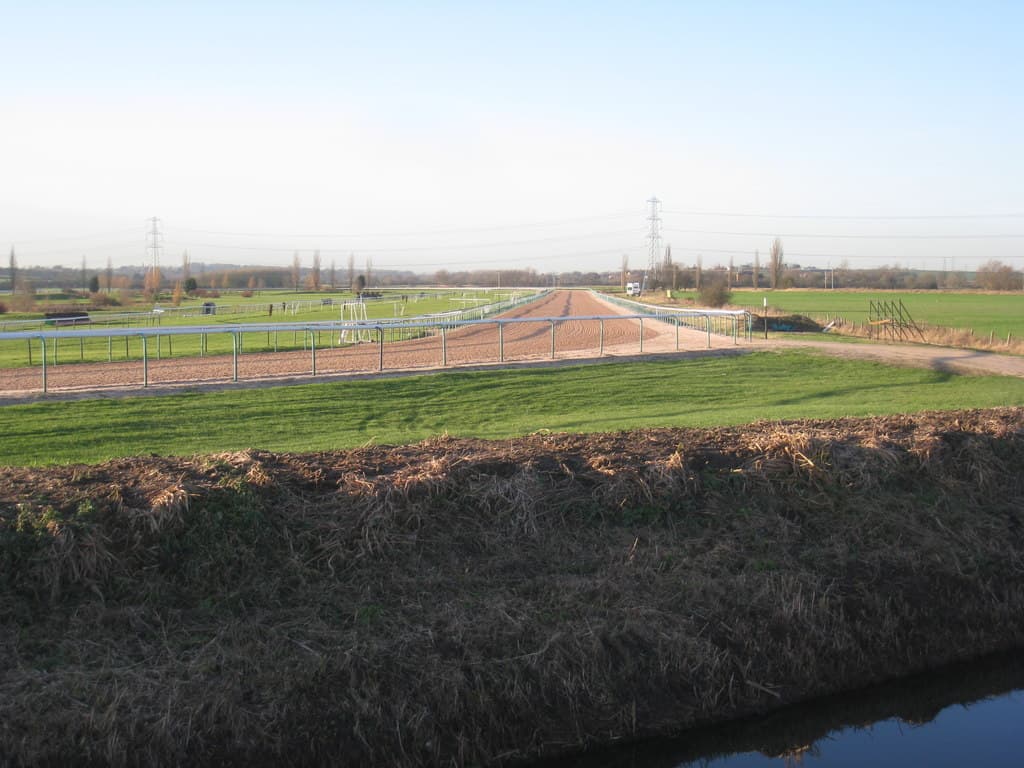
Southwell Racecourse: Complete Guide
Everything you need to know about Southwell — Britain's only Fibresand track, dual-purpose racing in Nottinghamshire, and the unique all-weather experience.
Read more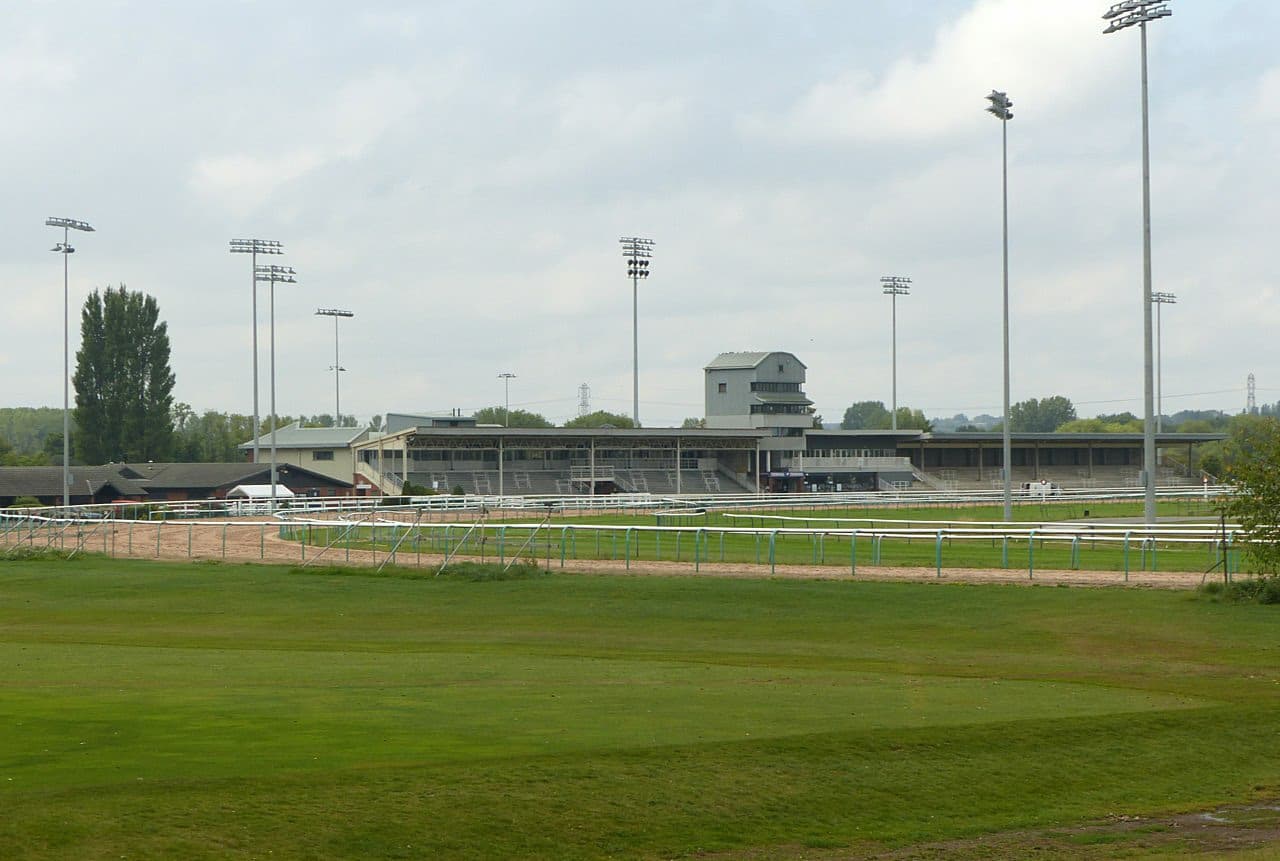
A Day Out at Southwell Racecourse
Everything you need for a day at Southwell — getting there, what to wear, enclosures, food and drink, and insider tips for Britain's only Fibresand track.
Read moreSouthwell Festival Guide
Your complete guide to Southwell Racecourse's all-weather and jumps festivals — the Racing for Change fixture, the winter jump programme and what makes this Nottinghamshire track unique.
Read morePhotos on this page are used under Creative Commons licences. Titles, sources and licence links for each one are on our image credits page.
Research the field with the AI Race Predictor
Our model publishes calibrated win-probability estimates for UK races — a second opinion to understand a race, not tips. It's open about its record: it doesn't beat the market, and we show exactly how it does.
Work it out & learn the basics
Gamble Responsibly
Gambling should be entertaining and not seen as a way to make money. Never bet more than you can afford to lose. If you or someone you know has a gambling problem, help and support is available.