
Founder & Editor · Last reviewed 2026-04-05
Southwell Racecourse sits on Rolleston Road in Nottinghamshire, roughly 15 miles north-east of Nottingham — a compact, dual-purpose venue that operates almost every month of the year. There are very few courses in Britain quite like it. Formal racing here dates from 1898, and the installation of an all-weather track in 1989 transformed the fixture list entirely. Today, Southwell holds more meetings annually than most English racecourses, driven by the one quality that distinguishes it from every other all-weather venue in the country: its Fibresand surface.
That surface is worth understanding before anything else. Southwell is the only course in Britain still using Fibresand — a deep sand and synthetic fibre mix that rides quite differently from Polytrack (used at Lingfield, Chelmsford, and Kempton) and Tapeta (used at Wolverhampton and Newcastle). The going descriptions at Southwell — standard, standard to slow, or slow — tell you something about the pace, but not the full story. Fibresand is a grinding surface. It rewards horses that get to the front early and stay there, and it suits stayers who can sustain a strong gallop through the final two furlongs. Form earned elsewhere on all-weather tracks does not reliably transfer to Fibresand, and Fibresand form does not reliably transfer elsewhere. That fact alone makes the course a specialist area for punters willing to study it properly.
The course sits just outside Southwell town itself, adjacent to Southwell Minster — one of England's underappreciated Norman churches, with a nave dating from around 1130 and the famous stone carvings in the chapter house from around 1290. The Minster is a collegiate rather than a cathedral church, which means it has retained a quieter, less touristy character than more famous Norman buildings of comparable age. Racegoers who arrive early can walk into town and see it before racing starts, which makes the trip worth considering even beyond the racing programme.
The racing programme itself divides into two distinct seasons that overlap in the calendar but never on the same card. The Fibresand flat programme is year-round — Southwell is one of the busiest courses in Britain by fixture count, typically running more than 60 all-weather meetings per year. The National Hunt programme, which uses the inner left-handed turf track, runs from late autumn into early spring, providing jump racing from October through to March or April. Northern training yards dominate the flat fixture list, with John Quinn's Settrington operation and David O'Meara's Upper Helmsley yard among the most consistent sources of winners on Fibresand. For National Hunt racing, Tom George and Dan Skelton are among the yards that appear regularly in the winter entries.
Who this guide is for
This guide is designed to serve four types of reader. First-time visitors will find all the practical information they need: getting there, parking, facilities, and what to expect from a day at Southwell. Regular racegoers who have not been before will find the course-specific detail — surface characteristics, draw biases, key trainers — that makes the difference between a passive afternoon and an informed one. History-focused readers will find background on the course's development from its 1898 origins through to the all-weather transformation. Trip planners, whether for a solo visit or a group outing, will find the sections on fixtures and atmosphere useful for choosing the right meeting.
Quick decisions
- All-weather flat racing runs year-round on Fibresand; Southwell rarely abandons a meeting due to weather
- Fibresand form does not translate to Polytrack or Tapeta — and vice versa
- Front-runners and prominent racers hold a strong advantage on the Fibresand surface
- High stall draws (outside) are generally favoured in sprint races at Southwell
- The feature flat races are the Listed Churchill Stakes and Golden Rose Stakes in November; jump racing runs autumn to spring on the inner turf track
- Newark-on-Trent station (6 miles, 75 minutes from London St Pancras) is the most practical public transport option
- Free on-site parking is available; capacity is around 5,000, so the venue never feels overcrowded
For the full surface analysis, the Fibresand guide covers draw biases, pace profiles, and trainer statistics in detail. The betting guide translates that analysis into practical betting angles. What follows here is the complete picture of the racecourse itself: its layout, its calendar, its facilities, and how to plan your visit effectively.
Bet on Southwell
Place your bets on Southwell races with a trusted bookmaker.

Promo code BETFRED50. New customers only. Register, deposit with a Debit Card, and place a first bet of £10+ at Evens (2.0)+ on Sports, to be settled within 7 days, to get £30 in Sports Free Bets and £20 in Bet Builder Free Bets within 24 hours of settlement. 7-day expiry. Eligibility & payment exclusions apply. Full T&Cs apply. Take Time to Think. BeGambleAware.org. 18+. Full T&Cs.

Promo code R30. New UK customers only, 18+. Register, deposit £10 or more, then place a £10 single cash bet at odds of 1/2 (1.5) or greater on any sports market (excluding Virtuals). Once the qualifying bet settles you get £30 in Free Bets (3 x £10) — the qualifying bet can win or lose. Free Bets are valid on any sports market excluding Virtuals, expire in 7 days, are non-withdrawable and must be used in full. Excluded deposit methods apply (including PayPal, Apple Pay, Skrill and NETELLER). Named bets such as Lucky 15 do not qualify. If you cash out the qualifying bet, or it is voided, you are no longer eligible for the offer. Ends 31.12.26. Full T&Cs apply. Please gamble responsibly. BeGambleAware.org. 18+. Full T&Cs.

Promo code BET40GET20. New UK customers, 18+. Register with the code and place a first bet of £40 or more at Evens (2.0) or greater. Receive 2 × £10 free bets: the first credited automatically once the qualifying bet settles, the second 24 hours later. Free bets must be placed at minimum odds of 4/1 (5.0), expire 24 hours after credit, and the free-bet stake is not returned with winnings. Debit card deposits only. Take Time to Think. BeGambleAware.org. 18+. T&Cs apply. Full T&Cs.

50% of your first-day net losses refunded as a free bet, capped at £25. New UK customers aged 18+ only. To qualify, deposit and place a first bet of £10 or more on any sport at minimum odds of evens (2.00), then place at least two further bets on different events, each worth at least 50% of your largest bet, all at evens (2.00) or greater. Losses are counted from your first settled bet until 23:59 the same day. Place a qualifying £10+ bet and you are guaranteed at least a £5 free bet. Bets placed at SP, void bets, cashed-out bets and bets struck with free bets do not count towards the offer. The free bet is credited the day after your qualifying bets settle and must be used within 7 days, after which it expires. It can be used at odds from 1/4 (1.25) up to 250/1 on singles and straight accumulators, but not on Trixie, Patent or Yankee style multiples. Free-bet stake is not returned with winnings. One offer per person, household, address, IP address and device. E-wallet deposits may not qualify, so check the cashier before depositing. Customers registered with GAMSTOP cannot claim. KYC identity verification must be completed before the free bet is credited. Take Time to Think. BeGambleAware.org. 18+. T&Cs apply. Full T&Cs.

New customers, 18+. Choose the sports bonus at sign-up, make a first deposit and receive a 100% bonus up to £50 in your Sports Bonus balance. To convert the bonus to cash, wager it 10x within 30 days. Single bets below Evens (2.00) do not qualify; accumulators do not qualify if any selection is below 1/2 (1.50). Virtual Sports, voided, cancelled, drawn, cashed-out and free-bet wagers do not count towards wagering. Only the first settled bet per event counts. Withdrawing before the wagering requirement is met forfeits the bonus balance including bonus winnings. Real-money funds are used before bonus funds. Deposits via Skrill or Neteller are not eligible. Not valid in conjunction with other promotions. Odds, bet and payment limits apply. 10bet general and promotion T&Cs apply. BeGambleAware.org. 18+. Full T&Cs.

New customers in Great Britain and Republic of Ireland, 18+. Place a £10 fixed-odds qualifying bet at minimum odds of 1/2 (1.50) — single or each-way (only the win part counts), pre-event or in-play, not cashed out early, within 28 days of opening the account. Receive up to £60 in bonuses credited over three days: 3 × £10 fixed-odds free bets (the first on settlement, then 24 and 48 hours later) plus 3 × £5 Total Goals FOOTBALL spread bets and 3 × £5 racing Winning Favourites spread bets, with a £1 racing Race Index spread bet as an extra on top. The spread bets need a full spread-betting account, opened within 28 days of the fixed-odds account and subject to Spreadex's eligibility and appropriateness checks. Free-bet stakes not returned with winnings; free bets valid 28 days from issue. IMPORTANT: the £5 credits are SPREAD bets — sports spread betting carries the risk that losses can exceed your stake. Sports spread-betting customers do not have Financial Ombudsman or FSCS recourse. Take Time to Think. BeGambleAware.org. 18+. T&Cs apply. Full T&Cs.

Promo code WELCOME15, entered under My Bonuses after registering. New UK customers, 18+. Place a first qualifying bet of at least £10 from your cash balance at odds of evens (2.0) or greater within 7 days of opening the account. Once the qualifying bet fully settles you receive £15 in free bets, credited as 3 x £5 tokens with set uses: one £5 accumulator free bet (minimum 4 legs, each leg at 2/5 or bigger), one £5 sports free bet (any market at evens or bigger) and one £5 Sub Cover free bet (selected football player markets at evens or bigger). Free-bet stakes are not returned with winnings. Free bets expire 7 days after they are credited. Void, cashed-out and partially cashed-out bets do not qualify. One offer per customer. Confirm the current terms on BetGoodwin's own welcome-offer page before claiming. Take Time to Think. BeGambleAware.org. 18+. T&Cs apply. Full T&Cs.

New UK customers, 18+. Minimum deposit £10. Place a £10 qualifying single on sports (excluding virtuals) at minimum odds of 1/2 (1.50), settled within 14 days. Deposit-method exclusions apply. Receive £30 in free bets (stake not returned), split £20 for sportsbook use (2 x £10) and £10 for Bet Builder only (2 x £5); Bet Builder does not cover horse racing. Free bets must be accepted within 7 days and expire 7 days after acceptance. No promo code required. Best Odds Guaranteed on UK & Irish racing, subject to having staked over £25 in the previous seven days. Operated by LiveScore Betting and Gaming (Gibraltar) Ltd, UKGC 56859. Confirm the current terms on LiveScore Bet's own promotions page before claiming. Take Time to Think. BeGambleAware.org. 18+. T&Cs apply. Full T&Cs.
18+. BeGambleAware.org
The Course
Southwell operates two separate circuits on the same site: an outer all-weather loop for flat racing and an inner turf track for National Hunt. The two share the same infrastructure, stands, parade ring, saddling boxes, but the racing surfaces are entirely distinct, and what makes one horse effective at Southwell often has no bearing on the other discipline.
The Fibresand All-Weather Track
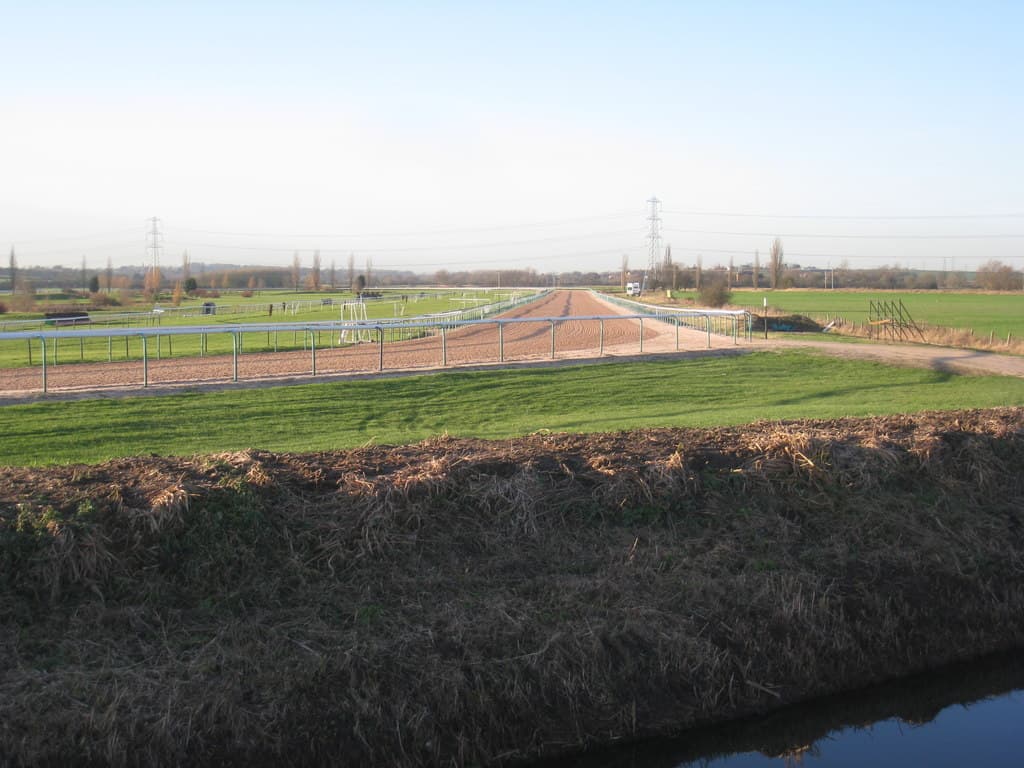
The flat course is a right-handed oval of approximately one mile two furlongs, and it is Fibresand that defines every aspect of racing here. The surface is a mix of sand and synthetic fibres, laid deep enough that horses sink slightly into it with each stride. That depth creates significant rolling resistance compared with faster all-weather surfaces such as Tapeta or Polytrack, and the effect on racing patterns is clear and consistent.
The straight is approximately five furlongs long: long enough that speed horses can take position early and be well established before the turn into the home straight. The bends are gradual rather than tight, which means there is no sharp angle advantage or disadvantage, but the pace active matters greatly. On Fibresand, the early leaders tend to control the race more decisively than on faster surfaces. A horse that reaches the front before the turn has a significant psychological and physical advantage; once the grinding pace sets in, that lead rarely evaporates as quickly as it might on turf or Tapeta. Southwell produces a higher proportion of front-runner victories than almost any comparable course in Britain.
Distance types at Southwell range from five furlongs to two miles. Sprints over five and six furlongs test raw early speed blended with the ability to handle the surface, and it is here that the draw statistics are most pronounced. High stall numbers, the wider, outside draws, have historically produced a better strike rate in sprint races, because horses in those positions can find the running rail quickly and avoid being squeezed early. In races over one mile and beyond, the draw effect diminishes significantly as tactics become more important than position from the gate.
Over middle distances, the grinding character of the surface becomes most evident. A horse with a form figure of 1-1-1 on Fibresand is a very different type from a horse with the same figures on Polytrack. The Fibresand winner has demonstrated an ability to maintain pressure through soft, deep footing over extended distances; the Polytrack winner has demonstrated speed efficiency on a faster, firmer surface. These are not interchangeable qualities. Trainers and punters who understand this distinction extract the most value from the Southwell market, because races regularly include horses whose all-weather form has come on a different surface altogether.
The going at Southwell is almost always described as standard or standard to slow. Heavy rain rarely produces the "slow" description, because the surface drains adequately and holds its condition well. This consistency is part of what makes Southwell so valuable to trainers: they know broadly what the horse will encounter, which is particularly useful when placing horses on tight schedules or building confidence in young horses.
The National Hunt Track
The jump track sits inside the Fibresand oval and is a left-handed, roughly rectangular circuit of approximately one mile two furlongs. That left-handed orientation contrasts with the right-handed flat course, which means the two tracks run in opposite directions around the same site: a relatively unusual arrangement in British racing.
The chase course features eight fences per circuit, placed at intervals that allow horses a reasonable recovery between obstacles. The fences at Southwell are built to standard dimensions and are not considered unusually testing, but the track's flat nature through the main straight and the modest camber elsewhere means that jumping must be accurate rather than powerful. Horses that make errors but have enough natural momentum to recover are less forgiving here than at courses with wider, more generous approaches to fences.
The hurdles course uses a tighter inner line, which creates a sharp, turning track that puts a premium on agility and the ability to handle the turns without losing ground. Horses that are awkward through the bends, often big, long-striding types, tend to do better at wider, galloping tracks. At Southwell's jumps track, compact, athletic types that can maintain balance through left-hand turns hold an advantage.
The finish at the National Hunt track is uphill from the final turn into the straight, which tests stamina over the closing stages. This is not the dramatic climb found at tracks like Cheltenham's old course, but it is enough to expose horses that have burned too much energy in the early stages. Strong stayers who race off the pace and arrive running tend to do well in jumps handicaps at Southwell.
Going on the turf track can vary considerably through the autumn and winter season. Soft and heavy descriptions are common from November onwards, and the course does not shy away from using the heavy description when conditions warrant. Unlike the all-weather surface, which stays consistent, the turf track at Southwell can be transformed by a week of wet weather, and punters should check going reports close to the day of racing.
Distances and Race Types on the Flat
The Fibresand track caters for a broad range of distances, which is part of what makes Southwell's flat fixture list so extensive. Sprint races over five furlongs are the most draw-sensitive, as detailed above. Six-furlong races follow a similar pattern but allow a fractionally wider range of racing styles to be competitive. Races over seven furlongs and one mile occupy the middle ground where pace is still critically important but hold-up horses have slightly more scope to close if the pace collapses, though on Fibresand that is less common than on faster surfaces.
Races over one mile two furlongs and one mile four furlongs test staying power most directly. These distances favour horses with a proven ability to maintain their galloping rhythm through soft footing over an extended circuit, and they are the distances at which Fibresand form transfers most poorly to standard turf or faster all-weather surfaces. Two-mile races are the longest option, and fields at this distance are typically small and specialist, often featuring horses that have developed a specific affinity with the surface over multiple runs.
For visitors, understanding the distance of each race helps frame what you are watching. A five-furlong sprint on Fibresand is a test of early positioning and raw pace; a one-mile-four-furlong handicap is a staying test where the early pace leader may well tire and a closer race develops from the half-mile marker. The difference between those two spectacles is significant, and the best Southwell racedays include a mix of sprint and distance races that gives the afternoon or evening real variety.
Flat vs Jumps: How the Two Disciplines Coexist
Running flat and jump racing on the same site from a shared infrastructure is something very few venues in Britain manage, but Southwell has been doing it for decades. The parade ring and weighing room serve both disciplines, and the raceday feel is similar regardless of which code is running. The key practical point for the visitor is that you will never see both codes on the same card: Southwell runs either an all-weather flat meeting or a jump meeting, never both on the same day.
For punters, the distinction is absolute. Horses trained specifically for the Fibresand flat programme are a completely different population from the National Hunt horses that come in autumn and winter. Some of the flat-specific trainers who dominate Southwell's all-weather programme, yards such as John Quinn's operation in Settrington, North Yorkshire, and David O'Meara's yard in Upper Helmsley, are rarely seen in the jumps entries at Southwell. Conversely, the National Hunt trainers who send horses to Southwell in winter, including yards associated with Tom George and Dan Skelton, are predominantly absent from the flat fixture list.
Understanding which track is running, and what that surface demands of the horse, is the first question any serious punter should ask when looking at a Southwell card. The answer shapes everything else: pace, draw, trainer, and the reliability of recent form.
Takeaway: Southwell's two tracks demand different analysis approaches entirely. On Fibresand, front-running pace and draw position in sprints are the starting points. On turf over jumps, stamina, agility through left-handed turns, and going preference are what matter.
Key Fixtures & Calendar
Southwell's fixture list is one of the most extensive of any racecourse in England. The Fibresand surface means flat racing can go ahead in virtually any weather, which makes the course a reliable fallback when turf meetings are abandoned elsewhere and a consistent fixture provider through the depths of winter when other options are limited.
The All-Weather Flat Calendar
The all-weather programme at Southwell runs throughout the year, with meetings spread across most weeks of the calendar. The total annual fixture count typically sits above 60 meetings, placing Southwell among the busiest venues in Britain. Meetings range from weekday afternoon cards to Saturday features and summer evening fixtures.
The Churchill Stakes and the Golden Rose Stakes, both Listed races run in November, are the course's feature races on the flat.
Beyond the headline race, the flat programme is built around handicaps and conditions races across a range of distances and classes. Class 5 and Class 6 handicaps dominate the midweek cards, attracting the bread-and-butter horses of the northern training community: the kind of horses that race regularly and whose form can be tracked week to week. Class 3 and Class 4 conditions races appear on the better Saturday and evening cards. Group or Listed support races outside those two races are limited.
Summer evening meetings at Southwell, typically running from late May through to September, are among the best attended fixtures of the year. Racing starts at around 6:00pm, the light holds until after the final race, and the atmosphere on the July and August evenings takes on a holiday feel that is absent from midwinter weekday cards. These meetings consistently attract strong crowds relative to the course's usual attendance levels.
The National Hunt Programme
The jumps season at Southwell runs from late autumn into early spring, covering the period when Fibresand flat meetings are also happening: the two programmes run in parallel in terms of the calendar, though not on the same day. Jump meetings are less frequent than the flat card, typically 15 to 20 per season.
The National Hunt programme at Southwell does not anchor itself around a single prestigious festival. Instead, it offers a steady diet of novice hurdles, novice chases, handicap hurdles, and handicap chases across the season. The fields are competitive, and the course draws horses from a range of National Hunt yards, including trainers from the East Midlands, Yorkshire, and the Gloucestershire-based operations that dominate the midlands jump circuit.
Chase races at Southwell rarely extend beyond two and a half miles, which reflects the track's relatively short, sharp configuration. Staying chases are better accommodated at tracks with longer circuits. The sweet spot for jump racing at Southwell is the two-mile handicap hurdle and the two-mile novice chase: races where the left-handed, moderately testing track suits athletic, quick-jumping types.
Race Classifications and Prize Money
Southwell's all-weather flat programme spans Class 2 through Class 7, with the bulk of the fixture list sitting between Class 4 and Class 6. Class 5 and Class 6 handicaps are the backbone of the midweek programme, drawing horses from the northern training community that race frequently at a consistent level. These horses' form books are often deep in Fibresand entries, which makes them easier to assess for punters who focus on the surface, but harder for those applying standard all-weather form principles without accounting for the surface distinction.
Class 3 and Class 4 handicaps and conditions races appear on the better weekend and evening cards, and the prize money on these races is sufficient to attract yards with higher-rated horses. When a significant northern trainer sends a horse they regard as a potential Listed prospect to a Class 3 conditions race at Southwell, the market often does not fully price the form quality involved.
Planning Around the Fixture List
The most straightforward approach to planning a visit is to check the Southwell website directly, as the fixture list is updated regularly. All-weather meetings are almost certain to go ahead regardless of weather, which makes advance planning reliable. Jump meetings on turf are more weather-dependent, though the course is well drained and rarely suffers from waterlogging.
For punters focused on value, the midweek all-weather cards in January and February often offer less-efficient markets than the Saturday features, as field sizes can include horses with recent racecourse experience that is easy to interpret and price accordingly. Conversely, the summer evening cards attract larger, more competitive fields, particularly from the northern stables that target the evening prize-money, which makes them harder to assess but more entertaining to watch.
The day out guide covers which meetings suit different types of visitor, from the regular punter looking for a quiet Wednesday afternoon to families planning a summer evening outing.
Comparisons with other East Midlands racecourses illustrate Southwell's calendar advantage clearly. Nottingham, around 15 miles to the south-west, runs a turf-only flat programme from April to October and is dark for the rest of the year. Leicester operates a turf flat and National Hunt dual programme but cannot offer racing in frost, snow, or prolonged heavy rain. Southwell, by contrast, can fill a card on a January weekday when those courses have been idle for two months. That distinction in schedule reliability is one reason the course's annual fixture total is significantly higher than either neighbour.
Takeaway: Southwell's year-round all-weather programme gives it a reliability matched by few courses. The summer evening meetings are the pick for atmosphere; the winter weekday cards are where patient punters with Fibresand knowledge can find value.
Facilities & Hospitality
Southwell is a compact course with a capacity of around 5,000, which means the facilities feel proportionate rather than stretched. You are never navigating a vast estate or queuing for ten minutes to reach a bar: the whole site works at a human scale, and that is one of the reasons the course consistently receives positive feedback from visitors.
Enclosures and Viewing
The main enclosure at Southwell gives excellent views of both the Fibresand flat track and, when jump racing is on, the inner turf circuit. The finish line and run-in are clearly visible from the central viewing areas, and there is no section of the grandstand from which the action is obscured. Racegoers who prefer standing trackside can use the rail areas adjacent to the final furlong, where the proximity to the horses is closer than at many larger venues.
The grandstand covers the main seating and standing areas and provides some shelter for racegoers when the weather turns: useful in the winter months when wind and rain can make an exposed position uncomfortable. There are no elevated grass banks or open terracing of the sort found at older, more traditional venues, but the grandstand is functional and well positioned relative to the finish.
Southwell does not operate multiple enclosure tiers in the way that larger courses such as Epsom or Goodwood do. The course runs on a largely open access model for standard racedays, with a single general admission ticket giving access to the main viewing areas. This straightforward entry model suits the informal character of the course.
For a more detailed breakdown of where to stand and what each area offers, the day out guide includes specific recommendations.
Hospitality and Dining
Southwell offers corporate and group hospitality packages, ranging from private box hire to restaurant table reservations. The hospitality offer is positioned as informal rather than corporate: the tone is a step up from general admission in terms of comfort and catering, but it does not carry the formal dress code requirements of racecourses where hospitality is a prestige product.
The course restaurant serves lunch and afternoon packages on racedays, and private boxes can be booked for groups. The boxes overlook the track and give an excellent view of both the start and finish for flat races over five furlongs and six furlongs. For groups of eight to 20, a box package offers the best combination of guaranteed seating, catering, and a private viewing space.
General admission racegoers are served by a range of bars and food concessions positioned around the main viewing area. The food offer covers standard racecourse fare, burgers, hot dogs, chips, pies, with some vendors varying by meeting. The bars serve draught and bottled beer, soft drinks, and hot beverages. Queue times are rarely significant, even on busier summer evening meetings.
Betting, Bookmakers, and the Tote
On-course bookmakers set up along the rails opposite the grandstand, and the ring is reasonably active on Southwell's busier racedays, particularly the Saturday and evening fixtures. Midweek afternoon cards tend to attract a smaller book, with fewer pitches occupied, but there is generally enough competition to get a fair price on well-fancied runners.
Tote facilities are available on-site, covering win, place, exacta, and other pool bets. The Tote pool at Southwell is smaller than at tracks with larger attendances, which means that a significant bet into the pool can affect the dividend: something worth bearing in mind if you are planning to back a horse at a specific price. The same logic applies in reverse: unusual Tote dividends can occasionally appear on Southwell cards, particularly in races where the pool is thin and the favourite runs below expectations.
Indoor betting facilities, including screens for other meetings and a facility to study form, are available in the main building, which provides a warm alternative for punters on cold winter cards. Disabled access to the betting areas and viewing positions is good, with level access routes available throughout the main site.
Practical Facilities
Toilet facilities are spread around the site and are regularly serviced throughout the day. Disabled facilities are available and well signposted. There is a first aid point on site for all racedays. Dog-friendly arrangements should be confirmed with the course in advance, as the policy can vary by meeting type.
A racecourse shop or souvenir outlet is not a prominent feature at Southwell: the focus is squarely on the racing and the experience rather than retail. Racegoers focused on a self-contained day will find everything they need on-site, but those wanting to browse beyond the racing itself may prefer to arrive early and visit the town centre and Southwell Minster before the card begins.
Takeaway: Southwell's facilities match its scale: efficient, friendly, and without the gaps that leave visitors frustrated. It is not a luxury venue, but it is a well-run one, and the compact size means the whole operation stays coherent even when crowds are at their peak.
Getting There
Southwell Racecourse is at Rolleston Road, Southwell, Nottinghamshire, NG25 0TS. For most visitors, the most straightforward route is by car. Public transport options exist but require planning, particularly for evening meetings when return services may not be convenient.
By Train
The nearest railway station to Southwell Racecourse is Rolleston-on-Dove, approximately one mile away on a line with an infrequent service — checking times carefully before travel is essential, and it may not align with race start and finish times on all cards.
The more practical train option for most visitors is Newark-on-Trent, approximately six miles from the racecourse. Newark Castle station is served by East Midlands Railway on the Nottingham–Lincoln line, and Newark North Gate station sits on the East Midlands Railway line from London St Pancras — roughly 75 minutes from St Pancras on a direct service. From either Newark station, a taxi to the course is straightforward and takes around 15 minutes. Nottingham station is around 25 minutes from Newark by train.
Visitors travelling by rail should arrange taxis in advance for evening meetings, particularly for the return journey, as taxi availability at Rolleston and Newark can be limited late in the evening.
By Car
Southwell is well connected by road. From Nottingham (approximately 15 miles, 30–35 minutes), the most direct route follows the A612 north-east through Lowdham to Southwell. From Newark-on-Trent (approximately six miles, 15 minutes), the A617 westbound brings you to Southwell town, with the racecourse signed from there. From Sheffield (around 40 miles, approximately 55 minutes via the A57 and A617) or Derby (around 30 miles, approximately 40 minutes via the A52 and A612), journey times are manageable.
Free parking is available on-site, accessed directly off Rolleston Road. The car park is level and well laid out, and it is rarely under pressure even on the course's busier summer evening meetings. Arriving 45 minutes before the first race is usually sufficient to park comfortably and find your way to the course.
By Bus
Stagecoach and Trentbarton run services linking Southwell town with Nottingham and Newark on most days. The town centre is a short taxi ride or a walkable distance from the racecourse depending on your route. Bus services from the town can be infrequent on evenings and weekends, so checking the timetable in advance — particularly for the return journey — is advisable. Services do not typically terminate at the racecourse itself.
By Taxi
Taxis are a practical part of any public transport journey to Southwell. From Newark North Gate or Newark Castle stations, the journey to the racecourse is roughly 15 minutes and typically costs £15–£20. From Rolleston station (one mile away), the fare is considerably less, but the service between trains is infrequent. Pre-booking a return taxi, particularly for evening meetings, is strongly advisable — the town of Southwell and the surrounding area have limited taxi capacity late at night, and walking from the course back to the nearest transport link in the dark is not ideal.
Local Area
The town of Southwell sits immediately adjacent to the course and is worth half an hour before racing if you arrive early. Southwell Minster is a Norman collegiate church whose nave dates from around 1130; the chapter house, dating from around 1290, contains some of the finest stone carvings of medieval foliage in England. The town itself has a small range of cafes, pubs, and shops clustered around the market square. Newark-on-Trent, six miles to the east on the A617, offers a wider range of restaurants and is a natural base for overnight stays, with mainline rail connections back to London St Pancras.
For more on what to do before and after racing, the day out guide covers eating options, what to wear, and tips for making the most of a full day.
Frequently Asked Questions
History of Southwell Racecourse
Southwell Racecourse has been hosting organised horse racing since 1898, when the current course at Rolleston Road was formally established. That date marks the beginning of regulated racing at the present site, though informal race meetings had been held in the Southwell area before that point. The town of Southwell, with its market character and position on the road network between Nottingham and Lincoln, made it a natural gathering point for the kind of horse racing and associated social activity that was a feature of English provincial life in the Victorian era.
The Early Years: 1898 to the Mid-Twentieth Century
The original course at Southwell was a turf track, running the same circuit that today houses the National Hunt programme. Racing in the early decades of the twentieth century was typical of provincial jump and flat racing at the time — modest prize money, local trainers, and fields drawn largely from the East Midlands and Yorkshire. The course never sought to compete with the major Flat meetings at Newmarket or the prestige National Hunt fixtures at Cheltenham, but it built a consistent local following.
Through the 1920s and 1930s, Southwell continued to operate its turf programme. The years of the Second World War brought disruption to British racing as a whole — courses were requisitioned, racing was suspended entirely for periods, and many venues suffered from the lack of maintenance that wartime priorities dictated. Southwell, like many provincial courses, emerged from the war years in a diminished state and spent the late 1940s and 1950s rebuilding its fixture list.
Post-war British racing saw a gradual consolidation of courses. Some smaller venues closed entirely through the 1950s and 1960s as the economics of horse racing became harder to sustain without significant attendance. Lincoln Racecourse, for example, closed in 1964 after running the historic Lincoln Handicap for well over a century — a reminder that even courses with long and respected histories were not immune to the economic pressures of the period. Southwell survived, but it remained a fairly modest venue — well regarded locally, known for decent jump racing in winter and a limited flat programme in summer, but not a course that national racing fans would have tracked closely.
The 1970s brought renewed pressure on smaller provincial courses. The introduction of the Levy Board system in 1961 had formalised the funding of British racing through a levy on bookmaker turnover, but the distribution of prize money still heavily favoured the major courses. Southwell, like many provincial venues, operated on modest budgets with limited scope for significant infrastructure investment. The course's National Hunt programme remained its primary claim to interest through this period, with the flat programme limited in scope and relatively undistinguished.
The All-Weather Revolution: 1989
The defining moment in Southwell's modern history came in 1989, when the course installed a Fibresand all-weather track. This made Southwell one of the pioneering venues in British all-weather racing, joining Lingfield Park, which had opened its all-weather track in 1989, and Wolverhampton, which opened its all-weather programme the same year. The three courses between them launched a new era in British racing — one that has extended the calendar, provided year-round opportunities for trainers and owners, and created a distinct form of the sport.
Fibresand was chosen as the surface at Southwell, distinguishing it from Lingfield, which initially used Equitrack (later replaced by Polytrack). The choice of Fibresand gave Southwell a surface that was slower and more testing than Equitrack, producing different racing patterns from the outset. That distinction, which was notable but not universally understood in 1989, has become Southwell's defining characteristic as the years have passed and all other British all-weather venues have moved to faster surfaces.
All-Weather Expansion: The 1990s and 2000s
Through the 1990s, Southwell's all-weather programme expanded steadily. The fixture count grew as British racing's governing bodies recognised that all-weather racing served a practical function in keeping the sport active through months when turf racing was impossible. Prize money levels were modest by Group racing standards, but the consistency of the programme attracted a core of trainers — largely from the north — who found that placing horses at Southwell on a regular schedule suited their operations.
As other courses updated their surfaces — Lingfield switching to Polytrack in 2001, Wolverhampton adopting Tapeta when it moved to its new Dunstall Park site — Southwell retained Fibresand. This was a conscious choice, one that has been revisited periodically in industry discussions. The surface requires specific maintenance and behaves differently from synthetic polymer surfaces. Periodic concerns about its depth and consistency led to maintenance work over the years, but Southwell has consistently renewed its commitment to Fibresand rather than switching.
Southwell and the Racing Calendar Today
By the 2010s and into the 2020s, Southwell had established itself as one of the most fixture-rich venues in England. Annual totals consistently exceed 60 all-weather meetings, supplemented by the winter jump programme. The course underwent gradual infrastructure improvements through this period, with facilities upgraded to meet modern standards while retaining the compact, intimate character that regular visitors regard as one of its strengths.
The course's position as the sole Fibresand venue in Britain has, if anything, increased in significance as all-weather racing has grown as a sector. Trainers who understand the surface send horses specifically targeting the Southwell prize money; form analysts who know how to read Fibresand results have a real informational advantage over those who attempt to apply generic all-weather form principles. The history of the course's surface is, in this sense, an ongoing story — one that the course's 1989 decision continues to shape every week of the racing year.
The long-term future of Fibresand at Southwell has occasionally been the subject of industry discussion, as maintenance costs and the surface's ageing composition have prompted questions about whether a switch to Polytrack or Tapeta might eventually follow. So far, those discussions have not resulted in a change. Southwell has invested in ongoing maintenance of the Fibresand rather than replacement, and the surface's distinct character continues to underpin the course's identity. Whether that position is maintained in the decades ahead is uncertain, but for now Fibresand at Southwell remains one of the truly singular features of British racing.
For more on the course's historical development, the history of Southwell Racecourse provides a deeper account of key figures and moments.
Famous Moments
Southwell may not carry the prestige of Cheltenham or Ascot, but its long history and unique surface have produced moments that matter to those who follow British racing closely. Given the course's specialist character, particularly the Fibresand surface, the moments that stand out tend to involve horses or trainers who mastered its specific demands, and form or performances that shaped the understanding of all-weather racing in Britain.
The Opening of the All-Weather Track, 1989
The installation of the Fibresand track in 1989 and the first meeting run on the new surface remains the most historically significant moment in Southwell's modern era. That opening marked the arrival of all-weather flat racing in the East Midlands and established Southwell as one of only three venues in Britain capable of offering year-round racing. The early all-weather meetings attracted trainers and horses who were learning what the surface demanded: the front-running bias, the importance of the draw in sprints, the grinding nature of the pace. Those early years were the period in which the Southwell form book was first being written, and the trainers who invested time in understanding the surface early gained advantages that took others years to catch up with.
Winter Rescues: When Southwell Kept British Racing Running
Southwell's all-weather surface has repeatedly allowed British racing to continue when weather would otherwise have wiped out an entire week of fixtures. The winters of 2009–10 and 2010–11, which brought extended spells of frost and snow that closed most of Britain's turf courses for weeks, illustrate the point clearly. During those periods, Southwell's Fibresand kept racing going as almost all other venues stood idle. That practical role, sustaining the sport's calendar, keeping horses in competitive trim, and providing racing for the betting public, represents a contribution that is less dramatic than a single notable race but arguably more consequential over time.
Serial All-Weather Winners and Fibresand Specialists
Over the decades, certain horses have developed particular affinity with the Fibresand surface at Southwell, accumulating course records that stand as benchmarks. A horse that wins four, five, or six times at the same venue on the same surface is not simply a decent performer: it is a specialist, one whose physical and tactical profile is closely aligned with what Fibresand demands. Trainers who identified these profiles early: placing horses that settled well on the front end, that were powerful rather than speed-reliant, and that handled the steady pace efficiently: built reputations at Southwell that persist in the form book today.
The Churchill Stakes and the Golden Rose Stakes
Southwell's Listed races are the Churchill Stakes and the Golden Rose Stakes, both run in November on the all-weather. The Churchill Stakes was run at Lingfield Park before it moved to Southwell.
Atmosphere at Capacity: Summer Evening Meetings
Moments do not have to be tied to a single race or event to be significant. The summer evening meetings at Southwell, particularly the July and August cards that run under evening light in front of some of the course's largest crowds of the year: have produced a consistent atmosphere that regular visitors return to year after year. A warm evening with six or seven competitive handicaps on Fibresand, full stands by the third race, and the light fading slowly behind the grandstand: this is the version of Southwell that its most devoted followers point to when asked why the course has such a loyal following. It is not glamour, but it is real racing, well run, at a scale that allows the crowd to feel part of the action rather than distant spectators.
Records and Consistency: The Mark of Southwell Masters
Some of the most telling moments at Southwell are quantitative rather than dramatic. A trainer whose Southwell strike rate across a full season exceeds 30 per cent. A jockey who rides 12 winners at the course in a single winter. A horse whose Fibresand form figures read 1-1-2-1-1 and whose trainers keep pointing it at the course because they know there is no easier way to win a race with it. These accumulations of evidence, recorded in the form book, visible to anyone who looks, are the quiet landmarks by which Southwell's history is most accurately measured.
Betting Guide
Southwell offers a betting environment that is distinct from any other British racecourse, and the punters who do best here are those who treat it as a specialist discipline rather than applying general all-weather or racing principles. The Fibresand surface, the dominance of northern trainers in the flat programme, and the consistent pace dynamics create a set of market inefficiencies that reward detailed study.
For the full treatment of Southwell betting strategy, see the Southwell betting guide and the all-weather tips. This section covers the core principles.
The Fibresand Edge: Why Surface Knowledge Matters
The starting point for any Southwell bet is recognising that Fibresand form is a closed ecosystem. A horse that has run well on Polytrack at Kempton or Tapeta at Wolverhampton has not demonstrated anything about its likely performance on Fibresand. The surfaces are physically different enough that the pace patterns, physical demands, and result distributions are not comparable. This creates a structural opportunity: races at Southwell regularly include horses whose form has been earned entirely on Polytrack or Tapeta, and which the market prices as though that form transfers cleanly. Often it does not.
The practical step is to separate Fibresand runners from non-Fibresand runners in the form book. A horse with three runs on Fibresand and two on Polytrack needs its form assessed on the Fibresand runs first, with the Polytrack runs treated as contextual rather than directly predictive.
Front-Running Bias: How Pace Shapes the Market
Fibresand's physical resistance creates a pronounced front-running advantage. Horses that race in the first two or three positions through the early stages are statistically more likely to hold on than horses that attempt to come from off the pace in the final two furlongs. This is not a minor tendency: it is one of the most consistent pace biases in British racing, and it is present across all distances at Southwell, most strongly over five to seven furlongs.
The betting application is specific. When a race at Southwell contains a known front-runner or a horse that consistently races prominently, its market price is often underweighted for the surface advantage it carries. Conversely, horses with strong late-running form profiles on turf or faster all-weather surfaces may be over-priced by the market, which has borrowed their turf closing speed as evidence of quality without accounting for the surface's resistance to that style.
Pace analysis at Southwell begins with identifying which horse or horses are likely to lead. Where multiple front-runners compete in the same race, the pace can become unsustainably fast in the early stages, which occasionally opens the race up for hold-up horses that would normally struggle. These are the races to treat with particular caution, as the normal Fibresand pace hierarchy becomes disrupted.
Draw Bias in Sprint Races
In races over five and six furlongs, high stall numbers, the wider, outside draws, carry a consistent advantage. Horses drawn high can find the outer running rail quickly and maintain a clear position without being squeezed through the first bend. Stall positions in the single figures at Southwell five-furlong races have historically underperformed relative to market expectation.
The practical application here is straightforward: in a competitive sprint handicap, a horse drawn high in a field of 12 or more carries a significant positional edge. If that horse is also a front-runner or races prominently, the combination of draw and pace style makes it a candidate for serious consideration regardless of its overall form rating.
Over distances of a mile and beyond, the draw effect becomes negligible. The extra distance allows horses time to find their position, and the first-bend advantage or disadvantage equalises through the race.
Trainer Statistics: Northern Yards and the Fibresand Programme
The northern training centres dominate Southwell's flat programme in a way that has no real parallel at other English tracks. John Quinn's yard in Settrington, North Yorkshire, David O'Meara's Upper Helmsley operation, and a cluster of other northern yards send horses to Southwell on a regular schedule: some of them horses that have been specifically placed on the Fibresand programme as their primary competitive arena. These trainers' runners at Southwell carry a different strike rate profile from their runners at other courses, because the horses being sent are often those identified as Fibresand specialists.
Checking a northern trainer's Southwell-specific strike rate (available on form database services) rather than their overall all-weather or flat strike rate is a useful step. A trainer with a general all-weather strike rate of 12 per cent might carry a Southwell-specific rate of 20 per cent or higher, reflecting a deliberate approach to placing horses on the surface.
For National Hunt racing in winter, tracking Dan Skelton's runners, his yard in Alcester is around 60 miles from Southwell, and Tom George's Gloucestershire-based operation is a useful starting discipline. Both yards run horses regularly at the course through the jumps season, and their Southwell-specific jump records are worth examining separately from their general National Hunt statistics.
Value Opportunities: Where the Market Misfires
The most consistent value opportunities at Southwell arise from the surface knowledge gap. Markets at midweek all-weather cards are set in part by general raceday prices and in part by national form analysis that treats all-weather form as broadly equivalent. The traders setting prices may not always distinguish sharply between Fibresand and Polytrack form, creating consistent windows where horses with strong Fibresand records are marginally underpriced or horses relying on non-Fibresand form are overpriced.
This is a systematic rather than occasional gap. It is at its widest in Class 5 and Class 6 handicaps on midweek afternoon cards, where field composition regularly includes a mix of horses returning to Fibresand after runs on other surfaces, horses making their Fibresand debut, and real course specialists. The specialists, particularly those with a front-running or prominent-racing profile and a high draw, are the group to focus on.
Please gamble responsibly. If you feel you may have a problem with gambling, visit BeGambleAware.org or call the National Gambling Helpline on 0808 8020 133.
Atmosphere & Planning Your Visit
Southwell does not attempt to be something it is not. Capacity of around 5,000 means the venue sits comfortably between the intimate world of a point-to-point and the scale of a major racecourse, and the result is an atmosphere that feels close to the sport without the formality or expense that attaches to larger meetings.
What to Expect on a Raceday
On a summer evening meeting in July or August, Southwell at its best feels like a local event that happens to involve some very good horses. The gates open around 90 minutes before the first race, usually at 5:30pm or 6:00pm, and regulars arrive early to watch the gallops and study the runners in the pre-parade ring. By the time the first race goes off, the stands are comfortably filled, not packed, and the mood is relaxed. Conversations between strangers are common around the rail; the compact site means there is no sense of isolation or of different factions occupying separate territories.
Winter weekday afternoon cards have a different feel. Attendance is lower, the crowd is predominantly male and predominantly focused on the betting, and the atmosphere is quieter. But for the serious punter, these cards offer something the summer evenings do not: small, manageable fields, a less efficient market, and the opportunity to focus without distraction. Some of Southwell's most loyal racegoers attend primarily in winter, precisely because the intensity of the betting exercise is sharper.
Planning Your Visit
The most important practical decision is choosing the right meeting. For a first visit or a group outing, a Friday or Saturday evening meeting in June, July, or August gives the best combination of atmosphere, light, and field quality. Advance booking of hospitality is advisable for these dates. For a Wednesday afternoon in November, simply turning up works fine: queues are rare, parking is available right up to race time, and the course feels uncrowded.
Arrive at least 45 minutes before the first race to park, collect your racecard, study the form in the betting ring, and watch the first couple of horses arrive in the pre-parade ring. The racecard is available on-site; serious form students bring their own research already prepared.
Clothing in summer: smart casual is appropriate and entirely sufficient. In winter, particularly from October through February, layers and a waterproof outer layer are essential: the viewing rail areas are exposed, and a cold northerly wind with wind chill of minus two or three degrees is not uncommon on a January afternoon at Southwell. The grandstand provides shelter but the rail viewing is where the racing feels most immediate.
After Racing
Southwell town centre is walkable from the course in under 20 minutes, and there are a small number of pubs and restaurants in the town that welcome post-racing visitors. Southwell Minster is open for visitors during the day and is worth seeing if you have not been before: the Norman architecture, particularly the chapter house carvings from around 1290, is of real national importance. Newark-on-Trent, six miles east, has a wider range of restaurants and bars and is the natural base for those combining a day at Southwell with an overnight stay.
For everything else you need to plan your day, what to wear, where to eat, how to get back to the station, the day out guide covers all of it.
More guides for this course
Share this article
More about this racecourse
All Southwell guides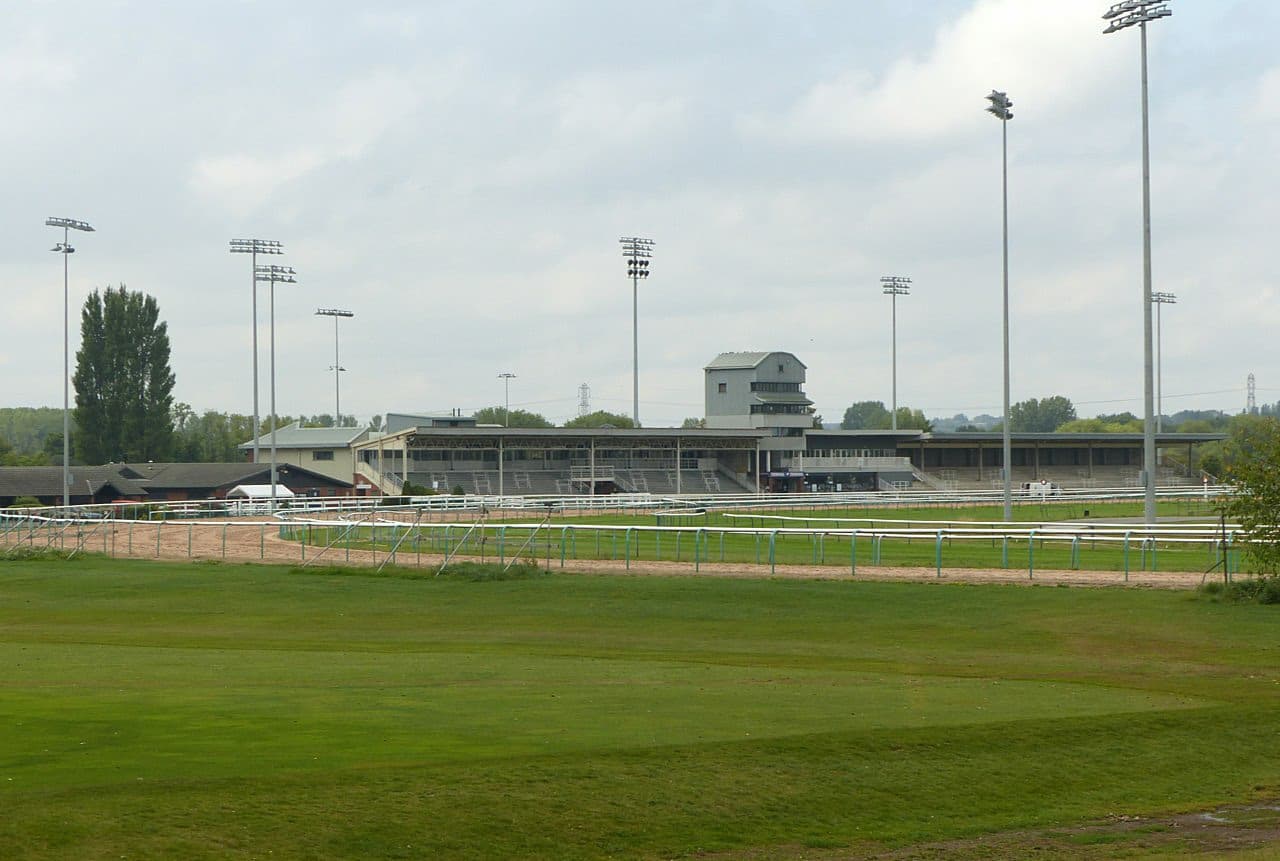
A Day Out at Southwell Racecourse
Everything you need for a day at Southwell — getting there, what to wear, enclosures, food and drink, and insider tips for Britain's only Fibresand track.
Read moreSouthwell Festival Guide
Your complete guide to Southwell Racecourse's all-weather and jumps festivals — the Racing for Change fixture, the winter jump programme and what makes this Nottinghamshire track unique.
Read more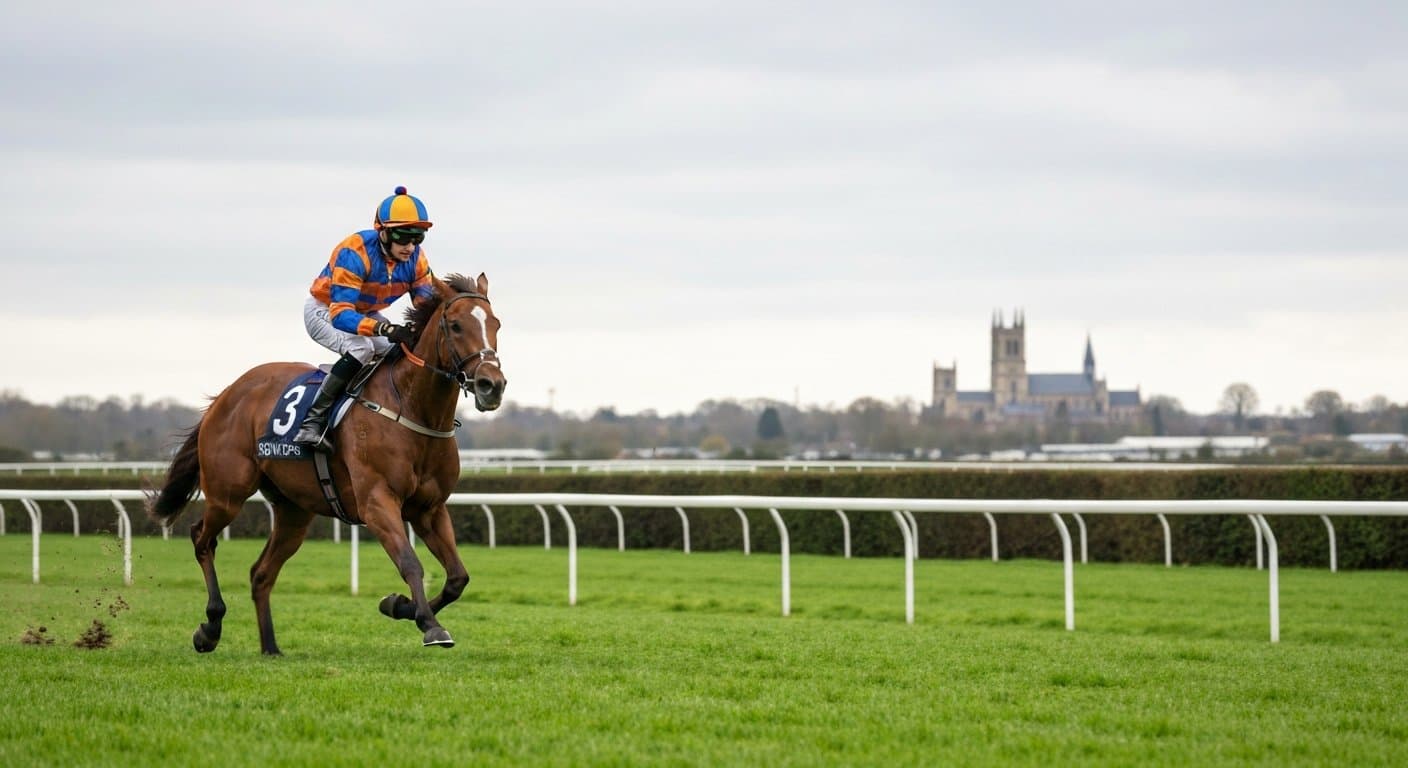
Southwell Fibresand: How It Affects Form & Betting Tips
Discover how Britain's unique sand surface changes horse form and betting odds. Essential insights for punters tackling Southwell's Fibresand track.
Read morePhotos on this page are used under Creative Commons licences. Titles, sources and licence links for each one are on our image credits page.
Research the field with the AI Race Predictor
Our model publishes calibrated win-probability estimates for UK races — a second opinion to understand a race, not tips. It's open about its record: it doesn't beat the market, and we show exactly how it does.
Work it out & learn the basics
Gamble Responsibly
Gambling should be entertaining and not seen as a way to make money. Never bet more than you can afford to lose. If you or someone you know has a gambling problem, help and support is available.