
Founder & Editor · Last reviewed 2026-04-05
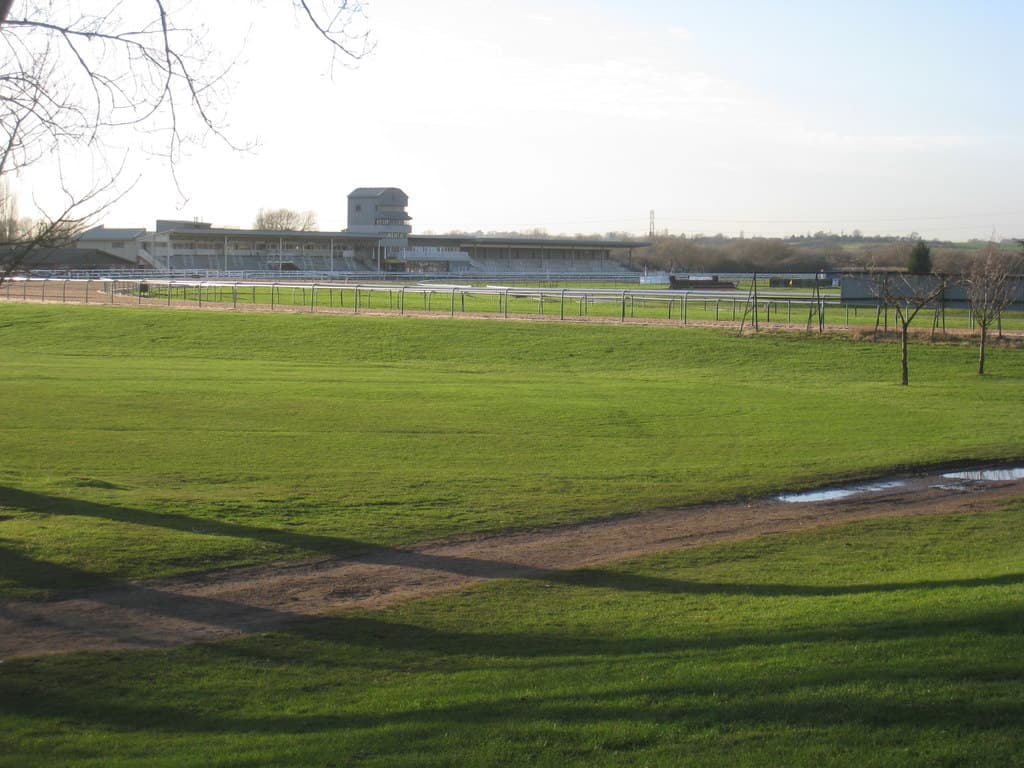
On a January afternoon at Southwell, the sky is already darkening by three o'clock. The floodlights come on, casting a pale wash over the track, and the surface beneath them glows a distinctive orange-brown — sand and synthetic fibre packed into a consistent, slightly forgiving layer that has no equivalent anywhere else in British racing. This is fibresand. No other course in the country uses it. Every other all-weather venue in Britain runs on polytrack or tapeta. Southwell runs on something different, and that difference defines everything about this Nottinghamshire track.
The racecourse sits at Rolleston Road, Southwell, Nottinghamshire — NG25 0TS — in the flat farmland east of the River Trent. The town itself is small, a population of around 7,000, but it punches well above its weight in terms of historical significance. Southwell Minster, a Norman and Early English collegiate church that holds cathedral status, rises above the low rooftops on the western edge of the town. Its Chapter House, completed around 1290, contains some of the finest medieval stone-carved foliage in England: leaves of hawthorn, maple, and hop rendered in careful detail by craftsmen who were working while Southwell racecourse was still five centuries away from being built. The town and its minster give the place a settled, serious character that has little to do with the racing industry but quietly shapes the atmosphere.
The racecourse is dual-purpose, which in British racing means it stages both flat and National Hunt (jump) racing. The flat programme runs on the all-weather fibresand circuit, a left-handed oval of approximately one mile, and it operates throughout the year — including the Christmas and New Year period when most turf venues in England are closed. The National Hunt programme runs on a separate left-handed turf track, its season confined to autumn and spring in the traditional way. Together, the two tracks give the course roughly 60-plus fixture days per year, making Southwell one of the busiest venues in Britain by sheer number of meetings.
The fibresand surface is the central fact. It rides slower than polytrack, and it rides differently from tapeta. The sand grips the hoof in a way that synthetic surfaces do not, and the result favours horses with a powerful, galloping stride and the kind of front-running speed that can hold a lead without weakening. Horses that are free-going, strong-actioned, and adaptable to a slightly testing surface tend to thrive here. Those qualities do not always translate to other tracks, which is why the form book treats Southwell as a category of its own. Trainers who understand the fibresand — and there are specialists who target this course with specific horses — have a real edge over those who simply run their horses wherever a suitable race can be found.
The course has been on its current site since 1898, though records of racing in the Southwell area go back to the 1740s. The fibresand track was installed in 1989 as part of British racing's first serious attempt to provide all-weather flat racing through the winter. In the three and a half decades since, Southwell has settled into a well-defined role: the year-round flat-racing venue for the East Midlands, the winter lifeline when turf courses are frozen or waterlogged, and — for a particular community of punters, trainers, and jockeys — the most interesting and specialist surface in the country.
This article follows that story from its eighteenth-century beginnings to the present day.
Origins & Early Years
Origins and Early History
Racing in Nottinghamshire was already an established pastime by the middle of the eighteenth century. The county had the right ingredients: a prosperous gentry with money to spend on horses, open farmland that lent itself to galloping, and a network of market towns where sporting events drew crowds. Records of race meetings in the Southwell area date to the 1740s. These were not formalised affairs with grandstands and starting stalls — they were open-air gatherings, often held on heath or common land, where local horses competed over rough courses marked out with flags. Wagering was informal, the catering was portable, and the proceedings were governed more by local custom than by the Jockey Club rules that would eventually standardise British racing.
The town of Southwell was well placed to host such events. It stood at the heart of a productive agricultural district, within comfortable riding distance of Newark-on-Trent to the north-east and Nottingham to the west. Its position on the road network meant that horses and spectators could be assembled without excessive difficulty. The presence of Southwell Minster — an ancient collegiate church with Norman origins, upgraded over successive centuries and carrying cathedral status from 1884 — gave the town a social gravity that smaller settlements lacked. Race meetings became part of the seasonal calendar alongside the assizes, the markets, and the ecclesiastical calendar of the minster itself.
The Town Behind the Course
Southwell Minster demands a moment's attention, because it is one of the truly underrated buildings in England. The nave, with its massive Norman pillars and round-headed arches, dates from around 1120. The Chapter House, built at the end of the thirteenth century — approximately 1290 — contains the carved stone foliage that has become the minster's most celebrated feature. Hawthorn leaves, maple, buttercup, and hops are carved in high relief around the doorway and the arcade: a catalogue of the Nottinghamshire hedgerow rendered in stone by craftsmen whose names are not recorded. Nikolaus Pevsner, writing in the Buildings of England series, called the Chapter House "the most perfect chapter house in England." The racing community driving out from Nottingham for an afternoon's sport in the eighteenth century would have passed the west front of the minster without necessarily registering what they were looking at. It was simply part of the town.
The broader setting added further character. Sherwood Forest lies eight miles to the west of Southwell, much reduced from its medieval extent but still substantial enough in the eighteenth and nineteenth centuries to be a defining presence in local geography. The Dukeries — the cluster of great ducal estates carved from the forest margins — were within easy reach: Clumber Park, seat of the Dukes of Newcastle; Thoresby Hall, belonging to the Earls Manvers; Rufford Abbey, a Cistercian foundation dissolved at the Reformation and Then converted into a country house. The racing fraternity of Nottinghamshire was partly drawn from the families who owned and managed these estates, and the social world of the racecourse overlapped with the social world of the hunting field and the shooting parties.
Newark and the Railway Question
Newark-on-Trent, seven miles north-east of Southwell, was the dominant market town of the district and an important staging post on the Great North Road. Its Castle had been held for the Crown during the Civil War and withstood three separate Parliamentary sieges between 1643 and 1646 before surrendering on the direct order of King Charles I — a military record that gave the town a particular place in the royalist imagination. By the eighteenth century, Newark was a prosperous coaching town, its inns serving the London-to-Edinburgh traffic, and its population providing a ready audience for local sporting events including the Southwell race meetings.
The Midland Railway reached Southwell in 1847, when a branch line was opened from Rolleston Junction on the Nottingham-to-Newark main line. This connection transformed the course's reach. Racegoers from Nottingham, Newark, and further afield could now travel to Southwell by train rather than road, and horses could be transported in railway boxes rather than walked from their stables. The branch served the town until 1965, when it fell victim to the Beeching cuts that dismantled so much of Britain's secondary railway network. The current practical access point by rail is Fiskerton, a small station on the main line between Nottingham and Newark North Gate, approximately three miles from the racecourse — though most racegoers arriving by train use Newark North Gate itself, seven miles away, or Nottingham, fifteen miles to the west.
The 1898 Foundation
The current racecourse at Rolleston Road was established in 1898. This was the late Victorian era, a period of considerable confidence in provincial British racing. The population of the East Midlands was growing rapidly, driven by the Nottinghamshire coalfields to the north and west, the lace and textile industries centred on Nottingham, and the agricultural processing trades concentrated in the market towns. Southwell's modest but stable economy, its position between the coalfield settlements and the farming districts, and its existing associations with racing made it a logical location for a formal course.
The 1898 layout was turf only. A left-handed oval was laid out on the flat ground to the east of the town, with a grandstand and basic facilities. The track hosted flat racing through the summer months and, in time, National Hunt racing through the autumn and winter. The programme was modest by the standards of the major courses — no Classic entries, no major prizes — but it was reliable and drew competitive fields from the East Midlands trainer catchment. Stables in Lincolnshire, Leicestershire, and Nottinghamshire itself supplied horses regularly.
The late Victorian racing world had a different texture from its modern descendant. Prize money at provincial courses was low, the distances covered by horses and their connections were substantial, and the Jockey Club's oversight, while improving, was still patchy at the lower end of the sport. Southwell occupied a familiar position in this world: not quite obscure, but not prominent either. It was a working track in a working county, and it served its purpose without attracting the kind of attention that the big-city courses commanded.
Early Character and Regional Context
Nottinghamshire racing in the Victorian and Edwardian periods had its own internal hierarchy. Nottingham racecourse — the turf circuit at Colwick Park — was the senior venue in the county, running the better flat races and attracting the larger crowds. Southwell was a secondary venue, valued for its convenience and its reasonable going rather than its prestige. That secondary status was not a source of embarrassment. Provincial racing accepted its own gradations without difficulty, and a course that provided competitive sport for local trainers and honest entertainment for local racegoers was fulfilling its function.
The coal industry brought a new kind of racegoer to Nottinghamshire in the late nineteenth century — miners and their families from the colliery villages north and west of Southwell, who would travel by train or charabanc to the racing on their days off. This demographic was not the squirearchy of the earlier period but it was enthusiastic, and its appetite for betting provided a steady revenue base for the on-course bookmakers. The character of a Southwell crowd in 1910 was not fundamentally different from what it is today: working people, locally-rooted, interested in horses, and perfectly capable of forming their own views about form.
By the outbreak of the First World War in 1914, Southwell was a small but established part of the East Midlands racing circuit, its turf track worn in, its facilities adequate, and its programme settled into a recognisable shape. The years ahead would bring war, depression, and eventually the technological revolution that would transform the course beyond anything its Victorian founders could have imagined.
The All-Weather Revolution
The All-Weather Revolution
Racing Between the Wars and After
Southwell's turf-only existence lasted nearly a century after the 1898 foundation. Through the interwar period the course maintained a dual programme, flat racing in the summer months, National Hunt through the autumn and winter, drawing horses from the East Midlands trainer base and modest crowds from Nottinghamshire and the neighbouring counties. The flat programme leaned heavily on handicaps and low-grade conditions races; the jump programme gave winter racegoers something to attend and gave young horses from Midlands yards a place to gain experience before being entered for bigger meetings at Cheltenham, Nottingham, or Leicester.
The trainer catchment was a mixture of rural Nottinghamshire, the Lincolnshire Wolds, and the Leicestershire hunting country. This was not a wealthy region for racing by the standards of Newmarket, Lambourn, or Middleham, but it produced plenty of solid handicappers and sturdy chasers of the sort that kept the provincial circuit functioning. Yards around Newark, Grantham, and Melton Mowbray regularly supplied runners, and the racing had a strongly regional character: local horses, local handlers, local crowds.
The Second World War interrupted racing at Southwell as it did everywhere, but the course reopened and the postwar decades settled into a comfortable pattern. The National Hunt programme in particular developed a reliable following. The turf track, left-handed, relatively flat, with a finishing straight that tests horses without punishing them, suited the workmanlike chasers and hurdlers that competed at this level. By the 1980s, Southwell was one of several Midlands jump venues providing bread-and-butter National Hunt sport: not Cheltenham, not Aintree, but useful, regular, and properly attended.
What nobody in the Southwell grandstand could have anticipated, in 1985 or 1986, was what was coming.
Britain's All-Weather Experiment
British racing entered the 1980s with a longstanding problem: winter. When temperatures dropped hard in January and February, turf courses froze. Racing stopped. Bookmakers lost turnover, the betting levy went uncollected, stable staff went unpaid, and the entire industry sat idle waiting for the thaw. It was an accepted inconvenience, but as the decade progressed and the betting industry became increasingly commercial, the pressure to find a solution intensified.
The solution, borrowed partly from American racing and partly from technology developments in synthetic surfaces, was the all-weather track. A surface that could be raced on regardless of frost, rain, or cold, one that dried quickly, drained reliably, and provided consistent going regardless of season, would allow racing to continue through the months when turf venues were closed.
Lingfield Park in Surrey was first, installing a polytrack surface in 1989. Wolverhampton followed, also in 1989. And Southwell, in that same key year, installed its all-weather track: choosing not polytrack but fibresand. The decision placed Southwell in the vanguard of the all-weather experiment and, simultaneously, set the course on a completely different path from every other all-weather venue that followed.
Why Fibresand?
Fibresand is, as the name suggests, a mixture of sand and synthetic fibre. The precise specification used at Southwell, supplied originally by a company called Fibresand UK, involves coarse sand blended with polypropylene fibres that interlock to provide structural stability. The fibres prevent the sand from compacting too severely under traffic while also preventing it from becoming too loose and unpredictable. The resulting surface is deeper and slower than polytrack or tapeta, with a degree of give that rewards horses with the strength and action to push through the grip.
The practical consequences are significant. Polytrack, the dominant all-weather surface at courses such as Kempton, Chelmsford, and the post-2001 Lingfield, is relatively fast. Horses race on it at speeds closer to those seen on good turf. Tapeta, used at Newcastle and Wolverhampton, sits somewhere between polytrack and fibresand in terms of speed. Fibresand is the slowest of the three. Races at Southwell are typically run at a time margin of several seconds per mile slower than comparable races at Kempton or Chelmsford, and the form figures that result are correspondingly different.
This slowness produces a particular kind of racing. Front-runners are disproportionately successful on fibresand because the surface's grip means that pace does not fade in the straight the way it can on faster surfaces. A horse that settles in front at Southwell and maintains a controlled gallop is harder to reel in than its equivalent at Kempton, because the horses chasing it are working against the same grip and cannot accelerate as freely. Trainers who understand this exploit it with horses that have natural pace and willingness to race from the front. Trainers who do not understand it, who put in a strong finisher expecting to pick up beaten horses in the last furlong, often find that the strategy fails.
The 1989 Installation and Its Immediate Effects
The fibresand track at Southwell was laid in a left-handed oval of approximately one mile, separate from but adjacent to the existing turf course. From the autumn of 1989, the course was running two distinct programmes on two distinct surfaces: flat racing on fibresand year-round, and National Hunt racing on the turf in season. This dual configuration was not shared by Lingfield or Wolverhampton in their early all-weather incarnations, which made Southwell's programme unusually varied.
The immediate effect on the fixture list was considerable. A course that had previously raced perhaps 30-35 days per year now had the capacity to race every month, including the mid-winter period from December to February when turf racing was at its most precarious. Within a few years, Southwell's fixture count had grown to the point where it was one of the most frequently used venues in Britain by total number of meeting days.
The racing world took time to adjust to fibresand. In the early 1990s, horses were regularly entered at Southwell without any particular consideration of whether fibresand suited them. Trainers who had not previously thought about surface type found themselves confronted with puzzling results, decent horses finishing tailed off, moderate horses winning readily, and the process of understanding what fibresand required took the better part of a decade to mature.
Building the Specialist Culture
By the mid-1990s, a body of knowledge about fibresand had accumulated sufficiently that trainers, jockeys, and punters were beginning to treat Southwell as a specialism rather than simply a convenient winter outlet. Certain horses emerged as fibresand regulars, racing primarily or exclusively on the surface and accumulating wins at a rate that would have been impossible for them on turf. Certain trainers began to develop specific strings of horses suited to the track.
The specialist culture that grew around Southwell was different from the specialist culture around any other course in Britain, because the surface difference was more extreme. A horse that preferred soft ground over firm was still running on turf in both cases, against a comparable range of opponents, at comparable speeds. A fibresand specialist was running on something categorically different: slower, grippier, more physically demanding, and entirely unlike anything they would encounter at any other British venue. That categorical difference created a form book anomaly, and form book anomalies, properly understood, create opportunities for those who study them.
The golden era of Southwell, in this reading, is not an era of great prestige or famous horses. It is the era in which the course found its identity: an identity rooted in a surface that no other British track chose, and that no other British track has since adopted. By 2000, Southwell's role was clear: the specialist's track, the winter lifeline, the fibresand venue. It has held that role ever since.
Famous Moments
Famous Moments and Notable Stories
The Fibresand Specialist Phenomenon
The most distinctive feature of Southwell's history since 1989 is not a single race or a single horse but a recurring pattern: the fibresand specialist. Every surface in British racing produces horses that perform better on it than on other surfaces, that is simply the nature of form, but fibresand specialists are in a category of their own. The gap between a horse's performance at Southwell and its performance everywhere else is often so large as to be incomprehensible to anyone who has not thought carefully about the surface.
A fibresand specialist will typically show the following profile in the form book: a sequence of wins or near-misses at Southwell, a scattering of disappointing runs at Kempton, Chelmsford, or Wolverhampton, and performances on turf that range from moderate to absent. The horse is not declining; it is not becoming unsound; it has simply found a surface that suits the precise way it moves and the way it deploys its energy. Strip it of that surface and the form evaporates.
This pattern has been repeated across hundreds of horses over the 35-plus years since the fibresand track opened. It creates an unusual situation for the form student. Southwell form is simultaneously very reliable, a horse that has won three times on fibresand is extremely likely to run well on fibresand again, and very unreliable as a guide to performance elsewhere. The transfer coefficient between Southwell and other British tracks is lower than for any other combination of venues. Punters who have recognised this, and who back horses returning to fibresand after a run or two elsewhere, have found an edge that no other course in Britain provides.
Tom Dascombe and the AW Programme
Among the trainers who have most consistently targeted Southwell's all-weather programme, Tom Dascombe stands out as a modern example of the specialist approach. Based at Manor House Stables in Malpas, Cheshire, approximately 60 miles west of Southwell, Dascombe developed a significant all-weather string during the 2010s. His operation targeted fibresand races with horses specifically sourced or identified as likely to handle the surface, and his strike rate at Southwell over the course of multiple seasons established him as one of the trainers most worth following when he entered a horse at the track.
Dascombe's approach: keeping a core of all-weather specialists in training and cycling them through the fibresand programme with careful spacing of runs: was the professional distillation of what individual punters had been doing empirically for two decades. The trainer who picks up a horse cheaply, identifies that it has the right action and mental profile for fibresand, and runs it exclusively on the surface can generate a winning sequence that looks exceptional by normal standards. That is not because the horse is exceptional. It is because the surface selection is correct.
David Barron and North Yorkshire's AW Presence
David Barron, training from Maunby in North Yorkshire, some 70 miles north of Southwell, has been another consistent presence at the course. Barron has historically targeted all-weather racing with a specific portion of his string, and his record at Southwell across the 2000s and 2010s includes a number of multiple winners. North Yorkshire trainers face the same dilemma as trainers everywhere: the fibresand track is a considerable drive from the major stable regions, but the specialist opportunities it offers make the journey worthwhile for the right horse.
The pattern of North Yorkshire yards supplying fibresand runners to Southwell reflects a broader truth about the course's catchment area. Because no trainer is geographically particularly close to the track, the nearest major training centres are Newmarket (100 miles east) and Middleham (90 miles north), the competitive landscape at Southwell is drawn from a wide radius. Trainers who target the track do so as a deliberate strategic choice rather than because it is their local venue.
Winter Racing and the Christmas Programme
One of the most practically important roles Southwell has played in British racing is the provision of fixtures during the Christmas and New Year period. When turf courses across England are closed by frost or abandonment between roughly 20 December and 5 January, Southwell's fibresand track continues to operate. Racing on 26 December, Boxing Day, and on New Year's Eve or New Year's Day has been a regular feature of the Southwell calendar, providing employment for stable staff who would otherwise be idle, turnover for bookmakers who would otherwise be dark, and racing for punters who want action regardless of season.
The Christmas AW card at Southwell is a recognisable event in the racing calendar. Fields tend to be large, trainers who have been waiting for a suitable race find several at once, and the competitive edge that characterises a normal low-grade fibresand handicap is heightened by the concentration of horses all returning from similar layoffs. Punters who understand the form dynamics of fibresand: that early pace is important, that fresh horses often perform well on the first run back, that certain trainers keep their fibresand specialists specifically for these winter cards: have a decided advantage.
Notable Races
The course's feature races on the flat are the Churchill Stakes and the Golden Rose Stakes, both Listed races run in November on the all-weather track.
The race does not carry Listed or Group status on a permanent basis, though the course has hosted races at that level on occasion. Its signature status comes not from prestige but from longevity: it is one of the few races at Southwell that has run consistently enough, and attracted sufficient competition, to accumulate a history worth tracking.
The National Hunt Programme's Highlights
The turf National Hunt track at Southwell has its own accumulation of memorable afternoons, even if the form book treats them differently from the fibresand meetings. The jumps course is left-handed, on turf, with the kind of modest obstacles and reasonable ground that suits young chasers and hurdlers gaining experience. Novice chases at Southwell in October and November have been a useful stepping stone for horses from Midlands yards heading towards the major winter festivals.
One consistent feature of the NH programme is the uphill run to the finish, which catches out horses that are not fully fit or that struggle to maintain their gallop when the ground begins to test them. A number of novice chasers who were considered well-handicapped on their previous form have been found out in the closing stages of a Southwell chase: a reminder that the surface and terrain demand something specific from horses in both codes.
What the Form Book Records
The cumulative record of fibresand racing at Southwell since 1989 amounts to one of the most distinctive form sequences in British racing history. It is not a sequence built on prestige or prize money. It is built on repetition, consistency, and the strange power of a surface that sorts horses into categories unlike those used anywhere else in the country. The horses that Southwell has produced, specialists, winter warriors, low-grade multiple winners who have done their job year after year, are not the stuff of racing mythology. They are the stuff of a functioning sport, and Southwell's role in maintaining that function deserves recognition.
The fibresand track opened on a cold autumn morning in 1989. It has been running ever since, through frost and fog, under floodlights, on Boxing Day, in the first week of January. That continuity is itself a kind of achievement.
The Modern Era
The Modern Era
Jockey Club Ownership
Southwell Racecourse is owned and operated by The Jockey Club, the not-for-profit organisation that manages thirteen British racecourses ranging from Cheltenham and Aintree at the top of the sport to Carlisle and Market Rasen at the regional level. The Jockey Club's ownership of Southwell dates to a period when the organisation was expanding its portfolio of tracks, bringing previously independent venues under centralised management and applying consistent standards of investment, compliance, and commercial development.
For Southwell, Jockey Club ownership brought resources that a small independent venue could not generate on its own. Capital investment in facilities, systematic maintenance of both the fibresand and turf tracks, and integration into the Jockey Club's marketing and ticketing infrastructure have all been consequences of the change. The course's physical plant is better maintained than it would be under continued independent ownership, and the reliability of the fixture programme has improved accordingly.
The Jockey Club operates Southwell as part of its "raceday venues" category — courses that provide bread-and-butter racing for the industry rather than prestige events that attract television audiences. That is an accurate description of what Southwell does. It is not a glamour venue. Its function is to keep racing running, to provide competitive opportunities for horses at the lower end of the handicap, and to generate the betting turnover that funds the wider sport through the Horserace Betting Levy. The Jockey Club understands this function and, to its credit, has not attempted to reposition Southwell as something it is not.
The Fixture Landscape Today
Southwell runs approximately 60 to 70 race days per year, which places it among the more active venues in Britain by fixture count. The majority of those days are on the fibresand all-weather track. The flat AW programme runs throughout the calendar year — spring, summer, autumn, winter — with the frequency of meetings increasing during the winter months when turf racing is restricted. The National Hunt turf programme accounts for a smaller number of fixture days, typically in the October-to-March period.
This fixture volume reflects a structural fact about British racing: the industry needs all-weather tracks to function commercially through the winter. When temperatures drop below zero in January and February, turf courses are inspected and often abandoned. The cost of an abandoned meeting — lost prize money, lost levy income, wasted travel costs for trainers and connections — is significant. The three main all-weather venues that provide winter flat racing — Southwell, Wolverhampton, and Kempton — are therefore providing an industry service as much as a sporting attraction. Southwell's fibresand track, open in all weathers and reliably raceable even when the adjacent Trent Valley is frost-bound, is one of the three cornerstones of that winter infrastructure.
The prize money at Southwell reflects its position in the racing hierarchy. AW flat races at the course carry prize money at the lower end of the national scale — typically between £4,000 and £7,000 for a standard handicap, with higher figures for better-quality races on the AW card. This level of prize money attracts horses from the bottom quartile of the handicap: horses rated between 40 and 75 on the British Horseracing Authority scale, competing for realistic amounts and providing exactly the kind of racing — competitive, unpredictable, closely handicapped — that generates betting interest.
Evening Racing Under Floodlights
Floodlighting at Southwell allows the course to stage evening meetings from late spring through early autumn, when daylight persists late enough to run daytime meetings but the evenings also offer a popular option for racegoers who cannot attend afternoon fixtures. The floodlit meetings have become a regular and well-attended part of the summer programme, drawing families and casual racegoers alongside the usual core of AW devotees.
The atmosphere of a Southwell evening meeting is distinctly different from the winter afternoon format. In summer, the fibresand track is visible in natural light for most of the card before the floodlights take over in the later races, and the social dimension of the visit — food, drink, the Nottinghamshire countryside in the background — competes for attention with the racing itself. These are the meetings where the course's compact capacity of approximately 4,000 fills most consistently, and where the venue presents itself to an audience that is not primarily there for the form book.
Prize Money, Function, and the AW Betting Market
All-weather racing at Southwell generates significant betting volume relative to its prize money levels. Low-grade handicaps with large fields — eight, ten, twelve runners, all on similar marks, no standout favourite — are precisely the conditions that attract medium-stakes multiple bets from serious punters. The fibresand form database, built up over 35 years of racing on the same surface, gives punters with long memories and good records a structural advantage over those betting purely on current form.
Bookmakers have strong views about Southwell markets. The fibresand handicaps, particularly those with double-figure fields, are regarded as truly difficult to price because the specialist horses who win at the course regularly trade at longer odds than their true probability warrants. Punters who specialise in fibresand form — tracking course-and-distance winners, monitoring how horses perform on their first run back after a break on fibresand, following specific trainers with high AW strike rates — have found that the Southwell market offers consistent value. Whether that edge has narrowed as better historical data has become available is an open question.
The Dual-Purpose Distinction
What separates Southwell from the other major AW venues — Kempton, Wolverhampton, Chelmsford, Newcastle — is the National Hunt programme on the turf. None of those courses stages jump racing. Southwell does, and that dual-purpose character gives it a different kind of community: National Hunt trainers from the Midlands who might otherwise have no reason to visit an all-weather track travel to Southwell for the jumps, and some of them end up entering horses on the fibresand flat too, discovering in the process what the surface can do for horses that have the right profile.
The jumps programme also gives Southwell a winter atmosphere that is different from the relentless monotony of AW-only venues. A card that combines AW flat racing in the morning session with National Hunt in the afternoon, or that runs a standalone NH meeting on a November afternoon, produces the kind of varied spectacle that attracts racegoers who want more than a series of one-mile fibresand handicaps. That variety is an underrated part of the Southwell proposition, and it reflects the course's origins as a turf venue first and an all-weather venue second.
Southwell's Legacy
Southwell's Legacy
There is a version of this story in which Southwell Racecourse is a minor note in the history of British racing: a provincial Nottinghamshire track that happened to be part of the first wave of all-weather venues in 1989 and has been running fibresand handicaps ever since. That version is not inaccurate, exactly, but it misses the point.
Southwell's position in British racing rests on a single fact: it is the only fibresand venue in the country. Every other all-weather track uses polytrack or tapeta. Southwell uses something different, something older in British AW terms, something that produces results the form book cannot fully explain using data from other surfaces. That uniqueness is not an accident of circumstance: it is the defining characteristic that has kept the course relevant through three and a half decades of change in the wider sport.
The winter lifeline function is real and measurable. When the January frost settles across the turf courses of the Midlands and the East, Southwell's fibresand does not freeze in the way turf does. The track can be inspected and declared raceable on mornings when Nottingham, Leicester, and Huntingdon are all off. The industry relies on this. Stable staff who need to work, trainers who need to manage horses' fitness, bookmakers who need turnover, the Horserace Betting Levy board that needs income: all of them benefit when Southwell runs on days when nowhere else can. That function has been continuous since 1989, and it has generated a loyalty to the course among racing professionals that goes beyond sentiment.
The dual-purpose character adds a dimension that distinguishes Southwell from the all-weather-only tracks at the other end of the country. National Hunt racing on the turf brings a different community to Rolleston Road: jump trainers, jump jockeys, jump racegoers who might never attend a flat AW meeting but who value the Southwell jumps card as part of the autumn and winter calendar. The course serves two constituencies simultaneously, and that breadth of appeal has helped maintain its fixture count and its relevance at a time when the sport's economics have pushed many provincial tracks to specialise or close.
The town of Southwell itself provides a context that no suburban AW track can match. Southwell Minster, its Norman nave and carved Chapter House rising above the town's rooftops, gives the place a seriousness of purpose that a course adjacent to a motorway interchange or a retail park simply cannot replicate. Racing at Southwell is racing in a real place, with a real history, in a county that has been producing horses and racegoers since the eighteenth century. That is not a minor thing.
Whether Southwell will always retain its fibresand surface is an open question. Occasional speculation about switching to polytrack or tapeta, aligning with the other AW venues and potentially improving speed and quality of racing, has not resulted in change. The fibresand identity is deeply embedded in the course's commercial proposition: the specialist punters, the specialist trainers, the form database built over 35 years on the same surface. Lose the fibresand and Southwell becomes one more all-weather track. Keep it, and the course remains what it has always been since 1989: the one of its kind.
Frequently Asked Questions
When did Southwell Racecourse open?
Racing in the Southwell area is recorded from the 1740s, when informal meetings were held on open land in the Nottinghamshire countryside. The current racecourse at Rolleston Road was formally established in 1898, making it a Victorian-era foundation. The fibresand all-weather track, the development that defined the course's modern identity, was installed in 1989, as part of British racing's first generation of all-weather venues.
What is unique about Southwell's racing surface?
Southwell is the only racecourse in Britain that uses fibresand as its all-weather surface. Every other British all-weather venue, Kempton, Wolverhampton, Chelmsford, Newcastle, Lingfield, uses either polytrack or tapeta. Fibresand is a blend of coarse sand and synthetic polypropylene fibres that produces a slower, grippier surface than either of those alternatives. The result is a form profile that is largely self-contained: horses that win repeatedly at Southwell often fail to reproduce that form on other surfaces, and horses that win elsewhere often struggle on fibresand.
What type of racing does Southwell stage?
Southwell is a dual-purpose course, meaning it stages both flat racing and National Hunt (jump) racing. Flat racing takes place year-round on the all-weather fibresand track, including during the Christmas and New Year period when most turf venues in England are closed. National Hunt racing, hurdles and chases, takes place on a separate left-handed turf circuit, with a season running roughly from October to March.
Who owns Southwell Racecourse?
Southwell Racecourse is owned and operated by The Jockey Club, the not-for-profit organisation that manages thirteen racecourses across Britain, including Cheltenham, Aintree, and Epsom. The Jockey Club brought centralised investment and management to Southwell, maintaining both the fibresand AW track and the turf National Hunt circuit to consistent standards.
How do I get to Southwell Racecourse?
The racecourse address is Rolleston Road, Southwell, Nottinghamshire, NG25 0TS. By road, the A617 provides the main approach from the west (from the A1 and the M1 corridor). By rail, the nearest mainline station is Newark North Gate, approximately seven miles north-east of the course, served by East Midlands Railway on the Nottingham-to-Newark route. Nottingham station, fifteen miles to the west, provides a broader range of connections. Fiskerton, the small station closest to the course on the same line, has limited services and is not practical for most visitors. Taxis and shuttle buses operate from Newark North Gate on major race days.
What is the track like at Southwell?
The all-weather flat track is left-handed, flat, and approximately one mile around: a compact oval that brings horses past the stands twice in races over a mile and more. The fibresand surface favours front-runners and strongly-actioned gallopers; horses that need to come from behind often find the grip of the surface works against them in the closing stages. The National Hunt turf track is also left-handed, with an uphill run to the line that tests the fitness and stamina of horses in the final stages of a chase or hurdle.
Share this article
More about this racecourse
All Southwell guides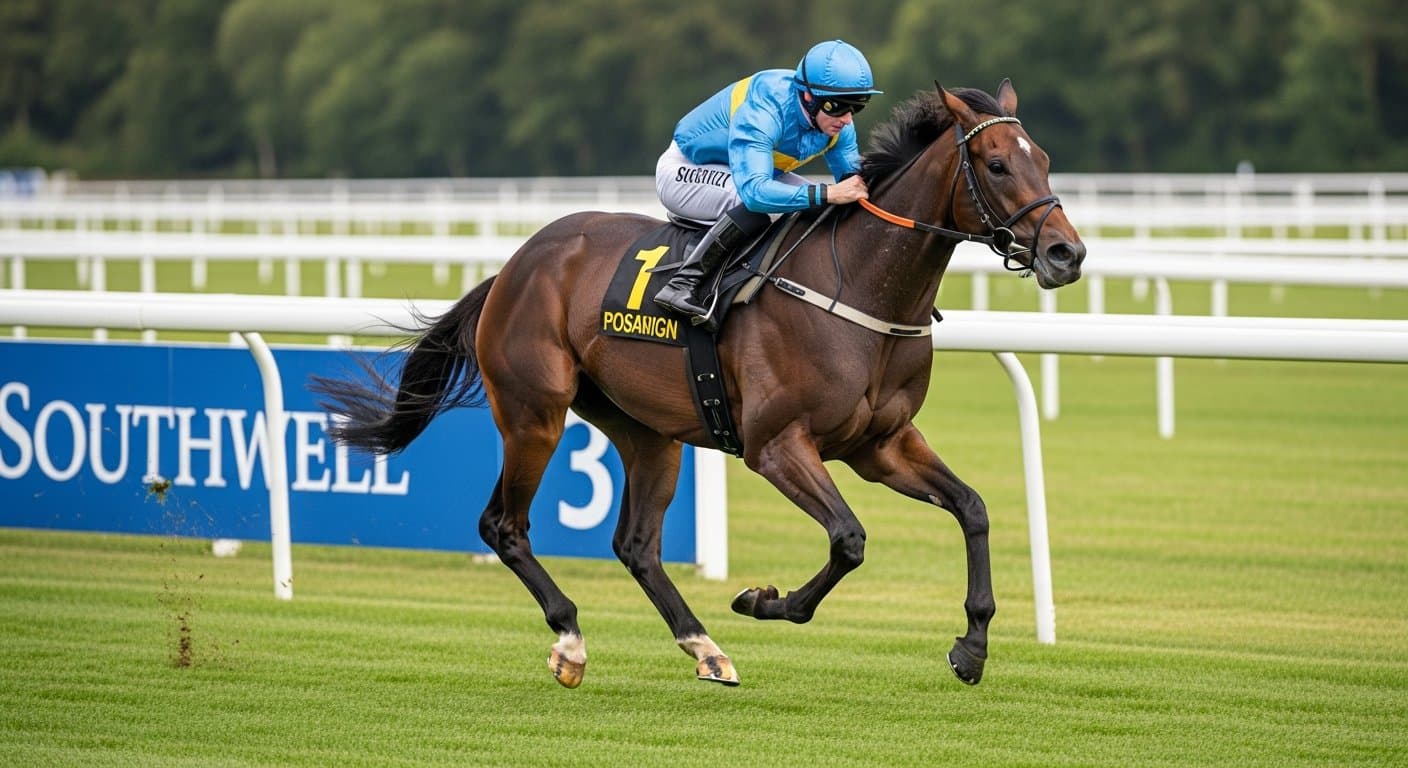
Tempering at Southwell: The Complete Story
Tempering won 22 races on Southwell's Fibresand between 1990 and 1996, trained by David Chapman — a record haul on Britain's most specialist all-weather surface.
Read more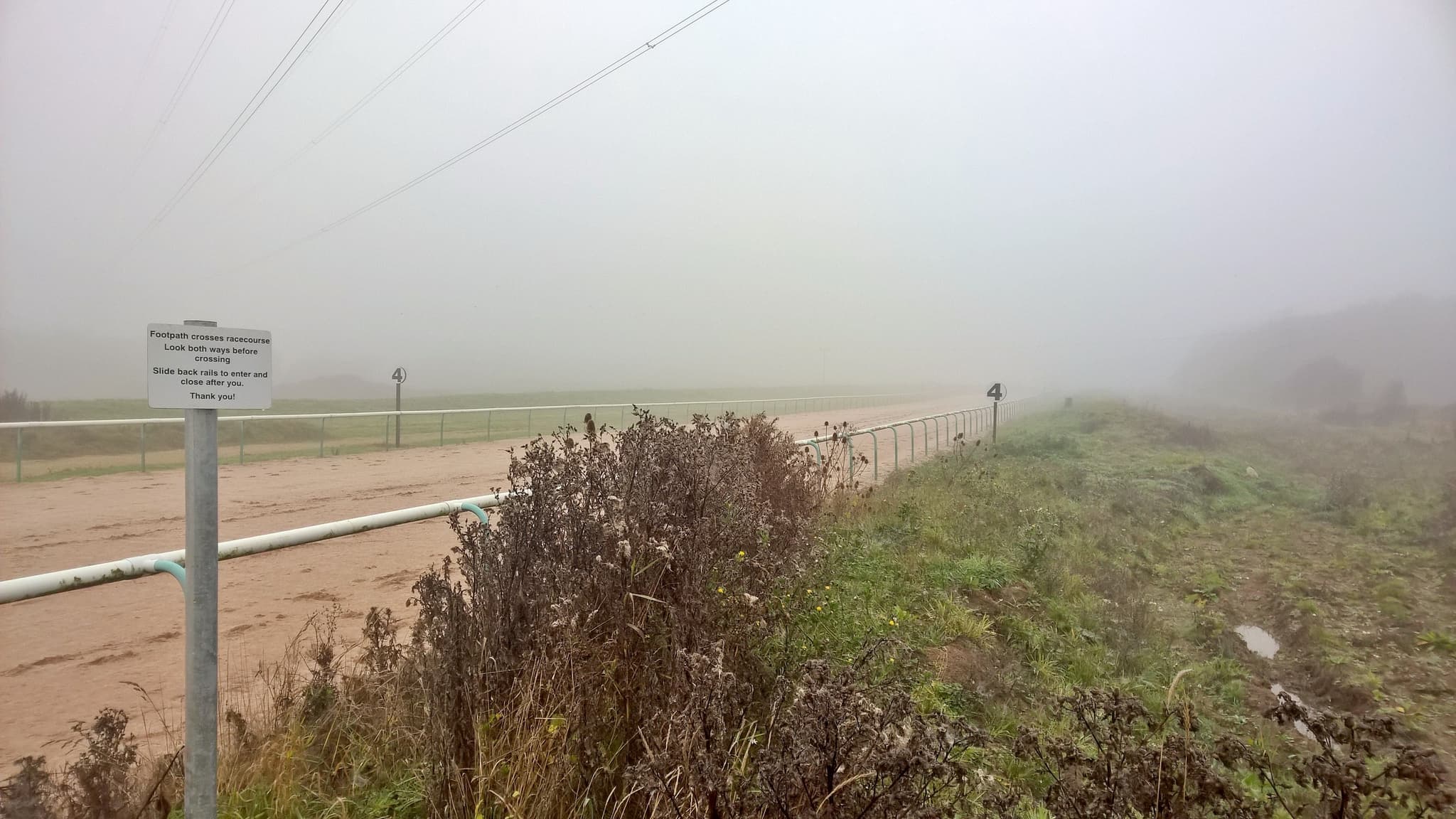
Southwell All-Weather Betting Tips
Expert tips for betting on the all-weather at Southwell — Fibresand-specific angles, timing, key trainers, and strategies for Britain's only sand-based track.
Read more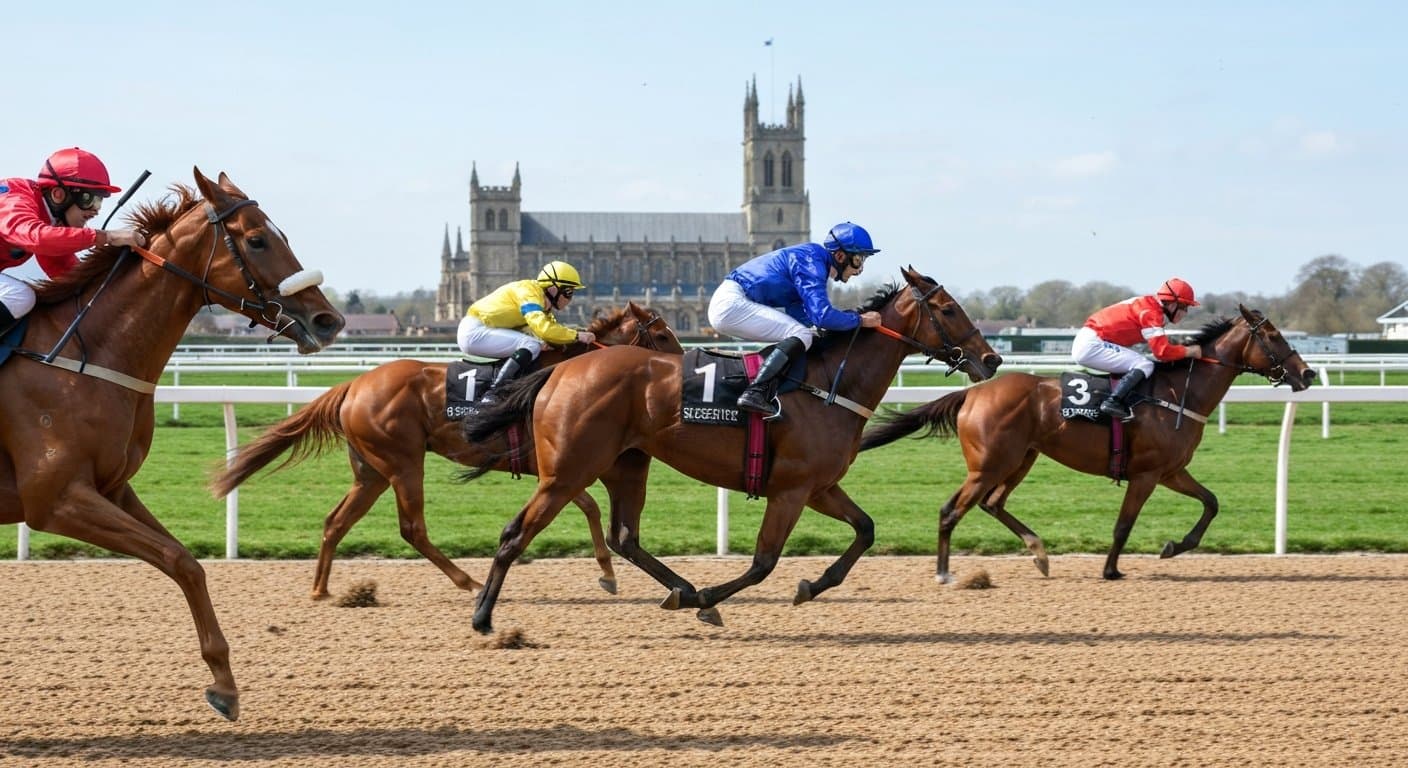
Betting at Southwell Racecourse
Bet smarter at Southwell — Fibresand track characteristics, going and draw, key trainers and jockeys, strategies for Britain's only sand all-weather track.
Read morePhotos on this page are used under Creative Commons licences. Titles, sources and licence links for each one are on our image credits page.
Gamble Responsibly
Gambling should be entertaining and not seen as a way to make money. Never bet more than you can afford to lose. If you or someone you know has a gambling problem, help and support is available.