
Founder & Editor · Last reviewed 2026-03-02
Warwick is a specialist track. It rewards horses with a very specific profile — accurate jumpers, strong stayers, horses that have been around here before. Get those filters right and the course gives you plenty to work with across a winter season running from October to April.
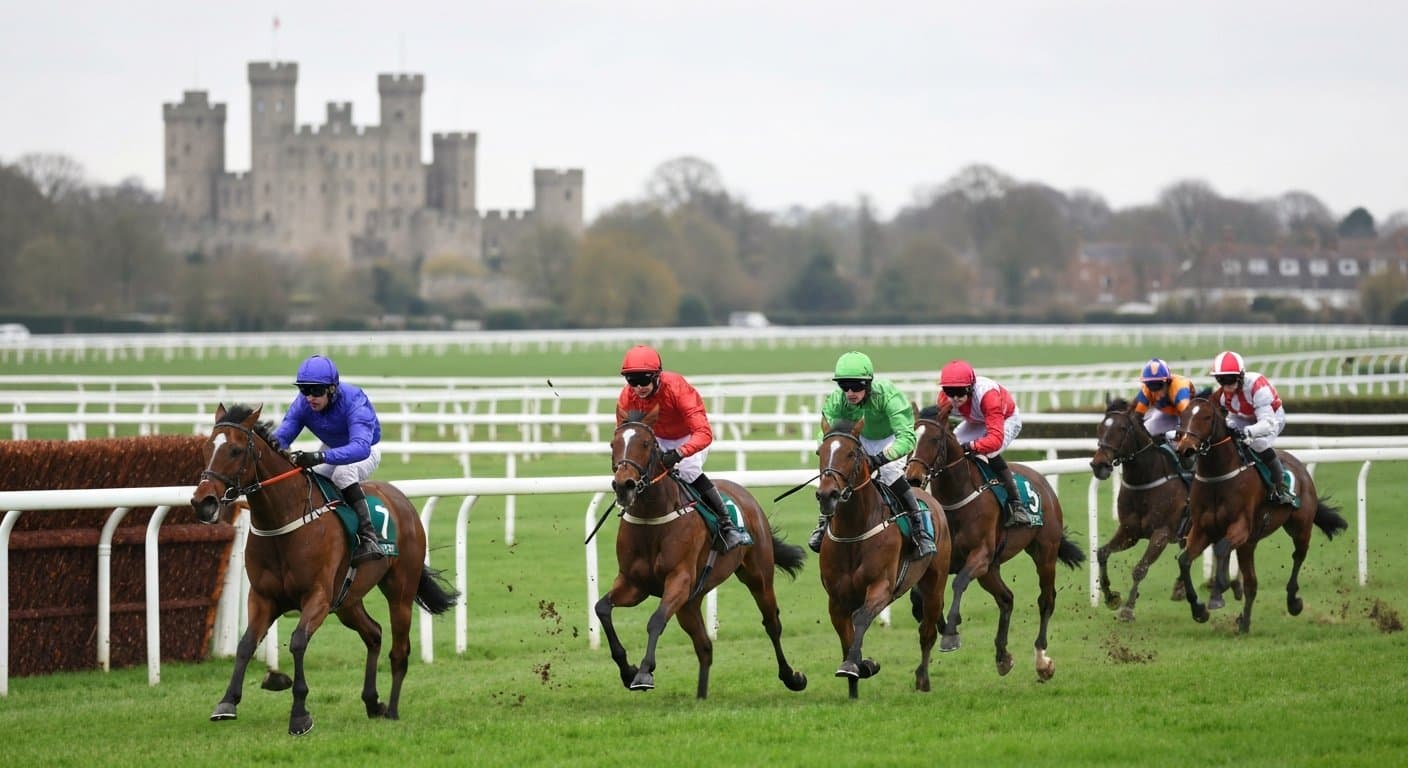
The racecourse sits in the shadow of Warwick Castle, one of England's most recognisable medieval fortresses. From the stands you can see the towers above the treeline. It's an atmospheric setting, but don't let the scenery distract you from the task. Warwick runs lower-league cards by prestige, but the betting opportunities are real. Field sizes typically range from eight to eleven runners. The racing is competitive and the margins are often small.
What separates Warwick from a galloping National Hunt track like Newbury or Haydock is the geometry. The circuit is roughly triangular, left-handed, and measures about one mile and five furlongs round. That sounds adequate but it rides shorter. The inside rail bends tightly, squeezing the available space on the turns. Horses that favour long sweeping bends and room to stride out get flattened here. Handy, adjustable horses that can quicken into a turn and land running have a real edge.
The fences are stiff. Warwick's chase fences have a reputation for being unforgiving — they don't brush through them. A horse that makes jumping errors elsewhere will compound those errors here. In novice chases especially, the accuracy of a horse's jumping tells you a lot about its future. A clean round at Warwick under pressure is significant evidence of technique.
That long straight home run — approximately two and a half furlongs from the final fence to the line — is a key feature. After a tight, demanding circuit, the race often comes down to who has most left at the end of that straight. Horses that get into a rhythm jumping and conserve energy round the track tend to outrun their market positions late on.
The three grades races that headline the winter season give the course most of its betting significance. The Kingmaker Novices' Chase (Grade 2, 2m, February) is a traditional Cheltenham Arkle pointer. The Leamington Novices' Hurdle (Grade 2, 2m5f, January) feeds into the Champion Hurdle route. The Classic Chase (Listed, 3m5f, January) is a Grand National trial and a race with a strong trend of big-price winners. Each of these races has a distinct betting character and rewards different research approaches.
Beyond those headline events, the bread-and-butter cards from October through April produce competitive handicap chases, novice hurdles, and bumpers. The bumper programme in particular is worth following closely. Warwick bumpers regularly produce horses that progress significantly in subsequent seasons. The form lines from those races are often undervalued by the market because the horses are new and unknown.
One factor that distinguishes Warwick from many National Hunt courses is the drainage. The course rides well through winter. It rarely becomes waterlogged or gets abandoned. Nearby courses like Taunton or low-lying tracks can struggle in prolonged wet spells, but Warwick tends to hold its meetings. That consistency matters for punters because it reduces uncertainty around race conditions.
Going preferences sit at the heart of Warwick betting. Good to soft is the course's best ground — it suits the demands of jumping without making the fences more treacherous. When the ground goes truly soft or heavy, the race active changes. Front-runners face harder work, stamina becomes more of a factor, and horses with proven form in the mud rise in the order. When a dry spell produces firmer ground in October or November, faster types with tactical speed come into their own, but that scenario is the exception.
The course's tight, triangular shape is not the only thing that makes course experience valuable. The specific sequence of fences, the approach angles, the point where the camber shifts — horses that have navigated those elements before are simply better equipped. Statistics consistently show that previous Warwick winners have a significantly higher strike rate when they return. That repeater angle is one of the most reliable edges at the course.
If you are betting Warwick meetings without checking the trainer records, you are leaving information on the table. Tom George trains locally in Slad, Gloucestershire, and posts a strike rate above 20% at this track. Kim Bailey, Oliver Sherwood, and David Pipe all have strong Warwick records built over years of targeting the track. Understanding which trainers have horses tuned for this course, and which are sending runners out of habit, sharpens every selection you make.
This guide covers each of those layers — the track geometry, the ground, the key trainers and riders, the specific race angles, and the tactical approaches that work. Warwick is not a course where you bet blind. It is a course where preparation pays.
Bet on Warwick
Place your bets on Warwick races with a trusted bookmaker.

Promo code BETFRED50. New customers only. Register, deposit with a Debit Card, and place a first bet of £10+ at Evens (2.0)+ on Sports, to be settled within 7 days, to get £30 in Sports Free Bets and £20 in Bet Builder Free Bets within 24 hours of settlement. 7-day expiry. Eligibility & payment exclusions apply. Full T&Cs apply. Take Time to Think. BeGambleAware.org. 18+. Full T&Cs.

Promo code R30. New UK customers only, 18+. Register, deposit £10 or more, then place a £10 single cash bet at odds of 1/2 (1.5) or greater on any sports market (excluding Virtuals). Once the qualifying bet settles you get £30 in Free Bets (3 x £10) — the qualifying bet can win or lose. Free Bets are valid on any sports market excluding Virtuals, expire in 7 days, are non-withdrawable and must be used in full. Excluded deposit methods apply (including PayPal, Apple Pay, Skrill and NETELLER). Named bets such as Lucky 15 do not qualify. If you cash out the qualifying bet, or it is voided, you are no longer eligible for the offer. Ends 31.12.26. Full T&Cs apply. Please gamble responsibly. BeGambleAware.org. 18+. Full T&Cs.

Promo code BET40GET20. New UK customers, 18+. Register with the code and place a first bet of £40 or more at Evens (2.0) or greater. Receive 2 × £10 free bets: the first credited automatically once the qualifying bet settles, the second 24 hours later. Free bets must be placed at minimum odds of 4/1 (5.0), expire 24 hours after credit, and the free-bet stake is not returned with winnings. Debit card deposits only. Take Time to Think. BeGambleAware.org. 18+. T&Cs apply. Full T&Cs.

50% of your first-day net losses refunded as a free bet, capped at £25. New UK customers aged 18+ only. To qualify, deposit and place a first bet of £10 or more on any sport at minimum odds of evens (2.00), then place at least two further bets on different events, each worth at least 50% of your largest bet, all at evens (2.00) or greater. Losses are counted from your first settled bet until 23:59 the same day. Place a qualifying £10+ bet and you are guaranteed at least a £5 free bet. Bets placed at SP, void bets, cashed-out bets and bets struck with free bets do not count towards the offer. The free bet is credited the day after your qualifying bets settle and must be used within 7 days, after which it expires. It can be used at odds from 1/4 (1.25) up to 250/1 on singles and straight accumulators, but not on Trixie, Patent or Yankee style multiples. Free-bet stake is not returned with winnings. One offer per person, household, address, IP address and device. E-wallet deposits may not qualify, so check the cashier before depositing. Customers registered with GAMSTOP cannot claim. KYC identity verification must be completed before the free bet is credited. Take Time to Think. BeGambleAware.org. 18+. T&Cs apply. Full T&Cs.

New customers, 18+. Choose the sports bonus at sign-up, make a first deposit and receive a 100% bonus up to £50 in your Sports Bonus balance. To convert the bonus to cash, wager it 10x within 30 days. Single bets below Evens (2.00) do not qualify; accumulators do not qualify if any selection is below 1/2 (1.50). Virtual Sports, voided, cancelled, drawn, cashed-out and free-bet wagers do not count towards wagering. Only the first settled bet per event counts. Withdrawing before the wagering requirement is met forfeits the bonus balance including bonus winnings. Real-money funds are used before bonus funds. Deposits via Skrill or Neteller are not eligible. Not valid in conjunction with other promotions. Odds, bet and payment limits apply. 10bet general and promotion T&Cs apply. BeGambleAware.org. 18+. Full T&Cs.

New customers in Great Britain and Republic of Ireland, 18+. Place a £10 fixed-odds qualifying bet at minimum odds of 1/2 (1.50) — single or each-way (only the win part counts), pre-event or in-play, not cashed out early, within 28 days of opening the account. Receive up to £60 in bonuses credited over three days: 3 × £10 fixed-odds free bets (the first on settlement, then 24 and 48 hours later) plus 3 × £5 Total Goals FOOTBALL spread bets and 3 × £5 racing Winning Favourites spread bets, with a £1 racing Race Index spread bet as an extra on top. The spread bets need a full spread-betting account, opened within 28 days of the fixed-odds account and subject to Spreadex's eligibility and appropriateness checks. Free-bet stakes not returned with winnings; free bets valid 28 days from issue. IMPORTANT: the £5 credits are SPREAD bets — sports spread betting carries the risk that losses can exceed your stake. Sports spread-betting customers do not have Financial Ombudsman or FSCS recourse. Take Time to Think. BeGambleAware.org. 18+. T&Cs apply. Full T&Cs.

Promo code WELCOME15, entered under My Bonuses after registering. New UK customers, 18+. Place a first qualifying bet of at least £10 from your cash balance at odds of evens (2.0) or greater within 7 days of opening the account. Once the qualifying bet fully settles you receive £15 in free bets, credited as 3 x £5 tokens with set uses: one £5 accumulator free bet (minimum 4 legs, each leg at 2/5 or bigger), one £5 sports free bet (any market at evens or bigger) and one £5 Sub Cover free bet (selected football player markets at evens or bigger). Free-bet stakes are not returned with winnings. Free bets expire 7 days after they are credited. Void, cashed-out and partially cashed-out bets do not qualify. One offer per customer. Confirm the current terms on BetGoodwin's own welcome-offer page before claiming. Take Time to Think. BeGambleAware.org. 18+. T&Cs apply. Full T&Cs.

New UK customers, 18+. Minimum deposit £10. Place a £10 qualifying single on sports (excluding virtuals) at minimum odds of 1/2 (1.50), settled within 14 days. Deposit-method exclusions apply. Receive £30 in free bets (stake not returned), split £20 for sportsbook use (2 x £10) and £10 for Bet Builder only (2 x £5); Bet Builder does not cover horse racing. Free bets must be accepted within 7 days and expire 7 days after acceptance. No promo code required. Best Odds Guaranteed on UK & Irish racing, subject to having staked over £25 in the previous seven days. Operated by LiveScore Betting and Gaming (Gibraltar) Ltd, UKGC 56859. Confirm the current terms on LiveScore Bet's own promotions page before claiming. Take Time to Think. BeGambleAware.org. 18+. T&Cs apply. Full T&Cs.
18+. BeGambleAware.org
Track Characteristics
The Warwick circuit is left-handed and roughly triangular in shape. The full course measures approximately one mile and five furlongs round, but it rides further than that measurement suggests. The internal geometry is what matters. The inside rail bends sharply at each corner, forcing horses to negotiate tighter arcs than the headline circumference implies. Horses that handle sharp tracks — Huntingdon, Plumpton — tend to adapt quickly. Horses schooled on long, sweeping circuits like Newbury or Haydock often find the transitions more difficult.
The Fences
Warwick's fences have a reputation for being honest but demanding. They are not as stiff as those at Cheltenham or Sandown, but they are unforgiving of poor jumping technique. A horse that makes a significant error at the open ditch or the fence after the final turn tends to lose its rhythm. In the short run to the finish that follows, there is rarely time to recover. The fence configuration — twelve per full circuit in a chase — keeps the demands constant throughout the race.
In novice chases, jumping technique is the first filter. The tight circuit punishes horses that need plenty of room to fiddle. If a horse's jumping record shows consistent errors elsewhere, those errors will be more costly at Warwick than at a forgiving galloping track where there is room to recover momentum.
The Undulations
Warwick is not flat. There is a notable rise through the back straight that does not appear dramatic on a course map but is enough to test real stamina. After the crest, the course descends into the final bend and then levels out into the home straight. Horses that travel well through the back straight and take that downhill section in rhythm often appear to have more momentum at the final fence than their market position suggests.
The Home Straight
The run from the last fence to the winning post measures approximately two and a half furlongs. By National Hunt standards that is a long run-in. It separates Warwick from tracks with sharp, short finishes like Market Rasen or Cartmel. A horse must have leftover stamina to sustain its effort through two and a half furlongs after a tight, energy-sapping circuit. Front-runners who have burned through reserves on the back straight often tie up inside the final hundred yards. Horses held up slightly and produced with a measured challenge tend to finish best.
Chase vs Hurdle Configuration
The hurdle track follows essentially the same circuit as the chase course. Over hurdles, the tight bends reward agility and positional racing even more than over fences. Hurdle races at Warwick often carry large fields, and the traffic on the bends can be costly for horses that lose position. Runners that can quicken into a turn and take the short route without losing ground have a structural advantage.
In bumpers, the absence of obstacles removes the jumping variable. Track position and outright horse quality become the determining factors. Course experience is less relevant in bumpers than in chases, but the undulating circuit still rewards horses with real sustained galloping ability over those relying on raw speed alone.
Distance Ranges
Races at Warwick range from two miles to three miles and five furlongs. At two miles, tactical racing and jumping technique dominate. At three miles and beyond — particularly the Classic Chase at three miles five furlongs — stamina is the primary consideration. Horses tackling the maximum distances face the full combination of tight bends, undulating terrain, and a long home run. That composite test sorts real stayers from horses relying on pace to compensate for limited stamina.
Two-mile chasers that have produced good form on flat galloping circuits like Kempton occasionally struggle with the more demanding Warwick test. The difference between a flat, even-paced two-mile chase on a right-handed oval and a left-handed, triangular, undulating test of the same nominal distance is significant in practice.
Going & Ground Conditions
Going is central to every Warwick betting decision. The course sits on well-drained ground and handles winter weather better than many National Hunt contemporaries. Nearby low-lying tracks like Taunton or Worcester are sometimes at risk of abandonment during prolonged wet spells. Warwick tends to get its meetings away. That consistency matters because it allows form comparisons across multiple Warwick fixtures to be made with more confidence than at courses where ground varies dramatically from one week to the next.
The Optimum Surface
Good to Soft is Warwick's best ground. On that surface, the fences ride honestly, the circuit's undulations play out fairly, and stamina matters without becoming overwhelming. Horses at the peak of their fitness on Good to Soft tend to perform close to their official ratings. Form from previous Warwick meetings on similar going transfers reliably to future visits. When you are assessing a horse's chances, a previous run on Good to Soft at this track is the most directly transferable evidence you can find.
When It Goes Soft or Heavy
Prolonged wet spells push the ground toward Soft or Heavy, and the race character changes substantially. The fences become more demanding. Horses that were fluent jumpers on Good to Soft may be less confident when landing on a softer surface. The energy cost of each fence increases, and the two-and-a-half furlong home run becomes a real stamina test rather than a routine finishing burst.
In heavy ground the race often collapses into a grinding contest. Small fields make handicap assessments unreliable. Proven form in mud is the only useful guide — and heavy-ground wins at Warwick specifically carry the most weight. A horse that has won here in the mud has solved the specific combination of tight bends, undulations, and heavy-going demands simultaneously. That combination of evidence is more reliable than heavy-ground form from a different type of track.
The Classic Chase, run in January, is Warwick's longest race and is frequently run on Heavy. Horses tackling three miles five furlongs in the mud need stamina above all else. Recent Cheltenham or Aintree form on similar ground is the most transferable evidence for the Classic Chase field.
Autumn Firm Ground
October and November occasionally produce dry spells that firm the ground to Good to Firm. Faster, tactical horses come to the fore in those conditions. Front-runners find it easier to maintain a lead because the circuit does not drain their energy at the same rate as on testing ground. Horses with Good to Firm form from other National Hunt tracks who have not yet run at Warwick are sometimes undervalued by a market that penalises their lack of course form. The surface similarity can compensate for that absence when ground conditions match.
Within-Meeting Ground Changes
Warwick's drainage means going descriptions can shift between morning announcements and the races themselves, particularly during changeable weather. Check the official track update on raceday rather than relying on the published figure from earlier in the week. A shift from Good to Soft to Soft is enough to move races in favour of stayers over speedier types, particularly in longer chases.
Draw and Starting Position
Draw bias in the traditional numerical sense does not apply at National Hunt meetings. However, starting position in a chase can have a bearing on how quickly a horse reaches the first fence. At Warwick, horses starting wide in a small field face a longer run to the initial fence around the outer of the triangular track. In fields of six or fewer runners, this can create a minor tactical disadvantage. It is rarely decisive but worth noting when pace scenarios are tight.
Form Transfer From Other Courses
Good to Soft form from Chepstow — another track with demanding terrain and similar going characteristics — translates well to Warwick in winter. Form from flat, galloping circuits like Kempton on similar ground is less reliable here because the physical demands of the two courses are quite different. Horses that have run their best races on flat, even-paced circuits sometimes find Warwick's undulating, tight nature more taxing than their form suggests.
Key Trainers & Jockeys
Trainer records at Warwick reward study. The course is not a venue where every top yard arrives with intent — it is a lower-league fixture that local and regional trainers target consistently. Identifying which yards truly target the track, as opposed to those filling a runner into a convenient slot, is one of the most useful preparation steps for any Warwick card.
Tom George
Tom George trains at Slad near Stroud in Gloucestershire, approximately 35 miles from Warwick. He is the most reliable trainer to follow at this track. His strike rate at Warwick over recent seasons has been consistently above 20%, and he regularly targets the course with novice chasers and hurdlers that he knows suit the tight, triangular circuit. George's horses tend to be accurate jumpers — a trait that is rewarded more visibly here than at forgiving galloping tracks. When he sends a runner to Warwick, particularly one that has previously shown form on similar ground at a sharp track, it commands attention.
Kim Bailey
Kim Bailey trains from Lambourn in Berkshire and has a longstanding record at Warwick. His stable produces solid, dependable horses that tend to handle the undulating circuit well. Bailey's novice hurdlers in particular have a good strike rate at Warwick — he uses the track to give young horses experience at a fair, competitive level before targeting bigger prizes. When Bailey sends a horse here in the autumn or early winter having been off for a summer break, it is often at or near peak fitness.
Oliver Sherwood and David Pipe
Oliver Sherwood, who trains near Lambourn, and David Pipe, based in Somerset, both have strong Warwick records built over consistent targeting. Sherwood's horses often suit the stiff fences — his chasers tend to be bold jumpers. Pipe frequently sends horses to Warwick as a preparatory run for better things, and his horses returning from breaks on a first run of the season are worth tracking.
The Big Yards
Paul Nicholls has won the Kingmaker Novices' Chase five times, including with Flagship Uberalles and Vibrato Valtat. When Nicholls sends a novice chaser to Warwick, it is almost always for that race or an equivalent-calibre target. Nicky Henderson's sharp-track record extends to Warwick — his horses tend to adapt quickly to tight circuits and his novice chasers often run to or above their marks here. Dan Skelton, based at Lodge Hill in Alcester just 12 miles away, runs horses at Warwick throughout the winter and is among the highest-volume trainers at the course.
Jockeys
The jockey roster at Warwick reflects the trainer pool. Tom Scudamore rides frequently for George and Pipe. Harry Cobden rides Nicholls's runners when the stable targets the feature races. Nico de Boinville is the first-choice jockey for Henderson's Warwick runners. Sam Twiston-Davies has a strong record at sharp National Hunt tracks and goes well at Warwick specifically.
Harry Skelton, retained by his brother Dan Skelton, is the highest-volume jockey at Warwick. Given Dan Skelton's proximity to the course and the volume of runners he sends, Harry Skelton's record here is extensive. His ability to judge pace on a sharp circuit is above average, and when the stable is in form his strike rate at Warwick can reach 25% or above.
Bridget Andrews, also part of the Dan Skelton operation, rides a significant number of winners at Warwick. When Dan Skelton sends a runner with Andrews in the saddle rather than Harry Skelton, it is occasionally a sign that the horse is expected to win but at longer odds where the favourite's price is unacceptable.
Jockey Booking Signals
At Warwick's lower-grade cards, jockey bookings can carry information. If a horse is trained by a local yard and a conditional jockey with a good claim is replaced late by a senior jockey at similar odds, it often signals that the trainer has targeted the race. Conversely, if a horse's usual rider is replaced by a lesser-known jockey without explanation, it can indicate that the stable is running to give the horse experience rather than to win.
Betting Strategies
The Course Specialist Angle
Warwick produces repeat winners at an above-average rate for a lower-league National Hunt track. The tight triangular circuit, undulating terrain, and specific fence configuration create a test that suits certain horses and disfavours others — and that pattern tends to repeat. Before every Warwick card, run a check on which runners have a previous win at the course. A horse that has won at Warwick on matching going is providing direct evidence that it handles every element of the puzzle. Two or more Warwick wins is a stronger indicator still.
Cross-reference going carefully. A horse that won on Good to Soft here is not automatically suited to Heavy, and vice versa. The surface requirements and the jumping demands shift meaningfully between those two states. Horses that won here in autumn on Good to Soft may find conditions harder in a January meeting following prolonged rainfall.
The Tom George Home Advantage
Tom George's 20%-plus strike rate at Warwick is not widely discussed in betting media, which makes it truly useful. His runners at this course should be checked closely regardless of their odds. The specific filters to apply are these: is the horse a proven jumper on similar going, has it raced at a sharp track before, and does it have Warwick course form? A George runner that ticks two of those three boxes is worth betting.
The Classic Chase Big-Price Strategy
The Classic Chase at three miles five furlongs has a strong trend of producing winners at double-figure prices. One For Arthur won at 12/1 before taking the 2017 Grand National. Favourites struggle in this race — the extreme distance on often-heavy ground in January levels the field, and horses that have been consistently placed without winning can land the prize. The research approach: look for horses with between 12 and 20 career chase starts, proven heavy-ground form, and a prior placed effort in a comparable staying handicap. Horses rated 145 and above are often too exposed. The race frequently goes to something rated in the 130-142 bracket.
Grade 2 Prep Race Pointers
The Kingmaker Novices' Chase and the Leamington Novices' Hurdle are two of the most reliable Cheltenham Festival prep race pointers in the National Hunt calendar. Horses that finish first or second in these races have a disproportionately high rate of running competitively at the Festival. If you are building an ante-post book for the Arkle or the Champion Hurdle, results from these Warwick Grade 2s in January and February are primary evidence.
The Kingmaker specifically has sent multiple horses directly to Arkle glory — including Flagship Uberalles, who won both races in the same season. When a horse wins the Kingmaker, check the Arkle market immediately for whether it is correctly priced.
Bumper Form Tracking
Warwick runs competitive bumpers from November through April. The fields at these events are newer and less exposed than in handicap chases, which makes market analysis less reliable. However, horses that win Warwick bumpers have a track record of progressing significantly — the course's fair, competitive nature means bumper form from here is honest form. If a horse wins a Warwick bumper by more than three lengths in a field of 10 or more, track it through its first season over hurdles. The form often upgrades.
Field Size and Market Analysis
In small-field chases at Warwick — four to seven runners — the favourite strike rate drops compared to races of eight or more. The stiff fences, tight circuit, and testing going mean that even a well-fancied horse faces significant risk from rivals who handle those conditions better. Each-way bets in five-to-seven runner chases at 3/1 or bigger are worth considering when the second or third pick in the market has solid Warwick or course-type form.
Bets to Avoid
Horses making their chasing debut at Warwick without previous experience on a tight circuit often underperform. The fences penalise horses lacking technique, and the triangular track adds further complexity. Avoid debutant chasers at short prices unless they have been schooled extensively and arrive from a top yard with a specific record here.
To compare place terms and each-way promotions across the major bookmakers, see our best bookmakers for horse racing guide.
Key Races
Three races define Warwick's betting calendar. Each has distinct characteristics and reward different research approaches.
Kingmaker Novices' Chase
The Kingmaker Novices' Chase is a Grade 2 contest run over two miles in February. It is the primary Arkle trial outside Cheltenham and one of the most reliably informative novice chase prep races in the National Hunt season. Past winners include Flagship Uberalles, Voy Por Ustedes, Long Run, and Finian's Rainbow — horses that went on to Grade 1 success at the Festival and beyond.
Paul Nicholls has trained five winners. When he sends a novice chaser here with Harry Cobden booked, the result commands attention regardless of price. The race frequently produces a short-priced favourite that wins, but value occasionally appears among the second and third in the market when the favourite arrives with questions about its jumping technique. A novice that has made significant errors at the fourth or fifth fence in a previous race is at higher risk at Warwick than it would be at a more forgiving circuit.
The Kingmaker result is a reliable ante-post pointer for the Arkle. Horses finishing in the first two at Warwick have reached the Festival frame at a high rate. Check the Arkle market the morning after the Kingmaker.
Leamington Novices' Hurdle
The Leamington Novices' Hurdle is a Grade 2 run over two miles five furlongs in January. It sits on the route to the Champion Hurdle and the Ballymore Novices' Hurdle at Cheltenham, and it attracts Nicky Henderson's better staying novice hurdlers with some regularity. The race tests stamina in a way that the Cheltenham Trials hurdles do not — the tight circuit and two-and-a-half mile trip combine to identify horses that both stay and handle a specific type of National Hunt track.
Horses that win the Leamington often go on to compete at the Festival in the Ballymore. The ante-post implication mirrors the Kingmaker — check the Ballymore market after the Leamington result.
Classic Chase
The Classic Chase is a Listed race run over three miles five furlongs in January. It is a Grand National trial and one of the best big-field staying handicap chases of the mid-winter period. The race produced One For Arthur, who won at 12/1 before taking the 2017 Grand National at 14/1.
Favourites and well-backed horses at single-figure prices have a poor record in the Classic Chase. The extreme distance on typically testing January ground levels the field and produces a high rate of big-priced winners. The race suits horses with between twelve and twenty career chase starts — experienced enough to handle the demands but not fully exposed. Heavy-ground form and at least one previous run at the distance are the most useful pre-race filters. This is the race to approach with each-way multiples at 10/1 and above rather than win singles on short prices.
Hampton Novices' Chase
The Hampton Novices' Chase, run in November over two miles, is a less prestigious but still useful early-season novice pointer. The race gives top yards a chance to assess young chasers on a fair track before committing to the bigger Trials meetings at Cheltenham or Sandown. A dominant performance in the Hampton is often followed by a step up in class.
Share this article
More about this racecourse
All Warwick guides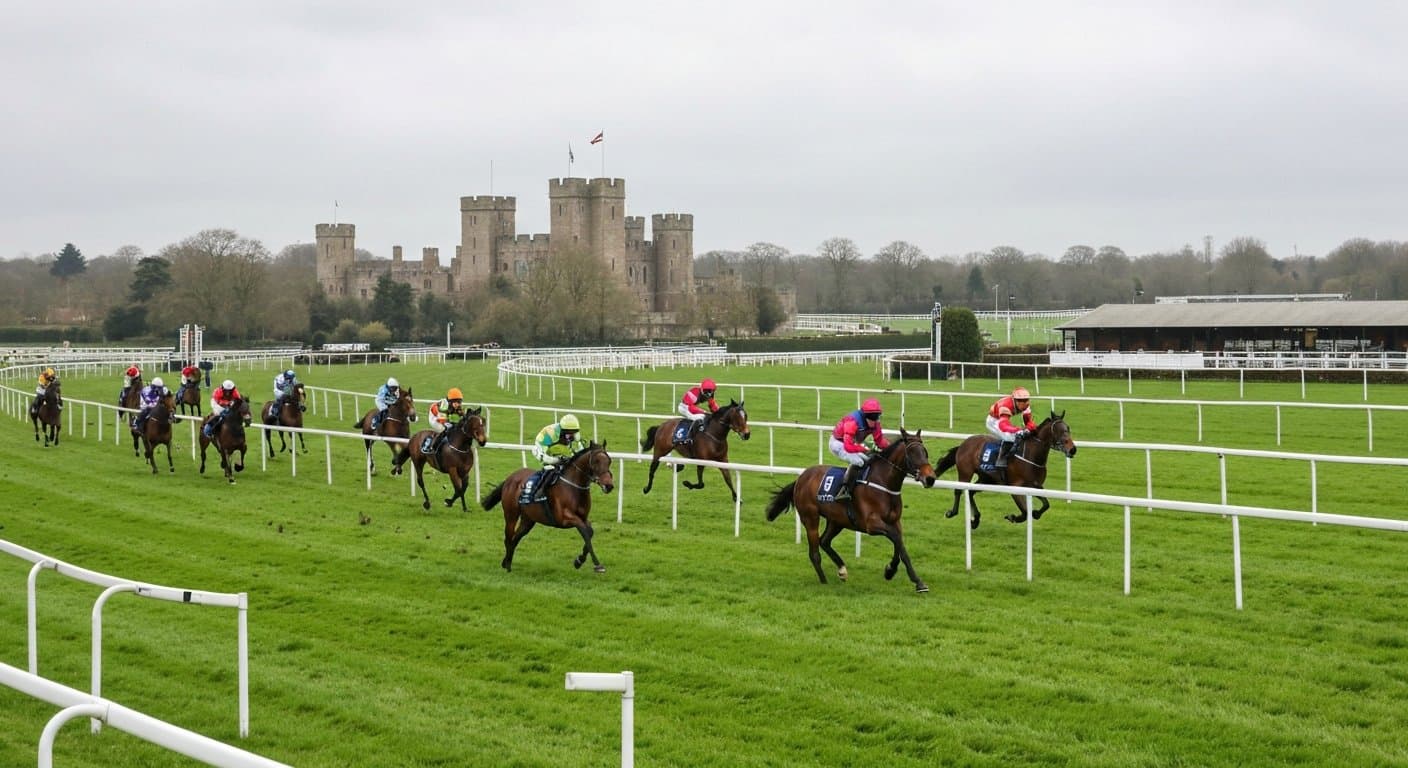
The Classic Chase at Warwick: Complete Guide
Everything about the Classic Chase — Warwick's prestigious Grand National trial handicap chase.
Read more
Warwick Racecourse: Complete Guide
Your complete guide to Warwick Racecourse — a historic National Hunt venue in the heart of England.
Read more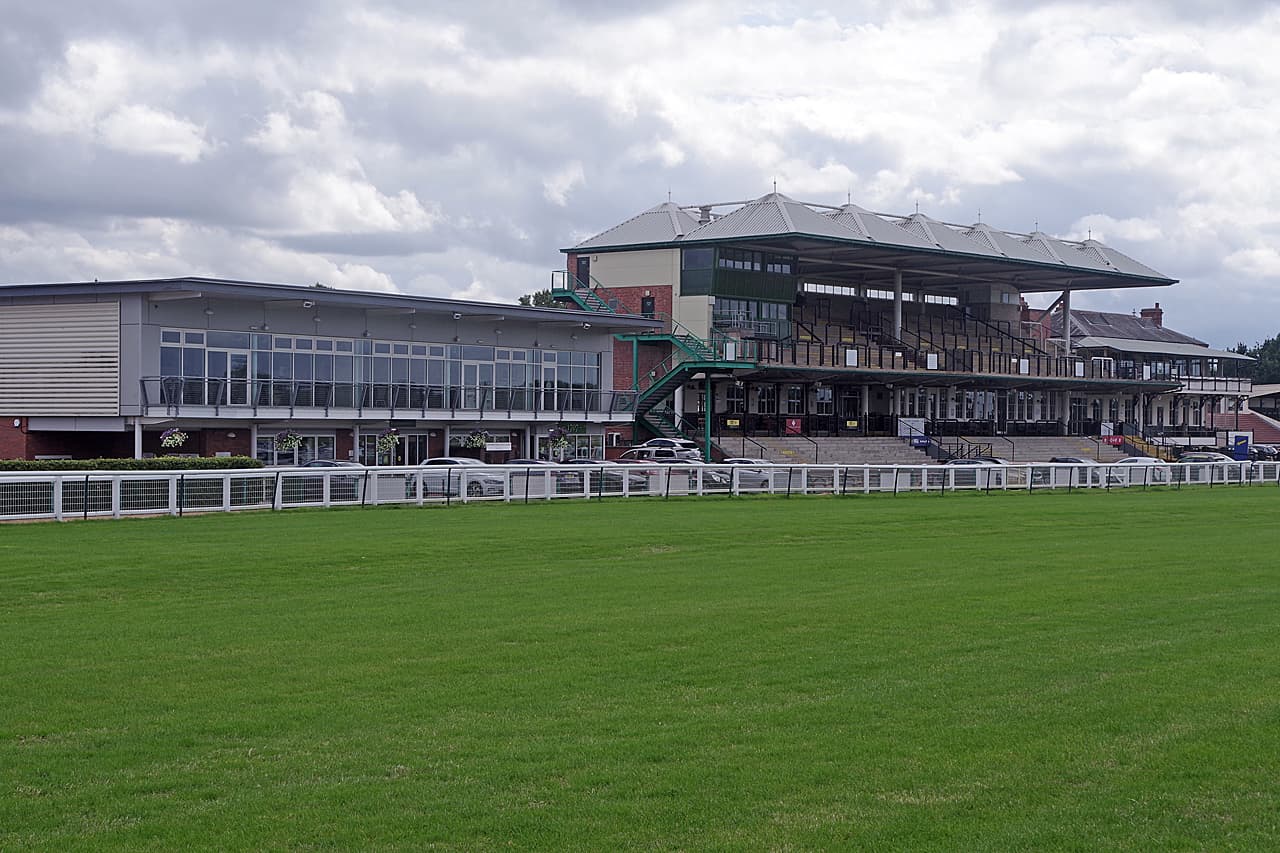
A Day Out at Warwick Racecourse
Everything you need for a day at Warwick — getting there, what to wear, enclosures, food and drink, and tips.
Read morePhotos on this page are used under Creative Commons licences. Titles, sources and licence links for each one are on our image credits page.
Research the field with the AI Race Predictor
Our model publishes calibrated win-probability estimates for UK races — a second opinion to understand a race, not tips. It's open about its record: it doesn't beat the market, and we show exactly how it does.
Work it out & learn the basics
Gamble Responsibly
Gambling should be entertaining and not seen as a way to make money. Never bet more than you can afford to lose. If you or someone you know has a gambling problem, help and support is available.