
Founder & Editor · Last reviewed 2026-03-02
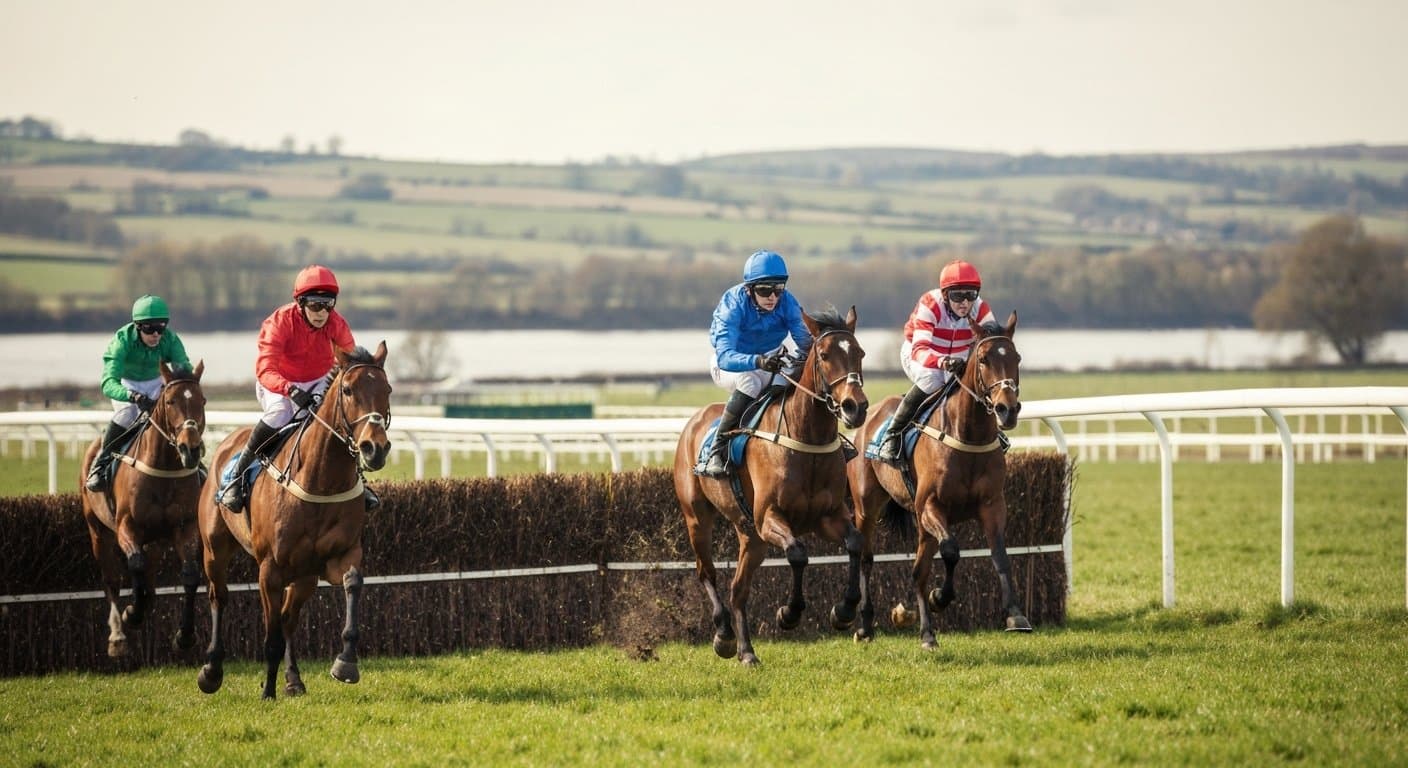
Wetherby is the best NH track in Yorkshire and one of the fairest galloping circuits in Britain. The left-handed oval of just under a mile and four furlongs has easy bends, nine well-maintained fences per circuit, and an undulating profile that asks horses to climb past the winning post, descend to the back straight, and then produce a sustained finishing effort on a slightly uphill run from the final obstacle. The course does not produce freak results. Good horses win here, form holds up, and the Charlie Hall Chase in October or November has a distinguished roll of honour that doubles as a reliable guide to the season's leading chasers.
The Charlie Hall Chase is Wetherby's signature event. A Grade 2 over three miles and a furlong that has served as the season-opening statement of intent for some of the best chasers of the modern era. Nigel Twiston-Davies has won it six times; Paul Nicholls has won it four times. Bristol De Mai won it three times from 2017. The race's record as a Cheltenham Gold Cup and King George VI Chase pointer is well-established, and it is one of the most thoroughly documented form references in the NH calendar.
Brian Hughes is the dominant jockey at Wetherby, the leading northern NH jockey of his era and a rider whose tactical intelligence on a galloping track, where accurate jumping and pace management through the descent are decisive, is particularly suited to what this course demands. When Hughes rides for any of the leading northern yards at Wetherby, that combination commands attention.
This guide covers track characteristics, going and draw, key trainers and jockeys, betting strategies, and key races. For the Charlie Hall Chase, the Charlie Hall guide covers race history and betting angles in full. For Boxing Day, see the Boxing Day guide.
Quick decision framework:
- Course form: reliable at Wetherby; horses that have won or placed here consistently repeat
- Going: soft or heavy from November through February: apply going filter before any other assessment
- Charlie Hall Chase: Twiston-Davies or Nicholls runners at 4/1 or above with soft-ground form; form pointer for Gold Cup/King George
- Rowland Meyrick (Boxing Day): best handicap betting event of the year: prepared horses, competitive field
- Brian Hughes jockey booking: primary signal when riding for northern yards at any Wetherby card
- Galloping track: form from Cheltenham, Haydock, Newbury transfers well; tight-course specialists may struggle
Bet on Wetherby
Place your bets on Wetherby races with a trusted bookmaker.

Promo code BETFRED50. New customers only. Register, deposit with a Debit Card, and place a first bet of £10+ at Evens (2.0)+ on Sports, to be settled within 7 days, to get £30 in Sports Free Bets and £20 in Bet Builder Free Bets within 24 hours of settlement. 7-day expiry. Eligibility & payment exclusions apply. Full T&Cs apply. Take Time to Think. BeGambleAware.org. 18+. Full T&Cs.

Promo code R30. New UK customers only, 18+. Register, deposit £10 or more, then place a £10 single cash bet at odds of 1/2 (1.5) or greater on any sports market (excluding Virtuals). Once the qualifying bet settles you get £30 in Free Bets (3 x £10) — the qualifying bet can win or lose. Free Bets are valid on any sports market excluding Virtuals, expire in 7 days, are non-withdrawable and must be used in full. Excluded deposit methods apply (including PayPal, Apple Pay, Skrill and NETELLER). Named bets such as Lucky 15 do not qualify. If you cash out the qualifying bet, or it is voided, you are no longer eligible for the offer. Ends 31.12.26. Full T&Cs apply. Please gamble responsibly. BeGambleAware.org. 18+. Full T&Cs.

Promo code BET40GET20. New UK customers, 18+. Register with the code and place a first bet of £40 or more at Evens (2.0) or greater. Receive 2 × £10 free bets: the first credited automatically once the qualifying bet settles, the second 24 hours later. Free bets must be placed at minimum odds of 4/1 (5.0), expire 24 hours after credit, and the free-bet stake is not returned with winnings. Debit card deposits only. Take Time to Think. BeGambleAware.org. 18+. T&Cs apply. Full T&Cs.

50% of your first-day net losses refunded as a free bet, capped at £25. New UK customers aged 18+ only. To qualify, deposit and place a first bet of £10 or more on any sport at minimum odds of evens (2.00), then place at least two further bets on different events, each worth at least 50% of your largest bet, all at evens (2.00) or greater. Losses are counted from your first settled bet until 23:59 the same day. Place a qualifying £10+ bet and you are guaranteed at least a £5 free bet. Bets placed at SP, void bets, cashed-out bets and bets struck with free bets do not count towards the offer. The free bet is credited the day after your qualifying bets settle and must be used within 7 days, after which it expires. It can be used at odds from 1/4 (1.25) up to 250/1 on singles and straight accumulators, but not on Trixie, Patent or Yankee style multiples. Free-bet stake is not returned with winnings. One offer per person, household, address, IP address and device. E-wallet deposits may not qualify, so check the cashier before depositing. Customers registered with GAMSTOP cannot claim. KYC identity verification must be completed before the free bet is credited. Take Time to Think. BeGambleAware.org. 18+. T&Cs apply. Full T&Cs.

New customers, 18+. Choose the sports bonus at sign-up, make a first deposit and receive a 100% bonus up to £50 in your Sports Bonus balance. To convert the bonus to cash, wager it 10x within 30 days. Single bets below Evens (2.00) do not qualify; accumulators do not qualify if any selection is below 1/2 (1.50). Virtual Sports, voided, cancelled, drawn, cashed-out and free-bet wagers do not count towards wagering. Only the first settled bet per event counts. Withdrawing before the wagering requirement is met forfeits the bonus balance including bonus winnings. Real-money funds are used before bonus funds. Deposits via Skrill or Neteller are not eligible. Not valid in conjunction with other promotions. Odds, bet and payment limits apply. 10bet general and promotion T&Cs apply. BeGambleAware.org. 18+. Full T&Cs.

New customers in Great Britain and Republic of Ireland, 18+. Place a £10 fixed-odds qualifying bet at minimum odds of 1/2 (1.50) — single or each-way (only the win part counts), pre-event or in-play, not cashed out early, within 28 days of opening the account. Receive up to £60 in bonuses credited over three days: 3 × £10 fixed-odds free bets (the first on settlement, then 24 and 48 hours later) plus 3 × £5 Total Goals FOOTBALL spread bets and 3 × £5 racing Winning Favourites spread bets, with a £1 racing Race Index spread bet as an extra on top. The spread bets need a full spread-betting account, opened within 28 days of the fixed-odds account and subject to Spreadex's eligibility and appropriateness checks. Free-bet stakes not returned with winnings; free bets valid 28 days from issue. IMPORTANT: the £5 credits are SPREAD bets — sports spread betting carries the risk that losses can exceed your stake. Sports spread-betting customers do not have Financial Ombudsman or FSCS recourse. Take Time to Think. BeGambleAware.org. 18+. T&Cs apply. Full T&Cs.

Promo code WELCOME15, entered under My Bonuses after registering. New UK customers, 18+. Place a first qualifying bet of at least £10 from your cash balance at odds of evens (2.0) or greater within 7 days of opening the account. Once the qualifying bet fully settles you receive £15 in free bets, credited as 3 x £5 tokens with set uses: one £5 accumulator free bet (minimum 4 legs, each leg at 2/5 or bigger), one £5 sports free bet (any market at evens or bigger) and one £5 Sub Cover free bet (selected football player markets at evens or bigger). Free-bet stakes are not returned with winnings. Free bets expire 7 days after they are credited. Void, cashed-out and partially cashed-out bets do not qualify. One offer per customer. Confirm the current terms on BetGoodwin's own welcome-offer page before claiming. Take Time to Think. BeGambleAware.org. 18+. T&Cs apply. Full T&Cs.

New UK customers, 18+. Minimum deposit £10. Place a £10 qualifying single on sports (excluding virtuals) at minimum odds of 1/2 (1.50), settled within 14 days. Deposit-method exclusions apply. Receive £30 in free bets (stake not returned), split £20 for sportsbook use (2 x £10) and £10 for Bet Builder only (2 x £5); Bet Builder does not cover horse racing. Free bets must be accepted within 7 days and expire 7 days after acceptance. No promo code required. Best Odds Guaranteed on UK & Irish racing, subject to having staked over £25 in the previous seven days. Operated by LiveScore Betting and Gaming (Gibraltar) Ltd, UKGC 56859. Confirm the current terms on LiveScore Bet's own promotions page before claiming. Take Time to Think. BeGambleAware.org. 18+. T&Cs apply. Full T&Cs.
18+. BeGambleAware.org
Track Characteristics
Wetherby's chase course is just under a mile and four furlongs around, left-handed, with easy bends that allow horses to maintain rhythm without the energy cost of tight turns. Nine fences per circuit (four in the home straight and five down the back including two open ditches) present a proper jumping test without extreme technical demands. The undulating profile is the course's most consequential physical characteristic for race assessment.
The Undulating Profile
The course rises past the winning post to the top of the circuit, which means horses start by ascending before they can establish their rhythm. The descent into the back straight is the longest sustained downhill section at Wetherby, and it is here that horses can move at pace without the energy cost of climbing. The downhill section also contains two of the five back-straight fences, meaning horses meet these obstacles at speed and with downhill momentum, a combination that tests jumping boldness and confidence.
The slightly uphill finishing section from the last fence to the winning post is the decisive moment in most Wetherby races. Horses that have been ridden aggressively down the back straight often find themselves short of reserves when the climb begins. Horses that have been held up or ridden more conservatively through the descent arrive at the final fence with more in reserve for the climb. The finish at Wetherby consistently rewards stamina and penalises over-exuberance in the middle stages.
Front-Runners and the Galloping Track
The easy bends at Wetherby mean that front-runners can dictate the pace without being challenged by the geometry of the track. On a course with tighter turns (Sedgefield, Plumpton, Cartmel) a front-runner must constantly find the correct line through bends and may be challenged by opponents approaching from the outside. At Wetherby, the sweeping bends are easy enough that a front-runner can hold the rail without specific tactical difficulty, and no part of the circuit compresses the field in a way that allows a sustained challenge to develop from behind.
Bristol De Mai's three Charlie Hall victories in 2017, 2018, and 2019 illustrated the front-runner advantage at Wetherby at its most extreme. His ability to dictate a measured pace, jump accurately at each of the nine fences, and sustain his effort up the final climb made Wetherby one of his most reliable venues. The lesson for betting assessment: when a horse with front-running tendencies and clean jumping form lines up at Wetherby with no obvious pace rivals, the front-runner premium is real.
That said, Wetherby is not exclusively a front-runner's course. Definitly Red won the 2018 Charlie Hall from off the pace, trained by Brian Ellison and ridden by Brian Hughes. The course's fairness (no geometric advantage for any particular racing style beyond the front-runner's easy access to the rail) means that horses with different running styles win at comparable rates relative to what the race conditions demand.
Jumping Requirements
The fences at Wetherby are well maintained and present a proper test. The two open ditches in the back straight are the most demanding obstacles on the circuit, approached at pace on the downhill section. Horses that meet open ditches with hesitancy or irregularity in their stride pattern are more likely to make errors at Wetherby than at courses where the fences are positioned on flat or uphill sections where approach speed is more controlled. Accurate, bold jumping (particularly at the two open ditches) is a positive quality for any Wetherby selection.
Form Transfer
Cheltenham (left-handed, galloping, undulating) provides the strongest form transfer. Haydock (left-handed, galloping, soft-ground specialists) transfers well. Newbury (right-handed, galloping, fair) transfers adequately adjusted for direction. Form from tight oval courses (Sedgefield, Plumpton) requires discount because the positional demands and energy profiles are truly different from what Wetherby's galloping circuit tests.
Going & Ground Conditions
Wetherby's NH season runs from October to May, and the going reflects the Yorkshire climate across that period. The course drains reasonably well by northern standards, but from November through February the going is consistently soft or heavy as the West Yorkshire rainfall accumulates and temperatures prevent rapid drying. The going at Wetherby is one of the most consequential single factors in race assessment here, not because the course has unusual drainage characteristics, but because the soft-ground premium is more systematic at Wetherby than at many comparable courses.
October and November
The Charlie Hall meeting at the end of October or in early November falls on going that can range from good to soft to soft, the most variable point of the season. In dry autumns, the Charlie Hall is run on going that a wider range of horse types can handle. In wet autumns, the going can be soft by the time the feature race is run, and the soft-ground qualification becomes immediately decisive. Check the going report for the Charlie Hall meeting carefully in the week before the race: a late switch from good to soft to soft can fundamentally change the race's likely winner.
When the Charlie Hall is run on soft going, horses with proven Cheltenham soft-ground chase form or Haydock soft-ground staying form are prioritised over horses whose recent form has been built on good or good to soft at galloping southern courses. The quality of the field typically means that form is available on which to make these assessments. This is not a race where horses are appearing without significant recent form.
December to February
From mid-November through February, soft or heavy is the norm at Wetherby. The Rowland Meyrick Handicap Chase on Boxing Day and the January fixtures including the Towton Novices' Chase are consistently run on testing going. The going filter applies directly: any horse without proven effectiveness on soft or heavy going should be removed from consideration for these meetings regardless of its ratings on better ground.
On heavy going in January or February, the energy cost of the full Wetherby circuit multiplied by the race distance (typically two miles to three miles) becomes severe. Front-runners that have been effective at Wetherby on soft going face additional pressure when the going turns heavy because the descending section becomes harder to negotiate at pace and the uphill finish takes more out of horses that have been working hard through the back straight. In truly heavy conditions, horses with the deepest stamina reserves relative to their race distance are most reliable.
March to May
Spring drying begins at Wetherby in March, progressing from soft toward good to soft in April and occasionally good in May at the end of the season. The March and April meetings attract horses working toward the Cheltenham Festival or having their final run of the winter season before the summer lay-off. Going-adjusted form from the current season remains the primary guide, winter soft-ground form from January and February does not automatically transfer to March good to soft.
Draw and Flat Racing
Wetherby stages a small number of flat fixtures using the hurdles track, with a home straight of approximately half a mile. For flat races, the draw can be a factor: shorter-distance races on the flat course may favour a low draw where positioning before the turn is important. However, the flat programme is modest and the vast majority of Wetherby betting is on the NH programme, where draw is irrelevant.
For all NH races (hurdles and chases) there is no draw to consider. Position in the race is determined entirely by tactics and pace. Focus on going, course form, trainer signals, and the specific race's running-style implications.
Weather and Late Changes
West Yorkshire weather can change rapidly, and going updates at Wetherby in the 24 hours before a meeting are worth monitoring. A dry week followed by overnight rain can convert good to soft into soft before a scheduled Charlie Hall or Rowland Meyrick, and the horse-type implications of that change may not be fully reflected in morning prices. Horses whose odds have been set on the basis of a good to soft going assessment may represent value if the going softens to soft by the off and the market has not fully adjusted.
Key Trainers & Jockeys
Wetherby attracts a mix of leading national operations for the graded feature races and northern-based yards for the competitive handicap programme throughout the season. The two most important trainer signals are Nigel Twiston-Davies for the Charlie Hall Chase and the major handicap chases, and the cluster of northern yards (Ellison, McCain, Jefferson, Kirby) that dominate the day-to-day Wetherby programme.
Nigel Twiston-Davies: Charlie Hall Chase Record
Nigel Twiston-Davies at Naunton in Gloucestershire has won the Charlie Hall Chase six times, more than any other trainer in the race's history. Tipping Tim (1992), Young Hustler (1994), Ollie Magern (2005 and 2007), Bristol De Mai (2017), and Ballyoptic (2019) have all carried his colours to victory in this race. His ability to bring staying chasers to peak condition for a specific early-season target in late October or early November is the most specialised piece of trainer knowledge in the Wetherby betting context.
At prices of 4/1 or above, a Twiston-Davies runner in the Charlie Hall Chase with soft-ground staying form from the previous season or from a current-season prep run is the primary value target in the race. Below 4/1, his horses are typically fully priced. Above 4/1, the market has underweighted either the trainer's specific race record or the horse's soft-ground profile.
Paul Nicholls: National Operation Targeting Wetherby
Paul Nicholls at Manor Farm Stables in Somerset has won the Charlie Hall Chase four times, See More Business in 1999 and 2000, Silviniaco Conti in 2012, Cyrname in 2020, and Bravemansgame in 2022. Nicholls uses the Charlie Hall as a prep run for his Cheltenham Gold Cup and King George VI Chase contenders: the race is a quality early-season test at the right distance and typically on going that matches what his horses will face at their major targets later in the season.
When Nicholls enters a horse in the Charlie Hall Chase with Harry Cobden or Sam Twiston-Davies in the saddle, and the horse has previous Cheltenham Gold Cup trial or King George aspirations, that runner is the likely intended winner of the race rather than a prep outing. At prices of 3/1 to 6/1, Nicholls entries in the Charlie Hall with this profile are worth the attention.
Northern Yards: Brian Ellison and Donald McCain
Brian Ellison at Malton in North Yorkshire has a strong Wetherby record across the season's handicap programme. Definitly Red (the horse who won the 2018 Charlie Hall Chase and became one of the most popular northern staying chasers of his era) was trained by Ellison and exemplifies the yard's approach: a horse that appreciated the galloping Wetherby circuit, handled West Yorkshire soft going, and was ridden with the tactical intelligence of Brian Hughes.
Donald McCain at Cholmondeley in Cheshire targets Wetherby's handicap programme throughout the season. His horses are typically competitive in Class 3 and Class 4 handicap chases and hurdles, and his Wetherby entries are often horses that specifically suit the galloping circuit. Ruth Jefferson at Middleham and Phil Kirby at Malton are smaller operations with consistent Wetherby records, particularly in the lower-grade handicap programme.
Brian Hughes: The Dominant Jockey
Brian Hughes has been the champion northern jockey for multiple seasons and is the primary jockey signal at Wetherby. His course knowledge (the descent timing, the two open ditches in the back straight, the uphill finishing section) is reflected in results that consistently outperform his general north-circuit average at this specific course. When Hughes rides for Ellison or McCain at Wetherby, the trainer-jockey-course combination is the most reliable signal on any card outside the graded feature races.
His record in the Charlie Hall Chase includes The Real Whacker (2024), and across the wider Wetherby programme his strike rate places him as the first consideration for any race assessment involving a northern-circuit booking.
Southern Raiders for Feature Races
Beyond the Charlie Hall Chase, which consistently draws southern operations, the West Yorkshire Hurdle at the same meeting has attracted horses from Willie Mullins, Nicholls, and Gosden and Gosden targeting the Stayers' Hurdle at Cheltenham. For these graded feature races, southern trainers' entries deserve equal consideration to northern yards, the course's galloping character suits horses from Cheltenham and Newbury form equally well.
Betting Strategies
Wetherby's betting strategies emerge from three characteristics that distinguish it from most northern NH courses: the reliable course form created by a galloping circuit that tests specific qualities consistently; the going filter that operates powerfully from November through February; and the Charlie Hall Chase, which functions simultaneously as the best betting event of the course's year and as one of the most reliable form pointers for the subsequent winter's major staying-chase races.
Strategy One: Course Form on the Galloping Circuit
Wetherby's galloping, left-handed circuit with easy bends and an undulating profile tests a specific set of qualities: stamina for the full circuit, jumping accuracy at nine fences including the back-straight open ditches, and the ability to sustain an effort up the slightly uphill finish. A horse that has won or placed at Wetherby has demonstrated all three qualities on a course that does not produce form flukes.
Apply course form as the primary filter: any field containing a horse with a Wetherby win in the last twenty-four months is the starting benchmark. Opposition requires positively superior form credentials. This filter is particularly powerful in the handicap chase programme because these races operate at the same class level repeatedly and course-specialist horses can accumulate multiple wins at the same course level. When a horse has won twice or more at Wetherby in handicap chases at comparable weights and distances, the market does not always fully price in the third or fourth win.
Strategy Two: Going Filter November to February
From November through February, apply the going filter as an absolute rule before any other assessment. Soft going form at comparable distances at Cheltenham, Haydock, or Newcastle is the minimum qualification for a Wetherby selection in this period. Form on good or good to soft at galloping southern tracks is insufficient qualification for soft or heavy Wetherby going.
The going filter operates directionally: it identifies horses that are qualified, not horses to be backed. Once the qualified subset is identified, the course form filter and the trainer or jockey signals operate within that subset. In some races, the going filter will eliminate the market favourite, in such cases, the market has not applied the filter correctly, and the alternative going-qualified selection at bigger odds represents the structural value.
Strategy Three: Charlie Hall Chase: Twiston-Davies or Nicholls at 4/1 or Above
The Charlie Hall Chase is the most important single betting event at Wetherby. The combination of Grade 2 quality, reliable form both for the race itself and as a pointer for the season's major staying chases, and the well-documented trainer patterns, creates the most analytically productive environment at the course.
At prices of 4/1 or above, Twiston-Davies or Nicholls runners with soft-ground three-mile or beyond form are worth backing without additional justification. Both trainers target the race with intent and have the track records to demonstrate that their entries are real rather than prep runs. At 3/1 or below, these horses are typically fully priced and carry no systematic edge.
When the Charlie Hall is run on soft going, the field narrows to horses with proven soft-ground effectiveness at three miles plus, and the Twiston-Davies or Nicholls runner that passes this filter at 4/1 or above is the highest-confidence selection on the Wetherby calendar.
Strategy Four: Rowland Meyrick as the Best Annual Handicap Opportunity
The Rowland Meyrick Handicap Chase on Boxing Day is the best annual handicap betting event at Wetherby and one of the most productively assessable Premier Handicap chases on the northern NH calendar. The combination of a full field of prepared horses, going that is consistently soft or heavy in late December, a distance (three miles and a furlong) that tests real stamina, and a racecourse in peak-season condition creates ideal conditions for thorough pre-race form assessment.
Apply the full Wetherby analytical framework: going filter first (soft or heavy-ground qualification required), course form filter second (any previous Wetherby experience is a positive), then the trainer signal (northern yards specifically targeting the Boxing Day card versus those entering opportunistically). Each-way betting at 7/1 or above for a going-qualified, course-experienced horse from a targeting yard is the productive stake structure.
Strategy Five: Oppose Tight-Course Specialists at Short Prices
Horses arriving at Wetherby with form exclusively from tight oval NH courses (Sedgefield, Plumpton, Cartmel) at prices of 6/4 to 5/2 in staying chases are worth opposing when a galloping-track specialist is available at 4/1 or above. The demands of Wetherby's nine-fence galloping circuit over three miles on soft going are different enough from what tight oval courses test that form transfer from those courses to Wetherby is unreliable. The positional-racer skill that wins at Sedgefield does not transfer to Wetherby's front-running or galloping-track stamina test.
To compare place terms and each-way promotions across the major bookmakers, see our best bookmakers for horse racing guide.
Key Races to Bet On
Wetherby's racing calendar runs from October through May. The four races below are the primary betting targets, not because they are the only interesting events at the course, but because they combine the highest quality fields, the most reliable form, and the most productive betting angles.
Charlie Hall Chase (Grade 2, 3m 1f, October/November)
The Charlie Hall Chase is Wetherby's flagship event, a Grade 2 staying chase over three miles and a furlong run at the course's October or November feature meeting. The race is named after Charlie Hall, a legendary jockey from the 1920s and 1930s who rode hundreds of winners in Yorkshire, and it has been part of the Wetherby programme for decades. Its modern distinction rests on its record as a reliable form pointer for the season's major staying chases.
Charlie Hall winners include Bristol De Mai (2017, 2018, 2019 (Twiston-Davies), Cyrname (2020) Nicholls), Bravemansgame (2022 (Nicholls), and The Real Whacker (2024) Brian Hughes). The race's winners list reads as a roll-call of the leading staying chasers of each era. Past winners have gone on to win the King George VI Chase at Kempton Park on Boxing Day, the Betfair Chase at Haydock, and the Cheltenham Gold Cup, making the Charlie Hall one of the most valuable seasonal form pointers of the entire NH programme.
For betting, the analytical framework described in Strategy Three applies. The going filter is the pre-race essential: in soft or heavy conditions, only horses with proven soft-ground three-mile form qualify. The Twiston-Davies or Nicholls runner at 4/1 or above that passes the filter is the primary selection target. See the Charlie Hall Chase guide for detailed historical analysis, winning profiles, and race-specific betting angles.
West Yorkshire Hurdle (Grade 2, 3m 1f, Charlie Hall Card)
Run on the same card as the Charlie Hall Chase, the West Yorkshire Hurdle is a Grade 2 contest over three miles and a furlong for the leading staying hurdlers. The race functions as the northern equivalent of the Long Walk Hurdle at Ascot. An early-season test for the horses that will contest the Stayers' Hurdle at the Cheltenham Festival in March. The form is typically reliable: horses that run well in the West Yorkshire Hurdle, even if they do not win, frequently go on to perform at Cheltenham and at other Grade 1 staying hurdle events.
Willie Mullins sends horses north for this race when his stable has a staying hurdler that fits the profile, and his runners at Wetherby in the West Yorkshire Hurdle command the same attention as his Cheltenham entries. Paul Nicholls and Nicky Henderson have also sent competitive horses. Going is the same going-filter caveat as the Charlie Hall: soft or heavy qualification is essential for a reliable selection.
Rowland Meyrick Handicap Chase (3m 1f, Boxing Day, Premier Handicap)
The Rowland Meyrick is the Boxing Day centrepiece at Wetherby, a Premier Handicap staying chase over three miles and a furlong that consistently attracts the best competitive field of the Wetherby handicap programme. Run on going that is virtually always soft or heavy in late December, the race applies all of the course's standard assessment filters in their most extreme form: going qualification is absolute, course form is the primary benchmark, and northern yards targeting the Boxing Day card with specifically prepared horses are the primary trainer signals.
The race provides more scope for value than the Charlie Hall Chase because it is a handicap (some horses will be well handicapped relative to their current ability) and the longer ante-post betting market means that prices can be more favourable than on the day. For each-way betting at 7/1 or above in the Rowland Meyrick, the combination of going qualification, course form, and northern-yard targeting evidence produces the most reliable betting framework of the Wetherby year. See the Boxing Day guide for detailed race analysis.
Towton Novices' Chase (Grade 2, 2m 3.5f, January)
The Towton Novices' Chase in January is a Grade 2 novice chase over two miles and three and a half furlongs. Run on typically soft or heavy January going, it is a significant pointer for the novice chase division at the Cheltenham Festival, the Arkle Challenge Trophy over two miles and the Brown Advisory Novices' Chase over three miles both receive useful form leads from Towton winners. Horses that jump accurately at Wetherby's nine fences in only their second or third chase start and win on soft ground have demonstrated the combination of jumping confidence and soft-ground effectiveness that the Festival novice chases also demand.
The Towton is the most reliable form pointer for subsequent novice chase performance that Wetherby produces, and tracking horses that run creditably here (including those that finish second or third to the winner) provides a useful forward-betting reference for the rest of the season's novice programme. Northern trainers (Ellison, McCain, Jefferson) compete strongly here alongside southern operations making northern trips with horses they believe are ready for a graded test.
Share this article
More about this racecourse
All Wetherby guides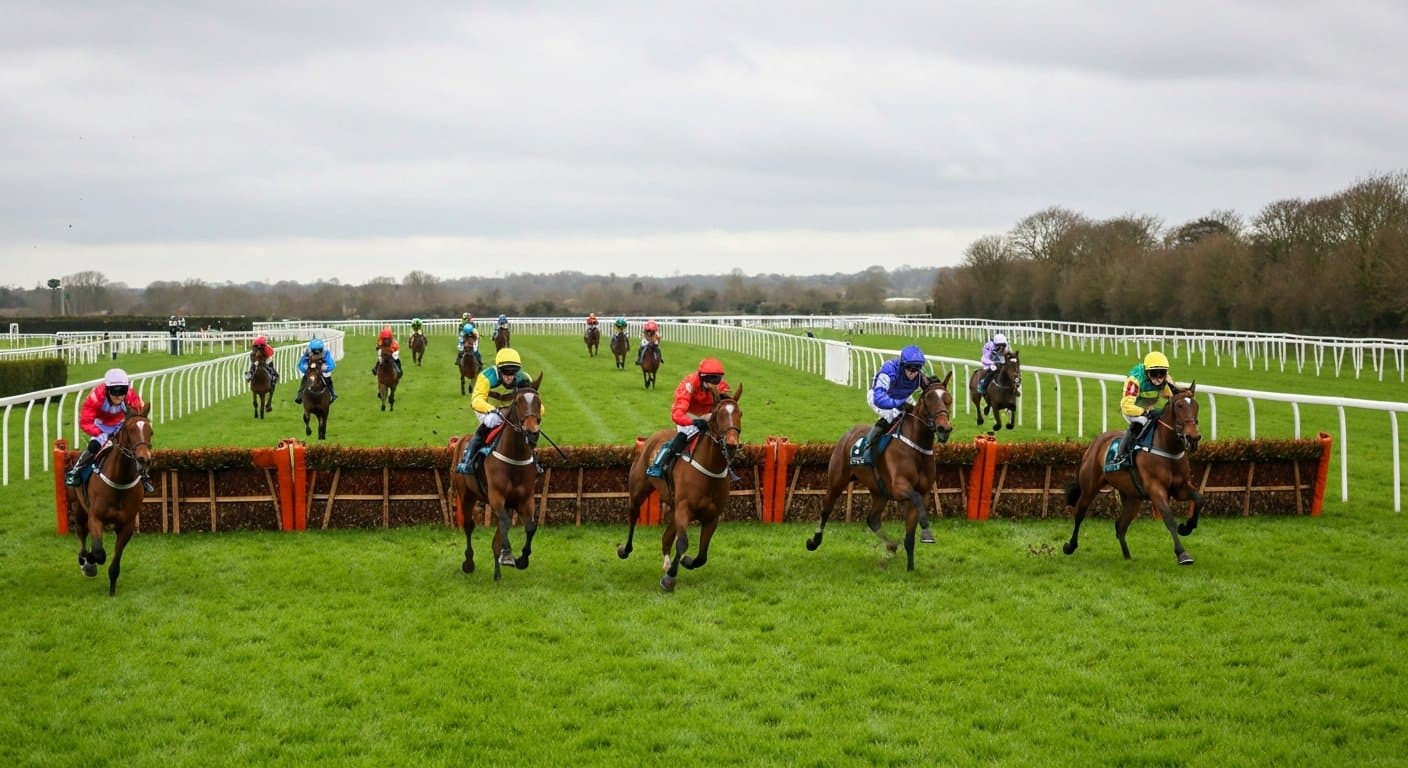
Boxing Day Racing at Wetherby
Your guide to Wetherby's famous Boxing Day meeting — one of the most popular jumps fixtures of the festive season.
Read more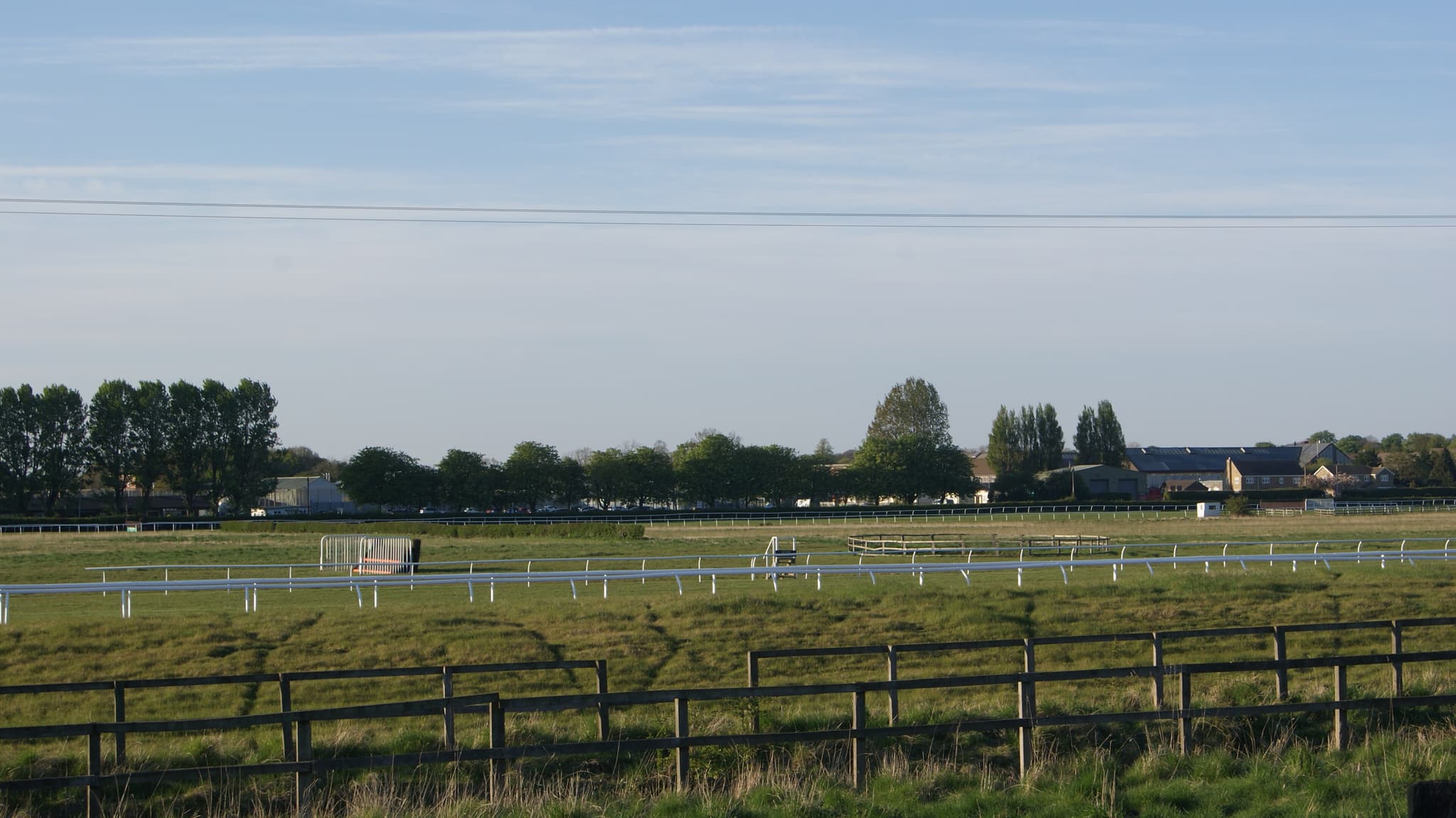
Wetherby Racecourse: Complete Guide
Your complete guide to Wetherby Racecourse — a top northern jumps venue in West Yorkshire.
Read more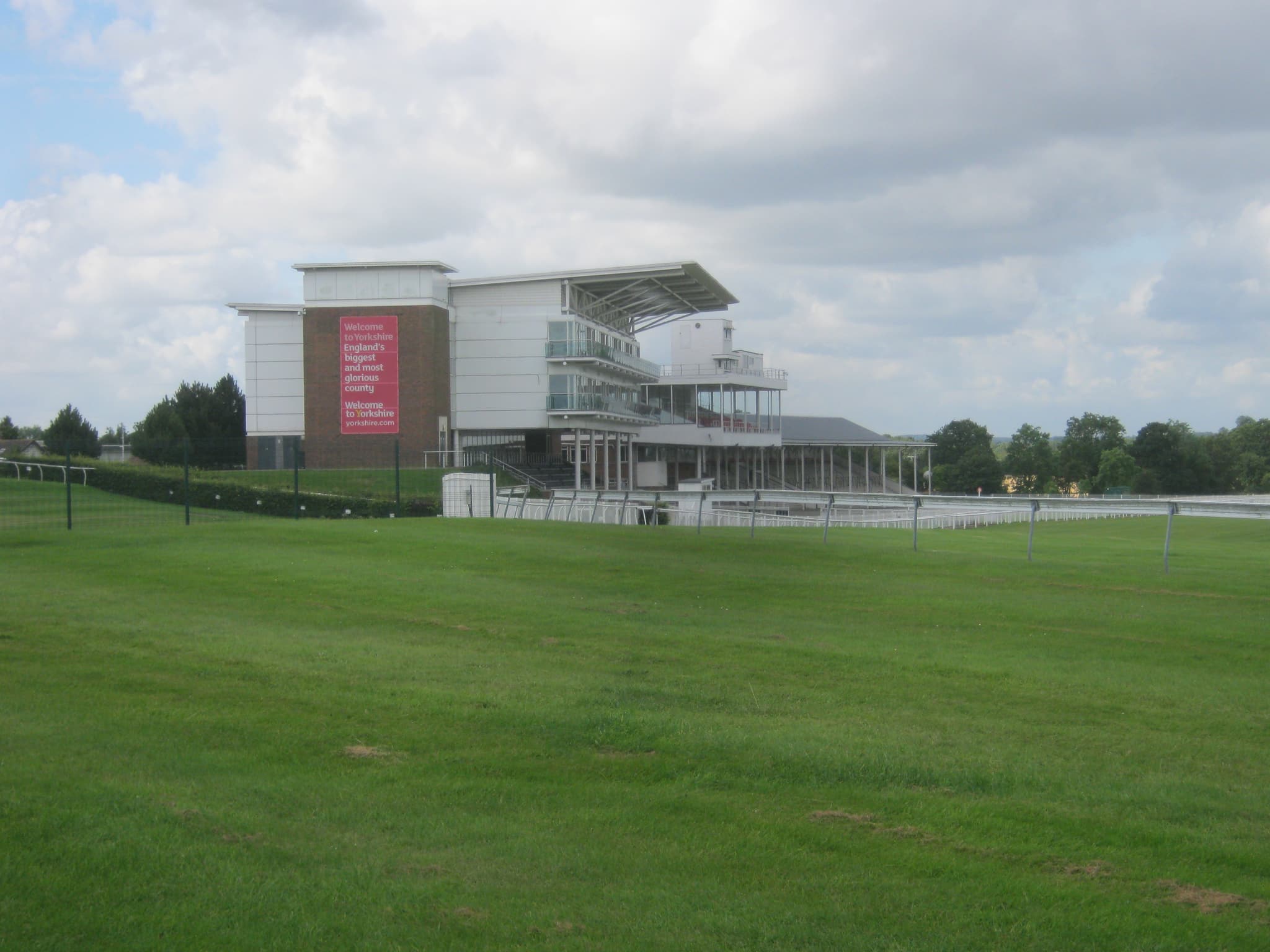
A Day Out at Wetherby Racecourse
Everything you need for a day at Wetherby — getting there, what to wear, enclosures, food and drink, and tips.
Read morePhotos on this page are used under Creative Commons licences. Titles, sources and licence links for each one are on our image credits page.
Research the field with the AI Race Predictor
Our model publishes calibrated win-probability estimates for UK races — a second opinion to understand a race, not tips. It's open about its record: it doesn't beat the market, and we show exactly how it does.
Work it out & learn the basics
Gamble Responsibly
Gambling should be entertaining and not seen as a way to make money. Never bet more than you can afford to lose. If you or someone you know has a gambling problem, help and support is available.