
Founder & Editor · Last reviewed 2026-03-02
Wincanton sits on the Mendip Hills in Somerset at roughly 550 feet above sea level, and it feels like it. The track is exposed and the going can firm quickly in spring or ease rapidly after autumn rain. Paul Nicholls trains at Ditcheat, seven miles away. That proximity has shaped Wincanton's reputation more than any other single factor: this is effectively the most successful National Hunt trainer in Britain's home course, and the results reflect it.
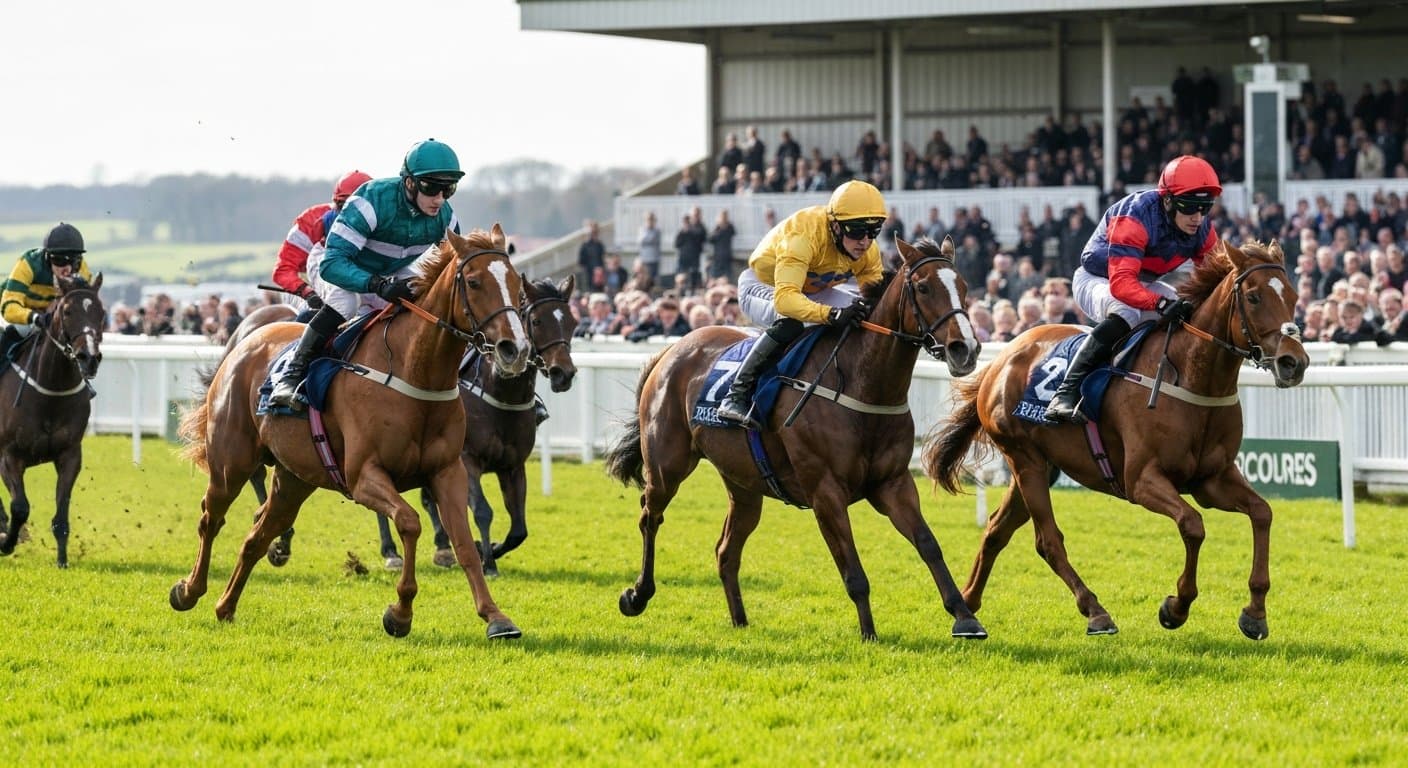
The circuit is right-handed, pear-shaped, and measures approximately one mile and three furlongs round. It gallops rather than turns sharply. Horses get a chance to stride out. What they also encounter is a stiff uphill finish that rises steadily through the final two furlongs — a climb that sorts out those that have burned through their energy reserves early from those that have been ridden with patience.
Three Grade 2 races in February give Wincanton its most significant betting calendar. The Kingwell Hurdle is the last major Champion Hurdle prep race. The Jim Ford Challenge Cup is a two-mile-five-furlong Grade 2 chaser trial for Cheltenham. Both races attract horses that will be among the favourites at the Festival a fortnight later. Betting on those races carries real consequential weight — the form runs forward directly.
Wincanton also stages high-quality November racing. Badger Beers day produces two Grade 2 races — the Badger Beer Chase and the Elite Hurdle — alongside the Desert Orchid Chase. That card typically falls in mid-November and is one of the first real quality National Hunt meetings of the season. Horses lightly raced, potentially at less than their best, arrive and set early-season benchmarks. Market inefficiencies are real.
On a bread-and-butter level, Wincanton's competitive Class 3 and Class 4 cards through winter offer decent betting. Field sizes of nine to fourteen are typical. The stiff finish favours real stayers over those relying on speed and makes the race shape relatively predictable. Horses held up off a strong pace and produced to challenge the three fences in the home straight often land competitive handicaps here.
For everyday Wincanton betting, the core research principles are simple: understand the going, know which horses truly stay at the distance, and back Paul Nicholls when the race suits his runners. The rest of this guide covers each of those elements in detail.
Bet on Wincanton
Place your bets on Wincanton races with a trusted bookmaker.

Promo code BETFRED50. New customers only. Register, deposit with a Debit Card, and place a first bet of £10+ at Evens (2.0)+ on Sports, to be settled within 7 days, to get £30 in Sports Free Bets and £20 in Bet Builder Free Bets within 24 hours of settlement. 7-day expiry. Eligibility & payment exclusions apply. Full T&Cs apply. Take Time to Think. BeGambleAware.org. 18+. Full T&Cs.

Promo code R30. New UK customers only, 18+. Register, deposit £10 or more, then place a £10 single cash bet at odds of 1/2 (1.5) or greater on any sports market (excluding Virtuals). Once the qualifying bet settles you get £30 in Free Bets (3 x £10) — the qualifying bet can win or lose. Free Bets are valid on any sports market excluding Virtuals, expire in 7 days, are non-withdrawable and must be used in full. Excluded deposit methods apply (including PayPal, Apple Pay, Skrill and NETELLER). Named bets such as Lucky 15 do not qualify. If you cash out the qualifying bet, or it is voided, you are no longer eligible for the offer. Ends 31.12.26. Full T&Cs apply. Please gamble responsibly. BeGambleAware.org. 18+. Full T&Cs.

Promo code BET40GET20. New UK customers, 18+. Register with the code and place a first bet of £40 or more at Evens (2.0) or greater. Receive 2 × £10 free bets: the first credited automatically once the qualifying bet settles, the second 24 hours later. Free bets must be placed at minimum odds of 4/1 (5.0), expire 24 hours after credit, and the free-bet stake is not returned with winnings. Debit card deposits only. Take Time to Think. BeGambleAware.org. 18+. T&Cs apply. Full T&Cs.

50% of your first-day net losses refunded as a free bet, capped at £25. New UK customers aged 18+ only. To qualify, deposit and place a first bet of £10 or more on any sport at minimum odds of evens (2.00), then place at least two further bets on different events, each worth at least 50% of your largest bet, all at evens (2.00) or greater. Losses are counted from your first settled bet until 23:59 the same day. Place a qualifying £10+ bet and you are guaranteed at least a £5 free bet. Bets placed at SP, void bets, cashed-out bets and bets struck with free bets do not count towards the offer. The free bet is credited the day after your qualifying bets settle and must be used within 7 days, after which it expires. It can be used at odds from 1/4 (1.25) up to 250/1 on singles and straight accumulators, but not on Trixie, Patent or Yankee style multiples. Free-bet stake is not returned with winnings. One offer per person, household, address, IP address and device. E-wallet deposits may not qualify, so check the cashier before depositing. Customers registered with GAMSTOP cannot claim. KYC identity verification must be completed before the free bet is credited. Take Time to Think. BeGambleAware.org. 18+. T&Cs apply. Full T&Cs.

New customers, 18+. Choose the sports bonus at sign-up, make a first deposit and receive a 100% bonus up to £50 in your Sports Bonus balance. To convert the bonus to cash, wager it 10x within 30 days. Single bets below Evens (2.00) do not qualify; accumulators do not qualify if any selection is below 1/2 (1.50). Virtual Sports, voided, cancelled, drawn, cashed-out and free-bet wagers do not count towards wagering. Only the first settled bet per event counts. Withdrawing before the wagering requirement is met forfeits the bonus balance including bonus winnings. Real-money funds are used before bonus funds. Deposits via Skrill or Neteller are not eligible. Not valid in conjunction with other promotions. Odds, bet and payment limits apply. 10bet general and promotion T&Cs apply. BeGambleAware.org. 18+. Full T&Cs.

New customers in Great Britain and Republic of Ireland, 18+. Place a £10 fixed-odds qualifying bet at minimum odds of 1/2 (1.50) — single or each-way (only the win part counts), pre-event or in-play, not cashed out early, within 28 days of opening the account. Receive up to £60 in bonuses credited over three days: 3 × £10 fixed-odds free bets (the first on settlement, then 24 and 48 hours later) plus 3 × £5 Total Goals FOOTBALL spread bets and 3 × £5 racing Winning Favourites spread bets, with a £1 racing Race Index spread bet as an extra on top. The spread bets need a full spread-betting account, opened within 28 days of the fixed-odds account and subject to Spreadex's eligibility and appropriateness checks. Free-bet stakes not returned with winnings; free bets valid 28 days from issue. IMPORTANT: the £5 credits are SPREAD bets — sports spread betting carries the risk that losses can exceed your stake. Sports spread-betting customers do not have Financial Ombudsman or FSCS recourse. Take Time to Think. BeGambleAware.org. 18+. T&Cs apply. Full T&Cs.

Promo code WELCOME15, entered under My Bonuses after registering. New UK customers, 18+. Place a first qualifying bet of at least £10 from your cash balance at odds of evens (2.0) or greater within 7 days of opening the account. Once the qualifying bet fully settles you receive £15 in free bets, credited as 3 x £5 tokens with set uses: one £5 accumulator free bet (minimum 4 legs, each leg at 2/5 or bigger), one £5 sports free bet (any market at evens or bigger) and one £5 Sub Cover free bet (selected football player markets at evens or bigger). Free-bet stakes are not returned with winnings. Free bets expire 7 days after they are credited. Void, cashed-out and partially cashed-out bets do not qualify. One offer per customer. Confirm the current terms on BetGoodwin's own welcome-offer page before claiming. Take Time to Think. BeGambleAware.org. 18+. T&Cs apply. Full T&Cs.

New UK customers, 18+. Minimum deposit £10. Place a £10 qualifying single on sports (excluding virtuals) at minimum odds of 1/2 (1.50), settled within 14 days. Deposit-method exclusions apply. Receive £30 in free bets (stake not returned), split £20 for sportsbook use (2 x £10) and £10 for Bet Builder only (2 x £5); Bet Builder does not cover horse racing. Free bets must be accepted within 7 days and expire 7 days after acceptance. No promo code required. Best Odds Guaranteed on UK & Irish racing, subject to having staked over £25 in the previous seven days. Operated by LiveScore Betting and Gaming (Gibraltar) Ltd, UKGC 56859. Confirm the current terms on LiveScore Bet's own promotions page before claiming. Take Time to Think. BeGambleAware.org. 18+. T&Cs apply. Full T&Cs.
18+. BeGambleAware.org
Track Characteristics
The Wincanton circuit runs right-handed and measures approximately one mile and three furlongs round. It is classified as a galloping track, which means the bends are sweeping rather than sharp and horses have time to find their stride between turns. The layout is pear-shaped — the back straight is longer than the short run from the far end back to the home turn, which creates an asymmetric circuit where position in the back straight matters more than many punters appreciate.
The Uphill Finish
The defining feature of Wincanton is the final two furlongs. After the last fence, the track climbs steadily to the winning post. It is not the dramatic finish of Cheltenham but it is significant enough to expose horses that have raced freely through the back straight without conserving energy. Races at Wincanton often look to be won three fences from home but are won on the line when the leader's momentum fades on the climb.
The uphill finish has a direct bearing on tactics. Horses ridden prominently but within themselves — those that settle on the bridle for the first circuit before being produced — tend to finish better than those that race hard throughout. Patient rides pay more dividends at Wincanton than the national average for NH racing. When assessing form, note whether a horse tends to jump and run or whether it has shown the ability to travel at a controlled pace. The former can still win here, but only if the horse has the class to absorb the energy cost.
The Three Fences in the Home Straight
Wincanton's three fences in the home straight — placed in relatively quick succession before the run to the line — are the most discussed feature of the course. They arrive when horses are tiring and when any slackness in jumping technique is most exposed. The first of the three fences trips up leaders who are beginning to empty. The third is the final fence, and horses landing awkwardly here lose valuable momentum on the climb to the line.
In novice chases, the three straight fences function as a sorting mechanism. Horses with clean, economical jumping technique absorb them without incident. Horses with a tendency to pitch or stand too far back lose lengths at each one. Previous jumping form under pressure — specifically at the point in a race when a horse is already tiring — is the most useful preparation filter for Wincanton novice chases.
Hurdle Course
The hurdle track follows essentially the same circuit. Over hurdles, the uphill finish is slightly less decisive because the energy demands are lower than in chases, but it still sorts out non-stayers in two-mile races. The Kingwell Hurdle over two miles demonstrates this clearly — horses that are Champion Hurdle class travel comfortably to the final flight and power up the hill; those that are second-string competitors struggle to maintain their rhythm into the climb.
Distance Configuration
Wincanton races from two miles to three miles and one furlong. At two miles, the most significant test is jumping quality and tactical positioning. At three miles and beyond, stamina is the primary requirement, and the uphill finish amplifies any deficit in the staying department. The Badger Beer Chase at three miles one furlong runs in November on often-testing ground, and it is one of the more demanding mid-range staying chases of the early season.
How It Compares
Wincanton is a fairer test than Plumpton or Fontwell and more galloping than Sandown's undulating Esher circuit. Form from Newbury — another right-handed galloping track — transfers reasonably well to Wincanton in terms of running style, though Newbury lacks the uphill finish pressure. Taunton form is probably the most reliable Wincanton predictor among South West courses: similar terrain, similar going patterns, broadly similar racing character.
Going & Ground Conditions
Wincanton sits on chalk downland in the Mendip Hills, and that geology has two important consequences. The ground drains faster than low-lying clay-based courses in the Somerset Levels, which means it rarely becomes truly unraceable. But the exposed elevation — around 550 feet — means it dries quickly in April and May and can firm faster than the official going description suggests. These seasonal patterns shape how form translates across meetings.
October to December
The first part of the National Hunt season at Wincanton typically produces Good to Soft and Soft ground. October fixtures can sometimes be on Good if the summer has been dry and there has been limited rainfall, but the prevailing expectation through November and December is testing ground. The Badger Beers card in mid-November is frequently run on Soft. Horses that have produced their best form on Good to Soft or Soft at other right-handed tracks — particularly Taunton, Exeter, and Sandown — tend to transfer that form reliably.
January and February
The Feature Grade 2 months — the Kingwell Hurdle and the Jim Ford Challenge Cup fall in February — are typically the most testing of the season. Ground from January into early February at Wincanton frequently ranges between Soft and Heavy. The uphill finish on Heavy ground becomes a serious stamina test. Horses that have run on soft ground only at flat circuits may underestimate the energy demands of the Wincanton climb when the ground is saturated.
For the Kingwell Hurdle specifically, trainers sometimes complain that the ground is too testing for a Champion Hurdle prep race — that they have been forced to choose between softening a horse's preparation or risking injury. When the ground is Heavy for the Kingwell, expect the pace to be conservative and the race to be decided by which horse stays best, rather than which is fastest.
Spring Fixtures — March to May
Conditions improve sharply from March onward. By late March and April, Wincanton's chalk-based ground and elevated position mean the going can move to Good or even Good to Firm within days of a dry spell. Spring fixtures at Wincanton can produce faster racing than the rest of the season. Horses that have not shown their best form on heavy winter ground can revive dramatically when conditions ease. Track these horses — a run on Heavy in January followed by fresh form lines on Good in April is a reliable seasonal pattern.
Ground Changes Within a Meeting
The chalk-based subsoil drains quickly but does not retain moisture evenly across the course. Occasionally, track officials note ground differences between the far side and near side of the circuit. In practice, this rarely moves results materially, but Note when the official description includes qualifiers like "drying in places" or "some soft patches."
Draw and Starting Position
Draw bias is not a factor at Wincanton in the numerical sense that applies to Flat racing. In chases, a wider starting berth means a slightly longer route to the first fence on the far turn, but in fields of typical size this is rarely more than a marginal factor. For hurdle races with large fields — twelve or more runners — position in the early stages of the race matters more than starting berth. Horses that can slot in behind the leaders from any starting position and minimise energy expenditure on the bends have a consistent edge.
Going Verification
Wincanton's official going is updated daily on its website and through the BHA going stick. Given the chalk drainage and seasonal variability described above, checking the going on the morning of the meeting is worth doing for any serious betting on feature races. A mid-February forecast shift from Soft to Good to Soft after three dry days can significantly alter the competitive balance in the Kingwell Hurdle.
Key Trainers & Jockeys
No other trainer dominates a British National Hunt course to quite the extent that Paul Nicholls dominates Wincanton. He trains at Manor Farm Stables in Ditcheat, seven miles from the course. Wincanton is, in practice, his local track — he uses it to give horses experience, prep established horses for bigger targets, and run debut runners in bumpers. His strike rate at Wincanton in most seasons exceeds 25%. In some seasons, particularly when he is at full strength, it has been higher.
Paul Nicholls — How to Use the Data
The key insight is not just that Nicholls wins frequently here, but that he manages his stable's ambitions at Wincanton carefully. When he sends a horse to Wincanton rather than a more prestigious fixture at Kempton or Sandown, it is often because the race is specifically right for that horse's development at that moment. The implication is that his Wincanton runners are typically well-prepared and appropriately placed.
The most effective approach is to follow Nicholls at Wincanton when his runner has previous course form or when it is stepping up in distance. He regularly brings horses back to Wincanton in successive meetings, and horses that have finished in the first two here have a markedly higher win rate on their return visit than the course average.
Harry Cobden
Harry Cobden is Paul Nicholls's retained jockey and his record at Wincanton reflects that relationship. Cobden's riding style — patient, accurate at fences, strong finisher — is ideally suited to the uphill finish. He rarely takes horses wide into bends unnecessarily, which on a tight right-handed track conserves energy. When Cobden is replaced by another jockey on a Nicholls horse at Wincanton, the probability of that horse winning drops materially.
Philip Hobbs and Harry Fry
Philip Hobbs, who trained at Minehead until his retirement in 2023, was the second most successful trainer at Wincanton over the past decade. His horses suited the galloping track and the honest fences. Since Hobbs's retirement, some of his owners have transferred horses to Harry Fry, who trains near Seaborough in Dorset, approximately 25 miles from Wincanton. Fry's record at Wincanton is growing and he now ranks among the top five trainers by strike rate at the course.
Emma Lavelle and Joe Tizzard
Emma Lavelle, based in Marlborough, has a consistent Wincanton record with her staying chasers. Her horses tend to suit the stamina demands of the uphill finish and she targets Wincanton regularly in January and February. Joe Tizzard, who took over from his father Colin at Venn Farm in Devon, carries a good Wincanton record into the current era. The Tizzard horses were traditionally suited to this track — bold galloping types — and that profile persists under Joe's management.
Nicky Henderson and Dan Skelton
Nicky Henderson sends his better Champion Hurdle prospects to the Kingwell Hurdle every two or three years. When he does, they tend to win or run to form. Henderson's presence at Wincanton is limited to the feature Grade 2 meetings and occasional Class 2 chases, but his strike rate in those appearances is high.
Dan Skelton runs horses at Wincanton throughout the season. His proximity — Lodge Hill in Alcester is approximately 60 miles — means he targets this track as a regional venue rather than a home track, but his horses perform consistently here. His record in novice chases at Wincanton is particularly good.
Sam Twiston-Davies
Sam Twiston-Davies rides regularly at Wincanton for multiple trainers and has a strong course record. His familiarity with the three fences in the home straight is evident — he rarely makes an error at those obstacles when riding horses he knows. The combination of Twiston-Davies and a bold-jumping chaser at Wincanton is consistently worth shortlisting.
Strategies
The Nicholls Home Advantage Play
Paul Nicholls trains seven miles from Wincanton, and his stable's dominance here is one of the most bankable trainer-track relationships in National Hunt racing. The practical strategy is this: when Nicholls sends a runner to Wincanton that is not obviously outclassed by the opposition, back it. The qualification is important — in Grade 2 races when he is sending a below-par representative, the advantage disappears. In Class 2, Class 3, and Class 4 races, it applies almost without exception.
Refine it further: the Nicholls angle is strongest in novice chases and maiden hurdles where there is limited form to read. When a horse from Ditcheat makes its chasing debut at Wincanton or runs in a bumper here, the market frequently underestimates it because there is no published form to justify a short price. These races are where the home advantage edge is greatest.
The Course Repeater
Wincanton produces a higher rate of repeat course winners than many NH venues. The galloping circuit, honest fences, and uphill finish create a specific test that suits certain horses, and those horses tend to perform well here repeatedly. Before every Wincanton card, identify any runner with a previous win at the course. A horse that has won at Wincanton on the same ground type is demonstrating direct evidence of suitability for every physical demand the race will produce.
Two-time course winners are an even stronger signal. The market at Wincanton often prices horses based on their most recent run elsewhere rather than their course record, which means repeaters are sometimes available at better odds than their track record justifies.
Festival Preparation Form
The Kingwell Hurdle and the Jim Ford Challenge Cup are run in February, roughly a fortnight before the Cheltenham Festival. Horses finishing in the first two in these Grade 2 races frequently go on to run well at the Festival. If you are betting in the Champion Hurdle or the Ryanair Chase ante-post markets, results from these Wincanton races are among the most important form clues of the season.
After each race, check the Champion Hurdle and Ryanair markets immediately. A horse that wins the Kingwell by five lengths on Good to Soft, with the second-placed horse already priced at 12/1 for the Champion Hurdle, is a candidate for re-evaluation. Wincanton Grade 2 form is consistently underrated in ante-post markets.
Stayer-Over-Speedster in Handicaps
In handicap chases at Wincanton over two miles five furlongs or longer, the uphill finish is a strong discriminator. Horses rated on speed — those whose best form has come on flat circuits at two miles — tend to underperform their official ratings here. Horses with proven stamina over longer trips and form in testing ground conditions consistently outrun their odds. When a horse's previous win came over three miles on Soft, and today's race is over two and a half miles on Good to Soft, its experience of finding reserves at the finish translates well.
Badger Beers Day Strategy
November's Badger Beers card typically features three Grade 2 races. The format means the card is simultaneously the richest of the season at Wincanton and one of the most difficult to assess — horses are lightly raced, seasonal fitness is variable, and November ground can be anything from Good to Heavy. The strategy that has worked best historically is to identify horses from top yards that are returning from a summer break and have proven Wincanton or Taunton form from the previous season. Fresh horses from Nicholls or Henderson in Grade 2 company here on their seasonal debut, at prices above 9/4, are worth serious attention.
Avoiding Flat Form Transfer
Wincanton's summer is blank — the course runs October to May only. This means horses arriving in October with recent form from summer Flat meetings or AW tracks are essentially coming cold to the NH season. Their Flat form does not transfer. If a horse has had three Flat runs on good ground in August and September and is now running in a Wincanton November hurdle on Soft, discount the speed figures from those summer runs entirely.
To compare place terms and each-way promotions across the major bookmakers, see our best bookmakers for horse racing guide.
Key Races
Four races give Wincanton its National Hunt standing. Each creates distinct betting opportunities and demands its own research approach.
Kingwell Hurdle
The Kingwell Hurdle is a Grade 2 run over two miles in February and is the most significant Champion Hurdle prep race of the season. It has been won by horses that went on to win at Cheltenham, including Binocular (2009), Zarkandar, and Hors La Loi III. The race attracts the leading two-mile hurdlers who are pointing directly at the Festival.
For betting, the Kingwell frequently produces a short-priced favourite that wins. The race is relatively efficient. Value appears in the place market on race mornings rather than the win market. The exception is when the ground is unexpectedly Heavy — in those conditions the front-end favourite is sometimes vulnerable to a stayer that handles the mud better than its opponents. Check the going on the morning of the race and be prepared to oppose odds-on favourites that have only shown their best form on Good to Soft.
Jim Ford Challenge Cup
The Jim Ford Challenge Cup is a Grade 2 over two miles five furlongs, also run in February. It functions as a Ryanair Chase prep race and occasionally as a Gold Cup preparation for two-mile-plus chasers. The race produces consistent form — horses finishing in the first two here regularly run to that level at the Festival. Paul Nicholls wins this race regularly, and his runners should be backed at most prices below 4/1.
Badger Beer Chase
The Badger Beer Chase is a Grade 2 run over three miles one furlong in November. It is one of the first real tests of the season for staying chasers and often attracts horses returning from summer breaks. The form from this race has been a reliable early-season indicator — horses finishing in the first two tend to run well in the King George VI Chase and the Gold Cup later in the season.
The race frequently produces a winner at 10/1 or bigger in November when horses are incompletely fit or assessments are premature. Each-way betting at prices of 8/1 or above in this race has a strong long-term record.
Elite Hurdle and Desert Orchid Chase
The Elite Hurdle (Grade 2, 2m) and the Desert Orchid Chase (Listed, 2m) complete the Badger Beers card. The Elite Hurdle is an early-season Champion Hurdle prep. The Desert Orchid Chase honours the grey who won five times at Wincanton and attracts speedy two-milers pointing toward the Queen Mother Champion Chase. Both races are contested by horses that have not had many runs that season, making form assessment dependent on reputation rather than recent evidence — and creating real value opportunities for well-researched punters.
Share this article
More about this racecourse
All Wincanton guides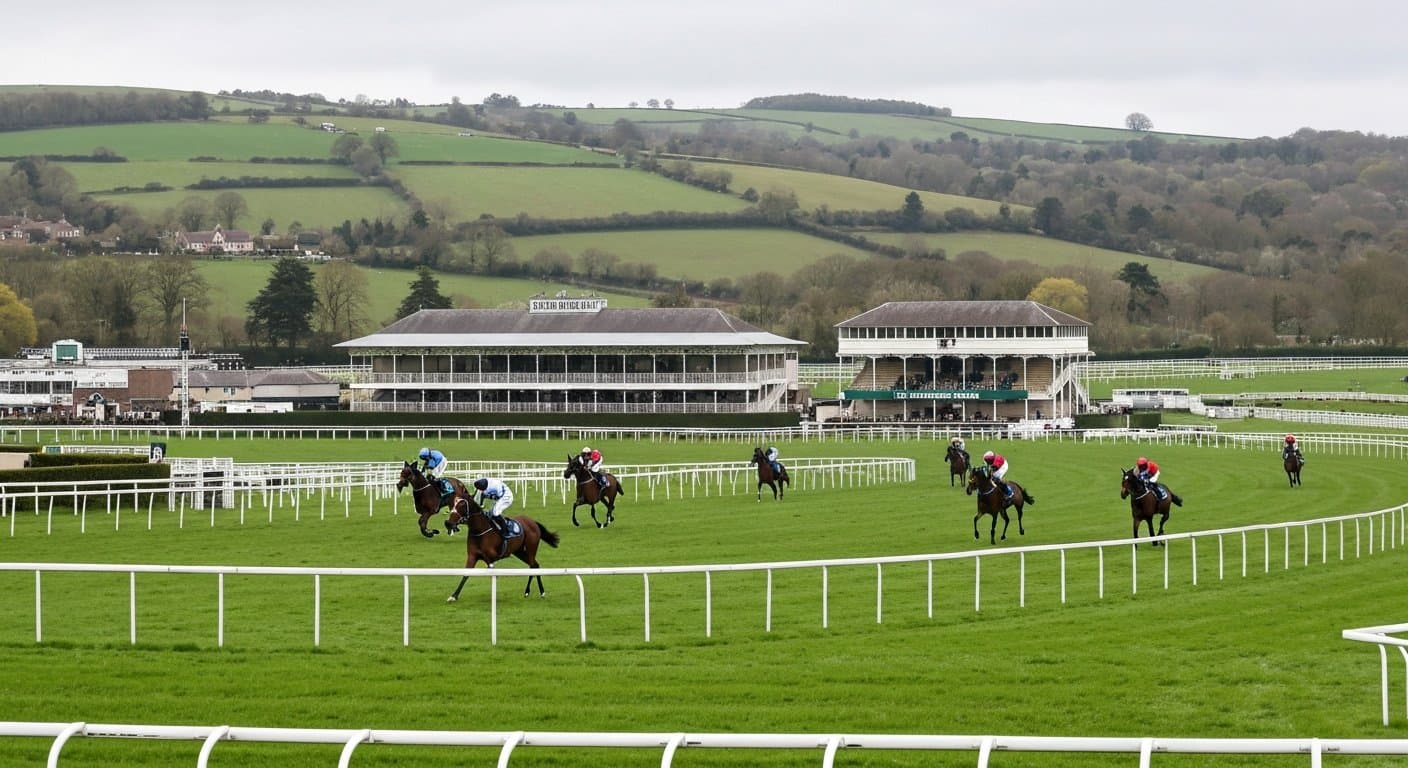
Wincanton Racecourse: Complete Guide
Your complete guide to Wincanton Racecourse — a popular National Hunt venue in Somerset.
Read more
A Day Out at Wincanton Racecourse
Everything you need for a day at Wincanton — getting there, what to wear, enclosures, food and drink, and tips.
Read moreWincanton Festival Guide
Your complete guide to Wincanton Racecourse festivals — the Elite Hurdle, the Jim Ford Gold Cup and what makes this Somerset track one of the south-west's best jump venues.
Read moreResearch the field with the AI Race Predictor
Our model publishes calibrated win-probability estimates for UK races — a second opinion to understand a race, not tips. It's open about its record: it doesn't beat the market, and we show exactly how it does.
Work it out & learn the basics
Gamble Responsibly
Gambling should be entertaining and not seen as a way to make money. Never bet more than you can afford to lose. If you or someone you know has a gambling problem, help and support is available.