
Founder & Editor · Last reviewed 2026-04-05
On a grey February afternoon, with the Somerset hills rolling away in every direction and the smell of wet turf hanging in the air, Wincanton Racecourse stages one of the most important trials in the National Hunt calendar. The Kingwell Hurdle — a Grade 2 contest run over two miles — draws the best hurdlers still standing in late winter. Cheltenham is five weeks away. Connections are counting down. The horses that line up on Kingwell day are being pointed at the Champion Hurdle, and what happens at Wincanton matters.
That mid-February appointment has given the course its national standing. Without the Kingwell, Wincanton would be a well-regarded regional venue. With it, the course earns a page in the Racing Post's Cheltenham preview, a broadcast slot on Racing TV, and the attention of handlers preparing horses worth hundreds of thousands of pounds. The Kingwell's Grade 2 status means the race counts for world rankings and, more practically, for the Champion Hurdle market. A performance here can shift prices at Cheltenham overnight.
The course itself is suited to delivering that kind of test. The circuit is right-handed, roughly square, and measures approximately one mile and two furlongs around. Four corners — relatively sharp by the standards of an out-and-out galloping track — break up the run and demand a horse that is both balanced and adaptable. The terrain undulates. There is a testing uphill finish that punishes horses not running on all cylinders. Thorough stayers, accurate jumpers, and horses with real resolution tend to do well here. The track has a way of sorting out the real article from the merely flashy.
The countryside setting reinforces the character of the racing. Wincanton is a market town of roughly six thousand people, set in the southern corner of Somerset close to the Dorset border. The town sits on the old coaching road between London and Exeter — the A303 cuts through the area — and that position on a historic route helped it grow into a modest but functional service centre for the agricultural community around it. The land here is dairy-farming country. Herds graze on fields that stay green well into autumn. The sight lines from the grandstand take in open pasture, hedgerow, and distant hills.
Four miles from the racecourse, in the village of Ditcheat, stands Manor Farm Stables. That is the base of Paul Nicholls, who has been the leading National Hunt trainer in Britain for the better part of three decades. Nicholls moved to Ditcheat in 1991 and has been training there ever since. The proximity of the most successful NH yard in the country to Wincanton Racecourse is not incidental — it shapes the course's programme, its fields, and its reputation. Young horses from Manor Farm learn their trade here. Established stars warm up for bigger targets at Wincanton. The course is, in the most literal sense, Nicholls's local track.
The November Badger Beer Chase adds another dimension. Run over three miles, the race attracts staying chasers building their seasonal campaigns in the autumn. It is named after the Badger Ales brand from Hall and Woodhouse brewery, based in Blandford Forum in Dorset, a few miles to the south. The sponsorship reflects the deep West Country roots of the course's commercial life. Wincanton draws its identity from the landscape and the industry around it — the farms, the small breweries, the rural economy that has kept this corner of Somerset going for centuries.
This is a course with a clear sense of where it sits in the sport. It is not Cheltenham. It is not Aintree. It does not pretend to be. But its Grade 2 February fixture, its testing right-handed circuit, and the permanent presence of one of the sport's great training operations just down the road give Wincanton a character that few courses at its scale can match.
Origins & Foundation
Origins and Foundation
Racing in the Wincanton area did not begin in 1927. The county of Somerset had a tradition of point-to-point and informal horse racing long before a permanent fixture was established. Local landowners and farmers ran horses across their own ground. Meetings were held at various venues across the county during the nineteenth and early twentieth centuries, each dependent on private patronage and local enthusiasm, lacking the permanent infrastructure that a proper racecourse requires. Taunton had racing well before the modern course was laid out. But there was no venue in the south and east of Somerset that offered a proper enclosed circuit with stands, facilities, and a published programme.
The gap that Wincanton filled in 1927 was a specific one: a National Hunt venue serving the agricultural heartland of southern Somerset and northern Dorset, within reach of Bristol, Bath, Salisbury and the coastal towns of Dorset and Devon. The organisers chose the site carefully. The land on the edge of Wincanton town had the drainage, the gradient, and the space needed for a right-handed circuit of roughly a mile and a quarter. It was farmland — undulating, well-grassed, with the kind of firm-going-to-soft profile that suits jumps horses through the autumn and winter months. The decision to build the track on a natural rise gave the home straight its distinctive character: a real uphill climb to the line that tests a horse's stamina in the final furlong.
The Somerset context is important. The county in the 1920s was overwhelmingly agricultural. Dairy farming dominated the lower ground around the Levels — the great flat wetlands north and west of Wincanton, drained by the rivers Brue and Parrett, where Somerset's famous Cheddar cheese and its associated dairy industry had their roots. Market towns like Shepton Mallet, twelve miles to the north, served as trading centres for farmers across a wide area. Bruton, six miles to the north-west, and Frome, fourteen miles to the north, completed the ring of small towns that gave this corner of Somerset its economic pulse. These were communities that understood horses as working animals before they were sporting ones. Racing was a natural extension of an agricultural way of life.
The railway connection that made the course viable was at Castle Cary, a small town approximately ten miles to the north-east of Wincanton. Castle Cary station sits on the Great Western Railway main line between London Paddington and Taunton — now the route of Great Western Railway's intercity service — and offered direct access from London in under two hours. Racegoers from the capital and from the Home Counties could reach Wincanton on meeting days without needing to travel for hours. The GWR connection was not merely useful; it was the commercial artery that made the course's early viability possible. Trains could carry large numbers of passengers on race days in a way that the roads of the 1920s could not reliably sustain. Castle Cary remains the most practical rail option for visitors today, with journey times to London Paddington of approximately ninety minutes.
The landscape around Wincanton carries layers of history that are older than the county, let alone the racecourse. Glastonbury lies roughly eight miles to the west of the town. The Glastonbury Tor — a hill crowned by the medieval tower of St Michael's Church — is visible from much of the surrounding flat ground. The abbey at its foot was founded in 705 AD and dissolved by Henry VIII in 1539, its ruins still standing in the town centre. Glastonbury is traditionally identified as the Isle of Avalon, the mythical island of Arthurian legend. The connection is partly geographical: in centuries past, the Somerset Levels flooded so extensively that Glastonbury stood effectively on an island, accessible only by boat across the marshes.
Four miles north of Wincanton stands Cadbury Castle. The name suggests a Norman fortification, but the reality is far older. Cadbury is an Iron Age hillfort of considerable size, its multiple concentric ramparts enclosing a summit plateau of roughly eighteen acres. The fort was occupied and enlarged in the late Iron Age, and archaeological excavations in the 1960s, led by Leslie Alcock, found evidence of significant post-Roman occupation in the fifth and sixth centuries AD — precisely the period when an historical figure underlying the Arthurian legend might have lived. The site is widely — though not universally — identified with Camelot. Whether the identification is warranted or not, Cadbury Castle is a striking landmark that the new racecourse opened in 1927 would have looked out upon from its position on the southern edge of town.
The early race programme at Wincanton was modest. Meetings in the 1927 season were limited, the infrastructure basic, and the crowds small. The sport of National Hunt racing was still defining itself in the late 1920s. Cheltenham had held its Festival since 1911, but the broader jump racing calendar was thinner than it would later become. Wincanton established itself by running competitive maiden and novice hurdles and chases, attracting trainers from Somerset, Dorset, and further afield who wanted a venue suited to horses still developing their craft. The right-handed, undulating circuit was honest and demanding without being eccentric.
Through the 1930s, the course built its fixture list and attracted a widening circle of trainers and owners. The fences — built from birch and gorse to the specifications of the day — gained a reputation for testing horses fairly. Horses that jumped accurately at Wincanton tended to jump accurately elsewhere. The pre-war decade saw Wincanton find its footing as a dependable fixture in the southern National Hunt calendar, serving the farming community that had funded and supported its creation, and drawing racegoers from across the region who took the train from Castle Cary or drove the improving road network that connected the market towns.
The Second World War interrupted racing at Wincanton, as it did at most courses across Britain. A number of racecourses were requisitioned for military use between 1939 and 1945. Wincanton's racing programme was curtailed, though the course itself survived intact. When racing resumed in the post-war years, the course picked up where it had left off — a modest, honest venue with a good track, a solid local following, and the infrastructure in place to grow into something more significant once the sport and the country recovered their confidence.
The Golden Era
The Golden Era
The post-war decades reshaped National Hunt racing in Britain. Prize money grew. Television brought the sport to a national audience. Cheltenham's Festival expanded and became a cultural event in its own right. Courses that could offer competitive fields and quality fixtures found themselves with audiences, sponsorship, and the attention of the sport's leading trainers and owners. For Wincanton, the question was how to carve out a distinct identity within this expanding scene.
The answer, ultimately, was the Kingwell Hurdle. First run in 1971, the race was designed with a clear purpose: to serve as a Champion Hurdle trial in the final weeks before the Cheltenham Festival. The timing — February, five weeks before the Festival opens — was deliberate. Trainers targeting the Champion Hurdle needed a serious race at that stage of the season. They wanted a test at the right distance, over quality hurdles, against good horses. The Kingwell provided exactly that. Run over two miles, it offered the same trip as the Champion Hurdle itself, and its February date made it one of the last significant opportunities to run a horse competitively before Cheltenham without risking it in the handicap.
The race achieved Grade 2 status as the sport's handicapping and classification system developed through the 1980s and into the 1990s. That designation placed the Kingwell among the more important non-Festival hurdling contests in the calendar. A Grade 2 win carries rating points that count for world rankings and, more practically, earns the horse the kind of recognition that improves its profile with owners and bettors alike. For Wincanton, the Kingwell's Grade 2 status transformed the February fixture from a regional highlight into a national date.
The race's role as a Champion Hurdle trial became demonstrable through its results. Desert Orchid won the Kingwell in 1984 — at that stage still a hurdler, not yet the chasing legend he would become. Kribensis won the Kingwell in 1990 and then won the Champion Hurdle at the Festival the same season, trained by Michael Stoute and ridden by Richard Dunwoody. Binocular, trained by Nicky Henderson, took the Kingwell in 2010 and followed up with the Champion Hurdle, ridden by AP McCoy. Zarkandar, another Henderson-trained hurdler, won the Kingwell in 2012. The pattern became a feature of the race's reputation: horses that ran well at Wincanton in February often ran well at Cheltenham in March. The correlation was not guaranteed, but it was frequent enough to make the form of the Kingwell a serious pointer for Cheltenham preparation.
The Badger Beer Chase offered a different kind of quality. Sponsored by Hall and Woodhouse, the Dorset-based brewery whose Badger Ales brand has deep roots in the West Country, the race is run over three miles in November. It targets staying chasers building their campaigns early in the season, before the Grade 1 events at Kempton, Sandown, and Cheltenham monopolise the field. The Badger Beer day established itself as one of Wincanton's best autumn fixtures — the staying chase offering a quality test, and the supporting card providing competitive sport across a range of distances and classes. The brewery's sponsorship gave the race a distinct local identity that no amount of generic corporate backing could replicate.
Paul Nicholls arrived at Ditcheat in 1991. He had previously trained near Shepton Mallet, and his move to Manor Farm Stables brought him four miles from Wincanton's front gate. The proximity was commercially convenient, but the impact on the course went well beyond simple logistics. Nicholls built one of the most successful National Hunt training operations ever seen in Britain. From the mid-1990s onwards, he won the trainers' championship repeatedly. Between 2005 and 2015, he dominated the championship, winning it in eight of those ten seasons. Kauto Star, Denman, Big Buck's, Neptune Collonges, Sprinter Sacre — the list of horses that passed through Ditcheat during those years represents as complete a concentration of jumping talent as any yard in the sport's history.
Wincanton was where many of those horses made their early appearances or ran their prep races. The course gave Nicholls a local venue that combined useful flat ground, a testing circuit, and reliable going for much of the season. He could send horses here without the logistics of a longer journey, assess their well-being without the pressure of a major race, and school young horses over the course's straightforward fences. The junior horses from Ditcheat learned their trade at Wincanton. The established stars came back for specific targets.
Philip Hobbs, training from Minehead on the Somerset coast roughly forty miles west of Wincanton, was another significant presence in the regional jumps scene during the same period. Hobbs ran quality horses at Wincanton across a range of classes, adding competitive depth to the course's cards throughout the 1990s and 2000s. Martin Pipe, who trained at Nicholashayne in Devon before his retirement in 2006, was a force across all West Country venues including Wincanton in the earlier part of this era. The concentration of serious National Hunt operations within an hour's drive of Wincanton gave the course a supply of quality runners that few venues outside the principal graded tracks could match.
By the time Nicholls had established his dominance of the sport, Wincanton's identity was set. The Kingwell Hurdle gave it a February centrepiece of national importance. The Badger Beer Chase gave it a distinctive autumn fixture. The Ditcheat connection gave it a year-round relevance. And the course itself — right-handed, square, undulating, with that demanding uphill finish — gave it a reputation as a fair test that sorted horses out honestly. What had begun as a modest regional venue in 1927 had grown, by the late 1990s, into a course with a clear purpose and a recognisable place in the National Hunt landscape.
Famous Races & Moments
Famous Races and Moments
Kribensis and the 1990 Kingwell
The most direct line between the Kingwell Hurdle and Champion Hurdle glory runs through Kribensis. Trained by Michael Stoute — better known for his Flat work at Newmarket but a capable trainer of jumpers when the occasion arose — Kribensis won the Kingwell Hurdle at Wincanton in February 1990 with Richard Dunwoody in the saddle. He was already marked as a serious Champion Hurdle contender; the Wincanton performance confirmed it. Six weeks later, Kribensis and Dunwoody won the Champion Hurdle at Cheltenham. The Kingwell had done its job as a trial. For Wincanton, it was the first clear proof that its Grade 2 February fixture could produce a Cheltenham winner.
Binocular repeated the feat twenty years later. Trained by Nicky Henderson at Seven Barrows in Lambourn and ridden by AP McCoy, Binocular won the Kingwell Hurdle in February 2010. His preparation had been interrupted earlier in the season, but the Wincanton run re-established his form credentials before Cheltenham. He won the Champion Hurdle the following month. Two Champion Hurdle winners making the Kingwell their final prep race — the pattern was not coincidental. Both horses needed the run, both handled the Wincanton track well, and both arrived at Cheltenham with clear evidence in their form lines.
Zarkandar added to the race's roll of honour when the Henderson-trained hurdler won the Kingwell in 2012. Zarkandar did not go on to win at Cheltenham that year, but his form was competitive at the Festival and his Wincanton win was further evidence of the race's ability to attract elite hurdlers.
Desert Orchid at Wincanton
Desert Orchid ran at Wincanton five times during his career and won on four occasions — his only defeat coming in the race now named in his honour. His first appearance at the course came in February 1984, when he won the Kingwell Hurdle as a novice hurdler trained by David Elsworth and ridden by Colin Brown. That win was already a signal of an extraordinary horse: bold in front, accurate at his hurdles, and relentless in his racing. The course's right-handed configuration suited him. Desert Orchid's preference for jumping to his right was well-documented; a right-handed track aligned with his natural tendency and allowed him to express his jumping style without correction.
He returned to Wincanton as a chaser in subsequent seasons, adding wins over fences and cementing the bond between horse and course. When Desert Orchid died in 2006 at the age of twenty-seven, Wincanton was among the courses that honoured him most publicly. The Desert Orchid Chase, a two-mile race over fences, had been named in his memory while he was still alive, and it continues to run in December each year. The race attracts two-mile chasers building their season — horses pointed at the Tingle Creek Chase at Sandown or the Queen Mother Champion Chase at Cheltenham. Desert Orchid's name on the card each December gives Wincanton a moment of historical reflection in the middle of the autumn programme.
Paul Nicholls and Kauto Star
Kauto Star arrived at Paul Nicholls's Ditcheat yard as a young French import in 2004. Within three years, he was the best steeplechaser in Britain — possibly in the world. He won the Cheltenham Gold Cup in 2007 and again in 2009, making him the only horse in the race's history to regain the Gold Cup after losing it. He won the King George VI Chase at Kempton on five occasions between 2006 and 2011. He was, by most assessments, the horse of his generation.
Wincanton was part of the landscape in which Kauto Star developed. The course's proximity to Ditcheat meant it featured in his career at various stages, and the local crowd treated him with the kind of proprietary pride that surrounds a great horse trained nearby. Nicholls regularly used Wincanton to prepare and debut horses from his yard, and Kauto Star's stable companions frequently raced here on their way to bigger targets. The Ditcheat–Wincanton corridor became one of the defining geographical relationships in early twenty-first century National Hunt racing.
Ruby Walsh at Wincanton
Ruby Walsh, Nicholls's principal jockey during the peak years at Ditcheat, was among the most successful riders at Wincanton across the 2000s and early 2010s. Walsh rode a strike rate at Nicholls's local venue that reflected both the quality of horses and his own excellence. He won the Kingwell Hurdle at Wincanton multiple times, partnering horses that Nicholls had prepared with Cheltenham in mind. Walsh's association with the Ditcheat stable brought Wincanton a level of riding talent rarely seen at courses outside the principal graded venues.
Sam Twiston-Davies, who later became Nicholls's retained jockey, has continued that tradition. Twiston-Davies rides frequently at Wincanton on Nicholls horses, and his record at the course reflects the ongoing dominance of the Ditcheat yard. Noel Fehily, who retired in 2019, was another significant presence at Wincanton in the middle part of his career — a jockey who rode for various stables across the South West and earned big-race wins at the course's better fixtures.
The November Badger Beer Chase
The Badger Beer Chase has produced its share of memorable fields over the years. As an autumn staying chase, it attracts horses at different stages of their seasonal campaigns — some building fitness, others already sharp and looking for a confidence-boosting win before the winter Grade 1 races. The race has been won by horses that went on to Cheltenham Gold Cup contention, as well as by specialist three-mile chasers who found Wincanton's undulating circuit a good fit for their running style.
The three miles of the Badger Beer Chase tests the full range of a horse's attributes: jumping accuracy through the open country, pace around the relatively sharp corners of the square circuit, and stamina on the uphill finish. Horses that win it convincingly tend to be real three-mile performers — not merely speedy two-milers stretched beyond their optimum distance, but true stayers with the scope to compete in Grade 1 company on the better ground of December and January.
A Course that Rewards Accuracy
The fences at Wincanton have been noted by riders and trainers over many decades. The obstacles are built to specification but ride on the bigger side, and the configuration of the back straight means horses must settle into a rhythm through the country before meeting the three obstacles in the home straight in quick succession. A horse that stands off and jumps boldly earns clear air and momentum. A horse that fiddles and wastes time at its fences finds the uphill run to the line a harder proposition than the distance suggests. The jockeys who have won the Kingwell Hurdle and the Badger Beer Chase most frequently are those who understand how to manage the approach to the home straight and extract full effort from the final climb.
That testing quality is part of what makes Wincanton's form reliable as a guide to Cheltenham performance. Horses are asked a proper question here. The answers the course provides tend to be honest ones.
The Modern Era
The Modern Era
Wincanton became part of the Jockey Club Racecourses portfolio during the late twentieth century, joining a group of venues that includes Cheltenham, Aintree, Sandown Park, Kempton, Epsom, and Newmarket. The acquisition brought structural stability. Jockey Club Racecourses is the largest racecourse operator in Britain by number of venues, and its scale allows it to negotiate broadcast rights, prize money contributions, and sponsorship deals that individual course owners operating alone could not achieve. For Wincanton, membership of the group meant access to capital investment, marketing reach, and the assurance that the course's long-term future would not depend on the enthusiasm or finances of a single private owner.
The investment showed in the facilities. The grandstand and enclosures at Wincanton have been updated progressively over the years. The course stages approximately sixteen to eighteen fixture days per season, running from October through to May — a schedule that covers the full arc of the National Hunt season from early autumn novice meetings to the final spring cards in late April and early May. All racing at Wincanton is National Hunt. There is no Flat racing here. The course has no ambiguity about its identity: it is a jumps course, full stop.
The Kingwell Hurdle card in February represents the annual centrepiece. On Kingwell day, the race card typically supports the Grade 2 with a series of handicap hurdles and chases that attract competitive fields from trainers across the South West and further afield. Prize money on Kingwell day is considerably higher than on standard Wincanton fixture days, and the card receives broadcast coverage on Racing TV with commentary and analysis from Racing Post journalists. The February fixture draws real crowds — not always to capacity, but sufficient to create an atmosphere. Wincanton's capacity is around six thousand, a modest figure by the standards of the sport's bigger venues but well-suited to the scale of the town and the catchment area.
Paul Nicholls's strike rate at Wincanton is, by consistent measurement over many seasons, among the highest of any trainer at any course in Britain. The numbers reflect the simple advantage of proximity: Manor Farm Stables in Ditcheat is four miles from the front gate, and Nicholls can send horses to Wincanton with the minimum of logistical disruption. Young horses make their first starts here. Established horses run here as a controlled preparation for bigger races. Horses returning from injury or an extended break come here to find their feet before being asked to perform at a higher level. The result is that on almost any Wincanton fixture day, Nicholls has runners — often multiple runners — and a high proportion of those runners win.
Sam Twiston-Davies, who has been Nicholls's first-call jockey since the mid-2010s, rides frequently at Wincanton. His familiarity with the track — built over many seasons of riding Ditcheat horses — means he navigates the square circuit and the uphill finish with the kind of confidence that comes from repetition. His Wincanton record reflects both his ability and the quality of horses he partners. When Twiston-Davies takes a ride for Nicholls at Wincanton, the market takes notice.
The West Country National Hunt ecosystem in which Wincanton operates is defined by four principal courses. Wincanton covers southern Somerset and the adjacent parts of Dorset and Wiltshire. Exeter Racecourse, on the edge of the city in Devon, serves the South West peninsula. Taunton Racecourse, in the county town of Somerset, provides fixtures through the winter and spring. Newton Abbot, in South Devon, covers the summer jumping season. Together, the four courses give the region year-round National Hunt coverage across different types of ground and different styles of circuit. They do not directly compete with each other — their fixture schedules are constructed to complement rather than clash — and they share a supply of horses from the region's training operations that few other parts of the country can match in terms of volume and quality.
Wincanton's position within this group is defined by the Kingwell. It is the only one of the four West Country NH venues with a Grade 2 fixture in its programme. That distinction elevates Wincanton above pure grassroots status. The other three courses serve important functions in the development of jumps horses and the maintenance of year-round racing in the region; Wincanton does that too, but its February card also draws the sort of high-class hurdlers that will run at the Cheltenham Festival within weeks. The combination of regional service and national relevance is what makes the course's modern programme coherent.
The course website and social media presence are managed by Jockey Club Racecourses, which markets Wincanton as a family-friendly venue with the emphasis on its Somerset identity and its food and drink offer. The Badger Ales sponsorship of the November chase fits naturally into that brand. The course is promoted as an accessible, atmospheric day out in a beautiful rural setting — which it truly is, regardless of the quality of the racing on any given card. The six-thousand-capacity venue is small enough to feel personal without being so small as to feel peripheral.
The modern era at Wincanton is defined, then, by three things in combination: the Jockey Club's structural support, Nicholls's permanent proximity and dominance, and the Kingwell's Grade 2 status. Together, they have given a course of modest size and capacity a position in the National Hunt landscape that a raw assessment of its scale would not predict.
Wincanton's Legacy
Wincanton's Legacy
Nearly a century after the first meeting was held on this Somerset hillside, Wincanton Racecourse carries a set of associations that are clearer and more specific than most courses of its scale can claim. It is the home of the Kingwell Hurdle, a Grade 2 trial that has produced two Champion Hurdle winners in the same season — Kribensis in 1990 and Binocular in 2010 — and that functions as one of the last serious tests for Champion Hurdle horses before Cheltenham's Festival gates open in March. It is the local track of Paul Nicholls, whose Manor Farm Stables in Ditcheat, four miles away, have supplied a stream of winners at the course for over three decades. And it is a Somerset course — right-handed, undulating, honest in what it asks of horses — that draws its identity from the agricultural landscape that surrounds it.
The Kingwell Hurdle's contribution to Wincanton's standing cannot be separated from the course's broader reputation. A Grade 2 fixture in late February gives the course a place in the Cheltenham preparation narrative each spring. Racing journalists reference Wincanton form. Trainers from Lambourn, Newmarket, and further north make the journey when they have a serious hurdler to prepare. The race's prize money and status attract horses that would not otherwise run at a course of this size. Every February, for one afternoon, Wincanton occupies a position in the National Hunt story that is out of proportion with its capacity.
Paul Nicholls's dominance of the course is a legacy in itself. The statistics accumulated over his years at Ditcheat — winners trained, horses debuted, stars prepared — represent a unique relationship between a training operation and its nearest racecourse. Wincanton has benefited from that relationship in terms of quality of racing, field sizes, and the media attention that follows the sport's most successful trainer wherever he operates. The course, in turn, has provided Nicholls with a facility that suits his horses and his training methods. The arrangement has worked for both parties.
The Somerset character of the course remains intact. The town of Wincanton has not grown dramatically since the course was founded. The surrounding farms still dairy. The hedgerows and rolling hills that frame the racecourse have not been built over. On a winter race day, the view from the grandstand is still essentially the view that the first racegoers saw in 1927 — open country, low hills, and the kind of sky that comes with a West Country winter. That continuity is not nothing. Many courses have been surrounded by development or absorbed into suburban sprawl. Wincanton has kept its rural context.
The course's capacity of approximately six thousand means that most meetings feel appropriately scaled. The crowd on Kingwell day fills the enclosures without overwhelming the facilities. On quieter fixture days through the autumn and spring, the attendance is smaller but still engaged. Wincanton is not a course where the crowd noise matters more than the racing. It is a course where people come to watch horses being asked proper questions, and where the answers tend to be honest.
For National Hunt racing in the South West, Wincanton sits at the upper end of the regional hierarchy. Its Grade 2 fixture, its Jockey Club ownership, and its proximity to one of the sport's greatest training operations give it a status that the bare facts of its size and capacity do not fully explain. That gap between scale and standing is Wincanton's defining characteristic — and it is what keeps the course in the conversation each February when the Cheltenham preparation begins in earnest.
Frequently Asked Questions
When was Wincanton Racecourse founded? Wincanton Racecourse held its first meeting in 1927 on the current site on the edge of the town. The course has run National Hunt racing continuously since then, apart from the wartime interruption between 1939 and 1945. In 2027, the course will mark one hundred years of racing on the present circuit.
What is the Kingwell Hurdle? The Kingwell Hurdle is a Grade 2 hurdle race run over two miles in February. It is one of the most important Champion Hurdle trials in the National Hunt calendar, falling approximately five weeks before the Cheltenham Festival. Past winners include Kribensis (1990) and Binocular (2010), both of whom went on to win the Champion Hurdle at Cheltenham in the same season. The race attracts high-class hurdlers from across Britain and Ireland.
Who owns Wincanton Racecourse? Wincanton Racecourse is owned and operated by Jockey Club Racecourses, the largest racecourse operator in Great Britain. The Jockey Club portfolio includes Cheltenham, Aintree, Sandown Park, Kempton Park, Epsom Downs, Newmarket, and a number of other courses. The Jockey Club is a not-for-profit organisation; any surplus generated by Jockey Club Racecourses is reinvested into British racing.
How do I get to Wincanton Racecourse? The nearest mainline railway station is Castle Cary, approximately ten miles to the north-east of the course. Castle Cary sits on the Great Western Railway main line between London Paddington and Taunton, with direct services to London Paddington taking approximately ninety minutes. Shuttle buses run from Castle Cary to the racecourse on race days. By road, the course is accessible via the A303, which passes close to Wincanton, and the postcode for sat-nav navigation is BA9 8BJ.
What is the track like at Wincanton? Wincanton is a right-handed course with a roughly square circuit measuring approximately one mile and two furlongs around. The terrain is undulating, with a testing uphill finish in the home straight. The square layout means four relatively sharp corners, which suits balanced horses over those that need a long, sweeping run to build momentum. The fences are well-built and jump true. The course is generally considered a fair, honest test that rewards thorough stayers and accurate jumpers.
Which trainer has the best record at Wincanton? Paul Nicholls has the best record at Wincanton of any trainer in the modern era, and arguably in the course's history. His Manor Farm Stables at Ditcheat are four miles from the racecourse, making Wincanton his nearest track. Nicholls uses the course to debut young horses, prepare established stars, and bring horses back to form after a break. His strike rate at Wincanton across multiple seasons is consistently among the highest of any trainer at any course in Britain. Sam Twiston-Davies, as his retained jockey, has built a corresponding record as the most successful rider at the course in recent years.
Share this article
More about this racecourse
All Wincanton guides
Desert Orchid at Wincanton
The story of Desert Orchid's love affair with Wincanton — where the grey legend won five times and captured hearts.
Read more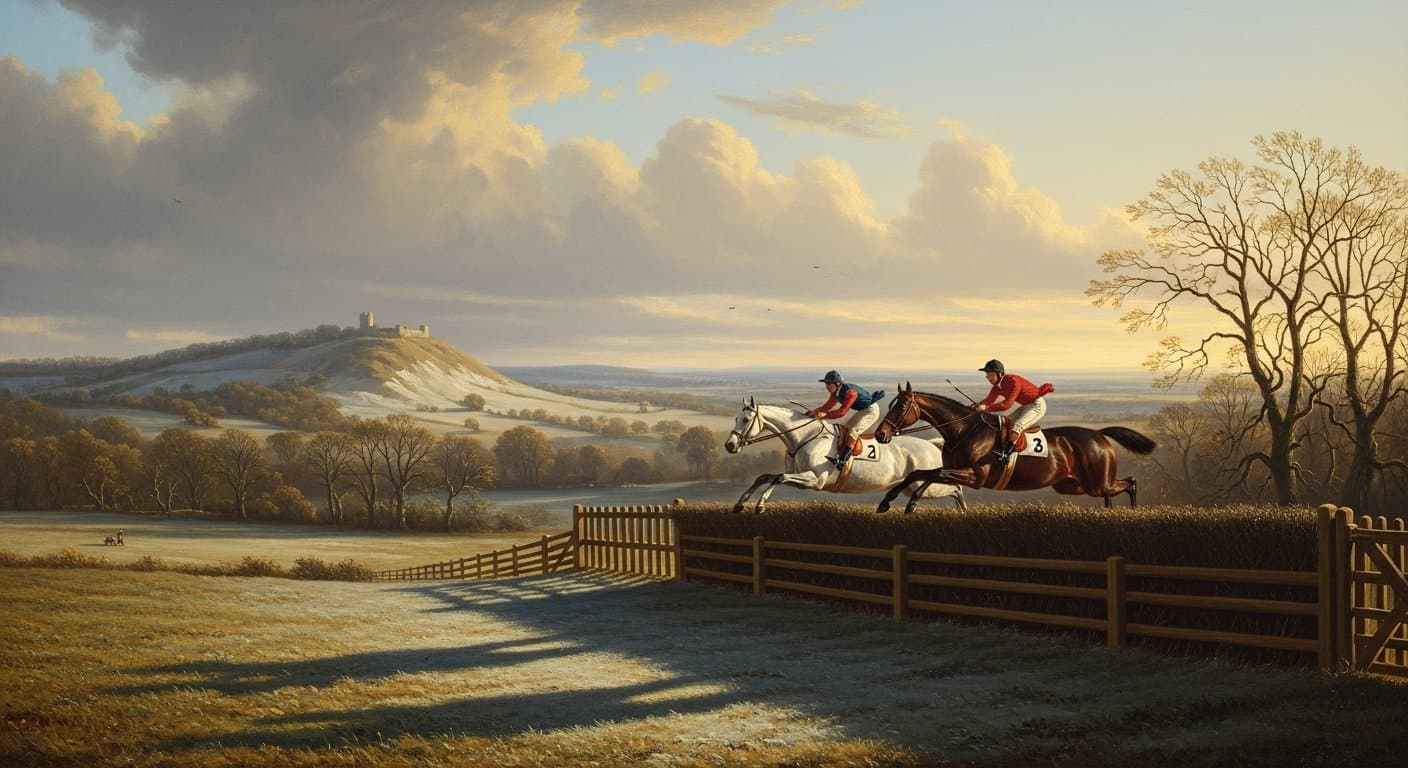
Elite Hurdle Day at Wincanton: The Complete Guide
The complete guide to Elite Hurdle Day at Wincanton — the Elite Hurdle Grade 2, the Jim Ford Gold Cup, and the biggest November jump racing day in the south-west of England.
Read more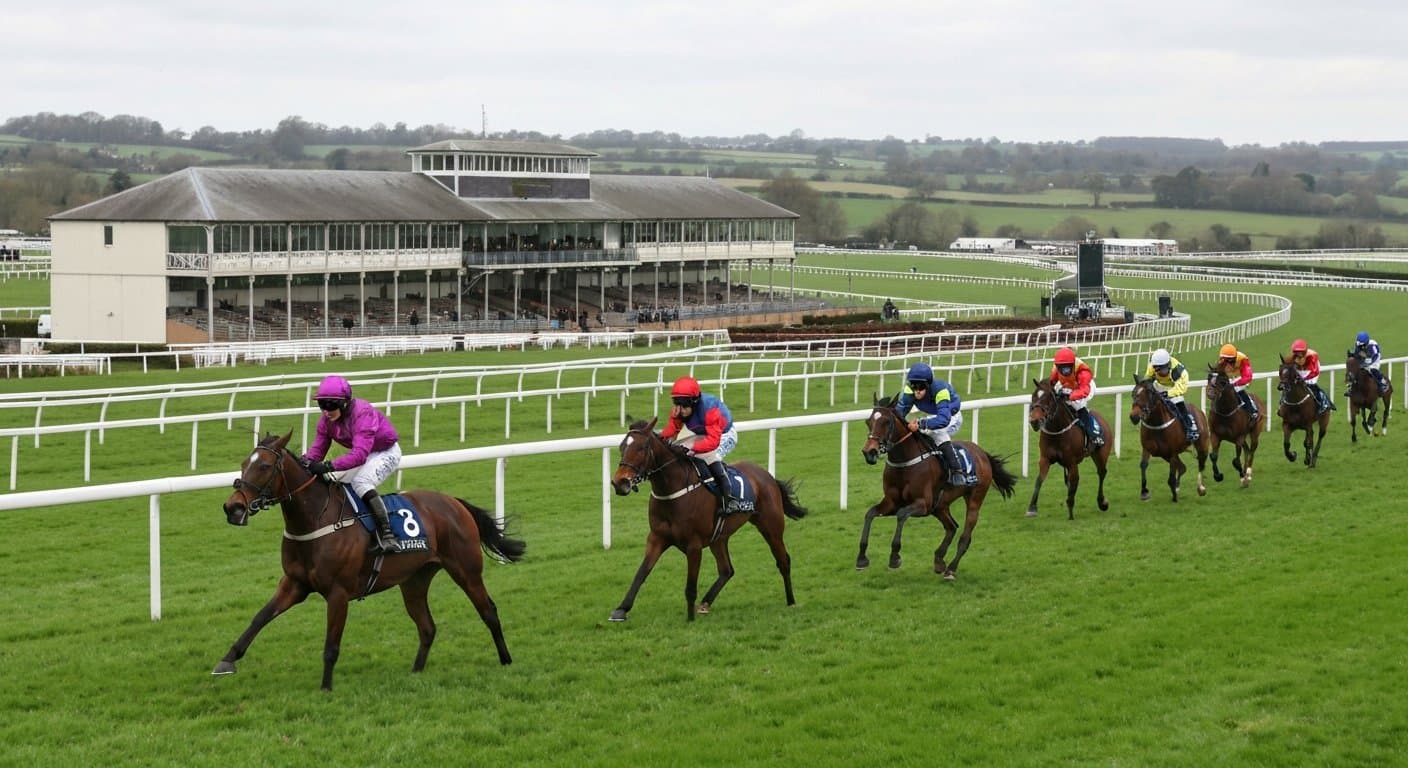
The Kingwell Hurdle at Wincanton: Complete Guide
Everything about the Kingwell Hurdle — Wincanton's premier Champion Hurdle trial.
Read moreGamble Responsibly
Gambling should be entertaining and not seen as a way to make money. Never bet more than you can afford to lose. If you or someone you know has a gambling problem, help and support is available.