
Founder & Editor · Last reviewed 2026-03-02
Wolverhampton is a punter's track. The Tapeta surface is consistent: it rides the same in January as in July. No heavy ground, no firm ground, no abandoned meetings. Form holds up. If you're prepared to do the homework, you can find value. The course runs more fixtures than almost any other in Britain, so there's plenty of data to work with. Draw biases, trainer patterns, surface-specific form and pace analysis all matter. This guide covers the angles that count.
The track is a tight, left-handed oval. It suits nippy types who can handle the bends. The five-furlong straight has its own characteristics: draw can matter, especially in sprints with large fields. The going is almost always Standard or similar on Tapeta, but that doesn't mean it plays identically every day. The surface can ride faster or slower depending on maintenance and weather. It's worth keeping an eye on the sectionals and race times across the card.
Wolverhampton rewards preparation. Because the course runs so frequently and the surface is so consistent, a proper database of course form, trainer stats, draw records and pace trends is truly valuable here in a way it simply isn't on turf, where going changes reset the picture every week. A punter who has built up a body of Wolverhampton-specific knowledge has a real edge over someone betting blind on the national market.
For a deeper look at Tapeta and how to read form on it, see our Tapeta racing guide. For the course layout and fixtures, the complete guide has you covered. This guide is all about betting: the track, the draw, trainer and jockey patterns, form crossovers, market dynamics and the strategies that work at Dunstall Park.
Bet on Wolverhampton
Place your bets on Wolverhampton races with a trusted bookmaker.

Promo code BETFRED50. New customers only. Register, deposit with a Debit Card, and place a first bet of £10+ at Evens (2.0)+ on Sports, to be settled within 7 days, to get £30 in Sports Free Bets and £20 in Bet Builder Free Bets within 24 hours of settlement. 7-day expiry. Eligibility & payment exclusions apply. Full T&Cs apply. Take Time to Think. BeGambleAware.org. 18+. Full T&Cs.

Promo code R30. New UK customers only, 18+. Register, deposit £10 or more, then place a £10 single cash bet at odds of 1/2 (1.5) or greater on any sports market (excluding Virtuals). Once the qualifying bet settles you get £30 in Free Bets (3 x £10) — the qualifying bet can win or lose. Free Bets are valid on any sports market excluding Virtuals, expire in 7 days, are non-withdrawable and must be used in full. Excluded deposit methods apply (including PayPal, Apple Pay, Skrill and NETELLER). Named bets such as Lucky 15 do not qualify. If you cash out the qualifying bet, or it is voided, you are no longer eligible for the offer. Ends 31.12.26. Full T&Cs apply. Please gamble responsibly. BeGambleAware.org. 18+. Full T&Cs.

Promo code BET40GET20. New UK customers, 18+. Register with the code and place a first bet of £40 or more at Evens (2.0) or greater. Receive 2 × £10 free bets: the first credited automatically once the qualifying bet settles, the second 24 hours later. Free bets must be placed at minimum odds of 4/1 (5.0), expire 24 hours after credit, and the free-bet stake is not returned with winnings. Debit card deposits only. Take Time to Think. BeGambleAware.org. 18+. T&Cs apply. Full T&Cs.

50% of your first-day net losses refunded as a free bet, capped at £25. New UK customers aged 18+ only. To qualify, deposit and place a first bet of £10 or more on any sport at minimum odds of evens (2.00), then place at least two further bets on different events, each worth at least 50% of your largest bet, all at evens (2.00) or greater. Losses are counted from your first settled bet until 23:59 the same day. Place a qualifying £10+ bet and you are guaranteed at least a £5 free bet. Bets placed at SP, void bets, cashed-out bets and bets struck with free bets do not count towards the offer. The free bet is credited the day after your qualifying bets settle and must be used within 7 days, after which it expires. It can be used at odds from 1/4 (1.25) up to 250/1 on singles and straight accumulators, but not on Trixie, Patent or Yankee style multiples. Free-bet stake is not returned with winnings. One offer per person, household, address, IP address and device. E-wallet deposits may not qualify, so check the cashier before depositing. Customers registered with GAMSTOP cannot claim. KYC identity verification must be completed before the free bet is credited. Take Time to Think. BeGambleAware.org. 18+. T&Cs apply. Full T&Cs.

New customers, 18+. Choose the sports bonus at sign-up, make a first deposit and receive a 100% bonus up to £50 in your Sports Bonus balance. To convert the bonus to cash, wager it 10x within 30 days. Single bets below Evens (2.00) do not qualify; accumulators do not qualify if any selection is below 1/2 (1.50). Virtual Sports, voided, cancelled, drawn, cashed-out and free-bet wagers do not count towards wagering. Only the first settled bet per event counts. Withdrawing before the wagering requirement is met forfeits the bonus balance including bonus winnings. Real-money funds are used before bonus funds. Deposits via Skrill or Neteller are not eligible. Not valid in conjunction with other promotions. Odds, bet and payment limits apply. 10bet general and promotion T&Cs apply. BeGambleAware.org. 18+. Full T&Cs.

New customers in Great Britain and Republic of Ireland, 18+. Place a £10 fixed-odds qualifying bet at minimum odds of 1/2 (1.50) — single or each-way (only the win part counts), pre-event or in-play, not cashed out early, within 28 days of opening the account. Receive up to £60 in bonuses credited over three days: 3 × £10 fixed-odds free bets (the first on settlement, then 24 and 48 hours later) plus 3 × £5 Total Goals FOOTBALL spread bets and 3 × £5 racing Winning Favourites spread bets, with a £1 racing Race Index spread bet as an extra on top. The spread bets need a full spread-betting account, opened within 28 days of the fixed-odds account and subject to Spreadex's eligibility and appropriateness checks. Free-bet stakes not returned with winnings; free bets valid 28 days from issue. IMPORTANT: the £5 credits are SPREAD bets — sports spread betting carries the risk that losses can exceed your stake. Sports spread-betting customers do not have Financial Ombudsman or FSCS recourse. Take Time to Think. BeGambleAware.org. 18+. T&Cs apply. Full T&Cs.

Promo code WELCOME15, entered under My Bonuses after registering. New UK customers, 18+. Place a first qualifying bet of at least £10 from your cash balance at odds of evens (2.0) or greater within 7 days of opening the account. Once the qualifying bet fully settles you receive £15 in free bets, credited as 3 x £5 tokens with set uses: one £5 accumulator free bet (minimum 4 legs, each leg at 2/5 or bigger), one £5 sports free bet (any market at evens or bigger) and one £5 Sub Cover free bet (selected football player markets at evens or bigger). Free-bet stakes are not returned with winnings. Free bets expire 7 days after they are credited. Void, cashed-out and partially cashed-out bets do not qualify. One offer per customer. Confirm the current terms on BetGoodwin's own welcome-offer page before claiming. Take Time to Think. BeGambleAware.org. 18+. T&Cs apply. Full T&Cs.

New UK customers, 18+. Minimum deposit £10. Place a £10 qualifying single on sports (excluding virtuals) at minimum odds of 1/2 (1.50), settled within 14 days. Deposit-method exclusions apply. Receive £30 in free bets (stake not returned), split £20 for sportsbook use (2 x £10) and £10 for Bet Builder only (2 x £5); Bet Builder does not cover horse racing. Free bets must be accepted within 7 days and expire 7 days after acceptance. No promo code required. Best Odds Guaranteed on UK & Irish racing, subject to having staked over £25 in the previous seven days. Operated by LiveScore Betting and Gaming (Gibraltar) Ltd, UKGC 56859. Confirm the current terms on LiveScore Bet's own promotions page before claiming. Take Time to Think. BeGambleAware.org. 18+. T&Cs apply. Full T&Cs.
18+. BeGambleAware.org
Track Characteristics
Wolverhampton is one of the sharper all-weather tracks in Britain. The oval circuit is roughly a mile and a quarter, with a five-furlong straight for sprints. The bends are fairly tight, especially coming into the finishing straight, so horses need to handle the turn. It's not a galloping track like Kempton or Lingfield. Speed, agility and tactical pace matter more than raw stamina.
The Oval Circuit
Races from seven furlongs up to a mile and a half use the full oval. The track is left-handed. Because the bends are tight, positional racing becomes important at distances below a mile. Horses that are slow to find their stride can get boxed in on the bend, particularly in larger fields. Similarly, horses drawn wide on the sprint starts need to expend energy crossing to the inner early or risk racing wide throughout.
Front-runners on the oval can sometimes steal a march if they get a soft lead and dictate the pace around the bends. The tight track design means a front-runner who controls the tempo and gets a clear run is harder to peg back than on a more galloping circuit. But the straight is long enough, around five furlongs, for closers to run them down when the pace is honest. The key question for every race is whether the leaders go too fast or too slow. A strong pace can set it up for hold-up horses; a slow crawl almost always advantages those who race handily and can quicken from the two-furlong pole.
The Five-Furlong Straight
Sprint races use the straight course, which runs along one side of the track and joins the oval circuit before the final bend. This is a truly separate course configuration, with its own starting stalls position and its own characteristics.
The five-furlong straight is essentially level with a very slight undulation. There is no pronounced camber. The surface is consistent. Horses that can quicken from the two-furlong pole, showing sharp acceleration off a sound pace, tend to do well. A horse that needs to be produced very late, relying on rivals to tire in front of it, is at a disadvantage on a surface that doesn't slow significantly in the closing stages.
The straight is also where draw bias is most pronounced. We cover this in detail in the going and draw section.
Tapeta and Consistency
The Tapeta surface is the key structural advantage for the analytical punter. It's consistent. No heavy. No firm. No "good to soft, soft in places." The going is almost always Standard or Standard to Slow or Standard to Fast, and even those variations are narrow. That means course form holds up. A horse that ran well at Wolverhampton last month in Standard conditions has a very direct comparison to a similar horse running in Standard conditions today.
The surface is wax-based, which means it retains some warmth in cold weather and drains quickly in wet conditions. Tapeta maintenance, regular harrowing and watering to maintain the correct texture, keeps the surface within its target range. When the going description moves to Standard to Slow, it typically means the surface is riding a bit sticky, which slightly disadvantages front-runners and can bring hold-up horses more into play. Standard to Fast means the surface is running quickly, which often helps leaders and handy types sustain their advantage to the line.
Track Shape and Race Distance Profiles
Understanding which types of horse suit different Wolverhampton distances helps you narrow the field:
5 furlongs (straight): Quick starters and horses with sharp acceleration. Low draw advantage (see below). Front-runners and handily-placed horses dominate.
5f 20y and 6 furlongs (includes a bend): Horses that handle the tight turn and can race handy. Still favours low draws but less decisively than the pure five-furlong sprint.
7 furlongs: A balanced distance on a sharp track. Front-runners do well, but the longer straight gives closers a chance. Drawn horses need to settle into the race efficiently.
1 mile (straight and bend configuration): The most popular distance. Horses need to settle well and travel comfortably. The tight bends punish horses that pull hard or need to be covered up.
1m 1f 104y and 1m 4f: Staying races where stamina and settling ability matter. The oval layout means the front-runner faces multiple bends: a leader needs to be truly strong through the corners to hold on.
Our Tapeta guide has more on the form analysis at different distances.
Going & Draw Bias
The "going" at Wolverhampton is a different concept to turf. Tapeta doesn't get heavy or firm. The surface is maintained to ride consistently, with official going descriptions that run along a narrow range. But the surface can ride faster or slower depending on how it's been harrowed, the ambient temperature and recent weather. Understanding the going description and what it signals about that day's race shapes, and whether the pace bias is likely to favour front-runners or closers, is a significant edge.
Draw Bias: Five Furlongs (Straight Course)
The five-furlong straight has a well-documented draw bias that experienced Wolverhampton bettors treat as a primary filter. Horses drawn in stalls 1 to 5 carry a significant advantage over those drawn in stalls 8 and above in competitive fields. The advantage is structural: low-drawn horses take the shortest route along the rail, whereas high-drawn horses must cover additional ground to reach an equivalent position, particularly in large fields where the middle of the track becomes congested.
Quantifying it: in fields of ten or more runners over five furlongs, horses drawn in stalls 1–5 win at a rate of approximately 15–20% above their expected share based on the number of runners. Stalls 10 and above consistently underperform their expected share in large competitive fields, particularly in handicaps where pace is honest and every length matters.
The bias is not absolute. A high-class horse drawn in stall 12 can and does overcome a wide draw when it's significantly better than the rest of the field. But in evenly-matched handicaps, which is what Wolverhampton mostly runs, the draw is often the difference between a clear run and being trapped wide from the gate. In those races, opposing short-priced horses drawn high deserves serious consideration.
The bias is less decisive in smaller fields (five runners or fewer), where the track width is sufficient for any horse to find its preferred running line. In bigger fields, the effect is more pronounced.
Draw Bias: Six Furlongs
The six-furlong course incorporates a bend, and the draw dynamics shift accordingly. A low draw still offers an advantage in larger fields, the same principle of shortest route applies, but the relative benefit is smaller than over the pure five-furlong straight. Horses drawn in stalls 1–4 can slot in rail-side on the bend and maintain that position through to the straight. Horses drawn wide need to either push forward early to get across or accept a wide position around the bend, which costs ground.
The six-furlong draw advantage is approximately half as strong as at five furlongs. It's a factor to note rather than a dominant filter. In large fields (12+), it's worth applying; in smaller fields, it matters much less.
Draw Bias: Seven Furlongs and Beyond
From seven furlongs upward, draw is much less of a deciding factor at Wolverhampton. The extra distance gives horses time to settle into their natural position regardless of stall number. A horse drawn wide over seven furlongs might use a couple of extra lengths in the first furlong finding its position, but if the pace is reasonable and the race develops normally, it can recover. In staying races over a mile or more, draw is largely neutral.
The exception is in very large fields (16 runners) over seven furlongs, where an outside draw can mean a horse is six or seven wide around the first bend. In those specific conditions, a horse that absolutely needs to be covered up and settled in a group is at a disadvantage drawn wide. But it's a minor consideration compared to the dramatic stall-position effects at five furlongs.
Pace Bias: The Sharp-Track Effect
Wolverhampton's tight layout creates a consistent pace bias that all serious bettors need to understand. This is a track where front-runners and horses that race in the first three or four dominate over hold-up horses to a degree that is well above the national average.
The mechanism is the bends. On a sharp, turning track, a horse that races wide off the pace must cover significantly more ground than a horse that races close to the pace and hugs the rail. The extra ground covered by hold-up horses going around the outside of bends adds up to real distances: sometimes the equivalent of two or three lengths. A hold-up horse that finishes strongly up the straight is often finishing just short because it ran further than the winner.
The implication for betting: treat hold-up horses as needing to be considerably better than the pace-making types to win at Wolverhampton. A horse described as "needing to be produced late" or "doing all its best work in the closing stages" is facing a structural disadvantage on this track. The same horse at Kempton, with its longer, more galloping circuit, might be ideally suited; at Wolverhampton, it needs a real pace collapse to win.
When the pace does collapse, when no horse wants to lead and the field dawdles, hold-up horses can win. But don't rely on it happening. Look at the race at a structural level: are there natural front-runners? Is the pace likely to be real? On most Wolverhampton cards, there are enough horses that want to race handily to ensure a sensible tempo.
AW Form Crossover: Where Form Transfers
Understanding which all-weather form transfers to Wolverhampton, and which doesn't, is important for reading the card.
Wolverhampton (Tapeta) to Newcastle (Tapeta): This is the most direct form crossover in British all-weather racing. Both courses run on Tapeta. Both are left-handed oval circuits under lights. Newcastle is slightly more galloping, with wider bends, but the surface behaviour is directly comparable. A horse with strong Tapeta form at Newcastle is a real contender at Wolverhampton, and vice versa. This is the most reliable surface-to-surface transfer in the sport.
Wolverhampton (Tapeta) to Kempton (Polytrack): Polytrack and Tapeta are different synthetic surfaces with different riding characteristics. Kempton's Polytrack is harder, faster and more bouncy underfoot than Tapeta. Form does not transfer reliably between these two courses. A horse that consistently runs well at Kempton may struggle to replicate that form at Wolverhampton, and vice versa. Treat Kempton and Wolverhampton form with caution when comparing directly. Also, Kempton is a more galloping circuit with wider bends, further reducing the cross-course relevance.
Wolverhampton (Tapeta) to Lingfield (Polytrack): Similar caveat to Kempton. Lingfield is also on Polytrack, and the surface characteristics differ meaningfully from Tapeta. Lingfield form is less directly comparable to Wolverhampton than Newcastle form.
Wolverhampton (Tapeta) to Chelmsford City (Polytrack): Chelmsford runs on Polytrack, so the surface transfer issue applies. However, Chelmsford's circuit is tighter than Kempton, which makes some pace and track-type comparisons more relevant. Still treat with caution.
Turf to Tapeta: Horses switching from turf to all-weather for the first time are unknown quantities on the surface. Some adapt immediately; others take a run or two. Look at the breeding and the trainer's record with first-time all-weather runners for context. Horses with some AW experience are significantly more reliable form guide than first-timers.
Going Description and What It Signals
- Standard: The target condition. The surface rides normally. Most of the course's form is produced on Standard, making it the most reliable basis for comparison.
- Standard to Fast: The surface is running quickly. Front-runners and handily-placed horses are favoured. Sectional times will be fast. Horses suited by a strong pace to quicken from may struggle.
- Standard to Slow: The surface is riding sticky. Hold-up horses get a slightly better chance as the pace can be more demanding. Still favours front-runners overall on this sharp track, but less decisively than Standard.
The going rarely deviates beyond this range. Any extreme going description at Wolverhampton should be treated as unusual and worth investigating in terms of maintenance history.
Key Trainers & Jockeys
Certain trainers target Wolverhampton systematically. They know the track, they understand the surface, and they send horses there with a clear purpose. The all-weather specialists, those who run a substantial proportion of their horses on Tapeta and Polytrack, often have strong strike rates at Dunstall Park that reward systematic tracking. It's worth knowing who's regularly targeting the course and who's having a productive spell.
Michael Appleby: The Wolverhampton Specialist
If one trainer defines Wolverhampton's all-weather era more than any other, it's Michael Appleby. His Rutland-based operation has built a business model squarely around the all-weather game, and Wolverhampton is central to it. Over multiple seasons, Appleby has maintained a strike rate at Dunstall Park of 15% or above, in some seasons considerably higher, which is well above the course average and sustained across large numbers of runners.
What makes Appleby's operation interesting to bet against is his consistency. He doesn't have a few good weeks at Wolverhampton and then go quiet. He sends horses there week in, week out, in all classes and over all distances, and he wins races regularly across the card. When he has a horse that looks well handicapped for a specific Wolverhampton race, it deserves to be taken seriously.
The other characteristic of Appleby's Wolverhampton runners is that they tend to be fit and ready to win. He's not using the course as a schooling ground for unexposed youngsters. His horses are typically well-versed in all-weather racing and know the game. The fitness levels are consistently high. When you see an Appleby runner at a short price at Wolverhampton, it usually reflects real ability and preparation rather than market manipulation.
Tony Carroll: Local Knowledge at Work
Tony Carroll, based in Worcestershire, has built a strong record at Wolverhampton through years of consistent targeting. A trainer with deep local knowledge and a clear strategy, Carroll identifies races that suit his horses' profiles and hits the course with purpose. His strike rate at Wolverhampton is consistently above average, and his runners tend to be well-placed handicap types rather than top-class prospects.
Carroll's strength is placing horses cleverly in the right grade. He finds the competitive edge in handicaps where his horses are a few pounds below the ideal mark, winning at prices that often look fair in retrospect. He's not always a short-price trainer, which means backing him blind costs money on losers, but his winners are regular enough to show a profit for systematic followers with good staking.
Richard Fahey: Northern String Targeting the South
Richard Fahey's large Musley Bank operation in North Yorkshire sends a regular supply of horses south to Wolverhampton, particularly through the winter months. Fahey has excellent AW form at Wolverhampton, especially in sprint and mile handicaps where his horses arrive fit and well from a busy programme.
The practical point for bettors: Fahey runners at Wolverhampton often deserve a second look if the market is offering any kind of price. A horse from a large, professional operation like Fahey's that's entered at Wolverhampton in the right class is there to run well. The northern stables have become sophisticated at targeting AW races through the winter, and Fahey's record reflects that.
Keith Dalgleish: Scottish Connection
Dalgleish, based at Carluke in Lanarkshire, makes Wolverhampton work as the southern point of his winter AW operation. He has a strong record at the course, particularly in Class 4 to Class 6 handicaps where he identifies winnable opportunities for horses that have shown Tapeta or general all-weather ability. His runners arriving from Scotland tend to be fresh and fit, Dalgleish doesn't overrun his horses, which means Wolverhampton appearances from his string are often well-prepared raids rather than casual entries.
Other Trainers to Track
Beyond the specialists, a number of other trainers have recurring strong form at Wolverhampton:
Mark Loughnane: A trainer building a strong AW record with a sharp operation that targets well-chosen handicaps.
Stuart Williams: Runs horses regularly on the all-weather with a particular understanding of which types suit the Wolverhampton configuration.
Ivan Furtado: A smaller operation with a disproportionately strong record at Wolverhampton, often finding winners in the lower grades.
Jamie Osborne: Strong in better-quality all-weather races, particularly when targeting handicaps where his horses can be produced to take advantage of the pace.
The practical approach is to build a list of trainers with 10%+ strike rates at Wolverhampton over a rolling 12 months, then look for their runners when the market is offering value relative to the actual probability. The Racing Post's trainer statistics and Timeform's trainer profiles are the most useful sources for this data.
Jockey Patterns
Jockeys matter less than trainers at all-weather: the surface is consistent and the horse's ability counts for more. But there are tactical angles worth noting.
Apprentices and claiming riders: Wolverhampton's field of Class 4–6 handicaps is a natural home for claiming jockeys who can take a weight allowance off the horse's back. When an apprentice with a 5lb or 7lb claim rides a Wolverhampton handicapper whose mark is right, the effective weight reduction can be decisive. Look for experienced apprentices with good all-weather records rather than inexperienced claimers.
Track familiarity: Wolverhampton's sharp bends reward jockeys who know the track well. An experienced Wolverhampton rider knows when to push for position on the bend versus when to wait. Riders who use the course regularly, like many of the Midlands-based freelances and retained jockeys for the specialist trainers, tend to show better results than occasional visitors.
Key retained riders: Trainers like Appleby tend to use reliable jockeys who know the operation. When a trainer's regular jockey takes a specific ride at Wolverhampton, it often signals intent. A booking change, particularly the addition of a more senior jockey for a trainer who usually uses apprentices, is worth noting as a potential "this is the day" signal.
Course Form as the Primary Filter
The strongest angle at Wolverhampton is previous course form. A horse that has won or placed at Dunstall Park has proven it can handle the sharp track, settle on Tapeta and compete on the surface. That's a significant advantage over horses without course form. The same logic applies with some qualification to Tapeta form from Newcastle: horses that have shown they can handle Tapeta at one course generally transfer their form reasonably well to the other.
Our Tapeta guide has more on the trainers who excel consistently on the surface.
Betting Strategies
The best strategy at Wolverhampton is to follow the form. The Tapeta surface is consistent: it rewards horses that have proven they can handle it. Course form is the strongest single angle. A horse that has won or placed at Wolverhampton before is worth serious consideration. So is a horse with good Tapeta form from Newcastle. The surface transfers between these two courses more reliably than any other cross-course all-weather comparison in Britain.
Draw-Based Betting
In sprints on the five-furlong straight, factoring in the draw is not optional: it's a fundamental part of race analysis. Low draws (stalls 1–5) carry a structural advantage in larger fields. If you're choosing between two similarly priced horses over five furlongs with eight or more runners, the one drawn low has the edge on all else being equal.
Don't overstate it. A demonstrably better horse drawn in stall 11 can and does win from an unfavourable berth. But in evenly-matched handicaps, which is the majority of Wolverhampton's card, the draw is often what separates a winner from a placed horse. In large fields over five furlongs, actively opposing short-priced horses drawn 10 or higher is a legitimate strategy.
The draw analysis gets more nuanced at six furlongs, where a bend is involved. Here, draw advantage is present but smaller. Low-draw horses get to the rail on the bend and maintain position; wide-draw horses race slightly wider and lose a little ground. Factor it in, but don't let it dominate the analysis the way it might at five furlongs.
At seven furlongs and beyond, draw is largely neutral. Don't make the mistake of applying the five-furlong stall analysis mechanically to middle-distance races: the dynamics are different.
Pace and Running Style
Wolverhampton's sharp track consistently favours front-runners and horses that race in the first three or four. Hold-up horses, those that race towards the rear and need to make up ground in the straight, face a structural disadvantage because they must cover more ground around the bends. This is the pace bias discussed in detail in the going and draw section.
The practical implications:
Favour handy-racers. When two horses are closely matched on form, prefer the one that races prominently over the confirmed hold-up type.
Read the pace map. Before betting a race, identify who is likely to lead and who is likely to sit. If only one horse wants to front-run and there are no natural pressers, the leader can control the pace and steal a race that looks competitive on paper. If four horses all want to lead, the pace will be strong and the closers get a better chance.
Beware hold-up horses at short prices. When the market installs a confirmed hold-up horse as a short-priced favourite at Wolverhampton, the pace bias creates a structural case for value elsewhere in the field. It doesn't mean the hold-up horse can't win: it means its chance is somewhat smaller than the price implies.
Winter months favour front-runners more. On Standard to Slow going through the winter, the surface is slightly more taxing, which means leaders face more pressure to sustain their effort. But even in these conditions, the track configuration keeps front-runners in business.
Winter Market Dynamics
The winter all-weather market at Wolverhampton operates differently to summer Saturday racing at big turf tracks. Understanding those differences helps you identify where the value lies.
Smaller liquidity. The betting exchanges and bookmakers trade smaller volumes on a midweek January evening card at Wolverhampton than on a Saturday summer fixture. This has two implications: prices can be less refined (sharper bettors can find mispriced horses), and the market can move more decisively on late money from informed sources. Watch for horses being backed down from 6/1 to 3/1 just before the off, in a thin market, that move is more significant than the same price movement at a big Newmarket card.
Familiar form lines. The same horses run at Wolverhampton repeatedly through the winter. The form is well-established. Horses are racing against rivals they've met before. The form book is more reliable here than on turf, where going changes, seasonal fitness and course suitability all introduce variance. This familiarity can make the market efficient, but it also means a horse that has been a shade unlucky in previous runs (blocked in, wide draw, pace collapse that didn't suit) can be marginally overpriced when the conditions are finally right.
Shorter prices on short fields. Winter cards sometimes have small fields with three or four runners. The market contracts accordingly. Value in such races often doesn't exist: the favourite is usually right. Don't force bets into small fields where the margin for error is too thin.
Value in opposing short prices. The all-weather regular who runs repeatedly at the same course is well known to the market makers. When such a horse is priced at very short odds (4/5 or shorter) in a competitive handicap, consider whether the price fully reflects the draw bias, the pace map and any concerning signs in the paddock. Well-known horses at short prices in familiar form lines can be laid.
AW Finals Qualification Races
The All-Weather Championships give certain Wolverhampton races a significance beyond their basic prize money. These qualifying races attract stronger-than-normal fields as horses accumulate points towards Finals Day qualification. Key implication for bettors: when a race at Wolverhampton is a Championship qualifier, the trainer angle is more important than usual. Well-prepared horses from major operations targeting the qualifiers are different propositions from the routine handicapper filling out a midweek card.
Qualifying races for the AW Championships typically appear on the card in the autumn and through the winter months. Check the race conditions, if it's a Championship qualifier, the field will often include horses from southern stables who've made the journey specifically for this race. Those horses tend to be fit, well-prepared and targeting a specific outcome. Back them with more confidence than their stable's overall strike rate at Wolverhampton alone might suggest.
Evening Meeting Dynamics
Evening meetings at Wolverhampton have specific betting characteristics that differ from daytime fixtures.
Later market open. On evening cards, the market is sometimes not available until a few hours before racing. This creates a window for early-bird bettors to get on before the general public, but it also means early prices can be wider than normal. If you've done your homework and identified a strong selection, getting on at the early price, before the market fully reflects the race, can be profitable.
Different crowd, different atmosphere. The evening audience at Wolverhampton includes a higher proportion of social racegoers who are there for the event rather than the analysis. This affects the on-course betting market: the bookmakers' pitches on a Wednesday evening are dealing with a less sophisticated crowd than a Saturday afternoon, which can create marginal pricing opportunities for the prepared punter.
Field completeness late. Withdrawals and jockey changes can occur on evening cards when horses travel from further afield on the day. Always check the final declarations before placing bets on evening meetings, as the race can look quite different at post time compared to the morning card.
Value Hunting in Handicaps
Wolverhampton runs a large number of handicaps. The fields are competitive and the market isn't always correct. Key angles for finding value:
- Horses dropping in class from a higher grade who have run well in defeat are often overpriced when they step down.
- Horses with a low draw that have run well from wide draws in previous starts: the draw improvement alone can justify a shorter price than the market offers.
- Horses returning from a break that are trained by a Wolverhampton specialist. These trainers often return horses to the course specifically when they're ready, rather than using it as an early-season fitness run.
- Horses with Newcastle Tapeta form appearing at Wolverhampton for the first time, if the form transferred from a more galloping track to a sharper one, look carefully at whether the track shape suits the horse's running style.
Don't bet every race. The best approach at Wolverhampton is to identify two or three races per card that meet a clear set of criteria, course form, draw advantage, pace map favour, trained by a specialist, and bet those with proper stakes. Betting everything dilutes the edge.
To compare place terms and each-way promotions across the major bookmakers, see our best bookmakers for horse racing guide.
Key Races to Bet On
The Lady Wulfruna Stakes is the feature race, a Listed contest on the Tapeta run in March. The Listed status means the prize money and the field quality are a step above the standard handicap card. Horses that run well here often go on to compete at a higher level, and the form is worth following.
The Lady Wulfruna Stakes
The Lady Wulfruna Stakes shares its March card with the Lincoln Trial, which makes it the highlight day of Dunstall Park's year. For bettors, it's worth studying on two levels: first, as a race to bet in its own right (small fields, quality horses, transparent form); second, as a source of future form. Horses that finish second or third in the Lady Wulfruna Stakes and then appear in better company later are often underrated by markets that haven't tracked the Dunstall Park form carefully.
The race draws horses from across the training spectrum. Major Newmarket and Lambourn operations send runners when they have the right horse. Midlands-based specialists use it as their flagship target. Northern yards sometimes send a quality representative. The variety of stable backgrounds makes it one of the more interesting races to assess on the all-weather calendar.
All-Weather Championships Qualifiers
Qualifying races for the AW Championships are spread across the winter programme. They appear at multiple distances, sprint, mile, staying, and attract horses specifically targeting the Finals Day at Lingfield in April. For bettors, these races have a different character to standard handicaps:
- The trainers are usually targeting the specific qualifier deliberately, which means runners are fit and prepared.
- Horses from the bigger southern operations who don't normally appear at Wolverhampton may travel specifically for a qualifier, bringing higher quality and better-prepared horses than you'd expect on a regular midweek card.
- The market may not fully price in the quality of the field if the race doesn't have strong prize money, creating potential value on the prepared runners from major stables.
The specific qualifier races vary by season: check the race conditions on the Wolverhampton website or the Racing Post card for the Championships designation.
Handicaps: The Bread and Butter
Most of the racing at Wolverhampton is handicaps. Class 4, 5 and 6 handicaps over the sprint and mile distances are the bread and butter of the card. For bettors, the practical reality is that these are the races you'll encounter most often and where you'll find most of your betting opportunities, or most of your losses, if you approach them without structure.
Key principles for Wolverhampton handicaps:
The Class 4 miler is the most competitive. Class 4 handicaps over a mile draw large, well-matched fields. These are the races where draw bias, pace analysis and trainer patterns make the most difference, because the horses are closely matched on handicap marks and the marginal factors often decide.
Class 5 and 6 sprint handicaps are where specialists dominate. Lower-grade sprint handicaps at Wolverhampton are often targeted by the same operations repeatedly. Michael Appleby, Tony Carroll and similar AW specialists find their most productive ground in these races. The form cycles quickly: the same horses reappear week after week, making the form very readable but also efficient. Value still exists for well-prepared, well-drawn horses, but blanket backing of favourites in these races is not a strategy.
Maiden races and novice events. A horse that breaks its maiden at Wolverhampton has demonstrated it can handle the Tapeta surface and the sharp track. That's valuable information for future bets. Wolverhampton maiden winners are worth flagging, when they reappear at the course or at Newcastle, they carry a significant surface-proven advantage over rivals who haven't run on Tapeta before.
Conditions races and novice events. These races, where horses carry weight based on wins rather than a handicap mark, are often the best routes to value. A horse that is less exposed than its rivals and has shown Tapeta ability can be significantly better on the day than the market's assessment. Novice contests at Wolverhampton regularly produce horses that go on to win much better races.
Evening Meeting Races
Evening meetings can offer different betting opportunities from the standard daytime card. The fields are sometimes smaller, the quality can vary, and the prices can be more generous in a thinner market.
The same strategies apply as for any other Wolverhampton race, course form, draw, trainer patterns, but the evening cards can throw up overlooked horses. Horses returning from a break in a quiet evening maiden, or a specialist trainer's horse slipped into a low-grade handicap on a Wednesday evening, deserve attention that the casual bettor won't give them.
Our evening racing guide covers the specific betting angles for floodlit meetings in more detail, including the market dynamics and the best race types for finding value under the lights.
Races to Avoid
Not every Wolverhampton race is worth betting. Some situations present unfavourable risk-reward:
- Large maiden fields with multiple unexposed horses from major stables. When a maiden race features five or six horses from top operations that have never run on all-weather before, the outcome is truly unpredictable. The surface is new to all of them. The best horse on ability might dislike Tapeta; the second-best might take to it instantly. These races are not worth betting with confidence.
- Selling races and claimers. The incentives in selling and claiming races are complex: trainers may deliberately run horses below their ability to attract claimers, or run a horse in a seller to get rid of it cheaply. The form is muddied by these non-racing incentives. Treat with caution.
- Very small fields (three runners or fewer). Three-horse races at short distances on all-weather are often priced so efficiently that no significant value exists. The odds-on favourite is usually right. Pass.
Share this article
More about this racecourse
All Wolverhampton guides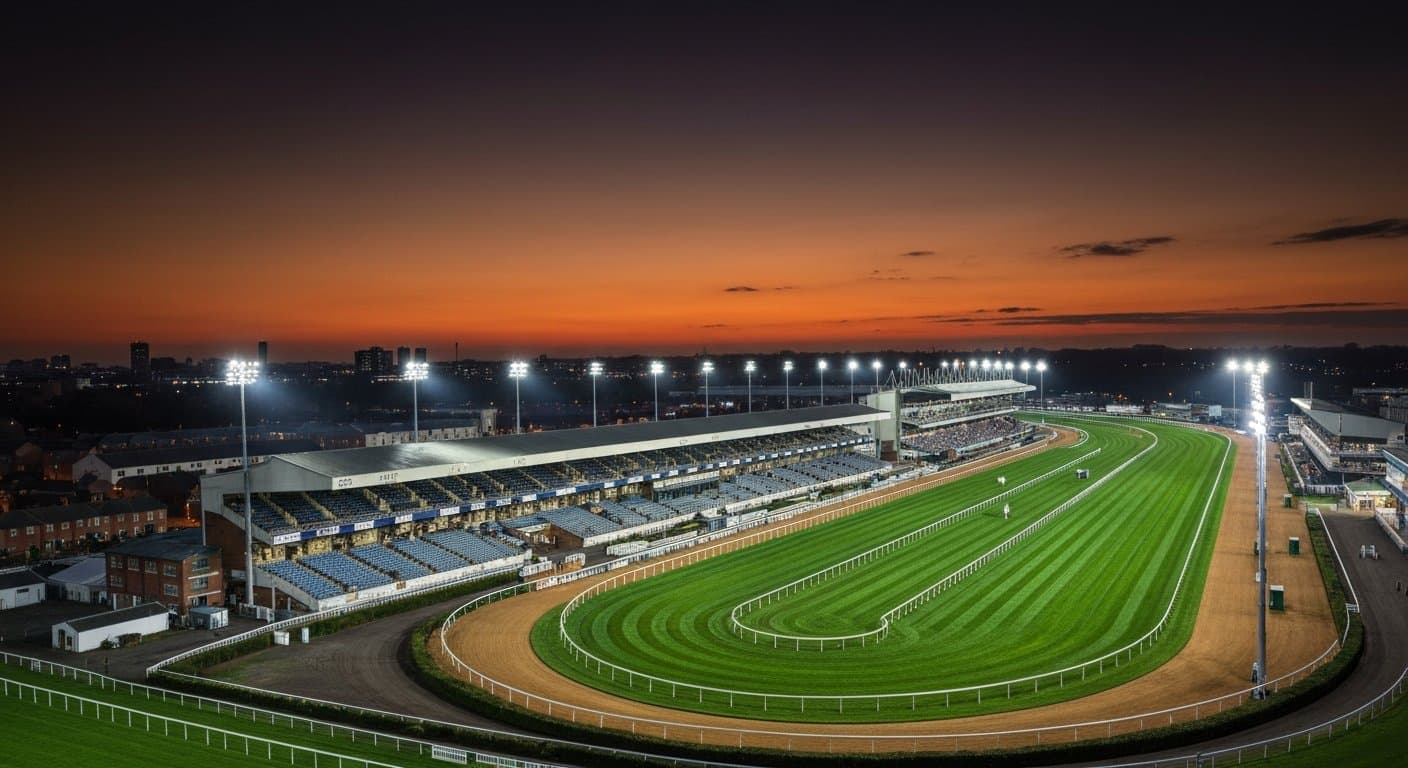
Wolverhampton Racecourse: Complete Guide
Your complete guide to Wolverhampton Racecourse — year-round all-weather flat racing under floodlights at Dunstall Park.
Read more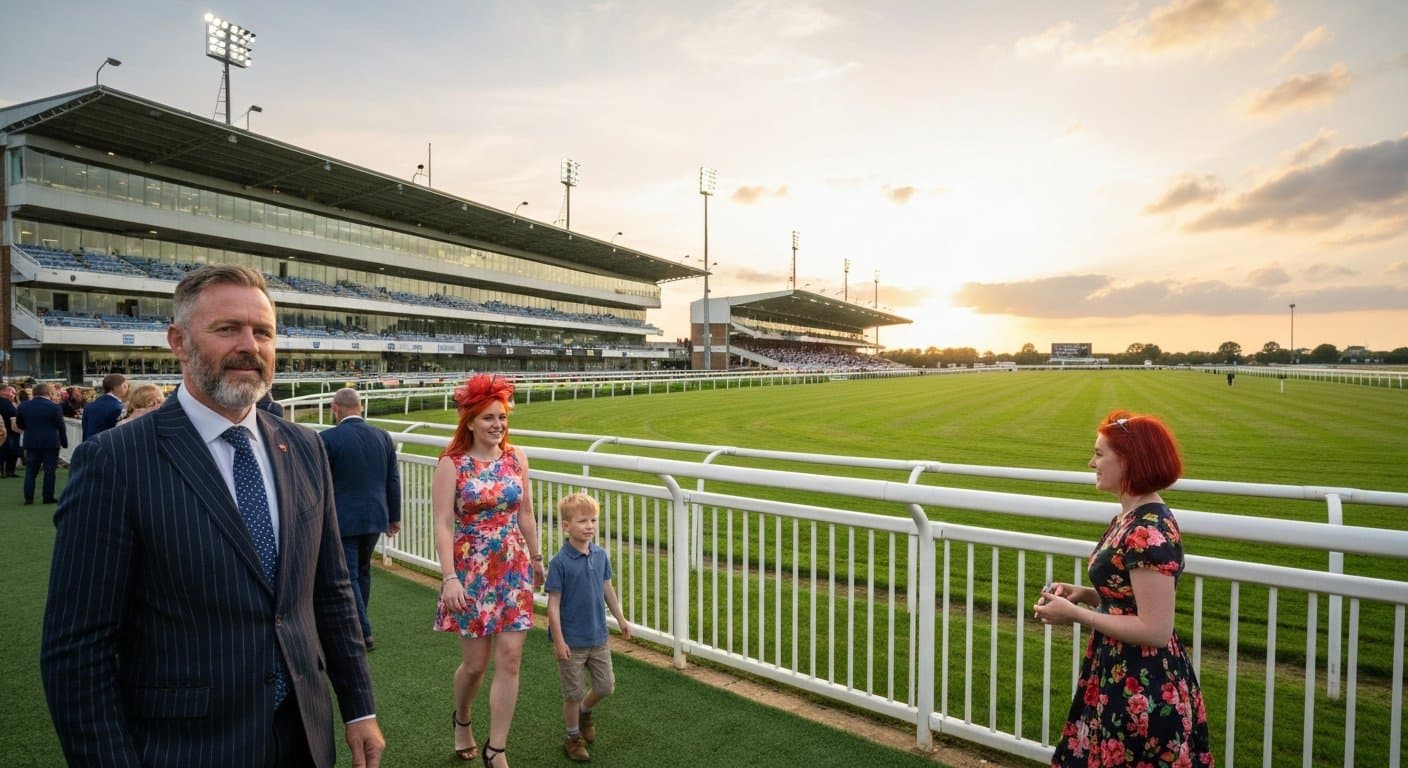
A Day Out at Wolverhampton Racecourse
Everything you need for a visit to Wolverhampton — getting there, what to wear, enclosures, food and drink, and tips.
Read more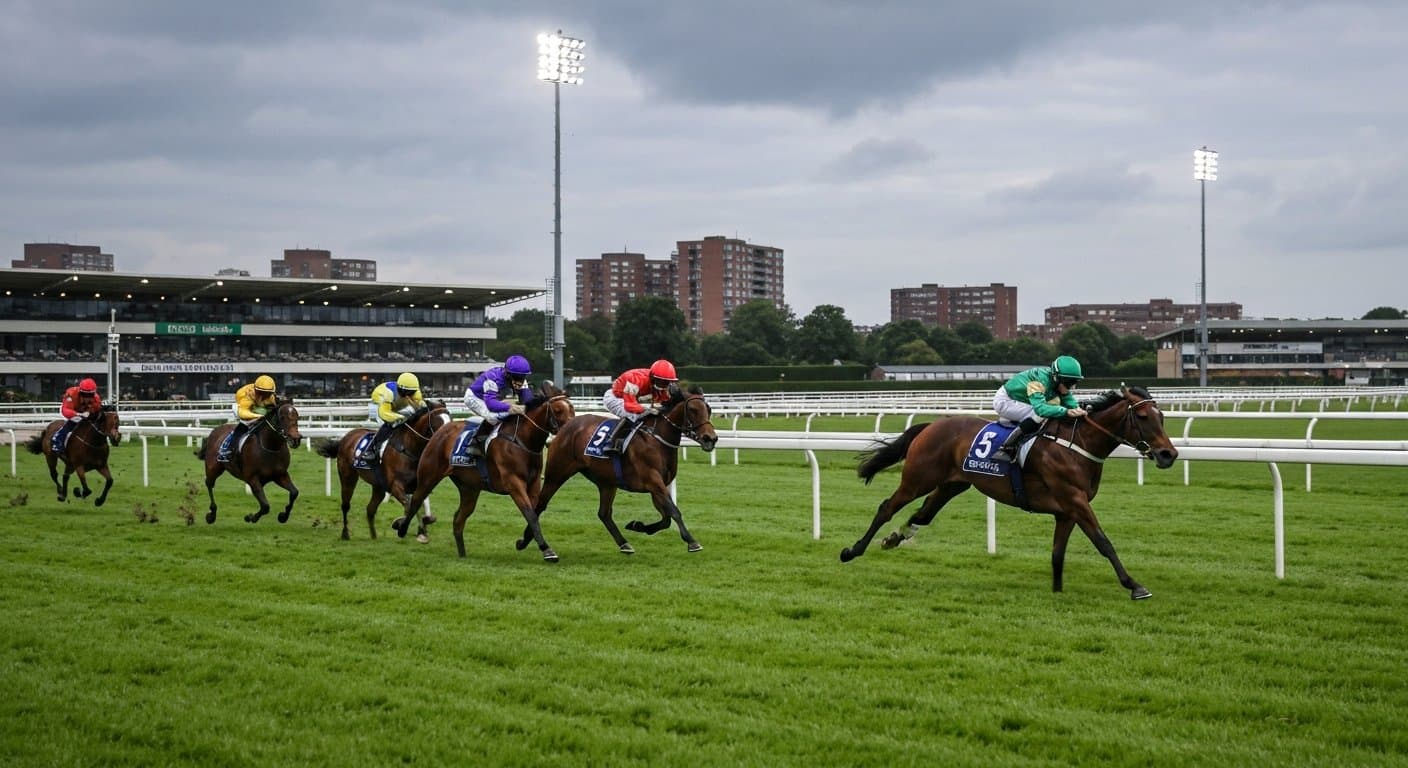
Evening Racing at Wolverhampton
Your guide to floodlit evening racing at Wolverhampton — the unique atmosphere, betting tactics and what to expect.
Read moreResearch the field with the AI Race Predictor
Our model publishes calibrated win-probability estimates for UK races — a second opinion to understand a race, not tips. It's open about its record: it doesn't beat the market, and we show exactly how it does.
Work it out & learn the basics
Gamble Responsibly
Gambling should be entertaining and not seen as a way to make money. Never bet more than you can afford to lose. If you or someone you know has a gambling problem, help and support is available.