
Founder & Editor · Last reviewed 2026-03-02
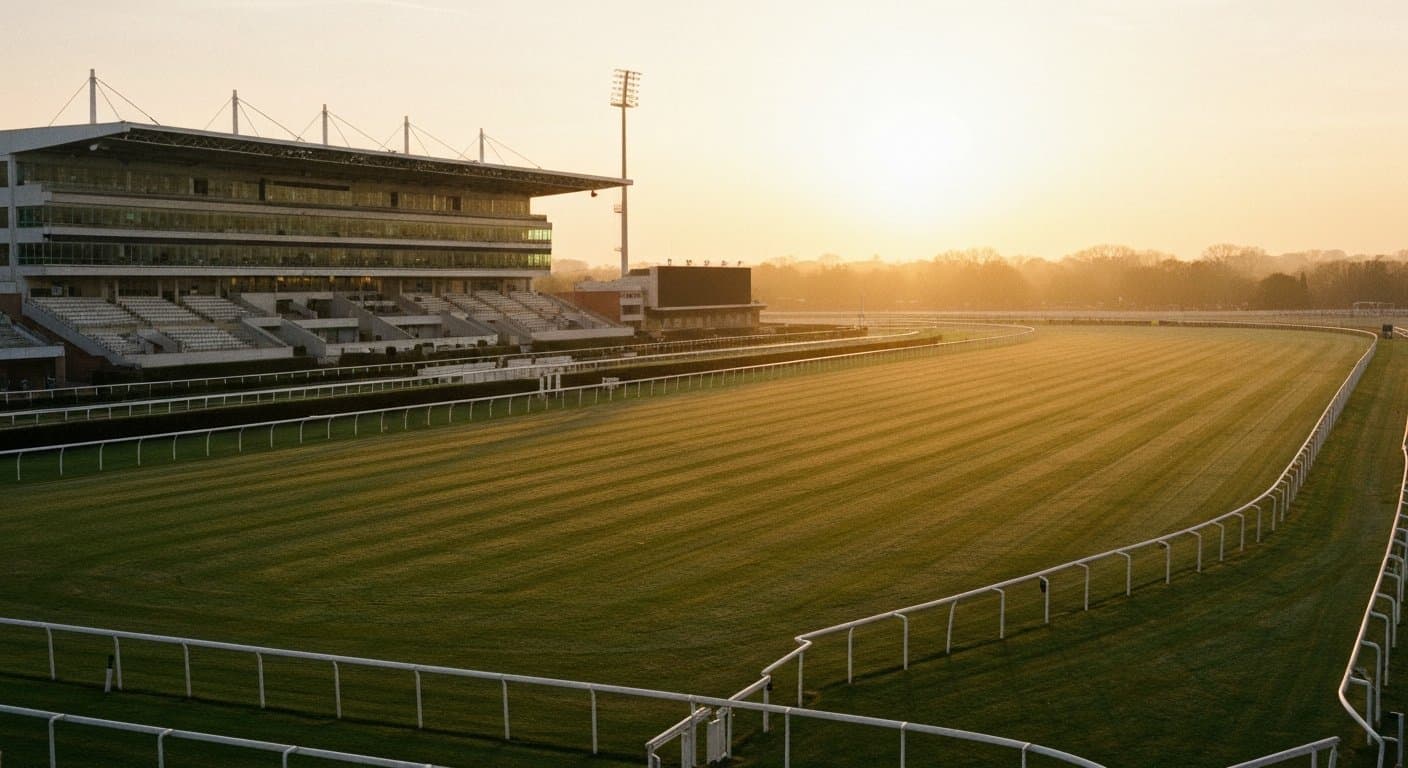
Wolverhampton has had two lives. The first began in 1887, when Dunstall Park opened as a turf racecourse in the heart of the West Midlands. For over a century it ran traditional flat racing — summer meetings, good ground, the usual rhythms of the British racing calendar. The second life began in the 1990s, when the track embraced all-weather racing and floodlights. Today it's one of the busiest courses in Britain, running year-round on Tapeta under lights. The transformation is extraordinary by any measure.
The story is worth knowing. Wolverhampton wasn't always the all-weather powerhouse it is now. It was a provincial turf track, popular with local crowds and Midlands trainers, but never in the same league as Newmarket or Epsom. The switch to synthetic surfaces changed everything. It became a pioneer — one of the first UK tracks to go all-weather, one of the first to install floodlights, and now a model for year-round racing that other venues have followed.
The course's position within the West Midlands racing scene is equally important to understand. Before all-weather racing, Wolverhampton competed for racegoers with other regional tracks. After the switch, it found a truly different market: trainers who needed reliable winter runs for their horses, punters who wanted year-round betting action, and a city audience comfortable with evening entertainment rather than the traditional afternoon race meeting. That repositioning is what turned a struggling provincial venue into a fixture-list essential.
This guide traces the full journey. From the Victorian origins at Dunstall Park through the turf years and their gradual decline, through the all-weather revolution of 1993, the surface changes that followed, and the modern Wolverhampton that runs more fixtures than almost any other course in the country. Understanding how a 19th-century racecourse became a 21st-century all-weather hub takes you through more than 130 years of British racing history — and the story of a town that kept its racecourse when others lost theirs.
Origins & Dunstall Park
Wolverhampton racecourse opened in 1887 at Dunstall Park, a site on the northern edge of the town. The land had been used for recreation and occasional sporting events before the racecourse company secured it. The West Midlands was industrialising fast — Wolverhampton was a centre for engineering, lock-making, tinware, and the railways — and the town's growing population wanted entertainment. Horse racing fitted the bill.
The course was built as a flat-racing venue. No jumps. The layout was a left-handed oval of roughly a mile and a quarter, with a straight for sprints. It was compact, accessible, and designed to draw crowds from Wolverhampton, Birmingham, and the surrounding Black Country. The railway had reached Wolverhampton decades earlier, so getting to the track was straightforward. Racegoers could travel from Birmingham in under an hour. The course was well placed to thrive.
The Industrial Context
To understand why Dunstall Park succeeded in its early years, you have to understand what Wolverhampton was in the 1880s. This was no quiet market town. It was a Black Country industrial centre — dirty, busy, prosperous in places, and full of people who worked hard and looked for leisure on their days off. The factories, foundries and engineering works that drove the local economy also filled the town's pubs and sports grounds. Racing fit naturally into a culture that already embraced boxing, football and pigeon-keeping as outlets for the working week's pressures.
The Black Country crowd had a particular character: direct, knowledgeable and not easily impressed. They didn't come to Dunstall Park to see the aristocracy parade. They came to bet and watch horses run. The early meetings reflected that. The racing was competitive, the crowds were boisterous and the atmosphere owed nothing to the polished formality of the southern venues. It was industrial sport in an industrial city, and it worked precisely because it made no pretence otherwise.
Early Years and the First Meeting
The first meeting was held in 1887. The racing was modest — handicaps, selling plates, the usual fare of a provincial track. Wolverhampton wasn't competing with Newmarket or Epsom for quality. It was serving a local market: factory workers, shopkeepers, and the emerging middle class who wanted a day at the races without travelling to the big southern courses. The atmosphere was informal. Beer, betting and a bit of sport. Nothing fancy.
Racing in the early years was entirely on turf. The course used the left-handed oval layout that still defines the site today, though the specific dimensions and facilities would change considerably over the decades. The sprint straight was a feature from the early days, allowing quick sprint fields to compete without the complications of a bend start.
Dunstall Park: The Site
The name Dunstall Park stuck, and it remains the course's formal name today. It refers to the area — Dunstall was a hamlet absorbed by Wolverhampton as the town expanded during the industrial revolution. The racecourse sits on land that was once open countryside, now surrounded by the urban fabric of the West Midlands. The proximity to the city centre has always been a key strength. The course is about a mile from Wolverhampton city centre and its main railway station, making it accessible without a car.
That accessibility would matter more than anyone in 1887 could have guessed. When the all-weather era arrived a century later, the same geographic advantage — close to a major city, well-served by rail and road — meant Wolverhampton could capture an evening audience in a way that more rural all-weather venues could not.
The Late Victorian and Edwardian Period
Through the 1890s and into the Edwardian era, Dunstall Park established itself as a reliable fixture on the Midlands racing calendar. The quality of racing was what you'd expect from a provincial track — competent but not exceptional. Trainer entries came mainly from the Midlands and the north, with occasional southern runners for the more valuable contests. The crowds were steady. The meetings were profitable enough to keep the racecourse company solvent.
One important context: Victorian racing in Britain was a significant social institution, not merely a sport. Betting was legal and deeply embedded in working-class culture. At a course like Wolverhampton, the bookmakers were as important as the horses — the rows of chalk-board bookies taking bets in cash from factory workers in their Sunday suits. The betting ring was the social centre of the meeting as much as the finishing post. That relationship between the sport and gambling would shape Wolverhampton's identity through to the modern era, when the all-weather calendar and the betting exchanges made the course more important to the industry than any Group race could.
Wartime Interruptions
Both world wars interrupted racing at Dunstall Park. The course was used for military purposes during the First World War — training grounds, storage, and billeting for troops. Racing resumed after the armistice, and the track picked up where it had left off. The interwar years brought a degree of modernisation to the facilities, reflecting a period when British racing generally was becoming more organised and commercially minded.
The Second World War brought a more complete shutdown. Dunstall Park, like most British racecourses, was requisitioned and repurposed for the war effort. The stands and surrounding land served various military and industrial functions. That the course survived intact — unlike some British tracks that never reopened after 1945 — speaks to the resilience of Wolverhampton's racing community and the commercial viability of the site.
Post-War Recovery
When racing resumed after 1945, Dunstall Park returned to a programme of summer flat racing. The immediate post-war years were lean for most provincial tracks — the country was rebuilding, money was tight, and the sport's infrastructure needed investment. But Wolverhampton had enough local support to keep going. The crowds came back. The form book continued. The course settled into the rhythm it would maintain through the 1950s, 1960s and into the 1970s.
The setting of Dunstall Park in the mid-20th century was of its time. The stands were functional. The facilities were basic by today's standards. But the racing was real, the atmosphere was local and real, and the course served its community. For a generation of West Midlands racegoers, Dunstall Park was simply where you went to the races.
The Turf Racing Years
The "golden era" of Wolverhampton's turf racing is a relative term. The course never hosted the Derby or the Guineas. It wasn't that kind of venue. But from the 1950s through to the late 1980s, Wolverhampton established itself as a reliable, popular track in the Midlands racing calendar. Summer meetings drew decent crowds. The racing was competitive: handicaps, conditions races, the occasional Listed contest. Trainers from the Midlands and beyond sent horses there. It was a useful place to get a run into a horse, or to target a winnable race without the travel to the southern courses.
The Summer Programme
Wolverhampton's turf programme ran from spring through autumn. The ground could be firm in summer, soft after rain. Like most provincial tracks, it was at the mercy of the weather. Frost in spring could delay the start of the season. Heavy rain could waterlog the course. Abandoned meetings were part of the deal. The track was clay-based in places, which meant it could hold moisture. When the going turned soft, it stayed soft. Punters learned to factor that in.
The summer meetings were the core of the programme. Flat racing over the full range of distances: sprint handicaps, mile contests, staying races. The fixture list gave the course its busiest period and drew the largest crowds. Families came on Saturdays. Evening meetings on long summer days were popular. The programme was unremarkable by national standards but served a local need that kept the gates open and the stands reasonably populated.
The Crowds and the Black Country Character
The crowds were local. Wolverhampton, Birmingham, the Black Country, Staffordshire. Factory workers on their day off, families on a summer outing, the odd serious punter making the trip from further afield. The atmosphere was casual: no formal dress codes, no corporate hospitality to speak of. It was a working-class racecourse in a working-class region. The beer flowed, the bookmakers did a brisk trade, and the racing was honest. That was the appeal.
There was a directness to the Wolverhampton crowd that distinguished it from the more socially mixed audiences at Ascot, Goodwood or Chester. Nobody came to Dunstall Park to be seen. They came to watch horses and have a bet. The social pretension that sometimes pervades the more fashionable southern courses had no foothold here. The crowd knew racing and expected competitive sport. When they got it, they were satisfied. When the racing was poor, they said so.
That authenticity was a strength. It gave Dunstall Park a character that was rooted in the community rather than imposed by social convention. The regulars were knowledgeable. The betting ring was active. The atmosphere before the big handicaps of the summer programme had a real edge that more polished venues sometimes struggled to generate.
The Midlands Racing Scene
Wolverhampton was not the only show in the West Midlands. Warwick and Stratford-upon-Avon offered National Hunt and flat racing to the south. Lichfield had its own sporting traditions. Further north, Chester had the prestige of its famous Roman circuit. Wolverhampton competed for the regional racing audience within this broader context.
The advantage Dunstall Park held was its urban location. You could get there from Birmingham by train in around 20 minutes. The bus services from Wolverhampton city centre were useful for those without cars. A suburban racecourse in a large city had a natural catchment that more rural tracks could not replicate. On a good Saturday in the 1960s or 1970s, the crowd at Dunstall Park would include racegoers from right across the conurbation: a truly urban audience in a way that Warwick or Stratford never were.
Famous Turf-Era Horses and Trainers
While Wolverhampton's turf era never produced the kind of headline moments that define Epsom or Goodwood, the course had its regular performers. Midlands-based trainers were well represented. The yards at Newmarket and Lambourn sent horses for the more valuable summer prizes. The form produced at Wolverhampton was honest: a win here translated reasonably well to comparable races elsewhere, because the course was demanding enough to test a horse properly.
The sprint races were particularly competitive. The sharp, left-handed layout rewarded quick, nippy types who could use the bends rather than galloping specialists. Trainers who understood this sent the right horses and were rewarded. Those who sent wrong types learned quickly.
The Decline Through the 1980s
By the 1980s, Wolverhampton was struggling. The crowds had thinned. Competing attractions, football, the pub, the television, had drawn people away from the races. The West Midlands was experiencing significant industrial decline; the factories that had provided the course's traditional working-class crowd were closing or contracting. Unemployment was high. Disposable income was down.
The racecourse itself needed investment. The stands were ageing. The facilities compared poorly to venues that had modernised through the 1970s. The weather remained as unreliable as ever: a wet August could cancel several meetings and wreck the financial planning for the year. Some provincial tracks in similar positions chose to close. Wolverhampton faced the same pressures.
The answer, when it came, would not involve repairing the grandstand or promoting a better turf card. It would be something far more radical: the removal of the turf track entirely and its replacement with an all-weather surface. The decision that would transform Dunstall Park into a completely different kind of venue was approaching.
Key Moments in History
Wolverhampton has never hosted a Classic or a Group 1. Its notable moments are more modest, but they matter to the course's story. The key events are the milestones that shaped its identity: the opening, the survival through two wars, the decisions that led to the all-weather era, and the surface changes that followed over three decades.
The Opening, 1887
The first meeting at Dunstall Park was a milestone for the town. Wolverhampton had had racing before, there are records of meetings in the area going back to the 18th century, but Dunstall Park was the first purpose-built, permanent racecourse. The opening day drew a crowd. The racing was modest, but the venue was established. Wolverhampton had a racecourse to call its own.
The significance was as much social as sporting. The formal opening of Dunstall Park gave the town an institution: a place with its own schedule, its own community of regulars, its own position in the national racing calendar. In a Victorian industrial city that was becoming increasingly self-conscious about its identity and civic standing, a racecourse was a statement of arrival.
Wartime Interruptions
Both world wars interrupted racing. The course was used for military purposes: training, storage, billeting. The grandstand and facilities were repurposed for the war effort. When racing resumed after the First World War, the course picked up where it had left off. The same happened after 1945. The track survived both interruptions intact, which not all British courses managed. That resilience would matter later, when the all-weather era demanded a different kind of adaptability: the willingness to change fundamentally rather than simply persevere.
1993: The Fibresand Revolution
The year 1993 marks the single most important moment in Wolverhampton's history. That was when Dunstall Park became the third all-weather track in Britain, installing Fibresand synthetic surface to replace the old turf. Lingfield Park and Southwell had led the way a few years earlier, but Wolverhampton's conversion was significant because of the scale and ambition of what the course's owners planned.
The context is important. All-weather racing in Britain was still in its infancy. The sport's establishment was sceptical. Turf purists questioned whether synthetic surfaces produced significant form. Bookmakers were cautious. But the courses that had gone all-weather were already demonstrating the key advantage: they could race regardless of the weather. No frost cancellations. No waterlogged tracks. Year-round fixture certainty.
For Wolverhampton, still struggling with the declining crowds and financial pressures of the late 1980s, all-weather racing was not just a surface change: it was a business model change. The Fibresand surface meant the course could run in December, January and February. Evening racing under floodlights became possible. The market for the product was entirely different: not the summer-afternoon turf crowd that had been shrinking for years, but the year-round betting public that needed somewhere to race horses when the turf was closed.
The first all-weather meetings at Wolverhampton were viewed with curiosity. The Fibresand surface was different to race on and different to watch. The horses kicked it up behind them. The sound was different. The form patterns were different. But racegoers came. Trainers used it. Bookmakers priced up the races. Within a season or two, Dunstall Park's all-weather programme had established itself as a significant part of the winter racing calendar.
The Floodlights
The installation of floodlights was another leap forward, and one that truly set Wolverhampton apart. Evening meetings under floodlights were unlike any other racing experience in Britain at the time. The Fibresand surface looked different at night: the lights created a particular atmosphere that daytime racing simply could not replicate. The crowd that came for evening meetings was different too: people finishing work, groups on a night out, racegoers who wanted a compact three-hour entertainment rather than an all-day affair.
Wolverhampton was among the very first UK tracks to race regularly under lights. That pioneering position gave the course an identity that persists to this day. Ask anyone about Wolverhampton racing and "evening floodlit meetings" is among the first associations they make. The lights became the course's calling card: a signal that Dunstall Park was doing something different, something modern, something that couldn't happen at a traditional turf track.
2004: The Switch to Polytrack
After a decade on Fibresand, Wolverhampton switched to Polytrack in 2004. The move reflected a broader trend in British all-weather racing: Polytrack, developed by the Stud-Master company, was considered a better-riding surface than Fibresand. It was more consistent, softer on horses' legs, and produced form that transferred more reliably between courses.
Kempton Park, which had also made the all-weather conversion, was running on Polytrack. Lingfield had made a similar switch. The all-weather tracks were converging on the same surfaces, which helped the betting public understand the form better: a horse that ran well on Polytrack at one venue had transferable form at others.
For Wolverhampton, the Polytrack era continued through to 2014. The course's fixture list expanded. The evening-meeting model was well established. Winter racing at Dunstall Park was now a central part of the British racing calendar rather than a curiosity.
2014: Tapeta and the Modern Era
The most recent major change came in 2014, when Wolverhampton became the first UK track to install Tapeta, a surface originally developed in North America and already proven at international tracks including those in Japan and the United States. The move from Polytrack to Tapeta placed Wolverhampton at the cutting edge of synthetic surface technology.
Tapeta is a wax-based surface that rides very consistently and drains exceptionally well. The official going description, Standard, Standard to Slow, Standard to Fast, captures its narrow range of variation. The surface is considered by many trainers and jockeys to be the best all-weather surface in Britain for horse welfare: it's forgiving on joints and tendons while still producing good, competitive racing.
The timing of the Tapeta installation mattered. In 2014, the All-Weather Championships were being established as a formal end-of-season series, with Lingfield hosting the Finals day in April. Wolverhampton, running on Tapeta, became an important qualification venue. Races at Dunstall Park began to carry official Championship qualification status, connecting everyday winter card races to an end-of-season destination event.
Newcastle Racecourse Then installed Tapeta at its Gosforth Park site, creating a sister relationship between the two courses under the same Arena Racing Company ownership. The form between the two courses became more directly transferable than it had ever been between different surfaces. Wolverhampton and Newcastle became the twin poles of Tapeta racing in Britain: one in the West Midlands, one in the north-east, both running full programmes of evening and daytime racing year-round.
Notable AW Performers at Wolverhampton
While the turf era never produced truly famous Wolverhampton-specific horses, the all-weather era has thrown up some outstanding performers who made Dunstall Park their home circuit. Horses with exceptional records on Tapeta, consistent winners at the course through multiple seasons, become well-known to the Wolverhampton regular. These are the horses who prove the track's form holds up: animals that win time and again on the consistent synthetic surface, demonstrating that the form at Dunstall Park is as bankable as anywhere in British racing.
The all-weather specialists, horses bred and trained specifically to run on synthetic surfaces, have found Wolverhampton a productive hunting ground across the seasons. Their performances contribute to the course's reputation as a track where form is reliable and where preparation produces results.
The Lady Wulfruna Stakes
The course's leading race is the Lady Wulfruna Stakes, a Listed contest run in March on the all-weather. The Listed status places it above the handicaps that dominate the normal card.
The All-Weather Revolution
The modern era at Wolverhampton began definitively in 1993, when the track installed Fibresand and joined Lingfield Park and Southwell as Britain's all-weather pioneers. The gamble — and it was a gamble at the time — paid off. Would racegoers come? Would trainers support it? Would the quality of racing hold up? The answers were yes, yes, and yes. Wolverhampton became one of the busiest courses in Britain, running more fixtures than almost any other track on the calendar.
The Expansion of the Fixture List
The all-weather calendar transformed what Wolverhampton could do commercially. A turf track in the West Midlands ran perhaps 15–20 meetings a year, constrained by the weather, the seasons and the competitive demands on the turf programme. An all-weather track under floodlights could run 50, 60 or more meetings per year. The economics changed entirely.
By the 2000s, Wolverhampton was hosting well over 50 fixtures annually. The winter months — December, January and February — became among the busiest rather than the quietest. Trainers needed somewhere to run horses through the winter months, maintain fitness, and earn prize money. Wolverhampton provided all of that. The fixture list expanded year on year, making Dunstall Park one of the most frequently-used tracks in the country.
For the punting public, this was equally significant. A course that never cancelled meant a reliable betting product through the darkest months of the year. The bookmakers priced up every card. The racing press covered every meeting. The form built up, race after race, giving the analytical punter a body of evidence that turf racing in uncertain winter conditions could never provide.
Tapeta and the Modern Surface
The switch to Tapeta in 2014 represented the completion of Wolverhampton's transformation. The surface replaced Polytrack and became, in the view of most trainers and jockeys who ride at the course, the best all-weather surface in Britain. Tapeta rides very consistently — it doesn't get heavy, it drains rapidly, and it produces fast, competitive racing without the jarring qualities of older artificial surfaces.
The official going description at Wolverhampton on Tapeta is almost always Standard, Standard to Slow, or Standard to Fast. That narrow range of variation is part of the point. Trainers know what they're getting when they enter a horse at Dunstall Park. The surface maintenance team works to keep the Tapeta in consistent condition, harrowing it regularly to prevent it bedding down and riding too slow.
For punters, the consistency of Tapeta is a significant advantage over turf racing. A horse's performance on the surface is largely repeatable, provided the horse is fit and well-drawn. The variance introduced by going changes — so important on turf — is removed. Form analysis becomes more about the horse's actual ability and less about surface preference.
The AW Championships and Qualification
The establishment of the All-Weather Championships as a formal season structure was an important moment for Wolverhampton's status within the sport. The Championships, which culminate in a Finals Day at Lingfield Park in April, give the winter all-weather programme the kind of end-of-season narrative that had previously been missing. Points are accumulated through qualifying races run at all-weather venues throughout the autumn and winter.
Wolverhampton, as one of the busiest all-weather tracks and one of the few running on Tapeta, became a key qualification venue. Races at Dunstall Park carry Championship points for the leading sprinters, milers and stayers on the all-weather circuit. A horse that compiles a strong record of qualifying-race performances at Wolverhampton through the winter is likely to appear at the Finals in April.
This structure gives certain Dunstall Park races a significance beyond their day-to-day status. A handicap that carries Championship qualification points attracts better horses than you might otherwise expect for the prize money on offer. The competitive quality of the field rises. For bettors, recognising which races carry Championship status and understanding how horses are being targeted helps make sense of some otherwise puzzling entries.
Ownership and the Arena Racing Company
The modern Wolverhampton is operated by Arena Racing Company (ARC), one of the two dominant racecourse groups in British racing alongside Jockey Club Racecourses. ARC's portfolio includes a number of all-weather and turf venues, and Wolverhampton sits within a group that has invested in the all-weather product as a business priority.
Under ARC ownership, Wolverhampton has been maintained as a high-throughput, consistent venue rather than repositioned as a prestige destination. The investment has gone into surface maintenance, lighting and basic facilities rather than spectator grandeur. This reflects a clear commercial logic: Wolverhampton's market is the regular racegoer and the betting-driven punter, not the hospitality buyer seeking a showpiece day out.
Newcastle, also under ARC ownership, is Wolverhampton's sister course in the Tapeta family. Both run on the same surface, both are urban courses with strong evening-meeting programmes, and both contribute to the AW Championships. Form between the two courses transfers more reliably than between Wolverhampton and Kempton (Polytrack) or Lingfield (Polytrack). If you're following a horse from Newcastle to Wolverhampton, the surface crossover is directly helpful.
The Evening Meeting Model
Evening racing at Wolverhampton is not just a scheduling quirk — it's the defining characteristic of the modern Dunstall Park experience. The first floodlit meetings were something new in British racing. Over the decades, they've become normalised to the point where "going to the evening racing at Wolverhampton" is a casual social activity rather than an event.
The evening-meeting format suits modern life in a way that traditional afternoon racing sometimes doesn't. You finish work, you head to the course by train or car, you arrive around 5pm, you watch six or seven races under the lights, and you're home by 9:30pm. No annual leave required. No all-day commitment. The model has proved so effective that other all-weather tracks — and now some turf tracks — have adopted evening racing as a regular feature.
For the city of Wolverhampton, this pattern means a racecourse that integrates naturally into the working week rather than sitting apart from it. The audience on a weekday evening includes people who would never take a day off to attend afternoon racing at a country track. Wolverhampton reaches a demographic that traditional racing has always struggled to engage.
The Course in the 21st Century
Wolverhampton today runs somewhere between 60 and 70 fixtures per year, making it one of the most active tracks in Britain. The card is almost entirely all-weather flat racing. The occasional daytime meeting is supplemented by a heavy programme of evening fixtures. The fixture list runs continuously through the year, with no off-season.
The racecourse holds around 5,000 visitors, which at capacity makes for a lively atmosphere without the crowd management challenges of larger venues. On a busy Saturday evening or a major Championship qualifier, that capacity is tested. On a midweek evening card in January, the crowd might number in the hundreds — a small but knowledgeable audience of regulars and punters who know exactly what they're doing.
The quality of racing at Wolverhampton spans a wide range. Most cards are built around Class 4 to Class 6 handicaps and maiden races that serve as building blocks for horses' careers rather than showpieces. But the Listed races and Championship qualifiers that punctuate the programme give the course a higher-quality tier that can attract serious attention from major stables.
Wolverhampton has arrived at a stable identity: a working racecourse, reliably open, consistently surfaced, well-connected to a major city, and producing honest form. After 130 years of racing, it remains exactly what it was meant to be in 1887 — a place where the people of the West Midlands go to watch horses run and have a bet. The surface has changed. The lights are new. The horses are mostly different. But the core purpose is the same.
Wolverhampton's Legacy
Wolverhampton's legacy is the all-weather revolution. It wasn't the first UK track to go synthetic, Lingfield and Southwell got there earlier, but it was among the early pioneers. And it was one of the first to install floodlights and run evening meetings as a core part of the programme. That combination, all-weather surface, floodlights, year-round fixtures, has become the Wolverhampton model. Other tracks have followed. Newcastle, Wolverhampton's sister course under the same Arena Racing Company ownership, runs on Tapeta under lights. Chelmsford City has its own all-weather and evening programme. The pattern established at Dunstall Park in the 1990s is now mainstream.
The Significance of the 1993 Decision
In hindsight, the 1993 conversion to all-weather looks like an obvious success. At the time, it was anything but obvious. British racing's establishment viewed synthetic surfaces with real scepticism. The Jockey Club was cautious. Trainers had concerns about horse welfare on artificial surfaces. Punters weren't sure whether all-weather form was worth taking seriously. The decision to rip up the turf at Dunstall Park and replace it with Fibresand was taken against significant institutional resistance.
The management of the time deserves credit for holding the course. They understood something that the sceptics missed: the alternative to going all-weather was not a return to prosperous turf racing. It was continued decline and eventual closure. Wolverhampton needed to find a new market, and the all-weather calendar provided it. The courage of that decision, made under financial pressure with the outcome truly uncertain, is a key part of the legacy.
What Wolverhampton Showed the Industry
By demonstrating that an all-weather venue could operate profitably, run regularly and produce form that the betting public took seriously, Wolverhampton helped legitimise the all-weather product in British racing. Each subsequent track that converted to synthetic surfaces, and each that installed floodlights for evening racing, built on the proof of concept that Dunstall Park had established.
The specific lessons Wolverhampton taught the industry:
Year-round reliability has commercial value. A course that never cancels is more valuable to bookmakers, trainers and broadcasters than a turf course that might lose 20% of its fixtures to weather. The certainty is worth more than the prestige.
Evening racing creates a new audience. The racegoers who came to Wolverhampton's floodlit meetings in the 1990s were not the same people who attended traditional afternoon racing. Evening racing reached a working population that afternoon sport missed entirely.
Urban location is an advantage for all-weather. The city-centre proximity that hadn't been decisive for Wolverhampton's turf programme became enormously important once the fixture list expanded to 60-plus meetings per year. A large local population within easy reach meant the course could fill its stands even on midweek evenings.
The West Midlands Racing Scene: Then and Now
Before 1993, the West Midlands racing scene was anchored by traditional turf fixtures at Wolverhampton, Warwick and the National Hunt courses of the region. After the all-weather conversion, Wolverhampton occupied a different position: not competing for the summer turf audience but serving the year-round synthetic racing market. The two types of track now complement rather than compete, serving different racing needs.
For trainers based in the Midlands and the north of England, Wolverhampton remains an important training target through the autumn and winter. Yards from Yorkshire, Lincolnshire, the Midlands and the Welsh borders regularly run horses at Dunstall Park, knowing they'll get a safe surface and competitive race whatever the weather. The course's accessibility by road from the M6 and M54 makes it manageable for horses travelling from a wide area.
The Course's Position Today
Wolverhampton today is not a glamorous venue, and it doesn't pretend to be. Its legacy is not about prestige or history in the conventional sense. It's about adaptability, commercial intelligence and the willingness to do something different when doing the same thing was failing. Those qualities have given a Victorian provincial racecourse a 21st-century life that very few of its peers have managed.
The capacity is around 5,000, small by big-meeting standards, but the fixture list is packed and the course runs essentially continuously through the year. That's the legacy: not a famous race or a storied turf programme, but a track that found a way to survive and thrive by reinventing what a racecourse could be. Over 130 years after the first meeting at Dunstall Park, Wolverhampton is still racing. On Tapeta, under lights, in January. That persistence is the achievement.
For today's visitor, Wolverhampton offers year-round racing under the lights on a world-class all-weather surface. The Victorian roots are still there: Dunstall Park, the same site, the same accessibility from the city. But the experience is thoroughly modern. That combination of endurance and reinvention is what makes Wolverhampton's story worth telling.
Share this article
More about this racecourse
All Wolverhampton guides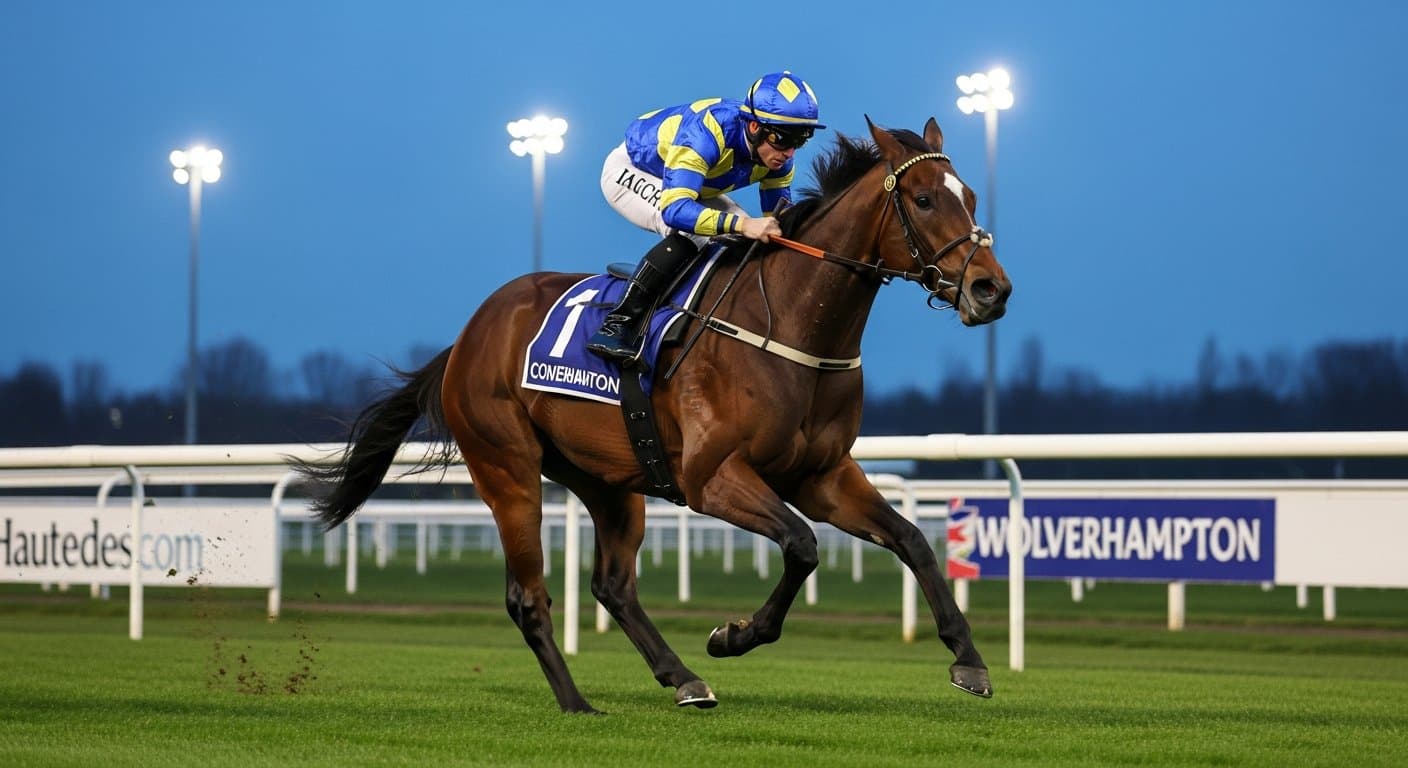
Conduit at Wolverhampton: The Complete Story
Conduit won his first race at Wolverhampton's all-weather track in 2007, then went on to win the Breeders' Cup Turf twice. The story of a champion who started here.
Read more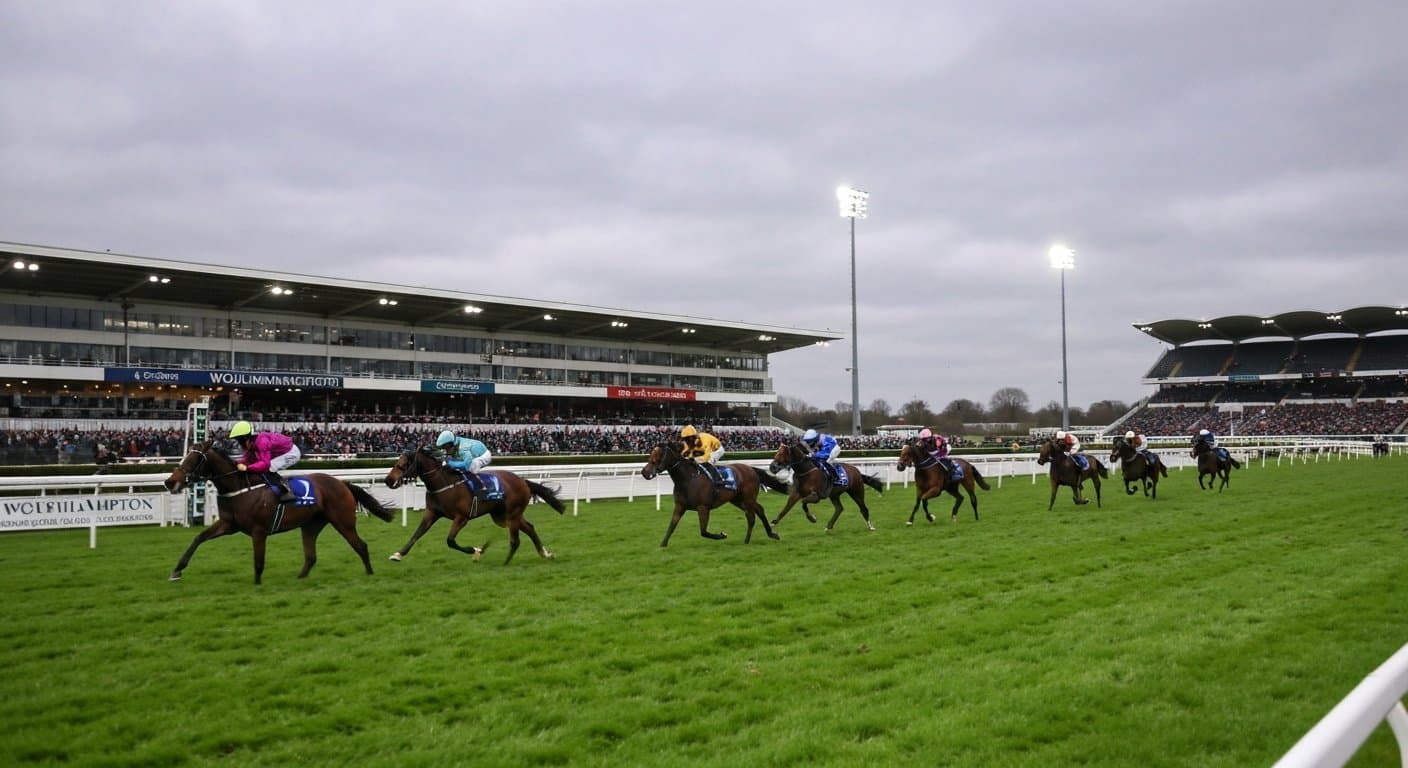
Tapeta Racing at Wolverhampton: What You Need to Know
Everything about racing on Tapeta at Wolverhampton — how the surface works, form analysis and betting strategies.
Read more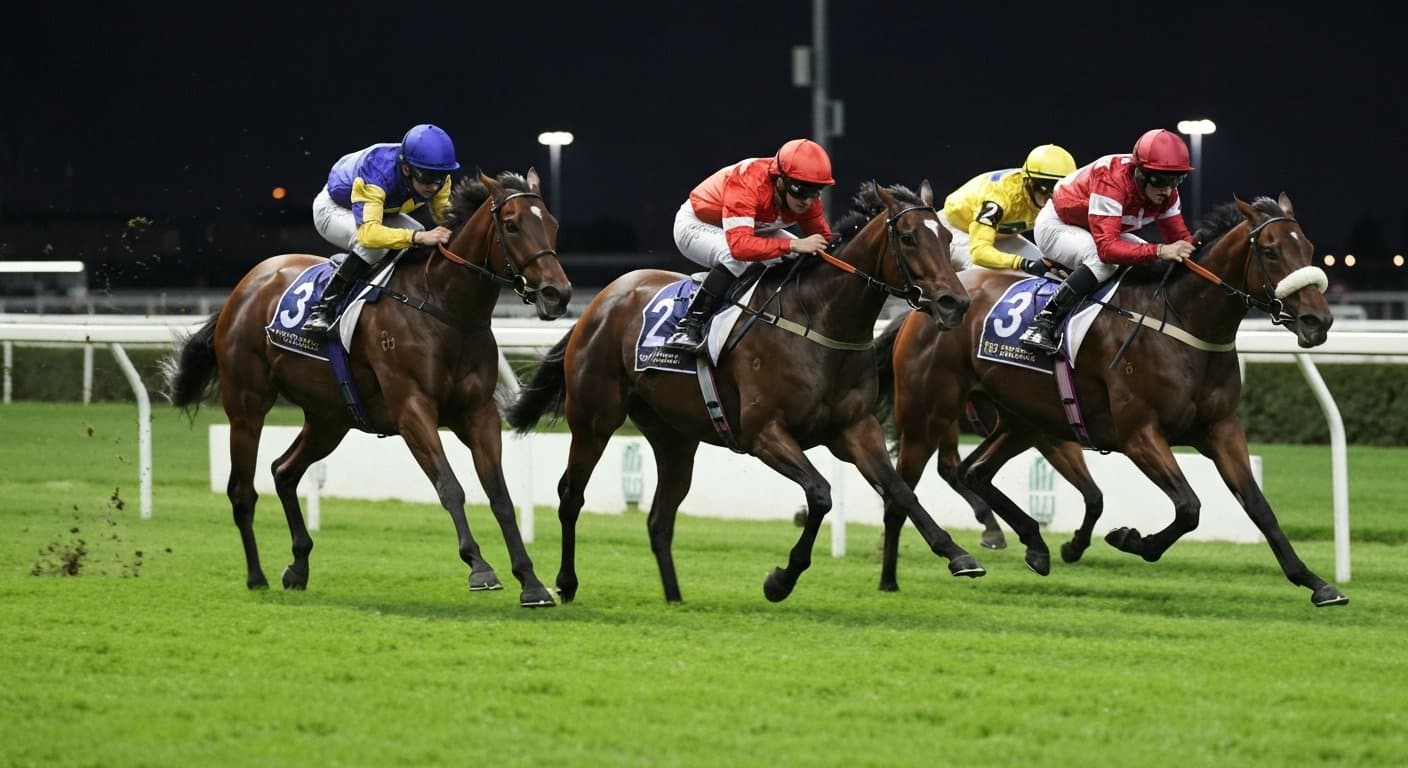
Betting at Wolverhampton Racecourse
How to bet smarter at Wolverhampton — Tapeta characteristics, draw biases, key trainers and winning strategies for Dunstall Park.
Read moreGamble Responsibly
Gambling should be entertaining and not seen as a way to make money. Never bet more than you can afford to lose. If you or someone you know has a gambling problem, help and support is available.