
Founder & Editor · Last reviewed 2026-03-02
Worcester is a course defined by two things: its summer National Hunt programme and its location beside the River Severn. The first gives it a distinctive place in the racing calendar — one of only a handful of NH venues that operate during the summer months when most jumping courses are closed. The second creates an annual gamble on abandonment. When the Severn rises after prolonged rain, the low-lying racecourse floods. Meetings in September and October are at particular risk. For punters, that means checking the weather forecast before committing to a bet on any late-season Worcester fixture.
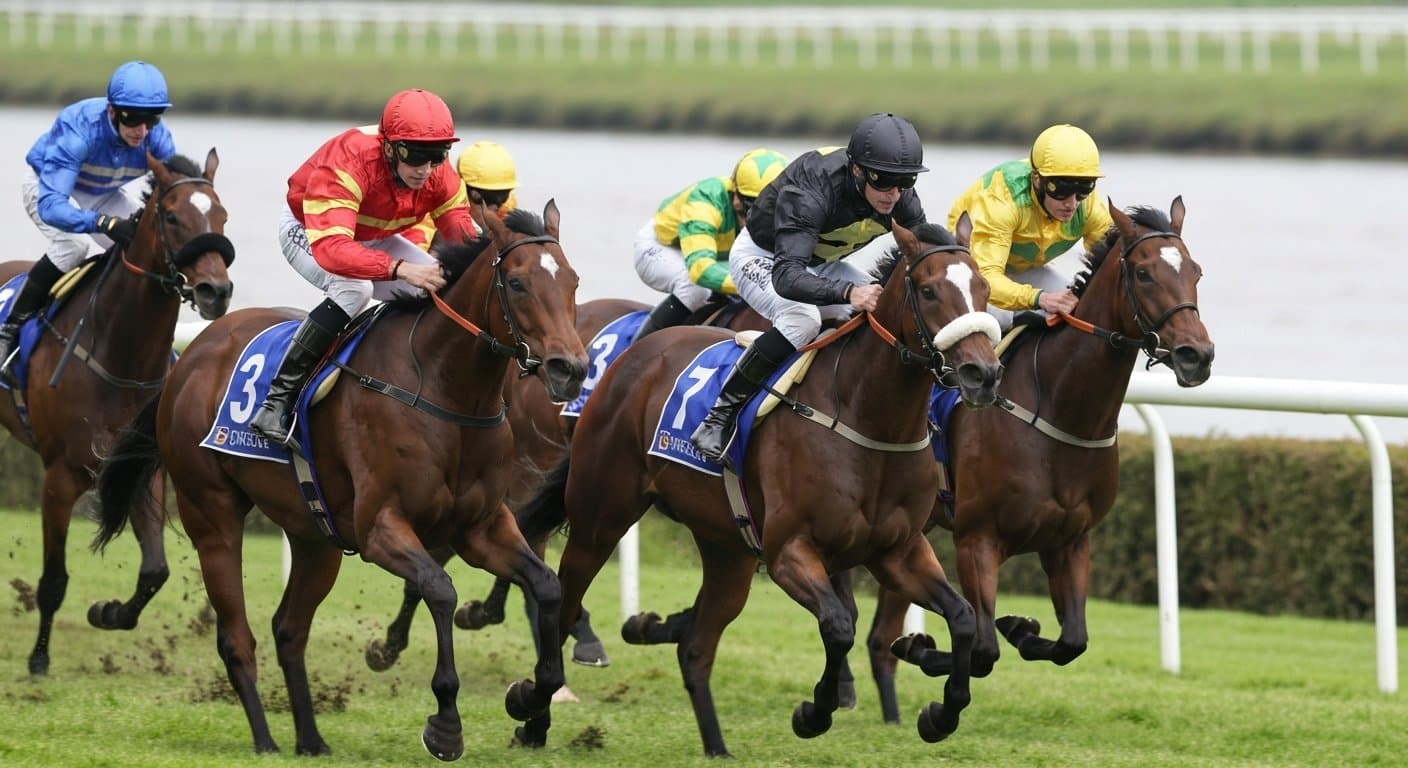
The course is left-handed, flat, and roughly rectangular in shape, measuring approximately one mile and four furlongs round. The bends are gentle rather than sharp, but the flat terrain means the race shape is set by the pace rather than the geography. Front-runners that get an uncontested lead on a flat, tight course can be difficult to catch — the track does not produce natural traffic problems that would slow a leader as a tighter, more convoluted circuit might.
Paul Nicholls and Nicky Henderson use Worcester in early summer as a sharpener for horses beginning their autumn preparation. Dan Skelton, based at Lodge Hill in Alcester approximately 20 miles away, is the most active local trainer and his runners here are worth consistent attention. Fergal O'Brien, training at Naunton in Gloucestershire, has built a strong Worcester record over recent years.
Summer NH at Worcester is lower-grade racing — Class 3 to Class 5 — but it carries real betting value precisely because it is lower-grade. Bookmakers allocate less resource to pricing these cards than they do to Festival prep races at Cheltenham or Sandown, which means pricing errors occur more frequently. A horse from a top yard in an apparently modest Class 3 novice hurdle at Worcester in June, sent here specifically to build fitness and confidence before the autumn, can be significantly underpriced.
The field sizes at Worcester are typically between eight and thirteen runners in Class 3 and Class 4 races. Novice events tend to attract smaller fields where the market splits evenly between two or three contenders. In handicap chases and hurdles, the larger fields create real each-way betting opportunities at prices that the market's limited attention to summer NH allows to remain open. Bookmakers who focus their pricing power on Ascot and Goodwood in July devote less resource to a Thursday NH card at Worcester, and that asymmetry produces mispricings that a prepared punter can exploit.
Understanding the flooding risk is essential for any serious Worcester betting. The course is built on flood plain soil beside one of England's most flood-prone rivers. When the Severn rises, the course becomes unusable within hours. Meetings called off on the morning of the fixture leave bets settled at starting price or voided, depending on individual bookmaker terms. Always check those terms before placing advance bets on September and October fixtures.
This guide covers the track's layout, the going and abandonment risk, the trainers and jockeys to follow, and the betting strategies that work at this specific venue.
Bet on Worcester
Place your bets on Worcester races with a trusted bookmaker.

Promo code BETFRED50. New customers only. Register, deposit with a Debit Card, and place a first bet of £10+ at Evens (2.0)+ on Sports, to be settled within 7 days, to get £30 in Sports Free Bets and £20 in Bet Builder Free Bets within 24 hours of settlement. 7-day expiry. Eligibility & payment exclusions apply. Full T&Cs apply. Take Time to Think. BeGambleAware.org. 18+. Full T&Cs.

Promo code R30. New UK customers only, 18+. Register, deposit £10 or more, then place a £10 single cash bet at odds of 1/2 (1.5) or greater on any sports market (excluding Virtuals). Once the qualifying bet settles you get £30 in Free Bets (3 x £10) — the qualifying bet can win or lose. Free Bets are valid on any sports market excluding Virtuals, expire in 7 days, are non-withdrawable and must be used in full. Excluded deposit methods apply (including PayPal, Apple Pay, Skrill and NETELLER). Named bets such as Lucky 15 do not qualify. If you cash out the qualifying bet, or it is voided, you are no longer eligible for the offer. Ends 31.12.26. Full T&Cs apply. Please gamble responsibly. BeGambleAware.org. 18+. Full T&Cs.

Promo code BET40GET20. New UK customers, 18+. Register with the code and place a first bet of £40 or more at Evens (2.0) or greater. Receive 2 × £10 free bets: the first credited automatically once the qualifying bet settles, the second 24 hours later. Free bets must be placed at minimum odds of 4/1 (5.0), expire 24 hours after credit, and the free-bet stake is not returned with winnings. Debit card deposits only. Take Time to Think. BeGambleAware.org. 18+. T&Cs apply. Full T&Cs.

50% of your first-day net losses refunded as a free bet, capped at £25. New UK customers aged 18+ only. To qualify, deposit and place a first bet of £10 or more on any sport at minimum odds of evens (2.00), then place at least two further bets on different events, each worth at least 50% of your largest bet, all at evens (2.00) or greater. Losses are counted from your first settled bet until 23:59 the same day. Place a qualifying £10+ bet and you are guaranteed at least a £5 free bet. Bets placed at SP, void bets, cashed-out bets and bets struck with free bets do not count towards the offer. The free bet is credited the day after your qualifying bets settle and must be used within 7 days, after which it expires. It can be used at odds from 1/4 (1.25) up to 250/1 on singles and straight accumulators, but not on Trixie, Patent or Yankee style multiples. Free-bet stake is not returned with winnings. One offer per person, household, address, IP address and device. E-wallet deposits may not qualify, so check the cashier before depositing. Customers registered with GAMSTOP cannot claim. KYC identity verification must be completed before the free bet is credited. Take Time to Think. BeGambleAware.org. 18+. T&Cs apply. Full T&Cs.

New customers, 18+. Choose the sports bonus at sign-up, make a first deposit and receive a 100% bonus up to £50 in your Sports Bonus balance. To convert the bonus to cash, wager it 10x within 30 days. Single bets below Evens (2.00) do not qualify; accumulators do not qualify if any selection is below 1/2 (1.50). Virtual Sports, voided, cancelled, drawn, cashed-out and free-bet wagers do not count towards wagering. Only the first settled bet per event counts. Withdrawing before the wagering requirement is met forfeits the bonus balance including bonus winnings. Real-money funds are used before bonus funds. Deposits via Skrill or Neteller are not eligible. Not valid in conjunction with other promotions. Odds, bet and payment limits apply. 10bet general and promotion T&Cs apply. BeGambleAware.org. 18+. Full T&Cs.

New customers in Great Britain and Republic of Ireland, 18+. Place a £10 fixed-odds qualifying bet at minimum odds of 1/2 (1.50) — single or each-way (only the win part counts), pre-event or in-play, not cashed out early, within 28 days of opening the account. Receive up to £60 in bonuses credited over three days: 3 × £10 fixed-odds free bets (the first on settlement, then 24 and 48 hours later) plus 3 × £5 Total Goals FOOTBALL spread bets and 3 × £5 racing Winning Favourites spread bets, with a £1 racing Race Index spread bet as an extra on top. The spread bets need a full spread-betting account, opened within 28 days of the fixed-odds account and subject to Spreadex's eligibility and appropriateness checks. Free-bet stakes not returned with winnings; free bets valid 28 days from issue. IMPORTANT: the £5 credits are SPREAD bets — sports spread betting carries the risk that losses can exceed your stake. Sports spread-betting customers do not have Financial Ombudsman or FSCS recourse. Take Time to Think. BeGambleAware.org. 18+. T&Cs apply. Full T&Cs.

Promo code WELCOME15, entered under My Bonuses after registering. New UK customers, 18+. Place a first qualifying bet of at least £10 from your cash balance at odds of evens (2.0) or greater within 7 days of opening the account. Once the qualifying bet fully settles you receive £15 in free bets, credited as 3 x £5 tokens with set uses: one £5 accumulator free bet (minimum 4 legs, each leg at 2/5 or bigger), one £5 sports free bet (any market at evens or bigger) and one £5 Sub Cover free bet (selected football player markets at evens or bigger). Free-bet stakes are not returned with winnings. Free bets expire 7 days after they are credited. Void, cashed-out and partially cashed-out bets do not qualify. One offer per customer. Confirm the current terms on BetGoodwin's own welcome-offer page before claiming. Take Time to Think. BeGambleAware.org. 18+. T&Cs apply. Full T&Cs.

New UK customers, 18+. Minimum deposit £10. Place a £10 qualifying single on sports (excluding virtuals) at minimum odds of 1/2 (1.50), settled within 14 days. Deposit-method exclusions apply. Receive £30 in free bets (stake not returned), split £20 for sportsbook use (2 x £10) and £10 for Bet Builder only (2 x £5); Bet Builder does not cover horse racing. Free bets must be accepted within 7 days and expire 7 days after acceptance. No promo code required. Best Odds Guaranteed on UK & Irish racing, subject to having staked over £25 in the previous seven days. Operated by LiveScore Betting and Gaming (Gibraltar) Ltd, UKGC 56859. Confirm the current terms on LiveScore Bet's own promotions page before claiming. Take Time to Think. BeGambleAware.org. 18+. T&Cs apply. Full T&Cs.
18+. BeGambleAware.org
Track Characteristics
The Worcester circuit is left-handed, essentially flat, and roughly rectangular with rounded corners. The full course measures approximately one mile and four furlongs round. There are no significant undulations — unlike Exeter or Wincanton, the terrain does not impose its own demands on a horse's stamina. What matters at Worcester is the flatness itself, which creates a specific set of tactical conditions.
Front-Runner Premium
On a flat, rectangular course, the horses in front have no natural disadvantage. There is no hill to expose horses that have gone too hard, no tight bend that can unsettle leaders, no long run-in where the race is turned around. Horses that lead or race prominently and jump fluently can stay in front from the third fence to the last without being mechanically caught. This structural advantage for front-runners is one of Worcester's most consistent statistical patterns.
In handicap chases at Worcester, if the pace scenario analysis identifies a likely front-runner from a good yard in a small field, that horse should be backed. The corollary is that hold-up horses — those that need a strong pace to make ground and require room in the straight — find Worcester less conducive than a more demanding circuit.
The Fences
Worcester's fences are generally described as fair. They are not as stiff as Cheltenham's park fences or as exacting as Sandown's famous Pond Fence sequence. A horse that jumps fluently at other NH venues will jump fluently here. The fences do not impose a specific technical demand above and beyond standard jumping ability.
This means that jumping quality is less of a discriminator at Worcester than at Cheltenham or Wincanton. The determining factors are pace, stamina in the conditions, and course experience. A novice chaser that jumps adequately is not at a particular disadvantage here compared to an experienced chaser, all else being equal.
Hurdles and Bumpers
The hurdles course follows essentially the same left-handed rectangular circuit. Over hurdles, the flat track and smaller obstacles mean pace is even more decisive than in chases. Horses that bowl along at the front of hurdle races at Worcester — particularly in fields of fewer than ten runners — land a disproportionate share of races. The hurdle flights at Worcester do not create the tactical variation that fences do.
In bumpers, the absence of obstacles makes Worcester comparable to a flat galloping track. Form from Flat racing on similar ground transfers better here than at a course with significant undulations.
Distance Configuration
Worcester stages races from two miles to three miles two furlongs. The majority of the programme falls between two miles and two miles five furlongs. At two miles, pace and jumping position dominate. At three miles and beyond, stamina and the summer going conditions become more significant.
How It Compares
The nearest comparable course in England to Worcester in terms of flat terrain and left-handed orientation is Carlisle or Fakenham — both flat or near-flat NH courses where front-runners do well. Form from these tracks is more transferable to Worcester than form from undulating courses like Taunton or Hexham. Uttoxeter form on similar going also transfers well — both are left-handed summer NH courses that reward similar racing styles.
Going & Conditions
Worcester's going through the summer season is typically Good to Firm and Good. The course runs from May to October, and the peak months of June and July regularly produce the faster end of that range. Good to Firm at Worcester in June is not unusual after a dry fortnight, and horses that prefer cut in the ground are at a disadvantage in those conditions.
Summer Ground — May to August
The prime betting season at Worcester runs from late May to early August. Ground during this period is most consistently Good, occasionally Good to Firm. Horses that have shown their best form on Good or Good to Firm at other summer NH venues — Newton Abbot, Cartmel, Stratford — tend to transfer that form reliably to Worcester. The flat terrain means fast ground produces truly fast racing, and speed ratings from other summer venues are useful comparative tools.
Horses that prefer Soft ground — those that have their best form from winter meetings at Cheltenham or Sandown — are at an inherent disadvantage at summer Worcester. Some yards use Worcester specifically as a test for horses recovering from injury who need a run on good ground before returning to their proper grade.
September and October — Flooding Risk
The autumn fixtures at Worcester introduce the River Severn risk. The course sits on the flood plain and the river can rise quickly after heavy rain in September and October. The BHA and the course management take abandonment decisions based on ground assessments, but these decisions can come with relatively short notice. Meetings that appeared secure on Monday can be called off by Wednesday morning.
For betting purposes, this risk has two implications. First, avoid placing bets several days in advance on September and October Worcester fixtures unless the weather forecast is dry for the preceding week. Second, if a meeting is at risk of abandonment and the odds on your selection have shortened significantly since you placed your bet, consider whether the meeting will get away at all before deciding to let the bet stand.
Going Changes Within a Meeting
Worcester's flat ground and the proximity of the river mean going can change unevenly across the course. Occasional soft patches appear near the river-side rail while the rest of the track is Good. Track officials sometimes describe going as "Good (Good to Soft in places)" to account for this. When the official description includes that qualifier, hold-up horses with proven soft-ground form may have a marginal advantage in races where they can pick the better ground near the centre of the track.
Interpreting Going for Form Transfer
The most reliable form for Worcester summer conditions comes from: other summer NH courses (Newton Abbot, Stratford, Uttoxeter) on similar going, and from Flat meetings on good ground at courses with comparable going characteristics. Avoid direct form comparisons from heavy-ground winter meetings — the surface is not comparable to Worcester in June, and horses that ran on Heavy at Cheltenham in January are essentially running on a different surface when they appear at Worcester in July on Good to Firm.
NH vs Flat Going
Worcester stages both National Hunt and, occasionally, flat racing under the same going description. The NH course and the flat course share essentially the same ground, so the going description applies to both. What differs is the course width — the NH course uses a slightly different line that can include wetter patches near the inner rail in certain seasons.
Key Trainers & Jockeys
Worcester's summer NH programme draws trainers who have horses that specifically suit the conditions — flat track, good ground, and a straightforward jumping test. The yards that perform consistently here are those that target the course deliberately rather than filling in runners during the quiet summer months.
Dan Skelton
Dan Skelton is the most important trainer to follow at Worcester. He operates from Lodge Hill near Alcester in Warwickshire, approximately 20 miles from the course. Worcester is a regular target for his summer NH horses. His strike rate here has been consistently above 20% across recent seasons, and he specifically uses the track to develop young horses — novice hurdlers having their second or third run, bumper horses stepping up to hurdles, and novice chasers building experience.
When Skelton sends a horse to Worcester with Harry Skelton booked, the combination is worth shortlisting regardless of price. Harry Skelton rides at Worcester more than any other jockey of comparable ability, and his familiarity with the flat course — where front-running tactics are rewarded — is evident in the results.
Paul Nicholls
Paul Nicholls uses Worcester as a prep track for horses beginning their summer programme. His runners here in May and June tend to be horses that need a confidence run on good ground before returning to bigger targets in the autumn. These horses are often at short odds but are reliable bets — they are fit, well-prepared, and running on a fair track that will not expose any weaknesses.
Nicholls's record at Worcester in Class 2 and Class 3 novice events is particularly strong. These are races where his horses carry natural class advantages over summer-racing specialists from smaller yards.
Nicky Henderson
Henderson sends horses to Worcester occasionally, primarily in July and August when he needs a run for a horse before a bigger autumn target. His runners here are rarely unexpected — they are usually clearly priced in the top two in the market and tend to run to their marks. The value is limited but the reliability is high.
Fergal O'Brien
Fergal O'Brien trains at Naunton in Gloucestershire, approximately 30 miles from Worcester. His horses suit summer NH conditions — they tend to be well-schooled, able on good ground, and tactically flexible. O'Brien's strike rate at Worcester has improved significantly over the past three seasons as his stable has grown. His runners in Class 3 and Class 4 handicap chases and hurdles are worth specific attention.
Harry Skelton
Harry Skelton is the most productive jockey at Worcester by volume and strike rate. His ability to judge pace on a flat, front-runner-friendly circuit is key — he frequently leads from an early stage, controls the tempo, and wins without being challenged. When he is booked for any horse at Worcester, regardless of trainer, it is a positive signal.
Bridget Andrews
Bridget Andrews, the Dan Skelton stable's second jockey, also rides regularly at Worcester. When Harry Skelton is committed elsewhere and Andrews takes the ride on a Skelton horse here, it is not a significant downgrade. She understands the track and the stable's horses, and her record at Worcester reflects that.
Nick Scholfield and Tom Scudamore
Nick Scholfield, who rides for several West Midlands and South West yards, and Tom Scudamore, who rides for David Pipe and others, are among the consistently productive jockeys at Worcester. Both know the flat course layout and the front-running premium, and both ride with the tactical intelligence to exploit it when they have the pace horse.
Betting Strategies
The Front-Runner Advantage
Worcester's flat, rectangular circuit is one of the most front-runner-friendly NH venues in Britain. A horse that leads or races prominently and jumps fluently faces no natural geographical barriers — no hill to expose energy expenditure, no sharp bend to unsettle rhythm, no demanding fence that punishes bold-jumping technique. Horses that get to the front at Worcester and set a comfortable pace are structurally difficult to catch.
The practical approach: before every Worcester card, identify which horses in each race like to race prominently. Cross-reference with jumping fluency and field size. In a field of six or fewer runners in a handicap chase, a prominent racer from a top yard that has led or raced in the first two at previous starts is worth backing. The small field reduces the pace threat and the front-runner's advantages are maximised.
Conversely, horses that need strong pace to produce their best — those described as "needing to be produced late" — are at a disadvantage at Worcester. In races where the likely front-runner is also the shortest price in the market, consider whether the field has enough real pace horses to set up a race for a closer. Often it does not.
Top Yard Seasonal Prep Runners
Paul Nicholls and Nicky Henderson use Worcester in May and June to prepare horses for the autumn season. These horses are fit, well-schooled, and running on good ground that suits them. They are typically at short odds, which limits the value on the win market. The strategy is to use them as single-leg accumulators — they rarely lose — and to combine them in doubles and trebles where the combined price offers a return worth betting.
A Nicholls runner at 4/9 combined with a Henderson runner at 4/6 in a double at Worcester on the same card creates a combined price of roughly 15/8, which is more interesting than backing either individually. When both horses are from Class 3 novice events where the opposition is modest, the probability of both winning is high.
Dan Skelton Home Advantage
Dan Skelton's proximity to Worcester makes him the local trainer equivalent at this course. His horses here are often specifically targeted at specific races, and his runners in novice chases and hurdles deserve careful attention. The angle is strongest in Class 3 and Class 4 races where the field is mixed in ability. When Skelton has a runner in a Class 4 novice hurdle at Worcester at 11/4, that price often undervalues the local preparation and the jockey advantage that Harry Skelton provides.
Avoiding Abandonment Risk
The flooding risk at Worcester's September and October fixtures creates a specific strategic consideration. Avoid betting multiple days in advance on autumn fixtures. If the forecast shows significant rainfall in the five days before a meeting, hold off until the morning-of confirmations. The BHA publishes going and meeting status updates daily — an early-morning check on the day of the meeting is sufficient for most punters.
If you have placed a bet at a fixed price and the meeting is at risk of abandonment, check with your bookmaker about their abandonment terms. Some firms void all bets if a meeting is abandoned. Others will settle bets if the meeting is later re-staged on an alternative date. Understanding these terms before you place the bet eliminates unwelcome surprises.
Summer Form Transfer
When assessing form from earlier in the season, prioritise form from other summer NH courses over winter form. A horse that ran a good second at Newton Abbot on Good to Firm in July before finishing fifth at Carlisle on Soft in November is not obviously in poor form — the conditions were completely different. Its Newton Abbot good-ground form is directly transferable to Worcester in June. Its Carlisle soft-ground form is not.
This filtering of form by surface and season is the most practically important distinction for Worcester betting.
To compare place terms and each-way promotions across the major bookmakers, see our best bookmakers for horse racing guide.
Key Races to Bet On
Worcester stages no Group, Graded or Listed race under either code. That is not a slight on the place; it is what the programme is. The cards are Class 2 to Class 5 handicaps, novice events and series qualifiers, and the named races below are the ones that genuinely recur.
An earlier version of this section named a "West Mercia Constabulary Chase" and described it as a Listed chase over two miles seven furlongs in September, with betting advice attached to it at 4/1 and above. No race of that name has been found at Worcester in any results archive, and Worcester has no Listed race to stage. It has been removed.
Fixed Brush Hurdle Series Final
The course's biggest race, and its only season highlight: a Class 2 novices' handicap hurdle over 2m 4f, run on the late-September finale raceday, worth £70,000 in total prize money. It is the final of a series whose qualifiers run at Worcester and Southwell from early May, and horses placed in the first six in a qualifier are eligible to enter.
Its sponsor title changes almost every year, so the race appears on racecards under whatever name the sponsor carries. The unsponsored stem is the reliable one. The complete guide lists its verified winners.
Because the field comes largely out of the qualifiers, qualifier form over the same fixed-brush hurdles is the most directly comparable evidence available. The ground is the variable that undoes it: the 2024 final was run on soft, while the summer qualifiers feeding it are usually on good or quicker.
Richard Davis Memorial
An October memorial for the young jockey who died after a fall at Southwell in 1996. At The Races calls it one of the bigger events at Worcester. Its conditions move around year to year, which is the thing to watch: it has been run as a handicap chase (2012), as a novices' limited handicap (2019) and as a Class 3 beginners' chase over 2m 4f (2025). Read the conditions off the card rather than assuming last year's format.
Fred & Mercy Rimell Memorial Handicap Chase
The other October memorial, for the Kinnersley training dynasty, run on the same afternoon. Class 4 over 2m ½f in 2025, though it has also been run as a mares' novices' handicap chase. Same warning as above about conditions.
The rest of the card
Beyond those, Worcester's races carry rotating sponsor titles and one-off local memorial names, and they are not stable enough to build a form angle around by name. Judge them by class, distance and going instead. Timeform's five-season figures to 2026 give Fergal O'Brien as leading trainer at the course with 47 wins from 280 runners, and Sean Bowen as leading jockey with 71 wins from 293 rides.
Share this article
More about this racecourse
All Worcester guides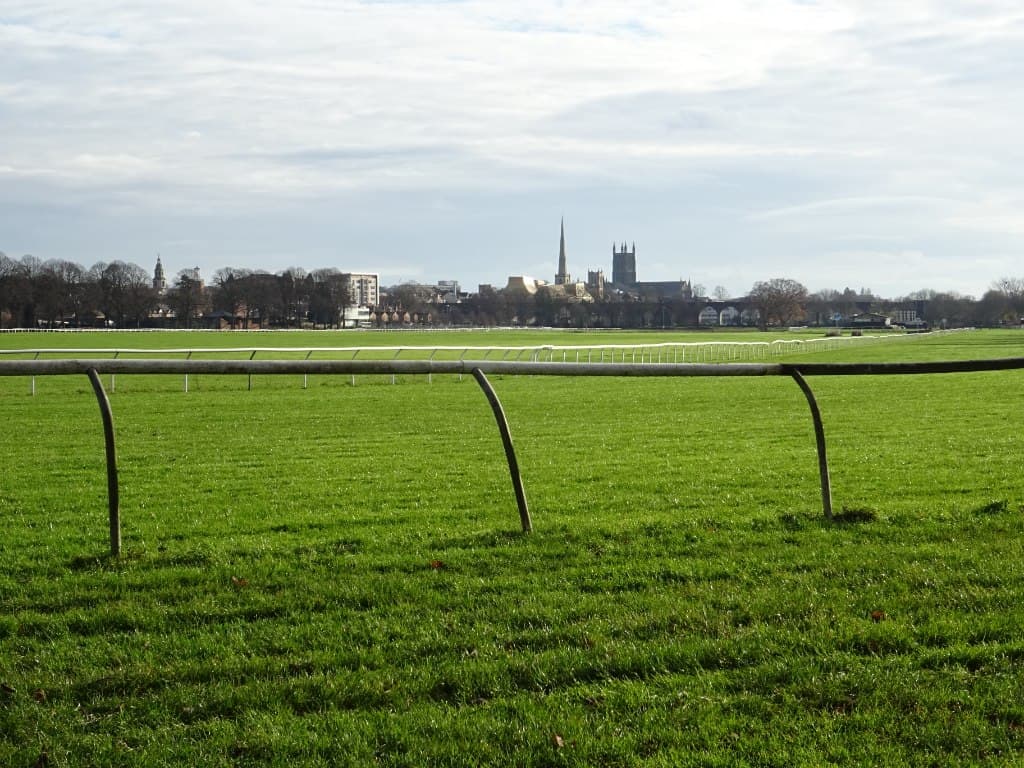
Worcester Racecourse: Complete Guide
Worcester Racecourse guide: summer jumping at Pitchcroft by the Severn, the Fixed Brush Hurdle Series Final, fixtures and over 300 years of racing.
Read more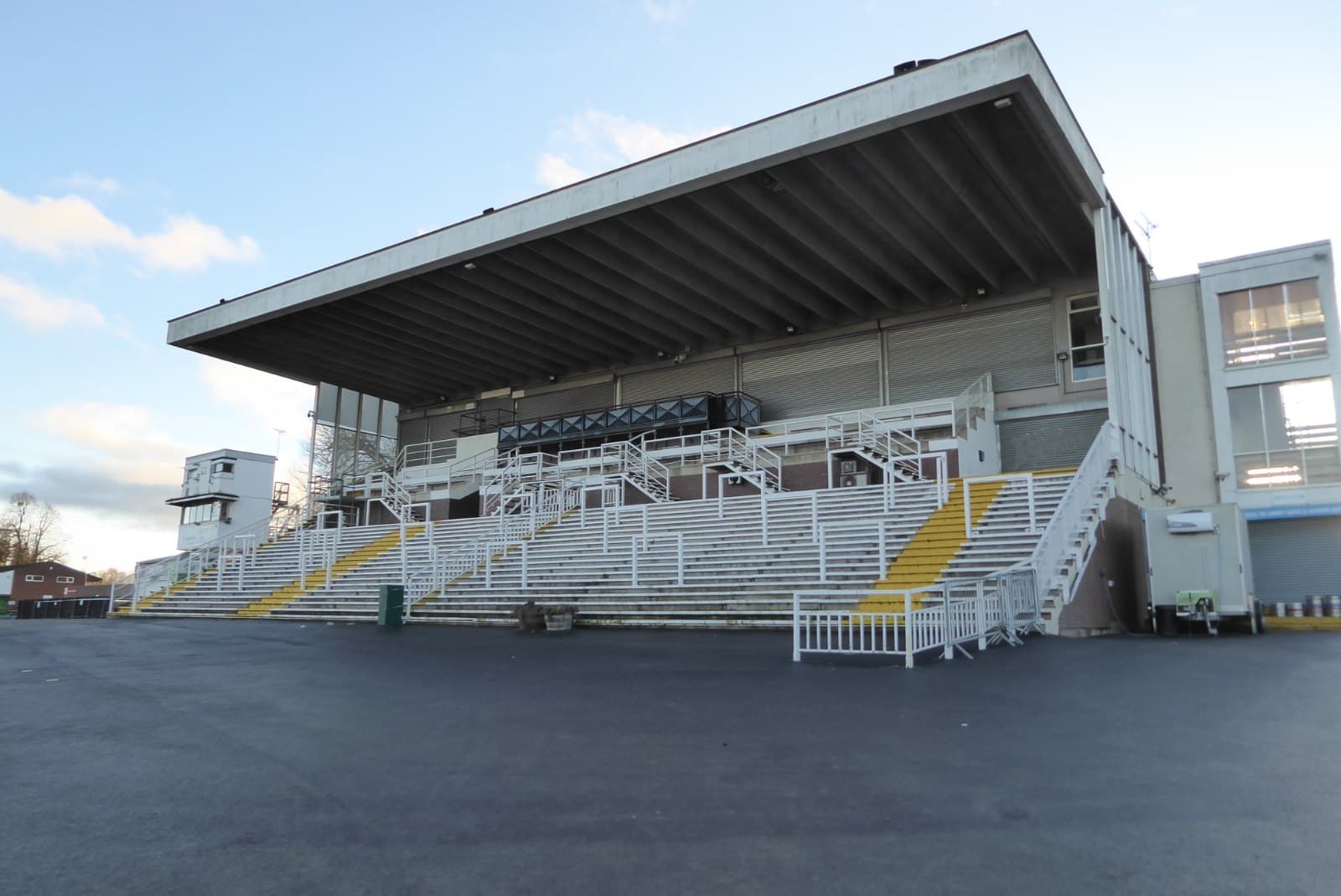
A Day Out at Worcester Racecourse
A day at Worcester — getting there, what to wear, enclosures, food and drink, and insider tips for the West Midlands' riverside National Hunt venue.
Read moreWorcester Festival Guide
Your complete guide to Worcester Racecourse — the summer jump season, the Cathedral backdrop and what makes this Worcestershire track one of Britain's most scenically beautiful racing venues.
Read morePhotos on this page are used under Creative Commons licences. Titles, sources and licence links for each one are on our image credits page.
Research the field with the AI Race Predictor
Our model publishes calibrated win-probability estimates for UK races — a second opinion to understand a race, not tips. It's open about its record: it doesn't beat the market, and we show exactly how it does.
Work it out & learn the basics
Gamble Responsibly
Gambling should be entertaining and not seen as a way to make money. Never bet more than you can afford to lose. If you or someone you know has a gambling problem, help and support is available.