
Founder & Editor · Last reviewed 2026-04-05
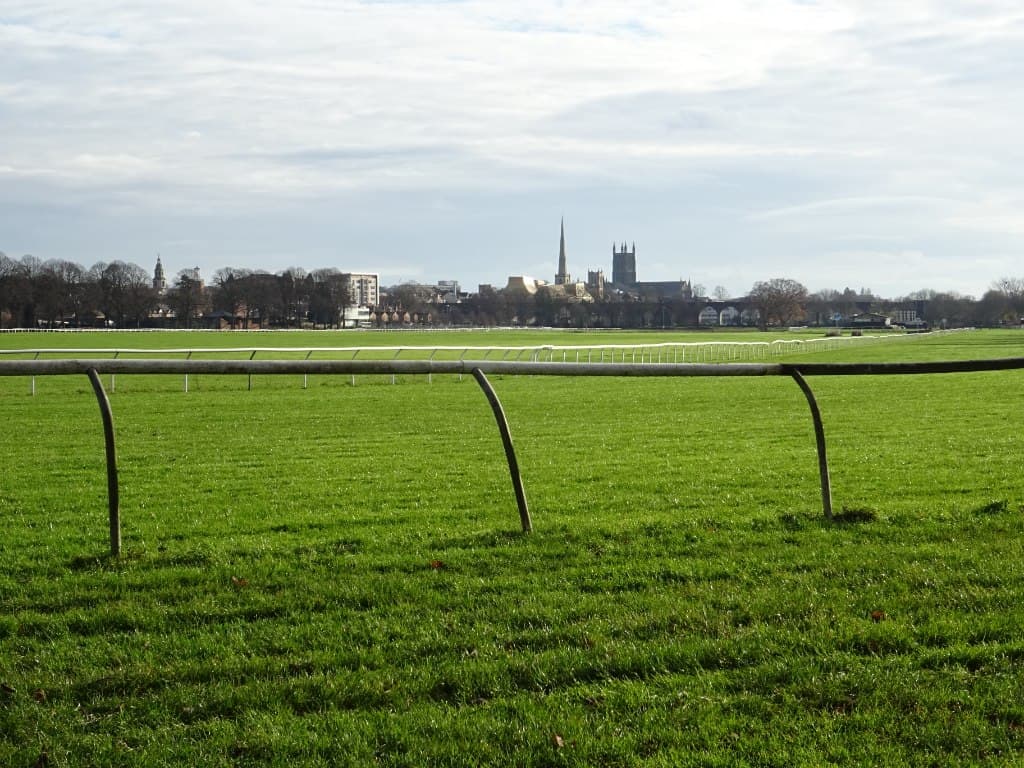
Worcester Racecourse sits on Pitchcroft, a flood meadow on the western bank of the River Severn in the heart of Worcester city. The postcode is WR1 3EJ, and on a clear raceday the Norman tower of Worcester Cathedral — 196 feet of pale stone — is visible from the grandstand over the treeline. That view, more than anything else, tells you what kind of place this is: a working British city that has made space for horse racing since 1718, when the first properly organised meetings were held on this stretch of riverside ground.
Worcester is a National Hunt course exclusively — no Flat racing, no mixed card. The circuit is left-handed, approximately one mile and four furlongs round, built on the flat flood plain of the Severn. The going here is typically good to soft through the summer season; because Worcester races from May to November, the heavy ground that defines winter jumping elsewhere is rarely a factor. That seasonal window puts Worcester in a distinct group alongside Perth, Cartmel, Newton Abbot, and Stratford as part of the warm-weather National Hunt circuit — courses that give jumps horses and their trainers a competitive programme when the major winter venues have gone quiet.
Who this guide is for
- First-time visitors will find the section on getting there (Worcester Foregate Street station is a ten-minute walk from the entrance) and the facilities overview most useful before they travel.
- Regular racegoers planning a repeat visit should check the fixtures calendar, the going tendencies, and the betting guide for course-specific angles.
- History-focused readers will want the history section (section 07), which covers the course's origins in 1718, the impact of Severn flooding, and Worcester's role in the development of summer jumping.
- Trip planners should read the atmosphere and planning section (section 10) alongside the getting there guide for practical detail on parking, trains, and what to expect on arrival.
Quick decisions
- Best time to visit: Fixed Brush Series Final day in late September, which the course calls its premier race day; Ladies Day on the first Saturday in June draws the bigger crowd
- Best vantage point: the main grandstand, from which you can watch the full circuit including the run-in — and the Cathedral tower beyond
- Nearest station: Worcester Foregate Street, approximately ten minutes on foot via the riverside path
- Car parking: on the Pitchcroft meadow — arrive early on big days, the grassland surface can soften after rain
- Going: good to soft is the norm through summer; rarely firm, rarely heavy
- Trainers to watch: Nigel Twiston-Davies (30 miles from Naunton), Olly Murphy (25 miles from Stratford-upon-Avon), Tom George (35 miles from Slad)
- Bring: a light layer — the riverside can generate a breeze even in July
The course stages around 20 single-day fixtures a season, from April to October. Its biggest race is the Fixed Brush Hurdle Series Final, a Class 2 novices' handicap hurdle over 2m 4f in late September. There is no Worcester Cup: this guide used to name one, and no race of that name has ever been run here. For a city of 100,000 people, Pitchcroft gives Worcester a sporting asset that few comparably sized English cities can match.
The geographic position of the course is worth spelling out. Pitchcroft sits immediately west of the city centre, with the River Severn running along its western boundary. Worcester Cathedral — a Norman and Gothic structure whose construction began in 1084 — stands half a mile to the south-east, and its tower is visible from the grandstand terrace on any clear day. This combination of riverside flood plain, urban setting, and medieval backdrop is what gives Worcester its identity. It is not a course built in a rural valley away from the city, as many British racecourses are — it is embedded in the urban fabric of Worcester in a way that makes arriving by train and walking to the course feel like a natural part of the day.
The trainers who dominate the Worcester fixture list come from the surrounding region. Nigel Twiston-Davies runs his stable at Naunton, 30 miles to the south-east; Olly Murphy operates from Stratford-upon-Avon, 25 miles east; Tom George trains at Slad in the Cotswolds, 35 miles south. These three yards alone account for a substantial proportion of Worcester's summer runners, and their familiarity with the left-handed flat circuit gives their horses a structural advantage that is worth factoring into any form assessment.
This guide covers the course layout, the fixture calendar, the facilities on offer, how to get there, and the history of racing at Pitchcroft. Companion guides on summer jumping at Worcester, and the betting guide go deeper on those individual topics. Whether you are making your first visit or have been coming here for years, the detail you need is below.
Bet on Worcester
Place your bets on Worcester races with a trusted bookmaker.

Promo code BETFRED50. New customers only. Register, deposit with a Debit Card, and place a first bet of £10+ at Evens (2.0)+ on Sports, to be settled within 7 days, to get £30 in Sports Free Bets and £20 in Bet Builder Free Bets within 24 hours of settlement. 7-day expiry. Eligibility & payment exclusions apply. Full T&Cs apply. Take Time to Think. BeGambleAware.org. 18+. Full T&Cs.

Promo code R30. New UK customers only, 18+. Register, deposit £10 or more, then place a £10 single cash bet at odds of 1/2 (1.5) or greater on any sports market (excluding Virtuals). Once the qualifying bet settles you get £30 in Free Bets (3 x £10) — the qualifying bet can win or lose. Free Bets are valid on any sports market excluding Virtuals, expire in 7 days, are non-withdrawable and must be used in full. Excluded deposit methods apply (including PayPal, Apple Pay, Skrill and NETELLER). Named bets such as Lucky 15 do not qualify. If you cash out the qualifying bet, or it is voided, you are no longer eligible for the offer. Ends 31.12.26. Full T&Cs apply. Please gamble responsibly. BeGambleAware.org. 18+. Full T&Cs.

Promo code BET40GET20. New UK customers, 18+. Register with the code and place a first bet of £40 or more at Evens (2.0) or greater. Receive 2 × £10 free bets: the first credited automatically once the qualifying bet settles, the second 24 hours later. Free bets must be placed at minimum odds of 4/1 (5.0), expire 24 hours after credit, and the free-bet stake is not returned with winnings. Debit card deposits only. Take Time to Think. BeGambleAware.org. 18+. T&Cs apply. Full T&Cs.

50% of your first-day net losses refunded as a free bet, capped at £25. New UK customers aged 18+ only. To qualify, deposit and place a first bet of £10 or more on any sport at minimum odds of evens (2.00), then place at least two further bets on different events, each worth at least 50% of your largest bet, all at evens (2.00) or greater. Losses are counted from your first settled bet until 23:59 the same day. Place a qualifying £10+ bet and you are guaranteed at least a £5 free bet. Bets placed at SP, void bets, cashed-out bets and bets struck with free bets do not count towards the offer. The free bet is credited the day after your qualifying bets settle and must be used within 7 days, after which it expires. It can be used at odds from 1/4 (1.25) up to 250/1 on singles and straight accumulators, but not on Trixie, Patent or Yankee style multiples. Free-bet stake is not returned with winnings. One offer per person, household, address, IP address and device. E-wallet deposits may not qualify, so check the cashier before depositing. Customers registered with GAMSTOP cannot claim. KYC identity verification must be completed before the free bet is credited. Take Time to Think. BeGambleAware.org. 18+. T&Cs apply. Full T&Cs.

New customers, 18+. Choose the sports bonus at sign-up, make a first deposit and receive a 100% bonus up to £50 in your Sports Bonus balance. To convert the bonus to cash, wager it 10x within 30 days. Single bets below Evens (2.00) do not qualify; accumulators do not qualify if any selection is below 1/2 (1.50). Virtual Sports, voided, cancelled, drawn, cashed-out and free-bet wagers do not count towards wagering. Only the first settled bet per event counts. Withdrawing before the wagering requirement is met forfeits the bonus balance including bonus winnings. Real-money funds are used before bonus funds. Deposits via Skrill or Neteller are not eligible. Not valid in conjunction with other promotions. Odds, bet and payment limits apply. 10bet general and promotion T&Cs apply. BeGambleAware.org. 18+. Full T&Cs.

New customers in Great Britain and Republic of Ireland, 18+. Place a £10 fixed-odds qualifying bet at minimum odds of 1/2 (1.50) — single or each-way (only the win part counts), pre-event or in-play, not cashed out early, within 28 days of opening the account. Receive up to £60 in bonuses credited over three days: 3 × £10 fixed-odds free bets (the first on settlement, then 24 and 48 hours later) plus 3 × £5 Total Goals FOOTBALL spread bets and 3 × £5 racing Winning Favourites spread bets, with a £1 racing Race Index spread bet as an extra on top. The spread bets need a full spread-betting account, opened within 28 days of the fixed-odds account and subject to Spreadex's eligibility and appropriateness checks. Free-bet stakes not returned with winnings; free bets valid 28 days from issue. IMPORTANT: the £5 credits are SPREAD bets — sports spread betting carries the risk that losses can exceed your stake. Sports spread-betting customers do not have Financial Ombudsman or FSCS recourse. Take Time to Think. BeGambleAware.org. 18+. T&Cs apply. Full T&Cs.

Promo code WELCOME15, entered under My Bonuses after registering. New UK customers, 18+. Place a first qualifying bet of at least £10 from your cash balance at odds of evens (2.0) or greater within 7 days of opening the account. Once the qualifying bet fully settles you receive £15 in free bets, credited as 3 x £5 tokens with set uses: one £5 accumulator free bet (minimum 4 legs, each leg at 2/5 or bigger), one £5 sports free bet (any market at evens or bigger) and one £5 Sub Cover free bet (selected football player markets at evens or bigger). Free-bet stakes are not returned with winnings. Free bets expire 7 days after they are credited. Void, cashed-out and partially cashed-out bets do not qualify. One offer per customer. Confirm the current terms on BetGoodwin's own welcome-offer page before claiming. Take Time to Think. BeGambleAware.org. 18+. T&Cs apply. Full T&Cs.

New UK customers, 18+. Minimum deposit £10. Place a £10 qualifying single on sports (excluding virtuals) at minimum odds of 1/2 (1.50), settled within 14 days. Deposit-method exclusions apply. Receive £30 in free bets (stake not returned), split £20 for sportsbook use (2 x £10) and £10 for Bet Builder only (2 x £5); Bet Builder does not cover horse racing. Free bets must be accepted within 7 days and expire 7 days after acceptance. No promo code required. Best Odds Guaranteed on UK & Irish racing, subject to having staked over £25 in the previous seven days. Operated by LiveScore Betting and Gaming (Gibraltar) Ltd, UKGC 56859. Confirm the current terms on LiveScore Bet's own promotions page before claiming. Take Time to Think. BeGambleAware.org. 18+. T&Cs apply. Full T&Cs.
18+. BeGambleAware.org
The Course
The Course
Layout and Direction
Worcester is a left-handed circuit of approximately one mile and four furlongs. The track is built on the flat flood plain of Pitchcroft, which means there is no significant gradient for most of the circuit — the terrain is level and the bends are fairly wide. Horses run the full circuit for the longer chases and hurdle races; shorter trips use a spur off the main oval. The course is relatively flat compared to tracks like Cheltenham or Ludlow, but the finish line does have a slight upward gradient that becomes relevant in the closing stages of close races.
The shape of the course rewards horses that travel well through a race rather than those who need to be produced with a late burst. Because the circuit is flat and the going through the summer months is typically good to soft, races at Worcester often develop as honest galloping contests — the winner is generally the horse that has jumped consistently and conserved energy in the middle portion. Jockeys who know the track tend to settle horses on the inner and avoid expending energy early on the long back straight.
Fences and Hurdles
The fences at Worcester are considered fair — neither particularly stiff nor particularly forgiving. There are 11 fences on the full circuit, and they are well-maintained on the Pitchcroft turf. The open ditch is sited on the back straight, and horses approaching it at pace need a confident jumper on board; inexperienced chasers can make mistakes here, particularly when racing in a larger field where sight lines at the fence can be disrupted. The hurdles course runs inside the chase course, as is standard on British tracks.
One technical feature worth noting is the fence placement relative to the bends. Coming off the final bend into the home straight, horses meet a fence with around two furlongs to run. This is the last fence, and a mistake here can be decisive — a horse that stands back and jumps well gains two or three lengths of momentum heading to the finish, while one that fiddles or clips the top is immediately on the back foot. In competitive handicap chases, the quality of jumping at that final fence explains a disproportionate number of results.
The Run-In
From the last fence to the winning post is approximately 210 yards, with the ground rising slightly as horses approach the line. It is not a steep finish by any means — nothing like the famous hill at Cheltenham — but on a hot summer afternoon, after a strongly run race over two and a half miles, that slight incline is enough to find out horses that have been ridden hard earlier. Trainers and jockeys who target Worcester's summer fixtures understand this: horses need to be fit and they need to jump fluently, because there is no shortcut on the run-in.
The run-in is easily visible from the main grandstand, and this is one of the reasons the grandstand position is the most popular on the course. Racegoers can watch the horses travel through the back straight via the large screen, then turn to watch the live action as the field enters the home straight and clears the last fence. The finish line is directly in front of the stands.
Going and Ground Conditions
The going at Worcester through the summer months is most commonly good to soft or good. The Pitchcroft flood meadow sits directly alongside the River Severn, and the water table in the soil is naturally high — this means the ground retains moisture more readily than many inland courses, and rarely becomes firm even during a dry July or August. Drainage work carried out in the 2000s improved the surface significantly, but the underlying meadow character remains.
What the Pitchcroft setting also means is that firm ground is truly unusual at Worcester. Horses that struggle to act on quick ground — a significant subset of National Hunt horses who are bred and trained for soft conditions — can often run at Worcester in the summer without the ground presenting a problem. This is one reason why trainers like Philip Hobbs, who bases his operation at Minehead in Somerset and targets summer jumping, include Worcester in their fixture planning. A horse that needs give in the ground can run here in June without the trainer needing to wait until October.
The counterpoint is the winter flooding. Worcester closes for extended periods when the River Severn rises and inundates Pitchcroft. This typically happens between December and February, and the course may lose four to six weeks of fixtures in a bad winter. The 2019–20 season saw particularly severe flooding, with the course closed through much of January and February. Racegoers and professionals who follow Worcester accept this as part of the track's character — it is the cost of the riverside setting that makes the summer racing so attractive.
Course Records and Distances
The standard trip for Worcester chases runs from two miles to three miles one furlong. Hurdle races are run from two miles to two miles six furlongs. The shortest trip on the card — two miles — is the most competitive category at Worcester and produces strong fields in the summer, particularly in the novice hurdle division where horses from the Midlands and South West stables compete week on week.
No official course record for fastest time is widely cited for Worcester, as the going variation from summer to autumn means raw times are difficult to compare. What trainers do track is a horse's performance relative to the field — particularly whether a horse that ran creditably over two miles here in June can reproduce that form when stepped up to two miles four furlongs in August, when the ground has typically eased further.
How Worcester Compares to Nearby Tracks
Racegoers who also visit Stratford — 25 miles to the east — will find Worcester's track to be more galloping and less tight. Stratford has sharper bends and rewards handier horses; Worcester's wider oval suits longer-striding types who can be held up in the early stages. Hereford, 25 miles to the south-west, has a similarly flat circuit but a right-handed orientation, and the going there tends to be softer through the winter.
For punters, the distinction between Worcester and Stratford is practically useful: a horse that ran well at Stratford — where sharp jumping and good positioning on the bends matters — may not transfer its form directly to Worcester's more open galloping track. The reverse is also true: a big-striding chaser that found Stratford's bends coming around too quickly can be suited by the longer straights at Worcester. This is the type of course-to-course comparison that the Worcester betting guide covers in more detail.
Ludlow, 28 miles to the west in Shropshire, operates a right-handed undulating track that is more demanding on stamina than Worcester's flat circuit. Horses that have performed well at Ludlow in autumn — a course where the ground gets testing in October and the rises and falls in the terrain demand real fitness — often handle Worcester's summer circuit well when the going is comparable; the reverse transfer requires more caution because Ludlow's profile is physically more demanding.
The Flood Plain and Its Racing Consequences
The Pitchcroft flood plain is not just a picturesque setting — it has direct consequences for how the course races and drains. The meadow sits at river level, and the soil profile is alluvial: clay and silt deposits built up over centuries of flood events. This alluvial base drains more slowly than the free-draining chalk or limestone subsoils found at many other British racecourses, and it is the reason that Worcester's going rarely becomes firm even in a dry summer.
The drainage work carried out in the 2000s introduced a more formal system of drains and pumping infrastructure beneath the Pitchcroft surface. This reduced the time required to recover the ground after flooding and improved the consistency of the going through the racing season. Before the drainage improvements, a single wet June could leave the ground soft for the entire summer programme; post-improvement, the surface recovers more quickly, and the going is more reliably in the good to soft range that trainers and punters expect.
From a racing perspective, this consistency of going is valuable. Trainers targeting Worcester's summer fixtures can plan confidently around the going report — the spread between the best and worst ground conditions through the season is narrower than at many other venues. Horses entered for Worcester in July can be expected to find going in the good to soft range with a reasonable degree of certainty, absent unusual weather.
What Horses Win at Worcester
The physical profile of the Worcester winner that recurs most often in the summer programme is a horse with a good jumping technique, a front-running or pace-pressing style that allows it to dictate early, and the fitness to maintain gallop on the run-in. The flat circuit with its slight uphill finish rewards horses that have been trained to peak fitness by their handlers — in summer jumping, where the ground is consistent and the demands on a horse's physique are lower than in soft winter conditions, fitness and jumping quality are the primary differentiators between horses of similar rated ability.
Horses that like to be held up and finish fast are at a slight disadvantage at Pitchcroft compared to a course like Cheltenham, where a late run up the hill has produced countless dramatic finishes. At Worcester, the finish is not steep enough to provide the same dramatic acceleration opportunity; a horse that is five lengths behind entering the home straight at the last fence has a short run-in to make up that ground, and on a flat surface, the early-pace horses tend to hold on.
Section takeaway: Worcester's flat left-handed circuit on the Pitchcroft meadow rewards honest galloping horses and clean jumpers. The alluvial flood plain produces consistent good to soft going through the summer, the fences are fair, and the slight rise on the run-in tests fitness in the closing stages of competitive handicaps.
Key Fixtures & Calendar
Fixtures and Racing Calendar
The Season at a Glance
Worcester's racing season runs from May to November, with the bulk of fixtures concentrated between June and October. This puts the course squarely in the warm-weather National Hunt bracket — a group that includes Perth, Cartmel, Newton Abbot, and Stratford. While the major winter jumping venues such as Cheltenham, Kempton, and Leopardstown are building towards the spring festivals, Worcester is either in its quiet winter period or dealing with Severn flooding. When spring comes and those courses move into their summer breaks, Worcester opens for business.
The course typically stages between 15 and 18 fixtures per season. In a good year — one without significant flooding disruption to autumn scheduling — meetings run on both weekday and weekend dates from the end of May through to late October. Evening fixtures in June and July are a regular part of the calendar, taking advantage of British Summer Time and the longer days.
Fixed Brush Series Final Day
Worcester's most important race is the Fixed Brush Hurdle Series Final, a Class 2 novices' handicap hurdle over 2m 4f run on the season's finale raceday in late September. It is the final of a series whose qualifiers run at Worcester and Southwell from early May, and the raceday carries £70,000 in total prize money. The 2026 running is Friday 25 September. An earlier version of this page named a Worcester Cup as the course's signature race; no such race exists.
The course's biggest crowd, rather than its best racing, comes on Ladies Day, the first Saturday in June. More than 9,000 attended in 2024 and over 10,000 in 2025, and the Centre Course enclosure opens specifically for the day. Hospitality packages sell out in advance, the grandstand fills, and the parade ring is busy before each race. Local trainers including Nigel Twiston-Davies and Olly Murphy often have runners on this card. It is the day when Worcester feels closest to a proper jumping festival, even though the course does not run a multi-day festival equivalent to Cheltenham's or Sandown's.
Summer Jumping Programme
Worcester's role in the summer jumping circuit extends well beyond the September final. Between June and September, the course provides a weekly or fortnightly opportunity for horses across a wide spread of the National Hunt ranks to run in competitive conditions. Novice hurdles in June and July attract horses that have just completed their first jumping season and are being given experience before the winter campaign begins. Handicap chasers that are not quite up to the class level of the winter festivals find competitive fields and fair conditions at Worcester.
The summer jumping guide explains the broader context of this circuit in detail. In brief: horses that handle good to soft ground but struggle on the soft and heavy going of winter often build their records at summer tracks. Form at Worcester through the summer translates well to Stratford, Newton Abbot, and Cartmel — not to the winter heavyweights, but within the summer division it is a reliable form guide.
Autumn Fixtures
As October approaches and the season moves towards its close, Worcester's fixtures take on a different character. The ground typically eases from good to soft into soft through September and October. Autumn meetings attract horses stepping back into competitive action after a summer break, and trainers who have been purposely avoiding soft winter ground will often target Worcester's October fixtures as a final run before putting horses away for the year.
The autumn programme at Worcester also serves as a bridge for horses moving up in class. A handicapper that has been competitive at Worcester through the summer on good to soft may be stepped up into a slightly stronger contest in October as trainers assess which horses are ready for the better prize money of winter jumping. This pattern makes the October fixtures worth monitoring — they are not always the most competitive meetings of the season, but they can reveal horses that are improving and being aimed at more significant targets.
Midweek and Evening Racing
A substantial proportion of Worcester's fixtures are midweek meetings, many of them scheduled on Tuesday, Wednesday, or Thursday afternoons. The midweek card serves a specific audience: racehorse owners who can get to a meeting during the working week, professional punters who follow the summer jumps circuit closely, and racegoers from nearby cities who treat a day at Worcester as a straightforward half-day trip. Birmingham is 30 miles to the north, and a Tuesday afternoon at Pitchcroft is a manageable excursion for those who can arrange the time.
Evening racing is concentrated in June and July, when there are enough daylight hours to complete a full card after 5:30pm. The atmosphere at evening meetings tends to be more relaxed than weekend afternoon fixtures — the crowd is smaller, the queues are shorter, and there is a particular pleasure in watching jump racing in the long summer evening light with the Cathedral tower visible in the distance.
Section takeaway: Worcester runs around 20 single-day fixtures between April and October. The Fixed Brush Hurdle Series Final is the headline race, but the wider summer programme provides consistent opportunities across the National Hunt ranks. The autumn calendar acts as a final window before horses are prepared for the winter campaign.
Facilities & Hospitality
Facilities and Hospitality
Enclosures and Admission
Worcester operates three main enclosures on racedays: the Club enclosure, the Tattersalls enclosure, and the Course enclosure. The Club enclosure provides access to the main grandstand, the best sightlines over the finish line, and the restaurants and private dining facilities. Tattersalls — the traditional middle enclosure at British racecourses — gives access to the betting ring, the parade ring viewing area, and a range of bars and refreshment outlets. The Course enclosure is the lowest-price option, suited to those wanting to take in the atmosphere without the premium cost.
Ticket prices vary by fixture and date. The peak days, Ladies Day in June and Fixed Brush Series Final day in late September, attract the highest admission charges and sell out hospitality packages in advance. Standard midweek fixtures are considerably cheaper, and some meetings include family deals or discounted entry for children. The course recommends booking online ahead of any major fixture to avoid queues at the gate on the day.
The Grandstand and Viewing
The main grandstand at Pitchcroft is a single-storey structure that runs along the home straight facing the finish line. It is not a large stand by the standards of major jumping venues — Worcester holds around 5,000 racegoers — but the flat terrain of Pitchcroft means that sightlines from the grandstand cover most of the circuit. The big screen positioned on the far side of the course relays the race from the back straight, so racegoers can follow the action throughout.
From the grandstand terrace, on a clear day, Worcester Cathedral's tower is visible over the treeline to the south-east. This is the view that defines the course's identity: racing in the foreground, a Norman cathedral in the background, the River Severn running to the left of the circuit. It is a setting that few other British racecourses can match for its combination of urban proximity and natural riverside character.
Hospitality and Dining
Worcester offers corporate hospitality packages centred around the Club enclosure facilities. Private dining rooms and boxes can be booked for groups, with catering provided by the course. The hospitality operation is not as extensive as at major festival venues — this is a smaller track — but the packages are well-regarded for the price point and the intimacy they offer. A group of 10 to 20 people can book a private room with a direct view of the finish line and catered lunch for a cost that would be a fraction of the equivalent at Cheltenham or Ascot.
The main restaurant in the Club enclosure operates a set menu on racedays. Booking is recommended for any summer weekend meeting and essential for Ladies Day.
Bars and Refreshments
Bars are spread across all three enclosures. The range is what you would expect at a mid-tier British racecourse: draught lager and ale, a wine selection, soft drinks and hot beverages. Food outlets serve hot food through the afternoon — burgers, chips, and similar fare in the Tattersalls and Course enclosures, with a more structured menu in the Club.
The Pitchcroft setting means that most of the bar and food infrastructure is semi-permanent rather than built into a fixed structure. On racedays, the course sets up marquees and temporary facilities on the meadow, which gives it a slightly festival-like character that the permanent brick grandstands of larger venues do not share. This adds to the summer feel of racing at Worcester — eating and drinking outdoors on the flood meadow, with the Severn a hundred yards away.
Parade Ring and Winners' Enclosure
The parade ring at Worcester is positioned close to the grandstand and easily accessible from both the Club and Tattersalls enclosures. Racegoers can stand at the rail and watch horses walking in the ring before racing — at a course of this size, you can get truly close to the horses, and the parade ring observation is one of the better ways to assess a horse's physical condition and mental state before committing to a bet.
The winners' enclosure is adjacent to the parade ring and directly in front of the weighing room. After each race, connections, jockeys, and the winning horse gather here, and racegoers with access to the area can be very close to the post-race interviews and celebrations. It is the kind of intimacy that is difficult to achieve at larger venues where crowd barriers create more distance.
Section takeaway: Worcester's facilities are well-suited to a course of its size and character. The grandstand, parade ring, and bars cover the essentials, and the hospitality operation offers good value for groups who want a private experience without the premium pricing of major festivals. Booking ahead is necessary for busy days.
Getting There
Getting There
By Train
The nearest station to Worcester Racecourse is Worcester Foregate Street, which is approximately ten minutes' walk from the Pitchcroft entrance via the riverside path. This is an easy and pleasant route: the path runs alongside the River Severn and deposits you at the course's main entrance without the need for a taxi or bus. On summer evenings this walk is particularly straightforward — the path is well-lit and well-used on racedays.
Direct services to Worcester Foregate Street run from Birmingham New Street, with the journey taking around 45 minutes. From London Paddington, the Cotswold Line service reaches Worcester via Moreton-in-Marsh and Evesham in approximately two hours and 30 minutes. The Great Western Railway service from Paddington to Hereford, which stops at Worcester, operates a regular daytime frequency. Coming from the south, services from Bristol and Cheltenham Spa connect at Birmingham or run directly depending on the timetable.
The second station in the city — Worcester Shrub Hill — is around 15 minutes' walk from the course and handles services from the London Midland corridor and the Malvern Hills line. Some racegoers travelling from certain directions will find Shrub Hill more convenient depending on their origin; both stations are workable. For most visitors arriving from Birmingham or London, Foregate Street is the default.
By Car
Worcester Racecourse is located at Pitchcroft, WR1 3EJ, which is in the heart of the city close to the river. From the north and from Birmingham, take the M5 southbound to Junction 7 (Worcester north), then follow the A44 into the city centre. From the south, take the M5 northbound to Junction 7 and approach from the same direction. From the west (Hereford, Wales), the A449 or A44 bring you into Worcester directly. Sat-nav to WR1 3EJ is reliable.
Parking at Worcester Racecourse is on the Pitchcroft meadow itself, which is a grass surface. On a dry summer afternoon this is perfectly manageable, but after rain the meadow surface can soften considerably, and arriving later in the day on a wet fixture can mean parking on ground that is noticeably soft underfoot. Arriving 45 minutes before the first race gives you a reasonable choice of parking position. On Ladies Day and other major fixtures, the car park fills quickly and later arrivals may be directed to overflow.
From Major Nearby Cities
From Birmingham (approximately 30 miles north): the M5 southbound to Junction 7 is the most straightforward route, with a journey time of 40 to 55 minutes depending on traffic. The A38 is an alternative if the motorway is congested. Several trainers based near Cheltenham make the 30-mile trip to run horses at Worcester — the same route in reverse is a simple drive for racegoers based south of the city.
From Stratford-upon-Avon (approximately 25 miles east): take the A422 west toward Alcester and connect to the A435 into Worcester. This journey takes 35 to 45 minutes. Stratford is the base for trainer Olly Murphy, and racegoers from that area often combine Worcester and Stratford fixtures in the same summer programme.
From Cheltenham (approximately 30 miles south-east): take the A4019 and A44 north-west toward Worcester. This is a cross-country route rather than a motorway route and takes 40 to 50 minutes in normal traffic.
Practical Notes
The Pitchcroft meadow is not fully fenced in the way that an urban stadium car park would be — the site is an open flood plain, and the temporary infrastructure on racedays reflects this. Arriving in smart shoes on a wet day is inadvisable; the ground at the entrance and in the car park can be soft. Flat shoes or boots are sensible for any fixture after rain. The riverside path from Foregate Street station is paved and presents no such issue for those arriving by train.
Public transport is the recommended option for evening fixtures in June and July, when return train services to Birmingham run until late and the walk back to Foregate Street along the river is straightforward in the long evening light.
Frequently Asked Questions
History of Worcester Racecourse
History of Worcester Racecourse
Origins on Pitchcroft, 1718
Racing at Pitchcroft has been recorded since 1718, making Worcester one of the oldest surviving jump venues in England. The meadow on the western bank of the River Severn had been used for public recreation in the city for centuries before organised horse racing began, and its flat, open character made it a natural site for a racing circuit. The earliest meetings on Pitchcroft were informal by later standards — prize money was modest, the rules were loosely applied, and the organisation resembled a civic event as much as a sporting one — but the site itself was immediately right for racing. The flat ground allowed a proper oval circuit, and the city's position at the confluence of major roads and the navigable Severn made Worcester accessible to horses and spectators from across the Midlands and the Welsh Borders.
By the mid-18th century, Pitchcroft racing had developed a more formal structure. Subscription races and match races between prominent local horses were being organised with published conditions, and the course began to attract runners from further afield. This was the standard pattern for provincial racing in Georgian England: a county town, an accessible open ground, and a local gentry class willing to fund prize money and organise meetings. Worcester followed this model, and the Pitchcroft fixture became an annual event in the city's social calendar.
The 19th Century and the Jump Racing Transition
Through the 19th century, Worcester developed alongside the broader changes in British racing. Flat racing and jump racing coexisted on many courses in this period — the National Hunt rules were not formally codified until 1866, and before that date, steeplechasing and hurdle racing operated under a patchwork of local customs. Pitchcroft hosted both codes at various points in its history.
By the latter half of the 19th century, Worcester was settling into its identity as a primarily jumping venue. The city's geography played a part: the Midlands and Welsh Borders were home to a strong fox-hunting tradition and a culture that valued jumping horses above flat-bred thoroughbreds. Stud farms and training establishments in Worcestershire and the surrounding counties were producing horses bred for the jumping game, and Worcester's fixture programme reflected this.
The River Severn's role in the course's history was already established by this point. Pitchcroft flooded regularly, and meetings had to be abandoned or relocated when the river rose above its banks. This was not unique to Worcester — many riverside courses dealt with flooding — but the Severn's behaviour made the interruptions particularly frequent at Pitchcroft. Records from the 19th century document multiple seasons when the winter flood plain rendered the course unusable for extended periods.
The 20th Century: Consolidation and the Summer Identity
The 20th century saw Worcester consolidate its position in the National Hunt calendar while gradually shifting its fixture programme toward the summer months. This was partly a pragmatic response to the flooding problem — by concentrating meetings from spring to autumn, the course could avoid the worst of the Severn's winter behaviour — and partly a reflection of the growing demand for summer jumping among trainers and owners who wanted to keep horses active year-round.
The inter-war period was difficult for many provincial racecourses, as the economic pressures of the 1920s and 1930s squeezed prize money and attendance. Worcester survived, but the meetings of this era were often small fields and modest competitive standards. The post-war recovery in British racing helped Pitchcroft as it helped the sport more broadly, and by the 1960s and 1970s Worcester was running a reliable summer programme that attracted horses from across the Midlands and South West.
Flooding and Resilience
The relationship between Worcester Racecourse and the River Severn is the defining feature of the course's history. No other fixture in British racing is so directly shaped by a natural waterway. In bad flood years — 1947, 2000, 2007, 2019–20 among the most severe in recent memory — Pitchcroft has been submerged to a depth of several feet, rendering the surface unusable for weeks at a time. The course has always recovered.
The 2007 flooding was particularly severe: in July 2007, the River Severn broke its banks in an event that affected much of Worcestershire and Gloucestershire, and Pitchcroft was heavily affected. The course was closed and required extensive remedial work before racing could resume. This happened during what should have been the peak summer programme, and the disruption to the season was significant. Despite this, no serious case was made for moving racing away from Pitchcroft — the site's history, its urban accessibility, and its character were considered too important to abandon.
The Modern Era
The modern Worcester Racecourse operates under Arena Racing Company (ARC) ownership, which took responsibility for the venue as part of its broader portfolio of British racecourses. Under this management structure, investment in the facilities — including drainage improvements to the Pitchcroft surface — has helped the course manage the flooding risk more effectively, though the fundamental character of the site as a riverside flood plain has not changed and cannot be engineered away entirely.
The course's biggest race today is the Fixed Brush Hurdle Series Final, run in late September on the season's finale raceday. It is a recent arrival: a top-rated fixed brush race used to be run at Haydock Park, and the course's own account is that Worcester then took centre stage. Earlier versions of this page credited a Worcester Cup with that role, a race that does not exist. Local trainers Nigel Twiston-Davies, Olly Murphy, and Tom George — all within 35 miles of Pitchcroft — carry on a tradition of Midlands and South West yards targeting the course that goes back to the earliest days of organised racing on the meadow.
Racing at Pitchcroft has survived floods, wars, economic depressions, and structural changes in the sport's administration for over 300 years. The cathedral tower that has watched over the course since 1718 still stands in the background on every summer raceday.
Famous Moments
Famous Moments at Worcester Racecourse
Morley Street's Early Career Wins
Before Morley Street became a household name in jump racing, the horse built his early reputation at courses like Worcester. Trained by Toby Balding, Morley Street won the Champion Hurdle at Cheltenham in 1991 and again in 1992, becoming one of the most popular hurdlers of his generation. His early races at provincial summer courses including Worcester gave Balding the opportunity to develop the horse's jumping technique in competitive but not overwhelming fields. Morley Street is the most widely cited example of Worcester's role as a development ground for horses that later scaled the heights of the winter festivals.
This pattern — big-race winners beginning their careers in the summer jumping programme — recurs throughout Worcester's history. The course does not stage Championship races of its own, but it has provided early-career foundations for horses that later competed at the top level. For serious followers of jumps form, a promising performance at Worcester in June or July can be a significant early indicator of a horse's quality.
Fixed Brush Series Final Day
There is no Worcester Cup, and this section used to describe one "run annually since the second half of the 20th century". The course's biggest race is the Fixed Brush Hurdle Series Final, and its documented runnings are recent: Presentandcounting for Donald McCain in 2022, Ike Sport for Neil Mulholland in 2023, Flying Fortune for the Bowens in 2024 and Don Virginia for Jonjo and AJ O'Neill in 2025.
Worcester's own preview of the day names O'Brien, Donald McCain, Paul Nicholls, Dan Skelton and Peter Bowen among the trainers it draws, on a card worth £70,000 in total. The other genuinely historic race to carry the course's name is the Worcester Grand Annual Steeplechase, first run in March 1836 and revived once on 4 July 2018 for the course's 300th anniversary, when Bestwork won it at 22/1.
The 2007 Summer Closure and Return
The July 2007 flooding of Pitchcroft was a moment that tested the course's resilience and the loyalty of its followers. The Severn's July 2007 flood was exceptional — the river rose to levels that submerged large parts of Worcestershire and caused damage estimated at hundreds of millions of pounds across the region. Pitchcroft was inundated to a depth that made racing impossible for the remainder of the summer programme.
When racing returned to Worcester after the 2007 closure, the reception from racegoers was strong. The crowd at the first post-flood meeting was larger than would typically be expected for a mid-season midweek fixture, with many racegoers treating the return of racing to Pitchcroft as something worth celebrating. It was not a dramatic racing event in itself — the card was a standard summer programme — but the occasion had a particular quality. The course had survived, the meadow had recovered, and the cathedral tower was still there in the background.
Summer Jumping Records and Milestones
Worcester has been the venue for a number of training and riding milestones that occur naturally when a busy summer programme gives jockeys and trainers the opportunity to accumulate winners quickly. The summer jumping circuit at Worcester, Newton Abbot, Stratford, and Cartmel produces a focused period of competition in which a jockey riding regularly and in form can reach century milestones, and Worcester has hosted several such moments across the decades.
The flat Pitchcroft circuit, with its consistent going and manageable fences, is also a course where horses post their first-ever wins at a relatively high rate. Maiden winners in novice hurdles, first-time-out chasers getting off the mark — these are the everyday results that fill a fixture card, and at Worcester they are attended by the particular pleasure that a summer raceday in a cathedral city provides.
The Atmosphere on a Summer Evening
Some of Worcester's most memorable racedays are not defined by a single result but by the accumulated experience of being at Pitchcroft on a long summer evening in July. The card starts at 5:30pm, the Cathedral glows in the western light, the Severn runs quietly along the perimeter of the meadow, and the racing finishes as the sun drops toward the Malvern Hills. This is not a famous moment in the racing record books — it is simply what Worcester racecourse offers that no other venue in British jumping quite replicates. Racegoers who have been on those summer evenings tend to come back.
Betting Guide
Betting at Worcester Racecourse
Please gamble responsibly. If you feel you may have a problem with gambling, visit BeGambleAware.org or call the National Gambling Helpline on 0808 8020 133.
Understanding the Worcester Betting Landscape
Worcester's fixture programme is part of the summer National Hunt circuit, which has specific characteristics that differ from betting on winter jumps racing. Fields are often smaller in summer — seven or eight runners in a handicap chase is common, rather than the 15 or 20 you might see at a winter festival. Smaller fields reduce the risk of a beaten favourite being caught in traffic or a fallers-chain incident, but they also mean that the favourite wins at a higher rate than in bigger-field winter races. In Worcester's two-mile chase division through the summer of 2024, the market leader won at a rate consistent with summer NH patterns generally — approximately 30–35 per cent across all chases.
The going context is the starting point for any serious betting analysis at Worcester. As covered in the course section, the standard going is good to soft through the summer season. Horses that prefer good to soft or softer are at an advantage over those who act best on good to firm; checking a horse's previous going performances is a basic requirement before backing anything at Worcester.
Course Form and Its Value
Worcester form translates well to a specific group of tracks: Stratford (25 miles east), Newton Abbot, Cartmel, and Perth — the other summer jumping venues. A horse that ran a creditable second or third at Worcester in June on good to soft ground can be expected to perform similarly at Stratford on comparable going. The course types are related enough that the form crosses between them with reasonable reliability.
However, Worcester form does not transfer straightforwardly to winter festivals. A horse that has built a record at summer tracks — Worcester, Stratford, Newton Abbot — is not automatically competitive when stepped up to Cheltenham or Sandown in November. The winter course record, the deeper going, and the step up in class all need to be considered. Punters who treat summer Worcester form as direct evidence of winter festival competitiveness are applying the form too broadly.
Positive signals from Worcester form to watch: a horse winning or running placed in a real gallop at Pitchcroft in heavy-field conditions (where the pace is honest and the result reflects ability rather than luck in running), a first-time-out chaser winning with authority in a novice chase (suggesting physical development and jumping quality that will improve further), and a horse whose previous form is at faster-ground tracks running for the first time on softer ground at Worcester (if it acts, the Worcester run confirms suitability and is transferable).
The Trainers to Track
Trainer proximity to Worcester is a relevant factor. Nigel Twiston-Davies at Naunton (30 miles) has a strong course record and typically runs horses at Worcester that are well-prepared for the specific demands of the left-handed flat circuit. His runners tend to be fit — the Naunton operation works horses hard — and his jockeys know the course well. Twiston-Davies runners at Worcester in the summer should be taken seriously at any price.
Olly Murphy at Stratford-upon-Avon (25 miles) has developed a strong presence at both Worcester and Stratford. His novice hurdlers and chasers at Worcester have performed consistently, and he is particularly active at the summer meetings. Tom George at Slad (35 miles) runs fewer horses at Worcester but when he targets the course, the horses are typically well-prepared.
Philip Hobbs at Minehead targets the summer jumping circuit specifically for horses that need give in the ground. His Worcester runners in June and July are often horses that cannot run in the winter because they need softer conditions — at Worcester in summer they can get the going they require, and this gives the runs additional significance for assessing their form.
The Betting Ring on Raceday
The on-course betting ring at Worcester is active, with rails bookmakers and Tattersalls pitches. The number of bookmakers varies by fixture — Ladies Day and Fixed Brush Series Final day attract more layers than a quiet midweek card. On smaller cards, the prices displayed by on-course bookmakers can be worth comparing to the exchange prices, as the liquidity difference between a big winter festival ring and a summer midweek ring at Worcester is significant.
For those betting on-course, the parade ring observation before each race is worth the time. At a course of Worcester's intimacy — capacity 5,000, parade ring easily accessible from two enclosures — you can watch horses walk and stand with a clarity that is truly useful. A horse that is washed-out, sweating excessively, or walking poorly on the off-fore is observable before the race starts. Conversely, a horse that is bright-eyed, walking with power, and showing a good coat is a positive visual signal. These are not scientific certainties, but they are inputs that professional judges use and that are available to any racegoer at Worcester.
Approach to Worcester Handicaps
Worcester's summer handicap chases are the races that define the course's competitive identity. A few principles that apply consistently: horses drawn in smaller fields have fewer traffic concerns than in larger winter fields; the slightly uphill run-in rewards horses that have been ridden conservatively in the middle portion; and course form from the previous two or three months of the summer programme is directly relevant to form assessment.
The full Worcester betting guide goes deeper on specific race types, trainer stats, and going analysis. The information here is a starting framework.
Atmosphere & Planning Your Visit
Atmosphere and Planning Your Visit
What Worcester Feels Like
Stand on the grandstand terrace at Pitchcroft on a July afternoon and the view tells you more about the course than any description can. To the left, the River Severn runs alongside the perimeter of the meadow. Ahead, the horses are circling in the parade ring. Behind the trees on the far side of the course, the tower of Worcester Cathedral — the tallest structure in the city, at 196 feet — rises above the canopy. The ground you are standing on has been used for racing since 1718.
Worcester does not have the grandeur of Cheltenham's natural amphitheatre or the urban bustle of Sandown. What it has is a specific combination: a cathedral city, a famous river, a course that sits in the middle of it all, and a type of jump racing that you will not find at any other circuit in Britain in the height of summer. Racegoers who come here once tend to understand immediately why people return year after year.
Planning Your Day
The practical planning for a Worcester raceday is straightforward. The train from Birmingham New Street takes 45 minutes, and the walk from Foregate Street station along the riverside path is ten minutes. If you arrive early, the parade ring fills up from about an hour before the first race — this is the best time to see horses at their ease, walking quietly before the bustle of raceday intensifies.
For an afternoon card, plan for four to five hours on-site from arrival to departure. Evening fixtures in June and July run from around 5:30pm and finish before 8:30pm, giving you a compact evening that fits around work commitments. The walk back to Foregate Street at 8:30pm on a July evening, along the Severn path, is one of the better ways to end a raceday in British jumping.
Clothing: smart casual for all enclosures. The Club enclosure has no strict dress code for summer. Flat shoes if you have driven and are parking on the meadow. A light waterproof layer is sensible regardless of the forecast — the riverside produces its own microclimate, and the temperature drops in the shade by the Severn even when the afternoon has been warm.
Making the Most of the Big Days
Ladies Day, the first Saturday in June, is when the course is at its most concentrated: it is the course's most popular day of the year and it sells out. Book tickets and hospitality well in advance — the course website sells out Club enclosure packages two to three weeks before the event in a typical year. Arrive early: the car park fills from 90 minutes before the first race, and those who arrive later are directed further from the entrance.
The Fixed Brush Hurdle Series Final is run on a separate day, the season's finale in late September; recent renewals went off at 15:45 in 2024 and 14:42 in 2025, so read the time off the racecard rather than assuming it. The build-up through the earlier races gives you time to study the card, watch horses in the parade ring, and assess the going report against your morning's form reading. On the biggest days at Worcester, the betting ring is more active and the on-course odds are closer to exchange prices than on a quieter midweek card.
Combining Worcester with Other Local Attractions
Worcester city centre is ten minutes from the course on foot. The Cathedral, which dates to the 11th century and was completed in its current form in the 15th, is open to visitors most days. The Worcester porcelain museum and the Commandery — a medieval building associated with the Battle of Worcester in 1651 — are both within walking distance of the city centre. Racegoers making a full day trip from Birmingham or London often combine a morning in the city with an afternoon at Pitchcroft.
For those who follow the summer jumping circuit, Worcester combines naturally with Stratford-upon-Avon (25 miles) — both courses stage fixtures through the same summer period, and a two-course summer programme is straightforward to plan from a base in either city.
More guides for this course
Share this article
More about this racecourse
All Worcester guides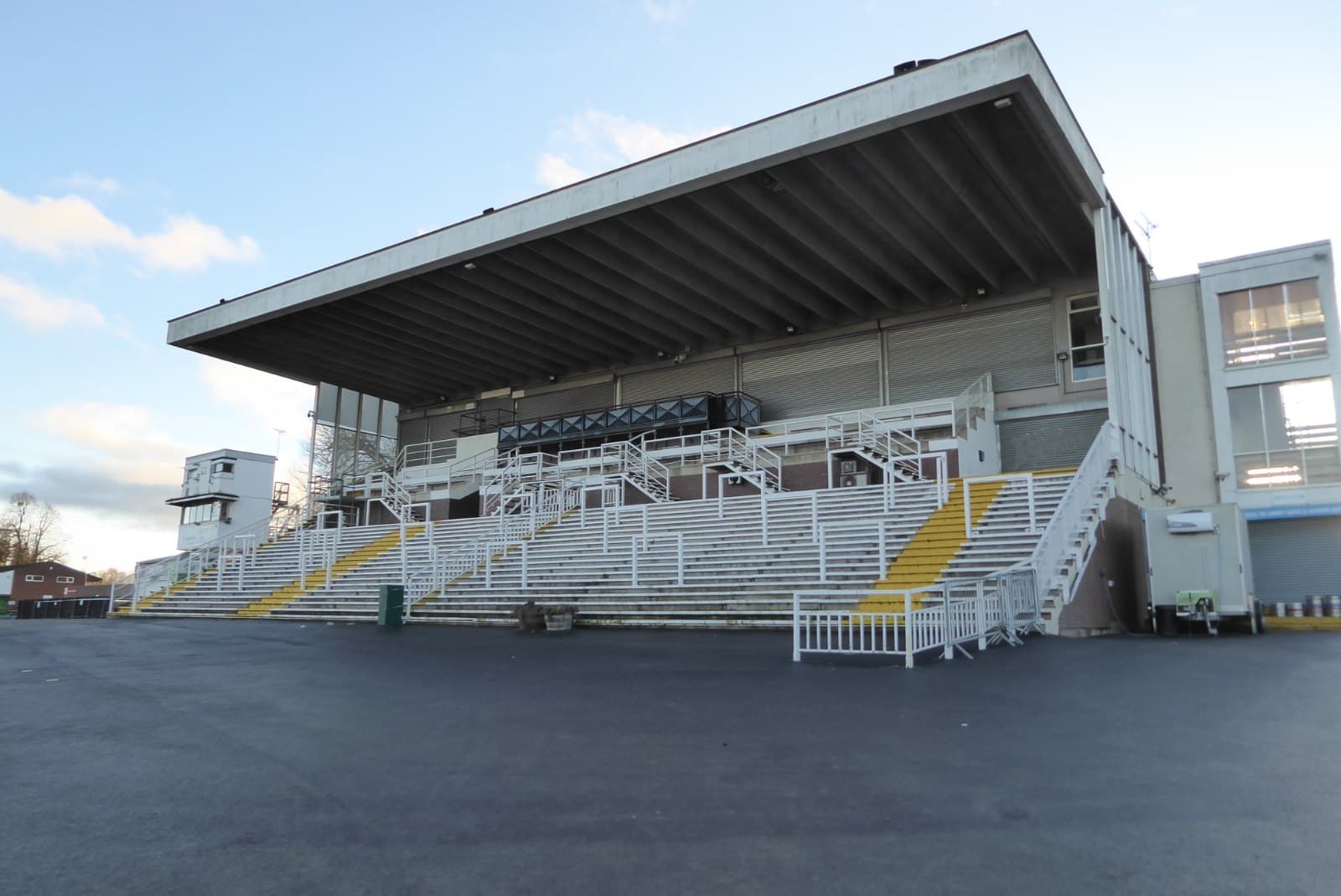
A Day Out at Worcester Racecourse
A day at Worcester — getting there, what to wear, enclosures, food and drink, and insider tips for the West Midlands' riverside National Hunt venue.
Read moreWorcester Festival Guide
Your complete guide to Worcester Racecourse — the summer jump season, the Cathedral backdrop and what makes this Worcestershire track one of Britain's most scenically beautiful racing venues.
Read more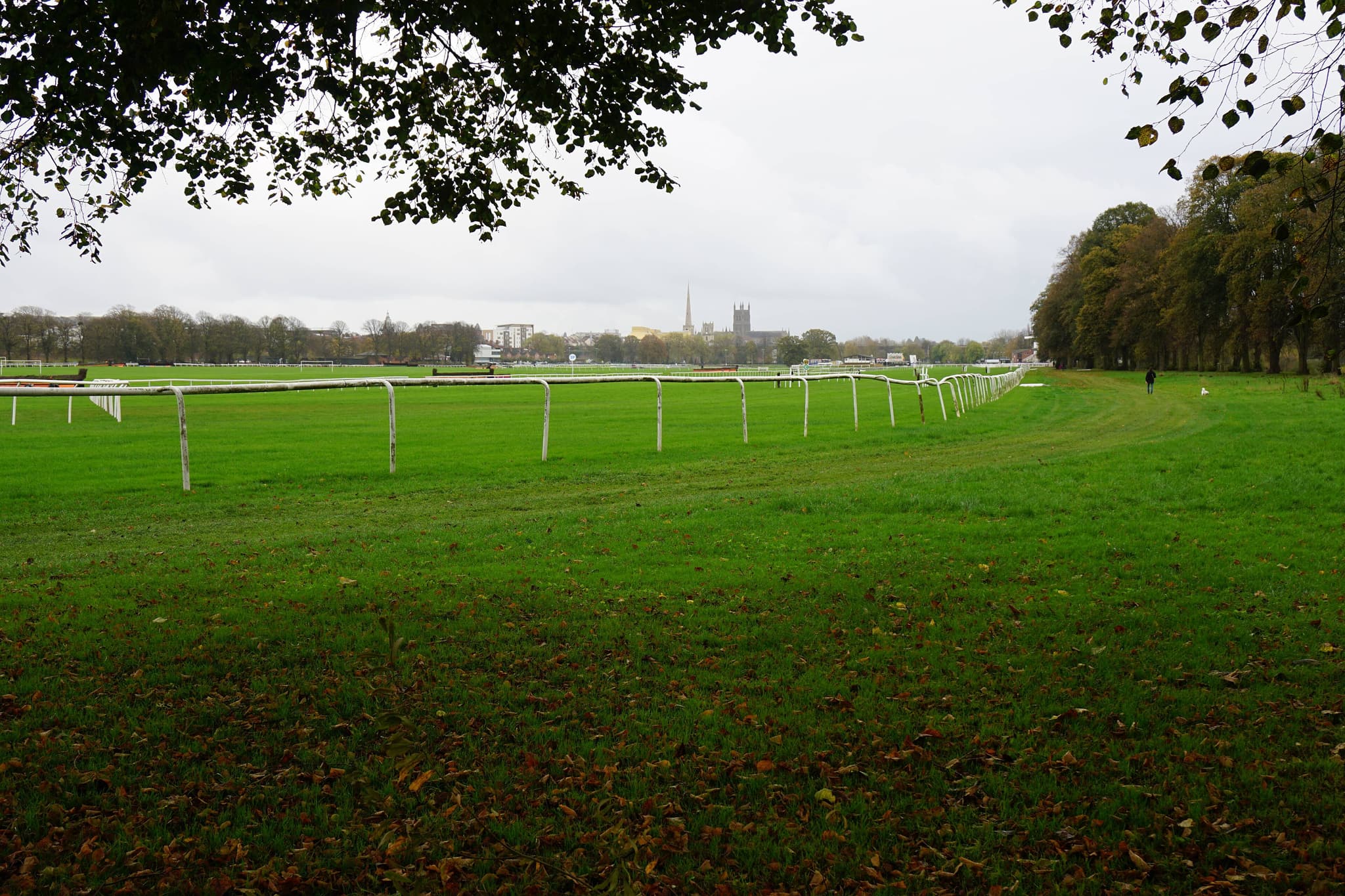
The History of Worcester Racecourse
Over 300 years of racing at Worcester — from the banks of the Severn to the West Midlands' riverside National Hunt venue.
Read morePhotos on this page are used under Creative Commons licences. Titles, sources and licence links for each one are on our image credits page.
Research the field with the AI Race Predictor
Our model publishes calibrated win-probability estimates for UK races — a second opinion to understand a race, not tips. It's open about its record: it doesn't beat the market, and we show exactly how it does.
Work it out & learn the basics
Gamble Responsibly
Gambling should be entertaining and not seen as a way to make money. Never bet more than you can afford to lose. If you or someone you know has a gambling problem, help and support is available.