
Founder & Editor · Last reviewed 2026-04-05
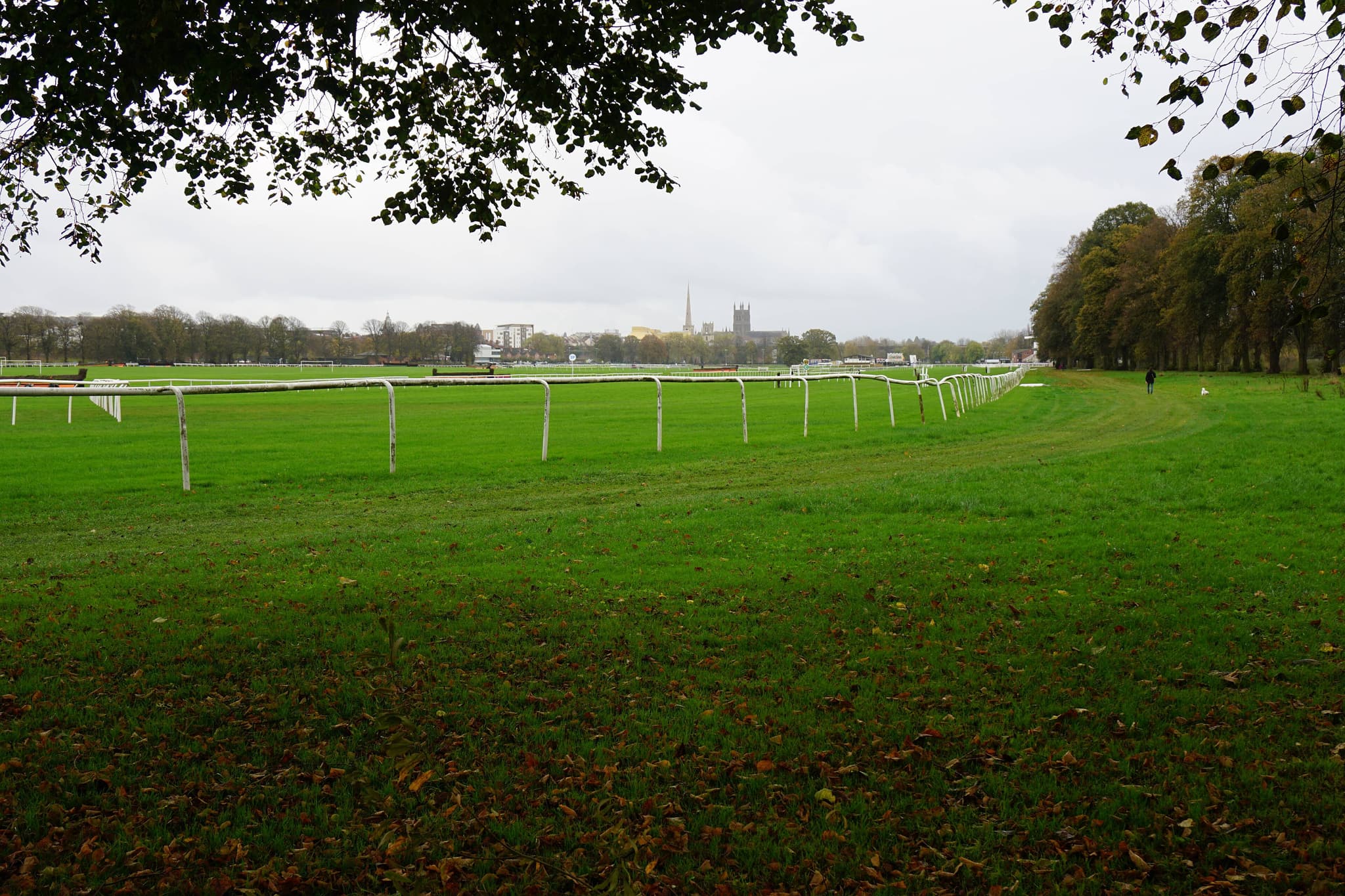
Stand at the far turn on Pitchcroft on a July evening and the view is unlike anything else in British racing. To the east, Worcester Cathedral rises above the rooftops — its Norman tower begun in 1084, its pale stone catching the last of the light. Below it, the River Severn moves south in no particular hurry, its banks barely fifty metres from the running rail. Horses are jumping hurdles in the sunshine and there is not a flat-cap crowd to be seen: this is National Hunt racing in summer, and Worcester has been doing it longer than almost anyone.
The racecourse sits on Pitchcroft, the ancient flood plain that stretches between the city centre and the river. It is common land in the truest sense — open ground used for markets, fairs, military musters, and public recreation for centuries before the first horse set foot on it in anger. Racing here was first recorded in 1718, which makes Worcester one of the oldest continuously active racecourses in England. The setting has barely changed. The cathedral is still there. The river is still there. And every summer, horses and riders still contest the same left-handed, pear-shaped circuit around Pitchcroft.
What sets Worcester apart is the combination of elements that no designer could have engineered. The course is a true National Hunt venue — hurdles, chases, and bumpers only, no flat racing — yet it operates through the summer months from May to October. That puts it out of step with the NH calendar in the most productive way. When Cheltenham, Sandown, and Kempton have closed their jump-racing doors for the season, Worcester is just getting started. The summer NH circuit it shares with tracks like Cartmel, Stratford-on-Avon, Newton Abbot, and Market Rasen is smaller and more sociable than the winter programme, and Worcester has been its anchor in the West Midlands for generations.
The track itself is flat — despite the undulating impression the Pitchcroft flood plain gives from outside the rails. At a mile and four furlongs around, it is left-handed and makes a gentle pear shape. The going ranges from good to yielding in summer, and the fences are fair. What catches out horses and trainers is not the track's demands but the River Severn's. Pitchcroft floods. It floods in autumn, winter, and sometimes spring. A bad season on the Severn can wipe out several scheduled meetings. The drainage team's work between October and May is a quiet but essential part of how Worcester operates.
The course is owned by Arena Racing Company, the UK's largest racing group with 21 venues in its portfolio. ARC's investment has modernised facilities while preserving the character that three centuries of Pitchcroft racing have created. The capacity at busy meetings reaches around 8,000 — substantial for a National Hunt track outside the festival circuit — and the atmosphere on a fine summer afternoon, with the cathedral above and the river alongside, is something a visitor remembers.
Immediately adjacent to the racecourse is New Road, home to Worcestershire County Cricket Club. The pear tree on the Worcestershire crest is an apt symbol for this corner of England — the county has grown pears for centuries, and this stretch of the Severn bank has hosted sport, trade, and public life for just as long. Worcester Racecourse is not a grand aristocratic creation. It grew from the city itself, from the common land by the river, and from the instinct of people in a prosperous market town to gather and bet on horses. That is still what happens here, three hundred years on.
For the course layout, fixtures, and modern facilities, the complete guide covers everything you need. For a visit, see the day out guide. What follows here is the history — from the first recorded meeting in 1718 to the summer NH programme that ARC runs today.
Origins
Before the First Race
Worcester in 1718 was a city that had seen rather too much history. Sixty-seven years earlier, on 3 September 1651, Pitchcroft itself had served as a military staging ground on the day of the Battle of Worcester — the final engagement of the English Civil War. Charles II's Royalist army of around 16,000 men was destroyed by Cromwell's New Model Army on the fields south of the city. The king fled, hid in an oak tree, and eventually escaped to France. The city spent the following years under Parliamentary rule, its cathedral damaged, its trade disrupted. By 1718, Worcester had recovered. The Restoration had come and gone, the monarchy was secure under the Hanovers, and the city was once again a prosperous place to do business and to wager on a horse.
The first recorded race meeting at Pitchcroft dates to 1718. Whether races took place before that is unknown — the documentary record is patchy for early 18th-century provincial racing — but 1718 is the baseline from which Worcester's history is measured. The meeting would have been a modest affair by later standards: a handful of races across an afternoon, a temporary judge's box, bookmakers on foot rather than at fixed pitches. But the ground was right, the crowd was willing, and Pitchcroft proved itself a natural racing venue.
The Land Itself
The choice of Pitchcroft was not arbitrary. The flood plain alongside the River Severn offered something rare in a city: flat, open ground with no buildings to obstruct it. Pitchcroft is common land — it belongs to the city, not to any individual, and its use for public recreation has been protected for centuries. Markets, fairs, and civic gatherings had already established Pitchcroft as a place where people assembled. Adding horse racing to that tradition was the obvious next step.
The River Severn forms the western boundary of the ground. At 354 miles it is England's longest river, rising in the Cambrian Mountains of mid-Wales and reaching the Bristol Channel via Gloucester and Bristol. Worcester sits roughly in its middle reach, at what was historically close to the tidal limit. The river has always been both an asset and a threat. It drew trade to Worcester, made the city prosperous, and provided a natural grandstand backdrop for racing. It also flooded Pitchcroft then as it floods it now. The risk was known from the beginning.
A Georgian City at the Races
The Worcester that hosted these early meetings was a manufacturing centre of some significance. Royal Worcester Porcelain was founded in 1751, eventually becoming one of England's most celebrated pottery manufacturers. The city was already famous for its glovemaking — Worcester gloves were exported across Britain and to the continent, and the wealthy glove merchants formed part of the prosperous middle class that could afford to bet, to own horses, and to spend an afternoon at Pitchcroft. The cathedral provided the dominant visual reference: its Norman nave, begun by Bishop Wulfstan in 1084, and the Gothic additions of subsequent centuries made it the largest building in the county and a constant presence above the flood plain.
The road networks of the era served Worcester well. The main route from Birmingham southward to Gloucester and Bristol passed through the city, and Pitchcroft was accessible from the road without long detours. This mattered for a meeting that needed horses and spectators from beyond the immediate catchment. Racing in the 18th century was a travelling sport — horses moved from course to course by road, grooms and owners alongside them — and Worcester's position on the regional road network helped establish it early.
Flat Racing and the Switch to Jumps
In its early decades, Worcester staged flat racing. The format was typical of the era: heats run over varying distances, with horses potentially racing several times in an afternoon. The Jockey Club's authority over the sport was growing through the late 18th century, and by the Regency period (1811–1820), the rules of racing were becoming more standardised across the country.
The transition from flat to National Hunt racing at Worcester happened gradually across the 19th century. National Hunt racing itself was a relatively new concept: the first recorded cross-country race is generally dated to 1752 in Ireland, and organised steeplechasing in England became properly established only in the 1830s. Worcester was among the courses that adopted the new format, eventually concentrating entirely on it.
The precise decade when Worcester became an exclusively NH venue is not documented with precision, but by the late Victorian era the course was running its programme as a jumping fixture. The flat, open character of Pitchcroft — which might seem suited to flat racing — actually worked well for jumps, because the ground is consistent and the circuit spacious enough to accommodate chasers without the severe bends that can cause problems at tighter tracks. At one mile and four furlongs around, the left-handed pear shape gave horses room to travel and jump cleanly.
The Midlands Training Community
The early racing at Worcester drew from a wide training catchment. The Midlands had established training yards by the early 19th century, and the region's pastures and heathland provided good ground for conditioning horses. Trainers operating within thirty to forty miles of Worcester — in Worcestershire, Herefordshire, and the southern fringes of Staffordshire — would have used the course as a natural local fixture.
The relationship between Worcester and the broader NH training community has never depended on a single yard or a single family. The course has attracted runners from trainers spread across the country, and its summer programme draws horses that are either beginning their careers, preparing for bigger targets in the autumn, or winding down a season's campaign. That breadth of usage — starter, work-in-progress, and seasonal finale — has given Worcester's fixture list a character distinct from more single-purpose venues.
By the end of the 19th century, Worcester was an established fixture on the NH calendar: a summer course with a centuries-old setting, a cathedral for a backdrop, and a river that kept everyone honest about the limits of permanence. The foundations were in place. The golden era was beginning to take shape.
The Golden Era
The Summer NH Calendar Takes Shape
Worcester's defining characteristic — National Hunt racing through the summer months — was not an accident of geography. It was a choice that the course's management made and held to across successive generations, and it gave Worcester a position in the sport that no larger or grander venue could replicate. When Cheltenham rested after the Festival, when Aintree closed its gates after the National meeting, Worcester was still racing. May, June, July, August, September: the jumps programme continued on Pitchcroft while the big NH tracks sat empty.
For much of the Victorian era and into the Edwardian period, this was less unusual than it would later become. The summer NH calendar was more active nationally before the sport's consolidation in the 20th century drew the prestige programme firmly to winter. As that consolidation happened, Worcester settled into its role as one of the custodians of the summer jumps fixture — a role it has maintained for over a century.
The course in the Victorian era was a functional, well-used venue rather than a grand one. The facilities were basic by later standards, but Pitchcroft's accessibility from the city centre — a short walk from the old coaching inns on Foregate Street — meant crowds could be substantial on a fine summer afternoon. The cathedral and the cricket ground at New Road were already neighbours. Worcestershire County Cricket Club was founded in 1865, and by the 1890s New Road was an established ground; the two sports have coexisted on adjacent sites for well over a century, separated by little more than the width of a service road.
Between the Wars
The period between 1918 and 1939 was one of gradual consolidation for Worcester. Racing resumed after the First World War with the summer NH programme reasserted, and the interwar decades brought changes to the racing landscape nationally. The Tote was established in 1928, changing the bookmaking environment at courses across Britain. Horse transport by motor vehicle became common through the 1930s, replacing the horse-drawn conveyances that had moved racehorses between courses for two centuries. Worcester adapted to each change without losing the essential character that Pitchcroft imposed on it.
The flooding problem, present since 1718, was if anything more acute in the interwar period than it had been before. The River Severn follows no racing calendar. It floods when it floods — most severely in late autumn and winter, but not exclusively — and Pitchcroft has no natural defence against it. The course management's challenge was to maximise the summer window (when flooding was rare) while accepting that autumn fixtures, particularly in October, carried real risk. This is a tension that still exists today.
Post-War Worcester and the NH Consolidation
Racing at Worcester resumed after the Second World War in 1945, and the post-war era brought the most significant structural change in the course's history. Flat racing — which had dwindled to a small part of the programme by the interwar period — disappeared entirely from Pitchcroft. Worcester became a National Hunt-only course, which is what it remains.
This was not an unusual decision for the time. The post-war rationalisation of British racing concentrated flat racing at a smaller number of purpose-built venues with better going and improved facilities, while NH courses increasingly focussed on jumps. Worcester's summer NH programme, which already distinguished it from the winter-focussed majority of jump tracks, became its entire identity. That identity proved durable.
There is no Worcester Cup, and this passage used to present one as the course's centrepiece in this period, complete with a distance and a founding era. No race of that name has been found at Worcester in any decade under either code. The named race Worcester really did carry in the 20th century was the Worcester Novices' Chase, a Grade 2 first run in 1990, and it did not stay: it transferred to Newbury in 2000, was renamed the John Francome Novices' Chase in 2017 and was removed from the programme in 2023/24.
The Cathedral and Cricket as Permanent Neighbours
The decades after 1945 settled the geography of Pitchcroft into the arrangement that visitors find today. Worcester Cathedral to the east, its tower visible from anywhere on the course. The River Severn to the west. New Road cricket ground immediately to the north, with the Worcestershire County Cricket Club ground separated from the racecourse by only a thin strip of land. On days when Worcestershire are playing a home county match and there is an evening race meeting at the racecourse, the two grounds share the same sky and the same light, and the combination of white-clad cricketers and jumping horses within a few hundred metres of each other is one of English sport's quieter oddities.
The cathedral has always been part of the emotional architecture of Worcester racing. Norman in origin, expanded and completed over four centuries, it is one of the finest ecclesiastical buildings in England. Its presence above the racing — not dominating it, just there — gives Pitchcroft a historical depth that purpose-built venues cannot manufacture. You are aware, at Worcester, of time passing in a way that Lingfield or Kempton cannot quite produce.
Local Trainers and the Worcester Connection
Through the post-war decades, Worcester drew its strength from a cluster of NH training operations within a reasonable drive of Pitchcroft. The Jonjo O'Neill yard at Jackdaws Castle, near Temple Guiting in Gloucestershire roughly 25 miles south-east of Worcester, has sent runners regularly to summer meetings. Kim Bailey, based at Andoversford around 20 miles to the east, has been a consistent presence. David Pipe, operating from Nicholashayne in Somerset some 60 miles to the south-west, has targeted Worcester in the summer programme.
None of these trainers has made Worcester their exclusive focus. The course is one node on a circuit that includes Stratford-on-Avon, Newton Abbot, Cartmel, and Market Rasen across the summer months. What Worcester offers is a track that gives young chasers and hurdlers a fair, uncomplicated test — flat ground, decent fences, no severe turns — and a summer window that allows horses to build confidence before the competitive intensity of the winter programme.
That usefulness as a conduit between a horse's early career and the demands of winter NH racing is as much a part of Worcester's golden era legacy as any specific race or specific season. The course has functioned as a quality stage in the journey of hundreds of horses that went on to bigger things. That function, established in the post-war decades, is the core of what Worcester does.
The late 20th century brought increasing commercial pressure on smaller NH venues, and Worcester was not immune. But the summer NH position — which competitors could not easily replicate — and the Pitchcroft setting, which no amount of investment elsewhere could reproduce, kept the course in operation. By the time the modern era of consolidated racecourse ownership arrived, Worcester had earned its place through longevity and distinctiveness rather than prestige.
Famous Moments
AP McCoy and the Summer Grind
No discussion of memorable performances at Worcester can ignore AP McCoy. The Northern Irishman rode 4,358 winners over a career that spanned 1992 to 2015, and a significant portion of those came at smaller NH tracks on summer afternoons. Worcester was a regular fixture on the McCoy summer circuit. He understood what summer NH was for — not spectacle, but craft: the ability to read a horse on a flat track in July, to make the most of an ordinary animal, and to win races that looked like exercises in going through the motions.
McCoy's visits to Pitchcroft were rarely headline events. He would typically travel to Worcester as part of a day's riding that might include Cartmel or Stratford-on-Avon the same week, working his way through the summer NH calendar with the methodical professionalism that made him champion jockey twenty consecutive times between 1996 and 2015. His record at Worcester across his career ran to dozens of winners — the exact total varies by the season counted — and his presence at Pitchcroft on a summer afternoon became something fans expected rather than celebrated. That ordinariness was its own kind of distinction: McCoy at Worcester in July was the NH season at its most functional, and he was its master.
Stepping Stones: Horses That Moved On
Worcester's position in the summer NH calendar makes it a natural proving ground for horses with bigger ambitions. The pattern recurs across generations: a horse runs at Worcester in June or July, wins or runs well enough, and goes on to make a name through the winter. The course has served this role so consistently that trainers trust it to give their horses a fair test without exposing them to unnecessary pressure.
One illustration of the type is the class of summer chaser who uses Worcester as a confidence-builder ahead of a Cheltenham campaign. A horse arriving at Pitchcroft in July is often being asked one of two questions: can it handle a fair track against competitive opposition? Or can it win off the kind of mark that will allow it to be competitive at a graded meeting later in the year? Worcester gives both answers without drama. The track does not have sharp bends to expose technical weaknesses, the going in summer is generally consistent, and the competition — honest handicap chasers and hurdlers — is not the sort to destroy confidence.
Worcester's biggest race is the Fixed Brush Hurdle Series Final, run in late September rather than July. It is a novices' handicap hurdle, so its field is by definition made up of horses at the start of a jumping career rather than established handicap chasers, and its winners carry that form into the winter novice programme.
A Meeting Cancelled by the Severn
The River Severn has cancelled meetings at Worcester many times, and each cancellation has its own small drama. The process usually follows the same steps: rain arrives over Wales and the Midlands in the days before a scheduled fixture, the Severn's levels rise at Bewdley (the upstream gauge station that Worcester's course manager watches), and at some point — sometimes the morning of a meeting, sometimes the evening before — the decision is made. The gates cannot open if Pitchcroft is under water, and the Severn has no interest in the racing calendar.
The flooding seasons of 2000 and 2007 were particularly severe across the Severn basin. The 2007 floods were the most damaging in England since 1947, affecting large areas of Worcestershire and Gloucestershire. Pitchcroft was inundated along with much of low-lying Worcester. Race meetings scheduled for the summer of that year were lost or displaced, and the watermarks left on the course's infrastructure were a reminder that Pitchcroft remains, in the most literal sense, a flood plain. The 2012 season also brought cancellations from Severn flooding, with the river reaching levels that closed Pitchcroft to use for weeks at a time.
There is an account — not always precise in its details as it passes through local racing folklore — of a Worcester meeting in the 1990s where water was visible in the infield from the stands, the result of overnight rain and a Severn that had not quite reached the danger level but had come very close. The meeting ran. Horses picked their way around the inside of the track with ground that was softer than the going board suggested, and the finish saw one horse ankle-deep in waterlogged turf at the final hurdle. No horse was injured. The winner was returned at a price longer than its form suggested, because anyone watching had assumed the meeting would not take place.
That proximity to the edge of racing — will it run? will it flood? — is part of Pitchcroft's character in a way that almost no other British racecourse can match. It keeps the course honest, and it keeps its followers paying attention.
The Cathedral Backdrop for a Notable Chase
The symbolic power of the Worcester Cathedral backdrop is most felt not at a flagship fixture but at an ordinary Thursday evening meeting in August. The light fades slowly over Worcestershire in summer, and as the shadows lengthen across Pitchcroft, the cathedral's silhouette becomes the dominant feature on the eastern horizon. A chase run as the light is going — the field jumping the open ditch on the far side with the cathedral behind it, the river catching the last of the sun to the west — is one of the visually distinct experiences in British racing. No single race claims ownership of this moment, because it belongs to the setting.
Trainers With a Worcester Record
Among trainers with a consistent Worcester record, the names that appear most reliably across the modern period include those with yards in the arc south and east of Worcester. Martin Keighley, based near Cheltenham, has sent strong summer campaigns to Worcester. Evan Williams, operating from South Wales roughly 40 miles west, has used the course heavily in the summer NH programme. The late Paul Nicholls, whose Somerset operation at Ditcheat has produced champions at every level, has also had winners at Worcester across his career, typically with horses being given a summer run before a winter campaign.
The presence of strong local and regional yards has maintained the quality of Worcester's summer programme at a level above the bare minimum. A summer NH meeting without quality opposition is an exercise in going through the motions; Worcester's better fixtures have drawn horses with real form and real futures, which is what makes the course's role as a stepping stone credible rather than merely claimed.
Close Finishes and the Camera
Worcester produces its share of photo finishes, and there is a practical warning attached to them: Timeform records that the course's camera sits some way short of the winning line, which makes an on-screen judgement at this track unreliable. The left-handed, flat circuit does not naturally generate the dramatic late-surges associated with uphill finishes at tracks like Cheltenham or Sandown. Instead, Worcester produces flat-out races where the result is often decided in the final fifty metres, horses level at the last fence and running on together to a line that neither had been certain to reach.
Earlier versions of this page attributed those finishes to renewals of a "Worcester Cup", a race that does not exist at Worcester and never has. The surprise results at Pitchcroft belong to ordinary summer handicaps rather than to any named feature, and Timeform's note that the course rarely fails to attract decent-sized fields is the better explanation for competitive finishes here.
The verified winners of the course's real feature are listed in the complete guide.
The Modern Era
ARC and the Consolidation of Ownership
Arena Racing Company came into existence in 2012 through the merger of Arena Leisure and Northern Racing, creating at a stroke the UK's largest racing group by number of venues. Worcester joined the ARC portfolio at that point and has remained one of its 21 courses since. For a track like Worcester — mid-tier National Hunt, summer specialist, with ageing facilities and a persistent flooding risk — consolidation under a well-resourced operator brought stability that independent management would have struggled to provide.
ARC's approach to its portfolio is not uniform. Its flagship venues — Doncaster, Lingfield, and Chepstow among them — receive the majority of capital investment and host racing with the highest prize money. Worcester sits further down the hierarchy, which is a description rather than a criticism. The summer NH programme at Pitchcroft runs at a prize money level appropriate to its position in the sport: competitive enough to attract quality runners from serious NH trainers, but not a venue where owners expect to cover training fees from prize money alone. That is an honest account of where Worcester sits, and ARC has been transparent about it.
What ARC investment has done for Worcester is more prosaic: improved the parade ring and winners' enclosure presentation, upgraded catering facilities and bar areas, and maintained the course infrastructure to a standard that satisfies British Horseracing Authority inspections. The running rail, the fences, the hurdle flights, and the course drainage have all been managed under ARC's ownership with the consistency that a single operator across multiple venues can provide more efficiently than a series of independent organisations.
The Summer NH Circuit in the Modern Era
Worcester's current programme runs to approximately 20 race days per year, scheduled from May through to October. That summer window places it on the circuit alongside Stratford-on-Avon (roughly 25 miles to the south-east), Newton Abbot (in Devon, the southern anchor of the summer NH programme), Cartmel (in Cumbria, the northern one), and Market Rasen in Lincolnshire. These five courses are the backbone of summer National Hunt racing in England.
The function of this circuit has become more clearly defined in the modern era than it was before. Summer NH is used principally by three types of horse: youngsters in their first or second season who need competitive experience before the winter pressure intensifies; horses with a winter target that need a run or two to reach match fitness before autumn; and summer specialists — horses that run better in the lighter ground and smaller fields of the summer programme than they do in the deeper winter mud. Worcester sees all three types across its 20 race days, and the mix creates a programme that is varied enough to hold interest across a full season.
Prize money per race at Worcester is modest at the bottom of the card and considerably better on the September finale card, which carries the Fixed Brush Hurdle Series Final. Those values are modest by the standards of the winter NH programme — a competitive handicap chase at Cheltenham or Ascot in November will offer three or four times that amount — but they reflect summer NH accurately. The horses and owners attracted to the circuit understand what they are getting.
Managing the Flood Risk
The operational challenge that ARC has had to manage most carefully at Worcester is not prize money or attendance, but water. The River Severn flooded Pitchcroft severely in 2000, 2007, 2012, and in several smaller events across the intervening years. Each flood leaves watermarks on the course's internal infrastructure, and each return of flood water slows the drainage timeline for the following season.
The course management team monitors the Environment Agency's river level data at the Bewdley gauge — the monitoring point roughly 14 miles upstream of Worcester — as the leading indicator of flood risk at Pitchcroft. When Bewdley levels reach certain thresholds, flooding at Pitchcroft becomes likely within 24 to 48 hours. Meetings scheduled in October are at the highest risk, because autumn rainfall across Wales and the west Midlands is heaviest in that month and the Severn responds quickly.
The emergency cancellation procedure for a Severn flood is straightforward but stressful. Runners and riders who have declared for a meeting have to be contacted, transport arranged or cancelled, and the BHA's race programme updated. Punters who have travelled to Worcester to find a flooded Pitchcroft are an occasional reality. The course posts updates on its website and social channels as soon as a decision is made, typically the morning before a fixture, though flood rises can be fast enough to require a same-day cancellation.
Drainage investment under ARC's ownership has improved the speed with which Pitchcroft recovers after a flood. Internal drainage channels and pump systems now shift water off the racing surface faster than was possible before, reducing the downtime after a Severn event. This has protected the summer programme from flood cancellations more effectively than in the 1990s, when a significant river event could take Pitchcroft out of use for weeks.
A Distinct Atmosphere
The atmosphere at Worcester on a summer NH afternoon is different from winter jump racing in ways that are easy to observe but harder to explain. Families attend in larger numbers. Flat racing fans — who normally would not see NH horses in action between May and October — find Worcester's summer programme accessible and watch races they would otherwise have missed. The light is longer, the hospitality queues are shorter, and the tension that a December chase meeting at Kempton or Sandown generates is largely absent. Worcester in July is relaxed without being pointless.
The Malvern Hills, rising to their highest point at the Worcestershire Beacon at 425 metres, are visible 7 miles to the west of Pitchcroft on clear days. The hills make an arresting backdrop when the summer haze is absent — a line of old volcanic ridge against a blue sky, with the racecourse, the cathedral, and the river between. The combination of those features in a single view is not something that many English sports venues can offer.
The summer NH audience at Worcester has always included a local contingent who follow the course across multiple meetings rather than attending once as a novelty. That loyal local following — people who know which trainers send their better horses to Pitchcroft rather than Stratford, who understand the drainage team's challenges, and who watch the Severn gauge in October with the same anxiety as the course manager — is the human continuity beneath three centuries of racing on the flood plain. ARC's ownership has changed many things at Worcester. It has not changed that.
Worcester's Legacy
Three Centuries on the Flood Plain
The thing about Pitchcroft is that it was never built for racing. Nobody surveyed the ground, designed a circuit, and decided this was the place. The flood plain beside the River Severn was already there — flat, open, public, central — and horse racing arrived because the conditions were right and the people of Worcester wanted it. That origin, modest and unplanned, is closer to the truth of what Worcester Racecourse is than any official foundation date or commemorative plaque.
Three hundred years of racing on this ground have produced something that cannot be manufactured after the fact: a venue with real age and real continuity. The same cathedral has stood above the course since before the first race was recorded in 1718. The same river has flooded Pitchcroft in bad winters across every decade since then. The same left-handed loop around the flood plain has been contested by horses in every era of British racing history. That accumulation of time gives Worcester a weight of presence that more recent venues lack.
The course's identity rests on four things that are unlikely to change. The Pitchcroft setting — common land beside the Severn, open to the city, shared with cricket and public recreation as it always has been — is protected by its status and its geography. The cathedral to the east is not going anywhere. The river to the west is not going anywhere either, flood risk included. And the summer National Hunt programme, which Worcester has sustained longer than almost any other venue in England, has become sufficiently embedded in the racing calendar that removing it would leave a gap nobody else could fill.
The relationship between the course and the county's other great summer sport — cricket at New Road, directly adjacent — has never been formally organised, but it has been a quiet partnership for over a century. Worcestershire County Cricket Club and Worcester Racecourse share the same stretch of the Severn bank, the same light, and the same local audience. On a fine summer evening when both grounds are active, this corner of the city is as concentrated a sporting environment as you will find anywhere in England.
Worcester's place in the NH training community is secure because of what it offers, not because of what it has won. The trainers who send horses here are not chasing prestige. They are giving horses fair, honest tests on a track that rewards jumping and stamina in roughly equal measure, against fields that are competitive without being exceptional. That utility — unglamorous, consistent, year after year — is a form of legacy in itself.
Frequently Asked Questions
When was Worcester Racecourse founded? Racing at Pitchcroft was first recorded in 1718, which makes Worcester one of the oldest continuously active racecourses in England. Whether meetings took place before 1718 is not known — the documentary record for early provincial racing is incomplete — but over three hundred years of confirmed racing history make Pitchcroft one of British sport's longest-serving venues.
What is distinctive about Worcester's location? Worcester Racecourse occupies Pitchcroft, the ancient flood plain between Worcester city centre and the River Severn. The racecourse is overlooked by Worcester Cathedral to the east and bounded by the river to the west. Immediately to the north is New Road, home to Worcestershire County Cricket Club. No other British racecourse sits in such close proximity to both a major cathedral and a county cricket ground, and the combination gives Worcester a setting unlike anything else in the sport.
What type of racing does Worcester stage? Worcester is a National Hunt-only venue, staging hurdle races, steeplechases, and National Hunt flat races (bumpers). It does not hold flat racing. Its programme runs from May to October, which is the summer NH season — unusual for a jump-racing venue, since most NH tracks concentrate their fixtures in the autumn and winter. This summer specialisation is Worcester's most distinctive characteristic within the NH calendar.
Who owns Worcester Racecourse? Worcester Racecourse is owned and operated by Arena Racing Company (ARC), the UK's largest racing group with 21 venues in its portfolio. ARC took ownership in 2012 following its formation from the merger of Arena Leisure and Northern Racing. The course is not part of The Jockey Club's portfolio. ARC's website for Worcester is worcester-racecourse.co.uk.
How do I get to Worcester Racecourse? By rail, the most convenient station is Worcester Foregate Street, approximately one mile from the course. Foregate Street has direct services to London Paddington via Oxford (Great Western Railway) and connections via Chiltern Railways through Banbury. Worcester Shrub Hill station, roughly 1.5 miles from the course, also serves some intercity routes. By road, the M5 motorway passes close to the city (junction 7 for Worcester south) with the M50 providing a link from the M5 to the Midlands and south Wales. Car parks are available at the course on race days.
Does Worcester Racecourse flood? Yes. Pitchcroft is a natural flood plain alongside the River Severn, and the racecourse floods regularly in periods of sustained rainfall. The Severn is England's longest river at 354 miles, and its catchment extends across central Wales; heavy rain on the Welsh hills can raise river levels at Worcester within 24 to 48 hours. Flood cancellations are an accepted part of the Worcester racing calendar — October fixtures are at highest risk — and the course management monitors upstream river gauges to give the earliest possible notice when a cancellation becomes necessary. The flood risk is not a failing of the course; it is a consequence of three centuries of racing on a flood plain, and it is part of what makes Pitchcroft the place it is.
Share this article
More about this racecourse
All Worcester guides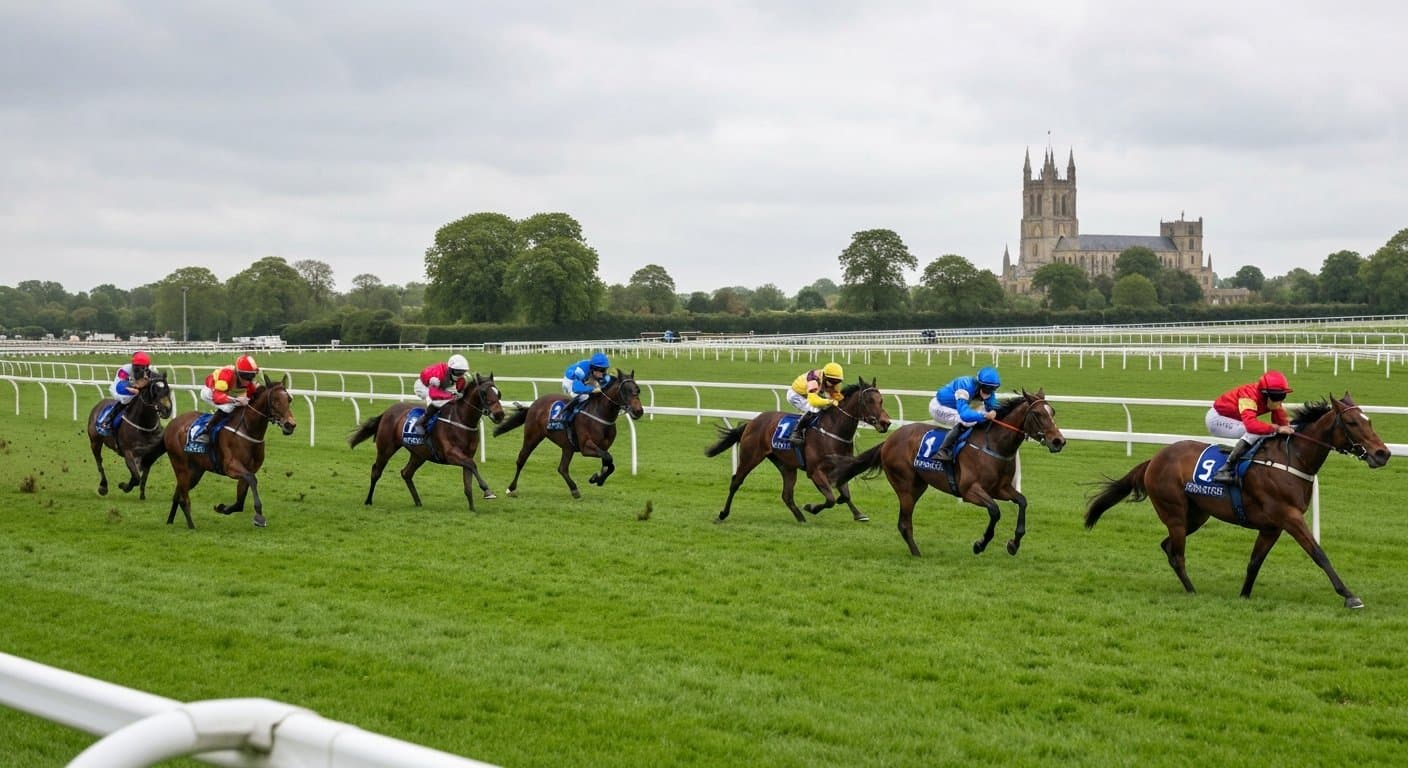
Summer Jumping at Worcester: Complete Guide
Summer jumping at Worcester: the key meetings, the Fixed Brush Hurdle Series Final, and National Hunt racing while most tracks run on the flat.
Read more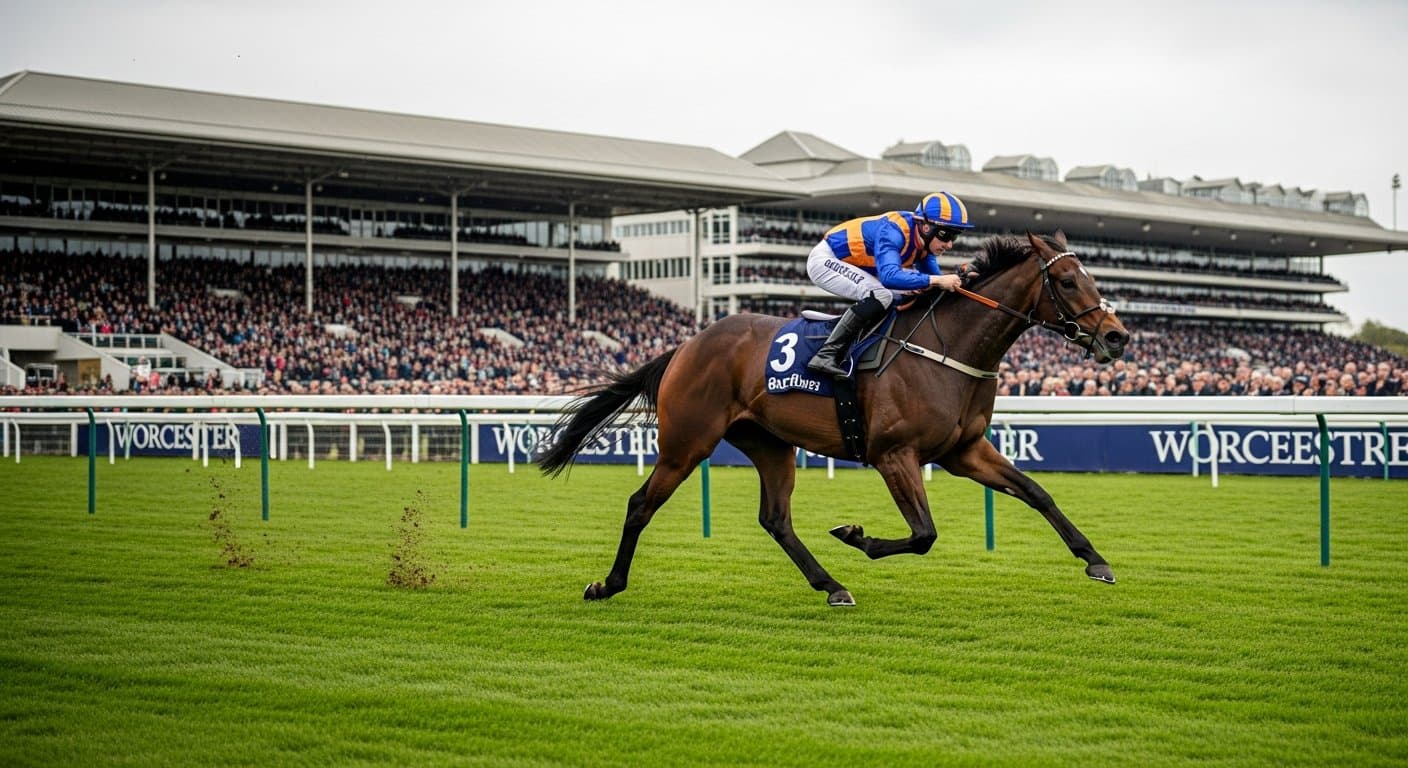
Morley Street at Worcester: The Complete Story
Morley Street won his first chase at Worcester in 1990, then took the Cheltenham Champion Hurdle in 1991. The story of a summer jumping course and a future champion.
Read more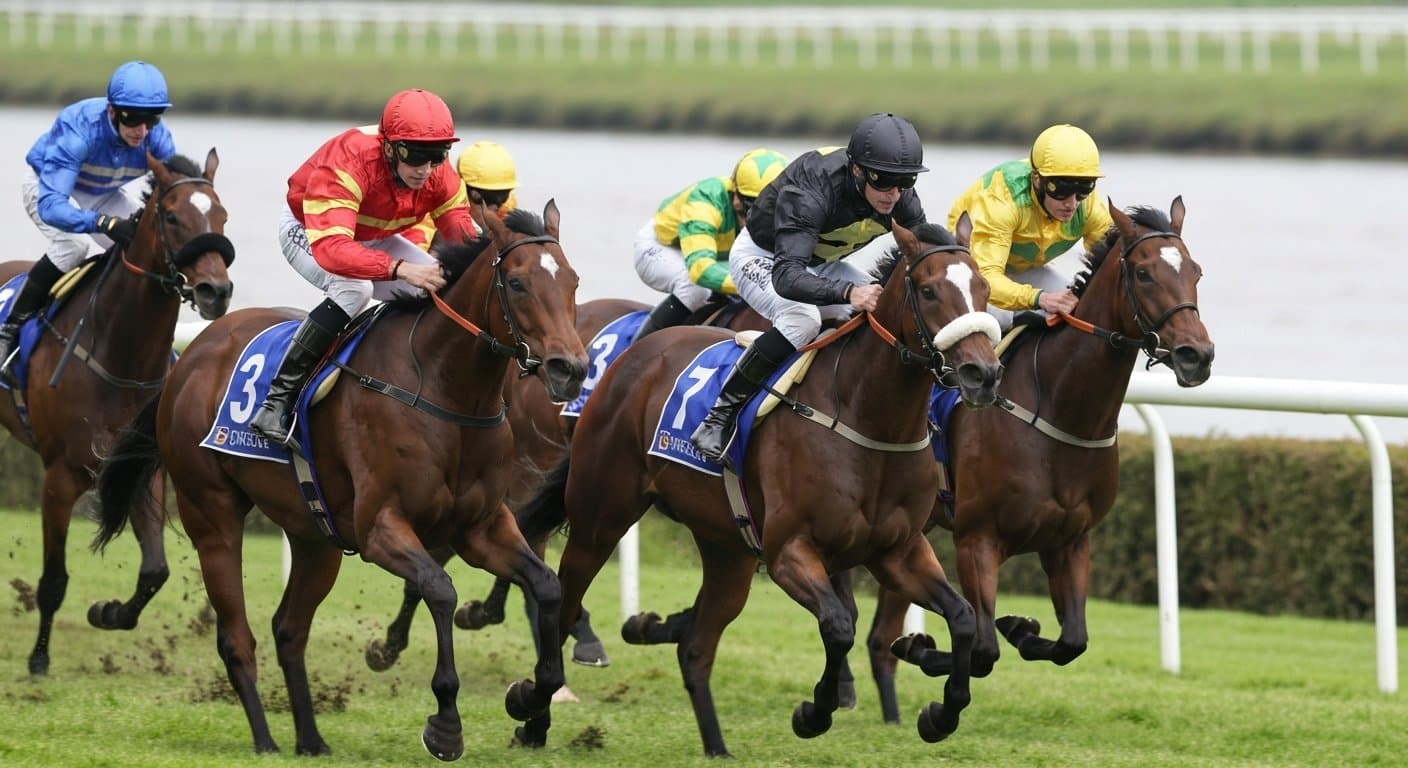
Betting at Worcester Racecourse
Bet smarter at Worcester — track characteristics, uphill finish, going and conditions, key trainers and jockeys, strategies for Worcester's riverside jumps venue.
Read moreGamble Responsibly
Gambling should be entertaining and not seen as a way to make money. Never bet more than you can afford to lose. If you or someone you know has a gambling problem, help and support is available.