
Founder & Editor · Last reviewed 2026-04-05
On the last Monday of August each year, somewhere between 6,000 and 7,500 people pour into Westwood Pasture for Beverley Bullet Day. The sprint field lines up across five furlongs, the starter sends them, and what follows is the most demanding five-furlong test in Yorkshire: a run that sweeps downhill into the back straight before swinging right and climbing steeply all the way to the winning post. At the line, the crowd is above the horses, looking down the slope. It is an unusual and striking sight, and it is entirely characteristic of this course.
Beverley Racecourse opened in 1690, which puts it among the oldest functioning flat tracks in Britain. York dates to around 1530 and Newmarket to the early 17th century, but the number of courses that have been staging flat racing continuously for more than 330 years is very small. Beverley is one of them. The ground where modern racegoers park their cars and eat their fish and chips is the same common land — Westwood Pasture — that has hosted racing since the reign of William III. That continuity is not incidental. It is the foundation of everything that makes Beverley distinctive.
The setting alone sets Beverley apart. Westwood Pasture is ancient common land, still grazed by cattle and crossed by public footpaths. The racecourse occupies it under a centuries-old arrangement, and the skyline beyond the finishing straight is open country. Beverley Minster, one of the finest medieval churches in England, rises over the town to the east. This is not a purpose-built sporting complex dropped into a business park. It is a racecourse that grew out of a place, and the place is still very much there.
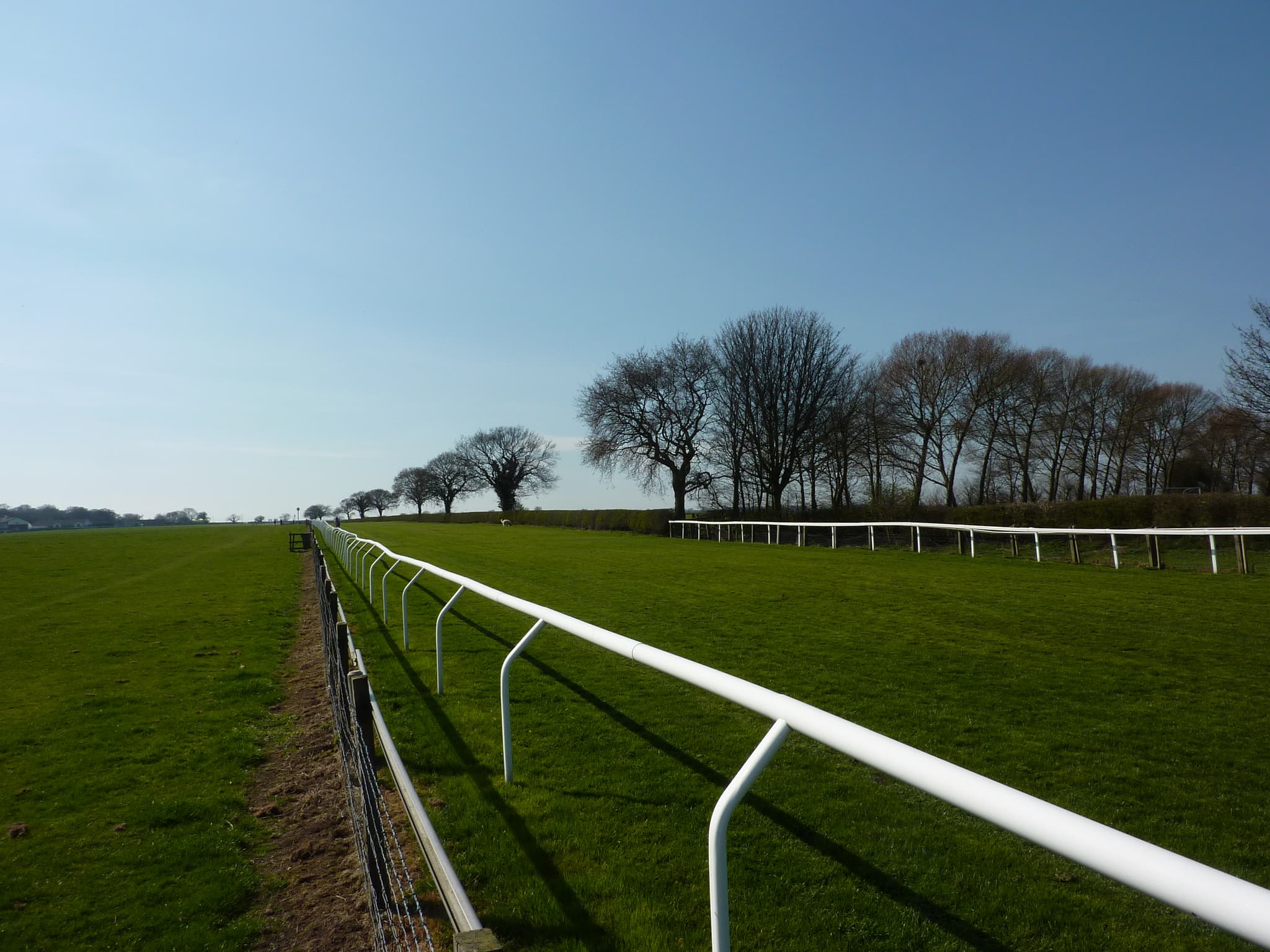
The track itself rewards the effort of understanding it. The right-handed circuit runs to about one mile and three furlongs. Races from five furlongs to seven furlongs are run on a straight chute that joins the main oval, and even over those shorter distances the uphill finish is severe enough to sort out horses on stamina grounds alone. Sprinters who win at Beverley must be able to quicken downhill and sustain their effort up the climb. Over a mile and beyond, the topology rewards horses with a low, efficient stride rather than a flashy, high-actioned gallop.
That topography has produced, over three centuries, a course with a very distinct identity. Trainers in Malton, 30 miles north, and Middleham, 60 miles to the northwest, have long regarded Beverley as a regular target — a northern flat course where horses can earn their stripes and build experience without facing the deepest fields at York or Doncaster. York lies 29 miles to the west; Doncaster is 40 miles to the south. Beverley occupies its own niche in that hierarchy: smaller, more intimate, and possessed of a track that makes its own demands.
The Beverley Bullet has been the course's headline act since 2004, when the sprint was inaugurated as a Listed race. But the history of racing at this venue stretches back three and a half centuries, and every generation has left something in the record: a notable winner, a significant day, a piece of form that went on to mean something. This guide traces that story from the first recorded meetings on Westwood Pasture through to the course as it stands today.
Origins at Westwood
Origins at Westwood
The first recorded race meeting at Beverley took place in 1690, on the stretch of open grazing land to the west of the town known as Westwood Pasture. The date places those earliest meetings firmly in the late Stuart period — William III had been on the throne for barely a year, and England was emerging from the religious and constitutional upheavals that had defined the second half of the 17th century.
Horse racing had been woven into the fabric of English life for decades before Beverley staged its first meeting. Charles II, who died in 1685, was a passionate devotee of the sport. He attended Newmarket personally, rode in races himself, and extended royal patronage to courses across the country in ways that gave racing a social respectability it had sometimes lacked. By the time of his death, racing at venues including York, Chester, and Salisbury was well established, and the enthusiasm for the sport was spreading steadily through the provincial gentry and merchant classes. Beverley's first meeting in 1690 was part of that broader expansion — a local version of a national enthusiasm.
Westwood Pasture and its Significance
Westwood Pasture was not purpose-built for racing. It was, and remains, common land: an ancient right-of-way and grazing ground attached to the Beverley town charter. The Pasturemen — the elected body responsible for managing the common — permitted racing to take place on the Westwood from the late 17th century, and the arrangement has continued, in various forms, ever since. Today the common is still grazed by cattle. Walkers cross it on public footpaths. The racecourse occupies it for around 18 race days a year, but the land's fundamental character as common ground has never been overridden.
This is unusual in British racing. Most courses occupy land that was eventually purchased or enclosed specifically for the purpose. Beverley's relationship with its setting is older and more layered than that, rooted in the peculiar land-law history of English market towns. The racing at Beverley has always shared the Westwood with other uses, and that shared character has shaped the course's identity.
The town of Beverley itself provided the social infrastructure that made regular racing viable. By 1690 it was one of the most prosperous market towns in the East Riding, its wealth based on wool, leather, and trade with the nearby port of Hull. Beverley Minster, which had been rebuilt in the Perpendicular Gothic style during the 14th and 15th centuries on the foundations of a church begun around 700 AD by John of Beverley, dominated the skyline. The town had grammar schools, merchants' guilds, and an active civic life. A racing meeting required patronage, prize money, and a crowd, and Beverley could supply all three.
The Georgian Formalisation
For its first several decades, racing at Beverley was probably loosely organised — matches between local horses, subscription plates, the kind of informal contests that characterised early English racing before the sport developed a central administrative structure. The Jockey Club was founded around 1750, and through the latter half of the 18th century it began the slow work of establishing rules, centralising authority, and imposing order on the sport's considerable chaos.
Beverley's first annual meeting was established in 1767, a date that marks the shift from occasional gatherings to a regular, calendared programme. This was part of a national pattern: across England, local racecourses were formalising their calendars and establishing written rules during the 1760s and 1770s. At Beverley, the 1767 annual meeting gave the course a stable institutional footing and a fixture in the racing calendar that would persist for more than 250 years.
The Railway and Hull's Influence
The arrival of the railway at Beverley in 1846 — the Hull to Bridlington line passed through the town, with Beverley station opening as part of the original route — transformed the audience for racing at the course. Before the railway, attendance at Beverley was limited by the practicalities of horse-drawn travel. After it, crowds could arrive from Hull in under 20 minutes.
Hull in the mid-19th century was one of the fastest-growing industrial cities in England. Its population rose from around 30,000 in 1801 to over 200,000 by 1901, driven by the expansion of the docks, fishing, and manufacturing. The working and middle-class population of Hull had both the appetite and, increasingly, the means to attend race meetings. Beverley, sitting nine miles to the east and easily reached by rail, was the natural choice. Race day at Beverley became a popular occasion in Hull's calendar — special trains ran from Paragon Station, and the crowds that arrived filled not just the racecourse but the town's pubs and hotels.
The Character of the Early Course
The physical layout of Beverley's course was shaped entirely by the natural topography of the Westwood. The right-handed oval, the downhill run along the back straight, the sharp left-hand turn into the home straight, and the severe uphill climb to the winning post were all products of the land rather than design decisions. No architect planned the stiff finish; it is simply the shape of the ground.
This matters because it set the conditions for everything that followed. A course with a demanding finish selects for particular types of horse — those with stamina and strength rather than those relying purely on speed. The trainers and owners who brought horses to Beverley over the generations learned that the course rewarded certain qualities, and that knowledge shaped which horses ran there.
By the end of the 18th century, Beverley was established as a reliable fixture on the Yorkshire racing calendar. It was not yet in the same tier as York, which had been staging major races since the Knavesmire was adopted in the 1730s, but it served a distinct function: a course with its own character, its own audience, and its own demands, set on one of the most distinctive pieces of common land in English racing.
The Golden Era
The Golden Era
The Victorian and Edwardian periods brought Beverley Racecourse to what might fairly be called its first golden age. The combination of a reliable fixture list, expanding rail connections, and a prosperous industrial hinterland produced consistently strong crowds through the 1860s, 1870s, and into the new century. The course's character — the demanding uphill finish, the tight turns, the fast ground that typically prevailed through the summer months — was by now well established, and Yorkshire's racing community had learned to treat it as a real test rather than a soft opportunity.
Yorkshire's Racing Network
Yorkshire had, by the 1870s, developed one of the most concentrated networks of flat racing in England. York's Ebor meeting had been running since 1843 and was already a major fixture in the national calendar. Doncaster's St Leger, first run in 1776, was one of the five Classics. Further down the hierarchy, courses at Thirsk, Catterick, Ripon, and Beverley provided a regular programme for northern trainers to aim their horses at through the spring and summer months.
The training centres of Malton, approximately 30 miles north of Beverley, and Middleham in the Yorkshire Dales, roughly 60 miles to the northwest, supplied many of the runners at Beverley throughout this era. Malton had been a training base since at least the 1770s and by the Victorian period housed dozens of horses under multiple trainers. The proximity to Beverley — easily reachable by road and later by rail via York — made the course a natural target. Horses could be aimed at Beverley as a stepping stone, an education, or a relatively sheltered opportunity before facing stronger company further afield.
The Sprint Programme
Beverley's five-furlong course quickly developed a reputation as one of the sternest sprint tests in the north. The straight was not flat — it descended before rising sharply to the post — and the conditions selected ruthlessly for horses that could sustain their effort under pressure. Over the second half of the 19th century, sprint races at Beverley attracted a regular contingent of specialist horses from Yorkshire stables. The course's position in the flat season calendar, clustered in the summer months, meant that sprint horses arriving at their peak often ran there three or four times in a season.
The draw bias that would become one of Beverley's defining characteristics in the modern era almost certainly existed in some form during the Victorian period, though it was not quantified. Horses drawn low on the inside of the five-furlong chute benefited from the natural camber of the ground and the shelter of the stand rails, and knowledgeable connections were aware of the advantage from a relatively early stage.
The Interwar Years
Racing at Beverley continued through the First World War, though with restrictions, and resumed its peacetime rhythm in the early 1920s. The interwar period was not an age of expansion for British racing generally — prize money was constrained, breeding had been disrupted by the war, and the economic difficulties of the 1920s and 1930s put pressure on smaller courses. Beverley survived without dramatic change, maintaining its summer programme and its position in the Yorkshire flat circuit without the kind of major investment that characterised larger venues.
The course's independence was a factor here. Beverley had not been absorbed into any larger consortium or ownership structure. The Beverley Race Company remained in local hands, and that local control meant decisions were made with the specific character of the course in mind rather than as part of a national strategy. The grandstand improvements made during the 1920s were modest but practical: accommodating the crowds without disrupting the compact, close-to-the-action atmosphere that Beverley's regular racegoers valued.
Post-War Resumption
The Second World War ended racing at Beverley from 1940, as it did at most British courses. Requisitioning and material shortages forced the closure of many venues; Beverley reopened in 1946 and gradually rebuilt its programme through the late 1940s and into the 1950s. The post-war period brought with it a rethinking of the flat season's structure across the country, with the development of more coherent series of races linking juvenile form to Classic aspirations.
Beverley's role in this new structure was as a provider of early-season juvenile and three-year-old opportunities. The course's maiden races and nursery handicaps became known as sources of reliable form: horses that ran well at Beverley, given the demands of the track, could generally be expected to perform at similar or tougher courses. The uphill finish acted as a natural filter, rewarding horses with real ability over those flattered by more forgiving conditions elsewhere.
The Development of Classic Trials
By the late 1950s and through the 1960s, Beverley had established itself as a useful early-season venue for Classic hopefuls. Two-year-old maidens in May and June often attracted well-bred, lightly raced horses whose owners were testing them quietly before aiming at the major autumn Classics. The form from those early Beverley races proved reliable: winners at the course regularly went on to compete with credit at Newmarket and Longchamp later in the season.
Trainers from outside Yorkshire began to include Beverley on their lists. Horses trained at Newmarket travelled north for the summer fixtures, and the course saw runners from Henry Cecil's yard, from John Dunlop's operation in Arundel, and from other major southern training centres. The course's reputation as a fair and demanding test made it worth the journey, and the prize money at the better summer fixtures was competitive enough to justify the expense.
The Sprint Heritage
Through the 1970s and 1980s, Beverley's sprint programme continued to attract quality fields. The five-furlong course was regarded by sprint specialists across the country as a valuable early-season test — tough enough to produce informative form without being so extreme as to flatter horses who could not repeat the performance elsewhere. The stiff finish sorted fields effectively: horses that finished strongly up the hill at Beverley tended to be in good form regardless of conditions.
That heritage of quality sprint racing laid the groundwork for what would come in 2004. When the Beverley Bullet was inaugurated as the course's flagship sprint, it was not a new venture but a formalisation of something that had been building for decades — a recognition that Beverley's five furlongs deserved a race worthy of them. The course had spent a century and a half developing a reputation as a sprint venue. The Bullet gave that reputation a name.
Famous Moments
Famous Moments
Three centuries of racing at Beverley have produced too many significant performances to catalogue fully. What follows are the moments and patterns that best define what makes the course distinctive — the races and horses that have lodged in the memory of the Yorkshire racing community and established Beverley's particular place in the national flat calendar.
The Beverley Bullet: Inauguration and Early History
The Beverley Bullet Sprint Stakes was first run in August 2004 as a Listed race over five furlongs. It was conceived as the headline event of the August Bank Holiday meeting — a sprint that would attract quality horses from across the country to what was already recognised as one of England's most demanding short-course tests.
The first two runnings were won by Chookie Heiton, a sprinter trained by Keith Dalgleish that became something of a Beverley specialist. Back-to-back wins in 2004 and 2005 gave the new race an immediate identity: this was not a provincial sprint for horses that could not compete at the top level, but a race with a proper history developing in front of its audience. Chookie Heiton's double was the founding chapter of a story that has since grown substantially.
Borderlescott: The Ten-Year-Old Champion
The most celebrated individual performance in the Bullet's history took place in August 2012, when Borderlescott won the race at the age of ten. Trained by Robert Cowell and owned by Barry Simpson, Borderlescott had been one of the best sprinters in training for several years. He had won the Nunthorpe Stakes at York twice — in 2008 and 2009 — which is the oldest sprint Group 1 in the world, first run in 1922. Winning at that level twice was already a significant achievement; winning a Listed sprint at ten years old, against horses several years his junior, was something rarer.
Borderlescott's 2012 Bullet victory was not a sentimental farewell run. He won it properly, by a length and a half, under jockey Graham Lee, and the manner of the victory spoke to the qualities that Beverley's five furlongs demand: experience, tactical intelligence, and the ability to sustain effort all the way to the top of that stiff uphill climb. Horses who know the track and know how to race it have an advantage at Beverley that can outweigh raw speed.
Take Cover and Tis Marvellous: The Double Winners
Two other horses have won the Bullet twice. Take Cover, trained by David C Griffiths and ridden by Daniel Tudhope, won in 2017 and 2018, becoming only the second dual winner of the race after Chookie Heiton. Take Cover was a durable, consistent sprinter who ran well into his later years and became one of the best-loved horses in the northern flat scene during that period. His two Bullet wins came in successive seasons, demonstrating both his consistency and the course's suitability for certain types of galloper.
Tis Marvellous, trained by Clive Cox, won the 2021 and 2022 editions. Cox, based at Lambourn in Berkshire, making the long journey north twice and winning both times, demonstrated that the Bullet attracts real quality from beyond Yorkshire's borders. Tis Marvellous was a professional, seasoned sprinter well suited to a course that rewards experience as much as raw ability.
Jockey Records: Tom Eaves
Among jockeys, Tom Eaves holds the record for Bullet wins with four, spanning several editions of the race. Eaves, based in Yorkshire and one of the most successful northern flat jockeys of his generation, understands the Beverley track as well as anyone riding. His record in the Bullet reflects both his ability and his familiarity with the demands the five furlongs place on a jockey: the positioning through the bend, the management of the horse on the descent, and the timing of the effort up the hill.
Trainer Records: Smart, Cox, and the Northern Tradition
Bryan Smart, a Middleham-based trainer, and Clive Cox have each trained three Bullet winners, the joint record among trainers. Smart's involvement reflects the strong Middleham tradition at Beverley — the 60-mile journey from the North Yorkshire moors to Westwood Pasture is one that northern trainers have made since the early 19th century.
Juvenile Form and Classic Horses
Beyond the Bullet, Beverley's reputation for producing reliable juvenile form has been one of its less-celebrated but important contributions to the flat season. The course's maiden races in May and June have been won by horses who went on to compete at the highest level. The demanding nature of the track — particularly the uphill finish — means that a performance at Beverley over five or six furlongs tends to mean more than a similar performance on a flat, galloping track.
Over the decades, several horses have won two-year-old maiden races at Beverley before going on to Classic or Group 1 success. The exact roll of honour changes with each season, but the pattern is consistent: Beverley produces informative form from its juvenile races because the track asks the right questions early. A two-year-old that handles the camber, the bends, and the stiff finish at Beverley is showing something real.
Lester Piggott, Pat Eddery, Frankie Dettori
The major jockeys of each generation have ridden at Beverley, though it was never a course that generated their headline victories in the way Ascot or Goodwood did. Lester Piggott rode winners at Beverley through the 1960s and 1970s, including in the course's summer handicaps. Pat Eddery, champion jockey eleven times between 1974 and 1996, rode regularly at the Yorkshire courses including Beverley during his peak years. Frankie Dettori, who has won more than 3,000 races in Britain, has ridden at Beverley on numerous occasions, bringing the glamour of his association with the Godolphin operation to a course that more often features northern-based horses.
The Draw Bias Story
Any account of famous moments at Beverley must address the draw bias, because it has been a factor in so many of those moments. Statistical analysis conducted through the 2000s confirmed what astute observers had suspected for decades: in five-furlong races at Beverley with fields of ten or more, horses drawn in stalls one to four win disproportionately often. The bias arises from the camber of the track and the positioning of the running rail, and it cannot be engineered away without altering the fundamental character of the ground.
The draw bias has made several Bullet and sprint results here look different in retrospect from how they appeared at the time. Horses drawn high who win despite the disadvantage have proved their quality beyond doubt. Those drawn low who win have had the assistance of the ground working in their favour — and knowing that has sharpened the betting market at Beverley more than at almost any other course in Britain.
August Bank Holiday Meetings
The August Bank Holiday meeting is the centrepiece of Beverley's calendar. Beyond the Bullet itself, the supporting card typically includes three or four competitive handicaps that attract strong fields from across Yorkshire and beyond. The atmosphere on Bullet Day — the packed stands, the warm late-summer light on the Westwood, the combination of competitive racing and festive crowd — has made it the defining annual occasion of East Yorkshire's sporting calendar.
Several of those supporting handicaps have produced performances that turned out to be significant form pointers. A horse that wins a twelve-runner handicap on Bullet Day, against a field drawn from stables across the north and midlands, has shown something worth remembering when the autumn Flat season starts.
The Modern Era
The Modern Era
Beverley Racecourse enters the mid-2020s in the same independent ownership it has held for most of its existence. The Beverley Race Company operates the course without affiliation to any of the larger racecourse groups — the Arena Racing Company network, or the Jockey Club Racecourses portfolio — that collectively own or manage most British tracks. That independence has consequences for how the course is run, what it prioritises, and what kind of character it projects.
The Independent Model
Running a racecourse outside the large groups is harder financially than it was forty years ago. Prize money escalation at the top of the sport, the consolidation of sponsorship into fewer and larger deals, and the increasing costs of track maintenance and safety compliance all press on courses without the cross-subsidy that consortium membership provides. Beverley has managed those pressures through a combination of careful scheduling, selective investment, and a fixture list shaped around what the course does best rather than what would maximise short-term revenue.
The result is a calendar of approximately 18 race days between April and September, concentrated in the summer months when the Yorkshire flat season is at its peak. That is a modest programme by the standards of major venues — Ascot stages over 25 days; York runs for around 18 days over fewer but more prestigious meetings — but it fits the course's capacity and its audience. A crowd of 6,000 to 7,500 fills Beverley comfortably and creates the close, engaged atmosphere that is one of its real selling points.
The Yorkshire Flat Circuit
Beverley's place in the Yorkshire racing hierarchy is well defined. York, 29 miles to the west, is the prestige venue — the Ebor, the International, the Yorkshire Oaks draw international fields and set the standard for northern flat racing. Doncaster, 40 miles to the south, hosts the St Leger and the Lincoln, its programme shaped by Classic and Group race prestige. Below that level, Beverley sits alongside Thirsk, Catterick, Ripon, and Pontefract as the working horses of the northern flat circuit: courses where form is made and where horses build the track experience needed to compete at higher levels.
Within that group, Beverley occupies a distinct position. Its sprint course is harder than any of the others in the north. Its juvenile programme in the early summer months is regarded as more informative than most northern maiden form. And the August Bank Holiday meeting, anchored by the Bullet, gives it a day that none of the other mid-tier Yorkshire courses can match for profile.
Trainer Patterns
The trainers who target Beverley most consistently are predominantly based in Yorkshire. Richard Fahey, whose yard at Musley Bank near Malton is one of the largest flat training operations in Britain, has been among the leading trainers at Beverley across multiple seasons. Fahey's stable sends between 40 and 60 runners to Beverley in a typical year, spread across all distances and age groups. Kevin Ryan, also Malton-based, targets the sprint programme with particular regularity and has trained several horses competitive in the Bullet.
Tim Easterby, whose operation is at Great Habton near Malton, has a long record of success at Beverley, particularly with two-year-olds. Easterby's understanding of Beverley's juvenile programme — knowing which races to target and when horses are ready for the demands of the track — has produced a stream of winners over many seasons. The Malton connection to Beverley is not coincidental: 30 miles of good road, a tradition of targeting the course stretching back to the Victorian era, and a track that rewards the kind of tough, adaptable horses that northern trainers tend to produce.
Facilities and Investment
The grandstand at Beverley has undergone several phases of improvement since the post-war reopening. The current facilities are not lavish by the standards of York or Goodwood, but they are functional, well maintained, and positioned to maximise the view of the racing. The compact nature of the course means that even from the cheaper enclosures, spectators are close to the action; the uphill finish brings the horses directly towards the stands, and the noise of a big field coming up the climb is one of those experiences that makes Beverley memorable.
Track maintenance has become an increasingly significant item of expenditure. The Westwood's natural drainage is good, and Beverley rarely suffers the waterlogging problems that affect courses with heavier soils, but the common land ownership arrangement means that track work must be coordinated carefully with the Pasturemen who manage the wider Westwood. That relationship, which has existed in some form since the 17th century, remains the defining characteristic of how Beverley approaches its physical setting.
Prize Money and Race Quality
Prize money at Beverley is competitive at the mid-tier level of the flat programme. The Beverley Bullet, as a Listed race, carries a minimum of £35,000 in guaranteed prize money, which places it comfortably above the course's standard handicap races and attracts the quality of runner that a Listed event should command. Supporting races on Bullet Day carry higher prize money than normal fixtures, which accounts for the quality of fields that the meeting consistently attracts.
For ordinary handicaps and conditions races at other meetings, Beverley's prize money reflects its position in the flat hierarchy: above the minimum levels, competitive with equivalent races at Thirsk and Ripon, but below what York and Doncaster offer for their comparable races. That grading is appropriate and creates a coherent programme.
The East Riding Sporting Culture
Beverley sits in a part of England with a distinctive sporting identity. Hull, nine miles to the west, is unusual among major British cities in being dominated by rugby league rather than association football: Hull FC and Hull Kingston Rovers share the city, and the Rugby League Challenge Cup Final has historically been one of Hull's most anticipated annual occasions. Hull City AFC competes in football, but the cultural weight in Hull sport leans towards rugby league in a way that shapes how the city's residents approach sport generally — as a communal activity with roots in working-class community rather than a spectatorship industry.
Beverley Racecourse fits into that culture. Its race days are populated by regulars from Hull and the surrounding villages who follow the flat season closely, know the draw bias, and have views on which trainers know how to use the course. It is not a fashionable destination in the way that Glorious Goodwood is fashionable; it is a course that works for its audience, and its audience knows it well.
Beverley's Legacy
Legacy
Stand at the top of Beverley's home straight on a summer afternoon and look back down the hill towards the back straight. The Westwood stretches away in every direction: open common land, cattle grazing beyond the rails, Beverley Minster visible over the rooftops to the east. It is a scene that would have been recognisable to someone watching racing here in 1767 — or, with a little imagination, in 1690. The ground has changed less than almost any other racecourse in Britain.
That continuity is not simply a matter of aesthetics. It reflects the particular way Beverley has evolved: slowly, purposefully, always with a clear sense of what makes the course worth preserving. The Westwood Pasture setting imposes its own discipline on development. Because the land cannot be bought and built upon, the racecourse has never been able to follow the path of some larger venues and expand itself into something unrecognisable. It occupies the same ground, in roughly the same form, that it has occupied for over three centuries.
The track's physical demands have been the constant filter through which Beverley's reputation has been formed. The stiff uphill finish — one of the steepest in Britain — has sorted horses honestly across every generation. Sprinters who win here must be able to sustain their effort when the ground rises. Stayers who get the trip at Beverley have earned it. Two-year-olds who handle the camber and the climb in May and June are showing something that flat form analysts have come to trust. None of that has been engineered; it is a consequence of the ground.
The Beverley Bullet, now over two decades old, has given the course a modern identity that complements rather than overshadows the historical depth. Listed races in British flat racing are not common; courses of Beverley's size and tier do not always sustain them. The Bullet has maintained its quality because the five-furlong test it presents is truly distinctive, and because the August Bank Holiday setting gives it a character that a race at a larger, more anonymous venue could not replicate.
Beverley's position in the Yorkshire racing hierarchy will not change significantly in the years ahead. It does not aspire to Group 1 status or international fields. What it offers is something more specific: a course that has been testing horses for over 330 years on the same common land, managed by the same community, with the same stiff finish and the same draw bias that has shaped thousands of races. In an era when British racing is increasingly concentrated in larger venues with national profiles, that specificity is its own kind of value.
Frequently Asked Questions
When did Beverley Racecourse open? Beverley Racecourse held its first recorded race meeting in 1690 on Westwood Pasture, making it one of the oldest continuously operating flat courses in Britain. The first formal annual meeting was established in 1767, giving the course a permanent place in the Yorkshire racing calendar.
What is the Beverley Bullet? The Beverley Bullet Sprint Stakes is the course's headline race, run over five furlongs on the August Bank Holiday meeting, typically in late August. It was inaugurated in 2004 as a Listed race and has attracted some of the best northern sprinters of the past two decades, including Borderlescott (a dual Nunthorpe winner), Take Cover, and Tis Marvellous, who each won it twice.
What is unusual about Beverley's setting? The course sits on Westwood Pasture, ancient common land on the western edge of Beverley that has never been enclosed or purchased for private use. The Westwood is still grazed by cattle and crossed by public footpaths, and the racecourse shares it under an arrangement with the Pasturemen that dates to the late 17th century. Very few British racecourses have maintained this kind of relationship with their physical setting.
How do I get to Beverley Racecourse? By rail, Beverley station is on the Hull to Scarborough line with direct services from Hull Paragon station taking approximately 15 minutes. By road, the course is reached via the A1035 from Hull and is well signposted from the town centre. Postcode for navigation is HU17 8QZ. Car parking is available at the course on race days.
What type of racing does Beverley stage? Beverley is a flat-only racecourse, staging approximately 18 race days between April and September. Distances range from five furlongs to two miles and four furlongs, covering the full spread of the flat programme from sprint specialists to staying handicappers. There is no National Hunt racing at Beverley.
What is the track like at Beverley? The track is right-handed, running to approximately one mile and three furlongs around the full circuit. It is undulating, with a downhill back straight that feeds into a sharp right-hand turn before a sustained uphill climb to the winning post. That stiff finish tests stamina even over sprint distances and is one reason why Beverley form tends to be informative — horses that finish strongly up the hill are showing real ability rather than benefiting from easy conditions.
Share this article
More about this racecourse
All Beverley guides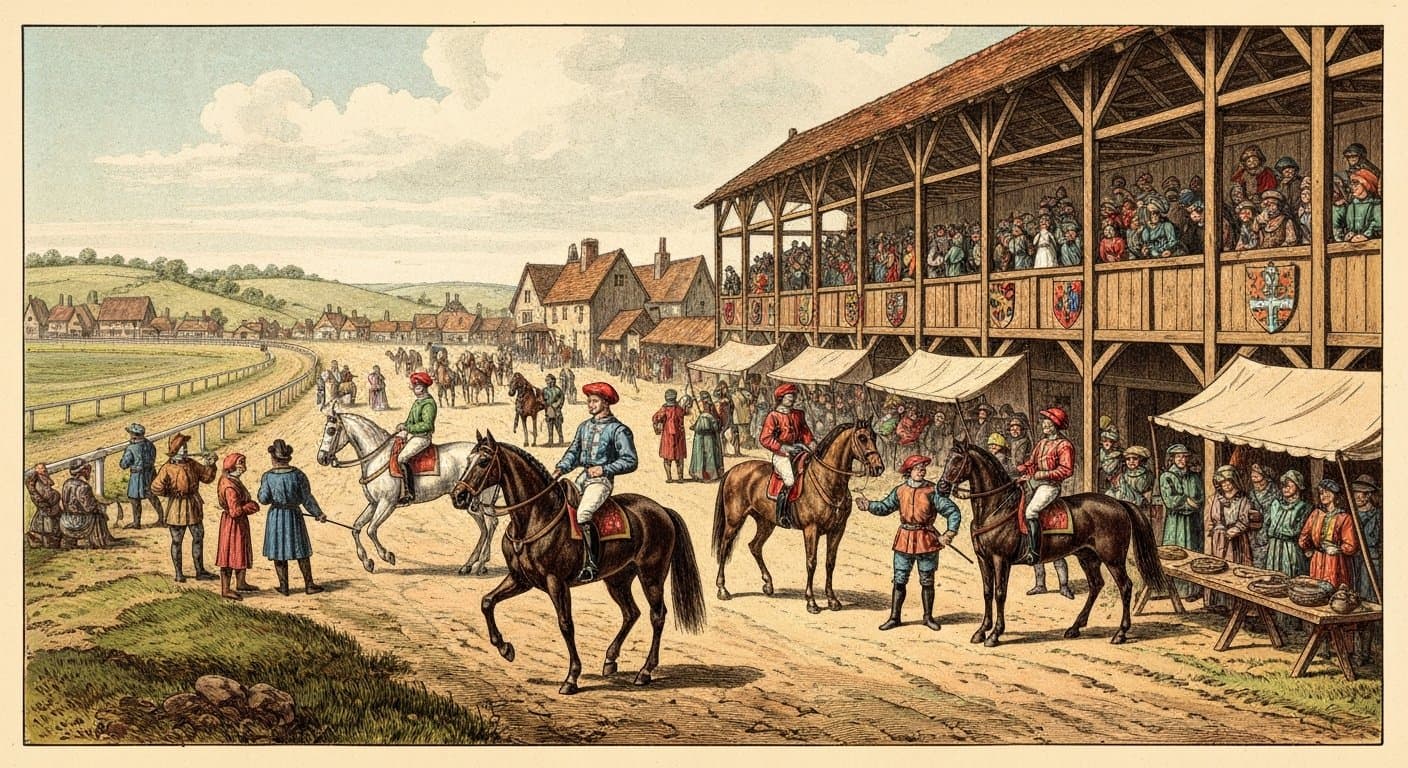
Beverley Summer Racing: Complete Guide
Your complete guide to summer racing at Beverley — the Beverley Bullet, key fixtures, and betting angles for Yorkshire's historic flat course.
Read more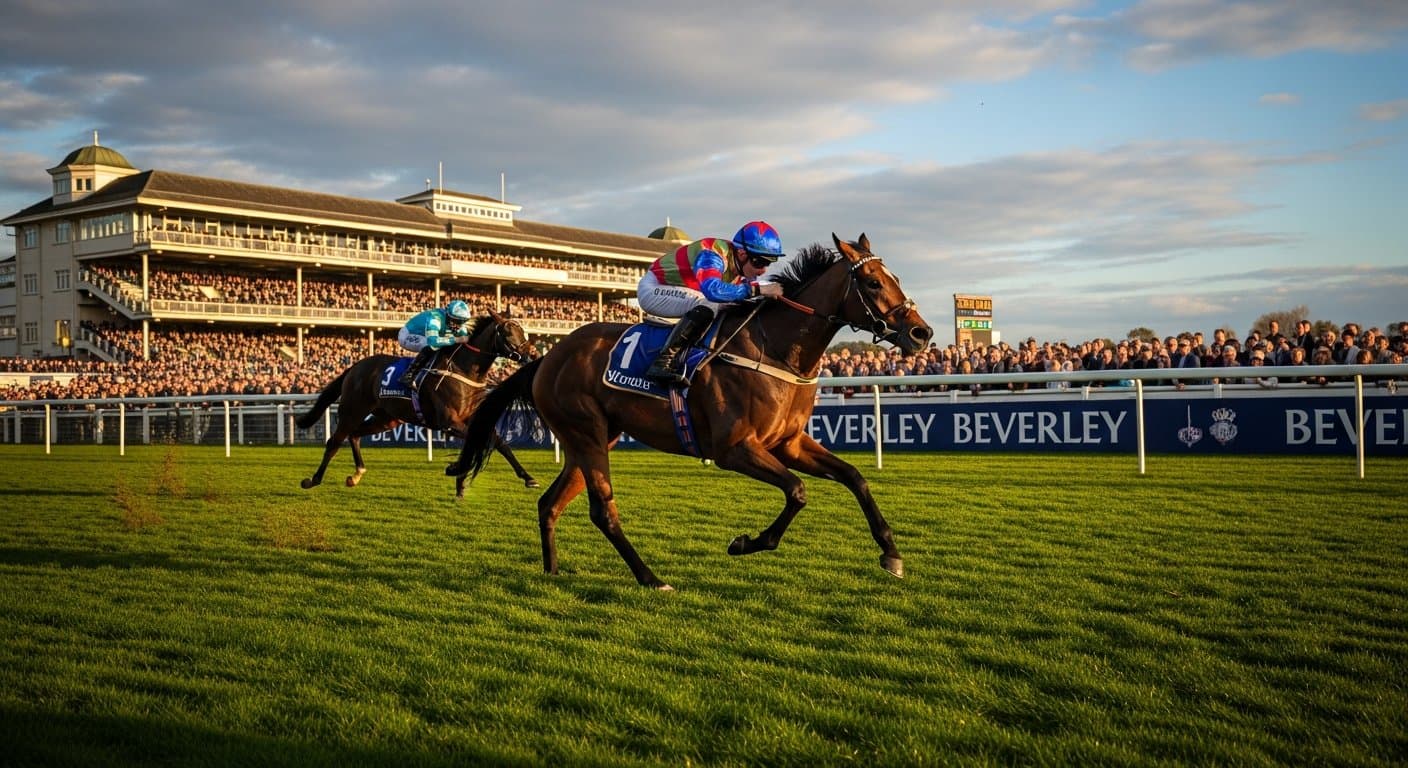
Altisidora at Beverley: The St Leger Mare and Yorkshire's Racing Heritage
Altisidora won the 1813 St Leger at Doncaster and raced at Beverley under owner-breeder Richard Watt of Bishop Burton, helping forge Yorkshire's oldest racing dynasty.
Read more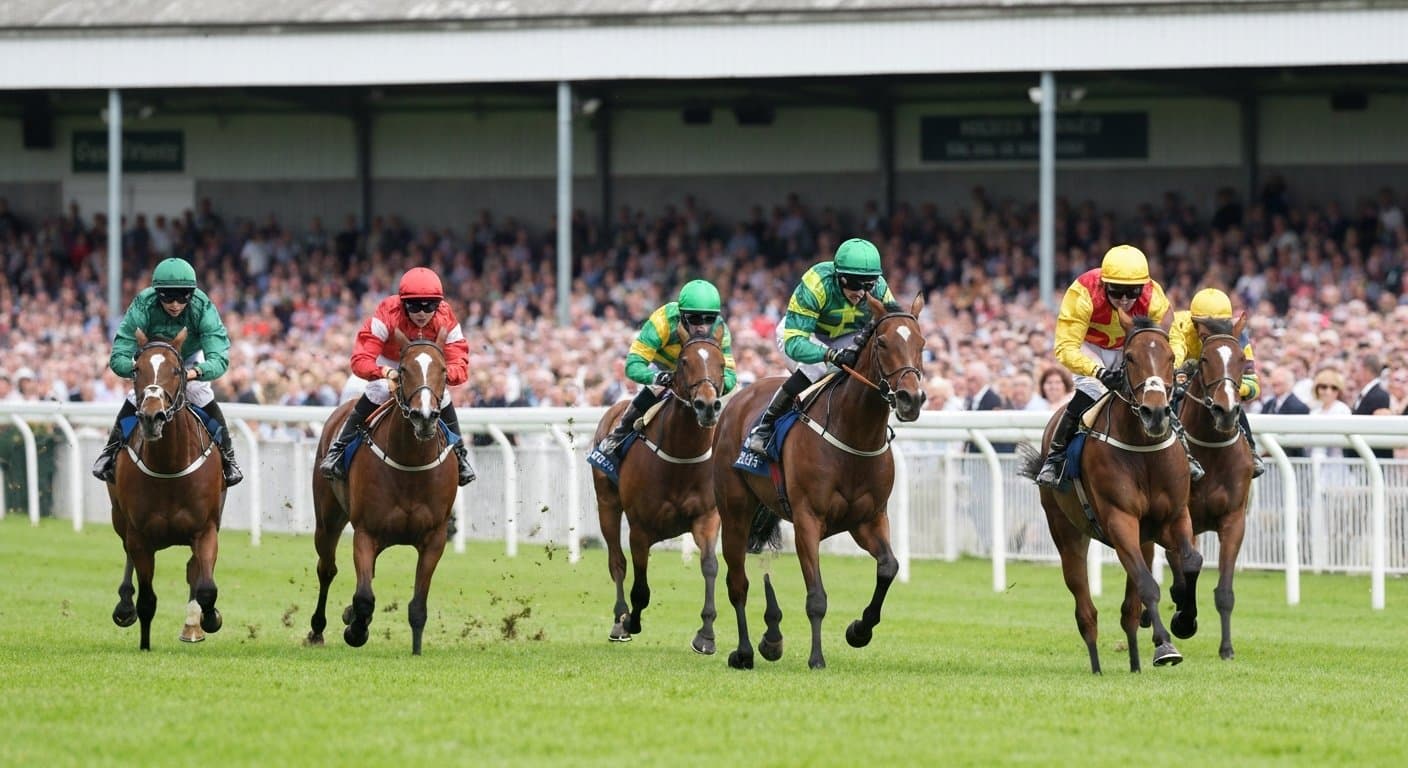
Betting at Beverley Racecourse
How to bet smarter at Beverley — track characteristics, going and draw, key trainers and jockeys, and strategies for Yorkshire's historic flat course.
Read moreGamble Responsibly
Gambling should be entertaining and not seen as a way to make money. Never bet more than you can afford to lose. If you or someone you know has a gambling problem, help and support is available.