
Founder & Editor · Last reviewed 2026-03-02
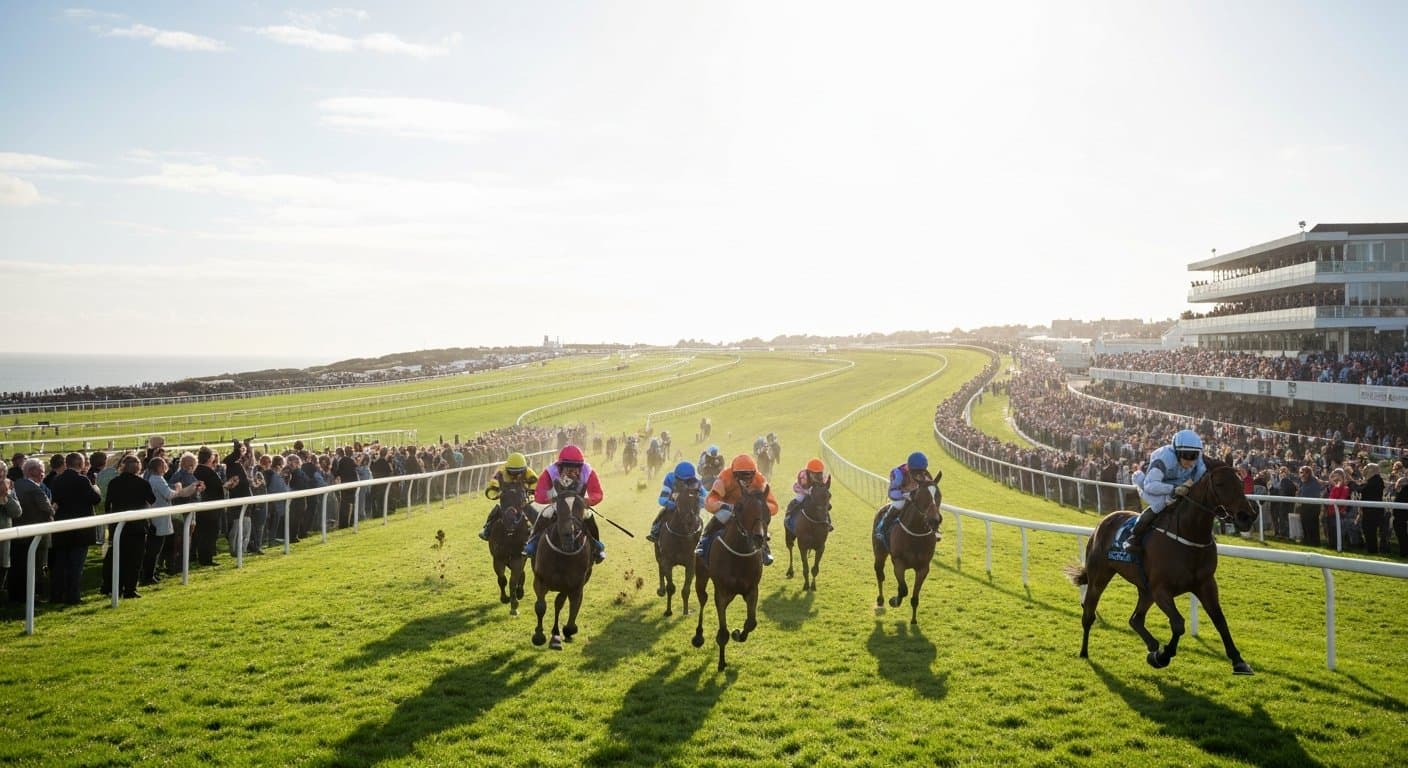
Brighton is one of the most distinctive flat tracks in Britain. The horseshoe layout, the steep descent into the finishing straight, the chalk base that keeps the going firm almost year-round — it all adds up to a course that rewards those who understand it and punishes those who don't. Course form here counts more than almost anywhere else on the southern circuit.
The track runs from April to October on the Downs above the city. There's no National Hunt programme, no all-weather surface, no dual purpose — just flat racing on one of the most individual courses in the calendar. That specialisation matters for bettors. The skills required here — handling a steep gradient, maintaining action on the descent, racing in a tight field on a horseshoe — are specific. Horses that have them tend to keep showing them.
The going is almost always good or good to firm. Brighton sits on Middle Chalk geology, and the drainage is exceptional. Soft ground is a rarity — it might happen twice in a decade. That consistency helps: you can usually assume firm conditions when you're assessing form. Speed and agility matter more than stamina. Front-runners and small, athletic horses tend to dominate. Big, galloping types that thrive at Newmarket or Sandown don't always get the same results when they step down to Brighton.
The Brighton Mile in August is the course's signature event. Run as part of the Festival of Racing — a three-day meeting that draws the biggest crowds and the sharpest betting markets of the season — it's the race that defines what Brighton does. A one-mile handicap for three-year-olds and upwards on firm ground, with large fields and a strong southern-circuit field. The form from the Festival often works out well.
But the value isn't exclusively in August. Brighton stages competitive racing throughout the season, and the card is often underpriced by the major layers because it falls outside the main betting hubs. Smaller meetings in May, June, and early July can throw up real value — trainers with course specialists, horses returning to a track they've handled before, going conditions that eliminate most of the field.
Quick reference: when Brighton works for you
- The horse has won or placed at Brighton before, on similar ground
- The trainer (Hannon, Cox, Andrew Balding) has a strong course record
- Ground is good or good to firm — conditions the horse has handled
- The race is a sprint or 7f–1m, where the descent and agility factor is most pronounced
- The horse has front-running form and the pace looks moderate
- You're in a competitive handicap at the August Festival — each-way value exists in fields of 12+
When to walk away
- A horse arrives with strong form from Newmarket, Sandown, or Goodwood, but has never run at Brighton — form transfer from galloping tracks is inconsistent
- The going has softened unusually — the horse profile changes entirely and the market won't fully adjust
- You're relying purely on trainer record without checking individual horse suitability — not every horse from a strong yard handles the descent
Brighton's betting market is often softer than comparable southern meetings. The course doesn't attract the same attention as Goodwood or Ascot, but the quality of racing — particularly in the summer months — justifies serious attention. Those who invest time in understanding which types of horses thrive here, and who the key operators are, find it a consistently productive track.
This guide covers track characteristics, going and draw, key trainers and jockeys, strategies, and key races.
Bet on Brighton
Place your bets on Brighton races with a trusted bookmaker.

Promo code BETFRED50. New customers only. Register, deposit with a Debit Card, and place a first bet of £10+ at Evens (2.0)+ on Sports, to be settled within 7 days, to get £30 in Sports Free Bets and £20 in Bet Builder Free Bets within 24 hours of settlement. 7-day expiry. Eligibility & payment exclusions apply. Full T&Cs apply. Take Time to Think. BeGambleAware.org. 18+. Full T&Cs.

Promo code R30. New UK customers only, 18+. Register, deposit £10 or more, then place a £10 single cash bet at odds of 1/2 (1.5) or greater on any sports market (excluding Virtuals). Once the qualifying bet settles you get £30 in Free Bets (3 x £10) — the qualifying bet can win or lose. Free Bets are valid on any sports market excluding Virtuals, expire in 7 days, are non-withdrawable and must be used in full. Excluded deposit methods apply (including PayPal, Apple Pay, Skrill and NETELLER). Named bets such as Lucky 15 do not qualify. If you cash out the qualifying bet, or it is voided, you are no longer eligible for the offer. Ends 31.12.26. Full T&Cs apply. Please gamble responsibly. BeGambleAware.org. 18+. Full T&Cs.

Promo code BET40GET20. New UK customers, 18+. Register with the code and place a first bet of £40 or more at Evens (2.0) or greater. Receive 2 × £10 free bets: the first credited automatically once the qualifying bet settles, the second 24 hours later. Free bets must be placed at minimum odds of 4/1 (5.0), expire 24 hours after credit, and the free-bet stake is not returned with winnings. Debit card deposits only. Take Time to Think. BeGambleAware.org. 18+. T&Cs apply. Full T&Cs.

50% of your first-day net losses refunded as a free bet, capped at £25. New UK customers aged 18+ only. To qualify, deposit and place a first bet of £10 or more on any sport at minimum odds of evens (2.00), then place at least two further bets on different events, each worth at least 50% of your largest bet, all at evens (2.00) or greater. Losses are counted from your first settled bet until 23:59 the same day. Place a qualifying £10+ bet and you are guaranteed at least a £5 free bet. Bets placed at SP, void bets, cashed-out bets and bets struck with free bets do not count towards the offer. The free bet is credited the day after your qualifying bets settle and must be used within 7 days, after which it expires. It can be used at odds from 1/4 (1.25) up to 250/1 on singles and straight accumulators, but not on Trixie, Patent or Yankee style multiples. Free-bet stake is not returned with winnings. One offer per person, household, address, IP address and device. E-wallet deposits may not qualify, so check the cashier before depositing. Customers registered with GAMSTOP cannot claim. KYC identity verification must be completed before the free bet is credited. Take Time to Think. BeGambleAware.org. 18+. T&Cs apply. Full T&Cs.

New customers, 18+. Choose the sports bonus at sign-up, make a first deposit and receive a 100% bonus up to £50 in your Sports Bonus balance. To convert the bonus to cash, wager it 10x within 30 days. Single bets below Evens (2.00) do not qualify; accumulators do not qualify if any selection is below 1/2 (1.50). Virtual Sports, voided, cancelled, drawn, cashed-out and free-bet wagers do not count towards wagering. Only the first settled bet per event counts. Withdrawing before the wagering requirement is met forfeits the bonus balance including bonus winnings. Real-money funds are used before bonus funds. Deposits via Skrill or Neteller are not eligible. Not valid in conjunction with other promotions. Odds, bet and payment limits apply. 10bet general and promotion T&Cs apply. BeGambleAware.org. 18+. Full T&Cs.

New customers in Great Britain and Republic of Ireland, 18+. Place a £10 fixed-odds qualifying bet at minimum odds of 1/2 (1.50) — single or each-way (only the win part counts), pre-event or in-play, not cashed out early, within 28 days of opening the account. Receive up to £60 in bonuses credited over three days: 3 × £10 fixed-odds free bets (the first on settlement, then 24 and 48 hours later) plus 3 × £5 Total Goals FOOTBALL spread bets and 3 × £5 racing Winning Favourites spread bets, with a £1 racing Race Index spread bet as an extra on top. The spread bets need a full spread-betting account, opened within 28 days of the fixed-odds account and subject to Spreadex's eligibility and appropriateness checks. Free-bet stakes not returned with winnings; free bets valid 28 days from issue. IMPORTANT: the £5 credits are SPREAD bets — sports spread betting carries the risk that losses can exceed your stake. Sports spread-betting customers do not have Financial Ombudsman or FSCS recourse. Take Time to Think. BeGambleAware.org. 18+. T&Cs apply. Full T&Cs.

Promo code WELCOME15, entered under My Bonuses after registering. New UK customers, 18+. Place a first qualifying bet of at least £10 from your cash balance at odds of evens (2.0) or greater within 7 days of opening the account. Once the qualifying bet fully settles you receive £15 in free bets, credited as 3 x £5 tokens with set uses: one £5 accumulator free bet (minimum 4 legs, each leg at 2/5 or bigger), one £5 sports free bet (any market at evens or bigger) and one £5 Sub Cover free bet (selected football player markets at evens or bigger). Free-bet stakes are not returned with winnings. Free bets expire 7 days after they are credited. Void, cashed-out and partially cashed-out bets do not qualify. One offer per customer. Confirm the current terms on BetGoodwin's own welcome-offer page before claiming. Take Time to Think. BeGambleAware.org. 18+. T&Cs apply. Full T&Cs.

New UK customers, 18+. Minimum deposit £10. Place a £10 qualifying single on sports (excluding virtuals) at minimum odds of 1/2 (1.50), settled within 14 days. Deposit-method exclusions apply. Receive £30 in free bets (stake not returned), split £20 for sportsbook use (2 x £10) and £10 for Bet Builder only (2 x £5); Bet Builder does not cover horse racing. Free bets must be accepted within 7 days and expire 7 days after acceptance. No promo code required. Best Odds Guaranteed on UK & Irish racing, subject to having staked over £25 in the previous seven days. Operated by LiveScore Betting and Gaming (Gibraltar) Ltd, UKGC 56859. Confirm the current terms on LiveScore Bet's own promotions page before claiming. Take Time to Think. BeGambleAware.org. 18+. T&Cs apply. Full T&Cs.
18+. BeGambleAware.org
Track Characteristics
The Horseshoe Layout
Brighton's track doesn't form a complete circuit. It's a horseshoe — approximately one and a half miles in length, running left-handed, with a start and finish at the same end. The finishing straight spans four furlongs and includes one of the steepest descents in British flat racing, followed by a short climb to the winning post. It's a layout unlike anything else on the calendar, and it rewards specific qualities.
The descent is the key feature. Horses must maintain their action on a downhill gradient while accelerating. Some do this naturally — they find their stride and go away from their rivals. Others lose their balance, shorten their action, and end up outpaced at the worst moment. Course form at Brighton is partly a proxy for "can this horse handle the hill." If a horse has handled it before, that's positive evidence. If it hasn't, the race is a real unknown.
Front-Runners and Prominent Racers
The horseshoe configuration, with its easy bends and long run-in, suits horses that want to make the running or race prominently. There's no sharp elbow or tight turn that would allow a chasing pack to bunch up and challenge the leader going into the straight. A front-runner at Brighton can dictate the pace for long stretches and still have stamina in reserve for the climb.
That doesn't mean closers never win. But the bias is real. In sprint races especially — five furlongs, five furlongs 59 yards — a horse that can travel in the first three or four and maintain that position through the descent often finishes in front of rivals that are trying to come from off the pace. When you're looking at a Brighton race, note whether the likely front-runners are real front-runners or just pace-dependent horses. One will set the race up; the other will collapse in the final furlong.
Small Agile Types vs Galloping Machines
Brighton actively disadvantages the big, powerful galloping type that thrives at Newmarket or Sandown. The descent requires balance and agility, not raw power. Horses built like sprinters — compact, close-coupled, with a quick action — tend to handle it better. The climb to the line then tests whether they've conserved enough.
Form from other tracks needs to be filtered. Newmarket is flat, galloping, and completely straight for long distances — the polar opposite of Brighton. A horse with good form at Newmarket may be physically unsuited to what Brighton asks. Epsom Downs and Bath are better comparisons — both undulating, both testing balance. Form from those two tracks tends to transfer more reliably.
Course Craft and Jockey Knowledge
The descent creates a decision point for jockeys. Commit too early and the horse may blow up on the climb; sit too long and you're attempting to accelerate uphill in a big field. Jockeys who have ridden regularly at Brighton — who know exactly when to press and how to position their mount on the turn into the straight — have a measurable advantage. It's worth checking whether a jockey has multiple wins at the course before a race.
Distance Range
Brighton runs from five furlongs to one mile six furlongs. The most common distances are five furlongs 59 yards, seven furlongs, one mile, one mile two furlongs, and one mile four furlongs. The descent and climb are present at all distances, but they're proportionally more significant in shorter races — in a five-furlong sprint, those four furlongs of undulating straight represent the entire race. In a mile-and-a-half, the build-up on the back makes the descent less critical, and stamina becomes a larger factor.
For the Brighton Mile and the Festival of Racing, the one-mile trip is the sweet spot — enough distance for positional racing to matter, but concentrated enough that one mistake on the descent can decide the result.
Going & Course Form
Going at Brighton
Brighton sits on chalk downland above the city, and the geological base is the defining characteristic of the going. Middle Chalk drains very fast — faster than almost any other racecourse in Britain. The result is that Brighton runs on good or good to firm ground for virtually the entire season. Genuinely soft ground appears perhaps once or twice in a decade. If you're planning to back a horse that needs soft, this is not the course to find it.
That consistency is useful. When you're assessing form at Brighton, you can almost always assume the ground will be good to firm, and you can filter your form accordingly. Horses with strong records on firm ground are a starting point. Horses whose best form came on soft — perhaps winning a spring maiden on an unusually wet April day at a different course — may not reproduce that at Brighton even in the most favourable draw and conditions.
Going Changes and Seasonal Profile
April is the only month where going can soften meaningfully. The transition from winter can leave the Downs carrying some residual moisture, and early-season meetings may start on good to soft before firming up through the summer. By May, the chalk base usually takes over and conditions firm up quickly. June, July, and August are consistently good to firm or firm. September and October, as the season winds down, can vary — early autumn dew and reduced evaporation occasionally keep the ground at good.
A late-summer drought can push Brighton to firm or even good to firm (fast). When that happens, the descent becomes faster and less forgiving. Horses that handle the gradient well on good to firm may find the descent trickier when it's truly firm. Watch for going descriptions from the course on the day rather than relying on race-day morning reports.
Draw at Brighton
The horseshoe layout means there's no systemic draw bias comparable to what you'd see at Chester or Beverley. The track doesn't have a long straight where high or low numbers are compressed against the rail. However, in large-field sprints over five furlongs and five furlongs 59 yards, a low draw (stalls 1 to 6 in a field of 12+) can help a horse secure an early position without being forced wide going into the descent. In the early stages of a sprint, position is everything at Brighton — being trapped three wide entering the downhill section burns energy and costs ground.
In races over seven furlongs and beyond, the draw effect diminishes. The field has time to settle into position before the critical section, and it becomes more about how a horse travels than where it started.
Course Form as a Going Proxy
Because Brighton's going is so consistent, course form serves a dual function. It tells you not only that a horse has handled the track's quirks, but also that it has handled firm ground. A horse with two wins at Brighton almost certainly handles both the descent and the fast surface. That combination — course form on similar conditions — is the strongest single indicator on this track.
Horses coming from Epsom, Bath, or Windsor with wins on firm ground are the best outside-course pointers. Windsor is flat and right-handed, so its form is less analogous. Bath is undulating with a stiff finish. Epsom is the closest cousin — undulating, with a severe test of balance and agility. A horse that has won on good to firm at Epsom has demonstrated exactly the qualities Brighton rewards.
Coastal Conditions
Brighton's position on the South Downs, overlooking the coast, means it's exposed to sea breezes. Wind direction can affect pace in races on the uphill section, and a strong head wind going into the climb can make a fitness test of an already demanding finish. Trainers with horses trained for this climate — Cox at Lambourn, Hannon at Everleigh, Balding at Kingsclere — know how to prepare for it. It's an additional reason why local yards tend to dominate.
Key Trainers & Jockeys
Trainers
Richard Hannon (East Everleigh, Wiltshire)
Hannon's yard at East Everleigh sits about 60 miles from Brighton, and the proximity shows in his numbers. He's consistently the highest-volume trainer at the course, sending large strings of juveniles south through the summer. His two-year-old record at Brighton is particularly strong — he uses the course as a development track for horses working towards Listed and Group targets in the autumn. A Hannon juvenile at Brighton in May, June, or early July may be having a first or second run, and his runners are often well prepared for the specific demands of the descent. At 3/1 or bigger, they deserve consideration.
Clive Cox (Lambourn, Berkshire)
Cox is Brighton's dominant sprint trainer. His record over five furlongs and six furlongs at the course stands up well against much larger yards. He prepares horses specifically for fast-ground, quick-action tracks, and Brighton fits his profile. His juveniles in sprint maidens are reliable watches, and his older handicap sprinters often arrive with form that precisely matches what Brighton demands — firm ground, front-running or prominent, agile type. When Cox sends a sprinter to Brighton that has already won or placed at the course, it's close to a formbook certainty to figure.
Andrew Balding (Kingsclere, Hampshire)
Balding runs a high-quality southern operation that targets conditions races and handicaps at tracks on the South Coast circuit. His Brighton record in middle-distance races — seven furlongs to a mile and two furlongs — is consistently strong. He tends to send horses to Brighton when the conditions are right rather than flooding the card with numbers, which means his runners often arrive in good form. In the Festival of Racing meeting in August, a well-fancied Balding entry in a mile handicap is worth taking seriously.
Ralph Beckett (Kimpton Down, Hampshire)
Beckett is a fillies specialist with a strong record at Brighton across middle distances. His horses tend to be well balanced, good movers — the sort that handle undulating tracks well. A Beckett filly with previous course form is close to automatic shortlist material.
Gary Moore (Horsham, West Sussex)
Moore is the closest major yard to Brighton — about 30 miles inland. His local knowledge is reflected in a strike rate that consistently outperforms his national average at this specific track. When Moore sends a horse to Brighton, especially in sprint or seven-furlong handicaps, it's worth looking at carefully. He often targets smaller meetings in May and June when the markets are thin and the fields are manageable.
Jockeys
Oisin Murphy
Murphy has strong form on the South Coast circuit and rides regularly at Brighton for multiple yards. His record on the descent — knowing when to push and when to wait — is polished. He gets bookings at Brighton for the top southern yards as well as for smaller operations.
Callum Shepherd
Shepherd is one of the busiest jockeys on the southern flat circuit and rides at Brighton more than almost anyone. He has a strong relationship with local trainers and understands the descent well. In handicaps at smaller Brighton meetings, Shepherd on a horse with course form is often a reliable flag.
David Egan and Rossa Ryan
Both ride regularly for Clive Cox and appear frequently at Brighton in sprint and seven-furlong races. Egan, in particular, has a good record at the course. When Cox retains one of his top two jockeys for a Brighton sprint, the confidence signal is worth noting.
Feature Race Jockeys
For the Brighton Mile and Festival of Racing, top national jockeys — Frankie Dettori, William Buick, Ryan Moore — often travel south. Their presence on a horse from a well-regarded yard is a market signal rather than a value one; the price will reflect it.
Betting Strategies
Course Form as the Primary Filter
Before anything else, check whether the horse has run at Brighton before. A win or a placed effort at the course — on similar ground — is the single most useful piece of information in the form book here. The track's descent requires a specific type of horse, and the fact that a horse has handled it before is direct evidence rather than inference. Even a placed effort at 14/1 in a handicap tells you something: this horse can handle the gradient, can balance itself on the downhill section, and didn't lose confidence in the experience.
Apply this filter aggressively in maidens and lower-grade handicaps. The fields often contain horses that have only run on flat galloping tracks, and one of them will have course form buried in a race you might not have noticed. That horse, even if their price isn't brilliant, is worth more than its position in the betting suggests.
Discount Form from Galloping Tracks
Brighton and Newmarket are opposite ends of the spectrum. Newmarket is flat, straight for long distances, and rewards raw ability and pace. Brighton is undulating, horseshoe-shaped, and rewards agility and balance. When a horse arrives at Brighton with strong form exclusively from Newmarket, Sandown, or Doncaster, apply a discount. They haven't been tested on what Brighton specifically asks.
The exception is when the horse's physical profile — compact, quick-actioned, known to handle turns — suggests it will cope. But unless there's specific evidence, treat galloping-track form as a partial guide and no more.
Hannon and Cox Juveniles at 3/1+
In two-year-old races from May to July, Hannon and Cox send large numbers of juveniles to Brighton as part of their early-season development programme. Many of these horses are having second or third runs, and the trainers know what they're doing here. When either yard sends a juvenile to Brighton with a top jockey booking at 3/1 or bigger — particularly for a six-furlong maiden with a small field — it's a serious play. They're not travelling this horse unnecessarily.
The key is the jockey booking. If Hannon sends a two-year-old with Sean Levey or Pat Dobbs aboard (his retained jockeys), that's a different signal to a conditional booking from a lesser-known rider. Follow the jockey's prominence.
Front-Runners on Good to Firm
In sprint handicaps and conditions races on firm ground, front-runners have an structural advantage that the market often undervalues. The absence of sharp bends means a front-runner at Brighton isn't going to be gathered up by a chasing pack entering a tight turn. If the pace looks modest and a known front-runner is in the race — particularly in fields of fewer than 10 runners — the front-runner is worth upgrading in your assessment.
The caveat: a front-runner who has been racing at tracks with sharper bends (Chester, Catterick) may struggle to maintain rhythm on Brighton's longer, gentler sections. Look for front-runners that have already raced on at least one undulating or horseshoe track.
Each-Way in the August Festival Handicaps
The Brighton Mile and the supporting Festival of Racing handicaps regularly produce each-way value. Fields of 15 to 20 runners, competitive weights, and sharp southern-circuit horses create truly open markets. At 5/1 or bigger, a horse with course form, a sympathetic draw in a sprint, and a jockey with Brighton experience is a rational each-way selection. The course's relatively modest profile means prices aren't crushed as heavily as they would be at Ascot or Goodwood.
Target horses at 7/1 to 12/1 with a minimum of one previous Brighton placing. That combination — course form, each-way price — is the recurring value profile at the Festival.
To compare place terms and each-way promotions across the major bookmakers, see our best bookmakers for horse racing guide.
Key Races to Bet On
The Brighton Mile
The Brighton Mile is the course's signature race — a handicap over one mile for three-year-olds and upwards, run as the centrepiece of the August Festival of Racing. It's the most valuable flat race on the Brighton calendar, drawing fields of 15 to 20 runners and some of the sharper southern-circuit handicappers. The race regularly attracts horses that have been specifically prepared for the trip south, and course form is at a premium in the betting.
The mile is a good distance for the track. Long enough for positional racing to develop before the descent, short enough for the gradient to have a decisive effect. Winners are almost always horses that handle the undulations well — they quicken through the downhill section rather than losing their action. For betting, the field sizes create each-way opportunities, and the market is often truly competitive rather than dominated by one short-priced favourite.
For a detailed breakdown of the history, notable winners, and betting angles specific to this race, see our Brighton Mile guide.
The Festival of Racing
The Festival is a three-day August meeting that's the highlight of Brighton's season. Beyond the Brighton Mile on the opening or middle day, the card includes sprint handicaps, seven-furlong and ten-furlong conditions races, and two-year-old maiden events. The atmosphere is relaxed — crowds come as much for the seaside setting as the racing — but the quality of competition is real.
For bettors, the Festival is the best opportunity Brighton offers in a calendar year. The form is strong, the fields are deep, and the markets, while sharper than a typical Brighton midweek card, still offer value if you've done the homework. The meeting usually takes place in the last two weeks of August.
For the full story on Brighton's summer programme, see the seaside racing guide.
Two-Year-Old Maidens (May–July)
Before the Festival, Brighton's most productive betting medium is the two-year-old maiden programme. Hannon, Cox, and Balding use these races regularly as a development ground, and the structure of the card — often small fields, first-time runners, second runs — creates clear betting angles. A well-regarded juvenile from a top southern yard, having its second run at a course where the trainer regularly produces winners, is often underestimated in the market.
These aren't the glamour races of the season, but they're where the framework for Festival targets is often built. A two-year-old that wins a Brighton maiden in June is worth tracking through the summer.
Sprint Handicaps
Throughout the season — from April opening fixtures to the October final meeting — Brighton's sprint handicaps over five furlongs and six furlongs offer consistent opportunities. The short distances amplify every advantage discussed in this guide: course form, draw in large fields, front-running ability, agility on the descent. Recurring angles include: backing course specialists at 6/1+, applying a low-draw filter in fields of 12+, and treating strong form from flat galloping tracks with scepticism.
Seasonal Fixtures to Track
- Opening Meeting (April): Light fields, going can be soft — different horse profiles apply in this single meeting compared to the rest of the season.
- Goodwood Overflow (August): Horses stabled near Goodwood sometimes point to Brighton as an alternative or prep. Trainer intent is worth checking.
- Season Finale (October): Going often softens back to good or good to soft. Horses that have run well at Brighton all season on firm may find the final meeting a slightly different test.
For the complete fixture schedule, see the Brighton complete guide.
Share this article
More about this racecourse
All Brighton guides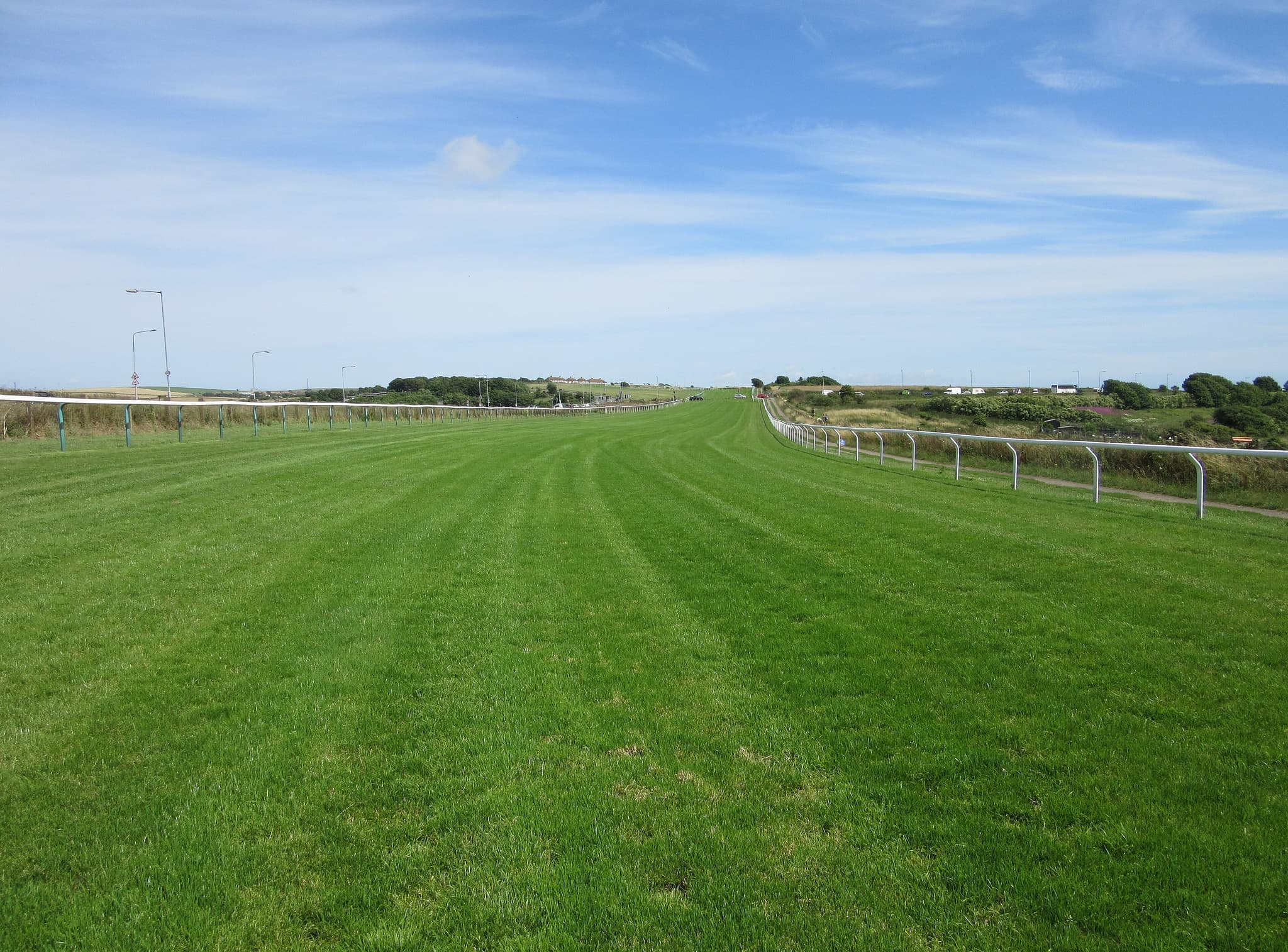
Brighton Racecourse: Clifftop Racing Tips & Course Info
Experience Britain's most scenic racecourse on Brighton's clifftops. Get course tips, facilities guide and insider secrets for race days.
Read more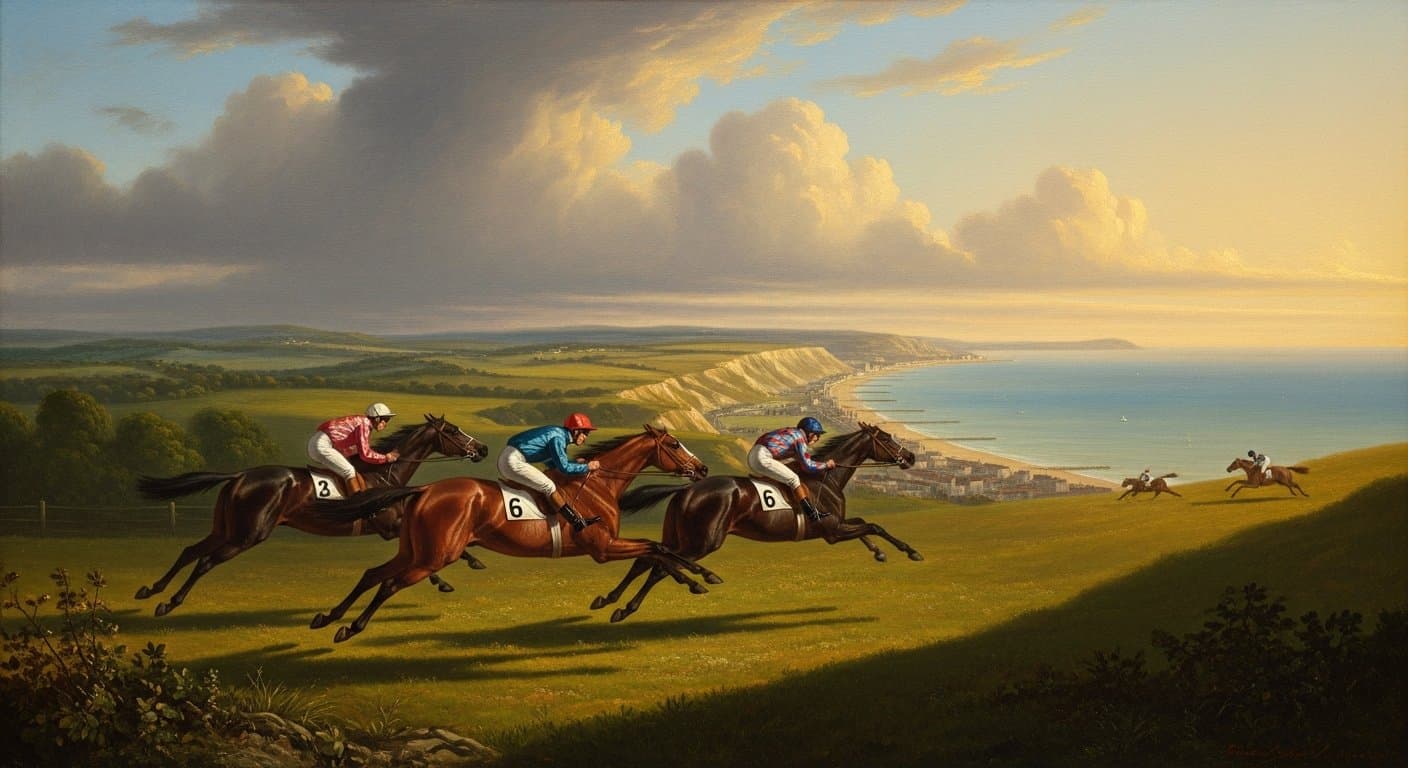
Brighton Cup Day at Brighton: The Complete Guide
Your complete guide to Brighton Cup Day — the seaside city's most prestigious race day, built around the feature handicap on Britain's most unusual flat track. Card, betting, and attending.
Read more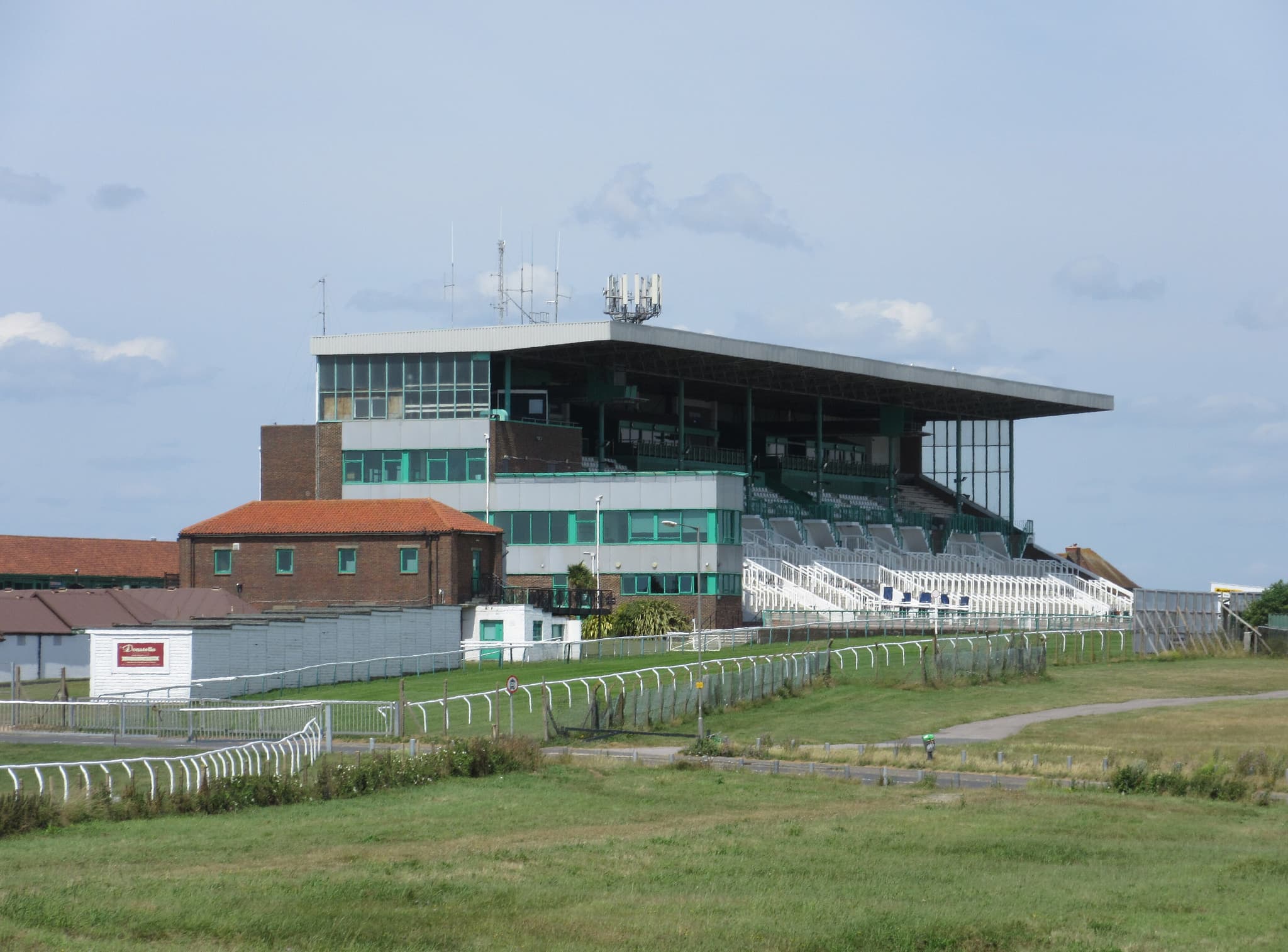
A Day Out at Brighton Racecourse
Everything you need for a day at Brighton — getting there, what to wear, enclosures, food and drink, and insider tips for Britain's seaside flat course.
Read morePhotos on this page are used under Creative Commons licences. Titles, sources and licence links for each one are on our image credits page.
Research the field with the AI Race Predictor
Our model publishes calibrated win-probability estimates for UK races — a second opinion to understand a race, not tips. It's open about its record: it doesn't beat the market, and we show exactly how it does.
Work it out & learn the basics
Gamble Responsibly
Gambling should be entertaining and not seen as a way to make money. Never bet more than you can afford to lose. If you or someone you know has a gambling problem, help and support is available.