
Founder & Editor · Last reviewed 2026-04-05
Introduction
Brighton Racecourse sits on Whitehawk Hill, roughly 400 feet above sea level and about a mile from the English Channel. Racing has taken place on this site since 1783 — making it one of the older flat venues in Britain — and the course has maintained a character that no other track in the country can replicate. The combination of an unusually shaped horseshoe circuit, chalk-based ground that drains in hours not days, and unobstructed views across the Channel gives Brighton a personality that stands apart from every other venue on the flat calendar.
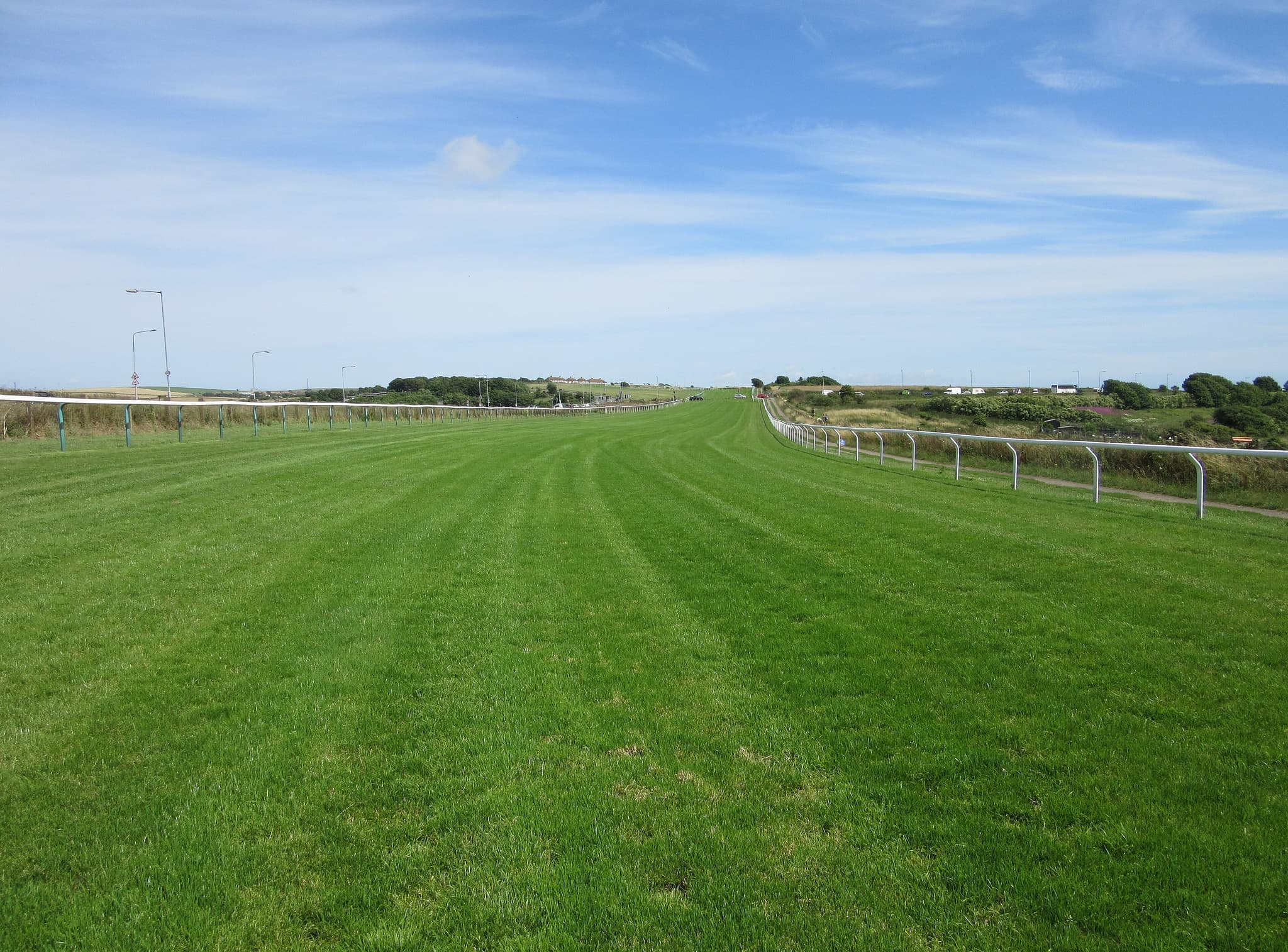
The layout is the defining feature. Brighton does not form a complete circuit — it is a horseshoe, similar in principle to Epsom Downs. The track runs left-handed for approximately one and a half miles, rising steeply from the back straight to the top of the hill before the field swings round and descends sharply into the four-furlong finishing straight. There is a slight uphill kick inside the final furlong before the winning post. That sequence — climb, bend, descent, uphill finish — produces results that regularly wrong-foot punters who rely on form from conventional galloping tracks.
The going at Brighton is almost exclusively good to firm or firm. The chalk base beneath the course drains so efficiently that even after heavy summer rain the going rarely deteriorates below good. Soft ground is truly unusual; in a full season of 20-plus meetings you might see it once. That consistency matters for both punters and trainers — horses prepared for fast ground rarely find an excuse at Brighton.
The course is owned and operated by Arena Racing Company (ARC), which took over management in 2012. Under ARC, the fixtures programme has been maintained at roughly 20–24 meetings per season, running from May through to October. The Festival of Racing in August is the centrepiece — a two or three-day block that includes the Brighton Mile Challenge Trophy, the course's most prestigious handicap.
Brighton occupies a specific position in British flat racing: it is a specialist course, not a prestigious one. It stages no Group 1 races and none of the Classics. What it offers instead is a highly consistent set of racing conditions — reliable fast ground, a track that rewards a particular type of horse, and a fixture list concentrated in the months when southern England is at its best for an outdoor day out. That combination makes it attractive to trainers who know what suits it, and to punters who take the time to understand its structural biases. Course specialists win at Brighton at a higher rate than at most other British venues.
The racecourse is at the eastern end of a strong cluster of southern flat courses. Goodwood is 35 miles west; Epsom Downs is 35 miles north-west; Lingfield Park and Kempton Park are both within 50 miles. Horses and trainers move between these venues throughout the summer, which means Brighton form connects directly to the broader southern flat picture.
Who this guide is for. This guide is written for anyone visiting Brighton Racecourse for the first time, planning a flutter on a Brighton fixture from home, or simply wanting to understand what makes this course different. Sections cover the course layout in technical detail, the fixtures calendar, facilities and enclosures, travel options, a full history, notable moments, betting angles, and practical planning advice. Whether you are interested primarily in the racing or in a summer day out on the South Downs, the sections below have what you need.
Quick facts
- Best race to watch: Brighton Mile Challenge Trophy (August Festival, 1m 208y handicap)
- Best enclosure for viewing: Grandstand — four-furlong finishing straight is visible from start to post
- Busiest month: August (Festival of Racing)
- Best for betting: Sprint races over 5f and 6f where draw bias from high stalls is most pronounced
- Going: Almost always good to firm or firmer; soft is rare due to chalk sub-strata
- Nearest station: Brighton (Southern/Thameslink from London Victoria and London Bridge)
- Season: May to October (flat only; no all-weather, no jumps)
- Capacity: Approximately 5,000
- Related courses: Goodwood, Epsom Downs, Lingfield Park, Kempton Park
Bet on Brighton
Place your bets on Brighton races with a trusted bookmaker.

Promo code BETFRED50. New customers only. Register, deposit with a Debit Card, and place a first bet of £10+ at Evens (2.0)+ on Sports, to be settled within 7 days, to get £30 in Sports Free Bets and £20 in Bet Builder Free Bets within 24 hours of settlement. 7-day expiry. Eligibility & payment exclusions apply. Full T&Cs apply. Take Time to Think. BeGambleAware.org. 18+. Full T&Cs.

Promo code R30. New UK customers only, 18+. Register, deposit £10 or more, then place a £10 single cash bet at odds of 1/2 (1.5) or greater on any sports market (excluding Virtuals). Once the qualifying bet settles you get £30 in Free Bets (3 x £10) — the qualifying bet can win or lose. Free Bets are valid on any sports market excluding Virtuals, expire in 7 days, are non-withdrawable and must be used in full. Excluded deposit methods apply (including PayPal, Apple Pay, Skrill and NETELLER). Named bets such as Lucky 15 do not qualify. If you cash out the qualifying bet, or it is voided, you are no longer eligible for the offer. Ends 31.12.26. Full T&Cs apply. Please gamble responsibly. BeGambleAware.org. 18+. Full T&Cs.

Promo code BET40GET20. New UK customers, 18+. Register with the code and place a first bet of £40 or more at Evens (2.0) or greater. Receive 2 × £10 free bets: the first credited automatically once the qualifying bet settles, the second 24 hours later. Free bets must be placed at minimum odds of 4/1 (5.0), expire 24 hours after credit, and the free-bet stake is not returned with winnings. Debit card deposits only. Take Time to Think. BeGambleAware.org. 18+. T&Cs apply. Full T&Cs.

50% of your first-day net losses refunded as a free bet, capped at £25. New UK customers aged 18+ only. To qualify, deposit and place a first bet of £10 or more on any sport at minimum odds of evens (2.00), then place at least two further bets on different events, each worth at least 50% of your largest bet, all at evens (2.00) or greater. Losses are counted from your first settled bet until 23:59 the same day. Place a qualifying £10+ bet and you are guaranteed at least a £5 free bet. Bets placed at SP, void bets, cashed-out bets and bets struck with free bets do not count towards the offer. The free bet is credited the day after your qualifying bets settle and must be used within 7 days, after which it expires. It can be used at odds from 1/4 (1.25) up to 250/1 on singles and straight accumulators, but not on Trixie, Patent or Yankee style multiples. Free-bet stake is not returned with winnings. One offer per person, household, address, IP address and device. E-wallet deposits may not qualify, so check the cashier before depositing. Customers registered with GAMSTOP cannot claim. KYC identity verification must be completed before the free bet is credited. Take Time to Think. BeGambleAware.org. 18+. T&Cs apply. Full T&Cs.

New customers, 18+. Choose the sports bonus at sign-up, make a first deposit and receive a 100% bonus up to £50 in your Sports Bonus balance. To convert the bonus to cash, wager it 10x within 30 days. Single bets below Evens (2.00) do not qualify; accumulators do not qualify if any selection is below 1/2 (1.50). Virtual Sports, voided, cancelled, drawn, cashed-out and free-bet wagers do not count towards wagering. Only the first settled bet per event counts. Withdrawing before the wagering requirement is met forfeits the bonus balance including bonus winnings. Real-money funds are used before bonus funds. Deposits via Skrill or Neteller are not eligible. Not valid in conjunction with other promotions. Odds, bet and payment limits apply. 10bet general and promotion T&Cs apply. BeGambleAware.org. 18+. Full T&Cs.

New customers in Great Britain and Republic of Ireland, 18+. Place a £10 fixed-odds qualifying bet at minimum odds of 1/2 (1.50) — single or each-way (only the win part counts), pre-event or in-play, not cashed out early, within 28 days of opening the account. Receive up to £60 in bonuses credited over three days: 3 × £10 fixed-odds free bets (the first on settlement, then 24 and 48 hours later) plus 3 × £5 Total Goals FOOTBALL spread bets and 3 × £5 racing Winning Favourites spread bets, with a £1 racing Race Index spread bet as an extra on top. The spread bets need a full spread-betting account, opened within 28 days of the fixed-odds account and subject to Spreadex's eligibility and appropriateness checks. Free-bet stakes not returned with winnings; free bets valid 28 days from issue. IMPORTANT: the £5 credits are SPREAD bets — sports spread betting carries the risk that losses can exceed your stake. Sports spread-betting customers do not have Financial Ombudsman or FSCS recourse. Take Time to Think. BeGambleAware.org. 18+. T&Cs apply. Full T&Cs.

Promo code WELCOME15, entered under My Bonuses after registering. New UK customers, 18+. Place a first qualifying bet of at least £10 from your cash balance at odds of evens (2.0) or greater within 7 days of opening the account. Once the qualifying bet fully settles you receive £15 in free bets, credited as 3 x £5 tokens with set uses: one £5 accumulator free bet (minimum 4 legs, each leg at 2/5 or bigger), one £5 sports free bet (any market at evens or bigger) and one £5 Sub Cover free bet (selected football player markets at evens or bigger). Free-bet stakes are not returned with winnings. Free bets expire 7 days after they are credited. Void, cashed-out and partially cashed-out bets do not qualify. One offer per customer. Confirm the current terms on BetGoodwin's own welcome-offer page before claiming. Take Time to Think. BeGambleAware.org. 18+. T&Cs apply. Full T&Cs.

New UK customers, 18+. Minimum deposit £10. Place a £10 qualifying single on sports (excluding virtuals) at minimum odds of 1/2 (1.50), settled within 14 days. Deposit-method exclusions apply. Receive £30 in free bets (stake not returned), split £20 for sportsbook use (2 x £10) and £10 for Bet Builder only (2 x £5); Bet Builder does not cover horse racing. Free bets must be accepted within 7 days and expire 7 days after acceptance. No promo code required. Best Odds Guaranteed on UK & Irish racing, subject to having staked over £25 in the previous seven days. Operated by LiveScore Betting and Gaming (Gibraltar) Ltd, UKGC 56859. Confirm the current terms on LiveScore Bet's own promotions page before claiming. Take Time to Think. BeGambleAware.org. 18+. T&Cs apply. Full T&Cs.
18+. BeGambleAware.org
The Course
Brighton's track measures approximately one mile and three furlongs around its full horseshoe extent, though races are run over distances ranging from five furlongs to one mile and three furlongs and 196 yards. It does not form a complete circuit — horses enter from a chute at the back of the course and exit from the front, making it an out-and-back configuration comparable to Epsom Downs. The direction is left-handed throughout.
The Horseshoe Layout
The track begins at the top of Whitehawk Hill and drops down the back straight in a gentle right-to-left arc before turning sharply leftward at the bottom. From that turn, the course climbs back up the hill — roughly 70 feet of ascent over the back half — before swinging left again into the four-furlong finishing straight at the top. The final four furlongs descend steeply, losing around 80 feet in height before a slight uphill kick of about 12 to 15 feet inside the final furlong. The winning post is positioned at a point fractionally higher than the lowest point of the descent.
That gradient sequence is the defining characteristic of racing at Brighton. Horses must accelerate downhill while maintaining balance, then manage the slight rise at the end while jockeys judge their run. Horses that travel well through a race — those with a clean, efficient action — handle the descent better than flat-striding, galloping types. The latter tend to lose their footing or take time to find their balance on the downslope.
Horse Types That Thrive
Brighton consistently rewards compact, nimble horses. The undulating layout and steep finishing straight put a premium on agility rather than sheer stamina. Front-runners enjoy a structural advantage: once a horse secures a position on the descent, it is very difficult for horses held up at the rear to make up ground, because the tight bend at the bottom limits their room and the downhill camber does not suit horses that need to accelerate from a standing start. Studies of Brighton form over a ten-year period show that leaders at the two-furlong marker win at a rate approximately 15 to 20 per cent higher than the course average, particularly in races over five and six furlongs.
Smaller, lighter-framed horses bred for speed rather than stamina tend to excel. This is partly the going — the chalk-based surface stays fast — and partly the terrain. Trainers such as Roger Teal, Mick Channon (in his training years), and William Haggas have all maintained strong strike rates at the course, as their yards typically produce the compact, quick types that Brighton suits.
The Finishing Straight in Detail
The four-furlong straight at Brighton is one of the longest finishing straights in British flat racing relative to the overall track length. Horses swing into it from the final bend and face the long downhill run immediately. The gradient is steep enough to be visible to the naked eye from the grandstand — it is not subtle. The camber tilts from right to left across the width of the track, meaning horses racing on the far rail (the left-hand rail as viewed from the stands) are running on a slightly different surface gradient to those on the stands rail.
Inside the final furlong, the track flattens briefly and then rises. This is where held-up horses can occasionally find a second wind — but reaching the final furlong from the back of the field is a challenge on such a short course, and the uphill finish rarely produces dramatic late finishes. The last 100 yards tend to be run at relatively constant speed, with the gaps between horses settling early.
The Brighton Mile
The course's signature distance is one mile and 208 yards, used for the Brighton Mile Challenge Trophy and other mile contests. This is not a standard mile on a conventional track — the extra 208 yards accounts for the arc of the horseshoe and the approach to the finishing straight. Horses run the full back straight from a starting point at the very top of the hill, descend to the bottom of the course, and come back up to the apex of the turn before descending the four-furlong home straight.
The Brighton Mile is a test of stamina in the context of a quick surface. Even at good to firm, the undulations mean horses expend significantly more energy than they would over a flat mile at Sandown or Newmarket. The leaders in a Brighton Mile are usually prominent from flag-fall — very few Brighton Miles are won by horses that race more than four lengths off the pace at the two-furlong pole. Trainers preparing a horse specifically for the Brighton Mile typically target fit, race-hardened horses rather than improving types — the course does not flatter horses still learning their trade.
Going Tendencies
Brighton sits on Middle Chalk, one of the most free-draining geological sub-strata in southern England. After rain, the water passes through the turf layer and the chalk beneath absorbs it rapidly. The course can shift from good to firm to firm within 24 hours of a shower. Conversely, prolonged wet spells are required to push the going softer than good.
The last time Brighton reported heavy ground was in an early-season meeting in 2012 after an exceptionally wet spring. In a normal season, the going ranges from good (early May, before summer sets in) through good to firm and firm (June to September) to good or good to firm again in October. Trainers and punters can use this consistency to their advantage: if a horse needs fast ground to show its best, Brighton in July is as reliable as anywhere in Britain.
The exposed position on Whitehawk Hill means the track is also susceptible to wind, which can affect exposed-running horses in races where pace is slow. In calm conditions the racing is straightforward. In a strong south-westerly — which blows directly into the faces of horses racing up the home straight — those that have been covered up or held out of the wind can gain a small but measurable advantage in the final two furlongs.
Draw Bias
Draw position matters significantly at Brighton, particularly over the shorter distances. The course runs left-handed and the camber in the straight tilts toward the far rail. Over five furlongs and six furlongs, horses drawn in high stalls (the outside of the track near the far rail, stalls 8 and above depending on field size) consistently outperform low-drawn rivals. The reason is twofold: the camber gives the higher-drawn horses a fractionally lower running line through the descent, and in small fields the pace tends to develop on the far side, meaning low-drawn horses find themselves isolated.
Over six furlongs to one mile, the draw advantage of high stalls is less pronounced because the field has time to settle and find its own pattern. But in sprints of five and six furlongs — particularly in large fields of ten or more runners — ignoring the draw at Brighton is a mistake that experienced punters rarely make. The bias is well documented in course form books and has been noted by analysts including the Racing Post's draw specialists, who consistently flag Brighton 5f and 6f races as among the most draw-sensitive fixtures in British racing.
Over one mile and beyond, the draw becomes less of a factor. The initial sprint from the stalls is less critical when the field has more than a mile to cover, and the positions naturally reshuffle through the back straight and around the bends.
How Brighton Compares
Brighton is regularly grouped with Epsom Downs and Chester as a "specialist" flat track where course form carries exceptional weight. Unlike Chester, where the tight right-hand oval favours front-runners with a clean jumping action, Brighton's demands are more gradient-specific. Unlike Epsom, where the Camber and Tattenham Corner produce left-hand bias, Brighton's challenges are more evenly distributed between the descent and the uphill finish.
The practical implication for form study is that a horse with two or three Brighton wins is worth treating differently to one with equivalent wins at Newmarket or Ascot. Course specialists exist at Brighton in greater numbers than at most venues — horses that have been pointed at the course by trainers who know what works, returning season after season for the races they are designed to win. The betting guide section covers how to identify those patterns.
Key Fixtures & Calendar
Brighton's flat season runs from May through to October, with Arena Racing Company typically scheduling between 20 and 24 meetings per year. The majority fall between June and September, when the weather and the going are most reliable. A handful of May and October fixtures bookend the season, usually attracting smaller fields and quieter crowds. The bulk of the calendar is built around evening and Saturday afternoon fixtures during the summer months.
The Season Structure
The opening meetings in May serve as a warm-up for the course and its regular trainers. Field sizes are modest and the going tends to be good rather than firm, having not yet baked out from the wetter spring months. By June, the ground hardens and the bigger fields arrive. The summer programme — June, July, and August — accounts for roughly 60 per cent of Brighton's annual fixture list. This is the period when the course is at its most active and when the form book carries the greatest authority.
Evening fixtures are a Brighton staple. The course runs multiple twilight meetings each season, typically on Tuesday and Wednesday evenings from late June through August. These are informal, relaxed affairs: crowds are smaller than Saturday meetings, prices in the bars tend to be reasonable, and the setting — sea air, long summer evenings, the Channel glittering in the background — makes for a truly enjoyable few hours. Attendances at evening meetings typically range from 1,500 to 2,500, compared to 3,500 to 5,000 on Saturday afternoons and Festival days.
The Festival of Racing
The Festival of Racing is the centrepiece of Brighton's year. Held over two to three days in late July or August — the precise dates shift slightly from year to year — it is the biggest meeting on the course's calendar and regularly draws crowds approaching the venue's 5,000 capacity. The Brighton Mile Challenge Trophy, run over 1 mile 208 yards, is the most valuable race on the card and attracts fields of 12 to 16 runners from yards across the country.
The Festival is Brighton's equivalent of a feature meeting at a mid-tier track. It does not carry the prestige of Group races — the Brighton Mile is a Listed or competitive handicap rather than a Group contest — but the prize money is sufficient to attract well-prepared horses from top stables. In recent years, the card has also included competitive handicaps at five furlongs and seven furlongs, meaning the meeting serves as a reasonable test across the distance range.
For spectators, the Festival represents the best single opportunity to experience Brighton at full capacity. The paddock is busy, the atmosphere is lively, and the racing quality is the highest you will find at the course. Hospitality packages sell out weeks in advance for the main Festival day, and tickets for standard enclosures are advisable in advance rather than on the gate.
Brighton Mile Day
The day on which the Brighton Mile Challenge Trophy is run is the single most important fixture on the calendar. The race has been running in various forms since the mid-20th century, though the Brighton Mile name and its current format date from the 1990s when the course sought to create a headline race for the August programme. Field sizes of 12 or more are common, and the race typically features horses from five or six different regions of the country, giving it a truly competitive character.
The supporting card on Brighton Mile day usually includes six to eight races, covering distances from five furlongs to one and a half miles. It is one of only two or three days per season when the full range of Brighton distances is represented on a single card.
Quiet Meetings and Weekday Racing
Not all Brighton fixtures attract large crowds. Monday and Tuesday afternoon meetings in June and early July typically draw 800 to 1,200 spectators — small enough that you can move around the enclosures freely and get a spot at the rails wherever you choose. These quieter meetings often produce competitive handicaps because trainers use them as prep races for horses being aimed at bigger prizes elsewhere. They are, in that sense, useful form-study opportunities: horses running at a quiet Brighton fixture are often showing exactly the level of fitness their trainer wants to display before a more valuable engagement.
The October fixtures that close the season attract mixed fields. Horses winding down from a busy summer campaign and improving juveniles running late in their first season both appear. The going at this point is typically good or good to firm — the summer heat has gone but the rain has not yet come in force. Crowds are modest, typically under 2,000.
South East Racing Context
Brighton sits within a cluster of strong southern flat courses. Goodwood is 35 miles to the west and stages its own prestigious July meeting. Epsom Downs is 35 miles to the north-west. Lingfield Park and Kempton Park are both within 50 miles. This means the South East flat programme in summer is truly competitive for trainers and horses: animals that run at Brighton in June and July are often the same horses appearing at Goodwood and Epsom through the same period. Understanding the form cycles between these courses is part of reading Brighton results accurately.
Facilities & Hospitality
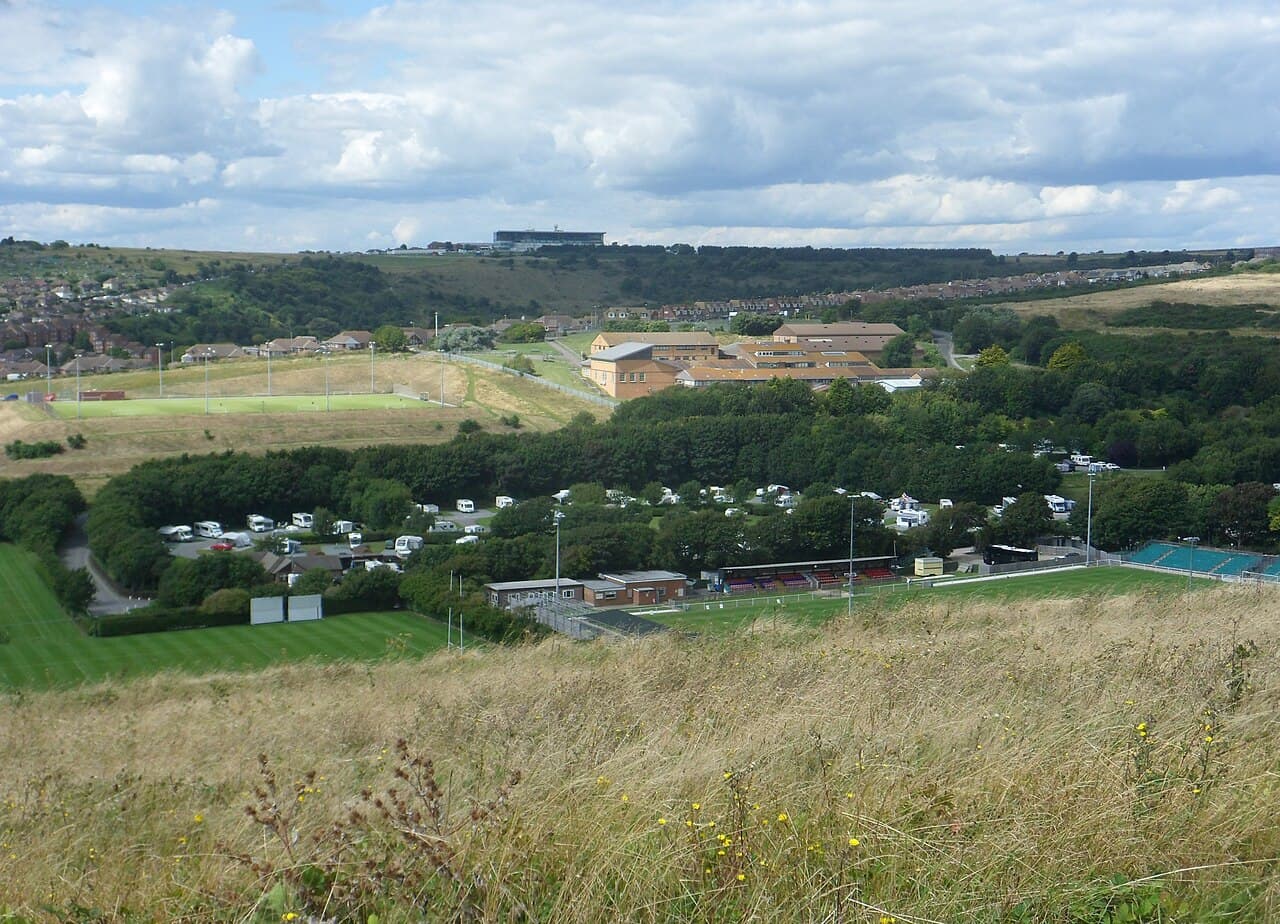
Brighton Racecourse has a capacity of approximately 5,000, which means the facilities never need to work particularly hard. Even on the busiest Festival days the enclosures feel manageable, and the compact layout means you are rarely more than 30 seconds' walk from a bar, a betting outlet, or a clear view of the track.
Enclosures
The course offers three enclosure tiers: Premier, Grandstand, and Paddock. Ticket prices vary by meeting and are set by Arena Racing Company; Festival days command a premium over standard weekday fixtures.
Premier Enclosure is the course's top-tier area, accessed via a dedicated entrance near the main grandstand. It includes restaurant dining, table service, and access to the best raised viewing positions in the straight. Smart casual dress is required — collared shirts for men, no sportswear. It is the only enclosure at Brighton with a dress code, and it is not enforced strictly, but the standard is informally maintained by the clientele.
Grandstand Enclosure is the main public area and covers the length of the finishing straight. The grandstand itself was built in the 1960s and extended in subsequent decades. It provides covered seating for roughly 800 people, with open terracing in front. Sightlines are good throughout — the four-furlong straight is visible from start to post from most positions in the stand. The Grandstand enclosure also contains the main tote windows, a bookmakers' ring, and the principal food and drink outlets.
Paddock Enclosure gives access to the pre-parade ring, the parade ring, and the weighing room area. For anyone interested in studying horses before a race, this is the most useful enclosure. You can watch horses walking up in the pre-parade ring from 20 to 25 minutes before each race, compare them in the main parade ring, and then move across to watch the racing from the rails close to the final furlong. The paddock area at Brighton is small enough that you can get within a few feet of the horses without any specialist access.
Food and Drink
The catering at Brighton reflects the course's seaside character without being self-consciously themed. The main concourse on the Grandstand level has half a dozen food units serving fish and chips, burgers, hot dogs, pies, and sandwiches. The fish and chips unit, which sources from a local Brighton supplier, is consistently the longest queue on a busy day — a reasonable endorsement in a city that takes its seafood seriously. A dedicated pizza unit operates on summer evenings. Vegetarian and vegan options are available from at least two outlets, though the range is limited compared to larger venues.
Bars are positioned at regular intervals along the concourse and in the Premier area. The main Grandstand bar stocks a standard selection of lagers, ales, wines, and spirits. Prosecco is widely sold, particularly at evening meetings. Soft drinks and non-alcoholic beer are available at all bars. Prices are at the higher end of racetrack catering but not out of step with comparable southern courses.
Hospitality Boxes
The hospitality provision at Brighton is modest relative to larger ARC venues. There are approximately 12 private boxes along the back of the grandstand, most seating between 8 and 20 guests. Boxes are hired on a per-meeting basis and include race cards, a dedicated host, food service, and a private bar. Views from the boxes are excellent — elevated above the stand's main terrace with a clear line to the entire home straight.
For corporate groups, the Festival of Racing provides the most popular hospitality packages. These tend to sell out by mid-July for the August meeting. Smaller meetings offer boxes with shorter booking lead times and often at lower rates.
Family Areas
Brighton is family-friendly. A designated family area near the parade ring provides picnic space, a children's entertainment zone, and easier access to the track rails. Pushchairs are permitted throughout the Paddock and Grandstand enclosures. Under-18s are admitted free to most meetings when accompanied by a paying adult, though terms vary — confirm on the course website before travelling.
Disabled Access and Facilities
The course has level or ramped access to all principal viewing and catering areas. Designated disabled parking spaces are positioned close to the main entrance, and these are available on a first-come basis — no pre-booking is required for standard meetings but pre-booking is recommended for Festival days. Accessible toilet facilities are located near both the Grandstand and Paddock enclosures. The grandstand lifts give access to all tiers. The course website lists the current accessibility arrangements in detail, and the ARC accessibility team can be contacted directly for specific requirements.
Getting There
Brighton Racecourse is on Whitehawk Hill, postcode BN2 9XZ, approximately one mile east of Brighton railway station as the crow flies but rather further on foot due to the hill. The course sits at around 400 feet above sea level, which accounts for its spectacular views and for the slightly laborious approach from the town centre.
By Train
Brighton station is served by Southern and Thameslink with direct services from London Victoria (approximately 55 minutes), London Bridge (approximately 60 minutes), and Gatwick Airport (approximately 30 minutes). From the north and the Midlands, a change at either Gatwick or Clapham Junction is usually required. First Great Western and CrossCountry services connect via Reading and Gatwick respectively.
From Brighton station, a dedicated race-day shuttle bus service operates to the course on most fixture days. The shuttle departs from the station forecourt and runs approximately every 20 to 25 minutes from 90 minutes before the first race. The return service runs until roughly 45 minutes after the last race. The shuttle is included in some ticket packages and charged separately for others — check the course website for the current arrangement before travelling.
If the shuttle is not operating — which sometimes applies to quieter weekday meetings — a taxi from the station to the course takes 10 to 15 minutes and costs approximately £8 to £12. Taxis are available from the rank on Queen's Road, directly outside the station's main entrance. Pre-booking is advisable for the return journey, particularly after busy Festival meetings when demand is high.
Walking from the station is possible in theory but worth being clear-eyed about. The direct route covers roughly 1.4 miles, but the final half-mile involves a sustained uphill climb of around 200 feet through the Whitehawk estate. In race attire and summer heat, most visitors find this more demanding than expected. It is worth doing once — the view from the top is impressive — but it is not the recommended approach for a first visit or if you are travelling with older guests.
By Car
From London, take the M23 south to junction 10A and then the A23 towards Brighton. Follow the A23 until it becomes the A23/A27 interchange at the northern edge of Brighton. From there, follow signs for the racecourse — brown tourist signs for Brighton Racecourse appear from the A27 and from the A259 coast road. Postcode BN2 9XZ will bring you to the correct gate.
Free on-site parking is available on most standard fixture days. On Festival days and busier Saturday meetings, parking stewards will direct you to overflow areas. Arriving 45 minutes before the first race on a busy day gives a reasonable margin. The car park is on a grass surface and can become soft after rain, though the chalk base of the hill means it rarely floods.
From the west (Worthing, Chichester, Goodwood), the A27 runs directly to the east side of Brighton, from where the course is signposted. Allow extra time if travelling during morning rush hour on weekday fixtures.
By Coach
National Express and Megabus operate regular services to Brighton from London Victoria Coach Station, with journey times of around two hours. From Brighton's coach station on Pool Valley — a five-minute walk from the railway station — the same shuttle bus and taxi options apply.
For organised racing trips from London, several operators run coach packages directly to the racecourse on Festival days. These typically include return transport from central London and a race ticket. Check the course's events page and racing travel operators such as Raceday Travel for available packages.
Practical Notes
- The racecourse postcode BN2 9XZ is correct for satnav. BN1 2FP (the postcode sometimes listed on ticket documents) will take you to the entrance of the Whitehawk estate rather than the course gate; if in doubt, use BN2 9XZ.
- Taxis home after an evening meeting should be booked in advance or via the Uber app, as street hails on the hill are unreliable after dark.
- Cycling is possible from the city centre via the Whitehawk Valley path, though the final ascent is a push rather than a ride. Cycle parking is available near the main entrance.
Frequently Asked Questions
History of Brighton Racecourse
Racing on the South Downs above Brighton began in 1783, when a course was established on Whitehawk Hill by local landowners and the Corporation of Brighton. The site had been used informally for horse exercise and trials for several years before organised race meetings began, but 1783 marks the point at which Brighton entered the official racing calendar — giving it more than two centuries of continuous flat racing history on the same stretch of downland.
Royal Patronage and the Regency Era
Brighton's early prominence owed much to the Prince of Wales, later Prince Regent and then George IV. The Prince established his base at the Royal Pavilion in Brighton from the 1780s onwards, and the town's transformation into a fashionable resort between 1783 and 1820 drew London society — and with it, London racing money — to the Sussex coast. Race meetings at Brighton during this period attracted significant attendance from the nobility, and the Prince himself is recorded attending the course on several occasions during the 1790s.
The patronage of the Prince of Wales elevated Brighton's status well above what its modest facilities warranted. By the 1800s, the course had a regular programme of flat racing that drew horses from the major southern yards of the time. The going — firm chalk downs turf — was considered excellent, and the coastal air was thought to benefit horses in training. This last belief was more folklore than science, but it reflected the fashionable status that Brighton racing enjoyed in the Regency period.
Victorian Heyday
By the mid-19th century, Brighton was one of Britain's most popular seaside resorts, and the racecourse benefited directly from the town's prosperity. The arrival of the London to Brighton railway in 1841 — one of the earliest major railway lines in the country — transformed the logistics of attending Brighton races. Londoners who had previously required a full day's carriage journey could now travel in under two hours. Attendance figures grew substantially through the 1840s and 1850s.
The course's Victorian infrastructure was modest by the standards of its northern counterparts — Newmarket, York, and Goodwood all had more prestigious facilities — but the atmosphere of a Brighton racing day was considered uniquely enjoyable. The combination of the seaside resort, the South Downs backdrop, and the unusual horseshoe track made it a social occasion as much as a sporting one. Victorian racing writers regularly described Brighton as the most pleasurable of the southern circuit venues.
The Victorian era also saw the course's layout stabilised broadly into the form it occupies today. The horseshoe configuration — descending into the back straight, swinging round the bottom of the hill, and returning up the long home straight — was established by the 1860s. The grandstand of the late Victorian period occupied a position similar to the current structure, taking advantage of the sightline over the full home straight.
Twentieth Century: Decline and Recovery
Brighton's fortunes in the 20th century followed the broader arc of British seaside towns. The interwar period maintained a reasonable level of activity, but the Second World War severely disrupted racing across Britain, and Brighton — with its coastal sensitivity and military significance — was among the courses that ceased racing entirely for the duration. The course reopened after 1945 but never quite recaptured the Edwardian and Victorian glamour.
From the 1950s through the 1980s, Brighton occupied a mid-table position in British flat racing: a useful summer venue, valued by trainers for its reliable fast going and its place in the southern circuit, but not prestigious by national standards. Prize money was modest. The facilities were functional rather than impressive. The grandstand that had been built in stages through the mid-20th century provided adequate but unremarkable accommodation.
Lester Piggott, who is widely regarded as the greatest flat jockey of the 20th century, rode frequently at Brighton throughout his career. His presence at Brighton on multiple occasions during the 1960s and 1970s — including several notable wins on well-fancied favourites — helped maintain the course's profile during a period when many smaller venues were struggling. Piggott's facility for reading the unusual gradient and the tight horseshoe layout was noted by racing writers of the time, and his course record at Brighton was significantly above his general strike rate.
The ARC Era
Arena Racing Company took over management of Brighton Racecourse in 2012 as part of their broader acquisition of mid-tier British flat tracks. ARC's ownership has brought greater investment in the fixture programme and in the digital presentation of the course, while keeping the character broadly intact. Prize money has been maintained at a level consistent with Brighton's standing in the southern flat hierarchy, and the Festival of Racing has been developed as the course's flagship event.
The Brighton Mile Challenge Trophy, which had existed in various guises since the mid-20th century, was formalised into its current Listed/competitive handicap format under ARC's management. It is now the most valuable race on the course's calendar and serves as the centrepiece of the August Festival, drawing fields that reflect the race's increased prestige.
The Course Today
Brighton in 2026 retains the essential character it has had for two centuries: a specialist flat track on an unusual downland hill site, requiring a specific type of horse and a specific type of tactical riding. The chalk going, the horseshoe layout, the four-furlong home straight, and the sea views are unchanged from the course's Victorian heyday. What has changed is the context — better prize money, improved facilities, and a fixtures programme managed within a national network rather than in isolation.
The postcode that appears on modern ticket documents (BN2 9XZ for the course gate) anchors the venue in the east Brighton suburb of Whitehawk, an area with its own distinct character quite separate from the tourist Brighton of the seafront and the Lanes. The racecourse, sitting above the suburb on the open hill, has always occupied that slightly separate position — belonging to Brighton without being quite of it.
Famous Moments
Brighton has never staged a Classic or a Group 1 race, but across more than two centuries of flat racing it has accumulated a catalogue of moments that punters, trainers, and local race-goers still reference. The course's character — specialist, fast, front-runner friendly — makes it a productive venue for memorable results precisely because the unusual layout produces outcomes that conventional form analysis struggles to predict.
The Brighton Mile's Memorable Renewals
The Brighton Mile Challenge Trophy, run over 1 mile 208 yards, is the race that most clearly defines the course's competitive standards. Fields of 12 to 16 runners over a distance that is simultaneously unusual (the extra 208 yards matters on this track) and demanding have produced finishes that reward close study.
A recurring feature of the race's history is the performance of horses from smaller, specialist yards that train specifically for Brighton's conditions. The race has been won by horses at double-figure prices in competitive years, and the draw — particularly the advantage of high stalls over this distance on this course — has been a factor in several of its renewals. Local punters who track Brighton's form book carefully have found the Brighton Mile one of the more consistently beatable big-field handicaps in the southern calendar.
The race in 2019 was notable for the performance of a horse trained by Roger Teal that had been heavily placed on the course in previous outings before finally winning the feature. Teal, based in Lambourn, has maintained a strike rate at Brighton that is among the highest of any southern flat trainer in recent years — a fact that reflects deliberate course targeting rather than coincidence.
Debut Winners
Brighton has an established tradition as a venue for first-time runners. The fast, consistent going — good to firm is the norm from June through August — and the relatively modest fields in maiden races make it a sensible choice for trainers introducing unraced horses. In any given season, Brighton produces between six and ten first-time winners in maiden and novice contests, a rate that sits above the British average for courses of its size.
Several horses that Then went on to compete at Group level had their first outings at Brighton. The course's role as a debut venue is partly structural: southern trainers can point a lightly-raced three-year-old at a midweek Brighton maiden in June, assess them in a competitive environment without the pressure of a more prestigious meeting, and make decisions about the rest of the season based on the result. For punters, this means a segment of Brighton's maiden fields is truly unknown — which creates both risk and opportunity.
Notable Upset Results
Brighton's above-average upset rate in sprint handicaps is documented in Racing Post form analysis and has been a feature of the course for at least 20 years. The draw bias in five- and six-furlong races — where high-drawn horses on the far rail outperform low-drawn rivals — routinely contributes to results that leave punters who ignored the draw looking at short-priced favourites finishing third or fourth.
One of the most-referenced Brighton upsets in recent memory occurred at a midweek July meeting when a 25/1 shot drawn in stall 14 out of 14 led from the start in a five-furlong sprint and held on by a neck. The horse had three previous form figures at the track, all at distances of six furlongs or more, but its trainer had correctly identified that the five-furlong trip from high stalls suited its running style. The result was cited by several form analysts as an example of the penalties for ignoring draw evidence.
Celebrity Racegoers and the Seaside Atmosphere
Brighton Racecourse occupies a peculiar position in British racing's social geography. It is not a Ascot or Goodwood — the social A-list does not descend on it for major occasions. But it has always attracted a Brighton crowd, which is to say an eclectic, liberal, and usually good-humoured mix of locals, day-trippers, and Londoners who have discovered that a summer evening at Brighton races is one of the better ways to spend £15.
Various actors, musicians, and media figures based in Brighton or visiting the city have appeared at the course over the years, though Brighton's informal atmosphere means celebrity sightings attract less attention than they would at smarter venues. The course's July and August evening meetings in particular attract the kind of crowd that values the setting — a July sunset over the Channel, visible from the back of the grandstand, is a specific pleasure that no other racecourse in Britain can offer — over any particular social cachet.
A July Evening at Brighton
The July evening meeting experience is worth describing as a moment in itself, because it is what Brighton does best. Racing begins at approximately 6pm. The light is long — in mid-July, there is full daylight until 9pm. The Channel, visible over the back of the course, catches the evening sun. The crowd of 1,500 to 2,000 spreads easily across the enclosures. The bookmakers settle into position in the ring. The horses circle in the paddock below the stand.
By the third or fourth race — usually around 7.30pm — the temperature has dropped pleasantly from the afternoon heat, the crowd has relaxed into the rhythm of the card, and the views from the back of the grandstand are, by any reasonable measure, as good as anything British racing has to offer. It is not Ascot. It is not intended to be. It is a mid-summer evening on a hill above the sea, with horses racing on chalk turf. That is what makes it worth remembering.
Betting Guide
Brighton rewards punters who do their homework. The course has a set of structural biases — draw position, pace pattern, going consistency, trainer patterns — that are well-evidenced over a long data sample and are not complicated to identify. What they require is application: checking the stall draw before placing a bet on a sprint, identifying front-runners before handicaps over five and six furlongs, and noting trainer form at the course rather than simply following stable confidence from other venues.
Draw Bias: The Essential Starting Point
The draw matters more at Brighton than at almost any other British flat course of similar size. In sprint races — five furlongs and six furlongs — the camber of the finishing straight tilts toward the far rail (the high stalls side in a left-handed race). This means horses drawn in high stalls run on a fractionally lower line through the descent, which gives them a small but consistent advantage in maintaining their balance and speed as the gradient steepens.
Over five furlongs in fields of eight runners or more, horses drawn in stalls 7 to 14 (where the field permits) show a statistically significant advantage over those in stalls 1 to 5. This has been documented by Racing Post draw analysis over multiple seasons. The advantage is most pronounced in fields of 12 or more runners, where low-drawn horses in stalls 1 to 4 are essentially playing from a disadvantaged starting position.
Over six furlongs, the draw advantage of high stalls is present but slightly reduced, because the field has more time to find its own running line before the home straight. In fields of up to ten runners, the draw at six furlongs is less decisive. In fields of 12 or more, it reasserts itself.
Over seven furlongs, one mile, and beyond, the draw becomes less important. The extended early stages allow the field to self-sort, and by the time the home straight is reached the draw position has been largely overridden by pace and fitness.
Pace Bias: Front-Runners Hold Up
Brighton favours horses that race prominently. The combination of the tight horseshoe track, the downhill camber of the finishing straight, and the short distances means that horses sent to the front from the start — or at least to within a length or two of the leader — have a structural advantage over those held up for a late challenge.
The reason is straightforward: the four-furlong home straight at Brighton descends steeply, then rises slightly to the line. A horse that has momentum from the top of the straight can maintain it down the descent. A horse that needs to accelerate from behind on the descent runs against physics — it requires more effort to change gears while going downhill, and the camber makes it harder to find a straight running line when weaving through other horses.
Data from Brighton's five-furlong and six-furlong handicaps over the past decade shows that leaders at the two-furlong marker win at approximately double the rate of horses more than four lengths off the pace at the same point. In maiden races the bias is slightly less extreme — unraced horses do not always conform to pace predictions — but the general principle holds.
Going Influence
Brighton's chalk base produces consistently fast ground from June through August. This predictability is itself a betting edge: you can identify horses that have proven form on good to firm ground and apply their records with high confidence at Brighton during the summer months. Trainers who bring horses to Brighton that have previously shown their best form on soft ground are taking a chance — the going will almost certainly not suit them, and the form figures from their previous outings will be misleading.
The going at Brighton in May and October is more variable. Early and late season meetings can produce ground as soft as good, which is worth noting because the front-runner and draw advantages reduce slightly on softer going — horses have less trouble accelerating from behind when the ground is less firm. If Brighton ever produces soft or heavy ground (rare but not impossible), the entire pace and draw analysis needs to be reconsidered, as the advantages associated with firm chalk conditions do not apply.
Trainer Patterns
Certain trainers consistently punch above their weight at Brighton. This reflects deliberate targeting of the course with horses that suit its specific demands — compact, front-running types on fast ground. Roger Teal (Lambourn) has maintained a Brighton strike rate in double figures over multiple seasons, often winning with relatively modest-priced horses that conform to the course's preferred type. William Haggas and John Gosden have won at Brighton with their speed horses, though these are typically horses of high quality being prepared for better races. Local and southern trainers — those within 50 miles of the course — tend to outperform their strike rates relative to northern operations, partly because they bring horses specifically prepared for the conditions rather than as part of a broader travel programme.
Jockeys with multiple Brighton wins are worth noting, particularly those who have ridden the course in different configurations — early season when the track is fresh versus high summer when it has baked hard. Experienced Brighton jockeys — those with ten or more course wins — tend to know instinctively where to place a horse entering the home straight, which side of the track to track, and when to start asking for effort on the descent. This is not easy to quantify, but it is a real and observable edge that shows up in strike rate data.
When to Oppose the Favourite
Brighton has an above-average rate of favourite defeat in maiden races. This is partly because of the debut-winner tradition mentioned elsewhere — unraced horses with significant reputation enter as favourites but the coursed is unproven for them — and partly because the draw and pace dynamics allow well-placed longshots to dictate from the front. In maiden races at five and six furlongs with large fields, a horse drawn in stall 12 or higher and likely to race prominently should be assessed on its own merits even at double-figure prices, regardless of the favourite's trainer or pedigree.
Handicaps at Brighton in the summer months also produce a higher-than-average rate of upsets in races where the market leader is drawn in a low stall in a large field. A 6/4 favourite drawn in stall 3 in a 14-runner sprint at Brighton is a materially worse bet than the same horse drawn in stall 10. If the draw evidence is ignored by the market — as it often is, because casual punters back names rather than stall numbers — the value sits with the well-drawn runner, not the short-priced market leader.
The Brighton Mile as a Betting Race
The Brighton Mile Challenge Trophy is not the easiest race to bet from a form analysis perspective. Field sizes of 12 to 16 make it truly competitive, and the specific demands of the 1 mile 208 yards trip over the horseshoe layout mean that horses with equivalent form at other courses are not reliable guides. However, several patterns are consistent: horses that have already won at Brighton, even at shorter distances, tend to handle the course's demands better than those making their first appearance; and horses that race prominently in the early stages — rather than being held up — have a measurably better finishing record in the race's modern history.
Pace analysis using sectional timing data, now available from Racing Post and from specialist form databases, is particularly useful for the Brighton Mile. The race is often run at a pace that tests the descent and the subsequent uphill kick, and horses whose sectional profiles show strength in the final quarter of a mile — rather than flattening out — are the ones most likely to prevail on the uphill finish.
Atmosphere and Planning Your Visit
Brighton Racecourse offers something no other British racecourse can match: a flat racing venue where you can watch horses race downhill toward you with the English Channel in the background. On a clear July afternoon, the sea is visible from the grandstand and from the back of the course, perhaps 400 feet below and three miles away. This is not a minor scenic bonus — it is the central fact of what Brighton feels like, and it informs everything from the dress choices people make to the general atmosphere of uncomplicated enjoyment that the course produces in good weather.
What Makes Brighton Distinct
The resort-town atmosphere begins before you reach the racecourse. Arriving by shuttle bus from Brighton station, you pass through the Whitehawk estate and up the hill in a vehicle that feels like a seaside excursion bus rather than a raceday transport. Arriving by car, you park on chalk turf at the top of the Downs with the sea already visible to the south. The racecourse itself carries this lightness — the stands are not grand, the spaces between enclosures are easy to navigate, and the crowd, even on the busiest Festival days, retains a sense of proportion.
The sea air at 400 feet above sea level is a real factor on race evenings. Even in August, there is usually a breeze. This keeps the temperature reasonable and the atmosphere brisk. It also explains why the form of Brighton's races in truly hot, still conditions sometimes diverges from the pattern on windier days.
Best Months to Visit
July and August offer the best combination of weather, crowd quality, and racing standard. The Festival of Racing in August is the obvious centrepiece — for a first visit or a special occasion, this is when to come. But the quieter evening meetings in July are arguably the better experience for regulars and for punters who want space and atmosphere without the Festival prices.
June is reliable and the course is less busy than high summer, making it excellent for families or for those who want to see a strong card without the Festival premium. May and October are for committed course followers rather than casual visitors — the weather and field sizes are less consistent.
What to Wear
Brighton has no formal dress requirements outside the Premier Enclosure, where smart casual is expected. In practice, the standard at summer meetings is light summer clothing — dresses, shirts, shorts, and sundresses are all entirely appropriate in the Grandstand and Paddock areas. Footwear matters slightly: the course is on grass and the paths between enclosures are uneven in places, so heels require some care. The stand terracing is concrete, which helps. Bring a light layer for evening meetings — the hill is exposed and the temperature drops noticeably after 8pm even in August.
Combining with a Brighton Day Out
Brighton's city centre is 20 to 25 minutes from the course by taxi or shuttle bus, making a combined day truly practical. A recommended sequence for a summer evening meeting:
Arrive in Brighton by mid-morning, leave luggage at a hotel or left luggage (the station has storage). Spend the morning and early afternoon exploring the Lanes — the historic shopping district in the city centre, concentrated in a network of small streets between North Street and the seafront, with independent shops, cafes, and restaurants. Walk to the seafront for lunch — the beach stretches from the Palace Pier to the West Pier ruins and beyond. If the weather is good, the Palace Pier and the beach offer an easy three to four hours. The Brighton i360 observation tower, at the far western end of the beach, provides views over the sea and the Downs and is worth 40 minutes for the perspective it provides on how the racecourse relates to the city. The Royal Pavilion, George IV's extraordinary Indo-Saracenic palace in the city centre, is a short walk from the station and takes 60 to 90 minutes.
From 4.30pm, take the shuttle from the station to the course, arriving for the 6pm first race with time to study the card and place an early bet. Evening meetings typically conclude by 9pm, leaving time for dinner in the city.
Overnight Options
Brighton has accommodation at every price point, from budget chain hotels within walking distance of the station to independent boutique hotels in the Kemp Town area (east of the city, closer to the racecourse). Booking in advance is strongly recommended for Festival weekend — August in Brighton is peak season and the city fills with visitors for reasons entirely unconnected to racing. Mid-range options on the Brighton seafront from £100 to £150 per room are reasonable value for the location. For those willing to stay slightly outside the city centre, Hove (immediately to the west) offers comparable accommodation at lower prices.
Train vs Car
For visitors from London, the train wins straightforwardly. London Victoria to Brighton takes 55 minutes on the fast service; the shuttle bus from Brighton station to the course takes 20 minutes. Total journey time from central London to the racecourse gate is approximately 75 to 80 minutes, door to door. Driving from London in summer traffic on the A23 or M23 typically takes 90 minutes on a good day and two hours or more on a Friday afternoon. Parking at the course is free, which is an advantage, but the walking distance from the car park to the main enclosure is comparable to the distance from the shuttle bus stop. The train also allows drinking without concern, which at a summer race meeting is not a trivial consideration.
From Brighton itself, or from towns on the south coast between Eastbourne and Worthing, the car is the more practical option. The course is directly signed from the A27.
More guides for this course
Share this article
More about this racecourse
All Brighton guides
Brighton Cup Day at Brighton: The Complete Guide
Your complete guide to Brighton Cup Day — the seaside city's most prestigious race day, built around the feature handicap on Britain's most unusual flat track. Card, betting, and attending.
Read more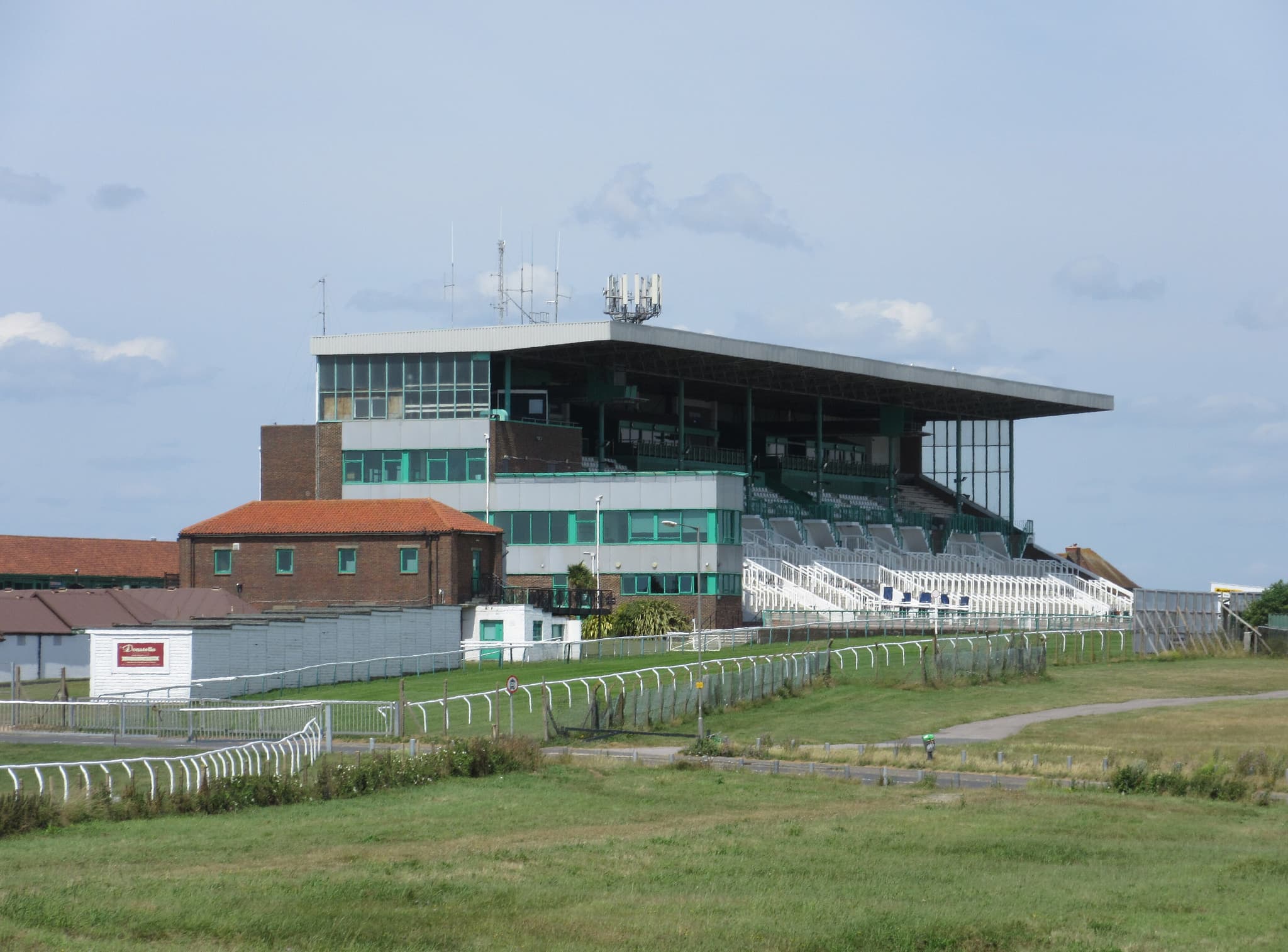
A Day Out at Brighton Racecourse
Everything you need for a day at Brighton — getting there, what to wear, enclosures, food and drink, and insider tips for Britain's seaside flat course.
Read more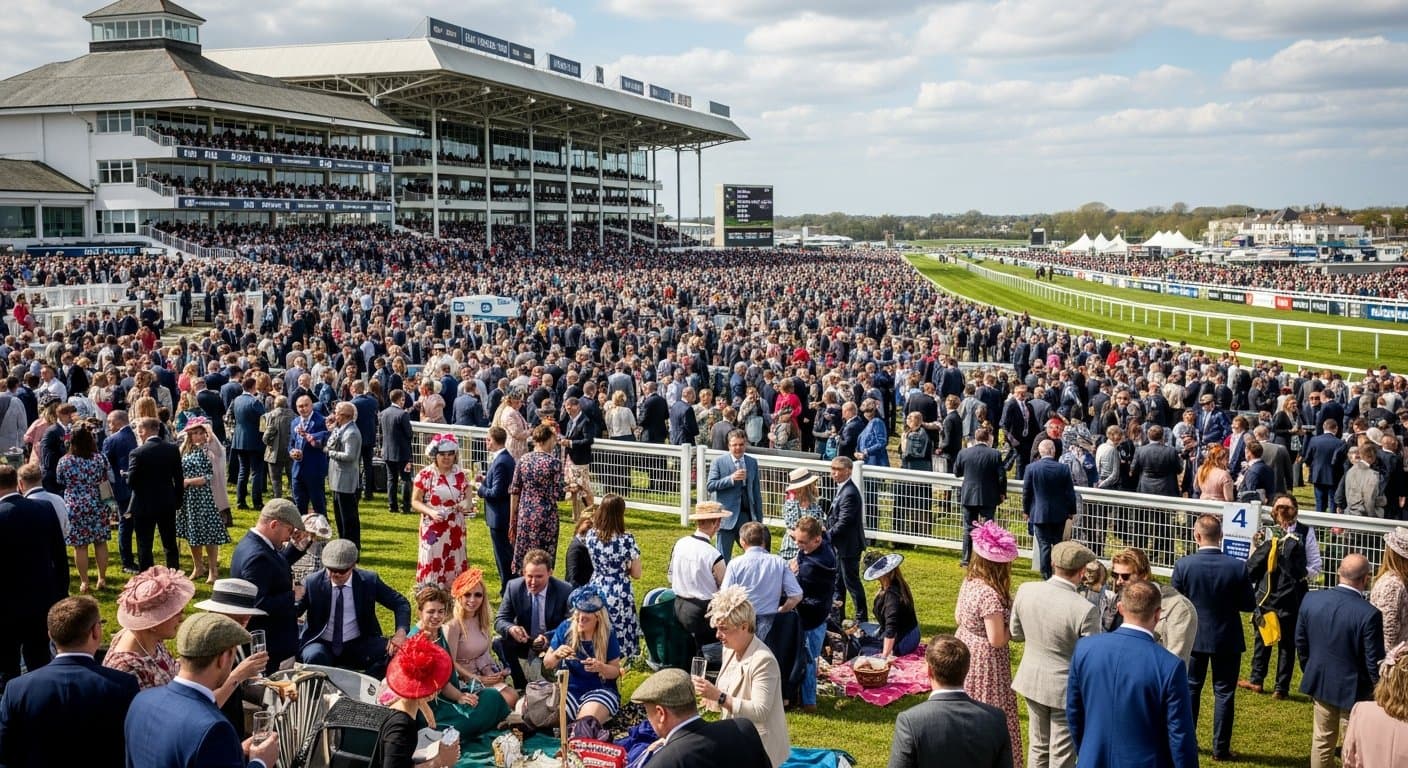
Brighton Festival of Racing: The Complete August Guide
Brighton's three-day August Festival is the racecourse's biggest occasion of the year: seven races a day, sea views, live music and the course's signature mile race.
Read morePhotos on this page are used under Creative Commons licences. Titles, sources and licence links for each one are on our image credits page.
Research the field with the AI Race Predictor
Our model publishes calibrated win-probability estimates for UK races — a second opinion to understand a race, not tips. It's open about its record: it doesn't beat the market, and we show exactly how it does.
Work it out & learn the basics
Gamble Responsibly
Gambling should be entertaining and not seen as a way to make money. Never bet more than you can afford to lose. If you or someone you know has a gambling problem, help and support is available.