
Founder & Editor · Last reviewed 2026-04-05
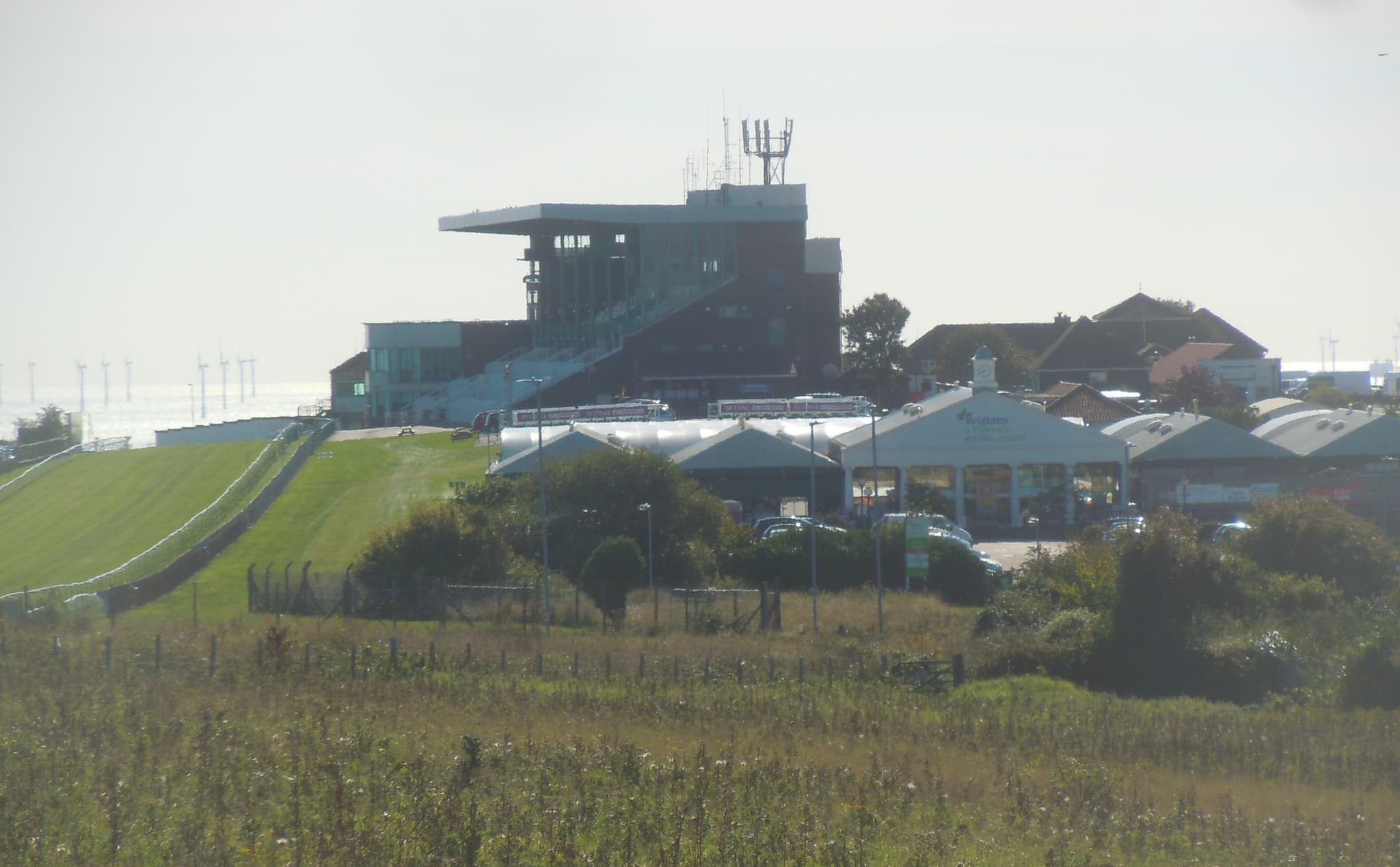
Brighton Racecourse sits on Whitehawk Hill, 400 feet above the English Channel, on the eastern edge of one of Britain's most famous seaside towns. Racing has taken place on this chalk downland since 1783, making Brighton one of the oldest flat courses in England still operating on its original site. Very few British tracks can match that span of continuous use, and fewer still can match the setting.
The course's horseshoe shape is the first thing any student of British racing notices. Brighton is not a circuit — horses begin at the top of the hill, sweep left and downhill through a pronounced bend, then turn sharply left again into the four-furlong finishing straight. The straight rises slightly in its final furlong, catching out horses that have been ridden too aggressively in the descent. This configuration is unique among British flat tracks. Epsom is the obvious comparison — also non-circular, also downhill — but Brighton's horseshoe is a sharper, more compressed version of that template, demanding positional intelligence from every jockey who rides it.
The Prince of Wales, later Prince Regent and eventually George IV, is the historical figure most closely associated with early Brighton racing. He began visiting Brighton in the 1780s, and the construction of the Royal Pavilion — begun in 1787 as a modest farmhouse conversion and extended dramatically in subsequent decades — anchored him to the town across nearly four decades. Racing formed a central part of the social life he cultivated there. The Pavilion and the racecourse shaped each other's reputations during the Regency years: both were spectacles, both attracted fashionable London society, and both gave Brighton a cultural weight that a small fishing village could never have achieved on its own.
The arrival of the London–Brighton railway in 1841 changed the course's character substantially. What had been accessible primarily to those with carriages and horses became reachable in under two hours from London Bridge. Crowds grew, the fixture list expanded, and Brighton racing shifted from a private social occasion to a mass public event. The tension between those two identities — exclusive resort and popular seaside attraction — has run through Brighton's history ever since.
Today Brighton stages around 20 fixtures per year, from April through October, with the Festival of Racing in August as the centrepiece. The Brighton Mile is the course's signature race, but the full programme covers distances from five furlongs to a mile and a half, all shaped by that extraordinary horseshoe and the chalk downland beneath it. This guide traces how the course arrived at its present form, and why 240 years of racing have done nothing to dilute what makes Brighton exceptional.
Origins on Whitehawk Hill
Racing on Whitehawk Hill: 1783 and the Founding Era
The first recorded meeting at Brighton took place in 1783, on Whitehawk Hill — common land on the edge of the South Downs, roughly a mile north-east of the town centre and some 400 feet above sea level. At that point Brighton, then known more often as Brighthelmstone, was a small fishing settlement with a growing reputation for sea bathing. Richard Russell's 1750 tract on the medicinal properties of seawater had sent the fashionable classes south from London in search of a cure, and by the 1780s the town had a sufficient concentration of wealthy visitors to support a race meeting. The course was laid out on Whitehawk Hill specifically because the elevated ground provided good drainage — the Middle Chalk geology that underlies the site allows water to percolate rapidly, producing firm going that persists to this day.
The early Brighton meetings were small affairs by later standards: a handful of races over two or three days, contested by horses whose owners had made the journey from London or trained locally on the Downs. Prize money was modest, but the social element was disproportionately important. A day at the races on Whitehawk Hill offered the same attractions it would continue to offer for two-and-a-half centuries: fresh air, elevated views over the Channel, and the company of people who mattered in fashionable society.
The Prince of Wales and the Regency Connection
The transformation of Brighton from a modest resort to one of Britain's most fashionable destinations is almost entirely attributable to the Prince of Wales, the future George IV. He first visited Brighton in 1783 — the same year formal racing began on Whitehawk Hill — and was captivated by the town's informality and its distance from the ceremonial weight of London. In 1787 he commissioned the conversion of a farmhouse on the Steine into what would become the Royal Pavilion, initially a modest neoclassical building designed by Henry Holland. Successive renovations, culminating in John Nash's Indian-Gothic reconstruction between 1815 and 1823, turned the Pavilion into one of the most extraordinary buildings in Britain.
The Prince of Wales attended Brighton races from the 1780s onwards. His presence was not merely ornamental: he was a serious racing man who owned horses, bet heavily, and had a detailed knowledge of form. His string was trained at Lewes and at Newmarket, and horses prepared for Brighton races formed part of his programme. The Prince's patronage created a direct social link between the Royal Pavilion and the racecourse. When the Prince was in residence at Brighton — which was frequently, particularly after the Pavilion was extended in the 1790s — the races were an obligatory engagement for his guests. Dukes, ministers, and society hostesses who would otherwise have spent August at country house parties found themselves instead on Whitehawk Hill.
This royal endorsement gave Brighton racing a standing far above what its prize money alone could justify. The course attracted runners and riders of the highest quality during the Regency years, and the social prestige of a Brighton winner was real. By the time the Prince became Regent in 1811, following his father George III's incapacitation, the Brighton race meeting was established as a fixture of the English summer season in a way that few southern courses could match.
The 18th-Century Course Layout
The original course layout differed from the modern configuration in some respects, though the fundamental characteristics were established from the beginning. Racing took place on Whitehawk Hill's open downland, with the horseshoe shape — dictated by the contours of the hill — present in the early plans. The starting positions for different distances shifted over time as the course was refined, but the distinctive descent followed by a left-hand bend into the straight was a constant. The chalk base meant that the track surface dried quickly after rain and remained firm through most of the summer, a characteristic that suited the Thoroughbred horses of the Georgian period, who were bred for fast ground.
The stands in the early years were basic: wooden enclosures and temporary structures, adequate for the meetings but without the permanence that later investment would bring. The management of the course was handled under a series of informal arrangements until more formal structures began to emerge in the early 19th century. By the 1820s, Brighton had a functioning administration, an established fixture list, and a growing list of races that attracted competitive fields.
The Railway and the Opening of Brighton to the Masses
The opening of the London and Brighton Railway on 21 September 1840, with full passenger services running through to Brighton from 21 June 1841, was the most consequential single event in the course's history between the founding in 1783 and the modern era. Before the railway, reaching Brighton from London required a journey by coach of five to six hours, depending on conditions. Only those wealthy enough to own carriages or to hire post-chaises could make the trip conveniently. The races were, in practice, an event for the upper classes and their household staff.
The railway changed that calculation entirely. By 1841, trains from London Bridge reached Brighton in under two hours, and the fare was low enough that working-class Londoners could afford an excursion. The London and Brighton Railway ran excursion trains to the races from its earliest years, and the crowds that arrived at the station and made their way up to Whitehawk Hill were of a different composition from those who had attended a decade earlier. Attendance figures grew sharply through the 1840s and 1850s. The course's finances improved correspondingly, allowing investment in the permanent infrastructure that the Regency-era meetings had lacked.
The railway also changed the character of the horses that ran at Brighton. Trainers based at Epsom, Newmarket, and Lambourn could now transport horses to Brighton with relative ease, and the quality of the fields improved. Connections that might previously have thought the journey not worth the cost could now send a horse to Brighton for a summer handicap and return it to its home stable the same day. Brighton's position as a serious flat course — rather than a fashionable but essentially provincial meeting — was consolidated by the railway in a way that no amount of royal patronage alone could have achieved. The course that emerged from the railway age was, in most of its essentials, the Brighton that still runs today.
The Golden Era
The Victorian Grandstand and the Infrastructure of Ambition
The Victorian era brought permanent architecture to Whitehawk Hill. The course's original wooden enclosures were progressively replaced by stone and brick construction through the mid-19th century, with the grandstand built in stages as the finances of the course improved. The railway money that began flowing in the 1840s allowed the Brighton management to invest in facilities that could accommodate the larger crowds the new transport link was generating. By the 1860s, Brighton had a functioning grandstand, a Members' Enclosure, and the physical infrastructure of a proper racecourse rather than a seasonal gathering on open downland.
The grandstand's construction went through at least two major phases in the 19th century. An early Victorian stand, modest by the standards of Epsom or Ascot but adequate for the crowds of the 1840s and 1850s, was supplemented and eventually replaced by a more substantial structure as the century progressed. The precise dates of each phase are not all documented with certainty, but by 1880 Brighton had a grandstand capable of holding several thousand spectators, with the betting ring, parade ring, and winners' enclosure arranged in a form recognisable to modern racegoers.
The Brighton Cup and the Victorian Race Programme
Among the Victorian races at Brighton, the Brighton Cup was a significant flat handicap that attracted competitive fields through the second half of the 19th century. Handicap racing formed the core of the Victorian flat programme at courses like Brighton — the classic races at Epsom and Newmarket were for the elite, but the handicaps at summer courses were where owners and trainers could pit horses against each other across a range of abilities. The Brighton Cup fitted this model: a race with sufficient prize money to attract serious runners, run over a distance that tested the type of horse the course suited.
Brighton's programme in the Victorian period was built around the summer months — May through September — with the peak of the social season in August. The fashionable race meetings of the Victorian era were social events as much as sporting ones, and Brighton's combination of seaside location, accessible travel, and a course that produced dramatic finishes made it one of the most attractive southern fixtures on the flat calendar. Hotels along the seafront filled with owners, trainers, and backers, and the atmosphere of the race days was part of Brighton's broader identity as a pleasure resort.
Brighton as the Fashionable Southern Summer Course
By the 1880s, Brighton had established itself as the fashionable southern summer flat meeting in a way that reflected both its racing quality and its social cache. Goodwood, at Chichester to the west, had greater prestige and higher-quality racing, and its July meeting drew a more exclusively aristocratic crowd. Brighton was more democratic — the railway had seen to that — but it retained real social standing. The course attracted the middle-upper stratum of Victorian society: prosperous merchants, racing professionals, officers, and their families, alongside the working-class day-trippers who arrived on excursion trains.
This dual character gave Brighton a vitality that more exclusively fashionable courses sometimes lacked. The atmosphere on a summer Saturday in August, with the Channel visible to the south and the South Downs stretching inland, was unlike anything available at an inland course. Trainers preparing horses specifically for Brighton's conditions became a feature of the programme. The horseshoe shape, the steep descent, and the chalk going created requirements that not every horse could meet, and those who understood the course had a consistent edge.
Lester Piggott at Brighton
No discussion of Brighton's golden era — extending into the 20th century — is complete without addressing Lester Piggott's record at the course. Piggott, who rode from 1948 to 1985 and then from 1990 to 1995, won the Derby nine times and accumulated a total of well over 4,000 winners. At Brighton, his record was exceptional even by his own standards. He was drawn to the course's demands in a way that suited his particular gifts as a rider.
Piggott's style was patient and economical: he conserved his mounts in the early stages, positioned himself on the rail wherever possible, and produced his finishing effort late. At Brighton, where the descent into the final straight can encourage jockeys to commit too early, Piggott's tendency to hold horses up and deliver them precisely timed runs was especially effective. The course's horseshoe shape required a jockey to make a series of quick decisions about position during the downhill section, and Piggott — with his extraordinary feel for pace and his physical strength — consistently made those decisions correctly.
His winners at Brighton spanned the full range of the card: sprint handicaps, conditions races, and competitive mile races. The course's tendency to reward jockeys who had ridden it many times, and who understood the gradient's effect on pace judgement, meant that Piggott's accumulated experience there became self-reinforcing. Each winner taught him something about the course's characteristics, and that knowledge translated into further winners across his long career.
Victorian and Edwardian Trainers
The Victorian and Edwardian period produced a number of trainers who prepared horses specifically for Brighton's conditions. The Lewes trainers — operating from the town ten miles to the east of Brighton, whose downland gallops were some of the finest in the south of England — had an obvious geographical advantage. John Cannon, who trained at Newmarket but had runners at Brighton through the 1870s and 1880s, and Tom Jennings, another leading Victorian trainer, both appeared regularly in Brighton's results columns.
The Edwardian era, from 1901 to 1910, was a period of particular prosperity for Brighton racing. Edward VII's enthusiasm for the sport — he owned three Derby winners (Persimmon in 1896, Diamond Jubilee in 1900, and Minoru in 1909) — gave horse racing a royal imprimatur that filtered down through the entire flat calendar. Brighton, with its established royal connections stretching back to the Prince Regent, benefited from this atmosphere. The course's position as a proper, well-attended flat meeting was secure, and the quality of horses that ran there reflected the general health of British flat racing at the century's turn.
The infrastructure built and consolidated between 1840 and 1914 — the grandstand, the rail connections, the established programme, the social prestige — formed the foundation on which 20th-century Brighton racing was built. The golden era ended with the First World War, but what it left behind was a course with a clear identity and a history substantial enough to survive the disruptions that followed.
Famous Moments
The Brighton Mile: History and Notable Renewals
The Brighton Mile Challenge Trophy — run over a mile on Whitehawk Hill in August during the Festival of Racing — is the course's most valuable race and its clearest statement of identity. The race is a competitive handicap that attracts runners from across the south of England and beyond, and it has produced its share of dramatic finishes that illustrate Brighton's distinctive characteristics.
The race's history as a summer highlight extends back through various iterations of a mile handicap at Brighton. The Festival of Racing in August became the centrepiece of the Brighton calendar in the late 20th century, and the Mile — the feature race of the meeting — drew the course's best fields. The handicap format suited Brighton: the course's tendency to produce unexpected results, driven by the draw bias and the gradient's effect on pace, made it particularly difficult for short-priced favourites to oblige, and the better-fancied runners were regularly beaten by horses that had found the course's conditions to their liking.
Notable renewals of the Brighton Mile have featured horses whose form at the course outstripped their performances elsewhere. This pattern — a horse winning at Brighton despite modest form on conventional tracks — recurs across the course's history, and it reflects the specialised nature of what Brighton asks of a runner. The steep descent into the final straight, followed by the slight rise in the closing furlong, suits horses with a particular combination of balance, agility, and finishing resolution that doesn't always show up in their Goodwood or Epsom performances.
Horses That Used Brighton as a Stepping Stone
Several horses have used Brighton early in their careers as a platform for more significant engagements later in the season. The course's programme includes a substantial two-year-old element, with maidens and novice races for young horses beginning their careers in the spring and early summer. Brighton's layout — demanding enough to sort out the good horses from the moderate ones, but not so testing as to damage young animals — has made it a useful venue for trainers looking to introduce their better juveniles.
The form from Brighton's two-year-old races has often travelled to Goodwood and Sandown Park with notable accuracy. Horses that had shown ability on the hill, particularly in maiden races over five and six furlongs, went on to win at Goodwood's July meeting in sufficient numbers that experienced punters began treating Brighton juvenile form as a reliable guide. The course's firm going, consistent through most of the summer, produced horses that were physically prepared for the demands of the flat season's better meetings.
Among the horses that have used Brighton as a stepping stone, a pattern emerges of animals that were compact, balanced, and effective on turning tracks. The horseshoe layout filtered for these qualities from their first season. Long, galloping horses that would suit the straight miles at Newmarket rarely showed their best form at Brighton; the shorter, nimbler types thrived, and when those horses went on to success at tracks where balance and agility mattered, the connection back to their Brighton form was traceable.
The Draw Bias: A Documented Phenomenon
Brighton's draw bias is one of the best-documented characteristics of any British racecourse, and its history as a factor in race results extends across decades. In sprint races — five furlongs and six furlongs — horses drawn in high stalls have a consistent advantage over those drawn low. The reason is topographical: the course's camber and the angle of the bend into the straight mean that horses on the stands side are better positioned as the field turns for home, gaining rail positions that lower-drawn runners cannot reach from the wide starting berths.
Documented instances of the draw bias overturning expected results are numerous in Brighton's racing records. Races where the market leader was drawn in stall one or two have regularly produced surprises — not because the favourite lacked ability, but because the low draw made its task materially harder. Punters who understood this characteristic in the 1970s and 1980s were able to identify value in higher-drawn runners at shorter prices, and the bias was sufficiently persistent that it became standard knowledge among serious students of form.
The bias is not absolute — a good enough horse can overcome a poor draw, particularly over longer distances where the effect diminishes — but in five-furlong and six-furlong sprints it has been strong enough to constitute a real betting angle. The betting guide covers the current expression of the draw bias in detail. Historically, the phenomenon shaped how trainers entered horses at Brighton, with connections deliberately seeking high draws for their sprint runners and occasionally avoiding the course when only low draws were available.
Royal Connections in the 20th Century
The Royal Pavilion connection that defined Brighton's early racing history found echoes in the 20th century, though the nature of royal involvement changed substantially. George V and George VI both had horses in training during their reigns, and royal runners appeared at Brighton during the summer meetings on a number of occasions. The course's proximity to the south coast made it a practical stop for horses trained at Epsom or Newmarket, and the royal warrant that Brighton had effectively carried since the Regency years gave such appearances a symbolic continuity.
The Queen's horses, trained at West Ilsley under Major Dick Hern during his tenure from 1962 to 1988, appeared at Brighton as part of their seasonal programmes. Hern's approach — preparing horses carefully, building their fitness through a sequence of races — suited Brighton's place in the calendar as a June or July staging post before the bigger summer meetings. The course benefited from these royal appearances both in terms of public interest and in terms of the quality of the horses those runners were competing against.
The 2012 ARC Transition and Evening Racing
Arena Racing Company acquired Brighton in 2012 as part of its expansion through what had previously been the Racecourse Holdings Trust portfolio. The transition brought changes to the racing programme and to the investment in facilities. ARC's strategy for Brighton was to develop the evening racing offer — midweek evening fixtures that attracted a different demographic from the traditional Saturday or bank holiday crowds.
The evening meetings, running through June, July, and August, became some of the best-attended fixtures at Brighton under the ARC era. The format combined racing — typically seven or eight races over a two-and-a-half-hour programme — with the long summer evenings and the seaside setting that made Brighton distinctive. Families who might not attend a daytime fixture, and office parties from Brighton and Hove, made up a significant portion of the evening crowd. The atmosphere at these meetings was relaxed and informal, reinforcing Brighton's identity as a course where the experience extended beyond the racing itself.
The transition to ARC ownership also brought changes to the prize money structure and to the race programme, with an increased emphasis on competitive handicaps that would attract runners from across the south. The Listed race that Brighton staged — the Totesport Mile, later known under various sponsors — was one of the indicators that the course could compete for quality horses at the more prestigious end of the programme. For the full story of Brighton's development under ARC, see the modern era section.
The Modern Era
Arena Racing Company and the 2012 Acquisition
Brighton Racecourse became part of Arena Racing Company's portfolio in 2012, when ARC acquired a group of courses from Racecourse Holdings Trust. At the time of acquisition, ARC already owned or managed venues including Wolverhampton, Doncaster, and Chepstow, and Brighton was one of several southern additions that expanded the company's presence in England's most populous region. The acquisition brought Brighton into a professionally managed estate that had the resources to invest in physical infrastructure while also developing the commercial programming that a modern racecourse requires to generate revenue beyond race-day admissions.
The transition was not without scepticism from those who valued Brighton's independent identity, but the ARC model — evening racing, hospitality packages, a focus on the experience as much as the sport — proved well suited to a seaside venue with Brighton's particular character. A course on Whitehawk Hill with views of the Channel and the Downs did not need to compete with Ascot or Goodwood on prestige; it needed to offer something those courses could not replicate, and the seaside evening meeting was exactly that.
Investment in Facilities
Under ARC management, Brighton saw investment in the grandstand, hospitality suites, and general raceday infrastructure. The existing Victorian-era stand had served the course well through the 20th century, but the facilities it offered were not competitive with what racegoers expected at refurbished venues. ARC's investment programme addressed the hospitality areas in particular, creating packages for corporate groups that could use Brighton's seaside setting as a selling point that no inland course could match.
The capacity of around 5,000 was maintained rather than expanded — the physical constraints of Whitehawk Hill, and the planning considerations that come with a site on the edge of a chalk escarpment, made substantial expansion impractical. Instead, the focus was on improving the quality of the experience within the existing footprint: better catering, improved viewing positions, and the evening racing format that brought the long summer evenings into the programme.
The Evening Racing Programme
Evening racing became the defining product of Brighton's modern era under ARC. Midweek fixtures in June, July, and August, beginning at around six o'clock and running through to nine, attracted crowds of two to four thousand — numbers that compared well with the afternoon fixtures at many comparable courses. The format attracted a different audience: families, groups of friends, office parties from Brighton and Hove, and racing fans who found the evening schedule more compatible with working life than a midday start.
The commercial logic was sound. Brighton in the summer evening is a specific kind of pleasant that few other British racecourses can offer. The light on the Channel to the south, the outline of the Downs to the north, and the course's compact horseshoe shape — which puts the crowd close to the action at every point — combined to create an atmosphere that was truly distinct from the afternoon meeting experience. ARC marketed these evenings aggressively, and attendance figures through the mid-2010s suggested the formula was working.
The Listed Race Programme: The August Mile
Among Brighton's modern race programme, the Listed race — run in August over a mile and typically known under various sponsor names, including the Totesport.com Mile and subsequent iterations — represented the course's clearest statement of quality. Listed races sit one tier below Group races in the British flat programme, attracting horses that are competitive at a level above the standard handicap but below the Pattern race elite. Brighton's Listed mile drew runners that had often competed at Goodwood or Sandown earlier in the season, and the course's specific requirements — the horseshoe, the descent, the firm chalk going — added an element of uncertainty that made the race truly competitive.
The Listed race also served a function in the context of the ARC estate: it demonstrated that Brighton could stage racing of quality, not merely volume. ARC's portfolio included courses that operated primarily as fixtures for the betting industry — all-weather tracks providing year-round racing — and Brighton's Listed race distinguished it from that category. The course had identity as well as utility.
Two-Year-Old Racing and the Brighton Nursery
Brighton's two-year-old programme has been a consistent feature of the modern calendar. From April onwards, the course stages maiden races for juveniles, and by midsummer the nursery handicaps — for two-year-olds that have already run and received official ratings — form a regular part of the programme. The Brighton nursery has become a race that experienced punters follow carefully: horses that have shown ability at Brighton in maiden or novice company, and that then enter the nursery programme, can be identified as types that the course suits.
The form from Brighton's juvenile programme has been shown to travel with notable reliability to Goodwood and Sandown Park. Trainers including John Gosden, Andrew Balding, and William Haggas have used Brighton as part of their two-year-old educational programmes, entering horses that they expect to improve significantly as the season progresses. The combination of firm going, sharp bends, and a short straight teaches young horses habits — balance, acceleration on a turn, resolute finishing in the short home stretch — that are transferable to other demanding tracks.
Brighton's Role in the ARC Estate
Within the ARC portfolio, Brighton serves a role that no other course in the estate replicates. It is ARC's only truly seaside venue, its only course on chalk downland, and its only track with a horseshoe configuration. These characteristics give Brighton a niche within the racing calendar that is independent of the commercial logic that drives the all-weather programme at ARC's other venues. Wolverhampton and Lingfield Park provide year-round racing primarily for the betting industry. Brighton provides something else: a summer flat course with 240 years of history, a setting unlike any other in British racing, and a character that has remained recognisable across every era of its existence.
The course stages roughly 20 fixtures per year. The fixture list is built around the summer months, with the Festival of Racing in August as the peak. That structure has not changed substantially under ARC: Brighton was always a summer course, and that identity has been maintained. What ARC added was a more sophisticated commercial operation, a stronger evening racing programme, and investment in the physical fabric that the late 20th century had left slightly threadbare. The combination of old identity and new management is, as far as the evidence allows, working.
Brighton's Legacy
A Course Without Parallel
Brighton's place in British flat racing rests on a set of characteristics that, taken together, belong to no other course in the country. The horseshoe shape is the most obvious: no other major British flat track follows this configuration, producing a non-circular layout where horses start near the top of the hill and finish — after two left-hand bends and a four-furlong straight — at a point several hundred yards from where they began. The closest comparison is Epsom, and even that analogy has limits; Epsom's descent is longer and more gradual, while Brighton's horseshoe is more compressed and the bends sharper.
The sea view is the second distinction. From the public enclosures on Whitehawk Hill, the English Channel is visible to the south on clear days, with the marina below and the Sussex coastline extending east towards Newhaven and beyond. No other significant British racecourse occupies a position from which the sea is visible in this way. Catterick has moorland views; Goodwood has the Downs and, in the distance, the Solent. Brighton has the Channel directly in its sightline, and that geographical fact has been central to its identity since the first meeting in 1783.
The third distinction is age. Brighton is the oldest flat racecourse in the south of England still operating on its original site. Epsom has been racing since the 17th century, but has moved and reconfigured significantly over the centuries. Brighton's Whitehawk Hill site has been in continuous use since 1783, and the fundamental layout — the horseshoe, the descent, the chalk base — has not changed in any material respect. That continuity across 240-plus years is not common in any sport.
Brighton and the Town: 240 Years of Mutual Shaping
The relationship between Brighton the racecourse and Brighton the seaside resort is not incidental. The two grew together, shaped each other, and are now inseparable in the way that Cheltenham is inseparable from the Gold Cup or Epsom from the Derby. The Prince of Wales arrived in Brighton in 1783 — the same year as the first race meeting — and his decades-long presence at the Royal Pavilion gave both the town and the racecourse a social prestige that neither would have achieved independently. Racing and seaside became a combined identity.
The railway amplified this connection in 1841. When working-class Londoners could afford to travel to Brighton for the races, the combination of a day at the track and an afternoon on the beach became a single day out — one of the first examples of mass leisure tourism in Britain. The working-class excursionist who arrived at Brighton station on a race day in 1850, walked up to Whitehawk Hill, watched a few races, and then spent the afternoon on the beach, was participating in an activity that helped define what the Victorian seaside resort was for. Brighton racing and Brighton tourism were intertwined from that moment on.
That relationship persists. The modern Brighton punter who takes the train from London Bridge, attends an evening meeting, and stays for dinner on the seafront is doing something structurally similar to what the Victorian excursionist did 170 years earlier. The specific pleasures have changed; the essential combination has not.
The Draw Bias as a Defining Characteristic
Among the technical characteristics that define Brighton as a betting proposition, the draw bias in sprint races is the most significant and most persistent. High draws in five-furlong and six-furlong races have produced a documented advantage over low draws for decades, driven by the camber and the angle of the bend into the straight. This is not a quirk or an anomaly; it is a structural feature of the course that shows up in the form records year after year.
The draw bias has shaped how Brighton is discussed in betting circles. Any serious analysis of a Brighton sprint begins with the draw. Horses in stalls one and two face a materially harder task than those in the highest stalls, and a punter who ignores this is working with incomplete information. The bias does not make betting at Brighton easy — it is a competitive betting market — but it is one of the clearest examples in British racing of a topographical feature producing a quantifiable statistical advantage. Brighton is discussed in these terms precisely because the course demands this kind of attention.
What Brighton Represents
Brighton is not a course that flatters every horse or every jockey. The horseshoe layout exposes horses that lack balance, and the steep descent into the straight catches out those ridden with insufficient restraint. The draw bias penalises connections that have not done their homework. These difficulties are not defects; they are the reason Brighton produces results that are truly hard to predict, and they are why the course has retained its character across two centuries of change in racing and in the town that surrounds it.
The course is unconventional by every measure: its shape, its setting, its geology, its draw bias, its seaside identity. What it represents in British flat racing is the persistence of the truly specific — a course so shaped by its particular hill, its particular town, and its particular history that it cannot be replicated and cannot be replaced.
Share this article
More about this racecourse
All Brighton guides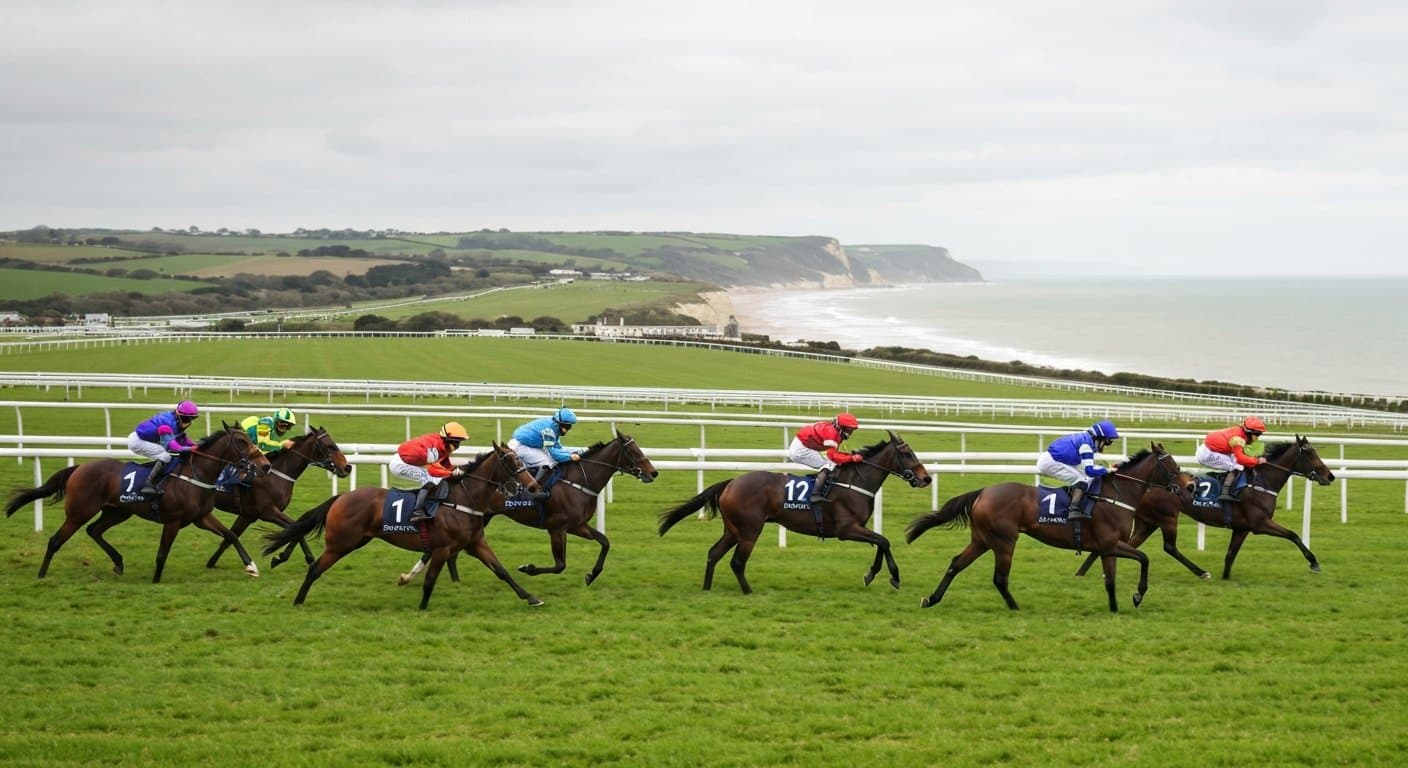
Brighton Mile: Complete Guide
Your complete guide to the Brighton Mile — history, great winners, the course, and betting angles for Brighton's signature flat race.
Read more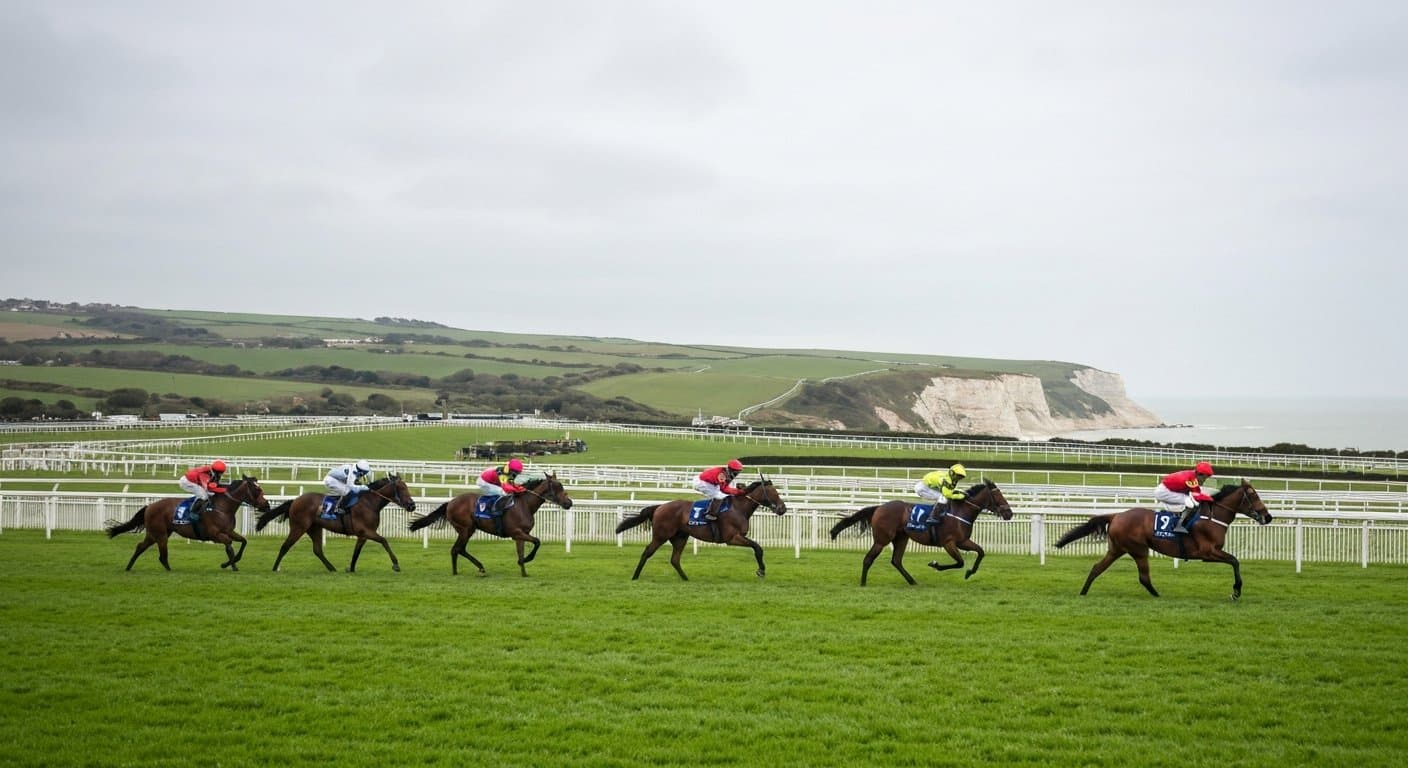
Seaside Racing at Brighton: Complete Guide
Your complete guide to seaside racing at Brighton — the Festival of Racing, the Brighton Mile, and summer days on Britain's only seaside flat course.
Read more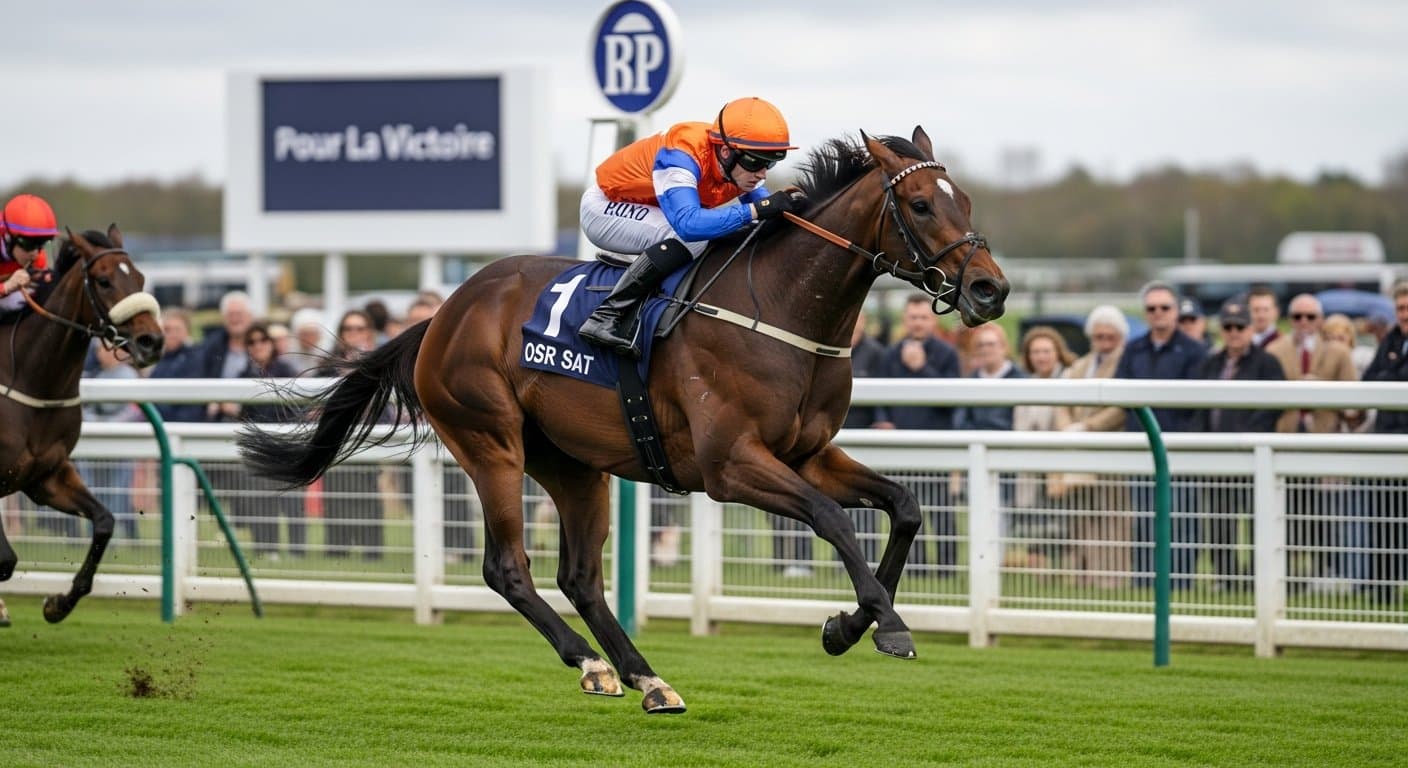
Pour La Victoire: Brighton's 11-Win Legend & Winners' Suite
Discover how Pour La Victoire became Brighton's most successful horse with 11 wins (2013-2021) and earned a winners' suite in his honour.
Read moreGamble Responsibly
Gambling should be entertaining and not seen as a way to make money. Never bet more than you can afford to lose. If you or someone you know has a gambling problem, help and support is available.