
Founder & Editor · Last reviewed 2026-03-02
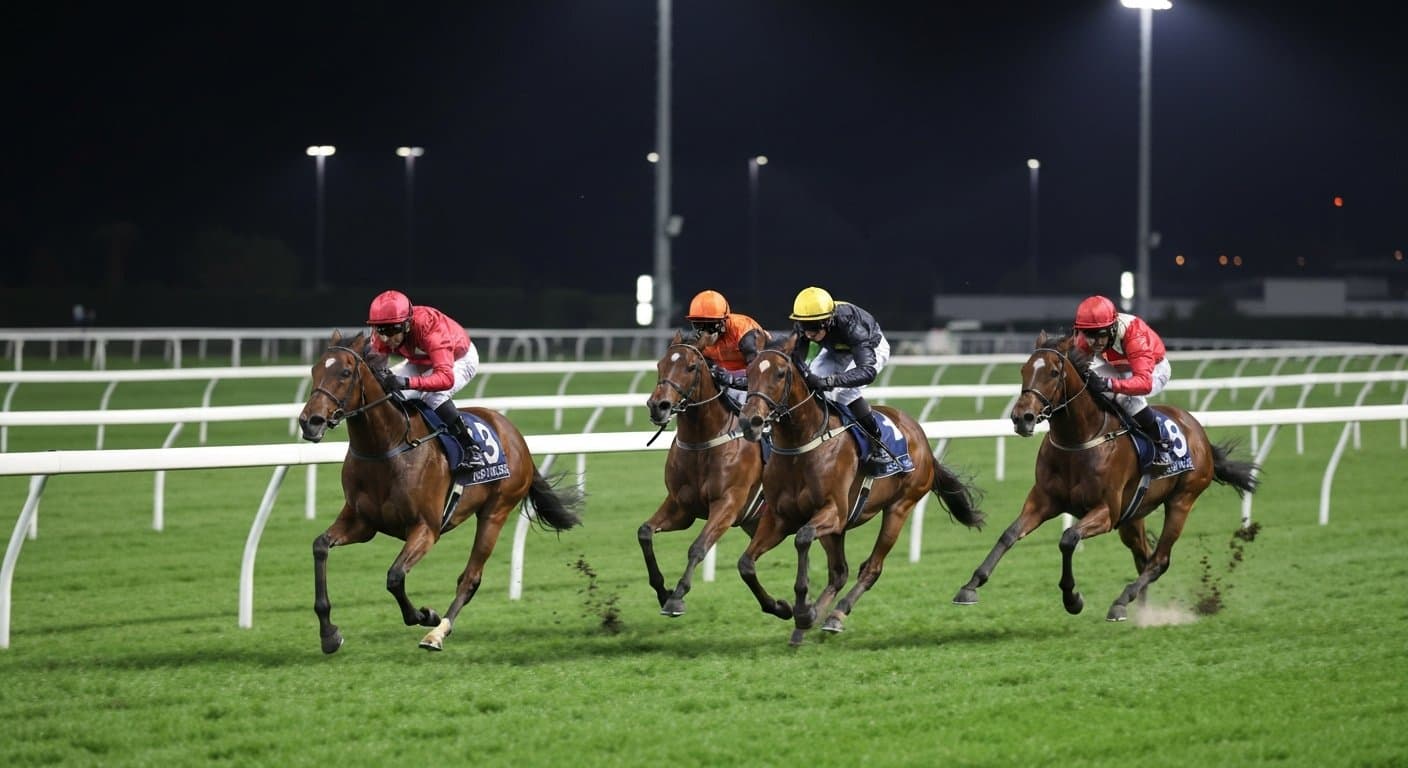
Chelmsford City is an all-weather flat course in Essex, 50 miles east of London and 50 miles south of Newmarket. It operates on Polytrack — a synthetic surface composed of wax-coated fibres, sand, and rubber — and stages racing year-round without the weather-related uncertainty that governs turf racing. The going is almost always Standard or Standard to Slow. There are no abandonments. Meetings planned for January or August run on a surface that rides within a narrow band of consistency regardless of the weather outside.
This predictability is both the defining feature of Chelmsford as a betting venue and the source of the specific edges it creates. When the going is consistent and the track structure is fair, form becomes more directly transferable from one meeting to the next. A horse that ran 10 lengths off the pace at Chelmsford last month was not unlucky with a change in ground; it ran to its level on this surface. That clarity makes Polytrack form assessment more reliable than turf form assessment in variable conditions.
Key angles before betting at Chelmsford City:
- Polytrack form from Lingfield is the most transferable — both tracks use left-handed Polytrack on similar-sized circuits; a horse that has run well at Lingfield has encountered the nearest equivalent surface and layout to Chelmsford
- Newmarket yards dominate the competitive races — Godolphin (Charlie Appleby), Thady Gosden, and Roger Varian send horses here throughout the year; when these yards run at Chelmsford, the horse is typically well prepared and has a realistic chance
- Low draw gives a modest advantage in 5-6f sprints — in fields of ten or more, stalls one through six produce more winners than high stalls; the effect is smaller over a mile and negligible beyond
- Course form on this surface is reliable — horses that have run well at Chelmsford are proven on the surface; their previous performance is a direct guide to likely performance on their next visit
- Kempton Polytrack form is less directly transferable — Kempton is right-handed, unlike Chelmsford and Lingfield; horses that suit left-handed Polytrack may not perform the same way at Kempton and vice versa
- The Chelmsford City Cup in August is the premium betting event — the one-mile-two-furlong handicap draws the strongest field of the year and generates the most competitive betting market
The complete guide to Chelmsford City covers the course layout, history, and fixture list. The Chelmsford City Cup guide provides specific race analysis. The day out guide covers practical visitor information.
Bet on Chelmsford City
Place your bets on Chelmsford City races with a trusted bookmaker.

Promo code BETFRED50. New customers only. Register, deposit with a Debit Card, and place a first bet of £10+ at Evens (2.0)+ on Sports, to be settled within 7 days, to get £30 in Sports Free Bets and £20 in Bet Builder Free Bets within 24 hours of settlement. 7-day expiry. Eligibility & payment exclusions apply. Full T&Cs apply. Take Time to Think. BeGambleAware.org. 18+. Full T&Cs.

Promo code R30. New UK customers only, 18+. Register, deposit £10 or more, then place a £10 single cash bet at odds of 1/2 (1.5) or greater on any sports market (excluding Virtuals). Once the qualifying bet settles you get £30 in Free Bets (3 x £10) — the qualifying bet can win or lose. Free Bets are valid on any sports market excluding Virtuals, expire in 7 days, are non-withdrawable and must be used in full. Excluded deposit methods apply (including PayPal, Apple Pay, Skrill and NETELLER). Named bets such as Lucky 15 do not qualify. If you cash out the qualifying bet, or it is voided, you are no longer eligible for the offer. Ends 31.12.26. Full T&Cs apply. Please gamble responsibly. BeGambleAware.org. 18+. Full T&Cs.

Promo code BET40GET20. New UK customers, 18+. Register with the code and place a first bet of £40 or more at Evens (2.0) or greater. Receive 2 × £10 free bets: the first credited automatically once the qualifying bet settles, the second 24 hours later. Free bets must be placed at minimum odds of 4/1 (5.0), expire 24 hours after credit, and the free-bet stake is not returned with winnings. Debit card deposits only. Take Time to Think. BeGambleAware.org. 18+. T&Cs apply. Full T&Cs.

50% of your first-day net losses refunded as a free bet, capped at £25. New UK customers aged 18+ only. To qualify, deposit and place a first bet of £10 or more on any sport at minimum odds of evens (2.00), then place at least two further bets on different events, each worth at least 50% of your largest bet, all at evens (2.00) or greater. Losses are counted from your first settled bet until 23:59 the same day. Place a qualifying £10+ bet and you are guaranteed at least a £5 free bet. Bets placed at SP, void bets, cashed-out bets and bets struck with free bets do not count towards the offer. The free bet is credited the day after your qualifying bets settle and must be used within 7 days, after which it expires. It can be used at odds from 1/4 (1.25) up to 250/1 on singles and straight accumulators, but not on Trixie, Patent or Yankee style multiples. Free-bet stake is not returned with winnings. One offer per person, household, address, IP address and device. E-wallet deposits may not qualify, so check the cashier before depositing. Customers registered with GAMSTOP cannot claim. KYC identity verification must be completed before the free bet is credited. Take Time to Think. BeGambleAware.org. 18+. T&Cs apply. Full T&Cs.

New customers, 18+. Choose the sports bonus at sign-up, make a first deposit and receive a 100% bonus up to £50 in your Sports Bonus balance. To convert the bonus to cash, wager it 10x within 30 days. Single bets below Evens (2.00) do not qualify; accumulators do not qualify if any selection is below 1/2 (1.50). Virtual Sports, voided, cancelled, drawn, cashed-out and free-bet wagers do not count towards wagering. Only the first settled bet per event counts. Withdrawing before the wagering requirement is met forfeits the bonus balance including bonus winnings. Real-money funds are used before bonus funds. Deposits via Skrill or Neteller are not eligible. Not valid in conjunction with other promotions. Odds, bet and payment limits apply. 10bet general and promotion T&Cs apply. BeGambleAware.org. 18+. Full T&Cs.

New customers in Great Britain and Republic of Ireland, 18+. Place a £10 fixed-odds qualifying bet at minimum odds of 1/2 (1.50) — single or each-way (only the win part counts), pre-event or in-play, not cashed out early, within 28 days of opening the account. Receive up to £60 in bonuses credited over three days: 3 × £10 fixed-odds free bets (the first on settlement, then 24 and 48 hours later) plus 3 × £5 Total Goals FOOTBALL spread bets and 3 × £5 racing Winning Favourites spread bets, with a £1 racing Race Index spread bet as an extra on top. The spread bets need a full spread-betting account, opened within 28 days of the fixed-odds account and subject to Spreadex's eligibility and appropriateness checks. Free-bet stakes not returned with winnings; free bets valid 28 days from issue. IMPORTANT: the £5 credits are SPREAD bets — sports spread betting carries the risk that losses can exceed your stake. Sports spread-betting customers do not have Financial Ombudsman or FSCS recourse. Take Time to Think. BeGambleAware.org. 18+. T&Cs apply. Full T&Cs.

Promo code WELCOME15, entered under My Bonuses after registering. New UK customers, 18+. Place a first qualifying bet of at least £10 from your cash balance at odds of evens (2.0) or greater within 7 days of opening the account. Once the qualifying bet fully settles you receive £15 in free bets, credited as 3 x £5 tokens with set uses: one £5 accumulator free bet (minimum 4 legs, each leg at 2/5 or bigger), one £5 sports free bet (any market at evens or bigger) and one £5 Sub Cover free bet (selected football player markets at evens or bigger). Free-bet stakes are not returned with winnings. Free bets expire 7 days after they are credited. Void, cashed-out and partially cashed-out bets do not qualify. One offer per customer. Confirm the current terms on BetGoodwin's own welcome-offer page before claiming. Take Time to Think. BeGambleAware.org. 18+. T&Cs apply. Full T&Cs.

New UK customers, 18+. Minimum deposit £10. Place a £10 qualifying single on sports (excluding virtuals) at minimum odds of 1/2 (1.50), settled within 14 days. Deposit-method exclusions apply. Receive £30 in free bets (stake not returned), split £20 for sportsbook use (2 x £10) and £10 for Bet Builder only (2 x £5); Bet Builder does not cover horse racing. Free bets must be accepted within 7 days and expire 7 days after acceptance. No promo code required. Best Odds Guaranteed on UK & Irish racing, subject to having staked over £25 in the previous seven days. Operated by LiveScore Betting and Gaming (Gibraltar) Ltd, UKGC 56859. Confirm the current terms on LiveScore Bet's own promotions page before claiming. Take Time to Think. BeGambleAware.org. 18+. T&Cs apply. Full T&Cs.
18+. BeGambleAware.org
Track Characteristics
The Chelmsford City circuit is left-handed, oval, and measures eight and a half furlongs around. The home straight runs for two furlongs. There are no sharp bends, no gradient changes, and no quirks of track geometry that create pronounced tactical advantages. This is a fair, galloping all-weather track where the surface itself — Polytrack — is the primary factor determining how races are run and how form transfers.
Polytrack: What It Is and How It Rides
Polytrack is a synthetic surface developed in the early 2000s and installed at several British courses as a weather-resistant alternative to turf. The surface at Chelmsford is composed of wax-coated fibres, sand, and recycled rubber bound together to create a consistent, durable racing surface. It drains extremely efficiently — rain passes straight through rather than accumulating on the surface — which is why Chelmsford can race in conditions that would force a turf course into abandonment.
The riding characteristics of Polytrack at Chelmsford are consistently close to what would be described as Good to Soft on turf. The surface has more give than firm turf but less sink than truly soft ground. Horses that act well on turf in Good to Soft conditions generally handle Chelmsford Polytrack well. Horses that require firm ground on turf — those whose action tightens or shortens on soft surfaces — sometimes find the Polytrack more testing than their turf form suggests.
The surface rewards horses that stride through it rather than horses that pick their feet up high. A long, economical galloping action moves efficiently through Polytrack; a choppy, high-stepping action that suits firm turf can lose time on each stride. This is one reason why some horses with strong fast-turf form perform below expectations at Chelmsford.
The Galloping Nature of the Track
The two-furlong home straight at Chelmsford is long enough to allow horses to find their finishing positions without excessive crowding. There is no sharp final bend that disadvantages wide-running horses or horses that need room. The straight is wide, and horses can get a run from virtually any position in the straight without significant interference.
This makes Chelmsford one of the fairest all-weather tracks in Britain in terms of tactical racing. Hold-up horses can get a run and deliver their challenge. Front-runners can control the pace. There is no strong structural bias toward any specific running style, though horses that race prominently tend to win slightly more often than deep hold-up horses, because the two-furlong straight does not give hold-up horses as much ground to make up as a longer finishing stretch would.
Sprint Course Configuration
Races over five furlongs and five furlongs and ten yards at Chelmsford use a chute that extends beyond the main oval to give the full distance. The chute runs into the main circuit and horses enter the round track via the final bend. In sprint races, the final bend is significant: horses drawn on the inside can follow the shortest line through the bend, while horses drawn wide must travel a longer arc. This is the primary reason for the modest low-draw advantage in sprints at Chelmsford.
All-Weather Comparison
Chelmsford's character is closest to Lingfield's Polytrack course — both left-handed, both using the same surface type, both with a similar circuit length and straight configuration. Form between the two tracks transfers more reliably than between either of them and Kempton, which is right-handed and uses a different oval configuration. Wolverhampton uses Tapeta, a different synthetic surface with different riding characteristics; form between Wolverhampton and Chelmsford transfers less reliably than Lingfield-to-Chelmsford form.
The practical selection implication: when assessing a horse's likely Chelmsford performance, weight its Chelmsford and Lingfield Polytrack form most heavily, weight Kempton Polytrack form with a modest discount, and weight Wolverhampton Tapeta form with a larger discount.
Going & Draw
Chelmsford City's going is one of its most consistent attributes. The Polytrack surface drains regardless of rainfall, and the official going description almost never moves outside the range of Standard to Standard to Slow. There are occasional exceptions — very cold conditions in winter can slow the surface slightly — but for practical betting purposes, the going at Chelmsford is a fixed variable rather than a changing one.
What Standard Means in Practice
Standard Polytrack at Chelmsford rides at approximately the equivalent of Good to Soft on turf. The surface has consistent give throughout — not the varying pockets of moisture you encounter on turf after rain — which means a horse's performance on one visit is a reliable guide to performance on the next visit under Standard conditions. A horse rated at its best on Good to Soft turf typically performs comparably to its rating on Standard Polytrack. A horse that requires Good to Firm on turf may find Standard Polytrack slightly more testing than expected, though the difference is often marginal.
Standard to Slow is the going description that applies when the surface is riding more heavily than usual — typically in cold weather when the Polytrack's binding agents become stiffer and the surface slows down slightly. On Standard to Slow, stamina plays a marginally larger role and the surface favours horses with a powerful stride that can work through the resistance. The difference from Standard is not large, but it is measurable across a full-distance race. Check the official going description on raceday — if it has shifted from Standard to Standard to Slow since the horse's most recent run, apply a modest stamina discount to horses whose form has been achieved at faster conditions.
Draw Bias in Sprints
In five-furlong and six-furlong races at Chelmsford, there is a consistent modest draw bias toward lower-numbered stalls. In a full field of twelve runners, stalls one to five produce a disproportionate share of winners relative to probability. The mechanism is the final bend: in sprint races, the bend comes relatively early in the race, and horses drawn wide on the bend travel further than horses on the inner. Over five furlongs where every yard matters, that distance differential is significant.
The bias is most pronounced in the largest fields. In fields of eight or fewer runners, horses have room to position themselves without being forced wide, and the bias largely disappears. In fields of ten or more, the low-draw edge is real and worth noting when selecting between otherwise comparable horses.
Over one mile and beyond, draw effect at Chelmsford is negligible. Horses drawn in stall twelve for a mile race at Chelmsford are not at a significant disadvantage. The early stages of longer races allow all horses to find their preferred positions, and the two-furlong straight gives sufficient room for horses to get their challenges in without requiring a specific starting position.
Going Consistency as a Betting Advantage
The most underappreciated aspect of Chelmsford's going consistency is the reduction of informational uncertainty it creates for bettors. At a turf course, part of the form assessment process involves estimating how different going conditions might affect individual horses — a horse that won on Good to Firm last time might behave differently on Good to Soft this time. At Chelmsford, that uncertainty is largely removed. The horse performs on Standard Polytrack; it will perform on Standard Polytrack again.
This makes the form book at Chelmsford more directly predictive than at most turf courses. A horse's previous Chelmsford run — its position, its margin, its running style, its finishing speed — is close to a direct template for its next Chelmsford run under similar conditions. Exploiting that predictability is one of the most consistent edges at the course: identify horses whose previous Chelmsford run was better than the form book headline suggests (a late-closing second behind a fast pace, or a run on Standard to Slow when the horse prefers Standard), and they may be well-placed on their next visit.
Key Trainers & Jockeys
Chelmsford City's proximity to Newmarket — 50 miles to the north — means the course is used regularly by the largest and most powerful training operations in British flat racing. This creates a distinct market character: races that on any other circuit might be dominated by small or medium-sized regional yards are at Chelmsford frequently contested by Godolphin runners, Gosden horses, and Roger Varian's quality-orientated string.
Godolphin and Charlie Appleby
Godolphin's Newmarket operation, trained by Charlie Appleby, uses Chelmsford as a natural mid-week and all-weather option throughout the year. Appleby runs horses here at all class levels — from maidens having their first or second outing through to competitive handicappers — and his Chelmsford strike rate reflects the quality of horses at his disposal. When Appleby runs a horse at Chelmsford that has previously won or run well at the track or at Lingfield on Polytrack, the combination of quality horses and proven surface preference is among the most bankable signals at the course.
Godolphin horses in Class 3 and higher races at Chelmsford represent the core of Appleby's most targeted runners. In handicaps at Class 4 and below, the horses are more likely to be building fitness or experience rather than targeting a specific win, and the selection value is lower.
Thady Gosden and John Gosden
The Gosden operation at Clarehaven Stables in Newmarket sends horses to Chelmsford throughout the year. Thady Gosden — who now leads the stable with his father John — uses Chelmsford for horses at a range of stages in their development. The yard's Chelmsford runners frequently attract market confidence because of the operation's overall quality, and that confidence is generally justified when the horse has relevant surface form.
The Gosden yard's strength is in middle-distance horses over a mile and beyond. Their Chelmsford runners in races over a mile and a quarter — the Chelmsford City Cup distance — are particularly worth noting.
Roger Varian
Roger Varian trains at Kremlin House in Newmarket. His record at Chelmsford is consistent across seasons and across distance categories. Like Appleby and Gosden, Varian uses Chelmsford as a convenient all-weather option for horses that suit the surface. His horses tend to be well-prepared when they travel to Chelmsford — he does not use the course as a fitness exercise for horses not expected to be competitive.
Varian's runners in competitive sprint handicaps at Chelmsford are worth noting when the horse has previous Polytrack form, because his sprinting string tends to be sharper than Chelmsford's typical handicap opposition.
Beyond Newmarket: Regional Consistency
Not every Chelmsford winner comes from Newmarket. Essex and East Anglian trainers use the course regularly, and some smaller operations have built consistent records here. Mark Usher, who trains in Wantage, has a solid Chelmsford record and targets the course throughout the year. Stuart Williams, based in Newmarket, runs horses here regularly across the all-weather calendar and has a strike rate that reflects deliberate course targeting rather than incidental use.
Jockey Angles
William Buick, retained by Godolphin, rides regularly at Chelmsford and is the leading jockey at the track by both volume and strike rate when Appleby's quality horses are considered. Ryan Moore, Oisin Murphy, and Frankie Dettori all ride here when the quality of the races warrants it.
For midweek evening cards with smaller fields and less high-profile races, apprentice jockeys often ride and can carry a weight advantage that represents real value. An apprentice with a 5lb or 7lb claim riding for an in-form local yard in a Class 4 or Class 5 race at Chelmsford is a legitimate each-way angle when the horse's form is competitive.
Betting Strategies
Chelmsford's betting strategies are grounded in the track's consistency. When the surface is predictable and form is more directly transferable than at most turf venues, the edges that remain are more structural and less dependent on weather-related guesswork.
Strategy One: Prioritise Chelmsford and Lingfield Polytrack Form
The most reliable selection filter at Chelmsford is a horse's previous performance on Polytrack at Chelmsford or Lingfield. The surface consistency means a previous run at either course is essentially a simulation of today's conditions. A horse that finished second by a length at Chelmsford three weeks ago, losing only to a horse whose form has since strengthened, is a direct contender at its next Chelmsford visit.
Apply this filter ahead of form from turf courses when assessing horses in all-weather handicaps. A horse with two Chelmsford runs and a consistent form line — even if the recorded official rating is modest — has more useful evidence about its Chelmsford performance than a horse with high turf ratings and no all-weather experience.
The strongest version of this angle: a horse that has previously won at Chelmsford, is returning to a similar class of race, and has had at least one run since its last visit to confirm fitness. Such horses win at Chelmsford at a rate above what handicap ratings alone would predict.
Strategy Two: Back Newmarket Yards in Competitive Races at Value Prices
Appleby, Gosden, and Varian runners in Class 3 and above races at Chelmsford deserve automatic consideration when they arrive with relevant surface form. The practical strategy is not to back them at any price, but to identify when the market has undervalued them — when a horse from one of these yards with Polytrack form is priced at 4/1 or above in a race where its quality should make it a 5/2 or 3/1 chance.
This mispricing most commonly occurs when the horse's most recent run was on turf and the turf form appears modest. If the horse has strong Chelmsford or Lingfield form from earlier in the season, the turf form is less relevant and the market may be anchoring on the wrong evidence.
Strategy Three: Use the Low-Draw Advantage in Sprint Handicaps
In five-furlong and six-furlong handicaps with fields of ten or more runners, apply the draw filter as a tiebreaker. When two horses are otherwise comparable on form and trainer credentials, the horse drawn in stalls one through six has a modest but real advantage. Use this filter to choose between comparable selections, not as a primary reason to back a horse from a high stall.
In large-field sprint handicaps with open prices, each-way betting on a horse with stall one through six, good Polytrack form, and a recognised yard behind it at 8/1 or above is a consistent Chelmsford angle.
Strategy Four: Exploit Going Consistency for Form Reading
Chelmsford's surface predictability means form reading here is more straightforward than at most turf courses. When a horse finished two lengths off the pace at Chelmsford last month, that two-length deficit is a reliable guide to the gap between that horse and the winner under similar conditions. There is no going-change to account for, no drainage variation to discount. The form reads at face value.
Use this to identify horses that ran well in a race behind a winner whose form has since strengthened, or that ran below form in their last Chelmsford start due to a demonstrated cause (poor draw in a large field, traffic trouble in the straight) that will not recur. These horses' form may be marked down by the handicapper or by the market when they actually deserve a higher assessment.
Strategy Five: Evening Race Value in Smaller Fields
Chelmsford stages regular evening meetings, often with fields of six to ten runners and less market attention than high-profile Saturday cards. In these races, course form and trainer targeting matter more than they do in deeply-competitive large-field handicaps where sophisticated market participants have reduced available margins. An evening meeting Class 4 or Class 5 race with a horse returning to Chelmsford from an in-form yard at 3/1 or above represents consistent value because the market is less efficiently priced than at daytime fixtures.
To compare place terms and each-way promotions across the major bookmakers, see our best bookmakers for horse racing guide.
Key Races
Chelmsford City's racing calendar is built around year-round all-weather meetings, with the programme quality peaking in late summer when the Chelmsford City Cup draws the strongest flat handicap field of the Essex season. Beyond the flagship race, the course stages a consistent programme of Listed races and class-competitive handicaps that reward systematic all-weather betting approaches.
The Chelmsford City Cup
The Chelmsford City Cup is a one-mile-two-furlong handicap run in August, widely regarded as the premier betting event of the Chelmsford season. The race draws the strongest field of the year — horses from Newmarket's leading yards competing alongside proven Chelmsford handicappers — and generates the most sophisticated betting market of any Chelmsford meeting.
The Cup rewards horses with course form at the trip. One mile and two furlongs on Polytrack is a specific distance that tests stamina as well as tactical speed; horses that have already run well at Chelmsford over the same trip bring directly relevant evidence. The race's competitive depth means prices are generally reasonable: the favourite rarely starts below 3/1, and there are regularly horses at 8/1 or above with credible claims.
For each-way betting, the Chelmsford City Cup at its standard race conditions (quarter odds, three places) in a field of twelve or more offers a structured betting framework. Horses at 8/1 or above with Chelmsford course form at the trip and a start from a Newmarket yard represent the optimal each-way profile.
Listed Races
Chelmsford stages a roster of Listed races across the year — sprint distances in summer, middle distances through autumn and winter. These races attract horses of a quality above the course's standard handicap programme, and when a Newmarket operation sends a horse to a Chelmsford Listed race with relevant Polytrack form, the horse is usually among the selection candidates.
Listed races at Chelmsford in autumn and winter are particularly worth attention because the all-weather surface means they run regardless of weather that might affect turf alternatives. Horses that have been prepared for an autumn campaign but cannot race on soft turf sometimes appear in Chelmsford Listed races on Polytrack as a practical alternative — and their turf form, if achieved in appropriate conditions, is relevant to their Chelmsford performance.
Winter Series and Year-Round Handicaps
The British Horseracing Authority operates an all-weather series through the winter months with bonus races for horses that accumulate form through the season. Chelmsford is a central venue for this series. Horses that have built up qualifying wins at Chelmsford and Lingfield through the autumn appear in winter series finals at the course with known Polytrack credentials.
These series races — typically Class 2 or Listed in the final qualifying stage — produce tight, competitive betting. Horses with the most direct Chelmsford course form are systematically better represented in the results than their starting prices always reflect.
Maiden and Conditions Races from Newmarket Yards
Throughout the year, Chelmsford hosts maiden races and conditions events that attract quality debutants from leading Newmarket yards. A well-bred horse from Charlie Appleby or Roger Varian making its first appearance in a Chelmsford maiden is worth including in any betting assessment of that race. The yard has typically prepared the horse carefully for a first appearance on this surface, and debut winners from quality Newmarket operations at Chelmsford often go on to perform well at a higher level.
Share this article
More about this racecourse
All Chelmsford City guides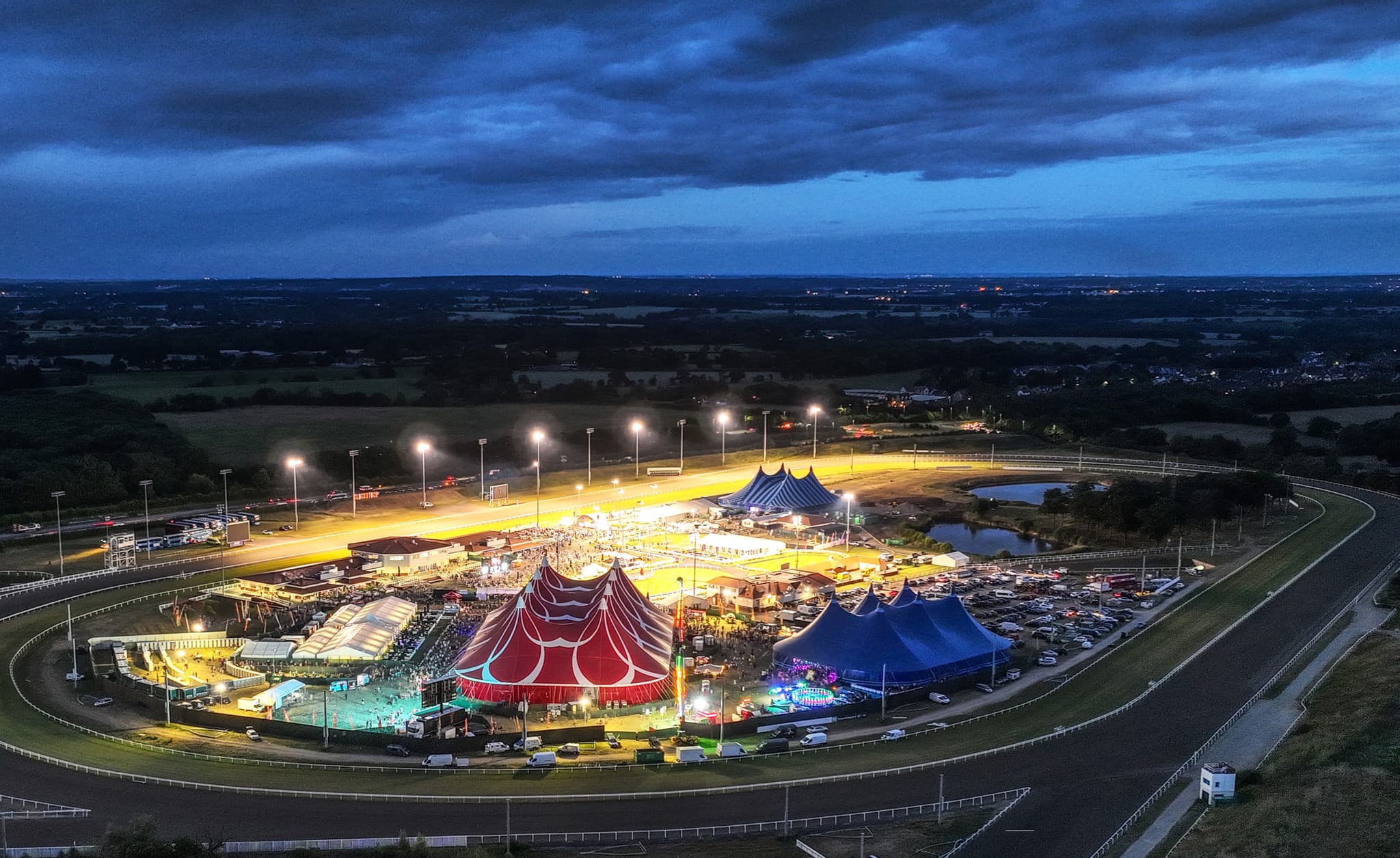
Chelmsford City Racecourse: Complete Guide
Your complete guide to Chelmsford City — one of Britain's newest racecourses with all-weather Polytrack racing in Essex.
Read more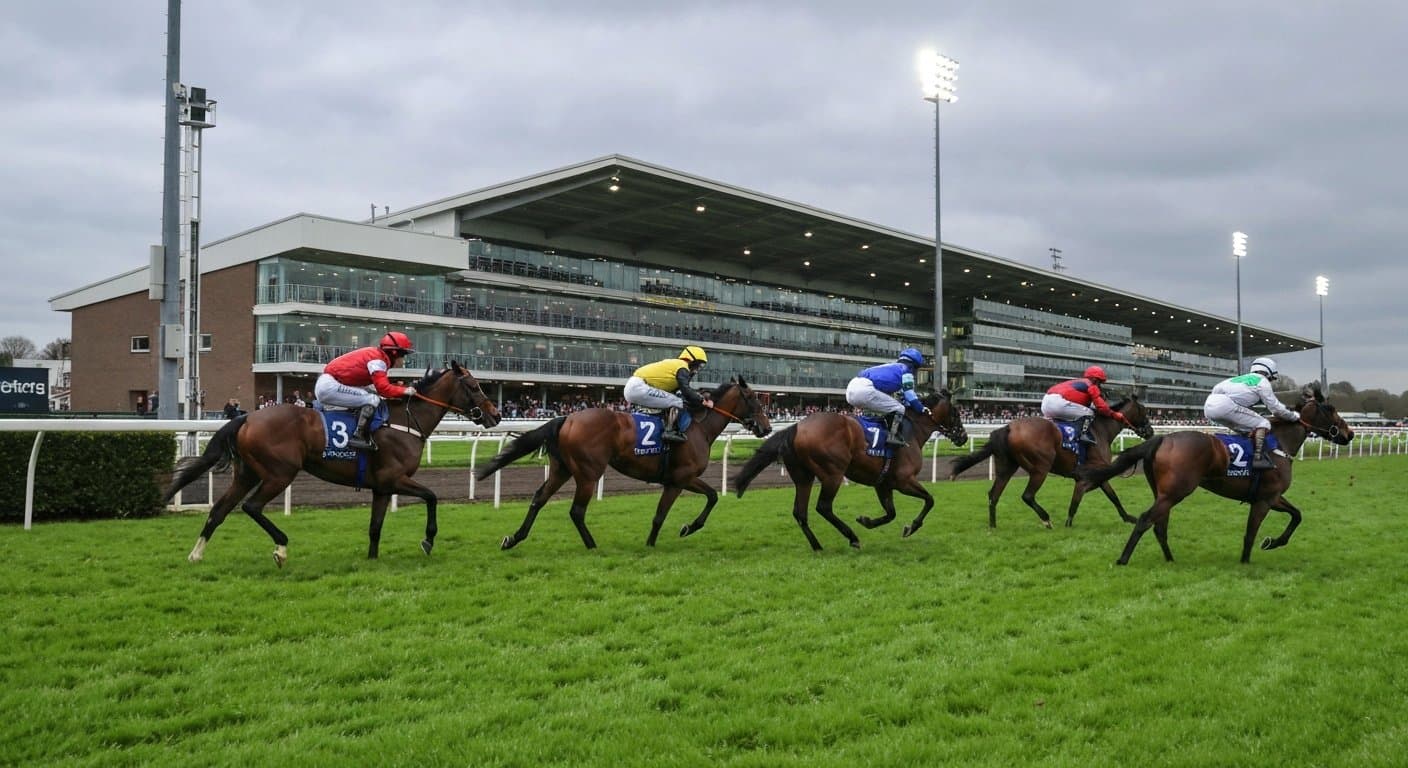
The Chelmsford City Cup: Complete Guide
Everything about the Chelmsford City Cup — the headline race at Britain's newest racecourse.
Read more
A Day Out at Chelmsford City Racecourse
Everything you need for a day at Chelmsford City — getting there, what to wear, enclosures, food and drink, and tips.
Read morePhotos on this page are used under Creative Commons licences. Titles, sources and licence links for each one are on our image credits page.
Research the field with the AI Race Predictor
Our model publishes calibrated win-probability estimates for UK races — a second opinion to understand a race, not tips. It's open about its record: it doesn't beat the market, and we show exactly how it does.
Work it out & learn the basics
Gamble Responsibly
Gambling should be entertaining and not seen as a way to make money. Never bet more than you can afford to lose. If you or someone you know has a gambling problem, help and support is available.