
Founder & Editor · Last reviewed 2026-04-05
Introduction
Chelmsford City Racecourse sits 35 miles east of the City of London — closer than any other all-weather track in Britain to the capital's eastern commuter belt. That geography matters. For racegoers in Essex, east London, and the Thames Corridor, this is their local all-weather circuit, and the course has built its entire identity around that catchment.
The course opened in August 2015 on a site at Great Leighs, between Chelmsford and Braintree, and it operates under Arena Racing Company. It runs flat racing year-round on a Polytrack synthetic surface — no turf, no jumps, consistent going in every month. That reliability, combined with a modern grandstand built from scratch for the reopening, has made it one of the fastest-growing racecourses in Britain by attendance.
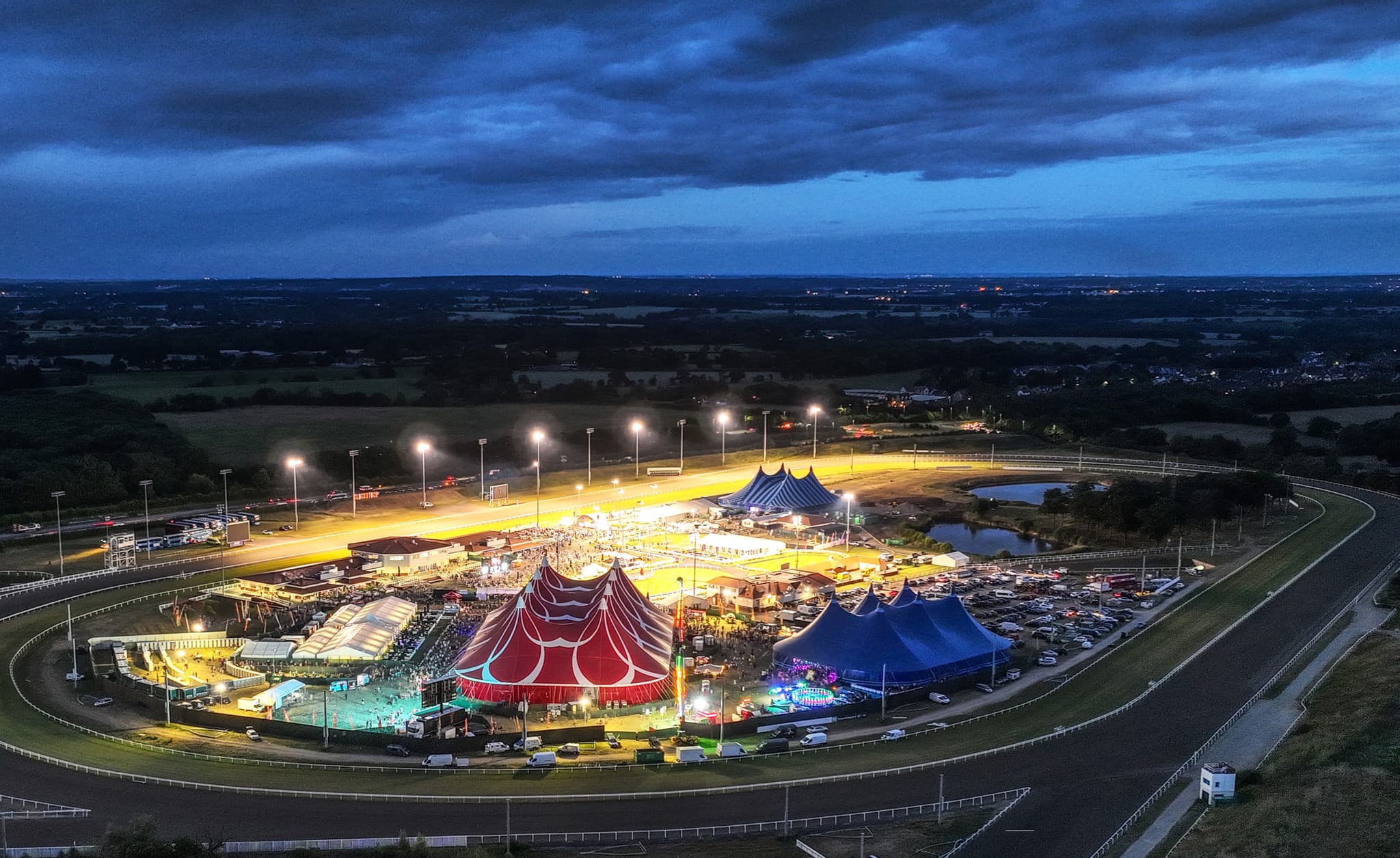
The Friday evening meeting is the heartbeat of the operation. Multiple Friday evenings throughout the year attract 5,000 to 8,000 spectators — post-work crowds from London, large local groups, and a consistent following from across Essex. The floodlit Polytrack oval, the sharp left-handed bends, and the three-furlong home straight make for excellent spectator racing, with plenty of action visible from every vantage point in the grandstand.
The quality of the programme has risen steadily since 2015. Chelmsford now hosts one of the most active Listed race programmes on the all-weather calendar in Britain — more Listed races per year than most turf tracks of equivalent size. Trainers such as William Haggas, Roger Varian, and Charlie Appleby treat the course seriously, running well-bred horses that often appear in Group company later in the season. The Chelmsford City Cup, a competitive all-weather handicap run over one mile two furlongs, is the flagship event, though it runs multiple times through the year at varying grades.
For anyone new to all-weather racing, Chelmsford is an excellent introduction. The format is familiar — flat racing, betting ring, paddock, parade ring — but the surface changes the character of the racing. Form is more consistent race to race, dramatic surface changes mid-meeting are absent, and the tactical element shifts slightly towards pace and position rather than ground conditions. Experienced racegoers who have only followed turf racing often find they need to recalibrate their form-reading instincts here.
Who This Guide Is For
This guide is written for anyone planning a visit to Chelmsford City, whether for a Friday evening meeting, a Saturday afternoon card, or one of the Listed race days. It covers the course layout and how the track rides; the year-round fixture programme; the facilities in detail; how to get there by train and car; a full FAQ section; the history of the site from its Great Leighs origins to the present; a betting guide specific to the Polytrack surface; and practical notes on the atmosphere and what to do in the wider area.
Quick Facts
| Location | Great Leighs, Chelmsford, Essex CM3 1QP |
| Distance from London | 35 miles (City of London); 40 miles (central) |
| Racing type | Flat, all-weather (Polytrack) only |
| Track shape | Left-handed oval, approximately 1 mile 2 furlongs round |
| Home straight | Approximately 3 furlongs |
| Year opened | 2008 (as Great Leighs); 2015 (as Chelmsford City) |
| Operator | Arena Racing Company (ARC) |
| Capacity | 6,000 |
| Signature race | Chelmsford City Cup (1m2f, handicap, multiple annual runnings) |
| Nearest train station | Chelmsford (5 miles); shuttle bus runs on racedays |
| Nearest motorway | A12 junction 19 (southbound), or A131 from Chelmsford |
| Car parking | Free, on-site |
| Website | chelmsfordcityracecourse.com |
| Telephone | 01245 360300 |
Bet on Chelmsford City
Place your bets on Chelmsford City races with a trusted bookmaker.

Promo code BETFRED50. New customers only. Register, deposit with a Debit Card, and place a first bet of £10+ at Evens (2.0)+ on Sports, to be settled within 7 days, to get £30 in Sports Free Bets and £20 in Bet Builder Free Bets within 24 hours of settlement. 7-day expiry. Eligibility & payment exclusions apply. Full T&Cs apply. Take Time to Think. BeGambleAware.org. 18+. Full T&Cs.

Promo code R30. New UK customers only, 18+. Register, deposit £10 or more, then place a £10 single cash bet at odds of 1/2 (1.5) or greater on any sports market (excluding Virtuals). Once the qualifying bet settles you get £30 in Free Bets (3 x £10) — the qualifying bet can win or lose. Free Bets are valid on any sports market excluding Virtuals, expire in 7 days, are non-withdrawable and must be used in full. Excluded deposit methods apply (including PayPal, Apple Pay, Skrill and NETELLER). Named bets such as Lucky 15 do not qualify. If you cash out the qualifying bet, or it is voided, you are no longer eligible for the offer. Ends 31.12.26. Full T&Cs apply. Please gamble responsibly. BeGambleAware.org. 18+. Full T&Cs.

Promo code BET40GET20. New UK customers, 18+. Register with the code and place a first bet of £40 or more at Evens (2.0) or greater. Receive 2 × £10 free bets: the first credited automatically once the qualifying bet settles, the second 24 hours later. Free bets must be placed at minimum odds of 4/1 (5.0), expire 24 hours after credit, and the free-bet stake is not returned with winnings. Debit card deposits only. Take Time to Think. BeGambleAware.org. 18+. T&Cs apply. Full T&Cs.

50% of your first-day net losses refunded as a free bet, capped at £25. New UK customers aged 18+ only. To qualify, deposit and place a first bet of £10 or more on any sport at minimum odds of evens (2.00), then place at least two further bets on different events, each worth at least 50% of your largest bet, all at evens (2.00) or greater. Losses are counted from your first settled bet until 23:59 the same day. Place a qualifying £10+ bet and you are guaranteed at least a £5 free bet. Bets placed at SP, void bets, cashed-out bets and bets struck with free bets do not count towards the offer. The free bet is credited the day after your qualifying bets settle and must be used within 7 days, after which it expires. It can be used at odds from 1/4 (1.25) up to 250/1 on singles and straight accumulators, but not on Trixie, Patent or Yankee style multiples. Free-bet stake is not returned with winnings. One offer per person, household, address, IP address and device. E-wallet deposits may not qualify, so check the cashier before depositing. Customers registered with GAMSTOP cannot claim. KYC identity verification must be completed before the free bet is credited. Take Time to Think. BeGambleAware.org. 18+. T&Cs apply. Full T&Cs.

New customers, 18+. Choose the sports bonus at sign-up, make a first deposit and receive a 100% bonus up to £50 in your Sports Bonus balance. To convert the bonus to cash, wager it 10x within 30 days. Single bets below Evens (2.00) do not qualify; accumulators do not qualify if any selection is below 1/2 (1.50). Virtual Sports, voided, cancelled, drawn, cashed-out and free-bet wagers do not count towards wagering. Only the first settled bet per event counts. Withdrawing before the wagering requirement is met forfeits the bonus balance including bonus winnings. Real-money funds are used before bonus funds. Deposits via Skrill or Neteller are not eligible. Not valid in conjunction with other promotions. Odds, bet and payment limits apply. 10bet general and promotion T&Cs apply. BeGambleAware.org. 18+. Full T&Cs.

New customers in Great Britain and Republic of Ireland, 18+. Place a £10 fixed-odds qualifying bet at minimum odds of 1/2 (1.50) — single or each-way (only the win part counts), pre-event or in-play, not cashed out early, within 28 days of opening the account. Receive up to £60 in bonuses credited over three days: 3 × £10 fixed-odds free bets (the first on settlement, then 24 and 48 hours later) plus 3 × £5 Total Goals FOOTBALL spread bets and 3 × £5 racing Winning Favourites spread bets, with a £1 racing Race Index spread bet as an extra on top. The spread bets need a full spread-betting account, opened within 28 days of the fixed-odds account and subject to Spreadex's eligibility and appropriateness checks. Free-bet stakes not returned with winnings; free bets valid 28 days from issue. IMPORTANT: the £5 credits are SPREAD bets — sports spread betting carries the risk that losses can exceed your stake. Sports spread-betting customers do not have Financial Ombudsman or FSCS recourse. Take Time to Think. BeGambleAware.org. 18+. T&Cs apply. Full T&Cs.

Promo code WELCOME15, entered under My Bonuses after registering. New UK customers, 18+. Place a first qualifying bet of at least £10 from your cash balance at odds of evens (2.0) or greater within 7 days of opening the account. Once the qualifying bet fully settles you receive £15 in free bets, credited as 3 x £5 tokens with set uses: one £5 accumulator free bet (minimum 4 legs, each leg at 2/5 or bigger), one £5 sports free bet (any market at evens or bigger) and one £5 Sub Cover free bet (selected football player markets at evens or bigger). Free-bet stakes are not returned with winnings. Free bets expire 7 days after they are credited. Void, cashed-out and partially cashed-out bets do not qualify. One offer per customer. Confirm the current terms on BetGoodwin's own welcome-offer page before claiming. Take Time to Think. BeGambleAware.org. 18+. T&Cs apply. Full T&Cs.

New UK customers, 18+. Minimum deposit £10. Place a £10 qualifying single on sports (excluding virtuals) at minimum odds of 1/2 (1.50), settled within 14 days. Deposit-method exclusions apply. Receive £30 in free bets (stake not returned), split £20 for sportsbook use (2 x £10) and £10 for Bet Builder only (2 x £5); Bet Builder does not cover horse racing. Free bets must be accepted within 7 days and expire 7 days after acceptance. No promo code required. Best Odds Guaranteed on UK & Irish racing, subject to having staked over £25 in the previous seven days. Operated by LiveScore Betting and Gaming (Gibraltar) Ltd, UKGC 56859. Confirm the current terms on LiveScore Bet's own promotions page before claiming. Take Time to Think. BeGambleAware.org. 18+. T&Cs apply. Full T&Cs.
18+. BeGambleAware.org
The Course & Layout
Track Layout
Chelmsford City is a left-handed oval measuring approximately one mile two furlongs around. The home straight runs for about three furlongs — long enough for a sustained finish but short enough that position coming off the final bend matters. The track is flat throughout: there are no notable undulations, no cambers, and no hills. This makes it a straightforward test of pure racing ability rather than adaptability to terrain.
The circuit is configured to accommodate all distances from five furlongs up to two miles. Shorter distances start from chutes that feed into the main oval. The five-furlong chute joins the track before the home turn, meaning five-furlong races involve the left-hand bend before straightening for the final two furlongs. The six-furlong course similarly starts from a spur and joins the main circuit. Races at one mile, one mile two furlongs, one mile four furlongs, and two miles are run entirely on the oval itself, with the start positioned at different points around the circuit.
The tight left-hand bends — particularly the home turn — reward horses that are agile and balanced rather than those that need a wide, sweeping arc to find their best action. Horses that have shown form on the oval circuits at Kempton Park or Lingfield Park tend to handle Chelmsford without difficulty: all three use Polytrack, and the configuration is broadly similar.
The Polytrack Surface
Polytrack is a synthetic all-weather surface manufactured by Worldwide Equine. It consists of wax-coated polypropylene fibres, sand, and recycled rubber crumb, compacted into a consistent racing layer. The surface at Chelmsford was laid as part of the 2015 rebuild and is maintained by Arena Racing Company's grounds team.
The going at Chelmsford City is officially described as "Standard" on most days, occasionally "Standard to Slow" — typically after very cold nights when the wax in the surface hardens slightly and the track rides a fraction slower. Unlike turf courses, there is no significant going change between summer and winter at Chelmsford. A horse running here in January faces the same surface as one running in July. This is one of the principal advantages of all-weather racing for form students: the variable you are always trying to account for on turf — ground conditions — is effectively fixed.
The surface does not ride identically to other Polytrack tracks on a given day. Chelmsford's maintenance schedule and the local microclimate can produce marginal differences, but the variation from meeting to meeting is small. Horses that have won on Polytrack at Kempton, Lingfield, or Wolverhampton's Tapeta surface (a related synthetic) will generally act at Chelmsford, though Wolverhampton's Tapeta is a different product and form transfers are slightly less reliable.
One condition that is worth tracking is post-cold-spell meetings in November and December, when the "Standard to Slow" going can marginally favour stamina over pure speed — front-runners can be slightly harder to reel in when the surface is riding a touch dead.
Distances and Configuration
All races at Chelmsford City are on the all-weather Polytrack. The full list of distances run at the course is:
- 5 furlongs — sprint start, involves the home turn early in the race
- 6 furlongs — one of the most commonly run distances; involves the bend at the start
- 7 furlongs — enters the back straight before the home turn
- 1 mile — full circuit minus the home straight; one of the most competitive distance categories
- 1 mile 2 furlongs — the Chelmsford City Cup distance; a thorough test of stamina and speed
- 1 mile 4 furlongs — middle-distance; suited to stayers with good tactical pace
- 2 miles — less common; run over the full oval plus portions of the back circuit
The one-mile and one-mile-two-furlong distances tend to produce the most competitive fields and the most reliable form. These are the bread-and-butter distances of the all-weather programme and attract horses from Newmarket yards that are targeting specific prize-money brackets.
Draw Bias
Draw bias on all-weather tracks is a frequently debated subject, and Chelmsford is no exception. The position in the stalls from which a horse starts — its draw — can affect the race outcome depending on the course configuration and distance.
At Chelmsford City, the draw effect is real but modest compared to what punters encounter at turf sprint tracks.
Sprint races (5f, 6f): In these distances, the left-hand bend comes early in the race, meaning horses drawn low (stalls 1–4 on an inside position) have a marginally shorter distance to travel into the first turn. The advantage exists but is not large — typically one or two lengths equivalent over the full race. It is best treated as a tiebreaker between horses of similar ability rather than a primary selection factor. Stalls-draw analysis at Chelmsford shows a mild low-draw preference in five- and six-furlong fields of ten or more runners, but the effect diminishes significantly in smaller fields where the gap between rails and outside is more manageable.
Longer distances (7f and above): At seven furlongs and beyond, the early bend is reached later in the race and the effect of the draw is substantially reduced. Horses drawn high in mile and middle-distance races at Chelmsford are not significantly disadvantaged, and form over these distances tends to run true regardless of stall position.
Field size matters: In fields of six or fewer runners, draw bias at Chelmsford is negligible. The bias only becomes relevant in large-field handicaps, particularly sprints. As a practical rule, focus on draw only in five- and six-furlong handicaps with twelve or more runners.
Which Horse Types Succeed
Chelmsford's flat, consistent surface rewards particular types of horse. Understanding this profile helps when assessing new runners.
All-weather specialists: Horses with multiple wins or placed efforts on Polytrack — at any of the three UK Polytrack tracks — translate reliably to Chelmsford. The surface is sufficiently consistent that a horse with four all-weather runs and two wins has a significant form profile here.
Consistent types: Polytrack tends to reduce the variance between good days and moderate days for a horse. Horses that have wide variation in their performances — brilliant on one occasion, tailed off the next — are less reliable indicators on AW than the raw figures suggest. Horses with consistent placed form are sometimes underrated in the market.
Galloping, balanced movers: Because the track is flat and left-handed, horses that move with a low, ground-covering action tend to thrive. Horses that are Of note high-actioned or that struggle on tight turns may not show their best form here.
Kempton and Lingfield winners: These two courses share Chelmsford's Polytrack surface and a similar oval configuration. A horse that has won twice at Kempton Park over a mile, for example, should be expected to handle Chelmsford's mile without adaptation issues. Cross-referencing Kempton and Lingfield Polytrack form is the single most reliable shortcut available to Chelmsford form students.
Lightly raced improvers from top yards: William Haggas, John and Thady Gosden, Roger Varian, and Charlie Appleby all place well-bred horses in Chelmsford's all-weather races, often using the course to educate horses that will later run on turf at higher levels. These horses tend to be fit, well-prepared, and running in the right grade. Their strike rates at Chelmsford are above their overall averages.
The Viewing Experience
The grandstand at Chelmsford City, built in 2015, is positioned on the home straight side of the oval. Spectators can see the full back straight, the far turn, and the entire home straight from the upper tiers. The floodlights illuminate the track to a high standard for evening meetings — the track surface appears clearly visible from all enclosures, and the action around the final bend is well lit.
One practical note: the track is wide enough that binoculars are useful to follow horses in the back straight. On evenings when the field spreads across the track, the far side runners can be hard to follow with the naked eye from lower tiers.
For a detailed breakdown of how to use this track information in your betting, see our Chelmsford City betting guide.
Key Fixtures & Calendar
Year-Round Racing Calendar
Chelmsford City operates a year-round programme of around 60 fixtures annually, making it one of the busiest all-weather venues in Britain. Because the Polytrack surface runs in all weather conditions, the course has no closed season. Fixtures are spread across every month — January through December — with a mix of afternoon and evening cards timed to suit both weekday and weekend attendance.
The mix shifts through the year. Summer months (May to September) carry the bulk of the evening fixtures, with Friday and Saturday evenings the most popular. Winter months lean towards afternoon cards, often midweek, which serve the professional racing market — trainers from Newmarket, Newbury, and surrounding areas targeting prize money and placing horses in appropriate company.
Friday Evening Meetings
Friday evenings are the flagship fixture type at Chelmsford City. Multiple Friday evening cards run through the year — concentrated in spring and summer but extending into autumn — and they consistently draw the largest crowds of any standard meeting at the course, with attendances of 5,000 to 8,000.
The draw for these evenings is straightforward: a finish-of-the-working-week social event that combines racing with food and drink in a modern, accessible setting. Greater Anglia trains from London Liverpool Street reach Chelmsford in 35 minutes, and the raceday shuttle bus connects Chelmsford station to the course on all raceday evenings. The combination makes a Friday evening at Chelmsford truly achievable for a London crowd without a car.
The quality of the Friday evening programme is often above what the prize money alone suggests. Trainers target these meetings because of the good facilities, the reliable surface, and the strong attendances that create a competitive atmosphere. Fields for Friday evening handicaps tend to be full and well-contested.
Saturday Afternoon Meetings
Saturday afternoon cards at Chelmsford attract a different crowd to the Friday evenings — families, local Essex racegoers, and those who prefer a more relaxed pace. The atmosphere is quieter than the Friday evening buzz, but the racing is often of comparable quality. Attendances on a standard Saturday afternoon run around 3,000 to 4,500.
Saturday meetings are a good option for first-time visitors or those bringing children. The course's modern facilities are designed for comfort rather than the tight, time-pressured environment of an evening meeting, and there is generally more space to move around and explore the paddock.
Listed Race Programme
Chelmsford City hosts one of the most active Listed race programmes of any all-weather venue in Britain. Within the first three years of reopening, the course had established a consistent schedule of Listed contests — a rate of development that reflects both the quality of the prize money on offer and the proximity to Newmarket's major yards.
The Listed races at Chelmsford attract horses that have run at Group level on turf, or that are specifically aimed at the all-weather championship qualification races. Several horses have used Chelmsford Listed wins as stepping stones to bigger targets on turf in the same season. The course's Listed programme is spread through the year rather than concentrated in one peak period, which helps maintain a steady supply of high-quality horses.
Details of the current year's Listed race schedule and dates are published on the Chelmsford City website. Dates shift year to year, so it is worth checking in advance if you plan to attend one of these meetings specifically.
The Chelmsford City Cup
The Chelmsford City Cup is the course's signature race. Run over one mile two furlongs on the Polytrack, it is a competitive all-weather handicap that has been run at Listed level in certain editions. The race has been held multiple times per year at varying grades, with the premier edition typically attracting horses rated in the 90s to low 100s.
Horses that target the Chelmsford City Cup typically have strong all-weather profiles and often come from yards like Godolphin, Haggas, or Varian that run an active winter and all-weather programme. The race has attracted horses placed in Group 3 events on turf in the same season.
The Christmas Eve Meeting
The Christmas Eve meeting at Chelmsford City has become the best-attended fixture of the year. Held annually on or close to 24 December, it draws large family groups, office party crowds, and racegoers who treat it as an established Christmas tradition. The atmosphere is Of note festive and the course leans into the occasion — there are typically seasonal promotions and the bars trade at a higher pace than any other day of the year. Advance ticket booking is essential; the meeting regularly sells close to the course's 6,000 capacity.
Winter All-Weather Programme
November through February sees Chelmsford host a higher proportion of midweek afternoon cards. These are quieter meetings — attendances of 2,000 to 3,000 — but they attract serious punters and professionals because the fields are often competitive and the form runs consistently on the uniform surface.
Winter all-weather meetings at Chelmsford are a regular target for Newmarket trainers looking to maintain horses in fitness and find prize money between turf seasons. A horse that runs four times at Chelmsford over winter and records placed efforts throughout is building a form profile that transfers directly to the turf season ahead.
For the full fixture list and ticket prices, visit chelmsfordcityracecourse.com.
Facilities & Hospitality
The Grandstand
The grandstand at Chelmsford City was built in 2015 as part of the full reconstruction of the site. It is a contemporary steel-and-glass structure positioned along the home straight, offering views of the three-furlong run-in and much of the back straight. The design is functional rather than ornate — clean lines, wide internal concourses, and a covered external terrace on the ground floor that gives spectators a sheltered position close to the track rail.
The upper tier of the grandstand houses the Premier Restaurant and the Club enclosure, with floor-to-ceiling glazing across the grandstand's front face providing unobstructed views of the track. The lower levels hold the main concourses, betting facilities, and public bars.
Because the grandstand was purpose-built for the 2015 reopening, it does not carry the constraints of older racecourse facilities — the column spacing, sightlines, and circulation routes were all designed from scratch. This makes Chelmsford's indoor facilities noticeably more comfortable than those at comparable courses that have expanded incrementally over decades.
Premier Restaurant
The Premier Restaurant occupies the upper level of the grandstand, with panoramic views over the full track. It is a formal sit-down restaurant offering a set-menu format on racedays, typically a two- or three-course meal with a reserved seat in the enclosure included in the package.
Reservations are required and should be made in advance, particularly for Friday evening meetings when the restaurant fills quickly. Tables on the front row look directly down the home straight, which makes for an excellent viewing position through the meal. Dress code in the Premier Restaurant is smart casual — no formal requirement, but jeans and trainers would feel underdressed.
Bookings can be made by calling 01245 360300 or through the course website.
The Fairwood Brasserie
The Fairwood Brasserie is a more relaxed dining option than the Premier Restaurant. It operates as a semi-formal brasserie with a menu that typically includes steaks, fish dishes, and lighter options. No strict reservation requirement applies for all meetings, though advance booking is recommended for busy Friday evenings. The Brasserie also sits within the grandstand with good views of the track.
The Betting Ring and Trackside Facilities
The betting ring at Chelmsford City operates in the traditional format — a row of bookmakers operating on a licensed pitch in the outdoor betting ring between the grandstand and the track. The ring is active for all meetings and provides a lively focal point in the period before each race. Tote betting facilities are also available at designated windows around the ground.
Trackside food outlets serve quick-service food at each race meeting. These include burger and grill operations and traditional raceday catering — pies, chips, sandwiches. The quality and selection have improved consistently since 2015 and are above the standard expected at a course of this size a decade ago.
The Paddock and Winner's Enclosure
The pre-parade ring and paddock are positioned between the grandstand and the track rail, giving spectators a good view of the horses before each race. The paddock has covered viewing on three sides — useful for evening meetings when temperatures drop after the first few races.
The winner's enclosure is a prominent feature of the home straight area, clearly visible from the grandstand and positioned to draw a good crowd after major races. On Friday evenings, the winner's enclosure presentations attract sizeable gatherings, particularly after the feature race of the evening.
Children's Facilities
Chelmsford City operates a family-friendly policy and the facilities reflect this. There is a designated children's play area, and children under 18 are admitted free when accompanied by a paying adult at most meetings. The course's layout — wide concourses, flat ground throughout, and clear sightlines — is practical for families with young children.
Disabled Access
The 2015 rebuild incorporated complete disabled access throughout the grandstand and public areas. Level access is available from the car park to the main concourse, and lifts serve the upper tiers of the grandstand. Dedicated viewing positions with appropriate space are available in the main enclosure. Visitors with specific access requirements are advised to contact the course in advance on 01245 360300.
General Notes
Chelmsford City's facilities are among the most modern of any British racecourse. The 2015 rebuild gave Arena Racing Company the opportunity to design the facility without legacy infrastructure, and the result is a venue that functions well across a range of meeting types — from a quiet midweek card with 2,000 spectators to the Christmas Eve meeting at near-capacity. The main practical limitation is that the course's capacity of 6,000 is not large by national standards; on the busiest Friday evenings, the concourses and betting ring become crowded, and advance booking of restaurant places is advisable.
For advance tickets and hospitality bookings, visit chelmsfordcityracecourse.com or call 01245 360300.
Getting to Chelmsford City
By Train (Recommended for Evening Meetings)
The train is the recommended option for Friday evening and Saturday evening meetings at Chelmsford City. Greater Anglia operates frequent services from London Liverpool Street to Chelmsford, with journey times of 33 to 40 minutes depending on the service. Trains run every 15 to 20 minutes in peak hours and continue to run until late evening, meaning you can stay for the final race and still reach London by midnight without difficulty.
Chelmsford station is approximately five miles from the racecourse. On all raceday evenings and afternoon meetings, Chelmsford City operates a dedicated shuttle bus service between Chelmsford station and the course. The shuttle runs from around 90 minutes before the first race and returns to the station after the last race. The bus stop is clearly signed at the station. The shuttle is included in the raceday package or available at a small charge separately — check the course website or call 01245 360300 to confirm arrangements for your specific meeting.
The return shuttle after the final race is the most practical option for those who have been drinking. Attempting to hail a taxi at the course after the last race on a busy Friday evening can mean a long wait.
By Car
From London and the M25 (via A12): Take the A12 north-east from the M25 junction 28 (Brook Street). Continue on the A12 to junction 19 (signed Boreham / Chelmsford). Follow the B1137 towards Great Leighs. The course is signposted from this junction. Journey time from the M25 is approximately 30 to 40 minutes in normal conditions, though the A12 can be slow on Friday evenings during the London rush hour.
From Chelmsford city centre: Take the A131 north from Chelmsford towards Braintree. Great Leighs is approximately five miles along this road. The racecourse entrance is on the right-hand side, clearly signposted.
From Colchester and the north-east: The A12 southbound to junction 19 is the most direct route from Colchester (approximately 20 miles) and from Ipswich (approximately 45 miles).
The postcode for satellite navigation is CM3 1QP. Free car parking is available on-site. On busy Friday evenings, the car park fills from around 5 pm — arriving before 5:30 pm gives a good chance of a space near the entrance. Overflow parking is managed by course staff on the busiest fixture days.
From London: Train vs Car
For evening meetings, the train is clearly the better choice. The A12 from London is one of the more congested roads in Essex during Friday peak hours, and parking at the course while achievable is a secondary consideration when the train and shuttle bus combination is fast and reliable. The return from a Friday evening meeting by train also avoids the post-racing car park queue, which on busy nights can add 20 to 30 minutes to your journey home.
For afternoon meetings, particularly midweek, the car is more convenient — trains are less frequent during off-peak daytime, and the shuttle bus schedule may be more limited.
From Newmarket
Chelmsford City is approximately 45 to 50 miles from Newmarket by road, using the A14 west to the M11 and then south to the A12. Journey time is around one hour in reasonable conditions. The proximity to Newmarket means a large proportion of the horses running at Chelmsford are trained there, and many racing professionals make regular trips.
Nearby Accommodation
The nearest concentration of hotels is in Chelmsford city centre, five miles from the course, with a range of chain hotels including Premier Inn, Holiday Inn, and Travelodge. For those wishing to combine the racing with a night in the area, Chelmsford has a growing restaurant and bar scene, and the city centre is easily reached by shuttle bus and a short walk.
For those coming from London, staying is rarely necessary given the late train options back to Liverpool Street.
Frequently Asked Questions
History of Chelmsford City Racecourse
Great Leighs: Britain's First New Racecourse in Eight Decades
The land at Great Leighs, between Chelmsford and Braintree in Essex, was used for agricultural purposes for most of the twentieth century. In the early 2000s, a proposal emerged to build the first purpose-designed British racecourse since Taunton opened in 1927 — a gap of more than eighty years. The project was ambitious: a new left-handed Polytrack oval on a greenfield site in Essex, positioned to serve the London, East Anglia, and Essex catchment areas.
The course was developed by a company called The Great Leighs Group and received a licence from the British Horseracing Authority after a protracted process. It opened in June 2008, after years of planning delays, as Great Leighs Racecourse. The opening was a significant moment for British racing: a wholly new venue, with a modern grandstand and the Polytrack all-weather surface, competing directly with Kempton Park and Lingfield Park for the London-area all-weather market.
Racing at Great Leighs was well received in its early months. The course's location gave it a natural catchment of Essex racegoers who had no local racecourse previously, and its all-weather format meant it could race year-round. Initial attendances were encouraging, the prize money was competitive, and several Newmarket-based trainers embraced the new venue.
The Closure of 2009
The Great Leighs project ran into serious financial difficulties within its first year. The company that operated the course fell into administration in 2009, less than twelve months after opening. Racing ceased in April 2009. The grandstand was locked, the track maintenance halted, and the site fell into disuse.
The closure was a blow both to the course's creditors and to British racing's aspiration for a modern new venue. The site at Great Leighs remained dormant for several years — a half-built opportunity abandoned in the Essex farmland. Various parties expressed interest in acquiring the site, but no deal was completed for some time.
Chelmsford Becomes a City — and the Course Gets a New Name
An unrelated but symbolically useful event occurred in 2012: Chelmsford was granted city status as part of Queen Elizabeth II's Diamond Jubilee civic honours programme. Chelmsford moved from being a county town to Britain's newest city. The rebranding carried through the surrounding area's identity, and when the racecourse site was eventually acquired for redevelopment, the new name — Chelmsford City Racecourse — aligned with the city's new status.
Arena Racing Company, one of Britain's largest racecourse operators, acquired the site and committed to a full reconstruction. Rather than simply reopening the Great Leighs facility, ARC rebuilt the grandstand and facilities comprehensively. The Polytrack surface was relaid, the grandstand was redesigned to the contemporary specification that now defines the course's character, and the entire commercial operation was restructured.
The 2015 Reopening
Chelmsford City Racecourse opened in August 2015. The reopening attracted immediate attention from the racing industry — not least because the course had a modern grandstand, strong commercial backing from ARC, and a truly underserved catchment area that had been without a local racecourse during the years of closure.
The British Horseracing Authority allocated a substantial fixture schedule from the first season, reflecting confidence in the new operator's ability to sustain the commercial operation. Evening racing, particularly Friday evenings, was identified as the primary format for building attendance and establishing a local following.
Rising Through the Grades
The progress of the programme since 2015 has been consistent. Within the first three years, Chelmsford was hosting Listed races — the fourth tier of flat racing's classification system, typically reserved for courses with established reputations and quality fields. The Listed race programme has expanded to become one of the most active of any all-weather venue in Britain, a development that would have seemed optimistic in 2015.
The course has established specific relationships with major yards. Trainers based at Newmarket — 45 miles to the north-west — regularly target Chelmsford fixtures for well-bred horses that need all-weather experience before turf campaigns. The proximity and the reliable surface have made it a natural extension of the Newmarket training scene for winter racing.
Chelmsford City's trajectory from derelict former racecourse to one of the busiest all-weather venues in Britain — achieved in under ten years under Arena Racing Company's management — reflects both the quality of the original location and the effectiveness of the commercial model built around the Friday evening racing programme.
For a wider look at the course's notable moments since 2015, see our famous moments guide.
Famous Moments
Listed Race Heritage Since 2015
Chelmsford City established its Listed race programme faster than almost any other post-2000 British venue. Within three years of the 2015 reopening, the course was hosting multiple Listed contests annually, with fields that would have been competitive at any all-weather track in the country.
The Chelmsford City Stakes, run over one mile, and the Nunthorpe-prep all-weather sprint Listed races have attracted horses that Then ran at Group level on turf. Several horses have used a Chelmsford Listed win as the final form reference before stepping up to a Group 3 or Group 2 contest, demonstrating that the Chelmsford form book is reliable as a benchmark. Trainers from Godolphin and the Gosden operation at Newmarket have used Chelmsford Listed races to develop horses whose turf form then confirmed the all-weather rating had been accurate.
Horses That Found Their Best Form at Chelmsford
Chelmsford's flat, consistent Polytrack surface has a specific character: it rewards horses that are well-balanced, tactically aware, and reliably fit. For this reason, it has been the course where several horses discovered their best form — either because the surface suited a physical characteristic that turf did not, or because the predictable conditions allowed consistent fitness work to show through.
Several horses have recorded multiple wins at Chelmsford in winter all-weather campaigns before transferring that form into Listed or Group performances on turf in the following summer. The course's winter programme, which runs a high volume of competitive handicaps and conditions races at prize money levels that attract quality horses, has given a number of three- and four-year-olds their first experience of consistent high-level competition.
Friday Evening Racing as a Social Institution
The Friday evening meeting has become an established social event in Essex and east London in a way that few individual racecourse fixture types have managed at any British venue. The combination of a 35-minute train journey from Liverpool Street, a modern grandstand with good food and bars, and competitive evening racing has created a reliable and repeatable format that draws consistent crowds of 5,000 to 8,000.
This is notable because it was not inevitable. The Friday evening format at Chelmsford was a deliberate commercial strategy by Arena Racing Company when the course reopened in 2015, and it succeeded. The course built a following in a demographic — London commuters, Essex professionals, younger social groups — that had not historically been regular racecourse attendees.
The Christmas Eve Meeting
The Christmas Eve meeting has been the stand-out fixture in terms of attendance and atmosphere since at least 2016, when it became clear the format had an audience beyond regular racing followers. The meeting draws close to the course's 6,000 capacity every year, with ticket sales typically completing well in advance. The crowd on Christmas Eve is Of note different from a standard Chelmsford meeting — large extended family groups, office parties finishing the working year, and racegoers who may attend only once or twice annually.
The racing itself on Christmas Eve is competitive. Trainers target the meeting for horses they want to run before the end of the calendar year for administrative and prize-money reasons, and fields are typically full. Several memorable finishes on the Chelmsford Polytrack have occurred on Christmas Eve, when large crowds and animated atmosphere add a dimension to the spectacle that a midweek January card cannot replicate.
Memorable Finishes on the Polytrack
The three-furlong Chelmsford home straight produces a good number of close finishes, partly because the left-hand home bend tends to bunch horses together in sprint races, and partly because the flat surface does not filter out horses the way significant gradients do on turf. Short-head and nose finishes are a regular feature, particularly in competitive handicaps where the field has been carefully rated.
Several of the Friday evening feature races in summer — typically one-mile or one-mile-two-furlong handicaps with fields of twelve to sixteen runners — have produced finishes where five or six horses crossed the line within a length of each other. The photographic finish equipment at Chelmsford is called upon frequently.
The Broader Significance for British All-Weather Racing
Chelmsford City's development since 2015 is part of a broader shift in British racing towards the all-weather programme. The introduction of the All-Weather Championships series — with qualification races at venues including Chelmsford, Kempton, Lingfield, Wolverhampton, and Newcastle, and a Finals Day at Lingfield Park in April — gave all-weather racing a narrative structure and a formal prestige hierarchy that it had previously lacked.
Chelmsford has been a regular host of All-Weather Championship qualification races. Horses targeting Finals Day at Lingfield have used Chelmsford Listed and conditions races as part of their qualification campaigns, which has raised the profile of specific Chelmsford winter fixtures and brought better-quality horses than would otherwise have run there.
The course's ability to attract this quality of programme within ten years of reopening from a dormant site reflects both the location's commercial viability and ARC's investment in the prize money structure.
Betting Guide
How Chelmsford City's Surface Affects Betting
The single most important concept for betting at Chelmsford City is that the Polytrack surface drastically reduces the role of going in your assessment. On a turf track, the ground conditions on the day — affected by rainfall, drainage, temperature — are one of the most significant variables in whether a horse performs. At Chelmsford, the surface is consistent meeting to meeting. "Standard" Polytrack in February is the same surface as "Standard" in August. This does not mean all horses run to the same level each time: fitness, training, tactical factors, and draw still matter. But the ground variable is effectively removed, which makes form analysis more straightforward.
The practical effect: horses at Chelmsford run more consistently than horses at turf tracks. Their form lines are more reliable, they are less likely to produce a dramatically out-of-character performance due to going change, and the form book is a more accurate predictor of outcomes. This suppresses variance — which has direct consequences for both finding winners and finding value.
All-Weather Form Transfers Reliably
The most reliable form at Chelmsford City comes from other Polytrack tracks. Britain's three Polytrack venues — Chelmsford, Kempton Park, and Lingfield Park — share the same surface product, and form transfers between them with reasonable reliability. A horse with two wins on the Polytrack at Kempton, running at Chelmsford for the first time, has a significant form profile. The oval configuration, the surface character, and the pace of the racing are sufficiently similar that direct form comparisons are valid.
Wolverhampton uses Tapeta, a different synthetic surface, and form from Wolverhampton to Chelmsford is somewhat less reliable — the surface rides differently. Newcastle (Tapeta) is similarly treated as a slightly different proposition. Dundalk in Ireland uses Polytrack and form from Dundalk is a legitimate reference, though UK/Irish management differences mean the tracks are not identical.
The practical rule: When assessing a horse at Chelmsford that has not run there before, prioritise its form at Kempton and Lingfield over any other track. If it has won twice on Kempton's Polytrack over a mile, treat that as real evidence of Chelmsford suitability.
Draw Bias: A Tiebreaker, Not a Selector
The draw effect at Chelmsford is real but modest. In five- and six-furlong races, a low draw (stalls 1 to 4) gives a marginal advantage because the left-hand bend comes early in the race and shorter-path horses travel slightly less ground. In large-field sprint handicaps — twelve or more runners — this effect is measurable in results data over several seasons and amounts to roughly one to two lengths of advantage equivalent in a five-furlong race.
The important calibration: do not discard a horse on the strength of a wide draw in a sprint if the horse has clearly superior form. The draw is a tiebreaker when you have two horses of similar ability at the same price, not a primary selection factor. In fields of ten or fewer, the effect is negligible and can be ignored.
At distances of seven furlongs and above, the draw at Chelmsford has no significant statistical effect on outcomes. Mid- and long-distance races should be assessed entirely on form and trainer/jockey factors.
Trainer Strike Rates
Trainer performance at all-weather tracks shows patterns that persist over multiple seasons, because yards with strong all-weather programmes prepare their horses specifically for the surface. At Chelmsford City, four yards consistently outperform their own average strike rates:
William Haggas (Newmarket): Haggas has one of the most active and successful all-weather programmes of any top Newmarket trainer. His Chelmsford record over multiple seasons shows a strike rate that is above his overall season average. He places horses carefully at Chelmsford, often in conditions or Listed races where the prize money justifies a well-prepared runner.
John and Thady Gosden (Newmarket): The Gosden operation runs a large number of horses at Chelmsford, using it as both a development track for young horses and a serious target for older all-weather specialists. Their strike rate at Chelmsford is reliable, and they have a track record of placing horses that Then win at Group level.
Roger Varian (Newmarket): Varian's yard has a strong all-weather philosophy. His Chelmsford runners are typically well-prepared and correctly placed; he does not run horses speculatively in races they are unlikely to win.
Charlie Appleby (Newmarket, Godolphin): Appleby's Godolphin operation runs a substantial all-weather programme year-round, and Chelmsford is a regular destination. Godolphin's all-weather horses tend to be fit, well-managed, and in the right grade. Appleby's first-time all-weather runners at Chelmsford — horses that have not run on the surface before but are clearly bred and trained for it — have a strong record.
When any of these four trainers runs a short-priced favourite at Chelmsford, the market assessment is generally reliable.
Favourites Perform Better Than on Turf
On all-weather surfaces, the favourite wins more often than it does on turf. The reduced variance of the surface — no sudden going change, no dramatic weather effects mid-meeting — means the pre-race assessments embedded in the market are more often correct. At Chelmsford over multiple seasons, the favourite win rate is meaningfully higher than the turf national average.
The practical implication: laying short-priced favourites at Chelmsford for the purposes of finding value is less fruitful than it might be at a turf venue. The favourites tend to win. This does not mean they always offer value — a 4/9 favourite that wins is not automatically good betting — but it does mean the reflex to oppose well-backed horses on form grounds should be applied with more caution at Chelmsford than at, say, a turf sprint course where variability is high.
In fields where the favourite is a trainer-from-form-profile match (a Haggas horse, for example, stepping up to a Chelmsford conditions race off Kempton wins), it is often more profitable to look for place value in the second and third than to oppose the winner.
Friday Evening Racing: Above-Average Form Reliability
The Friday evening programme at Chelmsford attracts above-average quality relative to the prize money on offer. Trainers target these meetings, fields are large and competitive, and the form produced tends to run through accurately in subsequent races. A horse that wins a Friday evening competitive handicap at Chelmsford and then runs next at a similar grade at Kempton or Lingfield is a horse whose form can be trusted.
This contrasts with some midweek afternoon cards, where fields can be smaller and less competitive, and the winning form is sometimes produced against weaker opponents. Friday evening form at Chelmsford is, as a general rule, the more reliable benchmark.
For further analysis of specific race types and distance-by-distance trends at Chelmsford City, see our Chelmsford City betting guide.
Atmosphere & Planning Your Visit
The Chelmsford City Atmosphere
Chelmsford City has made a deliberate choice about the kind of racecourse it wants to be. The Friday evening meeting — the course's signature fixture type — targets a specific demographic: Essex professionals, London commuters finishing the working week, and established local racing followers who have made Chelmsford their regular meeting. The atmosphere at these evenings is buzzy and social in character. Large groups, post-work crowds arriving in suits and summer dresses, tables of eight or ten people at the Fairwood Brasserie — the Friday evening at Chelmsford has more in common with a sporting event or a quality evening out than with a traditional afternoon card.
This is not an accident. Arena Racing Company built the 2015 facility around this model and the Friday evening format has rewarded it. The result is a real Essex institution, with repeat attendees who treat a specific Friday evening meeting as an annual fixture in their social calendar.
Saturday afternoons carry a different tone. The crowd is smaller — typically 3,000 to 4,500 — and the pace is more relaxed. Families, local racegoers, and those who prefer the quieter version of the experience come on Saturdays. The racing quality is comparable, the facilities identical, and the lack of the Friday evening crowd density makes it easier to move around and spend time in the paddock area.
The Setting
The course sits in flat Essex farmland between Chelmsford and Braintree, in the parish of Great Leighs. The countryside around is gently agricultural — large arable fields, market hedgerows, low horizons. This is not the downland backdrop of Goodwood or the green bowl of Chester. It is low-key, pleasantly English farmland that suits an evening meeting well: the sky at dusk over Essex is wide, and the floodlights create a visible glow from the surrounding lanes.
The village of Great Leighs itself is immediately adjacent to the course. The wider area has no significant urban development within walking distance of the racecourse, which means arriving by car or shuttle bus is the only realistic option — but it also means the site feels open and uncongested in a way that urban racecourses cannot.
Chelmsford City Centre
Chelmsford city centre is five miles south of the racecourse and is well worth considering as a base or as a destination for dinner before or after the racing. The city centre has a growing restaurant scene across several dining categories, a compact bar and pub area around the High Street and Bond Street, and good transport connections back to London on Greater Anglia services from Chelmsford station.
For those who want to extend the evening after racing, the shuttle bus returns to Chelmsford station after the last race and the city centre is a ten-minute walk or short taxi ride from the station. The last Greater Anglia services to Liverpool Street run late enough that staying for an hour in the city centre before catching a train is feasible on most Friday evenings.
Combining a Day Out: RHS Hyde Hall
For those attending a Saturday or weekday afternoon meeting, RHS Garden Hyde Hall is eight miles south of the racecourse and is one of the five gardens in the RHS's national network. Hyde Hall covers 360 acres on an Essex hillside, with a mix of formal and informal garden areas including the Global Growth Vegetable Garden and the Dry Garden — the latter a notable design for its use of drought-tolerant planting. The gardens are open year-round (hours vary by season), making a morning visit to Hyde Hall followed by afternoon racing at Chelmsford a straightforward combination. The two sites are connected by the B1418 and B1137 roads and the drive is about 15 minutes.
Colchester and the Wider Area
Colchester is 14 miles north-east of the racecourse via the A12. It is Britain's oldest recorded town, with a Roman history that predates the occupation of London — the Roman town of Camulodunum was established here around 43 AD, and the Roman walls, castle, and town plan are visible in the modern city. Colchester Castle houses one of the largest Norman keeps in Europe and contains an accessible museum of Roman and medieval history.
For racegoers with time before or after an afternoon meeting, Colchester is a straightforward detour: park at the course, drive up the A12, spend two hours at the castle and town centre, and return for racing. The castle is open daily and the Roman walls are accessible on foot from the town centre.
Planning Notes
Book Friday evenings in advance. The restaurant and hospitality options at Chelmsford sell out ahead of popular Friday evening meetings. If you want a table for dinner rather than trackside catering, book the Fairwood Brasserie or Premier Restaurant when you buy your tickets. Calling 01245 360300 or booking online through the course website are both reliable options.
Christmas Eve requires early booking. The Christmas Eve meeting is the best-attended of the year. Tickets sell out faster than any other meeting, and the dining options are fully committed well in advance.
Train for evenings, car for afternoons. The shuttle bus from Chelmsford station is the most practical route to an evening meeting. For afternoon meetings, particularly midweek, the car gives more flexibility. Check the shuttle schedule is running for your specific meeting if you plan to rely on it.
More guides for this course
Share this article
More about this racecourse
All Chelmsford City guides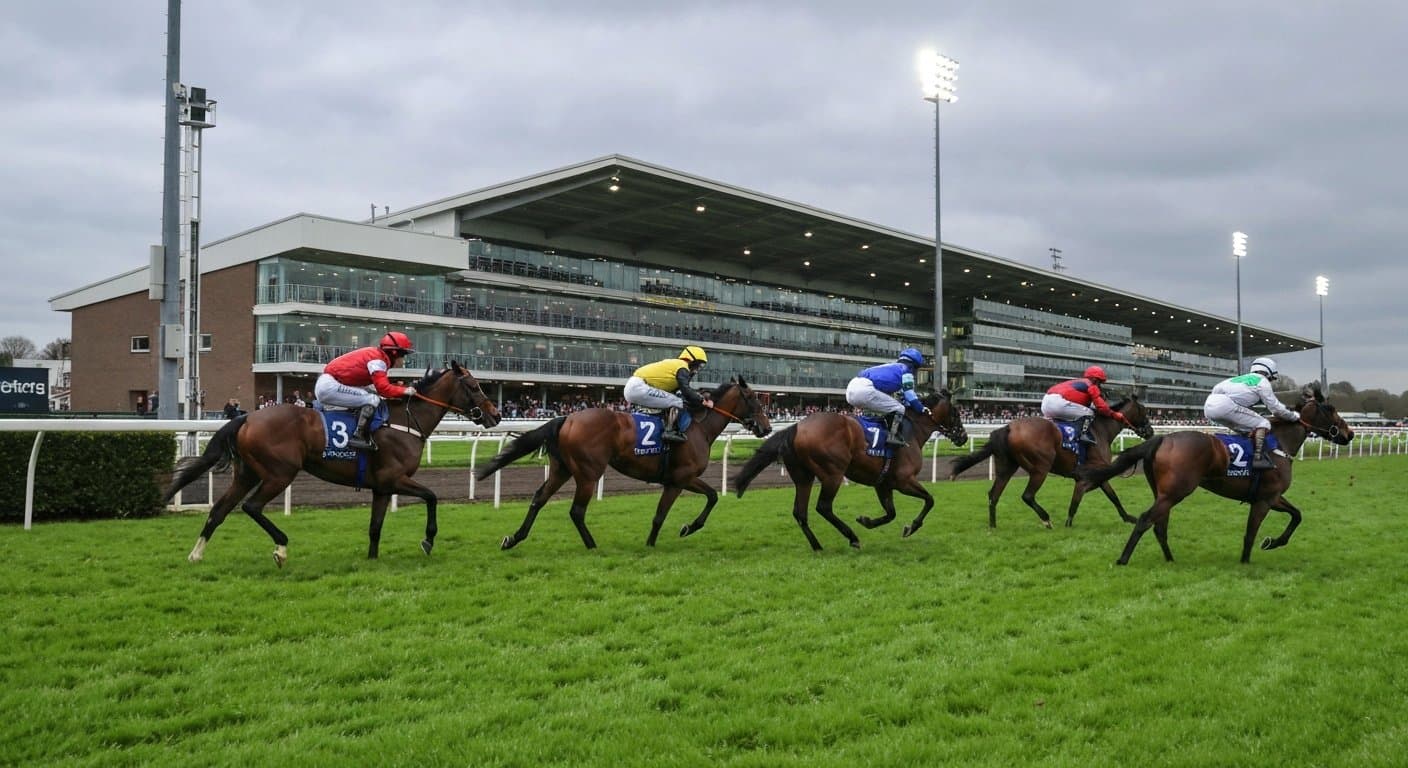
The Chelmsford City Cup: Complete Guide
Everything about the Chelmsford City Cup — the headline race at Britain's newest racecourse.
Read more
A Day Out at Chelmsford City Racecourse
Everything you need for a day at Chelmsford City — getting there, what to wear, enclosures, food and drink, and tips.
Read more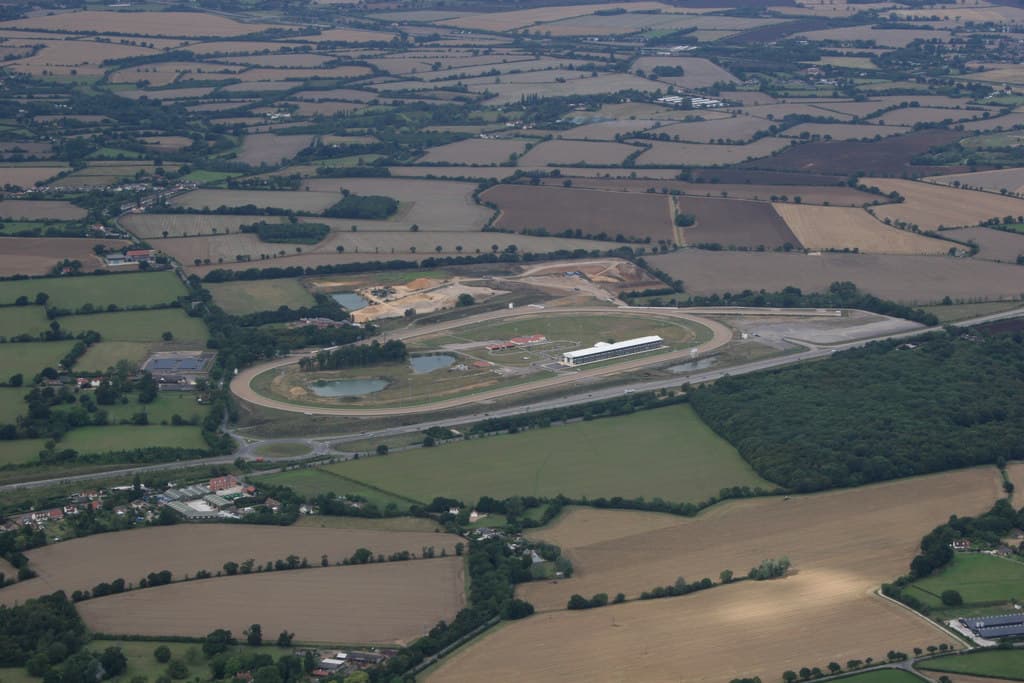
Evening Racing at Chelmsford City
Your guide to floodlit evening racing at Chelmsford City — atmosphere, tips and what to expect.
Read morePhotos on this page are used under Creative Commons licences. Titles, sources and licence links for each one are on our image credits page.
Research the field with the AI Race Predictor
Our model publishes calibrated win-probability estimates for UK races — a second opinion to understand a race, not tips. It's open about its record: it doesn't beat the market, and we show exactly how it does.
Work it out & learn the basics
Gamble Responsibly
Gambling should be entertaining and not seen as a way to make money. Never bet more than you can afford to lose. If you or someone you know has a gambling problem, help and support is available.