
Founder & Editor · Last reviewed 2026-04-07
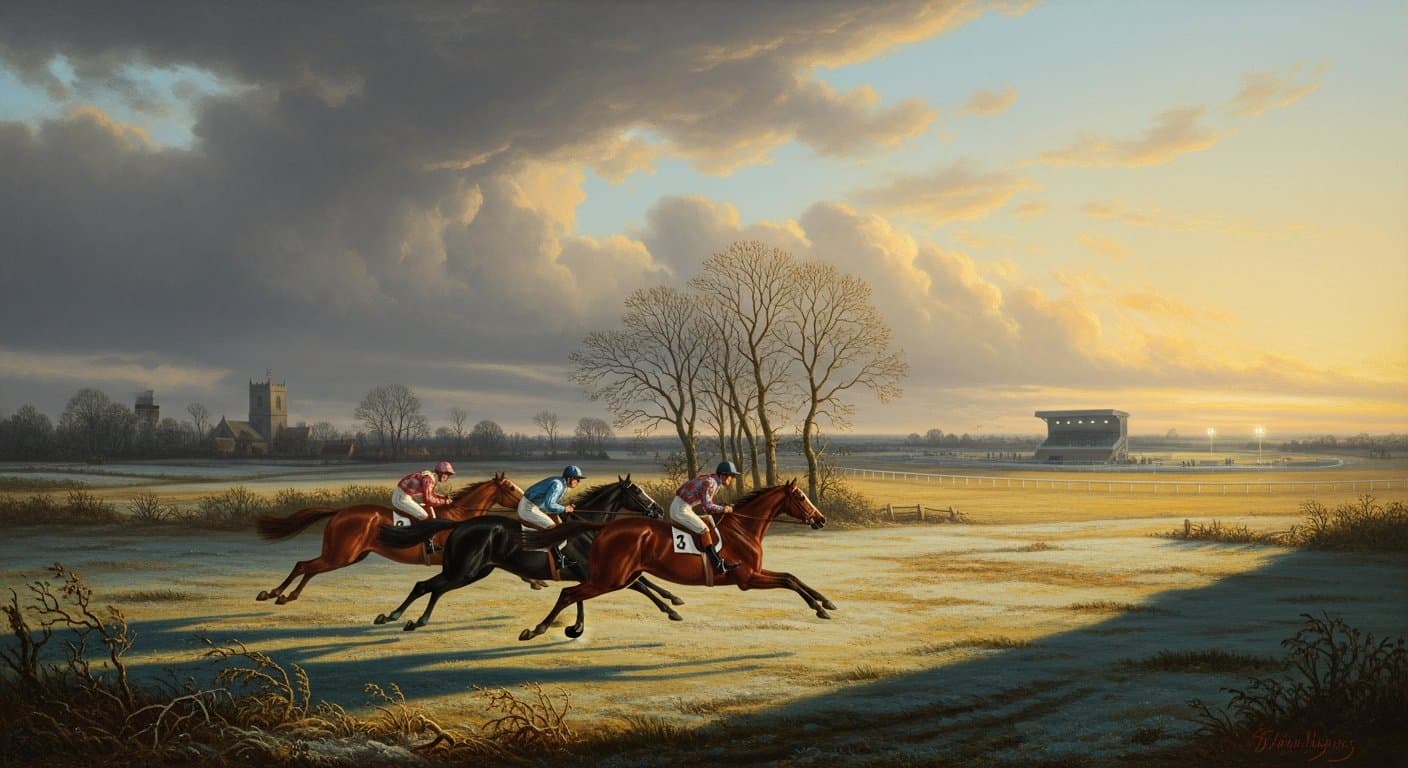
Chelmsford City Racecourse sits in the Essex countryside at Great Leighs — and on Championship Series nights, it transforms into one of the most atmospheric flat racing venues in Britain. The floodlit Polytrack oval draws trainers and jockeys from across the south east, the crowd is engaged, and the racing is consistently competitive. For a mid-week evening meeting, it punches well above its weight.
The Championship Series runs from spring through to autumn and gives the all-weather season a proper narrative arc. Rather than isolated evenings, there is a coherent series of graded and Listed races that connect across the months. Horses accumulate form at Chelmsford and return to build on it, giving regular followers a genuine edge.
The jewel in the crown is the Chelmsford City Cup — a Listed race over a mile and two furlongs that attracts high-quality handicappers and occasionally Classic-placed horses looking for a soft Listed win. It is a proper race at a proper level, run on a track that rewards genuine middle-distance ability rather than course-specific quirks.
For punters, Chelmsford is a fascinating circuit to study. The Polytrack surface has particular characteristics — draw effects, going biases, trainer patterns — that reward those who put in the work. The evening atmosphere is genuinely enjoyable, the facilities are modern, and the train journey from Liverpool Street makes it one of the most accessible evenings' racing in the country.
Bet on Chelmsford City
Place your bets on Chelmsford City races with a trusted bookmaker.

Promo code BETFRED50. New customers only. Register, deposit with a Debit Card, and place a first bet of £10+ at Evens (2.0)+ on Sports, to be settled within 7 days, to get £30 in Sports Free Bets and £20 in Bet Builder Free Bets within 24 hours of settlement. 7-day expiry. Eligibility & payment exclusions apply. Full T&Cs apply. Take Time to Think. BeGambleAware.org. 18+. Full T&Cs.

Promo code R30. New UK customers only, 18+. Register, deposit £10 or more, then place a £10 single cash bet at odds of 1/2 (1.5) or greater on any sports market (excluding Virtuals). Once the qualifying bet settles you get £30 in Free Bets (3 x £10) — the qualifying bet can win or lose. Free Bets are valid on any sports market excluding Virtuals, expire in 7 days, are non-withdrawable and must be used in full. Excluded deposit methods apply (including PayPal, Apple Pay, Skrill and NETELLER). Named bets such as Lucky 15 do not qualify. If you cash out the qualifying bet, or it is voided, you are no longer eligible for the offer. Ends 31.12.26. Full T&Cs apply. Please gamble responsibly. BeGambleAware.org. 18+. Full T&Cs.

Promo code BET40GET20. New UK customers, 18+. Register with the code and place a first bet of £40 or more at Evens (2.0) or greater. Receive 2 × £10 free bets: the first credited automatically once the qualifying bet settles, the second 24 hours later. Free bets must be placed at minimum odds of 4/1 (5.0), expire 24 hours after credit, and the free-bet stake is not returned with winnings. Debit card deposits only. Take Time to Think. BeGambleAware.org. 18+. T&Cs apply. Full T&Cs.

50% of your first-day net losses refunded as a free bet, capped at £25. New UK customers aged 18+ only. To qualify, deposit and place a first bet of £10 or more on any sport at minimum odds of evens (2.00), then place at least two further bets on different events, each worth at least 50% of your largest bet, all at evens (2.00) or greater. Losses are counted from your first settled bet until 23:59 the same day. Place a qualifying £10+ bet and you are guaranteed at least a £5 free bet. Bets placed at SP, void bets, cashed-out bets and bets struck with free bets do not count towards the offer. The free bet is credited the day after your qualifying bets settle and must be used within 7 days, after which it expires. It can be used at odds from 1/4 (1.25) up to 250/1 on singles and straight accumulators, but not on Trixie, Patent or Yankee style multiples. Free-bet stake is not returned with winnings. One offer per person, household, address, IP address and device. E-wallet deposits may not qualify, so check the cashier before depositing. Customers registered with GAMSTOP cannot claim. KYC identity verification must be completed before the free bet is credited. Take Time to Think. BeGambleAware.org. 18+. T&Cs apply. Full T&Cs.

New customers, 18+. Choose the sports bonus at sign-up, make a first deposit and receive a 100% bonus up to £50 in your Sports Bonus balance. To convert the bonus to cash, wager it 10x within 30 days. Single bets below Evens (2.00) do not qualify; accumulators do not qualify if any selection is below 1/2 (1.50). Virtual Sports, voided, cancelled, drawn, cashed-out and free-bet wagers do not count towards wagering. Only the first settled bet per event counts. Withdrawing before the wagering requirement is met forfeits the bonus balance including bonus winnings. Real-money funds are used before bonus funds. Deposits via Skrill or Neteller are not eligible. Not valid in conjunction with other promotions. Odds, bet and payment limits apply. 10bet general and promotion T&Cs apply. BeGambleAware.org. 18+. Full T&Cs.

New customers in Great Britain and Republic of Ireland, 18+. Place a £10 fixed-odds qualifying bet at minimum odds of 1/2 (1.50) — single or each-way (only the win part counts), pre-event or in-play, not cashed out early, within 28 days of opening the account. Receive up to £60 in bonuses credited over three days: 3 × £10 fixed-odds free bets (the first on settlement, then 24 and 48 hours later) plus 3 × £5 Total Goals FOOTBALL spread bets, 3 × £5 racing Winning Favourites spread bets and a £1 racing Race Index spread bet (the spread bets need a full spread-betting account). Free-bet stakes not returned with winnings; free bets valid 28 days from issue. IMPORTANT: the £5 credits are SPREAD bets — sports spread betting carries the risk that losses can exceed your stake. Sports spread-betting customers do not have Financial Ombudsman or FSCS recourse. Take Time to Think. BeGambleAware.org. 18+. T&Cs apply. Full T&Cs.

Promo code WELCOME15, entered under My Bonuses after registering. New UK customers, 18+. Place a first qualifying bet of at least £10 from your cash balance at odds of evens (2.0) or greater within 7 days of opening the account. Once the qualifying bet fully settles you receive £15 in free bets, credited as 3 x £5 tokens with set uses: one £5 accumulator free bet (minimum 4 legs, each leg at 2/5 or bigger), one £5 sports free bet (any market at evens or bigger) and one £5 Sub Cover free bet (selected football player markets at evens or bigger). Free-bet stakes are not returned with winnings. Free bets expire 7 days after they are credited. Void, cashed-out and partially cashed-out bets do not qualify. One offer per customer. Confirm the current terms on BetGoodwin's own welcome-offer page before claiming. Take Time to Think. BeGambleAware.org. 18+. T&Cs apply. Full T&Cs.

New UK customers, 18+. Minimum deposit £10. Place a £10 qualifying single at minimum odds of 1/2 (1.50), settled within 14 days. Receive £30 in free bets (stake not returned), split £20 for sportsbook use (2 x £10) and £10 for Bet Builder only (2 x £5); Bet Builder does not cover horse racing. Free bets must be accepted within 7 days and expire 7 days after acceptance. No promo code required. Best Odds Guaranteed on UK & Irish racing, subject to having staked over £25 in the previous seven days. Operated by LiveScore Betting and Gaming (Gibraltar) Ltd, UKGC 56859. Confirm the current terms on LiveScore Bet's own promotions page before claiming. Take Time to Think. BeGambleAware.org. 18+. T&Cs apply. Full T&Cs.
18+. BeGambleAware.org
Day-by-Day Guide
The Championship Series Structure
The Chelmsford City Championship Series is not a single festival weekend but a sequence of evening meetings spread across the summer and early autumn. Each fixture in the series carries its own identity — some are themed, some support Listed or Group company — but all share the hallmark of strong fields and floodlit racing that begins around 5:30pm and runs through to dusk and beyond.
The series typically comprises six to eight championship evenings between April and October, punctuated by weekly mid-week fixtures that serve as warm-up races and trial runs for horses aiming at the headline events. Understanding which evening is which matters for both form study and planning your visit.
Spring Opener (April–May)
The first Championship Series fixtures of the season arrive as the Flat is just getting going on turf. Chelmsford's all-weather surface means it is already mid-season when tracks like Newmarket are still settling into spring. Horses that have been trained specifically for Polytrack come here fit and sharp, often from yards that love the surface — particularly Newmarket-based trainers who can point runners at the Chelmsford evening meetings as stepping stones toward summer targets.
Crowds on the spring evenings are smaller and more knowledgeable. This is the audience that follows all-weather form through the winter and knows the surface well. If you want to do serious form study, the spring fixtures are the place to observe before the bigger meetings attract casual crowds.
Midsummer Evenings (June–July)
The heart of the Championship Series. Long July evenings at Chelmsford are genuinely lovely — the floodlights are not yet needed as racing gets underway, and the track looks its best with a full crowd and warm summer air. Fields for the headline races fill quickly at this time of year, with trainers from Newmarket, Lambourn and the south east all wanting a piece of the Championship prize money.
The Cardinal Stakes (Group Three, 1m2f) typically falls in this window, making one of the midsummer evenings a genuine Group race occasion. John Gosden and Roger Varian are among the trainers who target it with progressive middle-distance horses, and the field quality can rival a Saturday turf card at a much bigger venue.
The Chelmsford City Cup Evening
The signature night of the series. The Chelmsford City Cup (Listed, 1m2f) is usually programmed in late summer or early autumn, and the course pulls out all the stops for what has become one of the flagship all-weather evenings of the British calendar. The support card on Cup night is strong across all divisions — sprint handicaps, mile conditions races, and often a novice stakes that draws interesting debutants from the major yards.
Arrive early for Cup night. The parade ring fills quickly, the betting ring is lively, and the atmosphere has an energy that most mid-week meetings cannot match. Racegoers dress up a little more than usual, and the restaurants and bars inside the track are worth booking in advance.
Autumn Closer (September–October)
The final Championship Series meetings of the season carry their own quiet intensity. Horses are returning from summer campaigns, some are fit and well following summer breaks, and the all-weather specialists begin to emerge again as turf form tightens. Prize money remains strong to the end of the series, and the evening light — even with floodlights now essential from the first race — has an autumnal quality that suits the mood.
The Polytrack tends to ride slightly different in autumn as track management adjusts for cooler and damper conditions. Horses that have been absent through summer and have a Chelmsford win on their record from the previous season are worth close attention at the season's end.
Key Races to Watch
Chelmsford City Cup (Listed, 1m2f)
The flagship race of the all-weather season at Great Leighs. The Chelmsford City Cup is a Listed prize over a mile and two furlongs on the Polytrack, and it attracts a field mixing genuine all-weather specialists with turf horses making a late-season switch to the artificial surface. The form holds up well — Cup winners have gone on to perform creditably in handicaps and conditions races at Pattern level.
The pace in the Cup is usually honest because the distance demands it. A mile and two furlongs on Polytrack is long enough to expose any horse lacking genuine stamina, and the two-bend oval at Chelmsford means horses are tested on turns as well as the straight. Horses with a strong record on Polytrack at Chelmsford specifically — rather than all-weather form generally — deserve particular attention. The surface at Great Leighs has its own character.
Key angle: Trainers John Gosden (now Gosden & Gosden), Roger Varian and William Haggas are among the most successful in this race. Their middle-distance horses are well-suited to the conditions and the prize money justifies a targeted entry. When one of these yards sends a lightly-raced, progressive four or five-year-old, take notice.
Cardinal Stakes (Group Three, 1m2f)
One of the most valuable all-weather Pattern races outside of Lingfield's All-Weather Championships, the Cardinal Stakes elevates one of Chelmsford's summer evenings to genuine Group company. The race attracts ambitious middle-distance horses from the major Newmarket and Lambourn yards who see a Group Three on Polytrack as an achievable next step for progressive animals.
Form from the Cardinal Stakes tends to hold up through the autumn, with placed horses frequently going on to win in conditions and Listed races before the season's end. If you watch one race on the Chelmsford summer calendar for future form reference, make it this one.
Evening Handicap Series
The Championship Series scaffolding is built around a sequence of competitive evening handicaps that run through the summer months at varying trips and weights. These races — Heritage Handicap calibre on the best nights — attract horses trained specifically for the all-weather and others who use Chelmsford as a softer competitive environment than the big turf tracks.
The series handicaps reward homework on Polytrack form. Horses that have won at Chelmsford before, particularly at the same trip and in similar going conditions, have a meaningful statistical edge. Return visits from winning horses are not always well-reflected in the price.
Betting Preview
All-Weather Specialists
The most important principle at Chelmsford is that not all all-weather form is equal. A horse that has won twice on Tapeta at Wolverhampton is not the same animal as one that has won twice on Polytrack at Chelmsford. The two surfaces ride differently, and Chelmsford's Polytrack has specific characteristics — slightly looser in dry conditions, more responsive after track maintenance — that reward course experience over general all-weather ability.
Look for horses with two or more previous wins at Chelmsford when assessing handicap fields. The strike rate of previous Chelmsford winners returning to the same track is among the strongest course-repeat statistics in British flat racing.
Draw Bias
The draw matters at Chelmsford, and the bias shifts with trip. At sprint distances (five and six furlongs), low draws have a marginal advantage because horses from high stalls can be caught wide on the first bend. At a mile and beyond, the draw effect levels out significantly as the field has time to settle before the first turn.
Always check the most recent race replays for evidence of a current draw bias — track maintenance can alter the pattern within a single month. The Racing Post's Chelmsford course stats page is the quickest way to quantify the current effect.
Trainer Patterns
John Gosden/Gosden & Gosden, Roger Varian and William Haggas dominate the Listed and Group programme at Chelmsford with purpose-trained middle-distance horses. In handicaps, smaller yards based in Newmarket and the east Midlands often have intimate knowledge of the track that is not reflected in their public profiles. Trainers like George Boughey and Eve Johnson Houghton have strong Chelmsford records that market makers do not always account for fully.
Practical Betting Notes
Evening meetings at Chelmsford have shorter fields in races below Class 3 — typically nine or ten runners rather than the fourteen or fifteen you see at major Saturday meetings. Smaller fields mean the market is tighter and value harder to find. Focus your betting on the stronger races where the fields are bigger and the market slightly less efficient.
Each-way betting in the handicaps is worthwhile at five furlongs where field sizes are larger and the race is genuinely open. In fields of twelve or more, three places on each-way terms gives good coverage of the likely outcome.
Visitor Information
Getting There
By train: Chelmsford station (Greater Anglia from Liverpool Street, approximately 35 minutes) is the best rail hub. From Chelmsford, taxis to the racecourse at Great Leighs cost approximately £12–15 and take around 8 miles. On Championship Series evenings, Chelmsford City Racecourse often runs a dedicated shuttle bus service from the station — check the racecourse website before travelling as the service varies by fixture.
By car: The A130 is the main approach from the south; from the M11, join at Junction 8 and follow signs for Great Leighs. Parking on site is free and plentiful, which makes driving a genuinely attractive option for evening meetings. Traffic after racing on a weekday evening is generally light.
Enclosures and Facilities
Chelmsford is a modern racecourse — it was rebuilt and reopened in 2008 — and the facilities reflect that. The main grandstand offers covered viewing with restaurants and bars on multiple levels, and the glass-fronted upper terrace provides excellent views of both the finish line and the floodlit back straight.
The Premier Enclosure includes dining packages and terrace access. Smart casual dress is the expected standard on Championship Series evenings; strictly no sportswear on the headline nights.
The Club Enclosure covers the parade ring and weighing room area, with a good view of horses pre-race. Most regular racegoers choose this option for value and atmosphere combined.
Essential Tips
- Book tickets in advance for Cup night. The Chelmsford City Cup evening is the most popular meeting of the year and sells quickly, particularly the dining enclosures.
- The shuttle bus saves hassle. If it is running, the train-and-shuttle combination is the most stress-free option. Check the racecourse website the day before.
- Evening racing starts mid-afternoon. First race is typically around 5:15–5:30pm. Arriving by 4:30pm gives you time to walk the track and get settled before the card begins.
- Dress for the season. Summer evenings in Essex can turn cool once the sun drops — bring an extra layer even on warm July evenings.
- Great Leighs village has limited facilities. Plan to eat at the racecourse or in Chelmsford town before making your way out, rather than relying on local options.
Share this article
More about this racecourse
All Chelmsford City guides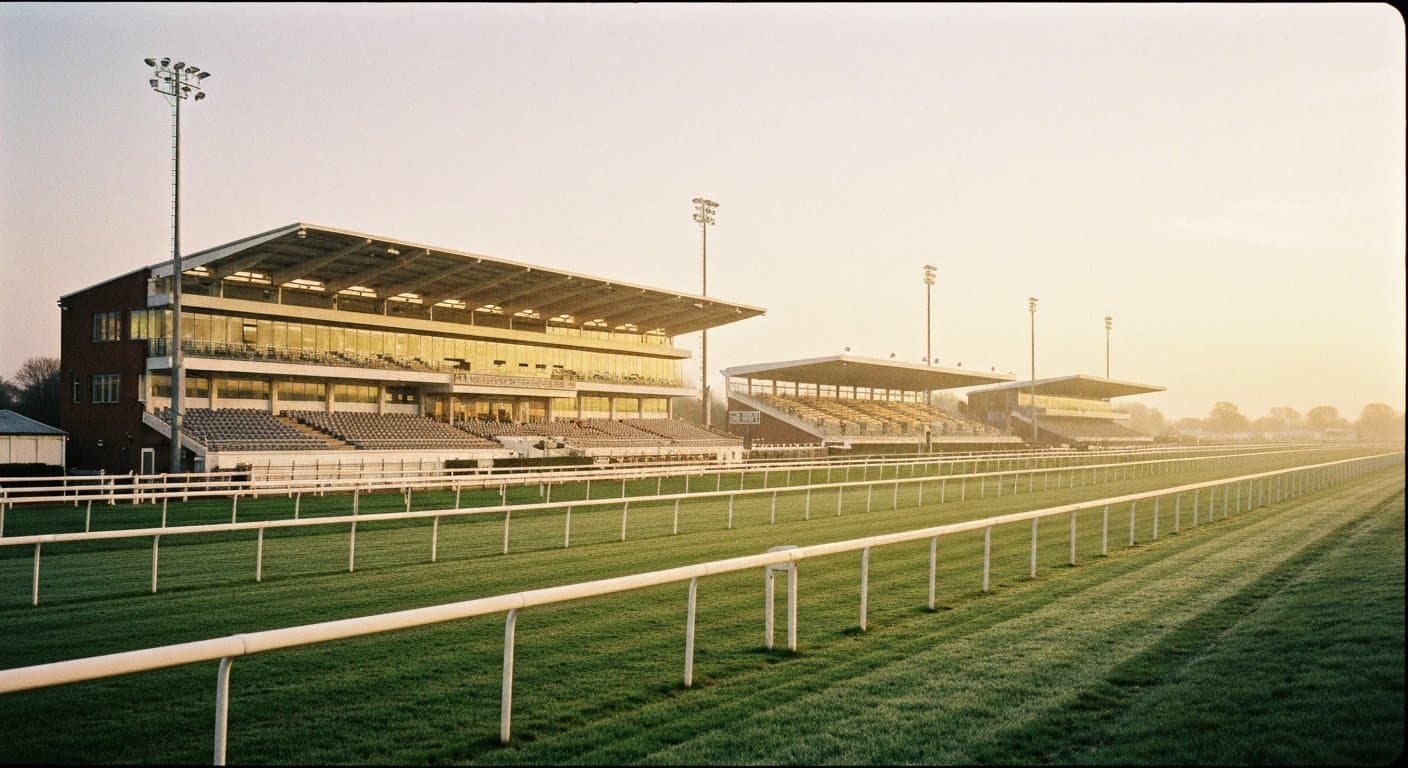
The History of Chelmsford City Racecourse
From the Great Leighs debacle to a thriving modern racecourse: the story of Chelmsford City, Essex's all-weather venue.
Read more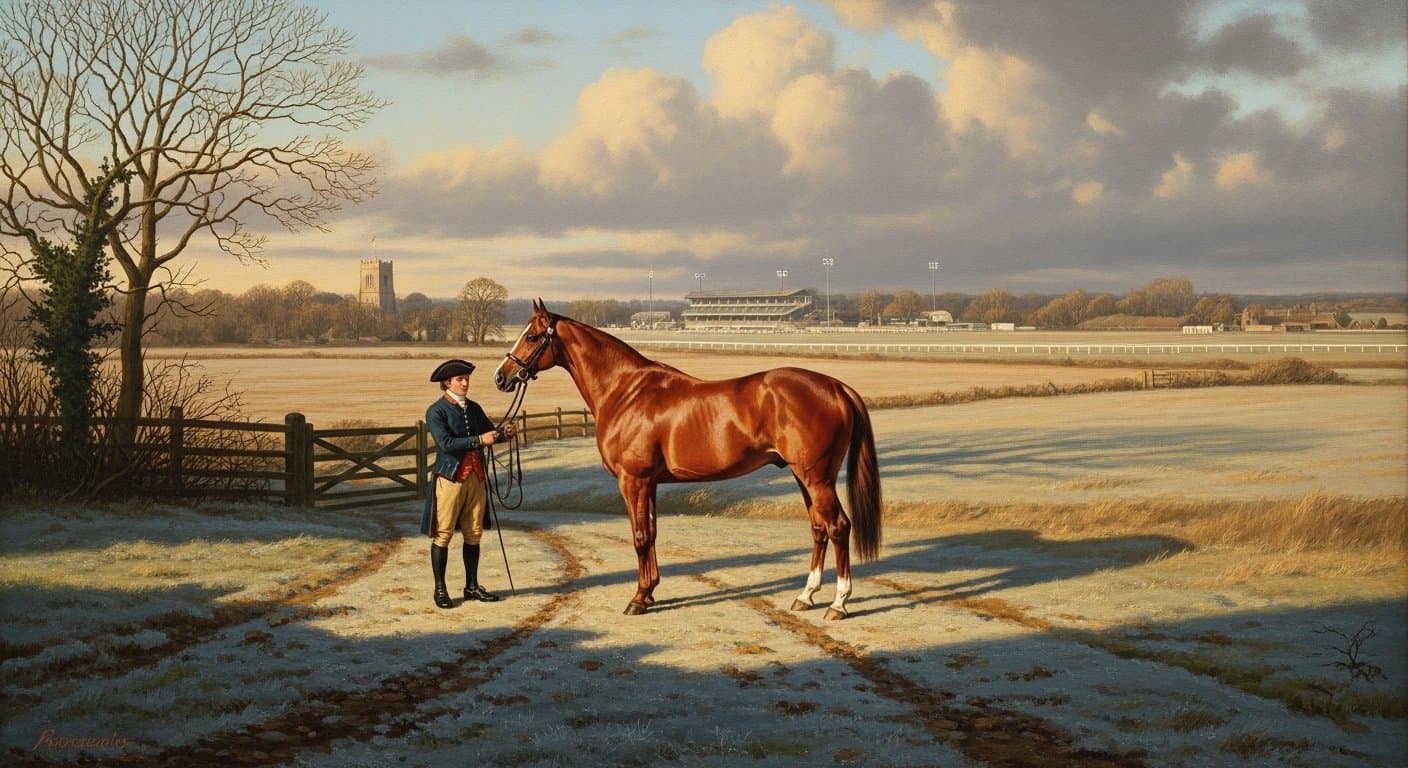
Twilight Payment at Chelmsford City: The Complete Story
Twilight Payment's remarkable journey from Chelmsford City's all-weather surface to Melbourne Cup glory. The story of modern racing's most inspiring champion.
Read more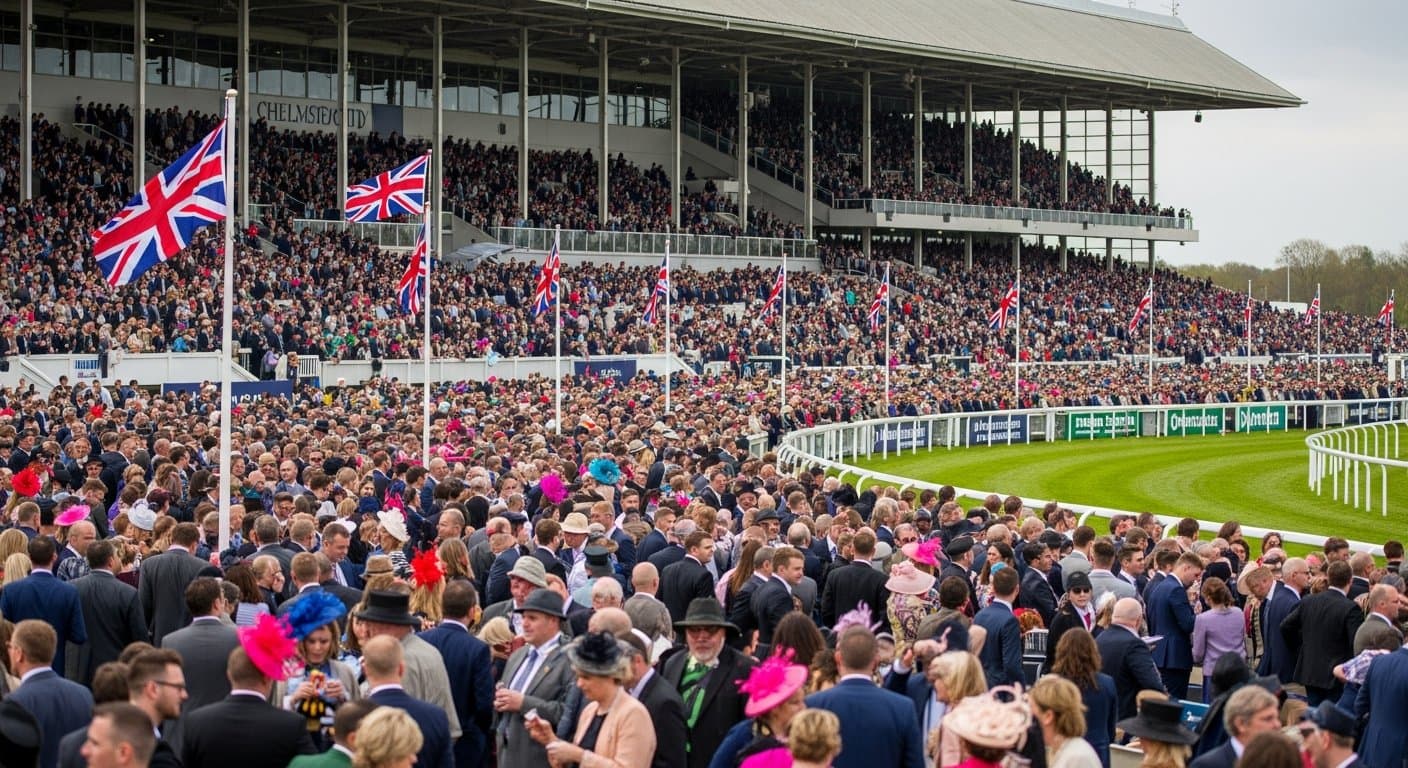
Cardinal Stakes Day at Chelmsford City: Your Complete Guide
Chelmsford City's flagship race day — the £100,000 Cardinal Stakes for Classic three-year-olds, held every April on the Polytrack.
Read moreResearch the field with the AI Race Predictor
Our model publishes calibrated win-probability estimates for UK races — a second opinion to understand a race, not tips. It's open about its record: it doesn't beat the market, and we show exactly how it does.
Work it out & learn the basics
Gamble Responsibly
Gambling should be entertaining and not seen as a way to make money. Never bet more than you can afford to lose. If you or someone you know has a gambling problem, help and support is available.