
Founder & Editor · Last reviewed 2026-03-02
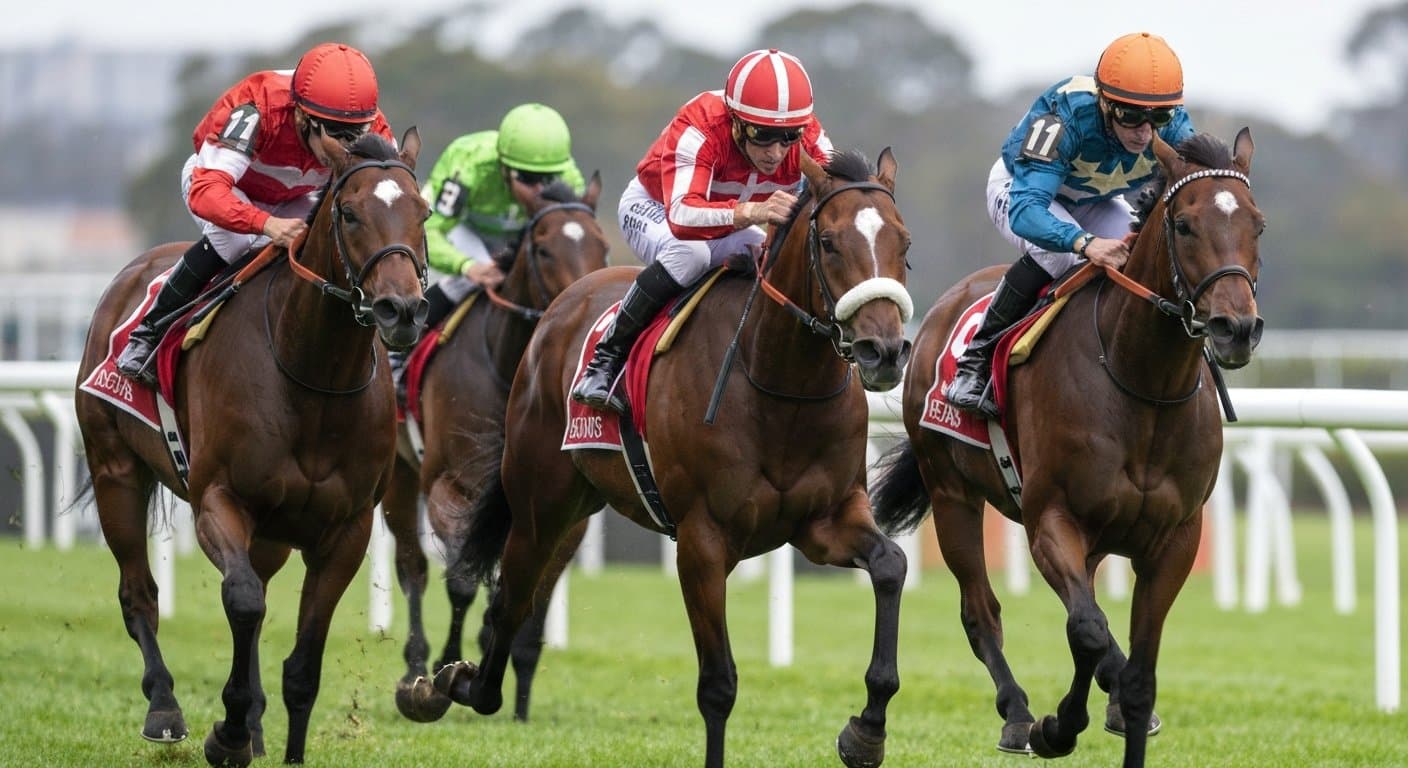
Downpatrick sits five miles south of the town of Downpatrick in County Down, in the drumlin country of rural south Ulster. It is a National Hunt only course — no flat racing — and its compact, demanding character has earned it a devoted following among Irish jumps enthusiasts. The course is right-handed and pear-shaped, with angled hurdles, demanding fences, and a short uphill finish that tests stamina in a way that no amount of flat-track form can fully replicate.
The betting environment at Downpatrick is shaped by the course's difficulty. The angled hurdles and undulating circuit mean that horses visiting for the first time face real uncertainty, and the results here are measurably less predictable than at galloping Irish NH courses. That unpredictability cuts both ways: it produces surprises, but it also creates opportunities for bettors who have invested in understanding what the course specifically demands.
Key angles before betting at Downpatrick:
- Course form is the primary filter — the combination of angled hurdles, demanding fences, and uphill finish creates a test that horses either handle or do not; previous course winners carry significantly more weight than at galloping tracks
- The uphill finish is a stamina sieve — horses that race freely and burn energy early are regularly found out in the closing stages; the pace-setter who tires on the hill is a recurring Downpatrick result pattern
- Angled hurdles require jumping accuracy above average — horses that are untidy or casual at hurdle flights can lose several lengths at angles; jumping fluency at standard flight heights does not automatically transfer to angled positioning
- The Ulster National over 3m4f is the stamina reference for the season — real stayers who handle heavy County Down ground in March are a distinct population; their profile should be checked against any horse being assessed for the race
- Local northern Irish trainers have a day-to-day advantage — smaller meetings at Downpatrick attract a regular cast of horses from yards within 50 miles; trainers who run horses here regularly know the course and going
- Summer festival going is typically Good to Soft — the most competitive meeting of the season falls when conditions are manageable for a wider range of horse types; course form still matters, but going is less of a binary filter than in winter
- First-time visitors at short prices carry risk — the track has a documented record of horses needing a first run here to understand its demands; backing maiden Downpatrick visitors at odds-on or short odds-against warrants caution
The complete guide to Downpatrick covers the course layout and history. The Ulster National guide covers the signature race in detail. The summer festival guide covers the biggest meeting of the year. The day out guide addresses visitor logistics.
Bet on Downpatrick
Place your bets on Downpatrick races with a trusted bookmaker.

Promo code BETFRED50. New customers only. Register, deposit with a Debit Card, and place a first bet of £10+ at Evens (2.0)+ on Sports, to be settled within 7 days, to get £30 in Sports Free Bets and £20 in Bet Builder Free Bets within 24 hours of settlement. 7-day expiry. Eligibility & payment exclusions apply. Full T&Cs apply. Take Time to Think. BeGambleAware.org. 18+. Full T&Cs.

Promo code R30. New UK customers only, 18+. Register, deposit £10 or more, then place a £10 single cash bet at odds of 1/2 (1.5) or greater on any sports market (excluding Virtuals). Once the qualifying bet settles you get £30 in Free Bets (3 x £10) — the qualifying bet can win or lose. Free Bets are valid on any sports market excluding Virtuals, expire in 7 days, are non-withdrawable and must be used in full. Excluded deposit methods apply (including PayPal, Apple Pay, Skrill and NETELLER). Named bets such as Lucky 15 do not qualify. If you cash out the qualifying bet, or it is voided, you are no longer eligible for the offer. Ends 31.12.26. Full T&Cs apply. Please gamble responsibly. BeGambleAware.org. 18+. Full T&Cs.

Promo code BET40GET20. New UK customers, 18+. Register with the code and place a first bet of £40 or more at Evens (2.0) or greater. Receive 2 × £10 free bets: the first credited automatically once the qualifying bet settles, the second 24 hours later. Free bets must be placed at minimum odds of 4/1 (5.0), expire 24 hours after credit, and the free-bet stake is not returned with winnings. Debit card deposits only. Take Time to Think. BeGambleAware.org. 18+. T&Cs apply. Full T&Cs.

50% of your first-day net losses refunded as a free bet, capped at £25. New UK customers aged 18+ only. To qualify, deposit and place a first bet of £10 or more on any sport at minimum odds of evens (2.00), then place at least two further bets on different events, each worth at least 50% of your largest bet, all at evens (2.00) or greater. Losses are counted from your first settled bet until 23:59 the same day. Place a qualifying £10+ bet and you are guaranteed at least a £5 free bet. Bets placed at SP, void bets, cashed-out bets and bets struck with free bets do not count towards the offer. The free bet is credited the day after your qualifying bets settle and must be used within 7 days, after which it expires. It can be used at odds from 1/4 (1.25) up to 250/1 on singles and straight accumulators, but not on Trixie, Patent or Yankee style multiples. Free-bet stake is not returned with winnings. One offer per person, household, address, IP address and device. E-wallet deposits may not qualify, so check the cashier before depositing. Customers registered with GAMSTOP cannot claim. KYC identity verification must be completed before the free bet is credited. Take Time to Think. BeGambleAware.org. 18+. T&Cs apply. Full T&Cs.

New customers, 18+. Choose the sports bonus at sign-up, make a first deposit and receive a 100% bonus up to £50 in your Sports Bonus balance. To convert the bonus to cash, wager it 10x within 30 days. Single bets below Evens (2.00) do not qualify; accumulators do not qualify if any selection is below 1/2 (1.50). Virtual Sports, voided, cancelled, drawn, cashed-out and free-bet wagers do not count towards wagering. Only the first settled bet per event counts. Withdrawing before the wagering requirement is met forfeits the bonus balance including bonus winnings. Real-money funds are used before bonus funds. Deposits via Skrill or Neteller are not eligible. Not valid in conjunction with other promotions. Odds, bet and payment limits apply. 10bet general and promotion T&Cs apply. BeGambleAware.org. 18+. Full T&Cs.

New customers in Great Britain and Republic of Ireland, 18+. Place a £10 fixed-odds qualifying bet at minimum odds of 1/2 (1.50) — single or each-way (only the win part counts), pre-event or in-play, not cashed out early, within 28 days of opening the account. Receive up to £60 in bonuses credited over three days: 3 × £10 fixed-odds free bets (the first on settlement, then 24 and 48 hours later) plus 3 × £5 Total Goals FOOTBALL spread bets and 3 × £5 racing Winning Favourites spread bets, with a £1 racing Race Index spread bet as an extra on top. The spread bets need a full spread-betting account, opened within 28 days of the fixed-odds account and subject to Spreadex's eligibility and appropriateness checks. Free-bet stakes not returned with winnings; free bets valid 28 days from issue. IMPORTANT: the £5 credits are SPREAD bets — sports spread betting carries the risk that losses can exceed your stake. Sports spread-betting customers do not have Financial Ombudsman or FSCS recourse. Take Time to Think. BeGambleAware.org. 18+. T&Cs apply. Full T&Cs.

Promo code WELCOME15, entered under My Bonuses after registering. New UK customers, 18+. Place a first qualifying bet of at least £10 from your cash balance at odds of evens (2.0) or greater within 7 days of opening the account. Once the qualifying bet fully settles you receive £15 in free bets, credited as 3 x £5 tokens with set uses: one £5 accumulator free bet (minimum 4 legs, each leg at 2/5 or bigger), one £5 sports free bet (any market at evens or bigger) and one £5 Sub Cover free bet (selected football player markets at evens or bigger). Free-bet stakes are not returned with winnings. Free bets expire 7 days after they are credited. Void, cashed-out and partially cashed-out bets do not qualify. One offer per customer. Confirm the current terms on BetGoodwin's own welcome-offer page before claiming. Take Time to Think. BeGambleAware.org. 18+. T&Cs apply. Full T&Cs.

New UK customers, 18+. Minimum deposit £10. Place a £10 qualifying single on sports (excluding virtuals) at minimum odds of 1/2 (1.50), settled within 14 days. Deposit-method exclusions apply. Receive £30 in free bets (stake not returned), split £20 for sportsbook use (2 x £10) and £10 for Bet Builder only (2 x £5); Bet Builder does not cover horse racing. Free bets must be accepted within 7 days and expire 7 days after acceptance. No promo code required. Best Odds Guaranteed on UK & Irish racing, subject to having staked over £25 in the previous seven days. Operated by LiveScore Betting and Gaming (Gibraltar) Ltd, UKGC 56859. Confirm the current terms on LiveScore Bet's own promotions page before claiming. Take Time to Think. BeGambleAware.org. 18+. T&Cs apply. Full T&Cs.
18+. BeGambleAware.org
Track Characteristics
The Downpatrick circuit is right-handed and pear-shaped, measuring approximately one mile and two furlongs around. The terrain is undulating — the course runs through drumlin country in the heart of County Down, and the natural rises and falls of the ground are incorporated into the track rather than levelled out. The result is a course that imposes real physical demands beyond what the official distance alone conveys.
The Angled Hurdles
The most unusual feature of Downpatrick is the positioning of its hurdle flights. Several hurdles on the course are placed at angles rather than perpendicular to the track's centreline. This creates a specific challenge for horses and jockeys: approaching a hurdle at an angle requires a different line of travel and a different take-off point than a standard perpendicular flight, and horses that are set up incorrectly for an angled flight may jump the rail rather than the hurdle, or chip in an extra stride and lose momentum.
For betting purposes, the angled hurdles create a measurable first-time visitor disadvantage. A horse that has spent its entire career jumping standard perpendicular hurdles encounters truly unfamiliar obstacles at Downpatrick. The hurdle flights are not excessively demanding in terms of height, but the angle adds a coordination and confidence challenge that is absent from most Irish NH courses. This explains why course form at Downpatrick is a stronger predictor of future performance here than at courses where obstacles are positioned conventionally.
The Uphill Finish
The finishing run at Downpatrick climbs toward the winning post. The gradient is stiff rather than gradual — not as severe as the Cheltenham hill, but enough to drain the reserves of any horse that has raced freely through the earlier stages. Horses that lead at the penultimate fence but have nothing left for the hill are a regular feature of Downpatrick results. This makes the uphill finish a significant tactical consideration: horses that set a strong pace through the early circuits, particularly over three miles or more in testing going, often tire before the line.
The practical implication: horses that race in the first two or three positions but are known to settle and conserve energy are better positioned for the Downpatrick finish than horses that bolt to the front and go flat out from the start. Patient riding on this circuit is a consistent winning tactic.
The Fences
Downpatrick's fences are described as demanding rather than extreme. They require horses to jump with accuracy and respect — casual or sloppy jumping is penalised more severely here than at galloping courses where the landing position is more forgiving. In the Ulster National and Downpatrick's other chases, fluent jumping counts for more than it does at a galloping track.
Comparison to Other Tracks
Downpatrick's combination of tight circuit, angled hurdles, and uphill finish makes it truly unusual by Irish NH standards. The nearest comparison within Ireland is Kilbeggan — another tight, undulating NH circuit with specific jumping demands — where course form is similarly predictive. In a British context, Hexham and Plumpton share some of the demanding character, though neither replicates the angled hurdles that are Downpatrick's most specific individual feature.
Going & Conditions
Downpatrick's going reflects its County Down location and the drumlin topography of the surrounding land. The course sits in a low-lying position between the drumlins, and drainage — while reasonable — is not as fast as at elevated or sandy courses. From October through March, the going is frequently Good to Soft or Soft, and Heavy conditions are more common here than at the majority of Irish NH courses. The summer festival meeting typically runs on Good to Soft, which is the most manageable going for a wide range of horse types at the course.
Winter Going: Heavy Is Realistic
Downpatrick races through the winter months on going that can range from Good to Soft down to Heavy. The Ulster National in March — the course's most demanding staying test — is frequently run on going that would be Soft to Heavy at other venues. Horses that compete in this race over three miles and four furlongs in March need to have demonstrated stamina in truly testing ground conditions; form on Good to Soft from summer meetings does not automatically indicate Heavy-ground capability.
When the going is Heavy at Downpatrick, the uphill finish becomes a significantly more severe test than it is on Good to Soft. The combination of carrying the weight of heavy ground through two circuits and then climbing the uphill straight means that horses whose stamina is in question — based on trip or going — should be assessed with that combination in mind rather than evaluated for trip and going separately.
Summer Festival Going
The summer festival typically runs in June or early July, when the going most commonly falls between Good to Soft and Good. This is the most accessible going profile at Downpatrick — horses that are summer-campaign NH types rather than specialist mud-horses can compete effectively on this surface. The festival is where the widest range of form from other courses transfers most reliably, though the angled hurdles and uphill finish remain course-specific challenges regardless of going.
On Good or Good to Soft ground, the uphill finish is less of an absolute stamina test and more of a class filter. Horses with real ability and reasonable jumping accuracy can still win without needing the specific heavy-ground staying credentials that winter Downpatrick demands.
Going and First-Time Visitors
The interaction between going and first-time visiting is more significant at Downpatrick than at most NH courses. A horse arriving at Downpatrick for the first time on Heavy ground faces two sources of uncertainty simultaneously: the unusual angled hurdles or demanding fences, and the testing going conditions. Either source of uncertainty alone would warrant some form discount; combined, they make backing a first-time visitor at short prices on Heavy ground a structurally poor bet.
The safest approach: on Heavy or Soft ground, restrict selection almost entirely to horses with previous Downpatrick experience on comparable going. In summer on Good to Soft, extend the pool to include horses from recognised northern Irish yards with strong jumping form from similar compact undulating courses.
Going Checks
The Downpatrick going can shift materially across a card in winter, particularly when rain falls during the meeting. The going may be declared as Soft in the morning but reach Soft to Heavy by the later races. Check the official track update during the meeting rather than relying on the pre-race declaration for going-dependent bets placed on later races.
Key Trainers & Jockeys
Downpatrick's trainer landscape is shaped by geography. The course draws primarily from stables within sixty miles — covering County Down, Antrim, Armagh, and the northern counties of the Republic. Northern Irish trainers who run horses here regularly carry a knowledge advantage that mainland Irish stables from Cork, Tipperary, or Kildare cannot match with occasional visits.
Gordon Elliott
Gordon Elliott's yard at Cullentra House in County Meath is approximately 60 miles from Downpatrick — at the outer edge of the local travel range, but still close enough that Elliott uses the course deliberately rather than incidentally. He sends horses to Downpatrick for specific targets: the Ulster National in March and selected handicap chases through the winter. His horses in the Ulster National have a strong record, and he understands what the course's stamina demands require in terms of preparation.
When Elliott declares for the Ulster National or another Downpatrick chase, the horse is typically fit and suited to testing ground. He does not use Downpatrick casually.
Northern Irish Trainers
The core of Downpatrick's winner's list comes from northern Irish yards. Noel Meade, while based in County Meath, has an established Downpatrick record. Locally, trainers like Stuart Crawford — based in County Antrim — and Alan Fleming have consistent records at the course built through repeated experience of the specific demands of the circuit. Crawford in particular has trained numerous Downpatrick winners across hurdles and chases, and his runners here carry real course knowledge value.
When a northern Irish trainer with multiple Downpatrick wins in recent seasons runs a horse at the course — particularly in Class 3 or Class 4 handicaps — their runners at prices above 3/1 represent the most reliable selection trigger the course offers outside the Grade races.
Warren Ewing and Smaller Northern Yards
Warren Ewing, based near Dromore in County Down, is geographically the closest major trainer to Downpatrick racecourse. His horses travel to Downpatrick with minimal journey stress and his understanding of the going variations on specific sections of the course — developed through years of running horses here — gives him an edge in close handicap assessments. Ewing's runners in novice chases and handicap hurdles at Downpatrick are worth monitoring for each-way angles.
Jockey Pattern
The jockeys who ride most effectively at Downpatrick are those who have developed the specific skill of jumping angled hurdles accurately at pace. This requires early recognition of the hurdle's positioning and adjustment of the horse's stride pattern several strides before the obstacle. Jockeys with many Downpatrick rides — typically northern Irish freelances rather than Dublin-based retained riders — have this skill from repetition.
When a recognised Dublin-based or southern Irish jockey rides at Downpatrick for the first time on a prominent market leader, the combination of unfamiliar track and angled hurdles represents a mild negative that experienced Downpatrick jockeys on rival horses can exploit. The jockey booking for first-time visitors is worth checking — an experienced Downpatrick rider put up on a lesser-fancied horse can sometimes produce a better result than the market implies.
Betting Strategies
Downpatrick's betting strategies are built around the course's specific demands: angled hurdles, undulating circuit, and uphill finish on a track where course form is more predictive than at any comparable Irish NH venue.
Strategy One: Course Form as Binary Filter
The strongest strategy at Downpatrick is to apply course form as a near-binary filter in handicap hurdles and chases. Horses that have previously won or placed at Downpatrick — particularly on comparable going and at a similar distance — should be in every selection under consideration. Horses without any Downpatrick form should be viewed with significant scepticism unless they are from a local northern Irish yard with direct course knowledge.
In fields where two or three horses have Downpatrick form and the remainder do not, the horses with course form are collectively underpriced by a market that tends to weight recent form and official ratings more heavily than track-specific evidence. The most productive use of this filter is in Class 3 and Class 4 handicaps where form comparison is most open to interpretation.
Strategy Two: Back the Patient Ride
Downpatrick's uphill finish is the tactical pivot of every race. Horses that race freely, take the lead early, and set a strong pace are regularly caught on the hill. Horses ridden with tactical restraint — allowed to settle behind the pace through the early circuits — have a recurring advantage in the final stages.
When assessing a field, identify the likely pace scenario. If two or three horses are front-runners and likely to set a strong pace through the back straight, favour horses drawn by their form to race in second or third position with something held in reserve. If the field is a single-paced group with no obvious front-runner, the first horse to take control through the final turn may hold on up the hill.
Strategy Three: First-Time Visitors on Heavy — Oppose
On Heavy or Soft going at Downpatrick, horses appearing at the course for the first time should not be backed at short prices. The combination of unfamiliar angled hurdles, demanding fences, and testing going reduces the margin for error to zero. Horses from major southern Irish yards making their first Downpatrick visit on Heavy ground in winter — particularly if priced at 2/1 or shorter — represent poor value. The market prices the class correctly but underweights the course novelty penalty.
Apply this strategy most aggressively in winter NH handicaps. In the summer festival on Good to Soft ground, the penalty for first-time visiting is smaller because the going does not compound the course uncertainty in the same way.
Strategy Four: Elliott in the Ulster National
Gordon Elliott's Ulster National runners represent the most consistent single-trainer angle at the course. His preparation for this specific race — a stamina test over 3m4f in testing March going — is tailored to the race's demands. His runners here at prices between 5/2 and 6/1, with confirmed form in testing going at similar distances, have a strong historical record relative to their starting price.
Avoid backing Elliott's Ulster National entries at very short prices — when a market makes one of his horses 6/4 or shorter for this race, the race's inherent unpredictability is being underweighted. His runners at value prices are the angle; his runners at odds-on or near odds-on represent market compression that reduces the value of the trainer edge.
To compare place terms and each-way promotions across the major bookmakers, see our best bookmakers for horse racing guide.
Key Races to Bet On
Downpatrick does not stage Graded races. The course operates at Class 2 to Class 5 level for its domestic Irish NH programme, and its most important event is the Ulster National. The race reflects the course's demanding character and rewards the course-specific preparation that makes Downpatrick a specialist venue.
The Ulster National
The Ulster National is a handicap steeplechase run from late March into early April over roughly three miles and four and a half furlongs. It is the most competitive race of the Downpatrick season, drawing horses from across Ireland, and it rewards horses specifically suited to the course's demands rather than ones running here incidentally.
Course form counts for a lot here, because the circuit is tight and undulating and finishes uphill, and a horse that has jumped round Downpatrick has shown it can cope with all three. We are not publishing a strike rate or a price threshold for this race: the figures that stood here, along with a claim about the usual going, were measured against a race that does not exist.
The full Ulster National guide covers the race and the correction to its name.
The Ulster National
The Ulster National Handicap Chase is run over three miles and four furlongs and 110 yards in March, making it the longest race on the Downpatrick calendar and one of the longer handicap chases in the Irish NH programme. The going in March is typically Soft to Heavy. The race demands real staying ability combined with the ability to handle the angled obstacles and uphill finish across multiple circuits.
The Ulster National winner profile is distinctive: a real stayer with confirmed ability in testing going, ideally with at least one previous Downpatrick run to manage the angled hurdle challenge (which applies even to chases in terms of general course familiarity). Gordon Elliott's runners in this race are the primary selection starting point, but the field regularly includes horses from smaller northern Irish yards whose targeting of this specific race deserves respect.
Summer Festival Programme
The summer festival in June or July is a card of hurdles, novice chases and bumpers. It is the best-attended meeting of the year, and it does not carry the Ulster National, which runs at the turn of March into April. The supporting races attract horses from a wider range of yards than the routine winter meetings, and the quality of the fields is at its peak.
Festival supporting races offer the best each-way value of the Downpatrick calendar. Fields are typically ten to sixteen runners, the going is manageable, and course form is available for several horses in each race. Horses at 6/1 or above with Downpatrick course form in festival handicaps represent the optimal each-way profile.
Winter Handicap Programme
Downpatrick's winter programme includes monthly NH meetings from October through March. These meetings — primarily Class 3 and Class 4 handicaps over hurdles and fences — are the bread-and-butter betting opportunity at the course. The fields are smaller than at the festival, the market is thinner, and course form is proportionally more important because of the reduced information available from other sources. Local northern Irish trainers with established Downpatrick records dominate these meetings.
Share this article
More about this racecourse
All Downpatrick guides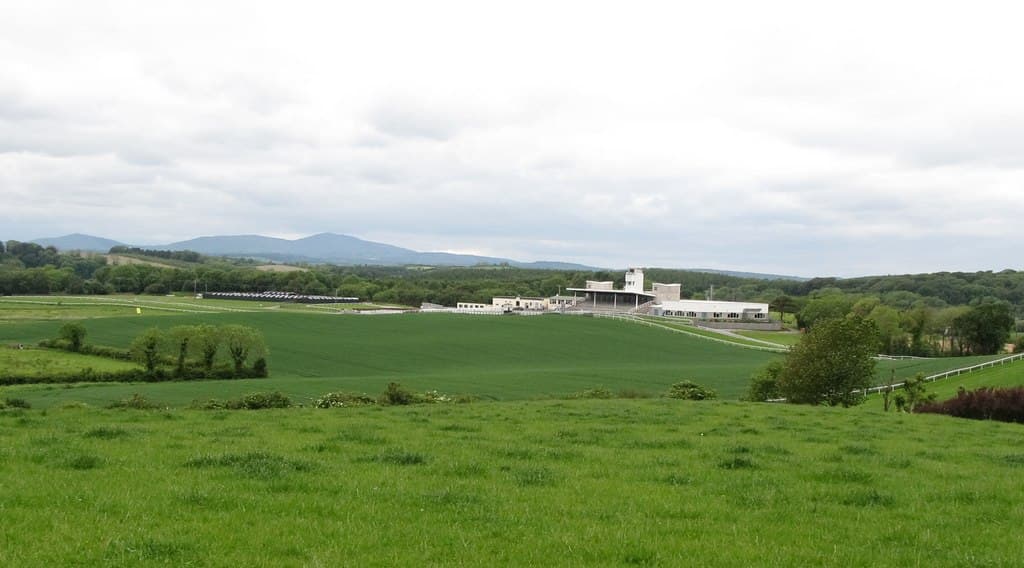
Downpatrick Racecourse: Capacity, Parking & Facilities
Find Downpatrick's floor plan, meeting room capacity, parking info and facilities. Northern Ireland's historic jumps venue guide.
Read more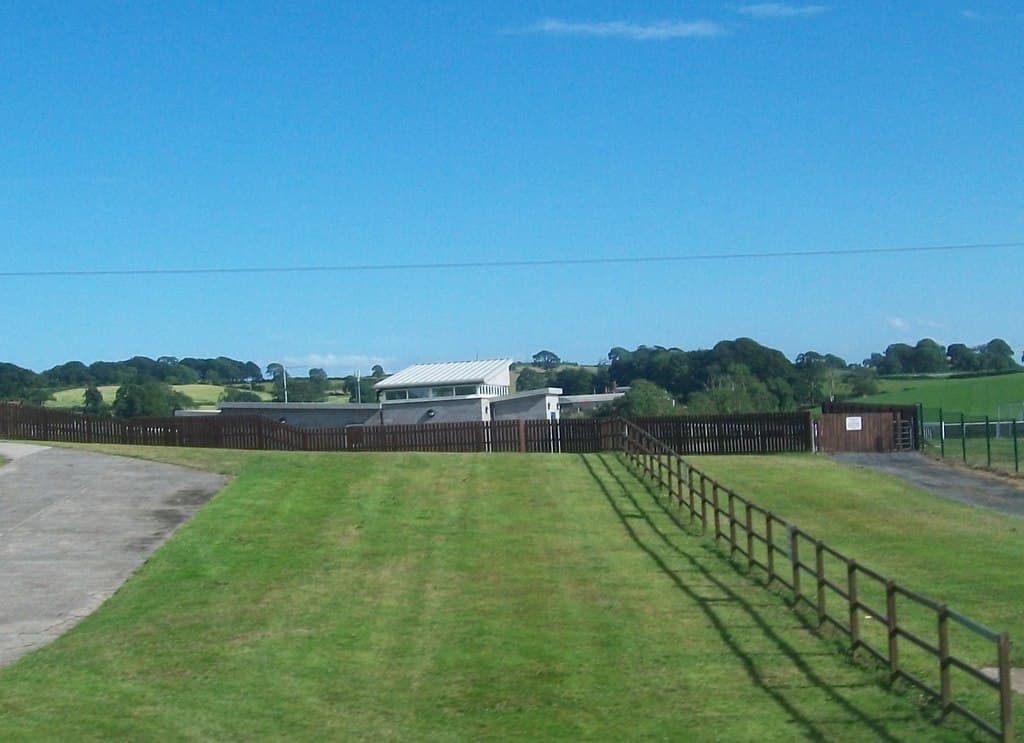
A Day Out at Downpatrick Racecourse
Everything you need for a day at Downpatrick — getting there, what to wear, enclosures, food and drink, and insider tips for County Down's National Hunt venue.
Read more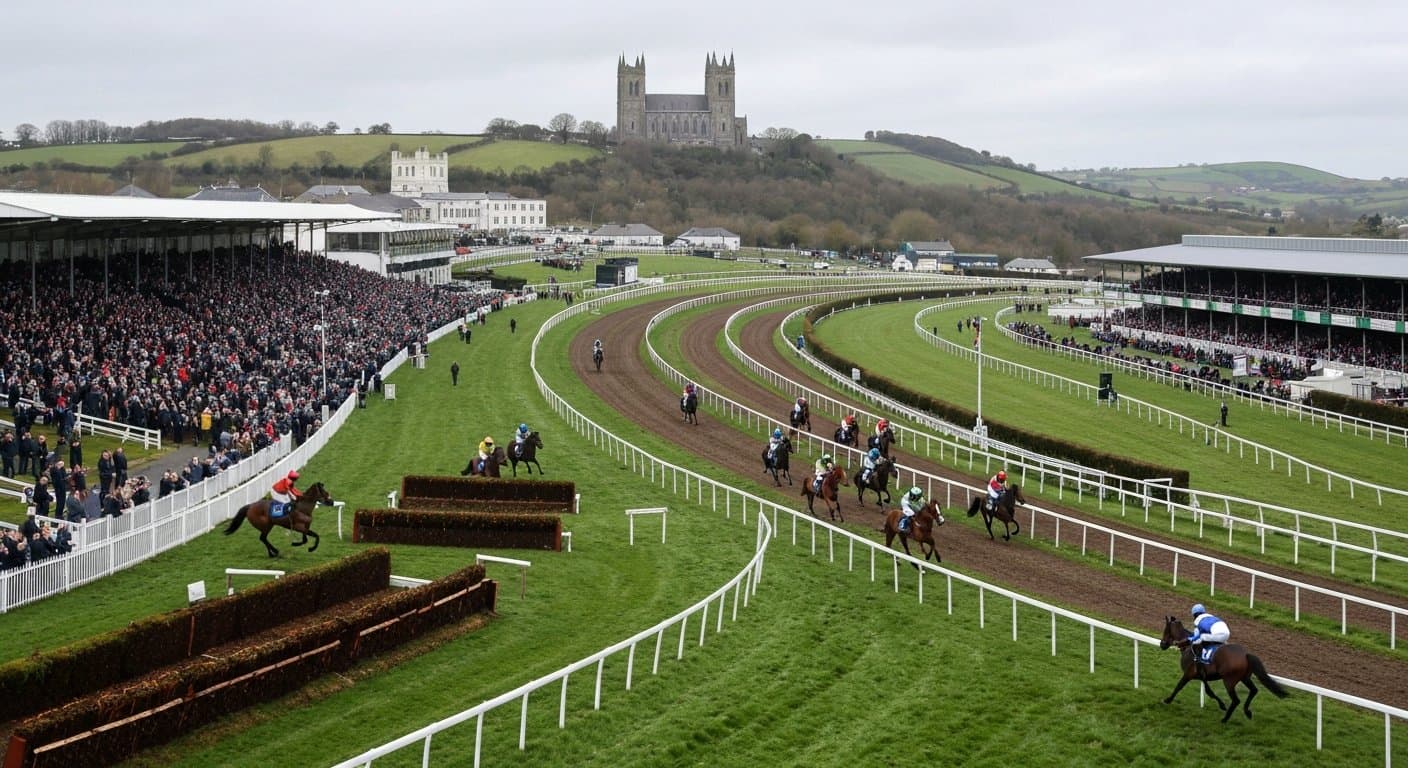
Downpatrick Gold Cup: Complete Guide
Your complete guide to the Downpatrick Gold Cup — County Down's signature chase and a key contest at Downpatrick Racecourse.
Read morePhotos on this page are used under Creative Commons licences. Titles, sources and licence links for each one are on our image credits page.
Research the field with the AI Race Predictor
Our model publishes calibrated win-probability estimates for UK races — a second opinion to understand a race, not tips. It's open about its record: it doesn't beat the market, and we show exactly how it does.
Work it out & learn the basics
Gamble Responsibly
Gambling should be entertaining and not seen as a way to make money. Never bet more than you can afford to lose. If you or someone you know has a gambling problem, help and support is available.